high holy days · liturgy · sermon

Do not build a prison in your heart

Imagine a courtroom. Picture those big wooden panels that line the grand hall of a traditional Crown court. The deep reds of the carpets. The judge sitting loftily on a bench,  at the front, draped in black gowns, donning that full-bottomed wig. And all the lawyers surrounding you, speaking Latin and legalese, bewildering you with their words. 

You have not been here before, but, suddenly, you find your life depends on your correct participation. You will have spent extra time ironing your clothes and polishing your shoes. You may have spent weeks picking out an outfit. Perhaps you already know what you would wear. 

How does it feel to stand trial here? Is this somewhere you want to be? From here, how much do you think you will learn and grow? And do you think there might be a better place where you could improve yourself?

This is the metaphor we are often given for Yom Kippur. The Heavenly court and the earthly one. The trial of our souls. The God of Justice, who sits in judgement over us.

We beg for clemency:

סלח לנו – forgive us

We announce our expectation of a just verdict:

סלחתי כדברך – I have forgiven according to your plea.1

We rejoice in the judgement:

אשרי נשוי פשע כסוי חטאה – happy are those whose transgression is forgiven, whose sins are pardoned.2

This is the courtroom of our hearts.

C. S. Lewis, the great 20th Century English author, famed for his Chronicles of Narnia, picked up on this aspect of our thinking. When he wasn’t writing beloved children’s novels, Lewis dabbled in biblical studies as a lay Anglican theologian. 

C. S. Lewis writes: “The ancient Jews, like [Christians], think of God’s judgement in terms of an earthly court of justice. The difference is that the Christian pictures the case to be tried as a criminal case with himself in the dock; the Jew pictures it as a civil case with himself as plaintiff (sic). The one hopes for acquittal; the other for a resounding triumph with heavy damages.”3

Now, Lewis is no antisemite. In fact, he repudiated the hatred of Jews, long before it became fashionable to do so.4 He is eager to point out that, at his time of writing, immediately after the Second World War, the Christian had much to atone for, and the Jew had much to charge against God. 

In many ways, he has us down. We do indeed take this as an opportunity to bring all our charges against God, and to vent our grievances against the injustice of the universe. Lewis is talking about ancient Israelite religion; the religion  of Scripture. 

Lewis would, I’m sure, willingly acknowledge that we modern Jews also share much in common with modern Christians, in terms of our admissions of guilt and prayers for pardon.

C. S. Lewis has astutely picked up that we see all this as a trial. 

But where he errs, I think, is in his understanding of what an ancient Jewish court was. The tribunal of our ancestors looked nothing like the judge’s dock of today. 

A metaphor that worked so well for poets and liturgists many centuries ago can become quite damaging when it is used with the projection of our criminal justice system.

Where today, a court can dole out sentences of imprisonment, the goal of the ancient court was about restitution and social harmony.

Where today, the court expects to find a person innocent or guilty, the ancient court sought to make sure everyone felt like they had a place in their community.

The focus of our sacred writings is to create a society based on compassion, community accountability, and healing.

When we rethink what justice looked like for the authors of our Torah, concepts of trials, pardons, and sentences start to look very different. By seeing the court through ancient eyes, we can re-imagine the trial as a process of growth and healing.

We get mere glimpses of what the earliest courts might have been. In the book of Judges, the archetypal ideal of the judge is Deborah, the prophetess. Her court is a base underneath palm trees in the hill country. We receive an image of her sitting there, while Israelites come up to have their disputes decided.5 Her court was one where people came to negotiate and be heard, but there is no indication they came to be punished. This was in the time of the Judges, the earliest of Israelite civilisations.

Later, however, ancient Israel developed a class system and a monarchy. With a state system came power and punishments. In the book of Samuel, King David pursues after the city of Avel Beit-Maacah, threatening capital punishment against everyone who rebels against him. Here, an unnamed elder-woman comes out. She admonishes the general, saying: “we are among the peaceful and faithful of Israel, will you destroy God’s inheritance?” She rebukes them with a reminder of the old system – that, before there were kings, people used to come and talk out their issues in the city. The generals agree to spare the city, providing they can enact punishment against one ringleader.6

From these two stories, we can garner an insight into what justice may have looked like in the earliest part of the biblical period. The first thing we notice is that women were leaders. This, then, may be a justice system from before patriarchal power was cemented. We also do not detect any hint of crime and punishment. Instead, the courts seem more like public cafes, where experienced negotiators help community members talk through their problems. If this is correct, we are looking at a very different type of court.

Still, courts did develop in ancient Israel, but not like those of today, nor even  of the surrounding empires. In our narratives, most of the times that characters are imprisoned, it is outside of the Land of Israel, by a Pagan power, and unjustly.

Joseph is sent to prison in Egypt on trumped-up charges without any due process.7 Samson the warrior is sent to toil at grinding grain in the jailhouse by the Philistines, not because he has done anything wrong, but as a prisoner of war.8 When the Babylonian rulers send Daniel to the Lion’s Den, it is because of xenophobic laws that stop him practising Judaism.9

Our Scripture treats prisons as something foreign, where good people are sent for bad reasons.

Even when we do see examples of prisons in Israel, they are always treated by the Torah’s authors with contempt. Three of our prophets are sent to prison: Jeremiah;10 Micaiah;11 and Hanani.12  In every single case, this is a monarch warehousing a prophet because they are speaking truth to power. In the Torah’s view of justice, it is hard to see how prisons could have any meaningful role at all.

That does not mean this was a world without punishment. Scripture presents exile, flogging, and even death as options for what might constitute justice in the ancient world.13

Yet, based on our commentaries and traditions, we have the impression that such penalties were implemented only in the most egregious cases. What somebody had to do was so heinous that the death penalty would almost never actually occur.14 

In the Mishnah, we read, the court that puts to death one person in seven years is bloodthirsty. Rabbi Eleazar Ben Azariah takes it even further, saying, ‘One person in seventy years.’ Rabbi Tarfon and Rabbi Akiva say, ‘If we had been in the Sanhedrin, no one would have ever been put to death.’15

What kind of justice system was this then? No prisons, no death penalty? No patriarchy, no punishments? 

The ancient court sounds more like people just sitting around having a chat.

What if it were? What if, instead of biblical justice being all about burning and smiting, it was mostly about negotiating and feeling? How would that change how we look at our tradition? How would it change how we approach our relationship with God?

Perhaps I am over-egging how different the biblical court was. If so, bear with me. 

I am well aware of how terrible some of the Torah’s punishments were. I am also conscious that what I am describing is so outside of our reality as to make it feel fictitious. If the world of restorative justice I am describing never really existed, please at least indulge me in entertaining the possibility that it could. 

We are not, in this room, coming up with a proposal for how to govern Britain. We are just asking what metaphors work when we think about how to hold our own hearts on Yom Kippur. For me, the metaphor of court cases has proven really problematic, and I am looking to explore new ones with you.

The problem of the courtroom metaphor initially struck me quite suddenly. I was talking with my therapist about an issue that I felt kept coming up in my own behaviours. I said: “I’ve got another case to talk about…”

He looked around the room and said “you know you’re not on trial here, right?” 

I think I had expected, on some level, that, through counselling, I could be acquitted or found guilty for all my past deeds and thought patterns. 

I had built a prison in my own heart, to which I could sentence the parts of myself  I liked least. I had conjured up a jury in my head, who would judge all my actions, according to the standards I had set myself. According to the standards I imagined God has set for me.

What was I doing? The point of therapy is not punishment or exoneration. It’s to learn and grow, and find ways of being better in the life I actually have. The point is not to condemn or discard my negative traits or past mistakes. The point is to work towards loving all of myself and learning from all I have done.

Perhaps you can relate to this. Have you imagined how you might punish others, or cast them into our prison in your heart? Maybe you even seek to punish people or get them out of your life. Maybe you, too, have hoped there were parts of yourself you could lock away.

We cannot apply the carceral system to our spirit. When we are doing wrong or feeling guilty, we must be free to look ourselves in the eye, and change willingly.

Is this not what God wants from us, after all? That we make amends, grow, become better. That we embrace ourselves and each other. That we turn from our ways and live. 

If, then, we are in a court with God, we should make it one where we are in conversation with a loving elder, not facing a law lord who seeks to punish and acquit.

So, let us imagine a new court. It is not the court we thought into existence at the start of this sermon. It is a very ancient one, where our ancestors went thousands of years ago. Deborah’s court. 

You are in the dusty scrubland of Canaan, and a few yards away you can see an oasis. People are gathering around it to fetch water. They are laughing and catching up and telling stories. They are feeding their livestock: sheep, goats, donkeys, camels. 

At the edge of this well is a row of palm trees, and the tribal leaders sit, drinking sweet tea. You cannot go to prison. There is no prison. You cannot be acquitted, because nobody thinks you are guilty. You are just a person, a member of the community, looking for a way through a problem. The goal will be to find a solution that benefits everyone, and that sees maximum spiritual growth. 

When you come away from this court, you can say “happy is the one whose sin is forgiven.” You don’t mean that you are relieved because you thought you were in trouble. You mean you are jubilant, because you are at peace with yourself, your community, and your God.

Let this be your court. Let this be the place you take your heart over Yom Kippur. 

Come before God, not as a claimant nor a defendant, but as a congregant, seeking growth.

And thank God that there is no prison in your heart; only an opportunity for ongoing healing and change.

May this be where we judge ourselves. May this be where we judge others. 

And let us say: amen.

  1. Birkat Selichot ↩︎
  2. Psalms 32:1 ↩︎
  3. CS Lewis, Reflections on the Psalms ↩︎
  4. PH Brazier, A Hebraic Inkling: C. S. Lewis on Judaism and the Jews ↩︎
  5. Judges 4:5 ↩︎
  6. II Samuel 20 ↩︎
  7. Genesis 28 ↩︎
  8. Judges 16 ↩︎
  9. Daniel 6 ↩︎
  10. Jeremiah 37 ↩︎
  11. I Kings 19 ↩︎
  12. II Chronicles 16 ↩︎
  13. Ezra 7:25-26 ↩︎
  14. eg. BT Sanhedrin 71a ↩︎
  15. M Makkot 1:10 ↩︎
israel · liturgy · theology

What can we learn from the Holocaust?

Back in January, I attended a civic service for Holocaust Memorial Day. As part of the proceedings, we watched a video, in which a local volunteer interviewed a survivor from the Warsaw Ghetto. The volunteer was kind and gentle. She asked sensitive questions about the survivor’s life.

Then, she asked another question: “what can we learn from the Holocaust?”

The survivor shook her head: “Nothing.”

This answer clearly took the interviewer aback, so she rephrased, and asked again: “What moral lessons do you think people should take away from what the Nazis did?”

Again, the survivor responded. “Nothing. There is nothing to learn. Nobody can take anything from it.”

Her tone was not accusatory or angry. It was matter-of-fact. It seemed so obvious to this survivor that the genocide was not ethically instructive. It seemed just as obvious to the interviewer that there must be some lesson from it.

This reflects something of how the Holocaust is taught today. In British schools, children are educated that the Nazi genocide is an example of man’s inhumanity to man, and that they must learn from it how to act morally.

In the aftermath of the Nazi genocide, the United Nations signed up to the Universal Declaration of Human Rights. When Holocaust Memorial Day was officially adopted by the United Nations in 2005, its then General-Secretary, Ban Ki-Moon said the purpose was to “apply the lessons of the Holocaust to today’s world.”

This was, presumably, the message the interviewer hoped to hear: “You should learn from the Holocaust how to be morally good.”


Why did the survivor refuse to give her that answer? I can only speculate. I think I can see why somebody who had endured such brutality would not want it to have moral meaning.

After all, what would it say about the death she witnessed and the misery she experienced if it was all just there to teach somebody else a lesson?

What is her life, as a victim of Nazi persecution, if she just a stepping stone for Christian Europeans to develop a moral conscience?

If it is all just a lesson in ethics, then the Shoah’s martyrs are just side characters to help the stars – that is, the genocide’s perpetrators – on their journey to self-improvement.

By giving the Holocaust meaning, something is detracted from the meaning of the survivor’s own life.

Tomorrow, Yom HaShoah starts. In Israel, tomorrow evening, the country will enter into 24 hours of solemn contemplation. They will remember all those who died and suffered during the Second World War.

Then, a week later, next Monday evening, the country will erupt into celebrations for Yom HaAtzmaut, Israeli Independence Day. The streets will be draped in blue and white flags as Israel rejoices at turning 76.

The proximity of genocide remembrance to national celebration is not a coincidence. It is part of how the Shoah is taught in Israel.

There, the country has a national liturgical cycle. The full name of this remembrance day is Yom HaZikaron leShoah veLigvurah: A Day for Remembering the Holocaust and Heroism.

Yom HaShoah is timed to coincide with the Warsaw Ghetto Uprising, when a thousand Jewish militants attempted to physically resist the Nazis. The date is chosen to tell a story that Jews were not passive victims, but did all we could to fight against them.

Six days after Yom HaShoah comes Yom HaZikaron, a day for remembering the soldiers who fought in Israel’s wars. This narrative paves a path. First, the deaths of those killed by Nazis; then, the deaths of those killed for the Israeli state; all pointing towards the joyous outcome, when Israel is founded.

That path is clearly outlined the evening after Yom HaZikaron with Yom HaAtzmaut, Israeli Independence Day.

This is the core story that the state of Israel tells through its Holocaust remembrance services. Once we were victims because we had no state. Now we are not victims because we have a state. The Jews as a people began as ghetto resistance fighters, became soldiers in the wars for Israel, and now enjoy security in their own country.

That liturgical cycle continues on to early June, when Israel celebrates Yom Yerushalayim, the anniversary of the conquest of Jerusalem in the 1967 War. Look, says the calendar, we won, we kept on winning, we will expand as far as we need. We are not victims after all, but military heroes.

You can see why people would want to tell this story. So much of the storytelling paints Jews as pathetic.

This version of events, the heroic one, stands in direct contrast to the one where the victims are just moral guides to instruct Europeans. Here, they are masters of history, taking events into their own hands.

Yet this story is deeply worrying, especially now, in a context of an ongoing and aggressive war. The deep wounds of the Nazi genocide, when told as a story of heroism, can become a justification for just about anything. Every conquest, every military victory, every land grab, becomes just another way of enacting vengeance for the Holocaust. In showing that Jews are not victims, this story absolves Jews of turning others into victims.

In different ways, the Shoah remembrance events are troubling. They tell stories, but, when you start to pick those stories apart, they look problematic.

We are trying to make sense of something which, by its very nature, was senseless. There is no reason to racism, and there is no great moral lesson in unimaginable suffering.

Nevertheless, we are forced to make our own meaning. Through liturgy, through rituals, and through storytelling, we have to find a way to explain how the world could be so incredibly cruel. We have to develop our own answers to that everlasting question of suffering.

Emil Fackenheim survived the Shoah. He was imprisoned in a concentration camp before escaping to Britain, then Canada, and becoming a Reform rabbi. He taught that the Holocaust might not have its own meaning, but that we Jews would create one from its ashes.

Rabbi Fackenheim argued that, in the wake of the Nazi genocide, we Jews had to add our own commandment to the prior 613. In addition to the Laws given to Moses, we would add a 614th Commandment: never to give Hitler a posthumous victory.

To Fackenheim, this meant that, despite everything, we would keep on being Jews. We would not abandon our faith. We would not forget those who had perished or the extent of their suffering. We would never give up hope. If we did any of these things, said Fackenheim, we would be letting Hitler win after his death.

So instead of looking for an answer to the Holocaust, where all of that suffering finally makes sense, let us take up Fackenheim’s clarion call and respond with a vow.

We will never allow Hitler to win.

We will survive as Jews, full of the hope and ethical mission and faith that make us Jews.

We will never allow anyone to erase the memory of the Shoah martyrs or deny what happened to them.

We will not allow fascists and genocidal forces to win.

Ever.

Anywhere.

Shabbat shalom.

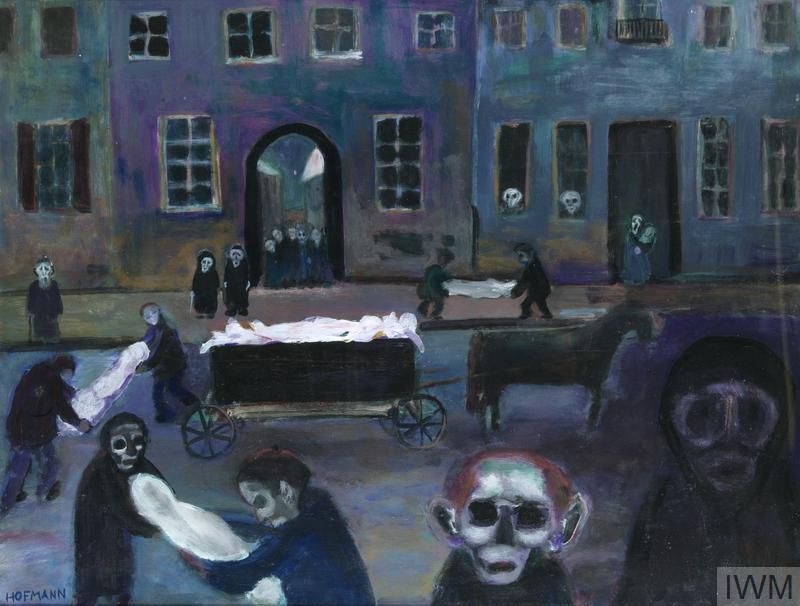
Picture: Edith Birkin, The Death Cart – Lodz Ghetto

Sermon for Birmingham Progressive Synagogue, Parshat Acharei Mot

judaism · liturgy · sermon

Pray for the right kind of rain

Every day, we pray for the right kind of rain. 

The Amidah praises God’s holiness and dominion over the natural world. 

We change how we address God in rhythm with the seasons. In the summer, we thank God for making dew descend. in the winter, for bringing on heavy rains. 

For us living in cities, we can feel quite disconnected from how important this water cycle is. I only catch snippets of how it causes concern. A radio broadcast says British farmers are worried that there hasn’t been enough frost in January. In a supermarket, a cashier tells me there is a shortage of aubergines because there wasn’t enough rain in Portugal this year. 

The cycle of the right rains affects whether we have enough to eat. It can mean the difference between living safely and losing everything. There is a reason the greatest catastrophe our ancestors could imagine was a flood.

This week, we gained a sense of how important and delicate the rain cycle is. 

At the start of the week, I was heading back from a holiday in the Lake District. It was searing hot. The hottest summer we’ve ever had, people kept saying. As I climbed mountains, normally soft moss felt like dry straw under my hands. The shops had stopped selling barbecues and matches. 

Everyone said that the slightest spark could set the whole forest on fire. We would wind up like California or the Amazon, with acres burnt to a crisp. Thankfully, it didn’t happen, but I left with an awareness of the forests’ fragility and a deep concern that England was not ready for climate catastrophe. 

Only days later, I came back to intense flooding. The rains fell intensely, relentlessly. I thanked God that I was safe inside as the skies turned black and stayed that way for what seemed like days. The area around our synagogue was drenched. Charlie Brown’s roundabout flooded again. Some in this community saw damage to their property. Members of our synagogue were displaced: moved initially to the higher floor of the care home, then relocated. 

I was taken aback by how well our care team took to handling the crisis. Claire, Sue, Debz and others made sure everyone who might be affected received calls, and that anyone who needed help got it. They showed the very best of what this synagogue is for. 

But I was most impressed by the bnei mitzvah students I met this week. Jacob and Layla, twins, are preparing to come of age around Pesach, at the time when we stop praying for heavy winter rains and start celebrating the gentle dew. I asked them what they want to be when they grow up. Jacob wants to be a primary school teacher. Layla says she wants to be an environmental activist.

I have to be honest. When I was Layla’s age, I had no idea campaigning could be a job. It is a testament to her curiosity and sense of justice that she has found this out.

But it is also a wake-up call of how dire things are with our environment that Layla has to think of this job. The problems we saw this week had many causes. We have a rapidly changing climate. Companies have over-consumed fossil fuels and spoiled the ecosystem. Developers have built on flood plains. Much of the development after the Olympics destroyed natural wetlands, worsening the situation. But all of these factors share a common problem: we have taken nature for granted.

In this week’s parashah, we read: 

If you listen, if you truly pay attention, the Eternal One your God will grant the right rains at the right times: autumn rain for autumn and spring rain for spring. You will be able to eat and so will your cattle. 

But you must guard yourself against a straying heart. If you serve other gods and bow down to them, God’s anger will blaze out against you. God will shut up the sky. There will be no rain.

This text might feel familiar. It is the second paragraph of the Shema, found on page 214 in your siddur for the Shabbat morning service. You may have read it before, but it’s unlikely you’ll have heard it read aloud in any service. 

It is the custom of this synagogue, and of all Reform synagogues, to read these verses in silence. So, why do we whisper it? 

One reason is that we are very uncomfortable with what is implied theologically here. It suggests that good things happen to good people and bad things to bad people. We know this isn’t true. The righteous suffer and the wicked prosper. Our rabbis knew long ago that there is no individual reward for good deeds in this life. So we won’t say it out loud when we have doubts about it.

But what if it is true? The warnings in these verses are not about how God might deal with individuals, but the impact of actions on entire groups of people. If you don’t pay attention to the ethics of Torah, you all can be destroyed. If you worship gods other than the Source of all creation, you will find yourself helpless before the forces of nature. Cause and effect. Action and consequence. 

In the biblical world, worshipping other gods meant turning to material things. Whereas the idol-worshippers bowed down to wood and stone, what marked out the ancient Israelites was that they only prayed to the transcendental God, who held all of nature in balance.

And that is what is happening in our world today. We are disregarding our ethical obligations to care for the planet, and we are seeing what happens. People have substituted the Eternal God for the material elilim of oil and gas. We have traded humility before nature for the arrogant belief that we can control and manipulate our environment without consequences. 

Now we are living the impact. We are dealing with the wrong rains. We are witnessing floods here, in China, in Germany, in New York, and in India. 

The Torah warns us: “Do not believe you have made all this with your own hands!”

We may have built cities and roads and bombs and planes, but we didn’t make the grass grow. We haven’t made the sun shine. It’s not us that makes the rains fall. 

All that is in the hands of a supreme Creator, who has charged us with protecting and sustaining this planet. We must hear, and truly pay attention, to that God, whose Word calls to us today. We must take up the challenge of replacing fossil fuels with renewable energy; of rebuilding our world in harmony with nature, rather than against it; of tackling carbon emissions and climate disaster. We must enable Layla to inherit a living planet so that she actually has something to protect.

We must act now. 

Shabbat shalom.

This sermon is for South West Essex and Settlement Reform Synagogue, 31 July, Parashat Eikev

high holy days · liturgy · sermon

It is on us.

What are we doing here tonight, beating our chests and chanting our sins? Haven’t we been through enough?

We have spent most of this year, from Purim onwards, sitting in our houses, staring at screens as nothing but bad news floods in. Coronavirus. Climate catastrophe. Police brutality. Rising inequality. Economic collapse.

Frankly, shouldn’t we able to take a night off? You might think we should get to the High Holy Days and only hear reassuring pleasantries. But Judaism never lets us off that easily. If that is what you want, Selichot is the wrong service. It’s very meaning is apologies, penitences, petitions. Its whole purpose is to summon us to ethical action and force us to examine our deeds.

At this service, we have to be confronted with Hillel’s maxim:

 אִם אֵין אֲנִי לִי מִי לִי. וּכְשֶׁאֲנִי לְעַצְמִי מָה אֲנִי. וְאִם לֹא עַכְשָׁיו אֵימָתָי

If I am not for myself, who is for me? But if I am for my own self [only], what am I? And if not now, when?[1]

This saying from the Mishnah is often rendered in the more memorable format: if not you, who? Yes, life would be much easier if we could look to others to resolve our problems. If only the government would do a better job… if only the European Union would sort things out… if only Jeff Bezos would spread his wealth around a bit… if only God would stop Coronavirus… if only God would send Moshiach to us today and sort the whole thing out! If only.

But your religion isn’t asking you to look at what others should be doing. It is calling on you to consider what you should be doing. Every time we pray, we recite the immortal words of Aleinu: “t is our duty to praise the Ruler of all, to recognise the greatness of the Creator of first things, who has chosen us from all people by giving us Torah.”[2]

Aleinu. It is on us. The power and responsibility for what happens in this world rests with us. To be a Jew is to be singled out, directly and personally, by God. You, as an individual have been called upon by God and tasked with Torah, with the moral welfare and social responsibility for all humanity. You are asked to take action.

And what does Aleinu say we must do? To cut off the worship of material things. To destroy prejudice and superstition. To speak out against oppression. To unite the whole world. To bring goodness and truth and justice to this world.[3]

That is our calling. That is what we must answer. According to folklore, this prayer was introduced into the daily liturgy in the 12th Century, when a group of Jewish men and women were burned at the stake for refusing conversion. As the flames piled up around them, they sang these lyrics to a haunting melody, refusing to give up even unto death.

Faced even with being burned alive, these martyrs’ first recourse was to recall their own moral duties. They used their last moments to remember why they were placed on earth. Why, in this time of Coronavirus, should we be any different? We must see this season as a time to take up the yoke of responsibility Judaism has bestowed.

As we recite our selichot, challenge yourself. Ask: have I been as generous as I should? Have I done enough to reach out to vulnerable people?  Have I prayed? Have I built community? Have I supported my loved ones? Have I been kind?[4]

And, if, on any point, you find yourself deficient, now is the time to correct your ways. If not you, who? If not now, when?

I gave this sermon on Saturday 12th September 2020 at Glasgow Reform Synagogue for Selichot.

[1] Pirkei Avot, 1:14

[2] Forms of Prayer 2008, p. 310

[3] Forms of Prayer 2008, p. 311

[4] Based on Babylonian Talmud Shabbat 127a

fast · liturgy · poem

Coronavirus Lamentations

This is a creative re-translation of Eichah 1 to reflect the current era, where our sacred sites again sit empty and a new enemy feels as if it has besieged us. I have written this partly to distract my mind from fasting on Tisha b’Av, and partly to help process the grief I am feeling around the closures of communal spaces.

1

How is this possible?

As lonely she sits, this synagogue, where once she thronged with congregants

She has become like a widow;

Great she was among people, a power for the prayers

She has become precluded.

2

She cries,

Bawls, in the night and her tears fall on her cheeks

She has no comforter from all her lovers

Her friends have abandoned her

She imagines them as loveless.

3

The Jews are exiled from her

Caused by inequality and sickness; she sits with the nations

She cannot find rest

The virus trounced her

In the narrow spaces where it traps its victims.

4

City streets are mourners,

Don’t welcome congregations any more;

All her doors are bolted

Her leaders are grieving, her lay people lament

She sits in bitterness.

5

Strange are these adversaries

Enemies who carelessly became overlords

A plague pronounced upon a people

That locks toddlers in captivity

Fearing a sickness outside.

6

The sanctuary’s splendour

Fled away from her

Her wardens scarper like deer to nowhere

Running breathless

From the airborne pursuer.

7

She remembers

Grandeur in her grief

All the precious people that made her home at first

Now her people are falling to the power of frailty

And a sickness that ridicules science.

8

Our surfaces

Have become contaminated

Uncleanliness in the air

And all the dangers we cannot see are suddenly laid bare

So she tries to sigh without breathing.

9

Hands spread

Infection over our most treasured relatives,

So once the problem has entered your body

You are commanded

Not to go out in public.

10

Everyone is panting

Just trying to once again enjoy taste

To have their good spirits revived.

Does God not look upon us

And see how much we suffer?

11

Don’t let it happen to you

Know that this is pain unlike all others

It has befallen me

As if God’s nose has flared up

And exhaled sickness in anger.

12

My bones bind

Like spines sticking together

Feet swell, immovable

I cannot turn around

And spend my days lying in pain.

13

My body is

Marked by the signs of disease

Neck scrunched up in knots

Whatever strength I had has failed me

As I find I can no longer stand.

14

The strongest are trampled

Now, God calls out to me, the time has come

To destroy the youth,

Stamping on brides and crushing down grooms

Like grapes in wine presses.

15

My eyes, my eyes

Over these I cry

Droplets fall without a refuge

Even our physicians are dying,

So powerful is our adversary.

16

Love extends her arms

Parting only to find no one there

Such unclear instructions

God of Jacob, this fear is surrounding me

Every centre is infected.

17

God, you take

Revenge against rebellious and uncovered mouths.

Please listen, all peoples,

Won’t you see the pain

Caused by endless captivity?

18

I keep calling my loved ones

So they know I still care

I seek out my elders

And bring food to the vulnerable

That they will not be forgotten.

19

I call out to God

To tell You: ‘I am in distress!’

My heart is turning round

Abroad the people are devastated by statistics

And we see death at home.

20

They can hear

Ululating outcries from loneliness

This indifferent virus listens

Knowing that no matter what you do

That appointed day will come.

21

Let all evil stand before God

Vanquisher and vanisher

Who knows all

Examines every dead

Your saving grace may one day come to those

Zealous attendants awaiting You.

22

Return us to You, O God, and we will return to you. Let us have back the times we had before.


empty london

judaism · liturgy · sermon

Who are these prayers for?

‘These prayers aren’t for me’ a woman said. She was addressing Judith Plaskow, the great feminist Jewish academic. Plaskow and her colleagues were on women’s study retreats in the 1980s. They were trying to wrestle with the Jewish tradition – a tradition they loved and simultaneously felt oppressed them as women. On these retreats, they discussed theology, read poems, studied Torah, engaged in rituals, meditated and wrote new prayers.

‘These prayers aren’t for me. These aren’t the prayers I grew up with,’ a woman told Professor Plaskow. ‘I don’t feel comfortable with them.’

‘We’re not the generation that gets to feel comfortable,’ Plaskow responded. ‘We’re the generation that gets to create a tradition so the next generation grows up in it, and for them it will be the authentic tradition, and they will feel comfortable.’

In my own life, this has turned out to be completely true. Siddur Lev Chadash was the prayer book of my childhood. It was first published in 1995. I remember standing together with Reading’s Jewish community, burying the old siddurim in the ground and celebrating the arrival of our new liturgy. Even at this young age, the event felt momentous. It felt simultaneously like everyone was grieving and celebrating. It was the end of an old cycle and the beginning of a new one.

The prayers of Siddur Lev Chadash were my prayers. I feel sucked in by their rhythm, transported by their ideas and comfortably at home when reciting them. But at the time when they were first introduced, they were scandalous. This prayer book, our prayer book, did something no prayer book anywhere else in the world had done before. It made God gender-neutral.

Nowhere in this siddur will you see God called “He”, “Him”, “Lord”, “King” or “Master”. At the time, this move was ridiculed. People saw it as the excesses of feminism. Even some congregations within Liberal Judaism opposed it as a drastic departure from the theology they were used to. They did not feel comfortable. But as Plaskow warned many years before, they were not the generation who would get to feel comfortable. Mine was.

And for me, the idea that God could be anything other than gender-neutral seems preposterous. How can an infinite being, who transcends space and time, be contained by something as small as a gender? I felt that I had the legitimate, authentic Jewish tradition. Words like “the Lord is my Shepherd” , to me, sounded decidedly Christian. On the other hand, “You are my Shepherd and my God,” the new translation of exactly the same psalm, was an unambiguously Jewish prayer.

The editors of that prayer book took a leap of faith. They created prayers that would make their own congregation uncomfortable so that my generation could have ones that would make us feel more comfortable. They gifted us a Judaism rooted in feminist thought, that taught us about God’s transcendent and unknowable nature. They ended old ways so that others could enjoy new ones.

In fact, this has been the way of Liberal Judaism since its inception. When it was first founded as the Jewish Religious Union, some of its members may have known the siddur of Reform Judaism’s West London Synagogue. Most, however, only knew Orthodoxy. They had little referent point beyond the lengthy Hebrew-language services that dominated London at the time.

They innovated in ways we could not dream of. They hacked up the services, re-ordered all the prayers, cut out every part they found offensive or uninspiring and produced a prayer book that reflected their values. From this, Rabbi Israel Mattuck, the movement’s first ever minister, created what would be the siddur for over forty years. It emphasised God’s universality, focusing not only on God’s special relationship with the Jews, but also on God’s relationship with all of humanity. This must have been outrageously audacious at the time. But if they had not had the courage to innovate, our Judaism would not exist.

In the 1960s, the Liberal prayer book, ‘Service of the Heart’ took a step that no other Jewish liturgy in English had taken before. It decided to focus on God’s personal and intimate character. It spoke about God in the vernacular, saying “You” instead of “Thou”. People were outraged that any liturgy had ditched the holy tongue of Elizabethan English. Today, it feels only natural that we should speak to God the way we speak in our daily lives. We may use grander language than we would in the supermarket, but the basic English grammar is the same. Those Liberal Jews took a decision to leave behind a language that felt comfortable so that we would have one that felt right to us.

Today, as we edit the movement’s new siddur, we are faced with the same challenge. We must ask ourselves not what prayers will make us feel most at ease, but how we want the next generation to feel at ease praying. We have to ask tough questions about what values we want to communicate and what learning of Liberal theology we hope to transmit.

Already, the editors, Rabbis Lea Muhlstein and Elli Tikvah Sarah, have begun that process. They have decided that not only should the English reflect our thinking, but that the Hebrew should reflect the English. Hebrew is a necessarily gendered language, so they have taken the bold step of feminising the Hebrew in some sections. They have diversified the names by which we call God. Not only will you see ‘Yud-Heh-Vav-Heh’ and ‘Elohim’, but you will also find ‘El Elyon’ – God on High; and ‘El Shaddai’, a biblical name for God derived from the word for breasts. You will see ‘Shechinah’, a word meaning ‘dwelling-place’, which in the Kabbalistic literature refers to the feminine aspect of God.

I have no doubt that this will be a difficult adjustment for all of us. It takes courage to leave behind something you know and begin something anew. But every year, at Simchat Torah, we do just that. Every year, we leave behind a year of Torah reading and begin again with the story of creation. We know that this year will be entirely different and we will read it in ways we never have done before. But we are able to let go of the old because we know that is what we must do to progress.

So, as this community moves from the familiar territory of Siddur Lev Chadash into the uncharted waters of Siddur Shirah Chadashah, I ask you to be brave. I ask you to imagine how these prayers will feel in thirty years’ time to somebody who has been raised on them. I ask you to allow yourselves to be uncomfortable. Embrace it. Even though these prayers are not for us, take the decision to make them yours.

068e58e00c8a4b8f7bcd5e8d0851649b

I gave this sermon on Saturday 19th October at Three Counties Liberal Judaism in Ledbury, Herefordshire. 

high holy days · judaism · liturgy · sermon · story · theology

The old man and the goat

Back in the village, when myths were true, an old man used to come round with a goat. In the autumn, when the leaves were turning crispy and the days were getting shorter, he’d walk through the shtetl streets, dressed in rags and a flat cap.

Clopping along behind him came a goat on a rope leash. Although scruffy and somewhat unkempt, the goat was well-behaved. She didn’t eat the villagers’ laundry off their lines or stop and refuse to move, the way goats would normally do. She just casually pattered along behind the old man.

And as they walked along the winding, cobbled pavements, the old man would call out: “Sins! Sins! Bring your sins! Sin collection! Bring your sins!”

And they did. One by one, people came out of their houses, bringing their sins with them. A man with a cane came out, rested his hands on the goat’s head, and whispered in her ear: “I get angry too often. I need to stop losing my rag. I keep boiling over when I don’t mean to.” The goat nodded sagely, and the man hobbled back into his home.

A young girl leaned out of her wooden shuttered windows, rested her hands on the goat’s head, and whispered in her ear: “I make a mess and blame my sister. I tell my mum it was her. I know I shouldn’t lie. I don’t want to lie anymore.” The goat nodded sagely, and the little girl popped back through the windows and into her home.

The old man and the goat walked all through the streets of the village, as people patiently clamoured out from shops and houses to whisper their sins. As each person leaned down to place their hands on the goat’s head and confess their sins, the old man would hold the goat’s rope leash and stare off, wistfully, until they were finished. Then he’d move on and return to his call: “Sins! Sins! Bring your sins! Come see the goat and tell her your sins!”

They winded up and out through the town, into the farmland and countryside. As the houses grew further apart, the villagers came out in drips and drabs. A farmer walked out through the barley fields and stepped over the style to his pastures. He put his hands on the goat’s head and whispered in her ears: “I gossip. I ask other people’s business and I repeat it. I tell everyone private stuff. I know I need to find better ways to talk to people. I need to find better ways to talk about people.” The goat’s eyes glistened and the man returned to farming.

Off they went, the old man and the goat, up a winding road, leading up a mountain, to the castle that overlooked the village. Nobody ever talked about the old man or the goat or what they told them. Nobody gave too much thought to the castle or where the sins went. They just knew that, once the day was over, they felt as if they had been forgiven. Somehow this ritual alleviated their guilt and helped them to change.

Every year, at the same time, on this day, the old man and the goat came round and the people gave their sins. That was how they maintained peace in the village. It was their collective form of self-help.

One year, that changed. One little boy became a little too curious. As the old man came round, shouting “sins! Sins!” he wondered where all those sins went. He wondered why a goat had need of such sins, or whether such a method was really effective at getting rid of guilt. He decided to subtly follow the old man and the goat.

He crept along behind them, keeping his distance, all the way through the village and the farmland and the countryside; all the way up the winding mountain path to the castle, until the old man and the goat arrived at the enormous front door and walked in.

The little boy stood at a distance and watched through a window. Inside a giant hall was a beautiful queen sat on a towering throne. The queen accepted the old man and the goat into her presence. “What sins do you have for me?” she asked.

The goat opened her mouth and replied: “The baker has been holding back bread to drive up the price.”

The queen nodded. “And will he do it again?”

“No,” said the goat. “The baker wants to change.”

“Then this is forgiven,” said the queen. And a white cloud came out of the goat’s mouth and disappeared off into the air.

“Tell me another,” said the queen.

“A teenager in the town keeps staying out late and lying to her parents,” the goat proclaimed.

“And does she want to change?”

“Yes. She wants to be honest.”

“Then this is forgiven,” said the queen. And a white cloud came out of the goat’s mouth and disappeared off into the air.

So that’s where the sins go! The little boy was shocked. All this time it was not the goat that had removed the sins but the queen.

“Tell me another,” said the queen.

“The milkman deals unfairly in business. He dilutes the milk with water and gives people the wrong change. He overcharges to get more for himself.”

“And does he want to change?”

“Not really,” the goat shook her head. “He is weighing out unjust measures as we speak. He will send the same sins next year.”

“Then this will not be forgiven,” she said. A black cloud came out of the goat’s mouth, and floated back down towards the town. The little boy watched as it descended down the mountainside and into one of the farmhouses.

He had seen enough. He fled from the castle and ran back towards the town. He pelted towards home, but just as he was approaching the edge of the village, he heard wailing and sobbing. It was coming from the cow shed, where the black cloud had gone.

“He’s dead! He’s dead!” cried a woman from the farmhouse. She sobbed as she lugged out her brother’s body.

Suddenly the boy understood. What the queen did not forgive she avenged with death and punishment. The boy wanted no part in it. He ran into the village and told everyone what he saw.

“The goat decides if we live or die! The goat is judging us and telling all our secrets to the queen in the castle!”

The villagers were furious. They crowded around the town hall in their outrage. When the old man and the goat next came around, they chased them out of town. The man and the goat ran away into the wilderness and were never seen again.

Then, having calmed down, the villagers realised what they had done. Their whole system for penitence and improvement was gone. They turned to each other once more and asked what they should do.

The mayor held her head in her hands and told them there was only one option. They must go to the castle and visit the queen. She would tell them what to do.

Every single villager in the town huddled together and marched solemnly to the top of the hill where the castle was. They gathered at the drawbridge and walked into the throne room, where the queen was sitting.

She looked up as the entire town flooded into her hall.

“This is most unusual,” she told them, wryly.

The mayor stepped forward: “We’re very sorry, Your Majesty, only we don’t know what to do. We chased away the old man and the goat and now we have no way to process what we’ve done wrong. We have lost our path to repentance.”

The queen sighed. “Once, you used to send me your sins through an old man and a goat. Now, you will need to tell them to me in person. Come into my palace, all of you, and confess together.”

At that moment, every villager began frantically shouting out their sins. Every voice drowned out every other as they clamoured to be heard. From her throne, all that the queen could hear was a roaring, indiscriminate din. She patiently gazed out over the assembled hoard.

It did not take the villagers long to realise that their method was proving ineffective. To make sure they were understood over the din, some villagers began to gather together to confess to having committed similar trespasses.

Ashamnu. We have done wrong. Bagadnu. We have betrayed. Gazalnu. We have robbed.”

Soon some of them had developed a chant to confess everything together: “Dibarnu dofi. We have told lies. Heevinu. We have been perverse. V’hirshanu. We have done wrong.”

Soon, all the hundreds of attendees had joined in and were chanting in unison: “Chamasnu. We have been violent. Tafalnu sheker. We have told lies. Yaatznu ra. We have given evil advice.”

The queen assured them: “When you had your goat, I knew who to judge and how. But now that nobody can tell me who is sincere and who is not, I will judge you together with mercy. If you come together in sincerity, I will accept your petitions. But if you stay home or ignore this new ritual, I will judge you all unfavourably together.”

And every year, the villagers came back and recited the same chants as the queen watched from her throne, going through the entire alphabet of their transgressions. They built up more elaborate rituals, abstaining from food, beating their chests, dressing in white, reciting their prayers from sundown to sundown. Together, they announced their iniquity and took responsibility for each other.

We are their descendants. We, the Jewish people, are the inheritors of the traditions of those people who once whispered to goats. There was a time when our community lived in a small place, and had a Temple, and intermediary priests performed strange rituals with goats to expiate our sins. Perhaps, if we believe the myths we will hear in the Yom Kippur parashah, we once lived in a time when God individually judged our sins and immediately exacted punishment and reward.

We are no longer those people. No longer do we sacrifice animals in a Temple. No longer do we require men to intercede on our behalf. No longer do we believe in immediate divine retribution. But we are their heirs. We have maintained their values. We still feel that, together, we can process our guilt through words and songs. We continue to believe that we can improve as individuals and as a collective. We still come together in the autumn, when the leaves turn crispy and the days grow short, to pray that we may be forgiven.

In the absence of miracles or curses, we, like our ancestors in the village, are called upon to take responsibility for ourselves and each other. We atone with our words and hold each other in this space, as we hope that we can find a path to repentance. Together, let us pray.

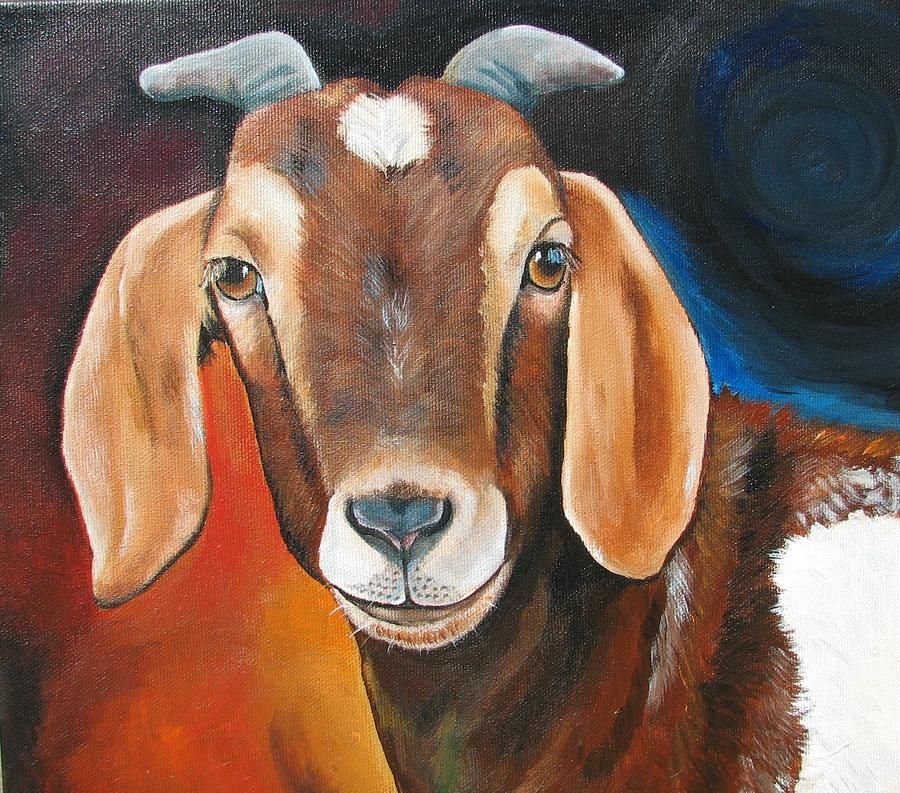
goat painting

I delivered this sermon for Kol Nidrei at Lincoln Synagogue on October 8th 2019

liturgy · sermon

What makes a life worth grieving?

The advent of Eurovision on Saturday reminded me of another anniversary I needed to mark. A year ago, at this time, many of us assembled in Parliament Square to publicly grieve the killing of Palestinians at the Gaza border. At the time, I wrote this sermon. While I shared it with friends and colleagues, the climate felt far too hostile to publish this. Perhaps I should have done. A year on, here is the sermon I never delivered at the time.

We tell ourselves that the grave levels all distinctions. Kittels don’t have pockets. You can’t take any of it with you when you’re gone. In death, all are equal.

Anybody who has ever lost somebody knows that is untrue. The grave shines a light on differences that we could otherwise ignore. As we scramble together the funds for a funeral, often several months’ wages, we realise how much class mattered in life. The poorest families cannot even attend the funerals of their loved ones, as councils bar them while they dispose of the body. People find out how much they were worth in round figures.

Grieving rituals reflect strongly on a person’s life. At the graveside, you can see what a dead person valued, and what people valued about them. You find out how many people their lives touched, and how much. Even early in our roles as rabbinic students, my classmates and I have begun to see what a profound impact a person’s death can have on the people who loved them. You find out what value gets placed on a life.

Jewish mourning rituals help us to make sense of such loss. The kaddish prayer is a blessing for the living; an Aramaic chant in praise of the Almighty; an appeal to Whoever is Up There to intervene and give us peace in every sense of the word. Conducting Yizkor services at Yom Kippur, I have seen how just the fact of reciting those words once a year can alleviate pain and bring healing. Its rhythm has its own power.

But the rules around these rituals can hurt as well as heal. Judith Hauptman, a Talmud scholar, has recorded how the limits on who can be mourned have narrowed over time in Orthodox halachah. A shorter version began as a blessing for any learning experience. From there, it became a graveside prayer one could say for all family members and teachers. Over time, it has been slowly whittled down to include only a mourners’ own parents. Hauptman points out that this system poses a problem in the modern world, where parents regularly re-marry and families are often cobbled together in ways that don’t match up with normative expectations.

I feel like limiting who can be ritually mourned poses a much deeper, existential question: what makes a life worth grieving? How do we decide what makes a death worth commemorating? What does it say about the value we place on somebody’s life when they were living, if we can’t remember them when they die?

In the aftermath of the Nazi genocide, Liberal Jews began saying kaddish weekly, independent of who was in the synagogue. There were too many people left behind who had nobody to mourn for them. There was too much unspeakable suffering to moderate who could be mourned and how much. It was a way to affirm the dignity of Jewish life against a racist movement who sought to wipe it out completely.

That was how I was raised: reciting a blessing every week for members of my family I never knew, and people I’d never met, to sanctify their memories lest they should be forgotten. We prayed, too, for earthquake victims, people dying in famines, those killed in school shootings and terrorist attacks. Whenever there were people whose names needed to be remembered, we remembered them.

Perhaps, my more conservative friends suggest, that ritual expands the bounds of mourning too far. I do not know what it is like to grieve for a parent. I haven’t had that experience. I don’t know how it compares to the loss you feel when you lose a friend, or another family member. I only know what it is like to have somebody die and wonder whether I can grieve for them, and how much I’m allowed to do it.

I know that feeling too well. The gay community is famous for its statistics. Alcohol, drugs, suicide, homelessness, murder, depression, loneliness. I have had friends die and wondered whether I could pray for them. And wondered what I could pray for them. In that moment, I have found out the uncertain value that I myself place on a life. We cannot mourn everyone equally, but we surely can mourn. Somehow. The kaddish is the only vocabulary I have for sanctifying death, so I have said kaddish for people who were not my parents; who were not Jews; who I did not know.

That is the question of deep religious significance behind the conflict in the Jewish community over the recitation of kaddish for those the IDF killed in Gaza last month. Everybody has their own views on who is responsible for violence in the Middle East and how it can be resolved. To the best of my knowledge, nobody has changed their mind significantly on that front. My views on the matter are well-known, and I won’t go into them here. But I do want to talk about the halachic and spiritual concerns that this issue has raised.

I want to affirm, without reservation, that I believe we were right to say kaddish for the Palestinians. Reciting that prayer said something that no other kind of protest or placard or petition could. It said that the souls of those killed were worth grieving. It said that their lives were worth living. In a world beset by war and injustice, that prayer, for those people, at that time, reminded the whole world of the existence of a loving Creator, Whose ways are peace.

They were not the parents of anyone present there. Nobody davening in Parliament Square knew any of the Palestinians who were killed. In a sense, that might make the prayer inappropriate. But only if you accept that we can only grieve for the people who gave birth to us. If that is your position, I respect it, but I don’t agree with it. I think we are right to mourn people with the only religious language we have when we are moved to do so.

None of the people killed in Gaza were Jews. Like most Palestinians living in that area, most of those who died were Muslims. There are some who claim that kaddish should be a prayer reserved only for Jews. If that is your position, I cannot even respect it. Kaddish does not make any religious claims about the status of the person being mourned. It does not have any impact on their metaphysical state. It is a prayer for the living, to help them cope with the trauma of death. If we limit that prayer only to other Jews, we limit ourselves and our capacity to care for others. We send out the horrifying message that only ‘our own’ deserve to be remembered. We suggest that only ‘our own’ led lives worth living.

Perhaps they were members of Hamas. It is, after all, the largest political organisation in Gaza, acting both as an armed militia against Israel and as the primary provider of welfare services to Palestinians. It is a reactionary, fundamentalist, sexist and homophobic party. It is not a group I would ever support or join. But even its members led lives worth living. They had deaths worth mourning. They were created in the image of the Holy One, Whose will brought the Heavens and the Earth into being. No amount of political disagreement can detract from that.

Hamas’s views on Jews are unconscionable. If they ruled the world with the views they hold now, the lives of all Jews would be a misery. But they do not rule the world. They barely have control over a small strip of land, locked in by Egypt and Israel as a military buffer zone. They do not have any control over their neighbouring Mediterranean Sea, where Israel, Cyprus and Turkey police what goes in and out. Even how much food and aid enters the land is rationed by the United Nations. Their skies are not their own. However horrid their ideology, they have no power to enact it. They are, by far, the weaker party.

Perhaps the very fact of how vulnerable they are makes them less worthy of being mourned. In Frames of War, Jewish academic Judith Butler writes about what makes life grievable. She looks at how a media culture that showcases war as a daily occurrence has desensitised people to its unimaginable suffering. She shows that the people whose lives are most precarious – that is, those who we already don’t expect to live very long – are treated as if they are most disposable. Their lives are hardest to completely mourn.

Intuitively, we know this is true. We are so used to hearing about people there dying, or so accustomed to the idea that war is normal in ‘places like that’ that they don’t induce international horror any more. But they should. If we were fully human, living up to the highest values taught in our Torah, we would live in a permanent state of distress. But we don’t, because we have to survive. We treat precarious lives as if they are disposable.

Critics of the kaddish for Gaza have pointed out that the protesters didn’t pray for people killed in Syria, Congo, Central African Republic or Yemen that week. We didn’t. We should. If they are criticising the protesters for not grieving enough, I extend a wholehearted invitation to cry with me about the state of our broken world. There are too many tragedies left ignored. But they want people to hurt less, or not at all, how can we possibly accept? How can anyone agree not to feel rage and sadness at unjust killing and remain human? And call themselves Jewish?

Despite all desensitisation, when Israel gunned down the Land Day protesters in Gaza, suddenly we could not ignore it any more. Only the day before, Netta had won Eurovision. President Trump was in Jerusalem, opening an embassy. All eyes were on Israel. And Israel shot 63 people in one day. Israel, that declares itself the Jewish state, a body politic that has taken up the mantle of our sacred task on earth to be a light unto the nation and spread the message of ethical monotheism, shot down 63 people in one day. They sent out one message about what value they placed on certain lives. The Jews in Parliament Square sent out an alternative message.

I don’t know what makes a life worth grieving. I don’t know who should mourn for whom and how much. I don’t know where to place the limits. But I know that when people do decide to grieve, they decide that a life was worth living. Those Palestinians’ lives were worth living. Their deaths were worth grieving. Their mourners were worth supporting. They did not deserve to die.

By making the decision to pray for the Palestinians, the people in Parliament Square did the most Jewish thing we could. We sanctified life in the name of the Holy One. We recognised that the bonds of faith that bind together humanity are stronger than the bonds of blood that bind together one people. With our words, we gave each other hope for a redeemed world, saying:

“May the Almighty’s Sovereignty be established in your lifetime and during your days, and within the life of the entire Jewish people, speedily and soon.”

And let us say: Amen.

kaddish for gaza

The fallout from this action can still be felt, and many in the community are hurting. I hope that publishing this does not reignite flames but helps demonstrate that we were coming from a place of heartfelt Jewish religious feeling, even for those who disagree.

judaism · liturgy · sermon · story · Uncategorized

How lovely are your tents, O Jacob

Balaam was nervous. He rode his donkey to the steppes of Moab. The donkey trotted slowly in the desert heat, weighed down by Balaam’s travelling bags. Balaam looked this way and that, up and down at the craggy mountains, and back to the land he’d left behind. He fiddled with the donkey’s harness, twitching at the leather straps.

“There is a people that came out of Egypt; it hides the earth from view, and it is settled next to me,” King Balak had told him. “Come now, put a curse on them for me, for there are too many of them for me. Maybe, with your help, I can defeat them and drive them out of the land. I know that whoever you bless is blessed indeed, and whoever you curse is cursed.”[1]

It was true. Since childhood, Balaam had known he had a gift. Whatever he said came true. The right words just came out of his mouth and took meaning. As an adult, Balaam had become something of a blessing mercenary – offering prayers for kings across the world in exchange for payment.[2] Normally, he turned up, said the words, and left with enough money to feed his family for a few more weeks.

But this time was different. Before being asked to curse the Jews, Balaam had never heard of them.[3] Then, the second he’d been asked to curse them, their God appeared before him. God told him: “Do not go with them. You must not curse that people, for they are blessed.”[4] Initially, he’d refused, but King Balak had been insistent. Mercenaries cannot say no to kings. So he agreed.

Balaam sidled up to the edge of the valley where the Jews were camped. He looked out over all their tents, pitched in the desert. He saw the speckled silhouettes of people wandering about between the marquees. He opened his mouth to curse them. But the words to curse weren’t coming. Every time he tried to curse them, his tongue dried up and stuck to the roof of his mouth. He felt a heavy marble in his gullet, choking up all his words. Then, from somewhere outside of him and deep within, a voice came out of his own mouth:

“How lovely are your tents, O Jacob, your dwelling-places, O Israel.”[5]

To this day, those are the first words Jews say on entering a synagogue. We Progressives sing them together when we begin our services. Orthodox Ashkenazim recite them as they approach a community’s door, or even idly walking past a shul.[6] Why is it that the words we say when we come to a synagogue are the words of a non-Jew, who knew nothing of the Jews, but was somehow overwhelmed by the Divine Spirit? What has made us decide to use this blessing in such a way?

I suspect part of the answer is that, when we go into a synagogue, all of us feel like non-Jews. Whether we attend shul weekly, or only turn up for Yom Kippur, something about the space can make anyone feel not quite Jewish enough. We can all feel like we are saying somebody else’s words, tentatively mouthing out sounds that don’t quite feel right.

I rarely meet Jews who feel completely comfortable in their own Jewishness. Everybody feels excluded in some way: not quite learned enough, not quite spiritual enough. A stranger recently told me he was just not quite brave enough. Being a people who don’t belong is hard enough without worrying who belongs to that people. Many people have come up with their own definitions for what makes a Jew Jewish, but my favourite is: a Jew is somebody who worries they are not quite Jewish enough.

This prayer goes some way to honouring that feeling. All of us, no matter how observant or learned, recite the words of a non-Jew who has been bowled over by the Jewish God. The prayer reassures us: you may feel like you don’t belong, but you are home.

I used to wonder if I would ever reach a point where I felt like I knew enough. As a teenager, I stumbled over Hebrew words as the people around me seemed to recite them so confidently. I thought that perhaps when my Hebrew was good enough I would feel secure in my Jewishness. Then, having learnt Hebrew, I realised how little of the Torah I knew. I thought that if I could only master the Scriptures, I wouldn’t worry if I belonged.

Last week, I finished my examinations for my first year at rabbinical school. Our teachers assessed us on sections of Talmud, Hebrew grammar, Aramaic language, leyning the Torah, philosophy and biblical criticism. As I came to the end of them, I realised how much I still did not know. The rabbinical course gives us the tools we need to be able to explore every part of Judaism, but it cannot fill us up with everything. Our religion’s traditions are too diverse; our interpretations too vast.

I have come to embrace that feeling. Judaism is a bit like star-gazing. You lie on your back and set your eyes above you. You realise there is no way you could ever count all the stars you see. After a few moments, your eyes adjust, and you realise that there is another layer of stars behind the ones you couldn’t count. Suddenly, you’re humbled as you realise you’re facing upwards to infinity, beyond an entire galaxy with no end in sight.

This is our Judaism: layers of complexity reaching out to infinity. All we can do is stare at it in awe, flummoxed by our God, and say: “How lovely are your tents, O Jacob, your dwelling-places, O Israel.”[7]

stars moab

I wrote this sermon for Leo Baeck College‘s weekly parasha blog.

[1] Numbers 22:5

[2] Midrash Tanhuma Balak 4

[3] Rashi on Numbers 24:14

[4] Numbers 22:12

[5] Numbers 24:5

[6] http://www.jewishvirtuallibrary.org/mah-tovu

[7] Numbers 24:5

article · judaism · liturgy · theology

Praying for Today

Becoming disabled made me question everything I thought I knew about Judaism. Then it brought me back to the religion in a way I’d never thought possible.

When I was 19, I woke up one morning and found that I couldn’t get out of bed. My hips were stiff, my back was sore, and my arms just weren’t strong enough to sit me upright. Something was wrong. I called out to my housemate, who helped lift me out of bed. That was the first time I needed help standing up. There would be many more.

It had been building for a while. I’d sat in university lectures and on buses feeling tremendous pain around my neck, shoulders, and lower back. I stared blankly at the doctor when she told me I had ankylosing spondylitis, an autoimmune disease that attacks the spine. In a normal spine, the bones in the back are buffered by cartilage. In my spine, the bones were fusing together.

Back then, aIl I knew about the disease was that there was no cure. I didn’t know how much my back would come to hurt, or much I’d struggle with fatigue, or how little I might be able to move.

All I could do was focus on making changes to get better. I took up exercise, having studiously avoided it since school. I cut back on smoking and drinking. I changed my lifestyle and resolved to look after my body better. But the biggest change of all wasn’t in my body; it was the unexpected transformation of my religious beliefs. Getting sick made me doubt the Judaism that had been such an integral part of my life.

***

I grew up in a Liberal Jewish community, the U.K. sister of the American Reform movement. My Marxist parents had initially resisted raising me religious, but even as a child I’d been so drawn to Judaism that I insisted on dragging them to synagogue. Our community, based in a large commercial town surrounded by countryside just outside London, would meet weekly in a small shared chapel. We’d head out to a local farm for the pilgrim festivals. We’d plant trees at Tu B’Shevat and harvest fruit at Shavuot. We even camped out in the chilly English autumn for Sukkot. I adored getting to go out to the countryside. I loved cheder and getting to spend my weekends with other Jewish children. But more than anything else, I loved prayer.

There was something in Jewish prayer that filled me with joy. From the collective singing of “Mah Tovu” at the start of the service to the barn-storming shouting of “Adon Olam” at its end, I felt like I was part of an amazing community. Our liturgy, especially, filled me with hope. It spoke with such certainty about the sureness of progress. People whose lives were difficult now would get better. Society, though broken, would be perfected. The whole world was on one unfettered journey toward a messianic age of truth and righteousness.

I can still recite by rote the words from the siddur: “You support the fallen and heal the sick; you free the captive and keep faith with those who sleep in the dust.” This, I believed, was a G-d who actively intervened in everybody’s lives to make them better. I learned to say in English: “We hope soon to behold the glory of your might when false gods will vanish from our hearts and idolatry cease forever.” This, I thought, was an unabashedly optimistic religion.

I found that optimism everywhere. At home, my parents were convinced that the workers’ revolution was just around the corner and a new age of peace and equality would soon come to replace our capitalist system. At school, I learned that I could achieve anything if I worked hard enough. All of us could become astronauts or prime ministers, if only we put our minds to it. No matter who was right—the religious, the Communists, or the aspirational—the future was going to be great.

As I child, I held tightly to that view of the world.

***

There was never exactly a moment I stopped believing. I drifted away. I went to synagogue for the major holidays. Then I went back to living my life. But as that life became more complicated, so did my relationship to Judaism.

Dealing with chronic pain meant I had to question everything I thought I knew about the world. People’s lives were supposed to be stories of progress. We’d start out from a difficult place, we’d struggle, but as we went on, things would get better. G-d would support us. How could I believe that now, knowing that my health would gradually deteriorate?

Every year, autumn brought cold rain and my condition would flare up anew. Each time, it got worse. I found myself in more pain, struggling to cope with daily tasks. I could no longer sit cross-legged, and it hurt to sneeze. Each time my disease got worse, my religious questions came back to the fore. I needed to understand how I could get so sick and have my life derailed so badly.

I went to work in Turkey, fearing that if I didn’t get out and see the world before my spine fused any more, I might lose the chance. I persisted with my questions about faith. But I resolved to start going to synagogue regularly again—to look for the answers I couldn’t find in my daily life. I sat each week in an old Sephardi synagogue on the Bosphorous, where old men struggled to make a minyan, wondering if there was anything G-d could do. I started bargaining, praying to have my disease taken away. I quit smoking. I quit drinking. I took my painkillers. I did yoga every day.

I ached in my muscles, and I ached in my soul, heartbroken by every answer I could think of. Had I done something wrong to be exempted from the linear, progressing life everyone else was meant to get? Was G-d not interested in people’s lives enough to intervene and relieve suffering? Was G-d not even there at all? The thought crushed me, but I didn’t want to let go of the optimistic theology that had filled me with such wonder as a child.

At 25, I lost the ability to walk properly. I could only push my limbs outward in robotic movements. I didn’t have enough time to cross roads in the time it took for the lights to turn from red to green and back again. I couldn’t sleep because with the slightest turn I woke myself up with the sound of my own screams. Every muscle in my body was tensed up. I lost more than 25 pounds.

Dealing with pain, it was hard to think at all, let alone to think positively. I absorbed all the books on Jewish thought I could find, searching for answers. If I wanted to hold on to the view of G-d I’d had as a child, I needed to come up with alternative solutions. Perhaps I was being tested—eventually I’d do enough mitzvot and I’d be relieved of the pain. Perhaps I was being punished. Maybe this was G-d’s plan after all.

***

Last year, I came back to the U.K. Doctors put me on regular doses of ibuprofen, then naproxen, then coxibs, none of which did anything. Unable to focus because of pain, I lost my job. I felt like I was no longer useful. But just as I was giving up hope, I followed a friend along to a weekend of non-denominational Jewish study in London.

This was Jewish study like I’d never encountered it before. We pored over Aramaic texts, guided by incredible scholars, to consider life’s big questions. We sat in small groups studying passages from Torah, Talmud, and modern Jewish theology. We were led by rabbis and academics, but mostly we were led by our own desire to see the world differently. One of the major themes we discussed was why people suffer.

There were people looking for answers in just the way I was. An emergency nurse who’d seen too many children come in mangled from car accidents. A community worker who felt like she was losing her faith. A student, grieving for his recently lost parent. All of us encountered Jewish texts afresh.

We read Ecclesiastes, that beautiful poem, bordering on atheistic, which says: “The righteous get what the wicked deserve, and the wicked get what the righteous deserve. This is all meaningless.” We read Job, afflicted with diseases and losing everything, crying out to heaven: “Withdraw your hand far from me, and stop frightening me with your terrors,” to which G-d replies: “Will the one who contends with the almighty correct me?” We read, too, from the Talmud, where Rav Johanan goes to see Rav Hiya bar Abba, lying in bed and unable to move. Rav Johanan asks him, “Are your sufferings dear to you?” and Rav Hiya replies, “Neither them nor their reward.” Only then is he able to stand up.

I realized that all the problems I’d had—both physical pain and existential doubt—weren’t just mine. They’d all been experienced before. Rabbis, prophets, and Hebrew poets had all struggled with the same sicknesses and questions I had. They couldn’t answer by promising some great progression of life. Nobody would tell King Solomon, the author of Ecclesiastes, that everything would be fine. Nobody would tell Job that his suffering had meaning. The Babylonian rabbis wouldn’t let their friends make martyrs of themselves for hurting, either. Instead, they just expressed their worries and let the questions stand. Suddenly, I felt much less alone.

People throughout history managed to go on being Jewish in the face of far worse suffering than mine. They’d stuck together, prayed together, and asked life’s most difficult questions together. They hadn’t answered with hope. They’d answered by being there for each other. And now, through their words, they were here for me, too. Through their words, Jews from generations past reached out through time, took my hand and said: “I’m hurting, too.” Through prayer, I try to answer them: “I’m with you.”

***

Over the last year, I’ve taken to prayer with new vigor and meaning. Jewish prayer doesn’t have to be about senseless faith in a better future. It can be a way of feeling radical empathy and solidarity with everyone else who is struggling. It can give me the strength to get through a day. It can give me a sense of gratitude when I don’t feel any. It can help me feel despair when I just need space to grieve.

I’m not waiting for a better future anymore. I’m praying for today. Whether we’re in synagogue together or I’m mumbling away in Hebrew at home, I’m part of an international community of people who are giving one another strength.

I think about everybody else hurting, grieving, questioning and learning. There are millions of us. People having their welfare cut and people who never had it. People struggling to pay bills and people struggling to get up in the morning. Through prayer, I can offer up some empathy and solidarity. I can feel like I’m having it returned.

Right now, I’m in a much better place, both physically and mentally. I know that wouldn’t have been possible without prayer. A sense of faith, of community, of support, can make more difference than people realise. It’s not that an invisible hand has reached down from the sky to take away my afflictions. G-d doesn’t work like that and never has. The miracle of prayer isn’t that it takes sickness away—it’s that it makes it bearable.

tefillin

This article was originally published in Tablet Magazine in November 2016.