This sermon will be addressed to two girls who are having baby blessings at Kingston Liberal Synagogue. Their names are redacted from this online version.
Girls, welcome to your synagogue.
I will address this sermon to you, but you will not remember it, and that’s OK, because I am really speaking to all Jewish children when I give this address. And you should know that all adults, no matter how big they get, never stop being children. So I am speaking to you, but really I am speaking to everybody gathered here today.
My message for you, girls, and for all Jews is: learn to be like a spider.
You see, from the moment a spider is born, she already carries everything inside herself to make a home. The silk with which she will construct her web is built into her body. Without ever learning from a parent or attending a school, the spider already knows how to build her home, wherever she goes.
In this way, the spider is the perfect Jew. Jews, wherever we are, carry in us all we need to make our home. Our home can be woven absolutely anywhere. Whether in a desert, an ocean, or an Arctic tundra, Jews will always find ways of creating our sacred spaces.
Our home is not made of silk, like a spider’s. Our home is made of the bonds we build with each other. Between every community member, there is an invisible thread. If you look around this room and squint in exactly the right light, you will see how one thread connects to each other, and every thread interlocks somewhere. That is the web of our community.
Our home is also made of rituals. In Hebrew, the word for a tractate of Talmud is masechet. The masechet is the page of our religious texts that tells us how to mark every moment and celebrate every festival. Do you know what masechet also means, dear girls? It means a weaving; a web.
Because our home is made of rituals, you can find yourself anywhere in the world, and if somebody starts a prayer, or lights a candle, or cooks a food, you will realise that you are suddenly back in your Jewish home.
Our home is made of stories. Yes, we sew together patchworks from ancient traditions and family tales and our life experiences and all of it comes together in this great big web, so that Jews are all brought together by these stories.
Now, some religious knowledge may be innate. Girls, there is a story that before a baby is born, her soul has already been to the Garden of Eden and heard the revelation at Mount Sinai. Perhaps you are sitting there, knowing far more about the secrets of the universe than any of us.
But the truth is, we are not like spiders. We can’t just weave the Jewish home from the moment we are born. We need to learn how to do it. We need teachers and elders who have learned to build the web from the generations before them. The thread we spin with comes from a yarn thousands of years old, and you need people who will pass on the tools to you.
That’s why, here, in your synagogue, you will be able to come to Kinderlach when you are small, and join Beiteinu as you grow, and come to many family services, and go on adventures with your youth movement. All of this exists to help you learn how to make your web, so that it is strong and beautiful and unique, like you.
Children, a moment ago, you came and were held underneath the tallit to receive a blessing. We call the tallit a “sukkah” – a tent, a tabernacle. It represents the Jewish home. “Sukkah” has the same root in Hebrew as “masechet” – the weaving we mentioned earlier. You see, the Jewish home is a portable prayer shawl, made by people skilled with textiles, and we can pull it out at any moment.
In the Torah portion we read today, on this day of your Simchat Bat, God tells us how to build a mishkan – a sacred place where God can live. I’ll give you one guess what it’s made of.
The tabernacle where God lives is made of wool and cloth and thread and yarn. Oh, it comes in so many colours! Blues and purples and crimsons all finely interlocking on a great stretched canvas made of animal hides.
That is where God lived with the Jews for the years we wandered in the desert. After slavery, the Jews had to learn how to be truly free. We needed to be independent of the great demands of Egyptian slaveowners and even the comforts of their homes. We needed to know how to live transiently.
Yes, we needed to learn to be more like spiders. We needed to build a home wherever we went.
And you, dear girls, need to learn to make a home too.
Girls, I have been to your house, and I know how lovely it is. Somehow your dads manage to keep it such a calm and clean place at all times. I don’t know how they do it. I hope they can manage some semblance of the same order when you both start crawling.
But even if you ransack the living room, and draw all over the walls, and leave your toys strewn across the stairs, they will still love you, and it will still be your home. You may move many times, or you may stay in one place, but your home will be the people you come back to. It will be the stories you tell, and the songs you sing, and the rituals you make up. Home will be your own private language that only makes sense between you.
You come today into this synagogue, and know that it will be your home. Around you, you have your whole community, who have come here to show that they will love and support you. They will teach you how to weave webs, and you will soon start wrapping your own silky strands into the patchwork of this community.
When I welcome you to your synagogue, I am not talking about the building. That’s not our home – it’s just the frame we use to make it in.
Our home is the web we weave together – the invisible threads that connect everyone in this community.
We are like the ancient Israelites who carried their home through the desert.
We are like the spiders who carry their homes in their bodies.
We build our home through connection and song and story.
One of the loveliest parts of synagogue life, which many of you will have experienced here, is getting to teach our religion to visiting schools. It’s such a joy to pull out things we normally leave aside, and point to things we often take for granted.
By teaching others about our ritual objects, things that are familiar become foreign. We have to reconsider what they are, and why we have them.
Take, for example, the tallit. Of course, these prayer shawls have existed in some form since biblical times. But, showing them to non-Jewish children, we need to come up with an explanation for why we continue to use them here and now.
I tell the school kids: these four corners remind me that God is everywhere, and the knots on them tell me all of the good deeds I can do in my life.
I do, indeed, feel that way when I wrap myself in the tzitzit. I feel enveloped by God’s mantle. I see the strings and think of all the mitzvot- not, in the Orthodox sense of listing out food rules, but of all that God has asked me to do in this world.
It’s nice to have a visible reminder of God’s presence.
That’s just what Jacob gets in this week’s Torah portion. Jacob lies down while travelling on a certain mountain and has the profound dream of a ladder ascending to heaven, with angels going up and down.
In his dream, the Eternal One appears to promise Jacob many descendants, spreading out like dust across the desert, and that God will forever accompany Jacob on his travels.
When he awakes, Jacob exclaims: “Wow, God is in this place and I did not know it!”
How could Jacob not realise that God was on that mountain? Surely he already knows that God is everywhere?
Perhaps Jacob did not realise already that God is everywhere. For some commentators, this is the beginning of Jacob’s prophecy. Only now does he really understand who God is and that this God is with him.
There is a deeper meaning in the language, too. Before the revelation, God is called Elohim. For the ancients, Elohim was universal- the God that permeates all places and things.
Then, in the dream, God is announced by the ineffable Name, Hashem, which we often render as Adonai. This name of God, in Torah, is specific. It is the personal God, who communicates directly with human beings.
When Jacob awakes, he says: “Behold, Hashem is in this place, and I did not know it.”
Jacob knew that God in general was there, because God is generally everywhere, but only at this moment does Jacob realise that the personal God who cares about him is also present.
Now we can understand why God says to Jacob: “I will not leave you until I have done with you what I promised.” God is helping Jacob understand that he is never truly alone. Not only is the world full of God, but so is Jacob’s own life.
In fact, in the moment before Jacob falls asleep, a miracle happens that is so subtle it can’t be noticed until after he wakes up.
When Jacob lays down his head, the Torah says there are many stones in the place, and he takes one of them as a pillow. When he wakes up, there is only one under his head.
Our Talmud says that this is a divine act. According to Rabbi Yitzḥak, all the stones on the mountain argued with each other about who would lie under Jacob’s head. Unable to decide, they merged together into a single rock. That rock, in turn, became an altar to God.
This is a wonderful view of the world, where God is not only in all places and with human beings personally, but acts in every part of nature. Even stones are agents of miracles and servants of God.
If we take seriously this idea that God is everywhere and personally connected with all that exists, there are real consequences for our lives. It means that everything is sacred. It suggests that we need to treat this world as an arena for revealing divinity.
For Progressive Jews, this is one way we might think of commandments. Rather than just a list of dos and don’ts, they’re an attitude towards reality. They see everything as an opportunity to do good, and to make the world better. We are blessed with the chance to show how God is everywhere, including in our own actions.
The same section of the Talmud says that this is why God loves humanity so much. Angels can only praise God when they are told to. Rocks can only move by miracle. But we, endowed with freedom and reason, can perform miracles and make things sacred whenever we want.
That’s what I see when I look at the tzitzit of my tallit. That God is in every place and that every moment is a chance to do right.
You don’t need to wear a tallit to do that. This is my suggestion to you for this week. Try and shift, ever so slightly, how you see the world.
Look around, for a moment, and imagine that everything permeates God’s presence. See God in the bricks of your home and the slabs of the street. At some point this week, try to picture the space where you are as a massive canvas that you can paint with good deeds.
Let us all try to be like Jacob and say: “Wow, God was here, and I did not even know it.”
In Judaism, night comes before day. The day begins when the sun sets and the first stars appear in the sky.
This has been the way of the world since its mythic origins.
In the beginning, there was endless darkness. Then God said “let there be light.” And there was light.
And God separated the light from the darkness. The first distinction. And the darkness God called night, and the brightness God called day.
And there was evening, and there was morning. A first day.
Having created nights and days, God populated them with matter. At the end of each period of creation, there was evening, then there was morning. Each day.
During the sixth day, God created human beings and placed them in a garden. Then there was evening.
The first human beings had never seen an evening before. They did not know that the sun could set. They did not know the difference between night and day.
What must it have been like for the first sentient beings to realise who they were and who their Creator was, only to see the sun disappear? How frightened they must have been!
Perhaps they called out to God and asked for guidance. But that evening marked the beginning of the seventh day, and God was resting. God did not answer them.
Our Talmud teaches that when the first human beings saw their first nightfall, they fell into despair. Adam feared that the sun had disappeared as punishment for his sin. He worried that the world would now return to the endless darkness with which it began.
Eve cried. She fasted and prayed. Adam and Eve wrapped their arms around each other and held their bodies close as they prepared for the end.
Then the dawn broke.
And they realised: this is the way of the world.
The world began in autumn, at the festival of Rosh Hashanah.
When the first winter nights crept in, and they saw the length of days decreasing, they panicked once more. Now in exile from Eden, they had no way of knowing what would come next.
Again, they fasted, wept, and prayed.
Then the spring came, and brought with it longer days.
And they realised: this is the way of the world.
We begin with darkness. Light follows.
There is evening. Then the dawn comes.
There is winter. And it always becomes spring.
This is the way of the world.
We can observe this dialectic in almost all matters of life. Our suffering is followed by joy. Our struggles are replaced by triumphs.
Some days feel like endless nights, but the dawn is always waiting for those who are patient for it. So we hold each other close and wait for the sun to rise.
This is the way of the world.
These trends appear, too, in history. There will be periods of decline followed by ages of plenty. There will be economic busts, and there will be booms. There will be war, but peace will come.
This is the way of the world.
But human history is different from all other natural rules. The order of night and day and the structure of the seasons was predetermined before we arrived on this earth.
History, on the other hand, is made by human beings. History is the one area of life where we can, collectively, choose what happens. Our actions determine whether we live in the winter of war or bountiful springtime.
So, it is incumbent upon us not just to hold each other and wait for morning, but to drag the sun over the horizon and demand that day appears.
In 1969, “Shir LaShalom,” became the anthem of the Israeli peace movement. In the final stanza of the song, we sing out: “Do not say the day will come. Bring on the day.”
Just as people make the active decision to go to war, peace is also a choice. Those who want an end to war cannot just wait in the darkness.
We sang Shir LaShalom in this sanctuary on Simchat Torah. I felt, and I think many of you did too, truly jubilant at the news of ceasefire and hostage release. After two years, we could finally see a possible end to the suffering.
My jubilation was tinged with pain as I remembered the last time that Shir LaShalom was chanted throughout synagogues.
That was in 1995. Yitzhak Rabin and Yasser Arafat had shaken hands on the lawn of the White House. They had agreed to the Oslo Accords.
While already imperfect and tentative, the Oslo Accords of three decades ago were the last major effort at a comprehensive peace deal between the Israelis and Palestinians. They paved the way for mutual recognition and the possibility of two states.
High on the dream of peace, Rabin joined Peace Now protesters in Tel Aviv Square and sang along to Shir LaShalom. With the lyrics still in his breast pocket, Rabin headed to the car park. There, a far right fundamentalist waited for the Prime Minister, and shot him dead.
There is still a copy of Shir LaShalom, stained with Rabin’s blood. There are those words, covered in the blood of a man who tried to make peace: do not say the day will come, bring on the day.
Yes, we must indeed bring on the day. But there are some who want to return us to endless night.
An Israeli fanatic shot dead Rabin to stop his day from dawning.
When Hamas saw the prospect of the Oslo Accords creating two states, they launched suicide bombing attacks on public transport. They took control of Gaza and promised endless war.
The Israeli far right wrested control over the offices of government. They promised there would be no Palestinian state and that every effort to achieve one would be swiftly repressed.
It saddens me that, even in the brief interludes since Rabin’s assassination when Netanyahu’s party has not had control over the legislature, few Israeli politicians have attempted to break from their logic of violence and occupation as the only answer to the Palestinian national question.
Daybreak always comes, but there are those who prolong the darkness, and we have been living through a terribly long night. The call to bring on the day from earlier generations has been eclipsed by militarism and fear.
We have endless war. This is the way of the world.
But this is the way of the world as some have chosen to make it. And we can make the world another way.
On Monday, we saw the first thing in a long while that looked like a sun beam.
We celebrated the hostages coming home and an end to the bombing of Gaza. It was the first reminder we have had in a long time that peace is possible, and war is a choice.
We are able to bring on the day.
Now we must create even more sunshine.
But we have become so accustomed to darkness that the dawn may even be painful.
In daylight, we will have to look hard at the choices that made this war so prolonged and destructive. We will likely see that peace was possible much earlier and that more hostages might have come back alive sooner. We may ask searching questions about the morality of this war.
In the light of day, we will have to look hard at what Israel has become, and what the spiritual state of our Jewish institutions now is.
But we must bring on the day. We cannot return to the long-lasting night of war, murder, zealotry, and extremism. We cannot let anything that happened in the last two years ever happen again.
Throughout this dark night, our Progressive Jewish counterparts in the Israeli Reform Movement have been pushing hard for serious change.
They have been protesting outside Netanyahu’s house every Saturday evening. They have been joining Palestinian olive farmers in the West Bank to protect them from settlers. They have been demanding a real overhaul of the deep, structural causes of this century-long conflict.
My month with Rabbis for Human Rights before I began here helped positively frame my rabbinate. Although the picture on the ground is bleak, it made me realise just how many people are desperately trying to create daylight in the darkest contexts.
I hope that we will not fall into complacency now because the hostages are home. The task of peace building is more pressing than ever.
I want us to draw ever closer to those who are defending human rights and trying to bring about a future based on dignity and equality. I hope that, next year, we can bring a full delegation of Progressive Jews to support the West Bank olive harvest. I hope this can be a moment where we truly embrace the cause of peace.
This is not the seventh evening of creation. It is not the time to rest. We cannot leave our colleagues alone in this struggle now.
This is the first dawn of a new morning.
It is an opportunity for real accountability. It is a chance for meaningful peace building. It is the first crack of sunshine, and we have to drag out every possible ray of light to join it.
It is time to tell a different story about ourselves.
We are writing a story about our lives right now.
On Rosh Hashanah, our story is written. On Yom Kippur, the story is sealed.
What, then, are we doing today?
This morning, we are editing. We are looking over our story and choosing what to keep and what to discard. What to highlight and what to relegate to the footnotes.
Of course, we cannot change the events of our past, but we can decide what they mean. In writing our story today, we choose what role we played in the narrative of our own lives.
When you tell this story, are you a victim, or a villain? A saviour or a sinner?
Look at your mistakes. The way you tell your story will help you decide whether they were a defining part of your personality, or whether they were opportunities you took to learn and grow.
Look at your suffering. Others have hurt you. You need to tell your own story of what that pain means. You need to decide if your suffering is the sum of your life, or if it is something you overcome.
You are writing the story of your life right now. Be careful how you tell it.
In our Mishnah, Rabbi Yehudah HaNasi teaches: “Apply your mind to three things and you will not come into the clutches of sin: Know that there is above you: an eye that sees, an ear that hears, and all your deeds are written in a book.”
But here is what the Mishnah does not tell us:
The eye that sees can see more perspectives than we can.
The ear that listens knows all hearts in ways we do not.
And, most importantly, the book is constantly being edited and re-written.
We are always re-writing the Book of Life with our God, and that means we have the power to shape our story.
We cannot imagine that God’s eyes and ears are anything like ours, or that God writes a book the way we would. The story that an Infinite Being has to tell about you must be incomprehensible from your perspective.
When we tell ourselves our story, we are biased, seeing only our perspective. Our narrative is partial, not knowing what others really feel. Our account is unreliable, because we tell it to fit the character we have already made of ourselves.
God, on the other hand, sees not just what we did, but what we hoped to do. God says to the prophet Samuel: “I do not see as human beings see; human beings see only what is visible, but I see into the heart.”
God instructs the Prophet Isaiah: “Whenever anyone turns back to Me for pardon, I freely forgive, for as the heavens are high above the earth, so are My ways high above your ways, and My plans above your plans.”
God is able to see errors in ways we cannot. And God can understand our pain in a context that is beyond us.
This is because God is telling a different story about you to your own.
In God’s plan, you are the main character. Of course, so is everyone else.
But that is because God has written a great novel where every creature has a vital role to play. No character could be introduced if they did not have a role in the great unfolding tale that progresses towards goodness’s triumph over evil.
So, today, look at the manuscript of your life. Decide what you want to focus on. Tell yourself stories of gratitude and joy. Consider the events that have given you pride and a sense of accomplishment.
Look, too, at the stories in your life that are hard. Re-tell the stories of where you have been hurt, and decide for yourself what meaning you take from them.
Re-examine the stories of when you have hurt others, and decide what changes these will bring for you when you enter your next chapter.
In this way, you can take control over the story of your life.
You cannot change what happened, but you can decide what it means.
Only you can decide how your story ends.
Treat God as your co-editor, rather than as the author of your destiny.
For some of you, the story I have told so far is too wrapped up in religious language. You cannot get on board with all this God-talk, and the quotations from Scripture prove nothing.
Let us turn, then, to the science of psychology.
Over many decades, psychologists have experimented with what makes for a good life. We now have more data than ever about how people forgive. We understand a great deal more about how to overcome trauma. And we know what motivates people to live better lives.
I am going to assume that, if you are here on Yom Kippur, you came because you want to let go of some past hurt, to repent of things you have done wrong, and to live a more fulfilling life.
The Scriptures tell us how to do this, but the language they use may feel too alien to the modern mind. The sciences, however, can corroborate the same claims.
Dr Fred Luskin runs the Stamford University forgiveness project. His team has researched the best methods to help people overcome their grudges and live more fulfilling lives.
He has tried out his techniques for helping hundreds of people forgive, including in the most extreme cases, like mothers whose children were killed in sectarian violence.
His book, Forgive for Good, is an accessible version of his research.
Dr Luskin teaches that our inability to forgive comes when we tell ourselves a “grievance narrative.”
You may have such a story yourself. If you keep coming back to an event in your life where you were wronged and replaying it, you may be stuck on recalling a past hurt. If, in this story, there is a clear villain, and you are a helpless victim, the chances are you have a grievance narrative.
Don’t worry, you’re not alone. Many people do.
I began reading Dr Luskin’s book out of academic curiosity, but soon found I was noticing my own grievance narratives. Some of them went right back to old hurts in school. I looked over some of the stories I had about my own life, and found they did not serve me.
Dr Luskin says that the key to getting out of the trap of these painful stories is to consider how you tell them.
First of all, decide how much space in your mind you want this story to occupy. Yes, you have been hurt, but do you want to keep letting those same people hurt you by giving them unlimited air play in your head?
One way forward is just to change how much you think about them. Rather than letting them be the main character in your story, focus your internal account on your own successes and joys.
Secondly, consider how you are telling your story. If you have a grievance narrative, the hurt you experienced may determine everything that comes after.
You were wronged, and that may have a lasting impact. But is it not also true that you survived, overcame, and learnt from the experience? You have the power to tell the story so that you are not a victim, but a hero.
None of this means pretending that pain doesn’t hurt, or that the wrongs others did were not wrong. Quite on the contrary: in order to move on with anything, you have to be able to say how wrong it was, and what it made you feel.
The difference is that you get to decide what it means. You can decide whether someone else has written your story for you, or whether you are your own author. You can choose to focus your attention on your own pride and resilience.
Just as our faith tells you to pay attention to how you tell your story, so, too, do the psychologists. The story you tell can help shape how able you are to move on from past pain and be a better person.
This is true, not just on the individual level, but also at the collective level. The stories we tell about Jews are the stories we tell about ourselves. What is the story we tell about ourselves as Jews?
There are plenty of stories out there about us. There are stories where we are perfect victims, forever blameless for the suffering we endured. There are stories where we are bloodthirsty brutes, responsible for the worst evils in the world.
Both of these stories deny us agency. These stories turn us into history’s stock character, whether as martyr or as monster. They deny Jews the ability to do what everyone else does: to hurt others, to learn from our mistakes, and to become better people. They strip us of the opportunity to grow and change.
We need, therefore, to think hard about what the narrative is that we are writing about Jews.
Rabbi Dr Tirzah Firestone sits at the intersection of spirituality and psychiatry. Firestone began her career as a psychoanalyst, then came back to the religion of her birth, embraced Renewal Judaism, and became one of its leading rabbis.
Firestone grew up with Holocaust-surviving parents. She felt that she and her siblings inherited great trauma from her family, and from the stories they told. Or rather, did not tell. Much of their former life escaping genocide was clouded by secrecy. The stories her father did tell were of persecution: that the non-Jews inherently hated Jews and would destroy them at every opportunity.
As a therapist and rabbi, Firestone urgently felt the need to tell different stories about Jews. She insists: “Identifying ourselves as victims freezes our focus on the past, and therefore forecloses our future.”
This does not mean pretending that Jews have never been victims. We need to face up to the traumas of Jewish history, including Shoah, pogroms, and persecution. Ignoring them, and refusing to tell the stories, can actually exacerbate the transmission of trauma.
What we need to do, says Rabbi Firestone, is honour Jewish history without internalising the harmful aspects of Jewish trauma.
We need to remember that, as Jews, we have collective power. We are able to influence the world, and not just subject to the vicissitudes of history. We must claim our agency, and take ownership over what happens to our future.
Most importantly, says Firestone, we should draw connections with others suffering from persecuting systems. By making these links, we strengthen ourselves, support our neighbours, and find positive meaning out of difficult circumstances.
We must, therefore, tell a new story about Jews. A story where we are survivors, who have been hurt and used creativity and resilience to overcome our pain. A story where we are complete human beings, who can hurt others, and who can repent and change. A story where our story connects to all of humanity for the sake of a shared future.
The story we are writing does not have to be one where we are always victims, nor incomparable monsters. We can create a narrative that acknowledges our past, honours it, and uses it to direct us towards a more positive future.
On Rosh Hashanah, our story is written. On Yom Kippur, the story is sealed.
We are writing a story about our lives right now.
Today, with the help of God and this sacred time, write your story.
Write a story you can be proud of. Write a story where you have the power to do better. Write a story where you overcome your challenges.
The events of your life so far have already been written. What they mean is up to you.
Gmar chatimah tovah – may you be written in the Book of Life for good.
“Hineni he’ani mi-ma’as – behold, I am poor in deeds and lacking in merit. Nevertheless, I come trembling in the presence of You, O God, to plead on behalf of Your people Israel who sent me, although I am neither fit nor worthy of the task. You who examine hearts, be my guide, and accept my prayer. Treat these words as if they were spoken by one more righteous than me. For you listen to prayers and delight in repentance. Blessed are You, O God, who hears our prayers.”
In the synagogues of medieval Europe, the service leader used to begin with this public prayer of atonement, openly acknowledging their own inadequacy.
In the Liberal world, we have been shaped by the Victorian attitude that eschewed public vulnerability. So, instead, this prayer is given out to rabbis to read privately to themselves.
The days when we had to pretend to be perfectly put-together are over. In our age, we recognise that openly sharing our insecurities builds a more emotionally authentic culture, where people are better at handling their feelings.
So, this year, I not only quietly recite this prayer in my office, but share it with you openly.
This year, these words feel more profound than usual.
This is a sensitive time, and I know how fragile so many hearts are.
In the build-up to these Days of Repentance, an American Masorti rabbi, Joshua Gruenberg, wrote:
“Rabbis stand before their congregations with trembling hearts. We know that every word matters. We know that words can wound and words can heal. And we know that in a climate like this one, the margin for error feels impossibly thin. […] The only way we will find wholeness is if we grant each other the space to be imperfect, the courage to be vulnerable, and the grace to be human.”
As this year came to an end, I thought back on the conversations I’d had with you over my time here. I thought back over some of the pain and worry you had felt, and realised just how much stress some members of the community were feeling.
Words can, indeed, hurt and heal. They matter. I want to honour that, by reflecting on the pain some of you have expressed.
We come here because we want to be together, in our fullness, with all our wounds and trauma, so that we can move towards healing.
To that end, let’s consider how we can approach anxious and hurting people with compassion. That is, after all, what we all need from each other.
The world has changed greatly in the last few years. So much feels more precarious.
Ten thousand people rallied at Tommy Robinson’s far right march in London to a speech by Elon Musk telling the crowds to get ready for violence against immigrants. The news from Israel and Gaza, and Russia and Ukraine, and Sudan and Ethiopia, keeps rolling in, feeling ever worse.
For me – and I know for some of you – the horrors of October 7th and the ensuing assault on Gaza marked a major turning point. In many of us, these events have brought up trauma responses we didn’t even know we had.
Since then, so much has unfolded that is out of our hands. This can feel painful when your instinct is to find solutions and assume control.
We have to accept our own limitations. I sometimes recite to myself the Serenity Prayer: “God, grant me the serenity to accept the things I cannot change, the courage to change the things I can, and the wisdom to know the difference.”
Those of us within this room do not have the power to bring about peace between the Israelis and the Palestinians. We cannot get the hostages back or stop the starvation of Gaza.
That feels hard. If it were up to the members of this synagogue I have no doubt that the whole world could live in peace.
I am certain that we could indeed solve the country’s problems and fix our hurting planet. But nobody seems to be letting us do that, outside of setting the world to rights over kiddush.
But that does not mean we have no power at all.
The one area where we have real power is in our own homes and our own community.
And, there, we have the power to decide how much compassion we feel.
Even in the face of our own trauma and fear, we can choose to feel compassion for others.
Perhaps you can relate: in the immediate aftermath of October 7th, I felt intensely isolated. I felt a void where compassion ought to be.
I felt, among Jews, my own people, that I struggled to find many people who felt compassion for the people in Gaza.
On the left, as much my natural home as the synagogue, I struggled to find many people who felt compassion for Israelis.
Initially, I narrowed my circle to a small niche of Progressive Jews with left-wing opinions. It was comfortable and reassuring, when what I needed was to feel safe.
But if I was looking for compassion in the world, I needed to bring it into the world. I needed to model it.
Not just with the people who I knew felt like I did, but also with those whom I assumed were miles away from me.
It is easy to love humanity in general, and fine to pity people on TV. It is much harder to love the people nearest you when you feel so distant, or to understand them when it feels like they are living in a different world.
How could I look for compassion elsewhere if it wasn’t in my own heart?
How can we look for compassion if we do not feel it?
You can’t expect others to extend compassion to strangers when you can’t even have conversations with the people you already know.
I felt then – I still feel – that, perhaps, if we can feel compassion in our synagogues, and extend it out towards the world, and that others could extend their compassion too, then it might cause something to shift.
And, ultimately, that shift might make this world, which is harsh and unkind, a little better than it has been.
The message of compassion is already explicit in the liturgy of our Yom Kippur service.
God’s name is Compassion.
We read the refrain that repeats throughout the High Holy Days: “Adonai, adonai, el rachum vechanun… a God compassionate and gracious, slow to anger, abounding in compassion and faithfulness…”
It is a beautiful invocation of God’s qualities to help us through Yom Kippur.
The verses come from Moses’s second acsent of Mount Sinai, when he takes the new set of the Ten Commandments in his hand. As Moses walks down the mountain, God comes with him.
As Moses chants out these declarations of God’s mercy, it is as if Moses has truly understood what kind of God he is dealing with.
He learns how the world really works. He sees that it is governed by compassion.
Just before coming to get the new tablets of the law, Moses had seen the Israelites worshipping a golden calf, and smashed up the first set of the Ten Commandments.
These are great sins: idol worship and wanton destruction are strictly prohibited. The Israelites have been wayward. Moses has been angry.
Still, God, abounding in compassion and faithfulness, says: “Try it again. Have another go.”
In the Talmud, Rabbi Yohanan teaches that whenever the Jewish people sin, they should think back to this verse.
In the repetition of “Adonai, Adonai,” the Jews should understand that God is their Loving Creator before a person sins, and God is their Loving Creator after a person sins and performs repentance.
God is always willing to give people another chance.
In the same section of Talmud, we learn that, in the moment when Moses recited those words, God made a covenant based on thirteen attributes of mercy. It was a promise that God would always hear our prayers.
Later, in the Middle Ages, the French commentator Rashi elucidated what these thirteen attributes were.
In each word, says Rashi, is a reflection of the type of compassion God feels.
God is slow to anger to give you a chance to repent.
God is abundant in mercy, even with those who don’t deserve it.
God remembers good deeds even for a thousand years.
Even when we hear that God holds grudges for three and four generations, Rashi says that this only refers to people who maintain the evil ways of their ancestors. If they repent, all can be forgiven of them too.
This is how one truly maximises compassion.
So, let us be compassionate.
Let us maximise how much compassion we feel.
Our own community and our own homes are small places where we can truly practise compassion in a world where it seems so sorely lacking.
Last week, in her Rosh Hashanah address, Rabbi Angela Buchdahl, of the American Reform movement’s flagship synagogue in New York, reflected on how the division in the world was creating strife even within her synagogue.
She urged her congregation to practise compassion, saying:
“It now seems that any expression of compassion for “the other side” is regarded with suspicion – as disloyal, or even threatening. Is our capacity for empathy so finite? Are our hearts so small, that if we increase our empathy for certain people, that we need to reduce it for others — until one day, we conclude: that ‘other side’ is not deserving of any compassion?”
Here, the “other side” could be so many different groups in this increasingly polarised and hostile world.
We all want to feel like people understand our own side, but struggle to extend our understanding the other way.
You don’t have to agree with people to love them. You just have to be curious, and try to understand them.
Some days, we may be capable of less compassion than others. On those days, let’s give ourselves grace, take time out, and remember how flawed we all are.
Even on our worst days, we can always try to understand each other. We can hold our own hearts while making them permeable enough to feel others’ pain too.
When people challenge us, let’s look for the best in them. Imagine their best intentions, and try to consider what problems they might be facing.
We are, all of us, flawed and temperamental. We all ask good grace of others, and we can all give it in return.
This year, let’s try to feel compassion for the people in our own families and homes.
Let’s try to find compassion for the people in our neighbourhoods. Perhaps we will shift something in them.
Let’s find compassion for the people in our community, so that we can hold each other, in our diversity, through these trying times.
And, as much as we can, let’s try to find compassion for everyone.
It won’t change the news cycle, but it might change you. And you might change others.
It is a small contribution to this world, but it is a mighty one.
It is the best that we can do.
Behold, I am poor in deeds and lacking in merit. Nevertheless, I come trembling in the presence of the One who hears the prayers of Israel. O God, You listen to prayers and delight in repentance. Blessed are You, O God, who hears our prayers.
Moses said to the Israelites: “I am one hundred and twenty years old. I cannot go on. God has already told me that I will not cross over the Jordan River. Now, do not be afraid. God is going with you. You will do marvellous things.”
Moses was not afraid of death. He asked the Israelites not to fear either. Instead, carry on and keep living.
How could Moses not fear?
If I asked you to depict death, you would likely draw a ferocious figure. For centuries, the Western imagination has presented death as a cruel and frightening creature.
To the Ancient Greeks, death was the merciless deity Thanatos, who came into the world with his siblings, Blame, Suffering, Deceit, Strife, and Doom. Thanatos, the despised god with wings, wrested the souls of the living and dragged them down to the Underworld, where they were handed over to Charon, the Ferryman who took the dead across the Acheron and the River Styx.
Michelangelo, Charon, The Sistine Chapel
On the ceiling of the Sistine Chapel, Michelangelo depicts Charon, the chaperone of the dead, as a terrifying monster. Charon has clawed talons for feet and grotesquely bulging eyes. He hoists his oar over his shoulder, ready to transport the unfortunate souls.
From the time of the Bubonic Plague in Europe, death was often depicted as a morbid skeleton. In The Triumph of Death, a great oil panel painting by Dutch master Pieter Bruegel the Elder, Death is an enormous skeleton upon an emaciated red horse, slaying all in sight. He brings with him an entire army of macabre skeleton figures, all of them razing the mortals from the earth.
Today, we know this figure as the Grim Reaper, who reached his full form in the short stories of Edgar Allan Poe. You can thank that 19th Century American novelist for the popular image of death today: the skeleton in a cloak holding an hourglass and scythe.
With such frightening depictions of death, how could Moses not fear?
Moses was lucky. He did not inherit the Western artistic tradition. The ancient Israelite attitude was remarkably different. The Jewish view of death was one far more tender.
At the end of Moses’s life, we read: “Moses the servant of the Eternal One died in the land of Moab, by the mouth of God. God buried him there in the valley, and nobody knows Moses’s grave to this day.”
In the Jewish imagination, it is God who comes personally, and takes care of the treasured people. In our Torah’s description of Moses’s burial, it sounds almost like a parent tucking in a child to sleep. The sand covers Moses’s body like a blanket, and he can finally rest.
Pieter Bruegel, section, The Triumph of Death
Our rabbis noticed an interesting choice of words from the Torah. Here, it says that Moses died by the mouth of God.
This language is also applied to the deaths of Aaron and Miriam. They, too, die by the mouth of God.
Literally, this might mean that Moses and his siblings died at God’s command.
In the Talmud, the rabbis say instead that this means they died by a kiss.
There are many ways that we might imagine this. We might picture a personal God pressing lips against our prophets to remove their last breath.
I like to picture a parent, gently kissing our legendary figures on the forehead. When Moses dies, God wraps him up in the blankets of the desert sand, embraces him, and pecks him on the forehead, to send him off into his eternal sleep.
Moses, the last of his siblings to die, would also have seen Miriam’s and Aaron’s deaths. He would know that death was not a fearsome monster, but the gentle caress of sleep at the end of a long day.
Indeed, the Roman Jewish historian, Flavius Josephus, when he tried to explain the Jewish attitude to life to a Western audience, asked: “why should we fear death, when we embrace the repose of sleep?”
Of course, to we who are still living, death does not always feel so gentle. It can be painful and fear-inducing to witness the ones we love waste away, or be suddenly snatched from our world.
Our Torah is aware of this. Sometimes, death is indeed depicted as a menacing spirit, as when the Angel of Death slays the first-born during the Exodus. Sometimes, death is indeed an all-consuming monster, as when the ground opens up on the supporters of Korach, to wrench them down to the netherworld of Sheol.
To us, who have to see death while we live, it can indeed feel frightening, and we should not shy away from that terror.
But, perhaps, for those who die, it does not feel so horrifying.
Sebastian Junger is a conflict journalist from New York. In 2020, he suddenly had a near-death experience. While awaiting surgery and bleeding out on an operating table, Junger suddenly had a vision of his father, hovering above him.
Junger said his father appeared as a comforting mass of energy. In that moment, he thought he understood that there was a life beyond this one.
A devout atheist and rationalist, he went on a journey to discover how this vision was possible. He turned his voyage of enquiry into a book, published last year, called In My Time of Dying.
Tracking shamans and religious leaders from across the globe, he discovered how common his experience of approaching death was.
This led him to wonder what his own father, a Jewish physicist, would have made of his experience. There is a poignant moment, towards the end of the text, where Junger sits down with his father’s physicist friends, and asks them for an explanation.
One of the scientists tells Junger that he thinks his father would indeed have believed it, because he was romantic like that. He explains that our understanding of physics is constantly evolving, and we know so little about it. He posits, even, that one day the presence of a reality beyond death might be the foundation of physics, or indeed its absence might be.
Of course, Junger does not rule out the possibility that this is simply the brain’s way of protecting us, and our body’s way of making the inevitable feel less frightening. Yet, even though he is a firm rationalist, he cannot rule out the possibility that his father really was with him in his moments of near-death. He concludes feeling a deeper connection, both to the living and the dead.
None of us know what happens when we die. Nobody can see beyond the grave. Nobody has ever come back to tell us what exists in the world beyond.
The Western imagination has conditioned us to find this uncertainty terrifying.
But what if Moses is right? What if neither this world nor the next have anything to be feared?
Maybe death does just arrive as a loving parent, tucking you into an eternal rest.
Would it change the way you lived today, if you believed, as our Torah says, that death comes as a kiss?
Rosh Hashanah is a moment when all judgement is suspended. The scales are suspended, and the weights could fall either way.
At this moment, anything can happen. We reflect on how precarious life is, and how delicately all is held together.
In the light of Rosh Hashanah, our own lives come into focus. How fragile is our existence.
The rest of the year, we take for granted this delicate balance that allows us to go on living. Today, we notice how remarkable our lives are, and assess what we are doing with them.
Have we embraced life’s blessings and sought to make the most of our days? Have we multiplied joy and generosity in others? What were the moments we squandered or took for granted?
At Rosh Hashanah, we acknowledge our vulnerability. We listen for God’s voice within us. We hear the messages this day brings. God, in turn, hears us.
Then, we find a way to go on. We affirm our lives.
The stories of Rosh Hashanah point us to moments of precarity. We read of times when life almost did not come about, and of moments when life almost came to an end. Through these ancestral tales, we access our own vulnerability.
Hannah longs for a child to be born to her barren womb. She asks: “why do I exist?” Then, God hears her anguish, and she gives birth to a boy. His name is Samuel, meaning God hears.
Sarah laughs at the thought that she could conceive in old age, then God remembers her, hears her, and she has Isaac.
Isaac is destined to be Abraham’s heir, then Abraham takes him up to Mount Moriah to kill him.
When we picture the Binding of Isaac, we can clearly see Abraham’s raised hand – slaughtering knife outstretched to the sky – ready to murder his own son. We are struck by the moment when all hangs in the balance.
Finally, God speaks, and Isaac is to be killed no more.
In all these vignettes, we find ourselves caught in stories of people whose lives are racked with precarity, but who listen out for God’s voice, take away a message, and find a way to go on that affirms life.
Interwoven with this story of the main characters, our ancestors, is another story, of people living more marginal lives. The story of Hagar and Ishmael speaks even more explicitly to life’s precarity.
In Orthodox communities, where they observe the second day of Rosh Hashanah, the story of Hagar and Ishmael is usually read today. Here, in the Liberal lectionary, wherein we follow the Israelis and hold by one day chag, we are given the option of reading either Isaac’s or Ishmael’s story.
I have opted to read the story of Ishmael because I believe it speaks most clearly to the festival’s theme of life’s uncertainty. Everything about the lives of Hagar and Ishmael is left to the hands of those more powerful than themselves.
Hagar is called a handmaid – a word that glosses over the gross crime inherent in a purchased human being.
A handmaid had no property, no income, and no family to come and redeem her. Most handmaidens were separated from their own kin, and stripped of their original language.
Hagar’s name means “the foreigner.” The Torah calls her “the Egyptian.”
She was beholden to her mistress, Sarah. Hers is the most precarious position one could have in life.
A handmaid cost more than a male servant because the handmaid could produce the most valuable good: more slaves.
Unlike the other women in our readings, Hagar does not long for a child. She expresses no desire; she offers no consent. She is simply used as a vehicle so that Sarah can have a son.
Abraham will take her as a concubine. The child will be Sarah’s property and Abraham’s heir.
This is already a dangerous situation. If she does not give birth, Hagar fails to deliver on the terms of her purchase. If she does have a child, she could become a rival to her mistress.
That is precisely what happens.
Hagar becomes pregnant, and Sarah immediately flies into a jealous rage. Hagar runs away, but has nowhere to go. She can either risk the harsh desert as a single pregnant woman, or she can return to an abusive household.
For Hagar, everything hangs in the balance. Then, God hears her and intervenes. An angel tells her that God knows her suffering, but promises that her life will get better.
She will bear a son. He will be a highwayman, attacking everyone, and attacked by everyone. His name will be Ishmael, meaning “God has heard.”
As with all our protagonists in Rosh Hashanah stories, Hagar finds her life in the balance. She realises how precarious her existence is. Then, she listens for God. Hearing God, she finds a way to move forward.
So, Hagar returns. And her life hangs in the balance once more.
This is where the Rosh Hashanah reading begins.
Here, Sarah sees Ishmael playing and demands of Abraham “cast out that slave and her child, because that son-of-a-slave will not share in the inheritance of my son Isaac.”
Abraham followed Sarah’s words, and sent Hagar out into the desert with nothing more than some bread and a skin of water.
She wandered about in the wilderness of Beersheva until they had completely exhausted her water.
We are told that Hagar sat an arrow-shot away from Ishmael.
This language seems to make us consider Hagar’s own thoughts: in this moment, Hagar thinks: “maybe I could put the boy out of his misery.” But she cannot do it. She cries out “I do not want to see the child die” and bursts into tears.
Then God hears. God hears Ishmael’s voice crying out, and sends forth an angel from Heaven.
Every bit of hope was lost. Everything hung in the balance. But Hagar listened. And God listened. And they heard each other. And Hagar found a way to go on.
The angel says: “כִּי שָׁמַע אֱלֹהִים אֶל קוֹל הַנַּעַר בַּאֲשֶׁר הוּא שָׁם” – “for God has heard the voice of the boy where he is.”
In the Talmud’s treatise on Rosh Hashanah, this is the hook our rabbis use to tell us about our own place before God.
The rabbis say this means that God hears Ishmael in the moment when he cries out.
To God, Ishmael’s past and future actions matter not.
God does not care that Ishmael comes from the lowest and most vulnerable place within Israelite society. God does not care about the prediction that Ishmael will go on to be a highwayman. All that matters is that Ishmael cries out at that moment.
This, says the Talmud, is how we should all see ourselves on Rosh Hashanah. Rabbi Yitzhak declares “every person is only judged according to their deeds at their moment of trial.”
We are only judged by our hearts in this moment of reflection.
We are not our past mistakes, nor our future errors. We are the people that God beholds today. We are the people who chose to turn up, on this Rosh Hashanah, who knew we wanted to engage with our own souls.
That is all that God sees.
This is a part of the Talmud’s more general argument about Rosh Hashanah, that it is a time when everything hangs in the balance.
Our rabbis teach that we should all imagine that the whole world is finely balanced between good and evil, and that it is our responsibility to tip the scales.
Moreover, say the rabbis, our own hearts are precariously weighted, with an even chance of falling to the side of good or evil. In this analysis, then, the fate of the whole world can rest on just how we direct our own hearts.
So, we need to take every opportunity to place a greater load on the scale of good.
The Talmud offers things we can do to make such a change: give to charity, call out in prayer, and change our behaviour. Any one of these actions can cause a shift in that delicate balance.
A small prayer, a slight modification to how we act, a donation to a righteous cause – any of these can transform everything.
We live in a time when all can feel uncertain. Life seems nerve-wracking. At times, it does indeed feel like the balance of all the scales in the world is tilting ever more toward evil.
The Talmud tells us that we still have some control. We can still be a force for good. We can still nudge the fine weightbridge an inch towards goodness.
The Torah gives us examples of people whose own lives hung in the balance. They listened for God, and God listened for them. And God answered “I have heard you where you are.”
So, if you feel like you are hanging in the balance, hang on in there.
In our Scriptures, the changes are often dramatic.
Avram is an idol worshipper who lives in Mesopotamia, then undergoes complete conversion to monotheism and sets out on foot to a new country. With that, he gets a new name: Abraham.
Sarai is barren then, miraculously, in her old age, conceives a son. God gives her a new name: Sarah.
Jacob is a lying trickster who wrestles with an angel in the wilderness. When his heart has truly changed, he gets a new name: Yisrael.
In fact, in each biblical story, a change of direction, outlook, and often name, are the key points of the narrative.
So, what about our Rosh Hashanah reading? Who is it that changes there?
In the Aqeidah, our Torah reading for the new year, Abraham is called upon to climb a mountain and sacrifice his son.
We know nothing about Sarah, who is largely kept out of the story. We don’t know anything of how Isaac feels about this, since he stops talking once he realises what his dad could do to him.
Abraham is remarkably unchanged. At the bottom of the mountain, he is willing to do whatever God says. At the top, God says Abraham is no longer required to sacrifice his son, and to sacrifice the ram instead. At the top of the mountain, Abraham still just does whatever God says.
But there is a character who really changes in this story: God.
God begins the narrative as zealous and demanding of human sacrifice. God ends the story compassionate and eager to enter into meaningful relationships. God begins by effectively threatening to blot out all of Abraham’s children, then ends by promising Abraham as many descendants as stars in the sky.
And, yes, God undergoes a change of name. Through the whole of the story, God is called Elohim, a name associated with strict justice and universal truth. At the very end, God is revealed by a new name – יהוה – Adonai, a name associated with the close personal relationship God has with every human being.
In this story, the character who undergoes the greatest change is God.
Even God, the Creator of the world, the Almighty and All-Powerful, can transform. The Holy One, who by nature is completely eternal, can shift from being strict and distant to close and loving.
So, if even God can change, why can’t you?
In our Talmud, the rabbis introduce us to the idea that we are supposed to imitate God.
Rabbi Hama baRabbi Hanina teaches: be like God. Just as God clothed Adam, you will care for the poor. Just as God visited Abraham when he was unwell, you will visit the sick in your community. Just as God consoled Isaac over the death of his father Abraham, you will comfort the mourners. Just as God buried Moses, you will inter the dead.
God shows us a model of how we ought to live. Like God, we are supposed to be compassionate, loving, kind, morally clear, and doing justice in the world.
But more than that. Like God, we are supposed to change.
Here, at Rosh Hashanah, we learn: just as God can change, so can we.
We are made in God’s image. At the start of each year, we read a story where our Creator transforms. So we know that we can change too.
We can face our fast-shifting world. We can rise to the challenge of our changing community. We can look inside ourselves and love our own souls a little more.
Blessed are You, Eternal One our God, who gives us the power to change.
“How many more signs do you need that God is not there?”
This was the question one congregant asked last week when I went round for a cup of tea. In fact, a few of you have asked similar things recently.
None of you was asking out of arrogance or triviality, but expressing a real despair at the state of the world. The ongoing war, which has claimed far too many lives, is enough to incite a crisis of faith in even the most devout believers.
Why will God not just stop the war? It is a serious question, and one that deserves a serious answer.
How desperate are we all to see a ceasefire, to see Gaza rebuilt, to see the hostages returned home, to know that the Israelis will no longer hide in bomb shelters, to know that no more people will be rushed to hospitals, to see an end to all the violence and bloodshed?
And it goes deeper than that. How much do we all wish that none of this had ever happened; that there was no war for us to wish to end?
In our anguish at the cruelty, we cry out to the Heavens. There is no answer from On High, so we wonder if there is Anyone there listening at all.
I will not be so presumptuous as to imagine I have the answers. I do not know the nature of God and can give no convincing proof of how our Creator lives in this world. In fact, if I found anyone who thought they did, I would consider them a charlatan.
The great 15th Century Sephardi rabbi, Yosef Albo, said: “If I knew God, I would be God.” We are, all of us, animals scrambling in the dark, as we try to make sense of the mystery.
But we come to synagogue so that we can scramble in the dark together, feeling that if we unpick the mystery in community, we will get further, and develop better ideas. Allow me, then, to share some of my own thinking, so that we can be in that conversation together.
How many more signs do you need that God is not there?
In our Torah, there were times when God did indeed show signs of presence. In the early chapters of Genesis, God walks through the Garden of Eden in the cool of day. At the exodus from Egypt, God came with signs and wonders and an outstretched arm. As the Israelites wandered in the desert, God appeared as a pillar of cloud by day and a pillar of fire by night.
This is the kind of sign that we might want from God now, then.
At a hostel in Jerusalem, I met an evangelical Christian who was absolutely convinced that everything happening in the Middle East was already foretold by the Bible and that God was about to rain down hell on the Palestinians and then all the Jews would finally accept Jesus.
Suffice to say I do not think such a God would be worthy of worship.
And I highly doubt this is the kind of divine intervention any of us would embrace.
Is there an alternative way we could wish for a sign?
Some great indication that Someone greater than us is involved in the story and cares about human suffering. Perhaps just a gentle hand to reassure us everything will be OK.
Deep down, most of us know that no such sign will come.
God did, however, send another sign in the Torah. A sign, perhaps, not to look for signs. A sign that God was not going to get involved, no matter how desperate it all seemed.
The rainbow.
At the start of the story of Noah, the world was filled with violence. Everyone had turned to war – nation against nation – all against all. The entire planet was rife with destruction.
God slammed down on the reset button. God sent a flood so catastrophic that it killed everyone bar one family. The flood was like a thorough system cleanse, designed to strip the earth back to its original state and allow Noah to rebuild.
Then, as soon as the rains had stopped and the land had returned, God looked at the devastation, and swore: “never again.”
God promised Noah: “I will maintain My covenant with you: never again shall all flesh be cut off by the waters of a flood, and never again shall there be a flood to destroy the earth.”
God hung a rainbow in the sky, and told Noah it was a symbol that there would be no more divine interventions:
“When I bring clouds over the earth, and the bow appears in the clouds, I will remember My covenant between Me and you and every living creature among all flesh, so that the waters shall never again become a flood to destroy all flesh.”
The rainbow, then, is a sign that God is there, and a sign that God will not get involved. Even if humanity goes back to being as violent as it was in the Generation of the Flood, God is not going to step in and destroy as at the start.
If the rainbow is a sign that God will not come and strike people down when the world is in crisis, it is also a sign of the other half of the covenant. Human beings must now be God’s hands on earth. We have to be the ones to do what we wish God would.
For Jews in the rabbinic period, every rainbow was a reminder to them that God would not act, so they had to take the initiative. They would look up at the sky and say “blessed is God, who remembers the covenant.”
According to the Jerusalem Talmud, no rainbow was seen during the entire lifetime of Rabbi Shimeon bar Yochai. He was so righteous and brought so many others to do good deeds that there was no need to be reminded any more of the covenant. Bar Yochai was one who acted so much like he was God’s actor on earth that even God did not need to send reminders.
The idea that human beings had to be God’s hands became even more important in the post-Holocaust world. Rabbi Eliezer Berkovits escaped from Germany in 1939 and went on to become one of the leading Orthodox rabbis of the 20th Century. For him, a traditional religious Jew, grappling with the enormity of the Shoah, he had to find a way to deal with God’s seeming absence at Auschwitz.
So, Rabbi Berkovits said, the problem lay not with God’s inaction, but with humanity’s. In his book, Faith After the Holocaust, Berkovits wrote:
“Since history is man’s responsibility, one would, in fact, expect [God] to hide, to be silent, while man is going about his God-given task. Responsibility requires freedom, but God’s convincing presence would undermine the freedom of human decision. God hides in human responsibility and human freedom.”
What Berkovits is saying is that it might be in God’s nature to prevent catastrophe, but it would undermine human nature if God did. In order that people can realise our freedom and our full potential, God has to stand back.
It seems that, in almost every generation, Jews are asking why God does not intervene to stop violence.
In each generation, we find an answer: God does not intervene, because that’s our job.
It’s not that any of these classical sources doubt God’s existence or question God’s presence. They just don’t think it is God’s responsibility to act. It is ours.
There is no flood coming to wipe out war or lightning bolt coming from the sky to strike down the wrongdoers.
We began with a question.
How many more signs do you need that God is not there?
Perhaps we can now reframe it positively.
How many more signs do you need that you must act?
God is not going to stop war. So we have to do our bit to bring it to an end.
Even in our small corner of the world, we have to do all we can to push for peace and justice.
So, on the days when you find yourself looking for the sign, you be the sign.
You need to be the sign to somebody else that there is hope in this world.
In 1922, archaeologists dug up a site in modern-day southern Iraq. There, they found incredible spans of gold and sophisticated armour, and Iron Age Sumerian artefacts, encased within stone walls. They dubbed this place “the Royal Cemetery of Ur,” an ancient Babylonian mausoleum.
On that site, they also discovered evidence of hundreds of human sacrifices. Among the human sacrifices, a considerable number were children.
Nearly all of the skeletons were killed to accompany an aristocrat or member of the royal family into the afterlife. Some had drunk poison. Some had been bashed over the head with blunt objects. After their death, many were exposed to mercury vapour, so that they would not decompose, but would remain in a lifelike posture, available for public display.
Excavations from the Royal Cemetery at Ur
This site dates to sometime around 2,500 BCE in the ancient city of Ur. According to our legends, another figure came from the ancient city of Ur sometime around 2,500 BCE.
His name was Abraham.
In the biblical narrative, Abraham wandered from Ur to ancient Canaan, where he began to worship the One God, and founded Judaism.
The world in which Abraham purportedly lived was rife with child sacrifice. Across the Ancient Near East, archaeologists have uncovered remains of children on slaughtering altars. They have found steles describing when and why they sacrificed children. They have found stories of child sacrifice from the Egyptian, Greek, Sumerian, and Assyrian civilisations.
So problematic was child sacrifice in the ancient world that our Scripture repeatedly condemns it. The book of Leviticus warns: “Do not permit any of your children to be offered as a sacrifice to Molech, for you must not bring shame on the name of your God.” The prophet Jeremiah describes disparagingly how the Pagans “have built the high places to burn their children in the fire as offerings to Baal.” In the Book of Kings, King Josiah tears down the altars where people are sacrificing their children.
Abraham put a stop to the practice of child sacrifice. It seems to happen suddenly, and without warning, and with even less explanation. No reason is given why he abruptly ended all the cultural deference that had gone before and opposed an entrenched religious practice.
The question we now must ask is: why?
One reason that comes to mind is that it is so obviously immoral. Surely it should be self-evident that you don’t kill kids! But that wasn’t obvious to all the people around Abraham. And that wasn’t obvious to traditional commentators, either. In their world, the morally right thing was always to obey God.
Fresco of the Binding of Isaac at the 3rd Century Duro Europos Synagogue, Syria
A traditional reading says that Abraham stopped child sacrifice in obedience to God. In the story we read today, Abraham is called upon by God to go up on Mount Moriah and slay his son. Only at the summit, when he holds up his arm to murder Isaac, does God stop him, telling Abraham that he has proved his devotion to God by not withholding his son, and that he does not have to kill Isaac.
Yet there are several problems with this story. If we adhere to the traditional reading, God still wanted child sacrifice, and felt that doing so would prove Abraham’s devotion. In fact, nearly all traditionalist readers interpret it this way,saying that obedience before God should be a sacred virtue. A conservative reader of the Bible says that the moral of the story is that we should be subservient to God, and do what we are told.
God said not to perform child sacrifices, so we no longer do. That would mean, then, that if God had said child sacrifice was permitted, we would still be doing it.
In 2007, the Israeli philosopher Omri Boehm offered a radical reinterpretation of the story of the binding of Isaac. The story, Dr Boehm argues, is not about Abraham’s fealty to God, but his disobedience. Dr Boehm shows how, reading against the grain of traditional interpretation, this is not a story where God changes tact and decides not to ask for child sacrifices anymore, but where Abraham rebels against authority and refuses to commit murder.
For Boehm, what was truly radical about the Binding of Isaac was that it set out a new set of values, completely at odds with those of the Ancient Near East. Where other cultures practised child sacrifice because it was part of their established culture, Abraham resisted and put life above law. Where others encouraged obedience to authority, so much that poor people could be killed in the palaces of Ur to serve their masters in the afterlife, Abraham made a virtue of rebellion. For our ancestor Abraham, refusing to follow orders, even God’s, was the true measure of faith. By not killing, even if God seemingly tells you to, you show where your values really lie.
This is not a story about obedience, but rebellion. And that message – of resistance against authority in defence of human life – has much to teach us today.
Boehm reconstructs what the archetypal story of child sacrifice was in the Ancient Near East. Across many cultures and time periods, there was a familiar refrain to how the story went. The community is faced with a crisis: some kind of famine, natural disaster, or war. The community realises that its gods are angry. To placate the gods, the community leader brings his most treasured child and sacrifices him on an altar following the traditional rites. Then, the gods are pleased and the disaster is averted.
We can see that the biblical narrative clearly subverts the storytelling tradition that was around it. In other cultures, the community leader really did sacrifice his special child, and that really did please their Pagan god. In our story, the community leader does not sacrifice his special child, and the national God proclaims no longer to desire human sacrifice. This is already then, a bold message to the rest of the world: you might sacrifice children, but we will not.
Boehm takes this a step further and looks at source criticism for the text. Most scholars of Scripture accept that Torah is the work of human hands over several centuries. One of the ways we try to work out who wrote which bits is by looking at what names for God they use. Whenever we see the name “Elohim” used for God, we tend to think this source is earlier. Whenever we see the name “YHVH” used for God, we tend to assume the source is a later edit by Temple priests.
The story of the binding of Isaac is odd because it uses the name “Elohim” almost the entire way through, until the very end, when the angel of God appears and tells Abraham not to kill Isaac. That means that most of the text is from the early tradition and only the very end part, where the angel of God tells Abraham not to kill Isaac, comes from the later priests.
So, Boehm asks, what was the earlier version of the text? If you take out the verses where God is YHVH and have only the version where God is Elohim, what story remains?
Well, in the version that we know, where both stories are combined, an angel of God calls out and tells Abraham not to sacrifice Isaac. That’s the bit where God is YHVH. If you take that out, and have only God as Elohim, Abraham makes the decision himself. No angel comes to tell him what to do. Next, if we cut out the parts where God is YHVH, there is no praise from the angel, telling Abraham he made the right choice. Instead, you get a story where Abraham deliberately disobeys his God because he loves the life of his son more.
Adi Nes, ‘Abraham and Isaac’, 2004
The earliest version of the text, before the Torah was edited and a later gloss was added, is one in which Abraham is commanded by God to sacrifice Isaac, goes all the way up Mount Moriah, and then refuses. Without prompt or praise from God, Abraham decides to sacrifice a ram instead of his son. In the earliest version of the biblical narrative, when source critics have stripped away priestly edits, God tells Abraham to sacrifice his son and Abraham rebels.
The earliest version, then, is an even more radical counter-narrative to the other stories of the Ancient Near East. Not only do we not sacrifice children. We also recognise that sometimes you have to say no to your god. In this version, rebellion is more important than obedience, especially when it comes to human life.
This isn’t just a modern Bible scholar being provocative and trying to sell books. In fact, Boehm shows, this was also the view of respected Torah scholars like Maimonides and ibn Caspi. These great mediaeval thinkers didn’t think of the Torah as having multiple authors, but they could see that multiple stories were going on in one narrative. One, they thought, was the simple tale of obedience, intended for the masses. But hiding between the lines was another one, for the truly enlightened, that tells the story of Abraham’s refusal.
Boehm terms this “a religious model of disobedience.” By the end of the book, you go away with the unshakable impression that Boehm is right. True faith, he says, is not always doing what you think God is telling you. Sometimes it is reaching deep within your own soul to find moral truth. Sometimes you really show your values by how you defy orders.
In his conclusion, Boehm takes aim at Rabbi Shlomo Riskin, an American religious leader, who lives in the West Bank settlement of Efrat. Rabbi Riskin had said, in his analysis of the binding of Isaac, that Abraham was a model of faith by his willingness to kill his son. Riskin insisted that he was willing to sacrifice his own children in service of the state of Israel.
This, says Boehm, is precisely the opposite of the message of the binding of Isaac. The point was not to let your children die. The point was to bring a final end to child sacrifice. The point was not to submit to unjust authority, but to rebel in defence of life.
Rabbi Riskin does not realise it, but by offering child sacrifice, he is really advocating for the Pagan god. He is describing the explicitly forbidden ritual of allowing your children to die.
Abraham thoroughly opposed these false gods who demanded ritual murder. They were idols; and child sacrifice a monstrous practice that we were supposed to banish to the past. The very essence and origin of Jewish monotheism is its thorough rejection of killing children.
Boehm could not have known how pertinent his words would become. This year has been one of the worst that those of us connected to Israel can remember. Beginning on October 7th, with Hamas’s horrendous massacres and kidnappings, the last Jewish year has seen us rapt in a horrific and seemingly never-ending war.
This year, thousands of Israelis were killed. This is the first time in a generation that more Israeli youth have died in war than in car crashes. Reading through the list of names, it is remarkable how many of the soldiers were teenagers.
That is not to even mention the 40,000 Palestinians whom the IDF have killed. According to Netanyahu’s own statements, well over half were civilians. Around a third were children. As famine and food insecurity rises, the risk of deaths will only accelerate. It has been agonising to witness, and I cannot imagine how painful it has been to live through.
Yet, during my month in Jerusalem, I saw that the voice of Abraham has not been extinguished. There are few groups I hold in higher esteem than the Israeli peace movement. Against untold threats and coercion, in a society that can be intensely hostile to their message, they uphold Abraham’s injunction against killing.
One of the leaders of the cause against war was Rachel Goldberg-Polin. On October 7th, her 19-year-old son, Hersh, was kidnapped by Hamas. His arm was blown off and he was taken hostage in Gaza. From the very outset, Mrs. Golderg-Polin argued fervently for a ceasefire and a hostage deal that would bring her son home. She warned that the only way her son would come home alive would be as part of political negotiations.
At the end of August, as Israeli forces neared to capture Hersh as part of a military operation, Hamas shot her son, Hersh, in the head.
Rachel Goldberg-Polin’s refusal to give up hope, refusal to sacrifice her son, and steadfast insistence on peaceful alternatives is a true model of Abraham’s faith.
Israeli peace protestors
And it involves serious rebellion too. When I met with hostage families in Jerusalem, I was shocked to hear how, for protesting against the war to bring their families home, they had been beaten up by Ben Gvir’s police. I saw this with my own eyes when I marched alongside them. People shouted and jeered at them, and the police came at them with truncheons.
In July, when I went with Rabbis for Human Rights to defend a village in the West Bank against settler violence, we were joined in our car full of nerdy Talmud scholars by a surprising first-timer. A strapping 18-year-old got in to volunteer in supporting the Palestinian village. What was most remarkable was that he himself lived in a West Bank settlement.
He explained that he had refused to serve in the military. He did not know that others had done it before, or that there were organisations to support Israeli military refusers. Instead, he said, he thought to himself: “if I don’t go, they won’t kill me; if I do go, I might kill someone.” What could be a truer expression of Abraham’s message: no to death! No to death, no matter the cost.
He really had to rebel. For refusing to serve in the war, the conscientious objector I met spent seven months in jail. Still now, there are dozens of Israeli teenagers in prison because they would not support the war.
Throughout my time in Jerusalem, I attended every protest against the war and for hostage release that I could. One of the most profound groups I witnessed was the Women in White, a feminist anti-war group going back decades. One of these women, with grey hair and the look of a veteran campaigner, held a placard that read in Hebrew: “we do not have spare children for pointless wars.”
Is this not exactly what Abraham would say? We will not sacrifice our children on the altar of war!
Theirs is truly the voice of Abraham, the true voice of Judaism. It is the voice that opposes child sacrifice. Theirs is the voice that upholds the God who chooses life.
Talmud tells us that, when we blast the shofar one hundred times on Rosh Hashanah, we are repeating the one hundred wails of Sisera’s mother when she heard her son had died. Sisera was, in fact, an enemy of the Israelites, who waged war on Deborah’s armies, and was killed by the Jewish heroine, Yael. Still, at this holy time of year, we place the grief of Sisera’s mother at the forefront of our prayers.
We take the cry of every mother who has lost a child and we make it our cry.
Thousands of years after the Sumerian Empire had ceased existing, archaeologists dug up its remains, and saw a society that practised child sacrifice. From the very fact of how they carried out murder and permitted death, the excavators could tell a great deal about what kind of society this was. One that killed people to serve their wealthy and their gods.
One day, thousands of years from now, historians may look upon us too, and ask questions about what our society was like, and what we valued. May we take upon ourselves the mantle of Abraham.
May they look back and say that we chose to value life. May they look back and see that our people despised death and war. May they look back on us and see a society that practised faithful disobedience.



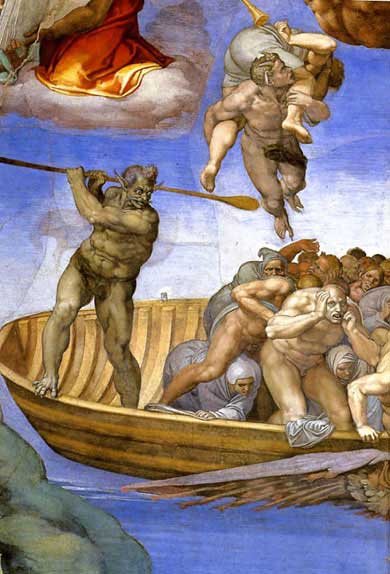


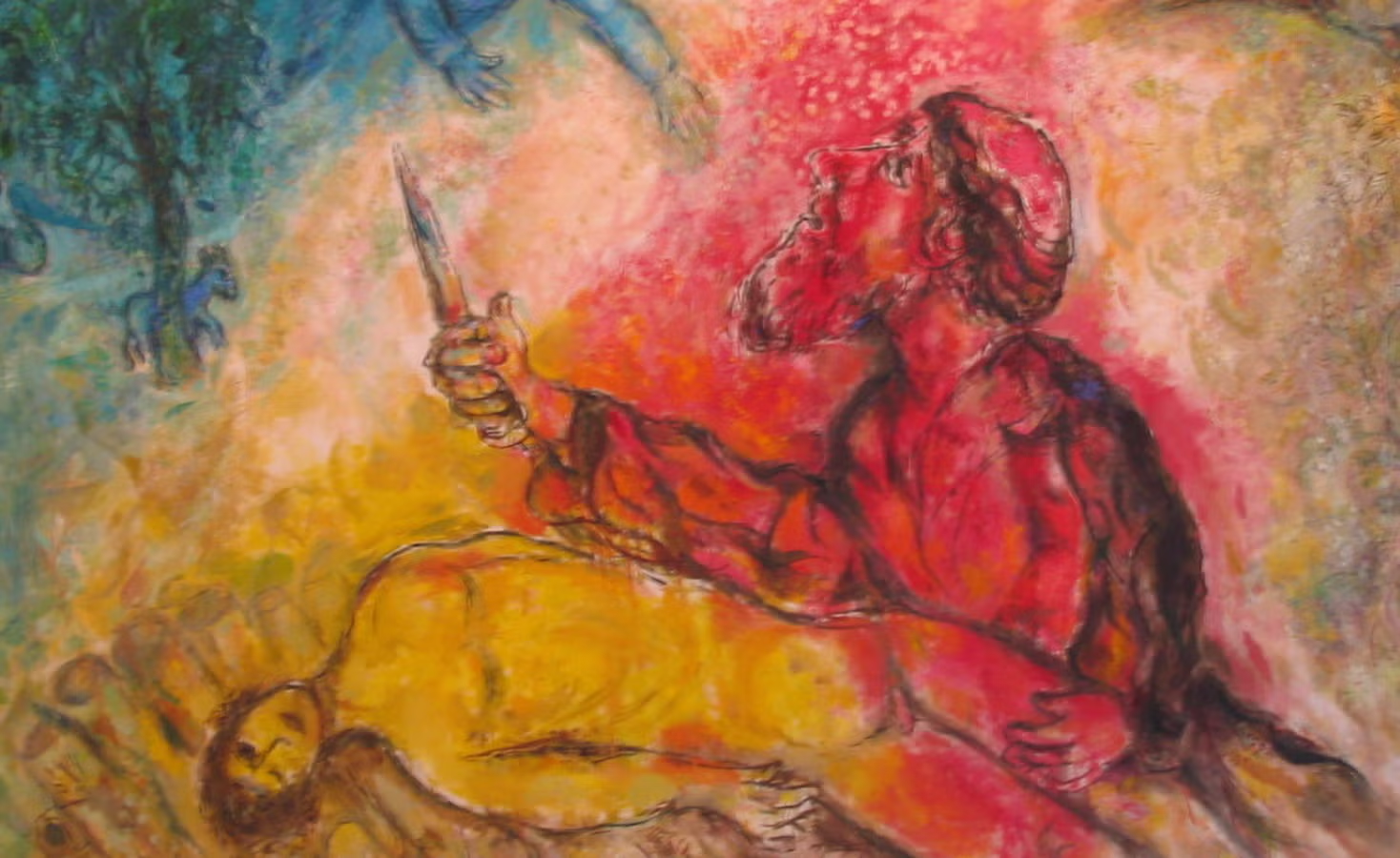

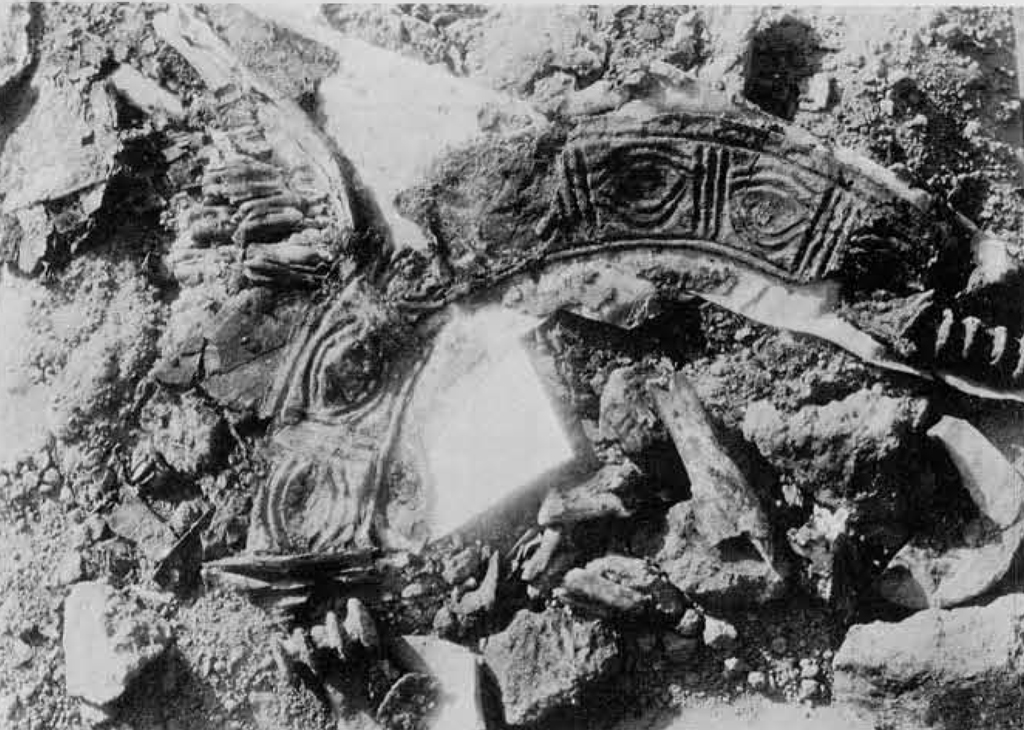
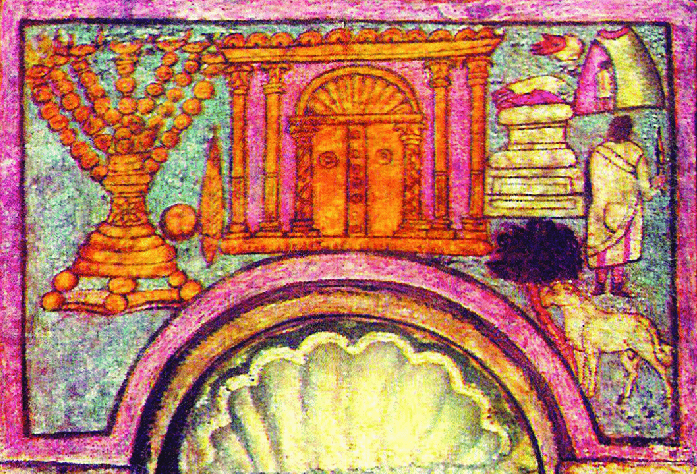

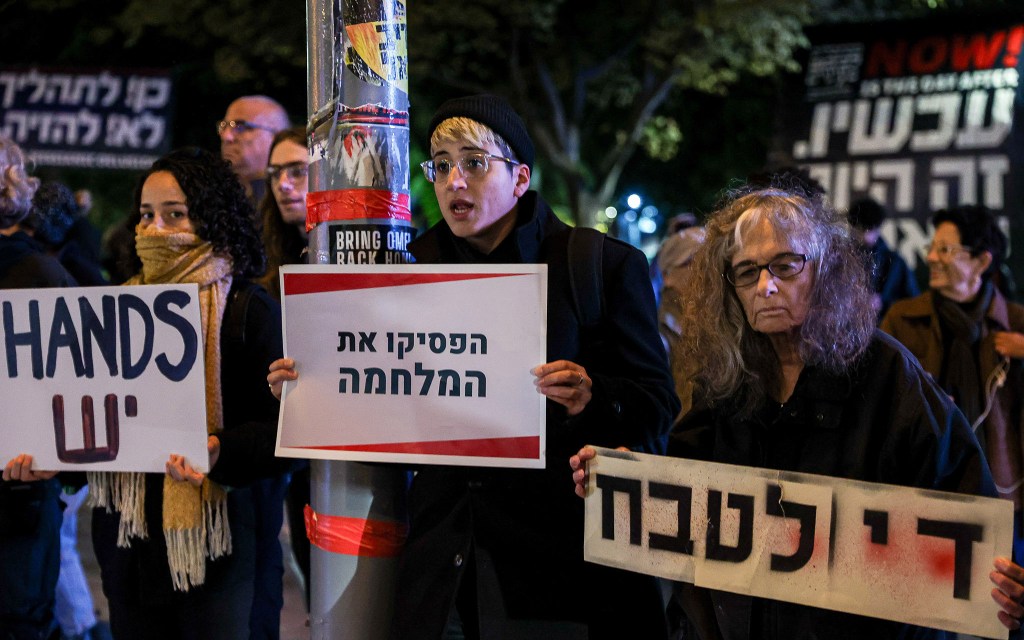
 Sim Lev