climate change · judaism · social justice · torah

Pass on this Earth to your children

‘Tell your children that this land will be theirs to hold in custody,’ cried out Moses to the Israelites on the precipice of the Promised Land. [1] ‘Tell them to guard it and look after it because you could not. Tell them we brought them here that they would love and care for every plant and tree, but we were not allowed to enter because we were too accustomed to slave mentality. We were too mistrusting and selfish. But our children, we hope that they will have faith. We hope that they will be strong. We hope that they will look after this earth.’

‘Tell your children to tell their children,’ Joel wailed to the elders. ‘Tell them about the environmental destruction we witnessed. Tell them how we saw droughts and crop shortages. Tell them how we saw fertile land turn barren. Tell them how we saw everything devoured and nothing remain. Tell them how we saw famine lead to war and war lead to plagues. Tell them that we knew it was our fault.’[2]

‘Tell your children,’ the prophets said, ‘not to make our mistakes. Tell them to treat every part of the earth as if it is sacred. Tell them to care for the planet because if they destroy it, nobody will come to repair it after them.[3] Tell them that there is only one world and it is precious and it must be sustained. Tell them not to pillage it but to work in harmony with nature.’

And the elders wept. The religious leaders cried before their altars. Even the animals cried out for salvation from God. And the chieftains sulked in their tents and asked: ‘does this mean that God hates us? What have we done to deserve this?’[4]

Scripture records the words of the prophets and elders, but we do not learn how the children responded. What did they say when their elders told them these lessons? History rarely records the words of the young, even on issues of intergenerational justice. Especially on issues that affect the youth more greatly.

During the last uprising of Extinction Rebellion, Rabbi Jonathan Wittenberg preached to his congregation. He said: “in the synagogues, the elders are asking ‘where are the youth?’ But in the streets, the youth are asking ‘where are our elders?'”[5]

Young people are calling on us to take action for the environment. Their voices matter deeply, especially when the issue is the future of the planet. Climate change presents us with an unprecedented threat, and we are positioned as the elders scorned by the prophets.

I know that the people of my generation and older are not individually responsible for the climate crisis, but that it is a matter of systemic inequality and exploitation of natural resources.

Nevertheless I am increasingly conscious, as a parent, of what the next generation will inherit. Winona LaDuke, a Jewish-Native American activist from an indigenous reservation in Minnesota, urges us: “Be the ancestor your descendants would be proud of.”[6]

We cannot become such people if we don’t heed the call of the greatest call to intergenerational justice facing us. We cannot simply hide our faces in our homes like the elders confronted by Joel.

Of course, this congregation cannot take sole responsibility for ending economic reliance on oil or for replenishing the earth’s devastated ecosystems. But J and S have come to us with practical and necessary actions that we can take.

These students in our bar mitzvah programme have come to encourage us to take serious action. After only a year of teaching them, I have been so impressed by the intelligence, integrity and sensitivity of these young men. They will both become bnei mitzvah at Pesach time. As part of their studies, they have each taken on social action programmes.

J is asking you to recycle your plastic by making eco bricks. I hope that over this summer, every household in the Three Counties will return at least one eco brick to J in support of his project. J will also be appealing to the synagogue council, to ask them to make eco bricks part of the Mitzvah Day project this year.[7]

S is asking you to plant trees and sponsor his work with the Woodland Trust.[8] I encourage every member of the community to support S in some way, either by offering financial support or a place to plant. These projects are practical, necessary and helpful.

Joel tells us that the old shall dream dreams and the youth shall see visions.[9] In the future he prophesied, the generations were not adversaries in blame and despair, but companions in hope. The young people are offering us an opportunity to join them in healing our damaged planet. Let us take up their call.

Shabbat shalom.

introfigsm-m
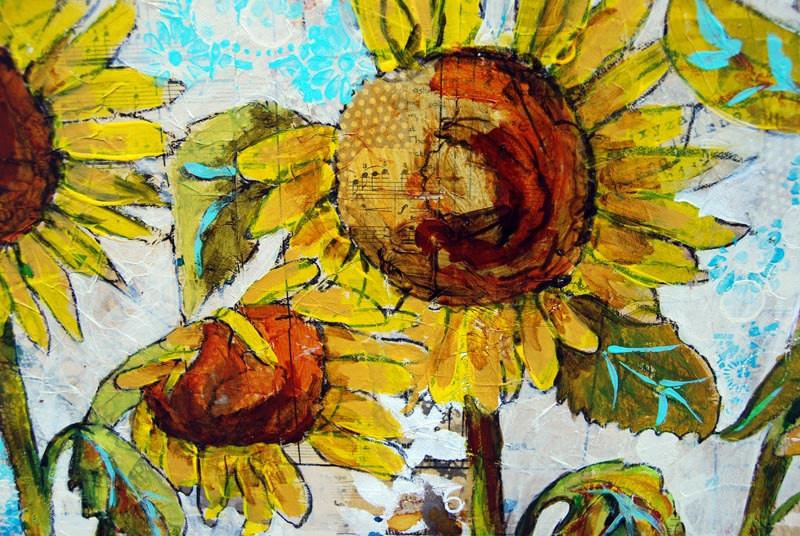
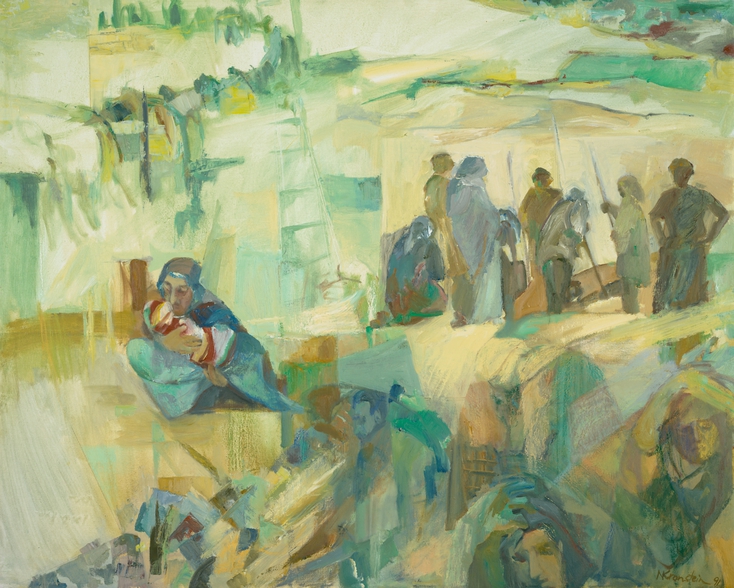
This painting is by Winona LaDuke’s mother, Betty

I gave this sermon on Saturday 25th July at Three Counties Liberal Judaism for Parashat Devarim. This was my last sermon for the community. The names of the children are redacted for obvious  reasons.

[1] Deut 1:39

[2] Joel 1

[3] Kohelet Rabbah 7:13

[4] Deut 1:27

[5] Heard at New North London Synagogue, summer 2019

[6] https://www.mtpr.org/post/winona-laduke-be-ancestor-your-descendants-would-be-proud

[7] https://www.ecobricks.org/

[8] https://www.woodlandtrust.org.uk/

[9] Joel 2:28

psalms · theology

Sore lungs sing out of sync

By the rivers of Babylon, we sat down and there we wept as we remembered Zion. 

Why did we weep by those waterways? Some times are harder than others to find songs inside your lungs. Faced with a strange land and held captive by a power you do not understand, it is hard to find the music within.

Some say that we could not sing because we could not stop crying. Every time we imagined we had run out of tears, new wailing broke out of our chests. Panting, we could not hold a note.

Midrash teaches that the rivers of Babylon were the industrial canals of the imperial capital. Where once we had drunk from freshwater springs, we now sat by sewage works and polluted channels. Our choleric lungs heaved and choked the psalms we wished to sing.

There on willow branches we hung up our violins.

Stringed instruments hung on stringed trees. If we cannot make music, maybe these old branches will play our lyres on our behalf. 

Maybe we will sing again, so we won’t lay our tools on the ground, but gently tie them up in knotted bark. We will return to you, violins. 

Maybe we hoped that the long leaves of willows drooping in layers would provide cover so that nobody would know we once used to play such melodies in our religious buildings. Maybe if they don’t know how joyous we once were, they won’t expect us to be joyous again. Pray they don’t ask us to sing.

For the wicked carried us away to captivity, and required of us a song. 

We are in a strange land of captivity. We live in times that people keep calling unprecedented. Six months ago, few of us would have imagined we would be in the midst of a response to a global pandemic. None of us have lived through mass government responses to a pandemic in Britain. It is unusual to realise we do not have the freedoms we once knew.

Even though governments around the world have announced easing of restrictions, we cannot yet return to activities we once knew. We have to be careful, because the captor, Covid, still exists. We have to make choices about how we respond.

The Israelites lasted 70 years in Babylon. We could endure 3 months in our homes.

But in some ways, those 70 years were easier than the ones that followed. In captivity, Jeremiah told us to make the most of where we were because we would not be coming out any time soon. But when Jerusalem reopened, we did not know whether to stay or leave, and every option seemed like it would be the wrong choice.

In some ways, lockdown was easier. We knew what the parameters were and how to operate within them. Now, we are confused about what is the right thing to do is, as the conflicting needs of our mental health, our physical security and our economic livelihoods clash. 

And somehow we are supposed to sing.

How can we sing the song of God in a strange land?

No, we cannot sing. It is one of the highest risk activities. The virus is airborne and transmitted when people dig deep in their lungs and project droplets from their diaphragms into someone else’s mouth. The collective singing involved in synagogue services, music concerts and sports matches is the greatest threat to overcoming the pandemic.

We enter a strange land where, for the first time in many decades, most progressive synagogues will be closed for Rosh Hashanah and Yom Kippur. Once, Zoom felt like alien soil, although we have come to comfortably inhabit it for our Friday nights and Saturday mornings. Maybe it won’t feel like such a strange land by the time we arrive.

But how can we sing? Didn’t we try collective singing over Zoom? Everyone goes at a different tempo, completely out of synch, creating disharmony and awkward clangs. The first time we tried to sing together in disunity I felt like I had to go back and patch over all the cracks in our voices.

But in captivity, the Israelites learnt that even in the unprecedented land of Babylon, they had to find a way to sing. The Psalms are testament that even when we felt we could not make music, we still composed new material. 

For centuries, the Hassids have rejoiced in singing out of sync. The nign, a wordless song intended to elevate the spirit, finds its strength in discordance and repetition. These mystics sing the same note sequence repeatedly, without aiming for harmony. They trust that, however it is arranged, the tune will reach God. 

Perhaps we, too, can learn to enjoy singing out of sync.

That challenge feels even more pertinent now in a country whose rhythms have fallen out of sync. Some worry about losing their jobs. Some worry about losing their health. Some worry about losing their minds. And, with these concerns, everyone is making different decisions based on their comfort levels.

It is hard to feel like we are not singing in time with our neighbours. Some wish that everyone would just stay inside until we find a cure. Some wish that everyone would relax and go out. We look at each other with confusion, and struggle to find acceptable social norms.

Like the Israelites in Babylon, we have to find ways for sore lungs to sing out of sync. Anyone in the community who does not feel ready to go out yet should be supported to stay home. Anyone who feels they need to see their loved ones should be encouraged. And people who just need to get their hair cut or buy a coffee from a cafe should feel empowered to do so responsibly.

There is nothing wrong with feeling unease. The terrain we stand on is unfamiliar and there is much we do not know. But of all the things we can sacrifice, trust in the other members of our community should not be one of them. 

The reason the Israelites survived their exile was because they knew they could depend on each other. They had different experiences and different aspirations, but knew they were created by the same God.

As we sit by these rivers in a strange land, let us trust each other to sing out of synch, and know that one day, we will return home, and sing together in harmony once again.

nora-kronstein-rosen-moire-removed.height-588

I gave this sermon on Friday 10th July 2020 for Three Counties Liberal Judaism. I thank my housemate, Joanna Phillips, for her support with the audio recording.


judaism · sermon

Whose quarantine?

By this stage in quarantine, you have probably broken down, cried, experimented with an unusual haircut, argued with your partner or room mate, attempted to pick up a new skill, laughed, watched a movie, read all the Corona-related news items, avoided reading all the Corona-related news items, lost your mind, twice, and finally accepted the new reality. Now, it’s time to have breakfast and go through the whole process all over again.

It’s hard to put into words what is happening for us in lockdown right now. Whenever I talk to friends or family about how they’re experiencing this unprecedented life event, we revert to discussing the latest rules or the political ramifications or what they understand of the emerging medical news. We can only really sum up how we’re dealing with the situation in odd phrases, like “getting by”, “finding new meanings”, “struggling” or, “drinking before midday.”

That’s probably why I have trouble finding out what quarantine was like for our ancient ancestors. This week’s parashah is Tazria-Metzora. It is the Torah reading about quarantine. Rabbis rejoice! For so long the processes and rituals around self-isolating for infectious diseases seemed so irrelevant to our lives. Suddenly a pandemic comes along and we can join the ranks of overnight experts with a niche specialism in ancient Israel.

Except, strangely, Leviticus doesn’t really tell me what I want to know. It describes in graphic detail the infectious skin disease our forebearers were trying to prevent – called tzara’at, it resulted in white flaky peeling of the skin and made its sufferers look like the walking dead. It would start as a small patch and gradually expand across the body.1

It also tells me exactly how the priests would deal with it. Anybody with the affliction would have to isolate themselves outside of the camp for 7 days. At the end of these, a priest would come out to inspect the patient. If the patient had been healed, the priest would make ritual offerings of birds to spiritually cleanse him.2 They would be shaved, washed and then readmitted to the community.3 If not, back into quarantine he would go.

Yet for all this detail spread out over chapters of the Torah, it doesn’t answer the question I really want to ask: what were their lives like? How did it feel to have the scaly skin disease in ancient Israel? What did they do when they were isolated from their communities? The Torah provides scarce little information about these questions, and biblical scholars seem surprisingly unconcerned. In fact, the main trend among academics has been to question how much we can even know about the biblical world, shedding great doubt on the texts that have reached us.4

We are told that the isolators were kept outside the camp, or outside the city walls. I wonder whether they had dedicated centres. The harsh desert sun of the Negev must have made simply staying outside longterm impossible. I wonder how they got food. Did people deliver it to them in designated places? Were they expected to scavenge for themselves?

All I can gather from the text is how people were managed, punished, ritualised and redeemed. I cannot work out how the ancient people keep themselves entertained when they had no access to other human beings, nor to Netflix, WiFi, or books to read. I do not know how they loved, supported each other, struggled, found things difficult and ultimately survived. Those positive stories of endurance are hidden between the lines of the text. I do not know how they felt.

But, in this community, I don’t need to just wonder how people feel and how they are managing. Our welfare committee has done an incredible job of checking in on everyone. Our healthy members are going out of their way to ensure that the others get the food and supplies they need. I know that, across this community, people are checking in on each other to find out how they are. This community should be an inspiration to others across the country.

Much is made in the media about people’s acts of selfishness and inconsideration, but for my part I have only seen the reverse. I have been overwhelmed by the kindness of people reaching out to share in feelings, offering support with shopping and errands, and generally being as supportive as they can in these exceptional times.

When our biblical forbearers wrote about quarantine, they wrote about its rituals. When the scholars wrote about it, they took interest in its medical diagnoses. When the media write about it, they write about everything that goes wrong. These stories of rituals, rules and wrongdoing might make for compelling reading, but they don’t reflect people’s lived reality.

Meanwhile, we are quietly writing a different story through our deeds. We are writing stories of generosity, kindness and self-sacrifice. We are showing every day in little ways how much we care about ourselves, each other and our communities.

One of the surprising facts about crises is that they do not engender selfishness, but altruism. At the time of the last financial crash, I was working in the charity sector, and we were all perplexed when we discovered that, in times of economic hardship, poorer people’s charitable donations went up. This week, a German science journal reported on a significant uptick in people’s compassion in their attitude to others since the crisis began. We see the results of that: thousands of people volunteering for mutual aid groups and the NHS supporters. The more people struggle, the more they care about the struggles of others.

Priests and politicians may want to write one kind of story, but ordinary people write much better ones. May we continue to write those stories, and may they be the ones we pass on to later generations.

Shabbat shalom.

coronavirus-volunteers-list

I delivered this sermon over Zoom on 25th April 2020 for Three Counties Liberal Judaism.

1Milgrom on Leviticus 1-16, pp. 816-824

2Lev 14:1-6

3Lev 14:9-10

4Watts, Ritual and Rhetoric, pp. 27-32

judaism · theology

You call that an Apocalypse?

I have recently taken to doing my one hour of government-mandated exercise in a balaclava and heels, because I feel like if the world is ending, I should at least have a decent uniform. I’m hoping the trend will catch on because so far this apocalypse’s aesthetic is rather dry.

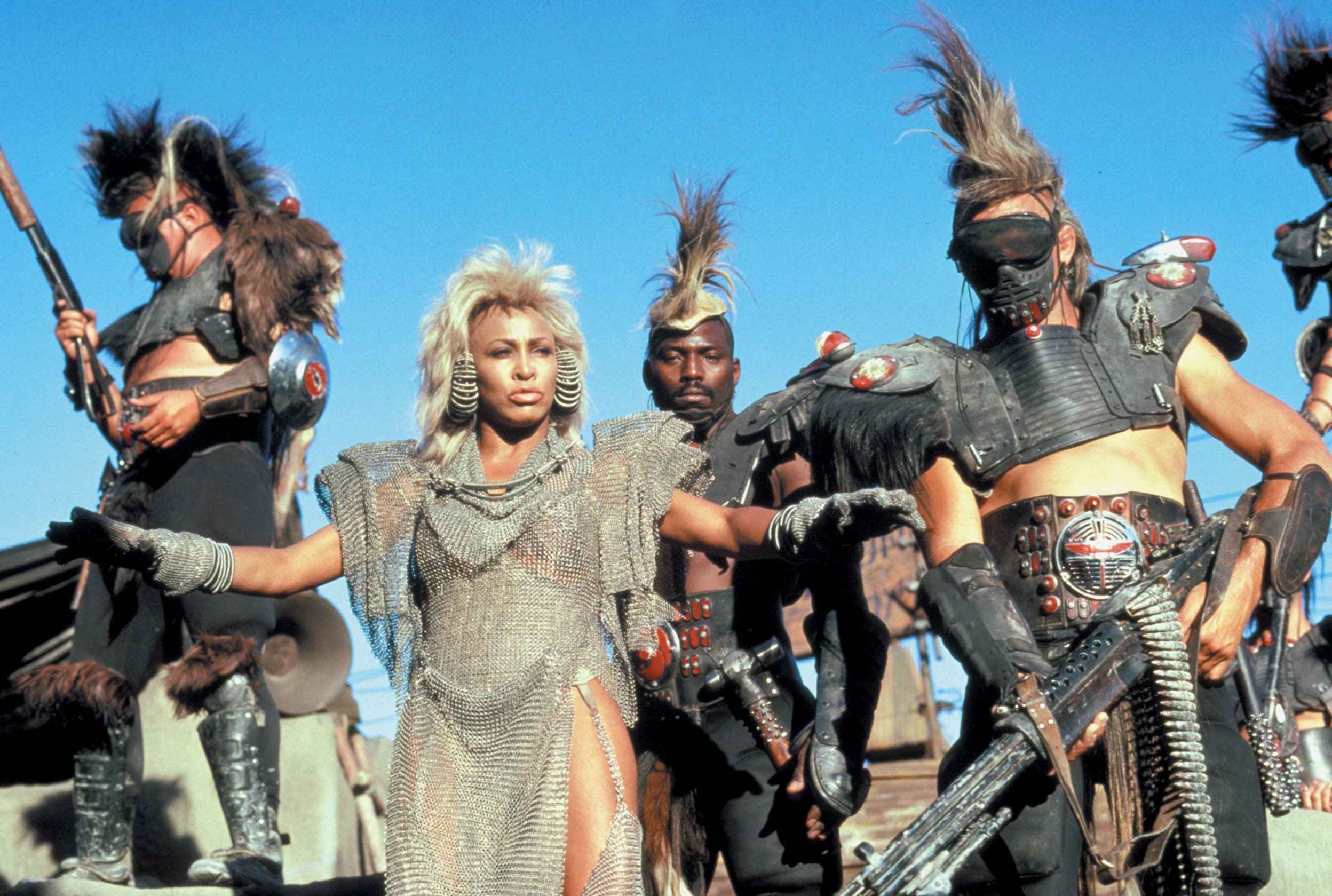
The unfolding events are not nearly as exciting as any of the hellscapes I’ve seen portrayed in the media. Where is Tina Turner running a motorbike death club in the desert, like in Mad Max 2: Beyond Thunderdome? Where are the human beings who magically evolved gills to live under the sea, like in Waterworld?

Apparently I am not the only one having such thoughts. Book retailers are struggling to keep up with skyrocketing demand for end-of-the-world disaster literature. The boredom of helplessly enduring a plague from our bedrooms has obviously made us all hungry for a more dramatic news cycle.

But when it comes to cataclysms, I’m a hipster. Stephen King and Justin Cronin won’t do it for me. I need the oldschool disasters. And I’m not talking about the Christians’ Revelation of St John. That’s far too normie and mainstream.

No. Jews were coming up with catastrophic visions for the end of days before they were cool. If you want to get a taste of the original disaster fiction, it doesn’t get much more vintage apocalypse than the Dead Sea Scrolls.

Some time around the 2nd Century BCE, a group of pious sectarians1 gathered together in caves where they had very little contact with the outside world. They obsessed over cleanliness and physical purity, ensuring that they were fully washed before undertaking any activity.2 They physically distanced themselves even from each other and lived a life of regimented, hierarchical discipline.3 The World Health Organisation would have loved them.

While in these caves, they wrote, preserved and protected ancient scrolls. Some of them are familiar to us, because they appear in the Hebrew Bible and the Apocrypha. But they also composed some works that were wholly their own. Most significantly, these guys kickstarted apocalyptic fantasy as a genre. They wrote reams of prophetic texts imagining the final unravelling of history.

These scrolls were lost to us for nearly 2000 years. They would have remained so, were it not for a chance happening in 1946. Three Bedouin shepherds were grazing their goats in the Jordanian desert. One fell into a cave and stumbled upon clay jars containing some of the texts. The Arab Legion then followed up by searching the whole area, discovering multiple caves, each containing manuscripts.

And among those manuscripts were some of the most imaginative descriptions of the end of the world. Their works gave rise to the original meaning of the word ‘apocalypse’. Every other attempt at eschatology in theWestern traditions was riffing off this bass line.

Take this as an example:

They know not the mystery to come, nor do they understand the things of the past. They know not that which shall befall them, nor do they save their soul from the mystery to come. And this shall be the sign for you that these things shall come to pass.

When the breed of iniquity is shut up, wickedness shall then be banished by righteousness as darkness is banished by the light. As smoke clears and is no more, so shall wickedness perish for ever and righteousness be revealed like a sun governing the world. All who cleave to the mysteries of sin shall be no more; knowledge shall fill the world and folly shall exist no longer. This word shall surely come to pass; this prophecy is true. And by this may it be known to you that it shall not be taken back.4

But hang on a second. This apocalypse doesn’t contain any zombies or plagues or destruction either. If anything, it sounds like quite a good thing. The end of wickedness and sin. The triumph of goodness and knowledge. There’s hardly any of the misery and gore I was looking for here.

There must be another, more awful story that I can refer to. Let me just rummage around in these pots. One of these caves must have some gorgons and dragons. Oh, here we go. Here’s a fragment from a text that the scholars have named ‘The Messianic Apocalypse’. This should be a good one:

Seekers of the Eternal One, strengthen yourselves in God’s service! All you hopeful in your hearts, will you not find the Eternal One in this? For the Eternal One will consider the loving and call the righteous by name. Over the poor will God’s spirit will hover and renew the faithful with strength […] The One who liberates the captives, restores sight to the blind, straightens the bent, forever will I cleave to the hopeful and to God’s mercy.5

But this isn’t devastation and destruction either. This is… optimistic.

Even in the places where they talk about death and war, the focus is on the ultimate triumph of the good guys: 

Oppression will come to the earth and a great massacre in the provinces. Like the sparks of the vision, so will be their kingdom. They will reign for years on the earth and they will trample all. People will trample people and one province another province until the people of God will arise and all will rest from the sword. The people of God’s kingdom will be an eternal kingdom and all their paths will be in truth. They will judge the earth in truth and all will make peace. The sword will cease from the earth, and all the provinces will pay homage to them. The Great God is their helper, who will wage war for them. Their dominion will be an eternal dominion.6

The people who hid out in caves in the Jordanian desert over 2000 years ago really did write the first ever apocalypses. But they look nothing like what we imagine by the genre today. The word ‘apocalypse’ is a Greek translation of the Aramaic ‘gilayon’, literally meaning ‘revelation’. It is an expression of how God’s will for the world is revealed. So it’s up to us to decide how we understand that. If we think humanity is on the brink of a major change, we have a choice about how to interpret it.

Sci-fi, storytelling and religious myths can tell us different narratives about the world. We can use them to say that everything is going to be terrible or we can use them to say that everything will be wonderful. We can use them to talk about the end of the world or we can use them to talk about the beginning of a new one. An apocalypse, as imagined by the genre’s originators, can be a cause for hope and liberation.

Maybe it’s time I stopped complaining this isn’t the apocalypse I want, and started turning it into the one the world needs. Either way, I’ll be doing it in heels.

Chag Pesach kasher vsameach. Happy Passover everyone.

mad-max-thunderdome-01

I wrote this sermon for Pesach 5780.

1Probably. We don’t really know.

24Q274

34Q256:5

41Q27

54Q521:2

64Q246:2

judaism · sermon · theology

How will we know when this crisis is over?

How will we know when this crisis is over?

Because this crisis will end. Every catastrophe there ever was has been brought to closure at some point.

Wars have begun with shots fired on foreign shores and ended with neighbours kissing outside their front doors.

Our scientists have conquered tuberculosis, leprosy, HIV and polio. It may take months and it may take years, but they will find a cure and people will recover.

Humanity has survived ice ages, famines and nuclear meltdowns. And it will survive this. This crisis will, one day, be over.

And when it is… how will we know?

The ancient world had rituals for bringing every ordeal to a close. When the sick returned from their quarantine, they were ritually bathed seven times, given new clothes, and shaved from head to toe.1

We, too, will wash ourselves anew. We will look at water and soap differently. We will cry in the shower to produce as much water as possible, knowing that those cleansing droplets are the secret to life itself.

And we still won’t know whether the crisis is over.

The priests of the bible would perform ceremonies to indicate that closure had occurred. On recovery from sickness, they would give offerings of unleavened cakes, fine flour, oil and animal blood.1 They would thank God for their health with their sacrifices.2 They would wave their hands in the air, bringing the ingredients together, embodying their wholeness.3

We, too, will make offerings. We will return to reopened pubs and put our glasses in the air and celebrate our survival with pints of cider and drams of whiskey and we will say ‘l’chaim’ like we never knew what it meant to say ‘to life’ before.

We will be grateful. We will thank God that we were among those who survived. We will thank God that even those who did not survive would be proud to see the continuity of the world they built. We will realise that a day when you can drink surrounded by friends and family should never be taken for granted. We will truly understand that life is a gift.

And still we will not know whether the crisis is over.

Our rabbis knew how to mark transitions with words. When good things happened for the first time in a long time, they instituted that we should say “blessed are you, Eternal One our God, Creator of the Universe, who has kept us alive and sustained us and allowed us to reach this season.”4

We will do old things for the first time. We will play in parks with our children again. And they will meet new children for the first time. And we will leave our houses without a purpose just to knock on old friends’ doors and see their faces for the first time. And we will hug. And we will kiss. And we will go to cinemas and nightclubs and gyms and synagogues. Yes! we will most certainly pack out our synagogues again. And we will treasure those moments and thank God that we lived to see them.

And we won’t know whether the crisis is over.

Our rabbis knew how to mark the bad with the good. They knew that not every transition was a recovery. They knew that sometimes people died and it felt like the whole world had been destroyed. They knew how to mark it. They told us to rip our clothes and let our hair grow long.5 They knew that sometimes so many loved ones would die that we would have to shred our whole wardrobes.6

We will grieve. We do not yet know how many we will grieve. It may be only the thousands who have already died. We will learn not to call thousands of deaths ‘only’. We may lose a person whom we love. We may lose many people whom we love. We will grieve for all of them.

We will cry in the streets in funeral processions for all those who never had the chance to mourn properly on lockdown. We will wail without abandon for every life taken too soon. Every life that will be taken will have gone too soon. We will huddle together in houses and let out all our sadness and anger.

We will feel guilty. Because, after all, feeling guilty is a part of grieving and surviving isn’t always such a cause for celebration. And although we will not believe it at first, we will recover. And we will move on.

And we still will not know whether the crisis is over.

Because the crisis will not yet be over.

If we leave our houses and go back to our old jobs to pay rent and mortgages in the same houses to barely survive in the same cities, Coronavirus will not have been defeated. We will only have signed an armistice with sickness, knowing that another plague will face us again. This will not be the last virus. Any effort to return to normality will only exacerbate the problems that have gone before.

Never again will we fight each other for dried pasta and toilet roll and sanitary pads and formula milk. Never again will we stare into our cupboards and wonder how long our tinned food will last us. We cannot ever return to the days of scarcity.

Before we can begin to move on, we have to be assured that all of humanity’s basic needs will be met unconditionally. Healthcare, food, water and clean energy will be considered human rights. When we struggle for them, we will struggle for everyone to have them. We will insist on it the way that world leaders pledge at the end of wars never to pick up weapons again, only this time we will mean it.

And still that will not be enough for us to say that the crisis is over.

Never again will people carry on working when they are sick because dying of starvation sounds worse than dying of disease. Never again will people live one pay cheque away from homelessness. Never again will family homes be foreclosed. Never again will people worry how they are going to self-isolate when they have nowhere to live. Housing will be provided universally on the basis of need, so that these crises can never be repeated.

And that won’t be enough for us to say it’s over.

Because there are today vulnerable, elderly and disabled people who are saying that self-isolation was already their standard practice, and that they did not choose it voluntarily. Because there are sick people who already feel like they are a burden to society when their lives are a gift from God. Because there are families torn about by borders and there is escalating racism that makes people feel even more afraid and we know that loneliness and bigotry and fear make life unbearable. We will judge our society not by the strength of its economy but by the strength of its weakest members. Only when we are assured that the value of human life is unquantifiable will be able to draw a line under the past.

And that day will come. This crisis will end. Ever crisis that ever was has come to an end.

And we will mark it. Every human being who is alive will sign a new international constitution, swearing allegiance only to each other and to God. And we will swear to protect everything that lives and the precious planet that sustains it. And on that document we will enshrine rights we never thought possible. And it will be the benchmark for everything that comes afterwards.

And everyone, all around the world, will subscribe to it.

We will not know the crisis is over because everything goes back to being the same. We will know the crisis is over when we are certain that everything has changed.

Then we will know beyond all doubt that this crisis is over.

salah taher peace treaty

I wrote this sermon for Leo Baeck College, Parashat Tzav. I then decided to publish it early because I have too much free time. 

1Lev 14:1-10

2Lev 7:1-15

3Plaut 787

4Berachot 54a

5Rambam Mishneh Torah Hilchot Avel 7

6Rambam Mishneh Torah Hilchot Avel 8

festivals · sermon · social justice · theology

Those who attack the weak

Purim is such a strange time. It is a time when everything is turned upside down. In our story, the oppressed become the oppressors; the ones who wanted to slaughter become the slaughtered; Jews become Persians; Persians become Jews.

We act out the topsy-turviness of it all by dressing up in costumes, getting drunk, and generally living as we normally wouldn’t. Somehow this grand inversion festival is one of my favourites, but I’m never really sure what it was about until it’s over. In fact, every year for the last year, I’ve preached about Purim after it happened, rather than before. I suppose that fits with the overall back-to-front-ness of the whole celebration.

This year, what struck me most was the connection between the Torah portion and the Megillah reading.1 In our Megillah, the story of Esther, the enemy is the evil Haman. Haman sets himself up as a god, demanding that people bow down to him, and when they do not, he seeks to wipe out the Jews. The Jews, in this antique Persian context, are already the most vulnerable people. They are the smallest minority, unarmed, and completely powerless. Haman decides to wipe them out.

In the Torah reading, taken from Deuteronomy, the enemy is Amalek. We are enjoined to remember him and what he did to the Israelites in the wilderness.2 The Amalekites had attacked the Israelites when they were at their weakest, dehydrated and suffering without water.3 According to our commentators, Amalek attacked from behind, killing the weakest first.4

The Megillah tells us that Haman was a descendant of Amalek, via their king, Agag.5 We do not necessarily need to believe that Haman had any genetic connection to Amalek. What they had in common they showed through their actions. Both attacked the weak. Both went for the most vulnerable first. They are not only symbols of antisemitism, but of all tyrants. This is how the cruel operate: by doing first to the weak what they would like to do to the strong.

It is deeply distressing to see in our times that the ideas of Amalek still prevail. At this moment, the world is closely watching the Coronavirus. My rabbinic colleagues in Italy are on complete lockdown. Many services have been cancelled. I am giving this sermon, for the first time, over the internet, rather than in person with my regular congregation.

That there is a pandemic should not be too alarming. There are often diseases going around the world – some are more contagious and more deadly than others. This one, it seems, is much less deadly than bird flu, but is more contagious than regular flu, and we do not yet have immunity to it.

In these times, maintaining calm and supporting each other is of the utmost importance. We should all, I am sure you already know, be meticulous about following NHS advice to wash our hands regularly, avoid touching our faces and not get too close to each other. If you exhibit symptoms, like a dry cough, shortness of breath, or fever, you should stay home for 7 days. Don’t go to the hospital or the GP.6

Yet there are those who have not helped maintain calm, but who have almost revelled in the potential death toll. Jeremy Warner, a journalist for the Daily Telegraph, wrote in his column that the death of the weak from Coronavirus could be good for the economy. He said:

Not to put too fine a point on it, from an entirely disinterested economic perspective, the COVID-19 might even prove mildly beneficial in the long term by disproportionately culling elderly dependents.7

With this one sentence, the Telegraph reminded me that Amalek’s ideology never ceases. It is in the idea that the weak are disposable, that the strongest survive, and that the strength of the economy or the nation matters more than the lives of the vulnerable.

The idea espoused by Warner might be called ‘social Darwinism’. It is a theory of evolution that sees all species as rugged individuals, fighting over resources. Sickness and death are nature’s way of weeding out those who are unnecessary. If people survive, it is because they deserved to. This was the logic that allowed the weak to be killed by the Nazis. It is the theory that underpinned government inaction to HIV as it killed off gay and black people.

It must be opposed. No idea could be more antithetical to the Jewish mind. We affirm that every human being is created in the image of God, and every life has intrinsic value. The disabled, the elderly and the immuno-compromised are not valuable because of how much they can contribute, but because God has placed them on this Earth. The Creator’s purpose for humanity far exceeds what any stock market has in mind.

We must oppose it not only because it contradicts religious truth, but also because it contradicts scientific truth. In 1902, the biologist and Russian Prince, Piotr Kropotkin, wrote his major work, ‘Mutual Aid’.8 In it, he argues that the survival of the species is due as much to cooperation as it is to competition. In the animal realm and throughout history, the major reason for life’s continuity has been its ability to work together.

Different species depend on each other and selflessly help each other. Most of all, human survival is intrinsically linked up with our social nature. Our skill lies in our ability to communicate complex ideas with each other. We are, by nature, dedicated to the preservation of our young, our elderly and our neighbours.

That is the message we must take away today in this time of sickness. We must support one another. For some, this means staying home so that they do not infect others. For some, this means checking in on our neighbours to see how they are and what they need. For others still, it means making donations to charities and mutual support organisations.

Purim was a time of inversion, when old habits were reversed. Let us shake off the old traditions of individualism and greed, to replace them with the Torah values of love and support.

In the face of those who attack the weak, we will be the ones to make them strong.

Shabbat shalom.

mutual aid animals

1 Mishnah Megillah 3:6

2 Deut 27:17-19

3 Ex 17:8-16

4 Mechilta de Rabbi Ishmael 17

5 Esther 3:1


I donated to Queercare, who are doing work for at-risk LGBT people. I encourage you to give to the charity of your choice.

judaism · sermon · theology

What we make true on Earth, God makes true in Heaven

What we make true on Earth, God makes true in Heaven. The Tabernacle was built according to the dimensions of the world. And the world was built according to the dimensions of Heaven.[1] This is what the Zohar, our mystical text tells us.[2] What does this mean?

This week’s parashah describes the raw materials of the Tent of Meeting: blue, purple, and crimson yarns; the ephod made of gold, blue, purple, and crimson yarns, and fine twisted linen; sheets of gold and cut threads to be worked into designs.[3] The Torah tells us precise measurements for precious metals: 29 talents and 730 shekels of gold; 100 talents and 1,775 shekels of silver.[4]

In the kabbalistic system of the Zohar, these are not only the dimensions of our Tabernacle, but a blueprint for the universe and a mirror of Heaven. Is this, then, the makeup of the universe? Does it, too, have crimson yarn and twisted linen and talents of silver?

No. That is not the nature of this text. The Zohar is not an Ikea assemblage manual, but a work of Jewish mysticism. Its concern isn’t with the physical arrangement of the world, but with the esoteric secrets underpinning it.

The Zohar was compiled as a commentary on the Torah in 13th Century Spain by Rabbi Moses de Leon and has circle.[5] This text became the central canonical text of Jewish mystical theology, known commonly as kabbalah.

Only within the terms of the text itself can we understand how the Tabernacle had the dimensions of the world and the world had the dimensions of Heaven. First of all, please understand that, by Heaven, it does not mean the cartoon of clouds in the sky where baby-angels play on harps. Nor is it talking about the afterlife. In this context, Heaven is the ‘Upper World’: the place beyond our understanding where God lives. It is not so much a physical space as it is a ‘divine realm’.

The dimensions of Heaven, then, were not physical, but were divine qualities. The Zohar notices a connection between the qualities with which the Tabernacle’s architect was endowed and the qualities God employed to create the world. God appoints a man named Bezalel ben Uri to oversee the creation of the Tabernacle. God tells Moses: “I have endowed him with a divine spirit of wisdom, understanding and knowledge.”[6] Elsewhere, in the book of Proverbs, we learn: “The Holy One founded the earth by wisdom; God established the heavens by understanding; through God’s knowledge the depths burst apart, and the skies distilled dew.”[7]

These, then, are the dimensions that the world and the Tabernacle held in common: wisdom, understanding and knowledge. The qualities needed to create the world were the same as those needed to create the Tabernacle.

In the context of the Zohar, however, these terms take on an even deeper significance. In this world of mysticism, wisdom, understanding and knowledge are not simply creative faculties, but are part of a divine reality beyond what we can see.[8]

In this view of the world, there is an aspect of God called the ‘ein sof’ – that which is without end; the part of God that is limitless and incomprehensible. From this Infinite Unknowability flow ten sefirot, attributes of God’s self. They filter down into the knowable universe, to the level of the Shechinah – God’s dwelling-place in the human realm.[9]

At the highest levels are three sefirotketer – literally meaning ‘crown’, but fundamentally associated with God’s infinite knowledge; chochmah, meaning ‘wisdom’, which holds the archetypes of all things that must come into being; and binah – ‘understanding’ – in which is held the undifferentiated model of creation.[10] Knowledge, wisdom, and understanding: these are the highest rungs of the emanations of God’s presence. These are the qualities with which Proverbs tell us God created the world. These are the qualities with which Exodus tells us Bezalel ben Uri was endowed when he came to create the Tabernacle.

The Tabernacle, then, was not a physical blueprint of the universe, but a spiritual one. It was comprised of the same mystical dimensions that also went into creating the world. Each of these was some part of God’s creative power. Through these, God’s creative power is manifest in Heaven, the world and the Tabernacle. They are acting as a form of creative power, transcending space and yet utterly active in it. Through this analogy, we understand that the world, Heaven and the Tabernacle are not just created, but are constantly creating, and being created.

That may all sound very difficult to understand, but it has significant implications for us. If the Tabernacle, the world and Heaven share a common creative blueprint, then what was done in the Tabernacle was replicated in Heaven. Thus, the Zohar tells us: “The Temple [the successor to the Tabernacle] was an abode of peace for the worlds […] so that the actions below could be united on the model of the world above.”[11] What they made true in the Temple, God made true in Heaven.

From this, the Zohar makes an even more audacious claim. It tells us that, in Heaven, God studies new interpretations of the sacrifices in the name of Rabbi Shimeon bar Yochai. It tells us that, even though God does not need to eat or drink, out of love for the Jewish people, God eats and drinks with us in Heaven.[12] Because of the deep connection between this world and the world above, God is able even to suspend the laws of the universe to replicate what we do on Earth.

What does this mean then for us, modern Jews, for whom the synagogue has permanently replaced the Temple? I would like to think that, just as the Temple was once a mirror of Heaven, our houses of meeting are today, too. When we gather together in community, some profound unity is recreated in Heaven. When we sing in unison on Shabbat mornings, new blessings and prayers are created in the World Above. When we read about the dimensions of the Tabernacle in this week’s Torah portion, those creative faculties that once created the world are the Temple are put into action once more and, through them, entire new worlds are made possible.

Sometimes it is easy to feel like our actions have no impact. The Zohar gives me hope. If what we do on Earth is replicated in Heaven, our actions cannot fail to be meaningful. When, here, we strive for a better world, that same campaign ignites in the upper echelons of the universe. When, here, we celebrate love, birthdays and the lives of our congregants, the Heavenly hosts are brought closer together in solidarity with us. Our kindness, our optimism, our compassion in this world are mirrored on a cosmic level.

The teachings of the Zohar may be complex, but their result is simple: We live in a world that shares its dimensions with Heaven. We are tasked with the spiritual health of the entire universe.

What we make true on Earth, God makes true in Heaven. So let us strive to create Heaven on Earth.

Shabbat shalom.

Kabbalah_Art_-_Diamond_Painting_Kit_grande
Kabbalistic art

I first wrote this sermon as an essay for a class at Leo Baeck College on Kabbalah. I adapted it for use and delivered it at Birmingham Progressive Synagogue on 7th March 2020.

[1] Zohar II, 220b-221a

[2] I have relied for translations and interpretation on Tishby, Isaiah. The Wisdom of the Zohar: An Anthology of Texts (Vol III), trans. David Goldstein (Oxford: Oxford University Press, 1989), pp. 909-930

[3] Ex 39:1-3

[4] Ex 38:27-28

[5] Scholem, Gershom G. Major Trends in Jewish Mysticism (New York: Shocken Books, 1946), pp. 156-159

[6] Ex 31:2-3

[7] Prov 3:19-20

[8] Laenen, J. H. Jewish Mysticism: An Introduction (Louisville: Westminster John Knox Press, 2001), p. 46

[9] Laenen, pp. 46-48

[10] Laenen, pp. 48-49

[11] Zohar II 241a

[12] Zohar III, 241b

judaism · sermon

The Tabernacle or The Temple

When Israel Mattuck, Britain’s first Liberal rabbi, went on holiday, he used to spend hours visiting the churches and cathedrals wherever he was. His biographer, Pam Fox, writes endearingly about how much it used to annoy his family.1

I really relate to this. There is something quite wonderful about seeing how others pray. From the mosques in Turkey and southern Spain to the cathedrals in France and Italy, I’ve never found a holiday partner I couldn’t frustrate by dragging them into every little religious building I see.

These buildings communicate messages about what believers make of their religions. The last time I was here in the Three Counties, I sat with my boyfriend in Gloucester Cathedral and we listened to Saturday night evensong. The organ roared through the cavernous building, as if to remind us how terrifying God could be. I went away from the service feeling stirred in a way synagogue services rarely make me feel, and I wondered what parallels there were in our practice.

Perhaps part of the appeal of these spaces is that we have no Jewish equivalent. There is, after all, no such thing as Jewish architecture. What does a “Jewish building” look like? What are its features? Beyond a mezuzah on the doorpost, very little ever identifies a space as Jewish.

In part, that is because of history. Forever a transient people, we have rarely invested in plush buildings, knowing well that our communities were so wont to move and change. In the medieval synagogue in Barcelona’s Calle, the only distinguishing feature is that the wall protrudes slightly onto the cobbled street so that worshippers can face east. It has had no problem being repurposed variously as a home, a factory, a cafe and a museum. The site of the synagogue in Lincoln, dating back over a millennium, was only recently repurposed by its Liberal Jewish community. And, still now, it’s really just a very old room.

Yet even today in modern Britain and the USA, where Jews have lived comfortably for some time, there is little that can be identified as Jewish architecture. The Liberal Jewish Synagogue in St John’s Wood is identifiable by its Greek columns. Temple Emanu-El in New York looks indistinguishable from a Cathedral. Even modern Israel has developed no architectural style for its religious buildings. The places where I have prayed in Jerusalem seem no different to shop front shtiebels. For some reason, we have an aversion to creating Jewish buildings.

This casts an interesting light on this week’s parashah. Here, we read about the Israelites’ instructions for building a Tabernacle. This was a giant portable tent in the desert, where the freed slaves would come to offer sacrifices and experience their God. What a space it must have been! Every precious metal is enumerated; the finest kinds of wood; fabrics dyed in the hardest-to-find colours of crimson, purple and blue; goats’ hair and dolphins’ skins. We read about the incenses and it’s as if we can smell them wafting through the sacred space.2

This Tabernacle in some way must have mirrored the First Temple. In our haftarah, we read of King Solomon’s building of the Jerusalem Temple.3 About 30 metres long and described in glorious detail, this was the central focus of the Israelite cult for around 400 years.4

One of the great debates between Liberal and Orthodox Jews in the last century was which one preceded the other: did the Temple come first, or the Tabernacle? For Orthodox Jews, who treated the Bible as a historical account of the journeys of the Israelites, the Tabernacle must have come first, and been a blueprint for the Temple that would later follow. For Liberal Jews, who accepted the conclusions of the historians of the time, the myth of the Tabernacle was constructed later, when the Temple already stood, as a way to justify the religious centralisation brought about under Solomon.

As it turns out, we might both have been wrong. It is unclear whether Solomon’s Temple ever really existed. We have no archaeological evidence for it.5 There have been attempts to prove that such a space existed, but these have all been exposed as hoaxes. That doesn’t mean it definitely didn’t exist – lack of evidence is not evidence of lack, and Jerusalem is a notoriously difficult place to do archaeological digs. But we can reasonably suspect that Solomon’s Temple may have been a myth.

One of the things that was most missing from these heated debates in the last century was that the Tabernacle and the Temple were fundamentally different places. The Temple had attributes that would have been impossible for the Tabernacle to have: fixed foundations, windows, stone quarries and multiple rooms. The Tabernacle, by contrast, was a mobile, portable space, that had to be lifted and reassembled regularly as the Israelites went about their journeying.

Through their different architectural styles, the two spaces communicated fundamentally different messages about the nature of God. The God of the Tabernacle was transient, travelling with the people as they came out of slavery and wandered in the desert. It had no fixed home and could speak to people wherever they were. The God of the Temple was fixed in one place. It had a home and its worshippers needed to travel from all the surrounding towns to pray there.6 One God was national; the other universal.

At the heart of these debates between Liberal and Orthodox Jews was an issue that was far more theological than it was historical. Orthodox Jews needed to believe that God had pre-ordained the Temple because they wanted to see a Messianic Age in which it was rebuilt. They maintained that our God was still a national God who would one day return to live in Jerusalem. Liberal Jews needed to exercise doubt because, for them, God was transcendental and Judaism had no central home.

This brings me back to the question with which I first began: why is there no such thing as Jewish architecture? Perhaps it is about much more than historical circumstance or artistic predilections. Perhaps it tells us something deeper about how we see God. Our God, like us, is rootless and unchainable. Our God, like us, reveals its nature more through loving deeds than through material accomplishments.

As a community, we move regularly from one place to the next. We spend our services variously in Ledbury, Ross, Up Hatherley, Gloucester and across the Three Counties in each others’ homes. Let us rejoice in this fact. We are, like our forebearers in this parashah, wandering Jews. We are, as our Liberal rabbis would have hoped, physically demonstrating God’s transcendent mobility. Every house and community centre we enter becomes full of the richness of tradition and, for the time that we are there, is transformed.

There is no such thing as a Jewish space because every space where you find Jews is Jewish.

temple emanu el
Temple Emanu-El in New York


I gave this sermon on Saturday 29th February 2020 at Three Counties Liberal Judaism for Parashat Trumah

1 Pam Fox, Israel Mattuck: Architect of Liberal Judaism

2 Ex 25

3 1 Kings 6

4 BT Bava Batra 3a

5 Finklestein and Lieberman, The Bible Unearthed

6 Mishnah Sukkah 4

judaism · sermon · torah

Whose hearts will turn?

A scorpion asked a frog to carry it across the river on its back. The frog said: “Absolutely not. If I carry you, you will sting me.” The scorpion replied: “If I do that, we will both drown. It goes against my interests.” Reluctantly, the frog agreed and let the scorpion onto its back. They began swimming without a problem. Then, midway across the river, the scorpion stung the frog anyway. The dying frog asked the scorpion: “Why would you do that? Now we’re both going to die.” The scorpion replied: “I couldn’t help it. It’s in my nature.”

This famous animal fable, originally from 20th Century Russia, speaks to something both familiar and uncomfortable about the world. We know that people, no matter how much they want to change, often end up hurting others and themselves as if motivated by a fundamental nature.1 But the story is also problematic. It suggests that people have fundamental characters that cannot be overturned. Such a perspective is incompatible with religious Judaism, which teaches that everyone can change.

It is with this in mind that I read the opening of our parashah: “God hardened Pharoah’s heart. God hardened the hearts of everyone around him.”2 Literally, God made their hearts heavy, weighted, immovable.

In most places where we read this, Pharaoh hardened his own heart, but here, God hardens it.3 This poses a fundamental question for us about free will. Could Pharoah not have repented? Could he not have turned around and told the Israelites they could leave?

The Torah tells us God did this “in order to show these signs among them”.4 Those signs included locusts that swallowed up all the crops, darkness that blinded everyone in Egypt and, ultimately, death to the firstborn. Were these signs, then, unavoidable? Did the ordinary people of Egypt have no choice but to endure these “miracles”?

Ibn Ezra, the great Spanish exegete, reverses the concern. He points out if somebody wants to do wrong, the opportunities will be available to them.5 In other words, God does not prevent people from doing good, but neither does God prevent them doing evil. On this reading, God did not actively harden Pharaoh’s heart, but simply allowed it to happen. That answer sits well with us theologically: free will must mean the freedom to do wrong. And, partly, this fits with our historical memory. In this week of Holocaust Memorial, we are painfully reminded that God’s gift of free will can be outrageously abused.

But that conclusion seems too ready to resolve discomfort. It glosses over something else we know about history: that when hearts are hard, they stay so. No dictator has ever willingly given up power; no slavemaster has ever freed their slaves without significant pressure.6 Indeed, the price of ending slavery in America was a civil war. In Britain, the slave-owners were paid heavy compensation for their loss of income after more than a century of struggle.

That is not simply because slave owners are evil or dictators are wicked. In truth, every one of them could turn away from their wrongdoing and choose the path of righteousness spelled out by God. But they do not. In Germany, not every Nazi believed in the racist ideology, but all became complicit in its atrocities.7 Like the scorpion who stung the frog even knowing they would both die, the wicked continue in their wickedness, even if they know it is ultimately destructive. And that is because, while they are free, they are fundamentally constrained.

If Pharaoh were to turn around and say that the Israelites were free, he would have every Egyptian landowner at his door demanding what had happened to their possessions. He would have to answer to the Egyptian poor who, despite having nothing, at least had their superiority over the Israelites. There would be immediate chaos and revolution. It is not only people that create immorality, but systems that engender them. Once a system is in place that enables slavery, it is very difficult for any individual to decide they no longer want to own slaves. Pharaoh’s heart is hard, then, not only by choice, but by necessity. It is in Pharaoh’s nature that he must uphold the oppression he has created.

Interestingly, we learn from the Torah portion that the contrary can also be true. As the slaves prepared to leave Egypt “God placed favour in the eyes of the Egyptians” towards the Israelites.8 The Egyptians, the Torah tells us, encouraged the people to leave, handing over to them food, money and clothes.9 While Pharaoh and his courtiers can do nothing but harden their hearts, the ordinary Egyptians are compelled to be supportive. If we remove the possibility that God literally interfered with their freedom, the lesson may well be that there are people who, by their very position in society, find themselves becoming allies in struggles against oppression.

This side of the Shoah is also true. Most places under Nazi occupation handed over their Jews willingly, sometimes enthusiastically, as in Poland. Where Bulgaria’s Jews survived it was not because of the goodwill of the government or their leaders’ unwillingness to participate in the slaughter. Much historical evidence suggests that the contrary was the case. It was because the ordinary people of Bulgaria, their non-Jewish neighbours, decided to show them compassion. These citizens worked against their government and occupying powers to stop the persecution and deportation of Jews.10

If we learn anything from this parashah, it is not that we do not have free will but that some hearts are easier to turn than others. Some people are more naturally our allies than others. Over the last few years, much of the Jewish community has engaged in its campaigning against antisemitism by focusing on the people at the top of the political pyramid, making enemies and allies. It is now becoming clear to most that some of those enemies were not as hostile as imagined, and some allies were not really so friendly.

It is a healthy reminder of the saying from the Mishnah: “Be careful with the powerful for they do not befriend a person except for their own needs; they seem like friends when it is to their own interest, but they will not stand by you in the hour of your distress.”11 This dictum may, unfortunately, reveal itself to be true.

But that should not cause us to despair. While the top of the pyramid may be unstable, we can count on the strength of its base. Our allies are the same people they have always been. They are our neighbours, our colleagues, the people who we see every day. They are the people who stand up to racism when they see it on public transport and on the street. They are the ordinary citizens of Britain, with whom we have built strong relationships over many years. Through our solidarity and interactions with them, we can build up the strength not only to overcome the prejudice against us, but against everyone. Together with Muslims, immigrants, foreigners, disabled people, LGBT people, Black people and all those who face discrimination, we can work together to defeat intolerance. And we will succeed. It’s in our nature.

pharoah prince of egypt

I gave this sermon for Parashat Bo on Saturday 1st February at Birmingham Progressive Synagogue

1 cf Lasine, Weighing Hearts

2 Ex 10:1

3 Rashbam to Ex 10:1

4 Ex 10:1

5 Ibn Ezra to Ex 10:20

6 cf Frederick Douglas: “power concedes nothing without a demand”

7 cf Hannah Arendt, ‘Eichman in Jerusalem’

8 Ex 11:3

9 Ex 12:33-36

10 cf Todorov, the Fragility of Goodness

11 Pirkei Avot 2:3