Everything has changed. Everything keeps changing.
We meet tonight to pause.
Tonight is a return to a definite, reliable point in the calendar. While the world spins on outside, for a brief moment, we stop. We reflect. We take stock of all that has changed, so that we might change too.
You have already seen this evening many simanim – symbols of the Rosh Hashanah seder. These small tokens speak to us about what the festival means.
There is another one, though, that you won’t see here, partly because our synagogue is a meat-free site, and partly because it just would not feel right in a Liberal synagogue.
It is a ram’s head.
Yes, in many New Year seders throughout the centuries, Jews would place the carcass of a sheep’s skull in the centre of the table. This tradition goes all the way back to 9th Century Babylonia.
By the 15th Century, the German rabbi, the Maharil, explained the custom using a phrase from the Psalms:
שנהיה לראש ולא לזנב
– that we should be the head and not the tail.
There is a play-on-words here. After all, what does Rosh Hashanah literally mean?
The Rosh is the head. It is the head as in the beginning; it is the head as in the body part; and it is the head as in the one who has control.
This symbolism works because, in Hebrew, a word contains multiple meanings and associations.
So, the fish head represents our being on top of our own lives.
Now, what about hashanah? The word shanah does indeed mean year, but its root ש-נ-ה also means cycle, difference, repetition, or change.
This makes sense: a year is a cycle, a return point that we repeat, each time observing the change.
So Rosh Hashanah does mean “start of the year.” But, through the associations with the words’ other meanings, Rosh Hashanah is also “the master of change.”
Outside of these walls, the world is full of changes. AI unleashes new technology into a society that has already been completely transformed by the Internet. Our climate is changing, and we are truly starting to notice its effects on our own seasons.
International relations are changing: violence, war, and fear feel like a new normal. And, of course, we are only a few years out of global pandemic and lockdowns.
So, at this juncture, we return to the start, and try to find a small oasis of calm to reflect on this changing world.
Yet, inside these walls, things have changed too. This is my first High Holy Days with you. This is your first High Holy Days in the newly refurbished sanctuary. This is our first High Holy Days where we have voted to join a new movement.
This is our first time doing the High Holy Days without the choir in every service and, as you will see, that means we are changing how we do music.
In every case, these changes will evoke many feelings, including excitement, trepidation, loss, and growth. This is a chance to face all our feelings.
Change is inevitable. Change can be good. And, yes, change is hard.
I don’t know about you, but I have changed. I have not just grown a year older since the last Rosh Hashanah. I also feel like I have aged many decades in the last few years.
The world transforms and I shift with it. As I shift, I do not even always notice the ways I change, or work out what they mean.
I don’t even have time to decide if I like who I am becoming before I find that things changing again.
So, at Rosh Hashanah I come to this space, this synagogue, this everlasting home with God, and ask: can I love myself better? Can I love my community? Can I muster up the strength to face all that is changing?
Can I find a way to be the head and not the tail?
Blessed are You, Eternal One our God, who gives us the power to change.
There is a verse in the Torah so radical that one of my teachers did not believe me it was even in there.
I was working on a project as a rabbinical student and I brought a text that cited this verse.
“That can’t be in the Torah,” my teacher said. She was a serious scholar, with not only rabbinic ordination but also a PhD in rabbinics and a host of published articles.
“No ancient society would allow a law like that. The entire economy would collapse.”
I thought, perhaps I had misread it. It was a bold claim. So I went back to look.
But there it was, nestled among a litany of miscellaneous commandments in Deuteronomy. On one side of this law was the instruction to make sure soldiers did not have nocturnal emissions, and on the other side was the requirement not to bring money gained from prostitution as a Temple offering.
There it was, a law completely at odds with ancient society, which threatened to collapse an entire economy if enforced:
Do not hand over a slave to his master who is taking refuge with you from his master. He will dwell with you in your neighbourhood in the place he chooses, in one of your gates that is good for him. Do not oppress him.
– Deuteronomy 23:16-17
Let us start by acknowledging why this law is so radical. Ancient agrarian states were built on slavery. Prisoners of war, pillaged people, indentured servants and trafficked humans did back-breaking work to make the farms run. Their unpaid labour was what made the brutal machinations of early states even possible.
Here we have a rule: do not hand over any slave to their master. The Torah is biased, and it’s not on the side of the owners!
More than this, if you get a runaway, your duty is to look after them. You have to give them accommodation. You have to give it in a place where the refugee himself feels is good for him, within the gates of one of your towns.
This is bold.
But still, it may be I had misunderstood. We already know from many other Torah sources that Israelites cannot be held as slaves. They might be debt labourers and bondsmen, but if somebody is part of the Israelite family, they can never be subjected to lifelong slavery.
So, perhaps, this law is just talking about what to do if an Israelite runs away. In such a case, they might have been the slave of another Israelite, in which case they were being held against the law. Of course you would then give the slave refuge.
Or they might have been an Israelite running away from another country, like an Edomite who had captured them in war. Well, then, they have come back to their people and need to be cared for.
So, have I mistranslated? Is this actually about Israelite slaves?
I’d have to look at earlier translations to check what it means.
The earliest translation of the Torah is Targum Onkelos, a 2nd Century rendition of Scripture into the vernacular Aramaic.
This translation gives details that clarify things. In this case, it adds an adjective to the Torah’s word for slave. עממין – from the foreign nations. A non-Israelite. The translation is unambiguous: we are talking specifically about foreigners.
This is even more radical. It’s saying we insist on looking after complete outsiders. They have no connection to us.
They may even, then, be running away from Israelite masters. The Torah is saying that, if a slave runs away from their master, even though the slave is definitely not one of us, and the master might actually be one of us, we are on the side of the slaves.
About a century after this translation, the rabbis in the school of Rabbi Akiva wrote a commentary on the Book of Deuteronomy to expound its meaning. The book is called Sifre Devarim, and it takes all the legal verses from these books and adds oral traditions about how to interpret the laws.
Sifre’s explanation of this verse gives details on how you are supposed to treat a runaway slave when they come to you. Not only do you have to welcome them into your towns, say the rabbis, you also have to make it possible for them to make a living. They have to live with you, and not on the borders of the town.
It adds that the commandment not to oppress the runaway extends even towards words. Even the language you use must be kind. And it insists: you have to make them feel like the place they have come to is better than the one they left.
This is even bolder than where we began. It’s an official open borders policy to every runaway, with the requirement that they not only get refuge but actually get a livelihood and integration in the place where they move to.
It is not only uneconomical, it goes against all the foundations of the ancient economy.
You cannot even appeal to other economic reasons. There’s no organised mass of runaway slaves that the law-givers need to accommodate. There’s no suggestion that there was great pressure from the peasantry to be kind to foreigners.
It is a law entirely based on compassion.
What makes this law so radical is that it seems to be motivated entirely by altruism. That is why my teacher was so incredulous about the law being in the Torah at all.
And yet, isn’t that why we turn to the Torah to begin with? Not for cold economics, but to know the right way to live. We want a moral guide for how we should treat people.
Rabbi Julia Neuberger, who serves as a crossbencher in the House of Lords, has been a consistent voice for refugees, as each successive government has threatened hostility and sanctions.
As a lawmaker and a rabbi, she has to balance the high moral demands of our religion with the practicalities of government.
In all her addresses, she emphasises the need for compassion. She treats refugees as a litmus test for the compassion of a society, because their marginal status tells us how our country is likely to treat everyone else.
Baroness Neuberger advocates firmly for the rights of refugees.
Perhaps that is why the Torah introduces this seemingly radical rule. It wants to set a culture where the most vulnerable people get the best possible treatment, so that the whole of society will be based on kindness.
The foundation of Torah law is about caring for the poor, the orphan, and the widow. This most intense case – a complete outsider running away from slavery – is the Torah’s own test for its moral system.
It is a test every society faces. How people treat refugees shows what they think of human beings.
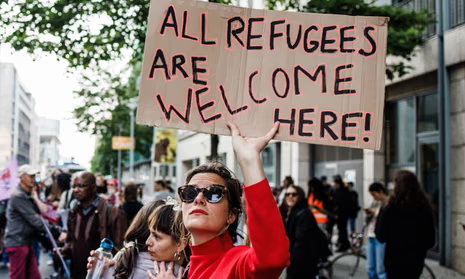
For the past few weeks, protesters have been gathering outside hotels, demanding refugees be sent back. The main political parties have entered into a race to the bottom for how unwelcome they would make refugees.
Their rhetoric and laws may turn out to be a threat to us all. They may undermine the very basis of a compassionate society.
Let us consider what would happen if Britain implemented Torah laws in its approach to refugees.
What would happen if this country made an active decision to welcome refugees and refuse to send them back? To deliberately integrate them and make sure they were firmly part of our towns? To set them up so that they could make a livelihood and refuse any insult to them?
Would this collapse our economy, or would it make this place better for everyone?
And, if we had to choose, why would we not choose to follow the Torah?
1. We are living in apocalyptic times. War, climate disaster, and neoliberal capitalism are plunging us into ongoing and worsening crisis. Apocalyptic times call for apocalyptic theologies.
2. When we survey how Jewish people rebuilt their communities in the face of devastation, we see that Jews have stubbornly held onto hope. From the destructions of the Temples, through Crusades and Expulsions, to colonialism and genocide, our greatest leaders have never wallowed in despair. They always reaffirmed their faith in God and humanity.
3. The task of building the Messianic age is more pressing than ever. Like our forebears, we affirm that the Messiah will not be a man, but a time, in which all will understand the Oneness that lies beneath all superficial differences. The Messianic Age will be defined by equality between people, peace between nations, and harmony with nature. Our task is to build it.
4. Because of faith in God, we understand that our desire for a transformed world is sacred and just. With an outstretched arm and wondrous deeds, God liberated the slaves from Egypt. God hears the cries of all who suffer and shares their pain. God continues to defend the dignity of all who are subjugated.
5. In every age, our people have sought to understand the will of God. In their hardship, they communed with their Creator. Out of their struggles, they developed theologies. These are our inheritance: Torah; Prophets; Writings; rabbinic literature; Jewish philosophies. We claim them for our own time.
6. Our texts are central to our worldview. They are incomplete and polyvocal. We will never make idols of them by treating them as unquestionable authorities. Rather, they are our dialogue partners to understand our God, our world, and ourselves. We uphold the tradition of questioning, reconsidering, and retelling. Every answer is open to interrogation.
7. We affirm belief in the pure monotheism to which our ancestors aspired. We seek to connect with God, who is singular and infinite; immaterial and transcendent; eminent and imminent. Our God is nevertheless directly part of our lives. As the source of ultimate truth, God seeks to impart to us truth as we can understand it.
8. Life has meaning. Its meaning is intrinsic. Everything that lives on this earth was placed here deliberately by a loving Creator to serve a purpose. All that affirms life affirms God.
9. Jews are called upon specifically and by name. We feel that the task of healing the world has been entrusted to us, personally and collectively. This is what it means to be chosen. The task of Jews is to speak God’s truth and to fulfill God’s dominion on earth. A world ruled by God will be one in which no human being can subjugate another.
10. God created all people, replete with diversity, deliberately. We do not wish to make others like us. We reject any uniformity. We accept that people inhabit multiple, contradictory, and overlapping spiritual realities.
11. We bring our spiritual reality to life through our rituals. Our laws, practices and customs are all articulations of our moral purpose. Even where they carry no obvious moral instruction, they instill within us discipline, wonder at creation, and hold us together in community.
12. Our ancestors call to us from history. As refugees and outcasts, they knew what it was to live on the margins. Their memories demand vindication.
13. We have witnessed the progress of humanity. Scientists have developed incredible medicines. Engineers have shown how to harness natural resources to power the entire planet. Activists have shown how collective strength can transform history. We believe that it is our duty to sustain that progress.
14. In the hands of oppressors, progress is a dangerous force. Warmongers have found ever more efficient ways to kill. Capitalists have found increasingly profitable ways to exploit. We have seen how human ingenuity can be employed for systemic violence. We must wrest the tools of progress from those who worship the false god of wealth.
15. Nationalism is a sickness that is plaguing the world. We repudiate all xenophobia and chauvinism. We will not worship the false idols of states and their symbols. We reject all efforts to politically divide humanity.
16. Until all of humanity is fully redeemed, we remain in exile. Only when everyone has achieved full political, economic and spiritual freedom can we say we have reached our Jerusalem. The earthly Jerusalem is as much a part of exile as any other city, until the day when it becomes the heartland for peace and brings all humanity into unity with God. As such, we align ourselves with all those who seek to bring about an earthly Jerusalem based on the prophets’ visions of dignity, human rights, and liberation.
17. Individualism is killing us. Human beings have survived by being social creatures. The ideas of autonomy and personal choice do not serve us in this age. We need to resist the atomisation of people and create community, which necessitates sharing norms, ideals, and practices.
18. We see the Jewish family as expansive and interconnected. We are all responsible for one another, and want to live as if we are one family. This includes a commitment to loving rebuke where necessary.
19. We return to halachah. We see it not as the binding decisions of previous generations but as the creative forum of the present, in which we find new ways to live by our shared values.
20. We commit to Jewish time, which is shaped like a snail shell: always progressing, and always returning to the same points. We return constantly to our shabbats, our fasts, and our festivals. Every time we return to them, we learn more of what God requires of us, and we urge ourselves on to the next stage of our development.
21. The end of time is coming. It does not have to be disastrous. It could be wondrous. Our telos is a perfected world. We will never reach it. We will always fight for it.
“The history of a community, like the history of an individual, is marked by the recurrence of periods of self-consciousness and self-analysis. At such times its members consider their aggregate achievements and failures, and mark the tendencies of their corporation.”
These are the opening words of an essay that gave birth to our Jewish movement.
In 1898, a social worker named Lily Montagu published an essay in the Jewish Quarterly Review, entitled “The Spiritual Possibilities of Judaism Today.”
What this pioneering thinker asked of Jewish London was that it take stock of what it had achieved and what it wished to be. Only by giving an honest and sober account of where we were, could we imagine a better future for our Jewish life.
This is the perfect time to revisit that essay. We are forming a new movement, which will be far bigger and broader than Miss Lily could have anticipated, and may even soon make up the majority of British Jews. Is that not summons enough to the period of introspection Montagu required of us?
But, more than that, when you look at her essay from over 120 years ago, you can see that the issues Montagu wanted to address had much in common with the challenges facing us today.
Montagu was scathing in her perception of Anglo-Jewry. She accused it of “materialism and spiritual lethargy” and charged “that Judaism has been allowed by the timid and the indifferent to lose much of its inspiring force.”
Judaism, she felt, was supposed to be a great and inspiring system that would draw Jews closer to God and motivate its adherents to face the real-world challenges of the day. Instead, it had been captured by a lazy spirit that wanted nothing more than to assimilate, appease the establishment, and provide a lackluster imitation of religious rituals. Does that sound familiar?
Montagu assessed how London’s Jews actually lived. She called them “East End Jews” and “West End Jews,” but was clear that this was not just a geographical phenomenon. She was talking about class, culture, and background.
The “East End Jews” of her day were working class, poor, Ashkenazi immigrants. They were highly observant, but obedient to a fault. They followed along with the old words they already knew, but rarely spent much time thinking about what any of those prayers might mean for their soul. Their main motivation for practising Judaism was a combination of superstition and fear.
“West End Jews,” by contrast, were from higher classes and mixed ethnic backgrounds. They were materialistic, obsessed with status, and only attended synagogue because they thought it was more respectable to be Jewish than to have no religion at all. Yet, she said, by replacing real religion with possessions and status, they ultimately still had a vacuum where religion ought to be.
These types of Jews, as Montagu described them, don’t exist in the same way today as they did then. However much one might nostalgise the factory-working Jews of the Whitechapel shtetl or the days when Jewish aristocrats held drawing room parties in Maida Vale, that world is gone. Economic disparities persist, but far less visibly, and without entire Jewish cultures built around location and class.
She warned that, although the Jews of her age might be economically divided, they still had the same thing in common: their religion was vapid and empty. It was about having an identity rather than having a relationship with God. For both sets of Jews, Montagu argued, Judaism needed a complete spiritual revival.
Apparently, a great number of people agreed with her, because over the years and decades that followed, many came together to form congregations for exactly this purpose. Together, they made the Jewish Religious Union, which then became Liberal Judaism, and is now becoming part of Progressive Judaism.
Our Judaism has, indeed, been reinvigorated. We have opened up new approaches to liturgy, prayer, and worship. Synagogue teams come together to make sure that every Shabbat and festival is meaningful.
Montagu warned a previous generation that they would have to actually live Jewishly, or they would not be Jewish at all. Her prediction has come true, as some generations have just shaken off their roots, while others have decided to commit to Jewish life entirely.
One happy surprise is that, through the Liberals’ embrace of converts, we have Jews who are committed and educated in ways previously unknown in earlier generations. The dedication of converts has also inspired those who might have taken their Jewishness for granted to step up their game, learn more, and embrace their heritage.
Miss Lily did not just advocate for spiritual revival, but wanted to see Jews play a full role in the life of Britain. Full citizenship had only been granted to Jews a few decades previously, and Montagu wanted Jews to rise to the challenge.
Other communal bodies felt that the best thing for Jews to do was toe the establishment line, tell the government how wonderful they were, and hope that they would let us stay in the country without impeding on our religious practices. Our founders wanted us to embrace a more expansive sense of citizenship.
They wanted us to say: we live here, this is our home, and we have the right to change it. They wanted us not to grovel before power, but to make demands of it. They wanted us to ask ourselves “what does God require of our country?” and go about pushing for it.
This wasn’t something that belonged to one political persuasion. The intellectual leader, Montefiore was a capital C Conservative. The first Liberal rabbi, Mattuck, was a socialist who wanted the religious institutions to unite with the unions for revolution.
Montagu herself was a political Liberal. She was a suffragist and social reformer. She believed that the pursuit of peace and human rights were sacred commandments. She dedicated herself to alleviating poverty.
While politically diverse, our founders held in common a conviction that Jews could, in conversation with our God, make demands.
We could change the world. The world, too, could change us, and we should not be afraid of it or hide away in ghettos.
Montagu asserted that the youth were crying out for a Judaism that made moral demands and had something to say to their society. If their elders did not rise to the challenge, the next generation of Jews would vanish away into nothingness.
Montagu knew such Jews because her daily life was taken up as a social worker in London’s youth clubs.
I believe we are facing such a challenge today. Many Jewish young adults are looking at us, including in the movement she founded, and see a Judaism that is reluctant to take stands for fear of rocking the boat. They see a Jewish life where God is, at best, a nice accessory tacked onto a cultural centre. If we look honestly at our own institutions, can we deny their aspersions?
Throughout my twenties, I was one of these disaffected young people, bewildered by why my institutions were so ambivalent on the moral issues of the day, from massive inequality through catastrophic climate change to ongoing Israeli military occupation.
I felt acutely the absence of religious conviction in the establishment and in the institutions. There were pioneering rabbis who led the way on some issues, like gay rights, women’s equality, and refugees, but they were often marginal, and their impact could be felt only dimly in most synagogues. There was a gap.
In terms of our spiritual life, there were peer-led groups that tried to engage in serious prayer and text study, but you’d struggle to find any evidence for their existence in most synagogues.
I do not know how many young Jews fell by the wayside, but I stuck around. I had a strong sense, at least from my peers, that a better Judaism was possible. That we could speak out on social issues and we could have meaningful spirituality. That the Judaism of tomorrow might be more meaningful.
Now, in my thirties, I am a part of the establishment I railed against, and I feel that the issues facing Jewish youth are even worse. The moral and spiritual vacuum has only grown wider, and it looks even harder to fill.
I worry that the demands of our age for renewed spirituality and moral meaning are being quietly subsumed under a banner of “inclusivity.”
Inclusion is a positive and noble goal, but it must be inclusion in something. It must have real substance, if it isn’t just trying to market synagogue membership to the lowest common denominator while offering nothing and standing for nothing.
The challenge facing our movement is, I think, not so much to be broader, but to go deeper. We need to have a deeper relationship with God. We need to ask ourselves searching questions about what God demands of us. We need, as they did over a century ago, a thorough moral and spiritual revival.
In her essay, Montagu warned: “no fresh discovery can be made exactly on the lines of the past; the temperament of one generation differs from that of another.” We cannot apply Montagu’s methods in the same way today.
But we can ask the same questions that she did, and go through a serious process of reflection, as she suggested.
We can look together for new ways of revitalising our spiritual life, and put God at the centre of our synagogue.
We can work together to provide bold answers to the moral questions of our age. We can ask ourselves what God demands of Britain and hold up those prophetic clarions to our leaders.
These are the spiritual possibilities for Judaism today.
That is the spiritual challenge facing our new movement.
If we can rise to it, Progressive Judaism may yet last another century and beyond.
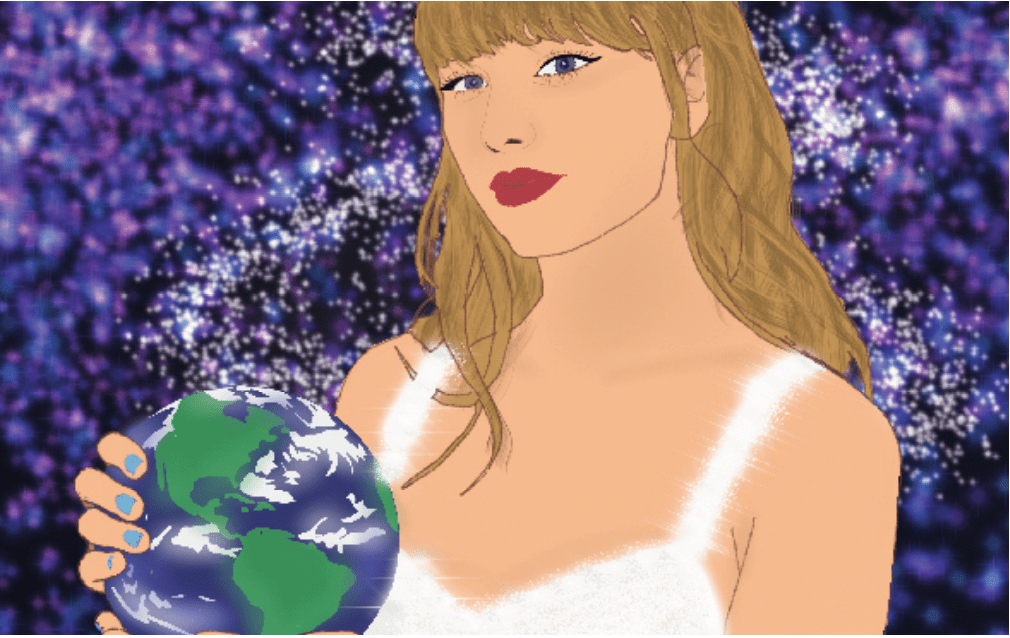
Not long before I started here, Rebecca came back very excited from a Taylor Swift concert. Taylor Swift, I understand, is a very famous popular music singer.
Rebecca had been to the much-coveted “Eras” tour, where Taylor Swift went through her back catalogue of music. For Swifties – Taylor Swift’s fans – their favourite artist has “eras,” each represented by a different album. Fans ascribe themselves to an “era” – their favourite musical period from the singer.
In her enthusiasm for what she had seen, Rebecca suggested I do a sermon about Taylor Swift.
I curtly replied: “I think I’ll probably talk about Torah.”
That was wrong. I shouldn’t have said that.
If something is relevant to the congregation, there should be a way to make it relevant to Torah. So, I got thinking about what connections there might be, not because I like Taylor Swift, but because I do like a challenge.
And I got thinking, you know who else had eras, each represented by unique creative output?
King Solomon.
According to our tradition, Solomon wrote the Song of Songs as a young man; the book of Ecclesiastes in his middle age; and the Book of Proverbs when he was old.
The Song of Songs is a wonderful collection of erotic love poetry, beloved of weddings, and recited at Pesach as we celebrate fertility. It makes sense that this was composed by somebody young and virile. The Book of Proverbs is a compilation of wisdom and dictums: the sort of knowledge someone can only accumulate by living a full life and learning from everyone.
The Book of Ecclesiastes – called, in Hebrew, Qohelet – is the text attributed to middle age. It is a deep meditation on what happens in a crisis of faith, asking what the meaning of life is, and seeking a transformed relationship with God. It makes sense for midlife, when we question our grand narratives, and find new existential purposes.
It is the Megillah, the sacred text, for this festival of Sukkot. It is so appropriate for this autumn festival, when we build a beautiful structure and watch our sukkah get drenched in rain and torn apart by winds. The Swifties may hold by many different eras, but we Jews, at this festival of Sukkot, are very much in our Qohelet era.
With that in mind, I offer up a pop quiz. I’ll read out a verse, and you tell me: is it a Taylor Swift lyric, or a section from Ecclesiastes?
Some of you may need to sit this out, because you are superfans, and will therefore already have rote memorisation of every part of Tanach.
I saw that there is nothing better for people than to be happy in their work. That is our lot in life. And no one can bring us back to see what happens after we die. (Ecclesiastes 3:22)
Did you not write it down? Just one more thing to do. Where were you, and didn’t they pray, too? (Taylor Swift, Didn’t They, 2003)
Did some bird flap its wings over in Asia? Did some force take you because I didn’t pray? (Taylor Swift, Bigger than the Whole Sky, 2020)
A man might have a hundred children and live to be very old. But if he finds no satisfaction in life and doesn’t even get a decent burial, it would have been better for him to be born dead. (Ecclesiastes 6:3)
If clarity’s in death, then why won’t this die? (Taylor Swift, Should’ve Would’ve Could’ve, 2022)
Anything I wanted, I would take. I denied myself no pleasure. […] But as I looked at everything I had worked so hard to accomplish, it was all so meaningless—like chasing the wind. (Ecclesiastes 2:10-11)
Tell me I was the chosen one / Show me that this world is bigger than us / Then sent me back where I came from / For a moment I knew cosmic love (Taylor Swift, Down Bad, 2023)
Sometimes people say, “Here is something new!” But actually it is old; nothing is ever truly new. We don’t remember what happened in the past, and in future generations, no one will remember what we are doing now. (Ecclesiastes 1:10-11)
Someone told me there’s no such thing as bad thoughts. Only your actions talk (Taylor Swift, Guilty as Sin, 2024)
It seems so wrong that everyone under the sun suffers the same fate. Already twisted by evil, people choose their own mad course, for they have no hope. There is nothing ahead but death anyway. (Ecclesiastes 9:3)
When I set out on this task of connecting Qohelet to Taylor Swift, it was just a bit of fun. I was surprised to find something really profound through it.
Many of her fans have paid close attention to Taylor Swift’s developing relationship with faith. They have even engaged in a religious textual analysis of her latest album.
Writing for a British Christian magazine, cultural commentator Giles Gough notices “two Taylors.” The early Taylor, he says, has “an uncomplicated yet sincere relationship with God,” befitting of her Bible Belt upbringing. Later, she only turns to God in times of crisis, “typical of the mainstream, secular world she inhabits.”
Gough speculates that Taylor Swift is “someone who has deconstructed their faith, and come out of it not really knowing what she believes. […] Swift seems to still be reaching out to God and when she is unable to find him, has perhaps tried to find salvation in romantic love.”
If his interpretation is correct, then Taylor Swift is even closer to King Solomon than we thought. She is asking the same questions and wrestling with the same theological issues as the Book of Qohelet does.
In Ecclesiastes, the convoker is eager to hold onto his old views of the world. He insists: “Fear God and obey his commands, for this is everyone’s duty. God will judge us for everything we do, including every secret thing, whether good or bad.” (Ecclesiastes 12:13-14).
At the same time, Solomon wrestles with nihilism, saying: “People and animals share the same fate—both breathe and both must die. So people have no real advantage over animals. How meaningless! Both go to the same place—they came from dust and they return to dust. For who can prove that the human spirit goes up and the spirit of animals goes down into the earth?” (Ecclesiastes 3:19-21)
This wrestling may, in fact, be a part of the human condition. In 1981, the psychologist and theologian James W Fowler developed a theory of “stages of faith.” He argued that people naturally go through a process of questioning their ideas, revisiting them, and finding new narratives to accompany their changes in life. This process helps adults to reach mature religious belief, where they can embrace diversity through universal principles of love and justice.
So, Taylor Swift, King Solomon, James Fowler, and the festival of Sukkot all seem to be teaching us the same thing: that it is OK to have doubts. You don’t have to cleave to a naive faith in a higher power, but can wrestle with God, and challenge your traditions.
In doubt and uncertainty, we grow. In dogmatism, we remain static.
So, whatever era you are in, embrace it. Strive for curiosity. Love questioning.
A few weeks back, I attended a retreat with Christian colleagues. At some point, surprisingly enough, we got onto talking about God. I asked one of the priests a question: “do you believe God speaks to you?”
He looked slightly bewildered by the question. “Literally?” he asked. “No, not really.” He shook his head.
The answer seemed obvious. After all, we were liberals, at an interfaith event. That kind of talk is for fundamentalists. We’re all too rational for that.
“Why?” he asked, turning back to me, “do you?”
“No,” I said, sheepishly. I don’t know why I felt so embarrassed. Of course, many believers see the voice of God mostly as a metaphor, or as a way of giving expression to moral intuition. I’m just not one of them.
I do believe in a personal God, who has a loving relationship with every human being on earth. And I do talk to God. It’s not that I expect answers in any sense, but I do believe some One is listening: that prayers are more than idle words I recite to myself.
Perhaps my Christian colleague would have agreed with me if I’d put it in these terms, because finding vocabulary to talk about God is hard. Words like ‘literally’ and ‘metaphorically’ start to evaporate when you are dealing with faith.
I think, perhaps, the reason I gave a sheepish no – maybe even that I asked the question at all – was that I was having a mini-crisis of faith of my own. Ever since the war broke out, I have been praying differently, more fervently, desperately begging the Universe for peace. I have been hurling questions and recriminations into the void. I have been wondering… do I still believe in this God?
My personal relationship with God has carried me through some of the toughest times. When I have felt most lonely, God has been like a best friend. When I have hated myself, God has been like a lover. When I have needed direction, God has been a wise counsellor. I have looked to God in every time of disaster, and always found comfort in a loving Presence that reaches out and caresses from across a boundary of unknowability.
But now I listen for God’s voice. And all I can hear is screaming.
As long as there have been people who believed in religious meaning, there have been those who questioned it. Usually, they were the same people. Abraham, Moses, Hannah, Kohelet, Job: they all had faith, and they all questioned it. They asked questions so that they could challenge their beliefs, and refine them. Lately, although less adequately than those prophets, I have been forced to do the same thing.
The first question we usually ask when confronted with crises of faith is “do I believe in God?” Fairly regularly, people come to me with conclusions one way or the other: “you should know, rabbi, I don’t believe…” or “you should know, I have a strong sense of belief…” My follow-up is always the same “… and what is it that you do (or don’t) believe in?”
For me, the answer is moral truth. When I talk about believing in God, what I am saying is that moral statements are not just opinions. When we say “murder is wrong” we are not just expressing a preference, like “my favourite flavour of ice cream is tutti-frutti.” We are describing a reality, no different to the claim that there are 24 hours in a day. We are describing something literally true.
I think that’s what God is. When we want to know why our feet are firmly on the ground, we give the shorthand answer of “gravity.” When we want to explain why objects in space interact with each other as they do, we use words like “attraction.” And when we want to express how we know that murder is wrong, we use the word “God.”
So, in feeling the great sense of angst I have had since the war began at the end of the High Holy Days, I am forced to return to the old questions. I am forced to ask whether I still think moral statements are true. I am forced to ask whether I still believe murder is wrong.
I do.
And that is why I believe that God is screaming.
What we talk about when we describe God is obviously more complicated: it is something infinite, and greater than we can put into words. That’s why words like “metaphor” and “literal” are so inadequate – because we are describing something more real than reality. So we have to find shortcuts. We have to find ways of talking about God in human language, to make sense of God on human terms. God is then “a tender parent”; “a loving shepherd”; “a righteous judge”; “a generous creator.” All of these are good descriptors, and all of them are incomplete.
I have been relying on a version of God that has worked for me for a while. I have imagined a sweet aunty or a gentle older friend. In times of loneliness, desperation and heartache, that image of a loving God has helped me get through the day. But that image doesn’t serve me now. I think if I used God for comfort in a time like this, I would be retreating from responsibility. God does not need me to feel safe now, but to shake me from illusions and complacency.
If God is the moral voice of the universe, that voice must be crying out in desperation.
In the last few months, 23,000 Palestinians in Gaza have been killed by Israeli bombs. I am kept awake at night thinking about that. I imagine God, smothered by the rubble of obliterated hospitals, calling out. Like Abel, stricken by Cain, the voice of the blood is calling out from the ground (Gen 4:10). I imagine God, pulled from the wreckage, crying: “Thou shalt not kill. (Ex 20:13) Thou shalt not kill. (Deut 5:17)”
Those were the commandments given to the Jews, above all others. In some variations, it is the very first commandment, the one that holds the most power. And as Israel stands in the dock at the Hague, it is not only South Africa that places it on trial, but God too, who comes with the accusation: “did I not tell you: thou shalt not kill.”
Since the war began, Israeli settlers, with governmental support, have seized around 20 villages in the West Bank, displacing thousands of people, so that Jewish Israelis can expand their territory and claim others’ homes. I imagine God calling out from deserted towns, on the trail with refugee families, wailing “thou shalt not steal” (Ex 20:15), “thou shalt not steal” (Deut 5:19).
Netanyahu says, unabashedly, that he will push the Palestinians from Gaza and create a new border with Egypt. The Torah answers, in desperation: “thou shalt not move thy neighbour’s boundary” (Deut 19:14). Land theft is a sin.
Israeli soldiers enter Gaza and use Jewish symbols as weapons. They recite the Shema from the pulpits of mosques and place mezuzahs on Palestinian homes. They desecrate our religion. They destroy our faith. From the depths of history, God cries out “honour thy mother and thy father (Ex 20:12); honour thy mother and thy father (Deut 5:16).” Do not profane the faith of your ancestors with war crimes.
Worse still, the politicians claim that God gave them the right. That this is what the Torah intended. Can you not hear the scream of revulsion as God decries: “thou shalt not take My name in vain (Ex 20:7); thou shalt not take My name in vain (Deut 5:11).” This is what was intended: do not abuse God’s name for worthless pursuits like war, but elevate it for the purposes of peace.
I believe that God is screaming.
The commandments may once have been given as words of instruction or even as a love letter, but now they are a desperate plea.
God says “I am the Eternal One thy God, which brought thee out of the land of Egypt, from the house of bondage. Thou shalt have none other gods before me.”
No other gods. No state, no flag, no military, no leader, no ideology, no grudge, no border, nothing. None of these can ever be placed before God. None of them have any trump over God’s words.
God’s word says: “You shall not pollute the land in which you live; for blood pollutes the land, and no expiation can be made for the land, for the blood that is shed in it.” (Num 35:33)
So I believe I can hear God screaming: thou shalt not kill.
And I do not want to silence that voice. I want to amplify it. I want the Holy Torah to be heard now, more than ever. I hear God screaming, and I want to join in.
I have a horrible, on-off relationship with the news. I wouldn’t call it a love-hate relationship so much as a hate-hate relationship.
There are days when I can do nothing but stare at it, soaking in every detail: climate collapse; species extinction; earthquakes: natural disasters; social breakdown; cost of living; refugees in detention centres; wars, wars, wars…
And then there are days when I switch off entirely. I become so overwhelmed I refuse to hear the radio or see current events on TV. I don’t look at any of the news apps or social media for fear that I’ll be reminded of all that is wrong in the world.
Whether endlessly scrolling through the horrors or studiously avoiding admitting they are there, I think I’ve become trapped in a cycle of feeling powerless. It’s all so big, and so frightening.
But what can I do? I’m one person, seeing the world collapse, and all I can do is observe.
If this feels at all relatable to you, perhaps you’ll find some comfort in this week’s Torah portion, as I did.
After all, didn’t Moses feel too small and powerless too, at the beginning? He tried to change things, and look where that got him. Stuck in exile, looking after sheep. Moses looked at all that was wrong in his world, found it far too much to bear, and retreated into the wilderness.
And he would have stayed there too. He could have lived out the rest of his life with a lovely family tending flocks in Midian.
But God had other ideas. God heard the cry of the Israelites in bondage and decided it was time to set them free.
So God reached out to Moses from a thornbush. God set a small thicket in the wilderness ablaze and called Moses on his mission.
A thornbush, of all things. Why would God decide to speak from such a lowly and despised place? The thornbush is, at best, a plant to be ignored and, at worst, an annoyance that scratches against bare legs. It’s the desert equivalent of stinging nettles.
In our Talmud, Rav Yosef says: not because the thornbush is the greatest of plants did God choose to speak from it, but because it is the least of the creatures. God disregarded all the most beautiful trees of the desert in order to be with the lowliest.
Similarly, God chose to give the Torah from Mount Sinai not because it was the highest or most magnificent of desert peaks, but because it was small and covered in unremarkable roughage.
In the natural world, God singles out the powerless and unimportant. That’s where God works the real miracles.
That’s why God chose Moses too. Moses had no idea of his miraculous birth or impressive destiny. As far as he was concerned, he was a loner in the desert.
When Moses gets the call, it’s not God that he doubts. He doubts himself.
His first question is: “Who am I that I should go to Pharaoh and bring the Israelites out of Egypt?”
God doesn’t build Moses up or tell him how he wonderful he is. He says: just trust. Have faith.
We don’t get to decide what times we live in or what role we have to play in them. God decided that Moses was going to take the Israelites from Egypt and that was what was going to happen.
But Moses still can’t see how he can make a difference. He doesn’t doubt God’s power, he doubts his own. He says: “what if nobody believes me? What if they don’t listen to me? What if they don’t trust that I spoke with God?”
At this point, God shows Moses some miracles. We might think these miracles are about God flexing Divine might, showing Moses all the wonders. In fact, a bush burning in the desert without being consumed by flames would be quite enough to achieve that.
These miracles aren’t about showing God’s power: they’re about showing Moses his own.
First, God turns Moses’s shepherd’s crook into a venomous snake. Moses recoils in fear. Then God turns it back again.
Next, God afflicts Moses with a deadly skin disease. Moses thinks his life is over. Then God heals him.
Both miracles make Moses face his greatest fears. They are exposure therapy. The worst thing that Moses could imagine is death. God shows him that he can stare it in the eye. Moses thinks he is not brave enough. God shows him that he is.
It’s not that Moses ever doubted God’s power. What he doubted was his own. Now God shows him he does indeed have power. He is stronger and more resilient than he realised.
It’s not that Moses ever doubted God’s importance. What he doubted was his own. Why would anyone care what a stammering wreck like him had to say?
When God performs miracles through Moses, the message is clear: “I, the Eternal One, care. I care enough to work wonders on you. I care enough to meet you in the desert. I care enough to save you from death.”
And, if God can care about Moses that much, why can’t the Israelites? Why can’t Moses care about Moses that much?
Still, Moses is not ready to own his power. He protests to God: “I can’t speak. I’m slow of speech and stammer constantly.”
God gives the perfect answer: “And who made you that way?”
God made Moses that way. God decided that Moses would be who he was. His speaking ability is not a flaw – it’s the characteristic God gave him that makes him exactly the right man for the moment.
What a message this brings for us, who feel so powerless and insignificant.
What are we but matter in the void, and yet the Creator of the Universe has chosen for us to be alive at this time?
Who are we with all our foibles and imperfections? But God has made us exactly as we are.
So why don’t we trust in ourselves, and recognise our own power?
Don’t ask why God made a world with so many problems and sent no solution. The solution is here: God made us.
So I think I need to stop the cycle of doomscrolling and avoiding. Life isn’t just something that happens to me – it’s something I make, too. Society doesn’t just exist apart from me, I’m an active player in making it. And the news isn’t just something that lives on TVs and in devices – it’s something that we can create, every day, if we so choose.
In the Mishnah, Ben Azzai teaches: “Hate nobody, because everyone has their time and everything has its place.”
We did not choose to be born here and now, but God saw fit that we should be alive at this place and time. God wants us here, in this moment.
We are like that weedy thornbush in the desert. We might seem insignificant. But God has chosen for us to be here. And, because of that, we can burn brightly enough to change everything.
As you know from all the advertising hype, there is a film out at the moment that deals with some of the most complex moral and philosophical questions of our time. It is already touted to win many awards, and has spurned fantastic conversations about truth, ethics, and politics.
I’m talking, of course, about Barbie.
Barbie already holds such a sentimental place in my heart. While the other boys liked wrestling, Fifa and war toys, I just wanted to play with my dolls’ hair.
I know, you’d never guess it. The butch man you see before you was once obsessed with the Dreamtopia Mermaid Barbie.
So, last week I did my duty as a good consumer, and went to the cinema for the first time since Dead Pool 2 came out. A lot has changed since I last went to the movies five years ago, and it seems that now everyone dresses up as the characters in the film. I was thrilled to get out my Ken costume, which I never knew I would have a use for.
During the film, I laughed, I cried, I reminisced. And as I left the theatre, I thought: “I’m sure I can squeeze a sermon out of this.”
Yes, that’s right, welcome to your Shabbat morning dvar Torah on the theological metaphysics of Barbie World.
Don’t worry if you haven’t seen the movie: I promise that will not help this make any more sense.
To help put this into perspective, I’ll give a quick summary of the storyline. Margot Robbie is a Barbie girl, in a Barbie world. Her life in plastic is fantastic. She is driven by the power of imagination. Life is her creation.
In Barbie World, a doll can be anything. A President, a marine biologist, a Nobel Laureate, a mechanic, a pastry chef, or a lawyer. Even a rabbi.
But then a great intrusion comes into Barbie’s dream world. She finds that she now has cellulite and existential dread. This plastic world of fantasy suddenly starts to turn into something… horrifyingly human.
Barbie therefore must travel to the world in which people play with her, to find out what is going on in the world of real girls.
The result is distressing. It turns out that the real world is defined by misery and hatred, and, in this world, girls absolutely cannot do anything they want.
I am interested in the interplay between these two worlds. In the plastic world, anything is possible, but none of it matters. In the human world, everything matters, but nothing is possible. These two versions of reality conform to two popular narratives.
The first is that this world is just a simulation. That view is being propogated right now by Elon Musk and Neil deGrasse Tyson. It says: none of this is really real. Our world is like Barbie World: it is someone else’s fantasy that we are stuck in, playing roles. Anything is possible, but only the terms of the magnificent computer directing our lives.
I understand why that idea is so appealing. The word is a mess. There is something reassuring about believing that none of it is really happening and it’s all out of our control.
Although today this idea can appeal to new innovations in quantum physics, it is actually a very old idea. In the 17th Century, Irish philosopher Bishop George Berkeley promoted a similar philosophy, called “immaterialism.” We are all, he said, simply ideas in the mind of God.
Berkeley continues: if this world is just an illusion, your only duty is to conform to the role you have been given. You must blindly follow authority. We must all submit to the law and do as we are told.
Barbie has been told that she must fulfill the stereotype she has been molded in, and she has no choice but to accept it.
We need not wonder why a group of billionaires would like us to think this way. If reality is just an illusion, we just have to accept our place. And there’s no point resisting it, because the script has already been written, and none of it means anything anyway.
But the alternative world of the Barbie film – the human world – is not compelling either. In the human world, everything is made up of futile facts. It’s all real, and there’s nothing you can do about it. The grass is green. People grow old. You will get cellulite. Patriarchy is inevitable. It is all meaningful, but its only meaning is that everything is deeply, existentially depressing.
This is also a very popular worldview right now. It is best encapsulated by conservative talk show host, Ben Shapiro, whose dictum is “facts don’t care about your feelings.”
And that idea can be seductive too. The world is changing so fast and so much. Why can’t everyone just accept that everything is the way it is and stop moving so much?
Ben Shapiro offers brutal reality as an antidote to too many ideas. You think this world is horrible? Tough. You’re lumbered with it. This vulgar materialism, that says everything just is the way it is and nothing will ever change, is just as reactionary as the immaterialism that says nothing matters.
So, let’s get to the point. What does Judaism have to say about this?
Is this all just a simulation so that we are all just living in a fantasy world?
Or is this all the cold, hard, truth of reality?
In the 20th Century, Jewish philosopher Ernst Bloch tried to offer a third way. Bloch was a religious socialist from Germany, who fled around Europe as the Nazis took power everywhere he went. For him, it was deeply important to develop a view of the world where the unfolding horrors of fascism could be stopped. Any metaphysics that kept people from changing their circumstances had to be resisted.
Bloch turned to great religious thinkers of the past to remind people: it doesn’t just matter what is; it matters what could be.
This world is real, and the one thing we know about reality is that it is constantly in flux. Everything is as it is, and everything will be different.
Everything is subject to change. Everything that is is also something else that is not yet.
Ice turns into water turns into steam. Acorns become sprouts become mighty trees. People grow and age and learn. Societies progress from hunter-gatherers out of feudal peasantry and move to abolish slavery.
In all of their forms, these things are exactly what they are, and are also everything they could be. They are only what they are for a brief moment as they are becoming something else. The movement of water into ice is just as real and possible as the movement for women’s equality.
To put it another way: this world is real, but it doesn’t have to be. There are so many other very real worlds we could live in.
Ernst Bloch would have loved the metaphysics of Barbie World. It doesn’t just leave us with the misery of the real world or the pointlessness of the fantasy world. It shows us that both worlds speak to each other. The real world can become more like the fantasy world, and the fantasy world can become more like the real one.
This is the Jewish approach. Our task is not just to accept the world but to change it. As Rabbi Jonathan Sacks used to teach: “faith is a protest against the world-that-is by the world-that-ought-to-be.” Faith, for Sacks, is the demand that this imperfect world could be more like the utopian one. Like Bloch, Sacks talked about Judaism as the “religion of not-yet,” always moving towards what it would one day be.
This is what animates the Jewish religious mind: the possibility that this world, here and now, could be transformed into the vision we have of a perfected Paradise.
So, how do we get there?
Once again, we have to take our inspiration from Barbie. When Barbie wanted to get from the fantasy world to the real one, first, she got in a car, then on a boat, a tandem, a rocket, a camper, a snowmobile, and finally a pair of rollerskates.
To bridge the gap between worlds, all she had to do was put one foot in front of the other.
That is what we must do too. We must take small steps in our pink stilettos, and set out towards the real fantasy world.
The most commonly asked question I’ve had while training to be a rabbi is “why?”
And I always tell them the same thing.
I was sitting in synagogue one shabbat morning, when a great beam of light came in through the sanctuary window, the heavens opened, and a great booming voice said: “Lev! Apply to Leo Baeck College!”
Of course, that didn’t happen. And it doesn’t take people long to realise I’m joking.
Rabbis don’t get called on by God. In fact, the rabbis of the Talmud were pretty suspicious of any purported voices from heaven.
Today, I will share with you the real reason I wanted to be a rabbi. During my twenties, I began to wonder what happened to gay men over 30. I knew so few.
At the same time, I saw some friends, in different ways, destroy themselves. They were all queer.
And I didn’t need to ask why. I understood how living in a homophobic and transphobic society could make them believe that the world didn’t want them.
I had grown up in that world too, often experiencing homophobic violence.
But I had one thing that differentiated me from some of my friends who didn’t think they belonged in this world.
I never had to doubt that I had a family, a community, and a God who loved me.
I grew up in a synagogue that accepted and embraced me as a gay and gender non-conforming child.
I knew, too, that were gay rabbis out there. At least two. Over decades, pioneers had fought for a Judaism that would benefit people they would never know. That would shamelessly embrace difference. That would speak out for social justice against conformity.
And I wondered if, perhaps, I could pass on something similar. That others might grow up with a God and a community and a religion that loved them. That, if they did, perhaps they wouldn’t destroy themselves.
So, in that sense, I feel like I was called.
Called upon by future queer kids, asking, will you make space for us?
Called upon by past generations of Jews, many lost to the centuries, saying, we brought this Judaism this far. We nurtured inclusive Judaism for you to inherit it. Will you keep it alive for us now?
Called upon by those that didn’t make it, asking, will there be communities that can love us, too?
And yes. Called upon by a loving God. The voice of justice. The moral force of the universe that will always stand with the oppressed.
The outstretched hand that brought us out from Egypt so that we might spread a prophetic message of equality and justice throughout the world.
That voice doesn’t come as a booming sound from the heavens. It is a still, small voice. It is a gentle murmur, calling us to do right, urging us to rectify iniquity, offering hope.
Such a voice can only be heard if there are people to amplify it. To those who have kept it reverberating throughout the ages – thank you.
I hope you don’t mind me calling you Judy. I know Lionel Blue used to call you Fred. I remember reading about it in one of those compilations of Thought for the Day segments he put out. He said we should talk to you like an old friend, with the same degree of familiarity. He called you Fred and addressed you like you were his conscience; a kind voice coaxing him to do better. I picture something approximate to Jiminy Cricket.
So I’ll address you as a friend and call you Judy. I want to call you Judy because I don’t know anyone who goes by that name, so I can invent an image from scratch without knowingly projecting my ideas of others onto you. I want to talk to you as a woman, maybe because I’m just sick of having religion dictated to me by older men. I imagine you queer, because Judy only you truly know how much I need my God to be non-conforming.
So I’ll picture you, if I may. Pixie dyke haircut and hooped earrings. Comfortable trainers. A flowing blouse. Sitting on one of the chairs in my back garden, any back garden I’ve ever had. And you smoke a rolled-up cigarette, or maybe it’s a joint, and you don’t offer it to me because you know I quit smoking a long time back. But you are immortal and immutable, so you don’t need to worry about what impact all that tar will have on your health.
Judy, I hope you don’t mind that I say “you” and not “You.” If I were writing high liturgy or biblical translations, I think I would have to capitalise you. But I’m following a theology that Rabbi Blue picked up from Martin Buber, who adopted it from German Protestants. I’m supposed to speak to you unguarded and as my full self, without illusions of grandeur, neither yours nor my own.
I have to ask forgiveness just for talking to you this way, because I know it is heretical. Even imagining you is an affront to who you really are. Maimonides long ago instructed us that you had no physical form nor anything resembling one. Like the Rambam, I admire the austere iconoclasm of philosophical Islam. It pushes us to realise that you are incomparable to a human being. You are more akin to a force, like gravity or entropy. You are like the moral vibrations of the universe. We only can say what you are by saying what you are not.
But I can’t talk to a vibration or an equation. I can’t make friends with an abstraction. The truth is, Judy, I need you, and I need you to be a relatable human being, because I depend on your guidance for change. I need to picture someone who believes in me and my capacity for goodness, especially on days when I feel like I have nothing to give. I try hard to be someone better than I am, I honestly do, and imagining a slightly stoned lesbian can help with that.
I’m writing this because I want to connect to you, truly and faithfully. I want to reflect on what you mean to me. I want to try and develop morally and spiritually. So I talk to you like you’re here.
I don’t need you to say anything back. I don’t have any illusions about what role you play in the universe. I just need to feel that somehow you are there; listening to me; encouraging me. I just imagine a warm smile and a gentle hand on my shoulder. Jonah’s God. Shechinah. Someone intimate and loving.
If I have to accept that you are beyond comprehension, I wouldn’t be able to talk to you. I would feel like I’m shouting into a silent void. Elijah’s God. The God who isn’t there.
And there are few things I find more frightening than silence. Part of what prompted this letter was a series of exercises where I had to keep quiet for long periods because it was supposed to be spiritually enriching. I get that it is supposed to be enlightening. That’s the popular image of Orientalist postcards showing gurus meditating on the Ganges and fully-robed Buddhist monks sat for hours in silence. It is a significant part of the imagination of Westerners who can’t connect with their own traditions.
That’s not fair. That’s not (the only reason) why it makes me so uncomfortable. It’s also part of English religious history. There is so much I admire about the Quakers. I normally find myself chiming with their politics; impressed by the way they turn anti-militarist protest into acts of religious service. I admire that. I have felt deeply connected to you when in their presence. In your queerness and hunger for justice, I imagine that you blockade arms fairs too.
But I don’t feel your presence when in their silences. I feel anguished and frustrated when I’m forced to contend with silence. I once walked into a retreat happening in the home where I lived. The people weren’t talking or engaging with each other. It reminded me of hospices and retirement homes I had visited where the patients were so drugged up or afflicted by dementia that they had no idea what was going on. I left instantly.
Later, I returned to sleep. While the more enlightened sat in the living room experiencing their quiet contemplations, I washed the dishes with a friend. She talked about her own discomfort, that these practices were stripped from their original contexts of social justice movements and anti-colonial practices, then re-packaged into the medicalised language of “wellness” or the neoliberal politics of “self-improvement.” I had not considered that such a practice could be radical, because I understood silence to be entirely isolating and alienating.
That comes from my own experiences. So much of being gay has, for me, been about deciding what to share and when. In nearly new spaces I wonder whether I can be camp, or if it will put people off. I wonder if I can tell the stories of who I am and who I love and the small queer family I am building, or whether it will invoke new anger from people. In most circumstances, I have to kill part of myself in order to fit in. Coming out isn’t a one-time event, and nor is being in the closet. It is a constant process of ascertaining whether somewhere is safe, and how much. That is why being coerced into silence affects me so much. It’s why I need to be able to talk to a God like you, Judy; someone who is an outsider too.
When I construct my own gay deity, I don’t feel like my queerness is the problem. I feel like it’s part of the solution. Growing up in a world made by other people to suit their own hierarchies has made me empathetic to the struggles of others. I don’t claim to understand what it is like for black men in Chicago or Palestinian children in Sheikh Jarrah or women working in Bangladeshi sweatshops. But I care about it because I know how I have felt when faced with injustice. And that burning rage against oppression feels holy.
It doesn’t just feel like endless anger when I’m with you, Judy. It feels like it means something so much bigger. It is not just politically expedient solidarity or, worse, bleeding heart liberalism. The combined grief and anger of all persecuted people feels like it is deeply spiritually meaningful. It is the foundation for divine justice. It is proof that all of humanity is connected by something bigger than ourselves: a sense of righteousness in resisting iniquity. I think that is what the Latin American liberation theologians are getting at. I feel like they have sat in the back garden with you too.
Judy, it matters greatly that you are there at those barricades and back gardens. Without you, as a real and personal presence, all my fears about the world and desires to change it are misplaced. There is no right and wrong. Oppression is just something that happens. We are alone on a burning planet in an empty universe. There is nothing we can do to change that and, even if we did, it wouldn’t matter. I have to believe you are real. And that you are really real, not just as a story that I have chosen to believe, like existentialists who are nihilists with self-deception. I have to believe that moral statements mean something and a greater tomorrow can come. I have to believe you are real or life will not be worth living.
There are so many who want to treat you like you don’t exist. Some of them claim the Holocaust as a reason to deny you. God abandoned them at Auschwitz, so they will abandon God in turn. Or: if God were real, God would have intervened. I was asked this last year by Shoah survivors at a Tu Bishvat seder. I just listened. I told them they did not have to believe anything. Because my instinctive reaction is to say: what did you think would happen? Did you imagine God would strike Hitler down with a thunderbolt from the sky? Did you think God should just swallow up the camps into pits before they piled the Jews into the gas chambers? How would that work? But, faced with living survivors, I had nothing to say. Albert Friedlander taught that any theology had to be able to be repeated in front of a million murdered Jewish children. Faced with them, I had no answer.
I think that’s why I have to imagine you silent, just listening, and refusing to intervene. If I thought you could respond or intervene, I would be so angry at you. So I imagine you calmly reflecting, nudging me on, reminding me with your eyes that you did not kill all those people, Nazis did. You remind me with your smile that human beings are responsible for our own actions. Above all – that I am responsible for mine.
Because of that, I do look upon some atheism with cynicism. There are people whom it suits very well to deny that there is a God or that morality has any meaning. The world created by Thatcher and Reagan is one where everyone is an individual atom, compressed to its smallest form, seeking nothing but the maximisation of its own wealth and happiness. If there were some great force holding us all together, their entire project would be at an end. If there were such a thing as love or justice or retribution, they would have nowhere to turn. So they pretend not to know you. When they sit down and feel your presence beside them, they shut off the part of them that knows what it means. They are no different to those who thank you for their success, as if you would ever hand out rewards like cookies to children.
I think I heard you once. I was in intense pain and struggling with life, around seven years ago. I was standing on top of a roof, smoking a cigarette. (I wasn’t looking to kill myself instantly, just slowly with tobacco.) I looked up at these overpowering grey clouds and I asked what I should do. And I heard this voice saying “forgive yourself.” It said “forgive yourself” over and over again, quietly at first, and then louder and louder. At that time, I felt like I had always been hearing those words; I’d only just paid attention to them for the first time. I felt like you were there with me, and that was your message for me. And once I’d heard it, truly heard on it, I no longer heard it, because I no longer needed it. Suddenly, I felt ten stone lighter and like I had a message for the whole world.
Judy, you might be imaginary. I might have had a moment of insanity. We might be alone in a meaningless universe. There are so many scientific explanations, and I’m sure there could be so much wonder in the world even without faith. Maybe justice doesn’t matter as much as I think it does. Maybe. Maybe all kinds of things. But I’ve chosen a story that makes sense so I can live a life that feels right.
I have to believe. So I talk to you and write to you and call you Judy. I only ask one thing of you, Judy. Please don’t answer. Please don’t tell me what you think or what I need to do. The only thing worse than silence would be to hear your voice. I couldn’t bear your judgement, or your love. Either would be too much. Let me remain in doubt, that’s all I ask.
You take the last drags on your roll-up. You stub out the fag end on the ground. You put a hand on my shoulder and use my body to lift yourself upright. And you leave me again, for a while.







 Sim Lev