judaism · sermon · theology · torah

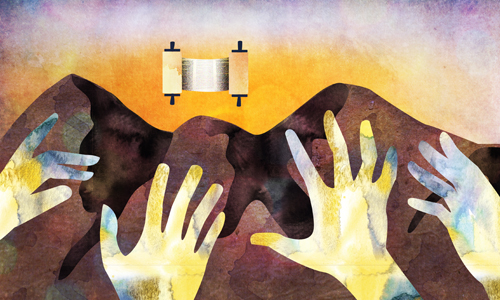
Who wrote the Torah?

I realise that, this week, people will have a great deal on their minds. We are living in uncertain times. If we knew each other well, this week’s events would very likely be the topic of this morning’s sermon. As it’s my first time here, however, I don’t want to risk offending anyone, or opening up uncomfortable conversations. So I think it best if I focus on talking about something far less contentious: the question of who wrote the Torah.

Once, in my early teens, I sat with my rabbi, helping her to organise some books. As I picked up a chumash, a question occurred to me. “Rabbi,” I asked “who wrote the Torah?”

“God,” she answered, without skipping a beat.

I thought that perhaps I had phrased the question wrong. “But… who published it?” I asked.

“Hmm… if you look in the inside cover of that one, it should tell you. I think that was Soncino.”

Her answer reflected a familiar and tradition of Torah authorship. As we raise the Torah for hagbah before reading it, we sing to each other: “this is the Torah that Moses put before the children of Israel – from the mouth of God, by the hand of Moses.”

It was an answer, but it wasn’t the answer I was looking for. The trouble was that I wasn’t sure what question I was trying to ask.

A few years ago, I sat in a university seminar and did get the answer I’d been seeking out as a teenager. The Torah, my lecturer explained, was written by four main schools over a period of several centuries. Each one represented a different theology and interest group. Their traditions were later redacted into a single document.

It was a revelation. A profoundly disappointing revelation. I felt a bit disillusioned. By explaining the Torah historically, my lecturer had robbed the text of something of its mystery. Part of me wanted to go back to the answer of my rabbi: the Torah was written by God, and that was that.

And yet the conclusions of the historical approach were very hard to ignore. In this week’s parasha, for example, we read the list of “the kings who reigned in the land of Edom before any king reigned over the Israelites.”[1] Yet our text speaks to a time centuries before the Israelites got their first king. The idea of an Israelite kingdom is, seemingly, completely unknown to the Torah and doesn’t appear in Tanach until the book of Samuel. How could Moses know that there would one day be an Israelite king?

Asking questions like these is, indeed, the basis for the entire enterprise of working out the historical authorship of the Torah. The book of Deuteronomy, for example, legislates for the possibility of monarchy and sets out a series of reforms for the Israelites that match quite closely with the laws set down by King Josiah. As a result, early historians of the text suggested that the two likely came from the same era – the 6th Century BCE, several hundred years after the Torah was said to have been revealed at Mount Sinai.

When the theory that the Torah had multiple authors was first advanced by Protestants in 19th Century Germany, it was embraced by many of the early Reform Jews. Part of the impetus behind the Jewish reformation was a feeling that the tools of science and history were fundamentally challenging old beliefs about the nature of religious truth. Our Reform ancestors felt that they had to adapt to this new knowledge or lose their own integrity.

Understanding the Torah in its historical context can also help us today. There is no getting round the reality that some verses are quite objectionable to modern ears. In our parashah this week, too, we read about Jacob having two wives (Rachel and Leah) and two concubines (Bilhah and Zilpah). The idea that our founding prophet had two women as low-status mistresses in addition to his wives doesn’t do much to elevate his moral status in our eyes. Putting the Torah in its historical context doesn’t necessarily absolve him of our moral concerns, but it does help justify why we would never allow such practices today.

This week, I told a group of adult students who grew up secular and are connecting with their heritage that the question of who wrote the Torah is a denominational difference. One woman was really disappointed. Her reaction was the same as mine when I first heard about historical criticism: “how can you be Jewish and not think the Torah was given to Moses at Sinai?”

It’s understandable to be deflated by hearing that the Torah may not have come directly from God. If it doesn’t come from the Divine Author, what makes it holy? Why is it worth reading at all? Why do we come here each week to hear these words?

There are some good answers that help keep the holiness of the Torah intact. One of these is to challenge the assumptions of the historical critical method itself. How can anyone definitely assert that this text came from multiple authors? If you are willing to accept that an omniscient God is present in the text, there’s no reason why that God couldn’t foresee the future of Israelite kings or anticipate the needs of future societies. Any form of faith involves some suspension of judgement – why can’t we extend that to the authorship of the Torah?

Yet it is hard to deny that human hands were involved in the transmission of our text. In this very portion, there are already dots above certain words, which traditional Judaism teaches were put in by Ezra the Scribe over words he believed might be spelling errors. Even on the most Orthodox reading of the text, there is more going on here than simply God handing down a pristine document.

Perhaps we could say, as some do, that the texts were divinely inspired but written by human beings. God revealed different messages to different people for their own times, knowing that God would continue to work with humanity to help us better understand truth. Just as God spoke to the Israelites at  Sinai, God engages with us today, and helps us to find spiritual meaning for our times. Yet this answer has its own problem: isn’t there an arrogance in us claiming to know more about moral truth than our prophets like Moses did?

Personally, the answer I like best is that what makes the Torah holy isn’t its author but its readership. We, the  Jewish people, through centuries of transmission, questioning, storytelling and interpreting based on this book, have turned it into a holy book. When we engage with it today, God is not waiting in the text to be found, but is with us as an active participant in the conversations we have with Torah. God is in the space where two people pore over this ancient text.

The Torah, then, is not so much a destination for divine revelation, as a mode of transport for getting there. Difficult, challenging, confusing and strange. But it’s a wonderful ride. It’s a journey worth making. Let’s continue to join each other on this voyage of discovery, to uncover the deepest truths we can today.

sinai

[1] Gen 36:31

I gave this sermon for Parashat Vayishlach on Saturday 24th November at Newcastle Reform Synagogue.

judaism · sermon · theology · torah

Go for yourself

Trying to get by with biblical Hebrew with modern Hebrew speakers is difficult. Among a group in Jerusalem this summer, I tried to coax out a dog, saying “Lech lecha, celev.” The Israelis around me burst out laughing. “What? What did I say?” I asked. “Nothing,” they said. “It doesn’t mean anything.”

I had just repeated the first words of our parashah, when God instructs Abraham to get out of Haran and go to Canaan. Without context, the expression was bizarre. Phrases that were once meaningful in this language can lose their sense. But, for our commentators throughout history, this specific phrase has been perplexing. Without the vowels we might think it is emphatic – a repetition of the same verb, telling Abraham “go, go, get out.” But the Masoretic markings are quite clear. This is not “lech lech” but “lech lecha” – which could be read ‘go to yourself’, or ‘go for yourself’, or ‘go as yourself’… It is a strange construction.

Ramban suggests that it’s just an idiom of biblical Hebrew. He points to other examples in Jeremiah and Deuteronomy where similar constructions are used. But that answer feels disappointing. Why this idiom? And why here? Every idiom has a purpose, even if that purpose isn’t even entirely clear to the native speaker.

The answer I like best comes from Rashi. Rashi says “go for your own benefit, for your own advantage”. This puts the rest of the sentence into context: “and all the families of the earth shall be blessed through you.” Don’t go for their sake. Go for your own sake. But when you go for your own sake, when you go knowing that you are seeking out a blessing for yourself, then everyone will receive that blessing too.

It calls to mind the distinction between charity and solidarity. That idea was summarised by Lilla Watson, an Australian indigenous rights activist, in her address to the UN Women’s Conference in Nairobi in 1985: “If you have come here to help me you are wasting your time, but if you have come because your liberation is bound up with mine, then let us work together.” Watson herself has challenged the attribution, saying that it was thinking that had come out of collective work by indigenous women in Queensland over a long period of time.

Indeed, differentiating between charity and solidarity has long been a feature of thought for oppressed peoples. Charity, seeking to help people for their own sake without any regard for your own, is surely a noble feeling. But it leaves the person who gives it feeling better than the one who receives it. For the one who gives it, it leaves them feeling helpful, assuages their conscience, and contributes to a sense that they are doing the right thing. For the recipient, it can leave them feeling powerless, pitied, supported, and not treated as a full human being.

Charity is ultimately, too, not that helpful to the one giving it. It turns human interaction into a form of sacrifice, based on guilt, self-effacement and pity. It forces people to ignore their own lived realities and struggles, and put themselves at a position of distance from others.

While charity can address material needs in a positive way, it reminds everyone of the power relations that caused the need for charity in the first place. It reminds the donor of their power and the receiver of their lack. It can even reinforce those structures, as the impoverished turn to the donors as a source of wealth rather than looking to their own talents. The donor can impose restrictions on how the money is used or on how the receiver might conduct themselves in ways that ultimately secure the authority of the donor.

Solidarity asks us to “lech lecha” – to go for ourselves, to go as ourselves. It asks us to come to problems as full people with our own issues and concerns that we need to address. It asks us to treat everybody as if they, too, are going for themselves: full human beings who have a great deal in common with us and their own unique purposes.

Solidarity requires both parties to feel vulnerable together. It asks that the person motivated to give charity considers their own interests and what stake they have in changing the current circumstances. It also asks both parties to work together: they have a common interest and need to empower each other. Solidarity places people’s self-respect and cooperation at the centre of organising change.

Rambam picks up this theme in his eight levels of ‘tzedaka’. The word ‘tzedaka’ is often translated as ‘charity’, but it shares a common root with the word for ‘justice’. The concepts of charity and solidarity are held together by this same word, so Rambam needed to spell out the differences between different forms of giving. Like the indigenous activists of Australia, Rambam puts solidarity on a much higher level than charity. He considers “empowering others with meaningful employment” to be the highest level of tzedaka. Unlike giving into the hands of the poor, empowerment such as this ensures that everyone’s dignity is preserved, and everyone benefits from the work.

So it is that G-d says to Abraham: “Go for your own sake and all the families of the earth will be blessed through you.” When you go out considering your own self-respect first and foremost, it follows that everyone else can act from theirs. Abraham does not go out to save the world. He goes out to save himself. But by being prepared to take risks for his own soul, he sets an example and sets the wheels in motion that everybody can seek out G-d’s blessing.

That is how the nations became blessed through Abraham. As we approach the challenges of our day, we should seek to ask the same questions as he was forced to. What do I really need? What does G-d require of me? How can I see others as full human beings and respond to their needs? How can I go for myself, so as to be a blessing for others?

Go for yourself, and all the nations of the world will be blessed through you.

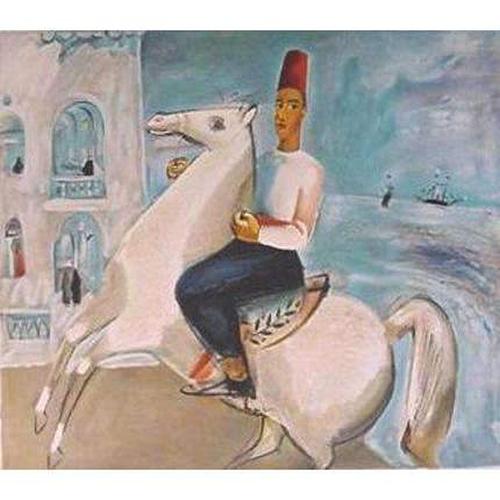
white horseman nahum gutman

I gave this sermon on the morning of Thursday 18th October at Leo Baeck College for Parashat Lech Lecha. 

judaism · sermon · torah

Adam, Eve, and binary gender

The story of creation is probably the most well-known and most misunderstood of our Torah. Full of powerful imagery, t he Talmud says that it is forbidden to study the text alone because it is too easy to misunderstand.[1] Because it is so close to the High Holy Days, many Jews miss this reading in our liturgical cycle, having been exhausted by the great process of Rosh Hashanah, Yom Kippur, Sukkot and Simchat Torah, all festivals crammed together into a very short period of time.

The danger of Jews not hearing these texts and of religious leaders not teaching them is that people go away believing that the version we pick up from our surrounding culture is the only version of events. The story of Adam and Eve, in particular, has such currency in that all of us have likely imbibed a version of their story. We have seen paintings in art galleries of European-looking men and women covered with fig leaves. We have heard the stories told in different ways through popular culture.

The story we are accustomed to is one of binary gender. God made a man on the seventh day of creation. God then made the first woman out of Adam’s rib. They are a model of the natural male-female binary in the world and an example of the heterosexual monogamy God has intended for all of us. I am not going to question whether that is a legitimate or authentic tradition. None of us can say we speak with divine authority, so we have to be able to live with different and contradictory interpretations. What I do want to do is offer up an alternative version of the story of Adam and Eve: a Jewish, rabbinic, midrashic version of the story.

I’m sure it goes without saying that, in the progressive Jewish tradition, these stories are considered metaphors. The question is, however, metaphors for what? The stories we tell are important. If we tell stories, even metaphorical ones, of gender as fundamentally binary, and the natural order as fundamentally patriarchal, then we give credence to that worldview. We betray our feminist values and exclude our congregants who don’t fit into that binary. The rabbinic version of the Bereishit story does not only go against the grain of that perspective, but fundamentally overturns it.

First of all, it is not clear from our story that Adam was the first man. The word “adam”, as it is used in Genesis 1, acts as a noun, not a name. It speaks about a person, a human being. The word shares a root with “adamah”, meaning earth or clay. Adam, therefore, might best be translated as “earthling”.

Nor is it clear that Eve was the first woman, or that she was created from Adam’s rib. The biblical telling of her creation is somewhat inconsistent. In the first version of the story, in Genesis 1, a man and a woman are created at the same time. In the second version, in Genesis 2, Eve is created from Adam’s rib. The rabbis picked up on this strange disjunction. They also noticed that in the second version, when Adam meets Eve, he says “this one at last is the bone of my bones and the flesh of my flesh.” That word “at last”, in the Hebrew is “pa’am”[2], which could mean “this time around.” Our sages inferred therefore that the two stories tell of different relationships: the first of one between equals; the second of one with a dominant man and subordinate woman.

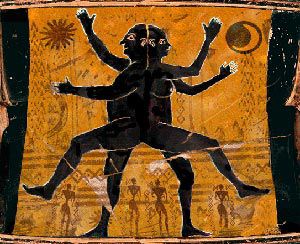
So, first, what was this relationship between equals? The rabbis suggest that man and woman were not just made at the same time. They were, in fact, the same person. The original human being, according to their midrash, had one body, two sets of genitalia and two faces.[3] Professor of Talmud, Daniel Boyarin, calls this person “the primordial androgyne.” Rather than binary gender being the model of original humanity, the first person is intersex.[4]

What then happened to this original intersex person? According to another midrash, they were split into two: Adam and Lilith. Notice that Lilith is not cut from Adam but that both are cut from each other: our original progenitors are equals.

The Ballad of Ben Sira, a medieval religious text that combines previous mythical traditions, tells the story this way:

“When the first man, Adam, saw that he was alone, God made for him a woman like himself, from the earth. God called her name Lilith, and brought her to Adam. They immediately began to quarrel. Adam said: “You lie beneath me.” And Lilith said: “You lie beneath me! We are both equal, for both of us are from the earth.” And they would not listen to one another.As soon as Lilith saw this, she uttered the Divine name and flew up into the air and fled.”[5]

What follows is a high-speed chase across the world involving angels and monsters. Ultimately, Lilith fights against Adam, the patriarchy and even God to become liberated. Undeniably, some tellings of this story are misogynistic, painting Lilith as a demon and a baby-killer, but the fact remains that a crucial part of the Jewish tradition is the story of an empowered woman who refuses to be subordinated. Our model of gendered relationships is a complicated mess of power struggles and queer subversion. It is, really, much closer to the relationships people really have.

The rabbinic tradition on creation tells us stories about intersex people, gender confusion, and resistance to patriarchy. Right now, the telling of those stories matters greatly. The government is debating an update to the Gender Recognition Act. When it was first passed in 2004, this act was a great sign of progress. It enabled trans people to legally change their gender on some certificates. As it stands, however, that process is highly medicalised and expensive. The new legislation would enable trans people to ensure that their gender is reflected on their birth certificates without having to jump through great hoops.[6]

This might seem like simply a bureaucratic change, but it has invoked great ire across the political spectrum. Underpinning much of the backlash is the idea that gender is both binary and innate. For the ideological opponents of the upgrade to the Gender Recognition Act, a gender cannot be changed. Much of their discourse has been quite hateful and aggressive. Transphobic abuse has become exceptionally loud, especially online.

What we can say in response to this is: in our religious tradition, binary gender is deeply disputed. In rabbinic Judaism, the first person was intersex, and transitioned from being one intersex person into two people: men and women. In our religious tradition, gender is complicated and malleable. Perhaps, armed with Jewish understandings of human nature, we may be able to push back against some of this hate.

Shabbat shalom.

androgyne-56a55f455f9b58b7d0dc900a

I gave this sermon on Saturday 6th October at Manchester Liberal Jewish Community. A congregant helped correct some of my understanding of the GRA. If you would like to speak out in support of the GRA, you can respond to the consultation using Stonewall’s resources.

[1] Hagigah 11b

[2] Gen 2:23

[3] Leviticus Rabbah on Genesis 2

[4] Daniel Boyarin, Carnal Israel

[5] https://www.myjewishlearning.com/article/lilith-lady-flying-in-darkness/

[6] https://lgbt.foundation/gra

high holy days · sermon · story · theology · torah

The Torah was given to all of us

The Reform liturgy for Yom Kippur takes on a tour through the progression of Judaism. The reading choices are different to in Orthodoxy. Whereas in Orthodox synagogues, you would hear the story of the High Priest’s atonement rituals with the two goats in the morning and the rules of illicit sexual relations in the afternoon, the editors of the Reform machzor felt these texts did not reflect their values and substituted them. In the morning, in our community, we read Nitzavim, Moses’s final address to the people. For the haftarah, we read Isaiah’s denunciations of exploitation. Then, in the mussaf service, we read the stories of the martyrdoms of our sages with the destruction of the Temple in 70CE. Through this history, we see the values of progressive Judaism elucidated at each stage: freedom, personal responsibility, decentralisation and anti-authoritianism. For my Yom Kippur sermon this year, I retold those stories to show how those values emerged.

“You are all standing here today,” said Moses.

He looked out over the vast plains of Moab. He gazed at his assembled audience, stretching far back into steamed blurry visions in the distant desert. He saw their weariness and felt his own. At 120, his physical strength had not weakened. His eyes still saw clearly and his teeth worked perfectly. Although he carried a stick, he did not depend on it. Physically, he was fine. But, mentally, he was drained.

For forty years, Moses had presided over the people. Gradually, he had tried to cede power. He had appointed judges and officials who would help resolve disputes. He had tried to teach people as far as possible all the laws that he had received from God on that great mountain in the Egyptian desert. More than ever, he felt ready to go. But the question was: were the people ready to be without him? What could he tell them in this last speech to prepare them for a society where they would have to lead themselves?

“You are all standing here today,” Moses repeated. “All of you.”

“But, really, all of you. Women and men. Children and the elderly. All of you are here. All of you were present at Sinai. I need you to know that it wasn’t just me and Aaron who did all this. You emancipated yourselves. Nobody forced you to leave Egypt. You got up and went because you knew you deserved better. You could have turned back to Egypt any time, but you didn’t, because you had faith. Hold on to that feeling now.”

Perhaps, Moses thought, he had not been specific enough. “Yes, the strangers too. All the foreigners who have joined us on the way. And the wood-choppers and the water-drawers. The people who do the most menial work among you. The most neglected among you. I want to mention you especially. I want you to know that you were at Sinai. Nobody can take that away from you. You experienced the full might of God and you choose to be God’s people. Never let any priests or princes tell you this was all their work. It was yours.”

“This,” said Moses. “This covenant that God made stands for all time. It speaks to all future generations to come. The soul of every Jew is here with me. All of you are witnesses. All of you have had the responsibilities of this religion entrusted to you. Even if you are scattered to the ends of the Earth, God will find you there. This religion stands firm in every time and place.”

The Israelites stared back at Moses in a calm silence. Only the sounds of gentle winds and crickets interrupted Moses’s speech. These followers had long known that this speech was coming. They had had plenty of time to prepare for it, and yet felt completely at a loss.

“What I’m saying,” said Moses, “is that the Torah is yours. God didn’t give it to me or to the scholars. God gave it to you, to read it and learn it and interpret it in the way that works for you. These commandments that I put before you today are not too incredible for you, nor are they too far from you. They are not in the heavens, that you should say, ‘Who among us can go up to the Heavens and get it for us and impart it to us, that we may observe it?’ No. It is right with you. It has been with you all along. You are in charge of your lives. You are responsible for your destinies.”

That was the message Moses left with the Israelites and through them with us, the Jewish people. It has a stronger bearing on us now than we may realise. It demands of us way more than we might be prepared to accept. When Moses died, he did not place power in the hands of priests and kings. He handed it over to everybody. There would not be anyone to frighten the masses into following orders or to offer up commands. The rules were all already there. The people had been entrusted to follow them for themselves.

With time, certain leaders did try to control Judaism. With the rise of the Temple, a centralised cult in Jerusalem set out the rules. The priests insisted that penance could only be paid with animal sacrifices and ritual fires. They tithed the people and brought them under authoritarian rule. Outside the centre of the city, the prophets chastised the priests. Among the urban poor and the rural peasants, the prophets cried out that God had given the Torah of justice to everybody, that God abhorred inequality and would never give religious power to the elites.

That is why, today, we read also the haftarah of Isaiah. Isaiah looked upon the centralised cult and was revolted by it. He saw a nation rife with exploitation and hypocrisy. He chastised the wealthy: “On the days when you fast, you exploit the workers! You fast and you strike with a wicked fist.” Such fasts, said Isaiah, meant nothing to the Almighty. God would not listen to the pleas of the wicked. Instead, insisted the prophet, God sought for every oppressed person to be free, for every chain to be broken, for every mouth to be fed and every soul to be remembered. This religion, said Isaiah, was never given to the exploiting class. It is the blessing of the oppressed. It is the hope of freed slaves and menial workers. It is a promise of redemption for people who could never quite believe their lives had meaning. We are the heirs to their Judaism: to the Judaism of the prophets.

When the Temple was destroyed, a group of visionary rabbis realised that the time had finally come to take back control from the priests and hand it over to the people. Chief among them was Rabbi Akiva Rabbi Akiva had been a peasant farmer. He did not even learn to read until he was 40. He came from the poorest class and knew their struggles. He saw the Priesthood trying to control our religion in their own interests and vowed to resist them.

Akiva insisted that the Torah was not a dead letter, but the word of a living God. Everyone could read it and find something in it. Every letter could be analysed. Whole worlds lay hidden in subtle sentences in our holy text. Akiva and his disciples replaced Temple sacrifices with prayers, good deeds and study. These were acts of piety available to everyone, no matter what their wealth our status. He created a Judaism of the people, by the people, for the people.

Our parashah today says “the Torah is your life and the length of your days.” Akiva agreed. He said that Torah was to the Jews what water was to the fish.[1] Akiva truly understood what it meant for everyone to receive the Torah. All of us were there for it. Everyone in this room. So all of us know something unique about the words of the living God. All of us have something important to contribute.

Akiva handed us over freedom. He took Judaism out of the hands of invested leaders and put it into the lives of the Jewish people. Read it, he said. You will find your life’s meaning in it. You will see that these are the words of a loving God. You will realise that you were created in a Divine image and that everyone else was too. You will understand the need to pursue justice.

Moses, Isaiah, Akiva. The progenitors of our Judaism. All of them with a simple message: this is your Judaism. You are free to follow it as you wish. With that freedom, they gave us the greatest gift they could. They gave us responsibility. Pharaohs would not govern our lives. Nor would bearded men in big gowns. We would govern our lives. We would have to choose for ourselves between right and wrong. We would have to live according to the justice demanded on High, with nobody to judge us but the still, small voice of conscience God had planted within us.

Take this day of Yom Kippur and realise that your life is in your own hands. Whether the world is just or unjust is up to you. Whether you are kind or unkind is up to you. Whether the oppressed remain oppressed or go free – that is up to you.

Let us resolve this day to take the true meanings of our religion to heart and to pursue justice in every quarter.

Gmar chatimah tovah.

isaiah chagall

I gave this sermon on Yom Kippur morning at Kehillat Kernow, the Reform Jewish community in Cornwall. If ever you are in the area, I highly recommend going to this warm, welcoming spiritual community.

[1] Berakhot 61b

judaism · sermon · social justice · story · torah

Pinchas joins us on the Pride march

In the time of Moses, love across boundaries was common. Israelites fell in love with people no matter what boundaries were set down by their priests, and openly entered relationships with people of every background. Intermarriage with the Midianites – a tribe from the Arabian Peninsula – was quite common. This incensed the priests.

Pinchas, the son of a leading priest, saw an Israelite man going home with a Midianite woman. He took a sword and killed them both. One cut straight through the belly. According to the Torah, this stopped a plague that had killed 24 thousand people.[1] That is our week’s parasha: a zealot stabs people in the stomach because he doesn’t like their relationship.

The rabbis showered Pinchas in glory. He was, in their minds, the guardian of Jewish tradition.[2] The Targum of Pseudo-Jonathan, an early Aramaic translation of our text, holds Pinchas in such high esteem that it says he was made immortal. He has God make him an angel of the covenant, living forever, so that he could announce Redemption at the end of days.[3]

This is how our tradition treats a violent zealot. In 2015, Yishai Schlissel, a Haredi man in Jerusalem, went out to the city’s Pride parade and stabbed the LGBT people who were celebrating there. One young woman, Shira Banki, died from the wounds. She was 16. Schlissel had done the same thing ten years earlier, and had just been released from prison.[4] In his defence, Schlissel claimed he was inspired by Pinchas. Like Pinchas, he was protesting sexual immorality. Like Pinchas, he was a zealot taking direct action. Like Pinchas, he stabbed them in the belly.[5] On the streets of Meah Shaarim, an Orthodox neighbourhood of Jerusalem, posters went up celebrating Schlissel’s violence by quoting this week’s parasha: ‘and the plague was lifted.’[6]

This text’s history is painful. The tradition is so horrible that it makes me wonder why we study these texts at all. What can we possibly gain from them? How can this story form part of our Torah of love and justice? There is a part of me that would prefer to pretend Pinchas never existed, and to hope that Yishai Schlissel will simply rot in a jail cell somewhere and never have his name mentioned again. But we cannot gloss over it and pretend that Jews who hold these violent views do not exist. We have to engage with it.

What can we say to it? If you sat face-to-face with Pinchas, what could you tell this biblical figure about morality? How can we speak back to this troubling text?

I want to propose an alternative reading of the story of Pinchas. The Targum only tells us that Pinchas lived forever, but not what happened to him afterwards. I want us to imagine together that Pinchas was kept alive, not as a reward, but so that he could learn the error of his ways. Pinchas, as an immortal angel, has had to follow the progress of the Jewish community and see the accomplishments of the queer liberation movement.

He stayed alive to see the unbridled love between Ruth and Naomi. Ruth, a Moabite woman, devoted herself utterly to her mother-in-law, followed her everywhere she went and accepted all the ways of the Jewish people.[7] She became the ancestor of King David.[8] As Pinchas followed them on their harsh wanderings through the desert, Pinchas wondered what he had been so afraid of. Were foreign women really such a threat to Jewish existence?

In the time of the rabbis, Pinchas sat on the banks of the Galilee and saw Rabbi Johanan fall in love with Resh Lakish. Johanan stunned Resh Lakish with his long flowing hair and androgynous good looks. Resh Lakish, a gladiator, turned away from violence just so he could spend his life studying halachah with Johanan.[9] They never touched each other, because the times would not allow it, but gazed at each other fondly as they pored over pages of the Torah together. They learned to control an uncontrollable love.[10] Pinchas watched them and wondered: “Could this be so bad?”

In the Middle Ages, Pinchas was transported to Spain. He sat in the courtyards of Arabic-speaking rabbis who drank wine and unabashedly serenaded each other with love songs. He saw the great Jewish poets of the generation ring out praises for same-sex love in the sun of Al-Andalus.[11] Pinchas sat at their feet and thought about what he had thought sexual impropriety was. Was this it? Were these loving sages, so dedicated their Judaism, the thing he had so much feared?

Pinchas saw the rise of the queer liberation movement. He saw modern gay, bi, lesbian and trans people gather together in Magnus Hirschfield’s flat in Berlin. He saw how, at the turn of the 20th Century, European Jews led the charge for freedom to live and love.[12] He witnessed them insist that this was the articulation of their Jewish values: that to live unabashed and unafraid was a far greater representation of the prophetic message of Judaism than the narrow nationalism others espoused. Pinchas asked himself: “Are they talking about me?” Pinchas saw the Nazis destroy everything Magnus created.[13]

I hope that Pinchas came to England too. I hope he saw Rabbi Lionel Blue (z”l) give hope and heart to all those who worried that they could never be gay and Jewish. I hope Pinchas saw Lionel proudly come out and preach the words of a loving G?d to an audience of millions.[14] I want to imagine that Pinchas sat in the beit midrash with Rabbi Sheila Shulman (z”l), and heard her expound radical lesbian Jewish theology.[15]

Pinchas was there on that Pride Parade in Jerusalem in 2015. Pinchas saw a 16-year-old girl murdered in his name. Pinchas saw the people who celebrated it. Pinchas buried his head in his hands and wondered: “Is this my Judaism? Is this my Judaism?”

No, Pinchas, this is not your Judaism. We have come a long way from the tribal zealotry of the past. Across the entire Jewish community, people are waking up to the joys of love. It will win.[16] There are others who are slow to accept us, but they will, with time. Like you, Pinchas, people are learning through the struggles of queer people that progress is nothing to fear.

So, Pinchas, come join us at Manchester Pride Parade this year. The season is just starting. There will be an entire marching bloc of Jews from all the best synagogues in this great city. Come and turn your zealotry to the cause of progressive Judaism – its inclusion of every Jew and its promise of a relationship with a loving God. March with us, and fulfil the role that God set out for you – that you should be an angel of the covenant and a harbinger of Redemption.

Shabbat shalom.

shira-banki
Her name was Shira Banki.

I gave this sermon at Manchester Liberal Jewish Community on 7th July 2018 (Pinchas 5778) on the day when the Pride season kicked off in London. Manchester Pride march will be on August 25th. To join the Jewish bloc on the demonstration, get in touch with Jacksons Row Synagogue, who are coordinating it.

[1] Numbers 25:7-8

[2] BT Sanhedrin 82a-b

[3] Targum Pseudo-Jonathan Numbers 25:12

[4] https://www.haaretz.com/.premium-pride-parade-stabber-to-undergo-psychiatric-evaluation-1.5383572

[5] https://www.jewishideas.org/article/zealotry-and-its-consequences-case-yishai-schlissel

[6] https://www.timesofisrael.com/praise-for-gay-pride-parade-attack-posted-in-jerusalem/

[7] https://www.jewdas.org/ruth-and-naomi/

[8] Ruth 4

[9] Bava Metzia 84a

[10] Daniel Boyarin, Unheroic Conduct, 1997

[11] Norman Roth, Deal Gently with that Young Man, 1982

[12] https://www.haaretz.com/jewish/.premium-1868-the-einstein-of-sex-is-born-and-dies-1.5361786

[13] https://www.teenvogue.com/story/lgbtq-institute-in-germany-was-burned-down-by-nazis

[14] https://www.theguardian.com/world/2016/dec/19/rabbi-lionel-blue-gay-liberal-thought-for-day-star-dies-86

[15] http://www.rainbowjews.com/rabbi-sheila-shulman-a-true-pioneer/

[16] https://www.haaretz.com/us-news/.premium-london-rabbi-preaches-inclusivity-toward-gays-sets-off-uproar-1.5482362

judaism · sermon · torah

Shavuot 5778

Chag Shavuot sameach.

Thank you so much for inviting me to speak here.

I have come here, first of all, to represent Leo Baeck College, where I am going into my second year of studying to be a rabbi. But there is a special reason why I’ve been invited to this specific synagogue on this specific day. Today, for the first time ever, my friend Rokhl leyned from the Torah. Her teacher, my teacher, and a figure well-known in this community, Chani Smith, suggested it might be appropriate if I come and join in today’s celebrations by preaching. It is an honour to be able to do so.

With that in mind, I hope everyone will excuse me if I indulge in kvelling a little bit before I start. Rokhl, watching you leyn Torah was an incredible experience. Growing up as a girl in the Orthodox world, I know that you were denied the chance to engage with Torah in the way you wanted. You told me of how intense it was, earlier this year, when you held a Torah for the first time. You have done so much to bring Jewish life to people who might otherwise feel excluded from it – as a singer here, through your Yiddish song classes and in the way you have reached out to people to create Judaism with you, especially women.

It is fitting, then, that your occasion to read Torah should fall on Shavuot. Shavuot is a multi-faceted festival: it is a time when we stay up all night, studying and praying. It is a time when everybody tries their hand at baking cheesecakes. It is a celebration of our receiving the Torah at Sinai. But, most of all, it is a time when we read that most beautiful megillah, the story of Ruth.

Ruth stands out in the biblical canon for its poetry, its gorgeous narrative structure, and its deep theological exploration of difference. It stands out, too, because it is one of very few stories that speaks of women as religious leaders. In today’s megillah, Naomi’s two sons die, leaving behind her two Moabite daughters-in-law, Ruth and Orpah. Naomi begs her daughters-in-law to leave her. Orpah weeps as she leaves Naomi behind, but Ruth insists on staying.

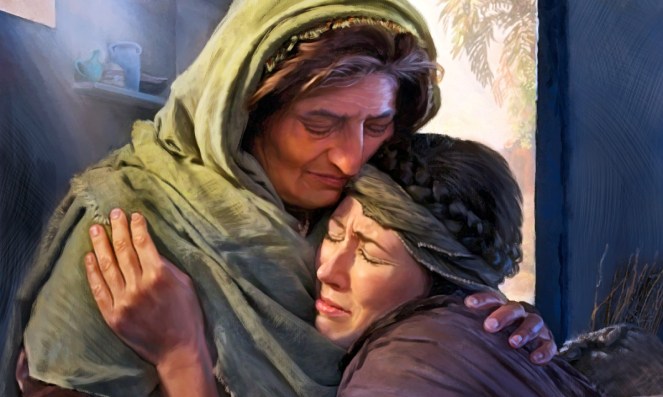
Ruth utters these powerful lines: “Please do not ask me to leave you. Wherever you go, I will go. Wherever you lodge, I will lodge. Your people will be my people. Your God will be my God.”[1] Thus begins a unique story, where women are the only active agents, and where their relationship to each other and to Judaism is the centrepiece.

True, men appear occasionally. Boaz appears as an Israelite man, and Naomi encourages Ruth into a relationship with him. But, according to the rabbis’ commentaries, Boaz died on his wedding day. He existed in this story to fulfil a function, of providing Ruth with a child. He appears only briefly, after which Naomi and Ruth go on to raise their child together.[2] David, king of Israel, is listed as a descendant of Naomi, not of Boaz.[3]

The rabbis took this story a step further. From these lines, they interpret that Naomi was instructing Ruth in halachah. She was informing her of the mitzvot, telling her of all the difficulties that could be involved in becoming Jewish. Naomi tells Ruth that Jews spend their time in study houses, not circuses, and Ruth answers “Wherever you go, I will go.” Naomi tells Ruth that Jews affix mezuzot to their homes and Ruth answers: “Wherever you lodge, I will lodge.” Naomi tells Ruth that Jews rise and fall together, so Ruth answers: “Your people will be my people.” Naomi tells Ruth that God is One. Ruth answers: “Your God will be my God.”[4]

Ruth hears all this, and she insists on staying. In the rabbis’ interpretations, then, we have a woman knowledgeable in Torah and teaching it to another. We have a woman who insists, despite all the obstacles presented to her, that she wants to have a relationship with Torah.

That, indeed, is the message of Shavuot. The story of Sinai teaches us that divine revelation was a collective experience of the whole Jewish people. It was not only men or the educated who received Torah, but everyone. The story of Ruth teaches us that divine revelation is a deeply personal and ongoing experience. The study of Torah is the birthright of all Jews, and this story is well-exemplified by the case of Ruth, a foreign woman who joins the Jewish people.

Last week, the UK gained its first Orthodox woman rabbi. Dina Brawer flew out to New York to receive semicha, and pledged her hope to be a role model for women. She joins a long line of women religious leaders, including Ruth and Naomi, but we in the progressive Jewish communities should be exceptionally proud of our role in paving the way for this success. It was the forerunner to Leo Baeck College, the Hochschule in Germany, that ordained Europe’s first woman rabbi, Regina Jonas, in 1935. Jackie Tabick, the head of the Reform Beit Din, became the country’s first woman rabbi, in 1975. Rabbi Laura Janner-Klausner is one of the only women to head up a major religious movement, not just in the UK, but worldwide. We have pioneered gender equality, and will continue to do so.

There is a reason I say all this. I have come here to represent Leo Baeck College.  Leo Baeck College is the heartland of the best of Judaism in Europe. It trains rabbis from the UK, France, the Netherlands, Russia, Poland and Italy. It is, of course, the institution that ordained every rabbi in this synagogue. Without the College, our Judaism could cease to exist. Our Judaism – that insists on the importance of women in leadership. Our Judaism – that maintains our ancient heritage of leyning in a style totally unique to these islands. Our Judaism – that creates space for all those who want to study Torah. We need the College in order to give this, living Judaism, a future.

I therefore urge everyone here to support the College in whatever way they can.

And I wish you all – a chag sameach.

ruth and naomi

I gave this sermon at Edgware and Hendon Reform Synagogue on Shavuot morning to promote Leo Baeck College.

[1] Ruth 1:16-18

[2] Midrash Zutta

[3] Ruth 4:17

[4] Ruth Rabba 2

judaism · sermon · torah

Being hospitable

It was a dark night in an Eastern European shtetl. Shabbat was just about to come in. The Baal Shem Tov sat at the dinner table, surrounded by friends and family. Every spare inch of space had somebody sitting in it. The Baal Shem Tov was not a rich man, although many of the acolytes of the movement he founded later would be, and he would have to make a thin chicken soup stretch to feed everyone. Suddenly, there was a knock at the door. Standing in the doorway was a vagabond. He smelt bad, his beard was unkempt, his clothes were untidy. He asked: “can I come in? Can I eat?” The Baal Shem Tov looked back at the full house, looked over at the steaming pot of thin chicken soup, looked back to the man, then up to Heaven and said: “If God has made enough room for him on this planet, then surely I have enough a room at my table.”

The Baal Shem Tov was a model of hospitality. In this week’s parshah, we read about Abraham, who was, too, a model of hospitality. Two strangers come to approach Abraham, and he cannot do enough for them. The Torah is usually noticeably scarce on detail, but on this occasion, we hear everything he did. He bowed, he welcomed them, he gave them water and bread-cakes, he washed their feet, he offered them shade. He even killed a calf for them, and in those days meat was far more expensive than it is today.

Abraham doesn’t even know who these people are yet. As it turns out, they are messengers of God. But they could have been anyone. Nevertheless, from the outset Abraham addresses them as if they are angels. Perhaps it was that Abraham could sense something in them. Perhaps he had been expecting God. But I think, most likely, Abraham simply saw the face of God in everyone.

Rashi tells us that Abraham always used to sit at the entrance to his house, so that he could invite anybody in who walked past. The midrash tells us that Sarah always had a listening ear. She was known everywhere for how tirelessly she worked to cultivate a garden for visitors to sit. Their tent was open on all sides, so that they could welcome people coming from every direction. And from this story, the rabbis derive a mitzvah, perhaps the most important commandment of all: the duty to be hospitable.

The next story in Genesis is a parallel. Two angels turn up in Sodom. Lot invites them to stay the night. Before they had gone to bed, all the men from every part of the city of Sodom—both young and old—surround the house. They threaten to assault their visitors. When Lot objects, they deride him for being a foreigner and try to break down the door. Lot offers his daughters up to the baying mob.

Although there is a modern Christian interpretation that the story of Sodom is in some way about homosexuality, the rabbis did not have such a tradition.  For them, this was a story about hospitality denied. This, they said, was a city so wicked that they would not even allow their residents to show any hospitality or compassion to strangers. This, they said, was a city where even neighbours were not kind to each other; where a dog-eat-dog ideology took root so that nobody worked together. This was a city so wicked that even people like Lot, who should have been righteous, ended up turning against their own daughters and denying them the childhood they deserved. That is why the angels destroyed Sodom.

Which city do we live in? Which house do we inhabit? I often wonder what the two angels would make of our neighbourhoods and homes if they came to visit. While we have more technology and medicine and infrastructure than the prophets and tsaddikim could ever have anticipated, we have just as many people in need of hospitality. Our society seems more isolated than ever.

Manchester is known for its hospitality, but even here we can see the isolation. We already know older people who live in loneliness. We already know younger people who are desperately reaching out for a community, only to find nothing. We have seen newcomers turn up in this city only to encounter racism, hostility and closed doors. We have all seen the number of rough sleepers on our streets rocket over recent years.

In that situation, we have the same choice that was facing Lot and Abraham. Will we throw open our doors to let people in, or will we take the cruelty we experience in society and turn it on the people in our own homes? Will we increase the love or increase the isolation? This is a societal problem, but it will only change if people welcome each other, get to know each other and build solidarity with each other.

So, we must start with ourselves and our own homes. Jewish life is not something that happens in the synagogue. The synagogue is just a place we come to get respite and reenergised as we live a Jewish life. Jewish life happens in what we do the rest of the time. If we spend the rest of our week building communities, showing hospitality and modelling loving-compassion, that is when we’re living Jewish lives. Hospitality is one of the most important mitzvahs because it affects how we interact with everything. Being welcoming to people helps to break down isolation. It helps to create a sense of community. And it makes better, kinder people of ourselves.

Let’s all make the effort to be better hosts and to give more time to each other. Choose to be like Abraham and Sarah. Choose to be like the Baal Shem Tov. As Jews, let’s be the people who decide not to let an isolating and inhospitable society last. The struggle for community begins here, with us.

besht

This sermon was first delivered Shabbat Vayeira, 3rd December, at Manchester Liberal Jewish Community

judaism · sermon · torah · Uncategorized

The most boring part of the Torah

Genesis 10 is the most boring part of the Torah. Gandhi said it sent him to sleep. Militant atheists hold it up as a paragon of inane irrelevances. Although it is very clearly part of this week’s section of the Torah, everybody skips over it. You won’t hear any Liberal or Reform synagogues read it out this weekend. Even Chabad’s lectionary, known for keeping in even the driest sections for the sake of tradition, skips over Genesis 10 as though it’s not there.

It’s the genealogies. The lists of all the people who begat other people from Noah to Jobab. All the sons of Shem, Ham and Japheth roll off the tongue and over the heads of the readers. We can see why people would want to cut it out. In the rest of this section of the Torah, God floods the planet, Noah builds an ark, saves Noah, along with his family and favourite animals, then dramatically hangs a rainbow in the sky to symbolise a promise never to destroy the world again. At the end, after we’ve skipped over Genesis 10, the people attempt to build a tower so tall it can reach Heaven, only to be struck down and separated into many nations with many languages. By comparison with everything else, Genesis 10 is boring.

But that doesn’t mean we shouldn’t read it. The Torah is a carefully crafted text. Nothing gets in there by accident. The genealogies aren’t just a list of names that break up two well-known stories; they’re integral to the Genesis narrative. They tell us something deep about what kind of book the Torah is, who it’s for, and what makes it different from every other book that’s gone before. I find that in the boring bits, whether in a book or a relationship or a friendship, you find out the most important stuff. You find out who somebody really is.

It might help to put this text into the context of other Ancient Near Eastern prologues. It was common, in the civilisations of the Eastern Mediterranean, to begin with a list of people. These were the kings and their years leading up to the present day. For people in these societies, years were marked by the reign of their rulers and stories were told in relation to kingdoms. The Torah begins differently. The ancient Israelites were suspicious of monarchy and authority. They only managed a brief spell under a united kingdom, preferring instead to unite by their loyalty to God rather than to a person. For them, authority comes not from might but from history and tradition. So their story does not begin with a list of kings. It begins with a seemingly innocuous list of ancestors.

On closer inspection, these ancestors are not really people at all. Look, for example, at the descendants of Ham: Cush, Mitzrayim, Put and Canaan. These names are familiar. We know Mitzrayim as Egypt, the place our ancestors left in the Exodus. We know Canaan as Palestine, the place they entered. Put, according to Josephus, was the founder of Libya. Cush is commonly identified with Sudan. These are the nations of north-east Africa.

We see too the names Babel (Babylon), Accad (Akkadia) and Ashur (Assyria). These are the names of nations in the Near East. Later, scholars will come to identify Ashkenaz with Germany and Tarshish with Spain. The point is clear: this is a universal text. It is a story not of one great empire and its kings but of everybody. In this, the most boring bit of Torah, we find its most essential message: universalism. We are, all of us, part of this planet, sharing in its fortunes. We are, all of us, the children of Noah, descended from one common ancestor, connected by a universal God.

It encourages us to value unity in diversity – we may all come from a common ancestor, but we have gone in many different directions, all of which are to be celebrated. I think that’s the reason why it’s sandwiched between the stories of Noah and Babel. In Noah, people are violent and angry, so God floods the whole world. We realise that if the world floods, we all drown together. Our fates are so deeply intertwined that whatever we do to the world will affect all of us. In Babel, everybody speaks the same language and tries to build a tower together. But they are so single-minded that they subject everybody to the same conditions. They have no respect for difference or the unique dignity of each other, so God must separate them and diversify their languages. They needed difference.

Genesis 10, the history of all the nations of the world, combines the two messages of universalism and diversity. Yes, we all come from Noah and yes, we are all different. Yes, we share in this world, and yes, we are all part of different and exciting nations. Yes, we are all the same. And, yes, we are all different. This is a message that we can all share in what’s good in the world if we can all see what’s good and different in each other.

The nations of the world will, inevitably, look different in a decade to how they look now. The UK will most likely leave the European Union. Catalonia may or not become independent. Perhaps our Scotland will hold another referendum; Ireland and Northern Ireland might re-examine their borders. We will probably see new movements to restructure states all over the world. New nations will unite, new nations will split.

Separating or uniting need not be inherently good or bad things. What matters is the spirit in which they are done. If people split based on malice and anger, as did the generation before the flood, they won’t succeed. If people join out of a desire to be homogenous and to force everyone to conform, as did the generation at Babel, they will fail. Only if they can respect difference, uniting in a spirit of diversity, will people succeed.

tower of babel


high holy days · judaism · story · theology · torah

Jonah is a story about suicide

We know that life is sacred. I have mentioned it a few times over these Holy Days and we hear it all the time in our religion. Yet there is one question on which it seems almost silent. It is one that I’ve been thinking about a lot this year. Throughout the Tanakh, suicide is not mentioned. No tractates are written against it, no stories are written about it. Where could I turn to provide an answer? It seemed like a glaring oversight, and one that needed an answer more than ever for a generation where issues of anxiety and depression have never been so pronounced. And then, as I turned to the Yom Kippur readings, I realised that the answer had been staring me in the face.

The story of Jonah ends on an anti-climax. After hauling Jonah out of his home, sending him miles away into the heart of empire, drowning him, having a giant sea-monster swallow him, made him chastise his foreign enemy to give up on evil and actually convinced them to do so, God tells Jonah: “And should not I care about Nineveh, that great city, in which there are more than a hundred and twenty thousand persons who do not yet know their right hand from their left, and many beasts as well!”

Put yourself in Jonah’s shoes for a moment. All that, that whole mission, only to tell him that he cared about ignorant people and cattle. All that, when Jonah had thought he’d watch a city, ten times bigger than Manchester, burn to the ground, only to be told that God likes the animals in the city just like Jonah cares for a plant. What a disappointment.

It’s the kind of ending that leaves you scrambling back over everything you’ve read, wondering what the point of it all was. Did I miss something?

And here’s the real kicker: when God tells Jonah that he’s not going to destroy Niniveh, he’s also telling him that he’s not a prophet. In Deuteronomy we learn: “When a prophet speaks in the name of God, if the word does not come to pass or come true, that is a word that God has not spoken; the prophet has spoken it presumptuously. You need not be afraid of him.”[1]

Jonah has prophesied and he’s gone big. He’s told everyone in the capital city of the biggest empire on earth that they’re all doomed to die because they’re sinners. It’s a bit like getting on a boat from Southport, journeying to New York, pitching up in Time Square and announcing to everyone there that they’re about to die. In fact, it’s worse than that, because in this scenario, Jonah’s people and the Americans are sworn enemies. He’s gone through all of that, only to find that his prophesy did not come true. He was wrong. He was not a prophet.

But what was it that God actually told Jonah to prophesy? Was he told that Niniveh was going to be overthrown in forty days? No. At the very beginning, God says: “Go at once to Nineveh, that great city, and proclaim judgment upon it; for their wickedness has come before Me.”[2] Not tell them they’re going to be destroyed. Not tell them they’re all going to die. Not tell them to fast and weep. Just – tell them they’re going wrong.

Here’s what I want to suggest. That anti-climactic ending is much more profound than we might initially realise. The message given to Jonah was so much bigger than that. That prophecy was not about the wrongdoing of a city – it was about suicide. The story of Jonah is a story about a man contemplating suicide, rebutted over and over again by God’s message: choose life.

Today’s Torah portion announces that message. Moses stands on the edge of the Promised Land, knowing he will not be allowed to enter it, and gives the Israelites his final words: “This day I call the heavens and the earth as witnesses against you that I have set before you life and death, blessings and curses. Now choose life, so that you and your children may live.”[3] This message is so profound. Life, it says, is not an accident. It is a choice, and it is a choice we must make. We must decide whether to truly participate in this world.

The prophet Ezekiel says: “Turn ye, turn ye from your evil ways; for why will ye die, O house of Israel?”[4] This is God’s message to Jonah: choose life, for why would you die? Let’s read the story again, this time assuming the prophecy is different. We’ll realise that the story was not about whether the people of Niniveh should die, but about whether Jonah should live.

Several times throughout the story, Jonah threatens suicide. Sometimes those threats were so imperceptible you might not notice them. At the very beginning, when Jonah flees from Jaffa to Tarshish, he pays the fare before he gets on the boat. That might seem a reasonable enough thing to do now. But in the Ancient Near East, you didn’t pay your fare before travelling, you paid it afterwards. You paid it afterwards because otherwise you’d be at the mercy of sailors, who’d already have everything they needed from you, and could chuck you overboard so they wouldn’t have another mouth to feed. Paying your fare upfront is tantamount to a death-wish.

It doesn’t stop there. Once on the ship, God sends a mighty storm over the seas. Jonah could pray to have his life saved, but instead he curls up in the bowls of the ship, falls asleep and waits for the end. God has other plans, and Jonah will not die yet.

The captain of the ship and the rest of the sailors find him, realise that he’s the cause of the storm and ask him what they should do. Jonah could say: “take me to Niniveh so that I can do what God asked me.” He could say: “help me convince evil-doers to repent from what they’re doing.” Instead he says: “Heave me overboard!”[5] That’s right. Once again, Jonah tries to die. The sailors, who already have his money, who have never met Jonah before, who have a different religion and tribe to Jonah, beg God that they won’t have to kill Jonah. Jonah is insistent.

So the sailors heave Jonah overboard and it’ll take all but a miracle for him not to die. Thankfully, God is in the business of providing such things. God sends a giant fish, which swallows Jonah whole, leaving him able to survive. Jonah sits in the belly of the fish and sings: “I sank to the base of the mountains; The bars of the earth closed upon me forever. Yet You brought my life up from the pit, Eternal One, my God! When my life was ebbing away, I called God to mind; And my prayer came before You.”[6] Finally, it seems like Jonah’s getting it. Finally, brought to the very brink of death, it seems like Jonah is ready to choose life. God commands the fish to spit out Jonah on the land.

This time, Jonah does what God tells him. He heads out to Niniveh, that great city, to prophesy against them. Are his enemies, the overlords of the world’s biggest empire, rife with sin and iniquity, angry at him? Do they try and kill him? No, they’re horrified. It’s as if they’d never even considered what they were doing was immoral. They throw on sackcloth and ashes and prepare themselves for death. They even put sackcloth on the animals, so ready they are for utter annihilation. But God’s intention is not for them to die. As Ezekiel reminds us, God takes no pleasure in the death of them that die, but that they turn from their ways and live.[7]

Jonah is disappointed. He scolds God: “Please, Eternal One, take my life, for I would rather die than live.”[8] Has Jonah learned nothing? Close to death in the belly of the big fish, it seemed like Jonah was finally getting it that all God wanted was for him to live. Yet here he is again, begging to be allowed to die, threatening suicide once more.

God tries a different tactic. Instead of heavy-handed miracles and big displays in Niniveh, God tries out a gentle parable. God allows a gourd to grow over Jonah’s head, then allows it to die. Perhaps this will teach Jonah the precious, fragile sanctity of life. Quite the opposite. Jonah begs for death, saying: “I would rather die than live.” God asks Jonah: “Are you so deeply grieved about the plant?” “Yes,” he replied, “so deeply that I want to die.”[9]

Finally, we get to the prophecy that had been meant for Jonah all along. God says: “You cared about the plant, which you did not work for and which you did not grow, which appeared overnight and perished overnight. And should not I care about Nineveh, that great city, in which there are more than a hundred and twenty thousand persons who do not yet know their right hand from their left, and many beasts as well!”[10]

That’s why the story finishes by telling us about all the animals. God is saying: “Don’t you realise how much I care about you? I care even about the cattle in this city. I care even about a single plant in the desert. I love even your enemies, who are persecuting you, who do not worship me, who don’t follow my laws. How much do you think I care about you? Can’t you see how important you are? Choose life, Jonah. I’m begging you, stop with these thoughts of suicide. Give up on all that anger and hate you’ve been bottling up. Choose life, Jonah, why would you choose death?”

That’s what this whole story has been about. It was never about sin and death and punishment. It was so much simpler than that. It was about life. “Look Jonah,” says God. “I know you don’t think your life is worth living, but I do. To me, your life has meaning. To me, you are worth everything. Yes, even you. You with your stubbornness, your bitterness, your rage. You with all your unhappiness, your imperfections and mistakes. You mean so much to me that I will perform miracles. I will turn the world on its head to keep you alive. I will send you to the ends of the earth just to tell you I love you. Choose life, Jonah.”

That’s what this whole day has been about. Sometimes in prayer, especially deep in the fast of Yom Kippur, we can get so caught up in recounting our sins and holding onto our guilt, that we forget the whole point of the day. This day is not for wallowing in misery, it is to be thankful for life. We have been called here because our lives have meaning. By dint of being human, we are not just special, we are holy. To be a Jew means to affirm that life matters. It means to be willing to live a life that shows the best of what humanity can achieve. Of course, we may not succeed, but don’t we owe it to ourselves to try? Don’t we owe it to ourselves to choose life?

On the question of suicide, I think that Judaism has an answer. Judaism has only one answer, in fact, to every question, which is that life is holy. We are here to manifest the sacredness of life in everything we do. So today, let’s ask ourselves: are we doing that? Are we holding on to sadness and rage or are we thankful for another day? Are we dwelling on all that we’ve done wrong, or will we embrace the chance to get it right? Won’t we remember today that God wants for us to live?

Today God has put before you two choices: blessing and curse, life and death. Choose life, for why would you choose death?

jonah whale

This sermon was originally delivered on Yom Kippur 5778 at Manchester Liberal Jewish Community.

[1] Deut 18:22

[2] Jonah 1:2

[3] Deut 30:19

[4] Ezek 33:11

[5] Jonah 1:12

[6] Jonah 2:7-8

[7] Ezek 33:11

[8] Jonah 4:3

[9] Jonah 4:8-9

[10] Jonah 4:10-11

high holy days · judaism · sermon · story · torah

The binding of Isaac… and Ishmael

Life is sacred. It is not just meaningful, though it is that. Nor is it simply beautiful, although it can be. Life is sacred. Given by God, uniquely to everyone in existence, with a specific purpose. Our lives – the lives of everyone in this room, and everyone we know, and everyone we don’t – are loving gifts from our Creator. With them, we can either repair or destroy the world.

I hope that we’ll be able to come out of this Holy Day season more aware of the sanctity of our own lives and of everyone else’s. spiritual ideals to the fore. But whose lives are sacred? Whose lives do we truly value, and whose lives do we treat as disposable? It can be harder to see the sanctity in some lives than it is in others. It is harder – perhaps hardest – to see sanctity in the lives of people we don’t know. There are people we forget and erase before we’ve even had the chance to see God’s spirit in them.

The Torah portion for this week, the Aqedah, is an example of such a problem. One line sticks out for me in this parashah. In this story of the patriarch Abraham preparing to sacrifice his son on the altar, it is perhaps the most troubling. It seems innocuous at first. But I keep coming back to it, and the more I come back to it, the more it bothers me. The text says:

Take your son, your only one, whom you love, Isaac, and go to the land of Moriah.[1]

Take your son, your only one… The text says that same phrase three times. When the angel intervenes and speaks to Abraham, we hear:

Do not raise your hand against the boy, or do anything to him. For I now know that you fear God, since you have not withheld your son, your only one, from Me.[2]

Your only son…

After Abraham sacrifices a ram in the place of Isaac, the angel speaks again:

Since you have not withheld your son, your only one, from Me, I will bestow My blessing upon you and make your descendants as numerous as the stars of heaven and the sands on the seashore…[3]

Again and again, ‘your only son.’ But that’s impossible! Abraham does not have only one son. Isaac is the younger of two children. Abraham has an older son, Ishmael. In only the immediately preceding parashah, Abraham sent away Ishmael and his mother Hagar. Has he forgotten them already?

This problem has bothered rabbinic commentators too. Rashi, the medieval French commentator, offers up a story:

“But I have two sons,” Abraham said.

“Your only one,” was the reply.

“But each is the only one of his mother!”

“Whom you love,” he was told.

“But I love both!”

“Even Isaac.”[4]

The conversation he puts in Abraham’s mouth is really the conversation of the reader with the text: doesn’t Abraham have another son whom he loves? How can Ishmael be erased so flippantly and insensitively from the text? Rashi suggests a number of solutions:

Perhaps lest Abraham’s mind reeled under the sudden shock. Further, to make his command more precious to him. And finally, that he might receive a reward for every word spoken.[5]

Yes, God is speaking like this to calm Abraham down. If he just blurted out: “Go and kill Isaac!”, Abraham might not have had the strength to do it. So God breaks the commandment down, gently feeding him each bit. But Rashi’s answer doesn’t tell us the most important detail: what on earth has happened to Ishmael?

Some rabbinic commentators have tried other approaches. Some suggest that we could translate יְחִֽידְךָ֤ not as your only one, but as your favourite one.[6] But the root of the word יְחִֽידְךָ֤ is אחד – one, and it doesn’t mean favourite in any other context. We can only really translate it that way if that’s what we want it to mean. And is that what we want it to mean? Do we want to think of Abraham, the father of all nations, as choosing a favourite between the children that will create Judaism and Islam? Does it actually make the text that much better?

Not only is God asking Abraham to kill Isaac, but God has already erased Ishmael. Can that really be true? Is that the God we believe in and worship?

It bothered me so much I went for lunch with a Muslim friend to ask him what he made of it. How did his tradition, that holds Ishmael in such high regard, deal with this troubling passage? I asked: “what does your tradition say about the binding of Isaac?”

“You mean Ishmael?” he said.

“No, no,” I said, “Isaac, who Abraham takes up Mount Moriah to sacrifice.”

“Ishmael,” he countered, “who Abraham takes up Al-Haram…” He grinned at me. “I know your tradition says something different…”

It was so funny. It hadn’t even occurred to me that the Islamic story might be different. We took out a Quran and read the story as it appears:

Abraham said, “Indeed, I will go to where I am ordered by my God; Who will guide me. My God, grant me a child from among the righteous.”

So We gave him good tidings of a forbearing boy. And when he reached the age of exertion, he said, “O my son, indeed I have seen in a dream that I must sacrifice you, so see what you think.” He said, “O my father, do as you are commanded. You will find me, if Allah wills, of the steadfast.”

And when they had both submitted and he put him down upon his forehead, We called to him, “O Abraham, You have fulfilled the vision.” Indeed, We thus reward the doers of good. Indeed, this was the clear trial. And We ransomed him with a great sacrifice, And We left for him favourable mention among later generations: “Peace upon Abraham.”[7]

It’s quite beautiful, isn’t it? But there’s a new problem: this text doesn’t mention Ishmael either. It doesn’t mention Isaac, but it doesn’t mention Ishmael. In fact, it turns out that in the early days of Islamic jurisprudence, the interpreters were undecided. 135 authoritative readings said it was Isaac; 113 said it was Ishmael. But gradually the weight shifted, and by the 10th Century, everyone agreed that it was Ishmael.[8]

So here we have two contradictory traditions: a Jewish tradition that erases Ishmael and an Islamic one that erases Isaac. What do we do with this? How can we reconcile these stories?

I think the Tosefta, that first text of rabbinic commentary, offers a compelling answer. The sages were dealing with a problem of two contradictory schools of thought – the House of Shammai said that a room was unclean and the House of Hillel said a room was clean. The Tosefta reaches this conclusion:

Make yourself a heart of many rooms and bring into it the words of the House of Shammai and the words of the House of Hillel, the words of those who declare unclean and the words of those who declare clean.[9]

David Hartman, a rabbi from the Bronx in New York, suggests this means we need to be able to hold multiple contradictory ideas at once. Whereas Western philosophy tries to drive everyone to one conclusion at the expense of all others, Jewish thought teaches that all words about God are words of God. Judaism teaches us to sustain and embrace contradiction.[10] We learn to build a heart big enough that it can include all voices, especially the voices that we might want to drown out.

So perhaps that’s an answer to my problem. We need to reconcile these two contradictory stories: Isaac was offered up as a sacrifice, and so was Ishmael. Isaac was Abraham’s favourite son, and so was Ishmael. Both a source of blessing, both blessed, both their lives sacred, both our traditions sacred, all stemming from one God.

The Torah says that Isaac was Abraham’s only son because, in a way, there only ever was one son. That one son was both Isaac and Ishmael. Some Christians say that the sacrifice of Isaac prefigured the crucifixion of Jesus, or represented it.[11] Yes, let us include that truth too. Rather than try to erase difference, let’s embrace the tension of contradiction and recognise what is sacred in every story. The message is the same in all of them: a rejection of violence, opposition to the sacrifice of human life, reverence for the God who created us all.

I think this religious analysis has some important political implications. Two years ago, the former Orthodox Chief Rabbi, Lord Sacks, published a book called ‘Not in God’s Name’. The theology of it was subtle and beautiful. He used stories like those of Isaac and Ishmael to suggest that all people were meant for their own blessings. He extrapolated this to thinking about religion: that nobody should make an exclusive claim to truth – that Jews, Muslims and Christians should all be able to respect one another.[12]

But from this solid foundation, Jonathan Sacks went in a troubling direction. He said that people should not try to make exclusive claims to truth, and then focused most of his book on criticising Muslim terrorists for doing that. Of course, I agree with his opposition to such terrorism. But given that his book was inevitably going to be read almost entirely by Jews, shouldn’t he have said more to challenge his own community? In the way he set it out, it felt very much like he was accusing everyone else of carrying out violence, without acknowledging that we, too, are imperfect. Such rhetoric only encourages division and continues the cycle of hate.

It turns out that Jonathan Sacks did not just make a rhetorical error. Earlier in the year, he recorded a film for Mizrachi Olami, a far-right religious nationalist party in Israel, where he encouraged Jews all over the world to join the organisation on a march through Jerusalem.[13] This is an annual march, drawing thousands of people, who run through the Palestinian part of the city in the east, intimidating residents and shouting racist slogans. On this day, shops close and streets clear as people prepare for violence.[14] Under pressure, Jonathan Sacks eventually agreed that he would not actually march with the group, but continued to produce promotional material for them.[15] I have to seriously question what this does to suggest that different religions can be blessed, or that all lives deserve respect.

I think that if we are going to build a heart of many rooms, it must at least be big enough to accommodate the grievances and frustrations of Palestinians. We must be able to see how we can be oppressors, as well as victims. We must confront all the contradictions that living in this modern world involves.

I spent August studying Hebrew in Jerusalem. It is a place that really confronts you to deal with contradictory truths. I spent my days in a university where I learnt so much and met so many exciting people. On my breaks, I’d stare out over the garden. That university overlooks a refugee camp, full of high-rise buildings, crowded with people who have been stateless since the War of 1948, and surrounded by a concrete separation wall.

I found myself feeling safer wearing a kippah than ever before, and at the same time so much more uncomfortable. I quite like wearing the kippah in England, where it feels like a symbol of difference, personal piety and a reminder to live up to the best expectations of others. In Jerusalem, where the religious-right are in power and wield religious symbols to trample on the rights of various people, my clothes took on a new meaning I didn’t like. I know of one rosh yeshiva, a rabbi heading up a study-house in Jerusalem, who wore only half a kippah, to reflect the conflicted place he felt, torn between the religious and secular worlds, externalising his inner turmoil.

I want to be able to live with these tensions, but it is not an easy feeling. Maybe that’s necessary. Dealing with contradictions means being uncomfortable. There is something frightening about truly believing that life is sacred. It means knowing that we are special, unique and placed here by God. But it also means acknowledging that this is true of everyone, including of people whose stories might contradict ours.

This year, may we build hearts large enough to include those stories, and all stories of struggle. May we learn to see the sanctity in all lives and, above all, may we find a way to peace.

Shana tovah.

ram

[1] Gen 22:2

[2] Gen 22:12

[3] Gen 22:16-17

[4] Soncino 108

[5] Soncino 108

[6] Sefaria; JPS

[7] Qur’an Surah As-Saffat 37:99-111

[8] Reuven Firestone, ‘Journeys in Holy Lands’, pp. 153-151

[9] Tosefta Sotah 7:7

[10] David Hartman, ‘A Heart of Many Rooms’

[11] e.g. Jung, ‘Answer to Job’

[12] Jonathan Sacks, Not in God’s Name

[13] https://www.youtube.com/watch?v=RZr_lsT6vkE

[14] http://www.haaretz.com/israel-news/.premium-1.791549

[15] http://www.haaretz.com/opinion/1.789728