high holy days · judaism · sermon · theology

Forgive yourself

Forgive yourself.

I’ve always struggled through Yom Kippur. It’s not just the fasting or the sitting in shul all day. That stuff’s tough, but there’s something more existentially difficult about Yom Kippur. I find the prospect of judgement quite scary.

What makes Yom Kippur harder than any other day of the year is I feel myself somewhat stranded without excuses. Any other day, if I get angry or petty or unkind, I have good excuses. I’m busy. I’ve got too much on. I’m tired. On Yom Kippur I have to reflect over all those occasions and my excuses seem pretty inadequate. On Yom Kippur we are stripped bare in front of our Maker, and as I recount the extenuating circumstances to exonerate me for going wrong, I can hear God saying: “Really though?” My reasons don’t cut it when I have to face up to Infinity.

As Kol Nidre comes in, I always feel deeply unprepared for the questions my conscience has prepared for me. By the time we’ve been through 24 hours of praying, studying, silent meditation, chest-beating and singing, the shofar blasts loudly for the last time and I’ve as good as promised myself that the next year I’ll be a saint. Next year, I’ll never get angry. Next year, I’ll never be impatient. Next year, I’ll go to synagogue every week. (Actually that one I probably will do, but you get the idea.) The process of Yom Kippur makes me set the standards for myself so high that by the following Kol Nidre I can only look at myself and realise that I’ve failed to meet them.

This year I’m going to try a new discipline. I’m going to try to forgive myself.

The process I described really is important. Faced with a perfect Being, as we are with God on Yom Kippur, every one of us is lacking. All of us have something to feel genuinely guilty about. All of us need to set our standards for ourselves just that little bit higher. But we also all need to learn to forgive ourselves.

There is a wonderful Chassidic story. Rebbe Elimelech of Lizhensk, a great Polish tzaddik of the 18th Century, approached the gates of Heaven. He stood before the Almighty and was asked: “Did you pray enough?”

“No,” answered the rebbe. “I’m afraid I did not.”

“And did you study enough Torah?”

“No,” said Elimelech. “I didn’t.”

“Did you give enough to support the needy?”

“I did not.”

“Were you kind enough?”

“No.”

“Elimelech,” said the Holy One, “you have told the truth and for that you will pass through to Heaven.”

The truth is none of us can ever do enough. Nobody can ever pray hard enough, read enough Torah, give enough to support the needy or exercise enough kindness. All we can do is be honest with ourselves, and keep trying.

On Kol Nidre, we are faced with the same questions as Elimelech was. We have to inspect the content of our souls in just the same way as he did. Have we prayed enough? Studied enough? Done enough to support others? Been kind and charitable and loving? No, we have not.

And we should not kid ourselves that the stakes are any less high than they were for a man standing at the gates of Heaven. If anything, they are higher, because while Elimelech was dead and could not do anything further to improve, we are still alive and have the chance to be better than we have been.

The rituals around Kol Nidre help to convey the gravity of that situation. First of all, we are supposed to feel a little bit closer to death. Ashkenazi Jews wear kittels, the garments in which we will be buried, to convey that sense of mortality. In reciting Viddui, we say the same words that repentant souls recite on their deathbeds. In fasting, in huddling together, there is some deeper feeling of an intimate proximity to death.

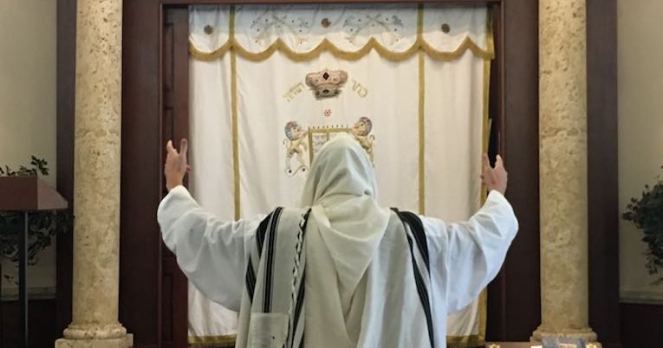
Tonight, everyone wears tallits. This is the only time of the year when the whole community drapes tzitzit from the long white garments over their shoulders. Why do we do this? Because these are the vestments of dayyanim – judges. Tonight, we are a court room. We take the scrolls from out of the ark and swear on them as holy texts. We are a mirror of that divine court that has sat in Heaven to weigh up the balance of our lives and pass judgement.

Now, feel yourself in that position. Realise that you are not just judged but you are also the judge. You are in a room full of other people in the same position. Is there anyone in this room so guilty, so impossibly unrepentant, that you cannot forgive them? Entrusted with the full power of a heavenly court that can choose between life and death, is there anybody you would not forgive?

Now turn that same judgement on yourself. Forgive yourself. Over the next day, we will all carry out moral audits on our lives. We will be encouraged to think through everything we have done wrong and to recount our misdeeds. But let’s focus, too, on forgiving ourselves. Let’s treat our own souls with the love and kindness we wish upon others. Nobody can be a harsher critic of you than yourself, and you know that there are times when you talk about yourself in ways you wouldn’t talk about your worst enemy. So give yourself a break.

I think part of the reason why we recite Kol Nidre, annulling all our vows, right at the start of Yom Kippur, is so that we can do just that. This prayer asks God to realise that all the promises we made from the last year to this one could never be met. This asks God’s forgiveness for the fact that we made promises at all. Because all the vows we made last Yom Kippur were impossible. We said we’d be better Jews this year than we were last year. We said we’d be kinder, more conscientious, and more humble. We said we’d pray more and study more. And we didn’t. Not enough anyway. And that’s OK.

Perhaps among all the promises that we make to ourselves this Yom Kippur, we can add an additional promise that this year we will forgive ourselves. We will be gentler with ourselves. We will love ourselves more. And, even if we don’t succeed, we can be merciful. We can forgive ourselves.

Gmar chatimah tovah.


kittel

I gave this sermon for Kol Nidre at Kehillat Kernow, the Reform Jewish community of Cornwall. It was a wonderful place, and I will write more about it at a later date. One piece of critical feedback I received stuck with me: a woman said that, by saying that we all wear tallits, she felt I had excluded her. She had grown up Orthodox and always felt that the Jewish community was excluding her. My comments, which seemed to only address men, had projected her back to her childhood. At the time, I defended myself, saying that I’d grown up in the progressive world and so had never known a place where women didn’t wear tallits. On reflection, I am not happy with the answer I gave. I was trying out more ‘frum’ practices this year, by wearing slippers and kittel. I know from my own experience that seeing people seemingly adopt Orthodox forms can bring up memories of exclusion and discrimination. In light of that, if I want to experiment with it, I need to be much more explicit about what my values are: how I reconcile socialism and feminism with an interest in halachah. Moreover, Yom Kippur already can feel quite daunting for everyone. It’s supposed to be a time for huddling together and bringing everyone ‘inside the tent’. I need to constantly remind myself that the shared belief of progressive Jews in feminism, queer liberation and anti-racism is not additional to what we do but is at the core of who we are. In future sermons, I hope to be more explicit about that.

judaism · sermon · theology

We are asked to believe in something impossible

We are asked to believe in something impossible.

We are asked to suspend everything we know and accept that a God of fire and cloud descended on the place where the Israelites were camped.

In the day, God came down to earth like a pillar of cloud, encompassing the tents where people lived. At night, God rose up like a pillar of fire, showing people the way.[1]

The movements of these clouds or the fiery appearance would signal that the people were to either break up and move, or make camp, as the case might be.[2]

Ever since the Torah was first canonised, people have exercised a healthy scepticism about what these words might mean. We have rational doubts about whether pillars of fire and cloud could come out of nowhere.

Even in the Targum of Pseudo-Jonathan, one of the earliest translations of the Torah, this text is altered to say that what they say was “like a vision of fire.” Here, as elsewhere, the Targum tries to keep people from taking the words of the Torah overly literally. It is not, the Targum suggests, that a real pillar of fire descended from the sky, but that people had visions of something that looked like fire. This is more digestible.

Commenting on this problem, the medieval Spanish philosopher Maimonides tells us that such ideas “come from dreams and visions.” He argues that “the imaginative faculty achieves so great a perfection of action that it sees the thing as if it were outside.”[3] The Israelites only saw the fire and cloud in their minds, but their vision was so powerful that it was as if they could see it out in the real world.

Where Maimonides can’t explain such phenomena, he tells us that they are metaphors. When the Torah says that God wrote the Torah by hand, it doesn’t really mean that God has hands. When the Torah says that God walked about in the Garden of Eden, it doesn’t really mean that God has feet. It’s using language we understand to explain something we cannot.

The idea that this is all a metaphor is powerful. After all, if we want to understand God or Divine Revelation, we must accept that we’re thinking about something way beyond our comprehension. None of us are really enlightened enough to see God or to understand what God wants of us. These descriptions are just tentative imaginations to tell us about something too profound and complicated to be described.

In modern times, historical criticism has gone even further to rationalise what is written in this parashah. The pillars of cloud and fire weren’t visions. They weren’t even metaphors. For some historians, these were probably just burning wood pyres and incense sticks, guiding people through the desert.[4]

I can completely see why people would interpret the Torah this way. It fits better with our experience of the world and keeps us from straying into fundamentalism. We need to keep critical distance so we can remember that this was a book written by men, who were fallible. That is especially important in a community like ours, where we know that the sense of justice we get from our own consciences is far more important than the rules written in an ancient book.

But, in a way, I also find the efforts to rationalise stories like these quite disappointing. By dispelling myths as just visions or metaphors or the hocus-pocus of priestly magicians, we do these texts a disservice. The Torah is not a book of scientific or historical truth. It is a book of spiritual truth. It is trying to tell us something much deeper about the world than science or history ever can. We can’t judge the claims of the Torah, then, on the same terms as we would a physicist’s estimate of how old the universe is. It is talking about truth of a wholly different kind.

For a while, in my teens, I was something of an atheist. I was suspicious of all religious stories, felt the Tanakh to be riddled with contradictions, and faith in God to be a bit ridiculous. At that age, I didn’t realise that the stories weren’t meant to be taken literally, that the contradictions were questions waiting to be explored, or the powerful role that God would come to play in my own life.

Reflecting on the views I once had, I know why I dismissed stories like these so readily. A God of cloud and fire who descends over wandering people in the desert is, of course, impossible. It’s just that now, I have much more room in my heart for impossible things.

Everything about the story is impossible. A God of cloud and fire who wrenches slaves out of Egypt, rains down plagues and parts the seas. Unfathomable.

A nomadic people stranded in the desert approach a mountain and hear out of it thunder and lightning, declare that it is their God, the Eternal One, and that they should have no other gods. Completely unrealistic.

A slave people, who had never known anything but the bitterness of toil and struggle, are told that they will all be priestly people, all have regular complete days of rest, all strive to live in equality and justice with one another. Unbelievable.

An immigrant people with no home, dispersed and lost, hear it promised that every foreigner will be treated with the same decency and equality as everyone else. They hear that nobody would ever hurt people for being different again. Inconceivable.

A people who had known nothing but hatred and turned their anger on each other heard that One True Creator of the Universe loved them wholeheartedly and would cherish them as a treasured people. They heard that it was their task on earth to live up to the highest standards of morality and lead the world as a living example of what an ethical life could be. Absolutely, completely impossible.

And yet. And yet somehow, for thousands of years, we have held on to this idea that we can be beacons of justice, exemplars of love and heralds of a better world. Somehow, despite everything our people has suffered, we still have a sense that a world where people treat each other with dignity is within our reach.

We are asked to believe in something impossible, but all that cloud and fire does not matter half as much as the mission that comes out of it. The mission of the Jews, our sacred task on earth to sculpt it in God’s image, may be impossible, but impossible things are worth believing in. As a people, we are called upon to make the impossible possible. And we will succeed.

Shabbat shalom.

fire cloud

I gave this sermon on Saturday 2nd June 2018 at Manchester Liberal Jewish Community for Parashat Bhaalotcha. Partly, I was trying to work out in my own head the answer to the question of whether a Jew in the 21st Century must believe in G?d; and, if so, what that meant. In the lunchtime discussion, I found many congregants had similar concerns. Many of us felt that we believed in G?d, but struggled to find the language to describe what that meant. I went away feeling that, in a sense, the questions were more important than the answers.

[1] Num 9:15

[2] Tur haAroch 9:15:1

[3] Rambam, Guide for the Perplexed, 2:36

[4] http://www.jewishvirtuallibrary.org/pillar-of-cloud-and-pillar-of-fire

judaism · sermon · theology

The importance of not respecting different opinions

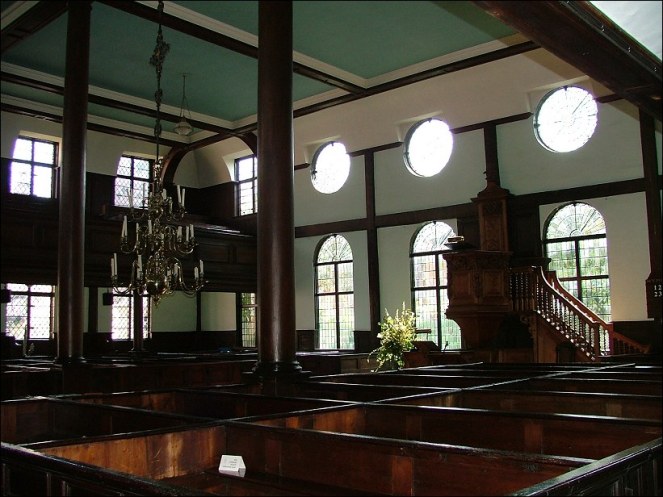
This is Interfaith Week, and many of my religious buildings across the country are holding similar services to this one. In most places, I suspect people will talk about the importance of respecting differences of opinion. You have your views, I have mine, but we can all get along. All religions have their own truths. It might be customary to say it, but I can’t bring myself to do it. Not all ideas have the same value. Some ideas are wrong. Some ideas are dangerous. Some ideas must be challenged as soon as we encounter them.

This week, we read a passage in the Torah with a violent history. In it, Jacob and Esau fight over who gets their father Isaac’s birth right. Jacob, the younger brother, tricks his dad into giving him his blessing. He dresses in his brother’s clothes, puts hair on his arms so that he’ll feel rougher, and puts flour on his tongue so that his voice will sound deeper. With the help of his mother, Rebekka, he kills an animal, makes some sweet meats and cons his father into giving him a blessing that was meant for his brother. When Esau comes in, Isaac is distraught to realise that he has given the blessing to the wrong son. Esau begs him to bless him, but Isaac insists that he can’t retract his blessing from Jacob. Instead, he gives him a new blessing: “You will live by the sword and you will serve your brother. But when you grow restless, you will throw his yoke from off your neck.”[1]

This story became more than a tale of sibling rivalry. It became the basis of bloodshed lasting centuries. Jacob took another name: Israel. As a person, he stood in for the whole of the Jewish people. Esau had another name: Edom. As a person, he became a symbol of Christianity and Rome. For centuries, that was the optic through which Jewish-Christian relations were viewed: as a struggle between two brothers for a blessing that could only be held by one of them. The Jews, Israel, insisted that they were the sole bearers of the blessing from God. Christians insisted that they had broken off the yoke of Torah when their Messiah came, and that they had replaced Jews as God’s chosen people.

This had real consequences for people’s lives. If Christians had replaced Jews, then Jews were a stubborn remnant of a bygone age; a people destined to be destroyed. St Augustine of Hippo, one of the Founders of the Church, argued that Jews should be allowed to live only as evidence, in their degraded state, of the superiority of Christianity. This story of Esau replacing Jacob was so influential on European thinking that, some argue, it helped to legitimate the Nazi genocide.

This month saw the five hundredth anniversary of the day that Martin Luther nailed his ninety-five these to the church door, demanding reformation of the Catholic Church. His ideas were so important. Luther was somebody who realised that ideas are powerful. He was responding to a time when the established Church used people’s fear of death to pay for a better place in the afterlife. The abuse of religion was creating a deeply hierarchical and unequal society. Luther wanted to challenge that. He realised that not every religious idea had to be respected. Sometimes they need to be resisted.

Luther was also a notorious antisemite. In his later life, he used his power as an academic to incite race riots against Jews. His ideas were adopted for centuries in justifying racist violence. When the movement he founded, Protestantism, gained the upper hand in Western Europe, his ideas were used to attack Catholics. Unfairly caricatured as automatons doing the bidding of the Pope, Catholics were denied access to citizenship, and imprisoned as foreign infiltrators, in many countries. Luther’s great idea – that religion should not be used to wield power – became subverted to serve its opposite purpose: of entrenching power.

Still, his ideas gave birth to our own religious movements. The Unitarians here draw their roots from Protestantism, wanting to take Luther’s best ideas to their radical conclusion of a religion grounded in equality and acceptance. Liberal Judaism, too, was inspired by Protestant reformation. Our forbearers wanted to create a Judaism without sexism or nationalism. Since then, we’ve tried to also create Judaism that embraces LGBT people and champions just causes like the rights of migrants and workers. I know that many of our Christian friends here share that ambition.

This leaves us with a question: how do we know if an idea is any good or not? If we’re not going to automatically respect differences of opinions, what grounds can we have for disagreeing without creating exactly the kind of competition between Jacob and Esau, that caused so many generations of suffering? I’d like to propose a test for conversations in interfaith dialogue: do our ideas support existing power structures, or do they resist them? Do they bolster the powerful or diminish them? There are questions on which we can agree to disagree – none of us knows for certain what God really is, or what the afterlife is like. But we can challenge our ideas about this world: do they make our world more just, more equal, more compassionate, and more peaceful? If not, can we really sanction them?

This, I would hope, could be the basis of a better model of interfaith. Rather than accepting differences, let’s challenge each other to live up to the best of the values we share. In the spirit of the prophetic tradition that has inspired us, let’s push each other to speak truth to power. The reformation brought about the idea that religion should not be wedded to power. Let’s take it to the next stage, and insist that religion be used as a weapon against power. Let’s work together to fulfil a religious mission of eradicating inequality, championing the cause of the oppressed, eliminating hunger and poverty, bringing about a world where all people are treated with the dignity they deserve. That would be a world that truly respects difference.

[1] Gen 27:40

ipswich church
Ipswich Unitarian Meeting House

This sermon was given as part of an interfaith service organised by Suffolk Liberal Jewish Community, and held in the town’s beautiful Unitarian Meeting House. After the service, an Anglican minister pointed out that I had not made clear that current Christian doctrine had tried to rid itself of its supersessionist ideology. I think it is important to note that much of the work challenging offensive ideas in Christianity has been done by Christians themselves, especially by Catholics at Vatican II. I am grateful to him for this constructive feedback.

article · judaism · liturgy · theology

Praying for Today

Becoming disabled made me question everything I thought I knew about Judaism. Then it brought me back to the religion in a way I’d never thought possible.

When I was 19, I woke up one morning and found that I couldn’t get out of bed. My hips were stiff, my back was sore, and my arms just weren’t strong enough to sit me upright. Something was wrong. I called out to my housemate, who helped lift me out of bed. That was the first time I needed help standing up. There would be many more.

It had been building for a while. I’d sat in university lectures and on buses feeling tremendous pain around my neck, shoulders, and lower back. I stared blankly at the doctor when she told me I had ankylosing spondylitis, an autoimmune disease that attacks the spine. In a normal spine, the bones in the back are buffered by cartilage. In my spine, the bones were fusing together.

Back then, aIl I knew about the disease was that there was no cure. I didn’t know how much my back would come to hurt, or much I’d struggle with fatigue, or how little I might be able to move.

All I could do was focus on making changes to get better. I took up exercise, having studiously avoided it since school. I cut back on smoking and drinking. I changed my lifestyle and resolved to look after my body better. But the biggest change of all wasn’t in my body; it was the unexpected transformation of my religious beliefs. Getting sick made me doubt the Judaism that had been such an integral part of my life.

***

I grew up in a Liberal Jewish community, the U.K. sister of the American Reform movement. My Marxist parents had initially resisted raising me religious, but even as a child I’d been so drawn to Judaism that I insisted on dragging them to synagogue. Our community, based in a large commercial town surrounded by countryside just outside London, would meet weekly in a small shared chapel. We’d head out to a local farm for the pilgrim festivals. We’d plant trees at Tu B’Shevat and harvest fruit at Shavuot. We even camped out in the chilly English autumn for Sukkot. I adored getting to go out to the countryside. I loved cheder and getting to spend my weekends with other Jewish children. But more than anything else, I loved prayer.

There was something in Jewish prayer that filled me with joy. From the collective singing of “Mah Tovu” at the start of the service to the barn-storming shouting of “Adon Olam” at its end, I felt like I was part of an amazing community. Our liturgy, especially, filled me with hope. It spoke with such certainty about the sureness of progress. People whose lives were difficult now would get better. Society, though broken, would be perfected. The whole world was on one unfettered journey toward a messianic age of truth and righteousness.

I can still recite by rote the words from the siddur: “You support the fallen and heal the sick; you free the captive and keep faith with those who sleep in the dust.” This, I believed, was a G-d who actively intervened in everybody’s lives to make them better. I learned to say in English: “We hope soon to behold the glory of your might when false gods will vanish from our hearts and idolatry cease forever.” This, I thought, was an unabashedly optimistic religion.

I found that optimism everywhere. At home, my parents were convinced that the workers’ revolution was just around the corner and a new age of peace and equality would soon come to replace our capitalist system. At school, I learned that I could achieve anything if I worked hard enough. All of us could become astronauts or prime ministers, if only we put our minds to it. No matter who was right—the religious, the Communists, or the aspirational—the future was going to be great.

As I child, I held tightly to that view of the world.

***

There was never exactly a moment I stopped believing. I drifted away. I went to synagogue for the major holidays. Then I went back to living my life. But as that life became more complicated, so did my relationship to Judaism.

Dealing with chronic pain meant I had to question everything I thought I knew about the world. People’s lives were supposed to be stories of progress. We’d start out from a difficult place, we’d struggle, but as we went on, things would get better. G-d would support us. How could I believe that now, knowing that my health would gradually deteriorate?

Every year, autumn brought cold rain and my condition would flare up anew. Each time, it got worse. I found myself in more pain, struggling to cope with daily tasks. I could no longer sit cross-legged, and it hurt to sneeze. Each time my disease got worse, my religious questions came back to the fore. I needed to understand how I could get so sick and have my life derailed so badly.

I went to work in Turkey, fearing that if I didn’t get out and see the world before my spine fused any more, I might lose the chance. I persisted with my questions about faith. But I resolved to start going to synagogue regularly again—to look for the answers I couldn’t find in my daily life. I sat each week in an old Sephardi synagogue on the Bosphorous, where old men struggled to make a minyan, wondering if there was anything G-d could do. I started bargaining, praying to have my disease taken away. I quit smoking. I quit drinking. I took my painkillers. I did yoga every day.

I ached in my muscles, and I ached in my soul, heartbroken by every answer I could think of. Had I done something wrong to be exempted from the linear, progressing life everyone else was meant to get? Was G-d not interested in people’s lives enough to intervene and relieve suffering? Was G-d not even there at all? The thought crushed me, but I didn’t want to let go of the optimistic theology that had filled me with such wonder as a child.

At 25, I lost the ability to walk properly. I could only push my limbs outward in robotic movements. I didn’t have enough time to cross roads in the time it took for the lights to turn from red to green and back again. I couldn’t sleep because with the slightest turn I woke myself up with the sound of my own screams. Every muscle in my body was tensed up. I lost more than 25 pounds.

Dealing with pain, it was hard to think at all, let alone to think positively. I absorbed all the books on Jewish thought I could find, searching for answers. If I wanted to hold on to the view of G-d I’d had as a child, I needed to come up with alternative solutions. Perhaps I was being tested—eventually I’d do enough mitzvot and I’d be relieved of the pain. Perhaps I was being punished. Maybe this was G-d’s plan after all.

***

Last year, I came back to the U.K. Doctors put me on regular doses of ibuprofen, then naproxen, then coxibs, none of which did anything. Unable to focus because of pain, I lost my job. I felt like I was no longer useful. But just as I was giving up hope, I followed a friend along to a weekend of non-denominational Jewish study in London.

This was Jewish study like I’d never encountered it before. We pored over Aramaic texts, guided by incredible scholars, to consider life’s big questions. We sat in small groups studying passages from Torah, Talmud, and modern Jewish theology. We were led by rabbis and academics, but mostly we were led by our own desire to see the world differently. One of the major themes we discussed was why people suffer.

There were people looking for answers in just the way I was. An emergency nurse who’d seen too many children come in mangled from car accidents. A community worker who felt like she was losing her faith. A student, grieving for his recently lost parent. All of us encountered Jewish texts afresh.

We read Ecclesiastes, that beautiful poem, bordering on atheistic, which says: “The righteous get what the wicked deserve, and the wicked get what the righteous deserve. This is all meaningless.” We read Job, afflicted with diseases and losing everything, crying out to heaven: “Withdraw your hand far from me, and stop frightening me with your terrors,” to which G-d replies: “Will the one who contends with the almighty correct me?” We read, too, from the Talmud, where Rav Johanan goes to see Rav Hiya bar Abba, lying in bed and unable to move. Rav Johanan asks him, “Are your sufferings dear to you?” and Rav Hiya replies, “Neither them nor their reward.” Only then is he able to stand up.

I realized that all the problems I’d had—both physical pain and existential doubt—weren’t just mine. They’d all been experienced before. Rabbis, prophets, and Hebrew poets had all struggled with the same sicknesses and questions I had. They couldn’t answer by promising some great progression of life. Nobody would tell King Solomon, the author of Ecclesiastes, that everything would be fine. Nobody would tell Job that his suffering had meaning. The Babylonian rabbis wouldn’t let their friends make martyrs of themselves for hurting, either. Instead, they just expressed their worries and let the questions stand. Suddenly, I felt much less alone.

People throughout history managed to go on being Jewish in the face of far worse suffering than mine. They’d stuck together, prayed together, and asked life’s most difficult questions together. They hadn’t answered with hope. They’d answered by being there for each other. And now, through their words, they were here for me, too. Through their words, Jews from generations past reached out through time, took my hand and said: “I’m hurting, too.” Through prayer, I try to answer them: “I’m with you.”

***

Over the last year, I’ve taken to prayer with new vigor and meaning. Jewish prayer doesn’t have to be about senseless faith in a better future. It can be a way of feeling radical empathy and solidarity with everyone else who is struggling. It can give me the strength to get through a day. It can give me a sense of gratitude when I don’t feel any. It can help me feel despair when I just need space to grieve.

I’m not waiting for a better future anymore. I’m praying for today. Whether we’re in synagogue together or I’m mumbling away in Hebrew at home, I’m part of an international community of people who are giving one another strength.

I think about everybody else hurting, grieving, questioning and learning. There are millions of us. People having their welfare cut and people who never had it. People struggling to pay bills and people struggling to get up in the morning. Through prayer, I can offer up some empathy and solidarity. I can feel like I’m having it returned.

Right now, I’m in a much better place, both physically and mentally. I know that wouldn’t have been possible without prayer. A sense of faith, of community, of support, can make more difference than people realise. It’s not that an invisible hand has reached down from the sky to take away my afflictions. G-d doesn’t work like that and never has. The miracle of prayer isn’t that it takes sickness away—it’s that it makes it bearable.

tefillin

This article was originally published in Tablet Magazine in November 2016.

high holy days · judaism · story · theology · torah

Jonah is a story about suicide

We know that life is sacred. I have mentioned it a few times over these Holy Days and we hear it all the time in our religion. Yet there is one question on which it seems almost silent. It is one that I’ve been thinking about a lot this year. Throughout the Tanakh, suicide is not mentioned. No tractates are written against it, no stories are written about it. Where could I turn to provide an answer? It seemed like a glaring oversight, and one that needed an answer more than ever for a generation where issues of anxiety and depression have never been so pronounced. And then, as I turned to the Yom Kippur readings, I realised that the answer had been staring me in the face.

The story of Jonah ends on an anti-climax. After hauling Jonah out of his home, sending him miles away into the heart of empire, drowning him, having a giant sea-monster swallow him, made him chastise his foreign enemy to give up on evil and actually convinced them to do so, God tells Jonah: “And should not I care about Nineveh, that great city, in which there are more than a hundred and twenty thousand persons who do not yet know their right hand from their left, and many beasts as well!”

Put yourself in Jonah’s shoes for a moment. All that, that whole mission, only to tell him that he cared about ignorant people and cattle. All that, when Jonah had thought he’d watch a city, ten times bigger than Manchester, burn to the ground, only to be told that God likes the animals in the city just like Jonah cares for a plant. What a disappointment.

It’s the kind of ending that leaves you scrambling back over everything you’ve read, wondering what the point of it all was. Did I miss something?

And here’s the real kicker: when God tells Jonah that he’s not going to destroy Niniveh, he’s also telling him that he’s not a prophet. In Deuteronomy we learn: “When a prophet speaks in the name of God, if the word does not come to pass or come true, that is a word that God has not spoken; the prophet has spoken it presumptuously. You need not be afraid of him.”[1]

Jonah has prophesied and he’s gone big. He’s told everyone in the capital city of the biggest empire on earth that they’re all doomed to die because they’re sinners. It’s a bit like getting on a boat from Southport, journeying to New York, pitching up in Time Square and announcing to everyone there that they’re about to die. In fact, it’s worse than that, because in this scenario, Jonah’s people and the Americans are sworn enemies. He’s gone through all of that, only to find that his prophesy did not come true. He was wrong. He was not a prophet.

But what was it that God actually told Jonah to prophesy? Was he told that Niniveh was going to be overthrown in forty days? No. At the very beginning, God says: “Go at once to Nineveh, that great city, and proclaim judgment upon it; for their wickedness has come before Me.”[2] Not tell them they’re going to be destroyed. Not tell them they’re all going to die. Not tell them to fast and weep. Just – tell them they’re going wrong.

Here’s what I want to suggest. That anti-climactic ending is much more profound than we might initially realise. The message given to Jonah was so much bigger than that. That prophecy was not about the wrongdoing of a city – it was about suicide. The story of Jonah is a story about a man contemplating suicide, rebutted over and over again by God’s message: choose life.

Today’s Torah portion announces that message. Moses stands on the edge of the Promised Land, knowing he will not be allowed to enter it, and gives the Israelites his final words: “This day I call the heavens and the earth as witnesses against you that I have set before you life and death, blessings and curses. Now choose life, so that you and your children may live.”[3] This message is so profound. Life, it says, is not an accident. It is a choice, and it is a choice we must make. We must decide whether to truly participate in this world.

The prophet Ezekiel says: “Turn ye, turn ye from your evil ways; for why will ye die, O house of Israel?”[4] This is God’s message to Jonah: choose life, for why would you die? Let’s read the story again, this time assuming the prophecy is different. We’ll realise that the story was not about whether the people of Niniveh should die, but about whether Jonah should live.

Several times throughout the story, Jonah threatens suicide. Sometimes those threats were so imperceptible you might not notice them. At the very beginning, when Jonah flees from Jaffa to Tarshish, he pays the fare before he gets on the boat. That might seem a reasonable enough thing to do now. But in the Ancient Near East, you didn’t pay your fare before travelling, you paid it afterwards. You paid it afterwards because otherwise you’d be at the mercy of sailors, who’d already have everything they needed from you, and could chuck you overboard so they wouldn’t have another mouth to feed. Paying your fare upfront is tantamount to a death-wish.

It doesn’t stop there. Once on the ship, God sends a mighty storm over the seas. Jonah could pray to have his life saved, but instead he curls up in the bowls of the ship, falls asleep and waits for the end. God has other plans, and Jonah will not die yet.

The captain of the ship and the rest of the sailors find him, realise that he’s the cause of the storm and ask him what they should do. Jonah could say: “take me to Niniveh so that I can do what God asked me.” He could say: “help me convince evil-doers to repent from what they’re doing.” Instead he says: “Heave me overboard!”[5] That’s right. Once again, Jonah tries to die. The sailors, who already have his money, who have never met Jonah before, who have a different religion and tribe to Jonah, beg God that they won’t have to kill Jonah. Jonah is insistent.

So the sailors heave Jonah overboard and it’ll take all but a miracle for him not to die. Thankfully, God is in the business of providing such things. God sends a giant fish, which swallows Jonah whole, leaving him able to survive. Jonah sits in the belly of the fish and sings: “I sank to the base of the mountains; The bars of the earth closed upon me forever. Yet You brought my life up from the pit, Eternal One, my God! When my life was ebbing away, I called God to mind; And my prayer came before You.”[6] Finally, it seems like Jonah’s getting it. Finally, brought to the very brink of death, it seems like Jonah is ready to choose life. God commands the fish to spit out Jonah on the land.

This time, Jonah does what God tells him. He heads out to Niniveh, that great city, to prophesy against them. Are his enemies, the overlords of the world’s biggest empire, rife with sin and iniquity, angry at him? Do they try and kill him? No, they’re horrified. It’s as if they’d never even considered what they were doing was immoral. They throw on sackcloth and ashes and prepare themselves for death. They even put sackcloth on the animals, so ready they are for utter annihilation. But God’s intention is not for them to die. As Ezekiel reminds us, God takes no pleasure in the death of them that die, but that they turn from their ways and live.[7]

Jonah is disappointed. He scolds God: “Please, Eternal One, take my life, for I would rather die than live.”[8] Has Jonah learned nothing? Close to death in the belly of the big fish, it seemed like Jonah was finally getting it that all God wanted was for him to live. Yet here he is again, begging to be allowed to die, threatening suicide once more.

God tries a different tactic. Instead of heavy-handed miracles and big displays in Niniveh, God tries out a gentle parable. God allows a gourd to grow over Jonah’s head, then allows it to die. Perhaps this will teach Jonah the precious, fragile sanctity of life. Quite the opposite. Jonah begs for death, saying: “I would rather die than live.” God asks Jonah: “Are you so deeply grieved about the plant?” “Yes,” he replied, “so deeply that I want to die.”[9]

Finally, we get to the prophecy that had been meant for Jonah all along. God says: “You cared about the plant, which you did not work for and which you did not grow, which appeared overnight and perished overnight. And should not I care about Nineveh, that great city, in which there are more than a hundred and twenty thousand persons who do not yet know their right hand from their left, and many beasts as well!”[10]

That’s why the story finishes by telling us about all the animals. God is saying: “Don’t you realise how much I care about you? I care even about the cattle in this city. I care even about a single plant in the desert. I love even your enemies, who are persecuting you, who do not worship me, who don’t follow my laws. How much do you think I care about you? Can’t you see how important you are? Choose life, Jonah. I’m begging you, stop with these thoughts of suicide. Give up on all that anger and hate you’ve been bottling up. Choose life, Jonah, why would you choose death?”

That’s what this whole story has been about. It was never about sin and death and punishment. It was so much simpler than that. It was about life. “Look Jonah,” says God. “I know you don’t think your life is worth living, but I do. To me, your life has meaning. To me, you are worth everything. Yes, even you. You with your stubbornness, your bitterness, your rage. You with all your unhappiness, your imperfections and mistakes. You mean so much to me that I will perform miracles. I will turn the world on its head to keep you alive. I will send you to the ends of the earth just to tell you I love you. Choose life, Jonah.”

That’s what this whole day has been about. Sometimes in prayer, especially deep in the fast of Yom Kippur, we can get so caught up in recounting our sins and holding onto our guilt, that we forget the whole point of the day. This day is not for wallowing in misery, it is to be thankful for life. We have been called here because our lives have meaning. By dint of being human, we are not just special, we are holy. To be a Jew means to affirm that life matters. It means to be willing to live a life that shows the best of what humanity can achieve. Of course, we may not succeed, but don’t we owe it to ourselves to try? Don’t we owe it to ourselves to choose life?

On the question of suicide, I think that Judaism has an answer. Judaism has only one answer, in fact, to every question, which is that life is holy. We are here to manifest the sacredness of life in everything we do. So today, let’s ask ourselves: are we doing that? Are we holding on to sadness and rage or are we thankful for another day? Are we dwelling on all that we’ve done wrong, or will we embrace the chance to get it right? Won’t we remember today that God wants for us to live?

Today God has put before you two choices: blessing and curse, life and death. Choose life, for why would you choose death?

jonah whale

This sermon was originally delivered on Yom Kippur 5778 at Manchester Liberal Jewish Community.

[1] Deut 18:22

[2] Jonah 1:2

[3] Deut 30:19

[4] Ezek 33:11

[5] Jonah 1:12

[6] Jonah 2:7-8

[7] Ezek 33:11

[8] Jonah 4:3

[9] Jonah 4:8-9

[10] Jonah 4:10-11