high holy days · judaism · sermon · theology

Forgive yourself

Forgive yourself.

I’ve always struggled through Yom Kippur. It’s not just the fasting or the sitting in shul all day. That stuff’s tough, but there’s something more existentially difficult about Yom Kippur. I find the prospect of judgement quite scary.

What makes Yom Kippur harder than any other day of the year is I feel myself somewhat stranded without excuses. Any other day, if I get angry or petty or unkind, I have good excuses. I’m busy. I’ve got too much on. I’m tired. On Yom Kippur I have to reflect over all those occasions and my excuses seem pretty inadequate. On Yom Kippur we are stripped bare in front of our Maker, and as I recount the extenuating circumstances to exonerate me for going wrong, I can hear God saying: “Really though?” My reasons don’t cut it when I have to face up to Infinity.

As Kol Nidre comes in, I always feel deeply unprepared for the questions my conscience has prepared for me. By the time we’ve been through 24 hours of praying, studying, silent meditation, chest-beating and singing, the shofar blasts loudly for the last time and I’ve as good as promised myself that the next year I’ll be a saint. Next year, I’ll never get angry. Next year, I’ll never be impatient. Next year, I’ll go to synagogue every week. (Actually that one I probably will do, but you get the idea.) The process of Yom Kippur makes me set the standards for myself so high that by the following Kol Nidre I can only look at myself and realise that I’ve failed to meet them.

This year I’m going to try a new discipline. I’m going to try to forgive myself.

The process I described really is important. Faced with a perfect Being, as we are with God on Yom Kippur, every one of us is lacking. All of us have something to feel genuinely guilty about. All of us need to set our standards for ourselves just that little bit higher. But we also all need to learn to forgive ourselves.

There is a wonderful Chassidic story. Rebbe Elimelech of Lizhensk, a great Polish tzaddik of the 18th Century, approached the gates of Heaven. He stood before the Almighty and was asked: “Did you pray enough?”

“No,” answered the rebbe. “I’m afraid I did not.”

“And did you study enough Torah?”

“No,” said Elimelech. “I didn’t.”

“Did you give enough to support the needy?”

“I did not.”

“Were you kind enough?”

“No.”

“Elimelech,” said the Holy One, “you have told the truth and for that you will pass through to Heaven.”

The truth is none of us can ever do enough. Nobody can ever pray hard enough, read enough Torah, give enough to support the needy or exercise enough kindness. All we can do is be honest with ourselves, and keep trying.

On Kol Nidre, we are faced with the same questions as Elimelech was. We have to inspect the content of our souls in just the same way as he did. Have we prayed enough? Studied enough? Done enough to support others? Been kind and charitable and loving? No, we have not.

And we should not kid ourselves that the stakes are any less high than they were for a man standing at the gates of Heaven. If anything, they are higher, because while Elimelech was dead and could not do anything further to improve, we are still alive and have the chance to be better than we have been.

The rituals around Kol Nidre help to convey the gravity of that situation. First of all, we are supposed to feel a little bit closer to death. Ashkenazi Jews wear kittels, the garments in which we will be buried, to convey that sense of mortality. In reciting Viddui, we say the same words that repentant souls recite on their deathbeds. In fasting, in huddling together, there is some deeper feeling of an intimate proximity to death.

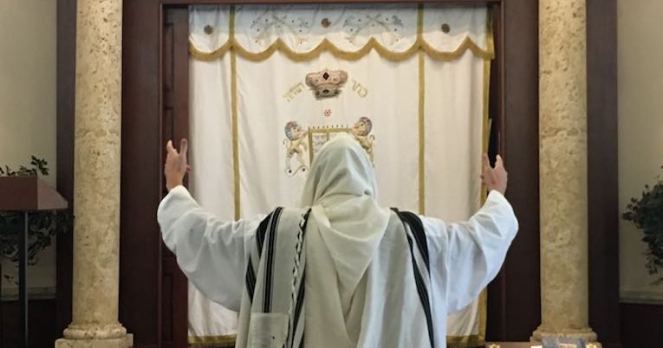
Tonight, everyone wears tallits. This is the only time of the year when the whole community drapes tzitzit from the long white garments over their shoulders. Why do we do this? Because these are the vestments of dayyanim – judges. Tonight, we are a court room. We take the scrolls from out of the ark and swear on them as holy texts. We are a mirror of that divine court that has sat in Heaven to weigh up the balance of our lives and pass judgement.

Now, feel yourself in that position. Realise that you are not just judged but you are also the judge. You are in a room full of other people in the same position. Is there anyone in this room so guilty, so impossibly unrepentant, that you cannot forgive them? Entrusted with the full power of a heavenly court that can choose between life and death, is there anybody you would not forgive?

Now turn that same judgement on yourself. Forgive yourself. Over the next day, we will all carry out moral audits on our lives. We will be encouraged to think through everything we have done wrong and to recount our misdeeds. But let’s focus, too, on forgiving ourselves. Let’s treat our own souls with the love and kindness we wish upon others. Nobody can be a harsher critic of you than yourself, and you know that there are times when you talk about yourself in ways you wouldn’t talk about your worst enemy. So give yourself a break.

I think part of the reason why we recite Kol Nidre, annulling all our vows, right at the start of Yom Kippur, is so that we can do just that. This prayer asks God to realise that all the promises we made from the last year to this one could never be met. This asks God’s forgiveness for the fact that we made promises at all. Because all the vows we made last Yom Kippur were impossible. We said we’d be better Jews this year than we were last year. We said we’d be kinder, more conscientious, and more humble. We said we’d pray more and study more. And we didn’t. Not enough anyway. And that’s OK.

Perhaps among all the promises that we make to ourselves this Yom Kippur, we can add an additional promise that this year we will forgive ourselves. We will be gentler with ourselves. We will love ourselves more. And, even if we don’t succeed, we can be merciful. We can forgive ourselves.

Gmar chatimah tovah.


kittel

I gave this sermon for Kol Nidre at Kehillat Kernow, the Reform Jewish community of Cornwall. It was a wonderful place, and I will write more about it at a later date. One piece of critical feedback I received stuck with me: a woman said that, by saying that we all wear tallits, she felt I had excluded her. She had grown up Orthodox and always felt that the Jewish community was excluding her. My comments, which seemed to only address men, had projected her back to her childhood. At the time, I defended myself, saying that I’d grown up in the progressive world and so had never known a place where women didn’t wear tallits. On reflection, I am not happy with the answer I gave. I was trying out more ‘frum’ practices this year, by wearing slippers and kittel. I know from my own experience that seeing people seemingly adopt Orthodox forms can bring up memories of exclusion and discrimination. In light of that, if I want to experiment with it, I need to be much more explicit about what my values are: how I reconcile socialism and feminism with an interest in halachah. Moreover, Yom Kippur already can feel quite daunting for everyone. It’s supposed to be a time for huddling together and bringing everyone ‘inside the tent’. I need to constantly remind myself that the shared belief of progressive Jews in feminism, queer liberation and anti-racism is not additional to what we do but is at the core of who we are. In future sermons, I hope to be more explicit about that.

high holy days · judaism · sermon · Uncategorized

Building a home

A young Talmud scholar moves from Lithuania to London. Years later he returns home to visit his family.

His mother asks: “Yossele but where is your beard?”

“Oh, mama, in London, nobody wears a beard.”

“But do you at least keep Shabbat?”

“No, mama, in London people work all the time. We have to make money.”

“Oy vey. But do you still keep kosher?”

“Mum, I’m sorry, kosher food is expensive and hard to find.”

“Yossele…” she says. “Are you still circumcised?”

Coming home from rabbinical school for Rosh Hashanah, I feel like I have my parents asking the same questions in reverse. “Lev you’re laying tefillin now? You’re keeping shabbat now? You’re training to be a rabbi now?! Lev, are you still patrilineal?”

I can confirm with great pride that I am still not Jewish according to the Orthodox beit din. I still have no desire to leave a religious movement that embraces me for one that doesn’t.

Still, anxieties are understandable. I have to admit that I am more than a little daunted coming home for the High Holy Days this year. It is quite one thing to lead services for strangers in far-flung places like Cornwall and Newcastle. But giving a sermon to the community that raised me, in front of my cheder teachers and old friends, adds a whole new level of pressure. It turns out it’s easier to talk to strangers about God than it is to engage with your family. Perhaps Chabad are onto something after all.

Reading Liberal Jewish Community is now celebrating its 40th year. Everybody who attended the birthday celebrations in July fed back what a great time they had, and members of the community who I met at Liberal Judaism’s biennial told me how inspired they were to keep this community going and make it even stronger.

Rosh Hashanah is a good time to take stock of that. We are at the start of autumn and ten days before Yom Kippur. In the time of our ancestors, this was when the harvest season finished, and the Torah cycle came to its end. The days became darker and insecurity about rainfall set in. Farmers and nomads wondered what the new year would bring, whether they would have enough food to feed their families, and what new challenges they might face. So they set this period as a time for reflection on how their lives had gone and where they would go in the coming year.

Rosh Hashanah is a time when we return to the same place as we have always been and look at it again with fresh eyes. This is, then, a poignant moment for all of us, to reflect on where we as a community have been and where we will go. I think then that the best I can offer in this Rosh Hashanah sermon is not so much Torah learning but reflections on the amazing impact this community has had, both on my life and on the life of Judaism in Britain.

This synagogue really has pioneered a future for Liberal Judaism. For such a small community, it is remarkable how many of the children who were in cheder at the same time as I was have gone on to be engaged Jews. Graham has worked for various Jewish charities; Abs has led Limmud; Katherine attends services when she can fit them into her busy schedule as a doctor. (The list goes on, so if anybody has some naches they want to share, do feel free.) This is not, by any means, a coincidence. This synagogue created such an amazing intergenerational community for us. At cheder, we learnt not just the facts about Judaism but how to really engage with it, have opinions on it, and integrate it into our lives.

All that fostered strong relationships between people of all ages. My brother loved being able to go round to Susanna’s house and speak German with her. Across the board, people fostered really meaningful bonds. Today, the buzzword in Jewish circles is “relational Judaism” – the idea that Judaism is not a transaction where congregants purchase a service off a rabbi, but that Judaism is something we build through our relationships with each other. I think we can say with some pride, we were doing that long before it was cool.

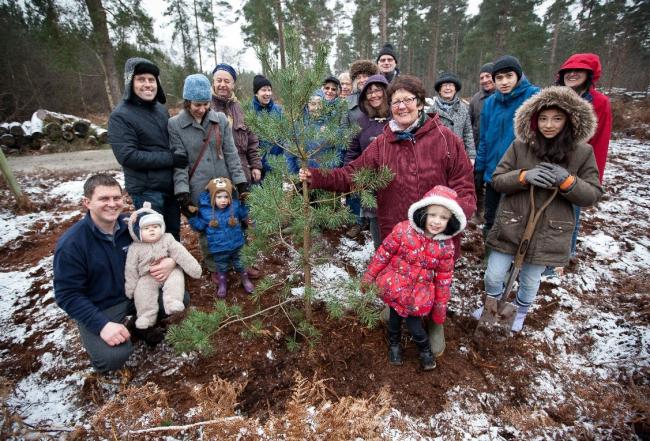
Perhaps what made Reading’s community so special was Meir’s farm. When I tell people that this existed, often people barely believe me. One day, we will need to write down the history of this community, or in fifty years the idea that there was a religious community in Berkshire living out a kibbutznik’s dream on a crop farm in Berkshire will be just a strange myth. The experiences of Meir’s farm were unbelievably special. Harvesting rhubarb on Shavuot, building a Sukkah out of real twigs and greenery, seeing how the biblical year lined up with an agricultural cycle. One of my strongest childhood memories is of when we buried the old siddurim, Service of the Heart, at Tu B’Shvat, and planted on top of them a Burning Bush.

This all made such an impression on me that, when I moved to London, I wondered where they went to plant trees on Tu B’Shvat. I thought that perhaps the councils gave them permission to do something in the public parks or that they might link up with one of the city farms. I was shocked to realise that this practice of earth-based Judaism was something special and unique to Reading. I felt like Londoners were really missing out on a proper Jewish experience. How can you live Judaism properly in a big city like London? Apparently, some other people agreed with me, because in the last few years a group of young pioneers have set up Sadeh, a Jewish farm in rural Kent. That farm has become a magnet for young Jews across Europe and restored an important sense of community around agrarian Judaism. We at Reading anticipated that and I am sure there is much wisdom that established members can share with those people if they so choose.

What sticks out for me most, however, was how much this community embraced diversity. I have amazing memories of dressing up as Dana International for Purim here, and performing her Eurovision-winning hit ‘Diva’ on the bimah. This world is not an easy place to grow up LGBT, but this community made it so much easier and created a genuinely warm and accepting environment. As an adult, I have seen many of my friends struggle with their sexuality and gender and wonder if they have a place in this world. I am so incredibly grateful that I never had to doubt that I had a God and a religion that loved me exactly as I was.

Reflecting on all this, and on the wonderful Jewish upbringing I had in this community, what I really want to say is thank you. You enriched my life and have done for so many Jews who come through these doors. Keep going, stick with it, because you never know what great things you are achieving with small gestures. This synagogue is not just my home community, it is a home for everyone who needs it.

As Rav Kook, the first Ashkenazi Chief Rabbi of Palestine and a great 20th Century mystic, said: “Through returning home, all things are reunited with God– returning home is, in essence, an effort to return to one’s original status, to the source of life and higher being in their fullness; without limitation and diminution, in their highest spiritual character, as illumined by the simple, radiant divine light.”[1]

I’m pretty sure he was talking about Berkshire.

At the grand age of 40, I say to this Jewish community: may you live to be 120! And then some.

Shanah tovah.

rljc trees

I gave this sermon in the synagogue that raised me, Reading Liberal Jewish Community. It was a very tender and nostalgic experience.

[1] Orot HaTeshuva, 4:2

judaism · sermon · social justice · story · torah

Pinchas joins us on the Pride march

In the time of Moses, love across boundaries was common. Israelites fell in love with people no matter what boundaries were set down by their priests, and openly entered relationships with people of every background. Intermarriage with the Midianites – a tribe from the Arabian Peninsula – was quite common. This incensed the priests.

Pinchas, the son of a leading priest, saw an Israelite man going home with a Midianite woman. He took a sword and killed them both. One cut straight through the belly. According to the Torah, this stopped a plague that had killed 24 thousand people.[1] That is our week’s parasha: a zealot stabs people in the stomach because he doesn’t like their relationship.

The rabbis showered Pinchas in glory. He was, in their minds, the guardian of Jewish tradition.[2] The Targum of Pseudo-Jonathan, an early Aramaic translation of our text, holds Pinchas in such high esteem that it says he was made immortal. He has God make him an angel of the covenant, living forever, so that he could announce Redemption at the end of days.[3]

This is how our tradition treats a violent zealot. In 2015, Yishai Schlissel, a Haredi man in Jerusalem, went out to the city’s Pride parade and stabbed the LGBT people who were celebrating there. One young woman, Shira Banki, died from the wounds. She was 16. Schlissel had done the same thing ten years earlier, and had just been released from prison.[4] In his defence, Schlissel claimed he was inspired by Pinchas. Like Pinchas, he was protesting sexual immorality. Like Pinchas, he was a zealot taking direct action. Like Pinchas, he stabbed them in the belly.[5] On the streets of Meah Shaarim, an Orthodox neighbourhood of Jerusalem, posters went up celebrating Schlissel’s violence by quoting this week’s parasha: ‘and the plague was lifted.’[6]

This text’s history is painful. The tradition is so horrible that it makes me wonder why we study these texts at all. What can we possibly gain from them? How can this story form part of our Torah of love and justice? There is a part of me that would prefer to pretend Pinchas never existed, and to hope that Yishai Schlissel will simply rot in a jail cell somewhere and never have his name mentioned again. But we cannot gloss over it and pretend that Jews who hold these violent views do not exist. We have to engage with it.

What can we say to it? If you sat face-to-face with Pinchas, what could you tell this biblical figure about morality? How can we speak back to this troubling text?

I want to propose an alternative reading of the story of Pinchas. The Targum only tells us that Pinchas lived forever, but not what happened to him afterwards. I want us to imagine together that Pinchas was kept alive, not as a reward, but so that he could learn the error of his ways. Pinchas, as an immortal angel, has had to follow the progress of the Jewish community and see the accomplishments of the queer liberation movement.

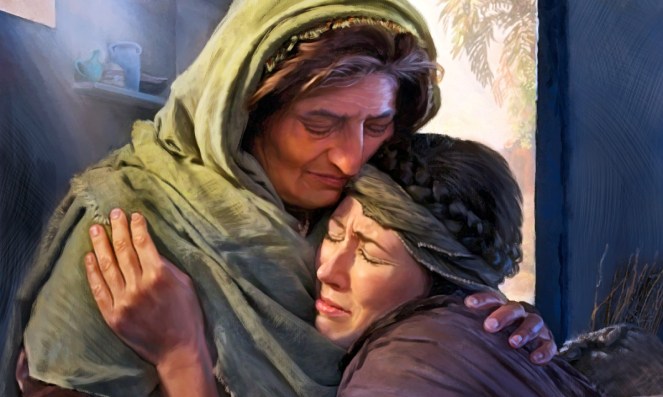
He stayed alive to see the unbridled love between Ruth and Naomi. Ruth, a Moabite woman, devoted herself utterly to her mother-in-law, followed her everywhere she went and accepted all the ways of the Jewish people.[7] She became the ancestor of King David.[8] As Pinchas followed them on their harsh wanderings through the desert, Pinchas wondered what he had been so afraid of. Were foreign women really such a threat to Jewish existence?

In the time of the rabbis, Pinchas sat on the banks of the Galilee and saw Rabbi Johanan fall in love with Resh Lakish. Johanan stunned Resh Lakish with his long flowing hair and androgynous good looks. Resh Lakish, a gladiator, turned away from violence just so he could spend his life studying halachah with Johanan.[9] They never touched each other, because the times would not allow it, but gazed at each other fondly as they pored over pages of the Torah together. They learned to control an uncontrollable love.[10] Pinchas watched them and wondered: “Could this be so bad?”

In the Middle Ages, Pinchas was transported to Spain. He sat in the courtyards of Arabic-speaking rabbis who drank wine and unabashedly serenaded each other with love songs. He saw the great Jewish poets of the generation ring out praises for same-sex love in the sun of Al-Andalus.[11] Pinchas sat at their feet and thought about what he had thought sexual impropriety was. Was this it? Were these loving sages, so dedicated their Judaism, the thing he had so much feared?

Pinchas saw the rise of the queer liberation movement. He saw modern gay, bi, lesbian and trans people gather together in Magnus Hirschfield’s flat in Berlin. He saw how, at the turn of the 20th Century, European Jews led the charge for freedom to live and love.[12] He witnessed them insist that this was the articulation of their Jewish values: that to live unabashed and unafraid was a far greater representation of the prophetic message of Judaism than the narrow nationalism others espoused. Pinchas asked himself: “Are they talking about me?” Pinchas saw the Nazis destroy everything Magnus created.[13]

I hope that Pinchas came to England too. I hope he saw Rabbi Lionel Blue (z”l) give hope and heart to all those who worried that they could never be gay and Jewish. I hope Pinchas saw Lionel proudly come out and preach the words of a loving G?d to an audience of millions.[14] I want to imagine that Pinchas sat in the beit midrash with Rabbi Sheila Shulman (z”l), and heard her expound radical lesbian Jewish theology.[15]

Pinchas was there on that Pride Parade in Jerusalem in 2015. Pinchas saw a 16-year-old girl murdered in his name. Pinchas saw the people who celebrated it. Pinchas buried his head in his hands and wondered: “Is this my Judaism? Is this my Judaism?”

No, Pinchas, this is not your Judaism. We have come a long way from the tribal zealotry of the past. Across the entire Jewish community, people are waking up to the joys of love. It will win.[16] There are others who are slow to accept us, but they will, with time. Like you, Pinchas, people are learning through the struggles of queer people that progress is nothing to fear.

So, Pinchas, come join us at Manchester Pride Parade this year. The season is just starting. There will be an entire marching bloc of Jews from all the best synagogues in this great city. Come and turn your zealotry to the cause of progressive Judaism – its inclusion of every Jew and its promise of a relationship with a loving God. March with us, and fulfil the role that God set out for you – that you should be an angel of the covenant and a harbinger of Redemption.

Shabbat shalom.

shira-banki
Her name was Shira Banki.

I gave this sermon at Manchester Liberal Jewish Community on 7th July 2018 (Pinchas 5778) on the day when the Pride season kicked off in London. Manchester Pride march will be on August 25th. To join the Jewish bloc on the demonstration, get in touch with Jacksons Row Synagogue, who are coordinating it.

[1] Numbers 25:7-8

[2] BT Sanhedrin 82a-b

[3] Targum Pseudo-Jonathan Numbers 25:12

[4] https://www.haaretz.com/.premium-pride-parade-stabber-to-undergo-psychiatric-evaluation-1.5383572

[5] https://www.jewishideas.org/article/zealotry-and-its-consequences-case-yishai-schlissel

[6] https://www.timesofisrael.com/praise-for-gay-pride-parade-attack-posted-in-jerusalem/

[7] https://www.jewdas.org/ruth-and-naomi/

[8] Ruth 4

[9] Bava Metzia 84a

[10] Daniel Boyarin, Unheroic Conduct, 1997

[11] Norman Roth, Deal Gently with that Young Man, 1982

[12] https://www.haaretz.com/jewish/.premium-1868-the-einstein-of-sex-is-born-and-dies-1.5361786

[13] https://www.teenvogue.com/story/lgbtq-institute-in-germany-was-burned-down-by-nazis

[14] https://www.theguardian.com/world/2016/dec/19/rabbi-lionel-blue-gay-liberal-thought-for-day-star-dies-86

[15] http://www.rainbowjews.com/rabbi-sheila-shulman-a-true-pioneer/

[16] https://www.haaretz.com/us-news/.premium-london-rabbi-preaches-inclusivity-toward-gays-sets-off-uproar-1.5482362

judaism · liturgy · sermon · story · Uncategorized

How lovely are your tents, O Jacob

Balaam was nervous. He rode his donkey to the steppes of Moab. The donkey trotted slowly in the desert heat, weighed down by Balaam’s travelling bags. Balaam looked this way and that, up and down at the craggy mountains, and back to the land he’d left behind. He fiddled with the donkey’s harness, twitching at the leather straps.

“There is a people that came out of Egypt; it hides the earth from view, and it is settled next to me,” King Balak had told him. “Come now, put a curse on them for me, for there are too many of them for me. Maybe, with your help, I can defeat them and drive them out of the land. I know that whoever you bless is blessed indeed, and whoever you curse is cursed.”[1]

It was true. Since childhood, Balaam had known he had a gift. Whatever he said came true. The right words just came out of his mouth and took meaning. As an adult, Balaam had become something of a blessing mercenary – offering prayers for kings across the world in exchange for payment.[2] Normally, he turned up, said the words, and left with enough money to feed his family for a few more weeks.

But this time was different. Before being asked to curse the Jews, Balaam had never heard of them.[3] Then, the second he’d been asked to curse them, their God appeared before him. God told him: “Do not go with them. You must not curse that people, for they are blessed.”[4] Initially, he’d refused, but King Balak had been insistent. Mercenaries cannot say no to kings. So he agreed.

Balaam sidled up to the edge of the valley where the Jews were camped. He looked out over all their tents, pitched in the desert. He saw the speckled silhouettes of people wandering about between the marquees. He opened his mouth to curse them. But the words to curse weren’t coming. Every time he tried to curse them, his tongue dried up and stuck to the roof of his mouth. He felt a heavy marble in his gullet, choking up all his words. Then, from somewhere outside of him and deep within, a voice came out of his own mouth:

“How lovely are your tents, O Jacob, your dwelling-places, O Israel.”[5]

To this day, those are the first words Jews say on entering a synagogue. We Progressives sing them together when we begin our services. Orthodox Ashkenazim recite them as they approach a community’s door, or even idly walking past a shul.[6] Why is it that the words we say when we come to a synagogue are the words of a non-Jew, who knew nothing of the Jews, but was somehow overwhelmed by the Divine Spirit? What has made us decide to use this blessing in such a way?

I suspect part of the answer is that, when we go into a synagogue, all of us feel like non-Jews. Whether we attend shul weekly, or only turn up for Yom Kippur, something about the space can make anyone feel not quite Jewish enough. We can all feel like we are saying somebody else’s words, tentatively mouthing out sounds that don’t quite feel right.

I rarely meet Jews who feel completely comfortable in their own Jewishness. Everybody feels excluded in some way: not quite learned enough, not quite spiritual enough. A stranger recently told me he was just not quite brave enough. Being a people who don’t belong is hard enough without worrying who belongs to that people. Many people have come up with their own definitions for what makes a Jew Jewish, but my favourite is: a Jew is somebody who worries they are not quite Jewish enough.

This prayer goes some way to honouring that feeling. All of us, no matter how observant or learned, recite the words of a non-Jew who has been bowled over by the Jewish God. The prayer reassures us: you may feel like you don’t belong, but you are home.

I used to wonder if I would ever reach a point where I felt like I knew enough. As a teenager, I stumbled over Hebrew words as the people around me seemed to recite them so confidently. I thought that perhaps when my Hebrew was good enough I would feel secure in my Jewishness. Then, having learnt Hebrew, I realised how little of the Torah I knew. I thought that if I could only master the Scriptures, I wouldn’t worry if I belonged.

Last week, I finished my examinations for my first year at rabbinical school. Our teachers assessed us on sections of Talmud, Hebrew grammar, Aramaic language, leyning the Torah, philosophy and biblical criticism. As I came to the end of them, I realised how much I still did not know. The rabbinical course gives us the tools we need to be able to explore every part of Judaism, but it cannot fill us up with everything. Our religion’s traditions are too diverse; our interpretations too vast.

I have come to embrace that feeling. Judaism is a bit like star-gazing. You lie on your back and set your eyes above you. You realise there is no way you could ever count all the stars you see. After a few moments, your eyes adjust, and you realise that there is another layer of stars behind the ones you couldn’t count. Suddenly, you’re humbled as you realise you’re facing upwards to infinity, beyond an entire galaxy with no end in sight.

This is our Judaism: layers of complexity reaching out to infinity. All we can do is stare at it in awe, flummoxed by our God, and say: “How lovely are your tents, O Jacob, your dwelling-places, O Israel.”[7]

stars moab

I wrote this sermon for Leo Baeck College‘s weekly parasha blog.

[1] Numbers 22:5

[2] Midrash Tanhuma Balak 4

[3] Rashi on Numbers 24:14

[4] Numbers 22:12

[5] Numbers 24:5

[6] http://www.jewishvirtuallibrary.org/mah-tovu

[7] Numbers 24:5

judaism · sermon · theology

We are asked to believe in something impossible

We are asked to believe in something impossible.

We are asked to suspend everything we know and accept that a God of fire and cloud descended on the place where the Israelites were camped.

In the day, God came down to earth like a pillar of cloud, encompassing the tents where people lived. At night, God rose up like a pillar of fire, showing people the way.[1]

The movements of these clouds or the fiery appearance would signal that the people were to either break up and move, or make camp, as the case might be.[2]

Ever since the Torah was first canonised, people have exercised a healthy scepticism about what these words might mean. We have rational doubts about whether pillars of fire and cloud could come out of nowhere.

Even in the Targum of Pseudo-Jonathan, one of the earliest translations of the Torah, this text is altered to say that what they say was “like a vision of fire.” Here, as elsewhere, the Targum tries to keep people from taking the words of the Torah overly literally. It is not, the Targum suggests, that a real pillar of fire descended from the sky, but that people had visions of something that looked like fire. This is more digestible.

Commenting on this problem, the medieval Spanish philosopher Maimonides tells us that such ideas “come from dreams and visions.” He argues that “the imaginative faculty achieves so great a perfection of action that it sees the thing as if it were outside.”[3] The Israelites only saw the fire and cloud in their minds, but their vision was so powerful that it was as if they could see it out in the real world.

Where Maimonides can’t explain such phenomena, he tells us that they are metaphors. When the Torah says that God wrote the Torah by hand, it doesn’t really mean that God has hands. When the Torah says that God walked about in the Garden of Eden, it doesn’t really mean that God has feet. It’s using language we understand to explain something we cannot.

The idea that this is all a metaphor is powerful. After all, if we want to understand God or Divine Revelation, we must accept that we’re thinking about something way beyond our comprehension. None of us are really enlightened enough to see God or to understand what God wants of us. These descriptions are just tentative imaginations to tell us about something too profound and complicated to be described.

In modern times, historical criticism has gone even further to rationalise what is written in this parashah. The pillars of cloud and fire weren’t visions. They weren’t even metaphors. For some historians, these were probably just burning wood pyres and incense sticks, guiding people through the desert.[4]

I can completely see why people would interpret the Torah this way. It fits better with our experience of the world and keeps us from straying into fundamentalism. We need to keep critical distance so we can remember that this was a book written by men, who were fallible. That is especially important in a community like ours, where we know that the sense of justice we get from our own consciences is far more important than the rules written in an ancient book.

But, in a way, I also find the efforts to rationalise stories like these quite disappointing. By dispelling myths as just visions or metaphors or the hocus-pocus of priestly magicians, we do these texts a disservice. The Torah is not a book of scientific or historical truth. It is a book of spiritual truth. It is trying to tell us something much deeper about the world than science or history ever can. We can’t judge the claims of the Torah, then, on the same terms as we would a physicist’s estimate of how old the universe is. It is talking about truth of a wholly different kind.

For a while, in my teens, I was something of an atheist. I was suspicious of all religious stories, felt the Tanakh to be riddled with contradictions, and faith in God to be a bit ridiculous. At that age, I didn’t realise that the stories weren’t meant to be taken literally, that the contradictions were questions waiting to be explored, or the powerful role that God would come to play in my own life.

Reflecting on the views I once had, I know why I dismissed stories like these so readily. A God of cloud and fire who descends over wandering people in the desert is, of course, impossible. It’s just that now, I have much more room in my heart for impossible things.

Everything about the story is impossible. A God of cloud and fire who wrenches slaves out of Egypt, rains down plagues and parts the seas. Unfathomable.

A nomadic people stranded in the desert approach a mountain and hear out of it thunder and lightning, declare that it is their God, the Eternal One, and that they should have no other gods. Completely unrealistic.

A slave people, who had never known anything but the bitterness of toil and struggle, are told that they will all be priestly people, all have regular complete days of rest, all strive to live in equality and justice with one another. Unbelievable.

An immigrant people with no home, dispersed and lost, hear it promised that every foreigner will be treated with the same decency and equality as everyone else. They hear that nobody would ever hurt people for being different again. Inconceivable.

A people who had known nothing but hatred and turned their anger on each other heard that One True Creator of the Universe loved them wholeheartedly and would cherish them as a treasured people. They heard that it was their task on earth to live up to the highest standards of morality and lead the world as a living example of what an ethical life could be. Absolutely, completely impossible.

And yet. And yet somehow, for thousands of years, we have held on to this idea that we can be beacons of justice, exemplars of love and heralds of a better world. Somehow, despite everything our people has suffered, we still have a sense that a world where people treat each other with dignity is within our reach.

We are asked to believe in something impossible, but all that cloud and fire does not matter half as much as the mission that comes out of it. The mission of the Jews, our sacred task on earth to sculpt it in God’s image, may be impossible, but impossible things are worth believing in. As a people, we are called upon to make the impossible possible. And we will succeed.

Shabbat shalom.

fire cloud

I gave this sermon on Saturday 2nd June 2018 at Manchester Liberal Jewish Community for Parashat Bhaalotcha. Partly, I was trying to work out in my own head the answer to the question of whether a Jew in the 21st Century must believe in G?d; and, if so, what that meant. In the lunchtime discussion, I found many congregants had similar concerns. Many of us felt that we believed in G?d, but struggled to find the language to describe what that meant. I went away feeling that, in a sense, the questions were more important than the answers.

[1] Num 9:15

[2] Tur haAroch 9:15:1

[3] Rambam, Guide for the Perplexed, 2:36

[4] http://www.jewishvirtuallibrary.org/pillar-of-cloud-and-pillar-of-fire

judaism · sermon · torah

Shavuot 5778

Chag Shavuot sameach.

Thank you so much for inviting me to speak here.

I have come here, first of all, to represent Leo Baeck College, where I am going into my second year of studying to be a rabbi. But there is a special reason why I’ve been invited to this specific synagogue on this specific day. Today, for the first time ever, my friend Rokhl leyned from the Torah. Her teacher, my teacher, and a figure well-known in this community, Chani Smith, suggested it might be appropriate if I come and join in today’s celebrations by preaching. It is an honour to be able to do so.

With that in mind, I hope everyone will excuse me if I indulge in kvelling a little bit before I start. Rokhl, watching you leyn Torah was an incredible experience. Growing up as a girl in the Orthodox world, I know that you were denied the chance to engage with Torah in the way you wanted. You told me of how intense it was, earlier this year, when you held a Torah for the first time. You have done so much to bring Jewish life to people who might otherwise feel excluded from it – as a singer here, through your Yiddish song classes and in the way you have reached out to people to create Judaism with you, especially women.

It is fitting, then, that your occasion to read Torah should fall on Shavuot. Shavuot is a multi-faceted festival: it is a time when we stay up all night, studying and praying. It is a time when everybody tries their hand at baking cheesecakes. It is a celebration of our receiving the Torah at Sinai. But, most of all, it is a time when we read that most beautiful megillah, the story of Ruth.

Ruth stands out in the biblical canon for its poetry, its gorgeous narrative structure, and its deep theological exploration of difference. It stands out, too, because it is one of very few stories that speaks of women as religious leaders. In today’s megillah, Naomi’s two sons die, leaving behind her two Moabite daughters-in-law, Ruth and Orpah. Naomi begs her daughters-in-law to leave her. Orpah weeps as she leaves Naomi behind, but Ruth insists on staying.

Ruth utters these powerful lines: “Please do not ask me to leave you. Wherever you go, I will go. Wherever you lodge, I will lodge. Your people will be my people. Your God will be my God.”[1] Thus begins a unique story, where women are the only active agents, and where their relationship to each other and to Judaism is the centrepiece.

True, men appear occasionally. Boaz appears as an Israelite man, and Naomi encourages Ruth into a relationship with him. But, according to the rabbis’ commentaries, Boaz died on his wedding day. He existed in this story to fulfil a function, of providing Ruth with a child. He appears only briefly, after which Naomi and Ruth go on to raise their child together.[2] David, king of Israel, is listed as a descendant of Naomi, not of Boaz.[3]

The rabbis took this story a step further. From these lines, they interpret that Naomi was instructing Ruth in halachah. She was informing her of the mitzvot, telling her of all the difficulties that could be involved in becoming Jewish. Naomi tells Ruth that Jews spend their time in study houses, not circuses, and Ruth answers “Wherever you go, I will go.” Naomi tells Ruth that Jews affix mezuzot to their homes and Ruth answers: “Wherever you lodge, I will lodge.” Naomi tells Ruth that Jews rise and fall together, so Ruth answers: “Your people will be my people.” Naomi tells Ruth that God is One. Ruth answers: “Your God will be my God.”[4]

Ruth hears all this, and she insists on staying. In the rabbis’ interpretations, then, we have a woman knowledgeable in Torah and teaching it to another. We have a woman who insists, despite all the obstacles presented to her, that she wants to have a relationship with Torah.

That, indeed, is the message of Shavuot. The story of Sinai teaches us that divine revelation was a collective experience of the whole Jewish people. It was not only men or the educated who received Torah, but everyone. The story of Ruth teaches us that divine revelation is a deeply personal and ongoing experience. The study of Torah is the birthright of all Jews, and this story is well-exemplified by the case of Ruth, a foreign woman who joins the Jewish people.

Last week, the UK gained its first Orthodox woman rabbi. Dina Brawer flew out to New York to receive semicha, and pledged her hope to be a role model for women. She joins a long line of women religious leaders, including Ruth and Naomi, but we in the progressive Jewish communities should be exceptionally proud of our role in paving the way for this success. It was the forerunner to Leo Baeck College, the Hochschule in Germany, that ordained Europe’s first woman rabbi, Regina Jonas, in 1935. Jackie Tabick, the head of the Reform Beit Din, became the country’s first woman rabbi, in 1975. Rabbi Laura Janner-Klausner is one of the only women to head up a major religious movement, not just in the UK, but worldwide. We have pioneered gender equality, and will continue to do so.

There is a reason I say all this. I have come here to represent Leo Baeck College.  Leo Baeck College is the heartland of the best of Judaism in Europe. It trains rabbis from the UK, France, the Netherlands, Russia, Poland and Italy. It is, of course, the institution that ordained every rabbi in this synagogue. Without the College, our Judaism could cease to exist. Our Judaism – that insists on the importance of women in leadership. Our Judaism – that maintains our ancient heritage of leyning in a style totally unique to these islands. Our Judaism – that creates space for all those who want to study Torah. We need the College in order to give this, living Judaism, a future.

I therefore urge everyone here to support the College in whatever way they can.

And I wish you all – a chag sameach.

ruth and naomi

I gave this sermon at Edgware and Hendon Reform Synagogue on Shavuot morning to promote Leo Baeck College.

[1] Ruth 1:16-18

[2] Midrash Zutta

[3] Ruth 4:17

[4] Ruth Rabba 2

judaism · sermon

What makes people change?

What is it that makes people change? People do change, after all. Change is a foundational principle of our religion. We call it teshuvah: turning, repenting. Although we Jews hold fast to few dogmas, we know that people can make mistakes and correct them. We know that people can be better tomorrow than they were yesterday. Without this belief, our religion would be meaningless and our lives devoid of hope.

So what is it that makes people change? In this week’s parashah, Emor, God gives the Israelites a framework for repentance. They will have rest-days and festivals. They will come together on Yom Kippur and present an offering of food in the Temple. But repentance can’t be limited to only one day a year. Week after week, the Israelites must bring offerings of bread and oil to burn on the altar.

Today, it is hard to imagine how these rituals might have brought about meaningful change. We are too far removed from a Temple-centred agrarian society to imagine the spiritual significance of priests sacrificing grain on an altar. But, to those who practised it, this must have been a meaningful experience. They set aside time for worship and brought their only source of income – the harvest and livestock on which they depended for a living – then watched their offerings publicly go up in flames. Perhaps this itself was enough to make people reconsider their lives and commit to acting differently.

In the parallel haftarah, Nehemiah, the Jews throw dust on their heads, separate themselves off and wear sackcloth. They fast and cry. This was how they repented after the return from the Great Exile, when the First Temple had been destroyed. It is a spiritual world that seems so strange and yet so familiar, and we feel a sense of how that ancient cult of Temple priests evolved into the religion we practise today.

Today, we offer up prayers; we take time to reflect in silence or recite ancient meditations. To the Temple cultists, our approaches to changing ourselves might look as bizarre as their rituals appear to us. That’s because they can’t see what’s going on behind our penitentiary words: that, with them, we are examining ourselves and finding ways to be better people. These songs and silences prompt us to repair relations with people we’ve wronged, and adjust our views and actions. At least, we hope they do.

We believe that people change, but it’s hard to put that faith into practice. I have watched with some concern as news has unfolded around political scandals over the last week, both of Amber Rudd stepping down as Home Secretary for her racist policies and the beginnings of expulsions of Labour Party members accused of antisemitism. There can be absolutely no doubt that there is no place for antisemitism, anti-Black discrimination or xenophobic feeling in our public sphere. Everybody who has drawn attention to it has done the right thing. Their campaigns have been wholly legitimate.

But what comes out of them leaving their ministerial posts or their political parties? Have their views changed? Have the political forces that engendered racism been challenged? Or have we got rid of certain people from the public eye so that we can pretend that issues of bigotry are confined to individuals, rather than something we all, collectively, need to address? It seems like we have ruled out the possibility that people can change. By removing them, it seems we assume that Amber Rudd and Labour Party antisemites cannot change. And it seems we assume that we, ourselves, do not need to change. The Jewish principle of teshuvah is made obsolete.

This leaves me wondering: is there an alternative? Is there a way to encourage people to change their bigoted views that can have a lasting impact? This week, I watched a documentary, called ‘Keep Quiet’, about the Hungarian neo-Nazi Csanad Szegedi. He was a leader of the feared far-right party Jobbik, heading up their racist street army. He was celebrated by white supremacists across the world when he won a seat in the European Parliament to promote Holocaust denial, racist conspiracy theories, and anti-immigration policies.

And then something shocking happened. His grandmother informed him that she was Jewish. She had survived Auschwitz. Her daughter, his mother, was also Jewish. In Orthodox religious law, he, too, was Jewish. These revelations forced him to embark on a journey of self-discovery that dramatically changed him.

Only a few days after his Jewish status leaked to the press, Szegedi called up his local rabbi, Boruch Oberlander, a Chabad Lubavitcher, originally from New York, whose parents were Shoah survivors. Although Szegedi was very much the star of the documentary, it was his rabbi, Oberlander, who really stood out to me. Nobody else was willing to engage with Szegedi. Oberlander’s own congregants and funders actively discouraged him from meeting with the neo-Nazi. But Oberlander believed, against all evidence, and against what everyone else was saying, that Szegedi could change. He told the filmmakers that he saw Szegedi as a Jew and believed that every Jew deserved a chance at repentance.

Rabbi Oberlander opened up that space for Szegedi to become someone new. He met with him weekly, then bi-weekly. Over a period of years, he introduced him to the principles of Judaism, educated him about life under the Nazis, and showed him the compassion we would expect of a Jew. Szegedi resigned his membership of Jobbik. He bought up all the copies of his own fascist book he could find, and burnt them. He got circumcised. He began davening daily. And he publicly renounced his racist views. At each stage, Rabbi Oberlander encouraged him, saying: “You’re not done yet. You still have more repenting to do. You still can go further.” And Szegedi believed in that encouragement.

This is a totally different model of engaging bigotry to the one we have seen in British politics. It is one of patience and compassion. It builds from the assumption that people with unpalatable views are on a journey, and that they can be transformed with enough kindness, encouragement and care. It is a model that appeals to me on a deeply spiritual level.

As Jews, we have, by necessity, become hardened to antisemitism, but we should not become so hard that we forget our core values: that all people are created with a spark of the Divine; that the world is perfectible; and that we are tasked as a people to show what a world rooted in ethics might look like. Although it may seem politically unrealistic, it is religiously necessary that we engage people in uncomfortable conversations. The appeal of racism is that it offers easy answers. Our response, therefore, must be a willingness to pose hard questions, and listen sensitively to the answers.

Just as the Temple priests of old knew that repentance was not something that could be done as a one off by one person, but needed to be done constantly by everyone, Britain as a nation must also be willing to engage in teshuvah. We as a nation must face up to our country’s horrible past. Antisemitism owes its origins to the Crusades, where Jews were treated as a fifth column, and physically attacked as stand-in representatives of Palestine that the knights sought out to conquer for Christianity. Tropes of Jew hatred are part of Britain’s class system, where Jews were used by monarchs as pawns for collecting taxes, and for directing the hatred of the masses when rebellion was in the air.

Similarly, anti-Black racism comes out of Britain’s colonial history. Black people were taken from Africa to the Caribbean as slaves and forced to work on plantations. Britain called over its subjects from the colonies to help rebuild it after the war, often taking on menial jobs and living in squalid conditions. That is why the Windrush generation are here, and that is why they are being oppressed as they are.

If we really want to rid our world of the scourge of racism, Szegedi’s story will not be enough. All of us need to examine the racism in our own hearts and throughout our society. We need to create a culture where everyone is willing to learn, develop, and be better people than they have been. We also all need to learn from Rabbi Oberlander’s example: to be more willing to engage with people who have objectionable views, and patiently believe in their capacity to change. If we can meet the world with compassion and self-reflection, we may be able to restore hope.

Shabbat shalom.

null

I gave this sermon on Friday 4th May at Manchester Liberal Jewish Community. The day before, the country had gone to the polls in local elections, where racism and antisemitism were live issues.

judaism · sermon · story · Uncategorized

Nadav and Abihu are dead

Nadav and Abihu are dead. Consumed in fire. Burned alive. And nobody knows why.

They were two of Aaron’s four sons, Temple priests. They went into the Sanctuary to offer a sacrifice, but something went wrong. The fire came out strange somehow and blazed everywhere. They died instantly.

Moses, their uncle, told Aaron that it was God’s intention. “Through those near to Me I show Myself holy, And gain glory before all the people.” Aaron was silent.[1]

For centuries, commentators would speculate what they’d done wrong to deserve death. Perhaps they’d been over-zealous and churned out too much fire. Maybe they hadn’t followed the commandments to the letter. They might have been drunk.

But nobody questioned that it was their own fault. God is just. The world is reasonable. And if a bad thing happens, the people who suffer must be to blame. All we can do is silently accept it.

Under any scrutiny, it’s an indefensible theological position. In a world so full of inexplicable suffering, it is not possible to tell people who are hurting that God intended for them to feel that way. Death cannot be explained away. We cannot justify people burned alive. We cannot silently accept it.

But what if we have been interpreting this parasha all wrong? What if this text isn’t encouraging us into silent acceptance, but to question injustice? What if this isn’t about blaming victims but about challenging oppression?

There is a suggestion in the way the story is laid out that there may be more to this story than meets the eye. Our narrative does not begin with the death of Nadav and Abihu, but with sacrifices. Burnt sacrifices of animals. Moses and Aaron go about slaughtering goats, rams and oxen and offering them up to God in fire and incense.

In the next section, Nadav and Abihu die. Already these two events seem connected. The burnt sacrifices of animals may well have some correlation to the burning of Aaron’s sons. In case the parallel is not clear enough, the aliyot are divided up so that the two stories run into each other. The third aliyah of Shmini begins:

Fire went out from before God and consumed the burnt offering and the fat parts on the altar. And all the people saw, and shouted, and fell on their faces.[2]

The language used to describe Nadav’s and Abihu’s death mirrors this too closely to be coincidental:

Fire went out from before God and consumed them; and they died at the instance of God.[3]

The Torah is urging is to see some similarity between the burnt sacrifices of the animals and the death by fire of Aaron’s sons. The people shouting and falling on their faces stands in direct contrast to Aaron’s silence.

Other commentaries have begun from the premise that Aaron’s sons’ deaths were justified. Other commentaries have assumed that animal sacrifice and human death were logically separate. Both, they assume, form part of a cosmological worldview that sees God as just, explicable, and hungry for death.

Yet the whole narrative might make more sense if we assume that the reverse is the case. Nadav and Abihu did not deserve to die. Their deaths were senseless and unjust. They died without explanation and their father was expected to cope with it. Their sudden and dramatic death arrests all talk of animal sacrifice. It interrupts our assumptions that there are correct ways to kill creatures and that sins can be expiated with blood. In the moment that Nadav and Abihu die, Aaron gets an insight into what sacrifice is like for the animals. When his own kids are slaughtered, he doesn’t shout and fall on his face, but retreats into stunned silence.

This interpretation makes sense of Moses’ cryptic comment to Aaron: “Through those near to Me I show Myself holy, and gain glory before all the people.”[4] The word for ‘draw near’ – קרב – is the same as the word for ‘sacrifice’. The line may be interpreted as saying that God is made holy through sacrifices. If animal sacrifice is holy, why not human? If animal sacrifice makes God appear glorious, why not human?

Instead of trying to justify human death, this parasha may be calling us to question animal death. Although this interpretation may seem modern, there is precedent for it. According to 13th Century Spanish philosopher Nachmanides, “Living creatures possess a moving soul and a certain spiritual superiority which in this respect make them similar to those who possess intellect (people) and they have the power of affecting their welfare and their food and they flee from pain and death.”[5]

Scholars including Maimonides, Albo and Rav Kook all argued that, ideally, people should be vegetarian. They saw animals as possessing reason and emotions like people.[6] Today, their ideas have new relevance. We live in an era when animals are bred in captivity, kept in cages and killed without thought. When the rules governing kashrut were constructed, they put a firm limit on what violence could be done to animals. Compared to neighbouring cultures where animals could be torn apart limb by limb while they were still alive, the requirement that they should be kept in good conditions and killed as quickly as possible was remarkably humane.

Yet, today, as Progressive Jews, we might rightly question whether those rules go far enough. If we accept that senseless death is unjust and that the Torah is more concerned with calling us to action than silent passivity, it may be time for us, as a movement, to consider adopting vegetarianism.

I do not want to moralise to people or be accused of hypocrisy. I am not a vegetarian and I’ve struggled to reduce my own use of animal products.  But I want to try. One of the biggest barriers is that it’s expensive and time-consuming. That’s because our society is built around meat and using animal products. That should not, however, stop us from trying. As a religious movement, we could lead the way by changing our own relationship to food and encouraging others to do the same.

nadav and avihu

I originally wrote this for Leo Baeck College’s newsletter on Parashat Shmini.

[1] Lev 10:3

[2] Lev 9:24

[3] Lev 10:2

[4] Lev 10:3

[5] Nachmanides, commentary on Genesis 1:29, quoted in https://www.jewishveg.org/schwartz/view-torah.html

[6] http://www.jewishvirtuallibrary.org/rabbinic-teachings-on-vegetarianism#4

judaism · sermon · social justice · Uncategorized

We build the Temple when we learn its dimensions.

We begin to build the Temple when we learn its dimensions.

Midrash Tanchuma tells us that we begin to build the Temple when we learn its dimensions, and it is in this week’s parasha that we learn about the first Temple’s dimensions.

The Temple it describes sounds gorgeous: gold, silver and brass; blue, purple and scarlet; skins and threads and wood and onyx stones. The parasha lays out what the ark should look like, surrounded by cherubim. Even the smell – that deep rich smell of incense – it describes.

The Temple sounds beautiful, but it is not my Temple.

That Temple is for a world divided up into castes – where cohanim take precedence over Levites, Levites over Israelites, Israelites over low-caste Jews and low-caste Jews over foreigners. The Temple I want to build is one where all hierarchies of race and class are abolished.

That Temple is for a place where women are kept in their own quarters, separate from men and participation in services. My Temple is one where patriarchy is finished.

That Temple is one where countless animals are burnt on furnaces, day and night. In my Temple, humanity and nature work in harmony.

Their Temple is for a centralised cult in Jerusalem – mine is a decentralised, Diasporic, dispersed Temple where people can find God wherever they are.

Like the Sages, who took this parasha and inferred from it the laws of Shabbat, my Temple is not a place, but a time. It is a time for justice, peace and tranquillity.

That Temple is not our Temple, but this week we learn its dimensions. And when we learn the dimensions of the Temple we begin to build it. This idea, that you can create change just by imagining something different, has been central to many revolutionary movements. Last week, we celebrated 100 years since women got the vote, and it is worth reflecting that every major change for democracy was brought about people fighting to change their circumstances and every battle was brought about by a change in consciousness. Through that consciousness, through contemplating a world of women’s liberation, the earliest feminists began to create that world.

Abdullah Ocalan, also known as Apo, the incarcerated leader of the Kurdish resistance in Turkey, pledged in his Prison Writings that weapons should go silent and ideas speak. His idea – of democratic confederalism, where peoples were brought together by collectives that transcended boundaries – he hoped, could be brought about by persuasion rather than violence. He imagines that the Kurdish people might have national liberation without resorting to the authoritarianism and division of their own state, and has made it his task from prison to advocate for a different kind of society. The Kurdish liberation movement has been profoundly different to most other nationalist movements that preceded it, in that it has focused on building greater equality and community while fighting against persecution on all sides, rather than deferring this necessary work until ‘after the revolution’.

During my time in Turkey, I was lucky enough to see some of these ideas in action. In the year I lived in Istanbul, the Turkish government made a rare allowance for the Kurds to celebrate their spring welcoming festival, Newruz. A friend took me out to a giant field in the centre of town where people were selling garlands. Fires burned and people jumped through them. There were a few stages, on which folk musicians performed. The people around me took my pinkies in theirs and danced in a circle in a style similar to the hora.

What was perhaps most remarkable was how politicised this festival was. The very fact that it was taking place at all was a shock to the system. For decades, people had not dared to speak Kurdish openly on the streets. Journalists who reported on the persecution Kurds faced had been imprisoned. But here they were, in their tens of thousands, proudly celebrating their own traditions. After every few songs, a speaker came out. The speaker would spell out a vision for national liberation and international solidarity. I don’t speak Kurdish, but I’ve been to enough Marxist rallies to recognise “down with the capitalist system” when I hear it.

At the same time, a revolution was taking place within the Kurdish community. The national liberation struggle had empowered women, ethnic minorities and queer people to start campaigning for their own rights. HDP, the democratic wing of the resistance movement, had, by far, the most comprehensive policy for gendered liberation, including paid housework, gay adoption rights and closing the pay gap. The party’s candidate for mayor of Kadikoy, a fancy district of Istanbul, was a trans woman sex worker, Asya Elmas, who came close second on a platform of combatting exploitation.

Over the last few years, I have watched with great intensity as that movement for Kurdish freedom has unfolded. In a way, I have done so despairingly. The Syrian civil war has continued and escalated, causing devastation on unprecedented levels, and turning out more and more refugees. In that time, ISIS has spread across the Middle East, destroying Kurdish communities and threatening to destroy every remnant of hope with their own brand of reactionary, fundamentalist dogma.

But, as well as despairing, I’ve watched on with hope. The conflict has, unexpectedly, given Kurdish militants the opportunity to try out the least of their dreams. The Kurdish groups banded together in response to the war and, in 2012, they captured the cities of Efrin, Amuda and Kobani in the northern Syrian territory of Rojava. Having taken control, they tried to implement the ideas of Apo I described earlier. They governed by direct, grassroots democracy. They instituted a constitution that pledged religious, cultural and political freedoms, as well as a bill of human rights in line with the UN’s Declaration.

For the last few years, they have been one of the driving forces in pushing back ISIS. They have now almost completely defeated ISIS in all the areas neighbouring them, despite little support from the international community and active hostility from Turkey and Iran. Turkey, which has so far barely intervened in the Syrian conflict, even to support humanitarian efforts, has in recent weeks got involved only with the intention of destroying Rojava and, with it, Kurdish hopes for their own self-government.

I hope you will understand that I am not frivolously cheering on a side in a war whose outcome will not affect me, but I do believe that the struggle in Rojave is the Spanish Civil War of our generation. It is not a struggle over which ethnic group will govern, but over which ideas will be allowed to dominate. Rojava represents the possibility of a set of ideas that have otherwise been called unrealisable – of a borderless, classless world. They are defending more than a territory; they are defending a dream of a different kind of Middle East.

I don’t want to paint an overly rosy picture of the Kurdish resistance. There are big problems that have been widely acknowledged, including mistreatment of minorities like Yezidis and the egalitarian values I described are not uniformly shared. I also do not want to give off the impression of glamourising war. I only recognise that the need for violence has come out of necessity, and I find it hard to criticise anyone for using those methods when faced with such violent opponents on all sides.

It is worth knowing that those ideals – of liberty, equality and justice – are being fought for, right now. It is worth supporting the people who are fighting for them, however imperfectly.

Learning about their struggle for a just world, I realise that my Temple may not be as distant as I thought. Knowing that people are struggling against far worse conditions that I can imagine, I feel empowered to fight for the same ideals here.

You may not share my ideals, but I still want to hear yours. I want to have a real conversation about what kind of world we want to build.

We begin to build the Temple whenever we study its dimensions, so let’s look at each other’s blueprints. What is our Judaism really for? Are we just preserving a tradition; just using our religion to serve people’s individual needs now; or are we serious about building a Messianic Age?

We begin to build the Temple whenever we learn its dimensions. Let’s get building.


Newroz_Istanbul4

I delivered this sermon on 15th February 2018 for Parashat Terumah at Leo Baeck College.

judaism · sermon · Uncategorized

This burden is too heavy for you to bear alone

One of the things I love about our prophets is that they’re not perfect people. If they were perfect, what could we learn from them? Moses is a profoundly imperfect person. In Egypt, he gets so angry with a slaver that he murders him and runs away. In the desert, Moses gets angry again and smashes a rock to get water from it, rather than talking to it as God asked. Moses is somebody who gets angry, impatient and struggles with everything he has to do.

In this week’s parasha, Moses is no longer angry or impatient – he is just burnt out. His father-in-law, Yitro, comes to visit him in the desert. Yitro is a Midianite priest who gave Moses work when he was on the run after the killing the slaver. While Moses was there, Yitro’s daughter, Zipporah, fell in love with him and started a family with him.

As soon as Yitro arrives, Moses prostrates himself and offers him food. Yitro looks at him. Moses is growing old. When they left Egypt, Moses was already eighty. His body is aching. He’s had enough. But he’s persisting. From dawn until dusk, Moses sorts out people’s problems. He listens to their concerns and solves them.

Moses has been trying to deal with everything on his own. Rashbam, a medieval commentator, points out that Moses has been trying to do so much he’s been left doing nothing. Instead of empowering people to solve their own problems, he’s left them standing in the desert, waiting for his judgement. He is on the verge of burning out.

Yitro sees all this. Yitro puts a hand on his shoulder. He gently cajoles him: “What are you doing to the people? Why do you act alone, while all the people stand about you from morning until evening?”

Moses tells him: “The people need me, I have to do this.”

“No, you don’t,” says Yitro. “This is not good for you. It’s too heavy for you.”

Moses, known for his anger and impatience, just gives in. “You’re right,” he says.

Yitro comes up with a plan for him to delegate tasks. He spreads out the work so that Moses just supports a few people, and in the smallest groups, Moses assigns responsibility so that people can look after themselves.

For me, this is a beautiful moment. Moses realises that he can no longer carry a burden – and he shares it. First, he shares it with Yitro, acknowledging that he’s vulnerable. Then, he shares it with the whole community, recognising that power and responsibility need to be shared with everyone.

In their groups of tens, the community will share their problems. They will talk about their worries and solve them together.

This has such a profound message for us. In our society, we are so often discouraged from sharing our problems. Chin up. Stay strong. Keep calm and carry on. We are conditioned to think that our emotions are better kept to ourselves; that being vulnerable means being weak.

The expectation that we should always be happy, or always be calm, and shoulder our burdens ourselves, is not reasonable or realistic. We’re real people, living in a broken world, who feel the full range of human emotions – of sadness, frustration, anger, ecstasy, bliss and joy. There is no reason why we shouldn’t sometimes need to unload.

Our society is beginning to initiate conversations about mental health. Those conversations are not easy. For decades, we have been taught that our mental wellbeing is something that needs to be dealt with privately. But how can it be? Human beings are social creatures. Our individual lives are deeply locked in to the lives of everyone else around us. How everyone else is feeling intimately affects how we are.

This is especially important here in the Jewish community. Many of our members have endured a great deal and need to be able to process that in a healthy and compassionate way. Often, there are few other places to go with our problems but our religious communities. Plenty of us would understandably struggle to open up about our feelings with regular friends. If we decide to seek out counselling, we might find NHS waiting lists inordinately long. Even if we do get counselling, it can only take us so far – it is not a substitute for a loving community where people talk to each other and support each other.

The synagogue is a place where we can talk about our feelings in a supportive environment on our own terms. Creating a supportive environment doesn’t mean wallowing in misery or forcing conversations that aren’t comfortable – it just means creating a space where people can be themselves and connect with their traditions.

In this community, we’re going to try and do much more of that. Andrew has very kindly agreed to hold services once a month, so that between us we will have regular shabbats every two weeks. These services and study sessions will give everyone opportunities to connect with their religion on their own terms.

Just as Moses delegated out responsibility, the engine of Manchester Liberal Jewish Community is in its members. We work together to take on the tasks that keep this community going, so that this inclusive and empowering Jewish community can exist in Manchester. Every one of us puts effort into ensuring that the community continues to run – whether that’s by cooking food, doing admin, advertising events on social media or just turning up.

Whether you’re a regular or a newcomer, this community is here for you and will welcome you. We need you to help us create a supportive, inclusive, Jewish space in Manchester, where everyone can participate and everyone can benefit.

Moses accepted that the burden he was carrying was too heavy to bear alone, so he shared it. Come share your burden. Come be part of a community. Come and find peace.

manchester dusk skyline

I gave a slimmed-down version of this sermon at Manchester Liberal Jewish Community on 2nd February 2018. If you are Jewish and living in Manchester, do consider joining our community. If you are living elsewhere in the UK and want to find an inclusive Jewish community near you, look on these listings from Liberal Judaism and the Movement for Reform Judaism.