When we were captives in Babylon, we sat down by its river and cried. We hung up our instruments. Our oppressors asked us to sing. And we refused. How could we sing a song the Aleph’s song in a strange land?[1]
We had forgotten too much. We had forgotten that all our psalms were written in strange lands about the same land. The oldest psalms are etched in hieroglyphs in Egypt.[2] There are records of our psalms dating back thousands of years to Ethiopia, Mesopotamia, Canaan and Sudan.
When we came into Canaan as refugees, we wrote new songs. In the wilderness of Judah, we found our voices.[3] Even in Babylon, we wrote new songs.[4]
King David compiled them. Although he had long died and was separated from some psalms by thousands of years, he drew them together. David resided in five different realities. He wrote his first psalm in the womb. He came into the world and gazed up at the infinite majesty of the stars and he wrote a new psalm. David sang whenever he saw the wonder of creation. He used to sing when he suckled on his mother’s breasts. David saw a future without evil and he found the words to say “hallelujah.” And in his tomb, David kept writing.[5]
So much has happened since those days. There are things we have lost. We have lost the pronunciation of that breathy 4-letter word they used to describe G?d.[6] Nobody knows what the instruments were that David played. The gittith – what is it? We don’t know.[7] Some words don’t make sense to us any more. Selah. Was it a drum beat? Was it a musical interlude? Was it an interjection? Was it a word we can no longer translate?[8] Perhaps we can no longer translate any of those words. Nobody can hear biblical Hebrew like it’s a mother tongue any more. And though we can sing every bit of the Torah and haftarah, the tunes to psalms are lost to us. Nobody knows what those symbols dancing round letters in tehillim mean any more.
But, oh, the things we have kept! Three thousand years have passed and we still have our texts. Everything that inspired David can inspire us too. We still have dark skies and rolling fields. We still have the miracle of life. We still have faith in justice. We have our voices and we can sing. We have our G?d. We can write.
We will write our own psalms. We will bring our own words and keep up that old tradition of using poetry to describe our relationship with creation, with Diaspora, and with G?d – whoever that is. We will sing about longing and belonging.
When we were in Babylon, we rejoiced by its rivers and laughed. We built new instruments. We were asked to sing a song of the land from where we’d came. We sang those songs and we made new ones too. We birthed a whole new culture all over again. Yes, we can sing a song in a strange land.
I delivered this address at the opening of a retreat called ‘Standing Again at Snowdon’, organised by the Movement for Reform Judaism to educate young adults. Over the weekend, I used the Psalms as a tool for teaching about God, Diaspora and nature. In hindsight, I think I may have drawn too much focus to loss and not enough to all the new things that are gained by Jews in Diaspora.
What is it that makes people change? People do change, after all. Change is a foundational principle of our religion. We call it teshuvah: turning, repenting. Although we Jews hold fast to few dogmas, we know that people can make mistakes and correct them. We know that people can be better tomorrow than they were yesterday. Without this belief, our religion would be meaningless and our lives devoid of hope.
So what is it that makes people change? In this week’s parashah, Emor, God gives the Israelites a framework for repentance. They will have rest-days and festivals. They will come together on Yom Kippur and present an offering of food in the Temple. But repentance can’t be limited to only one day a year. Week after week, the Israelites must bring offerings of bread and oil to burn on the altar.
Today, it is hard to imagine how these rituals might have brought about meaningful change. We are too far removed from a Temple-centred agrarian society to imagine the spiritual significance of priests sacrificing grain on an altar. But, to those who practised it, this must have been a meaningful experience. They set aside time for worship and brought their only source of income – the harvest and livestock on which they depended for a living – then watched their offerings publicly go up in flames. Perhaps this itself was enough to make people reconsider their lives and commit to acting differently.
In the parallel haftarah, Nehemiah, the Jews throw dust on their heads, separate themselves off and wear sackcloth. They fast and cry. This was how they repented after the return from the Great Exile, when the First Temple had been destroyed. It is a spiritual world that seems so strange and yet so familiar, and we feel a sense of how that ancient cult of Temple priests evolved into the religion we practise today.
Today, we offer up prayers; we take time to reflect in silence or recite ancient meditations. To the Temple cultists, our approaches to changing ourselves might look as bizarre as their rituals appear to us. That’s because they can’t see what’s going on behind our penitentiary words: that, with them, we are examining ourselves and finding ways to be better people. These songs and silences prompt us to repair relations with people we’ve wronged, and adjust our views and actions. At least, we hope they do.
We believe that people change, but it’s hard to put that faith into practice. I have watched with some concern as news has unfolded around political scandals over the last week, both of Amber Rudd stepping down as Home Secretary for her racist policies and the beginnings of expulsions of Labour Party members accused of antisemitism. There can be absolutely no doubt that there is no place for antisemitism, anti-Black discrimination or xenophobic feeling in our public sphere. Everybody who has drawn attention to it has done the right thing. Their campaigns have been wholly legitimate.
But what comes out of them leaving their ministerial posts or their political parties? Have their views changed? Have the political forces that engendered racism been challenged? Or have we got rid of certain people from the public eye so that we can pretend that issues of bigotry are confined to individuals, rather than something we all, collectively, need to address? It seems like we have ruled out the possibility that people can change. By removing them, it seems we assume that Amber Rudd and Labour Party antisemites cannot change. And it seems we assume that we, ourselves, do not need to change. The Jewish principle of teshuvah is made obsolete.
This leaves me wondering: is there an alternative? Is there a way to encourage people to change their bigoted views that can have a lasting impact? This week, I watched a documentary, called ‘Keep Quiet’, about the Hungarian neo-Nazi Csanad Szegedi. He was a leader of the feared far-right party Jobbik, heading up their racist street army. He was celebrated by white supremacists across the world when he won a seat in the European Parliament to promote Holocaust denial, racist conspiracy theories, and anti-immigration policies.
And then something shocking happened. His grandmother informed him that she was Jewish. She had survived Auschwitz. Her daughter, his mother, was also Jewish. In Orthodox religious law, he, too, was Jewish. These revelations forced him to embark on a journey of self-discovery that dramatically changed him.
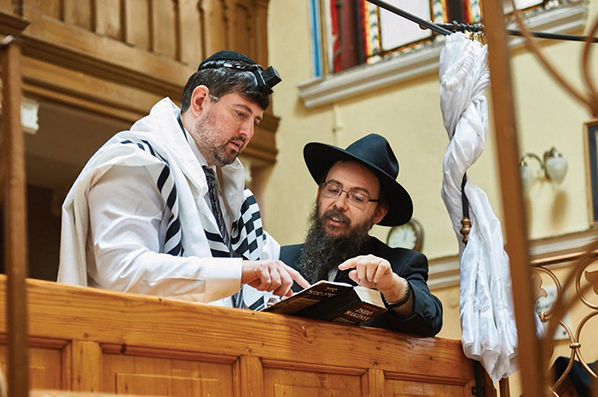
Only a few days after his Jewish status leaked to the press, Szegedi called up his local rabbi, Boruch Oberlander, a Chabad Lubavitcher, originally from New York, whose parents were Shoah survivors. Although Szegedi was very much the star of the documentary, it was his rabbi, Oberlander, who really stood out to me. Nobody else was willing to engage with Szegedi. Oberlander’s own congregants and funders actively discouraged him from meeting with the neo-Nazi. But Oberlander believed, against all evidence, and against what everyone else was saying, that Szegedi could change. He told the filmmakers that he saw Szegedi as a Jew and believed that every Jew deserved a chance at repentance.
Rabbi Oberlander opened up that space for Szegedi to become someone new. He met with him weekly, then bi-weekly. Over a period of years, he introduced him to the principles of Judaism, educated him about life under the Nazis, and showed him the compassion we would expect of a Jew. Szegedi resigned his membership of Jobbik. He bought up all the copies of his own fascist book he could find, and burnt them. He got circumcised. He began davening daily. And he publicly renounced his racist views. At each stage, Rabbi Oberlander encouraged him, saying: “You’re not done yet. You still have more repenting to do. You still can go further.” And Szegedi believed in that encouragement.
This is a totally different model of engaging bigotry to the one we have seen in British politics. It is one of patience and compassion. It builds from the assumption that people with unpalatable views are on a journey, and that they can be transformed with enough kindness, encouragement and care. It is a model that appeals to me on a deeply spiritual level.
As Jews, we have, by necessity, become hardened to antisemitism, but we should not become so hard that we forget our core values: that all people are created with a spark of the Divine; that the world is perfectible; and that we are tasked as a people to show what a world rooted in ethics might look like. Although it may seem politically unrealistic, it is religiously necessary that we engage people in uncomfortable conversations. The appeal of racism is that it offers easy answers. Our response, therefore, must be a willingness to pose hard questions, and listen sensitively to the answers.
Just as the Temple priests of old knew that repentance was not something that could be done as a one off by one person, but needed to be done constantly by everyone, Britain as a nation must also be willing to engage in teshuvah. We as a nation must face up to our country’s horrible past. Antisemitism owes its origins to the Crusades, where Jews were treated as a fifth column, and physically attacked as stand-in representatives of Palestine that the knights sought out to conquer for Christianity. Tropes of Jew hatred are part of Britain’s class system, where Jews were used by monarchs as pawns for collecting taxes, and for directing the hatred of the masses when rebellion was in the air.
Similarly, anti-Black racism comes out of Britain’s colonial history. Black people were taken from Africa to the Caribbean as slaves and forced to work on plantations. Britain called over its subjects from the colonies to help rebuild it after the war, often taking on menial jobs and living in squalid conditions. That is why the Windrush generation are here, and that is why they are being oppressed as they are.
If we really want to rid our world of the scourge of racism, Szegedi’s story will not be enough. All of us need to examine the racism in our own hearts and throughout our society. We need to create a culture where everyone is willing to learn, develop, and be better people than they have been. We also all need to learn from Rabbi Oberlander’s example: to be more willing to engage with people who have objectionable views, and patiently believe in their capacity to change. If we can meet the world with compassion and self-reflection, we may be able to restore hope.
Shabbat shalom.
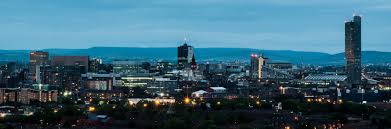
I gave this sermon on Friday 4th May at Manchester Liberal Jewish Community. The day before, the country had gone to the polls in local elections, where racism and antisemitism were live issues.
Nadav and Abihu are dead. Consumed in fire. Burned alive. And nobody knows why.
They were two of Aaron’s four sons, Temple priests. They went into the Sanctuary to offer a sacrifice, but something went wrong. The fire came out strange somehow and blazed everywhere. They died instantly.
Moses, their uncle, told Aaron that it was God’s intention. “Through those near to Me I show Myself holy, And gain glory before all the people.” Aaron was silent.[1]
For centuries, commentators would speculate what they’d done wrong to deserve death. Perhaps they’d been over-zealous and churned out too much fire. Maybe they hadn’t followed the commandments to the letter. They might have been drunk.
But nobody questioned that it was their own fault. God is just. The world is reasonable. And if a bad thing happens, the people who suffer must be to blame. All we can do is silently accept it.
Under any scrutiny, it’s an indefensible theological position. In a world so full of inexplicable suffering, it is not possible to tell people who are hurting that God intended for them to feel that way. Death cannot be explained away. We cannot justify people burned alive. We cannot silently accept it.
But what if we have been interpreting this parasha all wrong? What if this text isn’t encouraging us into silent acceptance, but to question injustice? What if this isn’t about blaming victims but about challenging oppression?
There is a suggestion in the way the story is laid out that there may be more to this story than meets the eye. Our narrative does not begin with the death of Nadav and Abihu, but with sacrifices. Burnt sacrifices of animals. Moses and Aaron go about slaughtering goats, rams and oxen and offering them up to God in fire and incense.
In the next section, Nadav and Abihu die. Already these two events seem connected. The burnt sacrifices of animals may well have some correlation to the burning of Aaron’s sons. In case the parallel is not clear enough, the aliyot are divided up so that the two stories run into each other. The third aliyah of Shmini begins:
Fire went out from before God and consumed the burnt offering and the fat parts on the altar. And all the people saw, and shouted, and fell on their faces.[2]
The language used to describe Nadav’s and Abihu’s death mirrors this too closely to be coincidental:
Fire went out from before God and consumed them; and they died at the instance of God.[3]
The Torah is urging is to see some similarity between the burnt sacrifices of the animals and the death by fire of Aaron’s sons. The people shouting and falling on their faces stands in direct contrast to Aaron’s silence.
Other commentaries have begun from the premise that Aaron’s sons’ deaths were justified. Other commentaries have assumed that animal sacrifice and human death were logically separate. Both, they assume, form part of a cosmological worldview that sees God as just, explicable, and hungry for death.
Yet the whole narrative might make more sense if we assume that the reverse is the case. Nadav and Abihu did not deserve to die. Their deaths were senseless and unjust. They died without explanation and their father was expected to cope with it. Their sudden and dramatic death arrests all talk of animal sacrifice. It interrupts our assumptions that there are correct ways to kill creatures and that sins can be expiated with blood. In the moment that Nadav and Abihu die, Aaron gets an insight into what sacrifice is like for the animals. When his own kids are slaughtered, he doesn’t shout and fall on his face, but retreats into stunned silence.
This interpretation makes sense of Moses’ cryptic comment to Aaron: “Through those near to Me I show Myself holy, and gain glory before all the people.”[4] The word for ‘draw near’ – קרב – is the same as the word for ‘sacrifice’. The line may be interpreted as saying that God is made holy through sacrifices. If animal sacrifice is holy, why not human? If animal sacrifice makes God appear glorious, why not human?
Instead of trying to justify human death, this parasha may be calling us to question animal death. Although this interpretation may seem modern, there is precedent for it. According to 13th Century Spanish philosopher Nachmanides, “Living creatures possess a moving soul and a certain spiritual superiority which in this respect make them similar to those who possess intellect (people) and they have the power of affecting their welfare and their food and they flee from pain and death.”[5]
Scholars including Maimonides, Albo and Rav Kook all argued that, ideally, people should be vegetarian. They saw animals as possessing reason and emotions like people.[6] Today, their ideas have new relevance. We live in an era when animals are bred in captivity, kept in cages and killed without thought. When the rules governing kashrut were constructed, they put a firm limit on what violence could be done to animals. Compared to neighbouring cultures where animals could be torn apart limb by limb while they were still alive, the requirement that they should be kept in good conditions and killed as quickly as possible was remarkably humane.
Yet, today, as Progressive Jews, we might rightly question whether those rules go far enough. If we accept that senseless death is unjust and that the Torah is more concerned with calling us to action than silent passivity, it may be time for us, as a movement, to consider adopting vegetarianism.
I do not want to moralise to people or be accused of hypocrisy. I am not a vegetarian and I’ve struggled to reduce my own use of animal products. But I want to try. One of the biggest barriers is that it’s expensive and time-consuming. That’s because our society is built around meat and using animal products. That should not, however, stop us from trying. As a religious movement, we could lead the way by changing our own relationship to food and encouraging others to do the same.
I hope you don’t mind me addressing you by your first name. I can’t remember what I called you when you were alive. Everyone else calls you Nancy. Wee Nancy.
I can’t remember much about you, except the sound you made when you laughed. You laughed grittily and wholeheartedly.
I have one very vivid memory of you. Darren took me across Easterhouse to your flat overlooking the park. We must have been so small because we slipped through the railings on the veranda. Darren went ahead of me: “Wait there.” He went into your living room and said: “I’ve got a surprise for you.” That was my cue. I was the surprise. I went in and you beamed and laughed and said: “Let me look at you, son!” You stretched out your arms and I was brought into a cuddle too big to remember. I just remember the way you said those words and the way you laughed.
Everything else I remember of you is from other people. We have a video of you singing karaoke. You were phenomenal. Glamorous and bassy. Everyone says that you were amazing at performing. I’ve heard stories about you too – about how you’d prise off your shoe to beat my mum when she’d been naughty, but it’d take so long and get so farcical that you’d just wind up laughing. That’s how I always picture you: laughing. Mum says you were wonderful.
This week I was asked by a teacher to write to my maternal grandmother and explain why I’m becoming a rabbi. He said I needed to give an account of myself from how your life has ended up with mine.
He said I should write about migration experiences, religious beliefs and family life. I think he had in mind that you’d be a shtetl Jew transported from a village in Eastern Europe to England with nothing but faith and a chicken soup recipe. I don’t think he imagined a Catholic cleaner on a sprawling council estate in Scotland. But the fact that your story is so different to the story of most grandmothers of rabbis, and that mine is so different to that of most rabbis, makes it even more worth telling. He’s right: I do owe you an explanation of how we got from your life to mine.
I’m sorry I haven’t written to you before. I’m sorry that I haven’t given you enough thought generally. My mum sometimes chastises me that I take all this interest in my Jewish roots but none in my Scottish roots. As I write this, I realise how right she is. I don’t know enough about where you came from. Peggy, my dad’s great aunt, is 101 and she has a family tree that includes mayors and bankers and businessmen. I don’t know what your parents did. Family trees and old age are things that privileged people have. I’m sorry you didn’t live longer to tell me your stories.
Thank you for everything you did for my mum. From what she’s said, her early years weren’t easy. Working in the job centre in one of this country’s worst recessions sounds like an all-too-familiar nightmare. Her experiences of inequality and injustice led her to join the Militant Tendency – then the revolutionary wing of the Labour Party – where she met my dad. She tells me that you used to vote Communist because the councillor was nice and tried to change things. I inherited from her that burning sense of rage against injustice and a deep-seated awareness of how broken our world is.
My dad came from a different world. He was raised by my granddad, a Liberal Jewish rabbi, and my granny, who was a secretary to a Labour MP and is still alive now. They, too, knew injustice. My granddad fled from the Nazis as a teenager. Every member of his family bar his sister was killed in their genocide. My granny used to get hate mail because she used her position in Parliament to try to help asylum seekers get into the country. She suspects the letters came from inside the House.
For a while, my dad, too, thought that he’d become a rabbi. Instead, he ended up becoming a Marxist and meeting my mum, your daughter. They were bound together by the causes they believed in, like getting the Tories out of power, overthrowing capitalism, abolishing bombs and anti-racism: you know, the normal things that parents spend their times doing. My earliest memories are all of protests. I remember placards and chants and disruption. I remember the excitement of seeing a woman chain herself to a fence. I remember my mum and dad rattling tins and trying to sell papers.
I think you must have played a big role in my mum’s desire to change the system. How you lived and thought and voted might have mattered, but above all I imagine that what motivated so many of those socialists was the belief that a janitor in Glasgow should not have so much less life than a businessman in London. That basic view is still at the core of everything I believe.
When I was born, the local rabbi wrote to my mum and dad to ask if they’d like to raise me Jewish. They responded that they wouldn’t. By the time I was 6 I was insistent that I did want a Jewish upbringing. I don’t know what had got in to me. I think I liked the prayers in school and I believed in God. Perhaps that was enough. In hindsight, I think any religion would have worked for me. If I’d been Catholic or Muslim or Buddhist, I would just have just ended up being in the radical wing of one of their sects, using their texts and rituals.
As it happened, I grew up in an amazing Jewish community. This group of dedicated people got together in Reading’s Friends Meeting House on Saturdays and festivals to celebrate and eat. We sang songs. We danced. We made things. We talked about what we thought about different issues. We children were treated like our opinions mattered. One of the community members had a farm and we’d head out there to plant trees on Tu B’Shevat in February; to harvest rhubarb at Shavuot in June; and to sleep under the stars for Sukkot in October. When the rabbi preached, she talked about social justice and healing the world. The congregants talked about feminism and gay rights and refugees. By the time I was a teenager, Judaism and socialism had melded together into one common religion in my head.
As a grew up, the need for both became increasingly clear. Along with many of my school friends, I got involved in the campaign against the wars in Afghanistan and Iraq. I became aware of racism and inequality in my own small world. I realised that I was gay and that I didn’t fit in with what people expected of me. Although I did well at school, I hated it. I never felt like I fitted in.
When I went to synagogue, though, I felt like I was embraced with all my weirdness and queerness – even if I didn’t have those words for them then. Judaism reassured me that, despite my fears, every person was uniquely made in the image of God and deserved dignity. Socialism reassured me that a time would come when all inequalities would be erased, all wars would end, and everybody would treat each other with respect. Judaism told me that on that day God’s name would be one and would be known to be one.
After school, I went to university. When I got there, I encountered something I’d never imagined existed: right-wing Jews. They were homophobic and nationalistic. They had no interest in praying or planting trees or singing songs. They were deeply interested in waving a flag for a country I’d never visited and hadn’t heard great things about. It was a culture shock. But they were very clear that what they had was authentic Judaism and everybody else seemed to agree with them. That was the tail-end of the Blair years, when a form of multiculturalism was very fashionable that required religious minorities to perform their differences as visually as possible. So they looked like ‘real Jews’. And I was a hippy with a bit of Hebrew.
Only after university did I meet other Hebrew-speaking hippies. I kept going to synagogue for the High Holy Days in the meantime, but with something of a sadness at a Judaism that I thought was shared and loved was, for some people, and perceived by many, as just a posh kids club in North West London. I kept trying to find the God that I believed in and the religion that I’d grown up in.
Then, by chance, it found me. I moved to a nice part of East London with parks and cafes. I took up a job at a charity that worked on getting aid to people in war zones (“saving the whales or whoever”, auntie Hannah called it). I was living above a kebab shop with some amazing friends. And, right on the same street, was a small synagogue adjoined to a church, opposite a mosque, that doubled-up as a centre for migrants.
The first time I went, there was no rabbi. Everybody there took turns leading different bits – giving the sermon, singing the prayers, reading the Torah. It felt intimate and people-driven. I sat next to a retired lady who danced her way through the service and afterwards told me that she taught dance therapy, or something like that. Afterwards, people had cups of tea and chatted. I felt like I’d found my Jews again.
Later, the rabbi would take me out for a cup of tea and tell me that, as a community, they didn’t do very much social justice work because everyone was doing so much of that in their own lives. She was a lesbian and had a wife who played guitar at some of the services. I can’t tell you what it meant to me to see another gay person leading a synagogue, especially one that seemed to chime so deeply with my values.
At the same time, two people reached out to me from a group called ‘Jewdas’. They called themselves Jewish anarchists or communists or hipsters or something, I can’t quite remember. They’d heard I was a far-left Jew and wondered if I’d want to meet up. We went to an Irish pub near my flat. My housemate came for moral support. They were full of life and excitement – radical Jews who wanted to overthrow capitalism and end nationalism. I was finally finding my way in the world.
Not long after, Israel started bombing Gaza. That invasion drove a wedge in British society, and especially in Anglo-Jewry. I saw otherwise sensible Jews defending unconscionable actions. I saw people, even in the Liberal synagogues I’d loved, advocating to ‘kill Arabs’, or equivocating about how ‘complicated’ it all was. The group around Jewdas expanded ten-fold as Jews gathered together who wanted to explore their culture and religion but couldn’t abide the reactionary Zionism they found in their community. We shared ideas. We talked about the histories of other anti-capitalist and anti-Zionist Jews and integrated their stories into ours. We prayed and made Shabbat and said Kaddish for the murdered Palestinians.
I resolved that I had to dedicate myself to that Judaism: that Judaism of marginalised people speaking out against power; that Judaism that used Hebrew words to heal modern wounds; that Judaism of justice, folk traditions and music that could stand by people in their happiest and saddest moments. And I decided to learn everything I could so that I could become a rabbi.
When I applied to the rabbinic College, I was upfront about my politics and who I was. I wrote an application pledging my loyalty to ‘radical Judaism’ – “more like a manifesto than an application,” one of the rabbis interviewing me called it. They subjected me to a week of interviews where I answered hard questions about God and Israel and rules and my life story. At the end of it, I was convinced they’d never let me in and that I’d have to find some other way of creating the Judaism I believed in.
But they did let me in. So I’m here.
There are so many other stories I’d like to tell you, and so many other reasons I could give you, but I think the simplest answer to why I want to be a rabbi is that I want to make people’s lives better. And I think that can’t happen without systemic change and a loving God. My mum says you’d understand that. She says you had faith in God too. So I hope, with faith, you can understand who I am and what I’m trying to do.
I love you. I miss you.
Lev
I wrote this for a Philosophy class at Leo Baeck College. I sent it to my mum before uploading it, who commented that she had looked into her family history, but everyone had married pregnant and died young.
We begin to build the Temple when we learn its dimensions.
Midrash Tanchuma tells us that we begin to build the Temple when we learn its dimensions, and it is in this week’s parasha that we learn about the first Temple’s dimensions.
The Temple it describes sounds gorgeous: gold, silver and brass; blue, purple and scarlet; skins and threads and wood and onyx stones. The parasha lays out what the ark should look like, surrounded by cherubim. Even the smell – that deep rich smell of incense – it describes.
The Temple sounds beautiful, but it is not my Temple.
That Temple is for a world divided up into castes – where cohanim take precedence over Levites, Levites over Israelites, Israelites over low-caste Jews and low-caste Jews over foreigners. The Temple I want to build is one where all hierarchies of race and class are abolished.
That Temple is for a place where women are kept in their own quarters, separate from men and participation in services. My Temple is one where patriarchy is finished.
That Temple is one where countless animals are burnt on furnaces, day and night. In my Temple, humanity and nature work in harmony.
Their Temple is for a centralised cult in Jerusalem – mine is a decentralised, Diasporic, dispersed Temple where people can find God wherever they are.
Like the Sages, who took this parasha and inferred from it the laws of Shabbat, my Temple is not a place, but a time. It is a time for justice, peace and tranquillity.
That Temple is not our Temple, but this week we learn its dimensions. And when we learn the dimensions of the Temple we begin to build it. This idea, that you can create change just by imagining something different, has been central to many revolutionary movements. Last week, we celebrated 100 years since women got the vote, and it is worth reflecting that every major change for democracy was brought about people fighting to change their circumstances and every battle was brought about by a change in consciousness. Through that consciousness, through contemplating a world of women’s liberation, the earliest feminists began to create that world.
Abdullah Ocalan, also known as Apo, the incarcerated leader of the Kurdish resistance in Turkey, pledged in his Prison Writings that weapons should go silent and ideas speak. His idea – of democratic confederalism, where peoples were brought together by collectives that transcended boundaries – he hoped, could be brought about by persuasion rather than violence. He imagines that the Kurdish people might have national liberation without resorting to the authoritarianism and division of their own state, and has made it his task from prison to advocate for a different kind of society. The Kurdish liberation movement has been profoundly different to most other nationalist movements that preceded it, in that it has focused on building greater equality and community while fighting against persecution on all sides, rather than deferring this necessary work until ‘after the revolution’.
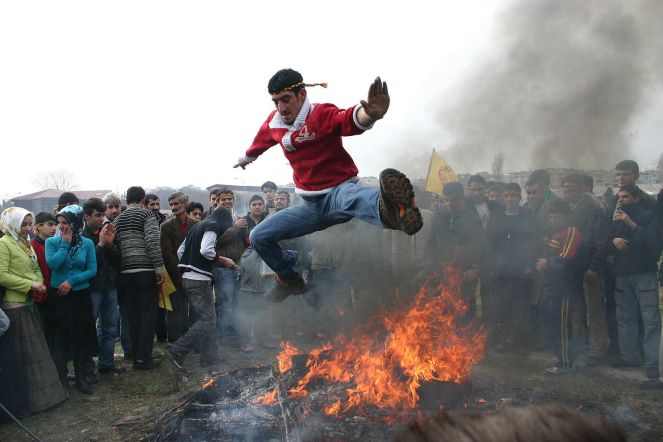
During my time in Turkey, I was lucky enough to see some of these ideas in action. In the year I lived in Istanbul, the Turkish government made a rare allowance for the Kurds to celebrate their spring welcoming festival, Newruz. A friend took me out to a giant field in the centre of town where people were selling garlands. Fires burned and people jumped through them. There were a few stages, on which folk musicians performed. The people around me took my pinkies in theirs and danced in a circle in a style similar to the hora.
What was perhaps most remarkable was how politicised this festival was. The very fact that it was taking place at all was a shock to the system. For decades, people had not dared to speak Kurdish openly on the streets. Journalists who reported on the persecution Kurds faced had been imprisoned. But here they were, in their tens of thousands, proudly celebrating their own traditions. After every few songs, a speaker came out. The speaker would spell out a vision for national liberation and international solidarity. I don’t speak Kurdish, but I’ve been to enough Marxist rallies to recognise “down with the capitalist system” when I hear it.
At the same time, a revolution was taking place within the Kurdish community. The national liberation struggle had empowered women, ethnic minorities and queer people to start campaigning for their own rights. HDP, the democratic wing of the resistance movement, had, by far, the most comprehensive policy for gendered liberation, including paid housework, gay adoption rights and closing the pay gap. The party’s candidate for mayor of Kadikoy, a fancy district of Istanbul, was a trans woman sex worker, Asya Elmas, who came close second on a platform of combatting exploitation.
Over the last few years, I have watched with great intensity as that movement for Kurdish freedom has unfolded. In a way, I have done so despairingly. The Syrian civil war has continued and escalated, causing devastation on unprecedented levels, and turning out more and more refugees. In that time, ISIS has spread across the Middle East, destroying Kurdish communities and threatening to destroy every remnant of hope with their own brand of reactionary, fundamentalist dogma.
But, as well as despairing, I’ve watched on with hope. The conflict has, unexpectedly, given Kurdish militants the opportunity to try out the least of their dreams. The Kurdish groups banded together in response to the war and, in 2012, they captured the cities of Efrin, Amuda and Kobani in the northern Syrian territory of Rojava. Having taken control, they tried to implement the ideas of Apo I described earlier. They governed by direct, grassroots democracy. They instituted a constitution that pledged religious, cultural and political freedoms, as well as a bill of human rights in line with the UN’s Declaration.
For the last few years, they have been one of the driving forces in pushing back ISIS. They have now almost completely defeated ISIS in all the areas neighbouring them, despite little support from the international community and active hostility from Turkey and Iran. Turkey, which has so far barely intervened in the Syrian conflict, even to support humanitarian efforts, has in recent weeks got involved only with the intention of destroying Rojava and, with it, Kurdish hopes for their own self-government.
I hope you will understand that I am not frivolously cheering on a side in a war whose outcome will not affect me, but I do believe that the struggle in Rojave is the Spanish Civil War of our generation. It is not a struggle over which ethnic group will govern, but over which ideas will be allowed to dominate. Rojava represents the possibility of a set of ideas that have otherwise been called unrealisable – of a borderless, classless world. They are defending more than a territory; they are defending a dream of a different kind of Middle East.
I don’t want to paint an overly rosy picture of the Kurdish resistance. There are big problems that have been widely acknowledged, including mistreatment of minorities like Yezidis and the egalitarian values I described are not uniformly shared. I also do not want to give off the impression of glamourising war. I only recognise that the need for violence has come out of necessity, and I find it hard to criticise anyone for using those methods when faced with such violent opponents on all sides.
It is worth knowing that those ideals – of liberty, equality and justice – are being fought for, right now. It is worth supporting the people who are fighting for them, however imperfectly.
Learning about their struggle for a just world, I realise that my Temple may not be as distant as I thought. Knowing that people are struggling against far worse conditions that I can imagine, I feel empowered to fight for the same ideals here.
You may not share my ideals, but I still want to hear yours. I want to have a real conversation about what kind of world we want to build.
We begin to build the Temple whenever we study its dimensions, so let’s look at each other’s blueprints. What is our Judaism really for? Are we just preserving a tradition; just using our religion to serve people’s individual needs now; or are we serious about building a Messianic Age?
We begin to build the Temple whenever we learn its dimensions. Let’s get building.
One of the things I love about our prophets is that they’re not perfect people. If they were perfect, what could we learn from them? Moses is a profoundly imperfect person. In Egypt, he gets so angry with a slaver that he murders him and runs away. In the desert, Moses gets angry again and smashes a rock to get water from it, rather than talking to it as God asked. Moses is somebody who gets angry, impatient and struggles with everything he has to do.
In this week’s parasha, Moses is no longer angry or impatient – he is just burnt out. His father-in-law, Yitro, comes to visit him in the desert. Yitro is a Midianite priest who gave Moses work when he was on the run after the killing the slaver. While Moses was there, Yitro’s daughter, Zipporah, fell in love with him and started a family with him.
As soon as Yitro arrives, Moses prostrates himself and offers him food. Yitro looks at him. Moses is growing old. When they left Egypt, Moses was already eighty. His body is aching. He’s had enough. But he’s persisting. From dawn until dusk, Moses sorts out people’s problems. He listens to their concerns and solves them.
Moses has been trying to deal with everything on his own. Rashbam, a medieval commentator, points out that Moses has been trying to do so much he’s been left doing nothing. Instead of empowering people to solve their own problems, he’s left them standing in the desert, waiting for his judgement. He is on the verge of burning out.
Yitro sees all this. Yitro puts a hand on his shoulder. He gently cajoles him: “What are you doing to the people? Why do you act alone, while all the people stand about you from morning until evening?”
Moses tells him: “The people need me, I have to do this.”
“No, you don’t,” says Yitro. “This is not good for you. It’s too heavy for you.”
Moses, known for his anger and impatience, just gives in. “You’re right,” he says.
Yitro comes up with a plan for him to delegate tasks. He spreads out the work so that Moses just supports a few people, and in the smallest groups, Moses assigns responsibility so that people can look after themselves.
For me, this is a beautiful moment. Moses realises that he can no longer carry a burden – and he shares it. First, he shares it with Yitro, acknowledging that he’s vulnerable. Then, he shares it with the whole community, recognising that power and responsibility need to be shared with everyone.
In their groups of tens, the community will share their problems. They will talk about their worries and solve them together.
This has such a profound message for us. In our society, we are so often discouraged from sharing our problems. Chin up. Stay strong. Keep calm and carry on. We are conditioned to think that our emotions are better kept to ourselves; that being vulnerable means being weak.
The expectation that we should always be happy, or always be calm, and shoulder our burdens ourselves, is not reasonable or realistic. We’re real people, living in a broken world, who feel the full range of human emotions – of sadness, frustration, anger, ecstasy, bliss and joy. There is no reason why we shouldn’t sometimes need to unload.
Our society is beginning to initiate conversations about mental health. Those conversations are not easy. For decades, we have been taught that our mental wellbeing is something that needs to be dealt with privately. But how can it be? Human beings are social creatures. Our individual lives are deeply locked in to the lives of everyone else around us. How everyone else is feeling intimately affects how we are.
This is especially important here in the Jewish community. Many of our members have endured a great deal and need to be able to process that in a healthy and compassionate way. Often, there are few other places to go with our problems but our religious communities. Plenty of us would understandably struggle to open up about our feelings with regular friends. If we decide to seek out counselling, we might find NHS waiting lists inordinately long. Even if we do get counselling, it can only take us so far – it is not a substitute for a loving community where people talk to each other and support each other.
The synagogue is a place where we can talk about our feelings in a supportive environment on our own terms. Creating a supportive environment doesn’t mean wallowing in misery or forcing conversations that aren’t comfortable – it just means creating a space where people can be themselves and connect with their traditions.
In this community, we’re going to try and do much more of that. Andrew has very kindly agreed to hold services once a month, so that between us we will have regular shabbats every two weeks. These services and study sessions will give everyone opportunities to connect with their religion on their own terms.
Just as Moses delegated out responsibility, the engine of Manchester Liberal Jewish Community is in its members. We work together to take on the tasks that keep this community going, so that this inclusive and empowering Jewish community can exist in Manchester. Every one of us puts effort into ensuring that the community continues to run – whether that’s by cooking food, doing admin, advertising events on social media or just turning up.
Whether you’re a regular or a newcomer, this community is here for you and will welcome you. We need you to help us create a supportive, inclusive, Jewish space in Manchester, where everyone can participate and everyone can benefit.
Moses accepted that the burden he was carrying was too heavy to bear alone, so he shared it. Come share your burden. Come be part of a community. Come and find peace.
I gave a slimmed-down version of this sermon at Manchester Liberal Jewish Community on 2nd February 2018. If you are Jewish and living in Manchester, do consider joining our community. If you are living elsewhere in the UK and want to find an inclusive Jewish community near you, look on these listings from Liberal Judaism and the Movement for Reform Judaism.
Instead of doing a sermon for the Hanukkah service at Manchester Liberal Jewish Community, I put together a play that drew out the themes of the festival.
NARRATOR 1:
Hanukkah is a festival of resistance. It is a time to celebrate struggle.
The Jews in Palestine are living under occupation. It’s the 1st Century BCE and the Seleucid emperor Antiochus has brought the country under military lockdown. He’s a tyrant. He has banned all the central components of Jewish life: circumcision, Shabbat, kashrut and reading Torah.
His is a mighty army that tortures all dissenters. He ransacks the Temple, then the centre of Jewish life, and sacrifices pigs on the altars to make the whole place unclean.
In an incredible act, a tiny of army of militants manage to drive out the Greeks. They return to their Temple and rededicate it to God. They burn their oil lamps and practise their religion again. This is the miracle of Hanukkah.
NARRATOR 2:
One of the best stories of Hanukkah is of Hannah and her seven children. They are zealots who refuse to bow down to Antiochus. One by one, the children are martyred to defend their religion.
It is a beautiful story of courage and religious conviction that many children grow up with. But there is a problem with it. The Maccabees were religious fundamentalists. They were nationalist extremists. As a resistance army, they used tactics that would make ISIS blush. Once in power, they set up a theocratic dictatorship.
Theirs is a Hanukkah story, but it is not the only Hanukkah story. As a Liberal Jewish community, our stories of resistance are not stories of religious fundamentalism and nationalism, but often of fighting against it. Our stories are of fighting for Disabled access, queer liberation, anti-racism, women’s rights and social justice. At Hanukkah, we need to celebrate stories of struggle, liberation and perseverance that resonate with us. So tonight, we retell the story of Hannah and her seven children from those perspectives. We use the words of people who inspire us.
ANTIOCHUS:
I am King Antiochus and I demand that everybody worship me. There will be no more Jews or religious freedom. Nobody will be free to rest. Nobody will be free to organise. Nobody can have their own opinions. And I will kill anyone who disagrees.
HANNAH:
We have to resist this man. We cannot let him decide our lives. Everybody who cares about freedom must stand up and be counted. Will any of my children resist him?
SOPHIE:
I will.
ANTIOCHUS:
Who dares to defy me?
SOPHIE:
I do. Somebody has to make a start. I will stand up for what I believe in, even if I am standing alone. How can we expect a righteous cause to prevail if nobody is willing to give themselves up for it? I may be the only one to resist you, Antiochus, but there are many others who feel the way I do.[1]
ANTIOCHUS:
Then you will die.
NARRATOR 1:
And with that, he killed her. But Hannah had another daughter, who was willing to stand up to Antiochus too.
ROSA:
I will not let you win, Antiochus. Those who do not move do not notice their chains. But my sister has started a movement and now the chains are beginning to break. Being human means throwing your whole life on the scales of destiny when need be, all the while rejoicing in every sunny day and every beautiful cloud.[2]
ANTIOCHUS:
Then you will die.
NARRATOR 1:
And with that, he killed her. But Hannah had a son, who was willing to stand up to Antiochus too.
ABRAHAM:
I have a faith in God that is not the clinging to a shrine but the endless pilgrimage of the heart. When I protest, my feet are praying. Prayer is nothing if it is not subversive, and it is time I prayed against you.[3]
ANTIOCHUS:
Then you will die.
NARRATOR 1:
And with that, he killed him. But Hannah had another child, who was willing to stand up to Antiochus too.
TANIA:
Perhaps my name will be forgotten and my struggle too. But the cause I fight for, the cause of justice, will continue long after your reign has ended, Antiochus.[4]
ANTIOCHUS:
Then you will die.
NARRATOR 1:
And with that, he killed him. But Hannah had a son, who was willing to stand up to Antiochus too.
LARRY:
I am bound to have enemies, but I will not be my own. We will go down if we don’t stand up for ourselves. All of us should have the power and the pride to benefit from what is rightfully ours.[5]
ANTIOCHUS:
Then you will die.
NARRATOR 1:
And with that, he killed him. But Hannah had another son, who was willing to stand up to Antiochus too.
JOE:
Antiochus, you cannot kill all of us. Our tactic of standing up to you is bearing fruit. That process has started and is now irreversible.[6]
NARRATOR 2:
By this time, Antiochus was exhausted. He knew he was losing. Hannah had only one child left, her youngest child of all. Antiochus tossed his ring on the floor.
ANTIOCHUS:
I don’t even want to kill you. If you bow down to me just by picking up this ring, I will let you live. Hannah, convince your child to pick up this ring.
HANNAH:
I carried you in my womb for nine months and I have raised you. I urge you, my child, to look at the sky and the earth. Consider everything you see there, and realize that God made it all from nothing, just as God made all of humanity. Your life is a miracle and your religion is a celebration of it. Do not be afraid of this butcher.[7]
NETTA:
You do not need to convince me, mother. Antiochus, may God forgive you for what you are doing.[8]
NARRATOR 2:
Antiochus killed the last of Hannah’s children, and Hannah herself. But although he killed the people he could not kill their dreams. Ultimately, the small army won and Antiochus’s reign came to an end.
NARRATOR 1:
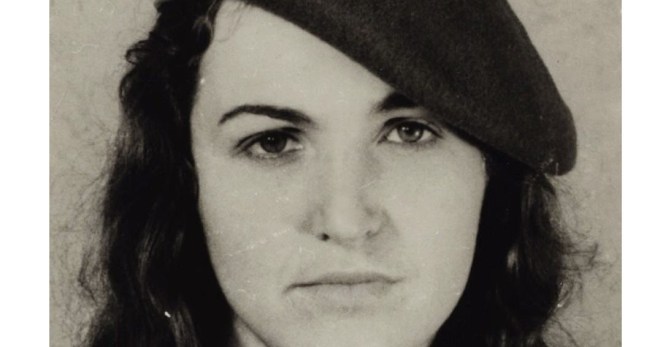
The words we have used tonight all come from people who struggled for justice in the last century: from Sophie Scholl, anti-Nazi activist; from Rosa Luxemburg, socialist and anti-war campaigner; from Rabbi Abraham Joshua Heschel, civil rights activist; from Tamara Bunke, Latin American revolutionary; from Larry Kramer, gay liberation and AIDS campaigner; from Joe Slovo of the South African anti-apartheid movement; and Netta Franklin, British Jewish suffragette. They are all now dead but their dreams live on. Their dreams, our dreams, of a just, more inclusive, kinder world, continue.
At Hanukkah, we remember the resistance of brave people and join our struggles to theirs. The struggle to be Jewish of a thousand years ago becomes part of our stories of trying to build a better world.
At Hanukkah, we commemorate the destruction of the Temple and look forward to the great Temple that is to come – the Messianic age when there will be no more need for Temples because all will know that God is one and everybody will live in peace. As Liberal Jews, we know that we cannot wait for that day to come, but that we have to build it. Over this festival period, let us take inspiration from the pioneers of the past and take steps towards achieving those dreams.
This play was an interesting experiment in alternative ways of doing sermons. I wanted to deal with the reality of Hanukkah with all its violence. Most Jews know that the story of Hanukkah has some horrible undertones, but don’t deal with the reality that stories of violence, struggle and martyrdom in Jewish history are not just a blip from the Second Temple Period. Stories of martyrdom are certainly problematic, but I want to have conversations that deal with those tensions, rather than glossing over them.
[1] Based on the words of Sophie Scholl, 21-year-old leader of the anti-Nazi non-violent resistance in Germany
[2] Based on the words of Rosa Luxemburg, German socialist and anti-war activist
[3] Based on the words of Rabbi Abraham Joshua Heschel, civil rights activist in 1960s USA
[4] Based on the words of Tamara Bunke, Latin American revolutionary
[5] Based on the words of Larry Kramer, USA AIDS and gay rights activist
[6] Based on the words of Joe Slovo, South African anti-apartheid activist
Prior Walter is wrestling with an angel. He is dying. Many of his friends have died. It’s the 1980s, New York, and he’s living with HIV. This is the climax of my favourite play, Angels in America.
An angel has come and delivered a prophecy. He does not want it. The prophecy tells him that everybody needs to stop moving around so much and making so much noise. It tells him to stop modernity. He refuses. He tells the angel to take her prophecy back.
I won’t let you go until you bless me. Free me! Unfettter me! Bless me or whatever, but I will be let go.
The angel refuses.
Bless me anyway. I still want my blessing. Even sick. I want to be alive.
Eventually, the angel relinquishes and accepts back the prophecy.
This exchange sheds so much light for me on this week’s parasha. Jacob wrestles with an angel, and receives a new name: Israel, one who struggles with God. He prefigures a new people, a people who will struggle with God. A people who will not blindly follow God but will enter a two-way relationship, fraught with conflict. A people who will not slavishly enact rules of tradition, but who will fight over them and grapple with them.
Encapsulated in this story, I find the essence of Judaism: a process of struggle; with ourselves, with our society, with meaning itself. I like this in Judaism. I love the idea that Judaism is an approach to struggle. Whereas other religions talk about being saved from struggle or releasing the individual from the cycle of struggle, Judaism embraces it. Life is a struggle, it says, let’s get stuck into it. Let’s fight with ourselves, let’s fight with our society, let’s fight with God.
I like this version, because I’m good at fighting. I grew up in a very political house and spent most of my formative years involved in activism. I’m good at saying what’s wrong with the world and setting out to change it.
But this is not all of what that story is about. I’ve embraced the conclusion, but I’ve neglected what it took Jacob to get there. Yes, Jacob becomes one who struggles with God, but he gets there by telling the angel: I won’t let you go until you bless me.
I won’t let you go until you bless me.
Jacob’s starting position is not conflict. Jacob’s starting position is that he wants to be blessed. He wants to get the best thing possible out of this situation. He has run away from his home and his brother Esau. Now, he has run away from his uncle Lot. Jacob has got into fights with everyone. Jacob is fighting with his own conscience.
But when he is fighting with the angel, he doesn’t set out to win. He can’t physically overpower an angel. He can’t intellectually overpower an angel. By definition, these creatures are stronger, more enlightened, closer to God than human beings. All Jacob can do is ask for a blessing. All Jacob can do is realise that he has to make the most out of the situation he is in. Only when he realises this, and discovers that it’s not about winning, does Jacob find release and receive his blessing.
Over the last few months, I’ve realised how important it is not just to struggle, but to know when you can’t win; not just to fight against the bad, but to bless it too. In our morning prayers, we thank God who creates the darkness and the light, the good and the bad. All of it comes from God. Sometimes all we can do is resign ourselves to it, and ask the bad to bless us anyway.
Last year on Lag B’Omer, my friend went into hospital with liver failure. My boyfriend has known him for years. We spent months waiting for him to receive a transplant and hosting his family while he recovered. It looked like he was on the mend, and he had started working again at his job in the library.
About five weeks ago, he was rushed to hospital again. His liver was failing and other organs were at risk too. He has been in hospital, in an induced coma, on life support, since then. A week ago, the doctors told us that if he did not receive a matching organ by Thursday – today – that it would be too late to perform a transplant.
These last few weeks have made our house a strange place. It’s been filled with friends and family coming to stay, hoping for his recovery. We’ve filled the place up with laughter and tears – and, of course, prayers.
That’s all anyone can do when faced with a problem that is impossible to fight against. All of us have been helpless to decide whether he can receive a transplant or not. Whether he lives or not has been in the hands of amazing NHS doctors and nurses, but mostly it’s depended on that Great Being way beyond anybody’s understanding or control.
So I’ve had to learn a new skill: to bless it anyway. Everyone in our house has found ways of praying, at home and in the hospital. We’ve prayed hard for a recovery, while accepting that what might happen is way out of our hands. Life is complicated, fragile and inexplicable. What exactly it is that keeps it going or ends it we’ll never quite know. I have had to try to find new ways to bless the Source of all the good and all the bad in the world. That’s easy when things are good, but harder when things are bad.
On Sunday morning, our friend went into surgery for an organ transplant. Twelve hours later, we heard that the operation had been successful. That doesn’t mean he’s fine yet. It will be another week before he wakes up. The road to recovery is long, and there is no telling what will come next. But we will bless it anyway. We will say to him, to God and to this shitty situation: bless me anyway. I won’t let you go until you bless me.
I won’t let you go until you bless me. I won’t let you go until you bless me.
I won’t let you go
I gave this sermon at shacharit on Thursday for Leo Baeck College. At the time, I included more names and personal details, which I’ve edited out for this version. I wanted to share with my fellow students what had been happening over the past few weeks.
This is Interfaith Week, and many of my religious buildings across the country are holding similar services to this one. In most places, I suspect people will talk about the importance of respecting differences of opinion. You have your views, I have mine, but we can all get along. All religions have their own truths. It might be customary to say it, but I can’t bring myself to do it. Not all ideas have the same value. Some ideas are wrong. Some ideas are dangerous. Some ideas must be challenged as soon as we encounter them.
This week, we read a passage in the Torah with a violent history. In it, Jacob and Esau fight over who gets their father Isaac’s birth right. Jacob, the younger brother, tricks his dad into giving him his blessing. He dresses in his brother’s clothes, puts hair on his arms so that he’ll feel rougher, and puts flour on his tongue so that his voice will sound deeper. With the help of his mother, Rebekka, he kills an animal, makes some sweet meats and cons his father into giving him a blessing that was meant for his brother. When Esau comes in, Isaac is distraught to realise that he has given the blessing to the wrong son. Esau begs him to bless him, but Isaac insists that he can’t retract his blessing from Jacob. Instead, he gives him a new blessing: “You will live by the sword and you will serve your brother. But when you grow restless, you will throw his yoke from off your neck.”[1]
This story became more than a tale of sibling rivalry. It became the basis of bloodshed lasting centuries. Jacob took another name: Israel. As a person, he stood in for the whole of the Jewish people. Esau had another name: Edom. As a person, he became a symbol of Christianity and Rome. For centuries, that was the optic through which Jewish-Christian relations were viewed: as a struggle between two brothers for a blessing that could only be held by one of them. The Jews, Israel, insisted that they were the sole bearers of the blessing from God. Christians insisted that they had broken off the yoke of Torah when their Messiah came, and that they had replaced Jews as God’s chosen people.
This had real consequences for people’s lives. If Christians had replaced Jews, then Jews were a stubborn remnant of a bygone age; a people destined to be destroyed. St Augustine of Hippo, one of the Founders of the Church, argued that Jews should be allowed to live only as evidence, in their degraded state, of the superiority of Christianity. This story of Esau replacing Jacob was so influential on European thinking that, some argue, it helped to legitimate the Nazi genocide.
This month saw the five hundredth anniversary of the day that Martin Luther nailed his ninety-five these to the church door, demanding reformation of the Catholic Church. His ideas were so important. Luther was somebody who realised that ideas are powerful. He was responding to a time when the established Church used people’s fear of death to pay for a better place in the afterlife. The abuse of religion was creating a deeply hierarchical and unequal society. Luther wanted to challenge that. He realised that not every religious idea had to be respected. Sometimes they need to be resisted.
Luther was also a notorious antisemite. In his later life, he used his power as an academic to incite race riots against Jews. His ideas were adopted for centuries in justifying racist violence. When the movement he founded, Protestantism, gained the upper hand in Western Europe, his ideas were used to attack Catholics. Unfairly caricatured as automatons doing the bidding of the Pope, Catholics were denied access to citizenship, and imprisoned as foreign infiltrators, in many countries. Luther’s great idea – that religion should not be used to wield power – became subverted to serve its opposite purpose: of entrenching power.
Still, his ideas gave birth to our own religious movements. The Unitarians here draw their roots from Protestantism, wanting to take Luther’s best ideas to their radical conclusion of a religion grounded in equality and acceptance. Liberal Judaism, too, was inspired by Protestant reformation. Our forbearers wanted to create a Judaism without sexism or nationalism. Since then, we’ve tried to also create Judaism that embraces LGBT people and champions just causes like the rights of migrants and workers. I know that many of our Christian friends here share that ambition.
This leaves us with a question: how do we know if an idea is any good or not? If we’re not going to automatically respect differences of opinions, what grounds can we have for disagreeing without creating exactly the kind of competition between Jacob and Esau, that caused so many generations of suffering? I’d like to propose a test for conversations in interfaith dialogue: do our ideas support existing power structures, or do they resist them? Do they bolster the powerful or diminish them? There are questions on which we can agree to disagree – none of us knows for certain what God really is, or what the afterlife is like. But we can challenge our ideas about this world: do they make our world more just, more equal, more compassionate, and more peaceful? If not, can we really sanction them?
This, I would hope, could be the basis of a better model of interfaith. Rather than accepting differences, let’s challenge each other to live up to the best of the values we share. In the spirit of the prophetic tradition that has inspired us, let’s push each other to speak truth to power. The reformation brought about the idea that religion should not be wedded to power. Let’s take it to the next stage, and insist that religion be used as a weapon against power. Let’s work together to fulfil a religious mission of eradicating inequality, championing the cause of the oppressed, eliminating hunger and poverty, bringing about a world where all people are treated with the dignity they deserve. That would be a world that truly respects difference.
This sermon was given as part of an interfaith service organised by Suffolk Liberal Jewish Community, and held in the town’s beautiful Unitarian Meeting House. After the service, an Anglican minister pointed out that I had not made clear that current Christian doctrine had tried to rid itself of its supersessionist ideology. I think it is important to note that much of the work challenging offensive ideas in Christianity has been done by Christians themselves, especially by Catholics at Vatican II. I am grateful to him for this constructive feedback.


 I gave this sermon at shacharit on Thursday for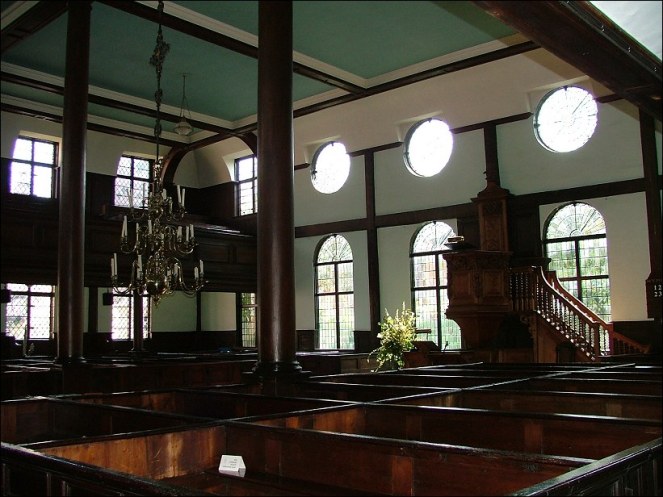
 Sim Lev