high holy days · liturgy · sermon

It is on us.

What are we doing here tonight, beating our chests and chanting our sins? Haven’t we been through enough?

We have spent most of this year, from Purim onwards, sitting in our houses, staring at screens as nothing but bad news floods in. Coronavirus. Climate catastrophe. Police brutality. Rising inequality. Economic collapse.

Frankly, shouldn’t we able to take a night off? You might think we should get to the High Holy Days and only hear reassuring pleasantries. But Judaism never lets us off that easily. If that is what you want, Selichot is the wrong service. It’s very meaning is apologies, penitences, petitions. Its whole purpose is to summon us to ethical action and force us to examine our deeds.

At this service, we have to be confronted with Hillel’s maxim:

 אִם אֵין אֲנִי לִי מִי לִי. וּכְשֶׁאֲנִי לְעַצְמִי מָה אֲנִי. וְאִם לֹא עַכְשָׁיו אֵימָתָי

If I am not for myself, who is for me? But if I am for my own self [only], what am I? And if not now, when?[1]

This saying from the Mishnah is often rendered in the more memorable format: if not you, who? Yes, life would be much easier if we could look to others to resolve our problems. If only the government would do a better job… if only the European Union would sort things out… if only Jeff Bezos would spread his wealth around a bit… if only God would stop Coronavirus… if only God would send Moshiach to us today and sort the whole thing out! If only.

But your religion isn’t asking you to look at what others should be doing. It is calling on you to consider what you should be doing. Every time we pray, we recite the immortal words of Aleinu: “t is our duty to praise the Ruler of all, to recognise the greatness of the Creator of first things, who has chosen us from all people by giving us Torah.”[2]

Aleinu. It is on us. The power and responsibility for what happens in this world rests with us. To be a Jew is to be singled out, directly and personally, by God. You, as an individual have been called upon by God and tasked with Torah, with the moral welfare and social responsibility for all humanity. You are asked to take action.

And what does Aleinu say we must do? To cut off the worship of material things. To destroy prejudice and superstition. To speak out against oppression. To unite the whole world. To bring goodness and truth and justice to this world.[3]

That is our calling. That is what we must answer. According to folklore, this prayer was introduced into the daily liturgy in the 12th Century, when a group of Jewish men and women were burned at the stake for refusing conversion. As the flames piled up around them, they sang these lyrics to a haunting melody, refusing to give up even unto death.

Faced even with being burned alive, these martyrs’ first recourse was to recall their own moral duties. They used their last moments to remember why they were placed on earth. Why, in this time of Coronavirus, should we be any different? We must see this season as a time to take up the yoke of responsibility Judaism has bestowed.

As we recite our selichot, challenge yourself. Ask: have I been as generous as I should? Have I done enough to reach out to vulnerable people?  Have I prayed? Have I built community? Have I supported my loved ones? Have I been kind?[4]

And, if, on any point, you find yourself deficient, now is the time to correct your ways. If not you, who? If not now, when?

I gave this sermon on Saturday 12th September 2020 at Glasgow Reform Synagogue for Selichot.

[1] Pirkei Avot, 1:14

[2] Forms of Prayer 2008, p. 310

[3] Forms of Prayer 2008, p. 311

[4] Based on Babylonian Talmud Shabbat 127a

judaism · theology

We are not our past mistakes.

We are not our past mistakes.

Rabbi Meir was the greatest rabbi of his generation. He learnt from both the great masters of Mishnah, Akiva and Eliezer. He was ordained a rabbi by his teacher, Elisha ben Abuyah, younger than any of his contemporaries and gave more rulings than any of them.[1]

Meir was a great rabbi, but his wife, Beruriah, was even greater. She once learnt 300 rulings from 300 different sages in one day.[2] She was the only woman to be credited with making religious decisions. Sometimes she even overruled her husband. 

One day, Beruriah came in on her husband and heard him praying. He had been harassed by local hooligans. Rabbi Meir cried out in supplication to God: “Sovereign of All Worlds, I wish You would kill those bandits!”

Beruriah was shocked. “What are you thinking?!” she demanded. Meir looked surprised: “I am only asking for what it already says in the Psalms – let sinners disappear from the earth and the wicked be no more.”[3]

“That’s not what the verse says,” retorted Beruriah. “It says: let sins disappear from the earth, not sinners. The wicked won’t just disappear because someone wishes them away. They will only disappear because they will repent and give up their sins. The wicked do not disappear because God takes vengeance on them, but because God has mercy on them.”

From then on, Rabbi Meir changed his prayer. Instead, he said: “May God have mercy on them and may they change their ways.”[4]

God takes no pleasure in the death of the wicked, but wishes only that they will turn from their evil ways and live.[5]

That is the message at the heart of this season. This is the last Shabbat in Elul, opening the last week of this month of repentance. Tonight, in Ashkenazi custom, we begin the practice of Selichot – reciting penitential prayers in the evenings. They are intended to help us acknowledge where we are going wrong so that we can correct our ways. 

As we approach the end of the year, we also approach the end of the Torah. We have been on a journey through the wilderness, and God has journeyed with us. 

When our story began, God wanted to destroy humanity. At the start, God flooded the world in anger at our violence. At Babel, God struck down the nations for our defiance. At Sodom, too, God destroyed a city for failing in its moral obligations. 

Now, at the end of the narrative, God no longer wishes to destroy us, but instead promises to rescue us. We are told that if we try to return, God will bring us back in love. No matter how far we think we have gone, God can find us and return us. No matter how much of an outcast you imagine yourself to be, God will be in your corner.[6]

That is the essence of teshuvah. Although often translated as repentance, it really means returning. It is the practice of becoming who you already are. At core, you are good, honest and faithful. If you do wrong, you are departing from your natural state. 

Contrary to the Christian doctrine that preaches we are born in a state of original sin, Judaism teaches that we are constantly reborn in a state of moral purity. Each morning, God sends us back our soul, renewed and ready to do good.

God has already given you the greatest gift you could need to face up to your flaws: you have another day. You have the chance to get up this morning and correct what you did wrong. You have the opportunity to be better than you were. You can revert to your initial state of holiness.

Teshuvah is the process we undergo to turn away from doing wrong. We look inside ourselves. We acknowledge where we have gone wrong. We announce that we will not make the same mistakes again. We make amends for what we did. And then, faced with the same situation again, we do not repeat our old errors.[7]

At this time of year, we are forced to face up to our mistakes. The more we look at them, the more we realise how many there are. Faced with our own inadequacies, we might despair. We might think that our lives our not worth living or that we are better off destroyed. This week’s parashah teaches us: it is not too late. We are not our past mistakes.

Rabbi Meir only truly learnt this much later in life. His teacher, Elisha ben Abuya, had given up on Judaism entirely. He had stopped believing and stopped pretending to believe. He was acting immorally. Meir came to find him. He said to him: “Come back, rabbi, make teshuvah.”

But Elisha replied: “I cannot. Because I have heard the divine voice reverberating: “Return, O backsliding children,”[8] except for Elisha ben Abyuah, who knew My strength and yet rebelled against Me.” Meir’s teacher, Elisha, believed he was beyond redemption. He believed he had gone too far for God to still love him.

At the end of Elisha’s life, he fell ill, and Rabbi Meir went to visit him. He said: “Return!” Elisha asked: “Having gone so far, will I be accepted?” Rabbi Meir replied: “The Torah teaches: “God will allow a person to return, up to their being crushed,”[9] even up to the time that life is being crushed out of them.” In that instant, Elisha ben Abuyah began to weep, and then he died. Rabbi Meir rejoiced, saying: “My master departed in a state of repentance!”

But the story doesn’t end there. After Elisha was buried, fire came down from heaven to burn his grave. The other rabbis came and told Meir: “The grave of your master is on fire!” Rabbi Meir went out, spread his cloak over the grave, and prayed that God would redeem Elisha. “But if God is not willing to redeem you, then I, Meir, will redeem you.” Then the fire went out.[10]

When he was young, Meir learned that he should pray for sins to be destroyed, not sinners. And when he was old, Rabbi Meir learned that he should pray for people to make teshuvah, even when he believed it was too late.

And his prayer for others, that God have mercy on them and they change their ways, reverberated and affected his teacher in his tomb. God’s mercy extended beyond the grave.

Yes, God can bring us back even in our dying moments. God can help us make teshuvah even after death.

Our mistakes do not define us.

We are not our past mistakes.

Shabbat shalom.

I gave this sermon on Shabbat 12th September 2020, Parashat Nitzavim, for Newcastle Reform Synagogue.

[1] Babylonian Talmud Sanhedrin 14a

[2] Babylonian Talmud Pesachim 62b

[3] Psalms 104:35

[4] Babylonian Talmud Berachot 10a

[5] Ezekiel 3:11

[6] Deuteronomy 30

[7] Mishneh Torah, Hilchot Teshuvah, 2:2

[8] Jeremiah 3:14

[9] Psalms 90:3

[10] Jerusalem Talmud, Hagiga 77b

climate change · protest · social justice · Uncategorized

Tzedakah annuls the evil decree

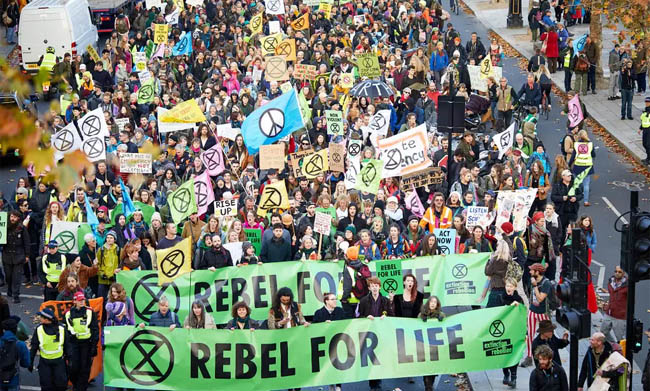
Tonight I will attend a protest against climate change in Parliament Square with Extinction Rebellion Jews. My speech for the demonstration is below.

Tzedakah annuls the evil decree! So we are promised every year in the liturgy for Rosh haShanah and Yom Kippur. And with those words, the chair of your synagogue will usually stand up to tell you about the charity appeal and where you should donate.

Do not be deceived for a minute into thinking that tzedakah is the same as charity. Tzedakah does not mean charity. Tzedakah comes from the same root as ‘tzedek’: economic justice. 

In Deuteronomy we are told: tzedek, tzedek tirdof. Justice, justice you shall pursue, so that you will live and inherit the land. Yes, Torah tells us that justice is a prerequisite for our continued life and for the continued health of the planet. 

This is not justice of the general kind, but specifically of the economic kind. When the Torah brings this word, it brings with it warnings that you must have fair weights and measures, resist corruption, and equitably distribute the wealth. This is what the Torah means when it tells us to pursue justice. 

So we know – we know – that climate justice is deeply connected to the economy. We are facing extinction because the richest corporations are squeezing the planet’s sacred resources for the sake of profit. The world is in crisis because capitalism demands constant production, consumption and expansion. 

When the Torah tells us to pursue justice that we may live, we have to understand this as an economic system that encourages life; that brings our natural world in accordance with people’s needs; where communities govern the resources ourselves. That system is called socialism, and we should not be afraid to say its name. We should be proud to pursue that form of justice.

Tzedakah is the smaller form of tzedek. It is the economic justice that we can do at an individual and community level. Yes, sometimes, that means redistributing wealth within the community. Sometimes that means donating to righteous causes. And sometimes that means taking money away from places where it should not be.

The most forward-thinking synagogues and Jewish movements in this country are taking their funds away from fossil fuels. They are refusing to bank with oil barons, frackers and gas extractors. They are divesting from any association with the corporations that are killing the planet.

That must be our tzedakah for this Extinction Rebellion. We must pursue economic justice in our own communities. When you leave here today, go back to your synagogues and ask them: where is our money invested? Who are we banking with? And does this accord with the stated values of this congregation?

If not, then we will take to our leaders the words of Torah: justice, justice shall you pursue, that you may live and inherit the land. 

May we see climate justice, speedily and in our days.

Amen veamen. 

Extinction-Rebellion

sermon · social justice · torah

The soul of a stranger


1998 is imprinted in my mind as a critical turning point in Jewish history. 

Those who remember it are already nodding sagely in recollection of this key moment of reconciliation between Jews and others. It opened up the Jewish community to being more accepting of difference and showed that Jews had been visibly and publicly embraced.

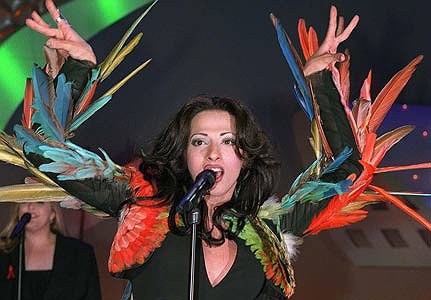
It was, of course, the year Dana International won the Eurovision Song Contest. Like many families across Europe, mine stayed up late watching the results come in. They were as expected – Dana had stormed the public vote. 

Dana. Jewish. Yemeni. Israeli. Glamorous. Melodious. Trans. 

Dana was a trans woman who had already made her name in the underground gay clubs of the Mediterannean and the Middle East. In some places, her albums had been sold illegally and discreetly. 

At that time, trans people had no legal protections in any country. In popular media, they were exclusively the butt of jokes or objects of fear. There were very few public pundits who were trans or even willing to advance their cause. 

But now, all of a sudden, she burst onto television screens to accolades, as if the world might finally be ready for latent queer liberation. Her victory wasn’t just a win for a pop star; it was a statement about what could be. 

For me, it was mostly a watershed moment in Jewish history because it transformed the communal discussion about LGBT acceptance. British Jews celebrated Dana’s win as a win for Jews and a sign of our integration in Europe. At Purim that year, aged 10, I dressed up as Dana and danced around on the bimah.

This snapshot in LGBT Jewish history stands in sharp contrast to this week’s Torah portion. Here, we read: “A woman must not wear men’s clothing, nor a man wear women’s clothing, for the Eternal One your God detests anyone who does this.” This has become known as one of the ‘clobber verses’ – words from Torah quoted at lesbian, gay, bi and trans people to oppress them. 

In the Talmud, Rabbi Eliezer ben Yaakov warns that men will dress up as women in order to sneak into their private women-only spaces. This is precisely the argument used today to exclude trans women, presenting them as sexual predators and imposters. 

If anything, today’s discourse is far worse, since the Gemara ultimately rejects this argument, but such bigotry is often allowed to stand unchallenged in our newspapers, radio call-ins and TV debates. In fact, in the last few weeks, Members of Parliament, the Archbishop of Canterbury, Piers Morgan, JK Rowling and a number of other high profile figures have banded together to criticise what they term ‘transgender ideology.’

Defendants of trans women have spoken up to insist that they are not ‘men masquerading as women,’ but simply people seeking to live their own authentic lives. 

I think, however, this defence is too constricting. There is nothing wrong with men dressing as women or women dressing as men. One of the strongest messages of the trans movement has been that gender need not be a prison. I personally have built on my childhood success imitating Dana by dressing up as Amy Winehouse and Lily Montagu for the last two Purims. 

Trans people belong to a broad spectrum of people who don’t feel like their gender identity matches with what society assigned them at birth. They have diverse ideas about who they are, but shared experiences of people trying to force them to conform to a mould they do not fit.

I hope that by promoting those who do not fit the mould we can reconsider the mould altogether. There are so many ways to be a man, to be a woman, and to sit in the spaces in between.

Our communities should be strong enough to include everyone, regardless of gender presentation and identity. We should be able to accept and celebrate the myriad of gender variance today, as we did for Dana twenty years ago.

It is disappointing that what, in the late nineties, seemed like the inevitable advancement of trans rights, is now being pushed back by a toxic alliance. While other parts of society can have their own arguments, I feel it is important that Progressive Jews position ourselves firmly on the side of inclusion. 

Thankfully, I am not alone. Last month, Reform Judaism’s outgoing senior rabbi, Laura Janner-Klausner, wrote alongside a leading Anglican bishop: “We believe that trans people, like every other person, have every right to be cherished, and protected by society and in the gender in which they choose to live. Our faith compels us to speak up for those on the margins, those whom others would seek to silence or misrepresent.”

This, you must understand, is not simply a matter of our liberalism trumping our Judaism, but is deeply rooted in our understanding of what Judaism requires of us. We do not believe that the Torah is God’s infallible word, but that it is a text, written by men, aiming to understand how best to live an ethical life. As a human work, it contains human biases, including sexism and what we would today term ‘transphobia.’

Instead of living by the letter of ancient words, we use them as the basis to interpret, through our own limited human experience, what morality requires of us today. Joy Ladin, a trans woman and Jewish biblical scholar, argues that while the verses criticising gender non-conformity are sparse, the commandment to know the soul of a stranger is repeated throughout Tanach.

She writes: “The commandment to know the soul of the stranger is more than a summons to social justice or a reminder not to do to others the evil that others have done to us. Knowing the soul of the stranger is part of the spiritual discipline required for a community to make a place for God. […] God commands the Israelites to hitgayer, to identify with the experience of being strangers so that they will know the soul of the stranger – the stranger who dwells among them, the strangers they are, the stranger who is God.”

It is on this deeply Jewish basis that we seek trans inclusion in our Jewish communities. We are commanded to know the soul of the stranger. We are called upon to make our synagogues not just places where words of Torah are heard, but where they are lived, so that our buildings are homes for people of all genders. 

May we all know the soul of a stranger, and may all strangers know that our hearts are with them.

Shabbat shalom. 

dana-international.jpg.750x400_q85_box-0,35,431,265_crop_detail

I will give this sermon on Saturday 29th August for Parashat Ki Teitzei at Newcastle Reform Synagogue.


high holy days · judaism · torah

Not everything must be forgiven

Not everything must be forgiven.

Earlier in the year, I went to a Holocaust Survivors Centre to deliver a service. After we had sung songs, discussed Torah and celebrated the day, I went to join some of the survivors to eat.

We sat and chatted. They were all elderly, but brimmed with life. These refugees, mostly women, who had survived camps and treacherous journeys to get here, seemed to possess a vitality I rarely saw in people my own age.

They talked about their grandchildren, their local community and their synagogues. But they wasted no time getting to the really gritty questions. “Why should I believe in God after what happened to us?” “Did God let that happen to us?” “Do you believe in an afterlife?” I bashfully tried to answer their questions, often replying that I did not know.

But then one of them asked a question to which I did know the answer. To which I was in no doubt. She asked me: “Do I have to forgive the Nazis?”

“No,” I said. “No you do not have to forgive the Nazis.”

I did not cite a Torah verse or a scholar or a halachah. I just said no. There are things that are unforgivable, and I was taken aback at even the suggestion that a survivor could forgive the Nazis for what they did.

Not everything must be forgiven. Not everything should be forgiven. Not everything can be forgiven.

We have reached Elul. The new month has begun and we have entered the last lunar cycle of the year, taking us through to Rosh Hashanah. This is our season of contemplation and reflection; of apology and of forgiveness. In this time, it is natural that we want to unburden ourselves of the guilt we have clung to.

Forgiveness is supposed to be the release of resentment and vengeance when we feel we have been wronged. With it ought to come a feeling of relief and a sense of restitution in the world.

Yet, so far, I have encountered far more people struggling because they cannot forgive than because they cannot apologise. I think it is important to stress: you do not have to forgive everything and you cannot be expected to forgive everyone.

Rabbi Elazar ben Azariah taught: “for transgressions between a human being and God, Yom Kippur atones, but for transgressions between human beings, Yom Kippur does not atone, unless the wronged party forgives.”[1] Judaism has no absolution. Our religion teaches that you must work to earn forgiveness, and guilt cannot be magically removed by prayer.

Even then, there are sins that can never be forgiven. For the most heinous crimes, like murder, even God does not forgive.[2]

We must assume that God does not forgive such an act because no human being could. Murder is irreversible in a way that other acts or not. The murdered person is not alive to forgive; no family member could forgive on their behalf. Even if they could, nobody could reasonably ask the family member of a murdered person to provide forgiveness, because it would take a super-human level of magnanimity.

In this week’s Torah portion, Shoftim, Moses creates cities of refuge throughout Canaan.[3] In ancient Israelite culture, the relatives of murdered people were not only not asked to forgive. They were expected to kill the killer as a matter of honour. Such a person was called a “blood redeemer.” They were required to avenge their family member’s killer, even in a case of accidental manslaughter.[4]

Moses established the cities of refuge so that the accidental manslaughterer would have somewhere to run. The killer could live there and escape being killed. Although they would need to start a new life, they would not be executed by the blood-redeemer, nor punished by the courts.

What is noteworthy about this system is how compassionate it is. There are times when people commit crimes and there is nobody at fault. Deuteronomy gives the example of a wood-chopper’s axe that backfires and kills a co-worker.[5] In this case, it would be improper to try the killer as a murderer, because there was no malice.

Yet, more importantly, it is compassionate to the victims. It does not ask the victim’s family to abandon their anger, but builds in an assumption that there would be raw feelings that would never be resolved within the court system. Rather than tell them to forgive, Moses establishes systems that mitigate their anger and prevent a cycle of violence.

Moses knew that not everything could be forgiven. That principle follows us through to this day. During the Second World War, Simon Wiesenthal, who was interred in the concentration camps, met an SS officer, who begged his forgiveness. The Nazi, on his death bed, admitted to having killed over 300 Jews by burning down their house and shooting at those who escaped. He said that he needed a Jew to forgive him. Wiesenthal did not.

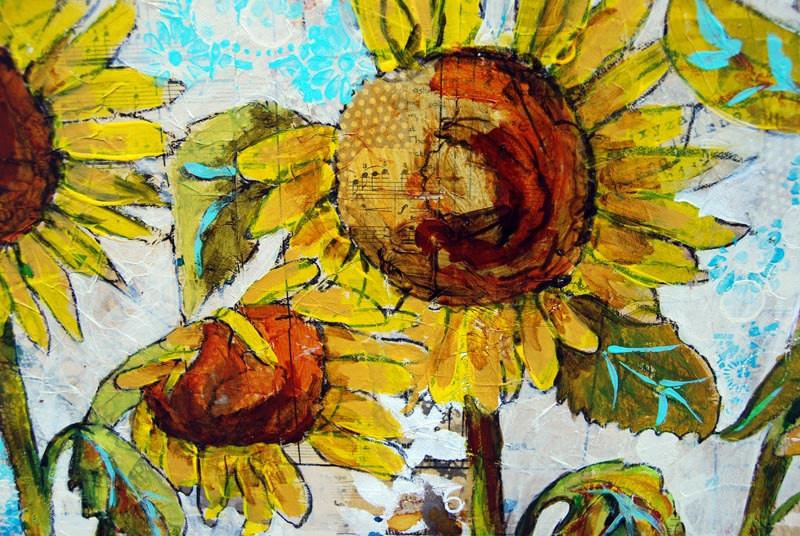
Over the years, Wiesenthal contemplated whether he should have forgiven the Nazi after all. He wrote to thinkers across the world, including rabbis, philosophers, judges, priests and historians, asking for their view. He collected all their letters back into a volume called ‘The Sunflower’.[6] Of the respondents, not one Jew said he should forgive.

Most of those who said he should forgive replied as Christians, and said they would do as ambassadors for Jesus. Yet there is a more compelling answer offered by Jose Hobday,[7] who was a Catholic priest of Native American descent. He wrote of his experiences as an indigenous person in North America, experiencing genocide and persecution. He explains how those experiences and indigenous spirituality had taught him to forgive, not for the sake of his oppressors, but for the sake of himself. That forgiveness helped him transcend the wrongs that were done to him and his people. That if he did not forgive, it would only make him feel worse.

Yes, if forgiving will make you feel better, then you can do so for your own sake. But believing that you have to forgive when you cannot will only make you feel worse. Sometimes it is necessary for hurt people to hold on to their hurt and not relinquish it through forgiveness.

So, for your own sake, go into this Elul knowing that you do not need to forgive everything. You do not need to forgive those who have not made amends and you do not need to forgive what is beyond your capacity.

Judaism is not about creating perfect people, absolved of blemishes and able to exercise the infinite mercy we expect of God. It is about accepting we are real people, who make real mistakes, learn from them and try to improve. It is about accepting that we are vulnerable people, who are capable of hurting and being hurt, and who might not find resolution in this lifetime.

Work on what you can change in yourself. Apologise for what you have done wrong. Forgive where you can forgive.

But know that not everything must be forgiven. Not everything should be. Not everything can.

Shabbat shalom.

sunflowers

I will give this sermon on Saturday 22nd August at Newcastle Reform Synagogue.

[1]Mishnah Yoma 8:9

[2]Babylonian Talmud Sanhedrin 74a

[3]Deuteronomy 19:1-3

[4]Deuteronomy 19:6

[5]Deuteronomy 19:5

[6]Schocken Books, 1970

[7]Chapter 23

judaism · sermon · torah

Why only one God?

Why only one God?

A Jewish scientist finds herself at a conference, presenting a paper. A colleague asks her: “what’s your religion?” Nervous of prejudice, she says: “I’m an atheist.” Her colleague answers: “Yes, but is it the God of the Jews or of the Christians in whom you do not believe?”

As everyone knows, the best jokes are the ones you have to explain. And the very best jokes are the ones you spend a whole sermon unpacking, so strap yourselves in, because we’re going to look at the archaeological and scriptural evidence for why that introduction was, in fact, really funny.

It is a basic assumption of religion in the West that there is one God. Even for those who do not believe, they assume that it is one God in whom they have disbelief. Yet our society is filled with different religions and practices. When we encounter Muslims, Sikhs, Christians or Hindus, we assume that underlying the diversity of our doctrines and rituals, there is an underlying unity of belief in a single and universal Being.

But it was not always that way. In fact, the idea of monotheism was novel and contentious throughout the entire development of the Hebrew Bible. The insistence on one God is Judaism’s great innovation, and we have built our monotheism up into an obsession. Knowing God’s oneness is the first commandment.[1] Not worshipping other gods is the second.[2] Worshipping other gods can incur capital punishment.[3] It is treated as an unforgivable crime, on par with murder, and a Jew should choose death rather than worshipping another god.[4] The Deuteronomic insistence on one God has become the centrepoint of Hebrew prayer: “hear, O Israel, the Eternal One is our God; the Eternal God is One.”[5]

In this week’s portion, Moses exhorts the Israelites: “Destroy completely all the places on the high mountains, on the hills and under every spreading tree, where the nations you are dispossessing worship their gods. Break down their altars, smash their sacred stones and burn their Asherah poles in the fire; cut down the idols of their gods and wipe out their names from those places.”[6]

But why? Why is it so important that there be one God? And why is it so important that the ancient Israelites worship no other? What was so bad about the other nations’ religious practices?

Archaeological excavations help us answer that question.[7] Scientists have dug up altars, shrines, coins and amulets to help us make sense of pre-monotheistic religion. The Canaanites, who preceded the Israelites, had a family of gods: Baal the storm god; Asherah, the fertility goddess; Mot the lord of death; Yam, the judge of the sea; and Moloch, the child-eating fire deity.

This is referenced in Scripture: “Be careful not to be ensnared by inquiring about their gods, saying, “How do these nations serve their gods? We will do the same.” You must not worship your God in their way, because in worshiping their gods, they do all kinds of detestable things the Eternal One hates. They even burn their sons and daughters in the fire as sacrifices to their gods.”[8]

In that case, the issue with polytheism is the unethical behaviour it engenders! The old gods of Canaan required evil practices as part of their worship, like ritual human slaughter. But then why not simply abolish those gods, and leave the others? Or just legislate against those practices but keep the rest of the religion intact? In the mind of the ancient Israelites, there must have been something that directly connected any worship of multiple gods with murder.

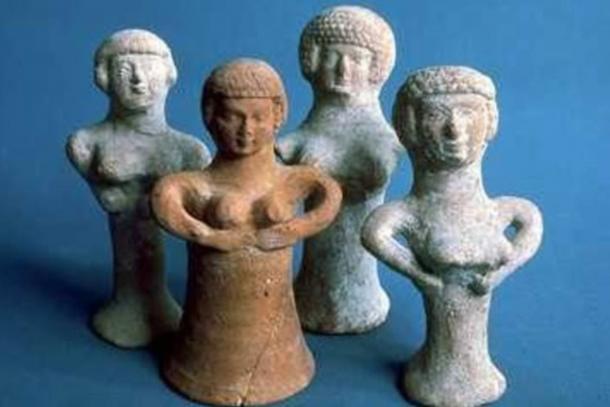
Here, archaeology can help us further. Digs from different times show us that polytheism wasn’t suddenly abolished, but fell out of favour when the Israelite religion took off. The Canaanite pantheon reduced down to just a few gods. We can find statuettes representing them at most ancient Israelite Temple sites.

This is backed up by text: Jeremiah condemns the Israelites for baking cakes for the Queen of Heaven and making offerings to Baal.[9] Jeremiah explicitly condemns this because these are the ways of the Egyptians, who held them in slavery. Idol worship, says Jeremiah, means keeping up the practices of theft, murder and lying.[10] It is not just that the old gods require ritual murder, but that their whole religion is based on an Empire that was built on it. Idols are the symbols of captivity.

This point was finally hammered home when Jerusalem was destroyed and Nebuchadnezzar took the Israelites hostage in Babylon. After Ezra led the return to the Land of Israel, we can find no more evidence of idols or their shrines. The people abandoned them altogether.

What could have been more convincing that idols were the work of murderous empires than exile in Babylon? The Israelites saw first-hand how looting, murder, war, conscription and sieges were built into imperial expansion. We know that the Babylonians used their pantheon as a way to legitimise their colonisation, as they brought the local gods of conquered people into their own cult and placed them in inferior positions. We know that the emperors turned themselves into gods and made people throughout their lands worship them.[11]

All those gods in Israelite minds became death-gods. The only way to truly abandon the ways of the oppressors in Babylon and Egypt would be to uproot the idolatrous shrines and eliminate the pagan pantheon altogether.

Monotheism was an act of resistance to these corrupt ways.

God’s unity was not a mathematical question but a moral one.

The One true God could not be co-opted into imperialism because it was universal: no one nation could control it. No ruler could declare himself to be that God because God had no flesh or form. And whereas the many gods constructed hierarchies and different customs for different places, with monotheism came ethical universality.

That is why one God was so important then, and why it remains so important now. God’s unity continues to represent the unity of human beings and the refusal of the faithful to be dominated. So, in answer to the question: “is it the God of the Jews or of the Christians in whom you do not believe?” the atheist could happily answer “neither.” And I will gladly answer “both.” They are One.

Shabbat shalom.

Asherah-figurines
This is a photo of Asherah statuettes, which have been excavated at almost every ancient Israelite cultic site prior to Ezra’s Great Return

I wrote this sermon for Leo Baeck College’s weekly newsletter, and will deliver it for Newcastle Reform Synagogue on Saturday 15th August 2020, Parashat Reeh.

[1] Deut 5:6

[2] Deut 5:7

[3] Ex 22:20

[4] Yoma 82a

[5] Deut 6:4

[6] Deut 12:2-3 NIV

[7] All references to archaeology in this sermon are derived from ‘The Bible Unearthed’ by Israel Finklestein and Neil Asher Silberman

[8] Deut 12:29-31 NIV

[9] Jer 7:5-19

[10] Jer 7:8-11

[11] cf Dan 2

judaism · sermon

Comfort, my people, take comfort

Comfort, my people, take comfort.

This Shabbat and its haftarah take their name, Nachumu, from the opening words of Isaiah 40: ‘Comfort, my people, take comfort, says your God.’[1]

We have entered into the weeks of comfort, the weeks between Tisha b’Av and Yom Kippur. Here, the prophets promise us redemption and renewal if only we will correct our ways. It is a great build-up to the High Holy Days, leading us through the remaining summer months with a message of mercy.

After Tisha b’Av, we so need that reassurance. Tisha b’Av – or the 9th of Av – is a day of intense mourning in the Jewish calendar, which occurred during the week from Wednesday to Thursday nights. It recalls the destruction of the First and Second Temples by successive Empires in the days of our biblical ancestors. It summons Jewish congregations to lament our exiled state and God’s apparent absence from the world.

It is not a fast that is marked in all Reform communities, because it involves grieving for the Temple, which we do not want rebuilt, and because it wallows in so much misery, which we do not want to participate in.

Nevertheless, for the last 5 years, I have diligently engaged in Tisha b’Av rituals. This is mostly practical. On Yom Kippur, I’m often so busy curating religious experiences for others that I don’t get round to having one myself. My head is stuck on the next page in the prayer book, recalling the next tune, or remembering the complicated Hebrew I’ll read later. Tisha b’Av gives me a chance to have my own solemn day, where other people lead the services for me, and I can just use the time to reflect.

Most years, I go to Bevis Marks, the impressive Sephardi-Orthodox synagogue in central London. It is quite an experience. The building’s elegant chandeliers are extinguished. The beautiful decor is covered over with black sheets. A chazan chants the haunting melody of Eichah, beginning: “how lonely sits this city that was once full of people.”[2] A choir of harmonious men chants kinot – dirges – recalling the gruesome details of the destruction of the Temple, and connecting them to every tragedy Jewish people have ever endured.

But this year, I couldn’t go to Bevis Marks. Nobody could. Coronavirus has made physical attendance of synagogues too dangerous. Even those that have braved it have only permitted a tiny number to attend, with strict social distancing and masked faces. The Spanish and Portuguese community was especially hit by Covid back in March, so it makes sense that they would be cautious.

But what about me? What would I do? I depended on the spiritual experience of Tisha b’Av to see me through the rest of the year, and now the gates were closed.[3] I found myself wondering how it would be possible to do anything meaningful if I couldn’t do it the way I always had.

But I decided, for my own sake, I would make an effort. On Wednesday evening, I switched off my phone and tuned in to the streamed services from Lauderdale Road. I read through the Reform liturgies on my own, had one last glass of water before sundown, then went to bed. When I got up in the morning, I dressed as if going to synagogue, and watched a recording of the proceedings from the Kotel. I spent the day intermittently meditating, praying, studying texts and thinking about all the brokenness in the world.

For the first time, the loss of the Temple actually meant something to me. It wasn’t that I suddenly had a desire to return to animal sacrifices and priestly hierarchy, but I felt that I could emotionally connect to the verses in a new way. It can be really devastating to be away from the spiritual space to which you are accustomed. It is a shock to the system to realise that you can’t pray the way you used to.

And, strangely, I liked that I had made the connection. I liked that I could feel some new kinship with Jeremiah and the texts of Scripture. I liked knowing that the things I was experiencing had been suffered by others before. Because when I remembered that they had struggled, I also remembered that they had survived. In the face of difficult times, they had renewed Judaism, and changed its practices so that its message could continue.

I found myself enjoying marking the day alone. I didn’t feel like I was performing piety for others, but I was praying sincerely of my own accord. I realised that I, too, could adapt and reinvent.

In this week’s haftarah, Isaiah tells us: ‘The grass withers and the flowers fall, but the word of our God stands forever.’[4] It wasn’t the building that mattered, it was the words that were spoken there.

After the destruction of Jerusalem, Rabban Yohanan ben Zakkai was among the few sages who remained. He did not try to rebuild the city walls. He tried to rebuild Judaism. He established an academy at Yavne and taught Judaism as he had received it, bringing in new teachings to adapt the religion to post-Temple times.[5] Rabbi Yohanan knew that the words of Torah were more enduring than any citadel.

Every edifice will eventually crumble. Temples, synagogues and familiar buildings get torn down, eroded and replaced. But the moral message of Judaism – the meaning we get from our texts – that will endure forever.

We now begin our ascent to the High Holy Days, with Rosh haShanah only seven weeks away. As we approach these important feasts and fasts, we may feel tempted to despair that the usual building won’t be there. It is true that we will not do things in our usual way. But like generations of Jews before us, we will find new ways to make our liturgy meaningful and turn its moral messages to our own day.

I encourage you to emotionally prepare yourselves for doing the High Holy Days differently. Think about how you can dress, act and participate so that the period will be meaningful for you.

We will explore new ways of praying, meditating, studying and feeling. And we will come out of this experience with a Judaism that has been transformed and renewed. It will be stronger, more versatile, and better equipped to face any crisis that may come. As Isaiah promised, we will soar on wings like eagles and run without ever growing faint.[6]

So take comfort, my people, take comfort.

Shabbat shalom.

5f3ac318f9ec28e284b5bda529754cbc--jewish-art-place

I gave this sermon on Saturday 1st August 2020 for Parashat Vaetchanan/ Shabbat Nachumu at Glasgow Reform Synagogue, over Zoom.

[1] Isa 40:1

[2] Lam 1:1

[3] Lam 1:4

[4] Isa 40:8

[5] Eichah Rabbah 1:31

[6] Isa 40:31


fast · liturgy · poem

Coronavirus Lamentations

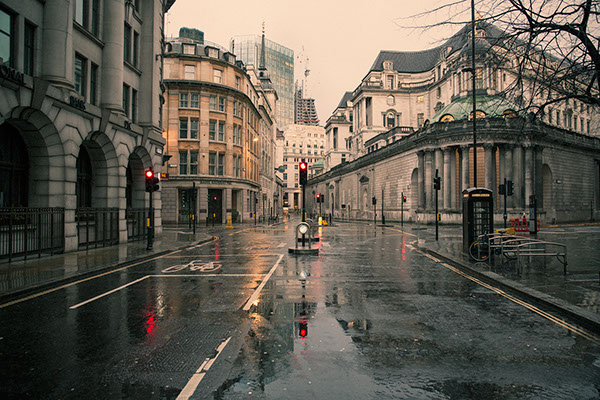
This is a creative re-translation of Eichah 1 to reflect the current era, where our sacred sites again sit empty and a new enemy feels as if it has besieged us. I have written this partly to distract my mind from fasting on Tisha b’Av, and partly to help process the grief I am feeling around the closures of communal spaces.

1

How is this possible?

As lonely she sits, this synagogue, where once she thronged with congregants

She has become like a widow;

Great she was among people, a power for the prayers

She has become precluded.

2

She cries,

Bawls, in the night and her tears fall on her cheeks

She has no comforter from all her lovers

Her friends have abandoned her

She imagines them as loveless.

3

The Jews are exiled from her

Caused by inequality and sickness; she sits with the nations

She cannot find rest

The virus trounced her

In the narrow spaces where it traps its victims.

4

City streets are mourners,

Don’t welcome congregations any more;

All her doors are bolted

Her leaders are grieving, her lay people lament

She sits in bitterness.

5

Strange are these adversaries

Enemies who carelessly became overlords

A plague pronounced upon a people

That locks toddlers in captivity

Fearing a sickness outside.

6

The sanctuary’s splendour

Fled away from her

Her wardens scarper like deer to nowhere

Running breathless

From the airborne pursuer.

7

She remembers

Grandeur in her grief

All the precious people that made her home at first

Now her people are falling to the power of frailty

And a sickness that ridicules science.

8

Our surfaces

Have become contaminated

Uncleanliness in the air

And all the dangers we cannot see are suddenly laid bare

So she tries to sigh without breathing.

9

Hands spread

Infection over our most treasured relatives,

So once the problem has entered your body

You are commanded

Not to go out in public.

10

Everyone is panting

Just trying to once again enjoy taste

To have their good spirits revived.

Does God not look upon us

And see how much we suffer?

11

Don’t let it happen to you

Know that this is pain unlike all others

It has befallen me

As if God’s nose has flared up

And exhaled sickness in anger.

12

My bones bind

Like spines sticking together

Feet swell, immovable

I cannot turn around

And spend my days lying in pain.

13

My body is

Marked by the signs of disease

Neck scrunched up in knots

Whatever strength I had has failed me

As I find I can no longer stand.

14

The strongest are trampled

Now, God calls out to me, the time has come

To destroy the youth,

Stamping on brides and crushing down grooms

Like grapes in wine presses.

15

My eyes, my eyes

Over these I cry

Droplets fall without a refuge

Even our physicians are dying,

So powerful is our adversary.

16

Love extends her arms

Parting only to find no one there

Such unclear instructions

God of Jacob, this fear is surrounding me

Every centre is infected.

17

God, you take

Revenge against rebellious and uncovered mouths.

Please listen, all peoples,

Won’t you see the pain

Caused by endless captivity?

18

I keep calling my loved ones

So they know I still care

I seek out my elders

And bring food to the vulnerable

That they will not be forgotten.

19

I call out to God

To tell You: ‘I am in distress!’

My heart is turning round

Abroad the people are devastated by statistics

And we see death at home.

20

They can hear

Ululating outcries from loneliness

This indifferent virus listens

Knowing that no matter what you do

That appointed day will come.

21

Let all evil stand before God

Vanquisher and vanisher

Who knows all

Examines every dead

Your saving grace may one day come to those

Zealous attendants awaiting You.

22

Return us to You, O God, and we will return to you. Let us have back the times we had before.


empty london

climate change · judaism · social justice · torah

Pass on this Earth to your children

‘Tell your children that this land will be theirs to hold in custody,’ cried out Moses to the Israelites on the precipice of the Promised Land. [1] ‘Tell them to guard it and look after it because you could not. Tell them we brought them here that they would love and care for every plant and tree, but we were not allowed to enter because we were too accustomed to slave mentality. We were too mistrusting and selfish. But our children, we hope that they will have faith. We hope that they will be strong. We hope that they will look after this earth.’

‘Tell your children to tell their children,’ Joel wailed to the elders. ‘Tell them about the environmental destruction we witnessed. Tell them how we saw droughts and crop shortages. Tell them how we saw fertile land turn barren. Tell them how we saw everything devoured and nothing remain. Tell them how we saw famine lead to war and war lead to plagues. Tell them that we knew it was our fault.’[2]

‘Tell your children,’ the prophets said, ‘not to make our mistakes. Tell them to treat every part of the earth as if it is sacred. Tell them to care for the planet because if they destroy it, nobody will come to repair it after them.[3] Tell them that there is only one world and it is precious and it must be sustained. Tell them not to pillage it but to work in harmony with nature.’

And the elders wept. The religious leaders cried before their altars. Even the animals cried out for salvation from God. And the chieftains sulked in their tents and asked: ‘does this mean that God hates us? What have we done to deserve this?’[4]

Scripture records the words of the prophets and elders, but we do not learn how the children responded. What did they say when their elders told them these lessons? History rarely records the words of the young, even on issues of intergenerational justice. Especially on issues that affect the youth more greatly.

During the last uprising of Extinction Rebellion, Rabbi Jonathan Wittenberg preached to his congregation. He said: “in the synagogues, the elders are asking ‘where are the youth?’ But in the streets, the youth are asking ‘where are our elders?'”[5]

Young people are calling on us to take action for the environment. Their voices matter deeply, especially when the issue is the future of the planet. Climate change presents us with an unprecedented threat, and we are positioned as the elders scorned by the prophets.

I know that the people of my generation and older are not individually responsible for the climate crisis, but that it is a matter of systemic inequality and exploitation of natural resources.

Nevertheless I am increasingly conscious, as a parent, of what the next generation will inherit. Winona LaDuke, a Jewish-Native American activist from an indigenous reservation in Minnesota, urges us: “Be the ancestor your descendants would be proud of.”[6]

We cannot become such people if we don’t heed the call of the greatest call to intergenerational justice facing us. We cannot simply hide our faces in our homes like the elders confronted by Joel.

Of course, this congregation cannot take sole responsibility for ending economic reliance on oil or for replenishing the earth’s devastated ecosystems. But J and S have come to us with practical and necessary actions that we can take.

These students in our bar mitzvah programme have come to encourage us to take serious action. After only a year of teaching them, I have been so impressed by the intelligence, integrity and sensitivity of these young men. They will both become bnei mitzvah at Pesach time. As part of their studies, they have each taken on social action programmes.

J is asking you to recycle your plastic by making eco bricks. I hope that over this summer, every household in the Three Counties will return at least one eco brick to J in support of his project. J will also be appealing to the synagogue council, to ask them to make eco bricks part of the Mitzvah Day project this year.[7]

S is asking you to plant trees and sponsor his work with the Woodland Trust.[8] I encourage every member of the community to support S in some way, either by offering financial support or a place to plant. These projects are practical, necessary and helpful.

Joel tells us that the old shall dream dreams and the youth shall see visions.[9] In the future he prophesied, the generations were not adversaries in blame and despair, but companions in hope. The young people are offering us an opportunity to join them in healing our damaged planet. Let us take up their call.

Shabbat shalom.

introfigsm-m
This painting is by Winona LaDuke’s mother, Betty

I gave this sermon on Saturday 25th July at Three Counties Liberal Judaism for Parashat Devarim. This was my last sermon for the community. The names of the children are redacted for obvious  reasons.

[1] Deut 1:39

[2] Joel 1

[3] Kohelet Rabbah 7:13

[4] Deut 1:27

[5] Heard at New North London Synagogue, summer 2019

[6] https://www.mtpr.org/post/winona-laduke-be-ancestor-your-descendants-would-be-proud

[7] https://www.ecobricks.org/

[8] https://www.woodlandtrust.org.uk/

[9] Joel 2:28

psalms · theology

Sore lungs sing out of sync

By the rivers of Babylon, we sat down and there we wept as we remembered Zion. 

Why did we weep by those waterways? Some times are harder than others to find songs inside your lungs. Faced with a strange land and held captive by a power you do not understand, it is hard to find the music within.

Some say that we could not sing because we could not stop crying. Every time we imagined we had run out of tears, new wailing broke out of our chests. Panting, we could not hold a note.

Midrash teaches that the rivers of Babylon were the industrial canals of the imperial capital. Where once we had drunk from freshwater springs, we now sat by sewage works and polluted channels. Our choleric lungs heaved and choked the psalms we wished to sing.

There on willow branches we hung up our violins.

Stringed instruments hung on stringed trees. If we cannot make music, maybe these old branches will play our lyres on our behalf. 

Maybe we will sing again, so we won’t lay our tools on the ground, but gently tie them up in knotted bark. We will return to you, violins. 

Maybe we hoped that the long leaves of willows drooping in layers would provide cover so that nobody would know we once used to play such melodies in our religious buildings. Maybe if they don’t know how joyous we once were, they won’t expect us to be joyous again. Pray they don’t ask us to sing.

For the wicked carried us away to captivity, and required of us a song. 

We are in a strange land of captivity. We live in times that people keep calling unprecedented. Six months ago, few of us would have imagined we would be in the midst of a response to a global pandemic. None of us have lived through mass government responses to a pandemic in Britain. It is unusual to realise we do not have the freedoms we once knew.

Even though governments around the world have announced easing of restrictions, we cannot yet return to activities we once knew. We have to be careful, because the captor, Covid, still exists. We have to make choices about how we respond.

The Israelites lasted 70 years in Babylon. We could endure 3 months in our homes.

But in some ways, those 70 years were easier than the ones that followed. In captivity, Jeremiah told us to make the most of where we were because we would not be coming out any time soon. But when Jerusalem reopened, we did not know whether to stay or leave, and every option seemed like it would be the wrong choice.

In some ways, lockdown was easier. We knew what the parameters were and how to operate within them. Now, we are confused about what is the right thing to do is, as the conflicting needs of our mental health, our physical security and our economic livelihoods clash. 

And somehow we are supposed to sing.

How can we sing the song of God in a strange land?

No, we cannot sing. It is one of the highest risk activities. The virus is airborne and transmitted when people dig deep in their lungs and project droplets from their diaphragms into someone else’s mouth. The collective singing involved in synagogue services, music concerts and sports matches is the greatest threat to overcoming the pandemic.

We enter a strange land where, for the first time in many decades, most progressive synagogues will be closed for Rosh Hashanah and Yom Kippur. Once, Zoom felt like alien soil, although we have come to comfortably inhabit it for our Friday nights and Saturday mornings. Maybe it won’t feel like such a strange land by the time we arrive.

But how can we sing? Didn’t we try collective singing over Zoom? Everyone goes at a different tempo, completely out of synch, creating disharmony and awkward clangs. The first time we tried to sing together in disunity I felt like I had to go back and patch over all the cracks in our voices.

But in captivity, the Israelites learnt that even in the unprecedented land of Babylon, they had to find a way to sing. The Psalms are testament that even when we felt we could not make music, we still composed new material. 

For centuries, the Hassids have rejoiced in singing out of sync. The nign, a wordless song intended to elevate the spirit, finds its strength in discordance and repetition. These mystics sing the same note sequence repeatedly, without aiming for harmony. They trust that, however it is arranged, the tune will reach God. 

Perhaps we, too, can learn to enjoy singing out of sync.

That challenge feels even more pertinent now in a country whose rhythms have fallen out of sync. Some worry about losing their jobs. Some worry about losing their health. Some worry about losing their minds. And, with these concerns, everyone is making different decisions based on their comfort levels.

It is hard to feel like we are not singing in time with our neighbours. Some wish that everyone would just stay inside until we find a cure. Some wish that everyone would relax and go out. We look at each other with confusion, and struggle to find acceptable social norms.

Like the Israelites in Babylon, we have to find ways for sore lungs to sing out of sync. Anyone in the community who does not feel ready to go out yet should be supported to stay home. Anyone who feels they need to see their loved ones should be encouraged. And people who just need to get their hair cut or buy a coffee from a cafe should feel empowered to do so responsibly.

There is nothing wrong with feeling unease. The terrain we stand on is unfamiliar and there is much we do not know. But of all the things we can sacrifice, trust in the other members of our community should not be one of them. 

The reason the Israelites survived their exile was because they knew they could depend on each other. They had different experiences and different aspirations, but knew they were created by the same God.

As we sit by these rivers in a strange land, let us trust each other to sing out of synch, and know that one day, we will return home, and sing together in harmony once again.

nora-kronstein-rosen-moire-removed.height-588

I gave this sermon on Friday 10th July 2020 for Three Counties Liberal Judaism. I thank my housemate, Joanna Phillips, for her support with the audio recording.