Do you remember the first sermon that really moved you?
I do. It was a primary school assembly.
Mrs. Kilou stood at the front of the hall, as all us uniformed children awaited the morning messages.
She began with a question: “who knows what I hate most in the world?”
A kid suggested: “Lateness.”
“No, not lateness.”
Another offered: “scruffiness.”
“No, not scruffiness.”
One more: “When we don’t do our homework.”
“No, this is the thing I hate most in the world. Way worse than lateness or scruffiness or not doing the homework. The thing I truly despise.”
Finally, a kid ventured: “racism.”
“Racism, that’s right!” She spat the word and the whole crowd sat up to attention. The fury in her voice was palpable.
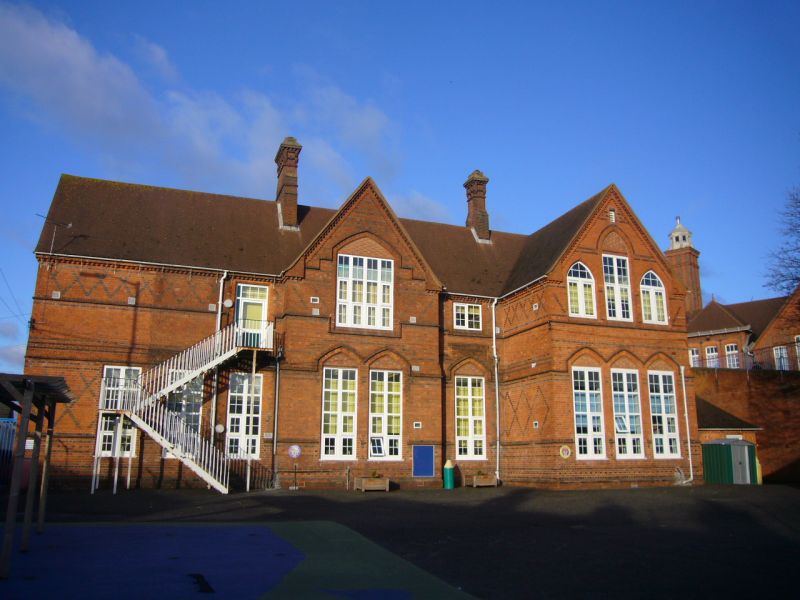
She had good reason to be angry. Somebody had spray-painted a large swastika on the outer wall of our primary school.
***
For the last two months, I have been trying to work out what to say. There have been days recently when many of the parents from this community didn’t send their children into school, worried that they would be targets. Members have shared stories of taking down their mezuzot, and hiding their symbols of Jewishness. I have felt, at times, like the community is overtaken by panic.
What do you say to people who are so anxious and angry? How do you meet people in their fear, and help them move beyond it?
I haven’t known what to say. So, the last few times I have stood on this bimah, I have just shared what is in the Torah.
But there is a trauma that needs to be addressed.
It doesn’t help to tell people that there is nothing to fear. That only makes people feel alone in their feelings, and that just makes them more afraid.
What repeated studies show is that what matters about handling traumatic events is less what happens afterwards than what happened before. People are better able to negotiate destabilising situations when they already have a strong sense of self; feel proud of who they are; and have a clear story about themselves.
So, I think the best thing to do from here, for now, is to tell my own story. My own relationship to antisemitism.
My account is, of course, personal, and not definitive. But I hope it will open up spaces for others to share their stories, and for us to begin a conversation about who we are, and what experiences formed us.
***
The swastika on my school wall was not for me. Not in the direct sense. That is to say: whoever drew it did not have Jews at the forefront of their minds.
We were not a Jewish school. We were a multicultural one in the centre of an industrial town, surrounded by white suburbs, and even whiter countryside. The other students, my friends, were Pakistani Muslims, kids from the Caribbean, refugees from Kosovo… we were a little bubble of people from everywhere, and, though I did not know it then, were a source of moral panic among readers of certain newspapers. We were, to those that feared integration, a symbol that Britain wasn’t British anymore.
And, of course, that swastika very much was for me. It was an attack on my community. It was antisemitic because all swastikas are. It was calling to me, because all racism does.
Around that time, my parents began telling me stories. But not the stories you would expect. They didn’t tell me about family members who had escaped Germany or died there. They did not explain why some members of the synagogue had tattoos on their arms, or how others had met each other on refugee trains. I only came to learn that much later.
They told a story about how, not long ago, the Council had erected a new housing block. One of the first people to be offered a home there was a black woman. Racists came to protest. ‘Houses should be for whites.’ The Pakistani community centre came out in large numbers and escorted the racists back to the train station and out of town.
This is an oral history, and I won’t be able to verify it from newspaper reports, but I suspect my parents made it sound more peaceful than it really was.
They told me other stories too. Stories of hundreds turning out to see off the National Front. Stories like how the Jews and the Irish united to defeat the Blackshirts at Cable Street. Stories of partisans and resistors.
They told me how people could stand up against racism and win. They told me about how, when it comes to racism, our greatest strength is each other.
I don’t know if this was their intention, but I learnt then that the swastika was not something to be feared. It was something to be destroyed. And that people could, and did, destroy it, wherever it appeared.
So, I grew up feeling not so scared of Nazis as determined to stamp them out.
***
Some university students spend their weekends studying. Others spend them partying. Me and my friends? We spent our weekends chasing the English Defence League.
Don’t get me wrong. I did study. And I did party. But some of my most formative memories from that time were of bundling into minivans and car convoys with my housemates to towns in the Midlands and the North.
At that time, Tommy Robinson had assembled a band of white supremacists, bored football hooligans, and lost boys, to go and protest wherever there was a mosque. They usually targeted the mosque itself, and would go to the towns with the express aim of intimidating the Muslims.
Opposing them felt like the only right thing to do. Fighting fascism felt like a calling in a very similar way to how the rabbinate does today.
There was a group of us, from different towns, who always went along, led by a gentle couple called Simon and Sadia. We were always met by locals, usually gathered from community centres and religious groups, who would join in showing the racists that they weren’t welcome.
I learnt from these forays into antifascist activism that, while there were always some who resisted fascism, they weren’t necessarily popular. Media narratives after each protest often framed the unfolding events as if the fascists and their opponents were equally bad. As if it would be better if these small groups of students and locals stayed home and let the racists go unchallenged.
I might have believed them, if it weren’t for what I saw happen in Dudley. There, the English Defence League significantly outnumbered the protesters. Police lost control of the situation. Over that weekend, in broad daylight, those thugs went round smashing in the windows of any house with black and brown people living in it.
As we ran away from the violent gangs storming the town, we passed a house where a black teenager had been visiting a white family. Their windows had been smashed. “I’m sorry,” he was saying, “I think it’s because of me.”
I learnt from this a lesson that has informed how I think about all racism and antisemitism since. Our strength is in each other. Our defence is our neighbours.
This runs contrary to some of the received wisdom about antisemitism. We are, after all, a small minority that lives in concentrated areas of large British cities. One story about how to handle the prejudice we face is that we must depend on the state to defend us against the baying mob of our neighbours. It is because of this that older members will share the axiom: “as long as the king is safe in his castle, we’ll be safe in Tower Hamlets.”
My experiences turn this on its head. The non-Jewish majority is not our enemy. They are our most reliable bulwark against racism. When it comes to fascists, we are the masses and the masses are us. Our greatest strength is each other.
***
That story, of solidarity in the face of racism, is also played out in the story of this synagogue. My friend, Joseph Finlay, just completed his PhD, looking at Jews and race relations in post-war Britain. During his archival research into the history of fighting racism, one shul kept cropping up. This one.
During the 1960s and 1970s, this synagogue was led by the visionary rabbi, Dow Marmur. He arranged visits from volunteers to homes of new immigrants to Redbridge, as well as English conversation classes to help neighbours settle in. In 1978, the synagogue held a “multiracial dance,” in a clear statement of unity against racist scaremongering about miscegenation.
Rabbi Marmur brought a motion to the RSGB Conference of 1968, which encouraged other synagogues to adopt similar policies, and follow SWESRS’ example. He accompanied his motion with a powerful sermon.
While others shied away from fighting racism, or even expressed sympathy with the anti-black and anti-immigrant feeling, Rabbi Marmur issued an impassioned plea. Yes, he said, the racists do draw comparisons between Jews and black people, and “we have a special duty to remember the Prophet’s comparison and to affirm that we are, in fact, alike -in the beneficent eyes of God!”
He encouraged meaningful solidarity, urging “let us beware of condescending and patronising “do-goodery” … “And at no time must we allow ourselves to be fobbed off with cowardly calls for “prudence” and “caution” when these are euphemisms for inactivity and indifference.” Finally, Marmur compelled his listeners: “the primary force of our involvement must be our religious conviction; God bids us act-and we must obey!”
This summons stands at the centre of my own response to antisemitism. It is not only the swastika that calls me, but, more importantly, the voice of the Living God.
In that voice, I hear the demand to continue being Jewish, without apologies.
In God’s Word, I hear the call to resist antisemitism, not only out of self-preservation, but from a religious demand that there must be diversity.
And in God’s Torah, I hear, always, that most-repeated verse: “love your neighbour.” Yes, love your neighbour as yourself. Love them because they are you. Love each other because that is our strength.
And our love for each other may be our salvation.
Shabbat shalom.

 Sim Lev