judaism · sermon · torah

Who created the Jews?

One day, word came to Joseph, “Your father is failing rapidly.” So Joseph went to visit his father, and he took with him his two sons, Manasseh and Ephraim.

 When Joseph arrived, Jacob was told, “Your son Joseph has come to see you.” So Jacob gathered his strength and sat up in his bed.

Jacob was half blind because of his age and could hardly see. So Joseph brought the boys close to him, and Jacob kissed and embraced them. Then Jacob said to Joseph, “I never thought I would see your face again, but now God has let me see your children, too!”

He drew them close, so close, and kissed their foreheads, then offered his blessing, his last testimony upon his grandchildren. He placed his hands on his grandchildren’s heads and said:

“The  whole world hates us! They’ve always hated us, right from Pharaoh until today. They’ll never accept us, because they’re jealous of us. They can’t stop thinking about us, even though we’re a tiny fraction of the world. Well, good! We’re going to keep being Jewish to spite them. That’s it, boys, be Jewish to wind up the antisemites. As long as they hate us, wear your yarmulkes.”

Of course, this is not what Jacob said to his grandchildren. 

What would have happened to Jews and Judaism if this was all Jacob had to pass on?

Ephraim and Mannasheh would have nothing on which to base their identities but a negative. They would see themselves as Jews only by victim of circumstance. Their choices would be to reluctantly accept their Jewish status as a miserable burden from previous generations; or to concoct a paranoid worldview that lashed out at everyone; or to ditch being Jewish as soon as they got the chance. 

Jacob would just have left the boys a neurotic mess, with no pride in themselves or joy in their lives. 

Jacob would not have said this to his children, but what are we teaching to ours? Are we teaching them to love being Jewish, with all its culture, rituals, festivals, beliefs, and ways of building community? Are we showing them how to love themselves and their heritage so that they can delight in it for many generations?

Or, are we imparting a negative identity based on misery and fear? 

If you open up some of our communal newspapers or listen to some of our representative bodies, it is very much the latter. Maybe it is not as vulgar as the parody I just made up for Jacob, but it comes through in how they talk, and what stories they choose to tell.

It is as if, for them, Jews only exist because of antisemites, and our Jewishness is only exerted when defending ourselves against antisemitism. 

This idea is not new.

In 1944, as the war came to an end, French philosopher Jean-Paul Sartre was trying to understand antisemitism. He wrote “Portrait of an Antisemite,” in which he looked to his contemporary antisemitism in France. Sartre saw antisemitism as a lie to uphold class distinctions. The rich relied on antisemitism because it gave them an excuse to put the blame for inequality and injustice somewhere else. The poor turned to antisemitism because, by creating outsiders, it gave them a feeling of belonging to a nation in which they really had no portion.

Antisemites, he said, were people who couldn’t face their own reality, and absconded from their own freedom, to project their fears onto Jews, both real and imagined. From this, he coined the famous saying that “if Jews didn’t exist, antisemites would invent them.”

This was a useful way to begin to understand antisemitism – as a fear constructed about Jews, but in spite of what any Jews were actually like. 

Sartre then goes on to ask a question: “does the Jew exist?” That is, if antisemites are just angry at imaginary Jews, what does that make of real Jews? Sartre concludes that Jews do exist, because of their shared experience of antisemitism. Jews exist in response to the persecution they face. Quite literally, he says, “the antisemite creates the Jew.”

The Jews themselves, he said, were outside of history, but victims of its oppression. If antisemitism were to disappear, then, so, too, would Jews. If only everyone were to throw off the shackles of class society, the Revolution would resolve the contradictions that antisemitism needed, and Jews would be able to assimilate into a newly-ordered utopia. Then, they could give up being Jews, and finally become citizens of their countries.

What he outlines is really a popular Bolshevik understanding of antisemitism, sprinkled with existentialism. For many opponents of antisemitism, its appeal was that it could suggest a way out of hatred and racism. 

But, for those of who are Jews, that’s not helpful at all. If being liberated as people means being destroyed as Jews, why would we want such a thing?

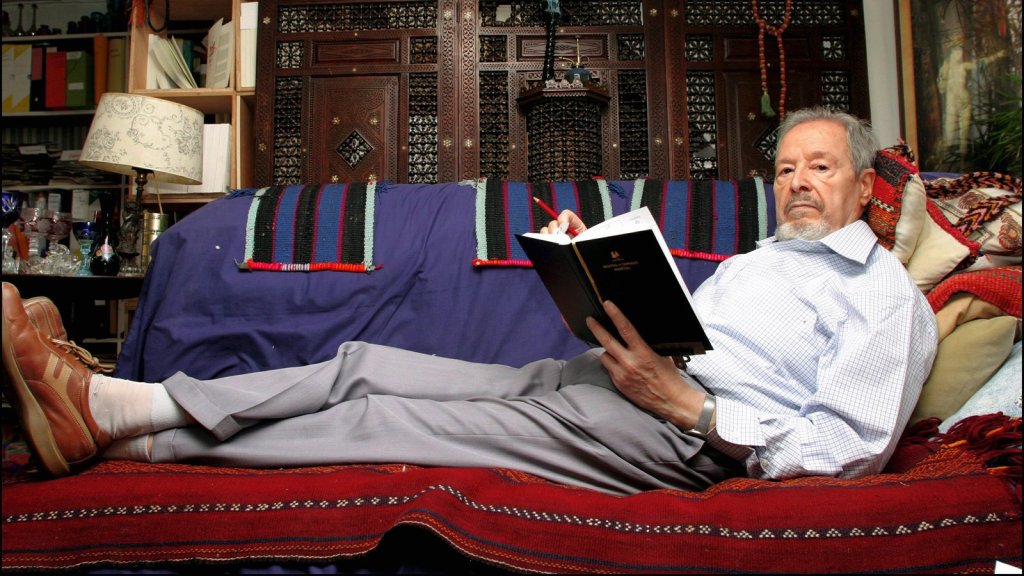
Sartre had a friend, interlocutor, and fellow intellectual, in Albert Memmi. Like Sartre, he was a French-inflected socialist. But, unlike Sartre, Memmi was a Jew. Born in Tunisia in 1920 to a poor Jewish family, Memmi became a leading thinker, and a revolutionary in Tunisia’s war for independence. Sartre admired Memmi, and brought his anticolonial writings to a European audience.

In response, Memmi wrote “Portrait of a Jew,” and its follow-up, “The Liberation of the Jew.” Memmi was able to describe first-hand experiences of antisemitism on two continents. His personal struggles with prejudice elucidated very clearly why Jews would not want to assimilate into Christian France, even in the classless society Sartre imagined. Centuries of racism and religious discrimination showed him that neither Christianity nor Frenchness offered much hope for Jewish emancipation.

More interestingly, Memmi decided to answer for himself the question, “does the Jew exist?” For Memmi, the answer was a resounding “yes.” Jews exist, and, contra Sartre, have our own history, culture, and civilisation. Yes, that has been created in response to antisemitism, but also in spite of it. Jews were constantly creating our own culture.

Jewishness, said Memmi, was what Jews decided to create in each generation, and could be constantly remade, as part of Jews’ engagement with their own heritage. For Memmi, if antisemitism did not exist, Jews still would. Even if, as many Bolsheviks imagined, the world could be freed of superstitious religion, the Jewish national culture would carry on, and thrive in new ways.

So, antisemitism may create the Jewish condition, but it was the Jews who created Jewishness. We were the authors of our history.

After the service, we will hear from Rachel Shabi, as she talks to us about antisemitism and its challenges. Her thoughts are prescient, and we should pay close attention to them. We need to understand antisemitism, where it comes from, and how to combat it.

Yet we must remember that studying antisemitism can only tell us about antisemites. It cannot teach us about Jews. 

Jews make Jews. We decide who we are. Through our love of our heritage and community, we build up Judaism, and we make it what it should be.

So, when we talk to the younger people in our communities, we cannot let their identities be formed by fear of antisemitism. 

We must tell them why we have chosen to keep on being Jewish, and give them good reasons to keep it up too. Whether raised Jewish, converted, or affirmed, all of us have chosen being Jewish, and for good reasons that are bound up in love, not defined by hate.

Tell them about your favourite recipes and the best of Jewish songs. Show them Jewish art and take them to Jewish plays. Celebrate the festivals with them because you truly want to bring them to life. Mourn and fast with them because it is filled with meaning.

Teach them that God has given us a sacred task on earth; that we exist in this world to perfect it. That everything we do can light up divine sparks. That we are called upon to unify all that exists with its Creator.

Bless them with the words that Jacob actually spoke, and say:

“May the God before whom my grandfather Abraham and my father, Isaac, walked—
the God who has been my shepherd all my life, to this very day, the Angel who has redeemed me from all harm. May the Eternal One bless these children. May they preserve my name and the names of Abraham and Isaac. And may their descendants multiply greatly throughout the earth.”
Albert Memmi

israel · sermon

The nation is (not) at war


Fifteen years ago, the Nigerian author Chimamanda Ngozi Adichie gave a powerful speech, in which she warned about “the danger of the single story.” This, she says, is how you create a single story: “show a people as one thing, as only one thing, over and over again, and that is what they become.”

Because of the single story told about Africa, Westerners knew it only as backwards, poor, and disease-ridden. They did not know how diverse, interesting and resilient Africans were. They did not know that Africans were not, in fact, one people with one story, but billions of people with billions of stories.

She warns her listeners: “The consequence of the single story is this: It robs people of dignity. It makes our recognition of our equal humanity difficult. It emphasises how we are different rather than how we are similar.”

In the book of Joshua, we are presented with a single story about the Israelites and their enemies. In our haftarah, Joshua gathers the tribes of Israel at Shchem and presents his account of the conquest of Canaan. He declares:


You crossed the Jordan and came to Jericho. The citizens of Jericho fought against you, as did also the Amorites, Perizzites, Canaanites, Hittites, Girgashites, Hivites and Jebusites, but I gave them into your hands. I sent the hornet ahead of you, which drove them out before you—also the two Amorite kings. You did not do it with your own sword and bow. So I gave you a land on which you did not toil and cities you did not build; and you live in them and eat from vineyards and olive groves that you did not plant.

In Joshua’s single story, the Israelites are a nation united at war. They all came over at once and went to conquer the land of Canaan. Their enemies were diverse in name but unified in mission. In the list of warring tribes that came up against the Israelites, there is no distinction. Every one of them fought the Israelites. Every one of them lost. By God’s miraculous deeds, the Israelites took over the entire country, and now they have a whole land, ready-made, for them to inhabit.

But wait. There is a flaw with this single story. Just as Joshua decrees that the entirety of these foreign nations has been wiped out, he also warns the Israelites not to mix with them.

All of these other tribes have been completely driven out of the land of Israel; all of them have been vanquished; now the only people left are the Israelites.

But even though the Israelites are the only people remaining, you must not marry the others; or get involved in their cultural practices; or go to their shrines with them and worship their gods.

The Jewish bible scholar, Rachel Havrelock, has written a book looking at why this contradiction is so stark. She suggests that, while the Book of Joshua would love to tell a single story of unanimous military victory, it cannot get away from what the people see with their own eyes.

In reality, all the nations that the Israelites “drove out” are still there. The Israelites are still meeting them, marrying them, striking deals with them, and fraternising with them.

Joshua is putting together the war story as a national myth to bring the people together. In his story, the Israelites must be one people and so must all their enemies. Victory must be total and war must be the only way.

In fact, Havrelock finds that there are lots of contradictions in the book of Joshua. It says that the nation was united in war, while also describing all the internal tribal disagreements and all the rebellions against Joshua.

It says that they took over the whole land, but when it lists places, you can clearly see that plenty of the space is contested, and that the borders are shifting all the time. It says they took over Jerusalem, and also says that it remains a divided city to this day.

So what is the reality? Archaeological digs suggest it is very unlikely that the conquest of Canaan ever happened in the way the Book of Joshua describes. The land was not vanquished in one lifetime by a united army. Instead, more likely, the Israelites gradually merged with, struck deals with, and collaborated with, lots of disparate tribes.

They were never really an ethnically homogenous group. They were never really a disciplined military. They were a group of people who gathered together other groups of people over many centuries to unite around a story. Ancient Israel was the product of cooperation and collaboration.

Our Torah takes all the different stories of lots of different tribes and combines them into a single narrative. That is why the Torah reads more like a library of hundreds of folktales than a single spiel.

But a government at war needs a single story. It needs to tell the story that there is only one nation, which has no internal division. It needs to tell the story that there is only one enemy, and that the whole of the enemy is a murderous, barbarous bloc. It needs to insist that the enemy must be destroyed in its entirety. It needs to tell the story that war is the only way.

Reality, however, rarely lives up to the single story that war propaganda would like us to believe.

Over the last few months, we have been bombarded with a single story of war. We are all at war. Not only Israel, but the whole Jewish people. We are all at war until every hostage is freed from Gaza. We are all at war until Hamas is destroyed. We are all at war and there is no other way.

But hidden underneath that story are other stories. Suppressed stories. Stories that suggest Israel may not be united in war.

There is the single story that Gaza must be bombed to release the remaining hostages.

There is another story. Avihai Brodutch was with his family on Kibbutz Kfar Aza on October 7th. He survived. His wife, Hagar, was taken hostage, along with their three children, aged 10, 8 and 4. His whole family and his neighbours were taken hostage.

Only a week later, at 3am, Avihai took a plastic chair and his family dog, and went to launch a one-man protest outside the Israeli military offices. He insisted that blood was on Bibi’s hands for refusing to negotiate. He said that Netanyahu was treating his family as collateral damage in his war. He initiated a rallying cry: “prisoner exchange.”

This has become a demand of Israeli civil society. They will swap Palestinian prisoners for the Israeli hostages. This was achieved, when 240 Palestinian prisoners were swapped in return for 80 Israelis and 30 non-Israelis captive in Gaza.

There are still over 100 hostages in Gaza. There are still around 4,000 Palestinian political prisoners in Israeli jails. Around 1,000 are detained indefinitely without charge. Around 160 are children.

It is simply the right thing that Hamas should release the hostages. It is also simply the right thing that Netanyahu should release the Palestinian prisoners. If they did agree, everyone would be able to return safely to their families. Doesn’t that sound more worth fighting for than war?

There is a single story, promoted by Netanyahu, that Israel must fight until it has destroyed Hamas.

There is another story. Maoz Inon’s parents were both murdered by Hamas on October 7th. As soon as he had finished sitting shiva, he took up his call for peace. All he wanted was an end to the war.

Speaking to American news this week, he said: “A military invasion into Gaza will just make things worse, will just keep this cycle of blood, the cycle of death, the cycle of violence that’s been going for a century.”

His call for peace is echoed by other families of those who lost loved ones on October 7th. They have lobbied, produced videos, and sent letters to Netanyahu, begging to be heard.

Some are desperate for the government to recognise that further death is not what they want. Now, as Netanyahu has killed more than 20,000 Palestinians, their call has still not been heard.

And after all those dead, is Hamas any closer to being destroyed? Of course not. All this bombing does is ensure that a new generation of Palestinians trapped in Gaza will grow up to hate Israel.

This war is how you get more terrorists. It’s how you ensure that war never ends. Wouldn’t it be better to fight for a ceasefire than to fight for a war?

There is a single story that the nation is united in war.

There is another story. This week, 18-year-old Tal Mitnik was sent to military prison in Israel for refusing to fight in the war. Although this news has barely made it into English-language media, many Israelis have expressed their support.

Writing to Haaretz, one refusenik wrote: “I was inside. We were so brainwashed there. I refused and I’m not the only one. I have a family and this is not a war with a clear purpose. […] My children will have a father and I hope yours will too.” Another parent wrote: “My son is also refusing. I will not sacrifice him for Bibi.”

There is another story: that this is Netanyahu’s war, not ours.

There is another story: that war is not the answer.

There is another story: that every captive must go free.

There is another story: that all bombs and rockets must end.

There is another story: that we will not give licence to any more bloodshed.

There is a story that the nation is at war. In times of war, the government must tell that as the only story, to blot out alternative stories, to ensure that war is the only way.

But there are other stories. And, if we tell those other stories, there will be other ways.

Shabbat shalom.

debate · israel

We are not going to agree about Israel.

It is a blessing in synagogue life when rabbis really get on with each other, and I am so lucky that Rabbi Jordan and I do. We drop in and out of each other’s offices, check in on how the other is doing, and always look for ways to support each other.

And we don’t agree about Israel.

We don’t agree, and we’re not going to. That’s OK. That’s good. It means we can have real conversations. It means when we need to make decisions or work out our thoughts, we can bounce ideas off each other as critical friends. 

Last week, after a discussion on Zionism, he did what he often does, and left an earmarked book on my desk. The book, edited by Rabbi Larry Englander, is called ‘The Fragile Dialogue.’ It includes various reflections on Israel. 

The chapter Jordan highlighted was by a self-proclaimed TwentySomething Congregant. In a heartfelt letter to her rabbi, she pleads not be excluded from her synagogue because of her views on Israel. She speaks on behalf of her generation, which opposes occupation and supports boycotts. She begs that she, and the rest of the Jews of her generation, will not be cut off from their own communities.

The letter highlights something many of us already know but struggle to articulate: the debates around Israel and Zionism are largely generational. 

These differences were visibly lived out last week at a funeral. The great Israeli singer and poet, Yehonatan Geffen, died. He had been a cultural icon, associated with the songs of Israeli childhood. 

In three generations of his family, you can see the wildly different approaches to Israel. 

Yehonatan Geffen’s uncle was Moshe Dayan, a fierce Israeli military chief famed for his eyepatch and hard right attitudes. He had been a combatant in Haganah, the guerilla army that founded Israel, led the IDF, and gone on to become a politician. 

As far as he was concerned, the Holocaust left only one imperative: to conquer and settle the land and become so strong that Jews could never be hurt again. He pledged to blot out Palestine, and respond to hate with greater hate. He was a true hawk.

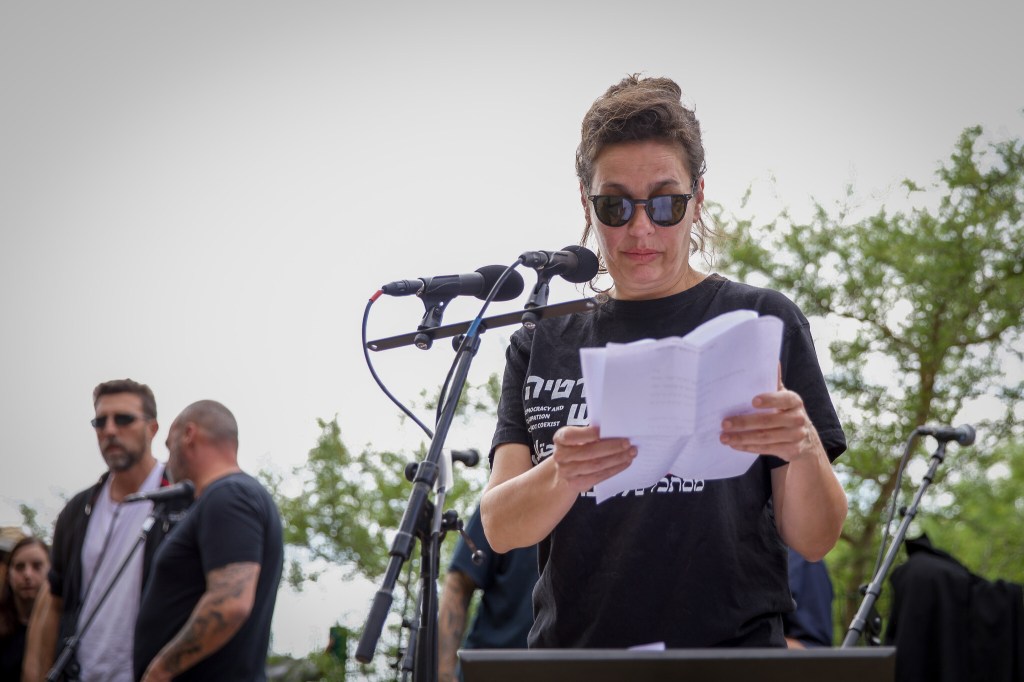
Fast forward to the funeral of his nephew. The mourners arrived wearing shirts that carried the slogan: אין דמוקרטיה עם כבוש – there is no democracy with occupation.

Yehonatan’s daughter, Shira Geffen, wore this slogan as she gave the hesped. 

This slogan argues that Israelis cannot protest Netanyahu’s anti-democratic measures while ignoring the millions of Palestinians denied basic democratic rights to vote, freely assemble, and even walk to their homes without facing checkpoints and guns. 

The t-shirts are produced by מסתכלים לכבוש בעיניים – an Israeli left organisation who insist on looking the occupation in the eye. They speak out about what they call “the power relations between the coloniser and the colonised,” urging the public to see how the occupation is destroying the dignity of Palestinians and the humanity of Israelis.

Sandwiched in the middle between these generations was the man they mourned, Yehonatan Geffen. He had been part of Israel’s cultural establishment, and a true icon. He was associated with what many Israelis saw as the best in their culture. One of his eulogisers was the centre-right politician Yair Lapid.

Geffen was also an outspoken peace campaigner. He wrote extensive criticisms of the army. In 2018, he wrote lyrics in praise of the Palestinian child protester, Ahed Tamimi, resulting in him being cancelled on Israeli military radio and censured by government officials. 

Within one family, within one century, you can see such a huge diversity of Jewish views.

They do not agree about Israel. They will not agree. But they prayed together. They came together to say kaddish and mourning prayers. They joined each other as a family.

Of course, these differences of opinion on Israel are not just generations-based. I know anti-occupation activists in their 80s and I know pro-settlement campaigners in their teens. Nevertheless, what we have seen of Israel in our formative years is decisive.

I belong to Shira’s generation, and one of my most formative memories of Israel was witnessing the inexcusable assault on Gaza in 2009: Operation Cast Lead.

During the commemorations of Yom HaAtzmaut last week, I could not hide my discomfort. I find prayers for a state tantamount to idolatry, and when I hear blessings for troops, I can only think of those priests who poured holy water onto bombs. I do not see how one can pray for peace while praising the instruments of war.

Yet I understand why, for many in this community, honouring Israeli independence and those who fought for it feels like an important undertaking. 

Some of you belong to the generation that came just after the Shoah. The memories of genocide and antisemitism still loom, and it is understandable that you should want to know there is some security against that. For you, defending Israel matters.

Others of you came up in the generation of Peace Now. You believed in Israel and its mission, and held onto its constitutional claims of what it would be: a safe haven for all its peoples. You hoped, even campaigned, for an Israel where Jewish culture could thrive while Palestinian minorities received justice and human rights. For you, holding on to that dream of what Israel could be matters.

My generation came after. I was born not long before the signing of the Oslo Accords, and came of age as they failed. During my 34 years on this planet, Netanyahu has been Israeli Prime Minister for nearly half of them. I have never known Israel as anything but the aggressor and the occupying power. 

Based on our ages and experiences, we will have different views. If we cannot have disagreements about Israel, we cannot have an intergenerational community.

We will not agree about Israel. And that’s fine. That’s good.

Rabbinic literature prizes disagreement. One of my heroes in the Talmud is Rabbi Eliezer. He stood solidly by his principles, no matter how unpopular they were. It’s not that I agree with Eliezer’s principles: he was a conservative surrounded by liberals and radicals. It’s the fact that he held fast to what he believed.

He was so strict in his adherence to religious law that the other rabbis eventually excommunicated him. They wouldn’t talk to him unless he recanted his views, and he never did. Only at the end of his life did his students and colleagues realise what an error they had made by cutting him out. 

They placed him in the Mishnah, the foundational Jewish text, as one of its most-cited rabbis. Even though they completely disagreed with him, you can find his opinions everywhere.

The Maharasha says the reason for this is for future generations. While one position may be minority at one time, it may become majority, and those who follow will need to know what they rest on. Even if they never agree with it, they need to see how the conclusions they support were reached.

This is why we welcome disagreements: for the sake of intergenerational conversation. 

For those growing up now, they are entering a polarised and febrile environment. 

Future generations will develop their own politics, and find their own relationships to Israel, Zionism, and the occupation. 

And I hope they can do so within the synagogue. 

I hope they will find an environment that embraces Zionists, non-Zionists and anti-Zionists. I hope they will find communities that do not impose red lines that keep them out.  I worry that the TwentySomething writing to her rabbi will be proven right, and synagogues will become platforms for single positions on Israel.

What then? Will we split into Zionist and anti-Zionist shuls? Will we keep splitting further, based on varying different policy proposals for what should happen in the Middle East? Those aren’t synagogues – those are political parties!

Such divisions have pulled apart Reform communities before. In the period prior to World War II, Zionists were forbidden from studying at Hebrew Union College, the Reform Rabbinical school in America. This meant that for nearly a century you could not be a Zionist and become a Reform rabbi. One early Reform Zionist, Maurice Perlzweig, said that professing his views in polite Jewish company was like admitting to being a member of the Flat Earth Society.

At the turn of the century, the Reform Movement completely reversed its position. The 1997 Miami Platform declared that Reform Judaism was unequivocally Zionist. It said that Jews were a people; that we should all move to Israel and build it up. Ensuing from that came a programme parallel to the early push to exclude Zionists from the Jewish community, but this time, flipped: to exclude critical voices from the Jewish community and maintain only a pro-Israel consensus.

Is this really what we want? Do we want to keep going back and forth drawing new lines depending on which position has the upper hand? Do we want to enforce conformity of political views in Reform congregations?

Surely what we stand for is bigger than that! Surely our Judaism, our God, our people is bigger than that! 

The joy of a synagogue is that it brings together so many different people. Where else are you going to find people of different backgrounds, classes, genders, abilities, beliefs, and ethnicities, all under one roof, bound together by something greater than themselves? Only the synagogue – greek for beit knesset  – the House of Gathering – can achieve that. 

We are not going to convince each other of our political opinions, and that’s fine. That’s good. If we have a space filled with diverse views, we have a community. If you have uniformity, you have an echo chamber.

We are Reform because we understand that the Jews of tomorrow will not look like the Jews of yesterday. The Judaism of tomorrow will not look like the Judaism of yesterday. Reform Judaism is an ongoing commitment to learn and struggle and grow, always adapting to new ideas and developments. That is what makes it Reform.

And what makes it Jewish is that we do it together. We hold on to belief in the same God, the same cause, the same traditions. We hold all the manifold opinions of the congregation in a single setting.

So, let us answer the question posed in Larry Englander’s book: will this TwentySomething be excluded from her synagogue? 

More pressingly, will she have a home in ours

The answer depends on how we act. If we draw red lines and kick people out based on their views; if we define our Judaism solely by its relationship to Israel; if we make public policies about the synagogue’s stance, then, no. She probably will not.

On the other hand, we can model an alternative Jewish future. A better Jewish future. A Jewish future where we don’t repeat the mistakes and have the same regrets as the framers of the Mishnah. A Jewish future based on plurality and discussion.  We can demonstrate through our relationships with each other and the synagogue that Judaism is diverse, creative and engaging across divisions. 

We can show that we do not have to agree. Even about Israel. 

Shabbat shalom.

israel · protest · sermon

Not in our name

This week, Israel went to the polls, electing its most far right government yet. Netanyahu is set to return to power, and take control of the legislature to stop them prosecuting him on corruption charges.

To secure power, he has allied himself with extremist religious nationalists, Bezalel Smotrich and Itamar Ben Gvir. They are unabashed racists, who are explicitly opposed to Reform Judaism.

Their whole ideology is about securing an ethnically Jewish majority, by deploying military means against the Palestinians, preventing mixed marriages, and expanding the borders as far as they will go.

They want to make sure all Jews are reproducing to win their demographic war, so promote institutionalised sexism and homophobia. In particular, Smotrich wants to ban abortions, bring back conversion therapy, stop trans access to healthcare, and ban gay men from donating blood.

In the preceding weeks, Jewish News warned that this was not an Israel British Jews would want to see. Many quarters have expressed great alarm at the election results.

In fact, this is not so new or surprising. There was a time when Naftali Bennet, also a religious nationalist, was considered the most far right voice in Israel. He has now spent the last year as Prime Minister, ruling on a supposedly moderate ticket, mostly because of how far right the rest of the religious nationalist movement has become.

It is not simply that they are bigots. It is not just that they loathe me and everything I stand for. On that front, the feeling is very much mutual. It is that they have twisted Judaism into a bellicose hate cult.

You can find them rioting through East Jerusalem, terrorising the Palestinians to scare them out of their homes.

You can see them expanding into new settlements, throwing people out of their family homes.

You can hear them singing at the Western Wall that they will violently wreak vengeance on the Palestinians.

And, of course, you can find them in the Knesset, the Israeli Parliament, passing laws. Their most recent triumphs are declaring that Israel is only a state for the Jews and that Arabic is not a recognised language; and defending settler violence in the West Bank.

All this, they say, is to defend the Jewish people.

Perhaps, we might concede that they and their friends are stronger because they have the full might of a large army behind them. If that is their definition of Jewish defence, fine.

But it has nothing to do with defending Judaism. Their so-called Judaism is based on perverse, anti-rabbinical readings of religious texts. They see the whole of the Jewish tradition and history as a summons to colonise the entirety of David’s historic kingdom and annihilate anyone who stands in their way.

They do so in our name. And in the name of our Torah.

While the general thrust of our religious text is towards peace and justice, there is more war in the Torah than you might expect. The Torah is, after all, an ancient Near Eastern text, from a time when emergent states and nascent empires were locked in near-constant battles for territories and resources.

This week’s parashah is a prime example. Lech Lecha dedicates an entire chapter to a fantastical description of war.

Abraham enters a military pact to defeat the armies led by Kedorlaomer. Often called “The War of the Nine Kings,” the chapter includes descriptions of alliances, rebellions, military campaigns, and looting the spoils of war.

If you are hearing this story for the first time, you are not alone. We often skirt over it in favour of the more elevating sections of this week’s reading.

It’s not just our very polite sensibilities as British Reform Jews. In general, the rabbinic tradition as we know it, has downplayed the Torah’s violence, or reinterpreted it to be about more moral topics.

Judaism as we know it was born out of abortive wars and failed uprisings, so our rabbinic progenitors went to great lengths to caution against war and violence. In practice, Judaism has been pacifist, if only out of pragmatism, rather than principle.

The preceding periods, in which pre-rabbinic Jews did have military power, were pretty horrific. The Second Temple period, under the Hasmonean Dynasty, saw brutal repression of any deviation from official state religion. Its leaders were corrupt, seeking to control every part of legislative and economic life. They were tyrannical.

When our rabbis rebuilt Judaism out of the ashes of the destruction of the Temple, they wanted to introduce necessary correctives to historic fundamentalism. They sought to create a Judaism that would be ethical, based in the grassroots, committed to diversity, and, above all, peaceful.

So, our tradition opted to understand the Torah’s violent exhortations differently. The rabbis understood the calls to massacre entire nations as personal struggles to blot out the violent parts of ourselves.

In our parashah, they understood the text not as a summons to war, but to faith. They read Abraham’s conquests as a moral message about the importance of trusting in God. When the King of Sodom offers Abraham spoils of war and he refuses, our rabbis interpret this not as a rebuttal of a future military alliance, but as Abraham saying that real riches come from God in the form of blessings.

This moral and peaceful hermeneutic became the foundation of Judaism.

All that changed in the 19th Century, with the emergence of the religious nationalists. For them, the Torah was not a moral handbook, but a military one.

They were inspired by Christian fundamentalists who wanted to see a world-ending war. Still now, those evangelicals are their primary financial backers.

When they read our parashah, they treat it as a call to arms. “Lech lecha” is not, for them, a moral command to follow God, but a political one to move to Israel. The wars are not stories of an ancient civilisation, but justifications for military violence today.

When they read biblical mandates to massacre nations, they take them literally. They imagine that they are divinely mandated to enact genocide.

This is not a fringe group on the margins of Israeli politics. This is the Israeli government, and it has been for decades.

This is not an aberration in Israeli politics. It is the trajectory the country has been on at least since I was born. The far right have continually dominated, show no sign of abating, and hold every possible government to ransom.

Liberal leaders keep saying that, at some point, when the racism gets too much, they will withdraw their support for Israel, but the day never comes.

At this point, it has to be asked: how far is too far? If Ben Gvir and Smotrich are not too much, what will be? Will there ever be a point at which people are finally willing to draw a line? When will we say that enough is enough? When will we cry out: not in our name?

We do not like to look at the verses in Torah that glamourise war and nationalism. We do not like to look at the news from Israel that does the same.

But, right now, we have to look at it. Because these facts are staring at us. And we can no longer presume to turn away.

When this government imposes its reactionary plans, they will be doing so in our name. In the name of our Torah. We have to stand up and assert that they do not.

The so-called Judaism of the religious nationalists is not ours. We repudiate their racism, their fundamentalism, and their militarism.

We affirm the Judaism of the rabbis and the Reformers – based on ethics, dignity, piety and peace.

We will do everything we can to resist this government’s perversion of Judaism.

Not in our name. Not in the name of our Torah. Not in the name of our God.

Shabbat shalom.

fast · sermon · theology

Tonight, we begin grieving.

Tonight, we begin grieving.

As the sun goes down, I will eat my last meal for 25 hours. I won’t bathe or shave or change. I’ll probably read a book, or some poetry, and contemplate what it means to be destroyed.

Tonight, the fast of Tisha bAv begins. It commemorates every disaster that has befallen the Jewish people. If we were to dwell on every time we had been injured, our year would be non-stop suffering. We would never have time to celebrate. 

So, we compound all our catastrophes onto a single day. Every exile. Every genocide. Every desecration of sacred texts and spaces. Every racist law and every violent uprising. As far as we are concerned, they all happened on this day: on Tisha BAv.

It is a day of immense profundity. The tunes are haunting. The texts are harrowing. It is the hardest fast of the year, taking place in the heat of summer, with long days and disturbing topics. 

For years, I marked this fast alone. Very few Progressive Jews wanted to participate. Many Reform and Liberal synagogues don’t mark it at all. I would turn up to Bevis Marks, the centre of Sephardi Jewish life in the city, where cantors from the Netherlands regaled us with their greatest piyyutim. But this occasion attracted so little interest from the people who shared my religious beliefs: the other Progressives. 

Why would they not want to mark it?

The first reason is emotional. It is difficult to sit in misery for a full day. It paints a tragic picture of our past, compounding every struggle we have faced into a single problem, overwrit by centuries of destruction. 

In fact, I think this objection is what really commends Tish bAv. Grieving what’s gone can teach us important lessons. It can put us in touch with our most challenging emotions, like guilt, misery and despair. 

True, if we went around all the time complaining about how difficult Jewish history had been, we would never move on, and we would be bound by a negative self-image. By placing all of Jewish suffering on a single day, we are able to confront atrocities, and engage with them, then move on.

Progressives have also objected to Tish bAv on theological grounds. As Reform Jews, we have no desire to return to the Temple or its sacrifices. We are the heirs to the rabbinic revolution, which rebuilt our entire religion after Jerusalem was destroyed. 

Because of the early rabbis, we became a Diaspora people; replaced animal slaughter with prayer; and substituted hereditary priests for a system in which all Jews could be equals. 

But those rabbis understood something profound. You have to engage with the past in order to progress from it. We cannot just pretend things never happened. 

Our rabbis pored over their ancient texts, repeated their oral traditions, and grappled with the world that had gone before. They may have moved beyond the time of the Temple, but they always referred back to it. They faced their tragedy, and rebuilt their religion.

Perhaps the biggest reason that Tish bAv is not given the respect it’s due is because it has been replaced. Since the Second World War, many Jews now instead mark Yom HaShoah or Holocaust Memorial Day.

This is understandable. The Holocaust was, of course, unprecedented in the scale of slaughter; the degree to which industrial machinery could be dedicated to human suffering; and the gleeful participation of so much of Europe in Jewish extermination. It is absolutely right to mark it and honour so many outrageous deaths.

But these events have their own theology. They teach that Jewish suffering was a thing of the past, now resolved. In the case of Holocaust Memorial Day, the problem has now been solved by the United Nations in international commitments to human rights. 

Yom HaShoah is part of the secular cycle of the Israeli calendar, a week before Yom HaAtzmaut celebrates Israel’s victory in 1948, and a fortnight before Yom Yerushalayim celebrates Israel’s Conquest of Jerusalem in 1968. Yom HaShoah suggests that the answer to Jewish suffering is the state of Israel’s military might.

These may well be the political views of some congregants, but they are not the religious views of rabbinic Judaism. Judaism shies away from simplistic answers to subjugation and refuses to allow genocides to be resolved by slogans. We actually have to engage with the horrors of the Shoah, and to understand that they cannot be explained away. We have to sit with our grief.

Tisha bAv poses an alternative response to our experiences of evil. It tells us to fast and grieve, but, unlike on any other fast, we are to carry on working. We can still do many of the things we would on a normal day. Our world is upended, but we must keep going. 

The idea of Tish bAv is that we can face destruction and, through faith and community, nevertheless survive. We can still hold onto our God and our values. Even while we are being destroyed, we are able to rebuild.

Consider how Reform Jews of the past responded to the Shoah in the 20th Century. While in the camps, Rabbi Leo Baeck preached Torah beside waste heaps. When he was liberated from Theresienstadt, he immediately published a work of optimistic theology, expressing his hope of Judaism’s continuity. Think of Rabbi Albert Friedlander, who, having escaped the Nazis, spent the post-war years establishing synagogues and saving scrolls so that our religion could be preserved. Their lives are a testament to Jewish hope in the face of despair.

That is the story told by Tisha bAv. That, yes, we have suffered, but we have also survived. We have refused to let Judaism be extinguished. Into every generation, we have passed on our values and our faith. We have always found ways to rebuild. Tish bAv teaches us that we may always suffer, but that we have also always carried on. 

So, tonight, we begin grieving. I hope you will join me at ELELS for our ECAMPS service to mark this important fast. We will read poetry, hear the chanting of the Megillah, and reflect on the tragedies of destroyed cities and vanquished people. And, through this sorrow, we will learn again the strength and creativity of our people. We will remember all those who have kept this Judaism alive.

Tonight, we begin grieving. Tomorrow night, we will begin rebuilding.

Shabbat shalom.

debate · israel · sermon

The end of the two state solution

In 1982, Rabbi David Goldberg, z”l, gave a sermon so controversial that half the congregation at the Liberal Jewish Synagogue stormed out. The other half stuck around for the rest of it just to make sure they disagreed.

I have no way of knowing whether this was strictly true, but it is certainly plausible. It is most believable because, even though I haven’t yet mentioned the word, you already know which topic would elicit such a reaction. 

Israel. Of course it is Israel. It is a topic so contentious that friends and families have refused to speak to each other over it. As a result, although I do have strong views on the matter, I have so far managed to go three years without preaching on it. I have been strongly tempted to do the same thing today and just speak about the Torah portion, but I feel that I cannot do so this week.

What has happened in Israeli politics in the last two weeks will likely fundamentally change the way that Diaspora Jewry will engage with the country. Already every major Jewish communal body has released a statement, some of which I know have been circulated among members of this community. It would be a cowardly dereliction of duty if I did not comment. 

If you are surprised by the gravity of what I’m saying, it’s not because you’ve missed anything. There is no new president or prime minister. No new war, no withdrawal, no peace treaty, no assassination. What has happened is really the result of bureaucratic decision making at the end of another stalemate election. But its result is that the fabled two-state solution to the conflict between Israelis and Palestinians is now impossible.

Previously, sitting Israeli prime minister Benjamin Netanyahu announced that if he won the next general election, he would annex the Jordan Valley. In the last year, there have been three elections, each resulting in impossibly hung parliaments, but it looks like Bibi has now secured the majority to pursue his agenda. 

As such, he will now go through with his plan for annexation, supported by the smaller right wing parties in the Knesset. That means that the entire Jordan Valley will become formally part of Israel. There will remain isolated enclaves of Palestinian towns in the West Bank and Gaza, but what remains of Palestinian territory will never form a viable state.

For most Palestinians, this won’t mean much of a change to their daily lives. For some time now, West Bank Palestinians have lived under Israeli rule. Although able to elect representatives to the Palestinian Authority, Israel has maintained control over the military, borders and economy. Israeli control will become tighter and more far-reaching, but annexation will only formalise a policy that has been in place since at least 2005.

Nor will it make a difference to most Israelis. With official backing from Donald Trump and the United States, an international military backlash is unlikely. It is already the case that few Israelis live east of Jerusalem. For those who do live in settlements, their private security will likely be supplemented by state army support. 

There will, however, be a shift in Israel’s relationship with its Jewish diaspora, especially among progressives. Most Jews in Britain do consider themselves connected to Israel, but want a just peace, even if it means giving up land or power. For decades, Diaspora Jewish support for Israel has been contingent on the possibility of a peaceful solution that involved a Palestinian state alongside Israel.

With Israel’s proposed annexation, a Palestinian state will now become formally impossible. I suspect that the two state solution has not been truly viable for some time. But if the door was closed before, it is now being locked.

In response to these unfolding events, Rabbi Lea Muhlstein of the Liberal Zionist group Artzeinu released a statement insisting that the two state solution was still possible.  I am afraid I do not see how. Most efforts to defend the viability of the two state solution seem more concerned with reassuring Diaspora Jewry than with grappling with the conditions on the ground. 

Diaspora Jewry is, however, not reassured, and the British community has seen considerable fallout. The President of the Board of Deputies, Marie van der Zyl, urged communal unity as representatives from StandWithUs, Habonim Dror and LJY-Netzer wrote to express their opposition.

Even in unlikely quarters, people are lining up to attack Bibi’s decision. Sir Mick Davis, former Treasurer of the Conservative Party, has urged against annexation, saying that it would run contrary to Jewish values.

I think that is right, and that the values that would be contravened are given in precisely this parashah. Moses tells the Israelites: “You shall have one standard for stranger and citizen alike.” (Lev 24:22) Both right and responsibility, privilege and punishment, must be the same for all those living under the same rule.

Annexation will create a situation in which a people is formally and irrevocably governed by a party it did not elect and could not deselect. It will formalise a tiered class system, where Jewish Israelis have full rights, Palestinian citizens of Israel have fewer and West Bank Palestinians have none, while all live in the same space under the same rule. This is unjustifiable. 

Most of the attacks against Bibi’s plans seemed to have focused on belated efforts to salvage the two state solution. As I have made clear, I think that option is already politically defunct. But that does not mean progressives must give up entirely on any hope of a just solution in the Middle East.

One possibility which has so far only been advocated from the political fringes is of enfranchising the Palestinians. It is, strangely, a position that unites both some settlers and Israel’s radical left, but has been considered outside of acceptable political discourse among mainstream Diaspora Jewry until recently.

If Israel is to be a single state from the Mediterranean to the Jordan, let it be a democratic one, where everyone who lives there has full voting rights and representation. The Palestinians should be able to set the political direction of the country just as much as Israelis, if it is indeed to be one country.

The main reason that this has remained a fringe view is that it would certainly mean an end to a Jewish political majority. The Palestinians living in the region almost outnumber the Israelis and could thus theoretically out-vote them. As such, Israel would cease to be a Jewish state, at least in an ethnic sense.

In that sense, a single democratic state could not be considered within the spectrum of Zionist opinion. But I am less concerned by the certainty of an ethnic Jewish majority than I am by the moral standing of the Jewish people. 

If Israel is indeed willing to implement policies tantamount to occupation, segregation and apartheid, and the Diaspora Jewish community does indeed continue to meet such policies with indifference and even support, what will be left of Judaism? Who are Jews if we refuse our God-given task of being a light unto the nations? What are we if we do not meet but exceed the ethical standards our tradition has taught us?

For years, Progressive Zionists have faced a tension between being progressives and being Zionists. Many have managed to hold nuanced aspirations that balanced their desire for peace with their desire for security; their commitment to other Jews with their commitment to all humanity; their belief that Israel could be both Jewish and democratic. That tightrope has now fallen under the weight of the two poles it was balancing, and most Jews will have to choose one or the other. Politically, they will either be Progressives or they will be Zionists.

Given a choice between a Jewish state and Jewish ethics, I will certainly choose the latter. But even then, I do not think that abandoning the idea of Jewish ethnic majority means sacrificing concern for Israelis’ ability to live and thrive where they are now. I believe it is fully possible for Israel to maintain its cultural autonomy and distinctly Jewish character without clinging to an ethnically based majority or to political supremacy.

The third largest grouping in the Israeli Knesset is the Joint List – a coalition of Palestinian and Jewish leftists. They are non-Zionists who hope for joint political power between Israelis and Palestinians. 

Their leader is Ayman Odeh, a lawyer from Haifa. He has now become the de factol opposition leader as Gantz goes into coalition with Bibi. In 2015, in his maiden speech before the Israeli Parliament, he shared his vision for the country:

The year is 2025, the 10-year plan to combat racism and inequality has borne fruit. Hundreds of thousands Arab employees have been integrated into the private sector, the high-tech economy and the public service.

The social gaps between Arab and Jewish citizens have been reduced remarkably and the economy has been prosperous for the benefit of all residents.

Jews are learning Arabic, Arabs are diligently honing their Hebrew skills. Jewish and Arab students are being introduced to the great thinkers and philosophers of both peoples.

His vision has become my vision. That aspiration for a just, peaceful and shared country chimes more with my idea of what would constitute a Jewish state than one based on racial ideas of citizenship or Orthodox ideas of laws. 

I hope that, as you wrestle with the tensions that will be drawn out over the coming weeks and years, others will be able to support that dream.

Of course, many will not. Despite the calls for unity, I think this is more a time for diversity. A collapse in political consensus need not mean fallout of the Diaspora Jewish community, but could mean a flourishing of new ideas and renewed conversations. We now have a true opportunity to intellectually engage each other about what Israel’s future will be and how we will relate to it.

If nothing else, I hope that at least less than half of you will storm out in anger.

Shabbat shalom.

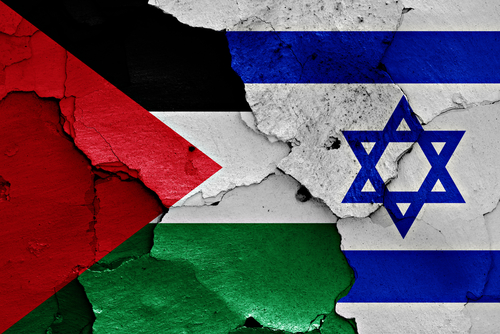
israel palestine flags

I gave this sermon over Zoom on Saturday 9th May 2020 (Parashat Emor) for Three Counties Liberal Judaism. I am especially grateful to Tal Janner-Klausner, for being my political tour guide of Israel-Palestine, and for all their help with editing this sermon.

high holy days · sermon

Bring on the broigus

It’s never a boring time to be a Jew.

The life of a Jew is one that is constantly wrapped up in ideas, actions and movements. Centuries of precarious existence, an intimate relationship with texts and an intense struggle with God have implanted in us a restless culture that thirsts after new ideas.

It’s never a boring time to be a Jew, and this year has been no exception.

This week’s readings give an insight into just how important ideas are in our community. We read the stories of three remarkable women and three remarkable births of three remarkable sons. In our Torah portion, Hagar, an Egyptian princess transformed into Abraham’s nomadic handmaid, gives birth to Ishmael, in the stead of her mistress, Sarah. Then Sarah conceives Isaac at the age of 90. In our haftarah, Hannah, an infertile woman, prays so fervently that she gives birth to Samuel. Three unusual births.

These three boys then all suffer a similar fate: they all come close to dying. Isaac, as we know, is taken up Mount Moriah to be sacrificed by his father and ends up bringing about an end to all child sacrifice. Ishmael becomes stranded in the desert with his mother and comes so close to dying of dehydration that his mother considers putting him out of his mystery when the two are saved by a miracle well. Samuel really does die but comes back as a ghost to give advice to the king.

All the figures in these texts are more than just interesting people living interesting lives: they are models of ideas. According to the 15th Century Spanish mystic, Isaac Arama, Sarah is the representative of Jewish Torah, and Hagar of universal philosophy.[1] In the traditions of both religions, Isaac was the founder of Judaism and Ishmael the progenitor of Islam. Hannah is a model of piety and a symbol of how we should all pray. Her son, Samuel, was the archetypal prophet, and the first to establish monarchy in Israel by crowning King David.

Three remarkable women. Three boys conceived in impossible circumstances. Six ideas. Three ideas that nearly died. Six ideas that have come to define our modern world. Throughout our stories these characters sometimes come into conflict. They sometimes try to kill and banish each other. They sometimes come together. So it has been throughout our long history, that complicated and contradictory ideas of philosophy, Torah, piety, power and faith have interacted to do fascinating things.

I spent this summer in Jerusalem, as in previous years, and this time, decided that while I was there, I would try to read up on Jewish ideology. I took copies with me of Rabbi David Goldberg’s book, ‘To the Promised Land: A History of Zionist Thought’, and ‘Revolutionary Yiddishland’, by Alain Brossat and Sylvia Klingberg. These were archetypes of the exciting thought in European Jewry before the Second World War: the first of Jewish nationalism, or Zionism, and the latter of Jewish socialism. Both books reveal an era full of ideas, when Jews were passionate and tenacious enough to imagine every possible utopia. You get the feeling as you read them that anything is possible.

Indeed, it seems that pre-war Europe really was a time when ideas felt alive. Reading biographies of the time, you get the feeling that every street corner and café was abuzz with discussion about who the Jews were and what they could become. On the one hand, there were Bolsheviks, agitating for Jews to throw off their heritage, join the ranks of the working-class and commit themselves to overthrowing capitalism as citizens of the world. There were the Zionists, who maintained that Jews would never be safe or able to flourish until they had their own state. There were assimilationists, who wanted Jews to transform themselves and become loyal citizens of the countries where they lived. There were Bundists, who wanted to see Jewish cultural renewal in the Diaspora as part of a revolutionary overthrow of capitalism.

Out of this great social upheaval came, too, spiritual revival. There were the Orthodox, who insisted that Jews should focus on keeping halachah and not think about moving anywhere until the Messiah came. There were the reformers, the founders of our movement, who felt that Jews should cleave to their God and to the spirit of the prophets, so that they could be a light unto the nations in the Diaspora. These truly were interesting times to be a Jew.

The Nazis extinguished much of that discussion. Not only did they kill the people in their gas chambers, but they also destroyed their ideas. In the aftermath of a genocide, it was hard to believe that the Jews could ever be a light unto the nations. It was hard to believe that Jews could integrate, still less thrive in the Diaspora. It was hard to believe in halachah. It was hard to believe in God. There were certainly great ideologues in the generations after the genocide, but they had to make up in passion what they lacked in number.

When I left this synagogue and went to university, I felt very profoundly the absence of the ideas with which I had been raised here. I left behind here the ideas of community, of ethical mission and of religious hope. I wondered if perhaps those ideas only really belonged in my childhood. Among my Jewish peers, it seemed that one idea remained as the last man standing in post-war Europe: secular nationalism.

The reasons for that are unsurprising: across the whole of British society, the importance of collective religion had slowly declined. So, too, had the trade unions, community centres and political parties that had animated the ideas of public life. Israel, on the other hand, existed, and offered people a sense of security. Publicly supporting it, right or wrong, offered people a sense of purpose. The religious meanings ascribed to statehood, Diaspora and internationalism faded into the background as Anglo-Jewry invested much of its efforts in public advocacy for Israel.

This threatened to become the only manifestation of Jewishness in Britain. So great was the convergence across the movements among Jews in Britain that people had begun to talk about post-denominational Judaism. The great debates of the preceding decades had been laid to rest. Progressive Jews had fought so hard for women’s and LGBT liberation that even the most bigoted conservatives were powerless to resist it. Indeed, this year Britain gained its first Orthodox woman rabbi and only last week the Office of the Chief Rabbi issued a briefing on welcoming LGBT people into synagogues.

As feminism progressed, a consensus emerged in the Jewish community around a progressive, secular, nationalist vision: Jews in Britain would be liberal, atheistic, and attached to the state of Israel. Just as Fukuyama saw the end of history with the collapse of the Berlin Wall, leaving only liberal capitalism, Anglo-Jewry’s ideological debates tailed off, leaving only secular Zionism.

But it’s never a boring time to be a Jew, and this year has proved it. Like Samuel, Isaac and Ishmael, ideas that seemed dead suddenly found new life this year. The whole community has been abuzz with conversation. At Pesach, the leader of the Labour Party, Jeremy Corbyn, attended, Jewdas’s seder. Jewdas, a group that has done amazing things to help me find my own place in the Jewish community, promotes ideas of internationalism, Diasporism and socialism. Corbyn’s attendance opened up anew the questions in our community about antisemitism, our role in the world, and the values we support.

Only a few months later, a group of young Jews, most of whom had grown up in Zionist youth movements, stood in Parliament Square and recited kaddish, the prayer for the dead, over the Palestinians who had been killed in Israel’s attack on Gaza. This simple act of public prayer re-opened old conversations about Jewish religious practice, the significance of halachah, and Anglo-Jewry’s relationship with Israel. They challenged everyone to question what the limits were of liberal Zionism. Ideas that some imagined were buried – of Liberalism, Bundism, Orthodoxy, integrationism and Diasporism – re-emerged from their graves.

In the shock at seeing a consensus broken, some of the initial discourse was less than edifying. Perhaps what caused people to lash out so much was that they hadn’t realised how fragile the apparent consensus was or how safe it had made them feel.  Although hardly part of the mainstream within Anglo-Jewry, I was surprised in myself at how frightened and threatened I felt by the sudden and very public disagreement.

But disagreement need not be a cause for fear. The vitality of diverse ideas is an indication of the strength of feeling within the community. It means that, once again, Jews are wondering how the world can be different. After decades spent recovering from the shock of genocide, we may now be ready to imagine alternative futures and retell the stories of our past.

This year has been one of tumult and change, and we can only expect that the next one will see more of the same. We cannot stop the breakdown of consensus: we can only jump into it and embrace it. Anglo-Jewry is resourceful and resilient enough to have energetic conversations and remain a united community. We shouldn’t shy away from those conversations but should embrace them with whole hearts and open minds.

Ideological disagreement is far better for all of us than staid consensus. Indeed, in the conclusion of Rabbi Goldberg’s book on Zionism, an idea to which he is very sympathetic, he warns that without alternative ideas against which to pit itself, Zionism could become reactionary, conservative and devoid of the ability to be creative. Debate helps us to be imaginative, innovative and dynamic. This coming year presents us with opportunities to be upfront about our values and have real conversations about what God, religion, ethics, Diaspora and homeland really mean to us.

I cannot say definitively what Liberal Judaism’s position will be, or even whether it should have one at all. What excites me about the new culture of debate is that it is open-ended, and none of us know where it will lead. Yet there is one role that progressive Jews have always played, which is needed now more than ever: we need to offer hope.

It’s never a boring time to be a Jew. May the next year be even more interesting.

Shanah tovah.

bund
A poster of the Jewish Labour Bund

[1] Louis Ginzberg, Jewish Folklore, 1955