Everyone changes. People change all the time.
In our Scriptures, the changes are often dramatic.
Avram is an idol worshipper who lives in Mesopotamia, then undergoes complete conversion to monotheism and sets out on foot to a new country. With that, he gets a new name: Abraham.
Sarai is barren then, miraculously, in her old age, conceives a son. God gives her a new name: Sarah.
Jacob is a lying trickster who wrestles with an angel in the wilderness. When his heart has truly changed, he gets a new name: Yisrael.
In fact, in each biblical story, a change of direction, outlook, and often name, are the key points of the narrative.
So, what about our Rosh Hashanah reading? Who is it that changes there?
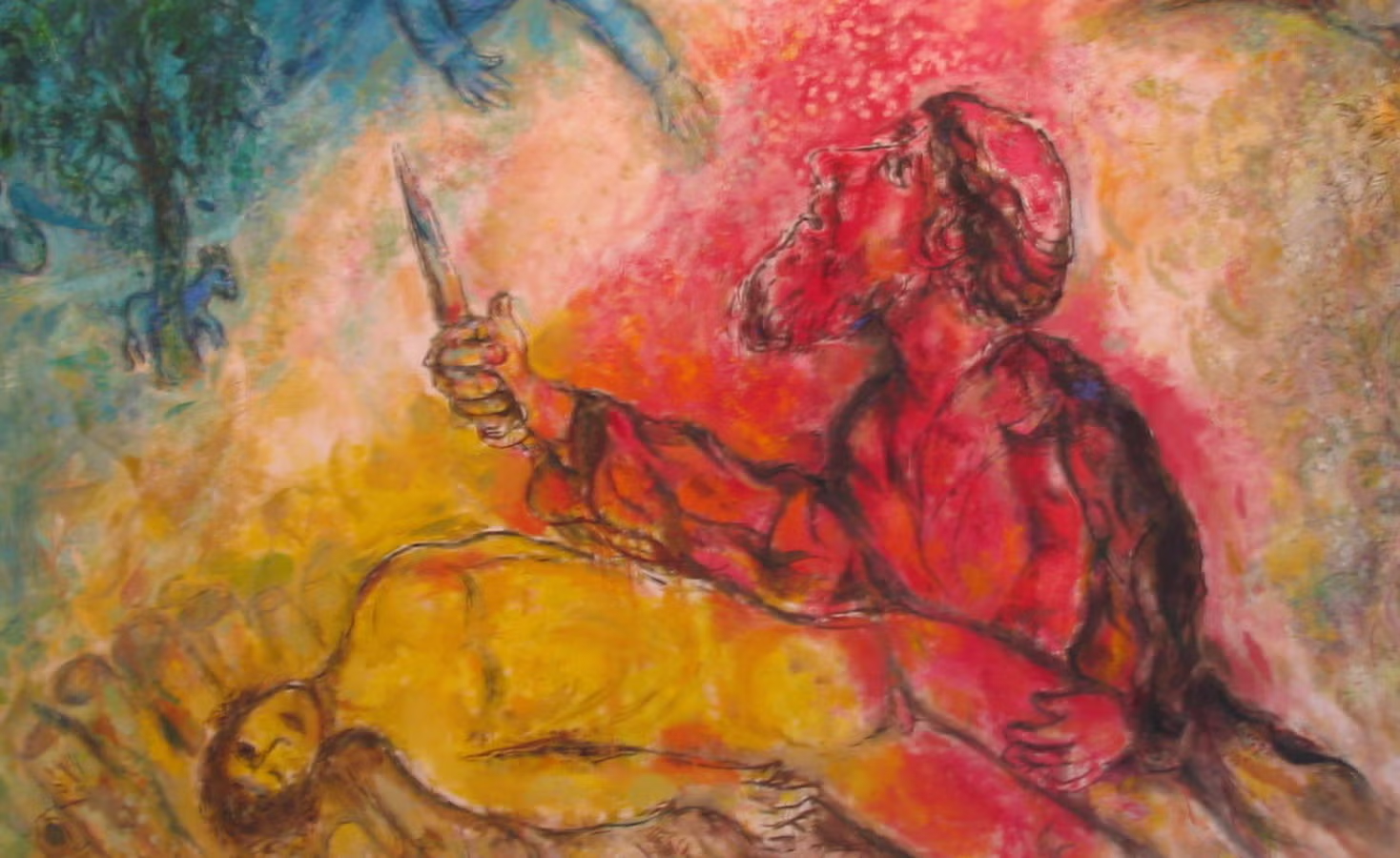
In the Aqeidah, our Torah reading for the new year, Abraham is called upon to climb a mountain and sacrifice his son.
We know nothing about Sarah, who is largely kept out of the story. We don’t know anything of how Isaac feels about this, since he stops talking once he realises what his dad could do to him.
Abraham is remarkably unchanged. At the bottom of the mountain, he is willing to do whatever God says. At the top, God says Abraham is no longer required to sacrifice his son, and to sacrifice the ram instead. At the top of the mountain, Abraham still just does whatever God says.
But there is a character who really changes in this story: God.
God begins the narrative as zealous and demanding of human sacrifice. God ends the story compassionate and eager to enter into meaningful relationships. God begins by effectively threatening to blot out all of Abraham’s children, then ends by promising Abraham as many descendants as stars in the sky.
And, yes, God undergoes a change of name. Through the whole of the story, God is called Elohim, a name associated with strict justice and universal truth. At the very end, God is revealed by a new name – יהוה – Adonai, a name associated with the close personal relationship God has with every human being.
In this story, the character who undergoes the greatest change is God.
Even God, the Creator of the world, the Almighty and All-Powerful, can transform. The Holy One, who by nature is completely eternal, can shift from being strict and distant to close and loving.
So, if even God can change, why can’t you?
In our Talmud, the rabbis introduce us to the idea that we are supposed to imitate God.
Rabbi Hama baRabbi Hanina teaches: be like God. Just as God clothed Adam, you will care for the poor. Just as God visited Abraham when he was unwell, you will visit the sick in your community. Just as God consoled Isaac over the death of his father Abraham, you will comfort the mourners. Just as God buried Moses, you will inter the dead.
God shows us a model of how we ought to live. Like God, we are supposed to be compassionate, loving, kind, morally clear, and doing justice in the world.
But more than that. Like God, we are supposed to change.
Here, at Rosh Hashanah, we learn: just as God can change, so can we.
We are made in God’s image. At the start of each year, we read a story where our Creator transforms. So we know that we can change too.
We can face our fast-shifting world. We can rise to the challenge of our changing community. We can look inside ourselves and love our own souls a little more.
Blessed are You, Eternal One our God, who gives us the power to change.
 Sim Lev