high holy days · judaism · sermon

It is time to tell a different story about ourselves

It is time to tell a different story about ourselves.

We are writing a story about our lives right now.

On Rosh Hashanah, our story is written. On Yom Kippur, the story is sealed.

What, then, are we doing today? 

This morning, we are editing. We are looking over our story and choosing what to keep and what to discard. What to highlight and what to relegate to the footnotes.

Of course, we cannot change the events of our past, but we can decide what they mean. In writing our story today, we choose what role we played in the narrative of our own lives. 

When you tell this story, are you a victim, or a villain? A saviour or a sinner? 

Look at your mistakes. The way you tell your story will help you decide whether they were a defining part of your personality, or whether they were opportunities you took to learn and grow. 

Look at your suffering. Others have hurt you. You need to tell your own story of what that pain means. You need to decide if your suffering is the sum of your life, or if it is something you overcome. 

You are writing the story of your life right now. Be careful how you tell it.

In our Mishnah, Rabbi Yehudah HaNasi teaches: “Apply your mind to three things and you will not come into the clutches of sin: Know that there is above you: an eye that sees, an ear that hears, and all your deeds are written in a book.”

But here is what the Mishnah does not tell us:

The eye that sees can see more perspectives than we can.

The ear that listens knows all hearts in ways we do not.

And, most importantly, the book is constantly being edited and re-written.

We are always re-writing the Book of Life with our God, and that means we have the power to shape our story.

We cannot imagine that God’s eyes and ears are anything like ours, or that God writes a book the way we would. The story that an Infinite Being has to tell about you must be incomprehensible from your perspective. 

When we tell ourselves our story, we are biased, seeing only our perspective. Our narrative is partial, not knowing what others really feel.  Our account is unreliable, because we tell it to fit the character we have already made of ourselves. 

God, on the other hand, sees not just what we did, but what we hoped to do. God says to the prophet Samuel: “I do not see as human beings see; human beings see only what is visible, but I see into the heart.”

God instructs the Prophet Isaiah: “Whenever anyone turns back to Me for pardon, I freely forgive, for as the heavens are high above the earth, so are My ways high above your ways, and My plans above your plans.” 

God is able to see errors in ways we cannot. And God can understand our pain in a context that is beyond us.

This is because God is telling a different story about you to your own.

In God’s plan, you are the main character. Of course, so is everyone else. 

But that is because God has written a great novel where every creature has a vital role to play. No character could be introduced if they did not have a role in the great unfolding tale that progresses towards goodness’s triumph over evil.

So, today, look at the manuscript of your life. Decide what you want to focus on. Tell yourself stories of gratitude and joy. Consider the events that have given you pride and a sense of accomplishment. 

Look, too, at the stories in your life that are hard. Re-tell the stories of where you have been hurt, and decide for yourself what meaning you take from them.

Re-examine the stories of when you have hurt others, and decide what changes these will bring for you when you enter your next chapter.

In this way, you can take control over the story of your life. 

You cannot change what happened, but you can decide what it means. 

Only you can decide how your story ends.

Treat God as your co-editor, rather than as the author of your destiny.

For some of you, the story I have told so far is too wrapped up in religious language. You cannot get on board with all this God-talk, and the quotations from Scripture prove nothing. 

Let us turn, then, to the science of psychology. 

Over many decades, psychologists have experimented with what makes for a good life. We now have more data than ever about how people forgive. We understand a great deal more about how to overcome trauma. And we know what motivates people to live better lives.

I am going to assume that, if you are here on Yom Kippur, you came because you want to let go of some past hurt, to repent of things you have done wrong, and to live a more fulfilling life.

The Scriptures tell us how to do this, but the language they use may feel too alien to the modern mind. The sciences, however, can corroborate the same claims.

Dr Fred Luskin runs the Stamford University forgiveness project. His team has researched the best methods to help people overcome their grudges and live more fulfilling lives. 

He has tried out his techniques for helping hundreds of people forgive, including in the most extreme cases, like mothers whose children were killed in sectarian violence.

His book, Forgive for Good, is an accessible version of his research.

Dr Luskin teaches that our inability to forgive comes when we tell ourselves a “grievance narrative.” 

You may have such a story yourself. If you keep coming back to an event in your life where you were wronged and replaying it, you may be stuck on recalling a past hurt. If, in this story, there is a clear villain, and you are a helpless victim, the chances are you have a grievance narrative.

Don’t worry, you’re not alone. Many people do. 

I began reading Dr Luskin’s book out of academic curiosity, but soon found I was noticing my own grievance narratives. Some of them went right back to old hurts in school. I looked over some of the stories I had about my own life, and found they did not serve me.

Dr Luskin says that the key to getting out of the trap of these painful stories is to consider how you tell them.

First of all, decide how much space in your mind you want this story to occupy. Yes, you have been hurt, but do you want to keep letting those same people hurt you by giving them unlimited air play in your head? 

One way forward is just to change how much you think about them. Rather than letting them be the main character in your story, focus your internal account on your own successes and joys.

Secondly, consider how you are telling your story. If you have a grievance narrative, the hurt you experienced may determine everything that comes after. 

You were wronged, and that may have a lasting impact. But is it not also true that you survived, overcame, and learnt from the experience? You have the power to tell the story so that you are not a victim, but a hero.

None of this means pretending that pain doesn’t hurt, or that the wrongs others did were not wrong. Quite on the contrary: in order to move on with anything, you have to be able to say how wrong it was, and what it made you feel. 

The difference is that you get to decide what it means. You can decide whether someone else has written your story for you, or whether you are your own author. You can choose to focus your attention on your own pride and resilience.

Just as our faith tells you to pay attention to how you tell your story, so, too, do the psychologists. The story you tell can help shape how able you are to move on from past pain and be a better person.

This is true, not just on the individual level, but also at the collective level. The stories we tell about Jews are the stories we tell about ourselves. What is the story we tell about ourselves as Jews?

There are plenty of stories out there about us. There are stories where we are perfect victims, forever blameless for the suffering we endured. There are stories where we are bloodthirsty brutes, responsible for the worst evils in the world. 

Both of these stories deny us agency. These stories turn us into history’s stock character, whether as martyr or as monster. They deny Jews the ability to do what everyone else does: to hurt others, to learn from our mistakes, and to become better people. They strip us of the opportunity to grow and change.

We need, therefore, to think hard about what the narrative is that we are writing about Jews.

Rabbi Dr Tirzah Firestone sits at the intersection of spirituality and psychiatry. Firestone began her career as a psychoanalyst, then came back to the religion of her birth, embraced Renewal Judaism, and became one of its leading rabbis.

Firestone grew up with Holocaust-surviving parents. She felt that she and her siblings inherited great trauma from her family, and from the stories they told. Or rather, did not tell. Much of their former life escaping genocide was clouded by secrecy. The stories her father did tell were of persecution: that the non-Jews inherently hated Jews and would destroy them at every opportunity.

As a therapist and rabbi, Firestone urgently felt the need to tell different stories about Jews. She insists: “Identifying ourselves as victims freezes our focus on the past, and therefore forecloses our future.”

This does not mean pretending that Jews have never been victims. We need to face up to the traumas of Jewish history, including Shoah, pogroms, and persecution. Ignoring them, and refusing to tell the stories, can actually exacerbate the transmission of trauma.

What we need to do, says Rabbi Firestone, is honour Jewish history without internalising the harmful aspects of Jewish trauma. 

We need to remember that, as Jews, we have collective power. We are able to influence the world, and not just subject to the vicissitudes of history. We must claim our agency, and take ownership over what happens to our future. 

Most importantly, says Firestone, we should draw connections with others suffering from persecuting systems. By making these links, we strengthen ourselves, support our neighbours, and find positive meaning out of difficult circumstances.

We must, therefore, tell a new story about Jews. A story where we are survivors, who have been hurt and used creativity and resilience to overcome our pain. A story where we are complete human beings, who can hurt others, and who can repent and change. A story where our story connects to all of humanity for the sake of a shared future.

The story we are writing does not have to be one where we are always victims, nor incomparable monsters. We can create a narrative that acknowledges our past, honours it, and uses it to direct us towards a more positive future.

On Rosh Hashanah, our story is written. On Yom Kippur, the story is sealed.

We are writing a story about our lives right now.

Today, with the help of God and this sacred time, write your story.

Write a story you can be proud of. Write a story where you have the power to do better. Write a story where you overcome your challenges.

The events of your life so far have already been written. What they mean is up to you.

Gmar chatimah tovah – may you be written in the Book of Life for good.

Yom Kippur Shacharit 5786
high holy days · sermon

The world is governed by compassion

“Hineni he’ani mi-ma’as – behold, I am poor in deeds and lacking in merit. Nevertheless, I come trembling in the presence of You, O God, to plead on behalf of Your people Israel who sent me, although I am neither fit nor worthy of the task. You who examine hearts, be my guide, and accept my prayer. Treat these words as if they were spoken by one more righteous than me. For you listen to prayers and delight in repentance. Blessed are You, O God, who hears our prayers.”

In the synagogues of medieval Europe, the service leader used to begin with this public prayer of atonement, openly acknowledging their own inadequacy. 

In the Liberal world, we have been shaped by the Victorian attitude that eschewed public vulnerability. So, instead, this prayer is given out to rabbis to read privately to themselves. 

The days when we had to pretend to be perfectly put-together are over. In our age, we recognise that openly sharing our insecurities builds a more emotionally authentic culture, where people are better at handling their feelings.

So, this year, I not only quietly recite this prayer in my office, but share it with you openly.

This year, these words feel more profound than usual. 

This is a sensitive time, and I know how fragile so many hearts are. 

In the build-up to these Days of Repentance, an American Masorti rabbi, Joshua Gruenberg, wrote:

“Rabbis stand before their congregations with trembling hearts. We know that every word matters. We know that words can wound and words can heal. And we know that in a climate like this one, the margin for error feels impossibly thin. […] The only way we will find wholeness is if we grant each other the space to be imperfect, the courage to be vulnerable, and the grace to be human.”

As this year came to an end, I thought back on the conversations I’d had with you over my time here. I thought back over some of the pain and worry you had felt, and realised just how much stress some members of the community were feeling. 

Words can, indeed, hurt and heal. They matter. I want to honour that, by reflecting on the pain some of you have expressed.

We come here because we want to be together, in our fullness, with all our wounds and trauma, so that we can move towards healing. 

To that end, let’s consider how we can approach anxious and hurting people with compassion. That is, after all, what we all need from each other.

The world has changed greatly in the last few years. So much feels more precarious. 

Ten thousand people rallied at Tommy Robinson’s far right march in London to a speech by Elon Musk telling the crowds to get ready for violence against immigrants. The news from Israel and Gaza, and Russia and Ukraine, and Sudan and Ethiopia, keeps rolling in, feeling ever worse. 

For me – and I know for some of you – the horrors of October 7th and the ensuing assault on Gaza marked a major turning point. In many of us, these events have brought up trauma responses we didn’t even know we had.

Since then, so much has unfolded that is out of our hands. This can feel painful when your instinct is to find solutions and assume control.

We have to accept our own limitations. I sometimes recite to myself the Serenity Prayer: “God, grant me the serenity to accept the things I cannot change, the courage to change the things I can, and the wisdom to know the difference.”

Those of us within this room do not have the power to bring about peace between the Israelis and the Palestinians. We cannot get the hostages back or stop the starvation of Gaza.

That feels hard. If it were up to the members of this synagogue I have no doubt that the whole world could live in peace. 

I am certain that we could indeed solve the country’s problems and fix our hurting planet. But nobody seems to be letting us do that, outside of setting the world to rights over kiddush.

But that does not mean we have no power at all. 

The one area where we have real power is in our own homes and our own community. 

And, there, we have the power to decide how much compassion we feel.

Even in the face of our own trauma and fear, we can choose to feel compassion for others.

Perhaps you can relate: in the immediate aftermath of October 7th, I felt intensely isolated. I felt a void where compassion ought to be.

I felt, among Jews, my own people, that I struggled to find many people who felt compassion for the people in Gaza. 

On the left, as much my natural home as the synagogue, I struggled to find many people who felt compassion for Israelis. 

Initially, I narrowed my circle to a small niche of Progressive Jews with left-wing opinions. It was comfortable and reassuring, when what I needed was to feel safe. 

But if I was looking for compassion in the world, I needed to bring it into the world. I needed to model it. 

Not just with the people who I knew felt like I did, but also with those whom I assumed were miles away from me. 

It is easy to love humanity in general, and fine to pity people on TV. It is much harder to love the people nearest you when you feel so distant, or to understand them when it feels like they are living in a different world. 

How could I look for compassion elsewhere if it wasn’t in my own heart? 

How can we look for compassion if we do not feel it?

You can’t expect others to extend compassion to strangers when you can’t even have conversations with the people you already know.

I felt then – I still feel – that, perhaps, if we can feel compassion in our synagogues, and extend it out towards the world, and that others could extend their compassion too, then it might cause something to shift.  

And, ultimately, that shift might make this world, which is harsh and unkind, a little better than it has been.

The message of compassion is already explicit in the liturgy of our Yom Kippur service. 

God’s name is Compassion. 

We read the refrain that repeats throughout the High Holy Days: “Adonai, adonai, el rachum vechanun… a God compassionate and gracious, slow to anger, abounding in compassion and faithfulness…”

It is a beautiful invocation of God’s qualities to help us through Yom Kippur. 

The verses come from Moses’s second acsent of Mount Sinai, when he takes the new set of the Ten Commandments in his hand. As Moses walks down the mountain, God comes with him.

As Moses chants out these declarations of God’s mercy, it is as if Moses has truly understood what kind of God he is dealing with.

He learns how the world really works. He sees that it is governed by compassion.

Just before coming to get the new tablets of the law, Moses had seen the Israelites worshipping a golden calf, and smashed up the first set of the Ten Commandments. 

These are great sins: idol worship and wanton destruction are strictly prohibited. The Israelites have been wayward. Moses has been angry. 

Still, God, abounding in compassion and faithfulness, says: “Try it again. Have another go.”

In the Talmud, Rabbi Yohanan teaches that whenever the Jewish people sin, they should think back to this verse.

In the repetition of “Adonai, Adonai,” the Jews should understand that God is their Loving Creator before a person sins, and God is their Loving Creator after a person sins and performs repentance.

God is always willing to give people another chance.

In the same section of Talmud, we learn that, in the moment when Moses recited those words, God made a covenant based on thirteen attributes of mercy. It was a promise that God would always hear our prayers.

Later, in the Middle Ages, the French commentator Rashi elucidated what these thirteen attributes were.

In each word, says Rashi, is a reflection of the type of compassion God feels. 

God is slow to anger to give you a chance to repent.

God is abundant in mercy, even with those who don’t deserve it.

God remembers good deeds even for a thousand years.

Even when we hear that God holds grudges for three and four generations, Rashi says that this only refers to people who maintain the evil ways of their ancestors. If they repent, all can be forgiven of them too.

This is how one truly maximises compassion.

So, let us be compassionate.

Let us maximise how much compassion we feel.

Our own community and our own homes are small places where we can truly practise compassion in a world where it seems so sorely lacking.

Last week, in her Rosh Hashanah address, Rabbi Angela Buchdahl, of the American Reform movement’s flagship synagogue in New York, reflected on how the division in the world was creating strife even within her synagogue.

She urged her congregation to practise compassion, saying:

“It now seems that any expression of compassion for “the other side” is regarded with suspicion – as disloyal, or even threatening. Is our capacity for empathy so finite? Are our hearts so small, that if we increase our empathy for certain people, that we need to reduce it for others — until one day, we conclude: that ‘other side’ is not deserving of any compassion?”

Here, the “other side” could be so many different groups in this increasingly polarised and hostile world. 

We all want to feel like people understand our own side, but struggle to extend our understanding the other way.

You don’t have to agree with people to love them. You just have to be curious, and try to understand them.

Some days, we may be capable of less compassion than others. On those days, let’s give ourselves grace, take time out, and remember how flawed we all are.

Even on our worst days, we can always try to understand each other. We can hold our own hearts while making them permeable enough to feel others’ pain too.

When people challenge us, let’s look for the best in them. Imagine their best intentions, and try to consider what problems they might be facing.

We are, all of us, flawed and temperamental. We all ask good grace of others, and we can all give it in return.

This year, let’s try to feel compassion for the people in our own families and homes.

Let’s try to find compassion for the people in our neighbourhoods. Perhaps we will shift something in them.

Let’s find compassion for the people in our community, so that we can hold each other, in our diversity, through these trying times. 

And, as much as we can, let’s try to find compassion for everyone. 

It won’t change the news cycle, but it might change you. And you might change others. 

It is a small contribution to this world, but it is a mighty one. 

It is the best that we can do.

Behold, I am poor in deeds and lacking in merit. Nevertheless, I come trembling in the presence of the One who hears the prayers of Israel. O God, You listen to prayers and delight in repentance. Blessed are You, O God, who hears our prayers.

Amen.

Kol Nidrei 5786, Kingston Liberal Synagogue

sermon · torah

Breaking the Cycle of Trauma

Trauma. No matter what we do, it seems contagious. If we talk about it, we’re passing it on. If we ignore it, we’re leaving an elephant in the room. If we follow everything the psychologists say and talk about it in exactly the right way, apparently it can still show up in our children’s genes. As if the trauma itself wasn’t worrying enough, we now have to be concerned that it might be inescapably hereditary.

As I and my peers embark on parenting journeys, or make the conscious choice not to, many of us keep circling back to the question of what we do with Jewish neurosis. If we have children, when do we tell them about the Holocaust, or the pogroms, or our fears? Should we tell them? If we do not have children, what role do we play in shaping the communities in which young people are raised? 

These are intensely sensitive questions. I do not want to dictate to anyone how they should feel about them, nor to project my own concerns onto other people’s families. But this week marked the anniversary of the Kindertransporters arriving in Britain, and a magazine asked me to comment on my family’s experience. It would be for a non-Jewish audience. I realised that I have spoken more about the existential issues around the Shoah to non-Jews than I have within the community, and feel that a conversation is overdue. 

Often, I feel like these discussions only take place in private conversations. Few of us are willing to publicly acknowledge how intergenerational anxieties shape our communal responses to everything from government policy to synagogue membership statistics. 

In particular, while the previous generation of Jewish leaders had people who felt comfortable sharing their own experiences and reflections on our collective traumas, as generations are increasingly separated from the events that caused the anxiety, we have become less willing to discuss them. It seems we have decided to move on without explicitly saying how we intend to do so or where we plan to go.

If we want to look forward to a Jewish future, we must first acknowledge its past. That begins, of course, with the Torah. Genesis can be seen as an exploration of overcoming intergenerational trauma. The story of the human family begins with Adam and Eve, who are cast out of paradise and subjected to the first experiences of suffering and pain.

Their children are Cain and Abel. In the first parashah, one jealous brother murders another. The survivor, Cain, carries a scar that he will pass on to his descendants as a remembrance of that violence.

Generations pass, but that cycle of sibling rivalry continues. Abraham’s two sons, Isaac and Ishmael, keep up that conflict, spurred on by competitive parents. Ishmael is banished into the wilderness with his mother. Isaac is almost sacrificed on an altar. Isaac does not speak to Abraham again. He and Ishmael are only reunited at the point when Abraham dies, when they come together to bury him.

Isaac’s children fare no better. From the first moment, Jacob grabs Esau’s heel on the way out of the womb. Isaac and Rebecca seemingly pit their sons against each other. Jacob tricks Esau out of his birthright. Laban tries to kill Jacob. 

Now, at the point when this week’s parashah begins, we expect the violence to be heightened. Jacob is trepidant, fully expectant that Esau will also try to kill him. He sends envoys of gifts, goodwill and messages of peace. Esau comes out with four hundred men, and it looks like the two parties will have to prepare for all-out war. Instead, Jacob bows seven times before his brother. Esau runs up to Jacob, throws his arms around him, kisses him, and cries. At the final moments of this parashah, Jacob and Esau bury Isaac together.

Healing takes time. It can take centuries. The span from Cain and Able to Jacob and Esau is 20 generations. That was how long it took for those brothers to make the first steps towards acknowledging the trauma they had inherited and trying to reconcile. 

Healing can happen in an instant. All it took was for Jacob to show humility and Esau to show compassion. Tears, heartache, and honesty can do in a few minutes what years of failed initiatives cannot. It requires a decision not to be defined by the tumult of the past. 

This brings us to the present. The behaviours of the patriarchs might be likened to the trauma responses of some of our own community members in facing the tragedies of the past. Some chose Isaac’s path of silence. Some, like Jacob, could not bear to tell the truth. Some even took up Cain’s route and engaged in violence. And yes, some, like Esau, made the decision to leave the past behind them and find new meanings.

I am not casting judgement on how any individual has responded to their suffering. I think, most likely, each of us has adopted all of these postures at some point. But what concerns me is how, communally, the British Jewish community has decided to interpret the Holocaust. It seems that, in our communal press and many of our institutions, there has been a tacit, possibly even unconscious, decision, not to move on from the past. 

Instead, we are constantly re-traumatised, reminded that another genocide could await us at any moment if we are not completely vigilant to even the slightest threat, however real or imagined. During the build-up to the General Election a year ago, I had to patiently counsel many terrified older people that there was no existential threat to Jewish life, and they could still sleep safely in their homes. We should never have reached the point where they felt so scared. 

I look at some of our discourse and despair at raising a child in the Jewish community. What values are we communicating when almost every response is an anxious trigger, rather than a measured engagement with reality? I think there are some who believe that constantly teaching our children about Jewish suffering will convince them into remaining Jewish. Even if they are right, at what cost does their Judaism continue? If they are only affiliated out of guilt or paranoia, what quality of Jewish engagement do they really have?

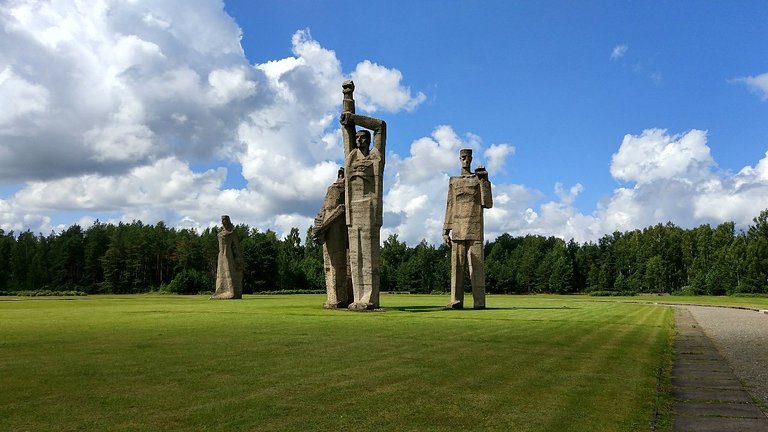
This is why making the conscious choice of Esau is so important. About ten years ago, I followed my dad to the site of Saraspils concentration camp in Latvia. At that time, we believed that this had been the site where his grandparents were killed. We now know it was Auschwitz. But I am glad we believed it was Saraspils, because that was a good place to pay respects. Little remained of the camp or the technology of genocide. The area had grown over with trees and plants and grass. Life had ended there, but life had also continued. 

We said kaddish, remembered their names, and talked about our hopes for the future. Then, as we walked back, we talked about what we could do for those facing similar violence today. It was a recognition of the past, an opportunity to grieve, and a chance to translate that suffering into meaning. I felt like I had my moment of reconciliation, if only brief, and I think the rest of my family felt the same way.

In 1982, Rabbi David Hartman (zichrono livracha) warned Israeli civil society that they faced a choice between being defined by Auschwitz or by Sinai. At Auschwitz, we learnt the wickedness of which people were capable. At Sinai, we learnt the wonders of what God could do. The Israelis could either define themselves by the trauma of the gas chambers or by the miraculous moral message of revelation. 

That essay has been cited many times, but I don’t think the British Jewish community has yet accepted that it might have lessons for us too. We are also faced with the choice of structuring our lives as if they are a moral calling from God or as if they are a cause to be constantly afraid of the rest of humanity. Only once we realise that we have taken the wrong path will we stand a chance of facing up to our trauma, and beginning to heal.

Shabbat shalom.

Saraspils concentration camp memorial

I gave this sermon to Glasgow Reform Synagogue for Parashat Vayishlach on Shabbat 5th December 2020