sermon · social justice · torah

Don’t make trans people scapegoats

“It makes no sense to hate anybody. It makes no sense to be racist or sexist or anything like that. Because whoever you hate will end up in your family. You don’t like gays? You’re gonna have a gay son. You don’t like Puerto Ricans? Your daughter’s gonna come home Livin’ La Vida Loca!”

This quotation is so erudite, you may wonder which ancient sage said it. That was in fact, the comedian Chris Rock, in his 1999 “Bigger and Blacker” set.

I must have been about 10 when I heard that line, but it has always stuck with me. Over the years since, I have watched it become true. The world is so small that whatever bigotries someone holds, the people they hate are bound to end up in their own homes.

Recently, I realised that this had happened to me. I hope I am not much of a hater, but a friend pointed out to me how much I used to make jokes about Surrey. I used to say that we should saw around the county lines of Surrey and sink it into the sea, drowning all the golf courses and making a shorter trip for Londoners to the beach. 

Now, here I am, eating my words. I am about to marry a man from Surrey and have all my in-laws in Surrey. I’m the rabbi for a congregation in Surrey, and looking to move as soon as I can to Surrey. That thing I hated, even in jest, is right here in my family and inside of me.

I had some terrible stereotypes that everyone who lived here was a tax-dodging, fox-hunting billionaire. They weren’t grounded in reality. They were just about my own fears, projected onto people I had never met. 

Chris Rock was right. Whoever you hate will end up in your family. 

More than that: whoever you hate is already something inside of you. 

All of us can do it: we can stereotype, generalise, and project all our antagonisms onto a group as a way to cast off all the fears we have about ourselves. What do we call someone who captures all this externalised hatred? A scapegoat.

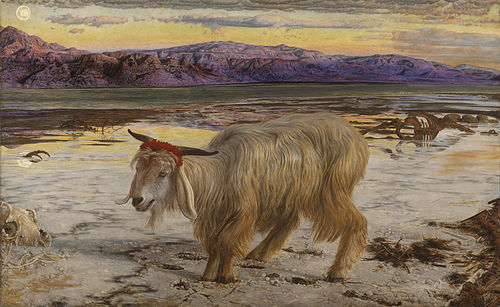
In this week’s Torah portion, we read about the original scapegoat. As part of the rituals for collective atonement, Aaron the High Priest gets two goats and brings them into the tabernacle. They pick straws for the goats. 

The lucky one is to be sacrificed for God. Onto the lucky one, Aaron ceremonially transmits all the sins of the Israelites, then chases it out into the wilderness. As it scarpers off, the scapegoat symbolically carries away all of the Israelites’ misdeeds.

The biblical narrative describes a psychological trick we can all play on ourselves. When we are ashamed of something inside ourselves, we take all that fear, turn it into hatred, and throw it at whatever unwitting bystander will carry it. 

Is this not precisely what Britain has been doing to trans people?

Gender is changing. The roles of men and women are shifting dramatically. There are so many new ways to live gender, to express ourselves, and to talk about our identities. 

Rather than embrace these changes and think about what opportunities they can afford us all to be more free, reactionary parts of British society have whipped up a concoction of bigotry and thrown it all at trans people. Every anxiety our bigots have about gender has been exaggerated and projected onto one small part of the population, who have been turned into monsters through these prejudiced eyes. 

It makes sense that people will find social changes scary and destabilising, but why should trans people bear the brunt of those fears?

A few years ago, I went to hear a panel of esteemed Jewish leaders give a retrospective talk about the ordination of gay, lesbian, bi and trans rabbis. On the bimah was Rabbi Indigo Raphael, Europe’s first openly trans rabbi. 

In his opening words to the congregation, Rabbi Raphael proclaimed: “I am a transgender man. I am not an agenda; I am not an ideology; and you can’t catch trans by respecting my pronouns.” The room immediately erupted into applause.

He should not need to say it. He shouldn’t need to defend his own existence, but such is the level of moral panic in parts of Britain that he has to assert his right not to be scapegoated before he can even teach Torah.

In the last few weeks, trans people have been subjected to legal rulings and government decrees that may make their lives unlivable and keep them from basic participation in public life. Like the goats of the ancient world, they are being cast out into the wilderness to carry away all of people’s fears.

It should not be this way. 

When we feel like scapegoating others, the best thing to do is look inside ourselves. We need to face our fears and work out why others bother us. The chances are, it’s something in ourselves that we’re not happy with, and when we need to get right with our own souls.

When we get to know those we “other” we get to know ourselves better. And when we realise we can like the difference in others, we learn more about what we can like in ourselves.

Reflecting on this, Margaret Moers Wenig, an American Reform rabbi wrote an essay called “Spiritual Lessons from Transsexuals.” She talks about how knowing trans people has enriched her own spiritual life. 

Interacting with trans people, Rabbi Wenig says, has taught her that all of us can craft our bodies as we will; we are all more than just our flesh and blood; we have living souls that can differ from others’ assumptions; that only God knows who we truly are. These are wonderful lessons that can only be learned when we turn away from fear and embrace curiosity.

They chime with my own experiences. At first, knowing trans people made me question myself. If gender is something we can change, am I really a man? With time, seeing other people embrace their gender and become who they are has made me feel far more happy in my own gender. I am a man, and I like being a man, and I like being an effeminate man.

When we turn away from fear, we see that we have no need for scapegoats. The parts within us don’t need to be divided up so that some are holy and others need to be chased out into the wilderness. Every part of us is for God.

The world has more than enough hate. It’s time we swapped it for loving curiosity.

After all, Surrey, it turns out, is rather lovely.

Shabbat shalom.
judaism · sermon · social justice

You are not sick

Imagine if I stood up here on a shabbat and I told you I could fix you. 

Imagine if I said there was something fundamentally wrong with you. That some property intrinsic to you, about your soul, was fundamentally wrong. Sinful.

Imagine if, when we read out the names of people in need of healing, your name was on there. You hadn’t asked to be placed there and you felt fine. But somebody in the community had decided that who you were, as a person, was contrary to their religious beliefs, and that made you sick.

Imagine if your child or grandchild came to see me at the synagogue and ask for rabbinic advice about their personality. Instead of offering them love and support to be happy with who they were, I told them that they needed to repent. I told them that God thought they should feel guilty. I told them they should pray and fast until the wickedness in them was gone.

Imagine it. Imagine any preacher in any religious building doing such a thing.

You don’t have to imagine. It happens today, here in Britain.

It is called conversion therapy. 

Conversion therapy is when queer people are told, often by a religious leader, that prayer, exorcism or counselling can change their gender or sexuality. It is when somebody tells a gay person that they can be made straight, or a trans person they can be made cis.

It happens in the British Jewish community. One survivor of this practice, Joe Hyman, spoke out about how a religious Jewish group tried to counsel him out of homosexuality. At first, it involved telephone appointments where he was told he could be healed. He sat round in a room and was forced to examine every homosexual thought he experienced through a lens of judgement and shame.

Another British-Jewish woman, Maya, went through conversion therapy classes that told her that her parents hadn’t nurtured her enough and that she must have been abused as a child. 

There are Jewish retreats in New York and Israel, where participants are made to do psychologically damaging activities including stripping naked and berating themselves while staring at a mirror.

You might well wonder why such an abhorrent practice has not yet been banned. For that, you would have to ask Boris Johnson. 

This week, his government leaked reports that they have abandoned plans to stop conversion therapy. They have bowed to pressure from conservatives and fundamentalists. 

When the various LGBT charities expressed their outrage, and the public followed suit, the government back-pedalled, but only slightly. They said they would ban conversion therapy for sexuality, but not for gender identity. They have decided that lesbian, gay, and bi people should not be subjected to this psychological torture, but that they will keep it up for trans people. 

Not content to only permit the practice, the government has decided to get in on bullying trans people. Boris Johnson used a recent speech to mock trans people. A public discourse has emerged that pathologises and humiliates people who do not conform to gendered expectations. 

Trans women, in particular, are the subject of a horrible narrative of hate. I don’t think it would be helpful or responsible to repeat the things I’ve heard, even from respectable platforms like the BBC. You have probably heard it too, and speaking it from the pulpit would only lend this hate speech legitimacy it doesn’t deserve.

The pathologisation of sex and bodies is as old as the Bible. In ancient Israel, when a person’s genitals seemed emitted an unusual discharge, or found they could not ejaculate, a priest would declare them a zav. This meant they were ritually impure, prohibited from entering holy places and forbidden from engaging in acts of worship. 

This was not just recognising the existence of genital problems or sexual diseases. It was making them into signs of defilement. It was saying that the people who had them were in some way sinful. It turned the body into something shameful. 

By the time of the Mishnah, the rabbis were conscious of how problematic this system of stigmatising people was. They announced mitigating circumstances for when somebody might not be considered a zav: if they had jumped; lifted something heavy; been unwell; seen something arousing; thought about something sexual; had eaten or drunk something unusual. If they had done any of these things, even if they had symptoms of a zav, they were not considered a zav. They were exempt from being treated as sick.

To this already expansive list, Rabbi Akiva added two more categories: if somebody had eaten or drunk anything at all, they were not a zav. His students were astonished. They said: “if that’s the case, there will be no more zavim anywhere any more!” Rabbi Akiva responded: “it is not your job to make sure people are considered impure.”

Rabbi Akiva understood something profound. Nobody should be considered sick. Nobody should be stigmatised for who they are. So, to combat the stigma, he found a way to make sure everyone was exempted.

That is what is needed today to combat this senseless hatred against trans people. That is why we so desperately need to ban conversion therapy and stop treating people as if there is something wrong with them.

All we are asking is that people can access non-judgemental support to talk about their gender. We are asking that people can be free to explore it, open to the possibility that their gender might not be the one they have always been told it was. We are asking for people to have the freedom to go on a journey with their gender, open to the possibility that this might mean changing their name, or their pronouns, or the way they dress, or the way their body looks. 

I understand that perhaps that might sound frightening to some. But what truly terrifies me is that people can’t. Young people exploring their gender currently cannot feel safe turning to authority figures to talk about their gender when there is so much vitriol emanating from the country’s highest offices of power. And they are even less safe when leaders continue to have the power to tell trans kids that they are sick and can be cured.

From this pulpit, there is only one message you will get. You are not sick. You are loved. You are supported by this community. You are safe to be whoever you want to be. 

In this synagogue, we believe in a loving God. In this religious movement, we affirm that you have a unique journey to find your own way with your Creator. And we will never try to change you.

Shabbat shalom.

With massive thanks to Rabbi Laura Janner-Klausner for helping me think through how to talk about this when the issue makes me so emotional

sermon · social justice · torah

The soul of a stranger


1998 is imprinted in my mind as a critical turning point in Jewish history. 

Those who remember it are already nodding sagely in recollection of this key moment of reconciliation between Jews and others. It opened up the Jewish community to being more accepting of difference and showed that Jews had been visibly and publicly embraced.

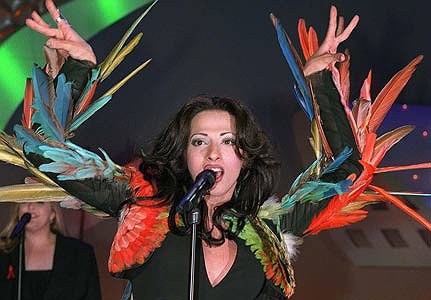
It was, of course, the year Dana International won the Eurovision Song Contest. Like many families across Europe, mine stayed up late watching the results come in. They were as expected – Dana had stormed the public vote. 

Dana. Jewish. Yemeni. Israeli. Glamorous. Melodious. Trans. 

Dana was a trans woman who had already made her name in the underground gay clubs of the Mediterannean and the Middle East. In some places, her albums had been sold illegally and discreetly. 

At that time, trans people had no legal protections in any country. In popular media, they were exclusively the butt of jokes or objects of fear. There were very few public pundits who were trans or even willing to advance their cause. 

But now, all of a sudden, she burst onto television screens to accolades, as if the world might finally be ready for latent queer liberation. Her victory wasn’t just a win for a pop star; it was a statement about what could be. 

For me, it was mostly a watershed moment in Jewish history because it transformed the communal discussion about LGBT acceptance. British Jews celebrated Dana’s win as a win for Jews and a sign of our integration in Europe. At Purim that year, aged 10, I dressed up as Dana and danced around on the bimah.

This snapshot in LGBT Jewish history stands in sharp contrast to this week’s Torah portion. Here, we read: “A woman must not wear men’s clothing, nor a man wear women’s clothing, for the Eternal One your God detests anyone who does this.” This has become known as one of the ‘clobber verses’ – words from Torah quoted at lesbian, gay, bi and trans people to oppress them. 

In the Talmud, Rabbi Eliezer ben Yaakov warns that men will dress up as women in order to sneak into their private women-only spaces. This is precisely the argument used today to exclude trans women, presenting them as sexual predators and imposters. 

If anything, today’s discourse is far worse, since the Gemara ultimately rejects this argument, but such bigotry is often allowed to stand unchallenged in our newspapers, radio call-ins and TV debates. In fact, in the last few weeks, Members of Parliament, the Archbishop of Canterbury, Piers Morgan, JK Rowling and a number of other high profile figures have banded together to criticise what they term ‘transgender ideology.’

Defendants of trans women have spoken up to insist that they are not ‘men masquerading as women,’ but simply people seeking to live their own authentic lives. 

I think, however, this defence is too constricting. There is nothing wrong with men dressing as women or women dressing as men. One of the strongest messages of the trans movement has been that gender need not be a prison. I personally have built on my childhood success imitating Dana by dressing up as Amy Winehouse and Lily Montagu for the last two Purims. 

Trans people belong to a broad spectrum of people who don’t feel like their gender identity matches with what society assigned them at birth. They have diverse ideas about who they are, but shared experiences of people trying to force them to conform to a mould they do not fit.

I hope that by promoting those who do not fit the mould we can reconsider the mould altogether. There are so many ways to be a man, to be a woman, and to sit in the spaces in between.

Our communities should be strong enough to include everyone, regardless of gender presentation and identity. We should be able to accept and celebrate the myriad of gender variance today, as we did for Dana twenty years ago.

It is disappointing that what, in the late nineties, seemed like the inevitable advancement of trans rights, is now being pushed back by a toxic alliance. While other parts of society can have their own arguments, I feel it is important that Progressive Jews position ourselves firmly on the side of inclusion. 

Thankfully, I am not alone. Last month, Reform Judaism’s outgoing senior rabbi, Laura Janner-Klausner, wrote alongside a leading Anglican bishop: “We believe that trans people, like every other person, have every right to be cherished, and protected by society and in the gender in which they choose to live. Our faith compels us to speak up for those on the margins, those whom others would seek to silence or misrepresent.”

This, you must understand, is not simply a matter of our liberalism trumping our Judaism, but is deeply rooted in our understanding of what Judaism requires of us. We do not believe that the Torah is God’s infallible word, but that it is a text, written by men, aiming to understand how best to live an ethical life. As a human work, it contains human biases, including sexism and what we would today term ‘transphobia.’

Instead of living by the letter of ancient words, we use them as the basis to interpret, through our own limited human experience, what morality requires of us today. Joy Ladin, a trans woman and Jewish biblical scholar, argues that while the verses criticising gender non-conformity are sparse, the commandment to know the soul of a stranger is repeated throughout Tanach.

She writes: “The commandment to know the soul of the stranger is more than a summons to social justice or a reminder not to do to others the evil that others have done to us. Knowing the soul of the stranger is part of the spiritual discipline required for a community to make a place for God. […] God commands the Israelites to hitgayer, to identify with the experience of being strangers so that they will know the soul of the stranger – the stranger who dwells among them, the strangers they are, the stranger who is God.”

It is on this deeply Jewish basis that we seek trans inclusion in our Jewish communities. We are commanded to know the soul of the stranger. We are called upon to make our synagogues not just places where words of Torah are heard, but where they are lived, so that our buildings are homes for people of all genders. 

May we all know the soul of a stranger, and may all strangers know that our hearts are with them.

Shabbat shalom. 

dana-international.jpg.750x400_q85_box-0,35,431,265_crop_detail

I will give this sermon on Saturday 29th August for Parashat Ki Teitzei at Newcastle Reform Synagogue.