judaism · sermon · theology

God is here, and I did not know it

One of the loveliest parts of synagogue life, which many of you will have experienced here, is getting to teach our religion to visiting schools. It’s such a joy to pull out things we normally leave aside, and point to things we often take for granted.

By teaching others about our ritual objects, things that are familiar become foreign. We have to reconsider what they are, and why we have them.

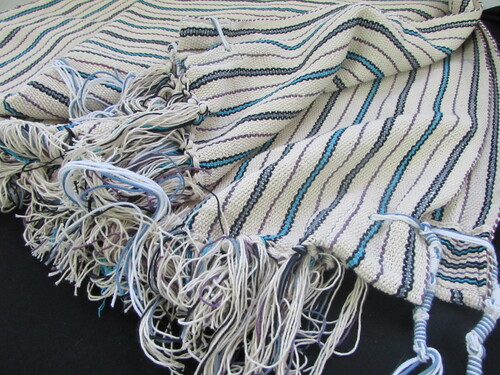
Take, for example, the tallit. Of course, these prayer shawls have existed in some form since biblical times. But, showing them to non-Jewish children, we need to come up with an explanation for why we continue to use them here and now.

I tell the school kids: these four corners remind me that God is everywhere, and the knots on them tell me all of the good deeds I can do in my life.

I do, indeed, feel that way when I wrap myself in the tzitzit. I feel enveloped by God’s mantle. I see the strings and think of all the mitzvot- not, in the Orthodox sense of listing out food rules, but of all that God has asked me to do in this world.

It’s nice to have a visible reminder of God’s presence.

That’s just what Jacob gets in this week’s Torah portion. Jacob lies down while travelling on a certain mountain and has the profound dream of a ladder ascending to heaven, with angels going up and down.

In his dream, the Eternal One appears to promise Jacob many descendants, spreading out like dust across the desert, and that God will forever accompany Jacob on his travels.

When he awakes, Jacob exclaims: “Wow, God is in this place and I did not know it!”

How could Jacob not realise that God was on that mountain? Surely he already knows that God is everywhere?

Perhaps Jacob did not realise already that God is everywhere. For some commentators, this is the beginning of Jacob’s prophecy. Only now does he really understand who God is and that this God is with him.

There is a deeper meaning in the language, too. Before the revelation, God is called Elohim. For the ancients, Elohim was universal- the God that permeates all places and things.

Then, in the dream, God is announced by the ineffable Name, Hashem, which we often render as Adonai. This name of God, in Torah, is specific. It is the personal God, who communicates directly with human beings.

When Jacob awakes, he says: “Behold, Hashem is in this place, and I did not know it.”

Jacob knew that God in general was there, because God is generally everywhere, but only at this moment does Jacob realise that the personal God who cares about him is also present.

Now we can understand why God says to Jacob: “I will not leave you until I have done with you what I promised.” God is helping Jacob understand that he is never truly alone. Not only is the world full of God, but so is Jacob’s own life.

In fact, in the moment before Jacob falls asleep, a miracle happens that is so subtle it can’t be noticed until after he wakes up.

When Jacob lays down his head, the Torah says there are many stones in the place, and he takes one of them as a pillow. When he wakes up, there is only one under his head.

Our Talmud says that this is a divine act. According to Rabbi Yitzḥak, all the stones on the mountain argued with each other about who would lie under Jacob’s head. Unable to decide, they merged together into a single rock. That rock, in turn, became an altar to God.

This is a wonderful view of the world, where God is not only in all places and with human beings personally, but acts in every part of nature. Even stones are agents of miracles and servants of God.

If we take seriously this idea that God is everywhere and personally connected with all that exists, there are real consequences for our lives. It means that everything is sacred. It suggests that we need to treat this world as an arena for revealing divinity.

For Progressive Jews, this is one way we might think of commandments. Rather than just a list of dos and don’ts, they’re an attitude towards reality. They see everything as an opportunity to do good, and to make the world better. We are blessed with the chance to show how God is everywhere, including in our own actions.

The same section of the Talmud says that this is why God loves humanity so much. Angels can only praise God when they are told to. Rocks can only move by miracle. But we, endowed with freedom and reason, can perform miracles and make things sacred whenever we want.

That’s what I see when I look at the tzitzit of my tallit. That God is in every place and that every moment is a chance to do right.

You don’t need to wear a tallit to do that. This is my suggestion to you for this week. Try and shift, ever so slightly, how you see the world.

Look around, for a moment, and imagine that everything permeates God’s presence. See God in the bricks of your home and the slabs of the street. At some point this week, try to picture the space where you are as a massive canvas that you can paint with good deeds.

Let us all try to be like Jacob and say: “Wow, God was here, and I did not even know it.”

Shabbat shalom.


sermon · theology · torah

Make yourselves fringes

.

I started wearing a kippah full-time out of the house about six years ago. I was growing increasingly religiously observant and wanted to see how it felt to physically mark my faith. I have worn the kippah almost every day since, and feel naked if I greet guests or leave the house without one.

The results have surprised me. First of all, Britain is way more accepting than I anticipated. I have lived all over London and travelled all over the country and never had a negative reaction. 

I am often met with positivity and fascination. Non-Jews ask me questions and start conversations I’d never otherwise have had.

Meanwhile, Jews come up to me to see if my kippah offers them a sense of belonging. It is like a hat that McDonald’s workers wear saying “ask me about our special offers”, except mine says “ask me about our special task.”

I am very aware that how I conduct myself through life now reflects not only on me but on Jews and Judaism as well. I have become an ambassador for Judaism. I feel obligated to live a more ethical life, and I wonder if that is, perhaps, the point. 

Religious clothing carries deep meanings for those who wear it, and has done throughout our history. The kippah itself is not mentioned in the Torah. It is a medieval innovation in Judaism. In the world of the Bible, the item of clothing that symbolised Jews’ distinctiveness and sacred purpose was the tzitzit. 

In this week’s parashah, Shlach, God tells Moses: “Speak to the children of Israel and say to them: make for themselves fringes upon the corners of their clothes for all generations, and put a blue thread among them.”

Now, says God, whenever you see them, you will remember what God has commanded of you. You will do what is right instead of what you like. And these fringes will make you holy before God.

But why? What is it about these fringes that should serve such a purpose? Are they simply visual aids? And, if they are, what is it about dangling threads at the corners of garments that should work to remind us of holiness and covenant?

Rashi suggests that the reason is not fringes themselves blue strand among them. This, he says, was once the colour of royalty, and an expensive dye to acquire. The thread is a reminder to the Israelites of their shared regal status – an affirmation both of their equality between each other and of their special status in the eyes of God. 

But the blue string that was once part of the tzitzit can no longer be seen. The dye that was once used no longer exists. Although efforts have been made to revive it, for most Jews, our fringes have no dye. 

I think the fringes have a meaning of their own. To me, these tzitzit are meaningful because of where they are.

They are situated on the margins. They are so often translated as being “fringes.” They are at the edges.

In this way, they are like Jews.

Every Jew, no matter how visible or assimilated, knows what it means to be on the fringes. It might be the ambivalence we feel as Christmas rolls around, or the unease we feel at a cultural reference that doesn’t include us. It might be a story in the news that we know we are reading differently precisely because we are a Jew.

Throughout history, we have used our marginal position to better understand both the non-Jewish world we inhabit and the Jewish one we inherit. Jewishness gives us a perspective not everyone has: a sense of how life can look from the edges.

When we see tzitzit, we see ourselves: the fringes.

The great 20th Century philosopher, Hannah Arendt, argued that this was no coincidence. We are not just on the margins because others have put us there, but because that is where we are supposed to be. 

Arendt says that, even after the Jews were given citizenship and turned into emancipated members of European states, most Jews continued to be “pariahs.” 

They were marginalised, never fully accepted into European society. As a refugee from Nazi Germany, Arendt knew this well.

From this position as pariahs, Jews could either consciously embrace who they were or pretend they were assimilated. Arendt says we should be conscious pariahs. We should embrace our marginality. We should use our special position as outsiders to see things the way nobody else can.

But tzitzit are more than just fringes. They are the sacred part on the border that give purpose to the centre. Without its fringes, a tallit is just a scarf. The fringes are the visibly different part that mark it out as holy.

Is this not the role of the Jew in the world? Is this not what it means to be ‘a light unto the nations’; that we are visible reminders to the world of who God is and what it requires of us? Isn’t it exactly our holy purpose to transform the world from the vantage point of our difference?

We who turn up to synagogue, who keep up our strange ways of living at the weekend, who sometimes have unusual dietary requirements. Yes, we who sometimes don kippot and dress in fringes. We have embraced our difference and turned it into a point of pride. We have chosen to live a life by Jewish ethics, transforming society and ourselves. 

That is where these tzitzit point us.

They tell us not only that we are sacred for our place on the margins, but that we need to look beyond our space to the further fringes. There are others more excluded than we are, whose difference has made them more vulnerable and excluded.

The fact that they are fringe makes them, like us, sacred. They have perspectives we cannot. Their difference is spiritually powerful. It is not that we should pity the people more marginalised than we are, but that we should seek to bring them from the borders to the centre.

This Torah portion concludes with reminding us why we wear these fringes: God brought you out of the land of Egypt.

With that special deliverance came a sacred purpose.

Countless times, the Torah implores us: you know the heart of a stranger, for you were strangers in the land of Egypt. 

If our holy purpose comes from being on the fringes, we need to look to those further out for where to go. Torah tells us about its most marginalised people: orphans, strangers, widows. These are the people that ancient Israelite society too often left out.

In ancestral times, these were the people without income or papers. Judaism calls on us to look to those most marginalised people. Unless we are centering them in our decision-making, we are failing in our religious duties.

The tzitzit at the edges of our tallits remind us where to look. They tell us that the margins are where things matter most.

So, make yourselves fringes. Now whenever you see them, you will remember what God has commanded of you. You will do what is right instead of what you like. And these fringes will make you holy before God.

Shabbat shalom.

This sermon was inspired by the political philosophies of bell hooks and Melanie Kaye/Kantrowitz. It is for Parashat Shlach at Edgware and Hendon Reform Synagogue, to be delivered Saturday 5th June.