Everything has changed. Everything keeps changing.
We meet tonight to pause.
Tonight is a return to a definite, reliable point in the calendar. While the world spins on outside, for a brief moment, we stop. We reflect. We take stock of all that has changed, so that we might change too.
You have already seen this evening many simanim – symbols of the Rosh Hashanah seder. These small tokens speak to us about what the festival means.
There is another one, though, that you won’t see here, partly because our synagogue is a meat-free site, and partly because it just would not feel right in a Liberal synagogue.
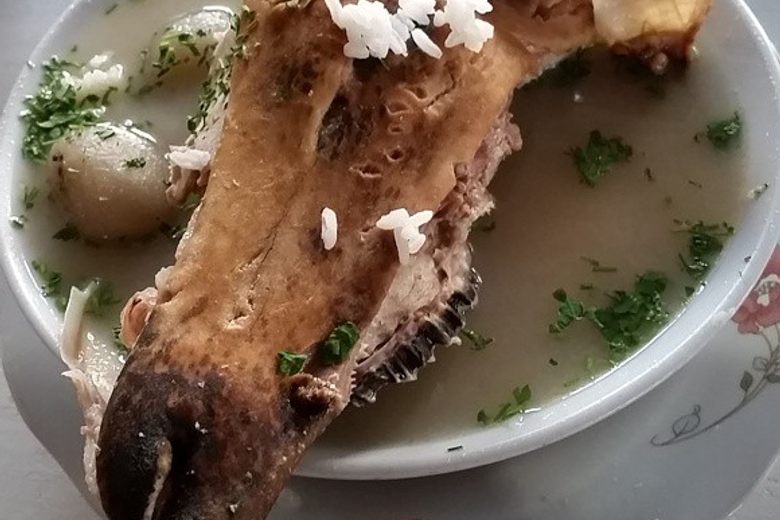
It is a ram’s head.
Yes, in many New Year seders throughout the centuries, Jews would place the carcass of a sheep’s skull in the centre of the table. This tradition goes all the way back to 9th Century Babylonia.
By the 15th Century, the German rabbi, the Maharil, explained the custom using a phrase from the Psalms:
שנהיה לראש ולא לזנב
– that we should be the head and not the tail.
There is a play-on-words here. After all, what does Rosh Hashanah literally mean?
The Rosh is the head. It is the head as in the beginning; it is the head as in the body part; and it is the head as in the one who has control.
This symbolism works because, in Hebrew, a word contains multiple meanings and associations.
So, the fish head represents our being on top of our own lives.
Now, what about hashanah? The word shanah does indeed mean year, but its root ש-נ-ה also means cycle, difference, repetition, or change.
This makes sense: a year is a cycle, a return point that we repeat, each time observing the change.
So Rosh Hashanah does mean “start of the year.” But, through the associations with the words’ other meanings, Rosh Hashanah is also “the master of change.”
Outside of these walls, the world is full of changes. AI unleashes new technology into a society that has already been completely transformed by the Internet. Our climate is changing, and we are truly starting to notice its effects on our own seasons.
International relations are changing: violence, war, and fear feel like a new normal. And, of course, we are only a few years out of global pandemic and lockdowns.
So, at this juncture, we return to the start, and try to find a small oasis of calm to reflect on this changing world.
Yet, inside these walls, things have changed too. This is my first High Holy Days with you. This is your first High Holy Days in the newly refurbished sanctuary. This is our first High Holy Days where we have voted to join a new movement.
This is our first time doing the High Holy Days without the choir in every service and, as you will see, that means we are changing how we do music.
In every case, these changes will evoke many feelings, including excitement, trepidation, loss, and growth. This is a chance to face all our feelings.
Change is inevitable. Change can be good. And, yes, change is hard.
I don’t know about you, but I have changed. I have not just grown a year older since the last Rosh Hashanah. I also feel like I have aged many decades in the last few years.
The world transforms and I shift with it. As I shift, I do not even always notice the ways I change, or work out what they mean.
I don’t even have time to decide if I like who I am becoming before I find that things changing again.
So, at Rosh Hashanah I come to this space, this synagogue, this everlasting home with God, and ask: can I love myself better? Can I love my community? Can I muster up the strength to face all that is changing?
Can I find a way to be the head and not the tail?
Blessed are You, Eternal One our God, who gives us the power to change.

 Sim Lev