sermon · talmud

Can you purify this spider?


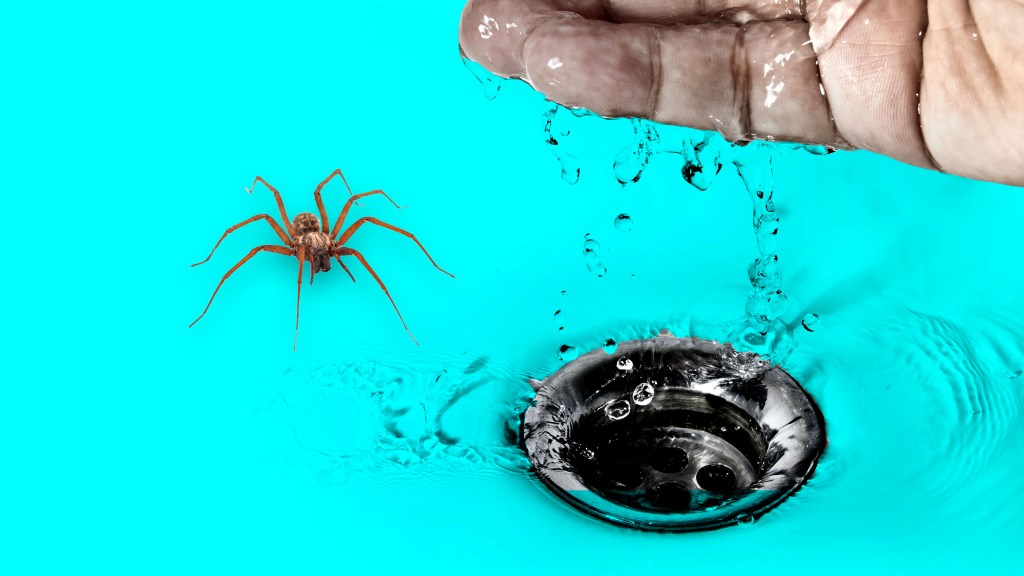
Spider season seems to have begun early this year.

It’s that time of the year when we start seeing spiders, climbing up walls, hanging out in sheds, and getting comically stuck in bathtubs. Of course, they live all year round, but in early autumn they are visible everywhere.

I love spiders. I think they’re quite cute. We don’t have any dangerous ones in this country, as far as I know, and they eat the ticks that we really don’t want in our houses.

But I get why other people are creeped out by them. They’ve got eight legs, which is far too many, and they scurry around like they’re up to no good. We’ve been fed media images of terrifying tarantulas and it’s understandable that people would associate them.

The Torah has a word for these beasties. Sheretz. It’s root is resh-vav-tzadi, to do with running around, so most translations render sheretz as ‘creepy-crawly,’ or ‘creeping thing.’ It applies, first and foremost, to mice and lizards, but extends to any scuttling insect or racing rodent. There are also the sheretz bamayim – the creepy-crawlies underwater, like jellyfish, octopus and lobster you might find scampering on ocean floors.

They were created by God on the fifth day. They are mentioned by name. For some reason, God decided that spiders were supposed to exist. God made room for them in the world and dedicated a verse of Torah to celebrating their creation. God made mosquitoes and shrews and chameleons and God saw that they were good. So, if you’re in the camp that loves spiders, you get a point.

God has also banned them. We are prohibited from eating them. They are described as disgusting and as abominations. On some level, we are supposed to revile them. So, if you’re in the camp of people who can’t stand spiders, you get a point too.

(I promise you, this is going somewhere.)

I’ve spent the last week thinking about the sheretz. From Monday to Thursday, this synagogue hosted the Queer Yeshiva. It was a momentous occasion. Never before in Progressive British history have so many people come together to study the Talmud in such an intense way. Everybody talked about how wonderful this synagogue is, and I want to thank you all for opening this space to a bunch of LGBT people to study Torah.

Over the week, we read a sugya of Talmud from Sanhedrin, a tractate that deals with capital crimes. It asks questions about who gets to condemn somebody for the death penalty, and on what grounds.

It contains a list of characteristics expected of Jewish high court judges: tall; wise; handsome; elderly; fluent in at least seventy languages; and, of course, familiar with sorcery.

So, who is eligible? Do we have any candidates for the Sanhedrin in this congregation? I won’t be putting my hat in the ring. It’s tricky to find someone, but I’m sure such people exist.

Then it adds another requirement. Anyone who wants to sit on a Sanhedrin has to find grounds for declaring clean the sheretz. You want to put somebody to death? You’ve got to be able to make lobsters kosher. You have to be able to purify a spider.

Who can make unclean things clean? Who can make what’s treif kosher? If anyone in this room can do it, you will be welcomed with open arms to the Jewish law courts of Babylonia.

But it seems unlikely that will fall within any of our skill sets. It sets an impossibly high standard.

Perhaps that’s the point. You have to be so good at thinking and reasoning that only the highest standards of scholars can join. You have to be of such excellent calibre that you know Torah inside out and can interpret it, even against itself.

Many have understood this edict that way. In fact, elsewhere in the Talmud, we learn that there are as many as 150 ways to make shrimp kosher. There’s not just one secret method of purifying a sheretz – there are a whole bunch of them – and you should be able to work them out.

But the Talmud doesn’t give any convincing explanations as to how this is possible. Even where rabbis have a stab at it, they are soon shot down. Nice try, but no. That’s not how you make mice edible.

As a result, plenty of rabbis throughout the ages have tried to show that they can purify the sheretz. Great thinkers who knew the Torah inside out have tried to show that they are eligible for sitting on the Sanhedrin.

But here’s the thing. You can do all the reasoning you like. A spider will still be a spider. A lizard will still be a sheretz. And a sheretz will still be unclean. You can’t actually change what the Torah says.

So the rabbis have made sitting on the Sanhedrin impossible. It is so restricted that we will never find people capable of achieving it. De facto, the rabbis have abolished the death penalty.

This is a tremendous achievement. Subtly, and without saying so, they have done exactly what they say needs to be done: they have turned the Torah against itself. Except, instead of turning the Torah against itself so that they can kill people, they turn the Torah against itself so nobody can!

Suppose somebody were to come along and actually give convincing proof that spiders are really kosher. OK, then we would have a problem. My hunch is that the rabbis have already thought of this. Anybody who could do so would, by their nature, refuse to implement the death penalty.

A person who can see the kosher in a lobster can see the goodness in a convict.

A person who could cleanse the body of a mouse could cleanse the soul of a criminal.

You have to be able to see people, and creepy-crawlies, the way that God sees them: as good.

This is the rabbis’ genius way of telling us who is allowed to judge others. The only person we would permit the authority to judge others is the one who would judge them favourably.

The spiders are out and about in our houses. We might love them or hate them or greet them with indifference. But who gave any of us the right to kill them? God, for whatever reason, has determined that they have a place on this earth and it is not our job to decide they don’t.

The world is full of people we don’t like. Some of them do detestable things. And we might feel fear and hatred and anger towards them. And sometimes those feelings are justified.

But we don’t have the right to kill them.

We are not worthy to judge them.

Unless you can purify a spider, you have to live in this world with everyone else.

God has made enough room for them in this world and we have to make enough room in our hearts.

Shabbat shalom.
judaism · ritual · spirituality

Sacred skinny-dipping

It was midsummer in a basin in the Welsh valleys. I found myself completely naked with a friend in a lukewarm tub of rainwater. We were supposed to wait for it to properly heat up over the log fire, but I was in a hurry to go from teaching Torah there to preaching in north-west London. The sunshine compensated for us. 

All around there were huge green trees, rolling hills, a babbling brook. Hippies not far away chanted in Hebrew while banging on drums.

“OK,” I said. “Now what do I do?”

“So I’m going to tell you my practice,” she said, “but you can come up with your own.”

Her practice, I later discovered, was the same one as you would find Orthodox Jews performing on Friday afternoons, as sanctioned by rabbis and law books. She had a way of making every tradition feel New Age.

She dunked fully underwater three times, twice emerging to recite a prayer.

Al hatvilah – thank you, God, for making me holy by commanding me in immersion.

Shehechiyanu- thank you, God, for keeping me alive to see this day.

On the third dip, she came up, smiled and said: “That’s all there is to it.”

I copied her every move. And that was it: my first mikveh.

I had previously associated this ritual with Orthodox women washing off the ritual impurity associated with menstruation. It had seemed to me outdated and misogynistic. 

The only other people I knew of who did it were converts, undergoing a form of Jewish baptism to initiate them into the religion. I had thought, cynically, that these new Jews were washing off the goy.

But here was my teacher, Yael Tischler, far more radical than I was in terms of religious innovation and transgressive liturgy; a witchy feminist affiliated to the Kohenet movement in America – a bohemian collective for women-centred spirituality. 

With her, the act of immersion didn’t feel problematic. It felt like my whole body was wrapped up in Jewish history. It felt connected to the earthy, fleshy customs of long-gone ancestors.

This was strange, because I know that none of my recent ancestors would have done such a thing. Liberal Jews were, by and large, decidedly opposed to many embodied rituals. 

Like their reforming Christian counterparts, many of the early Progressive Jews felt that religion should be a matter of intellectual faith. It should be stripped down to its essential meanings, devoid of excessive piety or symbols. 

In the great platforms decreed from Germany and the USA, Reform Jews repudiated circumcision, abandoned kashrut and denounced tallits. They ridiculed shockeling, the Eastern Ashkenazi prayer movements, as “bowing and scraping.” One British Liberal rabbi called kippot “the eccentric trappings of the Orient.”

As you can imagine, mikvaot did not get much of a look-in. For decades, ritual immersion was not a requisite part of conversion at the Reform beit din. Today, very few progressive Jews will attend the mikveh before their wedding. It is almost unheard of that a progressive Jew will have a regular toiveling practice as the Orthodox do.

This week’s parashah probably provides a good explanation as to why progressives are so uncomfortable with it. This week, we read Tazria-Metzora, a portion dedicated to defiling skin diseases, leprous houses, sexual infections and menstrual impurity. 

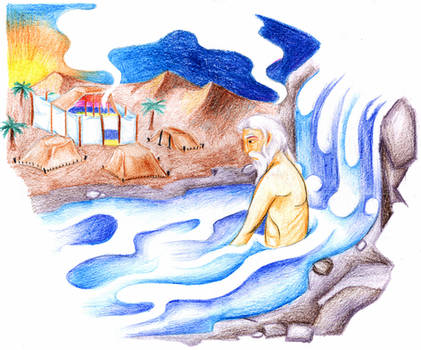
To escape the uncleanness that falls upon people by contact with these things, ancient Israelites would ritually immerse in a mikveh. The Torah describes mayyim chayyim – running water – in which people would wash themselves. We know that in the period after the Great Exile, the mikveh was likely an enormous bath at the entrance to the Second Temple. 

In the biblical world, the mikveh does seem troubling. It exists for a people obsessed by physical purity, who want to remove their blemishes before they enter sacred spaces. I would not feel comfortable advocating immersion to congregants on the grounds that their bodies are unclean and carry associations of sin. 

But my teacher, Rabbi Debbie Young Somers, argues that our rabbis fundamentally transformed what mikveh meant. She did her rabbinic thesis on mikvaot and has taught about their virtues in numerous study sessions. When I asked her for sources for this sermon, she immediately sent me detailed source sheets and tweeted her glee that the subject matter was being discussed in our synagogue. 

Impurity, Rabbi Debbie argues, is not the same as defilement for the rabbis. It is what happens when you come close to something holy. Touching religious texts, having sex, giving birth and changing to a more holy status, are acts that require immersion. Faeces, urine and vomit, which are more obviously disgusting, do not require any religious ritual. When we wash ourselves, we are not scrubbing away sinful dirt, but acknowledging sacred contagion.

In a post-Temple world, nobody can be clean or unclean. The mechanisms for such processes are gone and the need to do so – so that one might perform an animal sacrifice in the correct state – thankfully no longer exists. 

The Talmud records that, nevertheless, Jewish women took the obligation of ritual immersion upon themselves. It was a choice that antique ancestresses made as part of their covenant with God. When they did, the rabbis largely trusted women to self-regulate and organise their own mikvaot. It might well be that they already had very little authority over this aspect of life.

Today, feminists are returning to these practices. Led mostly by religious women, efforts to reclaim the mikveh are popping up all over the world. Scholars and lay people are extolling the virtues of immersion for both men and women.

People take these ritual baths before life-changing events, like trying for a baby, getting married, starting a new job and completing a course of study. They also use the mikveh to process life’s trials, like miscarriage, recovery from illness, divorce and redundancy. 

That was how I ended up, a few summers ago, doing sacred skinny dipping in the countryside. I am now convinced that it is a deeply moving spiritual practice, and I commend it to anyone who is interested. 

The Sternberg Centre in North London has a functioning mikveh. There is also a programme underway called the Wellspring Project, which hopes to soon create a mikveh-oriented wellbeing centre. In Manchester, the new building for Jackson’s Row is planned to have a mikveh.

And the wonderful thing about mikveh is that you don’t have to travel far to do it. You can toivel in any naturally occurring water, like seas, lakes and rivers. Just turn up, jump in, and dip your head underwater. 

And thank God for the commandments. 

And thank God for your body.

And thank God you’re alive.

And thank God that we can take these ancient practices and make them our own.

I gave this sermon on Shabbat 17 April 2021 for Parashat Tazria-Metzora at Newcastle Reform Synagogue