sermon · talmud

Approaching an ending

We are approaching the end of our time together.

In January, I handed in my notice. 

Over the last few months, I have packed away my books and cleared my office.

On Wednesday, I will hand back my keys to the synagogue building.

Today is the last time I will stand up here and address you. 

We are approaching the end of Pesach. In two days from now, we will carry out our final service of this festival. In the evening, we will start eating leaven again, and bring back out our toasters and bread machines.

We are also approaching the end of the rainy season. In ancient Israel, this time of year marked the transition from when they hoped for life-giving downpours to the dry heat of summer when they prayed for morning dew.

The rabbis could not agree on exactly when the change took place. The Mishnah asked when we should stop praying for the rain and switch to asking for dew.

Rabbi Yehudah said: “We should keep our prayers going until the festival of Pesach has ended.” 

Rabbi Meir disagreed: “We should keep our prayers going until the end of the month of Nissan.” 

Centuries later, in Babylon, Rav Hisda came along and said: “this is not difficult.”

Now, this is the Talmud. If I’ve learnt one thing from studying the Talmud, it’s that, when a rabbi comes along and says something isn’t difficult, what follows will be really confusing.

Rav Hisda says these rabbis do not actually disagree at all! They’re just talking about different things. There’s a difference, he says, between praying for rain, and mentioning rain in your prayers. 

Clear? As muck.

You can see why this question made the rabbis feel anxious. Endings are hard. And knowing when one thing ends and another begins is important. 

Don’t worry. Another rabbi, Ulla, comes in. He says the problem isn’t that Rabbi Meir and Rabbi Yehudah disagree with each other. It’s that there are two different ways of reading Rabbi Yehudah. 

We are going to have to agree with Rabbi Yehuda, says Ulla. We’re just not sure what he means.

Rabbi Yehuda says that prayers for rain end when Pesach ends. And we agree with him.

But hang on a minute! When does Pesach end?

A whole new raft of rabbis enter the discussion, each with conflicting opinions. 

Personally, I would have thought Pesach would end at evening on the eighth day. The rabbis do not even consider this as an option.

No – their first suggestion is that Pesach is the first day, so that is when we should shift our prayers.

But we don’t put requests into our prayers at festivals. They’re like Shabbat – they’re God’s days off from being bothered by us. So that can’t possibly be the day we stop asking for rain. We weren’t going to ask for anything then anyway.

So maybe,  instead, after Pesach means after the need for slaughtering a paschal lamb has passed. In Temple times, the paschal lamb was killed just before the Pesach festival started. 

So the prayers for rain end when we would have slaughtered the paschal lamb. 

But that would mean Pesach ends before Pesach starts!

And the Talmud is even more confused now, because we no longer have a Temple and we live in the Diaspora and we are still nowhere closer to knowing when one prayer for rain stops and another one starts.

Clear? But Rav Hisda said it wasn’t difficult!

OK I have chosen a really complicated bit of Talmud to hang this sermon on. I still don’t understand it myself. Maybe that’s just because the changes of seasons really are confusing.

Perhaps the Talmud doesn’t quite want to resolve the question. They want to leave us hanging, so that there is always a slight liminal time when one season is ending and another is beginning.

Transitions are hard. In fact, this sugya of Talmud keeps coming back to the same stock phrase: this isn’t difficult. It seems to say it so often because it knows that it is.

This obviously matters to me, because I am standing here in liminal time, in the gap between having been a rabbi here and not being one anymore. It is important to say, with surety, that there is an end date. I won’t be preaching here again.

But I think we can learn something from the Talmud too. The Talmud knows that sometimes dew comes in winter and sometimes there are heavy downpours when it’s dry. All water is part of a bigger cycle of seasons. 

The rain teaches us how transitions carry within them all that has gone before and all that is yet to come.

Seasons and rainfalls are strange, transitory moments. We can read great meaning into them. 

Having a clear sense of when one passes into another matters. So let’s make this our moment of acknowledging a shift. 

This is our last time praying on Shabbat together. It is my last time preaching from here. 

You will continue to grow in this community, and I will go and minister elsewhere. 

And, just like the passing between the winter and the summer rains, we will always be part of the same water cycle. Our rains will be part of each other forever.

I will hold onto and cherish the droplets I carry from Oaks Lane. Your piety, your care for the sick, your love of music, your attention to detail, your Yiddish soul. 

I pray that some of the best of the waters I poured here will stay, and that you will find some use in them too, after I have gone.

It has been a privilege.

Shabbat shalom. 

protest · sermon · social justice

When a swastika appeared on my primary school wall

Do you remember the first sermon that really moved you?

I do. It was a primary school assembly.

Mrs. Kilou stood at the front of the hall, as all us uniformed children awaited the morning messages.

She began with a question: “who knows what I hate most in the world?”

A kid suggested: “Lateness.”

“No, not lateness.”

Another offered: “scruffiness.”

“No, not scruffiness.”

One more: “When we don’t do our homework.”

“No, this is the thing I hate most in the world. Way worse than lateness or scruffiness or not doing the homework. The thing I truly despise.”

Finally, a kid ventured: “racism.”

“Racism, that’s right!” She spat the word and the whole crowd sat up to attention. The fury in her voice was palpable.

She had good reason to be angry. Somebody had spray-painted a large swastika on the outer wall of our primary school.

***

For the last two months, I have been trying to work out what to say. There have been days recently when many of the parents from this community didn’t send their children into school, worried that they would be targets. Members have shared stories of taking down their mezuzot, and hiding their symbols of Jewishness. I have felt, at times, like the community is overtaken by panic.

What do you say to people who are so anxious and angry? How do you meet people in their fear, and help them move beyond it?

I haven’t known what to say. So, the last few times I have stood on this bimah, I have just shared what is in the Torah.

But there is a trauma that needs to be addressed.

It doesn’t help to tell people that there is nothing to fear. That only makes people feel alone in their feelings, and that just makes them more afraid.

What repeated studies show is that what matters about handling traumatic events is less what happens afterwards than what happened before. People are better able to negotiate destabilising situations when they already have a strong sense of self; feel proud of who they are; and have a clear story about themselves.

So, I think the best thing to do from here, for now, is to tell my own story. My own relationship to antisemitism.

My account is, of course, personal, and not definitive. But I hope it will open up spaces for others to share their stories, and for us to begin a conversation about who we are, and what experiences formed us.

***

The swastika on my school wall was not for me. Not in the direct sense. That is to say: whoever drew it did not have Jews at the forefront of their minds.

We were not a Jewish school. We were a multicultural one in the centre of an industrial town, surrounded by white suburbs, and even whiter countryside. The other students, my friends, were Pakistani Muslims, kids from the Caribbean, refugees from Kosovo… we were a little bubble of people from everywhere, and, though I did not know it then, were a source of moral panic among readers of certain newspapers. We were, to those that feared integration, a symbol that Britain wasn’t British anymore.

And, of course, that swastika very much was for me. It was an attack on my community. It was antisemitic because all swastikas are. It was calling to me, because all racism does.

Around that time, my parents began telling me stories. But not the stories you would expect. They didn’t tell me about family members who had escaped Germany or died there. They did not explain why some members of the synagogue had tattoos on their arms, or how others had met each other on refugee trains. I only came to learn that much later.

They told a story about how, not long ago, the Council had erected a new housing block. One of the first people to be offered a home there was a black woman. Racists came to protest. ‘Houses should be for whites.’ The Pakistani community centre came out in large numbers and escorted the racists back to the train station and out of town.

This is an oral history, and I won’t be able to verify it from newspaper reports, but I suspect my parents made it sound more peaceful than it really was.

They told me other stories too. Stories of hundreds turning out to see off the National Front. Stories like how the Jews and the Irish united to defeat the Blackshirts at Cable Street. Stories of partisans and resistors.

They told me how people could stand up against racism and win. They told me about how, when it comes to racism, our greatest strength is each other.

I don’t know if this was their intention, but I learnt then that the swastika was not something to be feared. It was something to be destroyed. And that people could, and did, destroy it, wherever it appeared.

So, I grew up feeling not so scared of Nazis as determined to stamp them out.

***

Some university students spend their weekends studying. Others spend them partying. Me and my friends? We spent our weekends chasing the English Defence League.

Don’t get me wrong. I did study. And I did party. But some of my most formative memories from that time were of bundling into minivans and car convoys with my housemates to towns in the Midlands and the North.

At that time, Tommy Robinson had assembled a band of white supremacists, bored football hooligans, and lost boys, to go and protest wherever there was a mosque. They usually targeted the mosque itself, and would go to the towns with the express aim of intimidating the Muslims.

Opposing them felt like the only right thing to do. Fighting fascism felt like a calling in a very similar way to how the rabbinate does today.

There was a group of us, from different towns, who always went along, led by a gentle couple called Simon and Sadia. We were always met by locals, usually gathered from community centres and religious groups, who would join in showing the racists that they weren’t welcome.

I learnt from these forays into antifascist activism that, while there were always some who resisted fascism, they weren’t necessarily popular. Media narratives after each protest often framed the unfolding events as if the fascists and their opponents were equally bad. As if it would be better if these small groups of students and locals stayed home and let the racists go unchallenged.

I might have believed them, if it weren’t for what I saw happen in Dudley. There, the English Defence League significantly outnumbered the protesters. Police lost control of the situation. Over that weekend, in broad daylight, those thugs went round smashing in the windows of any house with black and brown people living in it.

As we ran away from the violent gangs storming the town, we passed a house where a black teenager had been visiting a white family. Their windows had been smashed. “I’m sorry,” he was saying, “I think it’s because of me.”

I learnt from this a lesson that has informed how I think about all racism and antisemitism since. Our strength is in each other. Our defence is our neighbours.

This runs contrary to some of the received wisdom about antisemitism. We are, after all, a small minority that lives in concentrated areas of large British cities. One story about how to handle the prejudice we face is that we must depend on the state to defend us against the baying mob of our neighbours. It is because of this that older members will share the axiom: “as long as the king is safe in his castle, we’ll be safe in Tower Hamlets.”

My experiences turn this on its head. The non-Jewish majority is not our enemy. They are our most reliable bulwark against racism. When it comes to fascists, we are the masses and the masses are us. Our greatest strength is each other.

***

That story, of solidarity in the face of racism, is also played out in the story of this synagogue. My friend, Joseph Finlay, just completed his PhD, looking at Jews and race relations in post-war Britain. During his archival research into the history of fighting racism, one shul kept cropping up. This one.

During the 1960s and 1970s, this synagogue was led by the visionary rabbi, Dow Marmur. He arranged visits from volunteers to homes of new immigrants to Redbridge, as well as English conversation classes to help neighbours settle in. In 1978, the synagogue held a “multiracial dance,” in a clear statement of unity against racist scaremongering about miscegenation.

Rabbi Marmur brought a motion to the RSGB Conference of 1968, which encouraged other synagogues to adopt similar policies, and follow SWESRS’ example. He accompanied his motion with a powerful sermon.

While others shied away from fighting racism, or even expressed sympathy with the anti-black and anti-immigrant feeling, Rabbi Marmur issued an impassioned plea. Yes, he said, the racists do draw comparisons between Jews and black people, and “we have a special duty to remember the Prophet’s comparison and to affirm that we are, in fact, alike -in the beneficent eyes of God!”

He encouraged meaningful solidarity, urging “let us beware of condescending and patronising “do-goodery” … “And at no time must we allow ourselves to be fobbed off with cowardly calls for “prudence” and “caution” when these are euphemisms for inactivity and indifference.” Finally, Marmur compelled his listeners: “the primary force of our involvement must be our religious conviction; God bids us act-and we must obey!”

This summons stands at the centre of my own response to antisemitism. It is not only the swastika that calls me, but, more importantly, the voice of the Living God.

In that voice, I hear the demand to continue being Jewish, without apologies.

In God’s Word, I hear the call to resist antisemitism, not only out of self-preservation, but from a religious demand that there must be diversity.

And in God’s Torah, I hear, always, that most-repeated verse: “love your neighbour.” Yes, love your neighbour as yourself. Love them because they are you. Love each other because that is our strength.

And our love for each other may be our salvation.

Shabbat shalom.

high holy days · sermon

We can be proud of how we handle death

It is no secret that Oaks Lane sees its fair share of death. The fact that so many of you are here for this service is testament to that.

This is one of the Reform movement’s largest synagogues, and a large number of our members die each year. During the Covid pandemic, Rabbi Lisa carried out some 350 funerals. How she managed to do that with such grace will always be a source of personal wonder to me.

Before I came here, then, I expected that coming to work at Oaks Lane would mean constantly swimming against a tide of grief. I thought that this community would be defined by pain and sadness, eking out moments of joy through a long slew of burials.

I was wrong. I was wrong about Oaks Lane. More importantly, I was wrong about grief.

I had accepted the conventional wisdom that grieving was the tough work of slogging through sadness. I believed, without much interrogation, that people had to process stages of denial and anger and sadness to eventually begrudgingly accept the mortality of their loved ones. 

Yet, when I began working in this synagogue, I was astounded by what actually happened. I discovered that, in their last moments, people were eager to pass on their happiest moments and their favourite jokes. 

I found that, while funerals were always deeply sombre affairs, shiva houses could be full of raucous laughter and mourners could be alleviated by relief that the deceased had gone on to a better place. I was amazed at how quickly families made meaning of their loss, and turned the memory of their loved one into positive action. 

Even concerning the saddest and most unjust deaths, the grieving people of this community are amazingly strong.

The truth is that this congregation can feel very proud of how it handles grief.

It turns out that grief is deeply sad, but that’s not all it is. It also shows the immense capacity human beings have to be resilient.

That observation is now supported by scientific study. The psychologist George Bonnano has dedicated his life to studying grief. When he first came to look at bereavement, he found that, while there were plenty of big claims about how grief works, there was scant little evidence to back it up. 

Over years of working with mourners, hearing their stories, and measuring their emotional responses, Dr Bonnano found that all the stereotypes about grieving were wrong. 

As it turned out, the five stages of grief rarely turned up in people’s lived experiences. In many cases, people did not need to go deep into the recesses of their subconscious to find out why a death had hurt them so much. 

Quite on the contrary, many mourners found that they could make meaning of their lives and honour their dead. Many grieving people found that their emotions were close at hand, and that they could handle them best by being honest about them.

Above all, mourners did not need to “get over” their sadness. Instead, people emotionally processed best when they understood their sadness as a helpful emotion. Sadness, it turns out, slows us down, makes us more contemplative, helps us to create more accurate memories, and focuses us on what truly matters.

Bonanno discovered that one of the factors that made people most adverse to handling grief was the Western obsession with reason. The demand that we be constantly rational, strip ourselves of rituals, and just ignore our spiritual inclinations in times of distress actually exacerbates emotional trauma, and can prolong the grieving process. 

Of course, that does not mean dealing with death is easy. For some people, the sadness can go on for years, and some people experience very traumatic and complex grief. In all of his studies, Bonnano could not find a single unifying factor for why some struggled more than others. It doesn’t really say anything about a person or their loved one if they struggle more with death.  In fact, it seems to be largely random.

One thing Bonnano did find is that, in cultures that ritualise communicating with their dead, and that have a sense of death’s sacred purpose, mourning is often healthier.

From that point of view, I think we Jews can be very proud of how we deal with death.

The tractate of the Talmud that deals with death and dying is called smachot. Literally, the word means “joys” or “festive celebrations.” I had always assumed that the title was a euphemism, to cover over all the other great feelings associated with death. 

Now, I wonder if perhaps the rabbis gave it that title as a reminder of what was at stake. Yes, you will feel sadness, but all of those are for the sake of remembering your joys. Yes, these mourning rituals will be sad and sombre occasions, but they may also be festive celebrations of the lives you have lost.

Smachot sets out a clear set of guidelines for how to handle death. Bury as soon as possible. Sit in remembrance for seven days. Avoid certain kinds of work for thirty. Say kaddish for a year. 

At every stage, the rabbis provide us with a spiritual framework that means we always have something to do, and continually have receptacles for our grief. With the infrastructure established, Jews are free to experience the full gambit of emotions associated with death.

In addition to its regulations on mourning, Smachot advises ways to handle people who are grieving. Rabbi Meir teaches that, in the early days of somebody’s bereavement, you should offer them words of consolation, then ask them how they are. After the first thirty days, you should ask them how they are, and then offer words of comfort. By the time twelve months have passed, you shouldn’t bring up the death at all unless the mourner does, so that you do not re-open wounds. 

All of this provides a way to speak openly and honestly about grief, without allowing it to be all-consuming. I find this rabbinic wisdom incredibly powerful, but it is even more poignant when we see it in real life.

Over the last year, I have watched in awe as our senior rabbi handled his own grief. This time last year, Rabbi Jordan and I switched our expected slots, and I took the yizkor service, so that Rabbi Jordan could have a chance to grieve his recently deceased mother. 

Grief could have swallowed Jordan up. Instead, he set up a weekly minyan so that he could say kaddish with all the others who were bereaved. He wore his mourning openly, and channelled it into helping everyone in the community to heal. Perhaps most surprisingly, throughout that whole period of aveilut, Jordan led this congregation with integrity, sincerity and passion. There is much in here for him to feel proud.

I am also continually impressed by the Jewish Joint Burial Society, whose work can never be sufficiently celebrated. Whenever I call Mitzi, Ian or Andrew, they combine a great sense of dignity with humour and good spirit. They oversee hundreds of funerals every year, and support families in their very hardest moments, and do so with an incredible sense of holy purpose. They are an endless source of pride.

More than anything, this community is a source of pride. Its volunteers in the care team leap at the chance to call up people on their yahrzeits. I rarely attend to a family that hasn’t already heard from a congregant already. Alan, Adrienne, Hazel, Brenda, Sheila, and Ailsa… you do more for the people in this congregation than you will ever fully know.

And that is true for all of you. As members, you repeatedly show up for each other and support each other. As mourners, you do everything in your power to honour your loved ones.

So keep on doing what you’re doing. Keep asking after each other. Keep showing up. Keep being vulnerable and honest. 

As we sit here, together, mourning our dear loved ones, know that you are here for yourself and you are here for everyone else. And we truly appreciate your presence. 

I am incredibly proud of how this community handles death.

Gmar chatimah tovah.

sermon · theology

Numbers don’t matter

In the last decade, the number of Jews in Redbridge decreased by 37%. Meanwhile, the number of Jews in Epping Forest increased by 18%, and in Havering they increased by 16%.

These are our numbers. And they don’t matter.

According to the last census, the East of England has now overtaken Yorkshire as having one of the largest Jewish populations, with over 42,000 individual Jews living in this area.

These are our numbers. And they don’t matter.

In 2022, SWESRS gained 43 new household members. In the first quarter of 2023, we continued the same trajectory, gaining 15 new household members.

These are our numbers. And they don’t matter.

None of these numbers matter.

But. There is one person sitting in the synagogue this morning, praying. That number matters. There is one person watching on Zoom, feeling connected to the community despite not being able to attend. That number matters. One of us is in hospital; another just had a baby; another is sitting shiva; another is preparing for a wedding. Yes, those numbers matter. Those ones. Those ones are the only numbers that really matter.

In general, our Scripture takes a pretty dim view of counting activities. In the Book of Samuel, when King David takes a census of the Israelites, he instantly feels guilty and repents before God. God is furious that David has done this, and sends instant punishment. A plague falls on the kingdom lasting three days and wipes out 70,000 people. 

At the time of the census, there had been 130,000 possible warriors. Now their numbers are significantly reduced. 

But why? What’s so bad about counting Jews?

Abravanel says it was a proud and haughty thing to do. David was impetuous, believing that he could control his fate by counting his people. God is saying: you like numbers? Tough. Have fewer. You think your strength comes from how many of you there are? Wrong. Have fewer.

Maybe. But that doesn’t explain the attitude to censuses elsewhere in Scripture.

In our Torah portion this week, Moses takes a census of the Israelites. Moses counted up every man of fighting age who might be able to bear arms. They counted them up by tribe: 46,500 for Reuben; 59,300 for Simeon; 45,650 for Gad… and on it went, until the census reached its total. There were 603,550 Israelites in the desert, ready to fight.

And, as it turned out, those numbers didn’t matter. They listed them all, got them into procession, and then… nothing happened. There was no war to be had. They never entered into combat. 

Instead, the entire narrative instantly pivots completely. Now, instead of talking about all the thousands of people that Moses has on command, the story shifts to talking about Aaron’s two sons, Nadav and Abihu, who died while making strange sacrifices to God. All those big numbers and none of them matter. The only ones that do matter, it turns out, are those two young priests, whom Aaron is still mourning many chapters after their deaths.

That’s right, we’re in the Book of Numbers, and the message of the Book of Numbers is… numbers don’t matter that much.

It’s individuals that matter.

The best explanation comes, I think, from the Jewish philosopher Emmanuel Levinas. Levinas had survived a prisoners’ camp in World War Two. He was one of the most eminent philosophers in the world, but was aghast at how educated people had been seduced by the disease of fascism. What was wrong with his intellectual colleagues and teachers, that they could become Nazis?

The problem, he felt, was that they did not understand the value of human life. 

Every human being, he taught, is infinitely valuable. Not in the mathematical sense. In a deeper spiritual sense. Every one of us is immeasurably, inconceivably sacred. 

We cannot be counted because we are already infinite. We are already part of God, who is beyond any number. People, like God, are unique and infinite. They cannot be divided in any way. 

None of us are supposed to be counted. We are not supposed to have a number assigned to us as individuals. 

This was precisely the sin of the Nazis: they thought that they could measure, quantify, and categorise people. They were so committed to this rationalisation that they tattooed the numbers of their prisoners on their arms. 

Counting people, then, is a detestable thing. No number can be put on our lives. We were created by God to serve a purpose so much higher than any number can describe.

This is why the Torah rebukes counting. Any effort is a complete miscalculation. If you think you can work out how many people there are to prepare for war, you are wildly underestimating what you have before you. In each human being is a living, breathing, spark of the Divine, far beyond calculation.

So, let’s go back to the census. I will be honest at my own sin. I have spent ages poring over it, thinking on how many Jews there are in different areas, and working out what they mean for our synagogue’s development. I have tried to keep track of how many members we have, and where they’re coming from, and where they live. And that is, at best, an error. At worst, it is a grave underestimation of who we already are.

Rabbi Jacob Rader Marcus, one of the leaders of the American Reform movement through the 20th Century, warned: “When you survey your congregation on a Friday night, don’t count bodies, count souls. These chosen few, this elect, has a job to do: these Jews are our future; they have to save us; even more they have something to tell the whole world, to distil for all humanity what the Jew has learned after 3,000 years of bitter experience […] They taught us to abhor hatred, violence, brutality, to avoid every aspect of any concept that manifests itself in contempt for fellow human beings.”

We must count souls, not bodies. We must reject the logic of quantifying people. We must love each other as irreducible, wonderful, infinite expressions of the ultimate Creator, our God.

sermon · talmud

Can you purify this spider?


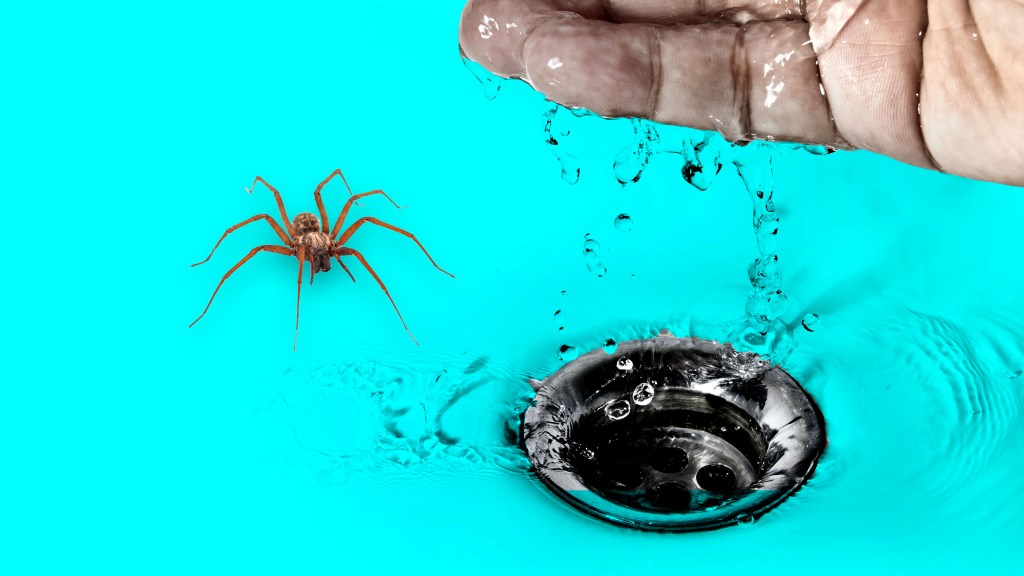
Spider season seems to have begun early this year.

It’s that time of the year when we start seeing spiders, climbing up walls, hanging out in sheds, and getting comically stuck in bathtubs. Of course, they live all year round, but in early autumn they are visible everywhere.

I love spiders. I think they’re quite cute. We don’t have any dangerous ones in this country, as far as I know, and they eat the ticks that we really don’t want in our houses.

But I get why other people are creeped out by them. They’ve got eight legs, which is far too many, and they scurry around like they’re up to no good. We’ve been fed media images of terrifying tarantulas and it’s understandable that people would associate them.

The Torah has a word for these beasties. Sheretz. It’s root is resh-vav-tzadi, to do with running around, so most translations render sheretz as ‘creepy-crawly,’ or ‘creeping thing.’ It applies, first and foremost, to mice and lizards, but extends to any scuttling insect or racing rodent. There are also the sheretz bamayim – the creepy-crawlies underwater, like jellyfish, octopus and lobster you might find scampering on ocean floors.

They were created by God on the fifth day. They are mentioned by name. For some reason, God decided that spiders were supposed to exist. God made room for them in the world and dedicated a verse of Torah to celebrating their creation. God made mosquitoes and shrews and chameleons and God saw that they were good. So, if you’re in the camp that loves spiders, you get a point.

God has also banned them. We are prohibited from eating them. They are described as disgusting and as abominations. On some level, we are supposed to revile them. So, if you’re in the camp of people who can’t stand spiders, you get a point too.

(I promise you, this is going somewhere.)

I’ve spent the last week thinking about the sheretz. From Monday to Thursday, this synagogue hosted the Queer Yeshiva. It was a momentous occasion. Never before in Progressive British history have so many people come together to study the Talmud in such an intense way. Everybody talked about how wonderful this synagogue is, and I want to thank you all for opening this space to a bunch of LGBT people to study Torah.

Over the week, we read a sugya of Talmud from Sanhedrin, a tractate that deals with capital crimes. It asks questions about who gets to condemn somebody for the death penalty, and on what grounds.

It contains a list of characteristics expected of Jewish high court judges: tall; wise; handsome; elderly; fluent in at least seventy languages; and, of course, familiar with sorcery.

So, who is eligible? Do we have any candidates for the Sanhedrin in this congregation? I won’t be putting my hat in the ring. It’s tricky to find someone, but I’m sure such people exist.

Then it adds another requirement. Anyone who wants to sit on a Sanhedrin has to find grounds for declaring clean the sheretz. You want to put somebody to death? You’ve got to be able to make lobsters kosher. You have to be able to purify a spider.

Who can make unclean things clean? Who can make what’s treif kosher? If anyone in this room can do it, you will be welcomed with open arms to the Jewish law courts of Babylonia.

But it seems unlikely that will fall within any of our skill sets. It sets an impossibly high standard.

Perhaps that’s the point. You have to be so good at thinking and reasoning that only the highest standards of scholars can join. You have to be of such excellent calibre that you know Torah inside out and can interpret it, even against itself.

Many have understood this edict that way. In fact, elsewhere in the Talmud, we learn that there are as many as 150 ways to make shrimp kosher. There’s not just one secret method of purifying a sheretz – there are a whole bunch of them – and you should be able to work them out.

But the Talmud doesn’t give any convincing explanations as to how this is possible. Even where rabbis have a stab at it, they are soon shot down. Nice try, but no. That’s not how you make mice edible.

As a result, plenty of rabbis throughout the ages have tried to show that they can purify the sheretz. Great thinkers who knew the Torah inside out have tried to show that they are eligible for sitting on the Sanhedrin.

But here’s the thing. You can do all the reasoning you like. A spider will still be a spider. A lizard will still be a sheretz. And a sheretz will still be unclean. You can’t actually change what the Torah says.

So the rabbis have made sitting on the Sanhedrin impossible. It is so restricted that we will never find people capable of achieving it. De facto, the rabbis have abolished the death penalty.

This is a tremendous achievement. Subtly, and without saying so, they have done exactly what they say needs to be done: they have turned the Torah against itself. Except, instead of turning the Torah against itself so that they can kill people, they turn the Torah against itself so nobody can!

Suppose somebody were to come along and actually give convincing proof that spiders are really kosher. OK, then we would have a problem. My hunch is that the rabbis have already thought of this. Anybody who could do so would, by their nature, refuse to implement the death penalty.

A person who can see the kosher in a lobster can see the goodness in a convict.

A person who could cleanse the body of a mouse could cleanse the soul of a criminal.

You have to be able to see people, and creepy-crawlies, the way that God sees them: as good.

This is the rabbis’ genius way of telling us who is allowed to judge others. The only person we would permit the authority to judge others is the one who would judge them favourably.

The spiders are out and about in our houses. We might love them or hate them or greet them with indifference. But who gave any of us the right to kill them? God, for whatever reason, has determined that they have a place on this earth and it is not our job to decide they don’t.

The world is full of people we don’t like. Some of them do detestable things. And we might feel fear and hatred and anger towards them. And sometimes those feelings are justified.

But we don’t have the right to kill them.

We are not worthy to judge them.

Unless you can purify a spider, you have to live in this world with everyone else.

God has made enough room for them in this world and we have to make enough room in our hearts.

Shabbat shalom.