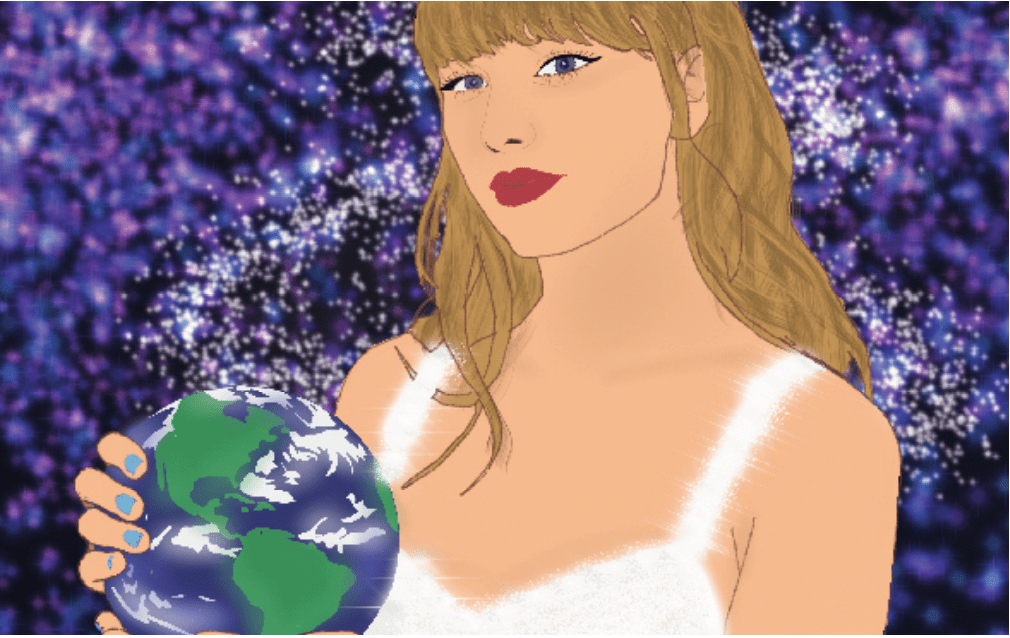
Not long before I started here, Rebecca came back very excited from a Taylor Swift concert. Taylor Swift, I understand, is a very famous popular music singer.
Rebecca had been to the much-coveted “Eras” tour, where Taylor Swift went through her back catalogue of music. For Swifties – Taylor Swift’s fans – their favourite artist has “eras,” each represented by a different album. Fans ascribe themselves to an “era” – their favourite musical period from the singer.
In her enthusiasm for what she had seen, Rebecca suggested I do a sermon about Taylor Swift.
I curtly replied: “I think I’ll probably talk about Torah.”
That was wrong. I shouldn’t have said that.
If something is relevant to the congregation, there should be a way to make it relevant to Torah. So, I got thinking about what connections there might be, not because I like Taylor Swift, but because I do like a challenge.
And I got thinking, you know who else had eras, each represented by unique creative output?
King Solomon.
According to our tradition, Solomon wrote the Song of Songs as a young man; the book of Ecclesiastes in his middle age; and the Book of Proverbs when he was old.
The Song of Songs is a wonderful collection of erotic love poetry, beloved of weddings, and recited at Pesach as we celebrate fertility. It makes sense that this was composed by somebody young and virile. The Book of Proverbs is a compilation of wisdom and dictums: the sort of knowledge someone can only accumulate by living a full life and learning from everyone.
The Book of Ecclesiastes – called, in Hebrew, Qohelet – is the text attributed to middle age. It is a deep meditation on what happens in a crisis of faith, asking what the meaning of life is, and seeking a transformed relationship with God. It makes sense for midlife, when we question our grand narratives, and find new existential purposes.
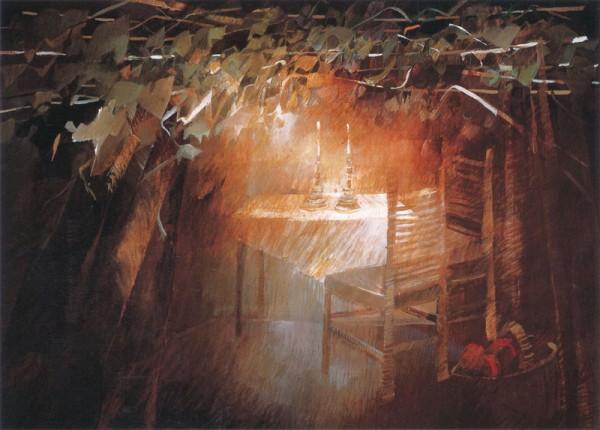
It is the Megillah, the sacred text, for this festival of Sukkot. It is so appropriate for this autumn festival, when we build a beautiful structure and watch our sukkah get drenched in rain and torn apart by winds. The Swifties may hold by many different eras, but we Jews, at this festival of Sukkot, are very much in our Qohelet era.
With that in mind, I offer up a pop quiz. I’ll read out a verse, and you tell me: is it a Taylor Swift lyric, or a section from Ecclesiastes?
Some of you may need to sit this out, because you are superfans, and will therefore already have rote memorisation of every part of Tanach.
- I saw that there is nothing better for people than to be happy in their work. That is our lot in life. And no one can bring us back to see what happens after we die. (Ecclesiastes 3:22)
- Did you not write it down? Just one more thing to do. Where were you, and didn’t they pray, too? (Taylor Swift, Didn’t They, 2003)
- Did some bird flap its wings over in Asia? Did some force take you because I didn’t pray? (Taylor Swift, Bigger than the Whole Sky, 2020)
- A man might have a hundred children and live to be very old. But if he finds no satisfaction in life and doesn’t even get a decent burial, it would have been better for him to be born dead. (Ecclesiastes 6:3)
- If clarity’s in death, then why won’t this die? (Taylor Swift, Should’ve Would’ve Could’ve, 2022)
- Anything I wanted, I would take. I denied myself no pleasure. […] But as I looked at everything I had worked so hard to accomplish, it was all so meaningless—like chasing the wind. (Ecclesiastes 2:10-11)
- Tell me I was the chosen one / Show me that this world is bigger than us / Then sent me back where I came from / For a moment I knew cosmic love (Taylor Swift, Down Bad, 2023)
- Sometimes people say, “Here is something new!” But actually it is old; nothing is ever truly new. We don’t remember what happened in the past, and in future generations, no one will remember what we are doing now. (Ecclesiastes 1:10-11)
- Someone told me there’s no such thing as bad thoughts. Only your actions talk (Taylor Swift, Guilty as Sin, 2024)
- It seems so wrong that everyone under the sun suffers the same fate. Already twisted by evil, people choose their own mad course, for they have no hope. There is nothing ahead but death anyway. (Ecclesiastes 9:3)
When I set out on this task of connecting Qohelet to Taylor Swift, it was just a bit of fun. I was surprised to find something really profound through it.
Many of her fans have paid close attention to Taylor Swift’s developing relationship with faith. They have even engaged in a religious textual analysis of her latest album.
Writing for a British Christian magazine, cultural commentator Giles Gough notices “two Taylors.” The early Taylor, he says, has “an uncomplicated yet sincere relationship with God,” befitting of her Bible Belt upbringing. Later, she only turns to God in times of crisis, “typical of the mainstream, secular world she inhabits.”
Gough speculates that Taylor Swift is “someone who has deconstructed their faith, and come out of it not really knowing what she believes. […] Swift seems to still be reaching out to God and when she is unable to find him, has perhaps tried to find salvation in romantic love.”
If his interpretation is correct, then Taylor Swift is even closer to King Solomon than we thought. She is asking the same questions and wrestling with the same theological issues as the Book of Qohelet does.
In Ecclesiastes, the convoker is eager to hold onto his old views of the world. He insists: “Fear God and obey his commands, for this is everyone’s duty. God will judge us for everything we do, including every secret thing, whether good or bad.” (Ecclesiastes 12:13-14).
At the same time, Solomon wrestles with nihilism, saying: “People and animals share the same fate—both breathe and both must die. So people have no real advantage over animals. How meaningless! Both go to the same place—they came from dust and they return to dust. For who can prove that the human spirit goes up and the spirit of animals goes down into the earth?” (Ecclesiastes 3:19-21)
This wrestling may, in fact, be a part of the human condition. In 1981, the psychologist and theologian James W Fowler developed a theory of “stages of faith.” He argued that people naturally go through a process of questioning their ideas, revisiting them, and finding new narratives to accompany their changes in life. This process helps adults to reach mature religious belief, where they can embrace diversity through universal principles of love and justice.
So, Taylor Swift, King Solomon, James Fowler, and the festival of Sukkot all seem to be teaching us the same thing: that it is OK to have doubts. You don’t have to cleave to a naive faith in a higher power, but can wrestle with God, and challenge your traditions.
In doubt and uncertainty, we grow. In dogmatism, we remain static.
So, whatever era you are in, embrace it. Strive for curiosity. Love questioning.
And have a very happy Sukkot.
Shabbat shalom.

 Sim Lev