judaism · ritual · sermon

Make like a spider and weave

This sermon will be addressed to two girls who are having baby blessings at Kingston Liberal Synagogue. Their names are redacted from this online version.

Girls, welcome to your synagogue.

I will address this sermon to you, but you will not remember it, and that’s OK, because I am really speaking to all Jewish children when I give this address. And you should know that all adults, no matter how big they get, never stop being children. So I am speaking to you, but really I am speaking to everybody gathered here today.

My message for you, girls, and for all Jews is: learn to be like a spider. 

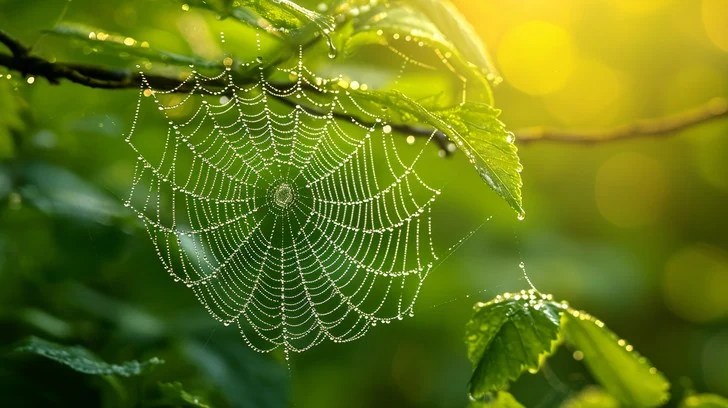
You see, from the moment a spider is born, she already carries everything inside herself to make a home. The silk with which she will construct her web is built into her body. Without ever learning from a parent or attending a school, the spider already knows how to build her home, wherever she goes. 

In this way, the spider is the perfect Jew. Jews, wherever we are, carry in us all we need to make our home. Our home can be woven absolutely anywhere. Whether in a desert, an ocean, or an Arctic tundra, Jews will always find ways of creating our sacred spaces. 

Our home is not made of silk, like a spider’s. Our home is made of the bonds we build with each other. Between every community member, there is an invisible thread. If you look around this room and squint in exactly the right light, you will see how one thread connects to each other, and every thread interlocks somewhere. That is the web of our community.

Our home is also made of rituals. In Hebrew, the word for a tractate of Talmud is masechet. The masechet is the page of our religious texts that tells us how to mark every moment and celebrate every festival. Do you know what masechet also means, dear girls? It means a weaving; a web. 

Because our home is made of rituals, you can find yourself anywhere in the world, and if somebody starts a prayer, or lights a candle, or cooks a food, you will realise that you are suddenly back in your Jewish home.

Our home is made of stories. Yes, we sew together patchworks from ancient traditions and family tales and our life experiences and all of it comes together in this great big web, so that Jews are all brought together by these stories.

Now, some religious knowledge may be innate. Girls, there is a story that before a baby is born, her soul has already been to the Garden of Eden and heard the revelation at Mount Sinai. Perhaps you are sitting there, knowing far more about the secrets of the universe than any of us. 

But the truth is, we are not like spiders. We can’t just weave the Jewish home from the moment we are born. We need to learn how to do it. We need teachers and elders who have learned to build the web from the generations before them. The thread we spin with comes from a yarn thousands of years old, and you need people who will pass on the tools to you.

That’s why, here, in your synagogue, you will be able to come to Kinderlach when you are small, and join Beiteinu as you grow, and come to many family services, and go on adventures with your youth movement. All of this exists to help you learn how to make your web, so that it is strong and beautiful and unique, like you.

Children, a moment ago, you came and were held underneath the tallit to receive a blessing. We call the tallit a “sukkah” – a tent, a tabernacle. It represents the Jewish home. “Sukkah” has the same root in Hebrew as “masechet” – the weaving we mentioned earlier. You see, the Jewish home is a portable prayer shawl, made by people skilled with textiles, and we can pull it out at any moment.

In the Torah portion we read today, on this day of your Simchat Bat, God tells us how to build a mishkan – a sacred place where God can live. I’ll give you one guess what it’s made of. 

The tabernacle where God lives is made of wool and cloth and thread and yarn. Oh, it comes in so many colours! Blues and purples and crimsons all finely interlocking on a great stretched canvas made of animal hides. 

That is where God lived with the Jews for the years we wandered in the desert. After slavery, the Jews had to learn how to be truly free. We needed to be independent of the great demands of Egyptian slaveowners and even the comforts of their homes. We needed to know how to live transiently. 

Yes, we needed to learn to be more like spiders. We needed to build a home wherever we went.

And you, dear girls, need to learn to make a home too.

Girls, I have been to your house, and I know how lovely it is. Somehow your dads manage to keep it such a calm and clean place at all times. I don’t know how they do it. I hope they can manage some semblance of the same order when you both start crawling. 

But even if you ransack the living room, and draw all over the walls, and leave your toys strewn across the stairs, they will still love you, and it will still be your home. You may move many times, or you may stay in one place, but your home will be the people you come back to. It will be the stories you tell, and the songs you sing, and the rituals you make up. Home will be your own private language that only makes sense between you.

You come today into this synagogue, and know that it will be your home. Around you, you have your whole community, who have come here to show that they will love and support you. They will teach you how to weave webs, and you will soon start wrapping your own silky strands into the patchwork of this community. 

When I welcome you to your synagogue, I am not talking about the building. That’s not our home – it’s just the frame we use to make it in.

Our home is the web we weave together – the invisible threads that connect everyone in this community. 

We are like the ancient Israelites who carried their home through the desert. 

We are like the spiders who carry their homes in their bodies.

We build our home through connection and song and story.

May you build this home with us.

Shabbat shalom.
sermon · talmud

Can you purify this spider?


Spider season seems to have begun early this year.

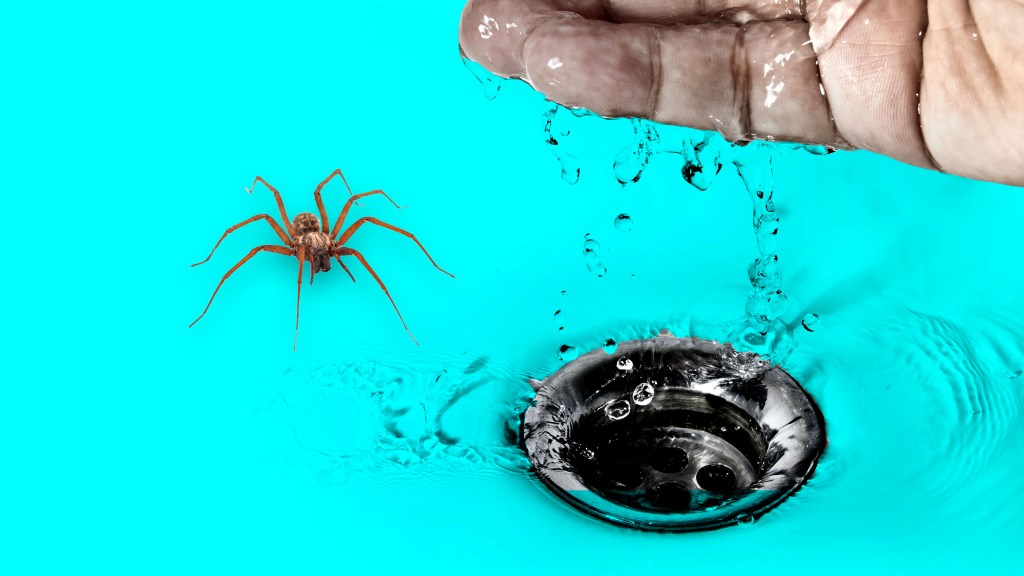
It’s that time of the year when we start seeing spiders, climbing up walls, hanging out in sheds, and getting comically stuck in bathtubs. Of course, they live all year round, but in early autumn they are visible everywhere.

I love spiders. I think they’re quite cute. We don’t have any dangerous ones in this country, as far as I know, and they eat the ticks that we really don’t want in our houses.

But I get why other people are creeped out by them. They’ve got eight legs, which is far too many, and they scurry around like they’re up to no good. We’ve been fed media images of terrifying tarantulas and it’s understandable that people would associate them.

The Torah has a word for these beasties. Sheretz. It’s root is resh-vav-tzadi, to do with running around, so most translations render sheretz as ‘creepy-crawly,’ or ‘creeping thing.’ It applies, first and foremost, to mice and lizards, but extends to any scuttling insect or racing rodent. There are also the sheretz bamayim – the creepy-crawlies underwater, like jellyfish, octopus and lobster you might find scampering on ocean floors.

They were created by God on the fifth day. They are mentioned by name. For some reason, God decided that spiders were supposed to exist. God made room for them in the world and dedicated a verse of Torah to celebrating their creation. God made mosquitoes and shrews and chameleons and God saw that they were good. So, if you’re in the camp that loves spiders, you get a point.

God has also banned them. We are prohibited from eating them. They are described as disgusting and as abominations. On some level, we are supposed to revile them. So, if you’re in the camp of people who can’t stand spiders, you get a point too.

(I promise you, this is going somewhere.)

I’ve spent the last week thinking about the sheretz. From Monday to Thursday, this synagogue hosted the Queer Yeshiva. It was a momentous occasion. Never before in Progressive British history have so many people come together to study the Talmud in such an intense way. Everybody talked about how wonderful this synagogue is, and I want to thank you all for opening this space to a bunch of LGBT people to study Torah.

Over the week, we read a sugya of Talmud from Sanhedrin, a tractate that deals with capital crimes. It asks questions about who gets to condemn somebody for the death penalty, and on what grounds.

It contains a list of characteristics expected of Jewish high court judges: tall; wise; handsome; elderly; fluent in at least seventy languages; and, of course, familiar with sorcery.

So, who is eligible? Do we have any candidates for the Sanhedrin in this congregation? I won’t be putting my hat in the ring. It’s tricky to find someone, but I’m sure such people exist.

Then it adds another requirement. Anyone who wants to sit on a Sanhedrin has to find grounds for declaring clean the sheretz. You want to put somebody to death? You’ve got to be able to make lobsters kosher. You have to be able to purify a spider.

Who can make unclean things clean? Who can make what’s treif kosher? If anyone in this room can do it, you will be welcomed with open arms to the Jewish law courts of Babylonia.

But it seems unlikely that will fall within any of our skill sets. It sets an impossibly high standard.

Perhaps that’s the point. You have to be so good at thinking and reasoning that only the highest standards of scholars can join. You have to be of such excellent calibre that you know Torah inside out and can interpret it, even against itself.

Many have understood this edict that way. In fact, elsewhere in the Talmud, we learn that there are as many as 150 ways to make shrimp kosher. There’s not just one secret method of purifying a sheretz – there are a whole bunch of them – and you should be able to work them out.

But the Talmud doesn’t give any convincing explanations as to how this is possible. Even where rabbis have a stab at it, they are soon shot down. Nice try, but no. That’s not how you make mice edible.

As a result, plenty of rabbis throughout the ages have tried to show that they can purify the sheretz. Great thinkers who knew the Torah inside out have tried to show that they are eligible for sitting on the Sanhedrin.

But here’s the thing. You can do all the reasoning you like. A spider will still be a spider. A lizard will still be a sheretz. And a sheretz will still be unclean. You can’t actually change what the Torah says.

So the rabbis have made sitting on the Sanhedrin impossible. It is so restricted that we will never find people capable of achieving it. De facto, the rabbis have abolished the death penalty.

This is a tremendous achievement. Subtly, and without saying so, they have done exactly what they say needs to be done: they have turned the Torah against itself. Except, instead of turning the Torah against itself so that they can kill people, they turn the Torah against itself so nobody can!

Suppose somebody were to come along and actually give convincing proof that spiders are really kosher. OK, then we would have a problem. My hunch is that the rabbis have already thought of this. Anybody who could do so would, by their nature, refuse to implement the death penalty.

A person who can see the kosher in a lobster can see the goodness in a convict.

A person who could cleanse the body of a mouse could cleanse the soul of a criminal.

You have to be able to see people, and creepy-crawlies, the way that God sees them: as good.

This is the rabbis’ genius way of telling us who is allowed to judge others. The only person we would permit the authority to judge others is the one who would judge them favourably.

The spiders are out and about in our houses. We might love them or hate them or greet them with indifference. But who gave any of us the right to kill them? God, for whatever reason, has determined that they have a place on this earth and it is not our job to decide they don’t.

The world is full of people we don’t like. Some of them do detestable things. And we might feel fear and hatred and anger towards them. And sometimes those feelings are justified.

But we don’t have the right to kill them.

We are not worthy to judge them.

Unless you can purify a spider, you have to live in this world with everyone else.

God has made enough room for them in this world and we have to make enough room in our hearts.

Shabbat shalom.