sermon · spirituality

It’s not just what you see, it’s the way that you see it

During prayers, I find my mind wanders- or rather focuses. It sees things it otherwise wouldn’t.

The details of the space I am in suddenly interest me in new ways. I, who live in a world of words, suddenly find myself in a world of space: physical and embodied.

Look around: what do you see?

Perhaps a more pertinent question is: how do you see it? In a synagogue, walls are not just walls. Ceilings are not just ceilings. Curtains are not just curtains.

Every inch of space buzzes with meaning, crying out for interpretation.

For months, we have looked at this space with a certain set of eyes. For the Council, commissioning a new sanctuary, they have looked at the room with eyes of possibility. For the team responsible for the redesign, they have been looking at the space with the eyes of architects, artists and technicians. Those who were accustomed to this space have perhaps looked at it with nostalgic loss, knowing that their familiar sanctuary would be transformed.

I want to invite you now to look at this space anew: through the eyes of a believer.

In 539 BCE, Cyrus the Great permitted the Jews to return to Jerusalem and rebuild their Temple, which had been destroyed in the reign of Nebuchadnezzar. A generation of exiled elites returned and remade their holy space.

The books of Ezra and Nehemiah are dedicated to explaining what happened in those formative years.

Ezra recounts the dramatic unveiling ceremony for the new Temple. He says that, when the elders of the generation saw the new Temple, they began to cry, while the young cheered out in jubilation.

Seventy years they had been held captive. Seventy years they had not seen their holy mountain.

For the old, this was a place they never dreamed they would see again, certainly not within their own lifetimes. For the young, this was a place that had only existed in myth and psalm.

What a moving experience it must have been to witness it.

So, I invite you to come to this building with the eyes of exiles. True, our four weeks in the next door hall do not quite compare to the seventy years the Jews spent in Babylon.

Nevertheless, soak it up, because it is a marvel to enter after a period away. Absence surely makes the heart grow fonder, and I know I had missed the beautiful serenity of this synagogue.

Yet the commentaries on the book of Ezra believe that the elders were not shedding tears of joy. Rashi says they were, in fact, crying for the Temple they had lost. The First Temple, he says, was even bigger. Solomon’s Temple was enormous by comparison.

This is an interesting proposition, because it is almost certainly not true. We do not have any archaeological evidence to suggest there was a First Temple, still less a bigger one with wider foundations. By all accounts, it is far more likely that the First Temple was smaller and more frail.

Yet, Rashi is right that the elders could truly have believed the old Temple was bigger and grander. When they last saw it, they would all have been infants.

My primary school’s doors were enormous wooden structures that towered over all who entered them… until I returned as an adult and realised they were just doors.

There may be a part of you that looks back with wistful nostalgia at the old sanctuary, dilapidated though it was. This is natural: in our synagogues we find safe spaces that ground us in our youth. Adjusting can be hard.

So, this is an invitation: try to look at this space through the eyes of a child. Try to feel the comfort and wonderment that you did in your youth.

When Ezra returned and rebuilt the Temple, he sought to recreate all that was best in the one that had stood before.

Like us, the Jews dedicated and blessed their Second Temple in the month of Adar, between the festivals of Purim and Pesach.

They brought in what they had preserved from the last Temple: cleansing bowls and musicals instruments. Where they could not repeat, they replicated, weaving curtains and priestly garments.

In Solomon’s Temple, there had been a permanently lit flame above the altar, symbolising God’s eternal presence with the Israelites.

When the exiles returned with Ezra, they relit the pyre, to show that, while they had left the Temple, God had never left them.

After the destruction of the Second Temple, the Jews installed in their synagogues a ner tamid, an everlasting light. Through this emblem, the flames showed that God’s light was not only in every time, but also in every space.

So, look at our light, with its memorial to the Shoah, and see how this same flame has burned for 3,000 years, linking us to hundreds of generations of worshippers.

But do not stop there, or you may be tempted by conservatism.

After the Temple, our rabbis reinvented every ritual item so that they could have new homes in the synagogues.

The Ark that contained the Two Tablets of the Law became the ark that holds our Torah scroll. The breastplate and crown that the priests wore became adornments for Torah. The sacrificial altar became the bimah from which Torah was read.

In every object, you can see the theological creativity of our people. You witness the myriad ways in which we constantly reinvent and reanimate our traditions.

So, look at the details of this sanctuary and embrace all the ways that our artists and architects have participated in that great tradition of innovation.

Everything contains the holy sparks of what went before. Every spark is breathed new life by the creatives who recreate it.

You, too, can fill this space with life, as you bring your own meanings to it.

Come to this sanctuary. Come with the eyes of an exile; the eyes of an elder; the eyes of a child. Come with eyes that are ancient and new. Come with eyes that have seen thousands of years and still look to the future.

Then bring those eyes back out into the world – and see what needs to be done.

Shabbat shalom.

festivals · high holy days · theology

ecclesiastes (taylor’s version)

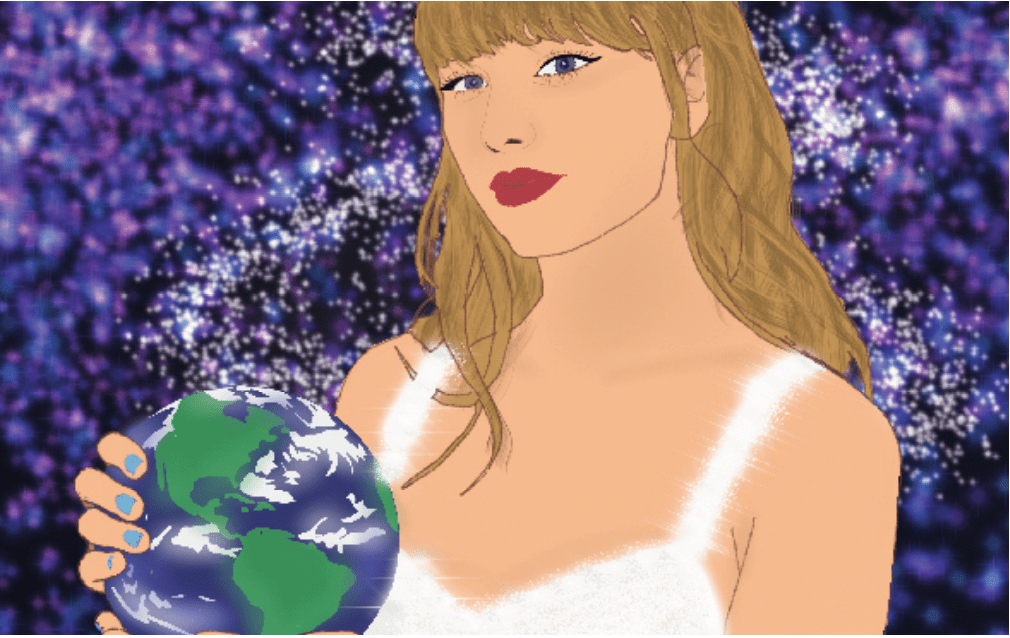
Not long before I started here, Rebecca came back very excited from a Taylor Swift concert. Taylor Swift, I understand, is a very famous popular music singer. 

Rebecca had been to the much-coveted “Eras” tour, where Taylor Swift went through her back catalogue of music. For Swifties – Taylor Swift’s fans – their favourite artist has “eras,” each represented by a different album. Fans ascribe themselves to an “era” – their favourite musical period from the singer.

In her enthusiasm for what she had seen, Rebecca suggested I do a sermon about Taylor Swift.

I curtly replied: “I think I’ll probably talk about Torah.”

That was wrong. I shouldn’t have said that. 

If something is relevant to the congregation, there should be a way to make it relevant to Torah. So, I got thinking about what connections there might be, not because I like Taylor Swift, but because I do like a challenge.

And I got thinking, you know who else had eras, each represented by unique creative output?

King Solomon.

According to our tradition, Solomon wrote the Song of Songs as a young man; the book of Ecclesiastes in his middle age; and the Book of Proverbs when he was old.

The Song of  Songs is a wonderful collection of erotic love poetry, beloved of weddings, and recited at Pesach as we celebrate fertility. It makes sense that this was composed by somebody young and virile. The Book of Proverbs is a compilation of wisdom and dictums: the sort of knowledge someone can only accumulate by living a full life and learning from everyone. 

The Book of Ecclesiastes – called, in Hebrew, Qohelet – is the text attributed to middle age. It is a deep meditation on what happens in a crisis of faith, asking what the meaning of life is, and seeking a transformed relationship with God. It makes sense for midlife, when we question our grand narratives, and find new existential purposes. 

It is the Megillah, the sacred text, for this festival of Sukkot. It is so appropriate for this autumn festival, when we build a beautiful structure and watch our sukkah get drenched in rain and torn apart by winds. The Swifties may hold by many different eras, but we Jews, at this festival of Sukkot, are very much in our Qohelet era.

With that in mind, I offer up a pop quiz. I’ll read out a verse, and you tell me: is it a Taylor Swift lyric, or a section from Ecclesiastes?

Some of you may need to sit this out, because you are superfans, and will therefore already have rote memorisation of every part of Tanach.

  1. I saw that there is nothing better for people than to be happy in their work. That is our lot in life. And no one can bring us back to see what happens after we die. (Ecclesiastes 3:22)
  2. Did you not write it down? Just one more thing to do. Where were you, and didn’t they pray, too? (Taylor Swift, Didn’t They, 2003)
  3. Did some bird flap its wings over in Asia? Did some force take you because I didn’t pray? (Taylor Swift, Bigger than the Whole Sky, 2020)
  4. A man might have a hundred children and live to be very old. But if he finds no satisfaction in life and doesn’t even get a decent burial, it would have been better for him to be born dead. (Ecclesiastes 6:3)
  5. If clarity’s in death, then why won’t this die? (Taylor Swift, Should’ve Would’ve Could’ve, 2022)
  6. Anything I wanted, I would take. I denied myself no pleasure. […] But as I looked at everything I had worked so hard to accomplish, it was all so meaningless—like chasing the wind. (Ecclesiastes 2:10-11)
  7. Tell me I was the chosen one / Show me that this world is bigger than us / Then sent me back where I came from / For a moment I knew cosmic love (Taylor Swift, Down Bad, 2023)
  8. Sometimes people say, “Here is something new!” But actually it is old; nothing is ever truly new. We don’t remember what happened in the past, and in future generations, no one will remember what we are doing now. (Ecclesiastes 1:10-11)
  9. Someone told me there’s no such thing as bad thoughts. Only your actions talk (Taylor Swift, Guilty as Sin, 2024)
  10. It seems so wrong that everyone under the sun suffers the same fate. Already twisted by evil, people choose their own mad course, for they have no hope. There is nothing ahead but death anyway. (Ecclesiastes 9:3)

When I set out on this task of connecting Qohelet to Taylor Swift, it was just a bit of fun. I was surprised to find something really profound through it.

Many of her fans have paid close attention to Taylor Swift’s developing relationship with faith. They have even engaged in a religious textual analysis of her latest album.

Writing for a British Christian magazine, cultural commentator Giles Gough notices “two Taylors.” The early Taylor, he says, has “an uncomplicated yet sincere relationship with God,” befitting of her Bible Belt upbringing. Later, she only turns to God in times of crisis, “typical of the mainstream, secular world she inhabits.” 

Gough speculates that Taylor Swift is “someone who has deconstructed their faith, and come out of it not really knowing what she believes. […] Swift seems to still be reaching out to God and when she is unable to find him, has perhaps tried to find salvation in romantic love.”

If his interpretation is correct, then Taylor Swift is even closer to King Solomon than we thought. She is asking the same questions and wrestling with the same theological issues as the Book of Qohelet does. 

In Ecclesiastes, the convoker is eager to hold onto his old views of the world. He insists: “Fear God and obey his commands, for this is everyone’s duty. God will judge us for everything we do, including every secret thing, whether good or bad.” (Ecclesiastes 12:13-14). 

At the same time, Solomon wrestles with nihilism, saying: “People and animals share the same fate—both breathe and both must die. So people have no real advantage over animals. How meaningless! Both go to the same place—they came from dust and they return to dust. For who can prove that the human spirit goes up and the spirit of animals goes down into the earth?” (Ecclesiastes 3:19-21)

This wrestling may, in fact, be a part of the human condition. In 1981, the psychologist and theologian James W Fowler developed a theory of “stages of faith.” He argued that people naturally go through a process of questioning their ideas, revisiting them, and finding new narratives to accompany their changes in life. This process helps adults to reach mature religious belief, where they can embrace diversity through universal principles of love and justice.

So, Taylor Swift, King Solomon, James Fowler, and the festival of Sukkot all seem to be teaching us the same thing: that it is OK to have doubts. You don’t have to cleave to a naive faith in a higher power, but can wrestle with God, and challenge your traditions. 

In doubt and uncertainty, we grow. In dogmatism, we remain static.

So, whatever era you are in, embrace it. Strive for curiosity. Love questioning.

And have  a very happy Sukkot.

Shabbat shalom.

story · torah

A rock-eating worm built the Temple

This is the story of how the Temple was built.

This story comes to us from the Talmud. It was copied from the Mishnah. It belongs to the folk legends of King Solomon that may have predated it by some centuries. This is an old story. I sincerely doubt whether any of it ever happened, but I assure you it’s all true.

This is the story of how the Temple was built by a rock-destroying worm. When King Solomon decided to build the Temple, he brought up entire stones from the quarry. He wanted to carve those stones without swords. He knew there was only one way.

Somewhere in his kingdom there was a rock-destroying worm called Shamir. This monster was created at the very beginning of time, during the six days of creation in which light and darkness were separated and the first trees were planted. 

Some say the Shamir ate stones for breakfast; chewed through the hardest granite, making passageways like the holes in Swiss cheese. Some say it could cut through the rocks with only its gaze: a laser-like stare that sliced solid metal. Whatever were its methods, Solomon knew he had to have it.

In fact, the only way to catch this creature was to find something really soft. You had to wrap it up in cotton wool and barley bran. These materials would be too gentle and the Shamir would have no way of chewing through them.

Yes, this is all in the Talmud. This is our tradition. And if you feel like this rock-gobbling worm is far-fetched, I hope you will forgive me if I tell you that Solomon captured this creature by tricking the King of the Demons.

Solomon knew that Ashmedai, the world’s greatest demon, lived in the bottom of a pit on the top of the world’s tallest mountain. And the pit was filled up with gallons of rainwater that the demon swallowed whole every day, then waited for it to refill. 

Solomon sent his servant up that mountain and into that pit. The servant drained the pit of its rainwater and filled it again with fortified wine.

You might think that the King of the Demons would not fall for such a simple trick, and you’d be right. Ashmedai scoffed at the wine-filled pit and refused to drink from it. But days passed and the monster missed his gallons of water. Oh, he became so parched. Eventually, he gave in and took several enormous mouthfuls of the wine. 

Within moments, he fell fast asleep. Solomon’s servants tied him up and carried him back to Jerusalem. When Ashmedai woke up on the Palace floor, he roared at Solomon: “is it not enough that you have conquered the whole world, but now you must imprison me too?”

“I promise you,” said Solomon. “All I want is one creature. The shamir. The worm that eats through stone. I need it to build my Temple for God.”

Ashmedai sighed, and he replied: “I do not own the shamir. It belongs to the ministering angel of the sea, who has entrusted it to the wild rooster. Together they hide in the uninhabitable hills, where the rooster guards his eggs.” 

I’m quoting to you from the Talmud directly here, so you know that what I’m telling you is true. 

When Solomon knew where to find the wild rooster, he covered its nest with transparent glass. Seeing that it couldn’t get in, the rooster brought over the shamir to bore through the rocks. As soon as he’d seen the monster, Solomon knocked the chicken off of the nest and ran to collect his prize.

According to our tradition, that is how the First Temple was built. Overseen by Solomon, the King of the world, accompanied by Ashmedai, the King of the Demons, a stone-chewing worm carved out every brick. It snaked through all the pillars and ate at every rock. After years of winding through the granite, Solomon’s Temple was complete.

So, why did the Talmud come up with such a tall tale? Can it be that our rabbis really believed the Temple was built in such a fantastical manner? Somehow I doubt it. But nevertheless, I am adamant that this story is true. At least, I think it tells us something important we need to know.

Our rabbis were answering a textual problem. The Bible told us that King David was not allowed to build the Temple because there was too much blood on his hands. He had fought too many wars, subjugated too many peoples and built too much of his empire on the labour of others.

Only Solomon, whose name in Hebrew is cognate with peace, was able to overcome the violent tendencies of his father and build a Temple that would truly be fitting for God. How could he build such an edifice without getting blood on his hands?

When our rabbis imagine the construction of the Temple, they picture it as it ought to have been. No wars are fought to secure land. No natural resources are exploited to gain the raw materials. No workers are hurt in the making of the building. All that happens is a natural process, where a worm that would eat rocks anyway works its way through the stones to build God’s home.

The only people vaguely harmed are a demon who got drunk and a rooster that was knocked off its perch. This is the dream of how the Temple should have been made. It was created in complete peace and harmony with nature. 

By encouraging us to inhabit this fantasy, the Talmud draws our attention to the harshness of reality. Even the greatest and most noble civilisations are built on violence. Cities, skyscrapers and the highest cultures are all products of real graft. Human beings do interfere with nature. We do exploit workers. We do plunder natural resources and we do secure territories through war.

When we imagine a world where rock-destroying worms can carve out our accomplishments for us, we know that we are imagining something impossible. But the nature of Talmud is to challenge us to do impossible things.

The Talmud asks us to picture a different relationship between human beings, nature, and civilisation. In a world where the climate is being damaged in unspeakable ways, such imagination is required of us again. Humanity is at a juncture when we must completely rethink how to use resources and what kinds of civilisations we build.

That is what makes it true and that is why it still speaks to us today. The Temple was built by a rock-eating worm. Perhaps one day, we will build the world that way again.

I gave this sermon for Edgware and Hendon Reform Synagogue, Parashat Terumah, on 20th February 2021. For the sources, look at Sotah 48b and the sugya beginning in Gittin 67b