high holy days · liturgy · sermon

Do not build a prison in your heart

Imagine a courtroom. Picture those big wooden panels that line the grand hall of a traditional Crown court. The deep reds of the carpets. The judge sitting loftily on a bench,  at the front, draped in black gowns, donning that full-bottomed wig. And all the lawyers surrounding you, speaking Latin and legalese, bewildering you with their words. 

You have not been here before, but, suddenly, you find your life depends on your correct participation. You will have spent extra time ironing your clothes and polishing your shoes. You may have spent weeks picking out an outfit. Perhaps you already know what you would wear. 

How does it feel to stand trial here? Is this somewhere you want to be? From here, how much do you think you will learn and grow? And do you think there might be a better place where you could improve yourself?

This is the metaphor we are often given for Yom Kippur. The Heavenly court and the earthly one. The trial of our souls. The God of Justice, who sits in judgement over us.

We beg for clemency:

סלח לנו – forgive us

We announce our expectation of a just verdict:

סלחתי כדברך – I have forgiven according to your plea.1

We rejoice in the judgement:

אשרי נשוי פשע כסוי חטאה – happy are those whose transgression is forgiven, whose sins are pardoned.2

This is the courtroom of our hearts.

C. S. Lewis, the great 20th Century English author, famed for his Chronicles of Narnia, picked up on this aspect of our thinking. When he wasn’t writing beloved children’s novels, Lewis dabbled in biblical studies as a lay Anglican theologian. 

C. S. Lewis writes: “The ancient Jews, like [Christians], think of God’s judgement in terms of an earthly court of justice. The difference is that the Christian pictures the case to be tried as a criminal case with himself in the dock; the Jew pictures it as a civil case with himself as plaintiff (sic). The one hopes for acquittal; the other for a resounding triumph with heavy damages.”3

Now, Lewis is no antisemite. In fact, he repudiated the hatred of Jews, long before it became fashionable to do so.4 He is eager to point out that, at his time of writing, immediately after the Second World War, the Christian had much to atone for, and the Jew had much to charge against God. 

In many ways, he has us down. We do indeed take this as an opportunity to bring all our charges against God, and to vent our grievances against the injustice of the universe. Lewis is talking about ancient Israelite religion; the religion  of Scripture. 

Lewis would, I’m sure, willingly acknowledge that we modern Jews also share much in common with modern Christians, in terms of our admissions of guilt and prayers for pardon.

C. S. Lewis has astutely picked up that we see all this as a trial. 

But where he errs, I think, is in his understanding of what an ancient Jewish court was. The tribunal of our ancestors looked nothing like the judge’s dock of today. 

A metaphor that worked so well for poets and liturgists many centuries ago can become quite damaging when it is used with the projection of our criminal justice system.

Where today, a court can dole out sentences of imprisonment, the goal of the ancient court was about restitution and social harmony.

Where today, the court expects to find a person innocent or guilty, the ancient court sought to make sure everyone felt like they had a place in their community.

The focus of our sacred writings is to create a society based on compassion, community accountability, and healing.

When we rethink what justice looked like for the authors of our Torah, concepts of trials, pardons, and sentences start to look very different. By seeing the court through ancient eyes, we can re-imagine the trial as a process of growth and healing.

We get mere glimpses of what the earliest courts might have been. In the book of Judges, the archetypal ideal of the judge is Deborah, the prophetess. Her court is a base underneath palm trees in the hill country. We receive an image of her sitting there, while Israelites come up to have their disputes decided.5 Her court was one where people came to negotiate and be heard, but there is no indication they came to be punished. This was in the time of the Judges, the earliest of Israelite civilisations.

Later, however, ancient Israel developed a class system and a monarchy. With a state system came power and punishments. In the book of Samuel, King David pursues after the city of Avel Beit-Maacah, threatening capital punishment against everyone who rebels against him. Here, an unnamed elder-woman comes out. She admonishes the general, saying: “we are among the peaceful and faithful of Israel, will you destroy God’s inheritance?” She rebukes them with a reminder of the old system – that, before there were kings, people used to come and talk out their issues in the city. The generals agree to spare the city, providing they can enact punishment against one ringleader.6

From these two stories, we can garner an insight into what justice may have looked like in the earliest part of the biblical period. The first thing we notice is that women were leaders. This, then, may be a justice system from before patriarchal power was cemented. We also do not detect any hint of crime and punishment. Instead, the courts seem more like public cafes, where experienced negotiators help community members talk through their problems. If this is correct, we are looking at a very different type of court.

Still, courts did develop in ancient Israel, but not like those of today, nor even  of the surrounding empires. In our narratives, most of the times that characters are imprisoned, it is outside of the Land of Israel, by a Pagan power, and unjustly.

Joseph is sent to prison in Egypt on trumped-up charges without any due process.7 Samson the warrior is sent to toil at grinding grain in the jailhouse by the Philistines, not because he has done anything wrong, but as a prisoner of war.8 When the Babylonian rulers send Daniel to the Lion’s Den, it is because of xenophobic laws that stop him practising Judaism.9

Our Scripture treats prisons as something foreign, where good people are sent for bad reasons.

Even when we do see examples of prisons in Israel, they are always treated by the Torah’s authors with contempt. Three of our prophets are sent to prison: Jeremiah;10 Micaiah;11 and Hanani.12  In every single case, this is a monarch warehousing a prophet because they are speaking truth to power. In the Torah’s view of justice, it is hard to see how prisons could have any meaningful role at all.

That does not mean this was a world without punishment. Scripture presents exile, flogging, and even death as options for what might constitute justice in the ancient world.13

Yet, based on our commentaries and traditions, we have the impression that such penalties were implemented only in the most egregious cases. What somebody had to do was so heinous that the death penalty would almost never actually occur.14 

In the Mishnah, we read, the court that puts to death one person in seven years is bloodthirsty. Rabbi Eleazar Ben Azariah takes it even further, saying, ‘One person in seventy years.’ Rabbi Tarfon and Rabbi Akiva say, ‘If we had been in the Sanhedrin, no one would have ever been put to death.’15

What kind of justice system was this then? No prisons, no death penalty? No patriarchy, no punishments? 

The ancient court sounds more like people just sitting around having a chat.

What if it were? What if, instead of biblical justice being all about burning and smiting, it was mostly about negotiating and feeling? How would that change how we look at our tradition? How would it change how we approach our relationship with God?

Perhaps I am over-egging how different the biblical court was. If so, bear with me. 

I am well aware of how terrible some of the Torah’s punishments were. I am also conscious that what I am describing is so outside of our reality as to make it feel fictitious. If the world of restorative justice I am describing never really existed, please at least indulge me in entertaining the possibility that it could. 

We are not, in this room, coming up with a proposal for how to govern Britain. We are just asking what metaphors work when we think about how to hold our own hearts on Yom Kippur. For me, the metaphor of court cases has proven really problematic, and I am looking to explore new ones with you.

The problem of the courtroom metaphor initially struck me quite suddenly. I was talking with my therapist about an issue that I felt kept coming up in my own behaviours. I said: “I’ve got another case to talk about…”

He looked around the room and said “you know you’re not on trial here, right?” 

I think I had expected, on some level, that, through counselling, I could be acquitted or found guilty for all my past deeds and thought patterns. 

I had built a prison in my own heart, to which I could sentence the parts of myself  I liked least. I had conjured up a jury in my head, who would judge all my actions, according to the standards I had set myself. According to the standards I imagined God has set for me.

What was I doing? The point of therapy is not punishment or exoneration. It’s to learn and grow, and find ways of being better in the life I actually have. The point is not to condemn or discard my negative traits or past mistakes. The point is to work towards loving all of myself and learning from all I have done.

Perhaps you can relate to this. Have you imagined how you might punish others, or cast them into our prison in your heart? Maybe you even seek to punish people or get them out of your life. Maybe you, too, have hoped there were parts of yourself you could lock away.

We cannot apply the carceral system to our spirit. When we are doing wrong or feeling guilty, we must be free to look ourselves in the eye, and change willingly.

Is this not what God wants from us, after all? That we make amends, grow, become better. That we embrace ourselves and each other. That we turn from our ways and live. 

If, then, we are in a court with God, we should make it one where we are in conversation with a loving elder, not facing a law lord who seeks to punish and acquit.

So, let us imagine a new court. It is not the court we thought into existence at the start of this sermon. It is a very ancient one, where our ancestors went thousands of years ago. Deborah’s court. 

You are in the dusty scrubland of Canaan, and a few yards away you can see an oasis. People are gathering around it to fetch water. They are laughing and catching up and telling stories. They are feeding their livestock: sheep, goats, donkeys, camels. 

At the edge of this well is a row of palm trees, and the tribal leaders sit, drinking sweet tea. You cannot go to prison. There is no prison. You cannot be acquitted, because nobody thinks you are guilty. You are just a person, a member of the community, looking for a way through a problem. The goal will be to find a solution that benefits everyone, and that sees maximum spiritual growth. 

When you come away from this court, you can say “happy is the one whose sin is forgiven.” You don’t mean that you are relieved because you thought you were in trouble. You mean you are jubilant, because you are at peace with yourself, your community, and your God.

Let this be your court. Let this be the place you take your heart over Yom Kippur. 

Come before God, not as a claimant nor a defendant, but as a congregant, seeking growth.

And thank God that there is no prison in your heart; only an opportunity for ongoing healing and change.

May this be where we judge ourselves. May this be where we judge others. 

And let us say: amen.

  1. Birkat Selichot ↩︎
  2. Psalms 32:1 ↩︎
  3. CS Lewis, Reflections on the Psalms ↩︎
  4. PH Brazier, A Hebraic Inkling: C. S. Lewis on Judaism and the Jews ↩︎
  5. Judges 4:5 ↩︎
  6. II Samuel 20 ↩︎
  7. Genesis 28 ↩︎
  8. Judges 16 ↩︎
  9. Daniel 6 ↩︎
  10. Jeremiah 37 ↩︎
  11. I Kings 19 ↩︎
  12. II Chronicles 16 ↩︎
  13. Ezra 7:25-26 ↩︎
  14. eg. BT Sanhedrin 71a ↩︎
  15. M Makkot 1:10 ↩︎
story · torah

A letter to Joshua, from Moses

Dear Joshua,

It’s me, Moses.

Please forgive my shaky handwriting. It has been many years since I wrote anything down.

Can you believe it has already been forty years since we came to that great desert mountain and came into contact with the One God? Twice, I carried those miraculous tablets, etched with the Laws of Life, down from that mountain peak.

I could not carry them now. I would not have the strength. And I do not just mean that because of the way my hands tremble when I lift my food or the staggered steps I take when I wake in the morning. I do not have the zeal I once did. I cannot go on much longer.

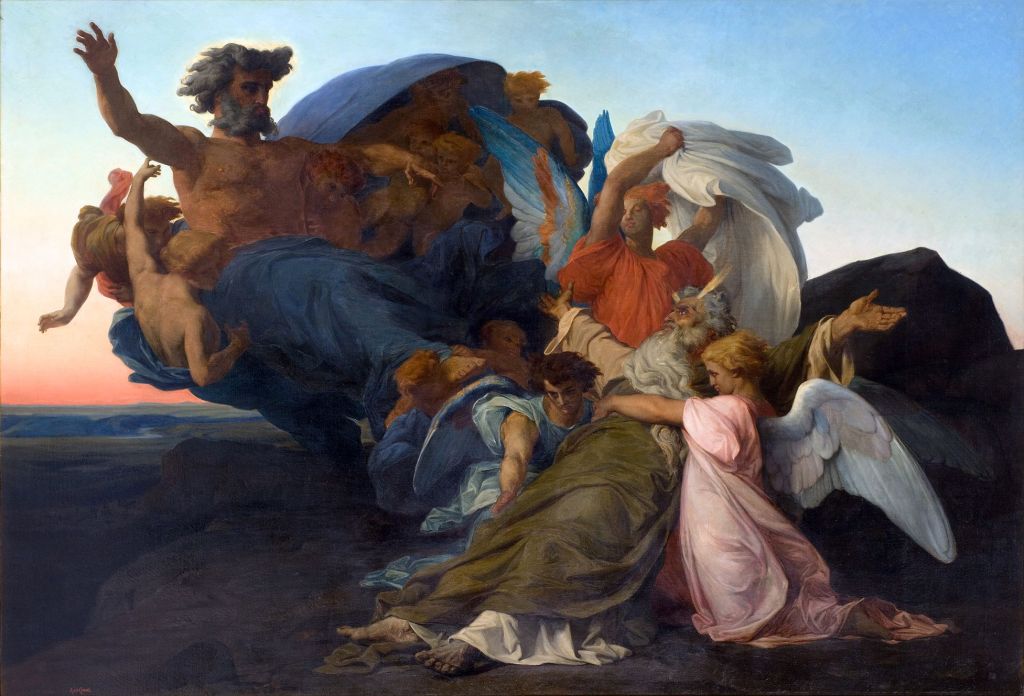
Joshua, I am dying, and I will soon be dead.

I wish desperately that I could walk with you across that Jordan. All I have ever wanted was to arrive with you at that great destination to which we have journeyed.

But the Eternal One has told me that I will not go on much longer. I will die here, in the desert, and be buried in the wilderness sands.

At first, I was affronted. I cried out to my Maker. ‘Why, God? Why can I not pass over to finally see the freedom for which I have longed?’

God, who has given me so many words, remained silent.

I think I have an answer, though.

The truth is I was free the moment I first left Egypt. Before I returned with my staff and my message. Before any of those miracles and signs and visions. Before I even knew the God of Israel watched over us.

I was free as soon as I took my life into my own hands and refused to be part of the Egyptian system any longer. Once I decided not to be a slaver; not to subjugate others, nor to be subjugated, I was already then mentally emancipated.

These years we have spent in the desert were a way to work out what to do with that freedom. We have been reciting these laws and developing these rituals to find ways of living that keep us from ever going back to the oppressive ways of Egypt.

Joshua, this is what I need to tell you. Do not go back there. Not even in your mind. Do not try to own and control people. Do not allow others to own or control you. Let your soul be free, so that you can dedicate it to the God who led you here.

I am writing this down so that you can refer back to it, and remember what the point of it all was. Why we left Egypt. Why we spent all this time trudging thirsty through shrubland. Why we said we would go to that country from which our ancestors came many mythical centuries ago.

The point was not the land. The point was what we might do there. That we might be free. That we might finally see every human being as a living representation of their Creator. That we might cease using each other as means to an end but as ends in themselves. That we might truly know the Oneness of God and the deep mysteries underlying our universe.

That’s why I’m writing this now, as a reminder.

I know, I have said this all many times before. Call this my mishneh torah, my deutero-nominon; the repetition of everything I said before. It needs to be repeated, over and again, because freedom is hard to achieve and subjugation is such an easy default.

Please, read it out loud. Read it many times. Read it all the time. Even when the words feel trite and you feel like you have repeated the same phrases all your life, keep coming back to it. Remind yourself why you are here. Remind yourself what is at stake in this brief life we have been given.

I will say it again. Do not become like them. Do not worship the work of your hands. Do not think that work is the goal. Do not seek to own and control. Do not kill or oppress or endanger. Choose life. Seek God. Find holiness in everything that lives.

Joshua, I worry, even as I write these words, that you will not heed them. I know you want to. Ever since you were a boy, you used to sit at my feet and lap up every word. You were desperate to be closer to Divinity, to reach for higher things.

When I said we could conquer Canaan, only you and your friend Caleb believed me. You saw giants and were certain you could slay them. You had more faith than any of us. You had more faith than I did.

Joshua, there have been times when you carried me. Literally. In the war against the Amalekites, you put your shoulders under my arms and kept me upright. You are so, so faithful.

But where will all that zealotry go, once you are charged with leading people in the land? When you no longer have giants and Amalekites left to fight, what will you do with all your conviction?

I am asking too much of you. I am asking you to remember a life you have not lived.

You never knew Egypt. You were born here, in the wasteland, after we had already fled. You don’t remember what it was like to be owned. You cannot know what it meant to be a subject of a system that meant to destroy you.

In some ways, this means you have always been free, because you were not born a slave. In other ways, it means you have never been free, because you have never had to fight for it. You do not know what it feels like to start moving, then notice you are shackled, and to keep moving still, and to never stop moving, and to keep going with nothing but faith to carry you.

And you cannot know it. Just as I cannot follow you over the Jordan River, you cannot follow me out of Egypt. Some lessons can only be learned by life’s journey, and some journeys can only be made once.

Perhaps, when you go into that new country, you will make the place I dreamed about. Maybe it will flow with milk and honey. It might become a light unto the nations, where everyone lives with equality and dignity, where everyone can walk in the ways of God.

Or perhaps you will make a new Egypt. You, who never knew Egypt, will find new ways to conquer and subjugate and destroy. Maybe you will crown kings and build empires and wage wars.

Then what will the point have been?

I am asking too much of you. I am asking you to build a world I could not, and to do it all without my help. I am asking to you to know things you have not learnt, and to be perfect in ways I was not. I am sorry to put so much pressure on you. It is not fair.

You may not be able to do what I am asking. But at least you can remember. Tell your children where we came from. Teach them where we were trying to go.

And, then, perhaps, when they see new Egypts emerging, or they see that new Zions are possible, they will find paths through the wilderness that you and I could not see. Keep the story alive, so that the dream may continue.

Joshua, I am going to die here.

These words are all you will inherit from me.

I love you, Joshua.

Your friend,

Moses

spirituality · story

God is sharing her location on WhatsApp

The king is in the field.

Last weekend, a new moon hung in the sky, marking the new month of Elul. This season, is a time dedicated to reflection on who we are and who we can become. It is a time when we turn back to God and aim at healing our relationships.

At this time, you may hear Chabadniks greet each other, saying “the king is on the field.” It comes from a story taught by the Alter Rebbe, Rabbi Schneur Zalman of Liadi, who was the founder of the Chabad-Lubavitcher dynasty in the 18th Century. He used to explain the month of Elul using the parable of a king coming out in a field.

According to the analogy, the king’s usual place is in the capital city, in the royal palace. Anyone wishing to approach the king must go through the appropriate channels in the palace bureaucracy and gain the approval of a succession of secretaries and ministers. He must journey to the capital and pass through the many gates, corridors and antechambers that lead to the throne room. His presentation must be meticulously prepared, and he must adhere to an exacting code of dress, speech and mannerism upon entering into the royal presence.

However, there are times when the king comes out to the fields outside the city. At such times, anyone can approach him; the king receives them all with a smiling face and a radiant countenance. The peasant behind his plow has access to the king in a manner unavailable to the highest ranking minister in the royal court when the king is in the palace.

The king described by the Alter Rebbe in this metaphor is God. In his analogy, God is the ruler of all, but is hard to access except by an elite few. During Elul, the heavenly king comes out from his palace and makes himself accessible to all. In this month leading up to the High Holy Days, everyone has the chance to approach God, seeking favour and forgiveness.

It’s a beautiful analogy. But metaphors also have their problems, and we need to check them to see if they really work for us.

First of all, is God really a man? Well, of course not. God is too great and infinite to be held by anything as small as a body or a gender. Some Jews have therefore chosen only to use gender-neutral language to describe God, deploying words like “Holy One” and “Source of Life.” Alternatively, some Jews have chosen to reclaim divine feminine language, emphasising God’s femininity.

As Reform Jews, our belief in gender equality is essential to us, and that is bound to come through in how we think about God. To be honest, I’m happy addressing God by any pronouns because none of them capture what God really is. You can really insert whatever gender you like.

The much bigger question is what kind of personality this anthropomorphic God has. In the Lubavitcher parable, God is a king. There is plenty of precedent in Jewish tradition for such a reading: God is “adon olam,” the Lord of the universe; God’s throne is eternal and His sceptre stands upright; God is described as the king over all kings, and we are called upon to build God’s kingdom on earth.

I really don’t like this imagery at all. True, it tells us something about how powerful God is, but the image of a benevolent ruler isn’t very helpful to self-improvement. If a king tells you to change your ways, you’ll do it out of fear of violence or retribution. A king, to me, conjures up images of unearned power, and I want to deliberately rebel against it.

I prefer the idea of God as a loved one. When I approach Elul, I want to improve so that I can be the best possible version of myself. The people that make me aspire to that are my partner, best friends, and close family members. They remind me that I’m loved, and inspire me to do better by others.

This idea is also very present in Jewish interpretations of Elul. Some rabbis have noticed thar the letters of Elul could be an acronym for the beautiful love poetry of the Song of Solomon: ani ledodi vedodi li; “I am my beloved’s and my beloved is mine.” In this allegory, God and Israel are lovers working together. I much prefer this idea of equality and mutual partnership.

This idea of equality really doesn’t fit with how Chassids imagine God or social relationships. As they explain in the Alter Rebbe’s fable, God is only accessible to elite people most of the time. That is a core ideological belief for many Chassids. They see their rebbes not only as teachers but as holy men, who have a special connection to God. They advocate dveikus: cleaving to special people so that we, through them, can get closer to God.

They don’t hold this belief because they are somehow traditional and we are not. At the time when Chassidism was birthed, roughly contemporary with Reform Judaism, many of its greatest opponents within Orthodoxy criticised them for creating hierarchies and dynasties within Judaism. God, they said, had no intermediaries, and Judaism did not have hereditary hierarchies.

The story of the king in the field is quite beautiful, but when subjected to scrutiny, it looks much less appealing. It speaks to a worldview in which everything is divided up on a power ladder. Men above women; special Jews above ordinary people; and God as a king on top of it all.

That doesn’t mean we should completely abandon this teaching about Elul. The idea of coming back to God is helpful, and I adore the image of meeting God in the open country.

I want us to imagine an alternative. I want us to imagine what this theology would look like if all of humanity were equals. What would we say if our relationship to God was not a vertical one of subject to king but a horizontal one between lovers?

So, I submit to you, an alternative telling of the analogy of the king in the field, updated for modern times and modern beliefs.

God has turned on location sharing.

You receive a WhatsApp message. She is letting you know she’s on her way.

You haven’t seen her all year, so your heart immediately flutters with excitement. You can’t wait to see her again.

You love her. When she’s around, you feel like the best version of yourself. You laugh more. You give more of yourself. You feel more compassionate and honest. You want to bottle up the love you feel when you’re with her so that you can share it with others the rest of the year.

The little location sharing pin says she is inching closer towards you.

Only inching. She appears to be walking through fields. You calculate how long it might take him to reach you. Weeks, perhaps.

Still, seeing her is worth the wait. You wonder if you could meet her sooner.

You text back: “Can I meet you somewhere along the way?”

She answers instantly: “Yes.”

Your heart beats a little faster as you get dressed, tie your walking boots and head out. She walks faster than you. You will be reunited soon.

It is Elul. God is coming closer to you, and you are getting closer to God. As we trudge through the muddy fields of this month, let us relish the chance to draw nearer to our loving God.

Shabbat shalom.


high holy days · sermon

God has decided to let you off this year

At Yom Kippur, we stand trial. The Heavenly Court convenes and charges the Jewish people with its sins. 

The Accuser lays out the prosecution. They have sinned. They have betrayed. They have been two-faced. The people have been angry, cruel, violent, hypocritical, dishonest and corrupt. All the evidence is laid out before the Holy One, who presides over the case as its Judge. 

The evidence is pretty compelling. We have been everything that the Accuser says we have, and more. We cannot pretend to have been perfect. In fact, we have fallen pretty far short of decent. 

The Angel of Mercy steps forward to plead in our defence. True, the Jews have been callous and unkind, but they have also been charitable, supportive, participated in mutual aid groups, called up vulnerable people, tried to make peace with their friends and neighbours. They have done their best.

The Accuser laughs out scornfully. “I challenge you,” says the avenging angel, “to weigh up this people’s good deeds against its pad. Set their mitzvot on the scales of justice and see how they manage against all their malice. Let’s see whether their good even comes close to counter-balancing their bad.”

The Angel of Mercy is nervous. Of course, they won’t win. The good deeds aren’t nearly numerous enough. Every one has been kept and held tight over the year. This is a sure way for the Jews to lose.

Perhaps the compassionate Angel can plead extenuating circumstances. After all, we’ve been through a pandemic. There has been so much uncertainty. The Jews have had to work from home with screaming children. They have been cut off from all their usual support systems. They have dealt with unimaginable stress. 

Surely, God understands that they can’t be expected to have been on their best behaviour. Not this year. This has been the hardest year yet. And, yes, to be fair, the Angel of Mercy did make the same excuse last year, but this year really was even worse. It really was.

God interjects; raises a single finger. “Enough evidence,” God says. “This year, I have decided just to let it slide.”

Now, both prosecution and defence look confused. They glance at each other, the assembled Heavenly Court room, and we defendants here gathered in our witness box. Perhaps the Holy One has made a mistake?

“It is true,” says God “that this people Israel has done much evil, and it is true that they have done some good. Their good does not amount to much and their evil is pretty damning. Yes, there are extenuating circumstances, but they are not very convincing. I did, after all, give this Torah to all times and places, including to Covid-stricken Britain. So there is no good reason to forgive the Jews. But, having weighed up all the evidence, I’ve decided I’m just going to forgive anyway. I’m just going to pardon them. Court adjourned.”

And that’s it. That’s the end of Yom Kippur on high for another year. 

It was over quickly. But it went exactly as it did last year. And the year before that. And every year going back to when humanity was first created. 

This is the story told by Pesikta Rabbati, a great collection of stories and sermons from Jews in the 9th Century CE. According to this midrash, when Yom Kippur comes around, the Accusing Angel charges the Jews with all its sins before God.

This Angel heaps all of our sins on top of the scales of justice. They weigh down heavily, and it’s clear that the sins outnumber the good deeds.

God then gives greater value to the good deeds so that they can override the evil, but the Accuser has many more sins to submit in evidence.

So, says our midrash, God hides our sins. God wears a long purple cloak and shoves all the sins under it. God sneaks the sins off the scales, and determines to find us innocent anyway.

Our sins are removed and hidden away.

“Yom Kippur” is often translated as “The Day of Atonement,” but the literal meaning of “kippur” is “cover,” “curtail,” “tuck away.” This is the day when our sins are submerged under the great cover of God’s forgiveness. 

They don’t disappear, but God is able to hide them away and forget them. For the sake of love of humanity, God just lets us off.

Lo ‘al tzidkateinu – not because of our righteousness do we pray for God’s forgiveness, but because of God’s unending love. Only on account of God’s infinite compassion do we get to carry on. God’s forgiveness is infinite and instant. 

But if we already knew God would forgive us, why do we bother? Why turn up here for Kol Nidrei, and afflict ourselves, and spend 25 hours in prayer? What’s all this for? 

Well, it might take God only a short while to forgive, but for us it takes a bit more work. We have to go through some effort to get to a fraction of that clemency. So, we take our time to look within, examine our imperfections, and release the guilt we have been feeling. Now is the time for us to forgive.

This year may seem like it requires more forgiveness than usual. This is an unprecedented time for conflict between friends and family, personal struggles, grief, job losses and frustration. It is hardly surprising that people feel so much resentment. 

I speak to people angry about how much they have lost. Time. Money. Strength. Health. Joy. Socialising. All these things that we have been robbed of. We have struggled in ways never experienced before.

Understandably, people want to place the blame elsewhere. They project their anger onto others who they imagine haven’t followed the rules enough, or who have taken it all too seriously, or who don’t think the same way as they do. 

All that anger does is sit inside of the people who hold onto it. It won’t help get back what has been lost. The weight of holding onto slights without forgiving just pulls us down. It just holds us back from growth. The only way to move forward is to let go.

That is why we have forgiveness. We acknowledge our hurt. We take stock of the injuries. And then, although it may be painful, we let go. We accept the way things are and make peace with what can’t be undone.

So, I urge you to forgive.

You might not get closure. You might not get apologies. You might not get reconciliation. Try to forgive anyway. 

The people who have hurt you probably did much wrong. And they probably didn’t do enough to make up for it. And all the dire circumstances will not feel like enough to excuse their behaviour. If you can, excuse it anyway.

The people who you forgive might not be big enough to forgive you back. Still, consider forgiveness.

In the build up to Yom Kippur, we were supposed to apologise to everyone we wronged. You did apologise, didn’t you? Me neither. Not enough. Not completely. Not to everyone. Not for everything. 

And I know my own reasons. I have been so tired and preoccupied and overworked and anxious. I have been too busy getting by to be trusting or vulnerable. The right time to apologise just never came up. 

But I still want to be forgiven. And I know God has already found a way to be merciful towards me. So I will have to reciprocate. 

At Yom Kippur, we stand trial, and God finds us not guilty. Not because we deserve it, but because God has decided to put trust in us. Our task over Yom Kippur is to validate that trust. 

So, we will try to forgive. It is not easy. It may well feel incomplete, and some things may be beyond pardon. Nevertheless, let us try to leave some of the pain of the previous year behind. 

Let us endeavour to accept people, including ourselves, flawed as we are, and move on.

Gmar chatimah tovah.

This is my Kol Nidrei sermon for South West Essex and Settlement Reform Synagogue

high holy days · liturgy · sermon

It is on us.

What are we doing here tonight, beating our chests and chanting our sins? Haven’t we been through enough?

We have spent most of this year, from Purim onwards, sitting in our houses, staring at screens as nothing but bad news floods in. Coronavirus. Climate catastrophe. Police brutality. Rising inequality. Economic collapse.

Frankly, shouldn’t we able to take a night off? You might think we should get to the High Holy Days and only hear reassuring pleasantries. But Judaism never lets us off that easily. If that is what you want, Selichot is the wrong service. It’s very meaning is apologies, penitences, petitions. Its whole purpose is to summon us to ethical action and force us to examine our deeds.

At this service, we have to be confronted with Hillel’s maxim:

 אִם אֵין אֲנִי לִי מִי לִי. וּכְשֶׁאֲנִי לְעַצְמִי מָה אֲנִי. וְאִם לֹא עַכְשָׁיו אֵימָתָי

If I am not for myself, who is for me? But if I am for my own self [only], what am I? And if not now, when?[1]

This saying from the Mishnah is often rendered in the more memorable format: if not you, who? Yes, life would be much easier if we could look to others to resolve our problems. If only the government would do a better job… if only the European Union would sort things out… if only Jeff Bezos would spread his wealth around a bit… if only God would stop Coronavirus… if only God would send Moshiach to us today and sort the whole thing out! If only.

But your religion isn’t asking you to look at what others should be doing. It is calling on you to consider what you should be doing. Every time we pray, we recite the immortal words of Aleinu: “t is our duty to praise the Ruler of all, to recognise the greatness of the Creator of first things, who has chosen us from all people by giving us Torah.”[2]

Aleinu. It is on us. The power and responsibility for what happens in this world rests with us. To be a Jew is to be singled out, directly and personally, by God. You, as an individual have been called upon by God and tasked with Torah, with the moral welfare and social responsibility for all humanity. You are asked to take action.

And what does Aleinu say we must do? To cut off the worship of material things. To destroy prejudice and superstition. To speak out against oppression. To unite the whole world. To bring goodness and truth and justice to this world.[3]

That is our calling. That is what we must answer. According to folklore, this prayer was introduced into the daily liturgy in the 12th Century, when a group of Jewish men and women were burned at the stake for refusing conversion. As the flames piled up around them, they sang these lyrics to a haunting melody, refusing to give up even unto death.

Faced even with being burned alive, these martyrs’ first recourse was to recall their own moral duties. They used their last moments to remember why they were placed on earth. Why, in this time of Coronavirus, should we be any different? We must see this season as a time to take up the yoke of responsibility Judaism has bestowed.

As we recite our selichot, challenge yourself. Ask: have I been as generous as I should? Have I done enough to reach out to vulnerable people?  Have I prayed? Have I built community? Have I supported my loved ones? Have I been kind?[4]

And, if, on any point, you find yourself deficient, now is the time to correct your ways. If not you, who? If not now, when?

I gave this sermon on Saturday 12th September 2020 at Glasgow Reform Synagogue for Selichot.

[1] Pirkei Avot, 1:14

[2] Forms of Prayer 2008, p. 310

[3] Forms of Prayer 2008, p. 311

[4] Based on Babylonian Talmud Shabbat 127a