judaism · sermon

Are Jews a religion or a race?

At present, Reform and Liberal Judaism are deciding whether to become a single movement. You will be able to vote on this, and I encourage you to do so. 

As the procedural questions unfold, it is hard to imagine how strongly felt the ideological divisions were between the two movements, even forty years ago. I believe, however, that those differences are now almost entirely within the movements, rather than between them. 

On some fronts, we will find unity, and on others, differences will remain.

There is one point, however, which, to me, is so intrinsic to Liberal thought that I could not stand it to see it lost. That is: there is no such thing as a Jewish race.

There is no such thing as Jewish blood, as a Jewish womb, as Jewish DNA, or as Jewish features.

It is precisely because our Liberal tradition teaches that there is no Jewish race that we have been able to fully embrace converts and, from the very beginning, accepted patrilineal Jews. 

These ideas were critical stumbling-blocks to merger attempts in previous decades. Reform Judaism would not accept patrilineal Jews, and insisted that converts went and were reborn from the “Jewish womb” of a mikvah.

In the past few years, Reform Judaism has come to accept patrilineal Jews, and Liberal Judaism has come to accept that the mikvah can be a meaningful ritual.

Yet not everyone has come to accept the underlying ideology that made these matters so central to Liberal Judaism. The originators of our movement saw Judaism as a religious community, where Jewishness was communicated socially, not “biologically.”

That is no longer a sectarian issue. There are Reform rabbis who ardently agree on this point; and there are Liberals who, instead of denying any racial Jewishness, focus on being “inclusive” about who belongs.

Rejecting the idea of a Jewish race was absolutely foundational to early Liberal thinkers. Regardless of whatever new ideas emerge as rabbis come together, I intend to hold doggedly to their understanding of Jewishness.

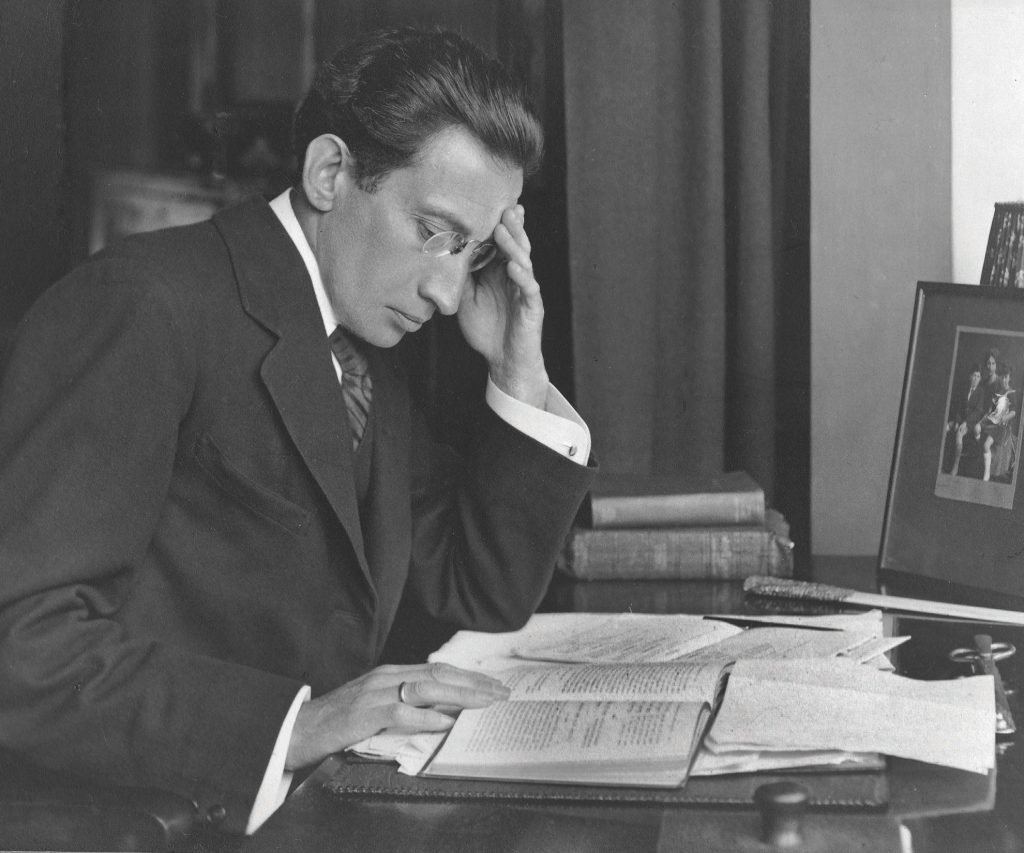
Israel Mattuck was the first Liberal rabbi in the UK. In 1911, he was recruited by Lily Montagu and Claude Montefiore from America to lead the Liberal Jewish Synagogue in St John’s Wood. He was a prolific preacher, ideologue, and scholar.

At the LJS, Dr Mattuck taught a Confirmation class, for 16-year-olds affirming their faith. He later took his notes and turned them into a book, entitled Essentials of Liberal Judaism so that everyone would know what he thought it meant to be a Jew.

Jews, he insisted, were not a race, but spanned the globe. What made people  Jewish was that they held Jewish ideas, followed a Jewish way of life, and kept Jewish observances. 

He wrote: “In spite of all the differences among them, the Jews of the world constitute a people; but they are a people in a different sense from any other people. Their unity is based on religion and history.”

Editing in 1947, Mattuck was eager to avoid any misconceptions. He insisted that this history was not an unbroken tale of misery and persecution, but one of great spiritual achievements. We were, he said, the first witnesses to God’s unity through the revelation at Sinai. Our history was that of the prophets, the priests, the scholars, the mystics, and all those who sought to reach closer to religious truth. 

Mattuck was clear that you could not be Jewish in anything more than name if you rested on race. You want to be a Jew? Walk humbly with God, taught Rabbi Mattuck from the prophet Micah. 

There is no race – only a demand to live right.

Now, you may be thinking, this all sounds a lot like the Critical Race Theory that Mr Trump so zealously warned us about. Indeed it is! And the American President has good reason to fear people taking a critical approach to race.

In the USA, races were invented to divide and rule people so that the wealthy whites could maintain their plantation economy. Poor whites were incentivised to enforce and uphold slavery by being given some privileges on the basis of their skin colour.

As a result, they felt they could identify with the rich whites, even though they had very little in common with them socially or economically. Using racism, they demeaned and humiliated the stolen Africans so that they would not have the confidence to challenge their own condition.

That is why race-critical scholars in America have the slogan: “race exists because of racism, not the other way round.”

In Race: A Theological Account, the African-American scholar of religion J. Kameron Carter shows how racist ideology had earlier roots – in how European Christians treated Jews. 

To create a system where Jews were second-class citizens, they needed an ideology where Jews were defective human beings. So they made up stories about Jewish bodies, Jewish blood, Jewish noses and hair – even Jewish horns – to justify their system of oppression. It was a nasty division for the purposes of exploitation.

This was exactly why Mattuck was so resistant to talk of Jews as a race, and so adamant about our religion.

In 1939, Mattuck wrote his first major work, What are the Jews?, which was a harsh rebuttal, not only to Jewish racial nationalism, but to racial nationalism as such.

We belong everywhere, he asserted. In the Age of Enlightenment, all citizenship should be communicated on civic grounds, never on ethnic or religious ones. 

A Jew, he felt, could be a nationalist, but they must first adhere to the religious calling. That is: they could be Jewish and happen to have nationalist leanings, but it could not define them as Jewish. 

Nevertheless, he thought that, by properly conceiving of ourselves as a religion, we would be more likely drawn to universal ethics. We would measure our Jewishness by our conduct towards others and our connection with our God, rather than by the supposed quality of our genetic make-up. We could pull apart the stories that separated people and build common bonds.

Racial thinking, thought Mattuck, must be resisted.

Race is a horrible and divisive lie. Religion is a beautiful and unifying truth.

I want to be open about why this idea is hard for others to hold.

It is more demanding. It says that nobody can take their Jewishness for granted, and must work for it. It means that you cannot be “born” Jewish, but have to live Jewish. It sets high ethical and practical demands on anyone who claims Jewishness.

When we say that there is no Jewish race, we also mean that somebody with an unbroken chain of matrilineal descent but without any Jewish upbringing or identity must also learn how to be Jewish, in the same way as a patrilineal Jew would. Everyone has to properly engage with the traditions and practices. Contrary to the doctrine of inclusion, this makes us more exclusive than the Orthodox.

Denying the existence of a Jewish race also has profound implications for how we engage with Israel. If we are a religious community, the demand to achieve a Jewish ethnic majority – still less racial supremacy – is not just grotesque. It is absurd. The measure of whether the state was sufficiently Jewish would not be by how many Jews there were, but by how well it upheld Jewish moral values.

Yet it is precisely because of this more demanding approach to Jewishness that I will keep holding onto it. The call that we be moral in our dealings, conscientious in our practices, and connected with our traditions is a far better one than the narrow pull of racial nationalism. 

Through such a religion, we may connect to every other Jew in a spirit of solidarity.

Through religion, we may connect to all of humanity, by recognising our shared Creator.

Through religion, we may draw nearer to the mystery that is our God.

Through religion, we may live out the words of our haftarah: “For you who revere My Name, the sunbeams of righteousness will rise, with healing in their wings. Then you will go forth and skip about like calves from the stall.”

Shabbat shalom.

protest · sermon · social justice

When a swastika appeared on my primary school wall

Do you remember the first sermon that really moved you?

I do. It was a primary school assembly.

Mrs. Kilou stood at the front of the hall, as all us uniformed children awaited the morning messages.

She began with a question: “who knows what I hate most in the world?”

A kid suggested: “Lateness.”

“No, not lateness.”

Another offered: “scruffiness.”

“No, not scruffiness.”

One more: “When we don’t do our homework.”

“No, this is the thing I hate most in the world. Way worse than lateness or scruffiness or not doing the homework. The thing I truly despise.”

Finally, a kid ventured: “racism.”

“Racism, that’s right!” She spat the word and the whole crowd sat up to attention. The fury in her voice was palpable.

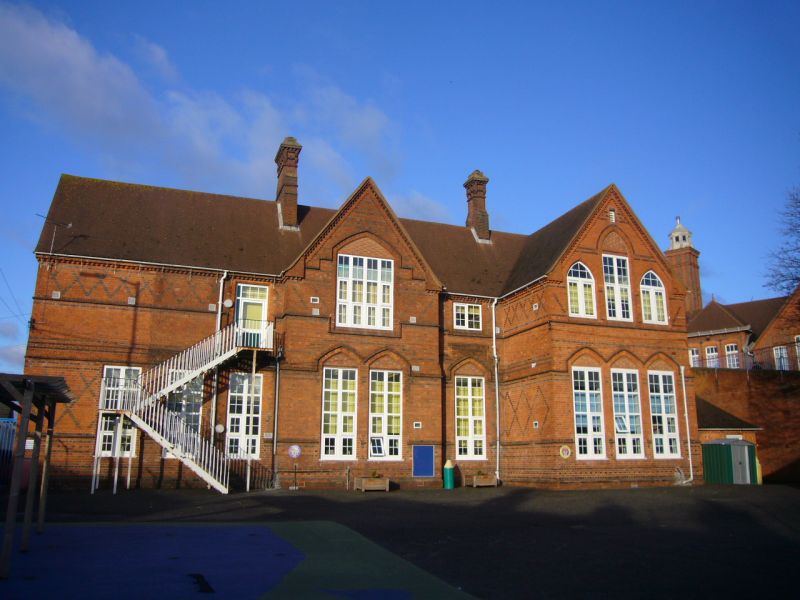
She had good reason to be angry. Somebody had spray-painted a large swastika on the outer wall of our primary school.

***

For the last two months, I have been trying to work out what to say. There have been days recently when many of the parents from this community didn’t send their children into school, worried that they would be targets. Members have shared stories of taking down their mezuzot, and hiding their symbols of Jewishness. I have felt, at times, like the community is overtaken by panic.

What do you say to people who are so anxious and angry? How do you meet people in their fear, and help them move beyond it?

I haven’t known what to say. So, the last few times I have stood on this bimah, I have just shared what is in the Torah.

But there is a trauma that needs to be addressed.

It doesn’t help to tell people that there is nothing to fear. That only makes people feel alone in their feelings, and that just makes them more afraid.

What repeated studies show is that what matters about handling traumatic events is less what happens afterwards than what happened before. People are better able to negotiate destabilising situations when they already have a strong sense of self; feel proud of who they are; and have a clear story about themselves.

So, I think the best thing to do from here, for now, is to tell my own story. My own relationship to antisemitism.

My account is, of course, personal, and not definitive. But I hope it will open up spaces for others to share their stories, and for us to begin a conversation about who we are, and what experiences formed us.

***

The swastika on my school wall was not for me. Not in the direct sense. That is to say: whoever drew it did not have Jews at the forefront of their minds.

We were not a Jewish school. We were a multicultural one in the centre of an industrial town, surrounded by white suburbs, and even whiter countryside. The other students, my friends, were Pakistani Muslims, kids from the Caribbean, refugees from Kosovo… we were a little bubble of people from everywhere, and, though I did not know it then, were a source of moral panic among readers of certain newspapers. We were, to those that feared integration, a symbol that Britain wasn’t British anymore.

And, of course, that swastika very much was for me. It was an attack on my community. It was antisemitic because all swastikas are. It was calling to me, because all racism does.

Around that time, my parents began telling me stories. But not the stories you would expect. They didn’t tell me about family members who had escaped Germany or died there. They did not explain why some members of the synagogue had tattoos on their arms, or how others had met each other on refugee trains. I only came to learn that much later.

They told a story about how, not long ago, the Council had erected a new housing block. One of the first people to be offered a home there was a black woman. Racists came to protest. ‘Houses should be for whites.’ The Pakistani community centre came out in large numbers and escorted the racists back to the train station and out of town.

This is an oral history, and I won’t be able to verify it from newspaper reports, but I suspect my parents made it sound more peaceful than it really was.

They told me other stories too. Stories of hundreds turning out to see off the National Front. Stories like how the Jews and the Irish united to defeat the Blackshirts at Cable Street. Stories of partisans and resistors.

They told me how people could stand up against racism and win. They told me about how, when it comes to racism, our greatest strength is each other.

I don’t know if this was their intention, but I learnt then that the swastika was not something to be feared. It was something to be destroyed. And that people could, and did, destroy it, wherever it appeared.

So, I grew up feeling not so scared of Nazis as determined to stamp them out.

***

Some university students spend their weekends studying. Others spend them partying. Me and my friends? We spent our weekends chasing the English Defence League.

Don’t get me wrong. I did study. And I did party. But some of my most formative memories from that time were of bundling into minivans and car convoys with my housemates to towns in the Midlands and the North.

At that time, Tommy Robinson had assembled a band of white supremacists, bored football hooligans, and lost boys, to go and protest wherever there was a mosque. They usually targeted the mosque itself, and would go to the towns with the express aim of intimidating the Muslims.

Opposing them felt like the only right thing to do. Fighting fascism felt like a calling in a very similar way to how the rabbinate does today.

There was a group of us, from different towns, who always went along, led by a gentle couple called Simon and Sadia. We were always met by locals, usually gathered from community centres and religious groups, who would join in showing the racists that they weren’t welcome.

I learnt from these forays into antifascist activism that, while there were always some who resisted fascism, they weren’t necessarily popular. Media narratives after each protest often framed the unfolding events as if the fascists and their opponents were equally bad. As if it would be better if these small groups of students and locals stayed home and let the racists go unchallenged.

I might have believed them, if it weren’t for what I saw happen in Dudley. There, the English Defence League significantly outnumbered the protesters. Police lost control of the situation. Over that weekend, in broad daylight, those thugs went round smashing in the windows of any house with black and brown people living in it.

As we ran away from the violent gangs storming the town, we passed a house where a black teenager had been visiting a white family. Their windows had been smashed. “I’m sorry,” he was saying, “I think it’s because of me.”

I learnt from this a lesson that has informed how I think about all racism and antisemitism since. Our strength is in each other. Our defence is our neighbours.

This runs contrary to some of the received wisdom about antisemitism. We are, after all, a small minority that lives in concentrated areas of large British cities. One story about how to handle the prejudice we face is that we must depend on the state to defend us against the baying mob of our neighbours. It is because of this that older members will share the axiom: “as long as the king is safe in his castle, we’ll be safe in Tower Hamlets.”

My experiences turn this on its head. The non-Jewish majority is not our enemy. They are our most reliable bulwark against racism. When it comes to fascists, we are the masses and the masses are us. Our greatest strength is each other.

***

That story, of solidarity in the face of racism, is also played out in the story of this synagogue. My friend, Joseph Finlay, just completed his PhD, looking at Jews and race relations in post-war Britain. During his archival research into the history of fighting racism, one shul kept cropping up. This one.

During the 1960s and 1970s, this synagogue was led by the visionary rabbi, Dow Marmur. He arranged visits from volunteers to homes of new immigrants to Redbridge, as well as English conversation classes to help neighbours settle in. In 1978, the synagogue held a “multiracial dance,” in a clear statement of unity against racist scaremongering about miscegenation.

Rabbi Marmur brought a motion to the RSGB Conference of 1968, which encouraged other synagogues to adopt similar policies, and follow SWESRS’ example. He accompanied his motion with a powerful sermon.

While others shied away from fighting racism, or even expressed sympathy with the anti-black and anti-immigrant feeling, Rabbi Marmur issued an impassioned plea. Yes, he said, the racists do draw comparisons between Jews and black people, and “we have a special duty to remember the Prophet’s comparison and to affirm that we are, in fact, alike -in the beneficent eyes of God!”

He encouraged meaningful solidarity, urging “let us beware of condescending and patronising “do-goodery” … “And at no time must we allow ourselves to be fobbed off with cowardly calls for “prudence” and “caution” when these are euphemisms for inactivity and indifference.” Finally, Marmur compelled his listeners: “the primary force of our involvement must be our religious conviction; God bids us act-and we must obey!”

This summons stands at the centre of my own response to antisemitism. It is not only the swastika that calls me, but, more importantly, the voice of the Living God.

In that voice, I hear the demand to continue being Jewish, without apologies.

In God’s Word, I hear the call to resist antisemitism, not only out of self-preservation, but from a religious demand that there must be diversity.

And in God’s Torah, I hear, always, that most-repeated verse: “love your neighbour.” Yes, love your neighbour as yourself. Love them because they are you. Love each other because that is our strength.

And our love for each other may be our salvation.

Shabbat shalom.

halachah · sermon

What makes food kosher today?

Not long ago, after a near-lifetime of vegetarianism, I decided to try treif. And not just any treif, but the real deal: pork.

I knew I wanted to give it a go but I was afraid of being seen by other Jews. So I went on holiday to Gran Canaria, sat down in a fancy restaurant, and ordered a full-blown roast pork.

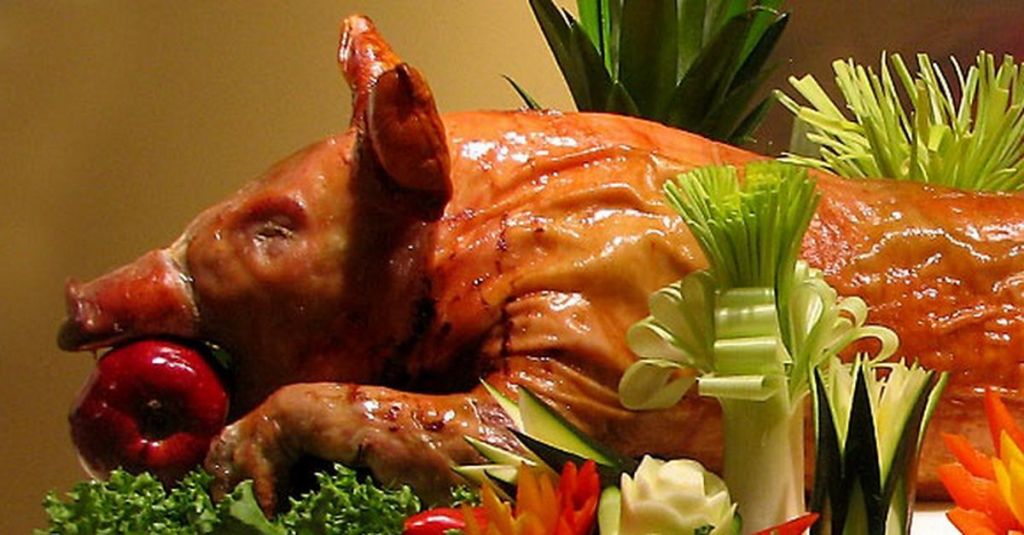
As I was waiting, however, a couple from my old congregation walked into the same restaurant. They instantly recognised me and came up to say hello. Just as we greeted each other, my pork came out from the kitchen: a giant pig on a massive platter with a big red apple in its mouth.

Flummoxed, I exclaimed: “My goodness… so this is how they serve apples here!”

OK, so that last part didn’t happen, but I really did decide to try treif about a decade ago. I’ll be honest with you, some of it tastes pretty good, but they’re not worth giving up Judaism for.

I hadn’t eaten pork since childhood. Aged 6, I had precociously insisted to my parents that I wanted to be religious and go to synagogue. My mum had told me that if I was going to force her to go to synagogue, I’d have to give up sausages. I wanted to be Jewish and I wasn’t allowed to do it half-heartedly.

I think all of us know that food laws play some role in our Judaism. Some of you here keep kosher kitchens. Some of you guiltily sneak a steak when you think you won’t get caught. Some of you, like my brother, eat extra bacon ‘to make up for all the ancestors who missed out on it.’

Whatever your choices, being a Reform Jew means to get to make those decisions for yourself. Our movement believes in informed choice.

Making the choice is your responsibility. But making sure you are informed is mine. So it’s my responsibility to share with you that there are lively debates happening in the Reform rabbinate about what kosher should mean today.

I recently attended my first Assembly of Reform Rabbis, where learned colleagues were discussing kashrut for the first time since the 1970s. It says something interesting that the topic hasn’t been addressed in such a long time.

The reason we are discussing kashrut again today is that the government is contemplating whether to ban traditional ritual slaughter – shechita. For many centuries, Jewish butchers have used the same methods for killing animals. That is: they slit their throats, puncturing the trachea, oesophagus and arteries with one rapid incision.

Throughout our history, Jews have considered this to be the cleanest and most humane method of killing animals. It comes out of a desire to show respect for the animals and to minimise risk of diseases.

Today, however, there is a new movement to favour stun slaughter. In this method, animals are electrocuted before they are killed. For cattle, this means putting a charged bolt through their heads. For chickens, it means electrifying them as a group. Proponents argue that this is more humane, since it renders animals insensitive to pain in their final moments.

There are two other factors that have made stun slaughter so popular, neither of which should be ignored. One is that industrial meat production means that factories produce far more meat. They want to be able to slaughter as efficiently as possible to maximise profit from the animals. Industrial stun slaughter certainly helps here.

Another factor is antisemitism. Across Europe, the movements to ban traditional slaughter have largely been led by white supremacists. Their primary target is Muslims, whose customs around halal slaughter are very similar to our own methods of shechita. Jews are really collateral damage in cultural wars about trying to retain Europe’s status as a Christian continent.

These factors make addressing this issue exceptionally complex. Proponents of stun slaughter ask us to set aside questions about racism and capitalism, just to focus on the issue at hand. I find that very hard to do. Rabbinic law is never about making moral decisions in the abstract. We make our ethical choices as real people living in the real world.

I think it is highly doubtful we will ever be able to prove that taking an animal’s life is better served by electrocution than through throat slitting. It may well be true that these new methods of industrial killing cause less pain, but shechita requires butchers to actually look animals in the eye before taking their lives. I’m not convinced either is more humane.

But, even if one were, we cannot escape the horrific systems that underpin animal consumption. Right now, the insatiable demand for meat is one of the leading causes of global warming. This week, we saw record-breaking temperatures. We can expect such heat waves to take place more regularly and more ferociously as runaway climate change unfolds.

The meat industry is an enormous enterprise that involves destroying natural habitats, depleting the oceans, battery-farming animals, deplorable working conditions, and unspeakable cruelty.

In every generation, Reform Jews have to work out anew what the most ethical way of living is. Today, it is hard to make the case that this includes participating in such an unjust system.

Rather than engaging in debates about specific methods of killing, I feel the appropriate response should be to question whether we should keep eating meat at all.

Indeed, this synagogue has long been an exclusively vegetarian site. This is partly because of convenience: it means we can host anyone and we can avoid messy arguments about separating meat from milk. But it also comes from the moral courage of previous leaders in this community, like Rabbi Henry, who felt that was the best way to live our values.

Please do not think me preachy. Quite on the contrary, I want to be open about my own hypocrisy. I still do eat meat on occasion, especially fish and chicken. I eat eggs and cheese. But, deep down, I know that the ethical vegans have already won the argument.

I once expressed my sadness about this to a frum vegan friend. She advised me: don’t let perfect be the enemy of the good. If you wish you could be vegan but can’t give up cheese, be vegan except for cheese! If you wish you could be vegetarian but like fish too much, be pesacatarian! We must all find ways to reduce our meat intake and limit our negative impacts on the planet.

The Reform rabbinate is still in open conversation about how we redefine kosher for our age. We did not settle the matter at the Assembly, and I don’t want to leave this sermon as if I have reached a definite conclusion. Instead, I want to bring you into the conversation. I want to hear how you think we should best live our values today.

Let us engage in open discussion. Let us talk with each other about our own practices and our own driving values. And let us fashion together a new future for what an ethical Jewish life looks like.

Shabbat shalom.

debate · sermon

Jews are coming home

The 1996 UEFA Cup was when I first truly became aware of football. I was 7. Everyone was talking about it. My mum, a proud Glaswegian, made sure all the neighbours knew that she would be supporting Germany in the upcoming semifinal. Still, she seemed to feel little glee when England inevitably lost on penalties. 

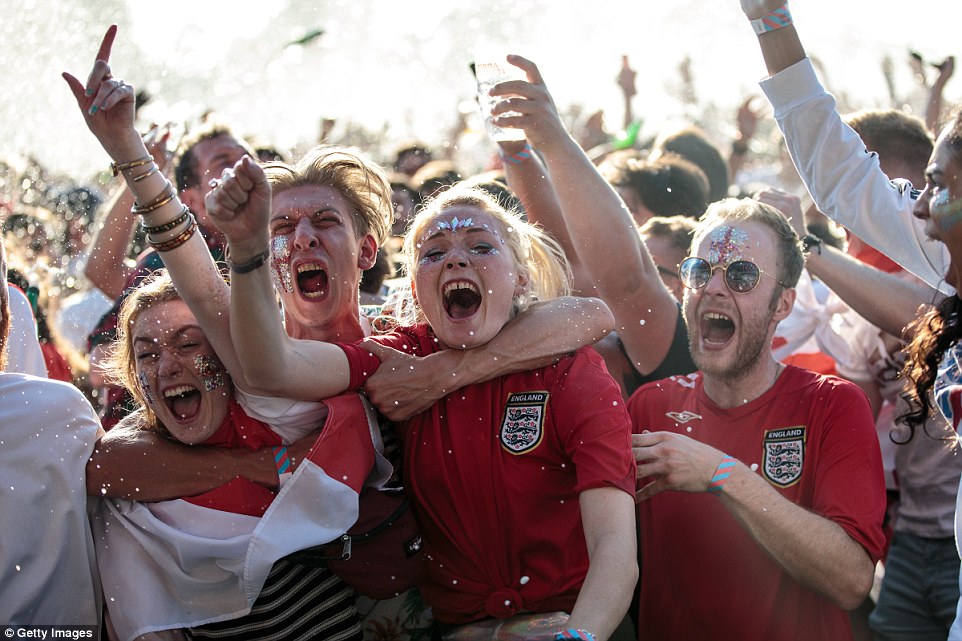
Football, I soon discovered, was not for me, but I still enjoyed the atmosphere. In the last UEFA Cup, I couldn’t help but join in the excitement and feel the buzz of possibility. Everywhere, you could hear a song that had been popularised in the first competition I could remember. Football’s coming home, it’s coming home, it’s coming…

Legendary comedian, Frank Skinner, and his Fantasy Football League co-host, David Baddiel, wrote the song: ‘Three Lions’. It is more than a catchy anthem. It tries to put forward a vision of the nation that is about shared struggles and optimism in the face of defeat. It speaks to something wonderful: the joy of being an underdog; the thrill of hoping for a victory that might never be realised; the bittersweetness of feeling like your favourite thing belonged in your favourite place, but was also part of a much wider world. 

Recently, David Baddiel has come back into the public consciousness, this time with a new memorable slogan. Jews Don’t Count. This was the title of his book, published earlier this year, which seems to have been read by every politician and pundit in Britain. It is accessibly-written by a popular writer. Many Jews have a copy. Some have come to cite the book’s title, as if it were already a well-established truism.

This meant that, last week, as the Royal Court Theatre showcased a play where the main character was a greedy billionaire called Hershel Fink, whose climax is the sacrifice of a child, pundits asked whether this was evidence that ‘Jews Don’t Count.’ 

This week, when a group of teenagers attacked a bus full of Haredi kids celebrating Hanukkah on Oxford Street, the incident was treated within the prism of whether Jewish suffering matters. That is a narrow way to look at antisemitism, probably never even intended by the book’s author.

The most common criticism of Baddiel has been that he is the wrong messenger. 25 years ago, he dressed up as black footballer Jason Lee by covering his face in brown paint and putting a pineapple on his head. The offensive image sticks in many people’s minds, so they question how well-equipped he is to speak on racism.

Baddiel addresses this in his book. He says that he has already apologised, and, in any case, the people criticising him for doing blackface are the real racists because they think his historic racism invalidates his current experiences of antisemitism. He cites the example of Malcolm X, who despite having made antisemitic comments in the past, is still upheld as a visionary of anti-racism. 

What Baddiel seemingly misses is that Malcolm is an icon precisely because of his journey. He went from a pimp to a fundamentalist to a person committed to the liberation of all people. His earlier mistakes are viewed in light of where he ended up. If only all of us could be so willing to publicly make mistakes, learn, and grow.

Still, I don’t think it is helpful to criticise Baddiel as a man. We must engage with the content of what he has to say. The book’s thesis is that there is an oppression Olympics taking place, and Jews should have better odds of winning than the bookies have given them. It doesn’t challenge the idea of whether there is such a thing as a competition over who has suffered most, nor whether such a contest would be desirable. He just wants everyone to be clear that Jews have suffered as much as anyone else.

In only the opening pages, Baddiel bemoans hearing an antisemitic poem on the BBC and insists “no other minority group would be compared to rats, or envisaged as any similar negative racist stereotype, on Radio 4.” The claim is bizarre. The last few years have seen intense attacks on immigrants and asylum seekers, often likening them to vermin and plagues. Barely a day goes by without some racist dog-whistle making it into our mainstream press. 

Even if Baddiel was right, and it was only Jews who were subjected to bigotry in national media, his complaint about other minorities’ treatment is far from helpful. Freedom is not a finite resource and tolerance is not in short supply. If others did have more of it, our task would be to make the case for why we need it too, not to undermine others’ gains. Setting up the struggle against antisemitism as a competition with other antiracist struggles only weakens potential allegiances and undermines our cause.

But more than sending out the wrong signals to other minorities, this book gives the wrong message to Jews. It reads every silence as hatred, complicity or indifference. We are alone. Nobody likes us. The right wants to destroy us and the left doesn’t care. We are isolated on an island where nobody cares about our suffering and the only solution is to wallow in our own self-pity.

If Jews were a football team in this narrative, we would be Manchester United: unfairly reviled by everyone simply for being successful. No one likes us and we are very upset about it.

At a time when the British  Jewish community already feels beleaguered and lacking confidence, it is unsurprising that such a depressing message has taken hold. But is it helpful? Does it give us clarity about what antisemitism is and how to combat it? Does it strengthen our position as a people and foster solidarity with others?

Part of the problem with Baddiel’s analysis is that his main objection is to The Guardian and its readers. I am not a reader of The Guardian, so perhaps I underestimate its importance. But I do find it hard to accept that the problem of antisemitism begins with middle-class liberal progressives. Some may well be antisemitic, and I have no doubt that some are ignorant of Jewish experiences of prejudice. But they are hardly the part of British society that worries me most.

Antisemitism is not just an exchange between two people, or a trade-off between different groups, but a system that has been embedded in Europe for over a millennium. Since medieval times, Jews have been used as a racialised buffer class between the peasants and the elites. 

Jews were not citizens of the countries where they lived, but treasured subjects, offered physical protections by the monarchs if they did the most undesirable jobs. They were tax collectors, money lenders, merchant traders, and publicans. 

This precarious position meant that, when things turned bad, the poor would not storm the castles but then their ire on the middlemen. The elites actively encouraged pogroms. They spread blood libels and shady conspiracies about how the Jews were really the ones with all the power.

Antisemitism continues to work in the same way. Jews are not kept at the bottom of the barrel, nor are we permitted entry into the upper echelons. We do enjoy privileges that other minorities do not, and we do nevertheless experience discrimination and stereotyping.

That is the context in which we must view the recent ordeal at the Royal Court. They put on an antisemitic play, not because progressives are indifferent to Jewish suffering, but because British theatre is entrenched in centuries-old systems of promoting Jews as lascivious and money-grabbing. They reproduced the same images of Shylock and Fagin that have been used to promote antisemitism for years.

That is also the context in which we need to view the group of teenagers attacking a bus of Jewish kids celebrating Hanukkah. They didn’t harass them because they were indifferent Guardian-reading liberals. Far from it. They attacked them because they have grown up in an antisemitic system, imbibed its propaganda, and believed its lies. Any theory of oppression that doesn’t focus on its real origins will only address the symptoms at the expense of the root cause.

When we understand that antisemitism is systemic, we can see that the way to combat it is by directing our criticisms at the system itself. Outbursts of violence on the street are only terrifying results of something more deeply rooted. 

It is in our interest, then, to join our struggle that of all other victims of racism. It is necessary to treat other minorities not as adversaries for attention from well-meaning liberals, but as allies in a struggle for fundamental change. 

I hold on to a faith that such change is possible. 

In this sense, Baddiel’s original classic of ‘Football’s coming home’ speaks much more closely to my experience of being a Jew in Britain. It is not that I believe things are great, but that they could be. It is not that I feel like we are always doing well, but I feel invested in the struggle to get there. I am joined to others by a misty-eyed possibility of what this country could be. I hold out hope for ultimate redemption that may one day come, and work with others towards that goal. Like England fans, no amount of hurt has ever stopped me dreaming. 

This place where we live really is our home, and it is also somewhere that we must make our home. It has been where we belong and we must shape it into a space we never want to leave. We are here, and we are not yet, because we always have some way to go. Together, with all victims of oppression, we are always coming home.

Jews are coming home, we’re coming home, we’re coming…

sermon · social justice

Until she was no longer useful

The Torah doesn’t tell us what happened. It tells us what always happens.

The weekly stories we read are not historical recountings of the lives of ancient people. They are contemporary retellings of the lives of modern people. Genesis is not a book about the past. It is about the present. 

So here is what happened. And here is what always happens.

Hagar had been an Egyptian princess in the court of Pharaoh. Sarah entreated her out to Canaan with promises of work. “You will serve such a holy man,” she promised her. She was given the name, Ha-Gar: the immigrant; the sojourner.

She worked as a maidservant. She, who had been so prestigious in her homeland, cleaned up after Abraham and Sarah in their tents. She washed their clothes and took care of their needs. 

Then Sarah realised that she was barren. She instructed Abraham to sleep with Hagar, and Abraham consented. We do not know how Hagar felt about her surrogacy.

They conceived on the first try. What a successful servant! Then Sarah became jealous. “Isn’t Hagar so haughty? Doesn’t she think she’s so much better than me?”

So she started afflicting Hagar and making her life unbearable. Hagar ran away. And then she came back, because where was she going to go?

Hagar did indeed bear a child, and called him Ishmael, meaning ‘God will hear.’ And then she was no longer useful.

Fertile woman. Hated woman. Did her work well. Did her work too well. Did her work so well she was no longer useful and had to be sent away

Sarah was threatened by her and demanded she leave. She was supposed to be a servant and now she was a competitor, with a rival child, an older boy. If Ishmael is allowed to grow up, he’ll take everything from Isaac. If Hagar is allowed to stay, she might have the upper hand.

And Hagar ran away into the wilderness and was so desperate she almost killed her son. But she found a well of water and they survived. Ishmael grew up to be a bowman.

We don’t know what happened next to Hagar. History does not record.

Now here is what happened. And here is what always happens.

Sentine Bristol was born in Grenada, a British colony in the Caribbean. The Empire lured her over to work in the United Kingdom. She came on a boat called the Windrush. She worked as a nurse in the NHS. A successful immigrant, keeping us alive. Too successful, stealing our jobs.

Aren’t they great, bringing their culture and ingenuity and skills? We will celebrate them in our Olympics opening ceremony. But it wouldn’t kill them to assimilate. Couldn’t someone else have done the work she was brought over here on the Windrush to do?

She brought her son with her. His name was Dexter. He worked as a cleaner until he was in his 50s. 

And then they were no longer useful. Hardworking immigrants. Parasitic immigrants. Did their work well. Did their work too well. Did their work so well they were no longer useful and had to be sent away. 

A new wave of nationalism swept the country. The Home Office destroyed the records of their having arrived in Britain. The government declared a policy of a “hostile environment” for illegal immigrants, which included people who did not have their papers because their papers had been destroyed.

So the state cast them out. Dexter had to prove he wasn’t a foreigner in the only country he’d known since he was 8 years old. And he couldn’t find the documentation. He lost his job and the right to claim benefits. He was threatened with deportation.

And no well appeared in the wilderness. And he didn’t go on to become a bowman or a great nation. He died of a heart attack from the stress of trying to keep his home. Sentine did not receive justice. She disappeared from the headlines two years ago. 

This is what happened. This is what always happens.

One group gains more wealth than another. Maybe by technology, maybe by force, maybe by resources, maybe by luck.  The wealthy people require the labour and expertise of others, so they entice them with promises of jobs and prosperity. People go wherever the wealth is. They become nurses, midwives, bricklayers, servants, dream-interpreters, delivery workers, chefs, surrogates, cleaners, plumbers and bus conductors. 

The migrant people are despised. They have taken our jobs and brought their diseases. Their ways are too different from ours; they refuse to assimilate. Their beliefs are too foreign from ours; they cannot be allowed into our spaces. We do not trust their food or their clothes or their appearance. They will overtake us by sheer force of their numbers or intelligence or might. They must be eradicated.

The migrant people are prized. Look at the wonderful ingenuity and work ethic they have brought to us. How lucky we are to have them in our ranks. Such awards we must give them for their brains, their athleticism, their musical talent. They have transformed our cuisine and our customs. We cannot imagine our culture without them. We must protect them.

And then they are no longer useful. Maybe they are feared or maybe their hosts become jealous. Maybe the wealthy people are no longer so wealthy, or maybe they no longer feel so wealthy. Maybe there is a new government or an old ideology or a charismatic movement promising to restore former greatness. And the migrant people are surplus to requirement, so they have to leave.

They go back where they came from or onwards to somewhere else, not that it makes much difference either way. They get deported or they go voluntarily because they know they’re not wanted any more, not that it makes much difference either way. They depart on foot into the desert unsure if their children will survive. They leave on camels, in caravans, on boats, in cars. They pile into buses and aeroplanes and dinghies, depending on which paperwork they have and how much money they can stump up front. 

And then they are forgotten. And we don’t know what happens to their story after that.

That is what happened. And that is what always happens.

The Torah’s stories tell of the time when humanity transitioned into a new kind of civilisation, one defined by inequality and migration. That is why they are not just about the past, they are about the present.

The Torah recalls what it was like for an Egyptian named Hagar to seek work and be abused among Israelites. It tells the story of an Israelite named Joseph who sought work and was abused among Egyptians.

And because it tells those stories of inequality and migration, it also tells the stories of all the people who moved to Britain over these centuries. Their struggles, our struggles, are reflected here too.

The Torah doesn’t tell us what happened. It tells us what always happens. Unless we do something about it.

I gave this sermon for Glasgow Reform Synagogue on Saturday 7th November 2020, Parashat Vayera.

judaism · sermon · social justice

What good is remembering?

Jews do not have history, we have memory. Whereas the rest of the world commits itself to dates, names and figures, our engagement with the past consists in rituals and symbols. At Pesach, we are not interested in the historical facts of the exodus from Egypt, but in reenacting its moral meaning. At Shavuot, as has just passed, we do not care so much about the geography of the Sinai peninsula as the words that were spoken on its mountain.

Memory is, in many ways, more powerful than history. Whereas history is focused on clinical facts, memory calls on raw emotion. Whereas history cares about leaders, memory looks at ordinary people’s lives. And although history looks only at the past, memory wonders what its events mean for the future.

Even when it comes to recent history, we are less interested in the architects and perpetrators of the Nazi genocide than we are in the diary of a 15 year old girl. Anne Frank has become a symbol. As one girl, she stands in for the memory of millions. In classrooms and homes around the world, Anne Frank is the way for people to remember the evils perpetrated in the Third Reich.

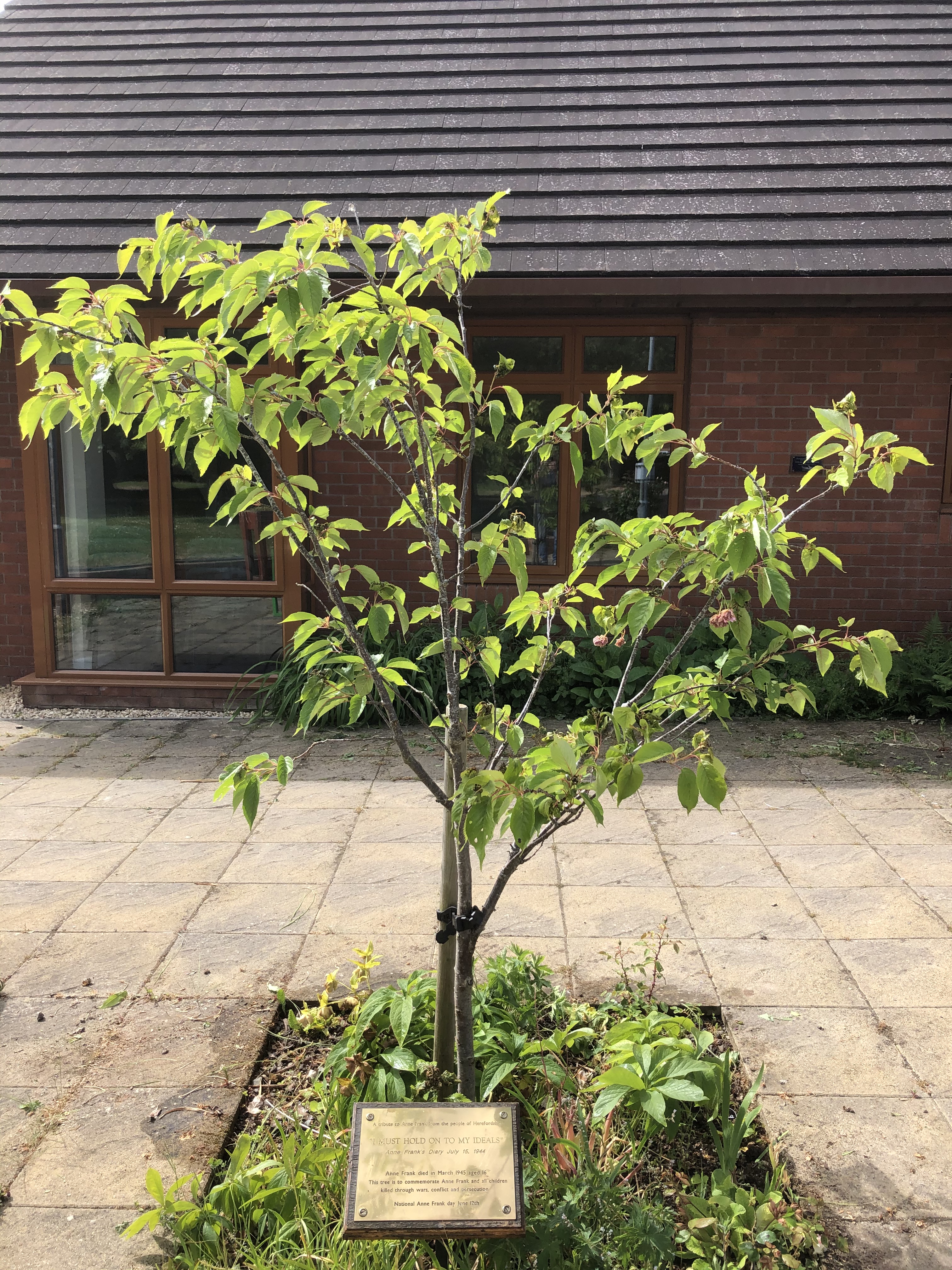
It is a great act of kindness to the Jewish community here, especially its Holocaust survivors and their descendants, that you have all chosen to join us in remembering. To the Council, for planting this tree in memory of Anne Frank, growing in the Herefordshire soil as a symbol to remember a symbol. To the dignitaries who join is in this service today, and who have been friends to our community, for joining us, please accept our thanks.

Memory turns death into meaning. When we remember our martyrs, we remember what they stood for. We remember Rabbi Akiva, flailed to death by the Romans, and we revive his vision for a Judaism that is creative and rich in interpretation. We remember the decapitated Rabbi Ishmael, and relive his conviction that Judaism must be principled and action-based. Their lives and deaths represent the values they inhabited.

Of course, Anne Frank was no martyr. Martyrs are those who die in the service of a cause, consciously choosing to affirm God’s truth rather than compromise. She did not choose her death. She did not pursue it in search of a cause. She was a teenage girl who wanted to ride her bicycle. Nevertheless, she has left behind a legacy of words, hopeful that something of her life could be recalled. And we have translated those words into a commitment to remember cruelty and have cause for hope.

Yes, memory is supposed to prevent evil being repeated. We recall a teenage girl who had to hide in a room in an attic before she was dragged away by soldiers to die of typhus in a concentration camp. And we commit to prevent bringing about a situation when any child has to live and die like that. 

May this tree call out to people with Anne Frank’s moral lesson. May they be the ones who would hide people who have been declared illegal aliens to stop their deportation. May they be the ones who would protest against the encroachment of civil liberties. May they be the ones who would stand up to resist fascism before there was nobody left to speak out for them.

May that memory of Anne Frank speak loud enough that even our world leaders can hear it. The memory of genocide in Europe was supposed to prevent it happening again, but we know that mass slaughter has not ended. We know that there are still children dying of typhus in concentration camps. We know that there are still forced labour prisons surrounded by barbed wire. We know that the nations of the world have only developed crueller and more effective ways to torture and kill people. May this tree and this service and that diary speak loud enough for that evil to be blotted out.

Many of our prayers this week are turned to the evil perpetrated in the United States. Black Americans, who endured centuries of slavery followed by segregation now face the injustice of police brutality. The world watches as they protest once more for their rights and we hope that they will see the justice for which they have longed.

I do not intend to engage in comparisons. Any attempts at equivalence are facile and destined to turn into competitions nobody wants to win. But the horrors endured in Nazi Germany and for Black people in America are united by the common fact of memory. Both call on their dead as symbols, martyrs and aspirations for a better future.

So George Floyd has become an international symbol. The man who could not breathe under the weight of a police boot is now the spark that has reignited a movement. And we should not underestimate the importance of that memory. Without it, our humanity is compromised. Memory makes people human.

Memorialisation gives people a dignity in their death that they were not afforded in life. By saying their names and recounting who they were, the dead are allowed to be people instead of statistics.

We remember George Floyd, and he is once again a gentle giant who said hello to everyone and was trying to look after his six-year-old daughter. Instead of a man in Minneapolis who was strangled to death by police.

We remember Tamir Rice, and he is once again a twelve year old boy playing games outside his home. Instead of a child who was shot dead by police on the street.

We remember Belly Mujinga, and she is a wife and mother working as a ticket inspector on the London Underground. Instead of a woman who died of Coronavirus after somebody spat in her face.

We remember Joy Gardener, and she is a mature student from Jamaica living in Crouch End. Instead of a woman who died from asphyxiation after she was gagged with adhesive tape by police. 

We remember victims of racial violence and they cease to be only victims, but can be full human beings with histories and dreams and potential.

And because we gather today in remembrance, Anne Frank is not a Jew who died of typhus in a Nazi concentration camp. If only for a moment, Anne Frank can be a teenage girl who wants to ride her bike. 

Thank you. Shabbat shalom. 

Anne Frank tree Saxon Hall 26 May 2020 (1)

I gave this sermon for Three Counties Liberal Judaism in honour of Anne Frank’s birthday on Saturday 13th June 2020. The picture is of the Anne Frank tree in Hereford.