high holy days · judaism · sermon

Knowing we will die helps us live to the fullest

Here’s the deal. Let’s see who will take it.

Today, you get a million pounds. But the catch is, tomorrow you die.

Any takers?

I didn’t think so.

You value living more than you value money. 

In fact, when you put death into the equation, you realise how much living matters to you. It matters more than any amount of wealth or status you could accrue.

Knowing we will die helps us understand what we value from life.

In many ways, Yom Kippur is a death rehearsal.

We act out today as if these were the last moments we would be alive.

Like the dying, we refrain from food and water. 

We turn up in modest clothes, without jewellery. Some wear white, the colour of the funeral shroud. Some wear kittels, the gowns in which we will be buried. Some wear tallits all day, from evening to evening – a unique point in the year when we do so – just as the dead are traditionally buried wearing their tallits. 

Over the course of this fast, we repeatedly recite vidui, the prayer of deathbed confession. We say psalms and chant petitions that are associated with death and funerals.

All of this serves as a ritual memento mori: a reminder that we will die.

Then, as we approach the end, we erupt into songs. We joyfully recite the neilah prayers. For many of us, there is a great rush of relief and joy as we realise we have made it through this marathon day. 

Yes, today is a reminder of our death, and it is one that affirms life. 

On this day, our Torah instructs us: “choose life.” Only by recognising that death is inevitable can we do so.

By really considering the finite amount of time we have on this earth, we are able to celebrate the days we have and live them to the fullest.

So much of modern Western society shies away from death.

For previous generations, death was a sacred process undertaken among family and community.

Today, it is sanitised: dealt with in hospitals and hospices by qualified experts.

There are great advantages to this. The professionalisation of death means that the sick can receive high quality care and pain relief right up to the last moments of their life. It takes a great deal of pressure off of family and friends, because the care for the dying does indeed require constant work.

But one downside to our compartmentalisation of death is that it means it is kept out of sight and taboo. 

When we do have to face death, it is often a shock, and can cause great trauma to living loved ones. Intellectually, all of us know we are mortal, but facing death as a lived and embodied experience can feel like a real rupture.

Having the Yom Kippur experience – which draws our attention to our mortality and makes us reflect on the quality of our lives – can be a powerful way to help us face death. In these rituals and fasts, we can prepare for our mortality. 

This real confrontation with death isn’t morbid. It’s a direction to truly embrace life. 

Knowing we will die helps us consider what we want to do with life.

In Progressive Judaism, we have a tendency to downplay some of the more explicit symbolism of death and mortality in our services. It is there in the machzor – in our silent confessions, themed readings, and traditional prayers. But our services often tiptoe over death’s undercurrents in the prayers.

This year, I have tried to reintroduce some of those themes to the service. 

Last night, at Kol Nidrei, we joined the rest of the Jewish world in holding the scrolls out of the ark, leaving it bare. The great American Reform liturgist, Rabbi Larry Hoffman, points out that the open ark is supposed to evoke a coffin. We stare into the empty space, which usually includes our Book of Life, and lay witness to our own tomb.

This morning, during shacharit prayers, we reintroduced the prayer “who by fire,” a traditional part of Unetaneh Tokef, which recounts the many ways in which a person might die. It is painful to consider life’s fragility, and all the vulnerabilities we face in life. 

But, by facing up to the possibility we will die, we get better at deciding how we will live.

We realise that we value life, and we take stock of what it is we love about it.

Marie de Hennezel is a French therapist focused on end-of-life care. In the early 90s, she was among the first staffers at a palliative care unit for people dying of HIV/AIDS. At this time, there was no cure – the deaths of HIV patients often involved rapid deterioration and great suffering. 

In 1995, de Hennezel wrote up her experiences of accompanying the dying into a memoir, entitled Intimate Death: How the Dying Teach Us to Live. The book even carried a foreword by French president Francois Mitterand.

She recounts stories of individual patients, as well as their carers, doctors, and nurses. In each vignette, she tenderly lays out how important it is to be with the dying. 

From her support, the patients often learn to live through challenging ordeals. Those who feel like giving up or who contemplate suicide decide that they will indeed live until their last moments on earth. By helping them face their death, the patients gain the strength to embrace their life.

This work, it seems, also transforms the carer. De Hennezel writes that she has learnt so much about living from the dying.

She writes poignantly:

Life has taught me three things: The first is that I cannot escape my own death or the deaths of the people I love. 

The second is that no human being can be reduced to what we see, or what we think we see. Any person is infinitely larger and deeper than our narrow judgments can discern. 

And third: one can never be considered to have uttered the final word on anything, is always developing, always has the power of self-fulfilment, and a capacity through all the crises and trials of life.

Let us take this as our message from Yom Kippur today.

Our lives are not over. We can affirm them. We can do so much with them.

And, though we do not always realise it, we love our lives more than any amount of wealth or status.

By facing up to the fact that we will die, we can live the days we have to the fullest.

Gmar chatimah tovah – may you be inscribed in the Book of Life for good.
Yom Kippur Yizkor 5786

high holy days · judaism · sermon

It is time to tell a different story about ourselves

It is time to tell a different story about ourselves.

We are writing a story about our lives right now.

On Rosh Hashanah, our story is written. On Yom Kippur, the story is sealed.

What, then, are we doing today? 

This morning, we are editing. We are looking over our story and choosing what to keep and what to discard. What to highlight and what to relegate to the footnotes.

Of course, we cannot change the events of our past, but we can decide what they mean. In writing our story today, we choose what role we played in the narrative of our own lives. 

When you tell this story, are you a victim, or a villain? A saviour or a sinner? 

Look at your mistakes. The way you tell your story will help you decide whether they were a defining part of your personality, or whether they were opportunities you took to learn and grow. 

Look at your suffering. Others have hurt you. You need to tell your own story of what that pain means. You need to decide if your suffering is the sum of your life, or if it is something you overcome. 

You are writing the story of your life right now. Be careful how you tell it.

In our Mishnah, Rabbi Yehudah HaNasi teaches: “Apply your mind to three things and you will not come into the clutches of sin: Know that there is above you: an eye that sees, an ear that hears, and all your deeds are written in a book.”

But here is what the Mishnah does not tell us:

The eye that sees can see more perspectives than we can.

The ear that listens knows all hearts in ways we do not.

And, most importantly, the book is constantly being edited and re-written.

We are always re-writing the Book of Life with our God, and that means we have the power to shape our story.

We cannot imagine that God’s eyes and ears are anything like ours, or that God writes a book the way we would. The story that an Infinite Being has to tell about you must be incomprehensible from your perspective. 

When we tell ourselves our story, we are biased, seeing only our perspective. Our narrative is partial, not knowing what others really feel.  Our account is unreliable, because we tell it to fit the character we have already made of ourselves. 

God, on the other hand, sees not just what we did, but what we hoped to do. God says to the prophet Samuel: “I do not see as human beings see; human beings see only what is visible, but I see into the heart.”

God instructs the Prophet Isaiah: “Whenever anyone turns back to Me for pardon, I freely forgive, for as the heavens are high above the earth, so are My ways high above your ways, and My plans above your plans.” 

God is able to see errors in ways we cannot. And God can understand our pain in a context that is beyond us.

This is because God is telling a different story about you to your own.

In God’s plan, you are the main character. Of course, so is everyone else. 

But that is because God has written a great novel where every creature has a vital role to play. No character could be introduced if they did not have a role in the great unfolding tale that progresses towards goodness’s triumph over evil.

So, today, look at the manuscript of your life. Decide what you want to focus on. Tell yourself stories of gratitude and joy. Consider the events that have given you pride and a sense of accomplishment. 

Look, too, at the stories in your life that are hard. Re-tell the stories of where you have been hurt, and decide for yourself what meaning you take from them.

Re-examine the stories of when you have hurt others, and decide what changes these will bring for you when you enter your next chapter.

In this way, you can take control over the story of your life. 

You cannot change what happened, but you can decide what it means. 

Only you can decide how your story ends.

Treat God as your co-editor, rather than as the author of your destiny.

For some of you, the story I have told so far is too wrapped up in religious language. You cannot get on board with all this God-talk, and the quotations from Scripture prove nothing. 

Let us turn, then, to the science of psychology. 

Over many decades, psychologists have experimented with what makes for a good life. We now have more data than ever about how people forgive. We understand a great deal more about how to overcome trauma. And we know what motivates people to live better lives.

I am going to assume that, if you are here on Yom Kippur, you came because you want to let go of some past hurt, to repent of things you have done wrong, and to live a more fulfilling life.

The Scriptures tell us how to do this, but the language they use may feel too alien to the modern mind. The sciences, however, can corroborate the same claims.

Dr Fred Luskin runs the Stamford University forgiveness project. His team has researched the best methods to help people overcome their grudges and live more fulfilling lives. 

He has tried out his techniques for helping hundreds of people forgive, including in the most extreme cases, like mothers whose children were killed in sectarian violence.

His book, Forgive for Good, is an accessible version of his research.

Dr Luskin teaches that our inability to forgive comes when we tell ourselves a “grievance narrative.” 

You may have such a story yourself. If you keep coming back to an event in your life where you were wronged and replaying it, you may be stuck on recalling a past hurt. If, in this story, there is a clear villain, and you are a helpless victim, the chances are you have a grievance narrative.

Don’t worry, you’re not alone. Many people do. 

I began reading Dr Luskin’s book out of academic curiosity, but soon found I was noticing my own grievance narratives. Some of them went right back to old hurts in school. I looked over some of the stories I had about my own life, and found they did not serve me.

Dr Luskin says that the key to getting out of the trap of these painful stories is to consider how you tell them.

First of all, decide how much space in your mind you want this story to occupy. Yes, you have been hurt, but do you want to keep letting those same people hurt you by giving them unlimited air play in your head? 

One way forward is just to change how much you think about them. Rather than letting them be the main character in your story, focus your internal account on your own successes and joys.

Secondly, consider how you are telling your story. If you have a grievance narrative, the hurt you experienced may determine everything that comes after. 

You were wronged, and that may have a lasting impact. But is it not also true that you survived, overcame, and learnt from the experience? You have the power to tell the story so that you are not a victim, but a hero.

None of this means pretending that pain doesn’t hurt, or that the wrongs others did were not wrong. Quite on the contrary: in order to move on with anything, you have to be able to say how wrong it was, and what it made you feel. 

The difference is that you get to decide what it means. You can decide whether someone else has written your story for you, or whether you are your own author. You can choose to focus your attention on your own pride and resilience.

Just as our faith tells you to pay attention to how you tell your story, so, too, do the psychologists. The story you tell can help shape how able you are to move on from past pain and be a better person.

This is true, not just on the individual level, but also at the collective level. The stories we tell about Jews are the stories we tell about ourselves. What is the story we tell about ourselves as Jews?

There are plenty of stories out there about us. There are stories where we are perfect victims, forever blameless for the suffering we endured. There are stories where we are bloodthirsty brutes, responsible for the worst evils in the world. 

Both of these stories deny us agency. These stories turn us into history’s stock character, whether as martyr or as monster. They deny Jews the ability to do what everyone else does: to hurt others, to learn from our mistakes, and to become better people. They strip us of the opportunity to grow and change.

We need, therefore, to think hard about what the narrative is that we are writing about Jews.

Rabbi Dr Tirzah Firestone sits at the intersection of spirituality and psychiatry. Firestone began her career as a psychoanalyst, then came back to the religion of her birth, embraced Renewal Judaism, and became one of its leading rabbis.

Firestone grew up with Holocaust-surviving parents. She felt that she and her siblings inherited great trauma from her family, and from the stories they told. Or rather, did not tell. Much of their former life escaping genocide was clouded by secrecy. The stories her father did tell were of persecution: that the non-Jews inherently hated Jews and would destroy them at every opportunity.

As a therapist and rabbi, Firestone urgently felt the need to tell different stories about Jews. She insists: “Identifying ourselves as victims freezes our focus on the past, and therefore forecloses our future.”

This does not mean pretending that Jews have never been victims. We need to face up to the traumas of Jewish history, including Shoah, pogroms, and persecution. Ignoring them, and refusing to tell the stories, can actually exacerbate the transmission of trauma.

What we need to do, says Rabbi Firestone, is honour Jewish history without internalising the harmful aspects of Jewish trauma. 

We need to remember that, as Jews, we have collective power. We are able to influence the world, and not just subject to the vicissitudes of history. We must claim our agency, and take ownership over what happens to our future. 

Most importantly, says Firestone, we should draw connections with others suffering from persecuting systems. By making these links, we strengthen ourselves, support our neighbours, and find positive meaning out of difficult circumstances.

We must, therefore, tell a new story about Jews. A story where we are survivors, who have been hurt and used creativity and resilience to overcome our pain. A story where we are complete human beings, who can hurt others, and who can repent and change. A story where our story connects to all of humanity for the sake of a shared future.

The story we are writing does not have to be one where we are always victims, nor incomparable monsters. We can create a narrative that acknowledges our past, honours it, and uses it to direct us towards a more positive future.

On Rosh Hashanah, our story is written. On Yom Kippur, the story is sealed.

We are writing a story about our lives right now.

Today, with the help of God and this sacred time, write your story.

Write a story you can be proud of. Write a story where you have the power to do better. Write a story where you overcome your challenges.

The events of your life so far have already been written. What they mean is up to you.

Gmar chatimah tovah – may you be written in the Book of Life for good.

Yom Kippur Shacharit 5786

high holy days · sermon

The world is governed by compassion

“Hineni he’ani mi-ma’as – behold, I am poor in deeds and lacking in merit. Nevertheless, I come trembling in the presence of You, O God, to plead on behalf of Your people Israel who sent me, although I am neither fit nor worthy of the task. You who examine hearts, be my guide, and accept my prayer. Treat these words as if they were spoken by one more righteous than me. For you listen to prayers and delight in repentance. Blessed are You, O God, who hears our prayers.”

In the synagogues of medieval Europe, the service leader used to begin with this public prayer of atonement, openly acknowledging their own inadequacy. 

In the Liberal world, we have been shaped by the Victorian attitude that eschewed public vulnerability. So, instead, this prayer is given out to rabbis to read privately to themselves. 

The days when we had to pretend to be perfectly put-together are over. In our age, we recognise that openly sharing our insecurities builds a more emotionally authentic culture, where people are better at handling their feelings.

So, this year, I not only quietly recite this prayer in my office, but share it with you openly.

This year, these words feel more profound than usual. 

This is a sensitive time, and I know how fragile so many hearts are. 

In the build-up to these Days of Repentance, an American Masorti rabbi, Joshua Gruenberg, wrote:

“Rabbis stand before their congregations with trembling hearts. We know that every word matters. We know that words can wound and words can heal. And we know that in a climate like this one, the margin for error feels impossibly thin. […] The only way we will find wholeness is if we grant each other the space to be imperfect, the courage to be vulnerable, and the grace to be human.”

As this year came to an end, I thought back on the conversations I’d had with you over my time here. I thought back over some of the pain and worry you had felt, and realised just how much stress some members of the community were feeling. 

Words can, indeed, hurt and heal. They matter. I want to honour that, by reflecting on the pain some of you have expressed.

We come here because we want to be together, in our fullness, with all our wounds and trauma, so that we can move towards healing. 

To that end, let’s consider how we can approach anxious and hurting people with compassion. That is, after all, what we all need from each other.

The world has changed greatly in the last few years. So much feels more precarious. 

Ten thousand people rallied at Tommy Robinson’s far right march in London to a speech by Elon Musk telling the crowds to get ready for violence against immigrants. The news from Israel and Gaza, and Russia and Ukraine, and Sudan and Ethiopia, keeps rolling in, feeling ever worse. 

For me – and I know for some of you – the horrors of October 7th and the ensuing assault on Gaza marked a major turning point. In many of us, these events have brought up trauma responses we didn’t even know we had.

Since then, so much has unfolded that is out of our hands. This can feel painful when your instinct is to find solutions and assume control.

We have to accept our own limitations. I sometimes recite to myself the Serenity Prayer: “God, grant me the serenity to accept the things I cannot change, the courage to change the things I can, and the wisdom to know the difference.”

Those of us within this room do not have the power to bring about peace between the Israelis and the Palestinians. We cannot get the hostages back or stop the starvation of Gaza.

That feels hard. If it were up to the members of this synagogue I have no doubt that the whole world could live in peace. 

I am certain that we could indeed solve the country’s problems and fix our hurting planet. But nobody seems to be letting us do that, outside of setting the world to rights over kiddush.

But that does not mean we have no power at all. 

The one area where we have real power is in our own homes and our own community. 

And, there, we have the power to decide how much compassion we feel.

Even in the face of our own trauma and fear, we can choose to feel compassion for others.

Perhaps you can relate: in the immediate aftermath of October 7th, I felt intensely isolated. I felt a void where compassion ought to be.

I felt, among Jews, my own people, that I struggled to find many people who felt compassion for the people in Gaza. 

On the left, as much my natural home as the synagogue, I struggled to find many people who felt compassion for Israelis. 

Initially, I narrowed my circle to a small niche of Progressive Jews with left-wing opinions. It was comfortable and reassuring, when what I needed was to feel safe. 

But if I was looking for compassion in the world, I needed to bring it into the world. I needed to model it. 

Not just with the people who I knew felt like I did, but also with those whom I assumed were miles away from me. 

It is easy to love humanity in general, and fine to pity people on TV. It is much harder to love the people nearest you when you feel so distant, or to understand them when it feels like they are living in a different world. 

How could I look for compassion elsewhere if it wasn’t in my own heart? 

How can we look for compassion if we do not feel it?

You can’t expect others to extend compassion to strangers when you can’t even have conversations with the people you already know.

I felt then – I still feel – that, perhaps, if we can feel compassion in our synagogues, and extend it out towards the world, and that others could extend their compassion too, then it might cause something to shift.  

And, ultimately, that shift might make this world, which is harsh and unkind, a little better than it has been.

The message of compassion is already explicit in the liturgy of our Yom Kippur service. 

God’s name is Compassion. 

We read the refrain that repeats throughout the High Holy Days: “Adonai, adonai, el rachum vechanun… a God compassionate and gracious, slow to anger, abounding in compassion and faithfulness…”

It is a beautiful invocation of God’s qualities to help us through Yom Kippur. 

The verses come from Moses’s second acsent of Mount Sinai, when he takes the new set of the Ten Commandments in his hand. As Moses walks down the mountain, God comes with him.

As Moses chants out these declarations of God’s mercy, it is as if Moses has truly understood what kind of God he is dealing with.

He learns how the world really works. He sees that it is governed by compassion.

Just before coming to get the new tablets of the law, Moses had seen the Israelites worshipping a golden calf, and smashed up the first set of the Ten Commandments. 

These are great sins: idol worship and wanton destruction are strictly prohibited. The Israelites have been wayward. Moses has been angry. 

Still, God, abounding in compassion and faithfulness, says: “Try it again. Have another go.”

In the Talmud, Rabbi Yohanan teaches that whenever the Jewish people sin, they should think back to this verse.

In the repetition of “Adonai, Adonai,” the Jews should understand that God is their Loving Creator before a person sins, and God is their Loving Creator after a person sins and performs repentance.

God is always willing to give people another chance.

In the same section of Talmud, we learn that, in the moment when Moses recited those words, God made a covenant based on thirteen attributes of mercy. It was a promise that God would always hear our prayers.

Later, in the Middle Ages, the French commentator Rashi elucidated what these thirteen attributes were.

In each word, says Rashi, is a reflection of the type of compassion God feels. 

God is slow to anger to give you a chance to repent.

God is abundant in mercy, even with those who don’t deserve it.

God remembers good deeds even for a thousand years.

Even when we hear that God holds grudges for three and four generations, Rashi says that this only refers to people who maintain the evil ways of their ancestors. If they repent, all can be forgiven of them too.

This is how one truly maximises compassion.

So, let us be compassionate.

Let us maximise how much compassion we feel.

Our own community and our own homes are small places where we can truly practise compassion in a world where it seems so sorely lacking.

Last week, in her Rosh Hashanah address, Rabbi Angela Buchdahl, of the American Reform movement’s flagship synagogue in New York, reflected on how the division in the world was creating strife even within her synagogue.

She urged her congregation to practise compassion, saying:

“It now seems that any expression of compassion for “the other side” is regarded with suspicion – as disloyal, or even threatening. Is our capacity for empathy so finite? Are our hearts so small, that if we increase our empathy for certain people, that we need to reduce it for others — until one day, we conclude: that ‘other side’ is not deserving of any compassion?”

Here, the “other side” could be so many different groups in this increasingly polarised and hostile world. 

We all want to feel like people understand our own side, but struggle to extend our understanding the other way.

You don’t have to agree with people to love them. You just have to be curious, and try to understand them.

Some days, we may be capable of less compassion than others. On those days, let’s give ourselves grace, take time out, and remember how flawed we all are.

Even on our worst days, we can always try to understand each other. We can hold our own hearts while making them permeable enough to feel others’ pain too.

When people challenge us, let’s look for the best in them. Imagine their best intentions, and try to consider what problems they might be facing.

We are, all of us, flawed and temperamental. We all ask good grace of others, and we can all give it in return.

This year, let’s try to feel compassion for the people in our own families and homes.

Let’s try to find compassion for the people in our neighbourhoods. Perhaps we will shift something in them.

Let’s find compassion for the people in our community, so that we can hold each other, in our diversity, through these trying times. 

And, as much as we can, let’s try to find compassion for everyone. 

It won’t change the news cycle, but it might change you. And you might change others. 

It is a small contribution to this world, but it is a mighty one. 

It is the best that we can do.

Behold, I am poor in deeds and lacking in merit. Nevertheless, I come trembling in the presence of the One who hears the prayers of Israel. O God, You listen to prayers and delight in repentance. Blessed are You, O God, who hears our prayers.

Amen.

Kol Nidrei 5786, Kingston Liberal Synagogue

sermon · social justice · torah

Don’t make trans people scapegoats

“It makes no sense to hate anybody. It makes no sense to be racist or sexist or anything like that. Because whoever you hate will end up in your family. You don’t like gays? You’re gonna have a gay son. You don’t like Puerto Ricans? Your daughter’s gonna come home Livin’ La Vida Loca!”

This quotation is so erudite, you may wonder which ancient sage said it. That was in fact, the comedian Chris Rock, in his 1999 “Bigger and Blacker” set.

I must have been about 10 when I heard that line, but it has always stuck with me. Over the years since, I have watched it become true. The world is so small that whatever bigotries someone holds, the people they hate are bound to end up in their own homes.

Recently, I realised that this had happened to me. I hope I am not much of a hater, but a friend pointed out to me how much I used to make jokes about Surrey. I used to say that we should saw around the county lines of Surrey and sink it into the sea, drowning all the golf courses and making a shorter trip for Londoners to the beach. 

Now, here I am, eating my words. I am about to marry a man from Surrey and have all my in-laws in Surrey. I’m the rabbi for a congregation in Surrey, and looking to move as soon as I can to Surrey. That thing I hated, even in jest, is right here in my family and inside of me.

I had some terrible stereotypes that everyone who lived here was a tax-dodging, fox-hunting billionaire. They weren’t grounded in reality. They were just about my own fears, projected onto people I had never met. 

Chris Rock was right. Whoever you hate will end up in your family. 

More than that: whoever you hate is already something inside of you. 

All of us can do it: we can stereotype, generalise, and project all our antagonisms onto a group as a way to cast off all the fears we have about ourselves. What do we call someone who captures all this externalised hatred? A scapegoat.

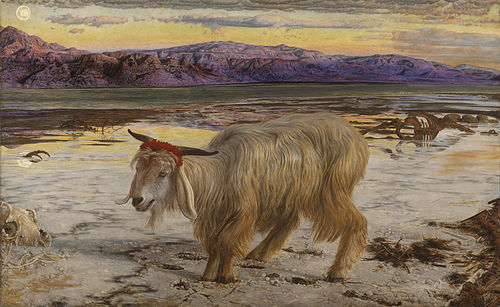
In this week’s Torah portion, we read about the original scapegoat. As part of the rituals for collective atonement, Aaron the High Priest gets two goats and brings them into the tabernacle. They pick straws for the goats. 

The lucky one is to be sacrificed for God. Onto the lucky one, Aaron ceremonially transmits all the sins of the Israelites, then chases it out into the wilderness. As it scarpers off, the scapegoat symbolically carries away all of the Israelites’ misdeeds.

The biblical narrative describes a psychological trick we can all play on ourselves. When we are ashamed of something inside ourselves, we take all that fear, turn it into hatred, and throw it at whatever unwitting bystander will carry it. 

Is this not precisely what Britain has been doing to trans people?

Gender is changing. The roles of men and women are shifting dramatically. There are so many new ways to live gender, to express ourselves, and to talk about our identities. 

Rather than embrace these changes and think about what opportunities they can afford us all to be more free, reactionary parts of British society have whipped up a concoction of bigotry and thrown it all at trans people. Every anxiety our bigots have about gender has been exaggerated and projected onto one small part of the population, who have been turned into monsters through these prejudiced eyes. 

It makes sense that people will find social changes scary and destabilising, but why should trans people bear the brunt of those fears?

A few years ago, I went to hear a panel of esteemed Jewish leaders give a retrospective talk about the ordination of gay, lesbian, bi and trans rabbis. On the bimah was Rabbi Indigo Raphael, Europe’s first openly trans rabbi. 

In his opening words to the congregation, Rabbi Raphael proclaimed: “I am a transgender man. I am not an agenda; I am not an ideology; and you can’t catch trans by respecting my pronouns.” The room immediately erupted into applause.

He should not need to say it. He shouldn’t need to defend his own existence, but such is the level of moral panic in parts of Britain that he has to assert his right not to be scapegoated before he can even teach Torah.

In the last few weeks, trans people have been subjected to legal rulings and government decrees that may make their lives unlivable and keep them from basic participation in public life. Like the goats of the ancient world, they are being cast out into the wilderness to carry away all of people’s fears.

It should not be this way. 

When we feel like scapegoating others, the best thing to do is look inside ourselves. We need to face our fears and work out why others bother us. The chances are, it’s something in ourselves that we’re not happy with, and when we need to get right with our own souls.

When we get to know those we “other” we get to know ourselves better. And when we realise we can like the difference in others, we learn more about what we can like in ourselves.

Reflecting on this, Margaret Moers Wenig, an American Reform rabbi wrote an essay called “Spiritual Lessons from Transsexuals.” She talks about how knowing trans people has enriched her own spiritual life. 

Interacting with trans people, Rabbi Wenig says, has taught her that all of us can craft our bodies as we will; we are all more than just our flesh and blood; we have living souls that can differ from others’ assumptions; that only God knows who we truly are. These are wonderful lessons that can only be learned when we turn away from fear and embrace curiosity.

They chime with my own experiences. At first, knowing trans people made me question myself. If gender is something we can change, am I really a man? With time, seeing other people embrace their gender and become who they are has made me feel far more happy in my own gender. I am a man, and I like being a man, and I like being an effeminate man.

When we turn away from fear, we see that we have no need for scapegoats. The parts within us don’t need to be divided up so that some are holy and others need to be chased out into the wilderness. Every part of us is for God.

The world has more than enough hate. It’s time we swapped it for loving curiosity.

After all, Surrey, it turns out, is rather lovely.

Shabbat shalom.

israel · theology · torah

I believe that God is screaming.

A few weeks back, I attended a retreat with Christian colleagues. At some point, surprisingly enough, we got onto talking about God. I asked one of the priests a question: “do you believe God speaks to you?”

He looked slightly bewildered by the question. “Literally?” he asked. “No, not really.” He shook his head.

The answer seemed obvious. After all, we were liberals, at an interfaith event. That kind of talk is for fundamentalists. We’re all too rational for that. 

“Why?” he asked, turning back to me, “do you?”

“No,” I said, sheepishly. I don’t know why I felt so embarrassed. Of course, many believers see the voice of God mostly as a metaphor, or as a way of giving expression to moral intuition. I’m just not one of them. 

I do believe in a personal God, who has a loving relationship with every human being on earth. And I do talk to God. It’s not that I expect answers in any sense, but I do believe some One is listening: that prayers are more than idle words I recite to myself.

Perhaps my Christian colleague would have agreed with me if I’d put it in these terms, because finding vocabulary to talk about God is hard. Words like ‘literally’ and ‘metaphorically’ start to evaporate when you are dealing with faith.

I think, perhaps, the reason I gave a sheepish no – maybe even that I asked the question at all – was that I was having a mini-crisis of faith of my own. Ever since the war broke out, I have been praying differently, more fervently, desperately begging the Universe for peace. I have been hurling questions and recriminations into the void. I have been wondering… do I still believe in this God?

My personal relationship with God has carried me through some of the toughest times. When I have felt most lonely, God has been like a best friend. When I have hated myself, God has been like a lover. When I have needed direction, God has been a wise counsellor. I have looked to God in every time of disaster, and always found comfort in a loving Presence that reaches out and caresses from across a boundary of unknowability.

But now I listen for God’s voice. And all I can hear is screaming. 

As long as there have been people who believed in religious meaning, there have been those who questioned it. Usually, they were the same people. Abraham, Moses, Hannah, Kohelet, Job: they all had faith, and they all questioned it. They asked questions so that they could challenge their beliefs, and refine them. Lately, although less adequately than those prophets, I have been forced to do the same thing.

The first question we usually ask when confronted with crises of faith is “do I believe in God?” Fairly regularly, people come to me with conclusions one way or the other: “you should know, rabbi, I don’t believe…” or “you should know, I have a strong sense of belief…” My follow-up is always the same “… and what is it that you do (or don’t) believe in?”

For me, the answer is moral truth. When I talk about believing in God, what I am saying is that moral statements are not just opinions. When we say “murder is wrong” we are not just expressing a preference, like “my favourite flavour of ice cream is tutti-frutti.” We are describing a reality, no different to the claim that there are 24 hours in a day. We are describing something literally true.

I think that’s what God is. When we want to know why our feet are firmly on the ground, we give the shorthand answer of “gravity.” When we want to explain why objects in space interact with each other as they do, we use words like “attraction.” And when we want to express how we know that murder is wrong, we use the word “God.”

So, in feeling the great sense of angst I have had since the war began at the end of the High Holy Days, I am forced to return to the old questions. I am forced to ask whether I still think moral statements are true. I am forced to ask whether I still believe murder is wrong.

I do.

And that is why I believe that God is screaming.

What we talk about when we describe God is obviously more complicated: it is something infinite, and greater than we can put into words. That’s why words like “metaphor” and “literal” are so inadequate – because we are describing something more real than reality. So we have to find shortcuts. We have to find ways of talking about God in human language, to make sense of God on human terms. God is then “a tender parent”; “a loving shepherd”; “a righteous judge”; “a generous creator.” All of these are good descriptors, and all of them are incomplete.

I have been relying on a version of God that has worked for me for a while. I have imagined a sweet aunty or a gentle older friend. In times of loneliness, desperation and heartache, that image of a loving God has helped me get through the day. But that image doesn’t serve me now. I think if I used God for comfort in a time like this, I would be retreating from responsibility. God does not need me to feel safe now, but to shake me from illusions and complacency.

If God is the moral voice of the universe, that voice must be crying out in desperation.

In the last few months, 23,000 Palestinians in Gaza have been killed by Israeli bombs. I am kept awake at night thinking about that. I imagine God, smothered by the rubble of obliterated hospitals, calling out. Like Abel, stricken by Cain, the voice of the blood is calling out from the ground (Gen 4:10). I imagine God, pulled from the wreckage, crying: “Thou shalt not kill. (Ex 20:13) Thou shalt not kill. (Deut 5:17)”

Those were the commandments given to the Jews, above all others. In some variations, it is the very first commandment, the one that holds the most power. And as Israel stands in the dock at the Hague, it is not only South Africa that places it on trial, but God too, who comes with the accusation: “did I not tell you: thou shalt not kill.”

Since the war began, Israeli settlers, with governmental support, have seized around 20 villages in the West Bank, displacing thousands of people, so that Jewish Israelis can expand their territory and claim others’ homes. I imagine God calling out from deserted towns, on the trail with refugee families, wailing “thou shalt not steal” (Ex 20:15), “thou shalt not steal” (Deut 5:19).

Netanyahu says, unabashedly, that he will push the Palestinians from Gaza and create a new border with Egypt. The Torah answers, in desperation: “thou shalt not move thy neighbour’s boundary” (Deut 19:14). Land theft is a sin.

Israeli soldiers enter Gaza and use Jewish symbols as weapons. They recite the Shema from the pulpits of mosques and place mezuzahs on Palestinian homes. They desecrate our religion. They destroy our faith. From the depths of history, God cries out “honour thy mother and thy father (Ex 20:12); honour thy mother and thy father (Deut 5:16).” Do not profane the faith of your ancestors with war crimes.

Worse still, the politicians claim that God gave them the right. That this is what the Torah intended. Can you not hear the scream of revulsion as God decries: “thou shalt not take My name in vain (Ex 20:7); thou shalt not take My name in vain (Deut 5:11).” This is what was intended: do not abuse God’s name for worthless pursuits like war, but elevate it for the purposes of peace. 

I believe that God is screaming. 

The commandments may once have been given as words of instruction or even as a love letter, but now they are a desperate plea. 

God says “I am the Eternal One thy God, which brought thee out of the land of Egypt, from the house of bondage. Thou shalt have none other gods before me.”

No other gods. No state, no flag, no military, no leader, no ideology, no grudge, no border, nothing. None of these can ever be placed before God. None of them have any trump over God’s words.

God’s word says: “You shall not pollute the land in which you live; for blood pollutes the land, and no expiation can be made for the land, for the blood that is shed in it.” (Num 35:33)

So I believe I can hear God screaming: thou shalt not kill.

And I do not want to silence that voice. I want to amplify it. I want the Holy Torah to be heard now, more than ever. I hear God screaming, and I want to join in.

Thou shalt not kill.

Thou shalt not kill.

Thou shalt not kill.

high holy days · sermon

We can be proud of how we handle death

It is no secret that Oaks Lane sees its fair share of death. The fact that so many of you are here for this service is testament to that.

This is one of the Reform movement’s largest synagogues, and a large number of our members die each year. During the Covid pandemic, Rabbi Lisa carried out some 350 funerals. How she managed to do that with such grace will always be a source of personal wonder to me.

Before I came here, then, I expected that coming to work at Oaks Lane would mean constantly swimming against a tide of grief. I thought that this community would be defined by pain and sadness, eking out moments of joy through a long slew of burials.

I was wrong. I was wrong about Oaks Lane. More importantly, I was wrong about grief.

I had accepted the conventional wisdom that grieving was the tough work of slogging through sadness. I believed, without much interrogation, that people had to process stages of denial and anger and sadness to eventually begrudgingly accept the mortality of their loved ones. 

Yet, when I began working in this synagogue, I was astounded by what actually happened. I discovered that, in their last moments, people were eager to pass on their happiest moments and their favourite jokes. 

I found that, while funerals were always deeply sombre affairs, shiva houses could be full of raucous laughter and mourners could be alleviated by relief that the deceased had gone on to a better place. I was amazed at how quickly families made meaning of their loss, and turned the memory of their loved one into positive action. 

Even concerning the saddest and most unjust deaths, the grieving people of this community are amazingly strong.

The truth is that this congregation can feel very proud of how it handles grief.

It turns out that grief is deeply sad, but that’s not all it is. It also shows the immense capacity human beings have to be resilient.

That observation is now supported by scientific study. The psychologist George Bonnano has dedicated his life to studying grief. When he first came to look at bereavement, he found that, while there were plenty of big claims about how grief works, there was scant little evidence to back it up. 

Over years of working with mourners, hearing their stories, and measuring their emotional responses, Dr Bonnano found that all the stereotypes about grieving were wrong. 

As it turned out, the five stages of grief rarely turned up in people’s lived experiences. In many cases, people did not need to go deep into the recesses of their subconscious to find out why a death had hurt them so much. 

Quite on the contrary, many mourners found that they could make meaning of their lives and honour their dead. Many grieving people found that their emotions were close at hand, and that they could handle them best by being honest about them.

Above all, mourners did not need to “get over” their sadness. Instead, people emotionally processed best when they understood their sadness as a helpful emotion. Sadness, it turns out, slows us down, makes us more contemplative, helps us to create more accurate memories, and focuses us on what truly matters.

Bonanno discovered that one of the factors that made people most adverse to handling grief was the Western obsession with reason. The demand that we be constantly rational, strip ourselves of rituals, and just ignore our spiritual inclinations in times of distress actually exacerbates emotional trauma, and can prolong the grieving process. 

Of course, that does not mean dealing with death is easy. For some people, the sadness can go on for years, and some people experience very traumatic and complex grief. In all of his studies, Bonnano could not find a single unifying factor for why some struggled more than others. It doesn’t really say anything about a person or their loved one if they struggle more with death.  In fact, it seems to be largely random.

One thing Bonnano did find is that, in cultures that ritualise communicating with their dead, and that have a sense of death’s sacred purpose, mourning is often healthier.

From that point of view, I think we Jews can be very proud of how we deal with death.

The tractate of the Talmud that deals with death and dying is called smachot. Literally, the word means “joys” or “festive celebrations.” I had always assumed that the title was a euphemism, to cover over all the other great feelings associated with death. 

Now, I wonder if perhaps the rabbis gave it that title as a reminder of what was at stake. Yes, you will feel sadness, but all of those are for the sake of remembering your joys. Yes, these mourning rituals will be sad and sombre occasions, but they may also be festive celebrations of the lives you have lost.

Smachot sets out a clear set of guidelines for how to handle death. Bury as soon as possible. Sit in remembrance for seven days. Avoid certain kinds of work for thirty. Say kaddish for a year. 

At every stage, the rabbis provide us with a spiritual framework that means we always have something to do, and continually have receptacles for our grief. With the infrastructure established, Jews are free to experience the full gambit of emotions associated with death.

In addition to its regulations on mourning, Smachot advises ways to handle people who are grieving. Rabbi Meir teaches that, in the early days of somebody’s bereavement, you should offer them words of consolation, then ask them how they are. After the first thirty days, you should ask them how they are, and then offer words of comfort. By the time twelve months have passed, you shouldn’t bring up the death at all unless the mourner does, so that you do not re-open wounds. 

All of this provides a way to speak openly and honestly about grief, without allowing it to be all-consuming. I find this rabbinic wisdom incredibly powerful, but it is even more poignant when we see it in real life.

Over the last year, I have watched in awe as our senior rabbi handled his own grief. This time last year, Rabbi Jordan and I switched our expected slots, and I took the yizkor service, so that Rabbi Jordan could have a chance to grieve his recently deceased mother. 

Grief could have swallowed Jordan up. Instead, he set up a weekly minyan so that he could say kaddish with all the others who were bereaved. He wore his mourning openly, and channelled it into helping everyone in the community to heal. Perhaps most surprisingly, throughout that whole period of aveilut, Jordan led this congregation with integrity, sincerity and passion. There is much in here for him to feel proud.

I am also continually impressed by the Jewish Joint Burial Society, whose work can never be sufficiently celebrated. Whenever I call Mitzi, Ian or Andrew, they combine a great sense of dignity with humour and good spirit. They oversee hundreds of funerals every year, and support families in their very hardest moments, and do so with an incredible sense of holy purpose. They are an endless source of pride.

More than anything, this community is a source of pride. Its volunteers in the care team leap at the chance to call up people on their yahrzeits. I rarely attend to a family that hasn’t already heard from a congregant already. Alan, Adrienne, Hazel, Brenda, Sheila, and Ailsa… you do more for the people in this congregation than you will ever fully know.

And that is true for all of you. As members, you repeatedly show up for each other and support each other. As mourners, you do everything in your power to honour your loved ones.

So keep on doing what you’re doing. Keep asking after each other. Keep showing up. Keep being vulnerable and honest. 

As we sit here, together, mourning our dear loved ones, know that you are here for yourself and you are here for everyone else. And we truly appreciate your presence. 

I am incredibly proud of how this community handles death.

Gmar chatimah tovah.

judaism · sermon · torah

If you don’t believe in equality, you don’t believe in love

This is the week of our Torah dedicated to love stories. Our religious texts often contain laws or stories of struggle, but this is a unique reprieve, in which we are offered some romance.

At the beginning of our parashah, Sarah dies, and Abraham bargains for the perfect burial site. He wants to ensure her burial arrangements are in exact order. Later, he will be buried beside her, so that they can be joined forever in the hereafter.

The Talmud clearly picks up on how sweet these negotiations are, because it embellishes a story of what happened many centuries after they had died. Rabbi Benah was marking burial caves. When he arrived at the Cave of Machpelah, where Abraham and Sarah were buried, he found Abraham’s faithful servant Eliezer, standing before the entrance.

Rabbi Benah said to Eliezer: “Can I go in? What is Abraham doing?”

Eliezer replied: “Abraham is lying in Sarah’s arms, and she is gazing fondly at his head.”

Rabbi Benah said: “Please let him know that Benah is standing at the entrance. I don’t want to barge in during a moment of intimacy.”

Eliezer said: “Go on in, because, in the higher world that they inhabit, souls no longer experience lust. All that is left is love.”

Benah entered, examined the cave, measured it, and left.

It’s such a beautiful story. It teaches what an ideal relationship should be, where a couple loves each other long after death.

Perhaps, most significantly, it tells a story of mature love; of what happens when relationships really do last, and people carry on loving each other until their last days. I think we all know of such couples, but their stories rarely appear in our culture. We get romantic comedies. We get depictions of what love is like when it’s just starting out, but not so much about how it endures. Our media shows the hero get the girl, but not how they make their relationships work.

Don’t get me wrong. I love a good rom com. Yes, I did think Ten Things I Hate About You was a masterpiece when I was a teenager. And I absolutely did binge watch both series of Bridgerton on Netflix.

They all follow a predictable plotline. Two loveable heroes, and you’re rooting for them both. They encounter a tribulation. They overcome an obstacle. There’s a grand gesture. They realise they’re supposed to be together. In the end, there’s a wedding and they all live happily ever after.

In a way, that’s the story that we find immediately after Sarah’s funeral. Abraham realises that Isaac needs a wife. He sends out a search party, led by ten camels. He sets a test: whichever woman offers water to the camels by the well is the one meant for Isaac.

Immediately, we root for Rebekah. She is beautiful. She’s strong. She’s hard-working. She offers to feed all the camels, and rushes back and forth, drawing water from the well, feeding an entire herd of camels. Obstacle surmounted, we get our grand gesture. She is presented with a huge gold nose ring and two huge gold bracelets. She accepts. Their families rejoice. Everyone agrees that this was arranged by God.

There’s just one snag to reading a romantic comedy into all of this. The hero in the story isn’t Isaac. The man who goes out with all the camels, sets the challenge, starts the relationship, and makes the big gesture, is Abraham’s servant, Eliezer. By rights, if this were a love story directed by Richard Curtis, the wedding would be between Rebekah and Eliezer!

Isaac isn’t even involved. They’re engaged and the deal is done before the couple have met. Rebecca doesn’t know what he looks like. When Isaac later comes clopping along on his horse, Rebecca asks who it is. We have to hope that she was impressed, but we can’t be sure.

All we know is that, once married, Isaac feels comforted after the death of his mother. The heroin in our story, at the end, is reduced to a replacement mum for her husband. A love story this is not.

But, do they at least go on to have a happy marriage? Of course not. They were forced together as strangers as part of an economic arrangement.

In the entirety of our Torah, they never say two words to each other. They just pick favourite children and pit them against each other. They trick each other, lie, and form an unbelievably dysfunctional family.

The whole thing is a nightmare. It’s far more Silent Hill than Notting Hill.

This could never have been a love story! We’d never have got Sandra Bullock narrowly missing out on an Oscar for her heart-wrenching performance as Rebekah. We can only wish for Sacha Baron Cohen bumbling as a comedy father Abraham.

90s cinema didn’t invent romantic love, but it was far closer to its origins than Isaac and Rebekah were. The idea of romantic love, as we know it, was born out of the Enlightenment.

During the Age of Reason, philosophers had the wild idea that partnerships between people might be based on more than just combining property and keeping families happy. They suggested that marriage might not just be a way for nobility to make treaties between nations, but borne of a deep feeling common to all people. They even offered up the radical idea that women were people, and might have an opinion on their relationships too.

In those heady days, Judaism split between those who accepted the ideas of the Enlightenment, and those who did not. We, who embraced those fantastic ideas of equality, became the Movement for Reform Judaism.

As we accepted the ideas of love between equals, our rituals and ceremonies have progressed with us.

In a traditional ceremony, the woman is acquired with a ring. The ring is, in its origin, a symbol that the woman has been purchased. When Rebekah received her nose ring and bracelets, she was effectively accepting the shackles of her new owner.

In our ceremonies, both partners to the wedding mutually acquire each other, or even forgo rings in favour of an alternative symbol of equal partnership. Both partners encircle each other under the chuppah, showing their shared space.

Whereas in a traditional ceremony, a woman may remain silent, Reform weddings require explicit consent from both parties. Both read their vows, and some couples choose to produce their own.

This may now seem obvious and intuitive, but it is only because the ideas of the Enlightenment have taken such hold. Love – the idea that people can be equal and caring partners – has had to be won.

Love is really a Reform value. It is something special to our movement. Our ancestors spent centuries fighting for the idea of meaningful love, so that we could celebrate it today in all its forms. You can only really celebrate love in a place that really believes human beings are equal.

And that is why Sarah, holding Abraham in her arms, gazing lovingly at his head, joined with him in an immortal embrace, was the first Reform Jew.

Shabbat shalom.


Parashat Chayyei Sarah, 5783

judaism · social justice · story

Welcome to the Queer Yeshiva

Hello and welcome to the Queer Yeshiva.

My name is Lev. I’m one of the teachers here, with Jo, Hava and Daniel.

A month ago, I was ordained as a rabbi. One of the things that most made me want to be a rabbi was bring gay. I wanted to be part of a religious life that made being queer feel as empowering and magical as it really is.

I love being queer. I love queer people. One of the things I love most about us is that no matter what life throws at us, we always rebuild.

I think about the lives of queer people. Everyone I know has had to struggle with who they are, face down violence, and out of adversity, rebuild themselves as someone stronger than anyone could have imagined.

When I was a kid, I was already too fabulous to be contained. All I wanted in life was to wear dresses and do Spice Girls dance routines. I knew I was different and I didn’t care.

But the rest of the world did. I grew up in a small town with few opportunities. For most of my teens, I was beaten up on a near daily basis. I was attacked at school, walking home, in the shops, and outside my front door. That was only the other kids. The adults were worse: at best they ignored it; at worst they encouraged it. At the school leavers’ assembly, the teachers gave me an award for “most likely to have a sex change.”

But I’m not bitter. I’m proud. I came out of all that knowing who I was and willing to fight for others. That’s why we have parades. That’s why we stand up celebrate our community, because we have withstood discrimination and violence and built out of it fantastic cultures. All that queer art, queer music, and queer innovation- that came out of queer struggle. We are who we are because of who we were.

And that’s not limited just to us here. That’s something queer people have to do in every generation. Think how many times we have been destroyed, and think how many times we have rebuilt.

Consider only the last century. At the beginning of the 1900s, our people were dealing with criminalisation, as many had been imprisoned. Against that backdrop, Magnus Hirschfield created the Institut for Sexualwissenschaft, pioneering the understanding of queer people.

His work was burned by the Nazis. Queers were turned into pariahs and murdered in te death camps. Even once the Second World War was over, many homosexuals were forced to stay in prison to complete their sentences.

In the aftermath, our ancestors picked themselves up again. They built the Gay Power movement. They formed the Lavender Menace. They created the ballroom scene in the nightclubs of New York.

Once again, they were decimated by the AIDS crisis. Government indifference and vengeful homophobia killed a generation of queers.

And still, we could not be destroyed. We came back stronger, demanding legislative changes and pushing for a transformed world. We recreated community to fight for our liberation.

In every generation, people have tried to destroy us. In every generation, they have failed. We will always rebuild. We will always imagine a greater future. We will always reappear.

We are indestructible.

In that sense, we are the heirs to the rabbinic tradition.

Judaism, as we know it, is the product of people who saw their world crash around them repeatedly and, every time, rebuilt it.

Our Judaism was born out of a time of fundamental crisis. At the start of the last millennium, the Jews were a nation. They had their country, the land of Israel. They had their capital, Jerusalem. They had their cultic centre, the Temple. They had their religious leadership, the priests. And they had their religious practices, sacrifices.

Then, they faced catastrophe. The Romans came and waged an aggressive war, killing off the leadership, and starving the people of Jerusalem. They destroyed the Temple and abolished its customs.

Yesterday was the fast of Tish BAv. It was, for many religious Jews, a day of weeping and despair. We recalled the genocide, the disruption, the pain. We remembered the destruction of the Temple in the context of all the times that Jews have been destroyed.

But, in that act of ritualised remembering, we also remember that we have survived. Jews and Judaism have kept going, even two thousand years later.

Let us remember why.

Faced with annihilation, the Jews had three choices. One: they could dig their heels and pretend nothing happened. They could decide that they were going to carry on with the Temple and the priesthood, even though they were gone.

Two: they could abandon their old religion altogether. That was what normally happened to ancient peoples when they were conquered: they gave up their old traditions and gave in to colonisation.

Three, the third option: they could retell their story for the sake of their contemporary situation. They could look at everything they had been, and use their history to reimagine their future.

Our rabbis chose option three.

Put yourself in their position.

Imagine you were there, not just in the aftermath but right in the thick of it. Jerusalem is under seige. Your family are starving. Your people are fighting the Romans, but mostly they’re fighting each other. You can see your world on fire. You don’t even know if you will survive.

What would you do?

That’s how it was for Rabban Yohanan Ben Zakai. He was alive then. That was what he saw.

He told his students to put him in a coffin, pretend he was dead, and smuggle him out of Jerusalem. Once out of the besieged city gates, he got out and demanded to speak to the Roman emperor, Vaspasian.

As it happened, Vaspasian was willing to compromise. He said: “OK, tell me you want.”

Rabban Yochanan Ben Zakai said: “Give me Yavne and students of Torah.”

What was Yavne? It was a refugee camp in the middle of nowhere. It was filled with displaced people. Who were the students of Torah? Just a bunch of people who remembered what the old religion used to be like.

Why? Why would you ask for such a thing? If the commander of the imperial Roman army is willing to negotiate, why not find a way to get the troops to leave?

Because a people that knows who they are cannot be destroyed.

Sure, the colonisers might go, and the Jews might live, but Judaism could end. The only way for anyone to live on after facing near annihilation is to look at where they’ve been. They have to take a long look at their story and reimagine it for a new era.

Rabban Yochanan Ben Zakai and his students learnt everything. They committed to memory their whole history so that they could recite it by heart.

Then, they revolutionised it. They said: we don’t need the land of Israel or Jerusalem any more. From now on, we’re going to be spread across the whole world. We’re going to make our religion portable so that it can be sustained in any nation.

They looked at their Temple and its sacrifices and said: we’re not going back to that. We’re going to reinvent our practices. We will replace them with prayer and study. As long as people keep our words alive, we won’t need for animals to die.

They looked at the priesthood and said: that’s done. From now on, we have no hierarchy.
From hereon out, we are equals. The measure of Jewishness won’t be who your father was but how imaginative you can be in reexamine your tradition.

They looked over their old systems of justice, and interrogated them. Who is included here, and who is left out? What is justice going to look like for us now? They were so radical that they tried to work out how they could turn the Torah against the Torah.

And that instantly transformed Judaism. Rabbi Yochanan’s disciples weren’t from the elites. They were blacksmiths and peasant farmers and outsiders. They saw, from that vantage point, how their people could creatively rebuild. And that is why we have our Judaism today.

And here’s the thing. Rabbi Yochanan had, maybe, ten students. There were fewer people in his beit midrash than there are in this room.

You only need a handful of visionaries to spark a revolution.

Be in no doubt, that is what could happen here this week.

We are, as always, facing catastrophe. Queer people are under attack once more. The planet is burning. Capitalism is in crisis. The old ways of doing Judaism are floundering.

Do you think that the future of Judaism is going to be secured by happy people in their comfortable homes? No way. They have nothing to lose from the current situation. They don’t have the imagination to see how things could be different.

The future of our people lies with those on its margins. Its the queers. It’s the weirdos. It’s the radicals. It’s you.

That’s why we’re here. We’re going to do what queers and Jews have always done. We’re going to rebuild while our world is on fire.

We’re going to learn everything we can, internalising the words of our ancestors so fully thar they will travel with us everywhere. We’re going to re-analyse them in light of our own circumstances, seeing how these traditions bear on our own lives and struggles. And, out of that, We’re going to completely retell our story.

This is where the future of Judaism starts again.

I love being queer. I love queer people. And I can’t wait to see what we achieve.

This talk was based on the Crash Talk by Rabbi Benay Lappe, used for Queer Yeshiva Summer Intensive 5782 in Essex

judaism · ritual · spirituality

Sacred skinny-dipping

It was midsummer in a basin in the Welsh valleys. I found myself completely naked with a friend in a lukewarm tub of rainwater. We were supposed to wait for it to properly heat up over the log fire, but I was in a hurry to go from teaching Torah there to preaching in north-west London. The sunshine compensated for us. 

All around there were huge green trees, rolling hills, a babbling brook. Hippies not far away chanted in Hebrew while banging on drums.

“OK,” I said. “Now what do I do?”

“So I’m going to tell you my practice,” she said, “but you can come up with your own.”

Her practice, I later discovered, was the same one as you would find Orthodox Jews performing on Friday afternoons, as sanctioned by rabbis and law books. She had a way of making every tradition feel New Age.

She dunked fully underwater three times, twice emerging to recite a prayer.

Al hatvilah – thank you, God, for making me holy by commanding me in immersion.

Shehechiyanu- thank you, God, for keeping me alive to see this day.

On the third dip, she came up, smiled and said: “That’s all there is to it.”

I copied her every move. And that was it: my first mikveh.

I had previously associated this ritual with Orthodox women washing off the ritual impurity associated with menstruation. It had seemed to me outdated and misogynistic. 

The only other people I knew of who did it were converts, undergoing a form of Jewish baptism to initiate them into the religion. I had thought, cynically, that these new Jews were washing off the goy.

But here was my teacher, Yael Tischler, far more radical than I was in terms of religious innovation and transgressive liturgy; a witchy feminist affiliated to the Kohenet movement in America – a bohemian collective for women-centred spirituality. 

With her, the act of immersion didn’t feel problematic. It felt like my whole body was wrapped up in Jewish history. It felt connected to the earthy, fleshy customs of long-gone ancestors.

This was strange, because I know that none of my recent ancestors would have done such a thing. Liberal Jews were, by and large, decidedly opposed to many embodied rituals. 

Like their reforming Christian counterparts, many of the early Progressive Jews felt that religion should be a matter of intellectual faith. It should be stripped down to its essential meanings, devoid of excessive piety or symbols. 

In the great platforms decreed from Germany and the USA, Reform Jews repudiated circumcision, abandoned kashrut and denounced tallits. They ridiculed shockeling, the Eastern Ashkenazi prayer movements, as “bowing and scraping.” One British Liberal rabbi called kippot “the eccentric trappings of the Orient.”

As you can imagine, mikvaot did not get much of a look-in. For decades, ritual immersion was not a requisite part of conversion at the Reform beit din. Today, very few progressive Jews will attend the mikveh before their wedding. It is almost unheard of that a progressive Jew will have a regular toiveling practice as the Orthodox do.

This week’s parashah probably provides a good explanation as to why progressives are so uncomfortable with it. This week, we read Tazria-Metzora, a portion dedicated to defiling skin diseases, leprous houses, sexual infections and menstrual impurity. 

To escape the uncleanness that falls upon people by contact with these things, ancient Israelites would ritually immerse in a mikveh. The Torah describes mayyim chayyim – running water – in which people would wash themselves. We know that in the period after the Great Exile, the mikveh was likely an enormous bath at the entrance to the Second Temple. 

In the biblical world, the mikveh does seem troubling. It exists for a people obsessed by physical purity, who want to remove their blemishes before they enter sacred spaces. I would not feel comfortable advocating immersion to congregants on the grounds that their bodies are unclean and carry associations of sin. 

But my teacher, Rabbi Debbie Young Somers, argues that our rabbis fundamentally transformed what mikveh meant. She did her rabbinic thesis on mikvaot and has taught about their virtues in numerous study sessions. When I asked her for sources for this sermon, she immediately sent me detailed source sheets and tweeted her glee that the subject matter was being discussed in our synagogue. 

Impurity, Rabbi Debbie argues, is not the same as defilement for the rabbis. It is what happens when you come close to something holy. Touching religious texts, having sex, giving birth and changing to a more holy status, are acts that require immersion. Faeces, urine and vomit, which are more obviously disgusting, do not require any religious ritual. When we wash ourselves, we are not scrubbing away sinful dirt, but acknowledging sacred contagion.

In a post-Temple world, nobody can be clean or unclean. The mechanisms for such processes are gone and the need to do so – so that one might perform an animal sacrifice in the correct state – thankfully no longer exists. 

The Talmud records that, nevertheless, Jewish women took the obligation of ritual immersion upon themselves. It was a choice that antique ancestresses made as part of their covenant with God. When they did, the rabbis largely trusted women to self-regulate and organise their own mikvaot. It might well be that they already had very little authority over this aspect of life.

Today, feminists are returning to these practices. Led mostly by religious women, efforts to reclaim the mikveh are popping up all over the world. Scholars and lay people are extolling the virtues of immersion for both men and women.

People take these ritual baths before life-changing events, like trying for a baby, getting married, starting a new job and completing a course of study. They also use the mikveh to process life’s trials, like miscarriage, recovery from illness, divorce and redundancy. 

That was how I ended up, a few summers ago, doing sacred skinny dipping in the countryside. I am now convinced that it is a deeply moving spiritual practice, and I commend it to anyone who is interested. 

The Sternberg Centre in North London has a functioning mikveh. There is also a programme underway called the Wellspring Project, which hopes to soon create a mikveh-oriented wellbeing centre. In Manchester, the new building for Jackson’s Row is planned to have a mikveh.

And the wonderful thing about mikveh is that you don’t have to travel far to do it. You can toivel in any naturally occurring water, like seas, lakes and rivers. Just turn up, jump in, and dip your head underwater. 

And thank God for the commandments. 

And thank God for your body.

And thank God you’re alive.

And thank God that we can take these ancient practices and make them our own.

I gave this sermon on Shabbat 17 April 2021 for Parashat Tazria-Metzora at Newcastle Reform Synagogue

festivals · sermon

Reform Judaism – or Revolution Judaism?

There was a seder that lasted all night. We talk about it every year.

It once happened that Rabbi Eliezer, Rabbi Yehoshua, Rabbi Elazar Ben Azaryah, Rabbi Akiva and Rabbi Tarfon were reclining in Bnei Brak. They were discussing the Exodus from Egypt all that night until their students came and said to them: “Our teachers, the time has arrived to read the morning Shema.”

How could it be that five rabbis could talk all night and not know that the time had come to say Shema? We might imagine them engrossed in animated conversation, but even the best dinner party guests can identify when the sun has come up. The Shema is to be recited at dawn, and surely five great sages would know when the dawn has come.

Unless, of course, they couldn’t possibly know whether it was dark or light. Perhaps, our commentators now speculate, the rabbis were deep underground in a cave. You see, these rabbis lived through the great revolt against Rome, the Bar Kochba Rebellion. During this time, Jews hid out in caverns, as armed conflict raged between Judean zealots and Rome’s imperial armies.

The year was 132 CE. The great Temple in Jerusalem had already been destroyed 60 years earlier. The wicked emperor Hadrian, who was also responsible for the Wall less than an hour from this synagogue, had overtaken the entire region. He erected a new temple to the Roman god Jupiter, renamed the capital city after himself, and persecuted the inhabitants.

Hadrian further antagonised the Jews by introducing new taxes and prohibiting certain religious practices. Shimon bar Koseva, better known as Bar Kochba, emerged as a military leader, determined to wage war against Rome. He gathered troops and summoned the entire Jewish diaspora into revolt. He called on our sages: “get armed! Get ready to reclaim Jerusalem!”

Every single one of the rabbis had an opinion on the matter. The core question facing them was whether they, the spiritual leaders of the Jewish people, should get behind the armed struggle. Do they join with the ranks of the militants, or seek to make compromises with the Empire? Do they risk dying on their feet, or concede to live another day on their knees?

The new Reform Haggadah stages a debate between these five thinkers. Throughout rabbinic literature, we have statements attributed to each sage, many of which may have been directly connected to the struggle against Rome. Haggadateinu stitches them together into a dialogue, where each rabbi advocates his position.

Rabbi Tarfon and Rabbi Joshua tried to persuade the others of pacifism. The Torah teaches peace, so that was what they should pursue. The Jewish mission, after all, was to beat swords into ploughshares.

Rabbi Akiva and Rabbi Eliezer countered them. The Jewish mission was to declare victory for God by opposing tyranny. This was, after all, the festival of Pesach, the celebration of freedom from Pharaoh, when the Jews had brought down the greatest empire of the age. They could relive their former glory, with swords in their hands and God on their side. A messianic fervour took hold of them, and Akiva even concluded that Bar Kochba must be the Messiah, ready to lead the Jews to ultimate salvation.

They continued the debate all night. They didn’t realise that dawn had come.

We do not know whether any of the sages changed their mind. But we do know what happened next. The Jews joined en masse in the revolt against Rome. And they lost. Hadrian persecuted them and destroyed an entire generation of rabbis. Akiva was flailed to death as he recited his prayers. Tarfon joined him as one of the ten martyrs.

So, with hindsight, which one of them was right? A cynic would dismiss Rabbi Akiva’s passion, saying he was foolhardy to take on the empire. But there is no guarantee that they wouldn’t have suffered just as much if they hadn’t resisted.

Maybe collaboration with Rome would have secured their survival. Our ancestors could have gone down Rabbi Tarfon’s route. They could have negotiated and compromised. Perhaps he would have permitted them to stay under his rule in Palestine and they would have lived there.

Then who would we have been? We would never have spread across the Diaspora as a light unto the nations. We may never have composed the Mishnah, the Midrashim, the Talmuds, or any of the subsequent generations of rabbinic literature. Quite possibly, if every Judean of the time had survived, the people would have lived, but there would be no Judaism. We needed the revolutionary spirit, that sense of injustice, and that determination to fight for what was right, in order that we could truly pass on a tradition.

Our Judaism is the Judaism of Rabbi Akiva.

But it is also the Judaism of Rabbi Tarfon. After the failure of the revolt against Rome, our rabbis had to regroup and reconsider what Judaism would mean. They re-made their religion as a movement that was not tied to any country or Temple, but that could live everywhere in the world. They did away with ancient sacrifices and replaced them with universal prayers. They found a way to make an accommodation with reality.

And they held onto Rabbi Akiva’s dreams, too. For two thousand years, Judaism has sustained its hope for a messianic age. At the end of the seder, we still declare ‘next year in Jerusalem!’ We are not making a plan to buy plane tickets. We are talking about the Jerusalem that Akiva had hoped for – the time of the Messiah. The age when tyranny is destroyed and war abolished.

We are, therefore, a religion of both revolution and reformation. We are still holding that tension, between working within oppressive systems, and seeking their abolition. We continue to recite the words of all five sages, holding their ideals alive.

And, as we recall their seder in Bnei Barak at our sederim in Newcastle, we join them back in those caves. We are with them, asking the same questions. We still want to know: how will we get free? What must we do? When will we know that the time has come?

We are still, in many ways, in Mitzrayim. The messianic age has not arrived. But every year we raise our glasses and welcome Elijah. We eat our symbols of liberation. We pray for the coming of a new day.

Yes, although we may feel that we are in darkness, we know that the dawn will come.

The dawn will surely come.

Chag Pesach sameach vkasher.