“It makes no sense to hate anybody. It makes no sense to be racist or sexist or anything like that. Because whoever you hate will end up in your family. You don’t like gays? You’re gonna have a gay son. You don’t like Puerto Ricans? Your daughter’s gonna come home Livin’ La Vida Loca!”
This quotation is so erudite, you may wonder which ancient sage said it. That was in fact, the comedian Chris Rock, in his 1999 “Bigger and Blacker” set.
I must have been about 10 when I heard that line, but it has always stuck with me. Over the years since, I have watched it become true. The world is so small that whatever bigotries someone holds, the people they hate are bound to end up in their own homes.
Recently, I realised that this had happened to me. I hope I am not much of a hater, but a friend pointed out to me how much I used to make jokes about Surrey. I used to say that we should saw around the county lines of Surrey and sink it into the sea, drowning all the golf courses and making a shorter trip for Londoners to the beach.
Now, here I am, eating my words. I am about to marry a man from Surrey and have all my in-laws in Surrey. I’m the rabbi for a congregation in Surrey, and looking to move as soon as I can to Surrey. That thing I hated, even in jest, is right here in my family and inside of me.
I had some terrible stereotypes that everyone who lived here was a tax-dodging, fox-hunting billionaire. They weren’t grounded in reality. They were just about my own fears, projected onto people I had never met.
Chris Rock was right. Whoever you hate will end up in your family.
More than that: whoever you hate is already something inside of you.
All of us can do it: we can stereotype, generalise, and project all our antagonisms onto a group as a way to cast off all the fears we have about ourselves. What do we call someone who captures all this externalised hatred? A scapegoat.
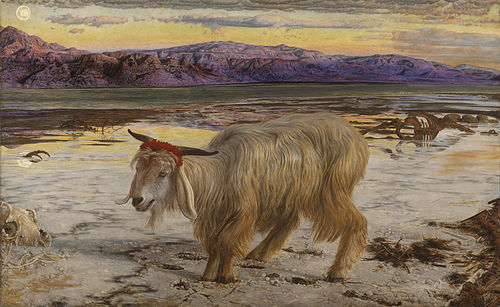
In this week’s Torah portion, we read about the original scapegoat. As part of the rituals for collective atonement, Aaron the High Priest gets two goats and brings them into the tabernacle. They pick straws for the goats.
The lucky one is to be sacrificed for God. Onto the lucky one, Aaron ceremonially transmits all the sins of the Israelites, then chases it out into the wilderness. As it scarpers off, the scapegoat symbolically carries away all of the Israelites’ misdeeds.
The biblical narrative describes a psychological trick we can all play on ourselves. When we are ashamed of something inside ourselves, we take all that fear, turn it into hatred, and throw it at whatever unwitting bystander will carry it.
Is this not precisely what Britain has been doing to trans people?
Gender is changing. The roles of men and women are shifting dramatically. There are so many new ways to live gender, to express ourselves, and to talk about our identities.
Rather than embrace these changes and think about what opportunities they can afford us all to be more free, reactionary parts of British society have whipped up a concoction of bigotry and thrown it all at trans people. Every anxiety our bigots have about gender has been exaggerated and projected onto one small part of the population, who have been turned into monsters through these prejudiced eyes.
It makes sense that people will find social changes scary and destabilising, but why should trans people bear the brunt of those fears?
A few years ago, I went to hear a panel of esteemed Jewish leaders give a retrospective talk about the ordination of gay, lesbian, bi and trans rabbis. On the bimah was Rabbi Indigo Raphael, Europe’s first openly trans rabbi.
In his opening words to the congregation, Rabbi Raphael proclaimed: “I am a transgender man. I am not an agenda; I am not an ideology; and you can’t catch trans by respecting my pronouns.” The room immediately erupted into applause.
He should not need to say it. He shouldn’t need to defend his own existence, but such is the level of moral panic in parts of Britain that he has to assert his right not to be scapegoated before he can even teach Torah.
In the last few weeks, trans people have been subjected to legal rulings and government decrees that may make their lives unlivable and keep them from basic participation in public life. Like the goats of the ancient world, they are being cast out into the wilderness to carry away all of people’s fears.
It should not be this way.
When we feel like scapegoating others, the best thing to do is look inside ourselves. We need to face our fears and work out why others bother us. The chances are, it’s something in ourselves that we’re not happy with, and when we need to get right with our own souls.
When we get to know those we “other” we get to know ourselves better. And when we realise we can like the difference in others, we learn more about what we can like in ourselves.
Reflecting on this, Margaret Moers Wenig, an American Reform rabbi wrote an essay called “Spiritual Lessons from Transsexuals.” She talks about how knowing trans people has enriched her own spiritual life.
Interacting with trans people, Rabbi Wenig says, has taught her that all of us can craft our bodies as we will; we are all more than just our flesh and blood; we have living souls that can differ from others’ assumptions; that only God knows who we truly are. These are wonderful lessons that can only be learned when we turn away from fear and embrace curiosity.
They chime with my own experiences. At first, knowing trans people made me question myself. If gender is something we can change, am I really a man? With time, seeing other people embrace their gender and become who they are has made me feel far more happy in my own gender. I am a man, and I like being a man, and I like being an effeminate man.
When we turn away from fear, we see that we have no need for scapegoats. The parts within us don’t need to be divided up so that some are holy and others need to be chased out into the wilderness. Every part of us is for God.
The world has more than enough hate. It’s time we swapped it for loving curiosity.
After all, Surrey, it turns out, is rather lovely.
An adult couple accidentally runs over their pet dog. Instead of burying their dog in the garden, they take it home, cook it in the oven, and eat it.
Here’s the question: have they done something immoral?
Most of us will have an instinctive reaction: what that couple did was disgusting. We will feel some revulsion.
But whether you think it was morally wrong will depend on how you see the world. It will depend on your moral palate.
This was what was demonstrated by the Jewish-American psychologist, Jonathan Haidt, in his popular book, The Righteous Mind.
Haidt sought to find out why it was that caring, rational people could disagree so profoundly on moral issues. Why was it that America was so polarised? There, people fight furiously about issues like abortion, guns, and marriage, as if they have no common moral basis.
Haidt argues that we do have shared moral bases, but our morality is more like the palate on our tongue. “We humans all have the same five taste receptors, but we don’t all like the same foods,” he says. “It’s the same for moral judgments.”
We have, he says, five main taste receptors: care, fairness, loyalty, authority, and sanctity.
If you are an educated person who lives in an urban area of a Western capitalist country, you are likely to feel that the couple who ate their dog did not do anything morally wrong. You’ll be disgusted, sure, but you might not think that they violated any kind of moral rule.
That’s because, in these cultures, people have a moral palate that puts a big emphasis on ethics of care and harm. If nobody was hurt, then there’s nothing immoral.
If, however, you live in a close-knit community of farmers, you are far more likely to say that the couple who ate their dog did do something morally wrong. That’s because those cultures have a strong sense of sanctity and taboo.
Both of these systems are ways to help people get on with each other. In a busy metropolis like London, you need to be able to live and let live, because if you can’t tolerate diversity, society will fall apart. In a tribal farming community, like ancient Israel, you need to have strong social norms to protect people.
Both these impulses – care and sanctity – come from a deep, ancient social need.
Since humanity’s beginning, our survival has depended on our ability to care for our most vulnerable members. How would we have lasted a single generation if not for looking after the young, the old, and the vulnerable?
From the start of civilisation, we have also needed to be able to express disgust. It comes down to the most basic distinction between excrement and edibles. We need to tell each other: “this food is poisonous; this disease is contagious; this behaviour is dangerous…” Without clearly agreed boundaries and taboos, we would quickly perish.
It is worth holding these two tendencies in mind – care and sanctity; purity and justice – as we approach our readings for this week.
Our Torah portion goes into minute detail about how to do proper sacrifices, how to lay out the Temple, and who is supposed to do what in religious services. To us, the attention to detail might seem absurd.
But remember that this is part of a group of people’s moral palate. This is their sense of the sacred. Messing it up, from their point of view, would be ethically disastrous. It would be similar to eating the family pet.
No wonder, then, that the prophet Ezekiel opens the haftarah by telling the Israelites “if they are ashamed of all they have done, make known to them the design of the temple.” Failure to get it right, says Ezekiel, is a serious sin.
There are two great moral impulses in Torah: justice and purity. This trend appears throughout the whole Scripture: contradictory, competing moral voices speak through our books.
The voice of justice tells us about care and compassion. It tells us about fairness and redistribution. The voice of justice charges us towards more equality and more freedom. Justice says that a society is only as strong as its weakest members.
The voice of purity tells us about how to keep holy things sacred. It tells us what the boundaries are on sex, so that we do not cross them. The voice of purity tells us not to eat octopus and not to mix linens. Purity makes sure everything is kept in its proper place, so that society can function, and people feel safe.
The voice of purity might feel less relevant to us today. We celebrate the prophets for their concern for the most vulnerable, because it fits so well with our ethics of care. We see ourselves in the narratives of the exodus because they chime with our moral intuitions about freedom from slavery. Laws on architecture… feel less like big moral issues.
That’s because what the big taboos and boundaries are can change a lot between time periods.
When I was growing up, one of the big focuses of popular disgust was gay men. There was a long period when the media was seemingly obsessed over sex between men, especially in public toilets. This was the full gambit of taboos: waste and excrement; sex between the wrong sorts of people; and blurring the boundaries between public and private.
I think that is why some of the things that cause people moral disgust today just don’t bother me. I have had to push through a society telling me I was disgusting, and unlearn that contempt towards gay people. Now, the other sources of disgust just seem like passing fads.
Knowing that has helped me understand where others are coming from.
I find Haidt’s ideas about moral palates really helpful for thinking through why sometimes it’s hard for people to agree. My ethical taste buds are highly attuned to care and fairness, but I don’t get much flavour from sanctity, and I can barely taste authority.
Please do not think that one of these is left-wing and the other is right-wing. There are plenty of conservatives deeply motivated by wanting to make sure people are cared for and that distribution is just. There are just as many socialists who want to ensure the purity of the Marxist tradition, and to live in a world without contaminating ideas or contaminating people.
What we morally feel is not just about ideology, but about all the factors in our cultures and upbringing that make us need to focus on certain values.
So, this is my advice. The next time you encounter someone that you really disagree with, try not to assume they are evil or weird. Think back, instead, to this Torah portion. Maybe what is just a building to you is somebody else’s Temple. Maybe what really triggers one person just doesn’t impact you.
Haidt’s goal, when he did this study, was to make it possible for people to talk to each other across divides. I don’t want us to become like America, where some issues cause massive wedges between neighbours.
So let’s try listening to each other, and hearing each other’s worldviews.
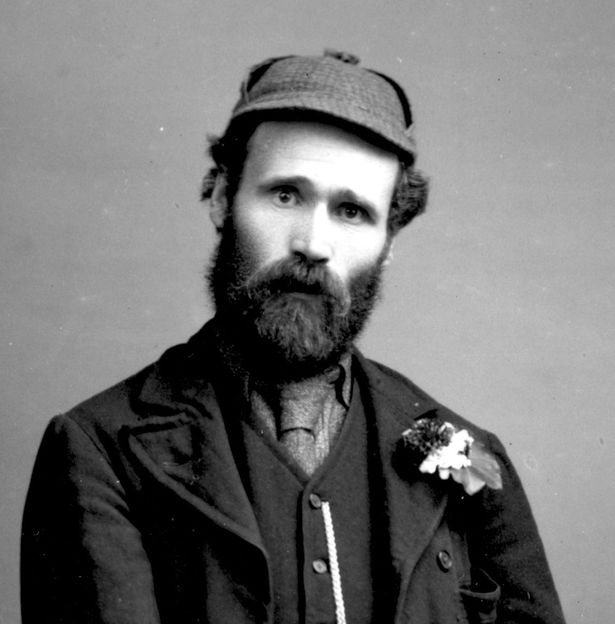
When Keir Hardie set up the Labour Party, he broke with many of the radicals who had preceded him by trying to organise his efforts where working class people really were: in the trade unions and the low church. He reached out to people in both their chapels – the ones where they organised their workplaces, and the ones where they organised their communities.
Since that time, both the trade unions and religious organisations have greatly declined in British public life, and in both cases we’re worse for it. Those traditional ways for people to meet, share culture, build up solidarity and envision a better future have been completely eroded. We’ve been left open to the worst austerity, neoliberal privatisation and attacks on the rights of marginalised people that we’ve ever known. Our lack of organisation and community has meant we’ve been constantly on the back foot, struggling against forces much stronger than us.
On the left, everyone acknowledges the decline in trade unionism for what it has been: a massive setback for working-class organising, an onslaught that has left us weaker, more divided and more isolated. But, to listen to some on the left talk, you’d think that the decline of religion was somehow a victory for our side. Millions of Britons no longer know their neighbours, no longer have any idea about the births, deaths, illnesses, tragedies and joys that are going on in their communities. Young people grow up without any access to traditional songs, stories and culture that was central to previous generations and instead only get the official versions of history. They learn that Churchill and Thatcher were heroes, but they never hear about the religious movements that shaped the country they live in, like the Chartists, Levellers and Quakers. People have completely lost connection to their community, and we’re supposed to somehow celebrate that as an accomplishment.
Keir Hardie
Absolutely not. Religion isn’t the dark force that it’s been painted, but has been one of the greatest forces for progress and radical change. Keir Hardie recognised that. Socialists of previous generations were able to see the positive role religion could play because they were able to draw a necessary distinction. I say that Kier Hardie organised in the low church, because that’s where he was. He didn’t go out to the priests and the bishops and the high-ranking officials who’d latched on to state power. He was interested in the lay preachers. And that’s because there is a crucial difference between religion as it is imposed from above and religion created from below.
Like with all forms of culture, religion can go one of two ways: it can be a bourgeois, reactionary force that bolsters the forces of power, or it can be an emancipatory, proletarian force that empowers people to challenge systemic violence. I am not here to defend Iranian morality police, Bush’s crusader Christianity, the violent Islamophobia of India’s BJP, still less Kahanists in Israel. I do not want to defend religion’s connection to that kind of politics in any way.
But we need to be clear: the problem with connecting those politics to religion isn’t with religion itself, but with the politics we connect them to. I don’t want religion to play a role in the state – I want to abolish it. I don’t want religion to play a role in war – I want to abolish war. I don’t want religion to play a role in capital, the police, imperialism or the structures that uphold patriarchy, because in every case I want to abolish them.
The politics I’m interested in is politics from below – the struggles of working-class people, women, LGBT people, colonised, enslaved and massacred people to realise their own destinies and take control over the world. I think religion can play a very positive role there. It has done throughout the ages, and religion can continue to be a source of strength for all oppressed people.
When I talk about this religion for oppressed people, this isn’t an innovation. I’m not taking the message of religion and twisting it to meet my own ends. Quite to the contrary: combating oppression has been built into the meaning of religion since its inception. The earliest written religious texts, the Hindu Vadics, bring together a worldview that opposes all forms of systemic violence, from state warfare to animal consumption. The Torah is the story of rebel slaves turned refugees trying to build a just society. The prophet Amos denounced the ruling class of ancient Judea for stealing the spoils of the poor and hoarding them. The prophet Isaiah tells the rich that their prayers are worthless because they exploit people while they deliver them. Jesus comes to take direct action against money-lenders and the hypocrites that collaborate with a colonising army. The Talmud is a lengthy exegesis in how to bring anti-oppressive practices into every part of a person’s life. The Prophet Muhammad comes to affirm the unity and dignity of all of humanity, and to insist that people are treated as if they all contain the spark of the divine. Sikhism tries to break down all the barriers that differentiate religions, genders and ethnicities into one universalising faith. Religion, at its core, is anti-oppression. Don’t the politicians know that the God they claim to believe in despises them and their prayers?
Holy texts are brimming full of admonishments against the ruling class. Reactionaries leap on passing references to sexuality and gender difference, separate them from all context, and use them as a pretext to persecute people. They take what is a radical idea, focused on bringing about the kind of change socialists want to see, and they manipulate it to suit their own ends.
But everyone needs to see that the religious tradition of speaking truth to power is much better represented by our heroes than by our enemies. It’s represented by all the religious activists who worked to end slavery, the ones who fought for democracy and debt relief, the anti-colonial fighters and the indigenous revolutionaries. They represent that prophetic tradition.
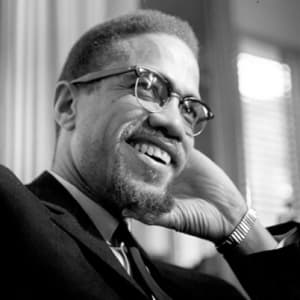
Malcolm X
Two key people from the Black civil rights movement come to mind here: Malcolm X and Martin Luther King. Malcolm X – a Muslim minister in the slums of Chicago and New York, Martin Luther King Jr, a Christian reverend in America’s deep south. Both of them built their organising around their religious institutions and the deep network of Black faith communities across the USA. They based their activism around their religious buildings, religious texts, and religious traditions. Are you going to tell me that they didn’t play a positive role in politics?
It’s not like they could have done what they did without their religions either. Certainly they couldn’t have turned to the unions. At that time, the white-run unions were mostly fighting against black inclusion in workplaces and were trying to uphold segregation in places. They could be racist, reactionary lobbies, and their record of beating up protesters against the Viet Nam war and siding with anti-miscegenation politicians shouldn’t be quickly forgotten. That’s the context in which they were organising, and it was the religions that gave them the strength as a group to fight for their rights.
More than that, the turning point in the struggle for civil rights was when the white religious leaders from across the country came down to join the Black protesters in Selma, Alabama and showed that the weight of public opinion and that the moral voice of the country was firmly on the side of those protesters. The Patriarch of the Orthodox Church was on the frontlines, alongside the head of the Jewish Theological Seminary, Rabbi Abraham Joshua Heschel, who said “when I marched, I felt that my feet were praying.”
When religion is in the hands of the working-class, and when it is used as a fountain for oppressed people to draw strength from, it is a powerful and challenging force. But if you pour scorn on religion, and you say that it’s irredeemable, you hand over religion to the bigots. If you say you don’t want anything to do with it, then you’re leaving that source of power to be controlled by reactionaries. No wonder people wind up believing that God is a homophobic, misogynistic, capitalist demon if you completely disavow religion and leave it in the hands of the right.
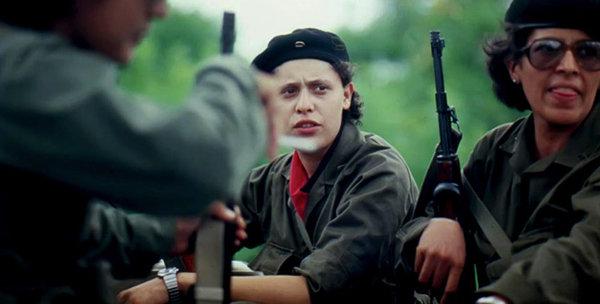
Socialists who have engaged with religions have seen incredible success. When the Latin revolutionaries, the Sandinistas, started out with atheistic, anti-religious Marxist arguments, they remained an isolated minority who had no relationship at all to the people. The ultimate success of the Nicaraguan revolution only came about because of the rise in liberation theology and the willingness of socialists to engage with the church.
Sandinistas
Vatican II of 1959 wanted to see the church more closely aligned with the poor and, as part of implementing this, Catholic activists set up “Christian base communities” rooted in poor favelas. These were the first platform from which poor communities could start organising against the capitalist authoritarian Somoza regime in Nicaragua, and it was not an accident. Church theologians of Latin America wrote explicitly about their need to bring their religious beliefs to a political mission. Liberation theology saw that the things most despised by Christianity: individualism, competition, materialism and greed were, in fact, integral to capitalism.
High-ranking bishops and the papacy were, of course, hostile to the work of these low-level bishops and sided with the regime. The upper echelons of the church had to come into direct conflict with their own members initially, but by 1977, the grassroots Catholic activists had been so successful in transforming the church that when Somoza’s newspaper Novedades asked the church to clarify its position, even the high-ranking officials were forced to side with the bishops against what they called institutionalised violence and inequality.
These are not just interesting facts from history – they have a strong bearing on the present day. In my own organising in the Jewish community, I’ve seen how religions can play such a powerful role in activism. Synagogues have preserved the memory of what it meant to be refugees, how Jews came to this country hidden in the bowels of boats and rushed out on the last trains from Germany. This memory has been preserved so well in our religious institutions that, when the migrant crisis came to public attention, the Jewish community was at the forefront of offering help and refuge. Every synagogue in the country had collection points for aid to refugees. Key shuls in every area now have drop-in centres that provide free help and legal aid to asylum seekers. Young congregants drove out to deliver these aid packages and came back embolded and enlightened. I attended a service at an Orthodox synagogue where one such member came back, agitating in her community to lobby for rights and safe passage for refugees. South London Synagogue has organised for over 200 child refugees to be brought over from Calais and housed here. The Jewish community is not alone here. Religious institutions have played a powerful role in demanding an end to poverty, quality council housing and opposing racism. This is the reality of what religions in Britain today do.
I’ll say it again because it needs stressing: I’m not here to defend the religion of the ruling class – whatever form it takes. I’m here for radical religion that stays true to the message of fighting for justice. There is no doubt that awful things can be carried out in the name of religion, but just a cursory glance at history tells us that people are perfectly capable of carrying out the same atrocious acts without religion.
Religion has been associated with violence when it’s been connected to state power and reactionary movements. There’s no doubt about that, but to suggest that it has some kind of connection to religious belief itself is completely ahistorical. Haven’t Stalinist gulags, Maoist terror and the genocides of Cambodia and Nazi Germany shown us that people are perfectly capable of committing the utmost evil without religion? The modern states of France and Turkey are perfect examples of how secularist ideology can be just as violent, colonialist and corrupt as any state that calls itself religious. The problem is capital. The problem is the state. The problem is the military. The problem is certainly not God.
The task of religions is to keep alive that moral, prophetic voice that insists on radical equality and seeks to transform the world. It would be a disaster to throw out all that religion has done to transform the political sphere for the better, solely because fundamentalists and puritans have hijacked it. Religion belongs to all those who practice it – and the faith of left-wing revolutionaries is far more sincere than that which connects itself to state power, capitalism and authoritarianism.
The central message of religion – of all religion – is a radical one that every socialist can support. It is that there is a force much greater than anything we can conceive; that though we are small in the grand scheme of the universe, our lives have meaning. Every one of us is indowed with a spark of the divine. The existence of God makes us all equal – in a profound and spiritual way. Religion challenges us to see that all of humanity is one, everyone deserving of dignity, and to bring that claim to life in the world. It is a call to action – to overthrow the Pharoahs of the world as Moses did; to cast out the demons of legions as Jesus did; to demand rights for widows, orphans and disabled people as Mohammed did; to resist sectarian violence as Guru Nanak did.
Faith can give us the courage to fight for a better world. Thank you.
I gave this as a speech at Ideas for Freedom, the annual conference of Alliance for Workers’ Liberty, a Marxist-atheist sect, back in July 2016. There were two other panelists, arguing that religion could not play a positive role in politics. My speech was not well received.
I doubt I could get away with making the same speech today. My teachers would definitely chastise me for over-simplifying matters, making sweeping generalisations, going off on random tangents, and flattening out history. I stand by, however, the central idea, that religion has a radical core, rooted in resistance. I doubt any of my teachers would question that this was a legitimate and necessary expression of religion.
I was moved to upload it by my brother, with whom I spent a long time discussing this topic over the winter holidays. He asked that I write up some of my ideas, and I remembered that I already had. I will speak on a similar theme, albeit to a very different audience, when I preach this coming Shabbat in Newcastle.

 Sim Lev