high holy days · judaism · sermon

It is time to tell a different story about ourselves

It is time to tell a different story about ourselves.

We are writing a story about our lives right now.

On Rosh Hashanah, our story is written. On Yom Kippur, the story is sealed.

What, then, are we doing today? 

This morning, we are editing. We are looking over our story and choosing what to keep and what to discard. What to highlight and what to relegate to the footnotes.

Of course, we cannot change the events of our past, but we can decide what they mean. In writing our story today, we choose what role we played in the narrative of our own lives. 

When you tell this story, are you a victim, or a villain? A saviour or a sinner? 

Look at your mistakes. The way you tell your story will help you decide whether they were a defining part of your personality, or whether they were opportunities you took to learn and grow. 

Look at your suffering. Others have hurt you. You need to tell your own story of what that pain means. You need to decide if your suffering is the sum of your life, or if it is something you overcome. 

You are writing the story of your life right now. Be careful how you tell it.

In our Mishnah, Rabbi Yehudah HaNasi teaches: “Apply your mind to three things and you will not come into the clutches of sin: Know that there is above you: an eye that sees, an ear that hears, and all your deeds are written in a book.”

But here is what the Mishnah does not tell us:

The eye that sees can see more perspectives than we can.

The ear that listens knows all hearts in ways we do not.

And, most importantly, the book is constantly being edited and re-written.

We are always re-writing the Book of Life with our God, and that means we have the power to shape our story.

We cannot imagine that God’s eyes and ears are anything like ours, or that God writes a book the way we would. The story that an Infinite Being has to tell about you must be incomprehensible from your perspective. 

When we tell ourselves our story, we are biased, seeing only our perspective. Our narrative is partial, not knowing what others really feel.  Our account is unreliable, because we tell it to fit the character we have already made of ourselves. 

God, on the other hand, sees not just what we did, but what we hoped to do. God says to the prophet Samuel: “I do not see as human beings see; human beings see only what is visible, but I see into the heart.”

God instructs the Prophet Isaiah: “Whenever anyone turns back to Me for pardon, I freely forgive, for as the heavens are high above the earth, so are My ways high above your ways, and My plans above your plans.” 

God is able to see errors in ways we cannot. And God can understand our pain in a context that is beyond us.

This is because God is telling a different story about you to your own.

In God’s plan, you are the main character. Of course, so is everyone else. 

But that is because God has written a great novel where every creature has a vital role to play. No character could be introduced if they did not have a role in the great unfolding tale that progresses towards goodness’s triumph over evil.

So, today, look at the manuscript of your life. Decide what you want to focus on. Tell yourself stories of gratitude and joy. Consider the events that have given you pride and a sense of accomplishment. 

Look, too, at the stories in your life that are hard. Re-tell the stories of where you have been hurt, and decide for yourself what meaning you take from them.

Re-examine the stories of when you have hurt others, and decide what changes these will bring for you when you enter your next chapter.

In this way, you can take control over the story of your life. 

You cannot change what happened, but you can decide what it means. 

Only you can decide how your story ends.

Treat God as your co-editor, rather than as the author of your destiny.

For some of you, the story I have told so far is too wrapped up in religious language. You cannot get on board with all this God-talk, and the quotations from Scripture prove nothing. 

Let us turn, then, to the science of psychology. 

Over many decades, psychologists have experimented with what makes for a good life. We now have more data than ever about how people forgive. We understand a great deal more about how to overcome trauma. And we know what motivates people to live better lives.

I am going to assume that, if you are here on Yom Kippur, you came because you want to let go of some past hurt, to repent of things you have done wrong, and to live a more fulfilling life.

The Scriptures tell us how to do this, but the language they use may feel too alien to the modern mind. The sciences, however, can corroborate the same claims.

Dr Fred Luskin runs the Stamford University forgiveness project. His team has researched the best methods to help people overcome their grudges and live more fulfilling lives. 

He has tried out his techniques for helping hundreds of people forgive, including in the most extreme cases, like mothers whose children were killed in sectarian violence.

His book, Forgive for Good, is an accessible version of his research.

Dr Luskin teaches that our inability to forgive comes when we tell ourselves a “grievance narrative.” 

You may have such a story yourself. If you keep coming back to an event in your life where you were wronged and replaying it, you may be stuck on recalling a past hurt. If, in this story, there is a clear villain, and you are a helpless victim, the chances are you have a grievance narrative.

Don’t worry, you’re not alone. Many people do. 

I began reading Dr Luskin’s book out of academic curiosity, but soon found I was noticing my own grievance narratives. Some of them went right back to old hurts in school. I looked over some of the stories I had about my own life, and found they did not serve me.

Dr Luskin says that the key to getting out of the trap of these painful stories is to consider how you tell them.

First of all, decide how much space in your mind you want this story to occupy. Yes, you have been hurt, but do you want to keep letting those same people hurt you by giving them unlimited air play in your head? 

One way forward is just to change how much you think about them. Rather than letting them be the main character in your story, focus your internal account on your own successes and joys.

Secondly, consider how you are telling your story. If you have a grievance narrative, the hurt you experienced may determine everything that comes after. 

You were wronged, and that may have a lasting impact. But is it not also true that you survived, overcame, and learnt from the experience? You have the power to tell the story so that you are not a victim, but a hero.

None of this means pretending that pain doesn’t hurt, or that the wrongs others did were not wrong. Quite on the contrary: in order to move on with anything, you have to be able to say how wrong it was, and what it made you feel. 

The difference is that you get to decide what it means. You can decide whether someone else has written your story for you, or whether you are your own author. You can choose to focus your attention on your own pride and resilience.

Just as our faith tells you to pay attention to how you tell your story, so, too, do the psychologists. The story you tell can help shape how able you are to move on from past pain and be a better person.

This is true, not just on the individual level, but also at the collective level. The stories we tell about Jews are the stories we tell about ourselves. What is the story we tell about ourselves as Jews?

There are plenty of stories out there about us. There are stories where we are perfect victims, forever blameless for the suffering we endured. There are stories where we are bloodthirsty brutes, responsible for the worst evils in the world. 

Both of these stories deny us agency. These stories turn us into history’s stock character, whether as martyr or as monster. They deny Jews the ability to do what everyone else does: to hurt others, to learn from our mistakes, and to become better people. They strip us of the opportunity to grow and change.

We need, therefore, to think hard about what the narrative is that we are writing about Jews.

Rabbi Dr Tirzah Firestone sits at the intersection of spirituality and psychiatry. Firestone began her career as a psychoanalyst, then came back to the religion of her birth, embraced Renewal Judaism, and became one of its leading rabbis.

Firestone grew up with Holocaust-surviving parents. She felt that she and her siblings inherited great trauma from her family, and from the stories they told. Or rather, did not tell. Much of their former life escaping genocide was clouded by secrecy. The stories her father did tell were of persecution: that the non-Jews inherently hated Jews and would destroy them at every opportunity.

As a therapist and rabbi, Firestone urgently felt the need to tell different stories about Jews. She insists: “Identifying ourselves as victims freezes our focus on the past, and therefore forecloses our future.”

This does not mean pretending that Jews have never been victims. We need to face up to the traumas of Jewish history, including Shoah, pogroms, and persecution. Ignoring them, and refusing to tell the stories, can actually exacerbate the transmission of trauma.

What we need to do, says Rabbi Firestone, is honour Jewish history without internalising the harmful aspects of Jewish trauma. 

We need to remember that, as Jews, we have collective power. We are able to influence the world, and not just subject to the vicissitudes of history. We must claim our agency, and take ownership over what happens to our future. 

Most importantly, says Firestone, we should draw connections with others suffering from persecuting systems. By making these links, we strengthen ourselves, support our neighbours, and find positive meaning out of difficult circumstances.

We must, therefore, tell a new story about Jews. A story where we are survivors, who have been hurt and used creativity and resilience to overcome our pain. A story where we are complete human beings, who can hurt others, and who can repent and change. A story where our story connects to all of humanity for the sake of a shared future.

The story we are writing does not have to be one where we are always victims, nor incomparable monsters. We can create a narrative that acknowledges our past, honours it, and uses it to direct us towards a more positive future.

On Rosh Hashanah, our story is written. On Yom Kippur, the story is sealed.

We are writing a story about our lives right now.

Today, with the help of God and this sacred time, write your story.

Write a story you can be proud of. Write a story where you have the power to do better. Write a story where you overcome your challenges.

The events of your life so far have already been written. What they mean is up to you.

Gmar chatimah tovah – may you be written in the Book of Life for good.

Yom Kippur Shacharit 5786

judaism · sermon

How to be a Jewish man

וּבְמָקוֹם שֶׁאֵין אֲנָשִׁים הִשְׁתַּדֵּל לִהְיוֹת אִישׁ

Pirkei Avot 2:6

“In a place where there are no men, strive to be a man.”

This is one of the central teachings of the founder of rabbinic Judaism, Hillel. You may know him better from his famous aphorisms “treat others as you would be treated” and “if not now, when?” This one gets quoted a little less. Perhaps it is because we instinctively recoil at the expression. It brings to mind those horrible exhortations to “man up.” 

So uncomfortable are we with the idea that some have reinterpreted the verse as “in a place where there is no humanity, strive to be human.” We want to make it gender-neutral, so as not to exclude over half of the Jewish population. But it seems to me that the verse means what it says: “in a place where there are no men, strive to be a man.” 

This is a teaching about masculinity, and it comes with Hillel’s own manifesto of what it means to be a Jewish man:

A brute cannot fear sin; an ignorant person cannot be compassionate; a lazy person cannot learn; an angry person cannot teach; and a money-grabbing person cannot become wise. 

These are the qualities of masculinity Hillel is seeking to impart: be conscientious, not brutal. Be loving, not bigoted. Be studious, not idle. Be generous, not rash. Be sagely, not greedy.

This is a far cry from the image of manhood many of our boys are receiving. 

This week, I want to talk about manhood and masculinity. I must, therefore, apologise to the rest of the room, because, in many ways, this sermon is mostly for the men. I hope, however, that the women and non-binary people in this community will appreciate that this is coming from an urgent need to intervene in ongoing conversations directed at teenage boys in Britain. 

Every few years, a new figurehead emerges for an unfolding crisis of masculinity. Their goal is to bring back an imagined past of burly blokes who hunted animals, chopped wood and went to war. Right now, their leader is Andrew Tate – a man who looks like he stole the entire Russian Olympic swimming team’s supply of steroids. 

Tate is a famous YouTuber, determined to restore what he sees as masculinity lost to a war on men. He wants a return to men’s “natural instincts” as territorial, violent and unemotional. He advocates for men to adopt avarice and aggression to bend the world to their will. His advice to his subscribers is to control, manipulate and stake ownership over women. 

He has even forayed into the world of theology, saying: “Read the Bible, every single man had multiple wives, not a single woman had multiple husbands. It’s against the will of God.” This is his justification for having multiple “girlfriends” whose passports he has confiscated and made to work for him in scam call centres.

This misogyny is taking a sinister hold on our youth. A study carried out only a few months ago found that 8 in 10 British teens had watched his videos and nearly half had a positive view of what he had to say. Increasingly, schoolteachers are raising alarm bells about boys being radicalised into sexism.

We have to be honest. If boys are looking to answers like these, it is because they are confused about what their role is in our society. We have to be able to answer them with better values and better role models.

Let us look at the example of Moses. Early on in his story, Moses witnesses a slaver beating an elderly Israelite. According to our Torah, Moses looked this way and that, saw that there was no man, and beat the slaver back. Our tradition asks: what can mean that Moses saw no man? We know that everyone saw what Moses did. 

Rather, he saw no man in the sense that Hillel advocated. He saw nobody who cared enough to do anything. The rabbis rebuke Moses for his violence, but praise him for his motivations. What made him a man, in this setting, was that he burned with compassion, even for a complete stranger, and the lowliest in society. His masculinity is defined by his sense of love and justice.

Right now, Andrew Tate is going through the judicial courts in Romania for human trafficking, sexual exploitation, and violence against women. Tate is nothing like what Torah imagines to be a real man. He has literally taken on the role of the slaver. He is everything that God sees as contemptible and wrong.

In this week’s parashah, Moses warns the Israelites not to become like the other nations. He insists that Israelites must not be seduced into worshipping what others worship or valuing what they value. Their practices, Moses warns, burn their sons and their daughters. So it is with the misogyny we see here: it might look alluring to some, but are ultimately destructive.

According to Professor Daniel Boyarin, one of the world’s leading Talmud scholars, Jewish masculinity has always been articulated differently. In Eastern Ashkenaz, the ideal male was gentle and pale, buried in books, concerned with sensitivity and kindness. They imagined the non-Jews, by comparison, as brutes. Their boasts of success in domination of women, land, and resources were dismissed as “goyishe naches.”

For most of Jewish history, women have been the primary breadwinners in households. This is still the case, especially in the most traditional communities. Eastern European Jews prized many of the things that non-Jews saw as feminine traits. They were musicians, gardeners, candle-makers, tailors, and translators. Our Christian neighbours were so surprised by Jewish men’s commitment to housework and childcare that it was even a common rumour among gentiles that Jewish men menstruate. 

Think about this in the context of the bar mitzvah, and what we do to turn Jewish boys into men. They are set the task of learning a new language, and mastering a section of holy text. We get them to talk about how these words make them feel, and treat their ideas as if they matter. We send them on expeditions to do charity work, getting them to raise money, visit the sick and care for the elderly. We encourage them to lead the community in prayer. These are the values of traditional Jewish masculinity: scholarly, thoughtful, emotional, charitable, and caring.

Professor Boyarin is keen to be clear that this does not mean Jewish masculinity is unproblematic. After all, we, too, have operated a patriarchal society, and it is still an ongoing struggle, even in Reform synagogues, for us to produce gender-equal communities. 

Personally, much of my own journey over the last three years has been to learn that being a man is not just about self-sacrifice, but must also include self-care. I had imagined my only role was to provide, and didn’t know how to receive. I have had to learn to talk about feelings with trusted friends, include my own needs in important decisions, and strive towards open dialogue. This is hard, but I recognise that this is part of the work of becoming a good Jewish man.

I know that there are many men in this community who have been on similar journeys. I see the way you love your families; how you treat discussions with reasoned compassion; how you have spent your lives perfecting your professional crafts; how you seek to model your lives on Torah teachings of gentle wisdom.

That is why this is a heartfelt plea to the men in the community to talk with teenage boys in their lives about what being a man means. Teach them what you have learned about respect, tolerance, and sensitivity. Talk to the boys. Because somebody else is talking to them, and you would be horrified by what he is saying. 

And if his ideas infect the minds of our youth, we will lose our nice Jewish boys. And then there truly will be no more men. 

So, in a place where there are no men, strive to be a man. A loving, kind, generous, sensitive, and gentle man.

Shabbat shalom. 

festivals · high holy days · sermon

From an open roof to a closed scroll

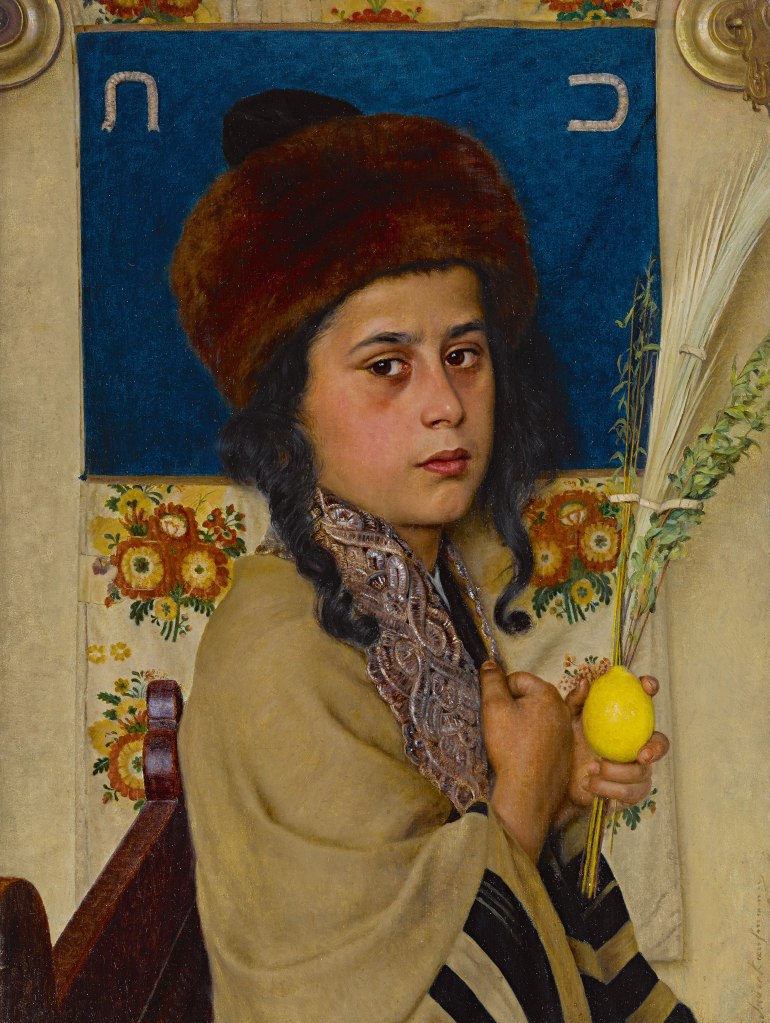
We are nearing the end of Sukkot and entering Simchat Torah.

We move from fragility to strength, from an open roof to a closed scroll, from the impermanence of life to the eternal truth of God.

What makes a sukkah kosher is its frailty. With its open walls and starlit roof, it stands in for all our wanderings and confusion. It is makeshift and temporary.

In its fragile state, it teaches us about the human condition: that we are vulnerable, at the whim of forces beyond our control. Into this transient home, we bring guests, both living and ancestral, who teach us that we only live by community. 

The sukkah teaches us about the human heart: that it must be open and porous, welcoming to strangers, able to let others in and accept our own emotional helplessness.

But the sukkah also has another feature of what makes it kosher. It must be able to stand for eight days. It must be strong enough to withstand the weather. It cannot be drowned by rain or upended by windstorms. 

This, too, teaches us about the spirit. We must be resilient. We must be confident enough to know our boundaries. We must be strong enough not to let others wave or topple us.

This is the tension we hold in the transition between Sukkot and Simchat Torah: between fragility and strength.

There is a story that Abraham’s tent was open on all sides. 

Wherever Abraham looked, he could see whether strangers were coming to visit him.

If he looked out and saw them coming, he would run to meet them. Abraham was the model of generosity, so full of love for the wayfarer that he would do anything to let them in.

This explains why he greeted the angels who came to visit him at Mamre so enthusiastically, even though he thought they were just human beings. It explains how he was righteous enough to receive God’s blessing, and to become the progenitor of monotheism. 

This is the version of the story that we find in Bereishit Rabbah, and you will find it printed in all sorts of commentaries. It is a beautiful myth that captures our imaginations and features heavily in sermons preaching charity. It teaches us about the importance of welcoming. 

But it is not the only version of the story in rabbinic literature. A few centuries later, Avot deRabbi Natan, a commentary on the same text, explains it slightly differently. Instead of the example of Abraham, this midrash says we should be like Job. 

It teaches:

Your house should have a spacious entrance on the north, south, east, and west, like Job’s, who made four openings to his house. Job opened up every side so that the poor would not be troubled to go all around the house: no matter what direction a stranger came from, they could enter in their stride.

At a glance, it tells the same story, just with a different prophet named. Job was also described as righteous and upright, a man who feared God and turned away from evil. 

But there is a difference. Unlike Abraham’s, Job’s house is actually mentioned as having four sides. How do we know? Because, at the very start of Job’s story a messenger comes to tell Job that his house has blown down. “A mighty wind swept in from the desert and struck the four corners of the house. It collapsed on the young people and they are dead.”

Job’s house was so open that it was destroyed and killed everyone in it.

Job’s house was open on all sides. No wonder it fell down!

This later midrash is satirising the earlier one. Sure, openness is good, but too much openness leaves you exposed. 

We have to exist, instead, in the tension between fragility and strength; between vulnerability and boundaries.

It may seem strange to preach boundaries from the bimah. Admittedly, it feels strange to me. 

I used to believe that openness was the ultimate religious value. That being hospitable and welcoming were the most important spiritual attributes. And I do still hold them in high regard.

But I am increasingly learning that it is equally important to have structural integrity, and borders, and lines that cannot be crossed. Without them, the entire structure collapses, and the people the structure was established to protect can be destroyed with it.

Sukkot teaches us to live with utmost susceptibility, but only for a short time. We must eat and sleep and live in this shaky fruity shack, exposed to all elements and strangers. It teaches us to put ourselves in harm’s way. 

But not forever.

At some point, the sukkah must come down. At some point, we must return to our own beds and kitchen tables and modern comforts. At some point, we have to hold on to something firm.

As we enter Simchat Torah, we turn to that certainty. That is our Torah, our faith, our belief in God-given moral truths. We grasp it steadfastly, and refuse to waiver from it.

Torah is our foundation. It is our immovable structure. There is some truth that we must hold on to tightly, never allowing it to be permeated or eroded. For us, that is our moral conviction.

The Mishnah instructs us to build a fence around the Torah. This commandment has been abused by some in Orthodoxy to justify always taking the most conservative approach, defending every law against the slightest leniency or adaptation. As such, Reform Jews have often poured scorn on the assertion, seeing it always as a reactionary threat.

But a fence is not the same as a wall. In fact, the word used in the Mishnah is siyag, which is closer to hedge. It is a boundary. It is a line that keeps some things in and some things out. It is a way of protecting the essence. 

That does not mean it has no ways in and no ways out. It just means that some things must be shielded. 

We are nearing the end of Sukkot and entering Simchat Torah.

We move from fragility to strength, from an open roof to a closed scroll, from the impermanence of life to the eternal truth of God.

We have learnt to be vulnerable and precarious. Now, we must learn to protect what we love.

Shabbat shalom.

Shabbat Chol HaMoed 5783, October 15th 2022