interfaith · sermon · torah

Do not hide the tears of tolerance


As some of you know, my kippah is a permanent fixture on my head, and has been since my early 20s. I often get asked whether I experience any feedback for being so visibly Jewish. My answer is: yes. Occasionally, Christians come up to me and say “shalom.” I say “shalom” back.

Well, this week, I have a more interesting story to tell.

Last Saturday night, Laurence and I were on our way back from a friend’s birthday lip synch. (Yes, in my time off, I do competitively mime to Nicki Minaj wearing a space suit and kitten heels.)

We were heading into Vauxhall Station. A group of men in their early 20s were dancing around, holding hands, and reaching out their hands for others to join them.

It will probably not surprise you to hear that I joined in. The boys cheered.

Within moments of joining them, I realised I might have made a terrible mistake. The man whose hand I was holding was, in fact, wearing a Palestine football shirt. They were all speaking Arabic. A taller man noticed my kippah and said to the others “hu yehudi.” I know what this means in Arabic, because you say it the same way in Hebrew: he’s Jewish.

And I thought, well, it’s basically the same language, I’ll try talking with them in Hebrew. Friends, these gentlemen did not, in fact, speak Hebrew. Their English was pretty stilted too.

Right next to us, a fist fight broke out between two white guys.

We all fumbled awkwardly, and tried to communicate across a language barrier. The tension became palpable. It was just me and Laurence and a whole group of Palestinian men.

I asked: “where are you from?”

“We are from Gaza,” the one who had been holding my hand said. “Do you support the government?”

I said: “of course not.”

The man said: “Really?”

I said: “Yes.”

The men cheered, and resumed dancing. I got on my train back to Ditton.

There was no time to explain that the Israeli government wasn’t actually my government at all, but my answer would have been the same whichever government he was talking about.

I am under no illusion that this story could have ended differently. But, as it is, the story ended with dancing in the streets of London, and everybody walking away with their dignity intact.

Now, I may have been the first visibly Jewish person these men had met who was not wearing a military uniform. And perhaps now, with the freedom of London, they will get the chance to learn more about who Jews are.

And perhaps I will go away and actually do my Arabic homework so that I can have a better quality conversation. At least, in the future, I won’t default to Hebrew as a good enough alternative.

I think we tend to imagine that tolerance is the true harmony of everyone fully understanding each other; living side by side; eating in the same restaurants; celebrating and grieving together.

I still believe that true peace will come, when everyone has full equality, and nobody has any more need for conflict.

But, most of the time, life is not like that.

As long as there is inequality, those with less will want what those with more have; and those who have more power will exert it over those with less. Until we all have everything we need, there will be conflict for the power and possessions we lack.

Tolerance, in our society, is the decision to set grudges aside, to suspend prejudice, and to just let each other go on with life. It is the decision of the stronger to spare the weaker. It is a choice to ignore stock characters and old grievances for the sake of everyone getting on with their day.

It is not easy passivity, but a conscious choice to accept the world as it is. Sometimes, that is painful.

So it is with Joseph and his brothers.

Consider all the array of feelings Joseph must have held when he first saw his brothers. The last time he had encountered them, they had thrown him in a pit, then sold him at a cheap price to travelling merchants.

Do you think he was in the mood for forgiving?

And what about his brothers? They are now in abject poverty. They have travelled miles on foot to escape famine in their homeland. And they have to prostrate themselves and beg before a foreign king in a language they do not understand.

The powerful and the powerless have switched places; the resources are now all in Joseph’s hands.

Joseph doesn’t just shrug his shoulders and get over it. Instead, he decides to test his brothers and bring his entire estranged family to Egypt.

Joseph hides a silver cup in his brother Benjamin’s satchel and uses the supposed theft as a pretext to hold him hostage. Joseph announces to his family that he is going to keep their youngest brother as a slave, making them relive what they did to him.

At the moment when our parashah ends, we don’t actually know how the story is going to pan out. We, who have heard this story many times, are already aware that the brothers will repent and offer their lives for Benjamin’s. We know that Joseph will announce himself and forgive his siblings.

But, for this week, we are suspended in the tests of Joseph and his brothers.

The Joseph narrative is the longest part of the Book of Genesis, not least because of the extensive detail given to Jacob’s sons’ journey back and forth between the two countries, and the lengthy description of how Joseph examines his brothers’ hearts.

This story is, in fact, repeated almost exactly in the Quran. Surah Yusuf is a lengthy narrative in the formative text of Islam. Within the chapter itself, the Quran says that it is repeating the words of previous prophets and is confirming the prior revelation of the Torah.

But there is a key difference between the Torah’s version and the Quran’s. In the Islamic retelling, Benjamin is in on the ruse from the start. Joseph reveals himself to Benjamin before hiding the cup and tells him to go along with the ploy.

Perhaps the goal here is to make Joseph seem more righteous. That is, indeed, what many of our midrash do when they retell Torah narratives. They iron out biblical figures’ imperfections.

But, if you look at the texts of the stories side by side, the parallel verse in the Torah reveals something more interesting. In our recension, rather than revealing himself, Joseph runs off to his room and cries.

The Quran’s version, then, makes the story less painful. It glosses over how heart-wrenching and difficult this process is of forgiving and letting go.

There is a lesson here for us. We all want to jump ahead to the part of the story where everyone is friends again and loves each other. We all want to fast forward to the point in history where there is lasting peace and harmony.

But, the Torah tells us, you have to stay in the feelings. You have to live in the mess for a while.

As Jews in Britain, we are forever doing a delicate dance of interfaith relations, while plagued by trauma. As the whole world seems ever more oriented towards intolerance and tribalism, we still need to show up to shared spaces with our best faces and our best expectations of others. We need to set aside prejudices for the sake of a better society.

And that is hard. So don’t gloss over the tears. Don’t hide the pain away in another room. Let us be honest with ourselves and each other that the task of building a multicultural society is tough.

But, while we hold the challenge, remember that we do still know how this story ends. We know that we are heading towards an ultimate conclusion of liberty and equality. God has a plan for the world. And it will end with true peace.

One day, all people will embrace one another as members of the human family. One day, we will all weep together over the years wasted on war. One day, without fear, we will all dance unabashedly in the streets.

May that time come soon and last forever.

Amen.

Alexander Ivanov, The Silver Goblet is Found in Benjamin’s Sack

israel · sermon · social justice

We must drag the sun over the horizon


In Judaism, night comes before day. The day begins when the sun sets and the first stars appear in the sky.

This has been the way of the world since its mythic origins.

In the beginning, there was endless darkness. Then God said “let there be light.” And there was light.

And God separated the light from the darkness. The first distinction. And the darkness God called night, and the brightness God called day.

And there was evening, and there was morning. A first day.

Having created nights and days, God populated them with matter. At the end of each period of creation, there was evening, then there was morning. Each day.

During the sixth day, God created human beings and placed them in a garden. Then there was evening.

The first human beings had never seen an evening before. They did not know that the sun could set. They did not know the difference between night and day.

What must it have been like for the first sentient beings to realise who they were and who their Creator was, only to see the sun disappear? How frightened they must have been!

Perhaps they called out to God and asked for guidance. But that evening marked the beginning of the seventh day, and God was resting. God did not answer them.

Our Talmud teaches that when the first human beings saw their first nightfall, they fell into despair. Adam feared that the sun had disappeared as punishment for his sin. He worried that the world would now return to the endless darkness with which it began.

Eve cried. She fasted and prayed. Adam and Eve wrapped their arms around each other and held their bodies close as they prepared for the end.

Then the dawn broke.

And they realised: this is the way of the world.

The world began in autumn, at the festival of Rosh Hashanah.

When the first winter nights crept in, and they saw the length of days decreasing, they panicked once more. Now in exile from Eden, they had no way of knowing what would come next.

Again, they fasted, wept, and prayed.

Then the spring came, and brought with it longer days.

And they realised: this is the way of the world.

We begin with darkness. Light follows.

There is evening. Then the dawn comes.

There is winter. And it always becomes spring.

This is the way of the world.

We can observe this dialectic in almost all matters of life. Our suffering is followed by joy. Our struggles are replaced by triumphs.

Some days feel like endless nights, but the dawn is always waiting for those who are patient for it. So we hold each other close and wait for the sun to rise.

This is the way of the world.

These trends appear, too, in history. There will be periods of decline followed by ages of plenty. There will be economic busts, and there will be booms. There will be war, but peace will come.

This is the way of the world.

But human history is different from all other natural rules. The order of night and day and the structure of the seasons was predetermined before we arrived on this earth.

History, on the other hand, is made by human beings. History is the one area of life where we can, collectively, choose what happens. Our actions determine whether we live in the winter of war or bountiful springtime.

So, it is incumbent upon us not just to hold each other and wait for morning, but to drag the sun over the horizon and demand that day appears.

In 1969, “Shir LaShalom,” became the anthem of the Israeli peace movement. In the final stanza of the song, we sing out: “Do not say the day will come. Bring on the day.”

Just as people make the active decision to go to war, peace is also a choice. Those who want an end to war cannot just wait in the darkness.

We sang Shir LaShalom in this sanctuary on Simchat Torah. I felt, and I think many of you did too, truly jubilant at the news of ceasefire and hostage release. After two years, we could finally see a possible end to the suffering.

My jubilation was tinged with pain as I remembered the last time that Shir LaShalom was chanted throughout synagogues.

That was in 1995. Yitzhak Rabin and Yasser Arafat had shaken hands on the lawn of the White House. They had agreed to the Oslo Accords.

While already imperfect and tentative, the Oslo Accords of three decades ago were the last major effort at a comprehensive peace deal between the Israelis and Palestinians. They paved the way for mutual recognition and the possibility of two states.

High on the dream of peace, Rabin joined Peace Now protesters in Tel Aviv Square and sang along to Shir LaShalom. With the lyrics still in his breast pocket, Rabin headed to the car park. There, a far right fundamentalist waited for the Prime Minister, and shot him dead.

There is still a copy of Shir LaShalom, stained with Rabin’s blood. There are those words, covered in the blood of a man who tried to make peace: do not say the day will come, bring on the day.

Yes, we must indeed bring on the day. But there are some who want to return us to endless night.

An Israeli fanatic shot dead Rabin to stop his day from dawning.

When Hamas saw the prospect of the Oslo Accords creating two states, they launched suicide bombing attacks on public transport. They took control of Gaza and promised endless war.

The Israeli far right wrested control over the offices of government. They promised there would be no Palestinian state and that every effort to achieve one would be swiftly repressed.

It saddens me that, even in the brief interludes since Rabin’s assassination when Netanyahu’s party has not had control over the legislature, few Israeli politicians have attempted to break from their logic of violence and occupation as the only answer to the Palestinian national question. 

Daybreak always comes, but there are those who prolong the darkness, and we have been living through a terribly long night. The call to bring on the day from earlier generations has been eclipsed by militarism and fear.

We have endless war. This is the way of the world.

But this is the way of the world as some have chosen to make it. And we can make the world another way.

On Monday, we saw the first thing in a long while that looked like a sun beam.

We celebrated the hostages coming home and an end to the bombing of Gaza. It was the first reminder we have had in a long time that peace is possible, and war is a choice.

We are able to bring on the day.

Now we must create even more sunshine.

But we have become so accustomed to darkness that the dawn may even be painful.

In daylight, we will have to look hard at the choices that made this war so prolonged and destructive. We will likely see that peace was possible much earlier and that more hostages might have come back alive sooner. We may ask searching questions about the morality of this war.

In the light of day, we will have to look hard at what Israel has become, and what the spiritual state of our Jewish institutions now is.

But we must bring on the day. We cannot return to the long-lasting night of war, murder, zealotry, and extremism. We cannot let anything that happened in the last two years ever happen again.

Throughout this dark night, our Progressive Jewish counterparts in the Israeli Reform Movement have been pushing hard for serious change.

They have been protesting outside Netanyahu’s house every Saturday evening. They have been joining Palestinian olive farmers in the West Bank to protect them from settlers. They have been demanding a real overhaul of the deep, structural causes of this century-long conflict.

My month with Rabbis for Human Rights before I began here helped positively frame my rabbinate. Although the picture on the ground is bleak, it made me realise just how many people are desperately trying to create daylight in the darkest contexts.

I hope that we will not fall into complacency now because the hostages are home. The task of peace building is more pressing than ever.

I want us to draw ever closer to those who are defending human rights and trying to bring about a future based on dignity and equality. I hope that, next year, we can bring a full delegation of Progressive Jews to support the West Bank olive harvest. I hope this can be a moment where we truly embrace the cause of peace.

This is not the seventh evening of creation. It is not the time to rest. We cannot leave our colleagues alone in this struggle now.

This is the first dawn of a new morning.

It is an opportunity for real accountability. It is a chance for meaningful peace building. It is the first crack of sunshine, and we have to drag out every possible ray of light to join it.

We must wrest the light into the darkness.

We cannot say the day will come.

We must bring on the day.

israel · sermon · theology · torah

Why does God not just stop the war?

“How many more signs do you need that God is not there?”

This was the question one congregant asked last week when I went round for a cup of tea. In fact, a few of you have asked similar things recently.

None of you was asking out of arrogance or triviality, but expressing a real despair at the state of the world.  The ongoing war, which has claimed far too many lives, is enough to incite a crisis of faith in even the most devout believers.

Why will God not just stop the war? It is a serious question, and one that deserves a serious answer.

How desperate are we all to see a ceasefire, to see Gaza rebuilt, to see the hostages returned home, to know that the Israelis will no longer hide in bomb shelters, to know that no more people will be rushed to hospitals, to see an end to all the violence and bloodshed?

And it goes deeper than that. How much do we all wish that none of this had ever happened; that there was no war for us to wish to end?

In our anguish at the cruelty, we cry out to the Heavens. There is no answer from On High, so we wonder if there is Anyone there listening at all.

I will not be so presumptuous as to imagine I have the answers. I do not know the nature of God and can give no convincing proof of how our Creator lives in this world. In fact, if I found anyone who thought they did, I would consider them a charlatan.

The great 15th Century Sephardi rabbi, Yosef Albo, said: “If I knew God, I would be God.” We are, all of us, animals scrambling in the dark, as we try to make sense of the mystery.

But we come to synagogue so that we can scramble in the dark together, feeling that if we unpick the mystery in community, we will get further, and develop better ideas. Allow me, then, to share some of my own thinking, so that we can be in that conversation together.

How many more signs do you need that God is not there?

In our Torah, there were times when God did indeed show signs of presence. In the early chapters of Genesis, God walks through the Garden of Eden in the cool of day. At the exodus from Egypt, God came with signs and wonders and an outstretched arm. As the Israelites wandered in the desert, God appeared as a pillar of cloud by day and a pillar of fire by night.

This is the kind of sign that we might want from God now, then.

At a hostel in Jerusalem, I met an evangelical Christian who was absolutely convinced that everything happening in the Middle East was already foretold by the Bible and that God was about to rain down hell on the Palestinians and then all the Jews would finally accept Jesus.

Suffice to say I do not think such a God would be worthy of worship.

And I highly doubt this is the kind of divine intervention any of us would embrace.

Is there an alternative way we could wish for a sign?

Some great indication that Someone greater than us is involved in the story and cares about human suffering. Perhaps just a gentle hand to reassure us everything will be OK.

Deep down, most of us know that no such sign will come.

God did, however, send another sign in the Torah. A sign, perhaps, not to look for signs. A sign that God was not going to get involved, no matter how desperate it all seemed.

The rainbow.

At the start of the story of Noah, the world was filled with violence. Everyone had turned to war – nation against nation – all against all. The entire planet was rife with destruction.

God slammed down on the reset button. God sent a flood so catastrophic that it killed everyone bar one family. The flood was like a thorough system cleanse, designed to strip the earth back to its original state and allow Noah to rebuild.

Then, as soon as the rains had stopped and the land had returned, God looked at the devastation, and swore: “never again.”

God promised Noah: “I will maintain My covenant with you: never again shall all flesh be cut off by the waters of a flood, and never again shall there be a flood to destroy the earth.”

God hung a rainbow in the sky, and told Noah it was a symbol that there would be no more divine interventions:

“When I bring clouds over the earth, and the bow appears in the clouds, I will remember My covenant between Me and you and every living creature among all flesh, so that the waters shall never again become a flood to destroy all flesh.”


The rainbow, then, is a sign that God is there, and a sign that God will not get involved. Even if humanity goes back to being as violent as it was in the Generation of the Flood, God is not going to step in and destroy as at the start.

If the rainbow is a sign that God will not come and strike people down when the world is in crisis, it is also a sign of the other half of the covenant. Human beings must now be God’s hands on earth. We have to be the ones to do what we wish God would.

For Jews in the rabbinic period, every rainbow was a reminder to them that God would not act, so they had to take the initiative. They would look up at the sky and say “blessed is God, who remembers the covenant.”

According to the Jerusalem Talmud, no rainbow was seen during the entire lifetime of Rabbi Shimeon bar Yochai. He was so righteous and brought so many others to do good deeds that there was no need to be reminded any more of the covenant. Bar Yochai was one who acted so much like he was God’s actor on earth that even God did not need to send reminders.

The idea that human beings had to be God’s hands became even more important in the post-Holocaust world. Rabbi Eliezer Berkovits escaped from Germany in 1939 and went on to become one of the leading Orthodox rabbis of the 20th Century. For him, a traditional religious Jew, grappling with the enormity of the Shoah, he had to find a way to deal with God’s seeming absence at Auschwitz.

So, Rabbi Berkovits said, the problem lay not with God’s inaction, but with humanity’s. In his book, Faith After the Holocaust, Berkovits wrote:


“Since history is man’s responsibility, one would, in fact, expect [God] to hide, to be silent, while man is going about his God-given task. Responsibility requires freedom, but God’s convincing presence would undermine the freedom of human decision. God hides in human responsibility and human freedom.”

What Berkovits is saying is that it might be in God’s nature to prevent catastrophe, but it would undermine human nature if God did. In order that people can realise our freedom and our full potential, God has to stand back.

It seems that, in almost every generation, Jews are asking why God does not intervene to stop violence.

In each generation, we find an answer: God does not intervene, because that’s our job.

It’s not that any of these classical sources doubt God’s existence or question God’s presence. They just don’t think it is God’s responsibility to act. It is ours.

There is no flood coming to wipe out war or lightning bolt coming from the sky to strike down the wrongdoers.

We began with a question.

How many more signs do you need that God is not there?

Perhaps we can now reframe it positively.

How many more signs do you need that you must act?

God is not going to stop war. So we have to do our bit to bring it to an end.

Even in our small corner of the world, we have to do all we can to push for peace and justice.

So, on the days when you find yourself looking for the sign, you be the sign.

You need to be the sign to somebody else that there is hope in this world.

You need to be the sign that peace is possible.

You need to be the rainbow.

Shabbat shalom.

high holy days · israel · sermon

The point was not to sacrifice your children

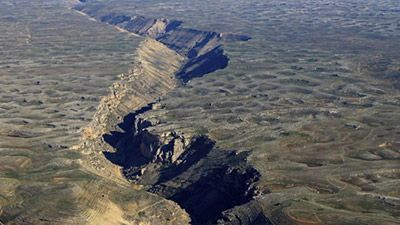
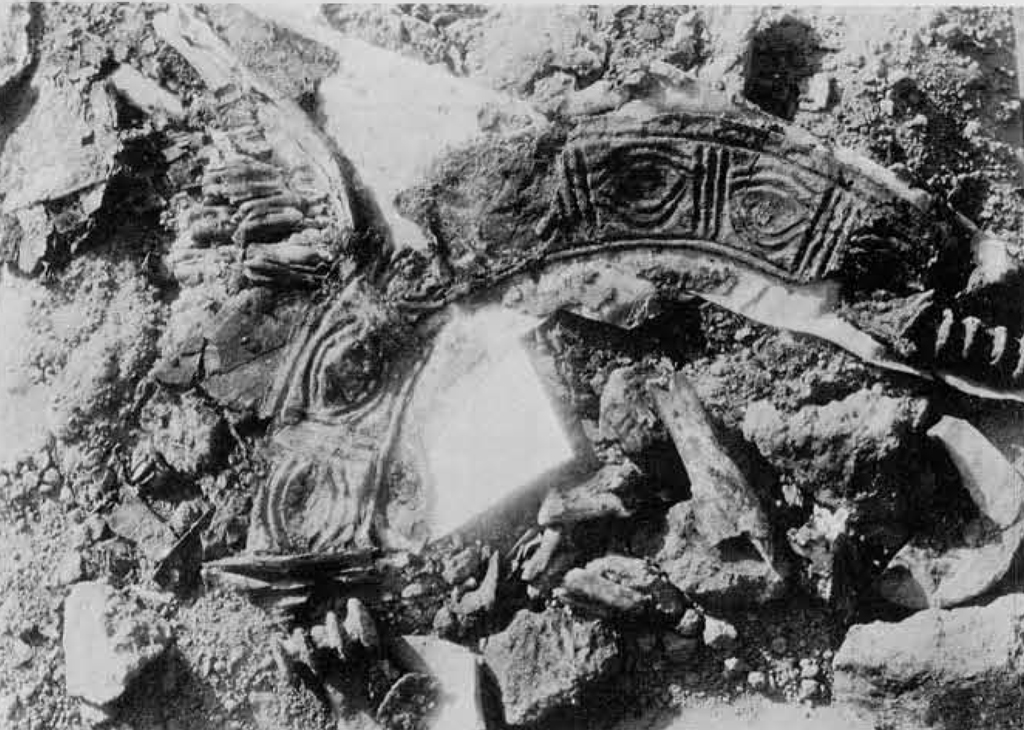
In 1922, archaeologists dug up a site in modern-day southern Iraq. There, they found incredible spans of gold and sophisticated armour, and Iron Age Sumerian artefacts, encased within stone walls. They dubbed this place “the Royal Cemetery of Ur,” an ancient Babylonian mausoleum. 

On that site, they also discovered evidence of hundreds of human sacrifices. Among the human sacrifices, a considerable number were children.

Nearly all of the skeletons were killed to accompany an aristocrat or member of the royal family into the afterlife. Some had drunk poison. Some had been bashed over the head with blunt objects. After their death, many were exposed to mercury vapour, so that they would not decompose, but would remain in a lifelike posture, available for public display.

Excavations from the Royal Cemetery at Ur

This site dates to sometime around 2,500 BCE in the ancient city of Ur. According to our legends, another figure came from the  ancient city of Ur sometime around 2,500 BCE. 

His name was Abraham. 

In the biblical narrative, Abraham wandered from Ur to ancient Canaan, where he began to worship the One God, and founded Judaism.

The world in which Abraham purportedly lived was rife with child sacrifice. Across the Ancient Near East, archaeologists have uncovered remains of children on slaughtering altars. They have found steles describing when and why they sacrificed children. They have found stories of child sacrifice from the Egyptian, Greek, Sumerian, and Assyrian civilisations.

So problematic was child sacrifice in the ancient world that our Scripture repeatedly condemns it. The book of Leviticus warns: “Do not permit any of your children to be offered as a sacrifice to Molech, for you must not bring shame on the name of your God.” The prophet Jeremiah describes disparagingly how the Pagans “have built the high places to burn their children in the fire as offerings to Baal.” In the Book of Kings, King Josiah tears down the altars where people are sacrificing their children.

Abraham put a stop to the practice of child sacrifice. It seems to happen suddenly, and without warning, and with even less explanation. No reason is given why he abruptly ended all the cultural deference that had gone before and opposed an entrenched religious practice. 

The question we now must ask is: why?

One reason that comes to mind is that it is so obviously immoral. Surely it should be self-evident that you don’t kill kids! But that wasn’t obvious to all the people around Abraham. And that wasn’t obvious to traditional commentators, either. In their world, the morally right thing was always to obey God.

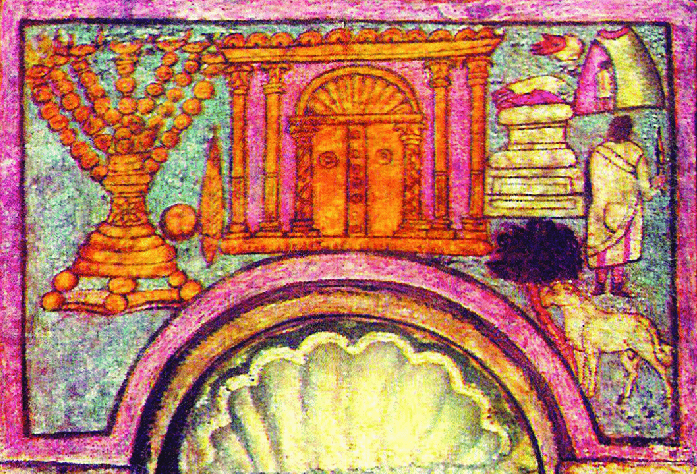
Fresco of the Binding of Isaac at the 3rd Century Duro Europos Synagogue, Syria

A traditional reading says that Abraham stopped child sacrifice in obedience to God. In the story we read today, Abraham is called upon by God to go up on Mount Moriah and slay his son. Only at the summit, when he holds up his arm to murder Isaac, does God stop him, telling Abraham that he has proved his devotion to God by not withholding his son, and that he does not have to kill Isaac. 

Yet there are several problems with this story. If we adhere to the traditional reading, God still wanted child sacrifice, and felt that doing so would prove Abraham’s devotion. In fact, nearly all traditionalist readers interpret it this way,saying that obedience before God should be a sacred virtue. A conservative reader of the Bible says that the moral of the story is that we should be subservient to God, and do what we are told.

God said not to perform child sacrifices, so we no longer do. That would mean, then, that if God had said child sacrifice was permitted, we would still be doing it.

In 2007, the Israeli philosopher Omri Boehm offered a radical reinterpretation of the story of the binding of Isaac. The story, Dr Boehm argues, is not about Abraham’s fealty to God, but his disobedience. Dr Boehm shows how, reading against the grain of traditional interpretation, this is not a story where God changes tact and decides not to ask for child sacrifices anymore, but where Abraham rebels against authority and refuses to commit murder.

For Boehm, what was truly radical about the Binding of Isaac was that it set out a new set of values, completely at odds with those of the Ancient Near East. Where other cultures practised child sacrifice because it was part of their established culture, Abraham resisted and put life above law. Where others encouraged obedience to authority, so much that poor people could be killed in the palaces of Ur to serve their masters in the afterlife, Abraham made a virtue of rebellion. For our ancestor Abraham, refusing to follow orders, even God’s, was the true measure of faith. By not killing, even if God seemingly tells you to, you show where your values really lie.

This is not a story about obedience, but rebellion. And that message – of resistance against authority in defence of human life – has much to teach us today.

Boehm reconstructs what the archetypal story of child sacrifice was in the Ancient Near East. Across many cultures and time periods, there was a familiar refrain to how the story went. The community is faced with a crisis: some kind of famine, natural disaster, or war. The community realises that its gods are angry. To placate the gods, the community leader brings his most treasured child and sacrifices him on an altar following the traditional rites. Then, the gods are pleased and the disaster is averted.

We can see that the biblical narrative clearly subverts the storytelling tradition that was around it. In other cultures, the community leader really did sacrifice his special child, and that really did please their Pagan god. In our story, the community leader does not sacrifice his special child, and the national God proclaims no longer to desire human sacrifice. This is already then, a bold message to the rest of the world: you might sacrifice children, but we will not.

Boehm takes this a step further and looks at source criticism for the text. Most scholars of Scripture accept that Torah is the work of human hands over several centuries. One of the ways we try to work out who wrote which bits is by looking at what names for God they use. Whenever we see the name “Elohim” used for God, we tend to think this source is earlier. Whenever we see the name “YHVH” used for God, we tend to assume the source is a later edit by Temple priests.

The story of the binding of Isaac is odd because it uses the name “Elohim” almost the entire way through, until the very end, when the angel of God appears and tells Abraham not to kill Isaac. That means that most of the text is from the early tradition and only the very end part, where the angel of God tells Abraham not to kill Isaac, comes from the later priests.

So, Boehm asks, what was the earlier version of the text? If you take out the verses where God is YHVH and have only the version where God is Elohim, what story remains?

Well, in the version that we know, where both stories are combined, an angel of God calls out and tells Abraham not to sacrifice Isaac. That’s the bit where God is YHVH. If you take that out, and have only God as Elohim, Abraham makes the decision himself. No angel comes to tell him what to do. Next, if we cut out the parts where God is YHVH, there is no praise from the angel, telling Abraham he made the right choice. Instead, you get a story where Abraham deliberately disobeys his God because he loves the life of his son more.

Adi Nes, ‘Abraham and Isaac’, 2004

The earliest version of the text, before the Torah was edited and a later gloss was added, is one in which Abraham is commanded by God to sacrifice Isaac, goes all the way up Mount Moriah, and then refuses. Without prompt or praise from God, Abraham decides to sacrifice a ram instead of his son. In the earliest version of the biblical narrative, when source critics have stripped away priestly edits, God tells Abraham to sacrifice his son and Abraham rebels.

The earliest version, then, is an even more radical counter-narrative to the other stories of the Ancient Near East. Not only do we not sacrifice children. We also recognise that sometimes you have to say no to your god. In this version, rebellion is more important than obedience, especially when it comes to human life.

This isn’t just a modern Bible scholar being provocative and trying to sell books. In fact, Boehm shows, this was also the view of respected Torah scholars like Maimonides and ibn Caspi. These great mediaeval thinkers didn’t think of the Torah as having multiple authors, but they could see that multiple stories were going on in one narrative. One, they thought, was the simple tale of obedience, intended for the masses. But hiding between the lines was another one, for the truly enlightened, that tells the story of Abraham’s refusal.

Boehm terms this “a religious model of disobedience.” By the end of the book, you go away with the unshakable impression that Boehm is right. True faith, he says, is not always doing what you think God is telling you. Sometimes it is reaching deep within your own soul to find moral truth. Sometimes you really show your values by how you defy orders.

In his conclusion, Boehm takes aim at Rabbi Shlomo Riskin, an American religious leader, who lives in the West Bank settlement of Efrat. Rabbi Riskin had said, in his analysis of the binding of Isaac, that Abraham was a model of faith by his willingness to kill his son. Riskin insisted that he was willing to sacrifice his own children in service of the state of Israel.

This, says Boehm, is precisely the opposite of the message of the binding of Isaac. The point was not to let your children die. The point was to bring a final end to child sacrifice. The point was not to submit to unjust authority, but to rebel in defence of life. 

Rabbi Riskin does not realise it, but by offering child sacrifice, he is really advocating for the Pagan god. He is describing the explicitly forbidden ritual of allowing your children to die. 

Abraham thoroughly opposed these false gods who demanded ritual murder. They were idols; and child sacrifice a monstrous practice that we were supposed to banish to the past. The very essence and origin of Jewish monotheism is its thorough rejection of killing children.

Boehm could not have known how pertinent his words would become. This year has been one of the worst that those of us connected to Israel can remember. Beginning on October 7th, with Hamas’s horrendous massacres and kidnappings, the last Jewish year has seen us rapt in a horrific and seemingly never-ending war.

This year, thousands of Israelis were killed. This is the first time in a generation that more Israeli youth have died in war than in car crashes. Reading through the list of names, it is remarkable how many of the soldiers were teenagers. 

That is not to even mention the 40,000 Palestinians whom the IDF have killed. According to Netanyahu’s own statements, well over half were civilians. Around a third were children. As famine and food insecurity rises, the risk of deaths will only accelerate. It has been agonising to witness, and I cannot imagine how painful it has been to live through.

Yet, during my month in Jerusalem, I saw that the voice of Abraham has not been extinguished. There are few groups I hold in higher esteem than the Israeli peace movement. Against untold threats and coercion, in a society that can be intensely hostile to their message, they uphold Abraham’s injunction against killing.

One of the leaders of the cause against war was Rachel Goldberg-Polin. On October 7th, her 19-year-old son, Hersh, was kidnapped by Hamas. His arm was blown off and he was taken hostage in Gaza. From the very outset, Mrs. Golderg-Polin argued fervently for a ceasefire and a hostage deal that would bring her son home. She warned that the only way her son would come home alive would be as part of political negotiations. 

At the end of August, as Israeli forces neared to capture Hersh as part of a military operation, Hamas shot her son, Hersh, in the head. 

Rachel Goldberg-Polin’s refusal to give up hope, refusal to sacrifice her son, and steadfast insistence on peaceful alternatives is a true model of Abraham’s faith.

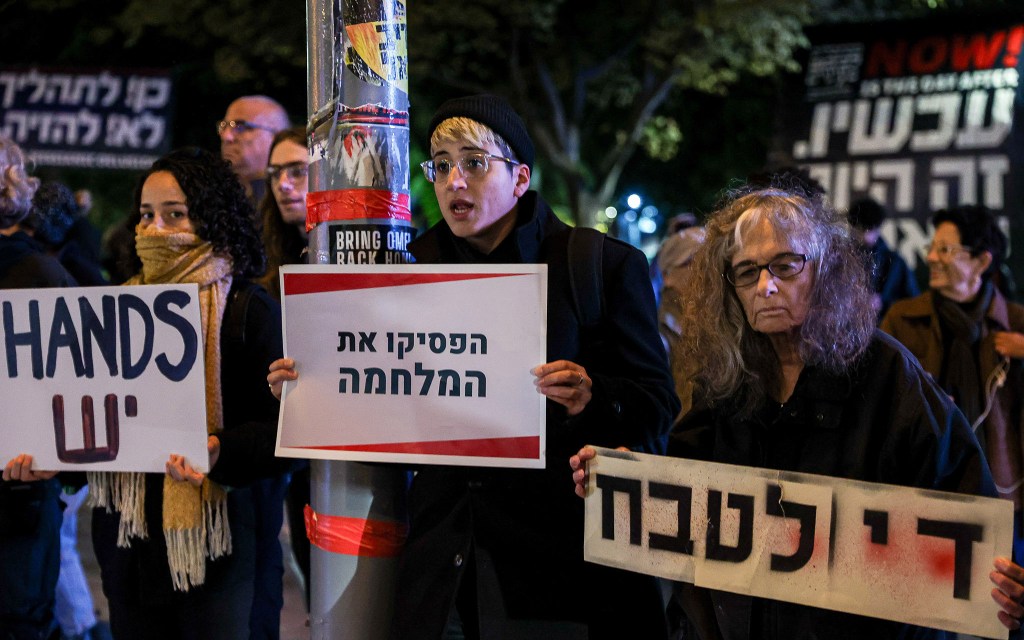
Israeli peace protestors

And it involves serious rebellion too. When I met with hostage families in Jerusalem, I was shocked to hear how, for protesting against the war to bring their families home, they had been beaten up by Ben Gvir’s police. I saw this with my own eyes when I marched alongside them. People shouted and jeered at them, and the police came at them with truncheons.

In July, when I went with Rabbis for Human Rights to defend a village in the West Bank against settler violence, we were joined in our car full of nerdy Talmud scholars by a surprising first-timer. A strapping 18-year-old got in to volunteer in supporting the Palestinian village. What was most remarkable was that he himself lived in a West Bank settlement. 

He explained that he had refused to serve in the military. He did not know that others had done it before, or that there were organisations to support Israeli military refusers. Instead, he said, he thought to himself: “if I don’t go, they won’t kill me; if I do go, I might kill someone.” What could be a truer expression of Abraham’s message: no to death! No to death, no matter the cost.

He really had to rebel. For refusing to serve in the war, the conscientious objector I met spent seven months in jail. Still now, there are dozens of Israeli teenagers in prison because they would not support the war.

Throughout my time in Jerusalem, I attended every protest against the war and for hostage release that I could. One of the most profound groups I witnessed was the Women in White, a feminist anti-war group going back decades. One of these women, with grey hair and the look of a veteran campaigner, held a placard that read in Hebrew: “we do not have spare children for pointless wars.”

Is this not exactly what Abraham would say? We will not sacrifice our children on the altar of war!

Theirs is truly the voice of Abraham, the true voice of Judaism. It is the voice that opposes child sacrifice. Theirs is the voice that upholds the God who chooses life. 

Talmud tells us that, when we blast the shofar one hundred times on Rosh Hashanah, we are repeating the one hundred wails of Sisera’s mother when she heard her son had died. Sisera was, in fact, an enemy of the Israelites, who waged war on Deborah’s armies, and was killed by the Jewish heroine, Yael. Still, at this holy time of year, we place the grief of Sisera’s mother at the forefront of our prayers. 

We take the cry of every mother who has lost a child and we make it our cry.

Thousands of years after the Sumerian Empire had ceased existing, archaeologists dug up its remains, and saw a society that practised child sacrifice. From the very fact of how they carried out murder and permitted death, the excavators could tell a great deal about what kind of society this was. One that killed people to serve their wealthy and their gods.

One day, thousands of years from now, historians may look upon us too, and ask questions about what our society was like, and what we valued. May we take upon ourselves the mantle of Abraham. 

May they look back and say that we chose to value life. May they look back and see that our people despised death and war. May they look back on us and see a society that practised faithful disobedience.

Amen.

diary · israel

The jackals braying in the mountains

I woke up this morning in a friend’s home on a moshav in Israel-Palestine. I am here for a month to learn and to volunteer with Rabbis for Human Rights.

The setting is beautiful. As the sun set last night over the mountains, the shrublands lit up in shades of orange and brown. Then jackals began to bray, calling out in the echoing valley. As we went to sleep, we even heard a hyena.

Overlooking us is a massive military compound for Israeli surveillance. On the walk to my friend’s home, I could see the separation wall.

We are on land that was taken during the Nakba of 1948. The people who lived here were dispersed, and their farmland taken. We can now see the native fig vines still, but alongside European pine trees planted by the JNF. The village opposite us is comprised of people who were forcefully evicted from a neighbouring town. They are Palestinian citizens of Israel within the “Green Line.”

It is all here. The beauty and the architecture of war. The reality of cruelty and the possibility of what might be.

“If anything, I am more convinced I want to stay now,” my friend says.

Since the start of the war, they have been protesting for peace several times a week. They have been involved in grassroots solidarity actions and getting aid to the people who need it most. At the very beginning, they were part of underground efforts to get people to safety. (And now you understand why I have to write so vaguely.)

The work looks exhausting. They and their friends have been beaten, imprisoned, shot at, and surveyed, only for trying to bring about peace.

“I have to stay now because I can see what it could be.”

Amidst all the rubble, they can see even more clearly the possibilities of a shared peaceful future with the Palestinians. And feel even more that is worth fighting for.

Once our rabbis were ascending to Jerusalem.  When they reached Mount Scopus, they tore their garments.  When they reached the Temple Mount, they saw a jackal leaving from the site of the inner sanctum of the Temple ruins. They began weeping, but Rabbi Akiva laughed.

The sages said to him, “Why do you laugh?”  He said to them, “Why do you weep?”

They said to him, “Jackals now tread on the site regarding which it is written, ‘And the stranger who approaches shall die’ (Bamdibar 1:51) – shall we not weep?”

He said to them, “For this very reason I laugh… In the context of the prophecy of Uriya it is written, ‘Therefore, because of you, Zion shall be plowed like a field’ (Yirmiyahu 26:18), and in the prophecy of Zekharya it is written, ‘Elderly men and women shall once again sit along the streets of Jerusalem’ (Zekharya 8:5). 

Until Uriya’s prophecy was realized, I feared that perhaps Zekharya’s prophecy would not be realized; but now that Uriya’s prophecy has been realized, it is certain that Zekharya’s prophecy will be realized.”

There are jackals braying in the mountains here. There is occupation and division and war.

And there are also the people building solidarity. Because of them, the prophecies of peace may be fulfilled.

israel · sermon

The nation is (not) at war


Fifteen years ago, the Nigerian author Chimamanda Ngozi Adichie gave a powerful speech, in which she warned about “the danger of the single story.” This, she says, is how you create a single story: “show a people as one thing, as only one thing, over and over again, and that is what they become.”

Because of the single story told about Africa, Westerners knew it only as backwards, poor, and disease-ridden. They did not know how diverse, interesting and resilient Africans were. They did not know that Africans were not, in fact, one people with one story, but billions of people with billions of stories.

She warns her listeners: “The consequence of the single story is this: It robs people of dignity. It makes our recognition of our equal humanity difficult. It emphasises how we are different rather than how we are similar.”

In the book of Joshua, we are presented with a single story about the Israelites and their enemies. In our haftarah, Joshua gathers the tribes of Israel at Shchem and presents his account of the conquest of Canaan. He declares:


You crossed the Jordan and came to Jericho. The citizens of Jericho fought against you, as did also the Amorites, Perizzites, Canaanites, Hittites, Girgashites, Hivites and Jebusites, but I gave them into your hands. I sent the hornet ahead of you, which drove them out before you—also the two Amorite kings. You did not do it with your own sword and bow. So I gave you a land on which you did not toil and cities you did not build; and you live in them and eat from vineyards and olive groves that you did not plant.

In Joshua’s single story, the Israelites are a nation united at war. They all came over at once and went to conquer the land of Canaan. Their enemies were diverse in name but unified in mission. In the list of warring tribes that came up against the Israelites, there is no distinction. Every one of them fought the Israelites. Every one of them lost. By God’s miraculous deeds, the Israelites took over the entire country, and now they have a whole land, ready-made, for them to inhabit.

But wait. There is a flaw with this single story. Just as Joshua decrees that the entirety of these foreign nations has been wiped out, he also warns the Israelites not to mix with them.

All of these other tribes have been completely driven out of the land of Israel; all of them have been vanquished; now the only people left are the Israelites.

But even though the Israelites are the only people remaining, you must not marry the others; or get involved in their cultural practices; or go to their shrines with them and worship their gods.

The Jewish bible scholar, Rachel Havrelock, has written a book looking at why this contradiction is so stark. She suggests that, while the Book of Joshua would love to tell a single story of unanimous military victory, it cannot get away from what the people see with their own eyes.

In reality, all the nations that the Israelites “drove out” are still there. The Israelites are still meeting them, marrying them, striking deals with them, and fraternising with them.

Joshua is putting together the war story as a national myth to bring the people together. In his story, the Israelites must be one people and so must all their enemies. Victory must be total and war must be the only way.

In fact, Havrelock finds that there are lots of contradictions in the book of Joshua. It says that the nation was united in war, while also describing all the internal tribal disagreements and all the rebellions against Joshua.

It says that they took over the whole land, but when it lists places, you can clearly see that plenty of the space is contested, and that the borders are shifting all the time. It says they took over Jerusalem, and also says that it remains a divided city to this day.

So what is the reality? Archaeological digs suggest it is very unlikely that the conquest of Canaan ever happened in the way the Book of Joshua describes. The land was not vanquished in one lifetime by a united army. Instead, more likely, the Israelites gradually merged with, struck deals with, and collaborated with, lots of disparate tribes.

They were never really an ethnically homogenous group. They were never really a disciplined military. They were a group of people who gathered together other groups of people over many centuries to unite around a story. Ancient Israel was the product of cooperation and collaboration.

Our Torah takes all the different stories of lots of different tribes and combines them into a single narrative. That is why the Torah reads more like a library of hundreds of folktales than a single spiel.

But a government at war needs a single story. It needs to tell the story that there is only one nation, which has no internal division. It needs to tell the story that there is only one enemy, and that the whole of the enemy is a murderous, barbarous bloc. It needs to insist that the enemy must be destroyed in its entirety. It needs to tell the story that war is the only way.

Reality, however, rarely lives up to the single story that war propaganda would like us to believe.

Over the last few months, we have been bombarded with a single story of war. We are all at war. Not only Israel, but the whole Jewish people. We are all at war until every hostage is freed from Gaza. We are all at war until Hamas is destroyed. We are all at war and there is no other way.

But hidden underneath that story are other stories. Suppressed stories. Stories that suggest Israel may not be united in war.

There is the single story that Gaza must be bombed to release the remaining hostages.

There is another story. Avihai Brodutch was with his family on Kibbutz Kfar Aza on October 7th. He survived. His wife, Hagar, was taken hostage, along with their three children, aged 10, 8 and 4. His whole family and his neighbours were taken hostage.

Only a week later, at 3am, Avihai took a plastic chair and his family dog, and went to launch a one-man protest outside the Israeli military offices. He insisted that blood was on Bibi’s hands for refusing to negotiate. He said that Netanyahu was treating his family as collateral damage in his war. He initiated a rallying cry: “prisoner exchange.”

This has become a demand of Israeli civil society. They will swap Palestinian prisoners for the Israeli hostages. This was achieved, when 240 Palestinian prisoners were swapped in return for 80 Israelis and 30 non-Israelis captive in Gaza.

There are still over 100 hostages in Gaza. There are still around 4,000 Palestinian political prisoners in Israeli jails. Around 1,000 are detained indefinitely without charge. Around 160 are children.

It is simply the right thing that Hamas should release the hostages. It is also simply the right thing that Netanyahu should release the Palestinian prisoners. If they did agree, everyone would be able to return safely to their families. Doesn’t that sound more worth fighting for than war?

There is a single story, promoted by Netanyahu, that Israel must fight until it has destroyed Hamas.

There is another story. Maoz Inon’s parents were both murdered by Hamas on October 7th. As soon as he had finished sitting shiva, he took up his call for peace. All he wanted was an end to the war.

Speaking to American news this week, he said: “A military invasion into Gaza will just make things worse, will just keep this cycle of blood, the cycle of death, the cycle of violence that’s been going for a century.”

His call for peace is echoed by other families of those who lost loved ones on October 7th. They have lobbied, produced videos, and sent letters to Netanyahu, begging to be heard.

Some are desperate for the government to recognise that further death is not what they want. Now, as Netanyahu has killed more than 20,000 Palestinians, their call has still not been heard.

And after all those dead, is Hamas any closer to being destroyed? Of course not. All this bombing does is ensure that a new generation of Palestinians trapped in Gaza will grow up to hate Israel.

This war is how you get more terrorists. It’s how you ensure that war never ends. Wouldn’t it be better to fight for a ceasefire than to fight for a war?

There is a single story that the nation is united in war.

There is another story. This week, 18-year-old Tal Mitnik was sent to military prison in Israel for refusing to fight in the war. Although this news has barely made it into English-language media, many Israelis have expressed their support.

Writing to Haaretz, one refusenik wrote: “I was inside. We were so brainwashed there. I refused and I’m not the only one. I have a family and this is not a war with a clear purpose. […] My children will have a father and I hope yours will too.” Another parent wrote: “My son is also refusing. I will not sacrifice him for Bibi.”

There is another story: that this is Netanyahu’s war, not ours.

There is another story: that war is not the answer.

There is another story: that every captive must go free.

There is another story: that all bombs and rockets must end.

There is another story: that we will not give licence to any more bloodshed.

There is a story that the nation is at war. In times of war, the government must tell that as the only story, to blot out alternative stories, to ensure that war is the only way.

But there are other stories. And, if we tell those other stories, there will be other ways.

Shabbat shalom.

debate · israel

We are not going to agree about Israel.

It is a blessing in synagogue life when rabbis really get on with each other, and I am so lucky that Rabbi Jordan and I do. We drop in and out of each other’s offices, check in on how the other is doing, and always look for ways to support each other.

And we don’t agree about Israel.

We don’t agree, and we’re not going to. That’s OK. That’s good. It means we can have real conversations. It means when we need to make decisions or work out our thoughts, we can bounce ideas off each other as critical friends. 

Last week, after a discussion on Zionism, he did what he often does, and left an earmarked book on my desk. The book, edited by Rabbi Larry Englander, is called ‘The Fragile Dialogue.’ It includes various reflections on Israel. 

The chapter Jordan highlighted was by a self-proclaimed TwentySomething Congregant. In a heartfelt letter to her rabbi, she pleads not be excluded from her synagogue because of her views on Israel. She speaks on behalf of her generation, which opposes occupation and supports boycotts. She begs that she, and the rest of the Jews of her generation, will not be cut off from their own communities.

The letter highlights something many of us already know but struggle to articulate: the debates around Israel and Zionism are largely generational. 

These differences were visibly lived out last week at a funeral. The great Israeli singer and poet, Yehonatan Geffen, died. He had been a cultural icon, associated with the songs of Israeli childhood. 

In three generations of his family, you can see the wildly different approaches to Israel. 

Yehonatan Geffen’s uncle was Moshe Dayan, a fierce Israeli military chief famed for his eyepatch and hard right attitudes. He had been a combatant in Haganah, the guerilla army that founded Israel, led the IDF, and gone on to become a politician. 

As far as he was concerned, the Holocaust left only one imperative: to conquer and settle the land and become so strong that Jews could never be hurt again. He pledged to blot out Palestine, and respond to hate with greater hate. He was a true hawk.

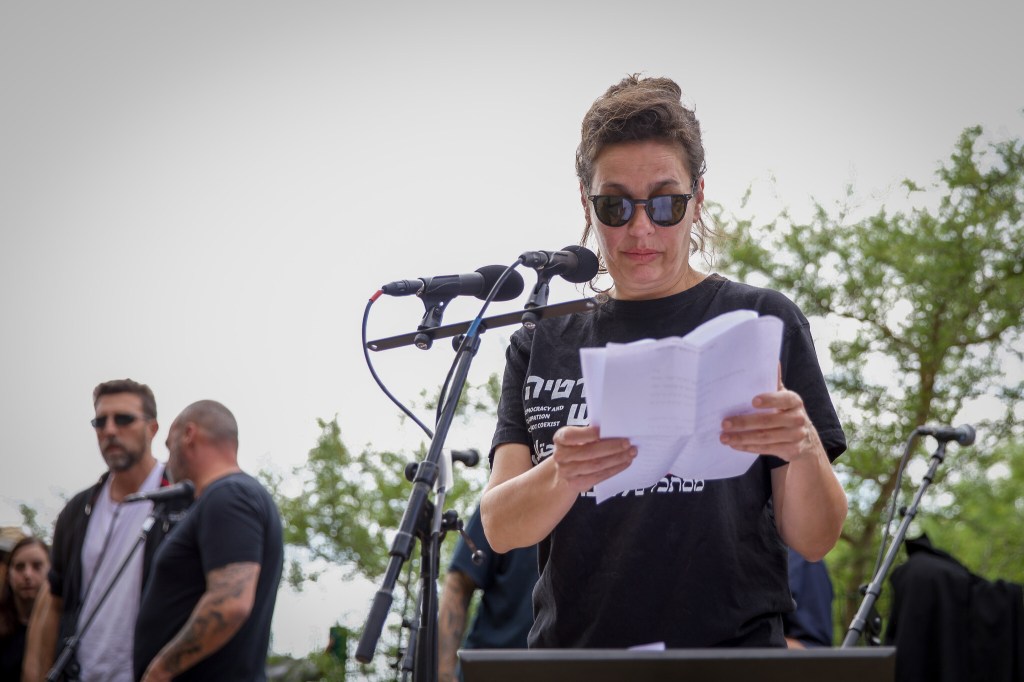
Fast forward to the funeral of his nephew. The mourners arrived wearing shirts that carried the slogan: אין דמוקרטיה עם כבוש – there is no democracy with occupation.

Yehonatan’s daughter, Shira Geffen, wore this slogan as she gave the hesped. 

This slogan argues that Israelis cannot protest Netanyahu’s anti-democratic measures while ignoring the millions of Palestinians denied basic democratic rights to vote, freely assemble, and even walk to their homes without facing checkpoints and guns. 

The t-shirts are produced by מסתכלים לכבוש בעיניים – an Israeli left organisation who insist on looking the occupation in the eye. They speak out about what they call “the power relations between the coloniser and the colonised,” urging the public to see how the occupation is destroying the dignity of Palestinians and the humanity of Israelis.

Sandwiched in the middle between these generations was the man they mourned, Yehonatan Geffen. He had been part of Israel’s cultural establishment, and a true icon. He was associated with what many Israelis saw as the best in their culture. One of his eulogisers was the centre-right politician Yair Lapid.

Geffen was also an outspoken peace campaigner. He wrote extensive criticisms of the army. In 2018, he wrote lyrics in praise of the Palestinian child protester, Ahed Tamimi, resulting in him being cancelled on Israeli military radio and censured by government officials. 

Within one family, within one century, you can see such a huge diversity of Jewish views.

They do not agree about Israel. They will not agree. But they prayed together. They came together to say kaddish and mourning prayers. They joined each other as a family.

Of course, these differences of opinion on Israel are not just generations-based. I know anti-occupation activists in their 80s and I know pro-settlement campaigners in their teens. Nevertheless, what we have seen of Israel in our formative years is decisive.

I belong to Shira’s generation, and one of my most formative memories of Israel was witnessing the inexcusable assault on Gaza in 2009: Operation Cast Lead.

During the commemorations of Yom HaAtzmaut last week, I could not hide my discomfort. I find prayers for a state tantamount to idolatry, and when I hear blessings for troops, I can only think of those priests who poured holy water onto bombs. I do not see how one can pray for peace while praising the instruments of war.

Yet I understand why, for many in this community, honouring Israeli independence and those who fought for it feels like an important undertaking. 

Some of you belong to the generation that came just after the Shoah. The memories of genocide and antisemitism still loom, and it is understandable that you should want to know there is some security against that. For you, defending Israel matters.

Others of you came up in the generation of Peace Now. You believed in Israel and its mission, and held onto its constitutional claims of what it would be: a safe haven for all its peoples. You hoped, even campaigned, for an Israel where Jewish culture could thrive while Palestinian minorities received justice and human rights. For you, holding on to that dream of what Israel could be matters.

My generation came after. I was born not long before the signing of the Oslo Accords, and came of age as they failed. During my 34 years on this planet, Netanyahu has been Israeli Prime Minister for nearly half of them. I have never known Israel as anything but the aggressor and the occupying power. 

Based on our ages and experiences, we will have different views. If we cannot have disagreements about Israel, we cannot have an intergenerational community.

We will not agree about Israel. And that’s fine. That’s good.

Rabbinic literature prizes disagreement. One of my heroes in the Talmud is Rabbi Eliezer. He stood solidly by his principles, no matter how unpopular they were. It’s not that I agree with Eliezer’s principles: he was a conservative surrounded by liberals and radicals. It’s the fact that he held fast to what he believed.

He was so strict in his adherence to religious law that the other rabbis eventually excommunicated him. They wouldn’t talk to him unless he recanted his views, and he never did. Only at the end of his life did his students and colleagues realise what an error they had made by cutting him out. 

They placed him in the Mishnah, the foundational Jewish text, as one of its most-cited rabbis. Even though they completely disagreed with him, you can find his opinions everywhere.

The Maharasha says the reason for this is for future generations. While one position may be minority at one time, it may become majority, and those who follow will need to know what they rest on. Even if they never agree with it, they need to see how the conclusions they support were reached.

This is why we welcome disagreements: for the sake of intergenerational conversation. 

For those growing up now, they are entering a polarised and febrile environment. 

Future generations will develop their own politics, and find their own relationships to Israel, Zionism, and the occupation. 

And I hope they can do so within the synagogue. 

I hope they will find an environment that embraces Zionists, non-Zionists and anti-Zionists. I hope they will find communities that do not impose red lines that keep them out.  I worry that the TwentySomething writing to her rabbi will be proven right, and synagogues will become platforms for single positions on Israel.

What then? Will we split into Zionist and anti-Zionist shuls? Will we keep splitting further, based on varying different policy proposals for what should happen in the Middle East? Those aren’t synagogues – those are political parties!

Such divisions have pulled apart Reform communities before. In the period prior to World War II, Zionists were forbidden from studying at Hebrew Union College, the Reform Rabbinical school in America. This meant that for nearly a century you could not be a Zionist and become a Reform rabbi. One early Reform Zionist, Maurice Perlzweig, said that professing his views in polite Jewish company was like admitting to being a member of the Flat Earth Society.

At the turn of the century, the Reform Movement completely reversed its position. The 1997 Miami Platform declared that Reform Judaism was unequivocally Zionist. It said that Jews were a people; that we should all move to Israel and build it up. Ensuing from that came a programme parallel to the early push to exclude Zionists from the Jewish community, but this time, flipped: to exclude critical voices from the Jewish community and maintain only a pro-Israel consensus.

Is this really what we want? Do we want to keep going back and forth drawing new lines depending on which position has the upper hand? Do we want to enforce conformity of political views in Reform congregations?

Surely what we stand for is bigger than that! Surely our Judaism, our God, our people is bigger than that! 

The joy of a synagogue is that it brings together so many different people. Where else are you going to find people of different backgrounds, classes, genders, abilities, beliefs, and ethnicities, all under one roof, bound together by something greater than themselves? Only the synagogue – greek for beit knesset  – the House of Gathering – can achieve that. 

We are not going to convince each other of our political opinions, and that’s fine. That’s good. If we have a space filled with diverse views, we have a community. If you have uniformity, you have an echo chamber.

We are Reform because we understand that the Jews of tomorrow will not look like the Jews of yesterday. The Judaism of tomorrow will not look like the Judaism of yesterday. Reform Judaism is an ongoing commitment to learn and struggle and grow, always adapting to new ideas and developments. That is what makes it Reform.

And what makes it Jewish is that we do it together. We hold on to belief in the same God, the same cause, the same traditions. We hold all the manifold opinions of the congregation in a single setting.

So, let us answer the question posed in Larry Englander’s book: will this TwentySomething be excluded from her synagogue? 

More pressingly, will she have a home in ours

The answer depends on how we act. If we draw red lines and kick people out based on their views; if we define our Judaism solely by its relationship to Israel; if we make public policies about the synagogue’s stance, then, no. She probably will not.

On the other hand, we can model an alternative Jewish future. A better Jewish future. A Jewish future where we don’t repeat the mistakes and have the same regrets as the framers of the Mishnah. A Jewish future based on plurality and discussion.  We can demonstrate through our relationships with each other and the synagogue that Judaism is diverse, creative and engaging across divisions. 

We can show that we do not have to agree. Even about Israel. 

Shabbat shalom.

israel · protest · sermon

Not in our name

This week, Israel went to the polls, electing its most far right government yet. Netanyahu is set to return to power, and take control of the legislature to stop them prosecuting him on corruption charges.

To secure power, he has allied himself with extremist religious nationalists, Bezalel Smotrich and Itamar Ben Gvir. They are unabashed racists, who are explicitly opposed to Reform Judaism.

Their whole ideology is about securing an ethnically Jewish majority, by deploying military means against the Palestinians, preventing mixed marriages, and expanding the borders as far as they will go.

They want to make sure all Jews are reproducing to win their demographic war, so promote institutionalised sexism and homophobia. In particular, Smotrich wants to ban abortions, bring back conversion therapy, stop trans access to healthcare, and ban gay men from donating blood.

In the preceding weeks, Jewish News warned that this was not an Israel British Jews would want to see. Many quarters have expressed great alarm at the election results.

In fact, this is not so new or surprising. There was a time when Naftali Bennet, also a religious nationalist, was considered the most far right voice in Israel. He has now spent the last year as Prime Minister, ruling on a supposedly moderate ticket, mostly because of how far right the rest of the religious nationalist movement has become.

It is not simply that they are bigots. It is not just that they loathe me and everything I stand for. On that front, the feeling is very much mutual. It is that they have twisted Judaism into a bellicose hate cult.

You can find them rioting through East Jerusalem, terrorising the Palestinians to scare them out of their homes.

You can see them expanding into new settlements, throwing people out of their family homes.

You can hear them singing at the Western Wall that they will violently wreak vengeance on the Palestinians.

And, of course, you can find them in the Knesset, the Israeli Parliament, passing laws. Their most recent triumphs are declaring that Israel is only a state for the Jews and that Arabic is not a recognised language; and defending settler violence in the West Bank.

All this, they say, is to defend the Jewish people.

Perhaps, we might concede that they and their friends are stronger because they have the full might of a large army behind them. If that is their definition of Jewish defence, fine.

But it has nothing to do with defending Judaism. Their so-called Judaism is based on perverse, anti-rabbinical readings of religious texts. They see the whole of the Jewish tradition and history as a summons to colonise the entirety of David’s historic kingdom and annihilate anyone who stands in their way.

They do so in our name. And in the name of our Torah.

While the general thrust of our religious text is towards peace and justice, there is more war in the Torah than you might expect. The Torah is, after all, an ancient Near Eastern text, from a time when emergent states and nascent empires were locked in near-constant battles for territories and resources.

This week’s parashah is a prime example. Lech Lecha dedicates an entire chapter to a fantastical description of war.

Abraham enters a military pact to defeat the armies led by Kedorlaomer. Often called “The War of the Nine Kings,” the chapter includes descriptions of alliances, rebellions, military campaigns, and looting the spoils of war.

If you are hearing this story for the first time, you are not alone. We often skirt over it in favour of the more elevating sections of this week’s reading.

It’s not just our very polite sensibilities as British Reform Jews. In general, the rabbinic tradition as we know it, has downplayed the Torah’s violence, or reinterpreted it to be about more moral topics.

Judaism as we know it was born out of abortive wars and failed uprisings, so our rabbinic progenitors went to great lengths to caution against war and violence. In practice, Judaism has been pacifist, if only out of pragmatism, rather than principle.

The preceding periods, in which pre-rabbinic Jews did have military power, were pretty horrific. The Second Temple period, under the Hasmonean Dynasty, saw brutal repression of any deviation from official state religion. Its leaders were corrupt, seeking to control every part of legislative and economic life. They were tyrannical.

When our rabbis rebuilt Judaism out of the ashes of the destruction of the Temple, they wanted to introduce necessary correctives to historic fundamentalism. They sought to create a Judaism that would be ethical, based in the grassroots, committed to diversity, and, above all, peaceful.

So, our tradition opted to understand the Torah’s violent exhortations differently. The rabbis understood the calls to massacre entire nations as personal struggles to blot out the violent parts of ourselves.

In our parashah, they understood the text not as a summons to war, but to faith. They read Abraham’s conquests as a moral message about the importance of trusting in God. When the King of Sodom offers Abraham spoils of war and he refuses, our rabbis interpret this not as a rebuttal of a future military alliance, but as Abraham saying that real riches come from God in the form of blessings.

This moral and peaceful hermeneutic became the foundation of Judaism.

All that changed in the 19th Century, with the emergence of the religious nationalists. For them, the Torah was not a moral handbook, but a military one.

They were inspired by Christian fundamentalists who wanted to see a world-ending war. Still now, those evangelicals are their primary financial backers.

When they read our parashah, they treat it as a call to arms. “Lech lecha” is not, for them, a moral command to follow God, but a political one to move to Israel. The wars are not stories of an ancient civilisation, but justifications for military violence today.

When they read biblical mandates to massacre nations, they take them literally. They imagine that they are divinely mandated to enact genocide.

This is not a fringe group on the margins of Israeli politics. This is the Israeli government, and it has been for decades.

This is not an aberration in Israeli politics. It is the trajectory the country has been on at least since I was born. The far right have continually dominated, show no sign of abating, and hold every possible government to ransom.

Liberal leaders keep saying that, at some point, when the racism gets too much, they will withdraw their support for Israel, but the day never comes.

At this point, it has to be asked: how far is too far? If Ben Gvir and Smotrich are not too much, what will be? Will there ever be a point at which people are finally willing to draw a line? When will we say that enough is enough? When will we cry out: not in our name?

We do not like to look at the verses in Torah that glamourise war and nationalism. We do not like to look at the news from Israel that does the same.

But, right now, we have to look at it. Because these facts are staring at us. And we can no longer presume to turn away.

When this government imposes its reactionary plans, they will be doing so in our name. In the name of our Torah. We have to stand up and assert that they do not.

The so-called Judaism of the religious nationalists is not ours. We repudiate their racism, their fundamentalism, and their militarism.

We affirm the Judaism of the rabbis and the Reformers – based on ethics, dignity, piety and peace.

We will do everything we can to resist this government’s perversion of Judaism.

Not in our name. Not in the name of our Torah. Not in the name of our God.

Shabbat shalom.

sermon · social justice · torah

After war

There is a particular kind of sadness that comes from remembering war. It is not only the needless loss of life, nor those who come home traumatised. There is something specific in the discomfort that comes after furious build-up, tragic participation, and ultimate reconciliation. 

In this week’s haftarah, Ovadiah promises a glorious war against Edom. The Edomites will be defeated and humiliated. Israel will be victorious and avenged. 

Ovadiah addresses Israel’s neighbouring nation of Edom: “For the violence against your brother Jacob, disgrace will surround you. You will be cut off for all eternity.”

He tells these nations: “The house of Jacob shall be fire, and the house of Esau shall be straw. They will set fire to it and consume it.”

In these bellicose proclamations, we get the feeling of the build-up to war. We realise, too, that Jacob and Esau are not just the names of characters in a story: they are representatives of nations.

Jacob is Israel. Esau is Edom. They are the respective countries on either side of the River Jordan. Their inhabitants imagine themselves as twin brothers, yet constantly in conflict.

This helps us make sense of the story in Torah this week. Jacob heads over to the river to make amends with Esau. He has been wrestling with his conscience and wants to make amends, but fears that if he puts forth an olive branch, Esau may kill him.

Jacob separates his clan into divisions to approach from different sides, like military battalions. He sends forward gifts and apologies with every single one. As he approaches his brother, he prostrated himself many times, bowing down in peaceful submission. Finally, they reach each other, hug, and cry. They are reconciled.

When we understand that these brothers are representatives of neighbouring nations, this is not just a story of family strife, or conflict between competing characters. It is the biblical redactors’ fantasy of what peace could mean. These countries could be united. Their bitter violence could be set aside. After years of fighting, people might once again embrace each other and cry with relief.

The special sadness of remembrance comes with contemplation after the war. What was it for? Whose interests did it serve? And how do we resolve to prevent it happening again?

After World War 1, poppies bloomed in Flanders Field, where some of the worst battles had been fought. Out of the trenches where so many had died, these scarlet flowers sprouted from the ground. They became a symbol. 

“Never again,” they said. 

Around 40 million people had died. Once it was over, many could no longer remember what they had been fighting for. The motivations of Empire and nationalism no longer seemed so compelling in the wreckage of war. Countries pledged to end the impetus to war with diplomacy, increased international cooperation and greater understanding between peoples.

After World War 2, the politicians once again pledged never again. Never again would fascism be able to rear its ugly head. They would combat, too, the root causes that had allowed Hitler to look appealing. No more would they allow such poverty and inequality to persist, giving way to racist scapegoats. 

The countries of Europe built social democracies, with universal healthcare systems and progressive welfare states. They said they would not repeat old mistakes. They formed alliances and international bodies that, they said, would prevent war.

For as long as I have been alive, Britain has been at war. Earlier this year, NATO troops finally withdrew from their twenty-year conflict in Afghanistan. It had begun when I was starting secondary school. Some of my friends enlisted to fight. 

At the time, we were told the war would avenge the World Trade Centre attacks; find Osama bin Laden; and defeat the Taliban. In the end, Osama bin Laden had never been Afghanistan and the Taliban emerged more powerful than ever. I doubt many of the victims of 9/11 feel much joy in seeing the war that has been carried out in their name.

When the war was declared, it was popular. Today, it is hard to find anyone who says they agreed with it.

Politicians declare war full of nationalist fervour and triumphant spirit, only to return defeated and bereft. Even the victors feel no glory once a war is won. They leave too much devastation in their wake.

Families are torn apart. Cities are destroyed. Lived are lost. Entire ways of life are destroyed. And, at the end of it all, the only thing to do is reflect on what went wrong. We promise once more to make peace.

The Torah’s narrative of Jacob and Esau offers us a glimpse of what peace might look like. It encourages us to look beyond the narrow excitement for violence proclaimed by Ovadiah and the promises of national glory. It reminds us to think of how much greater it would be to have peace.

Like the Prophets of old, we pray for the day when nation no longer lifts up sword against nation, and no more no peoples learn war.

May God grant us, and all the world, peace. 

Shabbat shalom.

I gave this sermon for Remembrance Shabbat, Parashat Vayishlach on Saturday 20th November at South West Essex and Settlement Reform Synagogue

story · torah

A rock-eating worm built the Temple

This is the story of how the Temple was built.

This story comes to us from the Talmud. It was copied from the Mishnah. It belongs to the folk legends of King Solomon that may have predated it by some centuries. This is an old story. I sincerely doubt whether any of it ever happened, but I assure you it’s all true.

This is the story of how the Temple was built by a rock-destroying worm. When King Solomon decided to build the Temple, he brought up entire stones from the quarry. He wanted to carve those stones without swords. He knew there was only one way.

Somewhere in his kingdom there was a rock-destroying worm called Shamir. This monster was created at the very beginning of time, during the six days of creation in which light and darkness were separated and the first trees were planted. 

Some say the Shamir ate stones for breakfast; chewed through the hardest granite, making passageways like the holes in Swiss cheese. Some say it could cut through the rocks with only its gaze: a laser-like stare that sliced solid metal. Whatever were its methods, Solomon knew he had to have it.

In fact, the only way to catch this creature was to find something really soft. You had to wrap it up in cotton wool and barley bran. These materials would be too gentle and the Shamir would have no way of chewing through them.

Yes, this is all in the Talmud. This is our tradition. And if you feel like this rock-gobbling worm is far-fetched, I hope you will forgive me if I tell you that Solomon captured this creature by tricking the King of the Demons.

Solomon knew that Ashmedai, the world’s greatest demon, lived in the bottom of a pit on the top of the world’s tallest mountain. And the pit was filled up with gallons of rainwater that the demon swallowed whole every day, then waited for it to refill. 

Solomon sent his servant up that mountain and into that pit. The servant drained the pit of its rainwater and filled it again with fortified wine.

You might think that the King of the Demons would not fall for such a simple trick, and you’d be right. Ashmedai scoffed at the wine-filled pit and refused to drink from it. But days passed and the monster missed his gallons of water. Oh, he became so parched. Eventually, he gave in and took several enormous mouthfuls of the wine. 

Within moments, he fell fast asleep. Solomon’s servants tied him up and carried him back to Jerusalem. When Ashmedai woke up on the Palace floor, he roared at Solomon: “is it not enough that you have conquered the whole world, but now you must imprison me too?”

“I promise you,” said Solomon. “All I want is one creature. The shamir. The worm that eats through stone. I need it to build my Temple for God.”

Ashmedai sighed, and he replied: “I do not own the shamir. It belongs to the ministering angel of the sea, who has entrusted it to the wild rooster. Together they hide in the uninhabitable hills, where the rooster guards his eggs.” 

I’m quoting to you from the Talmud directly here, so you know that what I’m telling you is true. 

When Solomon knew where to find the wild rooster, he covered its nest with transparent glass. Seeing that it couldn’t get in, the rooster brought over the shamir to bore through the rocks. As soon as he’d seen the monster, Solomon knocked the chicken off of the nest and ran to collect his prize.

According to our tradition, that is how the First Temple was built. Overseen by Solomon, the King of the world, accompanied by Ashmedai, the King of the Demons, a stone-chewing worm carved out every brick. It snaked through all the pillars and ate at every rock. After years of winding through the granite, Solomon’s Temple was complete.

So, why did the Talmud come up with such a tall tale? Can it be that our rabbis really believed the Temple was built in such a fantastical manner? Somehow I doubt it. But nevertheless, I am adamant that this story is true. At least, I think it tells us something important we need to know.

Our rabbis were answering a textual problem. The Bible told us that King David was not allowed to build the Temple because there was too much blood on his hands. He had fought too many wars, subjugated too many peoples and built too much of his empire on the labour of others.

Only Solomon, whose name in Hebrew is cognate with peace, was able to overcome the violent tendencies of his father and build a Temple that would truly be fitting for God. How could he build such an edifice without getting blood on his hands?

When our rabbis imagine the construction of the Temple, they picture it as it ought to have been. No wars are fought to secure land. No natural resources are exploited to gain the raw materials. No workers are hurt in the making of the building. All that happens is a natural process, where a worm that would eat rocks anyway works its way through the stones to build God’s home.

The only people vaguely harmed are a demon who got drunk and a rooster that was knocked off its perch. This is the dream of how the Temple should have been made. It was created in complete peace and harmony with nature. 

By encouraging us to inhabit this fantasy, the Talmud draws our attention to the harshness of reality. Even the greatest and most noble civilisations are built on violence. Cities, skyscrapers and the highest cultures are all products of real graft. Human beings do interfere with nature. We do exploit workers. We do plunder natural resources and we do secure territories through war.

When we imagine a world where rock-destroying worms can carve out our accomplishments for us, we know that we are imagining something impossible. But the nature of Talmud is to challenge us to do impossible things.

The Talmud asks us to picture a different relationship between human beings, nature, and civilisation. In a world where the climate is being damaged in unspeakable ways, such imagination is required of us again. Humanity is at a juncture when we must completely rethink how to use resources and what kinds of civilisations we build.

That is what makes it true and that is why it still speaks to us today. The Temple was built by a rock-eating worm. Perhaps one day, we will build the world that way again.

I gave this sermon for Edgware and Hendon Reform Synagogue, Parashat Terumah, on 20th February 2021. For the sources, look at Sotah 48b and the sugya beginning in Gittin 67b