festivals · sermon

I saw a world turned upside down

Yosef, the son of Rabbi Yehoshua, had a near-death experience. Yehoshua asked him: “what did you see?” He said: “I saw a world turned upside down, where the poor were rich and the rich were poor.” His father answered: “You saw a world turned right way up.”

For a long time, this was my favourite passage from all of Gemara. Recently, I’ve started to feel more conflicted about it. 

This brief story is an interlude in Masechet Bava Batra of the Babylonian Talmud. The chapter is all about economic redistribution, charity, the rights of the poor, and fiscal justice. It encapsulates a beautiful idea. The poor should know what it is to be rich and the rich should know what it is to be poor.

Six years ago, the then-26-year-old duke, Hugh Grosvenor, became the world’s richest man under 30. Upon his father’s death, he inherited £10 billion, a title, and some of London’s most profitable land deeds. He remains Britain’s fourth richest person.

According to a recent report by the Joseph Rowntree Foundation, 1 in 5 households in this country are in poverty. 7.2 million households are going without essentials, like heating, food, showers, toiletries and adequate clothing. 

It’s hard to picture statistics, so let’s take a story. Heather is a mum of two girls, aged 10 and 4, in Camborne, Cornwall. Her family is one of those millions in poverty. They opted to tell their story to ITV. Cameras followed her round as she worked multiple shifts, round the clock, and fed her family from food banks.

What would it be like if, as in Yosef ben Rabbi Yehoshua’s vision, the two swapped places?

How would the duke fare if he woke up as a social renter on a council estate in Cornwall, with no money, and unpaid debts, and needed to get his children to school but couldn’t afford the bus fare?

How would it be for Heather if she suddenly found herself a duchess, living on a 300 acre estate in Lancashire, waited on for every meal, never having to clean, and able to indulge in boozy parties costing upwards of £5 million? She wouldn’t need to go shopping. She would own the shopping centre.

It is a tempting fantasy. Seeing this world, so clearly turned upside down, I, too, take pleasure in imagining seeing the day.

We can see why it would have appealed to the authors of the Talmud, too. Rabbi Yehoshua was a poor tailor living under Roman persecution. Yehoshua saw the incredible wealth of Emperor Hadrian, which he had extracted from colonising and impoverishing the people of Eretz Yisrael, among many other territories of his Empire. Why wouldn’t Yehoshua, a pious scholar, want to switch places with that brutish tyrant?

But is it really motivated by righteousness, or is it just a desire for revenge? As we approach Purim, I remember what can happen when a world is turned upside down like that. How easily the oppressed can become the oppressors. How quickly hurt people can hurt people.

Our story begins in a world where one man has a ludicrously bloated empire and spends all his time flaunting his wealth on extravagant banquets. Achashverosh has a harem of women at his beck and call, who live in fear of death and exile.

This is a system already ripe for abuse, and, when Haman is appointed as chief vizier, we see just how far that society can go in its cruelty. Haman insists that everyone bow down to him. He took an ethnic disliking to Mordechai and the Jews, who, in turn, refused to accept his authority. So Haman plans a genocide, with full indulgence from the king and his court. He erects a stake on which to impale Mordechai.

In the end, the world is turned upside down. Mordechai is put in Haman’s position. He is given royal robes and the signet ring. He gallops through town on a horse and everyone bows down to him. Haman is impaled on the stake he planted for Mordechai.

Then, the Jews enact a genocide. In one day, they kill three hundred men. On the next, they kill seven thousand. They massacre and exterminate all who stand in their way, including women and children, with royal permission to plunder their possessions.

Look, a complete inversion of events! The poor are rich and the rich are poor. The strong are weak and the weak are strong.

But, is this justice? 

In Progressive movements, we are so embarrassed by this chapter of the Megillah that we often omit it from our readings. In Orthodoxy, the goal is to get so drunk you don’t know what’s happening. By the end, you’re supposed to be unsure whether you are booing or cheering for Mordechai. That’s not a surprise: if we hears it sober, we’d probably jeer everyone.

The problem the story highlights is not that some people are good and others are wicked, but that broken systems make good people do wicked things.

The same system that permitted egregious exploitation and violence remains intact, with different people doing the killing. Everything is turned upside down, but, somehow everything is just the same.

This story is just a fantasy. There was no historical massacre by Jews in ancient Persia. In reality, they never got the upper hand during their exile. This is just their dream of what they might do if that world was turned upside down.

That doesn’t mean the fantasy is harmless. While Jewish history includes many times when we have been oppressed, it also includes occasions when we have been the oppressors. 

There is nothing in our history to indicate we are any less capable of cruelty and malice. In fact, we know too well that oppressed people, when handed power, can act in ways that would make their persecutors blush. Revenge is a powerful drug.

That doesn’t mean we should never try to turn the world upside down. We are still right to take umbrage at the outrageous wealth of Hugh Grosvenor while most live in poverty. It is still correct to hiss Haman as he uses his powers for ethnic persecution. 

But a world where the rich are poor and the weak are mighty is not a world turned upside down. It is the same world with people in different positions. 

The problem is not Yosef ben Yehoshua’s dream. It’s his lack of imagination. 

When we dream of the inversion of this world, we need to think of more than just switching who gets to be in charge. 

We, too, must have a vision of a world turned upside down. Where there are no rich and there are no poor because everyone has enough. Where there are no persecutors and there are no oppressed because power is shared evenly and democratically. Where racism and abuse are unfathomable because communities strive towards accountability and progress.

That would be a world turned right way up. 

Shabbat shalom.

debate · sermon

Jews are coming home

The 1996 UEFA Cup was when I first truly became aware of football. I was 7. Everyone was talking about it. My mum, a proud Glaswegian, made sure all the neighbours knew that she would be supporting Germany in the upcoming semifinal. Still, she seemed to feel little glee when England inevitably lost on penalties. 

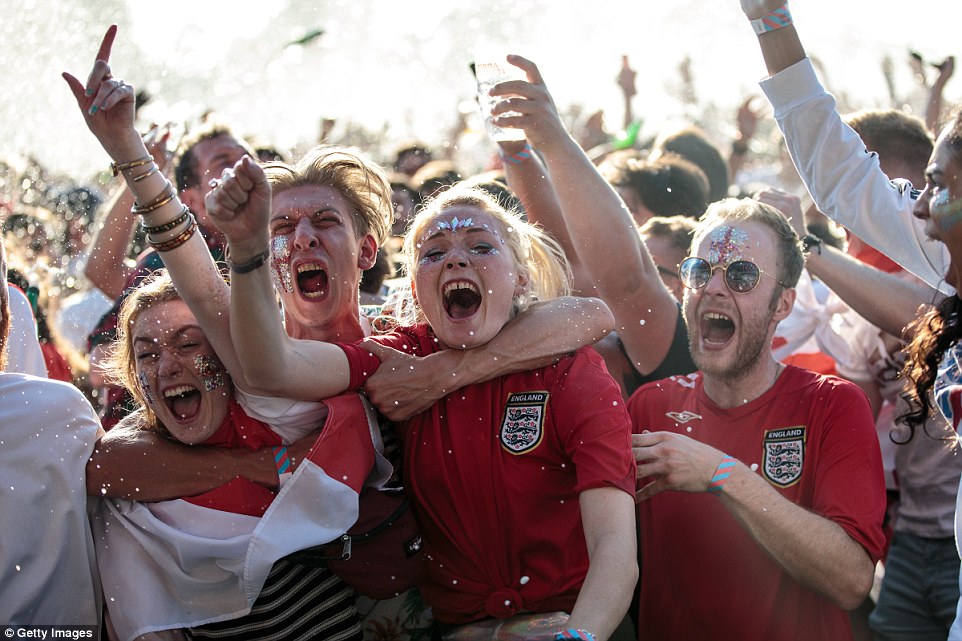
Football, I soon discovered, was not for me, but I still enjoyed the atmosphere. In the last UEFA Cup, I couldn’t help but join in the excitement and feel the buzz of possibility. Everywhere, you could hear a song that had been popularised in the first competition I could remember. Football’s coming home, it’s coming home, it’s coming…

Legendary comedian, Frank Skinner, and his Fantasy Football League co-host, David Baddiel, wrote the song: ‘Three Lions’. It is more than a catchy anthem. It tries to put forward a vision of the nation that is about shared struggles and optimism in the face of defeat. It speaks to something wonderful: the joy of being an underdog; the thrill of hoping for a victory that might never be realised; the bittersweetness of feeling like your favourite thing belonged in your favourite place, but was also part of a much wider world. 

Recently, David Baddiel has come back into the public consciousness, this time with a new memorable slogan. Jews Don’t Count. This was the title of his book, published earlier this year, which seems to have been read by every politician and pundit in Britain. It is accessibly-written by a popular writer. Many Jews have a copy. Some have come to cite the book’s title, as if it were already a well-established truism.

This meant that, last week, as the Royal Court Theatre showcased a play where the main character was a greedy billionaire called Hershel Fink, whose climax is the sacrifice of a child, pundits asked whether this was evidence that ‘Jews Don’t Count.’ 

This week, when a group of teenagers attacked a bus full of Haredi kids celebrating Hanukkah on Oxford Street, the incident was treated within the prism of whether Jewish suffering matters. That is a narrow way to look at antisemitism, probably never even intended by the book’s author.

The most common criticism of Baddiel has been that he is the wrong messenger. 25 years ago, he dressed up as black footballer Jason Lee by covering his face in brown paint and putting a pineapple on his head. The offensive image sticks in many people’s minds, so they question how well-equipped he is to speak on racism.

Baddiel addresses this in his book. He says that he has already apologised, and, in any case, the people criticising him for doing blackface are the real racists because they think his historic racism invalidates his current experiences of antisemitism. He cites the example of Malcolm X, who despite having made antisemitic comments in the past, is still upheld as a visionary of anti-racism. 

What Baddiel seemingly misses is that Malcolm is an icon precisely because of his journey. He went from a pimp to a fundamentalist to a person committed to the liberation of all people. His earlier mistakes are viewed in light of where he ended up. If only all of us could be so willing to publicly make mistakes, learn, and grow.

Still, I don’t think it is helpful to criticise Baddiel as a man. We must engage with the content of what he has to say. The book’s thesis is that there is an oppression Olympics taking place, and Jews should have better odds of winning than the bookies have given them. It doesn’t challenge the idea of whether there is such a thing as a competition over who has suffered most, nor whether such a contest would be desirable. He just wants everyone to be clear that Jews have suffered as much as anyone else.

In only the opening pages, Baddiel bemoans hearing an antisemitic poem on the BBC and insists “no other minority group would be compared to rats, or envisaged as any similar negative racist stereotype, on Radio 4.” The claim is bizarre. The last few years have seen intense attacks on immigrants and asylum seekers, often likening them to vermin and plagues. Barely a day goes by without some racist dog-whistle making it into our mainstream press. 

Even if Baddiel was right, and it was only Jews who were subjected to bigotry in national media, his complaint about other minorities’ treatment is far from helpful. Freedom is not a finite resource and tolerance is not in short supply. If others did have more of it, our task would be to make the case for why we need it too, not to undermine others’ gains. Setting up the struggle against antisemitism as a competition with other antiracist struggles only weakens potential allegiances and undermines our cause.

But more than sending out the wrong signals to other minorities, this book gives the wrong message to Jews. It reads every silence as hatred, complicity or indifference. We are alone. Nobody likes us. The right wants to destroy us and the left doesn’t care. We are isolated on an island where nobody cares about our suffering and the only solution is to wallow in our own self-pity.

If Jews were a football team in this narrative, we would be Manchester United: unfairly reviled by everyone simply for being successful. No one likes us and we are very upset about it.

At a time when the British  Jewish community already feels beleaguered and lacking confidence, it is unsurprising that such a depressing message has taken hold. But is it helpful? Does it give us clarity about what antisemitism is and how to combat it? Does it strengthen our position as a people and foster solidarity with others?

Part of the problem with Baddiel’s analysis is that his main objection is to The Guardian and its readers. I am not a reader of The Guardian, so perhaps I underestimate its importance. But I do find it hard to accept that the problem of antisemitism begins with middle-class liberal progressives. Some may well be antisemitic, and I have no doubt that some are ignorant of Jewish experiences of prejudice. But they are hardly the part of British society that worries me most.

Antisemitism is not just an exchange between two people, or a trade-off between different groups, but a system that has been embedded in Europe for over a millennium. Since medieval times, Jews have been used as a racialised buffer class between the peasants and the elites. 

Jews were not citizens of the countries where they lived, but treasured subjects, offered physical protections by the monarchs if they did the most undesirable jobs. They were tax collectors, money lenders, merchant traders, and publicans. 

This precarious position meant that, when things turned bad, the poor would not storm the castles but then their ire on the middlemen. The elites actively encouraged pogroms. They spread blood libels and shady conspiracies about how the Jews were really the ones with all the power.

Antisemitism continues to work in the same way. Jews are not kept at the bottom of the barrel, nor are we permitted entry into the upper echelons. We do enjoy privileges that other minorities do not, and we do nevertheless experience discrimination and stereotyping.

That is the context in which we must view the recent ordeal at the Royal Court. They put on an antisemitic play, not because progressives are indifferent to Jewish suffering, but because British theatre is entrenched in centuries-old systems of promoting Jews as lascivious and money-grabbing. They reproduced the same images of Shylock and Fagin that have been used to promote antisemitism for years.

That is also the context in which we need to view the group of teenagers attacking a bus of Jewish kids celebrating Hanukkah. They didn’t harass them because they were indifferent Guardian-reading liberals. Far from it. They attacked them because they have grown up in an antisemitic system, imbibed its propaganda, and believed its lies. Any theory of oppression that doesn’t focus on its real origins will only address the symptoms at the expense of the root cause.

When we understand that antisemitism is systemic, we can see that the way to combat it is by directing our criticisms at the system itself. Outbursts of violence on the street are only terrifying results of something more deeply rooted. 

It is in our interest, then, to join our struggle that of all other victims of racism. It is necessary to treat other minorities not as adversaries for attention from well-meaning liberals, but as allies in a struggle for fundamental change. 

I hold on to a faith that such change is possible. 

In this sense, Baddiel’s original classic of ‘Football’s coming home’ speaks much more closely to my experience of being a Jew in Britain. It is not that I believe things are great, but that they could be. It is not that I feel like we are always doing well, but I feel invested in the struggle to get there. I am joined to others by a misty-eyed possibility of what this country could be. I hold out hope for ultimate redemption that may one day come, and work with others towards that goal. Like England fans, no amount of hurt has ever stopped me dreaming. 

This place where we live really is our home, and it is also somewhere that we must make our home. It has been where we belong and we must shape it into a space we never want to leave. We are here, and we are not yet, because we always have some way to go. Together, with all victims of oppression, we are always coming home.

Jews are coming home, we’re coming home, we’re coming…

sermon · social justice · theology

God is the reason I am gay

God is the reason I am gay. 

I am not making any claims about how God made me or what plans God had in store. I have no idea whether my personality was predetermined. I do not have any opinion on whether I am gay because of nature or nurture. I stopped caring about that a long time ago. 

But I still say that God is the reason I am gay. Because God is the reason that, if I were given the choice whether or not to keep being gay, I would stay exactly as I am. God is the reason I am proud to be open.

Growing up, there were many reasons I ought to have felt shame. In the 1990s, there was widespread public panic about gay men. I remember as a child opening up a ‘dictionary of new words.’ On one of the first pages was AIDS, whose entry redirected to ‘Gay-Related Disease.’ News stories proliferated about gay men grooming children, having sex in toilets and ruining families. The public image, only 20 years ago, was that gays were dirty, lived in sewers, and spread disease. 

Synagogue was a place where I felt safe. In the small shul in my provincial town, I found serenity. And I heard religious leaders and cheder teachers speak about the innate dignity of all human beings; the Divine spark that permeated through everyone; the obligation to protect the stranger and the vulnerable. 

The first time I ever heard an adult defend gay rights was in a community member’s living room. I must have been 11. Recently, a local parliamentary candidate had been outed after he was found having sex in a public toilet. Someone said something homophobic – I don’t remember the details. 

A middle-aged Jewish woman leapt to the gay man’s defence. She spoke with absolute passion. She laughed when one of the homophobes said he had a gay friend. She was a grown-up telling off a bigot, and she rallied the rest of the room behind her. 

As a young queer boy questioning who I was, I looked up to her and thought that was what Judaism looked like in practice. That was what it meant to defend the marginalised. I had permission – from her, and from the God in whom she believed – to be gay.

Gradually I came to realise that I was one of the people that the Jewish woman in the living room had been defending. I didn’t meet many other people like me until I got to university. When I did, I heard from many of them how religious hatred had hurt them and made them reluctant to be open about who they were.

I was grateful that I had known the true God. Progressive Jews worshipped the Source of love and justice, the universal God who did not judge, and who always stood beside the oppressed, and never sided with the oppressor. I thanked God for making me gay.

Later still, I looked around for role models. I wondered what gays could become. I knew a few celebrities existed, like Graham Norton, Elton John and George Michael. But my greatest comfort was knowing that there were gay rabbis. Rabbis like Lionel Blue. 

As I looked for purpose in my twenties, I had an inspiring lesbian rabbi. I realised how much strength and joy a synagogue could give, especially to future LGBT kids. I decided I had to create that safe space for others. So God made me gay and, in turn, being gay made me seek out God.

That is the power of religion. Done right, it can affirm people when they are weakest. It can give hope to children that people like them deserve defending. It can be the champion of all who are suffering. It can be the cause of their liberation. 

And that power can be profoundly abused. There are those who wield religious power to scare gays into submission. There are those who sit down with queer children and tell them that they need to seek forgiveness for their sinful thoughts. That they have been brainwashed by transgender ideology. That they are mentally disturbed. That they are possessed by demons. 

Apparently it is called ‘conversion therapy.’ In this practice, authority figures tell LGBT people that they can stop them being trans or turn them straight. They convince them that if they suppress their personalities, conform to rigid gender roles and only love who they are told, they will be healed. And they do so in the name of God.

And this practice is legal. In Britain. Today. 

It is even practised within the British Jewish community. Recently, LGBT people have come forward to share their traumatic stories of how they were manipulated into believing they could be ‘cured’ of non-conformity. They were convinced that if they failed, they would lose their family and community for having let down God.

If queer-affirming religion can make me the person I am today, imagine the damage it can do to teenagers struggling to work out who they are. 

As the possibility was raised that this cruel practice could be stopped, a coalition of evangelical churches comprising thousands of members published an open letter saying that banning conversion therapy would effectively outlaw their religion.

At Easter, Labour leader, Keir Starmer, went to one of those very churches to give his festive address. In response to the consternation this provoked from LGBT people, Stephen Timms, a Labour MP, tweeted in support of the homophobic church.

The two most recent prime ministers, Boris Johnson and Theresa May, had both visited this church too, causing outrage. The former Liberal Democrat leader, Tim Farron, recently accepted a donation of £75,000 from an evangelical church that lobbies in defence of conversion therapy.

When politicians spend their time and take money from homophobic religious institutions, they send out a clear message. They tell religious lesbian, gay, bi and trans people that they are, at best, indifferent to homophobia. 

When public figures choose to attend these places of worship that claim they can cure gays, rather than any of the mainstream faith houses that embrace gays, they send a message about what they consider to be proper religion, and which God they think matters.

But it is possible to send a different message. We can say that conversion therapy is unacceptable. While banning the practice won’t stop it happening, it lets everyone know that it is not OK. Young people will still talk to their rabbis about how they’re feeling, but religious leaders should not be able to answer LGBT children by promising to take away their gayness or transness.

Instead, they can give them a better message. Young LGBT people can grow up to see that their lives are sacred and deserve to be protected. They can know that they are wonderful as they are and do not need to be changed. 

God is the reason I am gay, and I wouldn’t have it any other way.

I wrote this sermon for Leo Baeck College, where I am in my fourth year of studies.