article · israel

Who will we be now?

The following essay is published in the Movement for Progressive Judaism’s first book, Progressive Judaism, Zionism and the State of Israel, alongside 40 other contributors.

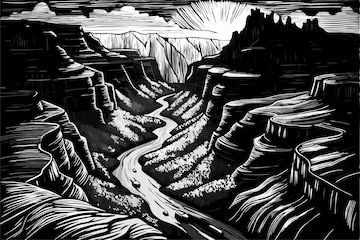
Stand on the edge of the canyon of history.
Clasp your hands around your mouth and call out: who are the Jews?
A hundred answers will echo back at you.
Throughout the cavern, stories will reverberate. Voices saying you are monsters. Voices saying you are victims. Sounds of priests and prophets; legends and laws; heroes and martyrs. How do you choose? Which version of the story of the Jews is you?

***

From out of history come the sounds of persecution.
In September 2025, Rabbi Laura Janner-Klausner appeared as a witness on the BBC’s Moral Maze. One of the panellists brought her a question. He said: “Sadly, the problem in the Middle East conflict is that both sides are right about each other. Do you share that view?”
Rabbi Laura responded with a question: “Can you finish the sentence?”
For a moment, the questioner fumbled, then put forth that both Israelis and Palestinians had “very little good intent, very little willingness to compromise.” He averred that, given half the chance, either the Israelis or the Palestinians would destroy the other. Their positive views of themselves were lies, and their demonisation of each other was the truth.
Rabbi Laura ignored the simplistic stereotyping and talked about how interconnected Israeli and Palestinian lives are.
I shuddered. I heard unspoken echoes of old European prejudices. The questioner certainly did not intend malice, but the well of antisemitism goes deep, and people draw from it without realising. Medieval passion plays depicted Jews as greedy, bloodthirsty baby-killers. Crusader propaganda portrayed Muslims as barbarous, fundamentalist hordes. The unflattering stereotypes of Palestinians and Israelis go back centuries, and do not originate from either party. They are the product of systematic othering.
Who the Jews are is not only determined from within: it is, unfortunately, a conversation with bigotry. In some minds, you are still Shylock pursuing his pound of flesh. You are the snivelling moneylender. No matter how assimilated you have become, you are Fagin trafficking children into crime.

***

Go ask Bondi Beach who the Jews are.
Dare those academics, who arrogantly proclaim that Jews are not oppressed, to tell that to Heaton Park Synagogue Manchester, or Tree of Life Synagogue Pittsburgh, or Hypermarche Paris, or Lee Park Charlottesville, or The Great Synagogue Copenhagen. From coast to coast, the voices echo.
So many places will tell you that Jews are victims. History is littered with millions of Jewish corpses. In some minds, you are still the helpless child in striped pyjamas, with a yellow star stitched on your lapel, and a number tattooed on your arm.
But don’t let that be your only answer. If we think of ourselves as permanent victims, we will rob ourselves of the agency God gave us. We will forget our power: to hurt and to heal.
We must retell our story as Jews. We cannot think of ourselves exclusively as the persecuted, and never as the persecutor.
Jews have entered history. We must take responsibility for what we do there.

***

Take a walk to the well and call into it. Ask the well who the Jews are.
The voice of the prophets will rebound, telling you that righteousness will flow out like an ever-flowing stream. You will hear the song of Miriam, whose fountain followed the Israelites in the desert; the cries of Hagar, who found water when she needed it most.
At the well of Beersheva, our father Abraham and his rival Avimelech chose to share water. Abraham, the first of our people, showed that a Jew was one who could negotiate and apportion according to need.
Still, the well may tell you that there is not enough water for everyone. That either we will drink or they will. The water might tell you that you have only one commandment, and that is to survive. If you do not drink, you will die.
Atop West Bank settlements, religious Jews rejoice at surviving. They chant: “the nation of Israel lives on; our father lives on.”
Let the water show you how some settlers have mains pipes filling their swimming pools, while Bedouin shepherds have to ration their water in butts.
Yet other Jews fight for shared resources and shared futures. Rabbi Dana Sharon stands in the way of settlers who want to attack Palestinian farmers in the West Bank. She is an organiser for Rabbis for Human Rights.
When I first met Rabbi Dana, I asked what had inspired her to get involved in peace activism. She said: “Ever since I was a  child, I wanted to win the Nobel Peace Prize. Of course, I thought the problems in my own country would be sorted by the time I grew up, and I’d have to do it somewhere else.” She knew what kind of Jew she should be, and became it.
In November 2025, Dana was shot with a drone by a settler wearing military fatigues. She was seriously injured. When I think of Dana, I believe that our father Abraham lives on. His message resounds: that sharing is a greater guarantor of survival than fighting.

***

Go to the Cave of Machpelah and stand at its entrance. This is a holy site in Hebron, where the founders of monotheism prayed. It is a tomb many thousands of years old, in Area A of the West Bank. You will have to get past checkpoints and walls and into a fortified compound, but you will find a cave.
Clasp your hands around your mouth and call into the hollow: who are the Jews? A hundred answers will echo back at you.
Here, Abraham procured a burial place for Sarah, and in turn was buried there. Abraham’s two sons, Isaac and Ishmael, came to bury him in Hebron. Ishmael had been cast out by his father. Isaac had nearly been killed by Abraham. We can’t imagine the pain they felt seeing each other, and performing a funeral for this man. Nevertheless, they prayed together at that sacred site.
Here is an answer to who Jews are. We are the descendants of Isaac, who prayed at the same tomb with his brother, Ishmael. We are the people who choose non-violence, reconciliation, and prayer.
The cave’s echoes continue, coming ever closer to the present day. The cave is a mosque and a synagogue, but the brothers do not pray together. In 1929, Palestinian rioters killed 67 Jews as part of a pogrom based on false rumours. In 1994, Baruch Goldstein killed 29 Muslims at prayer.
Murder reverberates over the South Hebron Hills. Only last year, Palestinian peace activist Awdah Hathaleen was murdered by settler Yinon Levy. Despite the assassination being filmed, the killer has not been charged with a crime.
Is this not also an answer about who Jews are? Can we reject it so swiftly because we abhor it?

***

So ask the shtetl yeshiva who you are supposed to be.
Confronted with the horrors of some Jews’ deeds, you may wish to retreat back there. You might imagine life would be simpler before Jews had power that they could weaponise against others. Maybe the Satmar Hassidim were right and we all just need to keep our heads down until the Messiah arrives.
So, go ahead. Pretend the Enlightenment never happened. Go back to the old Jewish study houses of a vanquished world. Sit at the rebbe’s table. Unless you’re a woman, of course. But, gentlemen, by all means, take a seat and open a holy book.
There, in your Mishnah, you will read: “be disciples of Aaron, loving peace, pursuing peace, loving all creatures, and bringing them closer to Torah.”
Hillel reaches out through the millennia-old books and grabs you by your shirt collar, and growls: did you think you could escape your responsibilities that easily? Our tradition demands you seek peace in your own world and lifetime. You cannot shirk away from the task of building a perfected world just because reality frightens you!
The study of Torah may happen in the yeshiva, but you live out its precepts in the streets. You fulfil the commandments by acting and taking risks.
If you want to be Jewish, you must know your past, but you cannot live there. You have to resist hatred, war, and greed in your own time. Be a disciple of Aaron. Love peace and pursue it.

***

Stand on the streets of any major city and start a chant: who are the Jews?
In New York, London, Cape Town, Paris, and Sydney, you will find people protesting for peace. In every demonstration, no matter where you are, you will find a Jewish Bloc. You will see Jews standing proud in their heritage and furious at oppression. You will hear them invoke their ancestors and their traditions in the name of human rights. Truth echoes out through skies and seas as thunderous clouds.
The prophet Jeremiah went to jail for protesting against the powerful. He chastised the false prophets who proclaimed peace where there was none. He accused them of putting tiny plasters on great gashes. Jeremiah’s rebuke of Israel was harshest because he knew that peace was possible and he saw what Jews could be.
Go ask the streets and they will tell you: those who wave placards and chant songs of dissent today stand in the footsteps of the prophets.
But the streets have other stories too. On those same marches, in other sections, there are people who chant words denouncing Jews. There are those who glamourise terror and those who monger hate.
Yes, it is true that not everyone in the coalition for Palestine is there for Palestinian human rights. Some march because they want to see Jews destroyed. Some march against militarism, nationalism, and fundamentalism. Others march for militarism, nationalism and fundamentalism of their own.
When Jeremiah denounced Israel, he chastised them they could not trust Egypt or Babylon. He attacked those who would ally with their enemies. The judgement of the prophet falls on every nation.

***

Go stand at the viewing point in Sderot. Look out over the ruins of the Gaza strip.
From this point, for two years, tourists watched bombs explode on houses like they were fireworks. Spectators could watch Jewish boots carry Jewish guns under Jewish flags into a densely-packed enclave.
Why don’t you ask Gaza who the Jews are? Will you like the answer that you hear from the unnumbered dead and rubble? Does the bombed-out rubble think the Jews are heroes?
You need not speculate. The words of Palestinians are publicly available, if you can brave the burning eyes of Gaza. Asmaa Al-Ghoul is a secular feminist in Gaza, who campaigns against the corruption of Fatah and the terrorism of Hamas. She witnessed more corpses than any soul could bear. After her cousin’s home was bombed, killing everyone inside, she wrote: “the house and its future memories have been laid to waste, its children taken to early graves, homes bombed into oblivion, their inhabitants homeless and lost, just as their camp always had been. Never ask me about peace again.”
In the days of the Judges, Samson was held captive in Gaza; all his strength sapped and his eyes gouged out by Philistines. With the last ounce of energy left in his battled body, Samson pulled down the pillars of the temple, killing himself and everybody in it.
We are brought up with stories of Samson. We call him “Samson the Hero.”
I met with a father from Gaza who had not seen his daughters in two years. They were trapped in that war zone. He told me: “They are destroying the world on top of our heads.” I wondered whether echoes of Samson were still there in Gaza, raining down destruction on their heads. Is this our hero?
In Hebrew, the word for hero, strongman, and warrior are the same. On military checkpoints, teenagers in IDF uniforms smile out from stickers, with words about who they were. For some, they are proof of ongoing Israeli heroism. All I see is dead kids, cast aside as cannon fodder for a vainglorious war.
We need to find a way of separating out heroism, masculinity, and war. Vivian Silver used to transport people from Gaza back and forth from this borderland. She lived on Kibbutz Be’eri, and was murdered there by Hamas on October 7th. 3 days beforehand, she organised a march of thousands of Israeli and Palestinian women against war.
Which is more heroic: to destroy an enemy or to make a friend? We need heroes whose strength is not in force but in fortitude.
Maybe Vivian Silver’s spirit still echoes on Gaza’s borders, too. And maybe, then, there is another way to be a Jew.

***

Go to your own heart and ask it who you are.
The great medieval sage Rabbi Moses ben Maimon told us that the ultimate question was not “what should I do?” but “who should I be?” Rambam wrote that the point of our religious laws, stories, and rituals was to help us morally perfect ourselves. Our goal should be to become the best possible human beings, in terms of character and intellect.
Rambam saw our religious inheritance as a guidebook on how to become moral agents. He taught that human beings are free to choose the right course, and showed that repentance is always available to us.
You are not stuck with a fixed version of who a Jew is. You always have the ability to make yourself anew. You can become more peaceful, more loving, and more devout. Seek to be the kind of person who wants peace and justice. Let your actions follow the highest inclinations of your heart.
Ask your heart who you are as a Jew. Let it tell you that you are a work in progress.

***

Now, return to the valley where it all began. Go stand on Mount Sinai. Surely this is the canyon of history. From atop its peak, the Ancient of Days spoke to you.
Clasp your hands around your mouth and call out: who are the Jews?
From out of this desert, the Jews spread knowledge of ethical monotheism throughout the world. At Mount Sinai, you once heard a voice: “I am the Eternal One your God, who redeemed you from the land of Egypt, to be your God.”
It is time you introduced yourself too.
Ask the canyon: who are the Jews? The question will come echoing back at you.
Canyons echo. The canyon of history is no different. If history repeats itself, it is only because we keep asking the same question.
Like a boomerang, your question returns to you: who are you?
History is Jewish. It likes to answer a question with another question.
This is your power and your burden. You must decide who you will be.
You are the answer to who the Jews are.
judaism · sermon · theology

What’s so bad about idolatry?


In the distant past, people made small gods. They carved out wooden statuettes to represent fertility, or hewed rocks into the shapes of animals that would bring them good luck. They made depictions of stars and planets, which would help them in their daily struggles. The ancients looked after the gods – giving them food, drink, rest, and clothes. In return, their little talismans looked after them.

When Abraham was born, he lived among the idol worshippers of Ur. He had no teacher nor guide, but came to understand, through his own reasoning, that God was the only Creator of all things, and that the world was governed by an invisible Force that could not be depicted. The totems people served were not gods at all, and could have no impact on the world.

As a result, he went around smashing up and destroying every idol and household God he could find. He went around telling everyone that the worship of idols was a great lie, and that the One True God would destroy anyone who bowed down to them. He enjoined his followers, the descendants of Abraham, that they, too, must destroy all idols.

This poses a question: what is so bad about idol worship?

If these are just empty vessels, why fear them? If they are not really gods, what harm can they do? Why should idols be so concerning that we must smash them up everywhere we find them?

By the time we get to the end of Moses’s life, here in the Book of Deuteronomy, the aversion to idol worship is even more intense.

At the start of Re’eh, Moses instructs the Israelites to find every idol, tear down the pillars, smash up the altars, cut down their gods, and destroy any memory that these false gods ever lived there.

If a seer comes to you, says Moses, and they say they have had a vision that you should worship idols, you must kill them instantly. You must purge them and their evil words.

If your own brother, sister, mother, father, or friend wants you to worship idols, Moses says, show them no pity. Don’t try to stop anyone from killing them. In fact, make sure it is your own hand that strikes them down.

And if you find out that there is a town where people worship idols, go and kill everyone in it. Bring everyone from the town together and slaughter them. Bring everything from that town into the square and burn it to the ground. Destroy that city in its entirety and never let anybody rebuild it.

This feels like something of an over-reaction.

How can idol worship be so bad that it is worse than murder, worse than cutting off your own kin, worse even than razing a city to the ground? Why should this practice of building little statues be so intimidating that it requires such destruction?

This feels completely out of place with our moral sensibilities. That’s not just a modern thing.

Even in the 13th Century, rabbis were worried about this injunction. Rambam, the great rabbinic decisor who codified all of the Torah’s laws, was also concerned.

Rambam lived among Muslims and Christians in medieval Egypt. He admired and appreciated them. He read the works of the great Greeks who had never known monotheism, like Plato and Aristotle. He found them wise and inspiring. He was deeply opposed to fundamentalism and chauvinism. Rambam, like us, was not really up for burning cities to the ground just because they did not follow our God.

Rambam says: don’t worry. The world for which these laws were written no longer exists. People don’t worship idols any more. Whatever perverse practices the Pagans once did, they are not doing them now.

Even if they did exist, we would not have the authority to burn a city to the ground like that. You would need a Sanhedrin – a court of 71 learned judges who could recite the laws in their entirety – and we have not had one of those for many centuries.

Even if the idol worshippers did still exist, and we did still have a Sanhedrin, the Sanhedrin would necessarily make sure to do everything possible to educate the idolaters away from their ill-conceived practices, help them to repent, and find ways to make sure they can live in the true religion of monotheism.

So, don’t worry, says Rambam, we can forget about all that.

But the trouble is we can’t.

It’s there in the Torah. We read it every year. Rambam still has to go and codify all these bloody edicts, that make such monsters of people who pray to fetishes.

And Rambam does not answer my fundamental question. The people who bow down to wood and stone might be wrong; their beliefs might be misplaced; but what is so bad about giving a drop of wine to a brick?

The most compelling answer I have found comes from a 20th Century psychoanalyst. Erich Fromm was born in Frankfurt, Germany, at the start of the last century. He studied psychiatry and philosophy among the greats of his generation, then moved, in 1934 to America, where he became a leading writer and critic of modern society. Needless to say, he was Jewish.

In 1976, Erich Fromm wrote a landmark book called “To Have or To Be.” This text became the cornerstone of the anti-consumerist movement.

Fromm engaged seriously with our religious texts. He saw them as inspiring people with a serious psychological message about how to live.

The difference between real worship and idolatry, says Fromm, is not what you worship, but how you do it. He calls it the “being mode” and the “having mode”.

The problem with idolatry, says Fromm, is that it makes you think God is something you can own.

Hebrew monotheism is a rejection of the entire enterprise of having a god:

“The God of the Old Testament is, first of all, a negation of idols, of gods whom one can have… The concept of God transcends itself from the very beginning. God must not have a name; no image must be made of God.”

Fromm writes:

“God, originally a symbol for the highest value that we can experience within us, becomes, in the having mode, an idol. In the prophetic concept, an idol is a thing that we ourselves make and project our own powers into, thus impoverishing ourselves. We then submit to our creation and by our submission are in touch with ourselves in an alienated form. While I can have the idol because it is a thing, by my submission to it, it, simultaneously, has me.”

So, for Fromm, idol worship isn’t over at all. In fact, it is a pitfall any of us can stumble into. If you think that faith is something you can have, rather than a way of living, you are guilty of idolatry. Fromm says:

“Faith, in the having mode, is a crutch for those who want to be certain, those who want an answer to life without daring to search for it themselves.”

Fromm goes further. It’s not just about God. It’s about everything. Do you want to be in this world, or do you want to have it? If you think you can have it, you will never be satisfied. But if you can truly be in it, you will find no need to have any desires met. Fromm says:

“The attitude inherent in consumerism is that of swallowing the whole world.”

Fromm even extends his philosophy to how we love. Do not try to have love, he warns, but try to be in love.

“To love is a productive activity. It implies caring for, knowing, responding, affirming, enjoying: the person, the tree, the painting, the idea. It means bringing to life, increasing his/her/its aliveness. It is a process, self-renewing and self-increasing.”

If we take Fromm seriously, we have a whole new way of looking at the world. Inspired by the prophets, everything we do can be about existing and loving and being. We can reject the whole ideology of possessing.

That is what is wrong with idolatry. The artefacts of the Pagans aren’t just wooden blocks. They tell us a way of living. The wrong way of living. They direct us to control and own.

Rambam may be right. The idolaters do not exist in cities any more.

Instead, today, they live in our own minds. And we must burn them down, if we are to be truly free.

Shabbat shalom.

story · torah

A letter to Joshua, from Moses

Dear Joshua,

It’s me, Moses.

Please forgive my shaky handwriting. It has been many years since I wrote anything down.

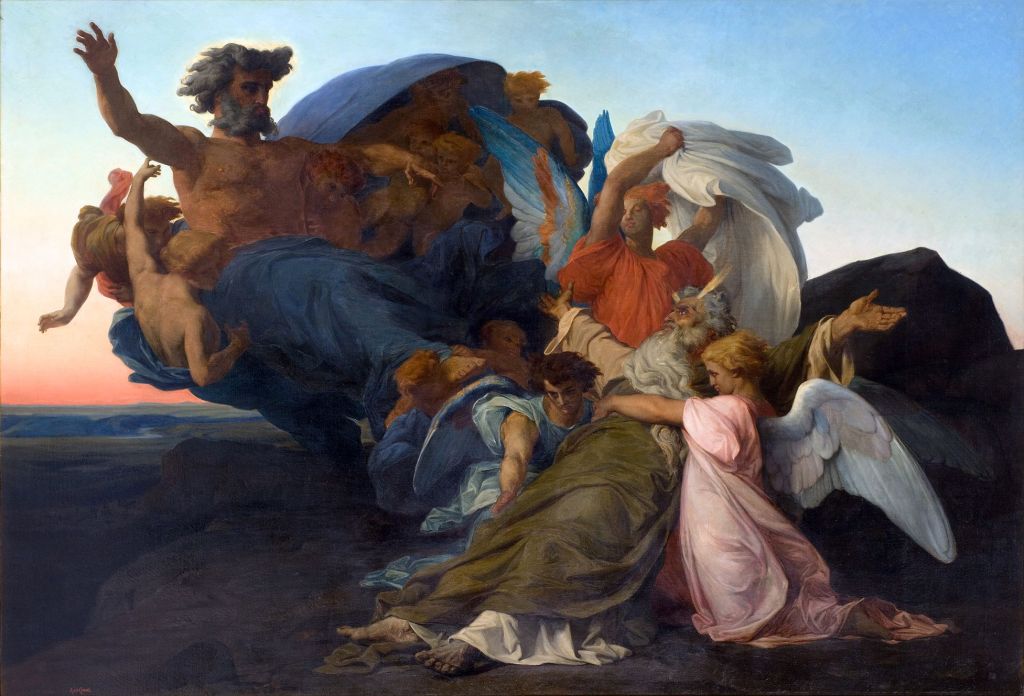
Can you believe it has already been forty years since we came to that great desert mountain and came into contact with the One God? Twice, I carried those miraculous tablets, etched with the Laws of Life, down from that mountain peak.

I could not carry them now. I would not have the strength. And I do not just mean that because of the way my hands tremble when I lift my food or the staggered steps I take when I wake in the morning. I do not have the zeal I once did. I cannot go on much longer.

Joshua, I am dying, and I will soon be dead.

I wish desperately that I could walk with you across that Jordan. All I have ever wanted was to arrive with you at that great destination to which we have journeyed.

But the Eternal One has told me that I will not go on much longer. I will die here, in the desert, and be buried in the wilderness sands.

At first, I was affronted. I cried out to my Maker. ‘Why, God? Why can I not pass over to finally see the freedom for which I have longed?’

God, who has given me so many words, remained silent.

I think I have an answer, though.

The truth is I was free the moment I first left Egypt. Before I returned with my staff and my message. Before any of those miracles and signs and visions. Before I even knew the God of Israel watched over us.

I was free as soon as I took my life into my own hands and refused to be part of the Egyptian system any longer. Once I decided not to be a slaver; not to subjugate others, nor to be subjugated, I was already then mentally emancipated.

These years we have spent in the desert were a way to work out what to do with that freedom. We have been reciting these laws and developing these rituals to find ways of living that keep us from ever going back to the oppressive ways of Egypt.

Joshua, this is what I need to tell you. Do not go back there. Not even in your mind. Do not try to own and control people. Do not allow others to own or control you. Let your soul be free, so that you can dedicate it to the God who led you here.

I am writing this down so that you can refer back to it, and remember what the point of it all was. Why we left Egypt. Why we spent all this time trudging thirsty through shrubland. Why we said we would go to that country from which our ancestors came many mythical centuries ago.

The point was not the land. The point was what we might do there. That we might be free. That we might finally see every human being as a living representation of their Creator. That we might cease using each other as means to an end but as ends in themselves. That we might truly know the Oneness of God and the deep mysteries underlying our universe.

That’s why I’m writing this now, as a reminder.

I know, I have said this all many times before. Call this my mishneh torah, my deutero-nominon; the repetition of everything I said before. It needs to be repeated, over and again, because freedom is hard to achieve and subjugation is such an easy default.

Please, read it out loud. Read it many times. Read it all the time. Even when the words feel trite and you feel like you have repeated the same phrases all your life, keep coming back to it. Remind yourself why you are here. Remind yourself what is at stake in this brief life we have been given.

I will say it again. Do not become like them. Do not worship the work of your hands. Do not think that work is the goal. Do not seek to own and control. Do not kill or oppress or endanger. Choose life. Seek God. Find holiness in everything that lives.

Joshua, I worry, even as I write these words, that you will not heed them. I know you want to. Ever since you were a boy, you used to sit at my feet and lap up every word. You were desperate to be closer to Divinity, to reach for higher things.

When I said we could conquer Canaan, only you and your friend Caleb believed me. You saw giants and were certain you could slay them. You had more faith than any of us. You had more faith than I did.

Joshua, there have been times when you carried me. Literally. In the war against the Amalekites, you put your shoulders under my arms and kept me upright. You are so, so faithful.

But where will all that zealotry go, once you are charged with leading people in the land? When you no longer have giants and Amalekites left to fight, what will you do with all your conviction?

I am asking too much of you. I am asking you to remember a life you have not lived.

You never knew Egypt. You were born here, in the wasteland, after we had already fled. You don’t remember what it was like to be owned. You cannot know what it meant to be a subject of a system that meant to destroy you.

In some ways, this means you have always been free, because you were not born a slave. In other ways, it means you have never been free, because you have never had to fight for it. You do not know what it feels like to start moving, then notice you are shackled, and to keep moving still, and to never stop moving, and to keep going with nothing but faith to carry you.

And you cannot know it. Just as I cannot follow you over the Jordan River, you cannot follow me out of Egypt. Some lessons can only be learned by life’s journey, and some journeys can only be made once.

Perhaps, when you go into that new country, you will make the place I dreamed about. Maybe it will flow with milk and honey. It might become a light unto the nations, where everyone lives with equality and dignity, where everyone can walk in the ways of God.

Or perhaps you will make a new Egypt. You, who never knew Egypt, will find new ways to conquer and subjugate and destroy. Maybe you will crown kings and build empires and wage wars.

Then what will the point have been?

I am asking too much of you. I am asking you to build a world I could not, and to do it all without my help. I am asking to you to know things you have not learnt, and to be perfect in ways I was not. I am sorry to put so much pressure on you. It is not fair.

You may not be able to do what I am asking. But at least you can remember. Tell your children where we came from. Teach them where we were trying to go.

And, then, perhaps, when they see new Egypts emerging, or they see that new Zions are possible, they will find paths through the wilderness that you and I could not see. Keep the story alive, so that the dream may continue.

Joshua, I am going to die here.

These words are all you will inherit from me.

I love you, Joshua.

Your friend,

Moses

fast · high holy days · sermon

Creating cultures of repentance

We are, apparently, in the grips of a culture war. 

It must be an especially intense one, because the newspapers seem to report on it more than the wars in Syria, the Central African Republic, or Yemen, combined. 

According to the Telegraph, this war is our generation’s great fight. It was even the foremost topic in the leadership battle for who would be our next Prime Minister, far above the economy, climate change, or Coronavirus recovery.

Just this last month, its belligerents have included Disney, Buckingham Palace, the British Medical Journal, cyclists in Surrey, alien library mascots, and rural museums.

But which side should I choose? One side is called “the woke mob.” That seems like it should be my team. After all, they are the successor organisation to the Political Correctness Brigade, of which I was a card-carrying member when that was all the rage.

The so-called “woke mob” are drawing attention to many historic and present injustices. From acknowledging that much of Britain was built on the back of the slave trade to criticising comedians who say that Hitler did a good thing by murdering Gypsies, they are shining a light on wrongs in society.

The trouble is, I hate to be on the losing side. For all the noise and bluster, this campaign hasn’t managed to get anyone who deserves it. The most virulent racists, misogynists, abusers, and profiteers remain largely unabated. 

Even if they were successful, I find the underlying ideas troubling. It seems to assume that people’s wrong actions put them outside of rehabilitation into decent society. Some people are just too bad

This strikes as puritanical. While the claims that so-called “cancel culture” is ruining civilisation are wildly overstated, it is right to be concerned by a philosophy that excludes and punishes.

So, will I throw my lot in with the conservatives? Perhaps it’s time I joined this fightback against the woke mob. 

On this side, proponents say that they are combatting cancel culture. How are they doing this? By deliberately upsetting people. They actively endeavour to elicit a reaction by saying the most hurtful thing they can.

When, inevitably, these public figures receive the condemnation they deserve, they go on tour to lament how sensitive and censorious their opponents are. As a result, they get book deals, newspaper columns, and increased ticket sales. 

Ultimately, this reaction to “cancel culture” is a mirror of what it opposes. It agrees that people cannot heal or do wrong. It celebrates the idea that people are bad, and provides a foil that allows people to prop up their worst selves.

If this is the culture war, I want no part in it. Neither side is interested in the hard work of repentance, apologies, and forgiveness. It offers only two possible cultures: one in which nobody can do right and one in which nobody can do wrong.

This is the antithesis of the Jewish approach to harm. 

Our religion has never tried to divide up the world into good and bad people. We have no interest in flaunting our cruelty, nor in banishing people.

Instead, the Jewish approach is to accept that we are all broken people in a broken world. We are all doing wrong. We all hurt others, and have been hurt ourselves. The Jewish approach is to listen to the yetzer hatov within us: that force of conscience, willing us to do better.

The culture we want to create is one of teshuvah: one in which people acknowledge they have done wrong, seek to make amends, apologise, and earn forgiveness. 

A few weeks ago, just in time for Yom Kippur, Rabbi Danya Rutenberg released a new book, called Repentance and Repair: Making Amends in an Unapologetic World.

Rabbi Rutenberg argues that Jewish approaches to repentance and repair can help resolve the troubled society we live in.

She locates some of the issues in America’s lack of repentance culture in its history. After the Civil War, preachers and pundits encouraged the people of the now United States of America to forgive, forget and move on. It doesn’t matter now, they said, who owned slaves or campaigned for racism, now they were all Americans. 

The Civil War veterans established a social basis in which there was no need for repentance or reparations, but that forgiveness had to be offered unconditionally. Without investing the work in true teshuvah, they created an unapologetic society that refused to acknowledge harm.

We, in Britain, also have an unapologetic and unforgiving culture, but our history is different. 

True, we also failed to properly address our history of slavery. When the slave trade was abolished at the start of the 19th Century, former slave traders and slave owners were given substantial compensation. The former slaves themselves were not offered so much as an apology.

But we have not been through a conscious process of nation-building the way the United States has. 

In fact, Britain has not really gone through any process of cultural rebuild since the collapse of its Empire. In 1960, the then Prime Minister Harold Macmillan gave his famous speech, in which he acknowledged “the wind of change” driving decolonisation. Whether Brits liked it or not, he said, the national liberation of former colonies was a political fact. 

At that time, he warned “what is now on trial is much more than our military strength or our diplomatic and administrative skill. It is our way of life.” Britain would need to work out who it was and what its values were before it could move forward and expect the family of nations to work with it.

More than 60 years later, it seems we still have not done that. As a nation, we are simply not clear on who we are. We do not know what makes us good, where we have gone wrong, or what we could do to be better.

So, we are caught in shame and denial. Shame that, if we admitted to having caused harm, we would have to accept being irredeemably evil. Denial that we could be bad, and so could ever have done wrong.

The two sides of the so-called “cancel culture” debate represent those two responses to our uncertainty. Those who are so ashamed of Britain’s history of racism and sexism that they have no idea how to move forward. And those who are so in denial of history that they refuse to accept it ever happened, or that it really represented the great moral injury that its victims perceived.

This creates a toxic national culture, stultified by its past and incapable of looking toward its future. 

So, Rabbi Rutenberg suggests, we need to build an alternative culture, one built on teshuvah. We need a culture where people feel guilty about what they have done wrong and try to repair it. For those who have been hurt, that means centering their needs as victims. For those who have done wrong, that means offering them the love and support to become better people. 

Rutenberg draws on the teachings of the Rambam to suggest how that might happen.  The Rambam outlined five steps people could take towards atonement, in his major law code, Mishneh Torah. 

First, you must admit to having done wrong. Ideally, you should stand up publicly, with witnesses, and declare your errors. 

Next, you must try to become a better person. 

Then, you must make amends, however possible. 

Then, and only then, can you make an apology. 

Finally, you will be faced with a similar opportunity to do wrong again. If you have taken the preceding steps seriously, you will not repeat your past mistakes.

For me, the crucial thing about Ruttenberg’s reframing of Rambam, is that it puts apologies nearly last. It centres the more difficult part: becoming the kind of person that does not repeat offences. It asks us to cultivate virtue, looking for what is best in us and trying to improve it.

You must investigate why you did what you did, and understand better the harm you caused. You must read and reflect and listen so that you can empathise with the wronged party. And, through this process, you must cultivate the personality of one who does not hurt again.

That is what Yom Kippur is really about. It is not about beating ourselves up for things we cannot change, nor about stubbornly holding onto our worst habits. It is not about shrugging off past injustices, nor is it about asking others to forget our faults.

It’s about the real effort needed to look at who we are, examine ourselves, and become a better version of that.

If there is a culture war going on, that is the culture I want to see. 

I want us to live in a society where people think about their actions and seek to do good. I want us to see a world where nobody is excluded – not because they are wrong or because they have been wronged. One where we are all included, together, in improving ourselves and our cultural life.

To build such a system, we need to start small. We cannot change Britain overnight. 

We have to begin with the smallest pieces first. Tonight, we begin doing that work on ourselves.

Gmar chatimah tovah – may you be sealed for good.