Emmanuel of Rome –in Hebrew, Emmanuel haRomi; in Italian, Manoello Giudeo – was born to an aristocratic Italian-Jewish family in 1261. Although only a minor poet by comparison to his pre-Renaissance contemporaries, Emmanuel was the first ever poet to write sonnets in any language other than Italian. Around 1300, Emmanuel produced a series of Hebrew sonnet collections that dealt with both secular and religious themes.
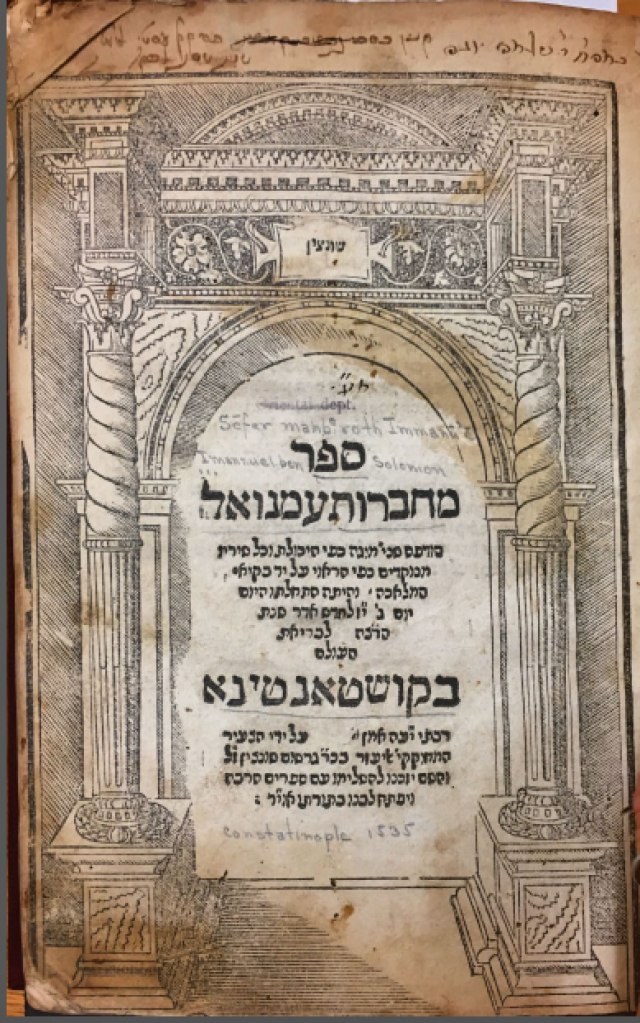
Using Dov Yarden’s edition of the Hebrew, I have created English translations of Immanuel’s 9th Machberet, which is a series of sonnets for each month of the Jewish year. So far, there has not been any systematic effort to translate all of Emmanuel’s works and only a few contemporary scholars show much interest in him. By putting these translations into the public domain, I hope others will take up interest in him.
| I tell my story and say: | וָאֶשָּׂא מְשָׁלִי וָאֹמַר |
TISHRI
| In Tishri, I rejoice; as the feasts to God Awaken me, to songs of passion sing I will delight in honey and nectar A time when willows string up violins And I shall surround myself with youth I’ll eat a banquet fit to feed a king While staring at the apple of my eye, The juice of grapes and pomegranates drink. My face in battle, like before a flame I won’t be mute, but surely I will sing As her warden, I open up my lips I borrow kisses from Ofra’s wellspring And thank the Lord who made humanity Complete with all the perfect openings | בְּתִשְׁרִי אֶשְׂמְחָה כִּי מוֹעֲדֵי אֵל יְעִירוּנִי לְשׁוֹרֵר שִׁיר עֲגָבִים וְאֶתְעַנַּג בְּנֹפֶת צוּף וּפַנַּג וְכִינוֹרַי תְּלוּיִם עַל עֲרָבִים וְאַצִּיבָה סְבִיבוֹתַי נְעָרַי וּמוּל פָּנַי לְאַיֶּלֶת אֲהָבִים וְאֶסְעַד מַעֲדַן מֶלֶךְ וְאֶשְׁתֶּה עֲסִיס רִמּוֹן וְאֶשְׁכַּר דַּם עֲנָבִ ים וְאֶשְׁכַּח רִישׁ וְלֹא אַחְרִישׁ וְאָרֹן וּפָנַי בַּקְּרָב כִּפְנֵי לְהָבִים וְאֶלְוֶה מִשְּׂפַת עָפְרָה נְשִׁיקוֹת וְלִפְרֹעַ שְׂפָתַי לָהּ עֲרָבִים וְאוֹדֶה אֵל אֲשֶׁר יָצַר בְּחָכְמָה בֵּני אָדָם וּבָרָא בָם נְקָבִים |
MAR-CHESHVAN
| In Mar-Cheshvan, we’re lifted up by light I long to stand on dark borders of clouds And cry out from the fastened fires of night So sticky honey drips on land unploughed Upon the borders of the fields I press The nectar into syrup and the olives into chow I drink until I forget poverty And drive out all the grief from hearts somehow I bless each bairn to any woman born I see this as the time for seeds to sow The autumn plants assert this as their hour Nothing has thorns that sting as sharp as now But shoots will spring from barren earth again Like men from graves, accomplishing God’s vow | בְּמַרְחֶשְׁוָן מְאוֹר יַעְלוֹת וְזִיוָן אֱהִי עֹרֵךְ לְמוּל אֹפֶל עֲנָנָיו וְקָרָתוֹ בְּאֵשׁ חֵשֶּׁק אֲגָרֵשׁ וְתַמְרוּרָיו בְּנֹפֶת צוּף עֲדָנָי וּמוּל פִּרְשׁוֹ יְהִי חֵשֶק וְדִבְשׁוֹ וְאֶל מוּל בָּאֳשׁוֹ רֵיחַ שְׁמָנָיו אֲנִי אֶשְׁתֶּה וְאֶשְׁכַּח רִישׁ וְאַחְרִישׁ וְאָסִיר מִלְּבָבִי עִצְּבוֹנָיו וּמִכָּל חַי יְלוּד אִשּׁה אֲבָרֵךְ אֲנִי נֹחַ וְנִטְעֵי נַעֲמָנָיו אֲשֶׁר לוּלֵי נְעִימוֹתָם יְכֻסֶּה זְמָן חָרוּל וְעָלוּ קִמְּשׁוֹנָיו עֲלֵי יָשְׁרוֹ אֲחוֹנֵן אֶת עֲפָרוֹ בְּתוֹךְ קִבְרוֹ וְאֶרְצֶה אֶת אֲבָנָיו |
KISLEV
| In Kislev, God’s horseman I will be And through calm pride I surely will agree A light on high supports a needy man To lift the dust of earth to build freely We light each night an eight pronged candel’bra Drink whiskey like the finest smooth honey The beauty of the girls’ arms, so exposed Whose eyes, like light’ning, shine in front of me One woman sets the table for the meal Another one runs after her to clean One coyly turns aside and rends men’s hearts Another bakes up biscuits for high tea I need not wonder what the meal will be The main course is spread out in front of me | בְּכִסְלֵו אֶהְיֶה שָׁלֵו וְאוֹדֶה לְצוּר רֹכֵב בְּגַאְוָתוֹ שְׁחָקִים וְאוֹר עֶלְיוֹן אֲשֶׁר אִישׁ דַּל וְאֶבְיוֹן מְרִימִי מֵעֲפַר אֶרֶץ וּמֵקִים וְנֵרוֹת אֶהְיֶה מַדְלִיק שְׁמֹנָה וְשִׁקּוּיַי כְּנֹפֶת צוּף מְתוּקִים וְהַיָּפוֹת זְרוֹעֹתָן חֲשׂוּפוֹת וְעֵינֵיהֶן יְרוּצוּן כַּבְּרָקִים וְאַחַת עֹרְכָה שֻׁלְחָן וְאַחַת תְּשַׂדֵּד אַחֲרֶיהָ הָעֲמָקִים וְאַחֶרֶת תְּלַבֵּב הַלְּבִבוֹת וְאַחֶרֶת תְּבַשּׁל הָרְקִיקִים וְצַפִּיחִת וּמַעְשֵׂה הַחֲבִתִּים וּמַרְחֶשֶׁת מְזָוֵינוּ מְפִיקִים |
TEVET
| The tenth Tevet: a fast for those who died When God’s children, like roaring seas, shall thrive They come in waves before the courts of God Where fools can dream and helping hands can strive To dig the chilly ground; this cold man shakes Those muscly men who work the harsh outside Who pull the jumpers round their necks and hide On snowy roads beneath the winter sky On days like these, I look for doe-eyed dames In secret surfaces where they reside My life is like a dead stalk in decay And yet, with only a gaze, I revive I know that God will crush all those who hate But meanwhile, I’ll be fortified by wine | בְּטֵבֵת בַּעֲשָׂרָה בוֹ יְצוּמוּן בְּנֵי אֵל חַי וְכַיַּמִּים יְהִימוּן לְבוֹא צַר בֵּית אֱלֹהִים וַחֲצֵרָיו בְּכֵילַפּוֹת וְכַשִּׁיל יַהֲלֹמוּן וְהַקֹּר יַחֲלֹף הָאִישׁ וְיִדְקֹר פְּנֵי שָׂרִים הֲכִי חָבוּשׁ בְּטָמוּן וּמִטְרוֹת עֹז וְטִיט חוּצוֹת וְקֶרַח וְשֶׁלֶג עַל מְסִילֹּתַי יְרֻמוּן לְעֵת כָּזֹאת אֲשַׁחֵר הַצְּבִיּוֹת אֲשֶׁר סוֹד עַל יְגוֹנִים יַעֲרִימוּן וְעֵינֵיהֶן וְהוֹד צִיצַת לְחֵיהֶן יְחַיּוּנִי נְבֵלָתִי יְקִימוּן וְאֵיךְ אִירָא וְיֵינִי לִי לְעֶזְרָה וְהוּא יִמְחַץ מְשַׂנְאַי מִן יְקוּמוּן |
SHVAT
| Your face is harsh as bastards’ are, Shevat You send your time and frosty ice like loaves The whizzing snow breaks skies and cools my heart I spot the lovers hiding in alcoves They thrust and grab with their bosoms exposed Their voices cry out loud within their homes I cursed the stupid sermons as I froze And realised I was better off alone | שְׁבָט אַכְזָר וְעַז פָּנִים כְּמַמְזֵר וּבוֹ יַשְׁלִיךְ זְמָן קַרְחוֹ כְפִתִּים וְהַשֶּׁלֶג גְּאוֹן הַלֵּב יְפַלֵּג וְהַדּוֹדִים בְּחֵיק יַעְלוֹת נְחִתִּים וְרָצֵי הַצְּבִיּוֹת הֵם דְּחוּפִים וְכָרוֹזָא בְּקוֹל קָרֵא בְּבָתִּים אֲרוּרָה דֹּרְשָׁה צֶמֶר וּפִשְׁתִּים לְעֵת כָּזֹאת לְבַד מַעְשֵׂה חֲבִתִּים |
ADAR
| Adar arrives to teach the bawdy tale Of how Haman and Zeresh caused such shame If I had not such wealth and dignity I could not feast upon these geese and game In my right hand, a cup of toddy wine I shout each time I hear Haman’s curs’d name I join my mates and drink myself insane Until the heroes and the brutes are same We cheer with throats full of liquor and food For tyrants who will never rise again Only good wine can expel pain and strife And so we praise its healing holy name | בְּאַדָּר אֶהְיֶה ישֵׁב וְדֹרֵשׁ וְאַזְכִּיר חַסְדֵי הָמָן וְזֶרֶשׁ וְלִי יוֹנִים וּבַרְבֻּרִים אֲבוּסִים וְלֹא אָחוּשׁ הֲאִם לִי הוֹן וְאִם רֵישׁ וְהַיַּיִן מְבֻשָּׂם אֶל יְמִינִי בְּקוֹל קֹרֵא וּבַדִּבּוּר יְפָרֵשׁ וְאִם אֹמַר אֲרוּר הָמָן וְזֶרֶשׁ יְשִׁיבוּן אַל תְּקַלֵּל דּוֹד לְחֵרֵשׁ וְקוֹל קֹרֵא אֱכֹל וּשְׁתֵה לְשָׁכְרָה וְלֹא תַשְׁאִיר לְנֹחֵל אוֹ לְיוֹרֵשׁ בְּיַעַן הוּא לְבַד רִפְאוּת וּמָזוֹר וְכָל רַע וָחֳלִי גָּרֵשׁ יְגָרֵשׁ |
NISSAN
| Nissan, I will recall God’s miracles Come see our homes, delight with joyous Jews How good and pleasant are these former slaves Our ancestors whom God opted to choose Once cloaked in cloud, they wandered in deserts But now delight and wonder are our views Up from these blossomed trees call turtle doves Our doorways filled with special treats, infused I fall in love with her between the flower beds And couples ride the heavens in pursuit I will sacrifice the flesh and wool Of lambs and rams and farmers’ choicest ewes Let me cry out to all my famished friends: Jerusalem and food wait here for you! Upon the Torah’s head a diadem And graceful bracelets embedded with jewels Her crown reveals her lovely wonderment Each heart lights up to listen to her news Although a broken world encroaches now When morning comes, the world awaits her truth | בְּנִיסָן אֶזְכְּרָה נִסֵּי אֱלֹהִים וּבֹו אוֹרָה וְשִׂמְחָה לַיְּהוּדִים וַּמה טּוּבוֹ וַּמה יָּפְיוֹ אֲשֶׁר בּוֹ אֲבֹתַי יָצְאוּ מִבֵּית עֲבָדִים וּפָשַׁט הַזְּמָן עָנָן לְבֻשׁוֹ וְעָטָה אוֹר וְכֻלּוֹ מַחֲמַדִּים וְקוֹל הַתּוֹר עֲלֵי מִפְתָּן וְכַפְתּוֹר וְאֶרְאֶה עַל פְּתָחַי כָּל מְגָדִים וְחשֵׁק עִם חֲשׁוּקָה בֵּין עֲרֻגוֹת בְּשָׂמִים רֹכְבִים יַחְדָּו צְמָדִים וְאֶזְבַּח שׁוֹר וְשֶׂה נָקֹד וְטָלוּא לְבַד מִן הַתְּיָשִׁים הָעֲקֻדִּים וְאַעְבִיר קוֹל לְכָל צַד כָּל דְּכָפִין וְצָרִיךְ לֶאֱכֹל יִהְיוּ עֲתִידִים וְאַצִּיב יַעֲלַת הַחֵן לְנֶגְדִּי בְּרֹאשָׁהּ צִיץ וְעַל יָדָה צְמִידִים וְהִיא תַעְנוּג לְכָל לֵב נוּג וְלַחְרֹט פְּאֵר הוֹדָהּ יְדֵי הָעֵט כְּבֵדִים לְדַעְתָּהּ יֵצְאוּ יָדַי גְּדוּדִים וְעַד בֹּקֶר הֲכִי נִרְוֶה בְדֹדִים |
IYYAR
| Iyyar asks me a joyful oath to swear I join my hands, both left and right, as pairs With lustful oxen, all Hebrews will unite By seeking dreams and chirpy birdsong pray’r I will never see liberation come Nor hear lads singing in the streets somewhere The world removes the mourning clothes she wears To swap for fancy garb, with lovers shared I free myself from books I have to read The Talmud’s texts, to which I am an heir Instead, I’ll set myself beside a doe Her body giving life beyond compare And though the heat of morning beats us slow When death does come, we will be holy there | בְּאִיָּר אֶשְׂבְּעָה שׂבַע שְׂמָחוֹת וּבִשְׂמֹאלִי וּבִימִינִי נְעִימוֹת בְּשׁוּרִי חשְׁקִים מִכָּל עֲבָרִים בְּצִיץ צִצִּים לְשַׁחֵר הָעֲלָמוֹת וְלֹא אֶרְאֶה לְבַד גִּילַת וְרַנֵּן וְלֹא אֶשְׁמַע לְבַד שִׁיר עַל עֲלָמוֹת וְתֵבֵל תַּחֲלִיף סוּת אַלְמְנוּתָהּ וְלִכְבוֹד חשְׁקִים תִּלְבַּשׁ רְקָמוֹת וְאֶתֵּן גֵּט לְעֵרוּבִין וְגִטִּין וְסַנְהֶדְרִין וּמַסֶּכֶת יְבָמוֹת וְאֶבְחַר לִי לְצֵידָה הַצְּבִיָה לְחִי שׁוֹשָׁן נְשָׁמָה לַנְּשָׁמוֹת פְּנֵי חַמָּה אֲשֶׁר כָּל שֹׁחֲרֶיהָ קְדֹשִים יִהְיוּ בָהּ אַחֲרֵי מוֹת |
SIVAN
| Sivan makes me remember all God’s deeds How by wonder, He lifts us up, proceeds He brought His treasur’d people to freedom His children follow after where he leads They see his words and statutes as their light Enlightened by the Torah’s sacred creed Hear us, O God, as we cry out to You Comfort our fears in this, our hour of need O, show us Moses, whom we need so close Who came from mountains in the clouds, decreed To us the ten statutes by which we live For Jeshurun bowed down and found he’d heed Then Esau saw that God fulfilled His will And Ishmael learnt that God would be his steed | בְּסִיוָן אֶזְכְּרָה פִּלְאוֹת אֱלֹהִים אֲשֶׁר נִשָּׂא וְגָבַהּ עַל גְּבֹהִים אֲשֶׁר יָצָא לְיֵשַׁע עַם קְרֹבוֹ יְלָדָיו הֹלְכִים אַחְרָיו וְנִנְהִים וְנָתַן הוֹד וְנֵר מִצְוָה וְתוֹרָה לְעַם קָדְשׁוֹ לְאוֹר יִשְׁעוֹ כְמֵהִים וְשָׁמַעְנוּ אֱלֹהִים חַי מְדַבֵּר וְנַחְנוּ פֹּחֲדִים מֶנְהוּ וְרֹהִים וְרָאִינוּ אֲזַי משֶׁה בְּגִשְׁתּוֹ לְעַרְפַלָּיו וְעָמַדְנוּ תְמֵהִים וְהִתְוָה תָו עֲשֶׂרֶת דִּבְּרוֹתָיו הֲתִשְׁתּוֹחַח יְשֻׁרוּן עוֹד וְתָהִים שְׁאַל עֵשָׂו הֲרָאָה כֵן בְּעֹשָׂיו וְיִשְׁמָעֵאל הֲשָׁמַע קוֹל אֱלֹהִים |
TAMMUZ
| Stripped bare and broken, in Tammuz, I go To play and say the eulogies of woe My contrite heart cries out in broken pain My clothes are drenched in blood and wet sorrow That soaks the valleys of God’s holy home The plunder and destruction of my foes Those heathens burn the sacred sites they hate And tear up Torah scrolls, they overthrow An idol stands upon God’s conquered throne It breaks my heart in ways I’ve never known I take my sword, prepare myself for war The huntsman within me readies his bow So all of my tears will break down these walls In grieving the lost ones, I cry alone | בְּתַמּוּז אֵלְכָה עָרוֹם וְשׁוֹלָל וְלִשְׂחוֹק אֹמְרָה נַפְשִׁי מְהוֹלָל וְאֶתְעַנֶּה בְּלֵב נִשְׁבָּר וְנֶעְכָּר וּמַלְבּוּשִׁי בְּדַם דִּמְעִי מְגוֹלָל אֲשֶׁר בּוֹ הָבְקְעָה עִיר בֵּית אֱלֹהַי וְהֵצַר צַר וּבָזַז בַּז וְשָׁלָל וּבָטְלוּ הַתְּמִידִים בּוֹ וְשָׂרַף אֲפוֹסְטוֹמוֹס לְתוֹרַת אֵל וְחִלָּל וְצֶלֶם הֶעֱמִיד תּוֹךְ הֵיכְלֵי אֵל מְשׂוֹשׂ לִבִּי לְזֹאת חָרַב וְדָלָל הֲיַעְרֹךְ צִיר אֱלֵי צִירִי וּמַכְאֹב לְמַכְאֹבִי אֲשֶׁר בָּא לִי וְעוֹלָל וְלָכֵן כֹּל אֲשֶר דִּמְעָה יְפַכֶּה וְיִתְאַבֵּל לְפִי שִׂכְלוֹ יְהֻלָּל |
AV
| Throughout the month of Av, I will cry and grieve I’ll pump out reservoirs of tears of pain For desecration of God’s wasted home The refugees removed by Rome’s campaign On one long day, like Haman’s sons we hang While God destroys His seat of holy reign With fuming rage, my life force God destroys I sob out floods of salty tear-filled rain Now traitors and cynics surround me But I won’t eat or make love for the slain And were it not for God’s endless mercy My mouth would never know to laugh again | בְּחֹדֶשׁ אָב אֱהִי נִכְאָב וְאֶדְאַב וְאֶשְׁאַב מֵי דְמָעַי מִכְּבֵדִי וְאֶתְעַנֶּה לְחָרְבַּן בֵּית אֱלֹהַי וְעִיר קָדְשׁוֹ וְעַל הָגְלַת כְּבוֹדִי בְּיוֹם אָרוּךְ כְּמוֹ וָי”ו וַיְזָתָא בְּחֻמּוֹ נֶהֱפַךְ חֹרֶב לְשַׁדִּי וְהַמַּיִם אֲשֶר אֶשְׁתֶּה לְשִׂכִּים בְּמוֹ עֵינַי וְלִצְנִינִים בְּצִדִּי וְאַרְחִיק הַצְּבִיָּה מִיְּצֻעַיְ וְאֶתְגּוֹלֵל בְּמִטָּתִי לְבַדִּי וְלוּלֵי נַחֲמוּ בִּבְנֵי אֲוָזָיו יְמַלֵּא פִי שְׂחוֹק אֶבְכֶּה בְעוֹדִי |
ELUL I
| The nobles’ daughters now are frollicing On flower beds of Elul’s evenings And balls run down the rafters of downswings Like those who made our rabbis into kings O, let us go and see the vineyards spring We’ll search for fresh grown figs until ev’ning Where trees not only grow but even sing And they will speak words kind and flattering Lift up your hand and don’t forget a thing I wrote these words of verse when I was young So ev’ry month could have its praises sung Today, in age, I wrote another one In sacred oil to praise the Elul month And now my greatest poem has begun… | בְּאֵלוּל אֶעֱלֹז עִם בַּת נְדִיבִים בְּעֶרֶשׂ רַעֲנָנָה עַל עֲרָבִים וְהַגֻּלּוֹת יְרֻצוּן בָּרְהָטִים כְּאִלּוּ יִתְּנוּ שָׁמַי רְבִבִים וְנַשְׁכִּימָה וְנֵצֵא לַכְּרָמִים לְשַׁחֵר הַתְּאֵנָה עַד עֲרָבִים וְאָז אֶרְאֶה גְפָנַי אֹמְרִים לִי בְּפֶה חָנֵף וּבִדְבָרִים עֲרַבִים הֲתִקַּח הַתְּאֵנָה דּוֹד לְמָנָה נְשָׂא יָדְךָ וְאַל תִּשְׁכַּח עֲנָבִים אֵלֶּה הֵם הַשִּׁירִים הַמְפֹאָרִים אֲשֶר חִבַּרְתִּי עַל הֶחֳדָשִׁים בִּימֵי הַנְּעוִּרים וְעוֹד חִבַּרְתִּי שִׁיר עַל חֹדֶשׁ אֱלוּל בֶּשֶׁמן מִשְׁחַת קֹדֶשׁ בָּלוּל וּלְיָפְיוֹ הוּא עִלָּה וְכָל שִׁיר זוּלָתוֹ עָלוּל וְהוּא זֶה |
ELUL II
| If only you would bless my eyes, Elul, For you I would become an Amora A lord of words, a student to Rava And I will fast and search for sweet Mannah Within the vineyards I will sit pretty And sing and dance although my death’s not far And I will leave my soul behind in words I’ll suckle breasts from vine shoots as they are | בְּאֵלוּל תְּבַלּוּל בְּעֵינַי יְהִי אִם אֲקַנֵּא לְרָבָא וְלִהְיוֹת אֲמוֹרָא אֲנִי הַתְּאֵנָה אֲבַקֵּשׁ לְמָנָה לְנַפְשִׁי וְאֶדְרשׁ אֲנִי רֹאשׁ אֲמִיָרה וְתוֹךְ הַכְּרָמִים אֲנִי בַנְּעִימִים אֲכַלֶּה יְמוֹתַי בְּשִׁירָה וְזִמְרָה וְאָשִׂים גְּפָנַי סְבִיב צַוְּרֹנַי לְעָנָק וְאִינַק שְׁדֵי הַזְּמוֹרָה |

 Sim Lev