judaism · sermon · theology

Barbie World’s Jewish Metaphysics

As you know from all the advertising hype, there is a film out at the moment that deals with some of the most complex moral and philosophical questions of our time. It is already touted to win many awards, and has spurned fantastic conversations about truth, ethics, and politics.

I’m talking, of course, about Barbie.

Barbie already holds such a sentimental place in my heart. While the other boys liked wrestling, Fifa and war toys, I just wanted to play with my dolls’ hair. 

I know, you’d never guess it. The butch man you see before you was once obsessed with the Dreamtopia Mermaid Barbie.

So, last week I did my duty as a good consumer, and went to the cinema for the first time since Dead Pool 2 came out. A lot has changed since I last went to the movies five years ago, and it seems that now everyone dresses up as the characters in the film. I was thrilled to get out my Ken costume, which I never knew I would have a use for.

During the film, I laughed, I cried, I reminisced. And as I left the theatre, I thought: “I’m sure I can squeeze a sermon out of this.”

Yes, that’s right, welcome to your Shabbat morning dvar Torah on the theological metaphysics of Barbie World.

Don’t worry if you haven’t seen the movie: I promise that will not help this make any more sense. 

To help put this into perspective, I’ll give a quick summary of the storyline. Margot Robbie is a Barbie girl, in a Barbie world. Her life in plastic is fantastic. She is driven by the power of imagination. Life is her creation. 

In Barbie World, a doll can be anything. A President, a marine biologist, a Nobel Laureate, a mechanic, a pastry chef, or a lawyer. Even a rabbi.

But then a great intrusion comes into Barbie’s dream world. She finds that she now has cellulite and existential dread. This plastic world of fantasy suddenly starts to turn into something… horrifyingly human. 

Barbie therefore must travel to the world in which people play with her, to find out what is going on in the world of real girls. 

The result is distressing. It turns out that the real world is defined by misery and hatred, and, in this world, girls absolutely cannot do anything they want. 

I am interested in the interplay between these two worlds. In the plastic world, anything is possible, but none of it matters. In the human world, everything matters, but nothing is possible. These two versions of reality conform to two popular narratives.

The first is that this world is just a simulation. That view is being propogated right now by Elon Musk and Neil deGrasse Tyson. It says: none of this is really real. Our world is like Barbie World: it is someone else’s fantasy that we are stuck in, playing roles. Anything is possible, but only the terms of the magnificent computer directing our lives.

I understand why that idea is so appealing. The word is a mess. There is something reassuring about believing that none of it is really happening and it’s all out of our control.

Although today this idea can appeal to new innovations in quantum physics, it is actually a very old idea. In the 17th Century, Irish philosopher Bishop George Berkeley promoted a similar philosophy, called “immaterialism.” We are all, he said, simply ideas in the mind of God.

Berkeley continues: if this world is just an illusion, your only duty is to conform to the role you have been given. You must blindly follow authority. We must all submit to the law and do as we are told.

Barbie has been told that she must fulfill the stereotype she has been molded in, and she has no choice but to accept it.

We need not wonder why a group of billionaires would like us to think this way. If reality is just an illusion, we just have to accept our place. And there’s no point resisting it, because the script has already been written, and none of it means anything anyway.

But the alternative world of the Barbie film – the human world – is not compelling either. In the human world, everything is made up of futile facts. It’s all real, and there’s nothing you can do about it. The grass is green. People grow old. You will get cellulite. Patriarchy is inevitable. It is all meaningful, but its only meaning is that everything is deeply, existentially depressing.

This is also a very popular worldview right now. It is best encapsulated by conservative talk show host, Ben Shapiro, whose dictum is “facts don’t care about your feelings.”

And that idea can be seductive too. The world is changing so fast and so much. Why can’t everyone just accept that everything is the way it is and stop moving so much?

Ben Shapiro offers brutal reality as an antidote to too many ideas. You think this world is horrible? Tough. You’re lumbered with it. This vulgar materialism, that says everything just is the way it is and nothing will ever change, is just as reactionary as the immaterialism that says nothing matters. 

So, let’s get to the point. What does Judaism have to say about this? 

Is this all just a simulation so that we are all just living in a fantasy world?

Or is this all the cold, hard, truth of reality?

In the 20th Century, Jewish philosopher Ernst Bloch tried to offer a third way. Bloch was a religious socialist from Germany, who fled around Europe as the Nazis took power everywhere he went. For him, it was deeply important to develop a view of the world where the unfolding horrors of fascism could be stopped. Any metaphysics that kept people from changing their circumstances had to be resisted.

Bloch turned to great religious thinkers of the past to remind people: it doesn’t just matter what is; it matters what could be. 

This world is real, and the one thing we know about reality is that it is constantly in flux. Everything is as it is, and everything will be different. 

Everything is subject to change. Everything that is is also something else that is not yet.

Ice turns into water turns into steam. Acorns become sprouts become mighty trees. People grow and age and learn. Societies progress from hunter-gatherers out of feudal peasantry and move to abolish slavery. 

In all of their forms, these things are exactly what they are, and are also everything they could be. They are only what they are for a brief moment as they are becoming something else. The movement of water into ice is just as real and possible as the movement for women’s equality.

To put it another way: this world is real, but it doesn’t have to be. There are so many other very real worlds we could live in. 

Ernst Bloch would have loved the metaphysics of Barbie World. It doesn’t just leave us with the misery of the real world or the pointlessness of the fantasy world. It shows us that both worlds speak to each other. The real world can become more like the fantasy world, and the fantasy world can become more like the real one.

This is the Jewish approach. Our task is not just to accept the world but to change it. As Rabbi Jonathan Sacks used to teach: “faith is a protest against the world-that-is by the world-that-ought-to-be.” Faith, for Sacks, is the demand that this imperfect world could be more like the utopian one. Like Bloch, Sacks talked about Judaism as the “religion of not-yet,” always moving towards what it would one day be.

This is what animates the Jewish religious mind: the possibility that this world, here and now, could be transformed into the vision we have of a perfected Paradise. 

So, how do we get there? 

Once again, we have to take our inspiration from Barbie. When Barbie  wanted to get from the fantasy world to the real one, first, she got in a car, then on a boat, a tandem, a rocket, a camper, a snowmobile, and finally a pair of rollerskates. 

To bridge the gap between worlds, all she had to do was put one foot in front of the other. 

That is what we must do too. We must take small steps in our pink stilettos, and set out towards the real fantasy world.

Utopia already awaits us.

Shabbat shalom.

debate · Uncategorized

Can religion play a positive role in progressive politics?

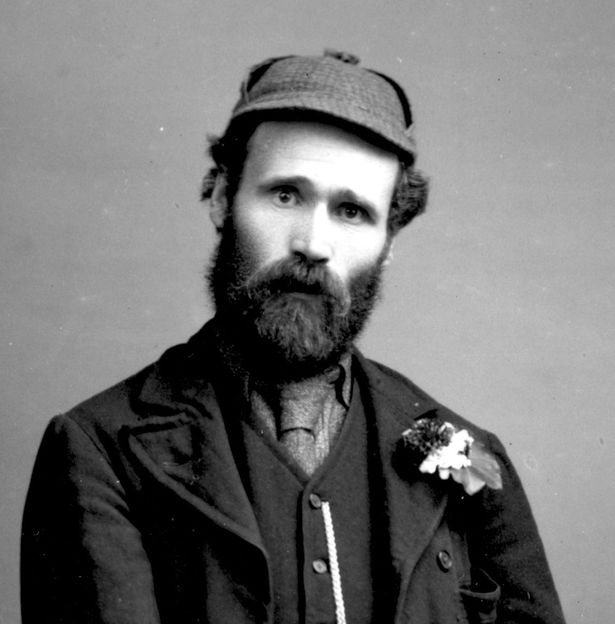
When Keir Hardie set up the Labour Party, he broke with many of the radicals who had preceded him by trying to organise his efforts where working class people really were: in the trade unions and the low church. He reached out to people in both their chapels – the ones where they organised their workplaces, and the ones where they organised their communities.

Since that time, both the trade unions and religious organisations have greatly declined in British public life, and in both cases we’re worse for it. Those traditional ways for people to meet, share culture, build up solidarity and envision a better future have been completely eroded. We’ve been left open to the worst austerity, neoliberal privatisation and attacks on the rights of marginalised people that we’ve ever known. Our lack of organisation and community has meant we’ve been constantly on the back foot, struggling against forces much stronger than us.

On the left, everyone acknowledges the decline in trade unionism for what it has been: a massive setback for working-class organising, an onslaught that has left us weaker, more divided and more isolated. But, to listen to some on the left talk, you’d think that the decline of religion was somehow a victory for our side. Millions of Britons no longer know their neighbours, no longer have any idea about the births, deaths, illnesses, tragedies and joys that are going on in their communities. Young people grow up without any access to traditional songs, stories and culture that was central to previous generations and instead only get the official versions of history. They learn that Churchill and Thatcher were heroes, but they never hear about the religious movements that shaped the country they live in, like the Chartists, Levellers and Quakers. People have completely lost connection to their community, and we’re supposed to somehow celebrate that as an accomplishment.

James-Keir-Hardie
Keir Hardie

Absolutely not. Religion isn’t the dark force that it’s been painted, but has been one of the greatest forces for progress and radical change. Keir Hardie recognised that. Socialists of previous generations were able to see the positive role religion could play because they were able to draw a necessary distinction. I say that Kier Hardie organised in the low church, because that’s where he was. He didn’t go out to the priests and the bishops and the high-ranking officials who’d latched on to state power. He was interested in the lay preachers. And that’s because there is a crucial difference between religion as it is imposed from above and religion created from below.

Like with all forms of culture, religion can go one of two ways: it can be a bourgeois, reactionary force that bolsters the forces of power, or it can be an emancipatory, proletarian force that empowers people to challenge systemic violence. I am not here to defend Iranian morality police, Bush’s crusader Christianity, the violent Islamophobia of India’s BJP, still less Kahanists in Israel. I do not want to defend religion’s connection to that kind of politics in any way.

But we need to be clear: the problem with connecting those politics to religion isn’t with religion itself, but with the politics we connect them to. I don’t want religion to play a role in the state – I want to abolish it. I don’t want religion to play a role in war – I want to abolish war. I don’t want religion to play a role in capital, the police, imperialism or the structures that uphold patriarchy, because in every case I want to abolish them.

The politics I’m interested in is politics from below – the struggles of working-class people, women, LGBT people, colonised, enslaved and massacred people to realise their own destinies and take control over the world. I think religion can play a very positive role there. It has done throughout the ages, and religion can continue to be a source of strength for all oppressed people.

When I talk about this religion for oppressed people, this isn’t an innovation. I’m not taking the message of religion and twisting it to meet my own ends. Quite to the contrary: combating oppression has been built into the meaning of religion since its inception. The earliest written religious texts, the Hindu Vadics, bring together a worldview that opposes all forms of systemic violence, from state warfare to animal consumption. The Torah is the story of rebel slaves turned refugees trying to build a just society. The prophet Amos denounced the ruling class of ancient Judea for stealing the spoils of the poor and hoarding them. The prophet Isaiah tells the rich that their prayers are worthless because they exploit people while they deliver them. Jesus comes to take direct action against money-lenders and the hypocrites that collaborate with a colonising army. The Talmud is a lengthy exegesis in how to bring anti-oppressive practices into every part of a person’s life. The Prophet Muhammad comes to affirm the unity and dignity of all of humanity, and to insist that people are treated as if they all contain the spark of the divine. Sikhism tries to break down all the barriers that differentiate religions, genders and ethnicities into one universalising faith. Religion, at its core, is anti-oppression. Don’t the politicians know that the God they claim to believe in despises them and their prayers?

Holy texts are brimming full of admonishments against the ruling class. Reactionaries leap on passing references to sexuality and gender difference, separate them from all context, and use them as a pretext to persecute people. They take what is a radical idea, focused on bringing about the kind of change socialists want to see, and they manipulate it to suit their own ends. 

But everyone needs to see that the religious tradition of speaking truth to power is much better represented by our heroes than by our enemies. It’s represented by all the religious activists who worked to end slavery, the ones who fought for democracy and debt relief, the anti-colonial fighters and the indigenous revolutionaries. They represent that prophetic tradition.

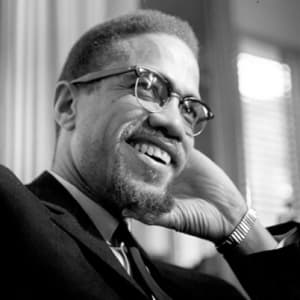
malcolm-x-9396195-1-402
Malcolm X

Two key people from the Black civil rights movement come to mind here: Malcolm X and Martin Luther King. Malcolm X – a Muslim minister in the slums of Chicago and New York, Martin Luther King Jr, a Christian reverend in America’s deep south. Both of them built their organising around their religious institutions and the deep network of Black faith communities across the USA. They based their activism around their religious buildings, religious texts, and religious traditions. Are you going to tell me that they didn’t play a positive role in politics?

It’s not like they could have done what they did without their religions either. Certainly they couldn’t have turned to the unions. At that time, the white-run unions were mostly fighting against black inclusion in workplaces and were trying to uphold segregation in places. They could be racist, reactionary lobbies, and their record of beating up protesters against the Viet Nam war and siding with anti-miscegenation politicians shouldn’t be quickly forgotten. That’s the context in which they were organising, and it was the religions that gave them the strength as a group to fight for their rights.

More than that, the turning point in the struggle for civil rights was when the white religious leaders from across the country came down to join the Black protesters in Selma, Alabama and showed that the weight of public opinion and that the moral voice of the country was firmly on the side of those protesters. The Patriarch of the Orthodox Church was on the frontlines, alongside the head of the Jewish Theological Seminary, Rabbi Abraham Joshua Heschel, who said “when I marched, I felt that my feet were praying.”

When religion is in the hands of the working-class, and when it is used as a fountain for oppressed people to draw strength from, it is a powerful and challenging force. But if you pour scorn on religion, and you say that it’s irredeemable, you hand over religion to the bigots. If you say you don’t want anything to do with it, then you’re leaving that source of power to be controlled by reactionaries. No wonder people wind up believing that God is a homophobic, misogynistic, capitalist demon if you completely disavow religion and leave it in the hands of the right.

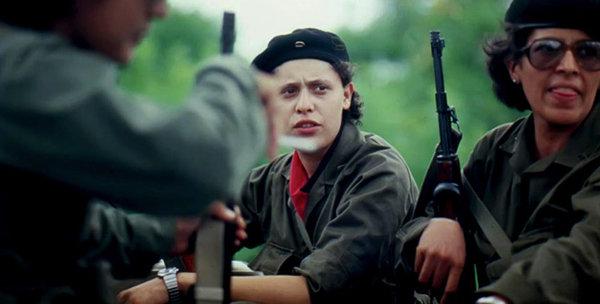
Socialists who have engaged with religions have seen incredible success. When the Latin revolutionaries, the Sandinistas, started out with atheistic, anti-religious Marxist arguments, they remained an isolated minority who had no relationship at all to the people. The ultimate success of the Nicaraguan revolution only came about because of the rise in liberation theology and the willingness of socialists to engage with the church.

sandinistas
Sandinistas

Vatican II of 1959 wanted to see the church more closely aligned with the poor and, as part of implementing this, Catholic activists set up “Christian base communities” rooted in poor favelas. These were the first platform from which poor communities could start organising against the capitalist authoritarian Somoza regime in Nicaragua, and it was not an accident. Church theologians of Latin America wrote explicitly about their need to bring their religious beliefs to a political mission. Liberation theology saw that the things most despised by Christianity: individualism, competition, materialism and greed were, in fact, integral to capitalism.

High-ranking bishops and the papacy were, of course, hostile to the work of these low-level bishops and sided with the regime. The upper echelons of the church had to come into direct conflict with their own members initially, but by 1977, the grassroots Catholic activists had been so successful in transforming the church that when Somoza’s newspaper Novedades asked the church to clarify its position, even the high-ranking officials were forced to side with the bishops against what they called institutionalised violence and inequality.  

These are not just interesting facts from history – they have a strong bearing on the present day. In my own organising in the Jewish community, I’ve seen how religions can play such a powerful role in activism. Synagogues have preserved the memory of what it meant to be refugees, how Jews came to this country hidden in the bowels of boats and rushed out on the last trains from Germany. This memory has been preserved so well in our religious institutions that, when the migrant crisis came to public attention, the Jewish community was at the forefront of offering help and refuge. Every synagogue in the country had collection points for aid to refugees. Key shuls in every area now have drop-in centres that provide free help and legal aid to asylum seekers. Young congregants drove out to deliver these aid packages and came back embolded and enlightened. I attended a service at an Orthodox synagogue where one such member came back, agitating in her community to lobby for rights and safe passage for refugees. South London Synagogue has organised for over 200 child refugees to be brought over from Calais and housed here. The Jewish community is not alone here. Religious institutions have played a powerful role in demanding an end to poverty, quality council housing and opposing racism. This is the reality of what religions in Britain today do.

I’ll say it again because it needs stressing: I’m not here to defend the religion of the ruling class – whatever form it takes. I’m here for radical religion that stays true to the message of fighting for justice. There is no doubt that awful things can be carried out in the name of religion, but just a cursory glance at history tells us that people are perfectly capable of carrying out the same atrocious acts without religion. 

Religion has been associated with violence when it’s been connected to state power and reactionary movements. There’s no doubt about that, but to suggest that it has some kind of connection to religious belief itself is completely ahistorical. Haven’t Stalinist gulags, Maoist terror and the genocides of Cambodia and Nazi Germany shown us that people are perfectly capable of committing the utmost evil without religion? The modern states of France and Turkey are perfect examples of how secularist ideology can be just as violent, colonialist and corrupt as any state that calls itself religious. The problem is capital. The problem is the state. The problem is the military. The problem is certainly not God.

The task of religions is to keep alive that moral, prophetic voice that insists on radical equality and seeks to transform the world. It would be a disaster to throw out all that religion has done to transform the political sphere for the better, solely because fundamentalists and puritans have hijacked it. Religion belongs to all those who practice it – and the faith of left-wing revolutionaries is far more sincere than that which connects itself to state power, capitalism and authoritarianism.

The central message of religion – of all religion – is a radical one that every socialist can support. It is that there is a force much greater than anything we can conceive; that though we are small in the grand scheme of the universe, our lives have meaning. Every one of us is indowed with a spark of the divine. The existence of God makes us all equal – in a profound and spiritual way. Religion challenges us to see that all of humanity is one, everyone deserving of dignity, and to bring that claim to life in the world. It is a call to action – to overthrow the Pharoahs of the world as Moses did; to cast out the demons of legions as Jesus did; to demand rights for widows, orphans and disabled people as Mohammed did; to resist sectarian violence as Guru Nanak did.

Faith can give us the courage to fight for a better world. Thank you.

fists raised

I gave this as a speech at Ideas for Freedom, the annual conference of Alliance for Workers’ Liberty, a Marxist-atheist sect, back in July 2016. There were two other panelists, arguing that religion could not play a positive role in politics. My speech was not well received.

I doubt I could get away with making the same speech today. My teachers would definitely chastise me for over-simplifying matters, making sweeping generalisations, going off on random tangents, and flattening out history. I stand by, however, the central idea, that religion has a radical core, rooted in resistance. I doubt any of my teachers would question that this was a legitimate and necessary expression of religion.

I was moved to upload it by my brother, with whom I spent a long time discussing this topic over the winter holidays. He asked that I write up some of my ideas, and I remembered that I already had. I will speak on a similar theme, albeit to a very different audience, when I preach this coming Shabbat in Newcastle.