In 1633, Galileo Galilei was brought before the Roman Inquisition and instructed to recount his heretical views. Galileo had said, contradictory to the views of the established Church, that the earth rotates around the sun. He had to retract this claim or face death.
So, to protect himself, Galileo assured the Church that he was wrong. The earth remained still.
As he left the courthouse where he had been tried, Galileo raised his eyes to the sky, then back down to the earth. He stamped on the ground beneath his feet and muttered: Eppur si muove: yet it moves.
Yet it moves.
For we who stand on this rock in the solar system, it does not feel like the earth is spinning. We can understand how people once thought the sun moved around them.
We, educated in our modern world, understand that the globe is rotating, and that this rotation is responsible for times and seasons.
But if you don’t know the laws of the earth’s orbit, every winter feels like a divine abandonment.
The earth feels static. And yet, the earth moves.
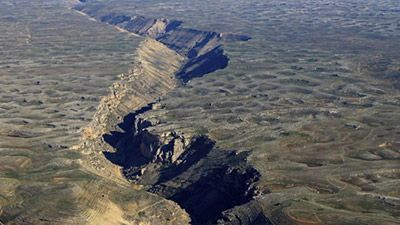
Hundreds of miles beneath the ground where we stand, plates are shifting in the earth’s mantle. For millennia, continental landmasses have drifted apart and pushed back together. Their pace is imperceptible from where we stand, so we cannot know what a profound impact they are having on the structure of our planet.
We, educated in our modern world, know that migration in the oceanic lithosphere explains mountains, lakes, and volcanoes.
But if you don’t know the laws of tectonic shift, every earthquake will feel like an act of God.
The ground beneath us feels static. And yet, the tectonic plates move.
Right now, the forces of history are at work.
Since the dawn of civilisation, people have arranged themselves into complex societies with varying levels of specialisation and hierarchy.
Within those systems, they have developed new technologies, made laws, and created cultures. They have struggled over resources, sometimes to the point of complete social overhaul, and sometimes to the point of common ruin.
We, educated in our modern world, know that the science of sociology explains how civilisations operate. We have learnt to recognise economic trends, like that spikes in oil prices result in increased interest rates. We have also learnt grand trajectories, like what causes empires to collapse.
But if you don’t know the laws of history, every rupture to the social order feels like a curse.
The social order feels like it will never change. Our world feels stuck on the same trajectory. And yet, the people move.
To everyone in ancient Egypt, the rule of Pharaohs felt like an unshakable fact. By the time the Israelites were enslaved in Goshen, the Egyptian empire had already existed for 2,000 years. The pyramids had already stood for a millennium.
Every Pharaoh was called Ramses and every Pharaoh declared himself a god. He claimed that he controlled the flooding of the Nile and the rising of the sun. He could not be moved.
When Moses killed a slave driver, he did not only have to fear Egyptian retribution. The Hebrews themselves were ready to mete out punishment.
Moses’s own people, turned on him and demanded: “who made you ruler and judge over us?”
Moses had rattled the social order, and this terrified even his kin. He could not be the ruler and judge over them. Their ruler was supposed to be the slave master and their judge was supposed to be Pharaoh. They could not even imagine moving.
In the Torah story, we only hear what happened forty years later, when Moses returned from his years as a goatherd for Jethro.
Yet, on his return, tens of thousands of Hebrews, and many others, were ready to leave the only land they had ever known for a barren wilderness.
In fact, even the ordinary Egyptians were in a revolutionary mood. They handed the Hebrews wealth and resources for their journey. They were co-conspirators in sedition against Egypt.
Hebrews and Egyptians alike were willing to bring down a structure that had lasted for twenty centuries, and risk existence itself.
We might attribute this sudden change of mentality to acts of god: those Ten Plagues the Eternal One wrought upon Egypt to bring down the might of Pharaoh.
But I wonder what else happened in those forty years. What were Aaron and Miriam, Moses’s siblings, doing in the four decades when their brother was absent? What did Shifrah and Puah, the rebel midwives, do in the time when all seemed lost?
I can think of no other explanation: they organised.
With Moses gone, the dissidents were preparing the Hebrews for the great exodus to come. They had faith. They knew that the slave system could be defeated. They knew that people would move.
I imagine they were knocking doors, spreading the word in the marketplace, gathering slaves for secret meetings, building alliances across the divides of race. I imagine they were keeping hope alive; sowing seeds of possibility; encouraging people to imagine a future without domination and toil.
To those who do not know their history, the Hebrews’ decision to leave would have felt like a greater miracle than the plague of locusts.
But we know that people can shift the way tectonic plates do: so imperceptibly that anyone higher up might not even notice.
The more they move, the more they realise they have been kept captive. And then they realise they can move some more.
Then what was impossible suddenly seems inevitable.
What was unalterable becomes intolerable.
Then, it is a law of history that they will come crashing against the structures that bind them, like an earthquake.
Yes, the downfall of Egypt at the hands of rebel slaves was a seismic rupture of earth-shattering proportions.
It showed the immutable Pharaoh that everything moves.
Everything, even whole social systems, move. But today, it is easy to feel stuck.
I look at the world around me and feel afraid. It seems that, in every country, our leaders are set on a course to global war. Everywhere, antisemitism is rising and hatred is spurting out on the streets. Everywhere, governments are determined to pursue authoritarian policies.
All of this can be explained by the laws of history. When people do not have enough to live, they turn on each other. In our own history, we know that they often turn on Jews.
When people feel like the world is ending and there is no hope, they become apathetic enough to let cruel demagogues take control.
And when governments fear that their power is threatened, they can quell all dissent with a war.
Fascism and chaos both drink from the same pool of despair.
Some nights I go to sleep despairing, too.
And then I remember that is what the Pharaohs of our own time want. They want us to think that nothing can change: that racism and war are the only way.
They want to keep us heading in one direction.
But we move too.
We are the people too, and we will move where we decide to go. We do not have to follow the shift towards tyranny and hate. Like tectonic plates, we can push the other way.
We can point steadfastly towards a world of equality and peace, and insist that we will go nowhere else. If we start pushing, we can lock arms with others, and build a coalition that can defeat every despot.
Yes, we move. And when we move, God moves too.
God, the great hand of history, is always directing humanity towards justice. God’s hand may be the hardest to perceive of all the forces in the universe, but the Power of Moral Truth is always trying to push us forward.
The Eternal One, revealed through history, is most visible in eras when we decide to do God’s will.
There may be days when it feels like nothing can change.
But, everywhere, at all times, the earth spins, the tectonic plates shift, the people move, and God guides us.
We will not fall into despair. We will not stand still.
We are going to get our way out of Egypt.
We will move.

 Sim Lev