judaism · sermon

Are Jews a religion or a race?

At present, Reform and Liberal Judaism are deciding whether to become a single movement. You will be able to vote on this, and I encourage you to do so. 

As the procedural questions unfold, it is hard to imagine how strongly felt the ideological divisions were between the two movements, even forty years ago. I believe, however, that those differences are now almost entirely within the movements, rather than between them. 

On some fronts, we will find unity, and on others, differences will remain.

There is one point, however, which, to me, is so intrinsic to Liberal thought that I could not stand it to see it lost. That is: there is no such thing as a Jewish race.

There is no such thing as Jewish blood, as a Jewish womb, as Jewish DNA, or as Jewish features.

It is precisely because our Liberal tradition teaches that there is no Jewish race that we have been able to fully embrace converts and, from the very beginning, accepted patrilineal Jews. 

These ideas were critical stumbling-blocks to merger attempts in previous decades. Reform Judaism would not accept patrilineal Jews, and insisted that converts went and were reborn from the “Jewish womb” of a mikvah.

In the past few years, Reform Judaism has come to accept patrilineal Jews, and Liberal Judaism has come to accept that the mikvah can be a meaningful ritual.

Yet not everyone has come to accept the underlying ideology that made these matters so central to Liberal Judaism. The originators of our movement saw Judaism as a religious community, where Jewishness was communicated socially, not “biologically.”

That is no longer a sectarian issue. There are Reform rabbis who ardently agree on this point; and there are Liberals who, instead of denying any racial Jewishness, focus on being “inclusive” about who belongs.

Rejecting the idea of a Jewish race was absolutely foundational to early Liberal thinkers. Regardless of whatever new ideas emerge as rabbis come together, I intend to hold doggedly to their understanding of Jewishness.

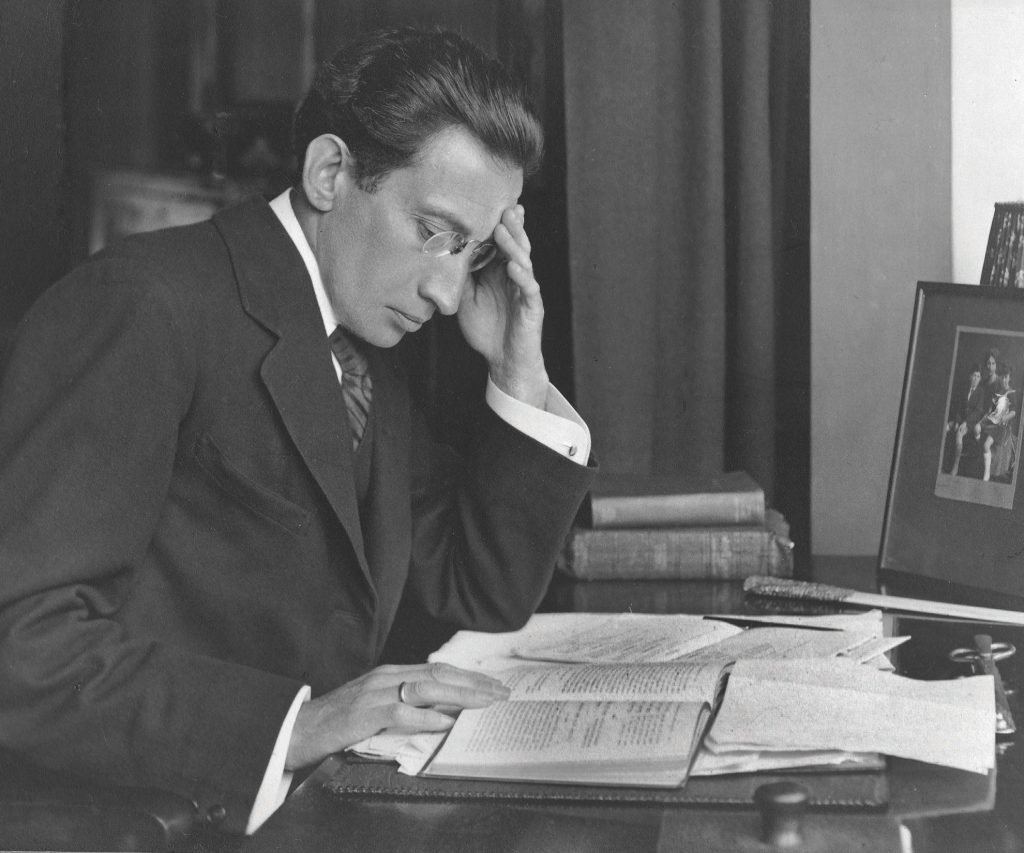
Israel Mattuck was the first Liberal rabbi in the UK. In 1911, he was recruited by Lily Montagu and Claude Montefiore from America to lead the Liberal Jewish Synagogue in St John’s Wood. He was a prolific preacher, ideologue, and scholar.

At the LJS, Dr Mattuck taught a Confirmation class, for 16-year-olds affirming their faith. He later took his notes and turned them into a book, entitled Essentials of Liberal Judaism so that everyone would know what he thought it meant to be a Jew.

Jews, he insisted, were not a race, but spanned the globe. What made people  Jewish was that they held Jewish ideas, followed a Jewish way of life, and kept Jewish observances. 

He wrote: “In spite of all the differences among them, the Jews of the world constitute a people; but they are a people in a different sense from any other people. Their unity is based on religion and history.”

Editing in 1947, Mattuck was eager to avoid any misconceptions. He insisted that this history was not an unbroken tale of misery and persecution, but one of great spiritual achievements. We were, he said, the first witnesses to God’s unity through the revelation at Sinai. Our history was that of the prophets, the priests, the scholars, the mystics, and all those who sought to reach closer to religious truth. 

Mattuck was clear that you could not be Jewish in anything more than name if you rested on race. You want to be a Jew? Walk humbly with God, taught Rabbi Mattuck from the prophet Micah. 

There is no race – only a demand to live right.

Now, you may be thinking, this all sounds a lot like the Critical Race Theory that Mr Trump so zealously warned us about. Indeed it is! And the American President has good reason to fear people taking a critical approach to race.

In the USA, races were invented to divide and rule people so that the wealthy whites could maintain their plantation economy. Poor whites were incentivised to enforce and uphold slavery by being given some privileges on the basis of their skin colour.

As a result, they felt they could identify with the rich whites, even though they had very little in common with them socially or economically. Using racism, they demeaned and humiliated the stolen Africans so that they would not have the confidence to challenge their own condition.

That is why race-critical scholars in America have the slogan: “race exists because of racism, not the other way round.”

In Race: A Theological Account, the African-American scholar of religion J. Kameron Carter shows how racist ideology had earlier roots – in how European Christians treated Jews. 

To create a system where Jews were second-class citizens, they needed an ideology where Jews were defective human beings. So they made up stories about Jewish bodies, Jewish blood, Jewish noses and hair – even Jewish horns – to justify their system of oppression. It was a nasty division for the purposes of exploitation.

This was exactly why Mattuck was so resistant to talk of Jews as a race, and so adamant about our religion.

In 1939, Mattuck wrote his first major work, What are the Jews?, which was a harsh rebuttal, not only to Jewish racial nationalism, but to racial nationalism as such.

We belong everywhere, he asserted. In the Age of Enlightenment, all citizenship should be communicated on civic grounds, never on ethnic or religious ones. 

A Jew, he felt, could be a nationalist, but they must first adhere to the religious calling. That is: they could be Jewish and happen to have nationalist leanings, but it could not define them as Jewish. 

Nevertheless, he thought that, by properly conceiving of ourselves as a religion, we would be more likely drawn to universal ethics. We would measure our Jewishness by our conduct towards others and our connection with our God, rather than by the supposed quality of our genetic make-up. We could pull apart the stories that separated people and build common bonds.

Racial thinking, thought Mattuck, must be resisted.

Race is a horrible and divisive lie. Religion is a beautiful and unifying truth.

I want to be open about why this idea is hard for others to hold.

It is more demanding. It says that nobody can take their Jewishness for granted, and must work for it. It means that you cannot be “born” Jewish, but have to live Jewish. It sets high ethical and practical demands on anyone who claims Jewishness.

When we say that there is no Jewish race, we also mean that somebody with an unbroken chain of matrilineal descent but without any Jewish upbringing or identity must also learn how to be Jewish, in the same way as a patrilineal Jew would. Everyone has to properly engage with the traditions and practices. Contrary to the doctrine of inclusion, this makes us more exclusive than the Orthodox.

Denying the existence of a Jewish race also has profound implications for how we engage with Israel. If we are a religious community, the demand to achieve a Jewish ethnic majority – still less racial supremacy – is not just grotesque. It is absurd. The measure of whether the state was sufficiently Jewish would not be by how many Jews there were, but by how well it upheld Jewish moral values.

Yet it is precisely because of this more demanding approach to Jewishness that I will keep holding onto it. The call that we be moral in our dealings, conscientious in our practices, and connected with our traditions is a far better one than the narrow pull of racial nationalism. 

Through such a religion, we may connect to every other Jew in a spirit of solidarity.

Through religion, we may connect to all of humanity, by recognising our shared Creator.

Through religion, we may draw nearer to the mystery that is our God.

Through religion, we may live out the words of our haftarah: “For you who revere My Name, the sunbeams of righteousness will rise, with healing in their wings. Then you will go forth and skip about like calves from the stall.”

Shabbat shalom.
high holy days · sermon · theology

You are the impossible child God yearned for.

You are the impossible child God yearned for.

You are a miracle. 

You may not hear that often, and you probably think about it even less, but you truly are.

The British-Indian poet Nikita Gill has written about just how unlikely is the fact of your existence:

“The very idea that you exist considering those extremely low odds is a miracle on its own. You see, the exact DNA that comes from your parents to create you could have only happened when your parents met, which is 1 chance in 20,000. That alone should be enough, but when you add up the fact that it has taken 5-10 million years of human evolution for you to exist at this time, in this moment, you begin to recognise just how much of an impossibility you are.”

– Nikita Gill

Add to that, and remember that you are a Jew. Remember that in those 10 million years of evolution, Judaism has existed for only 3,000 of them, and is still one of the world’s oldest continuously existing cultures. You are the product of a long line of ancestors, dating back to desert nomads, who, at one time, heard the voice of an invisible God, and kept that story alive for hundreds of generations. That is a miracle.

In the last century, the ancestors who held onto that story fled from countries all over the world, and migrated to farthest corners of the earth, and faced down war and genocide, and survived extermination. Faced with such experiences, many turned away from their heritage and disappeared from Jewish life.

But you are here, in the 21st Century, alive, and Jewish, and living out that story. You are the product of billions of years of matter interacting and millions of years of human evolution and thousands of years of cultural transmission. You are here. And that is an incredible, awe-inspiring miracle.

One of the prevailing themes of Rosh Hashanah is the miracle of human life. It is everywhere: in our liturgy, in our Torah portions, and in our haftarah. All of them are bound together by a sense of wonder at our existence.

Three weeks ago, we read the prophet Isaiah, who expressed joy at the wonder of childbirth. His great prophecy opens:

“Sing for joy, infertile woman, you who never bore a child! Sing for joy and laugh aloud, you who never felt a stomach cramp. Because the children of the barren are more numerous than those who suckled infants.”

But who is this talking about? Who is the sterile woman giving birth to the miracle child?

In the 9th Century, the great collection of rabbinic stories, Midrash Pesikta Rabbati, offered us three answers: Sarah, Hannah, and Jerusalem. At Rosh Hashanah, we read the stories of all three.

In the Torah portion, we read of Sarah’s miraculous labour. Sarah was elderly and post-menopausal. When three angels told her she would give birth in a year, she laughed. For years, she had yearned for a child, but, in her old age, she had given up. How would her withered husband and her empty womb bear a child? 

A year later, Sarah gave birth. She ate her words and called her baby boy Yitzhak, meaning ‘laughter.’ She said: “God has brought me laughter, and everyone who hears about this will laugh with me.”

A miracle. An impossible birth. So that infertile woman who had never had a child rejoiced, just as Isaiah described.

In our haftarah, we read, too, of Hannah’s wondrous labour. She was infertile. Her husband Elkanah’s other wife, Peninah, had plenty of children. Peninah became her rival, and relentlessly mocked her, saying that God had closed her womb.

In the depths of her despair, Hannah prayed to God. She whispered fervent promises to God that, if she was allowed a baby, he would be dedicated forever to religious service. 

As Hannah prayed, she was so full of silent anguish and tears, that the High Priest Eli thought she was drunk. He heckled her to sober up. But when she explained that her behaviour was the product of deep distress, Eli prayed with her that her wish be granted.

A year later, Hannah gave birth, and called her baby “Shmuel,” meaning “I asked God for this.”

Another miracle. A barren woman who bore no children rejoiced, just as Isaiah described.

Pesikta Rabbati offers a third infertile woman to whom Isaiah’s proclamation might refer: the city of Jerusalem.

At the last major event in the Jewish calendar, Tisha BeAv, we commemorated Jerusalem’s destruction. We fasted, wept and prayed, remembering how the holy city was razed to the ground. Following the destructions by Assyria and Rome, that city was left stripped of its inhabitants. Its most sacred spaces were desecrated and burned. The whole town was abandoned like an empty womb.

And out of that barren place came Judaism. At the time when it most seemed like the Jews had been destroyed, the rabbis came forward and gave them life previously unknown. They developed tefillah, Mishnah, midrash, and Talmud. 

They spread the message of ethical monotheism throughout the entire globe. Judaism, from its point of near-destruction, became one of the world’s most notable religions, and influenced civilisations everywhere.

Jerusalem was an infertile womb, out of which came more children than could ever have been imagined.

Sarah yearned for a child and was blessed. Hannah yearned for a child and was blessed. Jerusalem yearned for children, and now has millions.

But there is another impossible birth that we must celebrate. An unbridled miracle. A human being created by God out of nothing, who had the potential to be the saviour of all humanity.

Whose birth was that? 

Yours.

What, did you think I was going to say somebody else?

For the Christians, that person was Jesus. In their story, their Messiah was born by immaculate conception to a virgin mother. For them, Jesus’ birth fulfilled the prophecy related by Isaiah.

In the 9th Century CE, when this midrash was composed, Christianity had become a full-fledged international religion. It was the official doctrine of the Roman Empire, and was spreading throughout Europe through the Carolingian Empire. Christian polemicists criticised Jews for denying the truth of their Testament, and insisted that their story completed our Torah. 

Part of the motivation for the compiler of Pesikta Rabbati must have been to show that Isaiah could easily be proven from texts within the Jewish canon. But, more than a difference of interpretation, this midrash speaks to a fundamental difference between how Jews and Christians have seen the world. For us, Jesus is not the beloved child of God born by miracle. You are.

As Lily Montagu, the great religious reformer and East End social worker, put it:

“We have the belief that man can directly commune with his God, that he needs no intercessor […] The Christian feels himself brought into contact with God by means of Jesus, his Saviour. Jesus is conceived as, in a special sense, the son of God, and as able to direct all seekers to the divine sanctuary. We Jews hold that every man is the son of God, and that all His children have access to Him when they try to live righteously.”

– Lily Montagu

So, all humanity is God’s miraculous creation. All humanity is in direct relationship with our Divine Creator. And all humanity has the potential to bring this world closer to its salvation.

Rosh Hashanah, as a festival, marks the sixth day of the world’s creation, on which the first ever human being was made. It celebrates the miraculous creation of Adam HaRishon, the original person, sculpted from clay and breathed alive with the sacred air from God’s nostrils.

Consider what a wonder this is. Knowing all that we do about the history of the universe, how many billions of years must God have spent yearning to create the first ever person. 

How impossibly beautiful is it, that, after the creations of thousands of galaxies and multitudes of planets, the Universe somehow put together the exact elements that would support life. And that life became social and conscious and able to reflect on its own existence. And, conscious of its own selfhood, that being was able to reach beyond itself and worship the Eternal Mystery that created it.

Who knows what the chances are? But it is certainly a miracle.

The cosmos was, at one point, an insignificant speck, devoid even of matter, and now it includes human beings. And now it includes you.

You are the impossible child God yearned for. You are a miracle.

However much you wish to connect with your Creator, just think how much your Creator wants to connect with you. Whenever you feel like you can’t quite find God, just take a second to contemplate how many billions of years God spent trying to find you.

Your existence is a miracle, and I am so glad you are here.

Shana tovah.

climate change · judaism · social justice · torah

Pass on this Earth to your children

‘Tell your children that this land will be theirs to hold in custody,’ cried out Moses to the Israelites on the precipice of the Promised Land. [1] ‘Tell them to guard it and look after it because you could not. Tell them we brought them here that they would love and care for every plant and tree, but we were not allowed to enter because we were too accustomed to slave mentality. We were too mistrusting and selfish. But our children, we hope that they will have faith. We hope that they will be strong. We hope that they will look after this earth.’

‘Tell your children to tell their children,’ Joel wailed to the elders. ‘Tell them about the environmental destruction we witnessed. Tell them how we saw droughts and crop shortages. Tell them how we saw fertile land turn barren. Tell them how we saw everything devoured and nothing remain. Tell them how we saw famine lead to war and war lead to plagues. Tell them that we knew it was our fault.’[2]

‘Tell your children,’ the prophets said, ‘not to make our mistakes. Tell them to treat every part of the earth as if it is sacred. Tell them to care for the planet because if they destroy it, nobody will come to repair it after them.[3] Tell them that there is only one world and it is precious and it must be sustained. Tell them not to pillage it but to work in harmony with nature.’

And the elders wept. The religious leaders cried before their altars. Even the animals cried out for salvation from God. And the chieftains sulked in their tents and asked: ‘does this mean that God hates us? What have we done to deserve this?’[4]

Scripture records the words of the prophets and elders, but we do not learn how the children responded. What did they say when their elders told them these lessons? History rarely records the words of the young, even on issues of intergenerational justice. Especially on issues that affect the youth more greatly.

During the last uprising of Extinction Rebellion, Rabbi Jonathan Wittenberg preached to his congregation. He said: “in the synagogues, the elders are asking ‘where are the youth?’ But in the streets, the youth are asking ‘where are our elders?'”[5]

Young people are calling on us to take action for the environment. Their voices matter deeply, especially when the issue is the future of the planet. Climate change presents us with an unprecedented threat, and we are positioned as the elders scorned by the prophets.

I know that the people of my generation and older are not individually responsible for the climate crisis, but that it is a matter of systemic inequality and exploitation of natural resources.

Nevertheless I am increasingly conscious, as a parent, of what the next generation will inherit. Winona LaDuke, a Jewish-Native American activist from an indigenous reservation in Minnesota, urges us: “Be the ancestor your descendants would be proud of.”[6]

We cannot become such people if we don’t heed the call of the greatest call to intergenerational justice facing us. We cannot simply hide our faces in our homes like the elders confronted by Joel.

Of course, this congregation cannot take sole responsibility for ending economic reliance on oil or for replenishing the earth’s devastated ecosystems. But J and S have come to us with practical and necessary actions that we can take.

These students in our bar mitzvah programme have come to encourage us to take serious action. After only a year of teaching them, I have been so impressed by the intelligence, integrity and sensitivity of these young men. They will both become bnei mitzvah at Pesach time. As part of their studies, they have each taken on social action programmes.

J is asking you to recycle your plastic by making eco bricks. I hope that over this summer, every household in the Three Counties will return at least one eco brick to J in support of his project. J will also be appealing to the synagogue council, to ask them to make eco bricks part of the Mitzvah Day project this year.[7]

S is asking you to plant trees and sponsor his work with the Woodland Trust.[8] I encourage every member of the community to support S in some way, either by offering financial support or a place to plant. These projects are practical, necessary and helpful.

Joel tells us that the old shall dream dreams and the youth shall see visions.[9] In the future he prophesied, the generations were not adversaries in blame and despair, but companions in hope. The young people are offering us an opportunity to join them in healing our damaged planet. Let us take up their call.

Shabbat shalom.

introfigsm-m
This painting is by Winona LaDuke’s mother, Betty

I gave this sermon on Saturday 25th July at Three Counties Liberal Judaism for Parashat Devarim. This was my last sermon for the community. The names of the children are redacted for obvious  reasons.

[1] Deut 1:39

[2] Joel 1

[3] Kohelet Rabbah 7:13

[4] Deut 1:27

[5] Heard at New North London Synagogue, summer 2019

[6] https://www.mtpr.org/post/winona-laduke-be-ancestor-your-descendants-would-be-proud

[7] https://www.ecobricks.org/

[8] https://www.woodlandtrust.org.uk/

[9] Joel 2:28

judaism · sermon

Whose quarantine?

By this stage in quarantine, you have probably broken down, cried, experimented with an unusual haircut, argued with your partner or room mate, attempted to pick up a new skill, laughed, watched a movie, read all the Corona-related news items, avoided reading all the Corona-related news items, lost your mind, twice, and finally accepted the new reality. Now, it’s time to have breakfast and go through the whole process all over again.

It’s hard to put into words what is happening for us in lockdown right now. Whenever I talk to friends or family about how they’re experiencing this unprecedented life event, we revert to discussing the latest rules or the political ramifications or what they understand of the emerging medical news. We can only really sum up how we’re dealing with the situation in odd phrases, like “getting by”, “finding new meanings”, “struggling” or, “drinking before midday.”

That’s probably why I have trouble finding out what quarantine was like for our ancient ancestors. This week’s parashah is Tazria-Metzora. It is the Torah reading about quarantine. Rabbis rejoice! For so long the processes and rituals around self-isolating for infectious diseases seemed so irrelevant to our lives. Suddenly a pandemic comes along and we can join the ranks of overnight experts with a niche specialism in ancient Israel.

Except, strangely, Leviticus doesn’t really tell me what I want to know. It describes in graphic detail the infectious skin disease our forebearers were trying to prevent – called tzara’at, it resulted in white flaky peeling of the skin and made its sufferers look like the walking dead. It would start as a small patch and gradually expand across the body.1

It also tells me exactly how the priests would deal with it. Anybody with the affliction would have to isolate themselves outside of the camp for 7 days. At the end of these, a priest would come out to inspect the patient. If the patient had been healed, the priest would make ritual offerings of birds to spiritually cleanse him.2 They would be shaved, washed and then readmitted to the community.3 If not, back into quarantine he would go.

Yet for all this detail spread out over chapters of the Torah, it doesn’t answer the question I really want to ask: what were their lives like? How did it feel to have the scaly skin disease in ancient Israel? What did they do when they were isolated from their communities? The Torah provides scarce little information about these questions, and biblical scholars seem surprisingly unconcerned. In fact, the main trend among academics has been to question how much we can even know about the biblical world, shedding great doubt on the texts that have reached us.4

We are told that the isolators were kept outside the camp, or outside the city walls. I wonder whether they had dedicated centres. The harsh desert sun of the Negev must have made simply staying outside longterm impossible. I wonder how they got food. Did people deliver it to them in designated places? Were they expected to scavenge for themselves?

All I can gather from the text is how people were managed, punished, ritualised and redeemed. I cannot work out how the ancient people keep themselves entertained when they had no access to other human beings, nor to Netflix, WiFi, or books to read. I do not know how they loved, supported each other, struggled, found things difficult and ultimately survived. Those positive stories of endurance are hidden between the lines of the text. I do not know how they felt.

But, in this community, I don’t need to just wonder how people feel and how they are managing. Our welfare committee has done an incredible job of checking in on everyone. Our healthy members are going out of their way to ensure that the others get the food and supplies they need. I know that, across this community, people are checking in on each other to find out how they are. This community should be an inspiration to others across the country.

Much is made in the media about people’s acts of selfishness and inconsideration, but for my part I have only seen the reverse. I have been overwhelmed by the kindness of people reaching out to share in feelings, offering support with shopping and errands, and generally being as supportive as they can in these exceptional times.

When our biblical forbearers wrote about quarantine, they wrote about its rituals. When the scholars wrote about it, they took interest in its medical diagnoses. When the media write about it, they write about everything that goes wrong. These stories of rituals, rules and wrongdoing might make for compelling reading, but they don’t reflect people’s lived reality.

Meanwhile, we are quietly writing a different story through our deeds. We are writing stories of generosity, kindness and self-sacrifice. We are showing every day in little ways how much we care about ourselves, each other and our communities.

One of the surprising facts about crises is that they do not engender selfishness, but altruism. At the time of the last financial crash, I was working in the charity sector, and we were all perplexed when we discovered that, in times of economic hardship, poorer people’s charitable donations went up. This week, a German science journal reported on a significant uptick in people’s compassion in their attitude to others since the crisis began. We see the results of that: thousands of people volunteering for mutual aid groups and the NHS supporters. The more people struggle, the more they care about the struggles of others.

Priests and politicians may want to write one kind of story, but ordinary people write much better ones. May we continue to write those stories, and may they be the ones we pass on to later generations.

Shabbat shalom.

coronavirus-volunteers-list

I delivered this sermon over Zoom on 25th April 2020 for Three Counties Liberal Judaism.

1Milgrom on Leviticus 1-16, pp. 816-824

2Lev 14:1-6

3Lev 14:9-10

4Watts, Ritual and Rhetoric, pp. 27-32

judaism · sermon · theology

What we make true on Earth, God makes true in Heaven

What we make true on Earth, God makes true in Heaven. The Tabernacle was built according to the dimensions of the world. And the world was built according to the dimensions of Heaven.[1] This is what the Zohar, our mystical text tells us.[2] What does this mean?

This week’s parashah describes the raw materials of the Tent of Meeting: blue, purple, and crimson yarns; the ephod made of gold, blue, purple, and crimson yarns, and fine twisted linen; sheets of gold and cut threads to be worked into designs.[3] The Torah tells us precise measurements for precious metals: 29 talents and 730 shekels of gold; 100 talents and 1,775 shekels of silver.[4]

In the kabbalistic system of the Zohar, these are not only the dimensions of our Tabernacle, but a blueprint for the universe and a mirror of Heaven. Is this, then, the makeup of the universe? Does it, too, have crimson yarn and twisted linen and talents of silver?

No. That is not the nature of this text. The Zohar is not an Ikea assemblage manual, but a work of Jewish mysticism. Its concern isn’t with the physical arrangement of the world, but with the esoteric secrets underpinning it.

The Zohar was compiled as a commentary on the Torah in 13th Century Spain by Rabbi Moses de Leon and has circle.[5] This text became the central canonical text of Jewish mystical theology, known commonly as kabbalah.

Only within the terms of the text itself can we understand how the Tabernacle had the dimensions of the world and the world had the dimensions of Heaven. First of all, please understand that, by Heaven, it does not mean the cartoon of clouds in the sky where baby-angels play on harps. Nor is it talking about the afterlife. In this context, Heaven is the ‘Upper World’: the place beyond our understanding where God lives. It is not so much a physical space as it is a ‘divine realm’.

The dimensions of Heaven, then, were not physical, but were divine qualities. The Zohar notices a connection between the qualities with which the Tabernacle’s architect was endowed and the qualities God employed to create the world. God appoints a man named Bezalel ben Uri to oversee the creation of the Tabernacle. God tells Moses: “I have endowed him with a divine spirit of wisdom, understanding and knowledge.”[6] Elsewhere, in the book of Proverbs, we learn: “The Holy One founded the earth by wisdom; God established the heavens by understanding; through God’s knowledge the depths burst apart, and the skies distilled dew.”[7]

These, then, are the dimensions that the world and the Tabernacle held in common: wisdom, understanding and knowledge. The qualities needed to create the world were the same as those needed to create the Tabernacle.

In the context of the Zohar, however, these terms take on an even deeper significance. In this world of mysticism, wisdom, understanding and knowledge are not simply creative faculties, but are part of a divine reality beyond what we can see.[8]

In this view of the world, there is an aspect of God called the ‘ein sof’ – that which is without end; the part of God that is limitless and incomprehensible. From this Infinite Unknowability flow ten sefirot, attributes of God’s self. They filter down into the knowable universe, to the level of the Shechinah – God’s dwelling-place in the human realm.[9]

At the highest levels are three sefirotketer – literally meaning ‘crown’, but fundamentally associated with God’s infinite knowledge; chochmah, meaning ‘wisdom’, which holds the archetypes of all things that must come into being; and binah – ‘understanding’ – in which is held the undifferentiated model of creation.[10] Knowledge, wisdom, and understanding: these are the highest rungs of the emanations of God’s presence. These are the qualities with which Proverbs tell us God created the world. These are the qualities with which Exodus tells us Bezalel ben Uri was endowed when he came to create the Tabernacle.

The Tabernacle, then, was not a physical blueprint of the universe, but a spiritual one. It was comprised of the same mystical dimensions that also went into creating the world. Each of these was some part of God’s creative power. Through these, God’s creative power is manifest in Heaven, the world and the Tabernacle. They are acting as a form of creative power, transcending space and yet utterly active in it. Through this analogy, we understand that the world, Heaven and the Tabernacle are not just created, but are constantly creating, and being created.

That may all sound very difficult to understand, but it has significant implications for us. If the Tabernacle, the world and Heaven share a common creative blueprint, then what was done in the Tabernacle was replicated in Heaven. Thus, the Zohar tells us: “The Temple [the successor to the Tabernacle] was an abode of peace for the worlds […] so that the actions below could be united on the model of the world above.”[11] What they made true in the Temple, God made true in Heaven.

From this, the Zohar makes an even more audacious claim. It tells us that, in Heaven, God studies new interpretations of the sacrifices in the name of Rabbi Shimeon bar Yochai. It tells us that, even though God does not need to eat or drink, out of love for the Jewish people, God eats and drinks with us in Heaven.[12] Because of the deep connection between this world and the world above, God is able even to suspend the laws of the universe to replicate what we do on Earth.

What does this mean then for us, modern Jews, for whom the synagogue has permanently replaced the Temple? I would like to think that, just as the Temple was once a mirror of Heaven, our houses of meeting are today, too. When we gather together in community, some profound unity is recreated in Heaven. When we sing in unison on Shabbat mornings, new blessings and prayers are created in the World Above. When we read about the dimensions of the Tabernacle in this week’s Torah portion, those creative faculties that once created the world are the Temple are put into action once more and, through them, entire new worlds are made possible.

Sometimes it is easy to feel like our actions have no impact. The Zohar gives me hope. If what we do on Earth is replicated in Heaven, our actions cannot fail to be meaningful. When, here, we strive for a better world, that same campaign ignites in the upper echelons of the universe. When, here, we celebrate love, birthdays and the lives of our congregants, the Heavenly hosts are brought closer together in solidarity with us. Our kindness, our optimism, our compassion in this world are mirrored on a cosmic level.

The teachings of the Zohar may be complex, but their result is simple: We live in a world that shares its dimensions with Heaven. We are tasked with the spiritual health of the entire universe.

What we make true on Earth, God makes true in Heaven. So let us strive to create Heaven on Earth.

Shabbat shalom.

Kabbalah_Art_-_Diamond_Painting_Kit_grande
Kabbalistic art

I first wrote this sermon as an essay for a class at Leo Baeck College on Kabbalah. I adapted it for use and delivered it at Birmingham Progressive Synagogue on 7th March 2020.

[1] Zohar II, 220b-221a

[2] I have relied for translations and interpretation on Tishby, Isaiah. The Wisdom of the Zohar: An Anthology of Texts (Vol III), trans. David Goldstein (Oxford: Oxford University Press, 1989), pp. 909-930

[3] Ex 39:1-3

[4] Ex 38:27-28

[5] Scholem, Gershom G. Major Trends in Jewish Mysticism (New York: Shocken Books, 1946), pp. 156-159

[6] Ex 31:2-3

[7] Prov 3:19-20

[8] Laenen, J. H. Jewish Mysticism: An Introduction (Louisville: Westminster John Knox Press, 2001), p. 46

[9] Laenen, pp. 46-48

[10] Laenen, pp. 48-49

[11] Zohar II 241a

[12] Zohar III, 241b

judaism · sermon

The Tabernacle or The Temple

When Israel Mattuck, Britain’s first Liberal rabbi, went on holiday, he used to spend hours visiting the churches and cathedrals wherever he was. His biographer, Pam Fox, writes endearingly about how much it used to annoy his family.1

I really relate to this. There is something quite wonderful about seeing how others pray. From the mosques in Turkey and southern Spain to the cathedrals in France and Italy, I’ve never found a holiday partner I couldn’t frustrate by dragging them into every little religious building I see.

These buildings communicate messages about what believers make of their religions. The last time I was here in the Three Counties, I sat with my boyfriend in Gloucester Cathedral and we listened to Saturday night evensong. The organ roared through the cavernous building, as if to remind us how terrifying God could be. I went away from the service feeling stirred in a way synagogue services rarely make me feel, and I wondered what parallels there were in our practice.

Perhaps part of the appeal of these spaces is that we have no Jewish equivalent. There is, after all, no such thing as Jewish architecture. What does a “Jewish building” look like? What are its features? Beyond a mezuzah on the doorpost, very little ever identifies a space as Jewish.

In part, that is because of history. Forever a transient people, we have rarely invested in plush buildings, knowing well that our communities were so wont to move and change. In the medieval synagogue in Barcelona’s Calle, the only distinguishing feature is that the wall protrudes slightly onto the cobbled street so that worshippers can face east. It has had no problem being repurposed variously as a home, a factory, a cafe and a museum. The site of the synagogue in Lincoln, dating back over a millennium, was only recently repurposed by its Liberal Jewish community. And, still now, it’s really just a very old room.

Yet even today in modern Britain and the USA, where Jews have lived comfortably for some time, there is little that can be identified as Jewish architecture. The Liberal Jewish Synagogue in St John’s Wood is identifiable by its Greek columns. Temple Emanu-El in New York looks indistinguishable from a Cathedral. Even modern Israel has developed no architectural style for its religious buildings. The places where I have prayed in Jerusalem seem no different to shop front shtiebels. For some reason, we have an aversion to creating Jewish buildings.

This casts an interesting light on this week’s parashah. Here, we read about the Israelites’ instructions for building a Tabernacle. This was a giant portable tent in the desert, where the freed slaves would come to offer sacrifices and experience their God. What a space it must have been! Every precious metal is enumerated; the finest kinds of wood; fabrics dyed in the hardest-to-find colours of crimson, purple and blue; goats’ hair and dolphins’ skins. We read about the incenses and it’s as if we can smell them wafting through the sacred space.2

This Tabernacle in some way must have mirrored the First Temple. In our haftarah, we read of King Solomon’s building of the Jerusalem Temple.3 About 30 metres long and described in glorious detail, this was the central focus of the Israelite cult for around 400 years.4

One of the great debates between Liberal and Orthodox Jews in the last century was which one preceded the other: did the Temple come first, or the Tabernacle? For Orthodox Jews, who treated the Bible as a historical account of the journeys of the Israelites, the Tabernacle must have come first, and been a blueprint for the Temple that would later follow. For Liberal Jews, who accepted the conclusions of the historians of the time, the myth of the Tabernacle was constructed later, when the Temple already stood, as a way to justify the religious centralisation brought about under Solomon.

As it turns out, we might both have been wrong. It is unclear whether Solomon’s Temple ever really existed. We have no archaeological evidence for it.5 There have been attempts to prove that such a space existed, but these have all been exposed as hoaxes. That doesn’t mean it definitely didn’t exist – lack of evidence is not evidence of lack, and Jerusalem is a notoriously difficult place to do archaeological digs. But we can reasonably suspect that Solomon’s Temple may have been a myth.

One of the things that was most missing from these heated debates in the last century was that the Tabernacle and the Temple were fundamentally different places. The Temple had attributes that would have been impossible for the Tabernacle to have: fixed foundations, windows, stone quarries and multiple rooms. The Tabernacle, by contrast, was a mobile, portable space, that had to be lifted and reassembled regularly as the Israelites went about their journeying.

Through their different architectural styles, the two spaces communicated fundamentally different messages about the nature of God. The God of the Tabernacle was transient, travelling with the people as they came out of slavery and wandered in the desert. It had no fixed home and could speak to people wherever they were. The God of the Temple was fixed in one place. It had a home and its worshippers needed to travel from all the surrounding towns to pray there.6 One God was national; the other universal.

At the heart of these debates between Liberal and Orthodox Jews was an issue that was far more theological than it was historical. Orthodox Jews needed to believe that God had pre-ordained the Temple because they wanted to see a Messianic Age in which it was rebuilt. They maintained that our God was still a national God who would one day return to live in Jerusalem. Liberal Jews needed to exercise doubt because, for them, God was transcendental and Judaism had no central home.

This brings me back to the question with which I first began: why is there no such thing as Jewish architecture? Perhaps it is about much more than historical circumstance or artistic predilections. Perhaps it tells us something deeper about how we see God. Our God, like us, is rootless and unchainable. Our God, like us, reveals its nature more through loving deeds than through material accomplishments.

As a community, we move regularly from one place to the next. We spend our services variously in Ledbury, Ross, Up Hatherley, Gloucester and across the Three Counties in each others’ homes. Let us rejoice in this fact. We are, like our forebearers in this parashah, wandering Jews. We are, as our Liberal rabbis would have hoped, physically demonstrating God’s transcendent mobility. Every house and community centre we enter becomes full of the richness of tradition and, for the time that we are there, is transformed.

There is no such thing as a Jewish space because every space where you find Jews is Jewish.

temple emanu el
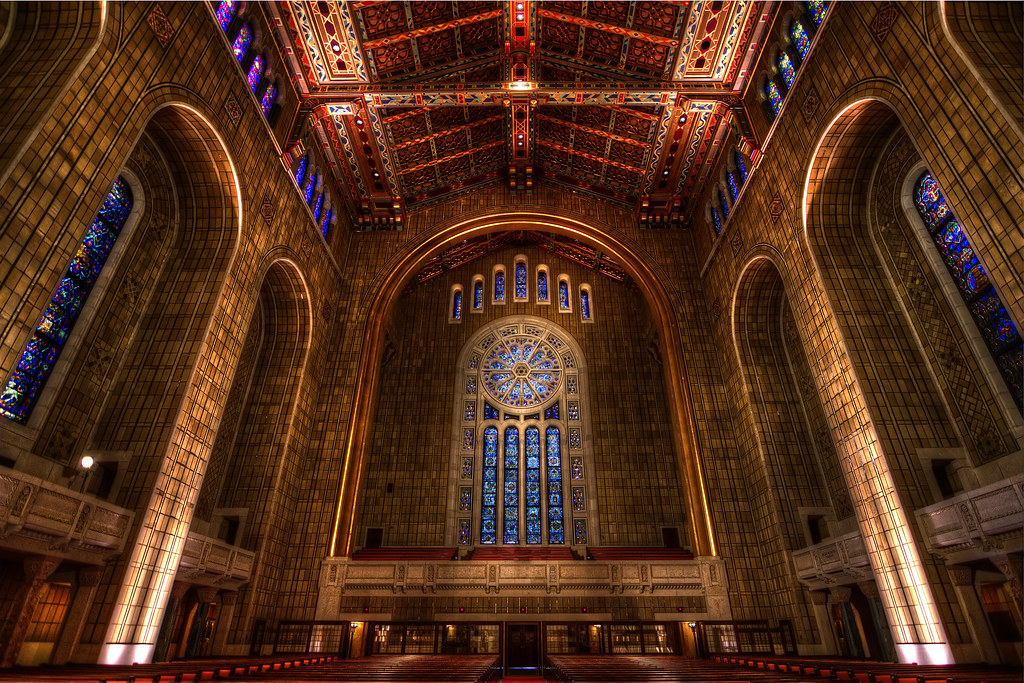
Temple Emanu-El in New York


I gave this sermon on Saturday 29th February 2020 at Three Counties Liberal Judaism for Parashat Trumah

1 Pam Fox, Israel Mattuck: Architect of Liberal Judaism

2 Ex 25

3 1 Kings 6

4 BT Bava Batra 3a

5 Finklestein and Lieberman, The Bible Unearthed

6 Mishnah Sukkah 4

sermon · social justice · theology · torah

The Fragility of Progress

When the news came in, I was sitting on the sofa watching the TV with my mum. I was in my late teens, back home from my first term at university.

The government had just legalised IVF for lesbians. It was the crowning glory of a raft of legislation passed by a Parliament that permitted gay adoption, created civil partnerships, and outlawed discrimination. Each law had been loudly and publicly debated, and there was no guarantee that any of the laws would pass.

I was overwhelmed with joy. “This is it,” I turned to my mum. “We’ve won so much. They can never take it away from us now.”

“Yes they can.” She said. “They can take it away whenever they want.”

She wasn’t gloating. She wasn’t sad. She was just stating a fact she’d learnt from bitter experience. She had joined the labour movement in its heyday, before workers’ organising rights had been curtailed and union membership had started its slow decline. She had given herself to the women’s movement and successfully fought for domestic violence shelters, women’s representation committees and helplines, only to see them all shut down.

She knew, in a way that I was too naive to understand, that what the powerless took a century to win, the powerful could take away in a day.

A fortnight ago, we read the story of the Daughters of Zelophehad. Five women from the tribe of Manasseh brought a petition before Moses and the elders, requesting that they be able to inherit their father’s estate. They argue that their father was loyal to Moses and, having no brothers, they are his proper heirs.

Moses agrees. He says their cause is just. He sets a precedent and introduces a new law: that whenever a man dies leaving daughters but no sons, his daughters will inherit him.

It is a favourite story of progressive Jews. In pulpits across the world, rabbis will have given sermons arguing that this text shows that we are right. Halachah can change. We can advance the rights of women. Judaism can progress.

This week, we are less triumphant. Cushioned at the end of the book of Numbers are the terms and conditions imposed on the daughters of Zelophehad. The men who head up the tribe of Manasseh ask Moses to revisit the case. If these women marry whoever they like, the tribe’s portion will be smaller.

Moses agrees with them. The daughters of Zelophehad must marry men from the tribe of Manasseh. The estate they inherited must become part of their husbands’ wealth. That will be the law. All women who inherit their father’s estates must marry men from the same tribe and hand over their wealth. What they won one week, they lost the next.

What does it mean for progressive Jews? The clue is, after all in the name: progressive Jews are supposed to believe in progress. Judaism can progress. We can change to become more inclusive and equal.

Our faith in progress is a response to Enlightenment and emancipation. Jews were granted citizenship. Science advanced and the age of reason prevailed. Mendelssohn called us out of the ghettos, promising the Jews of Germany that the world was waiting for them. The Jews would enter into history. If humanity was going to advance, we would lead the charge. Progress was unstoppable.

History had other plans. What rights we won, we lost in greater measure. After citizenship came the death camps. Progress could be stopped after all.

How can we possibly continue to have faith in progress after the horrors of the Shoah? How can we hold onto our hopes when we know how easily they can be dashed?

The answer is simply that we must. We hold onto our values because they are right. To be a progressive today does not mean believing that the victory of the oppressed is inevitable, but that it is necessary. We do not know whether justice can win, but only that it must.

The moments of victory are not just short-lived achievements. When we win the right of women to inherit, or lesbians to have IVF, or gays to adopt, we do not just win a legal right. We are glimpsing what is possible. We gain strength as we realise that progress we once thought impossible can be achieved. The realisation of a dream only calls for more dreams.

Today, pundits warn us of the great fragility of progress. In a tear-filled speech to Parliament recently, Angela Eagle MP told the Commons: “We know that the motivations of some of those involved in this are reactionary, and they are to return us to an era where LGBT people should get back in the closet and hide and be ashamed of the way they are.”

The progress that gave us lesbian IVF, gay adoption and the Equality Act is proving vulnerable once more. Those who had never quite felt included in Britain are feeling more alienated than ever, and those who assumed Britain would always be their home are having doubts.

But we should not despair. Whatever progress we have made has not been given to us by an invisible hand of history that oscillates between liberalism and fascism, but by people making the choice that progress is worth fighting for. We win rights not because of the generosity of politicians but because of the insistence of those who believe in justice.

Recognising that progress is fragile, all we can do is ask ourselves whether it is worth fighting for. And because it is worth fighting for, we will fight. And if we fight hard enough, we may win.

hopeful sunrise

I wrote this sermon for the weekly newsletter of Leo Baeck College, for Parashat Masei, 3rd August 2019

halachah · judaism

Towards Jewish polyamorous marriages

There is a joke that the Orthodox tell about us. They say, “at an Orthodox wedding, the mother of the bride is pregnant. At a Masorti wedding, the bride is pregnant. At a Reform wedding, the rabbi is pregnant. At a Liberal wedding, the rabbi is pregnant, and so is her wife.”

I’ve always seen this joke as quite a compliment to our inclusivity, so respond: “only one wife? How very conservative. In this day and age, she could have another husband. And he could be pregnant too.”

Yes, it is true that we treat relationships very differently across the Jewish denominations. Although some strands of Judaism are beginning to catch up, there are also those who prefer to hold onto the biblical view of marriage.

In this week’s parashah, we get to see some of what that biblical view of marriage looked like. It begins by telling us what should happen if a wife has an affair and her husband doesn’t know about it.[1] It is hard for a modern reader not to notice the lack of gender parity in this parashah. Only women can cheat. Men can marry as many women as they like (Solomon had 700 wives).[2] They can have concubines (Gideon had more than he could count).[3] They also had the right to sex with their wives’ servants (as Jacob did with Rachel’s maidservant Bilhah and Leah’s maidservant Zilpah.)[4]

Then, even with all these different categories of kosher relationships a biblical man can have, there seem to be very few stipulations on what should happen if he has sex outside of these expansive confines. Women, on the other hand, are lumbered with the same man to whom their father sold them when they were 12. For the rest of their lives.

That is not even the most challenging part of this parashah. Naso then goes on to tell us what should happen if the husband is gripped by a fit of jealousy even if his wife has done nothing wrong.[5] Now, I am an avid reader of glossy magazines and newspaper supplements, so this situation seems quite familiar. I tried to read the parashah as if it is a letter to an Agony Aunt.

A woman’s husband has flown into a fit of uncontrollable jealousy, despite her having remained faithful. With my Agony Aunt hat on, I think about how best to counsel this situation. Yes, jealousy is a natural emotion, and can even be a healthy one. You can talk through what has caused these feelings, and perhaps see a couples therapist, so that he can work through his issues.

The Torah takes a different approach. It instructs that the woman be taken before a priest to perform a magic ritual. Her husband will bring flour and the priest will bring mud from the Temple floor. They’ll then mix it up in water as the priest recites magic incantations over it. The woman will drink it. If she’s fine, she didn’t cheat. If her belly sags, she’s a cheater.[6] The whole thing sounds like a medieval witch trial. The ritual ends with a postscript that really makes for the icing on the cake: whatever the man does, he is free from guilt. Only the woman can incur guilt.[7]

It goes without saying that progressive Jews do not share the biblical view of marriage. In Liberal Judaism, especially, we are the only Jewish community in Britain that has complete gender equality when it comes to divorce. In Orthodox Judaism, divorce is one-directional. A man drops a document into the hand of his spouse, announcing their separation. In Liberal Judaism, thankfully, we have no such thing.

We strive for equality in marriage, too. Our ketubot – our documents of marriage – were rewritten decades ago so that the text would not just have a man taking a woman as a wife, but both partners take each other as equal man and wife. These documents carried over nicely when we began performing same-sex weddings. In the last couple of years, the beit din has updated the ketubot further so that we now have gender-neutral marriage certificates in Hebrew, reflecting the real relationships our congregants have.

Talking about this and contrasting it with other institutions’ approaches to relationships is what fills me with pride for my movement. Yet I wonder if we still have further to go. The discourse about monogamy, jealousy, shame and control in this parashah has made me think again about different models of relationships.

Marriage is a wonderful thing. I am so glad that we can share it with couples in committed relationships, regardless of their genders. At present, however, we restrict marriages to monogamous relationships. Of course, none of us want to return to a time where men could do as they pleased and women were confined, but I am learning from my peers that this is not the only way relationships are conducted. We do not have to choose simply between monogamy and oppressive male control.

Increasingly, I meet people who are in polyamorous relationships. They take the approach that they do not need to have just one partner for the rest of their lives, but that they can build multiple meaningful connections. Cheating, for them, is not about whether a partner has a relationship with somebody else, but about whether they are dishonest and secretive. Their approach takes the emphasis away from acts and onto attitudes. It makes the ideal relationship about how honest and open communication is. I can’t help but feel that if the couple in our parashah had this, rather than a priest performing magic, they might have had a healthier relationship.

I don’t think that style of relationship is for me, but it is for some people. Liberal Judaism should be able to deal with it. The future of marriage in our synagogues may well involve multiple-partner ceremonies. It may involve renewing discussions about what fidelity, jealousy and honesty look like in relationships. Such conversations could benefit all couples.

I would love to be able to turn to the Orthodox who make fun of our approach to relationships, and say without irony or humour, that we have a woman rabbi who has a wife and a husband and all of them are pregnant. And that we celebrate all their lives.

Shabbat shalom.

polyamory silhouette

I delivered this sermon on Friday 7th June at Manchester Liberal Jewish Community for Parashat Naso.

[1] Numbers 5:11-13

[2] 1 Kings 11:3

[3] Judges 9:56

[4] Genesis 30

[5] Numbers 5:14

[6] Numbers 5:15-30

[7] Numbers 5:31

judaism · sermon

My DNA test results

When I sent the sealed tube back to a laboratory in America, I had high hopes for what would come back. My parents were mixed – Scottish Presbyterian and Anglo-Jewish. I had grandparents and great-grandparents from Poland, Portugal, Peru and Prussia. (By Prussia, I mean Germany, but that doesn’t begin with P). Family legends trace our roots to Italy, Spain and North Africa.

I was excited. I hope my DNA results would come back like a scratch map of the entire world. I would proudly proclaim myself a global citizen. I would research my relatives in Tanzania, the Philippines and even more exotic locations like Scunthorpe.

After weeks of waiting, I opened the results with trepidation. Here they were. European: 99.7%.

Breakdown: 47.8% British and Irish. 48.4% Ashkenazi Jewish. Trace amounts of other ancestries: 1.9% ‘Broadly European’. 0.7% French and German.

I was so disappointed. Where was my globe lit up with dots on every continent? Where were my secret ancestors from places I’d never heard of? And what was I going to do with all my ‘We Are the World’ t-shirts? Perhaps all the family narratives were unreliable.

Maybe I’d need to rethink my entire identity. I wondered if I should perhaps just accept my Ashkenazi heritage and start pronouncing tafs as samechs, mumbling my prayers to myself, even letting my sideburns grow into locks. Or perhaps I should celebrate my connection to the British Isles by listening to Gaelic folk music and trying to revive Welsh as a language.

I confessed my confusion to a friend, who is a geneticist. He reassured me: “these tests are 92% nonsense.”

“But what about the other 8%!” I exclaimed, “surely that counts for something.”

He laughed “That 92% is just as arbitrary as all the percentages on your DNA results. DNA testing is like getting your fortune read at a funfair. They pick 100 genes out of a sequence of thousands, run them up against trends they’ve already found, and act like they’ve given you a whole picture. Treat it as a science-based game, not as a guide to your whole history.”

Well, now I felt even more confused. My family history might be unreliable, and the science was probably pretty suspicious too. The pillars I thought I could rely on for my identity were toppling around me.

I thought about this week’s parashah. Here, in Shmini, as part of all the levitical rules on sacrifice and cultic life, were the rules on which foods we could and couldn’t eat.

Although historians once understood these rules to be about health and cleanliness, biblical critics are now less sure. They point to the fact that any of these meats could cause diseases, and raise the issue that almost every neighbouring nation of the Ancient Near East had its own proscribed foods. Rather than taking a rational, medical approach, they suggest that the original purpose of these rules may have been to develop a sense of national unity. When people knew they had to eat the same foods as each other, they bonded as a community, creating an in-group. Kashrut rules were really there to form a sense of national identity.

I wondered if I could apply this to my own life. Perhaps what made me Jewish was my engagement with its food and ritual life. I seek out beigel bakeries, love challah, won’t eat pork or shellfish, and make cholent on Friday nights.

Maybe that was what made me British too. I think the slightest glimpse of sunlight is an excuse for a barbeque. Nothing makes me feel more at home than a pint of cider in a beer garden. I even like marmite.

I lived out my internationalism, too, in all the curries, sushi and pizza I could eat as a Londoner. My internationalism was bound up in important rituals like voting in the most important decisions facing our continent, like who should win Eurovision.

But this answer wasn’t that satisfying either. Rituals and foods can help build communal identities, but they don’t tell us that much about who we really are. These forms of banal nationalism might well create a sense of in-group, but the flipside is they create exclusions. In the wrong hand, any sense of nationhood based on these traits can be turned to nationalism, chauvinism and xenophobia. By comparison, DNA results and family legends felt relatively benign.

I came to realise what the founders of Liberal Judaism understood long ago. All ideas of nationhood are myths. Whether we route them in science, history or culture, they’re just stories we tell ourselves to make sense of the world. They don’t really help us know how to act, and in the globalised world of the 21st Century, they can even be harmful to facing our challenges. What we should really ask ourselves isn’t “who are we?” but “what do we need to do?”

In 1917, in the midst of the First World War, Lily Montagu delivered an address to the West Central Club. In it, she gave a scathing critique of Jewish nationalism, challenging its very foundations. She insisted that her citizenship was British, but her primary allegiance was to the religious goals of Judaism. At its inclusion, she declared: “the Jewish ideals, the ideals of peace and unity and love and righteousness, are for all times and all places. We are to express them to the world. That is our life’s task.”

Reading this again now, I realise that the reason why Liberal Judaism is so embracing of mixed families, of converts and of diversity, is not just a matter of pragmatism or a weak sense of tolerance. It is born out of the firmly held conviction that what makes life matter is what we do with it. What makes a Jewish life matter is how ethically we live, and how hard we strive to apply these values of social justice in our world today.

When Judaism is defined not by nationhood, but by ethical principles, it is open to everyone who shares them. What is at stake in conversations about who belongs is a fundamental question about what being Jewish really is.

Our founders had it right when they proclaimed Judaism’s emphasis to be in its prophetic vision. Today, what makes us who we are isn’t who our ancestors were but what world we create for our descendants. That is our life’s task.

Shabbat shalom.

dna-illustration

I delivered this sermon on Shabbat 30th March for Parashat Shmini at Finchley Progressive Synagogue. I’m still disappointed by my DNA results.

sermon

What I inherited from my grandfather

One of the greatest things I inherited from my grandfather was a tattered red paper folder, containing jokes. I’ll give you a pertinent example: “On the first day of school, a new student hands his teacher a note from his mother. It reads: ‘the opinions expressed by this child are not necessarily those of his parents.’”

My granddad, John Rayner, was the rabbi here for decades. I am now a rabbinic student at Leo Baeck College, where he once lectured on liturgy and codes. Today is Leo Baeck College shabbat: a chance for congregants to see what the future progressive rabbinate might look like. I’ve been invited to speak here because today the LJS will install a new stained glass window in the room named in my granddad’s honour. Rabbi Alex realised that the coincidence of these two events was too fortuitous to pass up. I am here, then, to speak about both Liberal Judaism’s past and its future.

I am often nervous to speak about my grandfather. Whenever I go to preach or lead services at any Liberal synagogue, people come up to me afterwards and tell me how much they loved him. I blush and tell them: “he was a wonderful man.”

I think what worries me most when I talk about my grandfather is that I’ll only disappoint people’s expectations. I don’t have his knowledge of Jewish thought. I can’t even repeat his views on it, because I haven’t read enough of his books. I suspect that most of the people who greet me so enthusiastically know what he thought much better than I did. That’s because I never really knew him as a scholar, or a liturgist, or a homiletician. I only knew him as a lovely man.

So, on this day, in his honour, I’ll share with you something of the lovely man I knew. The John Rayner I knew used to skip along by the brook in a park in Finchley with his two West Highland terriers, Sasson and Simcha. He used to love word games and, when driving along, he used to point out to us the registration plates of the car in front to see who could come up with the best word from the letters on the plate before the car drove off. He used to sing. Really, really badly. He broke into song, because he couldn’t find the key. When we went round for dinner at his house, he always had a stash of jokes that he’d memorised to tell. The rest of us would make sure that we also had new jokes.

That’s why the greatest inheritance I’ve received from him is this red folder containing his collections of jokes. He was so organised that he kept them and catalogued them. Some are hilarious. “Saul Epstein was taking an oral exam, applying for his citizenship papers. He was asked to spell cultivate, and spelled it correctly. He was then asked to use the word in a sentence, and responded ‘Last vinter on a very cold day I was vaiting for a bus, but it was too cultivate, so I took the subvay home.’”

Some are only good in the context of sermons, like this advert he found in a shul newsletter: “Don’t let worry kill you. Let your synagogue help.”

Some just seem wholly inappropriate for sermons: “Where do you find a dog with no legs? Right where you left him.”

Some are completely outdated. Jokes about the pitfalls of this newfangled creation called the internet. Jokes about politicians in the Clinton administration. There are some that seem doubtful whether they were ever funny, some that were probably funny at the time but have since become offensive, and some that I just don’t understand.

This little red folder is a treasured inheritance because it reminds me of my grandfather the man. It isn’t valuable or useful. Nobody else would get much out of it. It’s just a collection of old jokes. But when I look through it, I hear again his sense of humour. I see his yeckerish impulse to organise everything, even joke collections. I remember what his laughter sounded like.

This little red folder stands in for something of what matters most about Judaism. Much of it can be read about in books or understood from watching documentaries on TV. But the essence of Judaism, that part of it that makes it really Jewish, is completely intangible. It is the relationships we have with each other. The feeling of lighting shabbat candles with friends. The shared references. The warmth of sitting in a synagogue together and feeling the gentle strength of community.

That is what I inherited from my grandfather. It is what I hope to pass on. Part of the reason why I decided to pursue this path was because that Jewish world meant so much to me. The experiences that those who gave their time to make Judaism live created for me an oasis in a challenging world. I want to pass on those experiences and create that sanctuary for others.

That little red folder is a microcosm of Jewish inheritance. Just as I filter through these old jokes and find ones I want to pass on and discard, so we modern Jews do with our heritage. In every generation, we look anew at the traditions, rituals and beliefs of the past to see what is relevant in our time. Some of what worked in the past might not work today. Some of what did not work in the past might well work today. Going through that process of filtering through what we have received is what keeps Judaism alive, dynamic and engaging.

Right now, Liberal Judaism is going through just such a process. We are reviewing our old liturgies and customs in the hope of developing new ones. As we go through these changes together, we must of course bring our heads and a sense of intellectual integrity. But we must also bring our hearts. We need to be able to look at the changes our movement needs and ask: how can we make this warmer? How can we make it more heartfelt? How can we be more loving to each other as we disagree and work out new ways of being Liberal Jews?

That is the greatest inheritance I received from my grandfather: a little red folder, reminding me that a good sense of humour, and a desire to share it, matters more than anything else.

Shabbat shalom.

granddad
John Rayner z”l

I delivered this sermon on Saturday 9th February 2019 at the Liberal Jewish Synagogue in St. John’s Wood.