sermon · social justice · torah

Don’t make trans people scapegoats

“It makes no sense to hate anybody. It makes no sense to be racist or sexist or anything like that. Because whoever you hate will end up in your family. You don’t like gays? You’re gonna have a gay son. You don’t like Puerto Ricans? Your daughter’s gonna come home Livin’ La Vida Loca!”

This quotation is so erudite, you may wonder which ancient sage said it. That was in fact, the comedian Chris Rock, in his 1999 “Bigger and Blacker” set.

I must have been about 10 when I heard that line, but it has always stuck with me. Over the years since, I have watched it become true. The world is so small that whatever bigotries someone holds, the people they hate are bound to end up in their own homes.

Recently, I realised that this had happened to me. I hope I am not much of a hater, but a friend pointed out to me how much I used to make jokes about Surrey. I used to say that we should saw around the county lines of Surrey and sink it into the sea, drowning all the golf courses and making a shorter trip for Londoners to the beach. 

Now, here I am, eating my words. I am about to marry a man from Surrey and have all my in-laws in Surrey. I’m the rabbi for a congregation in Surrey, and looking to move as soon as I can to Surrey. That thing I hated, even in jest, is right here in my family and inside of me.

I had some terrible stereotypes that everyone who lived here was a tax-dodging, fox-hunting billionaire. They weren’t grounded in reality. They were just about my own fears, projected onto people I had never met. 

Chris Rock was right. Whoever you hate will end up in your family. 

More than that: whoever you hate is already something inside of you. 

All of us can do it: we can stereotype, generalise, and project all our antagonisms onto a group as a way to cast off all the fears we have about ourselves. What do we call someone who captures all this externalised hatred? A scapegoat.

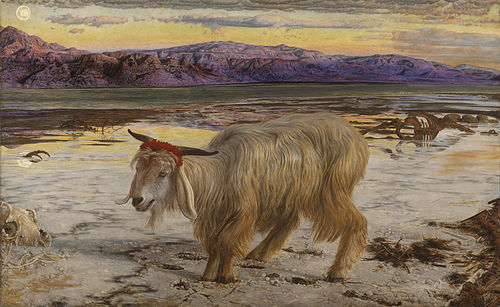
In this week’s Torah portion, we read about the original scapegoat. As part of the rituals for collective atonement, Aaron the High Priest gets two goats and brings them into the tabernacle. They pick straws for the goats. 

The lucky one is to be sacrificed for God. Onto the lucky one, Aaron ceremonially transmits all the sins of the Israelites, then chases it out into the wilderness. As it scarpers off, the scapegoat symbolically carries away all of the Israelites’ misdeeds.

The biblical narrative describes a psychological trick we can all play on ourselves. When we are ashamed of something inside ourselves, we take all that fear, turn it into hatred, and throw it at whatever unwitting bystander will carry it. 

Is this not precisely what Britain has been doing to trans people?

Gender is changing. The roles of men and women are shifting dramatically. There are so many new ways to live gender, to express ourselves, and to talk about our identities. 

Rather than embrace these changes and think about what opportunities they can afford us all to be more free, reactionary parts of British society have whipped up a concoction of bigotry and thrown it all at trans people. Every anxiety our bigots have about gender has been exaggerated and projected onto one small part of the population, who have been turned into monsters through these prejudiced eyes. 

It makes sense that people will find social changes scary and destabilising, but why should trans people bear the brunt of those fears?

A few years ago, I went to hear a panel of esteemed Jewish leaders give a retrospective talk about the ordination of gay, lesbian, bi and trans rabbis. On the bimah was Rabbi Indigo Raphael, Europe’s first openly trans rabbi. 

In his opening words to the congregation, Rabbi Raphael proclaimed: “I am a transgender man. I am not an agenda; I am not an ideology; and you can’t catch trans by respecting my pronouns.” The room immediately erupted into applause.

He should not need to say it. He shouldn’t need to defend his own existence, but such is the level of moral panic in parts of Britain that he has to assert his right not to be scapegoated before he can even teach Torah.

In the last few weeks, trans people have been subjected to legal rulings and government decrees that may make their lives unlivable and keep them from basic participation in public life. Like the goats of the ancient world, they are being cast out into the wilderness to carry away all of people’s fears.

It should not be this way. 

When we feel like scapegoating others, the best thing to do is look inside ourselves. We need to face our fears and work out why others bother us. The chances are, it’s something in ourselves that we’re not happy with, and when we need to get right with our own souls.

When we get to know those we “other” we get to know ourselves better. And when we realise we can like the difference in others, we learn more about what we can like in ourselves.

Reflecting on this, Margaret Moers Wenig, an American Reform rabbi wrote an essay called “Spiritual Lessons from Transsexuals.” She talks about how knowing trans people has enriched her own spiritual life. 

Interacting with trans people, Rabbi Wenig says, has taught her that all of us can craft our bodies as we will; we are all more than just our flesh and blood; we have living souls that can differ from others’ assumptions; that only God knows who we truly are. These are wonderful lessons that can only be learned when we turn away from fear and embrace curiosity.

They chime with my own experiences. At first, knowing trans people made me question myself. If gender is something we can change, am I really a man? With time, seeing other people embrace their gender and become who they are has made me feel far more happy in my own gender. I am a man, and I like being a man, and I like being an effeminate man.

When we turn away from fear, we see that we have no need for scapegoats. The parts within us don’t need to be divided up so that some are holy and others need to be chased out into the wilderness. Every part of us is for God.

The world has more than enough hate. It’s time we swapped it for loving curiosity.

After all, Surrey, it turns out, is rather lovely.

Shabbat shalom.

judaism · theology

Be humble about what we can know


Before the Enlightenment, the world was governed by unknowable spirits and invisible entities.

There was so much we did not know.

If your farm didn’t produce any crops or the skies did not give you enough rain, you did not have modern technology to inform you about drought predictions for the next three years. You would have no way to know that the water coming from your clouds was directly connected to oceans miles away.

But you had your priests, and your rituals, and your superstitions. You had small gods in the hill country to which you offered libations. And, so far, when you had upheld your traditions, the rain came as it was supposed to.

When you got sick with a skin infection, you could not see a GP who would consult a modern medicine manual and give you a cream that would clear it up in just a few days. You would not have knowledge about germs, allergies, and viruses.

But you had your priests, and your rituals, and your superstitions. You had your rules governing sin and repentance. You had reliable experience that bodily suffering could be healed by atonement. And, so far, when you had upheld your traditions, the rain came as it was supposed to.

Please hold this in mind as we read this week’s Torah portion.

It may be easy for a modern mind, after the Enlightenment, to scoff at the strange priests, rituals, and superstitions that govern these chapters in the Book of Leviticus.

You might feel slightly embarrassed to imagine the rites our ancestors slit open goats, threw their entrails around and burned them for days until they stunk out a tent as expiation for their sins.

You might squirm at the vivid descriptions of cotton-clad priests flailing around the limbs of slaughtered cattle to win the favour of their god.

It may even seem primitive how they delight at the animal fat creating explosive fire, which they see as evidence of their god’s approval.

But they were doing what they could with what they knew. And they were engaging earnestly with what they did not know. Beyond the world they experienced was an unfathomable mystery, and they wanted to draw closer to it.

Indeed, only verses later, we get an insight into their own feelings of inadequacy. We get a real sense that they knew how much they did not know.

Nadav and Abihu do absolutely everything right. They follow the priests, carry out the rituals, and trust in the superstitions. They are formally inducted into all the correct practices by their father, Aaron the High Priest.

They do everything right. And then they die.

The burning animal fat explodes in a blaze that kills them both.

How can our ancestors make sense of this?

Our Torah gives two answers. The first is from Moses. Moses recalls a prophecy when God said: “Among those who approach me I will be proved holy; in the sight of all the people I will be honored.’”

We may interpret this as a way of Moses defending God. Moses is saying: while this may feel like a violation of our belief system, it is in fact proof of it. Holiness is a very dangerous quality.

God has demonstrated how sacred it is to engage in the rituals. God has shown what honour and risk are involved in holy service. 

So, for Moses, this sudden death of their priests does not undermine their belief system. It’s just evidence of how little they understand about their sacred rituals. In the fire, they have reached the limits of their knowledge.

Aaron, too, offers an answer. Silence.

We may interpret Aaron’s unspoken response variously. We may read into it horror, resignation, anger, acceptance, or solemnity.

But regardless of what he was feeling, we see that Aaron has no intellectual answer to the problem. He neither agrees nor disagrees with Moses. Aaron finds the limits of speech. He finds the boundaries of what he can even express.

Moses and Aaron lived in a world of unknowable spirits, governed by superstition. They made sense of their confusing world through priests and sacrifices. And no matter how well they constructed their rituals, they still found their limits.

There were things they did not know.

But we live in an era after such theologies. From the 17th Century onwards, Western Europe was gripped by a profound truth.

As the people challenged the unlimited power of the established church, philosophers pulled apart the stories religions had told.

This was the Enlightenment.

No more would they be hoodwinked by magical thinking or damned by promises of divine retribution. Everything, every idea, would be subjected to ruthless scrutiny. The greats of these generations would challenge the tenets of even science itself.

We live now in a world formed by their ideas. While our ancestors were beholden to talismans, omens, and sacrificial fire, we have evolved to hold modern ideals of truth and rational enquiry.

So, why hasn’t religion disappeared?

Isn’t that the obvious next question?

We have rid ourselves of superstitions, but synagogues are stronger than ever. Most of the world is still deeply religious. Despite constant predictions of its demise, faith remains stronger than ever.

For those who wish to understand God’s persistence after the Enlightenment, they may want to look to Immanuel Kant.

Kant was the last of the Enlightenment thinkers. His impact on this period of intellectual history was so great that some even date its end to his death.

Kant was a profound writer on truth, ethics, the scientific method, and what we can really know. He was also a devout Christian.

Kant was animated by the same questions that bothered our ancestors who witnessed Nadav and Abihu die.

He was not confused about why burning fat could cause a blaze, or why religious rituals didn’t always yield the same results. Those were the questions of the past.

The question still lingered, however: why does it seem like there is no justice in the world? Why do bad things happen to good people, and why do the wicked seem to get away with it? Why, no matter what happens, does evil seem to persist?

In his essay, The Miscarriage of All, Kant says he will put God’s justice before the trial of reason. Kant contemplates all the possible answers.

Maybe what we think is evil isn’t really. Maybe the world works in ways we don’t understand so that evil has to be permitted. Maybe there are other forces in the world beyond God’s goodness.

And Kant gives us an answer, which is… we don’t know.

All of these explanations only expose the limits of our understanding.

None of the answers anybody has come up with is satisfactory.

We are finite beings trying to understand Infinite Truth.

And still, says Kant, we retain our faith.

For Kant, none of these questions undermine the existence of God’s justice. They just show what we do not know.

So, perhaps we need to approach these stories with more humility and less contempt.

The ancient priests may well have splashed ox blood around an altar to ward off sin, but we are no closer to answering the questions that motivated their rituals.

We are barely separated from them by any time at all.

We are still just animals, scrambling in the dark, trying to make sense of our world.

And we still need each other, with all our beliefs and rituals, to get through this life that can seem so unjust.

We are each other’s guides through a mystery we may never resolve.

We need to be humble about what we do not know.

sermon · torah

Love is at the heart of the Torah

Within the Torah, there are 5 books.

There are 54 parshiyot.

There are 5,888 verses.

There are 79,980 Hebrew words.

And there are 304,805 letters.

The counting of numbers, verses and spaces actually has a great importance in the Jewish tradition. The word in Hebrew for a scribe is the same as for one who counts (sofer). The Talmud says this is because the original sages spent their time counting the numbers and letters of scrolls.

Now, sometimes, the Talmud is making stuff up, or telling a joke that has been lost to the ages, but in this case, they are almost certainly right. 

Counting words, numbers and verses was a great way to ensure that the Torah was standardised, so there could be no differences between the authoritative versions of God’s Word.

Counting words helps us to work out important things about Torah. For example, the Talmud tells us, you can count from the beginning to the end and find the word that is slap bang in the middle of the scroll.

If you do it by letter, says the Babylonian Talmud, you get the word “belly” – gachon. Yes, right in the middle of our Torah is a big tummy, just like on a human being. It fits, doesn’t it? How much of Jewish culture is about food?

If you do it word by word, then the middle two words of the whole Torah are “darosh darash” – search and search; diligently enquire. The middle words of the Torah are all about asking and questioning. How fitting! We love asking, and searching for answers. Aren’t we always questioning, adding questions to our questions? (Well, are we?)

And, if you do it by verse, then you get to the central verse of the whole Torah, Leviticus 13:33. Here it is, the great lesson our Scripture has been trying to tell us: “then the man or woman must shave themselves, except for the affected area, and the priest is to keep them isolated for another seven days.”

I’ve got nothing. 

Now, the Babylonian Talmud has given us some good answers about the middle of the Torah. But none of them are quite what we’re looking for.

Because if you hold the Torah in your hands, if you physically roll the Torah looking for a midpoint, you’d think it would be here, in this week’s parasha. 

Spatially, the centre of the Torah is here, at the start of Kedoshim. Here, at the beginning of Leviticus 19, God tells the Israelites: “you shall be a holy people, for I, God, am holy.”

And if you follow this bit of Torah down to its centre, right to the middle here, you get the central commandment of the Holiness Code: “love your neighbour as yourself.”

That, says the Palestinian Talmud, is the real heart of the Torah. Never mind all the numbers and counting. If what you are looking for is what the Torah is all about, follow your heart, and get to its intuitive core.

There, in the Yerushalmi, Rabbi Akiva says: “the greatest principle of the Torah is to love your neighbour as yourself.” He says, if someone is going astray, this is the only thing you have to remind them of to get them back on track. 

You may have heard this before. In the Christian Gospel of Mark, Jesus says that the greatest principle of Torah is to love your neighbour as yourself. He might have got more famous than Rabbi Akiva, but he certainly wasn’t the saying’s originator. That’s just a nice Jewish boy, repeating a good rabbinic tradition. 

In fact, anyone who spends more than a minute with our religious tradition will understand that to be so. Love is at the heart of the Torah. That is all any of it is about. 

Yes, the belly matters, of course it does. But it’s not just because we need food to keep ourselves sustained. It’s not even because food is a way of transmitting culture. It’s because through feeding and being fed we can show how much we love each other. These kiddishes, these Friday night dinners, the old recipes handed down, the food bank drives, the seder meals, the cakes we bake… they are all simply different ways of demonstrating love.

And yes, the searching and inquiring matters too. But it’s not just because we’re a learned and inquisitive people. It’s not just because we put such high value on education and on our Scriptures. It’s because it is a beautiful way of showing each other how much we love each other. You sit with a child to tell them a Bible story. You sit with a friend to study some text together. You sit with an elder to ask them for their wisdom. Sure, on some level, you’re just trying to get information. But, at core, these are ways of showing love.

Hold that in mind, then, as we return to the central verse of Torah, in the purity laws given to priests: “they must shave themselves, except for the infected area…”

No, sorry, I’ve still got nothing.

A few weeks ago, I sat down here with the Council to talk about what it would look like to come here as a rabbi, and whether we might be a match. One of your leaders asked: “what do you think are the core functions of the synagogue?” I gave my honest answer: “The synagogue only really serves one purpose, and that is to get people to love each other more.”

We come together, in these Jewish communities, to show that we love others as we love ourselves. We will eat together and learn together and pray together because we love each other. 

We will love each other enough to be with each other in our most trying moments of death, disease and disaster. We will love each other enough to celebrate together through our joys of life, and build each other up.

This synagogue already has a wonderful reputation. Rene, your outgoing rabbi, has told me how much he loves you. Charley, your former rabbi, and now movement head, has shared the same. Danny, your rabbi emeritus, has told me how lucky I am to be coming here. 

I meet adults who grew up here, friends of Laurence, and they share what a warm and wonderful place this is. In just the few meetings I have had with members, I can already see why.

The love that people speak of you all with is because of the love that you put out and create in your community.

I cannot wait to start here, and to love you as much as everyone else does.

וְאָהַבְתָּ לְרֵעֲךָ כָּמוֹךָ

May you love your neighbour as you love yourself.

Shabbat shalom.

halachah · judaism · social justice

Are Jews allowed to lend money at interest?

Of course, I am Jewish, but I also consider myself very English. I am English in the very parochial sense that I love canal boats, think provincial churches are beautiful, will definitely barbecue on the only day of summer, and put mayonnaise with everything. But, last autumn, I did the most English thing I have ever done. 

I wrote a disapproving letter of correction.

I had never done it before. I’ve never written in to the BBC or a newspaper. To the best of my knowledge, I’ve never sent a letter of complaint about anything. But this one was too important to simply ignore.

Someone in a play had misrepresented a complex point of Jewish law. 

Now, this may seem trivial. But, six months later, I am still so incensed about this common misconception of halachah, that I feel the need to preach on it. 

In September, last year, I got a real treat: to go see one of our members perform at the Royal Court Theatre. Rachel Hosker, who will be getting married under our auspices in the summer, was performing in a play called ‘Jews. In their Own Words.’ Written by Jonathan Freedland, the play interviews famous Jews, including Tracy-Ann Oberman, Luciana Berger, Margaret Hodge, and Howard Jacobson, trying to give a sense of antisemitism, past and present. 

I’m not a theatre critic, but let me tell you: Rachel acted fantastically. She and the rest of the cast did a fantastic job of bringing the characters to life. 

But there was a line, really a throwaway comment, that stuck with me. The play was attempting to explain the trope of the money-hungry Jew, and how Jews had come to be associated with money-lending. An actor representing CST’s Dave Rich said: “the rulings of the church forbade lending money at interest, which was considered usury, whereas Jewish law allowed it.”

This, to me, is alarmingly inaccurate. It shows not only a misunderstanding of Jewish law, but also of antisemitism, and how it works. It places the responsibility for Jews as medieval money-lenders onto Jews, and our religion. Nothing could be further from the truth.

If it was the case that Jewish law allowed money-lending at interest, you would be hard-pressed to explain the commandment in this week’s Torah portion: “You may not act as a creditor to your people. You may not exact interest from them.” You would also have to reckon with the same commandment, given in the Holiness Code: “Do not exact advance or accrued interest, but fear your God… Do not lend your money at interest, and do not give your food at interest.” The same commandment is repeated again in Deuteronomy: “do not deduct interest from loans to your kindred.”

Of course, you might say, the Torah is not the only source of Jewish law. Perhaps these commandments are amended in the Mishnah, or the Talmud, or the Codes. No, no, and no. The Mishnah says charging interest is so reprehensible that it involves breaking six commandments. The Talmud says that even scribes and witnesses who participate in such contracts are guilty. 

In the defining law code for most of the Jewish world, the Mishneh Torah, Rambam looks at the word for interest – neshech – which is the same as the word for a snakebite, and says it is called as such “because it bites, it causes pain to a fellow human being, and consumes a person.” He repudiates it completely.

Be in no doubt: Jewish law does not permit money-lending at interest.

So, how did it happen that Jews nevertheless ended up associated with money-lending, despite its very explicit prohibition?

In the 4th Century CE, Church Father Augustine of Hippo declared that Jews would be permitted to survive as “living witnesses” to the truth of the Bible, but must be kept in a degraded state, with the mark of Cain, for their refusal to accept Jesus. This became the official policy of Christian Europe’s primary institutions: its churches and monarchies. 

Jews were allowed to live in England neither as citizens nor serfs. They could not own land or participate in the nation. They were excluded from universities, and cut out of the professions. They were only allowed to live in the country on condition that they did the dirty work of the ruling class: tax collecting and money-lending. 

Now, most Jews did not do such jobs. They did the work that was needed for their community, as bakers, vintners, stonemasons, and millers. But, as long as some Jews fulfilled these functions for the monarchy, all Jews could live in European countries as “treasured subjects” – effectively pets of the king. 

This had a profound impact on the lives of medieval European Jews. They were forced to wear humiliating clothes to mark them out. Associated with tax collecting and money-lending, many of the local peasants associated the Jews with all the financial problems they faced. 

The local lords actively exploited this division. They drummed up hatred against Jews, and treated them as a pressure valve, so that, in times of economic crisis, peasants would attack their local Jews rather than turn their ire on the landowner class.

That is why the worst pogroms that we have recorded came in times when the monarchy was in financial straits. In England, these came when the country was bankrupted by its military Crusades to capture Jerusalem. Jews, the perceived cause of money problems, and naturally associated with the Holy Land, had all the anger and resentment of impoverished people poured out on them. 

If the monarchy or the Church were struggling with their own debts, they had an easy way out: they could simply expel the Jews and confiscate all their property. In 1290, Edward I expelled the Jews from England to cancel his debts and win back the support of the knights and lords in parliament, who were also heavily indebted.

This put the rabbis, the arbiters of Jewish law, in a very difficult position. If they permitted lending at interest, they would turn their backs on their entire religious inheritance. If they insisted that Judaism forbade money-lending at interest, they would effectively force their community to leave where they were. And, since all of Christian Europe had adopted the same policy, they would have nowhere to go. 

So, the rabbis had to find a way. They looked at the laws, which said such lending was only prohibited to their kin. Rabbi David Kimchi, writing in medieval France during pogroms and expulsions, said that Jews were not permitted to lend at interest to people who respect Jews. The corollary was that if people would not treat the Jews as full human beings, then they, in turn, could lend to them at interest. In England, the Christians had estranged them and made them explicitly not their kin.

This is why correcting this point on the understanding of Jewish law is so important. It is not just because we are sticklers for getting the halachah right. It is so that we understand what antisemitism is and how it works. 

We Jews did not create this system. We did not allow it, nor have the power to stop it. For over a millennium, European powers embedded and promoted antisemitism to prop up their system. As Rabbi Lionel Blue, of blessed memory, so pithily wrote: “The problem of the Jews in Europe was never the Jews. It was Europe.”

Now, we are citizens in this country. With Emancipation, we might have hoped that it would bring an end to cultures of debt and division. True, most of the banks and money-lenders are now not owned by Jews, and very few Jews today engage in such work. 

But that is not because we are living closer to the laws of the Torah or our rabbis. It is because the whole of our society is caught up in loans. All of us are more indebted and more divided than we ever were. We are pitted against each other by a media eager to see us all fighting. 

Combating antisemitism does not only mean counteracting myths and biases against Jews. It is also about dismantling the material realities that created antisemitism. The hatred of Jews erupts when we are scapegoated for economic problems in society. We must not only contradict the myth that we are responsible, but also fight to ensure that the problems people face of economic hardship and drowning in debts no longer exist. 

When we realise that the world has enough for all of us, and distribute it so that everyone can prosper, we will be far closer to a world without prejudice and fear.

Shabbat shalom.

sermon · social justice

A peasant farmer was my father

A peasant farmer was my father

When my mind wanders, I like to think about where I would go if I could travel in time. Have you ever considered this? When you would want to visit?

Personally, my first thought is Paris in the 1890s. In my higher moments, I project myself into medieval Andalus, the Golden Age of Hebrew poetry in Spain. 

And, of course, I’d love to go back to biblical times. Wouldn’t it be marvellous to see the First Temple in all its glory? What would it be like to inhabit that world of prophets and visionaries?

But this time travel thought experiment always comes with a corollary. I’d have to be a rich man. No matter what spot of history I got dropped in, the only way to enjoy it would be to be part of the elite.

If I were sent back to biblical times without that condition, I’d probably be a peasant farmer. We like to imagine our ancestors as great kings and high priests. In reality, they were less than a small fraction of the ancient Israelite population.

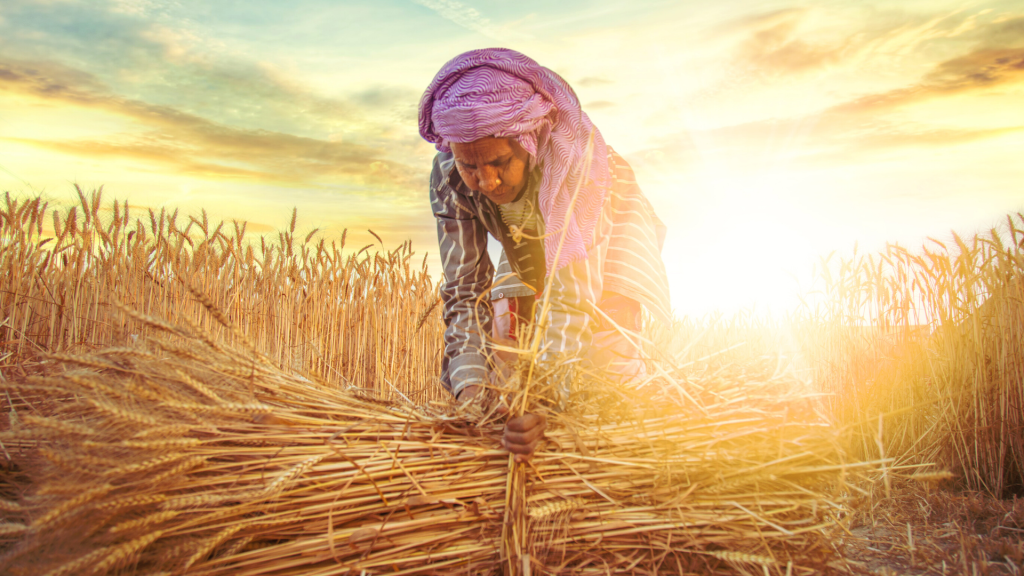
95% of people in the biblical period worked the land. Dropped back to the time of David and Solomon, we probably wouldn’t be in their courts, but in the fields. 

I take a perverse pride in this knowledge.

Think how hard they must have worked to bring that ancient society into being!

As a peasant farmer in the ancient world, you would have about 3 acres, growing different crops, including grains, fruit trees, and olives. You would, almost certainly, have a chicken run and a small herd of goats. 

If you were really fancy, you might also have a cow.

Your home would be a collection of huts and tents, stretching out to include your extended family. Each would be a bustling, cramped place, with pots and pans and a fire stove. Your animals would potter in and out of your sleeping quarters. 

I am not trying to paint a romantic vision of any of this. Your life would be hard. You would pull a plough with your own hands and sow seeds with your back hunched over. You would cultivate and cut and glean your trees in the searing heat. 

You would spin your own wool, stitch your own clothes, bake your own bread, build your own dwellings, subsist on whatever you needed to survive.

Yes, all that is true for women, too, with an additional burden. You would give birth to ten children and breast feed all of them. You would count yourself incredibly lucky if all of them lived past the age of 5. If they did, they would likely be married off in their teens. 

No, there is nothing romantic about the lives of our real ancestors. 

But we should be proud of them. 

Peasants, labourers and serfs might not be the subject of great poetry and sagas, but without their efforts, nothing exists. There could be no food, no shelter, no community, and no culture, without their graft. That gruelling work made civilisation possible.

This week’s parashah tells us something of how they built ancient Israelite society.

If they had just stuck to their own homesteads, they would have had to survive on the paltry gains of subsistence farming. In a bad year – if rains failed to fall or crops failed to grow – they would simply perish.

So, our family, the farmers of the ancient world, signed up to participate in the agrarian state. 

The agrarian state was responsible for distributing food and creating common irrigation and transport systems. In ancient Israel, the centre of that state was the Jerusalem Temple. 

Our parashah explains the criteria for participating in its systems. You must not glean your fields right to their edges, so that you leave enough for travellers and strangers. You must donate a tenth of your grain and livestock to support those in the community who are most vulnerable, like widows and orphans. 

In some ways, this is the foundation of the earliest welfare state. 

But the poor are not the only beneficiaries of this redistribution. 

In fact, they were not even its primary targets. 

Our parashah begins with a ritual that Israelites must undertake each year. At each harvest of the year, you must collect your first and best fruits. You must bring these, the choicest of all the crops you worked so hard to create, and give them to the priests.

You must lift them above your head and say: “A wandering Aramean was my father. He was enslaved in Egypt, but God brought him out into this land of milk and honey. Now, I bring before you, the first fruits of the soil that God has given me.”

The priest will sacrifice it, perform closed rituals, and eat it in front of you.

That priest did not work to produce those fruits. He did not share in the exhausting work of raising children in a hovel, or run ploughs over the land. In fact, he wasn’t responsible for any land.

The priest’s sole job was to be the leader of the ancient cult. He was in charge. He profited from your work. 

That great Temple in Jerusalem, with all its priests and writings and rituals, only existed because the poor majority paid in and made it happen. That entire society functioned on the basis of our ancestors’ labour. How could they have done it without the work of the people who harvested the grain, built the bricks, and cared for the sick? 

I don’t resent the ancient priests. 

That work made possible great cultural developments. At that time, we couldn’t have had literary culture, organised society, music or scientific discovery without a class who had the leisure time to devote to such pursuits.

We then wouldn’t have benefited from the innovations in agriculture, technology, transport and trade that makes our lives today less horrible than they were in ancient times.

But, while resentment for ancient figures might not be productive, we should feel entitled to be critical.

After all, their world is our world. For all the social progress we have made, the divisions that defined civilisations millenia ago are only greater than they were then.

Far fewer people profit far more from the work of the majority than ever did in the biblical period. 

Almost all of us, I know, are worried about how energy price gouging, interest rate rises, and higher costs of living will affect us. Some are already feeling the effects of an economy where wages won’t rise but prices keep going up. 

Meanwhile, the energy companies and their shareholders are making record profits. These last few years, which have been so frightening for most people, have been a period of great abundance for the world’s richest. 

This is not accidental. The rich are not rich in spite of the poor. They are rich because of the poor.

Perhaps those inequalities were essential to create our current world. But how much greater would society be if we decided to eradicate them? Just imagine what we could accomplish if nobody had to worry about heating their home or feeding their family.

We could unleash the great talents of everyone, whether priest or pauper; shareholder or sharecropper; king or taxi driver. We could enjoy this world, with all its bounties, without the constant friction of struggle.

On reflection, if I could travel in time, I don’t think the past would be the place for me. I would prefer, instead, to make my way to the future.

I want to go to the time when technology is harnessed to benefit everyone in the world, regardless of who they are and where they live. An era in which it is not just a small minority that creams off the profits of the many, but when everything is redistributed between everyone. One in which the gains of civilisation are shared with all humanity. 

We can’t change the past. We can’t go back and rescue our ancestors from the harsh realities of peasantry. But we can build a different future for the next generation. We can make it so that the future is not defined by the same problems of the past.

Let us travel to that point in time together. 

Shabbat shalom.

Ki Tavo 5782, South West Essex and Settlement Reform Synagogue

judaism · sermon · social justice

A world without walls

There was a time before there were fences and walls. 

At some point in the distant past, recorded only in our folktales, the world used to grow wild and free. Trees and plants sprouted wherever they wanted. Animals moved at their own will. There were no roads, no houses, no cars, and no banks. 

Back then, human beings were hunter-gatherers. Our ancestors lived in caves, chased down animals with spears, foraged for berries, and moved wherever the weather was best. 

Then, about 10,000 years ago, something changed. In a place that we now call the Middle East, a group of people realised that they did not just have to take whatever nature allowed them. 

They could change their environment to meet their needs. They could plant, sow, grow, cultivate, reap and nurture crops. They could turn entire fields into places where just one thing was grown, like olive groves, barley fields and orchards. 

This was the beginning of civilisation.

It was also the beginning of war. Armies grew. The spears that had been used to hunt cattle were now used to kill people. 

Fences were put up. At first, they were used to keep animal livestock in. Then, they were used to mark out who owned which fields. Then, they were used to keep people in their place.

The people who had control of the fields needed people to work them. The workers, often vanquished or nomadic people, needed a place to stay and a way to get fed when all the food was fenced in. 

So the workers became indebted to the owners. The landowners would feed and house the workers. The workers would labour over the land to make it profitable. The landowners gained more wealth and more land. The workers became increasingly in debt. 

Sometimes, people were born into slavery, and this would be passed down for generations. Their debt to the landowners could never be repaid. 

The owners, in turn, passed on the land to their children.

This presented a big problem. People could become infinitely indebted, with no hope of their descendants ever paying it off. People could become infinitely wealthy, as they conquered more land and made more people work for them. The owning people would have to use increasingly violent measures to make sure the working people did not rebel against them. 

That was the situation in the ancient world. Debt. Wealth. Slavery. Borders. Violence. Revolutions.

And, according to the 19th Century historian Moses Finley, every revolution had the same demand: cancel all the debts and redistribute all the land. 

When you understand this historical background, this week’s parashah, Behar, makes a lot more sense. This week, we read Leviticus 25. It is a remarkable chapter of the Bible in that, on its own, it comprises an entire sidra of the Torah, and all 50 verses deal with the same subject. This whole chapter is dedicated to how the ancient Israelites could break the cycle of debt, slavery and land acquisition. 

It begins with the shmita. Every seven years, you give the land a break. You cannot overwork it. It is like a shabbat for nature, free from human interference. 

Then you count seven lots of seven, seven shmitas, adding up to forty-nine years. In the fiftieth year, you have a Jubilee. Now all the land must be redistributed again. Noone can accumulate all the fields. It is a complete reset. Everyone goes home. Noone exploits anyone else. 

At this time, all the debts are annulled. Nobody can rack up infinite obligations to others.

There is no ancient version of Carol Vordeman advertising that you can consolidate all your debts into one monthly loan repayment.

This means that even slaves can be set free. The law forbids landowners from charging interest to their slaves. They can’t charge them extra for the food they eat or the place where they sleep. They might be in debt, but they have to have a way of getting out of it. 

Every seven years, slaves have the option to go free. Then, in the Jubilee year, all slaves are redeemed. Nobody can remain in slavery forever.

Repeatedly, Leviticus insists:

 לֹֽא־יִרְדֶּ֥נּֽוּ בְּפֶ֖רֶךְ

Do not grind them down. 

Don’t be ruthless.

Leviticus was written in a time of great inequality, when landowners took up huge amounts of land and charged huge amounts of interest. Workers accrued huge amounts of debt and passed on slavery to their great-grandchildren. Leviticus came to offer an alternative. The system of Jubilees means nobody can become too rich and nobody can become too poor.

This system works because there is someone to defend the poor and resist the rich. There is a force stronger than any spear and higher than any fence. There is a being who will advocate against even the wealthiest landowner and the mightiest army.

That being is God. 

Nobody can be a slave forever, because, ultimately, we all serve God. Nobody can own the land forever because, ultimately, the land belongs to God. In this religious system that our Torah creates, nobody can really claim to be better than anybody else.

God tells us something that no ledger sheet can. Whereas debtors can calculate the value of every loan and landowners can weigh up the worth of every harvest, faith tells us about the things we cannot count. 

You can’t put a value on human life. You can’t put a value on freedom. You can’t put a value on social harmony.

This is why the Torah makes such a special contribution to human history. In a world structured by violence, it tells us that people must be set free. In a world divided by inequality, it tells us that everyone has equal value. It calls on us to relieve all debts and free all slaves. 

Ours is a world of fences and walls. Ours is a world of great debt and great wealth. Ours is a world where some are too poor and some are too rich. 

But Leviticus challenges us to remember a world before this was the case. It instructs us to imagine a world where inequality is no longer the case. 

It teaches us to build a world without fences or walls. Let us heed that call.

Shabbat shalom. 

judaism · ritual · spirituality

Sacred skinny-dipping

It was midsummer in a basin in the Welsh valleys. I found myself completely naked with a friend in a lukewarm tub of rainwater. We were supposed to wait for it to properly heat up over the log fire, but I was in a hurry to go from teaching Torah there to preaching in north-west London. The sunshine compensated for us. 

All around there were huge green trees, rolling hills, a babbling brook. Hippies not far away chanted in Hebrew while banging on drums.

“OK,” I said. “Now what do I do?”

“So I’m going to tell you my practice,” she said, “but you can come up with your own.”

Her practice, I later discovered, was the same one as you would find Orthodox Jews performing on Friday afternoons, as sanctioned by rabbis and law books. She had a way of making every tradition feel New Age.

She dunked fully underwater three times, twice emerging to recite a prayer.

Al hatvilah – thank you, God, for making me holy by commanding me in immersion.

Shehechiyanu- thank you, God, for keeping me alive to see this day.

On the third dip, she came up, smiled and said: “That’s all there is to it.”

I copied her every move. And that was it: my first mikveh.

I had previously associated this ritual with Orthodox women washing off the ritual impurity associated with menstruation. It had seemed to me outdated and misogynistic. 

The only other people I knew of who did it were converts, undergoing a form of Jewish baptism to initiate them into the religion. I had thought, cynically, that these new Jews were washing off the goy.

But here was my teacher, Yael Tischler, far more radical than I was in terms of religious innovation and transgressive liturgy; a witchy feminist affiliated to the Kohenet movement in America – a bohemian collective for women-centred spirituality. 

With her, the act of immersion didn’t feel problematic. It felt like my whole body was wrapped up in Jewish history. It felt connected to the earthy, fleshy customs of long-gone ancestors.

This was strange, because I know that none of my recent ancestors would have done such a thing. Liberal Jews were, by and large, decidedly opposed to many embodied rituals. 

Like their reforming Christian counterparts, many of the early Progressive Jews felt that religion should be a matter of intellectual faith. It should be stripped down to its essential meanings, devoid of excessive piety or symbols. 

In the great platforms decreed from Germany and the USA, Reform Jews repudiated circumcision, abandoned kashrut and denounced tallits. They ridiculed shockeling, the Eastern Ashkenazi prayer movements, as “bowing and scraping.” One British Liberal rabbi called kippot “the eccentric trappings of the Orient.”

As you can imagine, mikvaot did not get much of a look-in. For decades, ritual immersion was not a requisite part of conversion at the Reform beit din. Today, very few progressive Jews will attend the mikveh before their wedding. It is almost unheard of that a progressive Jew will have a regular toiveling practice as the Orthodox do.

This week’s parashah probably provides a good explanation as to why progressives are so uncomfortable with it. This week, we read Tazria-Metzora, a portion dedicated to defiling skin diseases, leprous houses, sexual infections and menstrual impurity. 

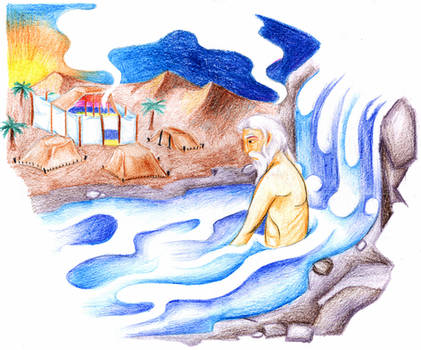
To escape the uncleanness that falls upon people by contact with these things, ancient Israelites would ritually immerse in a mikveh. The Torah describes mayyim chayyim – running water – in which people would wash themselves. We know that in the period after the Great Exile, the mikveh was likely an enormous bath at the entrance to the Second Temple. 

In the biblical world, the mikveh does seem troubling. It exists for a people obsessed by physical purity, who want to remove their blemishes before they enter sacred spaces. I would not feel comfortable advocating immersion to congregants on the grounds that their bodies are unclean and carry associations of sin. 

But my teacher, Rabbi Debbie Young Somers, argues that our rabbis fundamentally transformed what mikveh meant. She did her rabbinic thesis on mikvaot and has taught about their virtues in numerous study sessions. When I asked her for sources for this sermon, she immediately sent me detailed source sheets and tweeted her glee that the subject matter was being discussed in our synagogue. 

Impurity, Rabbi Debbie argues, is not the same as defilement for the rabbis. It is what happens when you come close to something holy. Touching religious texts, having sex, giving birth and changing to a more holy status, are acts that require immersion. Faeces, urine and vomit, which are more obviously disgusting, do not require any religious ritual. When we wash ourselves, we are not scrubbing away sinful dirt, but acknowledging sacred contagion.

In a post-Temple world, nobody can be clean or unclean. The mechanisms for such processes are gone and the need to do so – so that one might perform an animal sacrifice in the correct state – thankfully no longer exists. 

The Talmud records that, nevertheless, Jewish women took the obligation of ritual immersion upon themselves. It was a choice that antique ancestresses made as part of their covenant with God. When they did, the rabbis largely trusted women to self-regulate and organise their own mikvaot. It might well be that they already had very little authority over this aspect of life.

Today, feminists are returning to these practices. Led mostly by religious women, efforts to reclaim the mikveh are popping up all over the world. Scholars and lay people are extolling the virtues of immersion for both men and women.

People take these ritual baths before life-changing events, like trying for a baby, getting married, starting a new job and completing a course of study. They also use the mikveh to process life’s trials, like miscarriage, recovery from illness, divorce and redundancy. 

That was how I ended up, a few summers ago, doing sacred skinny dipping in the countryside. I am now convinced that it is a deeply moving spiritual practice, and I commend it to anyone who is interested. 

The Sternberg Centre in North London has a functioning mikveh. There is also a programme underway called the Wellspring Project, which hopes to soon create a mikveh-oriented wellbeing centre. In Manchester, the new building for Jackson’s Row is planned to have a mikveh.

And the wonderful thing about mikveh is that you don’t have to travel far to do it. You can toivel in any naturally occurring water, like seas, lakes and rivers. Just turn up, jump in, and dip your head underwater. 

And thank God for the commandments. 

And thank God for your body.

And thank God you’re alive.

And thank God that we can take these ancient practices and make them our own.

I gave this sermon on Shabbat 17 April 2021 for Parashat Tazria-Metzora at Newcastle Reform Synagogue