diary · israel

They are destroying the world on top of our heads

We are looking at a video of a little girl, learning to dance, waving to her daddy.

He has not seen her since October.

Gone is the joy of our hearts; our dancing has turned into mourning.

Yesterday, I spent the day with paperless workers from Gaza in the West Bank. After October 7th, all of the workers from Gaza who had passed the security checks had their work permits revoked. If they stayed at their postings in Israel, they would be taken to detention centres, where they would be beaten. If they returned to Gaza, they may well die. They fled to the West Bank, where they are now in hiding.

One of them is showing me a video of his daughter learning a traditional Palestinian dance. “The war has destroyed everything beautiful,” he says.

These men tell me their stories, and I hear them intermingled with every other story of disaster I have ever heard. I was not prepared for the scale of despair I would feel. I hear their words, and I hear the prophet Jeremiah echoing back lamentations.

I am the strong man who has seen oppression under the totem of his overflowing rage.

They are still not safe in the West Bank, either. A few days ago, the Israeli army marched up and down their stairs at night. If they had found them, they would have deported them to Gaza or imprisoned them. They weren’t actually looking for anyone, though. The army calls it “making our presence known.” Breaking the Silence reports it as a common intimidation tactic.

“We haven’t left the house in three days. It just feels too scary to go outside.”

He has walled me in and I cannot escape; he is weighed me down with chains.

They are catching up on the situation, sharing news from Gaza City, Khan Younis, Nuseirat, Rafah. We watch a video of an old lady woken up in the night by soldiers, who set their dog on her.

Streams of water fall from my eyes over the destruction of my people.

We hear stories of families back home. They cannot eat properly. People have only eaten tinned food. There are no fresh vegetables. The water is dirty. People are smoking leaves from trees. Everything is so expensive. People will fight each other for scraps.

Children beg for bread, but not a scrap for them.

Now they are getting sick. Skin diseases. Insects that eat up arms. Sores and spots appearing on the face. Why are my child’s lips fuzzy red? Why can’t my mother get up out of bed? They are all so sick in mind and body.

Our skin glows like an oven with the fever of famine.

They have been chased around by bombs to every corner of the beseiged area of Gaza. Now, one man’s entire family are staying in a sweaty fabric tent on a cousin’s land. Everything is destroyed. Where there are buildings, they cram twenty people into tiny rooms. It is already so very hot here.

Swifter were our pursuers than the eagles of the sky. In the mountains they pursued us and in the wilderness they ambushed us.

Back in London, there were all kinds of debates about ideology and tactics and strategies. Now, in front of me, there are real human beings, who just want to go home and see their children. “They are destroying the world on top of our heads.”

My life is bereft of peace. I have forgotten what happiness is.

I ask about their childhoods in Gaza. “We had a lot of adventures. We had days at the beach. We endured wars and all kinds of problems but never anything like this. Our celebrations were so huge. A wedding lasts a week and thousands of people come from all round. I married my best friend’s sister and he married mine and we were all going to grow up together…”

He has ravaged the booth like a garden; he has slaughtered his sanctuary.

“I don’t want a big house any more. I just want the war to be over. I just want to see my daughters again.”

fast · sermon · theology

Tonight, we begin grieving.

Tonight, we begin grieving.

As the sun goes down, I will eat my last meal for 25 hours. I won’t bathe or shave or change. I’ll probably read a book, or some poetry, and contemplate what it means to be destroyed.

Tonight, the fast of Tisha bAv begins. It commemorates every disaster that has befallen the Jewish people. If we were to dwell on every time we had been injured, our year would be non-stop suffering. We would never have time to celebrate. 

So, we compound all our catastrophes onto a single day. Every exile. Every genocide. Every desecration of sacred texts and spaces. Every racist law and every violent uprising. As far as we are concerned, they all happened on this day: on Tisha BAv.

It is a day of immense profundity. The tunes are haunting. The texts are harrowing. It is the hardest fast of the year, taking place in the heat of summer, with long days and disturbing topics. 

For years, I marked this fast alone. Very few Progressive Jews wanted to participate. Many Reform and Liberal synagogues don’t mark it at all. I would turn up to Bevis Marks, the centre of Sephardi Jewish life in the city, where cantors from the Netherlands regaled us with their greatest piyyutim. But this occasion attracted so little interest from the people who shared my religious beliefs: the other Progressives. 

Why would they not want to mark it?

The first reason is emotional. It is difficult to sit in misery for a full day. It paints a tragic picture of our past, compounding every struggle we have faced into a single problem, overwrit by centuries of destruction. 

In fact, I think this objection is what really commends Tish bAv. Grieving what’s gone can teach us important lessons. It can put us in touch with our most challenging emotions, like guilt, misery and despair. 

True, if we went around all the time complaining about how difficult Jewish history had been, we would never move on, and we would be bound by a negative self-image. By placing all of Jewish suffering on a single day, we are able to confront atrocities, and engage with them, then move on.

Progressives have also objected to Tish bAv on theological grounds. As Reform Jews, we have no desire to return to the Temple or its sacrifices. We are the heirs to the rabbinic revolution, which rebuilt our entire religion after Jerusalem was destroyed. 

Because of the early rabbis, we became a Diaspora people; replaced animal slaughter with prayer; and substituted hereditary priests for a system in which all Jews could be equals. 

But those rabbis understood something profound. You have to engage with the past in order to progress from it. We cannot just pretend things never happened. 

Our rabbis pored over their ancient texts, repeated their oral traditions, and grappled with the world that had gone before. They may have moved beyond the time of the Temple, but they always referred back to it. They faced their tragedy, and rebuilt their religion.

Perhaps the biggest reason that Tish bAv is not given the respect it’s due is because it has been replaced. Since the Second World War, many Jews now instead mark Yom HaShoah or Holocaust Memorial Day.

This is understandable. The Holocaust was, of course, unprecedented in the scale of slaughter; the degree to which industrial machinery could be dedicated to human suffering; and the gleeful participation of so much of Europe in Jewish extermination. It is absolutely right to mark it and honour so many outrageous deaths.

But these events have their own theology. They teach that Jewish suffering was a thing of the past, now resolved. In the case of Holocaust Memorial Day, the problem has now been solved by the United Nations in international commitments to human rights. 

Yom HaShoah is part of the secular cycle of the Israeli calendar, a week before Yom HaAtzmaut celebrates Israel’s victory in 1948, and a fortnight before Yom Yerushalayim celebrates Israel’s Conquest of Jerusalem in 1968. Yom HaShoah suggests that the answer to Jewish suffering is the state of Israel’s military might.

These may well be the political views of some congregants, but they are not the religious views of rabbinic Judaism. Judaism shies away from simplistic answers to subjugation and refuses to allow genocides to be resolved by slogans. We actually have to engage with the horrors of the Shoah, and to understand that they cannot be explained away. We have to sit with our grief.

Tisha bAv poses an alternative response to our experiences of evil. It tells us to fast and grieve, but, unlike on any other fast, we are to carry on working. We can still do many of the things we would on a normal day. Our world is upended, but we must keep going. 

The idea of Tish bAv is that we can face destruction and, through faith and community, nevertheless survive. We can still hold onto our God and our values. Even while we are being destroyed, we are able to rebuild.

Consider how Reform Jews of the past responded to the Shoah in the 20th Century. While in the camps, Rabbi Leo Baeck preached Torah beside waste heaps. When he was liberated from Theresienstadt, he immediately published a work of optimistic theology, expressing his hope of Judaism’s continuity. Think of Rabbi Albert Friedlander, who, having escaped the Nazis, spent the post-war years establishing synagogues and saving scrolls so that our religion could be preserved. Their lives are a testament to Jewish hope in the face of despair.

That is the story told by Tisha bAv. That, yes, we have suffered, but we have also survived. We have refused to let Judaism be extinguished. Into every generation, we have passed on our values and our faith. We have always found ways to rebuild. Tish bAv teaches us that we may always suffer, but that we have also always carried on. 

So, tonight, we begin grieving. I hope you will join me at ELELS for our ECAMPS service to mark this important fast. We will read poetry, hear the chanting of the Megillah, and reflect on the tragedies of destroyed cities and vanquished people. And, through this sorrow, we will learn again the strength and creativity of our people. We will remember all those who have kept this Judaism alive.

Tonight, we begin grieving. Tomorrow night, we will begin rebuilding.

Shabbat shalom.

fast · liturgy · poem

Coronavirus Lamentations

This is a creative re-translation of Eichah 1 to reflect the current era, where our sacred sites again sit empty and a new enemy feels as if it has besieged us. I have written this partly to distract my mind from fasting on Tisha b’Av, and partly to help process the grief I am feeling around the closures of communal spaces.

1

How is this possible?

As lonely she sits, this synagogue, where once she thronged with congregants

She has become like a widow;

Great she was among people, a power for the prayers

She has become precluded.

2

She cries,

Bawls, in the night and her tears fall on her cheeks

She has no comforter from all her lovers

Her friends have abandoned her

She imagines them as loveless.

3

The Jews are exiled from her

Caused by inequality and sickness; she sits with the nations

She cannot find rest

The virus trounced her

In the narrow spaces where it traps its victims.

4

City streets are mourners,

Don’t welcome congregations any more;

All her doors are bolted

Her leaders are grieving, her lay people lament

She sits in bitterness.

5

Strange are these adversaries

Enemies who carelessly became overlords

A plague pronounced upon a people

That locks toddlers in captivity

Fearing a sickness outside.

6

The sanctuary’s splendour

Fled away from her

Her wardens scarper like deer to nowhere

Running breathless

From the airborne pursuer.

7

She remembers

Grandeur in her grief

All the precious people that made her home at first

Now her people are falling to the power of frailty

And a sickness that ridicules science.

8

Our surfaces

Have become contaminated

Uncleanliness in the air

And all the dangers we cannot see are suddenly laid bare

So she tries to sigh without breathing.

9

Hands spread

Infection over our most treasured relatives,

So once the problem has entered your body

You are commanded

Not to go out in public.

10

Everyone is panting

Just trying to once again enjoy taste

To have their good spirits revived.

Does God not look upon us

And see how much we suffer?

11

Don’t let it happen to you

Know that this is pain unlike all others

It has befallen me

As if God’s nose has flared up

And exhaled sickness in anger.

12

My bones bind

Like spines sticking together

Feet swell, immovable

I cannot turn around

And spend my days lying in pain.

13

My body is

Marked by the signs of disease

Neck scrunched up in knots

Whatever strength I had has failed me

As I find I can no longer stand.

14

The strongest are trampled

Now, God calls out to me, the time has come

To destroy the youth,

Stamping on brides and crushing down grooms

Like grapes in wine presses.

15

My eyes, my eyes

Over these I cry

Droplets fall without a refuge

Even our physicians are dying,

So powerful is our adversary.

16

Love extends her arms

Parting only to find no one there

Such unclear instructions

God of Jacob, this fear is surrounding me

Every centre is infected.

17

God, you take

Revenge against rebellious and uncovered mouths.

Please listen, all peoples,

Won’t you see the pain

Caused by endless captivity?

18

I keep calling my loved ones

So they know I still care

I seek out my elders

And bring food to the vulnerable

That they will not be forgotten.

19

I call out to God

To tell You: ‘I am in distress!’

My heart is turning round

Abroad the people are devastated by statistics

And we see death at home.

20

They can hear

Ululating outcries from loneliness

This indifferent virus listens

Knowing that no matter what you do

That appointed day will come.

21

Let all evil stand before God

Vanquisher and vanisher

Who knows all

Examines every dead

Your saving grace may one day come to those

Zealous attendants awaiting You.

22

Return us to You, O God, and we will return to you. Let us have back the times we had before.


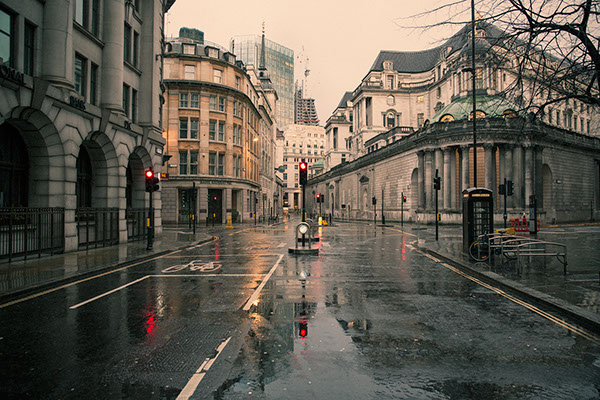
empty london