protest · sermon · theology

We are guests in God’s mansion


Suppose you woke up one morning and discovered, to your surprise, that you had inherited an enormous mansion.

The lord of the manor has welcomed you as a guest to his entire estate. You have no need to pay rent.

This country villa has plush places to sleep, wonderful waters to swim in, and endless entertainment.

More than that, this house is magical. It provides for your every need. Its luscious garden grows your favourite fruit and vegetables. There is plenty of space to graze and raise whatever animals you desire.

It belongs to you and your descendants forever.

What if I told you that you had indeed been bequeathed such a home, and that you were already living in it?

It is this Earth.

That is how Moses understood the planet on which we live when he instructed the Israelites in Deuteronomy. Moses wanted to impart to the people what a miracle it was to be alive, and to get to live in this abundant and fertile world.

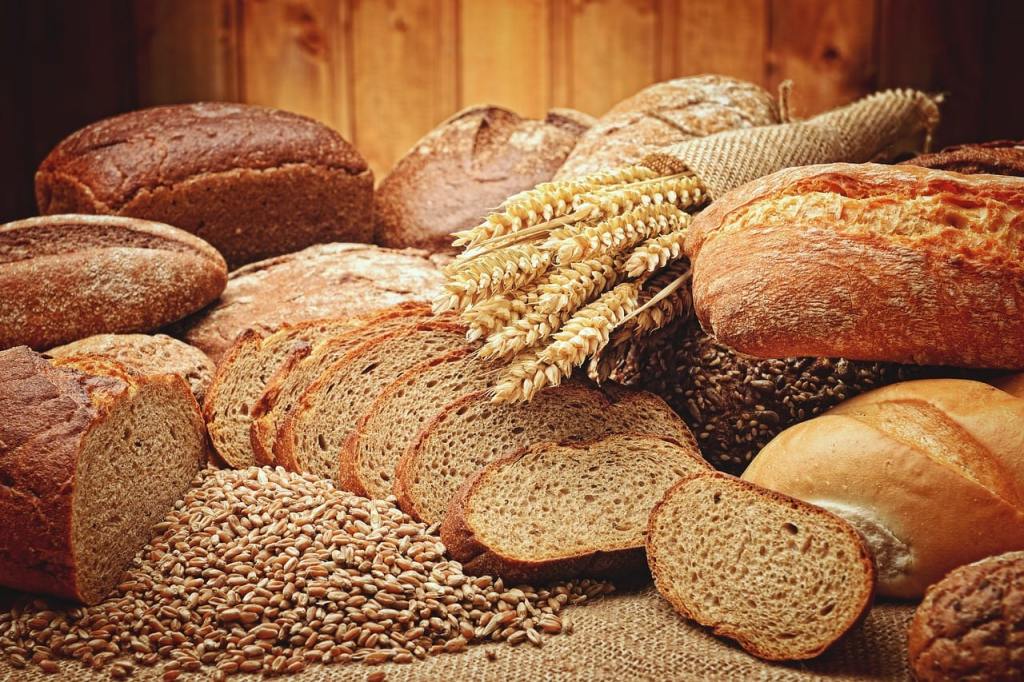
So, says Moses, “the Eternal One your God is bringing you into a good land – with brooks, streams, and deep springs gushing out into the valleys and hills; a land with wheat and barley, vines and fig trees, pomegranates, olive oil and honey; a land where you can eat bread and never run out, where you will lack nothing; a land where the rocks are iron and you can dig copper out of the hills.”

This is the biblical mindset. You are guests in God’s mansion.

You have inherited a paradise and it is the whole world. The seas, the ice caps, the deserts, the mountains, and the forests. They are all yours. And they are all everyone else’s too.

Every human being was granted this world as a gift. Every living creature was placed here by their loving Creator.

Now, if you inherited a mansion like that, you wouldn’t trash it on the first day. You’d want to look after it and make sure your children and theirs got to enjoy it the way you did. You’d want to make sure the grass stayed green and the water kept flowing and the fruit trees kept producing. You’d want to know that everybody would be able to dwell in it for all time.

So, says Moses: “Keep faithfully every commandment I am giving to you this day, so that you can thrive and increase and come and inherit this land which was promised to your ancestors.”

Yes, this land requires no rent, but it does have conditions attached. You have to tend to it. You cannot be violent or greedy or deceitful. You must regularly redistribute the land, and make sure that everyone who lives in it gets their fill, and make sure everyone gets plenty of time for rest.

Well, these are small stipulations, given how wonderful my portion is. I get to live on this earth, which is so abundant, and all I have to do is look after it and share it? It sounds like a fantastic deal.

It is, but there is a trap. You see, you might get used to how great this mansion is. You might forget who gave it to you.

You might commit the gravest sin: you might think that this is yours, and yours alone.

This, says Moses, is a terrible error. “You may say to yourself, “My power and the strength of my hands have produced this wealth for me.” Instead, remember the Eternal One your God, for it is God who gives you the power to produce wealth.”

You might think that you earned the mansion, and you built it, and you can do with it as you please. Well, then, you would become a threat. A threat to the mansion and everyone that lives there. A threat to its babbling brooks and fig trees.

If you fool yourself into thinking this is yours, warns Moses, then “your heart will become proud and you will forget the Eternal One, your God, who brought you out of Egypt, out of the land of slavery.”

Yes, you have a dark past. A history of slaves and masters. There was a time when people claimed ownership over everything. They declared that the Nile River and the rainwater belonged to them. They hoarded the grain and took possession over the vineyards. They owned the animals. They even owned you.

Do you want to go back there?

Now, look around at our home, here in Surrey. This place truly is wonderful. Working here, I have had the chance to paddleboard down the River Wey, walk on the Surrey Downs, and watch others swim in Divers Cove. I can really believe this county was a gift from God.

And yet this county is certainly not treated as a common treasury.

How did it happen that God’s creation became so gated?

You see, Moses’s description of the world as a common heritage bequeathed by God wasn’t just an idle fantasy. That was how many people saw the world throughout a large part of history.

Until the start of the 17th Century, large swathes of English land were held in common by all people. This meant that everyone could graze the land together. They could rotate crops together; care for the land together; and make sure everyone got fed.

It’s not that England was one great egalitarian utopia. Far from it. There had been kings, paupers, lords, peasants, and landless workers, for centuries. But, at least a part of it was treated as a shared inheritance.

Then, in 1605, the government began a process called Inclosure. They took all that had been previously common and handed it over to the already wealthy. They stripped the poor from their land and forced them into the cities to work in factories. They destroyed whole ways of life.

This mansion, already divided, became the possession of just a few. Just as Moses had warned, the wealthy imagined that their power had come about by their own hands. They thought of themselves as more than lords; more than pharaohs: as gods.

Now, right here in Surrey, a group of people tried to resist them. In 1649, on St George’s Hill, and at Little Heath near Cobham, a group of religious dissidents got together, and decided that they would take the land back from the lords. They were called The Diggers.

Their leader, Gerard Winstanley, has a memorial plaque near Weybridge Station, and there is a tour you can take with historic placards, showing where the Diggers went.

The Diggers wanted a return to the Law of Moses and the biblical attitude.

In the Levellers’ Standard, Gerard Winstanley wrote: “The Earth (which was made to be a Common Treasury of relief for all, both Beasts and Men) was hedged in to In-closures by the teachers and rulers, and the others were made Servants and Slaves: And that Earth that is within this Creation made a Common Store-house for all, is bought and sold, and kept in the hands of a few, whereby the great Creator is mightily dishonoured, as if he were a respector of persons, delighting in the comfortable Livelihoods of some, and rejoycing in the miserable povertie and straits of others.”

Like Moses before him, Winstanley was adamant that God was not a propertarian but a generous host, and human beings simply welcome guests. How, then, could some divide up the land and force others off of it?

The Diggers lost their battle for the land, and the world we inherit is made according to the laws of those who enacted Inclosure.

But there is a message, that rings out through time, from the era of Moses through the 17th Century, and right up to today.

That message is that this world is a paradise, bequeathed to us all. And we need to act like it is so.

Shabbat shalom.

sermon · social justice · torah

Don’t make trans people scapegoats

“It makes no sense to hate anybody. It makes no sense to be racist or sexist or anything like that. Because whoever you hate will end up in your family. You don’t like gays? You’re gonna have a gay son. You don’t like Puerto Ricans? Your daughter’s gonna come home Livin’ La Vida Loca!”

This quotation is so erudite, you may wonder which ancient sage said it. That was in fact, the comedian Chris Rock, in his 1999 “Bigger and Blacker” set.

I must have been about 10 when I heard that line, but it has always stuck with me. Over the years since, I have watched it become true. The world is so small that whatever bigotries someone holds, the people they hate are bound to end up in their own homes.

Recently, I realised that this had happened to me. I hope I am not much of a hater, but a friend pointed out to me how much I used to make jokes about Surrey. I used to say that we should saw around the county lines of Surrey and sink it into the sea, drowning all the golf courses and making a shorter trip for Londoners to the beach. 

Now, here I am, eating my words. I am about to marry a man from Surrey and have all my in-laws in Surrey. I’m the rabbi for a congregation in Surrey, and looking to move as soon as I can to Surrey. That thing I hated, even in jest, is right here in my family and inside of me.

I had some terrible stereotypes that everyone who lived here was a tax-dodging, fox-hunting billionaire. They weren’t grounded in reality. They were just about my own fears, projected onto people I had never met. 

Chris Rock was right. Whoever you hate will end up in your family. 

More than that: whoever you hate is already something inside of you. 

All of us can do it: we can stereotype, generalise, and project all our antagonisms onto a group as a way to cast off all the fears we have about ourselves. What do we call someone who captures all this externalised hatred? A scapegoat.

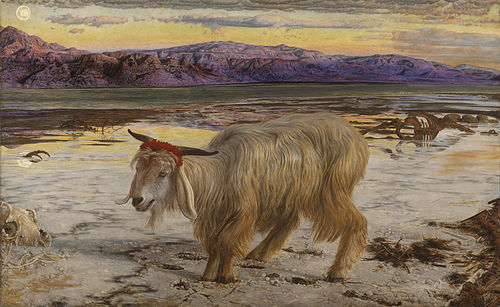
In this week’s Torah portion, we read about the original scapegoat. As part of the rituals for collective atonement, Aaron the High Priest gets two goats and brings them into the tabernacle. They pick straws for the goats. 

The lucky one is to be sacrificed for God. Onto the lucky one, Aaron ceremonially transmits all the sins of the Israelites, then chases it out into the wilderness. As it scarpers off, the scapegoat symbolically carries away all of the Israelites’ misdeeds.

The biblical narrative describes a psychological trick we can all play on ourselves. When we are ashamed of something inside ourselves, we take all that fear, turn it into hatred, and throw it at whatever unwitting bystander will carry it. 

Is this not precisely what Britain has been doing to trans people?

Gender is changing. The roles of men and women are shifting dramatically. There are so many new ways to live gender, to express ourselves, and to talk about our identities. 

Rather than embrace these changes and think about what opportunities they can afford us all to be more free, reactionary parts of British society have whipped up a concoction of bigotry and thrown it all at trans people. Every anxiety our bigots have about gender has been exaggerated and projected onto one small part of the population, who have been turned into monsters through these prejudiced eyes. 

It makes sense that people will find social changes scary and destabilising, but why should trans people bear the brunt of those fears?

A few years ago, I went to hear a panel of esteemed Jewish leaders give a retrospective talk about the ordination of gay, lesbian, bi and trans rabbis. On the bimah was Rabbi Indigo Raphael, Europe’s first openly trans rabbi. 

In his opening words to the congregation, Rabbi Raphael proclaimed: “I am a transgender man. I am not an agenda; I am not an ideology; and you can’t catch trans by respecting my pronouns.” The room immediately erupted into applause.

He should not need to say it. He shouldn’t need to defend his own existence, but such is the level of moral panic in parts of Britain that he has to assert his right not to be scapegoated before he can even teach Torah.

In the last few weeks, trans people have been subjected to legal rulings and government decrees that may make their lives unlivable and keep them from basic participation in public life. Like the goats of the ancient world, they are being cast out into the wilderness to carry away all of people’s fears.

It should not be this way. 

When we feel like scapegoating others, the best thing to do is look inside ourselves. We need to face our fears and work out why others bother us. The chances are, it’s something in ourselves that we’re not happy with, and when we need to get right with our own souls.

When we get to know those we “other” we get to know ourselves better. And when we realise we can like the difference in others, we learn more about what we can like in ourselves.

Reflecting on this, Margaret Moers Wenig, an American Reform rabbi wrote an essay called “Spiritual Lessons from Transsexuals.” She talks about how knowing trans people has enriched her own spiritual life. 

Interacting with trans people, Rabbi Wenig says, has taught her that all of us can craft our bodies as we will; we are all more than just our flesh and blood; we have living souls that can differ from others’ assumptions; that only God knows who we truly are. These are wonderful lessons that can only be learned when we turn away from fear and embrace curiosity.

They chime with my own experiences. At first, knowing trans people made me question myself. If gender is something we can change, am I really a man? With time, seeing other people embrace their gender and become who they are has made me feel far more happy in my own gender. I am a man, and I like being a man, and I like being an effeminate man.

When we turn away from fear, we see that we have no need for scapegoats. The parts within us don’t need to be divided up so that some are holy and others need to be chased out into the wilderness. Every part of us is for God.

The world has more than enough hate. It’s time we swapped it for loving curiosity.

After all, Surrey, it turns out, is rather lovely.

Shabbat shalom.

sermon · spirituality

It’s not just what you see, it’s the way that you see it

During prayers, I find my mind wanders- or rather focuses. It sees things it otherwise wouldn’t.

The details of the space I am in suddenly interest me in new ways. I, who live in a world of words, suddenly find myself in a world of space: physical and embodied.

Look around: what do you see?

Perhaps a more pertinent question is: how do you see it? In a synagogue, walls are not just walls. Ceilings are not just ceilings. Curtains are not just curtains.

Every inch of space buzzes with meaning, crying out for interpretation.

For months, we have looked at this space with a certain set of eyes. For the Council, commissioning a new sanctuary, they have looked at the room with eyes of possibility. For the team responsible for the redesign, they have been looking at the space with the eyes of architects, artists and technicians. Those who were accustomed to this space have perhaps looked at it with nostalgic loss, knowing that their familiar sanctuary would be transformed.

I want to invite you now to look at this space anew: through the eyes of a believer.

In 539 BCE, Cyrus the Great permitted the Jews to return to Jerusalem and rebuild their Temple, which had been destroyed in the reign of Nebuchadnezzar. A generation of exiled elites returned and remade their holy space.

The books of Ezra and Nehemiah are dedicated to explaining what happened in those formative years.

Ezra recounts the dramatic unveiling ceremony for the new Temple. He says that, when the elders of the generation saw the new Temple, they began to cry, while the young cheered out in jubilation.

Seventy years they had been held captive. Seventy years they had not seen their holy mountain.

For the old, this was a place they never dreamed they would see again, certainly not within their own lifetimes. For the young, this was a place that had only existed in myth and psalm.

What a moving experience it must have been to witness it.

So, I invite you to come to this building with the eyes of exiles. True, our four weeks in the next door hall do not quite compare to the seventy years the Jews spent in Babylon.

Nevertheless, soak it up, because it is a marvel to enter after a period away. Absence surely makes the heart grow fonder, and I know I had missed the beautiful serenity of this synagogue.

Yet the commentaries on the book of Ezra believe that the elders were not shedding tears of joy. Rashi says they were, in fact, crying for the Temple they had lost. The First Temple, he says, was even bigger. Solomon’s Temple was enormous by comparison.

This is an interesting proposition, because it is almost certainly not true. We do not have any archaeological evidence to suggest there was a First Temple, still less a bigger one with wider foundations. By all accounts, it is far more likely that the First Temple was smaller and more frail.

Yet, Rashi is right that the elders could truly have believed the old Temple was bigger and grander. When they last saw it, they would all have been infants.

My primary school’s doors were enormous wooden structures that towered over all who entered them… until I returned as an adult and realised they were just doors.

There may be a part of you that looks back with wistful nostalgia at the old sanctuary, dilapidated though it was. This is natural: in our synagogues we find safe spaces that ground us in our youth. Adjusting can be hard.

So, this is an invitation: try to look at this space through the eyes of a child. Try to feel the comfort and wonderment that you did in your youth.

When Ezra returned and rebuilt the Temple, he sought to recreate all that was best in the one that had stood before.

Like us, the Jews dedicated and blessed their Second Temple in the month of Adar, between the festivals of Purim and Pesach.

They brought in what they had preserved from the last Temple: cleansing bowls and musicals instruments. Where they could not repeat, they replicated, weaving curtains and priestly garments.

In Solomon’s Temple, there had been a permanently lit flame above the altar, symbolising God’s eternal presence with the Israelites.

When the exiles returned with Ezra, they relit the pyre, to show that, while they had left the Temple, God had never left them.

After the destruction of the Second Temple, the Jews installed in their synagogues a ner tamid, an everlasting light. Through this emblem, the flames showed that God’s light was not only in every time, but also in every space.

So, look at our light, with its memorial to the Shoah, and see how this same flame has burned for 3,000 years, linking us to hundreds of generations of worshippers.

But do not stop there, or you may be tempted by conservatism.

After the Temple, our rabbis reinvented every ritual item so that they could have new homes in the synagogues.

The Ark that contained the Two Tablets of the Law became the ark that holds our Torah scroll. The breastplate and crown that the priests wore became adornments for Torah. The sacrificial altar became the bimah from which Torah was read.

In every object, you can see the theological creativity of our people. You witness the myriad ways in which we constantly reinvent and reanimate our traditions.

So, look at the details of this sanctuary and embrace all the ways that our artists and architects have participated in that great tradition of innovation.

Everything contains the holy sparks of what went before. Every spark is breathed new life by the creatives who recreate it.

You, too, can fill this space with life, as you bring your own meanings to it.

Come to this sanctuary. Come with the eyes of an exile; the eyes of an elder; the eyes of a child. Come with eyes that are ancient and new. Come with eyes that have seen thousands of years and still look to the future.

Then bring those eyes back out into the world – and see what needs to be done.

Shabbat shalom.


sermon · torah

Love is at the heart of the Torah

Within the Torah, there are 5 books.

There are 54 parshiyot.

There are 5,888 verses.

There are 79,980 Hebrew words.

And there are 304,805 letters.

The counting of numbers, verses and spaces actually has a great importance in the Jewish tradition. The word in Hebrew for a scribe is the same as for one who counts (sofer). The Talmud says this is because the original sages spent their time counting the numbers and letters of scrolls.

Now, sometimes, the Talmud is making stuff up, or telling a joke that has been lost to the ages, but in this case, they are almost certainly right. 

Counting words, numbers and verses was a great way to ensure that the Torah was standardised, so there could be no differences between the authoritative versions of God’s Word.

Counting words helps us to work out important things about Torah. For example, the Talmud tells us, you can count from the beginning to the end and find the word that is slap bang in the middle of the scroll.

If you do it by letter, says the Babylonian Talmud, you get the word “belly” – gachon. Yes, right in the middle of our Torah is a big tummy, just like on a human being. It fits, doesn’t it? How much of Jewish culture is about food?

If you do it word by word, then the middle two words of the whole Torah are “darosh darash” – search and search; diligently enquire. The middle words of the Torah are all about asking and questioning. How fitting! We love asking, and searching for answers. Aren’t we always questioning, adding questions to our questions? (Well, are we?)

And, if you do it by verse, then you get to the central verse of the whole Torah, Leviticus 13:33. Here it is, the great lesson our Scripture has been trying to tell us: “then the man or woman must shave themselves, except for the affected area, and the priest is to keep them isolated for another seven days.”

I’ve got nothing. 

Now, the Babylonian Talmud has given us some good answers about the middle of the Torah. But none of them are quite what we’re looking for.

Because if you hold the Torah in your hands, if you physically roll the Torah looking for a midpoint, you’d think it would be here, in this week’s parasha. 

Spatially, the centre of the Torah is here, at the start of Kedoshim. Here, at the beginning of Leviticus 19, God tells the Israelites: “you shall be a holy people, for I, God, am holy.”

And if you follow this bit of Torah down to its centre, right to the middle here, you get the central commandment of the Holiness Code: “love your neighbour as yourself.”

That, says the Palestinian Talmud, is the real heart of the Torah. Never mind all the numbers and counting. If what you are looking for is what the Torah is all about, follow your heart, and get to its intuitive core.

There, in the Yerushalmi, Rabbi Akiva says: “the greatest principle of the Torah is to love your neighbour as yourself.” He says, if someone is going astray, this is the only thing you have to remind them of to get them back on track. 

You may have heard this before. In the Christian Gospel of Mark, Jesus says that the greatest principle of Torah is to love your neighbour as yourself. He might have got more famous than Rabbi Akiva, but he certainly wasn’t the saying’s originator. That’s just a nice Jewish boy, repeating a good rabbinic tradition. 

In fact, anyone who spends more than a minute with our religious tradition will understand that to be so. Love is at the heart of the Torah. That is all any of it is about. 

Yes, the belly matters, of course it does. But it’s not just because we need food to keep ourselves sustained. It’s not even because food is a way of transmitting culture. It’s because through feeding and being fed we can show how much we love each other. These kiddishes, these Friday night dinners, the old recipes handed down, the food bank drives, the seder meals, the cakes we bake… they are all simply different ways of demonstrating love.

And yes, the searching and inquiring matters too. But it’s not just because we’re a learned and inquisitive people. It’s not just because we put such high value on education and on our Scriptures. It’s because it is a beautiful way of showing each other how much we love each other. You sit with a child to tell them a Bible story. You sit with a friend to study some text together. You sit with an elder to ask them for their wisdom. Sure, on some level, you’re just trying to get information. But, at core, these are ways of showing love.

Hold that in mind, then, as we return to the central verse of Torah, in the purity laws given to priests: “they must shave themselves, except for the infected area…”

No, sorry, I’ve still got nothing.

A few weeks ago, I sat down here with the Council to talk about what it would look like to come here as a rabbi, and whether we might be a match. One of your leaders asked: “what do you think are the core functions of the synagogue?” I gave my honest answer: “The synagogue only really serves one purpose, and that is to get people to love each other more.”

We come together, in these Jewish communities, to show that we love others as we love ourselves. We will eat together and learn together and pray together because we love each other. 

We will love each other enough to be with each other in our most trying moments of death, disease and disaster. We will love each other enough to celebrate together through our joys of life, and build each other up.

This synagogue already has a wonderful reputation. Rene, your outgoing rabbi, has told me how much he loves you. Charley, your former rabbi, and now movement head, has shared the same. Danny, your rabbi emeritus, has told me how lucky I am to be coming here. 

I meet adults who grew up here, friends of Laurence, and they share what a warm and wonderful place this is. In just the few meetings I have had with members, I can already see why.

The love that people speak of you all with is because of the love that you put out and create in your community.

I cannot wait to start here, and to love you as much as everyone else does.

וְאָהַבְתָּ לְרֵעֲךָ כָּמוֹךָ

May you love your neighbour as you love yourself.

Shabbat shalom.