social justice · theology · torah

We are waiting for a different Messiah

Some years ago, an Orthodox friend asked me: “what would you do if the Messiah came and it turned out we’d been right about everything? What would you say to the Messiah?”

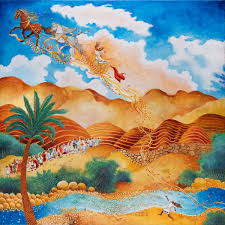
What would I do if the End of Days came, and Elijah literally came storming out of the whirlwind in a chariot made of fire and declared that the Son of David had arrived to cast judgement? And that we were to be judged on how strictly we had separated men and women; how well we had obeyed family purity laws; how stringently we had adhered to traditional authorities?

What would I say to this Messiah?

I have thought about it for a good few years and I think I now have my answer.

I would say: “F@£& off.”

I would tell that messenger: “You are not my Messiah and you’re not my king. Now go back where you came from.”

In this week’s haftarah, we read the prophet Ezekiel’s vision of the valley of the dry bones. For centuries, Orthodox Judaism has based its understanding of Messianism on these verses.

Ezekiel finds himself in a desert surrounded by skeletons. God tells Ezekiel to prophesy to the bones, and he does so, covering them in sinew, breathing life back into their lungs, and reviving their bodies, so that they stand up as a skeleton army.

These, says God, are representative of the people of Israel.

So, Orthodox Jewish tradition teaches, a day will come when the dead are literally physically resurrected. The corpses of pious Jews throughout the ages will be brought back to life; the exiles gathered to Jerusalem; and all judged by a righteous king descended from the biblical King David.

For this reason, many Orthodox Jews eschew cremation, and insist on being buried intact, so that their bodies can be resurrected at the End of Days. They vie for graves on the Mount of Olives, so that they can have front row seats when the Messiah arrives at the walls of Jerusalem and summons up the dead from their tombs.  

In recent decades, religious fanatics have come to espouse an even more intense version of this apocalyptic vision. 

There are Orthodox Jewish extremists, funded by American evangelical Christians, who are trying to destroy the Al Aqsa Mosque on the Temple Mount; build a Third Temple; and restore animal sacrifice and priestly leadership.  They seek to expand Israel’s borders to restore the ancient Kingdom of King David.

This week, Rabbi Charley Baginsky was quoted powerfully in The Times, saying: “We are afraid — not just for Israel’s future, but for Judaism itself. What becomes of our tradition if it is captured by messianic extremism, by racism disguised as religion, by power without principle? If the current trajectory continues, if Jewish supremacy becomes policy, then Judaism itself may become synonymous with oppression.”

In this context, you might be forgiven for thinking that messianism itself is the problem. Surely a religious zeal that drives people to commit such crimes is itself dangerous. For some, witnessing this fervour makes them question the foundations of Judaism itself.

The Israeli religious scholar, Avraham Uriah Kalman, warns against this way of thinking. His article earlier this year, entitled Another Messianism, addresses a tendency in Israeli secular society to dismiss all religion as varying stripes of nationalist fanaticism.

Yet, he claims, precisely because of the strength with which racist extremists have captured Judaism, we must return with equal zeal in our reclamation of Judaism. We, who believe in justice, democracy, and human rights must just as vigorously defend our corner.

If we do not have an equally powerful vision for what society could be, we will always be on the back foot, compromising with monstrous ideologies that want to blow up buildings and raze down villages.

Our ethics are grounded in the Jewish tradition. They are derived from the Jewish texts. They are sourced from the Living God. 

We cannot allow the far right to take exclusive hold over any part of Jewish life, or we surrender it to them. That includes Messianism – the grand utopian visions of ideal societies promoted in every book of the Prophets. 

The Prophets, whose mission of speaking truth to power and uplifting the lowly, are far more in line with our Progressive visions of the world than they are with the soulless dreams of those who want to oppress women and gays as part of their supremacist agenda. 

In the Prophets, we see clear visions of a perfected world. Their writings testify to a world of peace; where all resources are shared; where everyone lives in dignity; and where all are free.

Outside of specific esoteric texts like this week’s mystical imaginings from Ezekiel, it is hard to see any of the far right’s fantasies reflected in our Prophetic texts.

Messianism is really supposed to represent a rupture in the established order, but that is not really what the far right offers. War, racism, and misogyny are already the norm. At core, they don’t really want to change anything except to make existing tendencies more violent and oppressive.

So, says Dr Kalman, progressives must embrace messianism. We must turn to the Prophets as our source of hope, rather than buckling under the weight of despair. From our own utopian visions, we can develop ethics that speak to our daily lives and help us practically realise a better religious vision.

Kalman draws on a whole range of Jewish religious traditions, including Talmud, Kabbalah, Musar, and 17th Century Tzfat mystics. 

Yet, curiously, he seems not to be aware that this project, of developing a Progressive Messianism, has already been deeply thought through. The early Reform movement in Germany, from which Liberal Judaism descends, was animated by looking to the Prophets to rethink Jewish eschatology.

The early Reformers taught that the Messiah would not be a man, but an Age. 

It would not be characterised by Temple and Kingdom revival, but through the realisation of the values of the Prophets. It would be a world of peace and justice, achieved through the moral advancement of all humanity.

Explaining this theology, Rabbi Sybil Sheridan writes: 

“Though the end goal is world peace, the ideal is not pacifism, nor is it the peace of treaties at the end of war that are based on winners and losers. That notion continues the imbalance of power among peoples and nurtures the resentment that leads to dreams of revenge. The peace of the Messianic Age is a peace forged in complete mutuality. No one should be afraid that people may covet their vine or fig tree, no one will fear the loss of land or resources, no one will be humiliated. The world provides enough for everyone and sufficiency will take away the desire for war.”

While we Progressives do not accept the Orthodox doctrine of bodily resurrection and rebuilt Temples, that does not mean we should reject Messianic thinking. Times of despair and horror are when we most need to cling onto our hopes for a better world.

Progressive Messianism takes the task of perfecting the world away from mythical figures like Elijah and King David, and places it directly in our own hands. It says: we will not wait for someone else to bring about redemption; we are going to do it ourselves.

So, if Elijah came down from the Heavens and declared that the Orthodox had been correct all along, I would tell him he was wrong. 

For thousands of years, we have sought to create a better world. We have learnt through struggle about the dignity of women; the importance of justice; and the shame of racism. We now have a much better idea of how the world can be.

We can see a future in which every human being lives in harmony with each other and their planet. We can see a world where all live in freedom and peace. We are sure now that we can live in love and equality. 

We are going to realise our Messianic age.

And nobody- not even a prophet descending from the skies – is going to stand in our way.
sermon · theology

Numbers don’t matter

In the last decade, the number of Jews in Redbridge decreased by 37%. Meanwhile, the number of Jews in Epping Forest increased by 18%, and in Havering they increased by 16%.

These are our numbers. And they don’t matter.

According to the last census, the East of England has now overtaken Yorkshire as having one of the largest Jewish populations, with over 42,000 individual Jews living in this area.

These are our numbers. And they don’t matter.

In 2022, SWESRS gained 43 new household members. In the first quarter of 2023, we continued the same trajectory, gaining 15 new household members.

These are our numbers. And they don’t matter.

None of these numbers matter.

But. There is one person sitting in the synagogue this morning, praying. That number matters. There is one person watching on Zoom, feeling connected to the community despite not being able to attend. That number matters. One of us is in hospital; another just had a baby; another is sitting shiva; another is preparing for a wedding. Yes, those numbers matter. Those ones. Those ones are the only numbers that really matter.

In general, our Scripture takes a pretty dim view of counting activities. In the Book of Samuel, when King David takes a census of the Israelites, he instantly feels guilty and repents before God. God is furious that David has done this, and sends instant punishment. A plague falls on the kingdom lasting three days and wipes out 70,000 people. 

At the time of the census, there had been 130,000 possible warriors. Now their numbers are significantly reduced. 

But why? What’s so bad about counting Jews?

Abravanel says it was a proud and haughty thing to do. David was impetuous, believing that he could control his fate by counting his people. God is saying: you like numbers? Tough. Have fewer. You think your strength comes from how many of you there are? Wrong. Have fewer.

Maybe. But that doesn’t explain the attitude to censuses elsewhere in Scripture.

In our Torah portion this week, Moses takes a census of the Israelites. Moses counted up every man of fighting age who might be able to bear arms. They counted them up by tribe: 46,500 for Reuben; 59,300 for Simeon; 45,650 for Gad… and on it went, until the census reached its total. There were 603,550 Israelites in the desert, ready to fight.

And, as it turned out, those numbers didn’t matter. They listed them all, got them into procession, and then… nothing happened. There was no war to be had. They never entered into combat. 

Instead, the entire narrative instantly pivots completely. Now, instead of talking about all the thousands of people that Moses has on command, the story shifts to talking about Aaron’s two sons, Nadav and Abihu, who died while making strange sacrifices to God. All those big numbers and none of them matter. The only ones that do matter, it turns out, are those two young priests, whom Aaron is still mourning many chapters after their deaths.

That’s right, we’re in the Book of Numbers, and the message of the Book of Numbers is… numbers don’t matter that much.

It’s individuals that matter.

The best explanation comes, I think, from the Jewish philosopher Emmanuel Levinas. Levinas had survived a prisoners’ camp in World War Two. He was one of the most eminent philosophers in the world, but was aghast at how educated people had been seduced by the disease of fascism. What was wrong with his intellectual colleagues and teachers, that they could become Nazis?

The problem, he felt, was that they did not understand the value of human life. 

Every human being, he taught, is infinitely valuable. Not in the mathematical sense. In a deeper spiritual sense. Every one of us is immeasurably, inconceivably sacred. 

We cannot be counted because we are already infinite. We are already part of God, who is beyond any number. People, like God, are unique and infinite. They cannot be divided in any way. 

None of us are supposed to be counted. We are not supposed to have a number assigned to us as individuals. 

This was precisely the sin of the Nazis: they thought that they could measure, quantify, and categorise people. They were so committed to this rationalisation that they tattooed the numbers of their prisoners on their arms. 

Counting people, then, is a detestable thing. No number can be put on our lives. We were created by God to serve a purpose so much higher than any number can describe.

This is why the Torah rebukes counting. Any effort is a complete miscalculation. If you think you can work out how many people there are to prepare for war, you are wildly underestimating what you have before you. In each human being is a living, breathing, spark of the Divine, far beyond calculation.

So, let’s go back to the census. I will be honest at my own sin. I have spent ages poring over it, thinking on how many Jews there are in different areas, and working out what they mean for our synagogue’s development. I have tried to keep track of how many members we have, and where they’re coming from, and where they live. And that is, at best, an error. At worst, it is a grave underestimation of who we already are.

Rabbi Jacob Rader Marcus, one of the leaders of the American Reform movement through the 20th Century, warned: “When you survey your congregation on a Friday night, don’t count bodies, count souls. These chosen few, this elect, has a job to do: these Jews are our future; they have to save us; even more they have something to tell the whole world, to distil for all humanity what the Jew has learned after 3,000 years of bitter experience […] They taught us to abhor hatred, violence, brutality, to avoid every aspect of any concept that manifests itself in contempt for fellow human beings.”

We must count souls, not bodies. We must reject the logic of quantifying people. We must love each other as irreducible, wonderful, infinite expressions of the ultimate Creator, our God.

judaism · sermon · torah

Hold onto your grudges

Friends, the message of this week’s homily is: hold on to your grudges. 

Throughout your life, people will hurt you. Sometimes intentionally, sometimes unintentionally, and you must hold on tight to that hurt. Make sure you bottle it up and let it fester until you are ready to seek revenge. 

That’s where great drama always comes from. Thanks to grudges, we were treated to eight seasons of Desperate Housewives.

At the end of your life, you may wonder what legacy to pass on to your children. Perhaps you have considered wealth or sentimental items or tidbits of wisdom. Can I suggest that you add to that list: give your children a grudge to bear.

The best kinds of grudges are intergenerational. It’s never enough to be resentful on your own. Share it with your loved ones.

If you can keep a grudge going until nobody remembers what the original broiges was about, you will have really succeeded. Without ancient grudges, we would never have had Romeo & Juliet. And look how well that turned out. 

So remember every way in which you were wronged and make sure to even the score.

That’s what King David did. At the end of his life, reflecting on his mortal life, and preparing for the hereafter, he called his son Solomon near to him. He began by offering up some advice. “Act like a man,” David instructed. 

From personal experience, I can tell you that whenever somebody has told me to man up, what follows is always emotionally healthy. And this occasion is no exception. 

David told Solomon: “Remember what Joab, son of Zeruiah, did to me. Remember how he engaged in bloodthirsty mutiny. Do what you like with him, but do not let his grey head go down to the grave in peace.”

And David wasn’t done. He had other grudges to pass on. “Solomon,” he urged. “Remember Shimei son of Gera, the Benjamite from Bahurim, who called down bitter curses on me the day I went to Mahanaim. I said I wouldn’t kill him. But I didn’t say you wouldn’t kill him. So do what you like with him, but do not let his grey head go down to the grave in peace.”

Like a good Jewish boy, Solomon made sure his reign over Israel began with a killing spree.

Let King David be a role model to you all. If someone has insulted you during the course of your life, make sure you remember their names. If you can’t get retribution yourself, make sure your bitterness lives on beyond the grave.

Now, you might think, “of course, King David has big gripes to pass on. He’s a king, after all. He had real enemies. All of my slights feel petty in comparison.” Don’t worry. If misery is good enough for the elites, it’s good enough for the masses, too. It’s time we took a stand for equal distribution of resentment. Anyone can carry hate.

Just look at Jacob. Jacob was blessed with thirteen children. And couldn’t stand any of them. Throughout their lives, he made sure they all knew who his favourites were. First, Joseph. Then Benjamin. 

At the end of his life, Jacob did what every good Jew ought to do. He settled old scores and told everyone what he really thought of them. He brought his boys round to make sure they could hear his views.

“Gather round, my sons, and listen to your father.”

“Reuben,” he says, “you will never succeed at anything.”

“Simeon and Levi, you are too angry to deal in anything but violence.”

“Issachar, you’re an ass. Dan, you’re a snake. Gad, people will trample all over you.”

Then, just to top it off, he turns to Joseph and says: “Joseph, you are really beautiful. You’ve done great things.”

That’s how you do it. That’s how you end your life, making sure the people close to you knew how little you thought of them.

But, for some reason, Joseph’s brothers did not love their blessings. They had hoped for a slightly more conciliatory deathbed scene.

So, they got together and talked to Joseph. They said: “Um, Joseph, you might not have heard this, but as dad lay dying, he begged you to forgive us. He said, now that you’re in charge of Egypt, you shouldn’t hurt us and you should let us have food here.”

And Joseph said: “Dad didn’t say that, did he?”

“No. Dad didn’t say that.”

If Joseph had learned from history and all the good examples you’ve heard, Joseph would have known that the best thing to do is hold onto his grudges and get revenge on his siblings while they were weakest.

But, in a shocking turn of events, Joseph decides not to. He says: “I’m not in the place of God. I’m not here to keep score and dole out punishment. Whatever has happened, do not be afraid; I will provide for you and your little ones.”

And, with just a few words, Joseph can annul decades of mistrust. He can undo his father’s callous favouritism. He can bind his siblings back together as a family.

And, with those words, Joseph seemingly corrects every sibling rivalry of his family. From Cain and Able to Abraham and Lot to Jacob and Esau. All of a sudden, an intergenerational curse is lifted. They can heal. 

Joseph had every reason to hold onto his grudges. He was sold into slavery. His brothers pretended he was dead. He was wrongly imprisoned. He was betrayed by his friends. Of everyone who had held their grudges, Joseph probably had been through the worst. 

But he decided to forgive. He concluded the origin story of the Jewish people with love and kindness. 

The Baal haTurim, a great Jewish lawmaker of the 14th Century, said that Joseph should stand as an example to us all. Say out loud what is hurting you rather than holding onto your pain. And harbour no desire for revenge.”

So, OK, I lied. The moral of this sermon wasn’t that grudges are good. Sure, they are natural, but they’re not helpful or healthy.

I don’t really think you should pass on your bitterness to your descendants. Tempting, but not constructive.

In fact, for a lot of this, I was being sarcastic. I hope you won’t hold it against me.

Shabbat shalom.

story · torah

A rock-eating worm built the Temple

This is the story of how the Temple was built.

This story comes to us from the Talmud. It was copied from the Mishnah. It belongs to the folk legends of King Solomon that may have predated it by some centuries. This is an old story. I sincerely doubt whether any of it ever happened, but I assure you it’s all true.

This is the story of how the Temple was built by a rock-destroying worm. When King Solomon decided to build the Temple, he brought up entire stones from the quarry. He wanted to carve those stones without swords. He knew there was only one way.

Somewhere in his kingdom there was a rock-destroying worm called Shamir. This monster was created at the very beginning of time, during the six days of creation in which light and darkness were separated and the first trees were planted. 

Some say the Shamir ate stones for breakfast; chewed through the hardest granite, making passageways like the holes in Swiss cheese. Some say it could cut through the rocks with only its gaze: a laser-like stare that sliced solid metal. Whatever were its methods, Solomon knew he had to have it.

In fact, the only way to catch this creature was to find something really soft. You had to wrap it up in cotton wool and barley bran. These materials would be too gentle and the Shamir would have no way of chewing through them.

Yes, this is all in the Talmud. This is our tradition. And if you feel like this rock-gobbling worm is far-fetched, I hope you will forgive me if I tell you that Solomon captured this creature by tricking the King of the Demons.

Solomon knew that Ashmedai, the world’s greatest demon, lived in the bottom of a pit on the top of the world’s tallest mountain. And the pit was filled up with gallons of rainwater that the demon swallowed whole every day, then waited for it to refill. 

Solomon sent his servant up that mountain and into that pit. The servant drained the pit of its rainwater and filled it again with fortified wine.

You might think that the King of the Demons would not fall for such a simple trick, and you’d be right. Ashmedai scoffed at the wine-filled pit and refused to drink from it. But days passed and the monster missed his gallons of water. Oh, he became so parched. Eventually, he gave in and took several enormous mouthfuls of the wine. 

Within moments, he fell fast asleep. Solomon’s servants tied him up and carried him back to Jerusalem. When Ashmedai woke up on the Palace floor, he roared at Solomon: “is it not enough that you have conquered the whole world, but now you must imprison me too?”

“I promise you,” said Solomon. “All I want is one creature. The shamir. The worm that eats through stone. I need it to build my Temple for God.”

Ashmedai sighed, and he replied: “I do not own the shamir. It belongs to the ministering angel of the sea, who has entrusted it to the wild rooster. Together they hide in the uninhabitable hills, where the rooster guards his eggs.” 

I’m quoting to you from the Talmud directly here, so you know that what I’m telling you is true. 

When Solomon knew where to find the wild rooster, he covered its nest with transparent glass. Seeing that it couldn’t get in, the rooster brought over the shamir to bore through the rocks. As soon as he’d seen the monster, Solomon knocked the chicken off of the nest and ran to collect his prize.

According to our tradition, that is how the First Temple was built. Overseen by Solomon, the King of the world, accompanied by Ashmedai, the King of the Demons, a stone-chewing worm carved out every brick. It snaked through all the pillars and ate at every rock. After years of winding through the granite, Solomon’s Temple was complete.

So, why did the Talmud come up with such a tall tale? Can it be that our rabbis really believed the Temple was built in such a fantastical manner? Somehow I doubt it. But nevertheless, I am adamant that this story is true. At least, I think it tells us something important we need to know.

Our rabbis were answering a textual problem. The Bible told us that King David was not allowed to build the Temple because there was too much blood on his hands. He had fought too many wars, subjugated too many peoples and built too much of his empire on the labour of others.

Only Solomon, whose name in Hebrew is cognate with peace, was able to overcome the violent tendencies of his father and build a Temple that would truly be fitting for God. How could he build such an edifice without getting blood on his hands?

When our rabbis imagine the construction of the Temple, they picture it as it ought to have been. No wars are fought to secure land. No natural resources are exploited to gain the raw materials. No workers are hurt in the making of the building. All that happens is a natural process, where a worm that would eat rocks anyway works its way through the stones to build God’s home.

The only people vaguely harmed are a demon who got drunk and a rooster that was knocked off its perch. This is the dream of how the Temple should have been made. It was created in complete peace and harmony with nature. 

By encouraging us to inhabit this fantasy, the Talmud draws our attention to the harshness of reality. Even the greatest and most noble civilisations are built on violence. Cities, skyscrapers and the highest cultures are all products of real graft. Human beings do interfere with nature. We do exploit workers. We do plunder natural resources and we do secure territories through war.

When we imagine a world where rock-destroying worms can carve out our accomplishments for us, we know that we are imagining something impossible. But the nature of Talmud is to challenge us to do impossible things.

The Talmud asks us to picture a different relationship between human beings, nature, and civilisation. In a world where the climate is being damaged in unspeakable ways, such imagination is required of us again. Humanity is at a juncture when we must completely rethink how to use resources and what kinds of civilisations we build.

That is what makes it true and that is why it still speaks to us today. The Temple was built by a rock-eating worm. Perhaps one day, we will build the world that way again.

I gave this sermon for Edgware and Hendon Reform Synagogue, Parashat Terumah, on 20th February 2021. For the sources, look at Sotah 48b and the sugya beginning in Gittin 67b