halachah · sermon · social justice

How does the Torah say we should treat refugees?

There is a verse in the Torah so radical that one of my teachers did not believe me it was even in there. 

I was working on a project as a rabbinical student and I brought a text that cited this verse. 

“That can’t be in the Torah,” my teacher said. She was a serious scholar, with not only rabbinic ordination but also a PhD in rabbinics and a host of published articles. 

“No ancient society would allow a law like that. The entire economy would collapse.”

I thought, perhaps I had misread it. It was a bold claim. So I went back to look. 

But there it was, nestled among a litany of miscellaneous commandments in Deuteronomy. On one side of this law was the instruction to make sure soldiers did not have nocturnal emissions, and on the other side was the requirement not to bring money gained from prostitution as a Temple offering. 

There it was, a law completely at odds with ancient society, which threatened to collapse an entire economy if enforced:

Do not hand over a slave to his master who is taking refuge with you from his master. He will dwell with you in your neighbourhood in the place he chooses, in one of your gates that is good for him. Do not oppress him.

– Deuteronomy 23:16-17

Let us start by acknowledging why this law is so radical. Ancient agrarian states were built on slavery. Prisoners of war, pillaged people, indentured servants and trafficked humans did back-breaking work to make the farms run. Their unpaid labour was what made the brutal machinations of early states even possible. 

Here we have a rule: do not hand over any slave to their master. The Torah is biased, and it’s not on the side of the owners!

More than this, if you get a runaway, your duty is to look after them. You have to give them accommodation. You have to give it in a place where the refugee himself feels is good for him, within the gates of one of your towns.

This is bold.

But still, it may be I had misunderstood. We already know from many other Torah sources that Israelites cannot be held as slaves. They might be debt labourers and bondsmen, but if somebody is part of the Israelite family, they can never be subjected to lifelong slavery. 

So, perhaps, this law is just talking about what to do if an Israelite runs away. In such a case, they might have been the slave of another Israelite, in which case they were being held against the law. Of course you would then give the slave refuge. 

Or they might have been an Israelite running away from another country, like an Edomite who had captured them in war. Well, then, they have come back to their people and need to be cared for.

So, have I mistranslated? Is this actually about Israelite slaves?

I’d have to look at earlier translations to check what it means. 

The earliest translation of the Torah is Targum Onkelos, a 2nd Century rendition of Scripture into the vernacular Aramaic. 

This translation gives details that clarify things. In this case, it adds an adjective to the Torah’s word for slave. עממין – from the foreign nations. A non-Israelite. The translation is unambiguous: we are talking specifically about foreigners.

This is even more radical. It’s saying we insist on looking after complete outsiders. They have no connection to us. 

They may even, then, be running away from Israelite masters. The Torah is saying that, if a slave runs away from their master, even though the slave is definitely not one of us, and the master might actually be one of us, we are on the side of the slaves.

About a century after this translation, the rabbis in the school of Rabbi Akiva wrote a commentary on the Book of Deuteronomy to expound its meaning. The book is called Sifre Devarim, and it takes all the legal verses from these books and adds oral traditions about how to interpret the laws.

Sifre’s explanation of this verse gives details on how you are supposed to treat a runaway slave when they come to you. Not only do you have to welcome them into your towns, say the rabbis, you also have to make it possible for them to make a living. They have to live with you, and not on the borders of the town.

It adds that the commandment not to oppress the runaway extends even towards words. Even the language you use must be kind. And it insists: you have to make them feel like the place they have come to is better than the one they left.

This is even bolder than where we began. It’s an official open borders policy to every runaway, with the requirement that they not only get refuge but actually get a livelihood and integration in the place where they move to. 

It is not only uneconomical, it goes against all the foundations of the ancient economy. 

You cannot even appeal to other economic reasons. There’s no organised mass of runaway slaves that the law-givers need to accommodate. There’s no suggestion that there was great pressure from the peasantry to be kind to foreigners.

It is a law entirely based on compassion.

What makes this law so radical is that it seems to be motivated entirely by altruism. That is why my teacher was so incredulous about the law being in the Torah at all.

And yet, isn’t that why we turn to the Torah to begin with? Not for cold economics, but to know the right way to live. We want a moral guide for how we should treat people.

Rabbi Julia Neuberger, who serves as a crossbencher in the House of Lords, has been a consistent voice for refugees, as each successive government has threatened hostility and sanctions.

As a lawmaker and a rabbi, she has to balance the high moral demands of our religion with the practicalities of government. 

In all her addresses, she emphasises the need for compassion. She treats refugees as a litmus test for the compassion of a society, because their marginal status tells us how our country is likely to treat everyone else. 

Baroness Neuberger advocates firmly for the rights of refugees.

Perhaps that is why the Torah introduces this seemingly radical rule. It wants to set a culture where the most vulnerable people get the best possible treatment, so that the whole of society will be based on kindness. 

The foundation of Torah law is about caring for the poor, the orphan, and the widow. This most intense case – a complete outsider running away from slavery – is the Torah’s own test for its moral system. 

It is a test every society faces. How people treat refugees shows what they think of human beings.

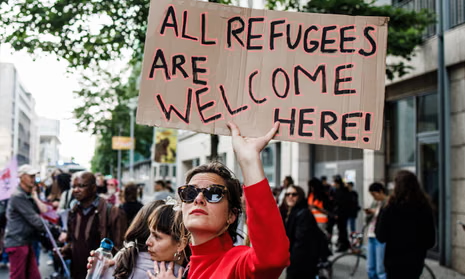
For the past few weeks, protesters have been gathering outside hotels, demanding refugees be sent back. The main political parties have entered into a race to the bottom for how unwelcome they would make refugees. 

Their rhetoric and laws may turn out to be a threat to us all. They may undermine the very basis of a compassionate society. 

Let us consider what would happen if Britain implemented Torah laws in its approach to refugees.

What would happen if this country made an active decision to welcome refugees and refuse to send them back? To deliberately integrate them and make sure they were firmly part of our towns? To set them up so that they could make a livelihood and refuse any insult to them? 

Would this collapse our economy, or would it make this place better for everyone?

And, if we had to choose, why would we not choose to follow the Torah?

Shabbat shalom.
sermon · torah

You can’t be in a community on your own

Can you help me build a community?

Hi, my name is Lev, and I’m a rabbi. I’m here because I need your help.

I’m looking for a Jewish community. I’ve been trying to build one on my own, but it’s been so difficult.

Last week, I put on my best clothes, and sat in my living room alone saying “amen.” Honestly, it wore off after only five minutes. So I went into my kitchen, where I lay out a lovely spread of bridge rolls and fish balls. I stood around awkwardly with crisps on a paper plate, but there was nobody to make small-talk with.

It was worse during the Holidays. At Purim, I played every character in the spiel, and acted it out to myself. At Pesach, I had the Afikoman in a place I thought my guests  would never find it, but then, I was the only guest, and I found it straight away. At Simchat Torah. I danced around fervently to klezmer, but there were no musicians, and the hora doesn’t work solo.

All I wanted to do was go to a bat mitzvah, find a friend, and kvetch about the rabbi. But there was no bat mitzvah. There was no friend. And I was the rabbi!

So I’m looking for your help. Can you tell me what I’ve been doing wrong?

It seems like in order to do anything Jewish, you need a community.

Apparently I’m not alone in coming up against this problem. In fact, the Talmud relates that even back in Babylon, rabbis needed communities in order to be Jews.

Once, according to the very beginning of Berachot – the tractate on blessings –  Rav Nahman had not been to the synagogue for a little while.

Rav Yitzhak came to see him, and said: “where have you been? Why haven’t you been at shul?”

Rav Nahman answered: “I’ve been sick.”

So Rav Yitzhak suggested: “Gather ten of your students, and we’ll hold services in your house.”

Rav Nahman said: “I don’t want to impose on anyone.”

So Rav Yitzhak suggested: “Why not get a messenger who will come and tell you when we’re doing prayers, so you can join in?”

Rav Nahman went to protest, and then Rav Yitzhak finally asked: “what’s really going on here?”

And Rav Nahman finally answered: “You have told me many things the community could do for me, but nothing that I can do for the community. I need to feel like God won’t hear your prayers unless I’m there.”*

What do we learn from this story?

First, we learn that it really is important to come to synagogue.

Second, we learn that if you can’t come to synagogue, the synagogue can still come to you.


And, third, we learn that people need to feel needed.

A synagogue is not a subscription service. It’s a membership organisation. You only get out of it what you put into it. And people only come when they have something to put in.

It is the definition of community: we are all in it together, building it together, with a shared stake in its future.

Sometimes, in previous synagogues, Jews said to me: “I’m a member, but I don’t want to be involved.” And I used to say: “don’t worry, Judaism will still be here when you need it.”

But that’s not necessarily true, is it? Judaism needs people who believe in it; who turn up, week in, week out, to keep it living. There is no Judaism without Jews, and Judaism needs every single Jew.

In our Torah portion this week, Moses teaches that if you have an extra sheaf of corn, you need to set it aside for others. When you have olives left on your trees, leave them so that people wandering by can eat them. Got leftover grapes? Share them round.

The point is, in the economy of the Torah, you don’t just feed yourself. You feed everyone. Yes, you make sure you have enough to eat, and then you give away the rest.

The same is true with our religious selves. Yes, we all need the spiritual sustenance we get from coming to synagogue. We all need the companionship; the moments of the serenity; and the support through tough times.

But, when you feel full up on Judaism, that’s when it’s time to share what you have. If your cup overflows, make sure you give the other synagogue goers a sip.

Everyone in this community needs you here. You have skills, strengths, time, and energy that are completely unique to you.

We need you.

I need you. I’m here because I’m a rabbi and I can’t build a Jewish community alone.

This synagogue is in an important moment of transition. Just a couple of weeks ago, you said goodbye to your beloved rabbi of seven years, Rene. In the next few weeks, you will spend Rosh Hashanah and Yom Kippur with our wonderful colleague, Daniel. And then, at Sukkot, I’ll be starting with you.

I am really hoping that this will be a long term partnership, where we will grow together. For that to happen, I really do need your help. I need you to turn up to synagogue, do mitzvot here, and make all our Shabbats and festivals meaningful. I need you to offer up your time and skills, wherever you can, to make this community run successfully.

Above all, I am asking you to make room for me.

In this week’s haftarah, the prophet Isaiah says: “Enlarge the site of your tent, extend the size of your dwelling.”

So that’s my request to you. I’m a Jew looking for a community. Can you make your dwelling a bit bigger to let me in? Can I come and be part of your tent?

I can’t be a Jew alone. And I’d like to be a Jew with you.

Shabbat shalom.

*Not exactly what he says, but it’s a sermon, and I’m taking license.

sermon · social justice

It could be you

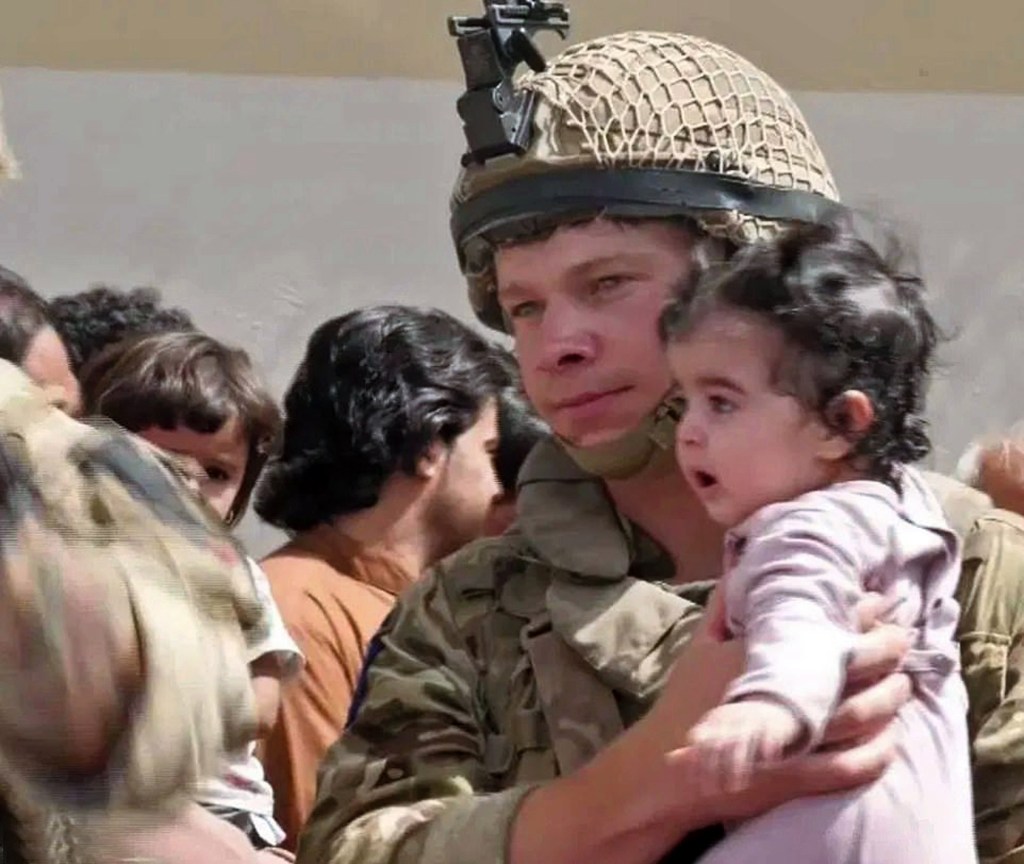
A woman passes her baby over the fence to an American soldier. She does not know the soldier. She does not know if the baby will be safe. She does not know whether she will ever see the baby again. But she knows that she must give the baby to someone, anyone, so that he doesn’t grow up there.

A sixteen year old boy with a promising career as a footballer grabs on to the side of a plane. He begs. He hopes the plane will take him too. The plane takes off, flinging him to the ground. He dies instantly.

An elderly woman with nothing to her name takes off on a long journey across desert mountains by foot. If she is lucky, she will arrive in a squalid refugee camp and spend the rest of her days living in white tents managed by the UN. She probably will not be so lucky.

Today those people are Afghans. 

Only a few generations ago, they might have been you. 

Most of the people here have ancestors who fled just as these refugees do today.

The great migration of Jews into England came at the end of the 19th Century. They had been living in the Pale of Settlement in Russia and Eastern Europe for centuries. Under Tsarist persecution, Jews were confined only to certain parts of the Russian Empire. They worked as peasants and in menial jobs, building their own communities in the shtetls.

When the Tsar’s power was threatened and the Russian Empire began to crumble, his supporters blamed the Jews. For decades, state-backed mobs rampaged through the villages. They torched houses, massacred people, stole property and made life unbearable. We call these waves of antisemitic violence pogroms.

So, our forebearers fled. Most did not make it. Some arrived in England. When they did, they were met by hostility, racism, cramped housing and sweatshop jobs. 

Not long ago, the hordes of fleeing refugees were you. You know what it meant to be a stranger. Even if you do not remember. 

The Torah asks you to remember. According to our narrative, thousands of years ago, we were strangers in the land of Egypt. We were refugees from a famine in Canaan. We were wandering migrants with no home. We were enslaved and confined to one part of the Nile and worked hard labour building garrisons for the Pharaoh. We were mistreated and judged with prejudice. We are instructed by Scripture to remember how that felt.

This week’s parashah sets out the rights of migrants. Never abuse them. Do not exploit them. Pay them upfront. Don’t hold their property hostage. Give them dignity. Don’t mess them around. Make sure they have food and shelter. Look after them.

Why? Over and over again, Deuteronomy repeats: “Always remember that you were a slave in the land of Egypt. That is why God enjoins you to observe this commandment.”

You have to support strangers because they are you. When you look at migrants and refugees, you are not allowed to see them as different. You have to look at them as you. It is the most-repeated commandment in the whole of Torah: to know what it is like to be a foreigner in a foreign land. Remember what this means.

Not everyone remembers. 

Last week, Danny Finkelstein wrote in The Times praising border controls. He took his family story of fleeing as refugees from the Nazis to advocate for keeping some foreigners out.

He wrote, and I quote here: “strongly believe in immigration control. And I am not in the slightest bit put off by the suggestion that this would have prevented my grandfather from becoming a British citizen […] yes, I would deny immigration to some very deserving and worthy people I would be quite happy to live next door to. Even people I would be happy to be related to. Just because I favour immigration for someone, that doesn’t mean I favour it for everyone.”

Personally, I cannot share Mr. Finklestein’s flippant disregard for immigrants, or join him in championing border controls. Like his, my family also fled the Nazis. Most did not make it out. Only a few, who were children, or who could prove they would be useful as nurses, were permitted entry. Under the current system, I doubt they would have been allowed. If I were a refugee today, I would not fare so well as my grandfather did.

But the reason I object to Danny Finkelstein so strongly is not selfish pragmatism. It is religious. It is because I truly believe what the Torah teaches about the rights of strangers. Those refugees are my ancestors who fled persecution. They are my progenitors from millennia ago who were strangers in the land of Egypt. Those Afghans, gripping onto planes and handing their babies to soldiers and walking for miles in the sun… they are me.

And they could be me again.

The only thing that stands between a comfortable citizen today and a desperate refugee tomorrow is luck. 

We in this room do not have to think about what we would do if our corner of the world was faced with famine or war. We do not have to imagine where we would go when faced with our own version of the Taliban.

But if ever I did have to think about this, I would pray that somebody, somewhere, had taken to heart the message of the Torah. I would want somebody to say that no number is too many, that their homes were open, and that my life mattered, no matter what I could provide.

Thankfully, there are people in Britain today, making precisely this case. 

The Jewish Council for Race Equality has put together a Jewish community response to the Afghan refugee crisis. It sets out clear actions the government must undertake to meet its moral obligations.

It must scrap its anti-asylum seeker legislation. It must stop deporting Afghans back to certain danger. It must allow more refugees into this country. 

I urge you all to sign this petition in support of these very reasonable demands.

These are really the minimum standards we must meet. The Torah never even thinks to introduce border controls or to police citizenship. Our Scripture assumes that migration is natural and inevitable. God’s instruction is that, once strangers are with you, you give them all the rights and compassion you would show to someone you have known all your life.

Torah repeats itself so many times to drill home this message.

Always remember that you were a slave in the land of Egypt. That is why God enjoins you to observe this commandment.

Shabbat shalom. 

I delivered this sermon at South West Essex and Settlement Reform Synagogue on 21st August 2021 for Parashat Ki Teitzei.