sermon · torah

Love is at the heart of the Torah

Within the Torah, there are 5 books.

There are 54 parshiyot.

There are 5,888 verses.

There are 79,980 Hebrew words.

And there are 304,805 letters.

The counting of numbers, verses and spaces actually has a great importance in the Jewish tradition. The word in Hebrew for a scribe is the same as for one who counts (sofer). The Talmud says this is because the original sages spent their time counting the numbers and letters of scrolls.

Now, sometimes, the Talmud is making stuff up, or telling a joke that has been lost to the ages, but in this case, they are almost certainly right. 

Counting words, numbers and verses was a great way to ensure that the Torah was standardised, so there could be no differences between the authoritative versions of God’s Word.

Counting words helps us to work out important things about Torah. For example, the Talmud tells us, you can count from the beginning to the end and find the word that is slap bang in the middle of the scroll.

If you do it by letter, says the Babylonian Talmud, you get the word “belly” – gachon. Yes, right in the middle of our Torah is a big tummy, just like on a human being. It fits, doesn’t it? How much of Jewish culture is about food?

If you do it word by word, then the middle two words of the whole Torah are “darosh darash” – search and search; diligently enquire. The middle words of the Torah are all about asking and questioning. How fitting! We love asking, and searching for answers. Aren’t we always questioning, adding questions to our questions? (Well, are we?)

And, if you do it by verse, then you get to the central verse of the whole Torah, Leviticus 13:33. Here it is, the great lesson our Scripture has been trying to tell us: “then the man or woman must shave themselves, except for the affected area, and the priest is to keep them isolated for another seven days.”

I’ve got nothing. 

Now, the Babylonian Talmud has given us some good answers about the middle of the Torah. But none of them are quite what we’re looking for.

Because if you hold the Torah in your hands, if you physically roll the Torah looking for a midpoint, you’d think it would be here, in this week’s parasha. 

Spatially, the centre of the Torah is here, at the start of Kedoshim. Here, at the beginning of Leviticus 19, God tells the Israelites: “you shall be a holy people, for I, God, am holy.”

And if you follow this bit of Torah down to its centre, right to the middle here, you get the central commandment of the Holiness Code: “love your neighbour as yourself.”

That, says the Palestinian Talmud, is the real heart of the Torah. Never mind all the numbers and counting. If what you are looking for is what the Torah is all about, follow your heart, and get to its intuitive core.

There, in the Yerushalmi, Rabbi Akiva says: “the greatest principle of the Torah is to love your neighbour as yourself.” He says, if someone is going astray, this is the only thing you have to remind them of to get them back on track. 

You may have heard this before. In the Christian Gospel of Mark, Jesus says that the greatest principle of Torah is to love your neighbour as yourself. He might have got more famous than Rabbi Akiva, but he certainly wasn’t the saying’s originator. That’s just a nice Jewish boy, repeating a good rabbinic tradition. 

In fact, anyone who spends more than a minute with our religious tradition will understand that to be so. Love is at the heart of the Torah. That is all any of it is about. 

Yes, the belly matters, of course it does. But it’s not just because we need food to keep ourselves sustained. It’s not even because food is a way of transmitting culture. It’s because through feeding and being fed we can show how much we love each other. These kiddishes, these Friday night dinners, the old recipes handed down, the food bank drives, the seder meals, the cakes we bake… they are all simply different ways of demonstrating love.

And yes, the searching and inquiring matters too. But it’s not just because we’re a learned and inquisitive people. It’s not just because we put such high value on education and on our Scriptures. It’s because it is a beautiful way of showing each other how much we love each other. You sit with a child to tell them a Bible story. You sit with a friend to study some text together. You sit with an elder to ask them for their wisdom. Sure, on some level, you’re just trying to get information. But, at core, these are ways of showing love.

Hold that in mind, then, as we return to the central verse of Torah, in the purity laws given to priests: “they must shave themselves, except for the infected area…”

No, sorry, I’ve still got nothing.

A few weeks ago, I sat down here with the Council to talk about what it would look like to come here as a rabbi, and whether we might be a match. One of your leaders asked: “what do you think are the core functions of the synagogue?” I gave my honest answer: “The synagogue only really serves one purpose, and that is to get people to love each other more.”

We come together, in these Jewish communities, to show that we love others as we love ourselves. We will eat together and learn together and pray together because we love each other. 

We will love each other enough to be with each other in our most trying moments of death, disease and disaster. We will love each other enough to celebrate together through our joys of life, and build each other up.

This synagogue already has a wonderful reputation. Rene, your outgoing rabbi, has told me how much he loves you. Charley, your former rabbi, and now movement head, has shared the same. Danny, your rabbi emeritus, has told me how lucky I am to be coming here. 

I meet adults who grew up here, friends of Laurence, and they share what a warm and wonderful place this is. In just the few meetings I have had with members, I can already see why.

The love that people speak of you all with is because of the love that you put out and create in your community.

I cannot wait to start here, and to love you as much as everyone else does.

וְאָהַבְתָּ לְרֵעֲךָ כָּמוֹךָ

May you love your neighbour as you love yourself.

Shabbat shalom.

high holy days · sermon

Can you pass the human test?

This is the human test, a test to see if you are a human.

These questions were posed by the American comedian, Ze Frank, to see whether his audience was human. I will ask you some of them, and you can see if they apply.

  • Have you ever made a small, weird sound when you remembered something embarrassing?
  •  Have you ever seemed to lose your aeroplane ticket a thousand times as you walked from the check-in to the gate?
  • Have you ever laughed or smiled when someone said something mean to you and then spent the rest of the day wondering why you reacted that way?
  • Have you ever had a nagging feeling that one day you will be discovered as a fraud?
  • Have you ever stared at your phone smiling like an idiot while texting with someone?

Well, congratulations you are human.

With these questions, Ze Frank taps into the parts of being human we so rarely discuss. Our deep anxieties, our senseless irrationalities, our abilities to love people completely. 

Perhaps we laugh because they are embarrassing. It feels awkward to acknowledge that we feel all these things.

But we do. They are, truly, what makes us human.

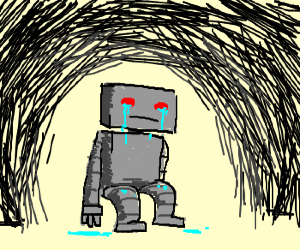
In 1950, the English mathematician Alan Turing developed a series of tests to distinguish between robots and people. The questions, called ‘The Turing Test,’ can be used with some accuracy to ascertain whether, when speaking to a character online, they are a real human being or a highly intelligent software programme.

This year, those questions gained an entirely new relevance. An AI Language Model, called ChatGTP, became a viral sensation. You can pose the most fascinating questions to this robot, and it will answer them as if you were speaking to a real human being. It can have conversations and play word games and share thoughts on current events. It can even write a half-decent sermon.

But there were some questions it couldn’t answer. It still cannot pass the Turing Test. Tech experts promise that, very soon, it might. But, for now, there are certain things it cannot find adequate responses for.

The questions the Turing Test poses of robots to distinguish them from humans ask them to think critically about their inner lives. You might ask them:

  • “What event from your life changed the way you think?”  
  • “How do you feel when you remember your childhood?”
  • “Can you describe your emotions in only shapes and colours?”

What makes us human, provably so, is that we feel. We rejoice by laughing from our bellies. We hurt by letting tears fall from our eyes. We rage by clenching our fists. We cringe by curling our toes in our shoes. We fall in love by feeling butterflies in our stomachs. 

No algorithm can do that. An algorithm cannot pass that test.

Although machines cannot pass human tests, humans are nevertheless often tested by machines, and measured according to standards set by software.

From the moment children first enter schooling, they are subjected to rigorous examination. Can they multiply figures? Can they recall important historical events and their dates? Can they identify adjectives, verbs, and nouns in sentences? 

Of course, it is impressive when children can do these things. But it also measures them by the kinds of things machines can do much better. Often, these exams are even marked by machines.

By the time we finish schooling, we may have spent most of our formative years revising for, sitting, or fretting about the results of exams.

This process doesn’t stop once you enter adulthood. Throughout our working lives, many of us find ourselves undertaking tests to prove we are competent in our jobs. 

It’s not entirely a bad thing.

We’d all be quite worried if doctors weren’t checked for their abilities to carry out surgeries or bus drivers didn’t prove they could drive without crashing. Food hygiene certificates and accountancy qualifications are an important part of life.

But they are not all of life. They are not what makes us human.

And, sometimes, they detract from our humanity. 

I am going to talk briefly about suicide, and how dehumanising tests can drive people to take their own lives. If you are not in a place where you can hear that right now, I do welcome you to take a break, without judgement, because it is a difficult topic. And if this discussion brings up anything for you, please know that me and Rabbi Jordan are always on-hand for pastoral support and a listening ear.

Earlier this year, a headteacher at a primary school in my hometown, named Ruth Perry, killed herself after receiving a poor Ofsted report.

A study in 2017 found that teen suicides peaked around exam season, as the pressures to do well affronted young people’s mental health. 

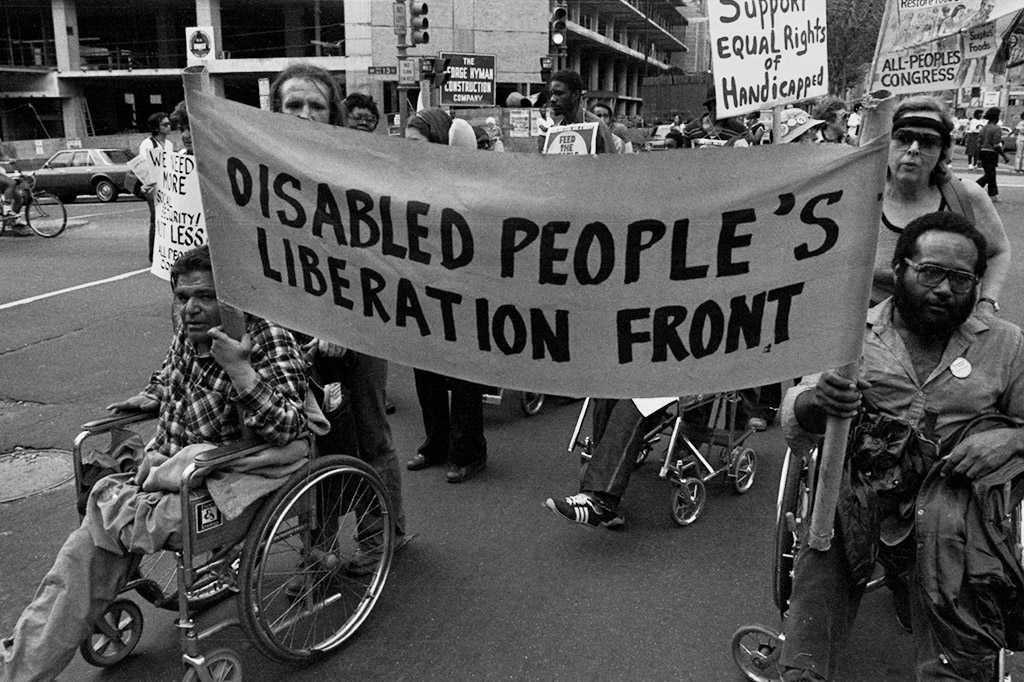
There are data spreadsheets that recommend redundancies, crashing people’s entire working lives. Disabled people in Britain have to prove to computers that they are sufficiently unwell, or they will have all their benefits cut.

We live in a world full of judgements. You must prove your competence. Or you must flagellate yourself to prove your incompetence. You must prove that you are who you say you are. You must prove you can be somebody else. You must prove your worth.

But, here, you are in God’s house. Your value is not determined by what you can do. You are valuable in this space because God has chosen to make you human.

On Yom Kippur, we are summoned to face a test. But, this time, it’s the human test. The only question you have to answer today is “are you human?”

During the course of this year, have you breathed? Has your heart beat? Has your blood pumped through your veins?

Have you felt sadness and grief and elation and worry and love? 

Have you been moved by events in the lives of others, and have you formed new memories of your own?

Congratulations. You have passed the human test.

This is the task that God set for you. That you would be alive. And you are. You are here with us.

God has set you the task of being human, which means feeling, in all its complexity. 

Even if you can only remember feeling one thing this year. Even if you only felt bored or exhausted or impatient or in pain, you still felt. You succeeded at doing everything God wanted of you just by being human.

We cannot take it for granted. You might have given up. But if you felt like giving up, well, that was also a success, because that was a feeling. You were being human, just the way God wanted for you.

On Yom Kippur, we read “Kedoshim,” a glorious compilation of the Torah’s greatest laws from the Holiness Code. The first dictum of this parsha from Leviticus is “you will be holy people because the Eternal your God is holy.” It is less a commandment than a statement of fact. You are sacred by the virtue of being human. Your life is blessed because your God is blessed.

There may have been moments this year when you felt like you were being treated as less than human. On Yom Kippur, you are reminded of your humanity. You were never supposed to be a cog in a machine. You were supposed to hunger, and thirst, and tire, and mourn, and reminisce, and sing, and connect, and pray.

Once you have passed the test of being human, all you need to do is extend that humanity to others. Kedoshim continues by reminding you of how to treat others with maximum humanity. 

It is a summons to empathy. You will be human and you will treat others as human. You will not only laugh, but you will laugh with others. You will not only hurt, but you will share the hurt of others. When you feel, others will feel with you. And when others feel, you will feel with them. 

Torah gives specific examples.

You will feed the poor and house the foreigner. You will be honest with people who do not know if you are lying. You will pay workers straight away. 

You will never insult the deaf or lead the blind astray. You will not defer to the powerful, no matter how wealthy they are. You will not take advantage of people who work for you.

All of these laws refer to moments when human beings are at their most vulnerable. They refer to people experiencing poverty, disability, homelessness, and exile. These are people experiencing the greatest possible despair, terror, and misery. 

And because they are experiencing these emotions, this is when they are most mortal. This is a picture of humanity at its most human.

Confronted with others in this susceptible state, your Torah commands you to remember that you are human and so are they. You will see the most vulnerable people as if God is shining out through them, and treat them as you would the greatest among yourself.

You will see yourself as fully human, and set aside that robotic urge to calculate kindness or run profit assessments on your mitzvot. You will feel with them instead. You will experience empathy. 

If you can feel, you are human. And, if you are human, you have passed God’s test.

That is the human test. The test to see if you are human.

Congratulations. You have passed.

sermon · social justice · torah

A charter of Disabled people’s rights

Do not curse the deaf. 

Do not put a stumbling block in front of the blind.

Revere your God.

This week’s parashah is Kedoshim, the centre of the whole Torah. It is the centre in two senses: we are slap bang in the middle of our scroll. When the warden performs the hagbahh tomorrow, the Torah will look almost completely even on both sides.

It is also, I feel, the spiritual centre of our Scripture. This is the part of the Torah that tells us what the rest of it was for. All the stories and speeches that surround the rest of the text can be summarised in this portion. 

Many of the verses from elsewhere in Torah are repeated. Some of it might seem superfluous. Kedoshim reads a little bit like the Torah’s greatest hits, reminding us of some its most popular laws and aphorisms.

But the collection is not random. The smattering of commandments I recited at the beginning all have something important in common. They are about what rights and obligations people have in relation to each other.

This year has brought home to many of us that we cannot take our health for granted. Our bodies are fragile and the time on earth we have is precious.

If you were to become blind, or deaf, or sick, or old, what could you expect from society? What are the minimum standards that others owe you? And, if you are blessed with youth and good health, what must you do to honour others?

Do not place a stumbling block before the blind. You might think: of course! Who would do such a thing? Who would want to trip up the disabled? But cities are structured and buildings managed in ways that are full of stumbling blocks. Every staircase to access public transport; every meeting held miles away from places people can reach; every building without a wheelchair ramp; every space without accessible toilets; every show without subtitles; and every badly laid-out street. These are all stumbling blocks.

Do not curse the deaf. And again, you would say: who would do such a thing? Surely nobody would be so cruel as to insult people who cannot hear them! But this happens all the time. Every headline that calls disabled people scroungers; every job that refuses to make adjustments; every effort to make welfare harder to access; every time the price of medication is jacked up; every time a comedian makes fun of a disability… aren’t all these insults to the deaf?

These are all ways that disabled people are kicked while they’re down.

Instead, the Torah tells us we need to lift each other up.

May we be the ones to remove every stumbling block and replace every curse with a blessing.

Shabbat shalom.

This sermon is for Edgware and Hendon Reform Synagogue, Parashat Kedoshim, on 23rd April 2021

sermon · social justice

Whose responsibility is climate change?

Whose responsibility is climate change?

For years, climate change has been in the corner of my peripheral vision. It has been like a mould growing in my bedroom. Every time I’ve seen it, I’ve quickly turned away and pretended it wasn’t there. Acknowledging the problem would mean I have to do something about it. But what? I don’t know how to deal with it. Isn’t there somebody professional that can sort it out?

It’s not that I haven’t been aware of climate change. At university, many of my friends campaigned on it so enthusiastically. They understood the problems. They campaigned for fossil fuel divestment, transition to renewable energy, commitments to meet carbon emission reduction targets. And I pretended to understand what they were saying. I cared about it, but only because they cared about it.

One of my first jobs was working for an amazing charity called People & Planet. This organisation supported activists to campaign on issues of political import. The campaigners in the office were split into two teams: those focused on people, and those focused on the planet. You can guess which side I was on.

I was campaigning against sweatshops and labour rights violations. The other team campaigned on… something to do with the environment. Wind turbines maybe? I honestly don’t think I ever knew. The planet campaigners had graphs and maths and scientific facts. Our campaigns team had people crying out for solidarity as they took on their bosses. It was easy to identify with factory workers. It was much harder to identify with changing global temperatures. I didn’t understand it, so I took it to be somebody else’s responsibility.

If the goal of Extinction Rebellion was to give people a wake-up call, in my case they have succeeded. Over Pesach, London was suddenly disrupted. Cars pulled to a standstill. Every day they were on the news as old ladies got arrested and carted off in police cars. They forced me to think. If these people care so much to take on that level of responsibility, there must be something important happening.

I decided to do my research. Like any good rabbinic student, I started with a sacred tradition: watching Netflix. It turns out there are a lot of documentaries about nature if you’re not actively avoiding thinking about the death of the planet. There was a show about coral. An easy start, I thought. Corals are pretty and everyone loves the ocean.

It turns out that most of the ocean’s coral are now dead. Overheating of the ocean has caused the coral to bleach and die, leaving white skeletons along the seafloor. This means that the natural habitat for so much of our sealife has been destroyed, possibly beyond repair.

That mould I talked about in my bedroom suddenly looked a lot bigger. I’ve ignored it for so long that it’s taken over the house and the foundations are at risk.

Somebody has to do something, I thought. If the oceans have been so depleted, how much more damage is being done unseen to our forests, fields and wildlife? I don’t want to think about it. I know I must. Extinction Rebellion warns us that humanity itself may become an endangered species if we do not act.

Somebody has to do something. But who? One of the critiques of the climate movement has been that it puts too much responsibility onto individual consumers and not enough onto the biggest perpetrators of pollution and destruction: corporations. The CEOs of the world’s biggest gas, oil and coal companies have a lot more to answer for than individuals who use plastic straws or take baths instead of showers.

But if the world’s top richest exploiters of the environment disappeared tomorrow, what would happen? New CEOs would emerge in their place. Mining would not stop, nor would oil extraction. People would continue to fill up their cars with petrol. Loggers would keep chopping down rainforests. As long as our global economic system is predicated on constant growth, expansion and exploitation of natural resources, our living planet will remain under threat. Only systemic change of how the world’s resources are distributed and consumed will fundamentally help save the planet.

This isn’t a call to revolution. Although I am hardly opposed to such a thing, revolution does not answer the question I am posing. I am not asking what must be done, but who must do it. Whose responsibility is climate change anyway? By putting the onus onto global system change, it can make the much-needed action feel too abstract and inaccessible. In his groundbreaking book on Jewish messianism, Gershom Scholem observes the paradox that the more grand and utopian Jewish visions of the future have been, the less likely people have been to act on them. If we set the bar too high for the change we want, people will fall into the despondency of inactivity. We will end up waiting on God to fix the problems that are incumbent on us.

Saving the planet should not be considered a radical, messianic idea. It should be plain common sense that if we want to live to old age and hand over a healthy world to  our grandchildren, we have to reverse climate change and restore our natural world now.

None of this is to let the big companies and governments off the hook. They may well be the biggest cause and have the most power to affect change, but the responsibility has to lie with us. All of us.

This week’s parashah is Kedoshim. It is the Torah’s greatest hits, bringing together laws concerning sacrifice and ritual purity with moral rules about respect for the elderly, empowerment of the Disabled and justice for the poor. “A holy people you will be,” it begins. “For I, the Eternal One, am holy.” It does not ask to be responsible because we are capable, nor because we are at fault, nor because we understand. It tells us to take responsibility because that is what God does. Every one of us is tasked with the moral welfare of the world, for no less reason than that doing so is a holy act.

It goes further, teaching us not to show deference to the rich or favour to the poor. Everyone is liable. Everyone must do justice. We may not be able to do everything, or fundamentally change society on our own, but we have to act as if the responsibility falls on us personally.

The Talmud teaches us that every Jew is responsible for every other. The midrash teaches us that humanity has been granted stewardship over the earth. While Judaism is a profoundly collective religion, it is also a call to every individual to do justice. My responsibility to tackle climate change comes, then, not as a citizen, consumer, worker or even as a human being, but as a Jew commanded by God to be holy.

With all that in mind, I have run out of excuses. I can no longer ignore climate change. I cannot plead ignorance. I cannot hope that people more expert will sort it out. I cannot blame CEOs without doing anything to hold them to account. I cannot say we need system change without working to bring it about. I cannot wait another day.

The responsibility for climate justice lies with me. I am still very uneducated and will need a lot of guidance, but I know I must make a start. I have joined Extinction Rebellion Jews. And I hope you will too.

coralbleaching
Bleached coral

I gave this sermon on 11 May at Manchester Liberal Jewish Community. As it stands, the lectionaries of the Liberal and Orthodox movements, as well as of Israel and the Diaspora, are out of synch. In the land of Israel, Pesach traditionally has seven days, while in the Diaspora it traditionally has eight. This means that for Diaspora Jews there is an additional Shabbat that falls on Pesach, while for Israelis, the lectionary resumes one week earlier. For the next few weeks, then, different synagogues will be out of synch. The early Jewish reformers felt that there should be no difference between Israel and the Diaspora, since we no longer laid a religious claim to Israel, so ordained that our calendars would align. As a result, most progressive synagogues would have been reading Emor this Shabbat, while most Orthodox ones read Kedoshim. I chose to read Kedoshim not to make any theological or political point, but simply because I prefer that parashah.