festivals · halachah · sermon

I refuse, therefore I am

There are seventeen sleeps to go until Pesach. I am genuinely excited.

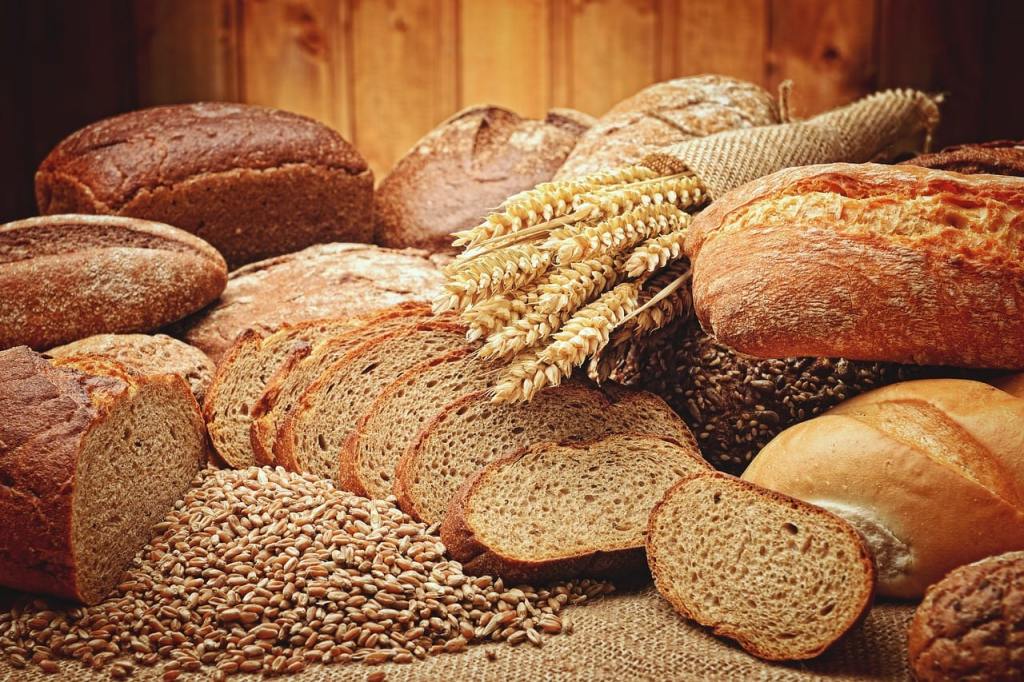
You know, one of the things I love most about Pesach is the matza. 

I enjoy clearing out all the leavened products from the house, dumping bags of pasta with the food bank, hiding the toaster in the garage, and eating only matza for a week.

It’s not that I like the taste. (Although it is good as a vehicle for my favourite food group: butter.)

In fact, I think it’s precisely the discipline that I enjoy. It is having a religiously-mandated prohibition built into my life, if only for a little while.

I am going to talk here about my own relationship with consumption, food, and restriction, but this will be very different for everyone. I know that, for some, ‘saying no’ to food can become a burden rather than a blessing, and that achieving a neutral relationship with food is its own spiritual discipline. 

Judaism teaches us that if a fast or a restriction endangers our health—physical or mental—the commandment is actually to eat. Our goal is to be masters of our impulses, not enemies of our own survival.

So, in telling you what is meaningful to me, I am not trying to tell you how to live your life (I have no such right), but to tell you why the practice of clearing out chametz and eating only matza matters to me.

And, personally, I love the moments of spiritual discipline.

I think there is something in the human condition that means we want some help sublimating our desires. Every religion, throughout the world, places restrictions, either permanently or for short periods, on how people can consume. 

We all want to know that we are not slaves to endless gluttony, but can serve something Higher than ourselves.

Two weeks ago, I had the privilege of joining the Dialogue Society‘s iftar at Kingston Guildhall. This is a daily meal, served after sunset every day throughout the month of Ramadan. 

Throughout the evening, we learned a number of facts about Ramadan and iftars. But as the evening went on, I reflected that I could never truly know what Ramadan was. I would never understand it as an insider; as one who fasts every day for a month; as one who considers this deprivation a pillar of faith. 

The iftar was lovely, but the fast is what brings people to the meal. Through their fast, Muslims learn what it is to sympathise with the poor, to feel one with a global community, and to submit to their Creator’s will.

I was seated with the other clergy: the imams and vicars that KLS has enabled me to befriend. Reverend Joe shared that the Christians were also going through their own period of deprivation: the Fast of Lent. During these forty days, Christians give up the things that tempt them most. In Reverend Joe’s case, this was alcohol and chocolate. 

As an outsider, I have seen the end product of Lent – its festival of Easter, filled with chocolate hunts, painted eggs and, once or twice, even a gory reenactment of Jesus’s crucifixion. 

Easter looks fun, but I realise that what must make it so meaningful is the period of deprivation beforehand. Their experience of refusing temptation is designed to help them better understand Jesus’s suffering. Here, too, the spiritually important part is saying no to something else. 

The idea of saying no to consumption feels so alien to our modern world. The second I want something, I can order it online and have it delivered a day later. If I like the sound of any food from anywhere in the world, I barely need to think before I’m eating it. 

And, personally, I have a hard time saying no to just about anything. I struggle to eat just one biscuit or drink just one glass of wine. And, if there’s food on the table, I can be sure I’ll keep eating until there isn’t. 

I shouldn’t be surprised by this.

I’ve been completely inundated with advertising and consumer culture since birth. When I’m bored, I can stare at my phone to shut off my brain and get more of the same.

Our old medieval superstitions have been replaced by the new religion of consumption. You can practise all of them at once: eat chocolate at Easter and turkey at Christmas; eat doughnuts at Chanukah and soup at Pesach. 

And, of course, at every opportunity, we must buy; we must spend money. We must make sacrifices to the god of The Market who will slump and weep if we stop purchasing for even a moment. In the name of our new religion, we must swallow the whole world.

So, refusing consumption feels like something medieval and irrational. 

But isn’t it precisely the foundation of Judaism?

The tenth commandment is לֹא־תַחְמֹד – thou shalt not covet. Do not desire. Do not lust. Do not gaze greedily at everything around you from your friend’s partners to your neighbour’s animals. Do not envy.

This is the basis of all the other commandments. If we don’t want what others have, why would we ever steal? If we don’t lust after anybody else, why would we ever betray our partners? If we don’t want anything but what we have, why would we ever go chasing after other gods?

But wanting is not like stealing or cheating. Wanting is a primal urge. 

How can I be expected to have no desires at all for what is beautiful? This rule is telling me to suppress my own feelings; that just the very fact of wanting anything is a sin. That feels cruel and punitive.

We’re not the first to feel this way. Generations of Jews have grappled with exactly this problem.

There is a lovely midrash from thousands of years ago on this topic, that says, it’s not that we’re supposed to say we have no desires for things we can’t have. Instead, we should say “actually I do want all these things, but God in Heaven has decreed against it.”

Some part of me does want to consume everything; to own everything; to control everything. I need to know that this is within me. And then I need to remember that I am more than a gluttonous animal. I have the ability to exercise restraint.

The medieval commentator, ibn Ezra, taught that this is deeper than just self-deprivation. By saying no to our desires, we say yes to our God. We say yes to trust and faith. We see the world’s beauty as even more beautiful precisely because we know it is forbidden to us.

The French-Algerian philosopher, Albert Camus, wrote that saying no is the foundation of all human values. “I refuse, therefore I exist.” What we are willing to say no to determines who we are. 

The Israelites were not truly God’s people until they refused to be Pharaoh’s slaves. Our ancestors said no to subjugation; no to tyranny; no to being someone else’s property; no being held back by the false gods of greed and idolatry. 

With one no, they could say many yeses. Yes to the God of all Creation. Yes to being commanded by a greater power. Yes to the festivals and yes to the holy days. Yes to the humble pursuit of God’s will. Yes to peace, equality, dignity, and freedom.

And that is what the matza symbolises to me today. 

It is more than a cracker. It is a statement about what I am willing to say no to. 

I say no to leaven, and therefore no to a system that demands I consume everything until there is nothing left of the world. 

I say yes to matza, and therefore yes to pursuing justice, living with simplicity, and walking in God’s ways.

As we come to this Pesach, consider what you can do to exercise spiritual discipline. My practice is to cut out leavened food, but you may find your own.

Can you clear out your cupboards, and give excess clothes to charity? Can you look at your spending, and set a bigger portion aside for those in need? Can you put a restriction on your phone usage?

What is the chametz, the leaven, that is weighing you down in your life? And how will you make the conscious choice to say no to it?

I refuse, therefore I am.

We say no, so we are.

Shabbat shalom.
halachah · sermon

What makes food kosher today?

Not long ago, after a near-lifetime of vegetarianism, I decided to try treif. And not just any treif, but the real deal: pork.

I knew I wanted to give it a go but I was afraid of being seen by other Jews. So I went on holiday to Gran Canaria, sat down in a fancy restaurant, and ordered a full-blown roast pork.

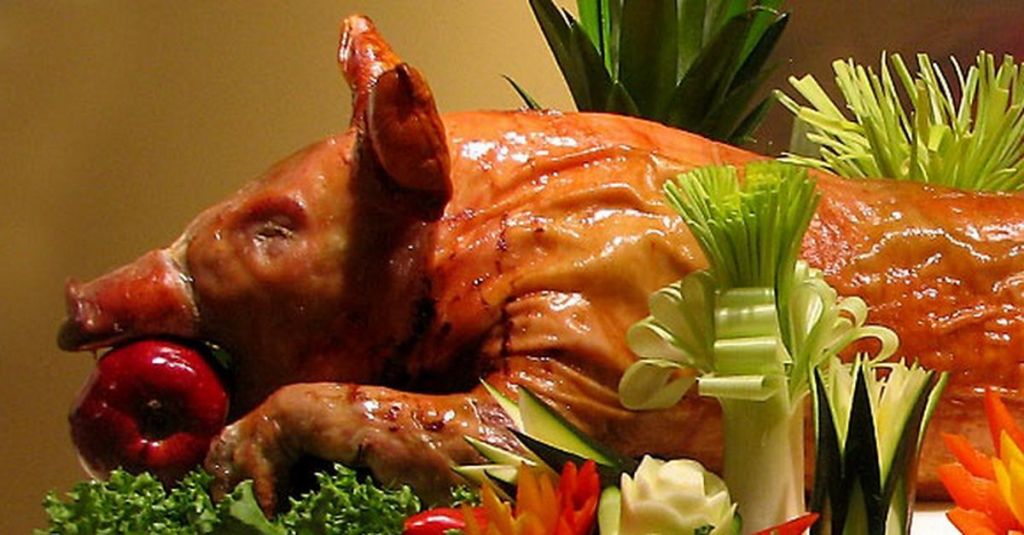
As I was waiting, however, a couple from my old congregation walked into the same restaurant. They instantly recognised me and came up to say hello. Just as we greeted each other, my pork came out from the kitchen: a giant pig on a massive platter with a big red apple in its mouth.

Flummoxed, I exclaimed: “My goodness… so this is how they serve apples here!”

OK, so that last part didn’t happen, but I really did decide to try treif about a decade ago. I’ll be honest with you, some of it tastes pretty good, but they’re not worth giving up Judaism for.

I hadn’t eaten pork since childhood. Aged 6, I had precociously insisted to my parents that I wanted to be religious and go to synagogue. My mum had told me that if I was going to force her to go to synagogue, I’d have to give up sausages. I wanted to be Jewish and I wasn’t allowed to do it half-heartedly.

I think all of us know that food laws play some role in our Judaism. Some of you here keep kosher kitchens. Some of you guiltily sneak a steak when you think you won’t get caught. Some of you, like my brother, eat extra bacon ‘to make up for all the ancestors who missed out on it.’

Whatever your choices, being a Reform Jew means to get to make those decisions for yourself. Our movement believes in informed choice.

Making the choice is your responsibility. But making sure you are informed is mine. So it’s my responsibility to share with you that there are lively debates happening in the Reform rabbinate about what kosher should mean today.

I recently attended my first Assembly of Reform Rabbis, where learned colleagues were discussing kashrut for the first time since the 1970s. It says something interesting that the topic hasn’t been addressed in such a long time.

The reason we are discussing kashrut again today is that the government is contemplating whether to ban traditional ritual slaughter – shechita. For many centuries, Jewish butchers have used the same methods for killing animals. That is: they slit their throats, puncturing the trachea, oesophagus and arteries with one rapid incision.

Throughout our history, Jews have considered this to be the cleanest and most humane method of killing animals. It comes out of a desire to show respect for the animals and to minimise risk of diseases.

Today, however, there is a new movement to favour stun slaughter. In this method, animals are electrocuted before they are killed. For cattle, this means putting a charged bolt through their heads. For chickens, it means electrifying them as a group. Proponents argue that this is more humane, since it renders animals insensitive to pain in their final moments.

There are two other factors that have made stun slaughter so popular, neither of which should be ignored. One is that industrial meat production means that factories produce far more meat. They want to be able to slaughter as efficiently as possible to maximise profit from the animals. Industrial stun slaughter certainly helps here.

Another factor is antisemitism. Across Europe, the movements to ban traditional slaughter have largely been led by white supremacists. Their primary target is Muslims, whose customs around halal slaughter are very similar to our own methods of shechita. Jews are really collateral damage in cultural wars about trying to retain Europe’s status as a Christian continent.

These factors make addressing this issue exceptionally complex. Proponents of stun slaughter ask us to set aside questions about racism and capitalism, just to focus on the issue at hand. I find that very hard to do. Rabbinic law is never about making moral decisions in the abstract. We make our ethical choices as real people living in the real world.

I think it is highly doubtful we will ever be able to prove that taking an animal’s life is better served by electrocution than through throat slitting. It may well be true that these new methods of industrial killing cause less pain, but shechita requires butchers to actually look animals in the eye before taking their lives. I’m not convinced either is more humane.

But, even if one were, we cannot escape the horrific systems that underpin animal consumption. Right now, the insatiable demand for meat is one of the leading causes of global warming. This week, we saw record-breaking temperatures. We can expect such heat waves to take place more regularly and more ferociously as runaway climate change unfolds.

The meat industry is an enormous enterprise that involves destroying natural habitats, depleting the oceans, battery-farming animals, deplorable working conditions, and unspeakable cruelty.

In every generation, Reform Jews have to work out anew what the most ethical way of living is. Today, it is hard to make the case that this includes participating in such an unjust system.

Rather than engaging in debates about specific methods of killing, I feel the appropriate response should be to question whether we should keep eating meat at all.

Indeed, this synagogue has long been an exclusively vegetarian site. This is partly because of convenience: it means we can host anyone and we can avoid messy arguments about separating meat from milk. But it also comes from the moral courage of previous leaders in this community, like Rabbi Henry, who felt that was the best way to live our values.

Please do not think me preachy. Quite on the contrary, I want to be open about my own hypocrisy. I still do eat meat on occasion, especially fish and chicken. I eat eggs and cheese. But, deep down, I know that the ethical vegans have already won the argument.

I once expressed my sadness about this to a frum vegan friend. She advised me: don’t let perfect be the enemy of the good. If you wish you could be vegan but can’t give up cheese, be vegan except for cheese! If you wish you could be vegetarian but like fish too much, be pesacatarian! We must all find ways to reduce our meat intake and limit our negative impacts on the planet.

The Reform rabbinate is still in open conversation about how we redefine kosher for our age. We did not settle the matter at the Assembly, and I don’t want to leave this sermon as if I have reached a definite conclusion. Instead, I want to bring you into the conversation. I want to hear how you think we should best live our values today.

Let us engage in open discussion. Let us talk with each other about our own practices and our own driving values. And let us fashion together a new future for what an ethical Jewish life looks like.

Shabbat shalom.

sermon · social justice

Support the care home strike

Once, Rabbi Israel Salanter, the founder of the Musar movement, visited a new matzah bakery in order to check its work practices and level of kashrut. He reviewed all the manufacturing procedures extensively and observed the intense labor and toil of the employees. At the end of Rabbi Salanter’s visit, the bakery owner proudly asked him, “What does the rabbi say?” He answered, “The Gentiles accuse us, God forbid, of using the blood of Christian children in matzah. While this is not the case, from what I have seen here, there is indeed a violation of the prohibition on blood in food. The blood of the workers is mixed with the matzah! I will not certify this bakery as kosher.”

For me, my proudest moment of 2020 came in the middle of a Torah shiur. Early on into the lockdown,  I was teaching a class over Zoom. 8pm was nearing and one teenage girl in attendance interrupted. “We have to go clap for the carers!” she said. At once, almost the entire class got up and walked away from their screens. I did the same. We whooped and cheered, then, ten minutes later, returned to our studies. Clapping for the carers became part of our weekly Torah study. 

That, I thought, was real Judaism. It is not in our texts or our rituals, although those are important. Judaism lives in the dignity and respect we show to each other. It is in the solidarity and love we demonstrate to each other, even when we cannot physically be together. 

This year, for the first time that I can remember, care workers received the recognition they deserved. In this pandemic, we learnt who really keeps the country ticking. It is the nurses, the cleaners, the teachers, the nursery workers, the porters, the social carers and home support. So often, this work, which constitutes the majority of work, is ignored or made invisible.

In this parashah, we get a rare insight into that kind of work. Jacob and Joseph both die. We hear of how the dignitaries and officers of Egypt mourned them. But we also hear, just in passing, of the physicians who embalmed their bodies. Or, rather, as Rabbeinu Bachya points out from the grammar of the sentence, that the physicians instructed others, who were lower-ranking and skilled in the matter, to embalm the bodies. We glimpse, if only momentarily, amidst the hullabaloo of important people wailing, what care work looked like in Ancient Egypt. 

Care for the elderly must have been one of the hardest jobs to do this year. The Coronavirus pandemic spread fastest and with most deadly impact in the elderly care homes. The workers, without adequate protective wear, on low wages and with few rights, went in to care for older people. These workers had to return to their own vulnerable family members, potentially infected. 

For many older people, their care workers were the only human contact they received, as families were prevented from mixing in the homes to prevent the spread of the virus. Care workers have done an amazing job this year, and everyone is forever indebted for their service.

So it should be a cause for absolute disgrace, for moral outrage, that a care home within the Jewish community should be spotlighted for its abhorrent treatment of elderly care workers. 

That’s right. I’m talking about The Sidney and Ruza Last Foundation at the Yehoshua Freshwater Centre, better known as Sage Care home, in Golders Green. The staff there have been asking for fair wages, full sick pay and union recognition since September. These domestic and maintenance staff are paid well below the London Living Wage, denied fully paid time off if they are sick, and their grievances have been brushed aside and ignored. The management have flatly refused to have any meaningful negotiations with them, or made the workers any offers. 

What an insult, then, that this care home calls itself Jewish, and says it serves the Jewish community! Who in the Jewish community is it serving? It certainly does not serve the care workers in this congregation. It definitely does not serve our elderly and vulnerable family members if it puts them and their carers in danger. Above all, it does not serve our Jewish God and our Jewish values if it exploits people.

The great conservative rabbi and posek Jill Jacobs, says that a Jewish company must meet certain labour standards to be considered kosher. It must treat workers with respect; pay a living wage; protect workers’ living conditions; and recognise their trade unions. Needless to say, the owners of Sage Care Home have failed on every single one of these fronts. 

Moreover, the elderly are not safe from the pandemic if staff cannot be open about when they are sick to get necessary time off. The elderly cannot receive high quality care if employees don’t feel like when they complain about risks to health and safety they will be taken seriously. This is a grave issue for residents and staff alike.

As a result, the staff at this care home have now ballotted to strike. Unless the management intervenes swiftly to meet the carers, the whole workforce will walk out this month. The strike is scheduled to begin on 15th January.

It should never have reached this point. Many care homes manage to look after their residents and staff, by focusing on the human beings they are, rather than just profit. By ignoring the workers’ legitimate requests, the owners are endangering both staff and vulnerable older people. They must be held to account.

I know that the elderly people in these care homes and their family members want to know that their care workers have safe and fair working conditions. I know the Jewish community in London has high ethical expectations of its communal institutions.

The care workers are calling on the Jewish community to give them support. I know you will. The same community that came out to applaud care workers in the spring will surely stand by them in their struggle for a livelihood through winter. 

If you have family at this care home, please write to the management to let them know your concerns. Express to them your concern for the welfare of the workers and your family. 

Alternatively, take action by signing the petition or donate to the strike fund.

Let us join with the elderly and their carers to demand more from our communal institutions. May we be able to take pride in our care homes. May we truly be able to call every Jewish space kosher.

I am giving this sermon on Saturday 2nd January 2021 at Edgware and Hendon Reform Synagogue.