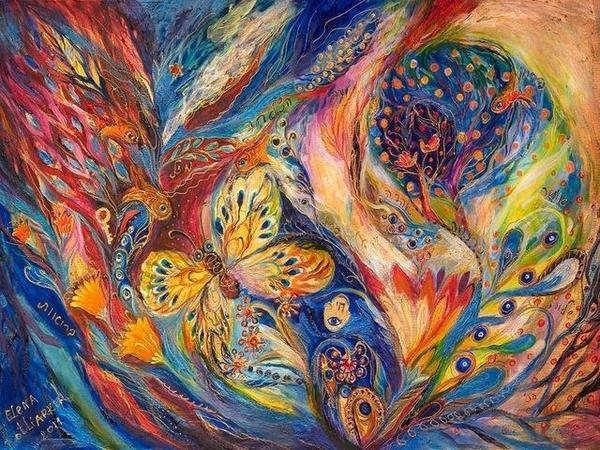
story · theology

Why do Jews break a glass at weddings?

Whenever a couple comes to discuss their upcoming wedding, there is one ritual more important to them than any other. Anything else, they feel they can set aside, but this one action, they absolutely must do.

They insist on breaking the glass.

Smashing a glass under the chuppah is not a matter of halachah. In Jewish law, it makes no difference whether you do it or not.

It is also probably not the most visually popular image. If you picture a Hollywood Jewish wedding, the stock footage in your mind is the chair dancing, with couples thrust into the air, and holding on for dear life.

Why do couples want so much to smash the glass? When I ask them, they are not sure. It just feels right. It feels natural.

It is like they are remembering something. Something, a story; not just the stories of all the weddings of family members; not even another wedding in a mythic ancestral past. Something else. Something further back.

Perhaps, the Kabbalists suggest, what they have remembered is the very first smashed glass.

The very, very first crack.

Before there were weddings or people or creatures or planets or stars. Before there was anything at all.

Before there was anything, there was a crack.

In the beginning, there was a crack.

A crack in the Nothingness.

Before the crack, we can only talk about the Nothingness. We cannot even really talk about there being such a thing as before the crack, because, in the Nothingness, there was no time. The Nothingness was an absence. Lacking anything, it had no before, nor after, nor now.

When the first crack appeared in the nothingness, it created the first event. The first now.

Before long, the crack split. It broke further, like a chip in a windscreen that slowly breaks. Now there was a succession of events. A story in the cracking of the Nothingness. Now there was such a thing as now, and before, and after. There was time.

Then, the Nothingness could not bear the weight of the crack any more. It burst and shattered into an infinite myriad of broken fragments. Suddenly, there was time and there was space and it was filled up with the thousands of shattered splinters.

The Nothingness was broken. And there could never be another Nothingness again. It had ruptured and given birth to the Something: to all the imploded pieces of possibility.

And out of that possibility came yearning. The shards could see that they could form into combinations and make Somethings that were greater than just their fragmented pieces, but were the genesis of ideas.

So, they made wisdom, knowledge, and understanding. They made strength, love, and beauty. They created endurance and splendour.

From the broken bits of the Nothingness, they made the potential for Everything. And, with that, they made matter. They made the foundations of all existence.

Now, there could be galaxies and moons and oceans and forests and reptiles and insects and primates and civilisations and cities beings that could contemplate this entire mystery of existence and wonder how it all began.

This was how our world was made.

That is where we live: in the broken world.

We are the products of that initial shattering that yearned to be Something greater than Nothing. And we are able to see the world as it is: infinitely complete and completely broken.

We are those sentient beings who can witness this world and wonder how it all came to be, and wonder if it might ever be like that again. We are able to yearn with our whole souls to be reunited with the great forms that once birthed us. We long to feel again that splendour and majesty and wisdom that brought us into being.

Everything that exists is but a microcosm of the original system of shattered fragments that first delivered creation. We contain within us fractals of the understanding, beauty, and strength that initiated all being.

Those creative life forces exist within everything. They continually reach out to each other, interact with each other, and recreate each other, so that everything is one miraculous dance of metaphysical juices, bubbling beneath a mundane surface.

This means that, inside our own souls is the very first crack. We are the broken vessels that yearn for Something more than this. Out of our own breakages is the genesis of all creativity. It is as if the whole world was given order straight from our own souls.

We are perfect. We are broken. Our hearts were broken long before we were ever born. The Creator burst a puncture in our souls right from the outset. It was what would allow us to love and be loved.

And our hearts have been further broken by life. They get fractured every time we encounter something we do not understand. We can feel ourselves breaking every time we lose a loved one, and every time we see the beauty in a sunrise. Yes, our hearts break in sadness, but they also break in joy. It is our brokenness that brings us back to the very first creation.

So much in this society teaches us to scorn our own brokenness. We are encouraged to deny the parts of us that feel most acutely.

Instead, daily life makes us treat this world as if it is still nothing. As we work and pay bills and undertake routines, it can feel like there is no meaning to any of it.

But, deep down, all of us know that our existence is a miracle. We are divine shrapnel in a seemingly impossible universe.

So, when the couple comes under the chuppah, their first thought is: I want to smash the glass.

I want to see outside of me the brokenness that is within.

I want to remember how, once, in a past that never was, the very first crack made everything possible.

I want to be reminded that this brokenness inside of me is what allows me to connect with others. That fracture inside my heart is what makes me yearn for the love of another. It is what makes my being permeable enough that someone else can enter, and share in it their own broken lovingness.

Without this crack inside me, I would never be able to reach beyond myself. This brokenness is what connects me back to God.

We are broken people in a broken world.

Our brokenness is not a cause of shame. Our brokenness is what makes Anything possible.

I know I am broken when I feel grief and anger and jealousy and pain.

Because I am broken, I can feel love and wonderment and resilience and curiosity and awe.

Thank God I am so broken. I only wish to be moreso.

Dear God, let me be more broken.

Let my heart be more porous so that all its dreams may be freed into this world of infinite possibilities.

Puncture my soul and rip it open, so that I can truly feel the longing of all humanity. May I hear in the depths of my being the cries and joys of all that exists and could exist.

May I truly see this world, in all its diverse variance, and marvel at the infinite Nothingness from which we came.

May I fulfil the prophecy of Ezekiel:

“I will give you a new heart and place a new spirit within you. I will remove that heart of stone from your body and give you a heart of flesh. I will put My spirit within you, so that you will walk in My ways and uphold My justice.”

Dear God, break me.

Break me, break me, and break me again.

Shabbat shalom.

judaism · sermon · theology

What we make true on Earth, God makes true in Heaven

What we make true on Earth, God makes true in Heaven. The Tabernacle was built according to the dimensions of the world. And the world was built according to the dimensions of Heaven.[1] This is what the Zohar, our mystical text tells us.[2] What does this mean?

This week’s parashah describes the raw materials of the Tent of Meeting: blue, purple, and crimson yarns; the ephod made of gold, blue, purple, and crimson yarns, and fine twisted linen; sheets of gold and cut threads to be worked into designs.[3] The Torah tells us precise measurements for precious metals: 29 talents and 730 shekels of gold; 100 talents and 1,775 shekels of silver.[4]

In the kabbalistic system of the Zohar, these are not only the dimensions of our Tabernacle, but a blueprint for the universe and a mirror of Heaven. Is this, then, the makeup of the universe? Does it, too, have crimson yarn and twisted linen and talents of silver?

No. That is not the nature of this text. The Zohar is not an Ikea assemblage manual, but a work of Jewish mysticism. Its concern isn’t with the physical arrangement of the world, but with the esoteric secrets underpinning it.

The Zohar was compiled as a commentary on the Torah in 13th Century Spain by Rabbi Moses de Leon and has circle.[5] This text became the central canonical text of Jewish mystical theology, known commonly as kabbalah.

Only within the terms of the text itself can we understand how the Tabernacle had the dimensions of the world and the world had the dimensions of Heaven. First of all, please understand that, by Heaven, it does not mean the cartoon of clouds in the sky where baby-angels play on harps. Nor is it talking about the afterlife. In this context, Heaven is the ‘Upper World’: the place beyond our understanding where God lives. It is not so much a physical space as it is a ‘divine realm’.

The dimensions of Heaven, then, were not physical, but were divine qualities. The Zohar notices a connection between the qualities with which the Tabernacle’s architect was endowed and the qualities God employed to create the world. God appoints a man named Bezalel ben Uri to oversee the creation of the Tabernacle. God tells Moses: “I have endowed him with a divine spirit of wisdom, understanding and knowledge.”[6] Elsewhere, in the book of Proverbs, we learn: “The Holy One founded the earth by wisdom; God established the heavens by understanding; through God’s knowledge the depths burst apart, and the skies distilled dew.”[7]

These, then, are the dimensions that the world and the Tabernacle held in common: wisdom, understanding and knowledge. The qualities needed to create the world were the same as those needed to create the Tabernacle.

In the context of the Zohar, however, these terms take on an even deeper significance. In this world of mysticism, wisdom, understanding and knowledge are not simply creative faculties, but are part of a divine reality beyond what we can see.[8]

In this view of the world, there is an aspect of God called the ‘ein sof’ – that which is without end; the part of God that is limitless and incomprehensible. From this Infinite Unknowability flow ten sefirot, attributes of God’s self. They filter down into the knowable universe, to the level of the Shechinah – God’s dwelling-place in the human realm.[9]

At the highest levels are three sefirotketer – literally meaning ‘crown’, but fundamentally associated with God’s infinite knowledge; chochmah, meaning ‘wisdom’, which holds the archetypes of all things that must come into being; and binah – ‘understanding’ – in which is held the undifferentiated model of creation.[10] Knowledge, wisdom, and understanding: these are the highest rungs of the emanations of God’s presence. These are the qualities with which Proverbs tell us God created the world. These are the qualities with which Exodus tells us Bezalel ben Uri was endowed when he came to create the Tabernacle.

The Tabernacle, then, was not a physical blueprint of the universe, but a spiritual one. It was comprised of the same mystical dimensions that also went into creating the world. Each of these was some part of God’s creative power. Through these, God’s creative power is manifest in Heaven, the world and the Tabernacle. They are acting as a form of creative power, transcending space and yet utterly active in it. Through this analogy, we understand that the world, Heaven and the Tabernacle are not just created, but are constantly creating, and being created.

That may all sound very difficult to understand, but it has significant implications for us. If the Tabernacle, the world and Heaven share a common creative blueprint, then what was done in the Tabernacle was replicated in Heaven. Thus, the Zohar tells us: “The Temple [the successor to the Tabernacle] was an abode of peace for the worlds […] so that the actions below could be united on the model of the world above.”[11] What they made true in the Temple, God made true in Heaven.

From this, the Zohar makes an even more audacious claim. It tells us that, in Heaven, God studies new interpretations of the sacrifices in the name of Rabbi Shimeon bar Yochai. It tells us that, even though God does not need to eat or drink, out of love for the Jewish people, God eats and drinks with us in Heaven.[12] Because of the deep connection between this world and the world above, God is able even to suspend the laws of the universe to replicate what we do on Earth.

What does this mean then for us, modern Jews, for whom the synagogue has permanently replaced the Temple? I would like to think that, just as the Temple was once a mirror of Heaven, our houses of meeting are today, too. When we gather together in community, some profound unity is recreated in Heaven. When we sing in unison on Shabbat mornings, new blessings and prayers are created in the World Above. When we read about the dimensions of the Tabernacle in this week’s Torah portion, those creative faculties that once created the world are the Temple are put into action once more and, through them, entire new worlds are made possible.

Sometimes it is easy to feel like our actions have no impact. The Zohar gives me hope. If what we do on Earth is replicated in Heaven, our actions cannot fail to be meaningful. When, here, we strive for a better world, that same campaign ignites in the upper echelons of the universe. When, here, we celebrate love, birthdays and the lives of our congregants, the Heavenly hosts are brought closer together in solidarity with us. Our kindness, our optimism, our compassion in this world are mirrored on a cosmic level.

The teachings of the Zohar may be complex, but their result is simple: We live in a world that shares its dimensions with Heaven. We are tasked with the spiritual health of the entire universe.

What we make true on Earth, God makes true in Heaven. So let us strive to create Heaven on Earth.

Shabbat shalom.

Kabbalah_Art_-_Diamond_Painting_Kit_grande
Kabbalistic art

I first wrote this sermon as an essay for a class at Leo Baeck College on Kabbalah. I adapted it for use and delivered it at Birmingham Progressive Synagogue on 7th March 2020.

[1] Zohar II, 220b-221a

[2] I have relied for translations and interpretation on Tishby, Isaiah. The Wisdom of the Zohar: An Anthology of Texts (Vol III), trans. David Goldstein (Oxford: Oxford University Press, 1989), pp. 909-930

[3] Ex 39:1-3

[4] Ex 38:27-28

[5] Scholem, Gershom G. Major Trends in Jewish Mysticism (New York: Shocken Books, 1946), pp. 156-159

[6] Ex 31:2-3

[7] Prov 3:19-20

[8] Laenen, J. H. Jewish Mysticism: An Introduction (Louisville: Westminster John Knox Press, 2001), p. 46

[9] Laenen, pp. 46-48

[10] Laenen, pp. 48-49

[11] Zohar II 241a

[12] Zohar III, 241b