fast · sermon · theology

Tonight, we begin grieving.

Tonight, we begin grieving.

As the sun goes down, I will eat my last meal for 25 hours. I won’t bathe or shave or change. I’ll probably read a book, or some poetry, and contemplate what it means to be destroyed.

Tonight, the fast of Tisha bAv begins. It commemorates every disaster that has befallen the Jewish people. If we were to dwell on every time we had been injured, our year would be non-stop suffering. We would never have time to celebrate. 

So, we compound all our catastrophes onto a single day. Every exile. Every genocide. Every desecration of sacred texts and spaces. Every racist law and every violent uprising. As far as we are concerned, they all happened on this day: on Tisha BAv.

It is a day of immense profundity. The tunes are haunting. The texts are harrowing. It is the hardest fast of the year, taking place in the heat of summer, with long days and disturbing topics. 

For years, I marked this fast alone. Very few Progressive Jews wanted to participate. Many Reform and Liberal synagogues don’t mark it at all. I would turn up to Bevis Marks, the centre of Sephardi Jewish life in the city, where cantors from the Netherlands regaled us with their greatest piyyutim. But this occasion attracted so little interest from the people who shared my religious beliefs: the other Progressives. 

Why would they not want to mark it?

The first reason is emotional. It is difficult to sit in misery for a full day. It paints a tragic picture of our past, compounding every struggle we have faced into a single problem, overwrit by centuries of destruction. 

In fact, I think this objection is what really commends Tish bAv. Grieving what’s gone can teach us important lessons. It can put us in touch with our most challenging emotions, like guilt, misery and despair. 

True, if we went around all the time complaining about how difficult Jewish history had been, we would never move on, and we would be bound by a negative self-image. By placing all of Jewish suffering on a single day, we are able to confront atrocities, and engage with them, then move on.

Progressives have also objected to Tish bAv on theological grounds. As Reform Jews, we have no desire to return to the Temple or its sacrifices. We are the heirs to the rabbinic revolution, which rebuilt our entire religion after Jerusalem was destroyed. 

Because of the early rabbis, we became a Diaspora people; replaced animal slaughter with prayer; and substituted hereditary priests for a system in which all Jews could be equals. 

But those rabbis understood something profound. You have to engage with the past in order to progress from it. We cannot just pretend things never happened. 

Our rabbis pored over their ancient texts, repeated their oral traditions, and grappled with the world that had gone before. They may have moved beyond the time of the Temple, but they always referred back to it. They faced their tragedy, and rebuilt their religion.

Perhaps the biggest reason that Tish bAv is not given the respect it’s due is because it has been replaced. Since the Second World War, many Jews now instead mark Yom HaShoah or Holocaust Memorial Day.

This is understandable. The Holocaust was, of course, unprecedented in the scale of slaughter; the degree to which industrial machinery could be dedicated to human suffering; and the gleeful participation of so much of Europe in Jewish extermination. It is absolutely right to mark it and honour so many outrageous deaths.

But these events have their own theology. They teach that Jewish suffering was a thing of the past, now resolved. In the case of Holocaust Memorial Day, the problem has now been solved by the United Nations in international commitments to human rights. 

Yom HaShoah is part of the secular cycle of the Israeli calendar, a week before Yom HaAtzmaut celebrates Israel’s victory in 1948, and a fortnight before Yom Yerushalayim celebrates Israel’s Conquest of Jerusalem in 1968. Yom HaShoah suggests that the answer to Jewish suffering is the state of Israel’s military might.

These may well be the political views of some congregants, but they are not the religious views of rabbinic Judaism. Judaism shies away from simplistic answers to subjugation and refuses to allow genocides to be resolved by slogans. We actually have to engage with the horrors of the Shoah, and to understand that they cannot be explained away. We have to sit with our grief.

Tisha bAv poses an alternative response to our experiences of evil. It tells us to fast and grieve, but, unlike on any other fast, we are to carry on working. We can still do many of the things we would on a normal day. Our world is upended, but we must keep going. 

The idea of Tish bAv is that we can face destruction and, through faith and community, nevertheless survive. We can still hold onto our God and our values. Even while we are being destroyed, we are able to rebuild.

Consider how Reform Jews of the past responded to the Shoah in the 20th Century. While in the camps, Rabbi Leo Baeck preached Torah beside waste heaps. When he was liberated from Theresienstadt, he immediately published a work of optimistic theology, expressing his hope of Judaism’s continuity. Think of Rabbi Albert Friedlander, who, having escaped the Nazis, spent the post-war years establishing synagogues and saving scrolls so that our religion could be preserved. Their lives are a testament to Jewish hope in the face of despair.

That is the story told by Tisha bAv. That, yes, we have suffered, but we have also survived. We have refused to let Judaism be extinguished. Into every generation, we have passed on our values and our faith. We have always found ways to rebuild. Tish bAv teaches us that we may always suffer, but that we have also always carried on. 

So, tonight, we begin grieving. I hope you will join me at ELELS for our ECAMPS service to mark this important fast. We will read poetry, hear the chanting of the Megillah, and reflect on the tragedies of destroyed cities and vanquished people. And, through this sorrow, we will learn again the strength and creativity of our people. We will remember all those who have kept this Judaism alive.

Tonight, we begin grieving. Tomorrow night, we will begin rebuilding.

Shabbat shalom.

halachah · sermon

What makes food kosher today?

Not long ago, after a near-lifetime of vegetarianism, I decided to try treif. And not just any treif, but the real deal: pork.

I knew I wanted to give it a go but I was afraid of being seen by other Jews. So I went on holiday to Gran Canaria, sat down in a fancy restaurant, and ordered a full-blown roast pork.

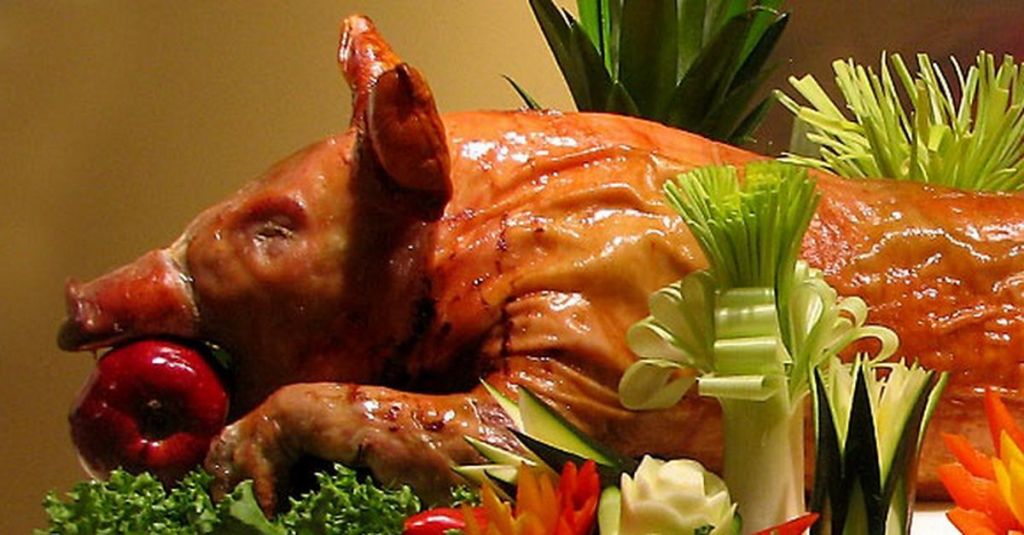
As I was waiting, however, a couple from my old congregation walked into the same restaurant. They instantly recognised me and came up to say hello. Just as we greeted each other, my pork came out from the kitchen: a giant pig on a massive platter with a big red apple in its mouth.

Flummoxed, I exclaimed: “My goodness… so this is how they serve apples here!”

OK, so that last part didn’t happen, but I really did decide to try treif about a decade ago. I’ll be honest with you, some of it tastes pretty good, but they’re not worth giving up Judaism for.

I hadn’t eaten pork since childhood. Aged 6, I had precociously insisted to my parents that I wanted to be religious and go to synagogue. My mum had told me that if I was going to force her to go to synagogue, I’d have to give up sausages. I wanted to be Jewish and I wasn’t allowed to do it half-heartedly.

I think all of us know that food laws play some role in our Judaism. Some of you here keep kosher kitchens. Some of you guiltily sneak a steak when you think you won’t get caught. Some of you, like my brother, eat extra bacon ‘to make up for all the ancestors who missed out on it.’

Whatever your choices, being a Reform Jew means to get to make those decisions for yourself. Our movement believes in informed choice.

Making the choice is your responsibility. But making sure you are informed is mine. So it’s my responsibility to share with you that there are lively debates happening in the Reform rabbinate about what kosher should mean today.

I recently attended my first Assembly of Reform Rabbis, where learned colleagues were discussing kashrut for the first time since the 1970s. It says something interesting that the topic hasn’t been addressed in such a long time.

The reason we are discussing kashrut again today is that the government is contemplating whether to ban traditional ritual slaughter – shechita. For many centuries, Jewish butchers have used the same methods for killing animals. That is: they slit their throats, puncturing the trachea, oesophagus and arteries with one rapid incision.

Throughout our history, Jews have considered this to be the cleanest and most humane method of killing animals. It comes out of a desire to show respect for the animals and to minimise risk of diseases.

Today, however, there is a new movement to favour stun slaughter. In this method, animals are electrocuted before they are killed. For cattle, this means putting a charged bolt through their heads. For chickens, it means electrifying them as a group. Proponents argue that this is more humane, since it renders animals insensitive to pain in their final moments.

There are two other factors that have made stun slaughter so popular, neither of which should be ignored. One is that industrial meat production means that factories produce far more meat. They want to be able to slaughter as efficiently as possible to maximise profit from the animals. Industrial stun slaughter certainly helps here.

Another factor is antisemitism. Across Europe, the movements to ban traditional slaughter have largely been led by white supremacists. Their primary target is Muslims, whose customs around halal slaughter are very similar to our own methods of shechita. Jews are really collateral damage in cultural wars about trying to retain Europe’s status as a Christian continent.

These factors make addressing this issue exceptionally complex. Proponents of stun slaughter ask us to set aside questions about racism and capitalism, just to focus on the issue at hand. I find that very hard to do. Rabbinic law is never about making moral decisions in the abstract. We make our ethical choices as real people living in the real world.

I think it is highly doubtful we will ever be able to prove that taking an animal’s life is better served by electrocution than through throat slitting. It may well be true that these new methods of industrial killing cause less pain, but shechita requires butchers to actually look animals in the eye before taking their lives. I’m not convinced either is more humane.

But, even if one were, we cannot escape the horrific systems that underpin animal consumption. Right now, the insatiable demand for meat is one of the leading causes of global warming. This week, we saw record-breaking temperatures. We can expect such heat waves to take place more regularly and more ferociously as runaway climate change unfolds.

The meat industry is an enormous enterprise that involves destroying natural habitats, depleting the oceans, battery-farming animals, deplorable working conditions, and unspeakable cruelty.

In every generation, Reform Jews have to work out anew what the most ethical way of living is. Today, it is hard to make the case that this includes participating in such an unjust system.

Rather than engaging in debates about specific methods of killing, I feel the appropriate response should be to question whether we should keep eating meat at all.

Indeed, this synagogue has long been an exclusively vegetarian site. This is partly because of convenience: it means we can host anyone and we can avoid messy arguments about separating meat from milk. But it also comes from the moral courage of previous leaders in this community, like Rabbi Henry, who felt that was the best way to live our values.

Please do not think me preachy. Quite on the contrary, I want to be open about my own hypocrisy. I still do eat meat on occasion, especially fish and chicken. I eat eggs and cheese. But, deep down, I know that the ethical vegans have already won the argument.

I once expressed my sadness about this to a frum vegan friend. She advised me: don’t let perfect be the enemy of the good. If you wish you could be vegan but can’t give up cheese, be vegan except for cheese! If you wish you could be vegetarian but like fish too much, be pesacatarian! We must all find ways to reduce our meat intake and limit our negative impacts on the planet.

The Reform rabbinate is still in open conversation about how we redefine kosher for our age. We did not settle the matter at the Assembly, and I don’t want to leave this sermon as if I have reached a definite conclusion. Instead, I want to bring you into the conversation. I want to hear how you think we should best live our values today.

Let us engage in open discussion. Let us talk with each other about our own practices and our own driving values. And let us fashion together a new future for what an ethical Jewish life looks like.

Shabbat shalom.

festivals · sermon · theology

A night for finding answers

Tonight is a night for asking questions. Tonight, as we open the haggadah, we will tell the children they are free to ask. We will lay out plates of display foods, including an egg, a bone, and a mushy mixture of fruit and nuts, so that people will ask questions about our exodus from Egypt. 

In “mah nishtana,” the lovely song chanted by the youngest at the table, we hear four questions about why tonight is different from every other. Why do we lean to the left when we drink? Why do we dip things in salt water? Why do we eat that tear-jerking horseradish, maror? And why have we had to substitute delicious bread for mediocre matzah?

So highly valued is questioning at this season that Judaism has been described as a religion of questions. Ask us a question and we’ll answer with another question. A decade ago at this season, the American businessman Edgar Bronfman declared “to be Jewish is to ask questions.” This festival, with all its questioning, he said, proves that Judaism permits plenty of doubt and openness to many answers.

I have a problem with this approach. The trouble is… these questions have answers! They’re not open-ended speculations to which we’ll dedicate the rest of our lives pondering. 

We lean to the left when we drink our wine to show that we are free. We dip parsley in salt water to remind us of the taste of tears that came from enslavement. We eat the bitter herbs in commemoration of the bitterness of slavery. We eat matzah to recall that our ancestors left Egypt in a hurry, because we can waste no time in pursuing freedom.

These are the answers. They tell us what the festival is all about and what Judaism really means. It’s about how freedom tastes good and oppression is painful. It’s about the moral message of a God who saw the difference and decided to redeem the Israelites. These questions have a purpose, to provoke us into contemplating justice.

This idea that Judaism is all about questioning and doubt has taken such a hold that people have hung entire theologies on it. There is a story in the Talmud that the two great founding houses of rabbinic Judaism, Hillel and Shammai, were in a conflict for three years. Eventually, a divine voice announced from the sky: “these and these are the words of the living God.”

It is a beautiful story, but it has been repeatedly cited by Jewish educators to justify a relativism that firmly believes nothing. Everything is true. All views are valid.

These teachers always conveniently omit the subsequent words from that divine voice: that the halachah is in accordance with Beit Hillel. They both may have valid viewpoints, but only one can be implemented. The Talmud asks why it was that Hillel’s house won. It answers that they were עלובין – a word often translated to mean ‘modest’ but which really means ‘wretched’ or ‘poor.’

The House of Hillel really were comprised of the poor. Their judgements consistently advocated for the slaves against the masters and the peasants against the patrician class. They strove to make Judaism more accessible to the downtrodden and more just for the oppressed. In other words, God may be able to speak through many voices, but ultimately the one that champions moral truth is still the correct one.

I do understand why people might want to advocate for doubt and questioning. It is an antidote to dogmatism. It stops people becoming fundamentalists, Imagining that they alone can speak for God. 

But there are real problems with leaving everything open to debate. Surely it is not just an open question whether or not to hurt people. The words of oil barons and indigenous climate activists are surely not equally ‘the words of the living God.’ We can’t give equal weight to every view or only question without seeking answers.

My very favourite philosopher was a British-Jewish woman called Gillian Rose. She wrote with such beauty about things that really matter. She saw the problems of only questioning and allowing every viewpoint quite clearly. She also agreed that we couldn’t just assert answers. If either everyone is correct or only one answer is correct, there is no room for discussion. 

So, Gillian Rose says, you have to pick a side. You have to decide what you think is right. You have to look at what your conscience tells you and aim for meaningful justice. You might be wrong, so you have to keep your mind open to nuance and debate. But you also have to know right from wrong. 

Pesach is indeed a time for asking questions. But it is, above all, a night for seeking answers. 

Pesach invites us to ask about freedom so that we will fight for it. Pesach invites us to ask about oppression so that we will vanquish it.

We must ask these questions because Pharaoh was not just a man who lived a long time ago and the exodus was not a one-time event. These are words of a living God because they speak to struggles that are still very live.

Tonight is a night for asking questions. Tonight is a night for seeking answers.

The great question of Pesach is: what are you doing to bring about justice today?

And now you must give your answer.

judaism · sermon

The tribes that broke apartheid

We are all members of tribes. Human beings are tribal creatures. We organise into packs and stick together. We identify into groups. 

You are probably a member of more than one tribe. You are a member of this synagogue, which binds together hundreds of families into a community. You might also have your workplace, neighbourhood group, union, political party, youth movement, charity association. 

Tribes are a core part of life. And it is this week, as we receive the Ten Commandments at Mount Sinai, that the Israelites become a tribe. When we left Egypt, we were slaves. We were a mixed multitude escaping persecution. Now, as we stand in the wilderness, we form into something stronger. But what kind of tribe do we become? 

In 2008, a group of researchers got together to study different tribal cultures. David Logan and his team looked at hundreds of workplaces and social groupings to see how they operated. While all these groups formed tribes, they found that there could be very divergent kinds. 

These researchers divided up the tribes into five kinds, based on their cultures. At the lowest level, Level One, were those tribes that functioned worst and, at the highest level, Level Five, were those that functioned best. 

Interestingly, as we look at the stages, it seems like exactly the progression the Israelites go through as they form as a tribe. They begin low on these researchers’ scale and, as the story continues, they advance to higher levels of performance. 

At Level One, tribes take the attitude that life is awful. They systematically sever relationships with other tribes and pool with people who think like they do. They are entire groups of angry misanthropes. These are the kinds of people who say “everyone is horrible, so we’ll be horrible, too. People will attack and rob us, so we’re going to get them first.” People who think life sucks will be toxic towards themselves, their own group members, and anyone they consider an outsider.

This is the Israelites at the start of the Exodus narrative. They are crying out for help under tyrannical persecution. They are a mixed multitude of all the lowest classes of Egypt, and have no concept of anything but toil. They don’t even trust Moses when he tries to start setting them free.

At Level Two, tribes say “my life is awful, but there is better stuff out there.” The world might be a good place, but I don’t have access to the goodness in it. These are the kinds of people who will bemoan how persecuted they are. They will complain that other groups have better jobs, or get taken more seriously, or produce better culture, or have more influence. These tribes don’t believe in themselves enough to make positive changes for their own tribe, let alone others.

This is the next stage for the Israelites. They decide that there is a better world out there. Their lives are horrible but, if they left Egypt, they might get a taste of something better. They get up and go, seeking to find a new life as they leave through the Sea of Reeds.

In a Level Three tribe, the mantra is “I’m great, and you’re not.” Here, people are competing for prestige, wealth, and honour. These are groups where everyone wants to compare notes about how much better their kids are doing in school, or how much better their careers are going. The tribe can do good things, but only because it creates cultures where individuals flourish.

That’s the level we reach at the start of this week. Betzalel emerges as a fantastic architect and interior designer, showing off his skills at the Tabernacle. Aaron and his family come forward to be priests. They show how well they can perform religious rituals. But, because they have no defining values, they end up worshipping a golden calf and recreating the same systems they knew in Egypt.

Stage Four is where really impressive tribes begin to emerge.  These are groups where people are united by something greater than their individual competences. They turn from small groups into something large and meaningful. They are actually conscious of being a tribe, and united by values. They extend their reach by connecting with other tribes and finding points of value alignment. 

Only now, as Moses presents the Ten Commandments, can the Israelites reach Stage Four. They are a conscious tribe, united by shared values. We, these freed slaves, have one God. We reject idols. We honour our families. We hold time sacred. We refuse to engage in murder, theft and lies. We are one people joined by a shared vision of what a just society could be. Anyone who shares that dream can join us.

But that is not the end of the journey. The highest level is rare, and most groups never get there. 

The fifth level is when a tribe is united by values that affirm life, each other, and the future. We only see glimpses of this kind of tribal behaviour in Tanach – on those incredible occasions when the prophets extend their message full of joy about who humanity is and hope of what it could be.  

The researchers who ranked the groups only offered one example of a tribe that reached such a high level. That was the Truth and Reconciliation Commission in South Africa. 

This was convened in 1996. With Nelson Mandela’s release from prison and the end of formal apartheid, nobody knew which direction the country would go in. Some anticipated civil war, or resurgent racist nationalism.

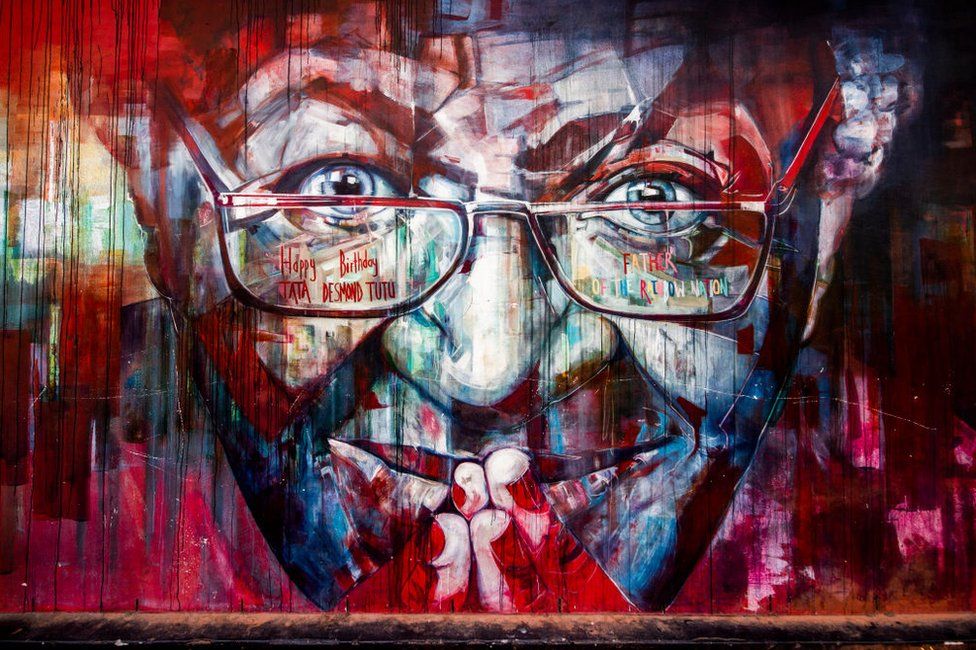
Archbishop Desmond Tutu brought together thousands of tribes from all across South Africa. He set up the Truth and Reconciliation Commission, which would aim to restorative justice between all people. Victims and perpetrators faced each other, to speak honestly about what had happened during apartheid, and how they could make amends.

He united people on a programme that they could be better than they had been. He coalesced people around a vision that they could be honest with each other and foster a future based on cooperation. 

Consider what courage and moral fortitude that must have taken. For decades, black, Indian, and Coloured South Africans had been subjected to segregation, poverty and violence. The anti-apartheid activists had faced imprisonment, state abuse, and separation from their families.

After all that, Tutu took these tribes to a level we almost never see. He created a culture where people believed in themselves, in each other, and joined by a vision of joy and hope. 

When Desmond Tutu died just over a month ago, it reminded people of what a giant he had been for religious people worldwide. His theology was one that still intimidates many. He preached true universalism, arguing that God was not a Christian, but belonged to every religion. He advocated sincere justice, never shrinking from social issues. And he believed, despite all he saw, that people were capable of fantastic things.

That was what made his assembly of tribes exceptional. Only those who see the best in people and hold the greatest of values can take people beyond what they know. If we are to defeat the racism, segregation and division that plague us today, we need to muster similar attitudes.

So, which tribe will we Jews be today? Will we sit at the bottom rung, only believing the worst about the world? Will we be like those who complain that we don’t count but others do? Will we create a culture where individuals can flourish but don’t cohere as a whole group? Will we unite around clear values and come together consciously with pride? And can we achieve that rarest of things: a level where we affirm what is wonderful in ourselves and the world, and foster unity around a joyous vision of the future?

The faith that inspired us at Sinai tells us today: we can achieve remarkable things. If we believe in ourselves, we will.

sermon · social justice

When did Moses stop being Egyptian?

When did Moses stop being an Egyptian?

When Moses was born, he was decidedly Hebrew. This fact was dangerous. The Hebrews were living under oppressive rule, enslaved and oppressed by hard labour. Fearing the Hebrews’ strength in numbers, the Pharaoh had decreed that all first-born Hebrew boys were to be drowned in the Nile. Staying Hebrew would have meant certain death for Moses.

So, he was raised Egyptian. His mother put him in a basket and sent him down the river, where he was picked up by the Pharaoh’s daughter and raised in the central palace. He was given an Egyptian name and raised as if he was a member of the Egyptian aristocracy. 

But, at some point, Moses ceased being an Egyptian. One day, he saw a slavemaster beating a Hebrew. Seeing the Hebrew as his brother, and the Egyptian as his enemy, Moses struck back and beat the slaver. He killed the Egyptian. Moses fled into exile in the Midianite desert. He knew he was no longer Egyptian. 

There are varying accounts of how Moses ceased being Egyptian. In the classic Dreamworks film, Prince of Egypt, Miriam and Aaron bump into him in the street, reveal to Moses his history, and persuade him to join the slaves’ revolt. The film is so ubiquitous that many imagine this is the Torah’s version of events.

This version makes for fantastic cinema, but doesn’t quite fit with the narrative presented in Exodus. In our story, Moses’s mother, Yocheved, and his sister, Miriam, put themselves forward to care for Moses in the Pharaoh’s palace. Surely his own family, having stayed with him since birth, who look more like him than Pharaoh’s daughter, would have raised him to know his history, even if only secretly. 

As Rabbi Dr Jonathan Magonet astutely notes, the text suggests that Moses held onto both identities. In the same verse where Moses rises up against the slavemaster, he calls both the Egyptians and the Israelites his “brothers.” He goes out to join his brothers the Egyptians in surveying the building works, then beats the slaver in solidarity with his brothers the Hebrews.

Moses could have quite easily continued living as an Egyptian while knowing he was a Hebrew. Many people throughout history have held multiple nationalities without contradiction. The useful question is not when Moses became Hebrew, but when he stopped being an Egyptian. 

Perhaps, as some of our commentators have suggested, the key lies a few verses before. There, it says that Moses grew up. Rabbis of the past have wondered what this growing up could mean. Surely it can’t refer to weaning or early childhood, because he has the strength to hit back against a fully grown adult wielding a whip. It must refer to a deeper maturity: Moses reaches the age where he can question the lies of Egyptian society. He reaches the emotional maturity to put his heart with the oppressed and rebel against injustice.

Moses was always a Hebrew, but he stopped being an Egyptian once he refused to identify with their system. As soon as Moses was willing to rebel against Egypt, he not only lost his identification with his enemy, but he lost the protection of being part of the elite family. He had to flee into exile. The only circumstance in which he could return was to lead the mass exodus of his people, the Hebrews.

It may seem surprising that Egypt and brutal slavery were so entwined that Moses could not remain Egyptian while opposing the evils of its system. How can it be that this country was so repressive that the slightest opposition made him stateless? How can it be that even a member of the elite, raised in the palace of the most powerful man in the land, could be rendered an exile just by standing up against the cruelest possible thing one human can do to another?

Of course, today we live in more enlightened times. We now live in a society where citizenship is awarded as a birthright, not as a reward for good behaviour. We have systems of international law that guard against making people stateless. Our government in Britain would never behave as Pharaoh’s did. 

Or would they? Two weeks ago, the government passed a law through the House of Commons called ‘The Nationalities and Borders Bill.’ According to this new law, anyone who is entitled to claim another nationality can be stripped of British citizenship without warning. 

This builds on the hostile environment initiated by Theresa May, which makes it harder for immigrants to reach Britain and easier to deport them. Similar policies have already been used to send away Carribeans who have lived in Britain their whole lives and to make refugees in this country stateless.

This new law expands these powers. And it affects us. 

How many members of the Jewish community have held onto second passports in case antisemitism becomes destructive again? How many Jews do you know who are also dual nationals with Israel, South Africa, Canada, or a European country from which they were once exiled? 

My dad and brother claimed German citizenship as part of post-Holocaust reparations. Now, this very fact makes them vulnerable to have their British citizenship revoked at a moment’s notice, without them even being informed. 

Indeed, every one of us could be subjected to similar treatment. A study for the New Statesman indicates that 6 million Britons – a tenth of us – could now be deported by Priti Patel. 

This law may not have been intended for us, but it could easily be applied against us. There is plenty of historical precedent. When governments want to issue repressive measures, they begin by attacking foreigners. Anne Frank was a German until the Nazis decided she was a Jew. Moses was Egyptian until the slavers decided he was a Hebrew.

Our community should be deeply concerned by these draconian measures. Whether out of solidarity with those who have already been deported from this country, or for fear that we, too, could fall victim to these new powers, we must be willing to speak up against it.

But there is reason to be hopeful. Earlier this year, when a Home Office van came to remove two asylum seekers from their home in Glasgow, their neighbours fought back. Two hundred local people surrounded the van and refused to move until their friends were freed. The immigration authorities were forced to capitulate and let the refugees free.

Our parashah teaches that the Hebrews could not be contained by the Pharaoh’s repressive measures. “The more they oppressed them, the more they rebelled.” Like our ancestors, we must be willing to do the same. 

The more this government treats foreigners as enemies, we must be willing to accept them as friends. The more this government declares that people do not belong here, we must be willing to assert that they do. The more they say that people are illegal, we must be willing to loudly assert: nobody is.

No one is illegal. Everyone who is here belongs here. You cannot deport our neighbours and friends. You cannot take away our passports.

Shabbat shalom.

South West Essex and Settlement Reform Synagogue; Parashat Shmot; Saturday 25th December 2021

interfaith · sermon

Where Abraham came from

Once there was, and once there wasn’t. In the long-distant days of yore, when haystacks winnowed sieves, when genies played jereed in the old bathhouse, fleas were barbers, camels were town criers, I softly rocked my baby grandmother to sleep in her creaking cradle…

So begin Turkish folk stories. And this is a folk story, although whether it is Turkish, you will have to decide.

This is the story of our common ancestor, Abraham. For as long as there have been followers of his mission, there have been people telling his story. Across trade routes and migratory passages, Jews, Muslims, Christians, Samaritans and Druze exchanged legends of the man who made monotheism. 

These stories could be more valuable than coinage because they allowed people to connect across boundaries of language, ethnicity and religion. He could be called Avraham, Ibrahim, and everyone would know who you were talking about. There weren’t right or wrong versions of the story – only different iterations of the same truth.

That story, as we know it, begins today. It starts when a man named Avram sat in his ancestral home in Ur. He heard a God he did not know call to him and say: “Lech lecha! Go! Get out.”

“Go forth from your native land and from your father’s house to the land that I will show you. I will make of you a great nation, and I will bless you. I will make your name great, and you shall be a blessing. I will bless those who bless you and curse those that curse you; and all the families of the earth shall bless themselves by you.”

Avram pilgrimages from there to many places: through Canaan, Jordan, and Egypt. He meets many people: friends, enemies, family, and angels. To mark his changed status, Avram receives a new name: Avraham. The father of many nations. God promised him that he would have as many descendants as there are stars in the sky. He would have as many children as there are grains of sand on the shore.

And, indeed, just as God had promised, Avraham’s spiritual descendants now comprise over a third of the globe. Those who affirm monotheism and lay a claim to this spiritual tradition started in his name call themselves “Abrahamic faiths.” Their stories and beliefs, although disparate, fall under the banner of a single prophet who taught of a single God, revealed through history, known by good deeds.

Because of his great international fame, many places claim to be his hometown. There are various cities in Iraq, Syria and Lebanon named “Ur,” or with variant names, that say they are Abraham’s father’s house, from which he went out on his mission. 

One such city is named Urfa. It is located in the modern-day state of Turkey, in a southeastern corner inhabited largely by Kurds, and bordering Syria. It has been Akkadian, Armenian, Byzantine, Arab and Ottoman. About seven years ago, I was lucky enough to visit the place.

It is stunning. The entire city is built around a cave where, the locals say, Abraham was born. According to their legends, Abraham was birthed there in secret to avoid the wrath of the wicked king Nimrod. 

Around the cave, there is an incredible mosque complex. Beautiful off-white stones form curving arches, high ceilings, and expansive courtyards.

There are carved streams with carp in them. A local told me that these had been there since the time of Abraham. The Pagans had attempted to burn our prophet alive, but God intervened. As they set alight a bonfire with Abraham at the centre, the flames became water and the logs became fish. Today, if you eat any of the fish in the surrounding streams, you will instantly go blind.

I was certainly not going to test this superstition.

I went during the month of Ramadan, as pilgrims wandered around the site. It remains one of the most blissfully spiritual places I have ever been. I went through the mosque and into the cave. 

Around me, some men were doing the raqqas of Muslim prayer. I prayed as a Jew, mumbling Hebrew verses as I faced the spot where our patriarch was allegedly born.

Nobody batted an eyelid. We were all praying to the same God at the site of a shared prophet. I felt on some level that Abraham himself would have approved. This was the movement he had spawned. Uniting people in love of their One Creator. 

That unity, however, is threatened. Overhanging my time in Turkey was the heavy weight of nationalism. Over the last century, Turkish authorities have attempted to homogenise the country – transferring their Christian population to Greece; imposing taxes specifically on Jews to push them to move to Israel.

The country today has a virulently ethno-nationalist government that only briefly allowed the Kurdish minority some relative freedom to speak their language and live their culture. When Erdoğan launched counter attacks against ISIS, part of his goal was to crush Kurdish rebellion and extend Turkish military control.

Turkey is not unique. Nationalism has defined the politics of Europe and the Middle East for over a century. Entire groups seem increasingly set on defining themselves by ever narrower criteria, and enforcing the boundaries of who belongs with greater violence. 

This nationalist tendency permeates religious thought too. There are those who want to claim Abraham only as their own. There are those who try to say that they, and only they, have access to the true religion. There are people who want to pretend they are exceptional, and that with their difference comes claims to land, wealth and military might.

What could be more antithetical to the message of Abraham! This prophet sought to unify. His mission was one of going beyond borders, defying the lies of national gods and bringing people together under the truth of something beautiful and transcendent. 

There are many stories about Abraham. These stories can place him all over the world and ascribe to him all kinds of miracles. These stories can be used to bridge divisions and form common purpose. And they can be used to foster conflict and hatred.

We must be careful with which stories we tell.

Shabbat shalom. 

high holy days · sermon

God has decided to let you off this year

At Yom Kippur, we stand trial. The Heavenly Court convenes and charges the Jewish people with its sins. 

The Accuser lays out the prosecution. They have sinned. They have betrayed. They have been two-faced. The people have been angry, cruel, violent, hypocritical, dishonest and corrupt. All the evidence is laid out before the Holy One, who presides over the case as its Judge. 

The evidence is pretty compelling. We have been everything that the Accuser says we have, and more. We cannot pretend to have been perfect. In fact, we have fallen pretty far short of decent. 

The Angel of Mercy steps forward to plead in our defence. True, the Jews have been callous and unkind, but they have also been charitable, supportive, participated in mutual aid groups, called up vulnerable people, tried to make peace with their friends and neighbours. They have done their best.

The Accuser laughs out scornfully. “I challenge you,” says the avenging angel, “to weigh up this people’s good deeds against its pad. Set their mitzvot on the scales of justice and see how they manage against all their malice. Let’s see whether their good even comes close to counter-balancing their bad.”

The Angel of Mercy is nervous. Of course, they won’t win. The good deeds aren’t nearly numerous enough. Every one has been kept and held tight over the year. This is a sure way for the Jews to lose.

Perhaps the compassionate Angel can plead extenuating circumstances. After all, we’ve been through a pandemic. There has been so much uncertainty. The Jews have had to work from home with screaming children. They have been cut off from all their usual support systems. They have dealt with unimaginable stress. 

Surely, God understands that they can’t be expected to have been on their best behaviour. Not this year. This has been the hardest year yet. And, yes, to be fair, the Angel of Mercy did make the same excuse last year, but this year really was even worse. It really was.

God interjects; raises a single finger. “Enough evidence,” God says. “This year, I have decided just to let it slide.”

Now, both prosecution and defence look confused. They glance at each other, the assembled Heavenly Court room, and we defendants here gathered in our witness box. Perhaps the Holy One has made a mistake?

“It is true,” says God “that this people Israel has done much evil, and it is true that they have done some good. Their good does not amount to much and their evil is pretty damning. Yes, there are extenuating circumstances, but they are not very convincing. I did, after all, give this Torah to all times and places, including to Covid-stricken Britain. So there is no good reason to forgive the Jews. But, having weighed up all the evidence, I’ve decided I’m just going to forgive anyway. I’m just going to pardon them. Court adjourned.”

And that’s it. That’s the end of Yom Kippur on high for another year. 

It was over quickly. But it went exactly as it did last year. And the year before that. And every year going back to when humanity was first created. 

This is the story told by Pesikta Rabbati, a great collection of stories and sermons from Jews in the 9th Century CE. According to this midrash, when Yom Kippur comes around, the Accusing Angel charges the Jews with all its sins before God.

This Angel heaps all of our sins on top of the scales of justice. They weigh down heavily, and it’s clear that the sins outnumber the good deeds.

God then gives greater value to the good deeds so that they can override the evil, but the Accuser has many more sins to submit in evidence.

So, says our midrash, God hides our sins. God wears a long purple cloak and shoves all the sins under it. God sneaks the sins off the scales, and determines to find us innocent anyway.

Our sins are removed and hidden away.

“Yom Kippur” is often translated as “The Day of Atonement,” but the literal meaning of “kippur” is “cover,” “curtail,” “tuck away.” This is the day when our sins are submerged under the great cover of God’s forgiveness. 

They don’t disappear, but God is able to hide them away and forget them. For the sake of love of humanity, God just lets us off.

Lo ‘al tzidkateinu – not because of our righteousness do we pray for God’s forgiveness, but because of God’s unending love. Only on account of God’s infinite compassion do we get to carry on. God’s forgiveness is infinite and instant. 

But if we already knew God would forgive us, why do we bother? Why turn up here for Kol Nidrei, and afflict ourselves, and spend 25 hours in prayer? What’s all this for? 

Well, it might take God only a short while to forgive, but for us it takes a bit more work. We have to go through some effort to get to a fraction of that clemency. So, we take our time to look within, examine our imperfections, and release the guilt we have been feeling. Now is the time for us to forgive.

This year may seem like it requires more forgiveness than usual. This is an unprecedented time for conflict between friends and family, personal struggles, grief, job losses and frustration. It is hardly surprising that people feel so much resentment. 

I speak to people angry about how much they have lost. Time. Money. Strength. Health. Joy. Socialising. All these things that we have been robbed of. We have struggled in ways never experienced before.

Understandably, people want to place the blame elsewhere. They project their anger onto others who they imagine haven’t followed the rules enough, or who have taken it all too seriously, or who don’t think the same way as they do. 

All that anger does is sit inside of the people who hold onto it. It won’t help get back what has been lost. The weight of holding onto slights without forgiving just pulls us down. It just holds us back from growth. The only way to move forward is to let go.

That is why we have forgiveness. We acknowledge our hurt. We take stock of the injuries. And then, although it may be painful, we let go. We accept the way things are and make peace with what can’t be undone.

So, I urge you to forgive.

You might not get closure. You might not get apologies. You might not get reconciliation. Try to forgive anyway. 

The people who have hurt you probably did much wrong. And they probably didn’t do enough to make up for it. And all the dire circumstances will not feel like enough to excuse their behaviour. If you can, excuse it anyway.

The people who you forgive might not be big enough to forgive you back. Still, consider forgiveness.

In the build up to Yom Kippur, we were supposed to apologise to everyone we wronged. You did apologise, didn’t you? Me neither. Not enough. Not completely. Not to everyone. Not for everything. 

And I know my own reasons. I have been so tired and preoccupied and overworked and anxious. I have been too busy getting by to be trusting or vulnerable. The right time to apologise just never came up. 

But I still want to be forgiven. And I know God has already found a way to be merciful towards me. So I will have to reciprocate. 

At Yom Kippur, we stand trial, and God finds us not guilty. Not because we deserve it, but because God has decided to put trust in us. Our task over Yom Kippur is to validate that trust. 

So, we will try to forgive. It is not easy. It may well feel incomplete, and some things may be beyond pardon. Nevertheless, let us try to leave some of the pain of the previous year behind. 

Let us endeavour to accept people, including ourselves, flawed as we are, and move on.

Gmar chatimah tovah.

This is my Kol Nidrei sermon for South West Essex and Settlement Reform Synagogue

judaism · liturgy · sermon

Pray for the right kind of rain

Every day, we pray for the right kind of rain. 

The Amidah praises God’s holiness and dominion over the natural world. 

We change how we address God in rhythm with the seasons. In the summer, we thank God for making dew descend. in the winter, for bringing on heavy rains. 

For us living in cities, we can feel quite disconnected from how important this water cycle is. I only catch snippets of how it causes concern. A radio broadcast says British farmers are worried that there hasn’t been enough frost in January. In a supermarket, a cashier tells me there is a shortage of aubergines because there wasn’t enough rain in Portugal this year. 

The cycle of the right rains affects whether we have enough to eat. It can mean the difference between living safely and losing everything. There is a reason the greatest catastrophe our ancestors could imagine was a flood.

This week, we gained a sense of how important and delicate the rain cycle is. 

At the start of the week, I was heading back from a holiday in the Lake District. It was searing hot. The hottest summer we’ve ever had, people kept saying. As I climbed mountains, normally soft moss felt like dry straw under my hands. The shops had stopped selling barbecues and matches. 

Everyone said that the slightest spark could set the whole forest on fire. We would wind up like California or the Amazon, with acres burnt to a crisp. Thankfully, it didn’t happen, but I left with an awareness of the forests’ fragility and a deep concern that England was not ready for climate catastrophe. 

Only days later, I came back to intense flooding. The rains fell intensely, relentlessly. I thanked God that I was safe inside as the skies turned black and stayed that way for what seemed like days. The area around our synagogue was drenched. Charlie Brown’s roundabout flooded again. Some in this community saw damage to their property. Members of our synagogue were displaced: moved initially to the higher floor of the care home, then relocated. 

I was taken aback by how well our care team took to handling the crisis. Claire, Sue, Debz and others made sure everyone who might be affected received calls, and that anyone who needed help got it. They showed the very best of what this synagogue is for. 

But I was most impressed by the bnei mitzvah students I met this week. Jacob and Layla, twins, are preparing to come of age around Pesach, at the time when we stop praying for heavy winter rains and start celebrating the gentle dew. I asked them what they want to be when they grow up. Jacob wants to be a primary school teacher. Layla says she wants to be an environmental activist.

I have to be honest. When I was Layla’s age, I had no idea campaigning could be a job. It is a testament to her curiosity and sense of justice that she has found this out.

But it is also a wake-up call of how dire things are with our environment that Layla has to think of this job. The problems we saw this week had many causes. We have a rapidly changing climate. Companies have over-consumed fossil fuels and spoiled the ecosystem. Developers have built on flood plains. Much of the development after the Olympics destroyed natural wetlands, worsening the situation. But all of these factors share a common problem: we have taken nature for granted.

In this week’s parashah, we read: 

If you listen, if you truly pay attention, the Eternal One your God will grant the right rains at the right times: autumn rain for autumn and spring rain for spring. You will be able to eat and so will your cattle. 

But you must guard yourself against a straying heart. If you serve other gods and bow down to them, God’s anger will blaze out against you. God will shut up the sky. There will be no rain.

This text might feel familiar. It is the second paragraph of the Shema, found on page 214 in your siddur for the Shabbat morning service. You may have read it before, but it’s unlikely you’ll have heard it read aloud in any service. 

It is the custom of this synagogue, and of all Reform synagogues, to read these verses in silence. So, why do we whisper it? 

One reason is that we are very uncomfortable with what is implied theologically here. It suggests that good things happen to good people and bad things to bad people. We know this isn’t true. The righteous suffer and the wicked prosper. Our rabbis knew long ago that there is no individual reward for good deeds in this life. So we won’t say it out loud when we have doubts about it.

But what if it is true? The warnings in these verses are not about how God might deal with individuals, but the impact of actions on entire groups of people. If you don’t pay attention to the ethics of Torah, you all can be destroyed. If you worship gods other than the Source of all creation, you will find yourself helpless before the forces of nature. Cause and effect. Action and consequence. 

In the biblical world, worshipping other gods meant turning to material things. Whereas the idol-worshippers bowed down to wood and stone, what marked out the ancient Israelites was that they only prayed to the transcendental God, who held all of nature in balance.

And that is what is happening in our world today. We are disregarding our ethical obligations to care for the planet, and we are seeing what happens. People have substituted the Eternal God for the material elilim of oil and gas. We have traded humility before nature for the arrogant belief that we can control and manipulate our environment without consequences. 

Now we are living the impact. We are dealing with the wrong rains. We are witnessing floods here, in China, in Germany, in New York, and in India. 

The Torah warns us: “Do not believe you have made all this with your own hands!”

We may have built cities and roads and bombs and planes, but we didn’t make the grass grow. We haven’t made the sun shine. It’s not us that makes the rains fall. 

All that is in the hands of a supreme Creator, who has charged us with protecting and sustaining this planet. We must hear, and truly pay attention, to that God, whose Word calls to us today. We must take up the challenge of replacing fossil fuels with renewable energy; of rebuilding our world in harmony with nature, rather than against it; of tackling carbon emissions and climate disaster. We must enable Layla to inherit a living planet so that she actually has something to protect.

We must act now. 

Shabbat shalom.

This sermon is for South West Essex and Settlement Reform Synagogue, 31 July, Parashat Eikev

sermon · social justice · theology

What do we stand for?

Five years ago, I interviewed to start rabbinic training. Over four days, I went into different rooms, where rabbis, academics and lay leaders quizzed me about why I wanted to be a rabbi. 

It was intense. In one interview, one of the rabbis asked me: “what do you think you most want to learn while you are here?”

I said: “I’d like to learn what we stand for.” 

My interviewers scrunched up their faces. I imagined them thinking, “are you sure you’re in the right place?”

How could I not know what we believe? We are Progressive Jews; we stand for Progressive Judaism. Perplexed, she pushed me: “can you think of any principles of Progressive Judaism?” 

I thought, and said: “informed choice.” We do what we like, in conversation with Jewish tradition.

The rabbi sat back and took notes. I wasn’t sure whether I had given a correct answer, and she was confused how I could say I didn’t know what we stood for if I had that grounding, or if I’d missed something more important.

What I was trying to ask was: surely we don’t just choose whatever we like? A Progressive Jew can’t make the informed choice to commit murder. We don’t look at that central commandment and think: ‘ah, but it was for its time.’ We have a shared assumption that the prohibition on killing applies to every time. So how do we make these informed choices? What decides for us which choices are right and wrong?

Permissiveness is not really a value. It’s something you do out of indifference. There must be something stronger than that motivating our congregants to get out of bed and labour for the welfare of their community. 

Apparently, I am not alone. Throughout my time as a student, going to congregations across the country, people have asked me that very same question in different ways. 

What are the values of Reform Judaism? What does living by Progressive Jewish values actually mean?

After 4 years of study, well… I still don’t have the answer. But I feel much closer to it than I did when I started. And the answer begins with this week’s parashah.

At the end of Masei, we hear the story of the daughters of Tzelafchad. They come forward before Moses and assert their rights to inheritance. Their father, they say, was a good man who had no sons. As it stands, his property will be passed on to nobody, and these women will be left destitute. They argue that they should be the ones to inherit his estate. Moses talks to God. God agrees.

This is a big deal in Torah terms. It shows that a law can change. Decisions are not fixed in stone but can adapt with the times. It fits exactly with the Progressive mindset. We look at the laws again, and work out if they are still relevant. Moses looked at inheritance law, saw that it wasn’t working, and decided it was time to set a new precedent.

This is at the heart of Progressive Judaism. We progress. We treat the Torah and our traditions as our basis, but we are always willing to review it, and find new ways that better suit our reality.

The case of the daughters of Tzelafchad is a great example. It fits with our intuitions about what is right and wrong. Of course these women should inherit.

But does that mean every time a law changes, it’s an improvement? In the course of the Torah, laws also change to take rights away from people. Laws can change that make people’s lives worse. 

The reason why we consider this legal change so praiseworthy is because it makes life better for people. In particular, because it makes life better for women. 

It fits with the feminist lesson we have learnt from history. Through the last century of the women’s liberation movement, our religion learned the importance of giving everyone their full rights and abilities to participate in Jewish life.

We have our own hashkafah: our own way of looking at the world. We see progress in terms of what gives people the most equality, dignity, and justice. 

Other strands of Judaism may give priority to tradition, nationalism, or conservatism. We say that what matters is equity. 

We did not decide to pursue this egalitarian cause because we thought it would make things easier. Quite on the contrary: it made things harder for many people. At the start of our movement, people were disowned by their families and ridiculed by the religious establishment because of their conviction that equality mattered. They took the more difficult course because it was the right one.

Since the early days of Reform Judaism, we have prioritised gender equality. This week, I met with one of the founder members of SWESRS, who said that in their very first days, the community discussed what they wanted from a synagogue. Even in the 1950s, they insisted that equality between men and women would be of the utmost importance.  

This synagogue has gone on to create a legendary legacy. The UK’s first woman rabbi, Jackie Tabick, was raised here. This is a place with a proud history of putting forward that great principle of Reform Judaism: that equality matters.

That is how we approach the question of whether and when to change a law. We are not beholden to tradition, forced to do everything today and tomorrow, just because we did it that way yesterday. Nor will we go along with every change, just because it feels fashionable or convenient. 

At every stage, the question we ask ourselves is: is this right? Is this just?

We seek to make changes that will make people more equal, more empowered, and more dignified. 

So, now, if I am asked what we stand for, I have a much clearer answer.

We stand for equality.

We stand for the emancipation of all of humanity.

We stand up for the oppressed and stand beside the marginalised.

We stand in the footsteps of Moses, who changed laws because he could see that justice mattered.

We stand before God, proud to inherit a tradition; and courageous enough to change that tradition for the better. 

That is where we stand.

Shabbat shalom. 

This sermon is for South West Essex and Settlement Reform Synagogue, Parashat Matot-Masei, 10th July 2021

article · spirituality

A Letter to God

Hi Judy,

I hope you don’t mind me calling you Judy. I know Lionel Blue used to call you Fred. I remember reading about it in one of those compilations of Thought for the Day segments he put out. He said we should talk to you like an old friend, with the same degree of familiarity. He called you Fred and addressed you like you were his conscience; a kind voice coaxing him to do better. I picture something approximate to Jiminy Cricket.

So I’ll address you as a friend and call you Judy. I want to call you Judy because I don’t know anyone who goes by that name, so I can invent an image from scratch without knowingly projecting my ideas of others onto you. I want to talk to you as a woman, maybe because I’m just sick of having religion dictated to me by older men. I imagine you queer, because Judy only you truly know how much I need my God to be non-conforming. 

So I’ll picture you, if I may. Pixie dyke haircut and hooped earrings. Comfortable trainers. A flowing blouse. Sitting on one of the chairs in my back garden, any back garden I’ve ever had. And you smoke a rolled-up cigarette, or maybe it’s a joint, and you don’t offer it to me because you know I quit smoking a long time back. But you are immortal and immutable, so you don’t need to worry about what impact all that tar will have on your health. 

Judy, I hope you don’t mind that I say “you” and not “You.” If I were writing high liturgy or biblical translations, I think I would have to capitalise you. But I’m following a theology that Rabbi Blue picked up from Martin Buber, who adopted it from German Protestants. I’m supposed to speak to you unguarded and as my full self, without illusions of grandeur, neither yours nor my own. 

I have to ask forgiveness just for talking to you this way, because I know it is heretical. Even imagining you is an affront to who you really are. Maimonides long ago instructed us that you had no physical form nor anything resembling one. Like the Rambam, I admire the austere iconoclasm of philosophical Islam. It pushes us to realise that you are incomparable to a human being. You are more akin to a force, like gravity or entropy. You are like the moral vibrations of the universe. We only can say what you are by saying what you are not.

But I can’t talk to a vibration or an equation. I can’t make friends with an abstraction. The truth is, Judy, I need you, and I need you to be a relatable human being, because I depend on your guidance for change. I need to picture someone who believes in me and my capacity for goodness, especially on days when I feel like I have nothing to give. I try hard to be someone better than I am, I honestly do, and imagining a slightly stoned lesbian can help with that.

I’m writing this because I want to connect to you, truly and faithfully. I want to reflect on what you mean to me. I want to try and develop morally and spiritually. So I talk to you like you’re here.

I don’t need you to say anything back. I don’t have any illusions about what role you play in the universe. I just need to feel that somehow you are there; listening to me; encouraging me. I just imagine a warm smile and a gentle hand on my shoulder. Jonah’s God. Shechinah. Someone intimate and loving.

If I have to accept that you are beyond comprehension, I wouldn’t be able to talk to you. I would feel like I’m shouting into a silent void. Elijah’s God. The God who isn’t there.

And there are few things I find more frightening than silence. Part of what prompted this letter was a series of exercises where I had to keep quiet for long periods because it was supposed to be spiritually enriching. I get that it is supposed to be enlightening. That’s the popular image of Orientalist postcards showing gurus meditating on the Ganges and fully-robed Buddhist monks sat for hours in silence. It is a significant part of the imagination of Westerners who can’t connect with their own traditions.

That’s not fair. That’s not (the only reason) why it makes me so uncomfortable. It’s also part of English religious history. There is so much I admire about the Quakers. I normally find myself chiming with their politics; impressed by the way they turn anti-militarist protest into acts of religious service. I admire that. I have felt deeply connected to you when in their presence. In your queerness and hunger for justice, I imagine that you blockade arms fairs too.

But I don’t feel your presence when in their silences. I feel anguished and frustrated when I’m forced to contend with silence. I once walked into a retreat happening in the home where I lived. The people weren’t talking or engaging with each other. It reminded me of hospices and retirement homes I had visited where the patients were so drugged up or afflicted by dementia that they had no idea what was going on. I left instantly. 

Later, I returned to sleep. While the more enlightened sat in the living room experiencing their quiet contemplations, I washed the dishes with a friend. She talked about her own discomfort, that these practices were stripped from their original contexts of social justice movements and anti-colonial practices, then re-packaged into the medicalised language of “wellness” or the neoliberal politics of “self-improvement.” I had not considered that such a practice could be radical, because I understood silence to be entirely isolating and alienating.

That comes from my own experiences. So much of being gay has, for me, been about deciding what to share and when. In nearly new spaces I wonder whether I can be camp, or if it will put people off. I wonder if I can tell the stories of who I am and who I love and the small queer family I am building, or whether it will invoke new anger from people. In most circumstances, I have to kill part of myself in order to fit in. Coming out isn’t a one-time event, and nor is being in the closet. It is a constant process of ascertaining whether somewhere is safe, and how much. That is why being coerced into silence affects me so much. It’s why I need to be able to talk to a God like you, Judy; someone who is an outsider too.

When I construct my own gay deity, I don’t feel like my queerness is the problem. I feel like it’s part of the solution. Growing up in a world made by other people to suit their own hierarchies has made me empathetic to the struggles of others. I don’t claim to understand what it is like for black men in Chicago or Palestinian children in Sheikh Jarrah or women working in Bangladeshi sweatshops. But I care about it because I know how I have felt when faced with injustice. And that burning rage against oppression feels holy. 

It doesn’t just feel like endless anger when I’m with you, Judy. It feels like it means something so much bigger. It is not just politically expedient solidarity or, worse, bleeding heart liberalism. The combined grief and anger of all persecuted people feels like it is deeply spiritually meaningful. It is the foundation for divine justice. It is proof that all of humanity is connected by something bigger than ourselves: a sense of righteousness in resisting iniquity. I think that is what the Latin American liberation theologians are getting at. I feel like they have sat in the back garden with you too.

Judy, it matters greatly that you are there at those barricades and back gardens. Without you, as a real and personal presence, all my fears about the world and desires to change it are misplaced. There is no right and wrong. Oppression is just something that happens. We are alone on a burning planet in an empty universe. There is nothing we can do to change that and, even if we did, it wouldn’t matter. I have to believe you are real. And that you are really real, not just as a story that I have chosen to believe, like existentialists who are nihilists with self-deception. I have to believe that moral statements mean something and a greater tomorrow can come.  I have to believe you are real or life will not be worth living. 

There are so many who want to treat you like you don’t exist. Some of them claim the Holocaust as a reason to deny you. God abandoned them at Auschwitz, so they will abandon God in turn. Or: if God were real, God would have intervened. I was asked this last year by Shoah survivors at a Tu Bishvat seder. I just listened. I told them they did not have to believe anything. Because my instinctive reaction is to say: what did you think would happen? Did you imagine God would strike Hitler down with a thunderbolt from the sky? Did you think God should just swallow up the camps into pits before they piled the Jews into the gas chambers? How would that work? But, faced with living survivors, I had nothing to say. Albert Friedlander taught that any theology had to be able to be repeated in front of a million murdered Jewish children. Faced with them, I had no answer.

I think that’s why I have to imagine you silent, just listening, and refusing to intervene. If I thought you could respond or intervene, I would be so angry at you. So I imagine you calmly reflecting, nudging me on, reminding me with your eyes that you did not kill all those people, Nazis did. You remind me with your smile that human beings are responsible for our own actions. Above all – that I am responsible for mine.

Because of that, I do look upon some atheism with cynicism. There are people whom it suits very well to deny that there is a God or that morality has any meaning. The world created by Thatcher and Reagan is one where everyone is an individual atom, compressed to its smallest form, seeking nothing but the maximisation of its own wealth and happiness. If there were some great force holding us all together, their entire project would be at an end. If there were such a thing as love or justice or retribution, they would have nowhere to turn. So they pretend not to know you. When they sit down and feel your presence beside them, they shut off the part of them that knows what it means. They are no different to those who thank you for their success, as if you would ever hand out rewards like cookies to children. 

I think I heard you once. I was in intense pain and struggling with life, around seven years ago. I was standing on top of a roof, smoking a cigarette. (I wasn’t looking to kill myself instantly, just slowly with tobacco.) I looked up at these overpowering grey clouds and I asked what I should do. And I heard this voice saying “forgive yourself.” It said “forgive yourself” over and over again, quietly at first, and then louder and louder. At that time, I felt like I had always been hearing those words; I’d only just paid attention to them for the first time. I felt like you were there with me, and that was your message for me. And once I’d heard it, truly heard on it, I no longer heard it, because I no longer needed it. Suddenly, I felt ten stone lighter and like I had a message for the whole world. 

Judy, you might be imaginary. I might have had a moment of insanity. We might be alone in a meaningless universe. There are so many scientific explanations, and I’m sure there could be so much wonder in the world even without faith. Maybe justice doesn’t matter as much as I think it does. Maybe. Maybe all kinds of things. But I’ve chosen a story that makes sense so I can live a life that feels right.

I have to believe. So I talk to you and write to you and call you Judy. I only ask one thing of you, Judy. Please don’t answer. Please don’t tell me what you think or what I need to do. The only thing worse than silence would be to hear your voice. I couldn’t bear your judgement, or your love. Either would be too much. Let me remain in doubt, that’s all  I ask. 

You take the last drags on your roll-up. You stub out the fag end on the ground. You put a hand on my shoulder and use my body to lift yourself upright. And you leave me again, for a while.

Thanks for listening, Judy.

Thanks for being here.

I love you.