high holy days · judaism · sermon

It is time to tell a different story about ourselves

It is time to tell a different story about ourselves.

We are writing a story about our lives right now.

On Rosh Hashanah, our story is written. On Yom Kippur, the story is sealed.

What, then, are we doing today? 

This morning, we are editing. We are looking over our story and choosing what to keep and what to discard. What to highlight and what to relegate to the footnotes.

Of course, we cannot change the events of our past, but we can decide what they mean. In writing our story today, we choose what role we played in the narrative of our own lives. 

When you tell this story, are you a victim, or a villain? A saviour or a sinner? 

Look at your mistakes. The way you tell your story will help you decide whether they were a defining part of your personality, or whether they were opportunities you took to learn and grow. 

Look at your suffering. Others have hurt you. You need to tell your own story of what that pain means. You need to decide if your suffering is the sum of your life, or if it is something you overcome. 

You are writing the story of your life right now. Be careful how you tell it.

In our Mishnah, Rabbi Yehudah HaNasi teaches: “Apply your mind to three things and you will not come into the clutches of sin: Know that there is above you: an eye that sees, an ear that hears, and all your deeds are written in a book.”

But here is what the Mishnah does not tell us:

The eye that sees can see more perspectives than we can.

The ear that listens knows all hearts in ways we do not.

And, most importantly, the book is constantly being edited and re-written.

We are always re-writing the Book of Life with our God, and that means we have the power to shape our story.

We cannot imagine that God’s eyes and ears are anything like ours, or that God writes a book the way we would. The story that an Infinite Being has to tell about you must be incomprehensible from your perspective. 

When we tell ourselves our story, we are biased, seeing only our perspective. Our narrative is partial, not knowing what others really feel.  Our account is unreliable, because we tell it to fit the character we have already made of ourselves. 

God, on the other hand, sees not just what we did, but what we hoped to do. God says to the prophet Samuel: “I do not see as human beings see; human beings see only what is visible, but I see into the heart.”

God instructs the Prophet Isaiah: “Whenever anyone turns back to Me for pardon, I freely forgive, for as the heavens are high above the earth, so are My ways high above your ways, and My plans above your plans.” 

God is able to see errors in ways we cannot. And God can understand our pain in a context that is beyond us.

This is because God is telling a different story about you to your own.

In God’s plan, you are the main character. Of course, so is everyone else. 

But that is because God has written a great novel where every creature has a vital role to play. No character could be introduced if they did not have a role in the great unfolding tale that progresses towards goodness’s triumph over evil.

So, today, look at the manuscript of your life. Decide what you want to focus on. Tell yourself stories of gratitude and joy. Consider the events that have given you pride and a sense of accomplishment. 

Look, too, at the stories in your life that are hard. Re-tell the stories of where you have been hurt, and decide for yourself what meaning you take from them.

Re-examine the stories of when you have hurt others, and decide what changes these will bring for you when you enter your next chapter.

In this way, you can take control over the story of your life. 

You cannot change what happened, but you can decide what it means. 

Only you can decide how your story ends.

Treat God as your co-editor, rather than as the author of your destiny.

For some of you, the story I have told so far is too wrapped up in religious language. You cannot get on board with all this God-talk, and the quotations from Scripture prove nothing. 

Let us turn, then, to the science of psychology. 

Over many decades, psychologists have experimented with what makes for a good life. We now have more data than ever about how people forgive. We understand a great deal more about how to overcome trauma. And we know what motivates people to live better lives.

I am going to assume that, if you are here on Yom Kippur, you came because you want to let go of some past hurt, to repent of things you have done wrong, and to live a more fulfilling life.

The Scriptures tell us how to do this, but the language they use may feel too alien to the modern mind. The sciences, however, can corroborate the same claims.

Dr Fred Luskin runs the Stamford University forgiveness project. His team has researched the best methods to help people overcome their grudges and live more fulfilling lives. 

He has tried out his techniques for helping hundreds of people forgive, including in the most extreme cases, like mothers whose children were killed in sectarian violence.

His book, Forgive for Good, is an accessible version of his research.

Dr Luskin teaches that our inability to forgive comes when we tell ourselves a “grievance narrative.” 

You may have such a story yourself. If you keep coming back to an event in your life where you were wronged and replaying it, you may be stuck on recalling a past hurt. If, in this story, there is a clear villain, and you are a helpless victim, the chances are you have a grievance narrative.

Don’t worry, you’re not alone. Many people do. 

I began reading Dr Luskin’s book out of academic curiosity, but soon found I was noticing my own grievance narratives. Some of them went right back to old hurts in school. I looked over some of the stories I had about my own life, and found they did not serve me.

Dr Luskin says that the key to getting out of the trap of these painful stories is to consider how you tell them.

First of all, decide how much space in your mind you want this story to occupy. Yes, you have been hurt, but do you want to keep letting those same people hurt you by giving them unlimited air play in your head? 

One way forward is just to change how much you think about them. Rather than letting them be the main character in your story, focus your internal account on your own successes and joys.

Secondly, consider how you are telling your story. If you have a grievance narrative, the hurt you experienced may determine everything that comes after. 

You were wronged, and that may have a lasting impact. But is it not also true that you survived, overcame, and learnt from the experience? You have the power to tell the story so that you are not a victim, but a hero.

None of this means pretending that pain doesn’t hurt, or that the wrongs others did were not wrong. Quite on the contrary: in order to move on with anything, you have to be able to say how wrong it was, and what it made you feel. 

The difference is that you get to decide what it means. You can decide whether someone else has written your story for you, or whether you are your own author. You can choose to focus your attention on your own pride and resilience.

Just as our faith tells you to pay attention to how you tell your story, so, too, do the psychologists. The story you tell can help shape how able you are to move on from past pain and be a better person.

This is true, not just on the individual level, but also at the collective level. The stories we tell about Jews are the stories we tell about ourselves. What is the story we tell about ourselves as Jews?

There are plenty of stories out there about us. There are stories where we are perfect victims, forever blameless for the suffering we endured. There are stories where we are bloodthirsty brutes, responsible for the worst evils in the world. 

Both of these stories deny us agency. These stories turn us into history’s stock character, whether as martyr or as monster. They deny Jews the ability to do what everyone else does: to hurt others, to learn from our mistakes, and to become better people. They strip us of the opportunity to grow and change.

We need, therefore, to think hard about what the narrative is that we are writing about Jews.

Rabbi Dr Tirzah Firestone sits at the intersection of spirituality and psychiatry. Firestone began her career as a psychoanalyst, then came back to the religion of her birth, embraced Renewal Judaism, and became one of its leading rabbis.

Firestone grew up with Holocaust-surviving parents. She felt that she and her siblings inherited great trauma from her family, and from the stories they told. Or rather, did not tell. Much of their former life escaping genocide was clouded by secrecy. The stories her father did tell were of persecution: that the non-Jews inherently hated Jews and would destroy them at every opportunity.

As a therapist and rabbi, Firestone urgently felt the need to tell different stories about Jews. She insists: “Identifying ourselves as victims freezes our focus on the past, and therefore forecloses our future.”

This does not mean pretending that Jews have never been victims. We need to face up to the traumas of Jewish history, including Shoah, pogroms, and persecution. Ignoring them, and refusing to tell the stories, can actually exacerbate the transmission of trauma.

What we need to do, says Rabbi Firestone, is honour Jewish history without internalising the harmful aspects of Jewish trauma. 

We need to remember that, as Jews, we have collective power. We are able to influence the world, and not just subject to the vicissitudes of history. We must claim our agency, and take ownership over what happens to our future. 

Most importantly, says Firestone, we should draw connections with others suffering from persecuting systems. By making these links, we strengthen ourselves, support our neighbours, and find positive meaning out of difficult circumstances.

We must, therefore, tell a new story about Jews. A story where we are survivors, who have been hurt and used creativity and resilience to overcome our pain. A story where we are complete human beings, who can hurt others, and who can repent and change. A story where our story connects to all of humanity for the sake of a shared future.

The story we are writing does not have to be one where we are always victims, nor incomparable monsters. We can create a narrative that acknowledges our past, honours it, and uses it to direct us towards a more positive future.

On Rosh Hashanah, our story is written. On Yom Kippur, the story is sealed.

We are writing a story about our lives right now.

Today, with the help of God and this sacred time, write your story.

Write a story you can be proud of. Write a story where you have the power to do better. Write a story where you overcome your challenges.

The events of your life so far have already been written. What they mean is up to you.

Gmar chatimah tovah – may you be written in the Book of Life for good.

Yom Kippur Shacharit 5786
protest · sermon · social justice

When a swastika appeared on my primary school wall

Do you remember the first sermon that really moved you?

I do. It was a primary school assembly.

Mrs. Kilou stood at the front of the hall, as all us uniformed children awaited the morning messages.

She began with a question: “who knows what I hate most in the world?”

A kid suggested: “Lateness.”

“No, not lateness.”

Another offered: “scruffiness.”

“No, not scruffiness.”

One more: “When we don’t do our homework.”

“No, this is the thing I hate most in the world. Way worse than lateness or scruffiness or not doing the homework. The thing I truly despise.”

Finally, a kid ventured: “racism.”

“Racism, that’s right!” She spat the word and the whole crowd sat up to attention. The fury in her voice was palpable.

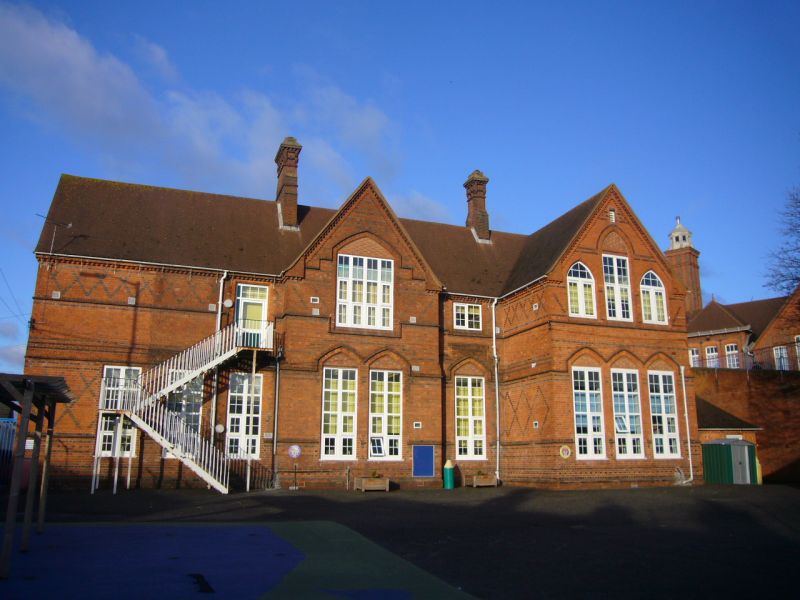
She had good reason to be angry. Somebody had spray-painted a large swastika on the outer wall of our primary school.

***

For the last two months, I have been trying to work out what to say. There have been days recently when many of the parents from this community didn’t send their children into school, worried that they would be targets. Members have shared stories of taking down their mezuzot, and hiding their symbols of Jewishness. I have felt, at times, like the community is overtaken by panic.

What do you say to people who are so anxious and angry? How do you meet people in their fear, and help them move beyond it?

I haven’t known what to say. So, the last few times I have stood on this bimah, I have just shared what is in the Torah.

But there is a trauma that needs to be addressed.

It doesn’t help to tell people that there is nothing to fear. That only makes people feel alone in their feelings, and that just makes them more afraid.

What repeated studies show is that what matters about handling traumatic events is less what happens afterwards than what happened before. People are better able to negotiate destabilising situations when they already have a strong sense of self; feel proud of who they are; and have a clear story about themselves.

So, I think the best thing to do from here, for now, is to tell my own story. My own relationship to antisemitism.

My account is, of course, personal, and not definitive. But I hope it will open up spaces for others to share their stories, and for us to begin a conversation about who we are, and what experiences formed us.

***

The swastika on my school wall was not for me. Not in the direct sense. That is to say: whoever drew it did not have Jews at the forefront of their minds.

We were not a Jewish school. We were a multicultural one in the centre of an industrial town, surrounded by white suburbs, and even whiter countryside. The other students, my friends, were Pakistani Muslims, kids from the Caribbean, refugees from Kosovo… we were a little bubble of people from everywhere, and, though I did not know it then, were a source of moral panic among readers of certain newspapers. We were, to those that feared integration, a symbol that Britain wasn’t British anymore.

And, of course, that swastika very much was for me. It was an attack on my community. It was antisemitic because all swastikas are. It was calling to me, because all racism does.

Around that time, my parents began telling me stories. But not the stories you would expect. They didn’t tell me about family members who had escaped Germany or died there. They did not explain why some members of the synagogue had tattoos on their arms, or how others had met each other on refugee trains. I only came to learn that much later.

They told a story about how, not long ago, the Council had erected a new housing block. One of the first people to be offered a home there was a black woman. Racists came to protest. ‘Houses should be for whites.’ The Pakistani community centre came out in large numbers and escorted the racists back to the train station and out of town.

This is an oral history, and I won’t be able to verify it from newspaper reports, but I suspect my parents made it sound more peaceful than it really was.

They told me other stories too. Stories of hundreds turning out to see off the National Front. Stories like how the Jews and the Irish united to defeat the Blackshirts at Cable Street. Stories of partisans and resistors.

They told me how people could stand up against racism and win. They told me about how, when it comes to racism, our greatest strength is each other.

I don’t know if this was their intention, but I learnt then that the swastika was not something to be feared. It was something to be destroyed. And that people could, and did, destroy it, wherever it appeared.

So, I grew up feeling not so scared of Nazis as determined to stamp them out.

***

Some university students spend their weekends studying. Others spend them partying. Me and my friends? We spent our weekends chasing the English Defence League.

Don’t get me wrong. I did study. And I did party. But some of my most formative memories from that time were of bundling into minivans and car convoys with my housemates to towns in the Midlands and the North.

At that time, Tommy Robinson had assembled a band of white supremacists, bored football hooligans, and lost boys, to go and protest wherever there was a mosque. They usually targeted the mosque itself, and would go to the towns with the express aim of intimidating the Muslims.

Opposing them felt like the only right thing to do. Fighting fascism felt like a calling in a very similar way to how the rabbinate does today.

There was a group of us, from different towns, who always went along, led by a gentle couple called Simon and Sadia. We were always met by locals, usually gathered from community centres and religious groups, who would join in showing the racists that they weren’t welcome.

I learnt from these forays into antifascist activism that, while there were always some who resisted fascism, they weren’t necessarily popular. Media narratives after each protest often framed the unfolding events as if the fascists and their opponents were equally bad. As if it would be better if these small groups of students and locals stayed home and let the racists go unchallenged.

I might have believed them, if it weren’t for what I saw happen in Dudley. There, the English Defence League significantly outnumbered the protesters. Police lost control of the situation. Over that weekend, in broad daylight, those thugs went round smashing in the windows of any house with black and brown people living in it.

As we ran away from the violent gangs storming the town, we passed a house where a black teenager had been visiting a white family. Their windows had been smashed. “I’m sorry,” he was saying, “I think it’s because of me.”

I learnt from this a lesson that has informed how I think about all racism and antisemitism since. Our strength is in each other. Our defence is our neighbours.

This runs contrary to some of the received wisdom about antisemitism. We are, after all, a small minority that lives in concentrated areas of large British cities. One story about how to handle the prejudice we face is that we must depend on the state to defend us against the baying mob of our neighbours. It is because of this that older members will share the axiom: “as long as the king is safe in his castle, we’ll be safe in Tower Hamlets.”

My experiences turn this on its head. The non-Jewish majority is not our enemy. They are our most reliable bulwark against racism. When it comes to fascists, we are the masses and the masses are us. Our greatest strength is each other.

***

That story, of solidarity in the face of racism, is also played out in the story of this synagogue. My friend, Joseph Finlay, just completed his PhD, looking at Jews and race relations in post-war Britain. During his archival research into the history of fighting racism, one shul kept cropping up. This one.

During the 1960s and 1970s, this synagogue was led by the visionary rabbi, Dow Marmur. He arranged visits from volunteers to homes of new immigrants to Redbridge, as well as English conversation classes to help neighbours settle in. In 1978, the synagogue held a “multiracial dance,” in a clear statement of unity against racist scaremongering about miscegenation.

Rabbi Marmur brought a motion to the RSGB Conference of 1968, which encouraged other synagogues to adopt similar policies, and follow SWESRS’ example. He accompanied his motion with a powerful sermon.

While others shied away from fighting racism, or even expressed sympathy with the anti-black and anti-immigrant feeling, Rabbi Marmur issued an impassioned plea. Yes, he said, the racists do draw comparisons between Jews and black people, and “we have a special duty to remember the Prophet’s comparison and to affirm that we are, in fact, alike -in the beneficent eyes of God!”

He encouraged meaningful solidarity, urging “let us beware of condescending and patronising “do-goodery” … “And at no time must we allow ourselves to be fobbed off with cowardly calls for “prudence” and “caution” when these are euphemisms for inactivity and indifference.” Finally, Marmur compelled his listeners: “the primary force of our involvement must be our religious conviction; God bids us act-and we must obey!”

This summons stands at the centre of my own response to antisemitism. It is not only the swastika that calls me, but, more importantly, the voice of the Living God.

In that voice, I hear the demand to continue being Jewish, without apologies.

In God’s Word, I hear the call to resist antisemitism, not only out of self-preservation, but from a religious demand that there must be diversity.

And in God’s Torah, I hear, always, that most-repeated verse: “love your neighbour.” Yes, love your neighbour as yourself. Love them because they are you. Love each other because that is our strength.

And our love for each other may be our salvation.

Shabbat shalom.

judaism · sermon

The tribes that broke apartheid

We are all members of tribes. Human beings are tribal creatures. We organise into packs and stick together. We identify into groups. 

You are probably a member of more than one tribe. You are a member of this synagogue, which binds together hundreds of families into a community. You might also have your workplace, neighbourhood group, union, political party, youth movement, charity association. 

Tribes are a core part of life. And it is this week, as we receive the Ten Commandments at Mount Sinai, that the Israelites become a tribe. When we left Egypt, we were slaves. We were a mixed multitude escaping persecution. Now, as we stand in the wilderness, we form into something stronger. But what kind of tribe do we become? 

In 2008, a group of researchers got together to study different tribal cultures. David Logan and his team looked at hundreds of workplaces and social groupings to see how they operated. While all these groups formed tribes, they found that there could be very divergent kinds. 

These researchers divided up the tribes into five kinds, based on their cultures. At the lowest level, Level One, were those tribes that functioned worst and, at the highest level, Level Five, were those that functioned best. 

Interestingly, as we look at the stages, it seems like exactly the progression the Israelites go through as they form as a tribe. They begin low on these researchers’ scale and, as the story continues, they advance to higher levels of performance. 

At Level One, tribes take the attitude that life is awful. They systematically sever relationships with other tribes and pool with people who think like they do. They are entire groups of angry misanthropes. These are the kinds of people who say “everyone is horrible, so we’ll be horrible, too. People will attack and rob us, so we’re going to get them first.” People who think life sucks will be toxic towards themselves, their own group members, and anyone they consider an outsider.

This is the Israelites at the start of the Exodus narrative. They are crying out for help under tyrannical persecution. They are a mixed multitude of all the lowest classes of Egypt, and have no concept of anything but toil. They don’t even trust Moses when he tries to start setting them free.

At Level Two, tribes say “my life is awful, but there is better stuff out there.” The world might be a good place, but I don’t have access to the goodness in it. These are the kinds of people who will bemoan how persecuted they are. They will complain that other groups have better jobs, or get taken more seriously, or produce better culture, or have more influence. These tribes don’t believe in themselves enough to make positive changes for their own tribe, let alone others.

This is the next stage for the Israelites. They decide that there is a better world out there. Their lives are horrible but, if they left Egypt, they might get a taste of something better. They get up and go, seeking to find a new life as they leave through the Sea of Reeds.

In a Level Three tribe, the mantra is “I’m great, and you’re not.” Here, people are competing for prestige, wealth, and honour. These are groups where everyone wants to compare notes about how much better their kids are doing in school, or how much better their careers are going. The tribe can do good things, but only because it creates cultures where individuals flourish.

That’s the level we reach at the start of this week. Betzalel emerges as a fantastic architect and interior designer, showing off his skills at the Tabernacle. Aaron and his family come forward to be priests. They show how well they can perform religious rituals. But, because they have no defining values, they end up worshipping a golden calf and recreating the same systems they knew in Egypt.

Stage Four is where really impressive tribes begin to emerge.  These are groups where people are united by something greater than their individual competences. They turn from small groups into something large and meaningful. They are actually conscious of being a tribe, and united by values. They extend their reach by connecting with other tribes and finding points of value alignment. 

Only now, as Moses presents the Ten Commandments, can the Israelites reach Stage Four. They are a conscious tribe, united by shared values. We, these freed slaves, have one God. We reject idols. We honour our families. We hold time sacred. We refuse to engage in murder, theft and lies. We are one people joined by a shared vision of what a just society could be. Anyone who shares that dream can join us.

But that is not the end of the journey. The highest level is rare, and most groups never get there. 

The fifth level is when a tribe is united by values that affirm life, each other, and the future. We only see glimpses of this kind of tribal behaviour in Tanach – on those incredible occasions when the prophets extend their message full of joy about who humanity is and hope of what it could be.  

The researchers who ranked the groups only offered one example of a tribe that reached such a high level. That was the Truth and Reconciliation Commission in South Africa. 

This was convened in 1996. With Nelson Mandela’s release from prison and the end of formal apartheid, nobody knew which direction the country would go in. Some anticipated civil war, or resurgent racist nationalism.

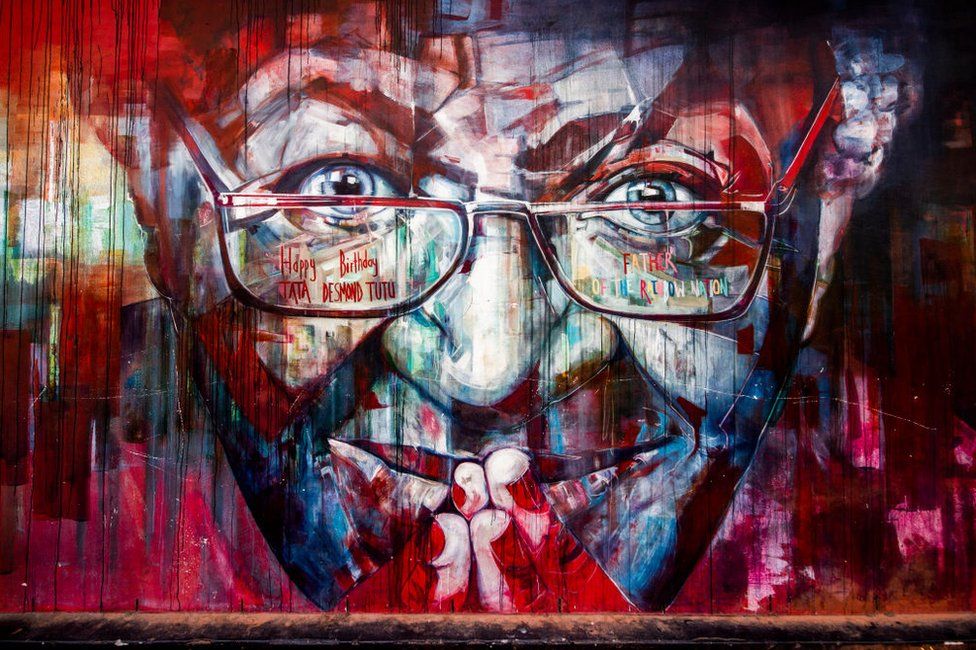
Archbishop Desmond Tutu brought together thousands of tribes from all across South Africa. He set up the Truth and Reconciliation Commission, which would aim to restorative justice between all people. Victims and perpetrators faced each other, to speak honestly about what had happened during apartheid, and how they could make amends.

He united people on a programme that they could be better than they had been. He coalesced people around a vision that they could be honest with each other and foster a future based on cooperation. 

Consider what courage and moral fortitude that must have taken. For decades, black, Indian, and Coloured South Africans had been subjected to segregation, poverty and violence. The anti-apartheid activists had faced imprisonment, state abuse, and separation from their families.

After all that, Tutu took these tribes to a level we almost never see. He created a culture where people believed in themselves, in each other, and joined by a vision of joy and hope. 

When Desmond Tutu died just over a month ago, it reminded people of what a giant he had been for religious people worldwide. His theology was one that still intimidates many. He preached true universalism, arguing that God was not a Christian, but belonged to every religion. He advocated sincere justice, never shrinking from social issues. And he believed, despite all he saw, that people were capable of fantastic things.

That was what made his assembly of tribes exceptional. Only those who see the best in people and hold the greatest of values can take people beyond what they know. If we are to defeat the racism, segregation and division that plague us today, we need to muster similar attitudes.

So, which tribe will we Jews be today? Will we sit at the bottom rung, only believing the worst about the world? Will we be like those who complain that we don’t count but others do? Will we create a culture where individuals can flourish but don’t cohere as a whole group? Will we unite around clear values and come together consciously with pride? And can we achieve that rarest of things: a level where we affirm what is wonderful in ourselves and the world, and foster unity around a joyous vision of the future?

The faith that inspired us at Sinai tells us today: we can achieve remarkable things. If we believe in ourselves, we will.

festivals · sermon

The four children of Covid

Every seder, we read about the four children. These characters in our Haggadah have come to us from the Palestinian Talmud, and are based on Torah verses. They’ve entered our liturgy as a joyous part of the seder ritual.

It’s a fun annual party game to speculate about which of the four you might be, and even to assign the attributes to other guests at the party.

For what it’s worth, I usually play the wicked child of the Haggadah. I quite like the idea of being the trouble-maker.

But is it really how we want to define people, and their relationship to Judaism? My teacher, Professor Jeremy Schonfield, has pointed out that all the four children are really quite negative stereotypes, and they all get punished for their questions.

The chacham – or wise child – might better be called the know-it-all. She sits at the seder and already knows all the answers. So she comes along and, puffing up her chest, asks: “what are the laws of Passover?” Oh, she thinks she already knows. She’s asked this question every year. She can smugly rattle off to you how well she prepared koshering the house and she has strong opinions on what everyone else should be eating. Yes, you’ve met her.

So how do you respond to her? Tell the wise child the most complicated laws about Pesach, even the one about how you don’t start the second part of the meal until you’ve found the afikomen. That’s at the very end of Mishnah Pesachim, and she probably won’t have got that far. That’s it, put her in her place. Make sure she knows that she doesn’t really know it all. Thank you, chacham, for your very wise remarks, the rest of us would like to get on with the meal.

Then you’ve got the rashaa – the wicked son – who asks “what does all this mean to you?” To you, not to him. He doesn’t care. He’s not interested. Why are you doing all this? Your wicked son will do whatever he likes, but from his aloof standpoint, he can take a shot at you with your primitive rituals. The accusing patriarch responds to this by telling him he should have been left in Egypt. Hope you can take scorn as good as you give it, rashaa.

Next comes along the child who is tam. The Reform Haggadah generously translates this as naïve, probably to avoid the ableist overtones of the more familiar translation that this child is simple. The word could just as easily mean ‘mute’ or ‘modest’, but we’re probably meant to imagine her as clueless. She asks: “what’s this?” Like a lost sheep bewildered by the most basic rituals of the most famous festival, she’s stuck, absently pointing at objects and asking what’s going on.

How do we help her? The seder leader responds by saying “God took us out of Egypt with an outstretched hand…” – and then doesn’t even bother finishing the sentence. There’s a long verse you could quote to the tam but you assume she’s already lost interest and, frankly, you’ve already lost patience. Why bother with someone who’s simple?

You turn straight to the child who doesn’t know how to ask. And you repeat exactly what you just said to the simple child. How much more patronising can you get? You’re not going to even bother trying to include him. You just tell him what he already knows because he just heard you say it to your daughter.

If anything, the Haggadah is a model in how not to engage people. It’s an exercise in what happens when you label children and assume the worst in them. You respond with terrible answers that leave your dinner guests feeling deflated.

In 1950, the great Hebrew poet Leah Goldberg wrote a response to the Four Children. It was the only poem she ever wrote about the Second World War, and it’s a stunning meditation on how the trauma of genocide shaped her contemporaries’ outlooks. In this poem, she completely reimagines who the four children are, picturing each of their postures as a trauma response.

She begins with the child who does not know how to ask, imagining a woman heartbroken by survivors’ guilt. She has witnessed the most horrific brutality and lived to talk about it. Only now she has no words. Stumped, she asserts:

I am not wicked, not smart, not even simple,

And for this reason, I asked no questions

Her survivor cajoles the reader: If you can, then open me up.

Goldberg then helps us understand why someone might become ‘wicked.’ She tells of a man who has been toughened up by circumstances and now cannot bear to empathise. His tears have dried up and his heart has hardened. So he vows to be cruel and cool and estranged. He tells God:

To you, I blunt my teeth.

What about the simple child? Goldberg tells us of someone who has known so much pain that just looking at stars reminds her of her anguish. She looks at the millions of stars and sees the millions dead. The stars remind her of her night terrors:

On all other nights against a dark arrogant sky,

Against a delirious moon and against the milky-way

Great gloomy ghosts of a day gone by

And, just once, she wants to get back her naivety. She wants to be able to stop seeing her pain when she looks up at night. So she implores:

On all other nights, anticipation, silence

On this night – only stars

Why shouldn’t she be permitted her simplicity?

The wise child, in Goldberg’s poem, is the one who says the least. He is the one who died. That is what wisdom meant to a survivor of the Shoah.

Reframed through Leah Goldberg’s eyes, we can understand the four children not by their worst intentions but by the trauma they carry and the way they deal with pain.

This seems to me a much better way of greeting dinner guests. It should be a starting assumption that everyone we meet is carrying baggage. Everyone is hurting. We have to be able to meet people at their most vulnerable and our most sympathetic.

As lockdown eases, I am aware that many people are only just processing what we have been through. I am not by any means comparing what we have experienced to the Holocaust, but we have certainly been through something unprecedented and destabilising. Our old certainties about our religion, our health, and our community have been disrupted. We have known death, heartache, family struggles and isolation.

Now we meet each other. We can choose what responses we adopt. We will meet people who seem wicked, or who seem naïve, or who seem like they know it all, or who seem like they have nothing to say. We may well want to blunt our teeth at them and put them in their place. We may want to be impatient or patronising.

But the better response, the more Jewish response, will be to meet them where they are, and hear them in their hurt. Whatever type of child they seem to be, the important thing to remember is that inside them is a child. Someone inside of them is vulnerable, scared, and looking for assurance. Someone inside of you is the same.

Let us not label each other and dismiss people, but greet each other with compassion and empathy.

Moadim lesimcha.

Shabbat shalom.

This sermon is for Edgware and Hendon Reform Synagogue, Seventh Day Pesach, 3rd April 2021

fast · high holy days · sermon

Closing the Gates

These are the short sermons I delivered for the final two services of Yom Kippur 5781.

Yizkor

This morning, I talked about how this year could be understood through the lens of grief. Yet nothing can compare to the grief of losing a loved one. Every feeling we described, of denial, bargaining, sadness, anger and acceptance, is intensely heightened by the enormity of the lives that have been lost in this last year.

I will not say numbers. Their lives were not statistics. They cannot be reduced to the collateral damage in government reports about which measures worked best. They were full human beings, imbued with the sacred light of God. They were people with pasts and dreams, filled with stories. They were complete people, with flaws and complexities and little idiosyncrasies.

And we have not yet even begun to mourn them. In the midst of a pandemic, we have been like the Israelites in the desert, forced to keep on moving and maintaining high spirits for an undefined period of time. We keep looking straight ahead to keep our spirits awake, so struggle to look back at the hurt. Even old wounds from people long dead have returned to us, and we have struggled to find ways to heal.

Here, in this moment, for this brief service, we can take the time. Let’s stop in this space and reflect. We remember the names of everyone who mattered to us. We loved them. We cared for them. They cared for us. We admired them. We looked up to them. They took inspiration from us. We laughed with them. We cried with them. We got angry with them. We hated them. Sometimes. We spent precious time with them. We did not spend enough time with them.

And now, in this moment, we remember them. And we refuse to let them ever be forgotten.

Neilah

This year has been challenging for all of us. As much as our physical health has been at stake, everyone’s psychological wellbeing has taken a toll. Public health experts warn that we are facing a delayed mental health crisis. 

This morning, I spoke about how the year could be understood through the stages of grief. Those feelings, however, can be pathological when taken to an extreme. Sadness can become depression. Anger can become anxiety. Denying what exists and accepting what does not can result in psychosis. 

We will need to pull together in the coming year. We will need to check in on each other more than ever and find new ways to support each other. Above all, please talk about your feelings. If it feels like it’s going too much, do talk to a rabbi for pastoral support, or to a doctor for medical help. It is important that we all look after each other.

I know that we begin Yom Kippur by annulling the vows we have made with God. I think, however, this year, we need to end by making a new one. We need to promise each other we will make it. We must swear to each other that we will do everything we can to keep our bodies, minds and souls alive in the coming year. Say it to God, make it a vow.

As the gates of prayer close, I vow that I will care for myself and my community. I vow that I will be honest with my feelings and kind to my body. I vow that I will be here next year.

Next year, in a world without pandemic. Next year, in a world built back better without racism and injustice. Next year, in a world where we can see each other in person. Next year, in the building, with each other, holding hands and singing together.

We will make it to next year. Shanah tovah.

festivals · high holy days · judaism

Spiritual Dialectics

Sermonettes for Erev Rosh Hashanah

This year is unlike every other in so many ways. In order to keep people engaged with the services, I am delivering sermonettes between prayers, as two-minute reflections on the meaning of the festival. The four drashes for Erev Rosh Hashanah 5781 follow.

  1. On lighting candles

The world stands balanced between darkness and light. Just as the day comes, night will surely follow. And when night falls on a night like tonight, on a holy night, we light a candle.[1]

Adam was afraid of the dark. When the first human being witnessed the sun start to fall on his first evening on the planet, he cried out because he thought the sun would never return and the darkness marked his death. Throughout the night, he and Eve cried, until dawn came, and he realised that God had made day to follow night.[2]

As night falls, we too can feel fear. But we know something that Adam did not. We know that the day will come. We know that even in the midst of utmost darkness, light will surely come.

This year, celebrating Rosh Hashanah may inevitably feel bittersweet. We are dipping our apples in a honey that has tasted pandemic and economic collapse. Many of us are facing uncertainty about our health, finances and relationships. It is natural that we should wonder how much we can go on.

But by coming here tonight, we affirm that we will go on. We remember the thousands of years we endured since the first human being looked upon the first night sky. We acknowledge that we do not only pray that day will come, but that we can work to bring on the day.[3] And we know that no matter how dark it may seem, we can always light a candle.

[1] New Forms of Prayer Draft Liturgy, p. 19

[2] Babylonian Talmud Avodah Zarah 8a

[3] Yaakov Roblit, Shir laShalom

* * *

2. On the holiness of hope

“You’ve got to have hope. To some people the only thing they have to look forward to is hope.” These were the words of Harvey Milk, a gay Jewish immigrant in California; an activist who transformed politics in defence of minorities. As he sought election to office, he told his captive audience: “You have to give them hope.  Hope for a better world. Hope for a better tomorrow. Hope that all will be alright.”

And it wasn’t alright for Harvey Milk, who was assassinated 40 years ago. But it was alright for many others. Because of his fight, I grew up in a better world than I otherwise would have done. Because of the sacrifices he made, I live in a world that gay people of the past could only have imagined. And I’ll be damned if I’m going to give up hope now.

We are all here because of the optimism of previous generations. The immigrants who packed their bags, believing they could make a better life here. The survivors who made it through the camps because they had the strength of will. The feminists who insisted that women had a place in the synagogue, not just as spectators but as leaders. Every Jew who decided that showing up was  worthwhile and kept the faith of our people alive through the centuries. We owe it to them, and to the generations who will follow us, to keep hope alive.

The psalm that Howard and Fiona just read for us teaches: “When the wicked flourish, they are only like grass […] but the righteous shall flourish like a palm tree, growing tall like a cedar in Lebanon. Even in old age, they will bear new fruit and shine green in the courtyards of our God.”[1] Remember this. Remember that the wickedness we see in the world is only grass that will wither, but that righteousness plants firm roots in the soil and refuses to be moved.

Know that just as we live in the dialectic of night and day, so too do we live in an unending struggle between right and wrong. As Jews, we will hold on to our faith in what is right. And in pursuit of it, we will remind the world of the holiness of hope.

[1] Psalm 92, excerpted and adapted

* * *

3. On blessing the new moon

There was a time in King Solomon’s life when he was given over to nihilism. He wrote Qohelet, the book of Ecclesiastes, in which he declared: “Everything is vanity.” He said of laughter, “It is mad,” and of pleasure, “What use is it?”[1]

His advisers tried to console him, but Solomon only retorted with a challenge: “tell me something that will always be true.” Many days and weeks passed, but no one could respond. One day, a jeweller came in holding up a ring. On it, she had engraved three words: גם זה יעבור – this too shall pass.

Yes, the only certainty is change. We recite hashkiveinu – cause us to lie down and let us rise up to life renewed.[2] We go to sleep only to wake up. We wake up, and we go to sleep. We live in this constant cycle.

In a moment, we will recite the blessing for the new moon. The moon, like us, like life, exists in a constant state of flux. It waxes only to wane and fills out only to diminish again. Note that is not the full moon we bless, when the night sky is brightest and the moon appears most whole. It is the new one, when only a slither hangs in the night sky, promising only potential.

When the rabbis blessed the moon, they used to gaze up at it and say: “David, king of Israel, long may he live.”[3] David was, of course, long dead. He, the father of Solomon, was for them the prototype of the messianic age. He represented an imaginary perfect society of the past. And he stood in as the harbinger of the future utopia. We do not live yet in a perfected world, but we can look up at the sky and see the moon as our model. Just as the moon starts out as a tiny crescent and expands to its fullest form, we too can live in the darkest of times and know that completeness will follow. Whatever this pandemic throws at us, we know that it will pass, and a brighter future awaits us.

[1] Ecclesiastes 2:1-2

[2] New Forms of Prayer Draft Liturgy, p. 53

[3] Babylonian Talmud Rosh Hashanah 25a

* * *

4. On sickness and health

We live in the balance between sweet and bitter; darkness and light; completion and absence; justice and iniquity. Above all, this year, we live in the balance between sickness and health.

Let us take time to reflect on sickness. On all those who have died of Covid. The 40,000 who died in the UK and over 900,000 who have died worldwide. We think of all those who have survived Covid but still live with its scars – those who still have trouble walking, breathing and carrying out daily activities. We think of all those suffering with sicknesses unrelated to the pandemic, often marginalised and ignored. We contemplate the mental health of everyone in our society, as we face anxiety, depression and trauma. We pray for everyone whose bodies, minds and spirits need healing.

But in the dialectic of health, we are also able to celebrate the vitality we still possess. We show joy at all those who are alive. We are grateful that we who sit here tonight are counted among them. We can think of the community we have built, the solidarity we have engendered and the strength we have found in each other. Let us pray, then, not only that we will be healed, but that we will be active in helping others to heal.

judaism · theology

We are not our past mistakes.

We are not our past mistakes.

Rabbi Meir was the greatest rabbi of his generation. He learnt from both the great masters of Mishnah, Akiva and Eliezer. He was ordained a rabbi by his teacher, Elisha ben Abuyah, younger than any of his contemporaries and gave more rulings than any of them.[1]

Meir was a great rabbi, but his wife, Beruriah, was even greater. She once learnt 300 rulings from 300 different sages in one day.[2] She was the only woman to be credited with making religious decisions. Sometimes she even overruled her husband. 

One day, Beruriah came in on her husband and heard him praying. He had been harassed by local hooligans. Rabbi Meir cried out in supplication to God: “Sovereign of All Worlds, I wish You would kill those bandits!”

Beruriah was shocked. “What are you thinking?!” she demanded. Meir looked surprised: “I am only asking for what it already says in the Psalms – let sinners disappear from the earth and the wicked be no more.”[3]

“That’s not what the verse says,” retorted Beruriah. “It says: let sins disappear from the earth, not sinners. The wicked won’t just disappear because someone wishes them away. They will only disappear because they will repent and give up their sins. The wicked do not disappear because God takes vengeance on them, but because God has mercy on them.”

From then on, Rabbi Meir changed his prayer. Instead, he said: “May God have mercy on them and may they change their ways.”[4]

God takes no pleasure in the death of the wicked, but wishes only that they will turn from their evil ways and live.[5]

That is the message at the heart of this season. This is the last Shabbat in Elul, opening the last week of this month of repentance. Tonight, in Ashkenazi custom, we begin the practice of Selichot – reciting penitential prayers in the evenings. They are intended to help us acknowledge where we are going wrong so that we can correct our ways. 

As we approach the end of the year, we also approach the end of the Torah. We have been on a journey through the wilderness, and God has journeyed with us. 

When our story began, God wanted to destroy humanity. At the start, God flooded the world in anger at our violence. At Babel, God struck down the nations for our defiance. At Sodom, too, God destroyed a city for failing in its moral obligations. 

Now, at the end of the narrative, God no longer wishes to destroy us, but instead promises to rescue us. We are told that if we try to return, God will bring us back in love. No matter how far we think we have gone, God can find us and return us. No matter how much of an outcast you imagine yourself to be, God will be in your corner.[6]

That is the essence of teshuvah. Although often translated as repentance, it really means returning. It is the practice of becoming who you already are. At core, you are good, honest and faithful. If you do wrong, you are departing from your natural state. 

Contrary to the Christian doctrine that preaches we are born in a state of original sin, Judaism teaches that we are constantly reborn in a state of moral purity. Each morning, God sends us back our soul, renewed and ready to do good.

God has already given you the greatest gift you could need to face up to your flaws: you have another day. You have the chance to get up this morning and correct what you did wrong. You have the opportunity to be better than you were. You can revert to your initial state of holiness.

Teshuvah is the process we undergo to turn away from doing wrong. We look inside ourselves. We acknowledge where we have gone wrong. We announce that we will not make the same mistakes again. We make amends for what we did. And then, faced with the same situation again, we do not repeat our old errors.[7]

At this time of year, we are forced to face up to our mistakes. The more we look at them, the more we realise how many there are. Faced with our own inadequacies, we might despair. We might think that our lives our not worth living or that we are better off destroyed. This week’s parashah teaches us: it is not too late. We are not our past mistakes.

Rabbi Meir only truly learnt this much later in life. His teacher, Elisha ben Abuya, had given up on Judaism entirely. He had stopped believing and stopped pretending to believe. He was acting immorally. Meir came to find him. He said to him: “Come back, rabbi, make teshuvah.”

But Elisha replied: “I cannot. Because I have heard the divine voice reverberating: “Return, O backsliding children,”[8] except for Elisha ben Abyuah, who knew My strength and yet rebelled against Me.” Meir’s teacher, Elisha, believed he was beyond redemption. He believed he had gone too far for God to still love him.

At the end of Elisha’s life, he fell ill, and Rabbi Meir went to visit him. He said: “Return!” Elisha asked: “Having gone so far, will I be accepted?” Rabbi Meir replied: “The Torah teaches: “God will allow a person to return, up to their being crushed,”[9] even up to the time that life is being crushed out of them.” In that instant, Elisha ben Abuyah began to weep, and then he died. Rabbi Meir rejoiced, saying: “My master departed in a state of repentance!”

But the story doesn’t end there. After Elisha was buried, fire came down from heaven to burn his grave. The other rabbis came and told Meir: “The grave of your master is on fire!” Rabbi Meir went out, spread his cloak over the grave, and prayed that God would redeem Elisha. “But if God is not willing to redeem you, then I, Meir, will redeem you.” Then the fire went out.[10]

When he was young, Meir learned that he should pray for sins to be destroyed, not sinners. And when he was old, Rabbi Meir learned that he should pray for people to make teshuvah, even when he believed it was too late.

And his prayer for others, that God have mercy on them and they change their ways, reverberated and affected his teacher in his tomb. God’s mercy extended beyond the grave.

Yes, God can bring us back even in our dying moments. God can help us make teshuvah even after death.

Our mistakes do not define us.

We are not our past mistakes.

Shabbat shalom.

I gave this sermon on Shabbat 12th September 2020, Parashat Nitzavim, for Newcastle Reform Synagogue.

[1] Babylonian Talmud Sanhedrin 14a

[2] Babylonian Talmud Pesachim 62b

[3] Psalms 104:35

[4] Babylonian Talmud Berachot 10a

[5] Ezekiel 3:11

[6] Deuteronomy 30

[7] Mishneh Torah, Hilchot Teshuvah, 2:2

[8] Jeremiah 3:14

[9] Psalms 90:3

[10] Jerusalem Talmud, Hagiga 77b

judaism · sermon · torah

Why only one God?

Why only one God?

A Jewish scientist finds herself at a conference, presenting a paper. A colleague asks her: “what’s your religion?” Nervous of prejudice, she says: “I’m an atheist.” Her colleague answers: “Yes, but is it the God of the Jews or of the Christians in whom you do not believe?”

As everyone knows, the best jokes are the ones you have to explain. And the very best jokes are the ones you spend a whole sermon unpacking, so strap yourselves in, because we’re going to look at the archaeological and scriptural evidence for why that introduction was, in fact, really funny.

It is a basic assumption of religion in the West that there is one God. Even for those who do not believe, they assume that it is one God in whom they have disbelief. Yet our society is filled with different religions and practices. When we encounter Muslims, Sikhs, Christians or Hindus, we assume that underlying the diversity of our doctrines and rituals, there is an underlying unity of belief in a single and universal Being.

But it was not always that way. In fact, the idea of monotheism was novel and contentious throughout the entire development of the Hebrew Bible. The insistence on one God is Judaism’s great innovation, and we have built our monotheism up into an obsession. Knowing God’s oneness is the first commandment.[1] Not worshipping other gods is the second.[2] Worshipping other gods can incur capital punishment.[3] It is treated as an unforgivable crime, on par with murder, and a Jew should choose death rather than worshipping another god.[4] The Deuteronomic insistence on one God has become the centrepoint of Hebrew prayer: “hear, O Israel, the Eternal One is our God; the Eternal God is One.”[5]

In this week’s portion, Moses exhorts the Israelites: “Destroy completely all the places on the high mountains, on the hills and under every spreading tree, where the nations you are dispossessing worship their gods. Break down their altars, smash their sacred stones and burn their Asherah poles in the fire; cut down the idols of their gods and wipe out their names from those places.”[6]

But why? Why is it so important that there be one God? And why is it so important that the ancient Israelites worship no other? What was so bad about the other nations’ religious practices?

Archaeological excavations help us answer that question.[7] Scientists have dug up altars, shrines, coins and amulets to help us make sense of pre-monotheistic religion. The Canaanites, who preceded the Israelites, had a family of gods: Baal the storm god; Asherah, the fertility goddess; Mot the lord of death; Yam, the judge of the sea; and Moloch, the child-eating fire deity.

This is referenced in Scripture: “Be careful not to be ensnared by inquiring about their gods, saying, “How do these nations serve their gods? We will do the same.” You must not worship your God in their way, because in worshiping their gods, they do all kinds of detestable things the Eternal One hates. They even burn their sons and daughters in the fire as sacrifices to their gods.”[8]

In that case, the issue with polytheism is the unethical behaviour it engenders! The old gods of Canaan required evil practices as part of their worship, like ritual human slaughter. But then why not simply abolish those gods, and leave the others? Or just legislate against those practices but keep the rest of the religion intact? In the mind of the ancient Israelites, there must have been something that directly connected any worship of multiple gods with murder.

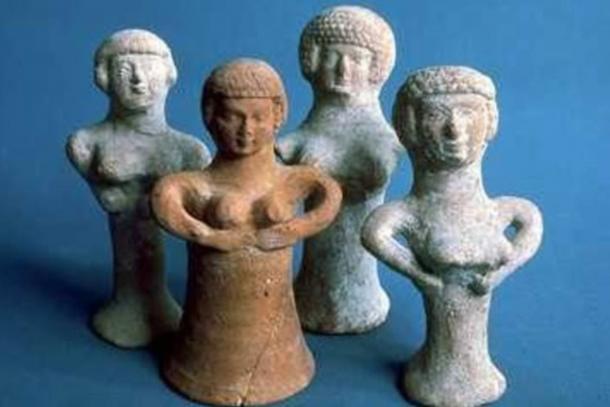
Here, archaeology can help us further. Digs from different times show us that polytheism wasn’t suddenly abolished, but fell out of favour when the Israelite religion took off. The Canaanite pantheon reduced down to just a few gods. We can find statuettes representing them at most ancient Israelite Temple sites.

This is backed up by text: Jeremiah condemns the Israelites for baking cakes for the Queen of Heaven and making offerings to Baal.[9] Jeremiah explicitly condemns this because these are the ways of the Egyptians, who held them in slavery. Idol worship, says Jeremiah, means keeping up the practices of theft, murder and lying.[10] It is not just that the old gods require ritual murder, but that their whole religion is based on an Empire that was built on it. Idols are the symbols of captivity.

This point was finally hammered home when Jerusalem was destroyed and Nebuchadnezzar took the Israelites hostage in Babylon. After Ezra led the return to the Land of Israel, we can find no more evidence of idols or their shrines. The people abandoned them altogether.

What could have been more convincing that idols were the work of murderous empires than exile in Babylon? The Israelites saw first-hand how looting, murder, war, conscription and sieges were built into imperial expansion. We know that the Babylonians used their pantheon as a way to legitimise their colonisation, as they brought the local gods of conquered people into their own cult and placed them in inferior positions. We know that the emperors turned themselves into gods and made people throughout their lands worship them.[11]

All those gods in Israelite minds became death-gods. The only way to truly abandon the ways of the oppressors in Babylon and Egypt would be to uproot the idolatrous shrines and eliminate the pagan pantheon altogether.

Monotheism was an act of resistance to these corrupt ways.

God’s unity was not a mathematical question but a moral one.

The One true God could not be co-opted into imperialism because it was universal: no one nation could control it. No ruler could declare himself to be that God because God had no flesh or form. And whereas the many gods constructed hierarchies and different customs for different places, with monotheism came ethical universality.

That is why one God was so important then, and why it remains so important now. God’s unity continues to represent the unity of human beings and the refusal of the faithful to be dominated. So, in answer to the question: “is it the God of the Jews or of the Christians in whom you do not believe?” the atheist could happily answer “neither.” And I will gladly answer “both.” They are One.

Shabbat shalom.

Asherah-figurines
This is a photo of Asherah statuettes, which have been excavated at almost every ancient Israelite cultic site prior to Ezra’s Great Return

I wrote this sermon for Leo Baeck College’s weekly newsletter, and will deliver it for Newcastle Reform Synagogue on Saturday 15th August 2020, Parashat Reeh.

[1] Deut 5:6

[2] Deut 5:7

[3] Ex 22:20

[4] Yoma 82a

[5] Deut 6:4

[6] Deut 12:2-3 NIV

[7] All references to archaeology in this sermon are derived from ‘The Bible Unearthed’ by Israel Finklestein and Neil Asher Silberman

[8] Deut 12:29-31 NIV

[9] Jer 7:5-19

[10] Jer 7:8-11

[11] cf Dan 2

climate change · judaism · social justice · torah

Pass on this Earth to your children

‘Tell your children that this land will be theirs to hold in custody,’ cried out Moses to the Israelites on the precipice of the Promised Land. [1] ‘Tell them to guard it and look after it because you could not. Tell them we brought them here that they would love and care for every plant and tree, but we were not allowed to enter because we were too accustomed to slave mentality. We were too mistrusting and selfish. But our children, we hope that they will have faith. We hope that they will be strong. We hope that they will look after this earth.’

‘Tell your children to tell their children,’ Joel wailed to the elders. ‘Tell them about the environmental destruction we witnessed. Tell them how we saw droughts and crop shortages. Tell them how we saw fertile land turn barren. Tell them how we saw everything devoured and nothing remain. Tell them how we saw famine lead to war and war lead to plagues. Tell them that we knew it was our fault.’[2]

‘Tell your children,’ the prophets said, ‘not to make our mistakes. Tell them to treat every part of the earth as if it is sacred. Tell them to care for the planet because if they destroy it, nobody will come to repair it after them.[3] Tell them that there is only one world and it is precious and it must be sustained. Tell them not to pillage it but to work in harmony with nature.’

And the elders wept. The religious leaders cried before their altars. Even the animals cried out for salvation from God. And the chieftains sulked in their tents and asked: ‘does this mean that God hates us? What have we done to deserve this?’[4]

Scripture records the words of the prophets and elders, but we do not learn how the children responded. What did they say when their elders told them these lessons? History rarely records the words of the young, even on issues of intergenerational justice. Especially on issues that affect the youth more greatly.

During the last uprising of Extinction Rebellion, Rabbi Jonathan Wittenberg preached to his congregation. He said: “in the synagogues, the elders are asking ‘where are the youth?’ But in the streets, the youth are asking ‘where are our elders?'”[5]

Young people are calling on us to take action for the environment. Their voices matter deeply, especially when the issue is the future of the planet. Climate change presents us with an unprecedented threat, and we are positioned as the elders scorned by the prophets.

I know that the people of my generation and older are not individually responsible for the climate crisis, but that it is a matter of systemic inequality and exploitation of natural resources.

Nevertheless I am increasingly conscious, as a parent, of what the next generation will inherit. Winona LaDuke, a Jewish-Native American activist from an indigenous reservation in Minnesota, urges us: “Be the ancestor your descendants would be proud of.”[6]

We cannot become such people if we don’t heed the call of the greatest call to intergenerational justice facing us. We cannot simply hide our faces in our homes like the elders confronted by Joel.

Of course, this congregation cannot take sole responsibility for ending economic reliance on oil or for replenishing the earth’s devastated ecosystems. But J and S have come to us with practical and necessary actions that we can take.

These students in our bar mitzvah programme have come to encourage us to take serious action. After only a year of teaching them, I have been so impressed by the intelligence, integrity and sensitivity of these young men. They will both become bnei mitzvah at Pesach time. As part of their studies, they have each taken on social action programmes.

J is asking you to recycle your plastic by making eco bricks. I hope that over this summer, every household in the Three Counties will return at least one eco brick to J in support of his project. J will also be appealing to the synagogue council, to ask them to make eco bricks part of the Mitzvah Day project this year.[7]

S is asking you to plant trees and sponsor his work with the Woodland Trust.[8] I encourage every member of the community to support S in some way, either by offering financial support or a place to plant. These projects are practical, necessary and helpful.

Joel tells us that the old shall dream dreams and the youth shall see visions.[9] In the future he prophesied, the generations were not adversaries in blame and despair, but companions in hope. The young people are offering us an opportunity to join them in healing our damaged planet. Let us take up their call.

Shabbat shalom.

introfigsm-m
This painting is by Winona LaDuke’s mother, Betty

I gave this sermon on Saturday 25th July at Three Counties Liberal Judaism for Parashat Devarim. This was my last sermon for the community. The names of the children are redacted for obvious  reasons.

[1] Deut 1:39

[2] Joel 1

[3] Kohelet Rabbah 7:13

[4] Deut 1:27

[5] Heard at New North London Synagogue, summer 2019

[6] https://www.mtpr.org/post/winona-laduke-be-ancestor-your-descendants-would-be-proud

[7] https://www.ecobricks.org/

[8] https://www.woodlandtrust.org.uk/

[9] Joel 2:28

judaism · sermon · theology

How will we know when this crisis is over?

How will we know when this crisis is over?

Because this crisis will end. Every catastrophe there ever was has been brought to closure at some point.

Wars have begun with shots fired on foreign shores and ended with neighbours kissing outside their front doors.

Our scientists have conquered tuberculosis, leprosy, HIV and polio. It may take months and it may take years, but they will find a cure and people will recover.

Humanity has survived ice ages, famines and nuclear meltdowns. And it will survive this. This crisis will, one day, be over.

And when it is… how will we know?

The ancient world had rituals for bringing every ordeal to a close. When the sick returned from their quarantine, they were ritually bathed seven times, given new clothes, and shaved from head to toe.1

We, too, will wash ourselves anew. We will look at water and soap differently. We will cry in the shower to produce as much water as possible, knowing that those cleansing droplets are the secret to life itself.

And we still won’t know whether the crisis is over.

The priests of the bible would perform ceremonies to indicate that closure had occurred. On recovery from sickness, they would give offerings of unleavened cakes, fine flour, oil and animal blood.1 They would thank God for their health with their sacrifices.2 They would wave their hands in the air, bringing the ingredients together, embodying their wholeness.3

We, too, will make offerings. We will return to reopened pubs and put our glasses in the air and celebrate our survival with pints of cider and drams of whiskey and we will say ‘l’chaim’ like we never knew what it meant to say ‘to life’ before.

We will be grateful. We will thank God that we were among those who survived. We will thank God that even those who did not survive would be proud to see the continuity of the world they built. We will realise that a day when you can drink surrounded by friends and family should never be taken for granted. We will truly understand that life is a gift.

And still we will not know whether the crisis is over.

Our rabbis knew how to mark transitions with words. When good things happened for the first time in a long time, they instituted that we should say “blessed are you, Eternal One our God, Creator of the Universe, who has kept us alive and sustained us and allowed us to reach this season.”4

We will do old things for the first time. We will play in parks with our children again. And they will meet new children for the first time. And we will leave our houses without a purpose just to knock on old friends’ doors and see their faces for the first time. And we will hug. And we will kiss. And we will go to cinemas and nightclubs and gyms and synagogues. Yes! we will most certainly pack out our synagogues again. And we will treasure those moments and thank God that we lived to see them.

And we won’t know whether the crisis is over.

Our rabbis knew how to mark the bad with the good. They knew that not every transition was a recovery. They knew that sometimes people died and it felt like the whole world had been destroyed. They knew how to mark it. They told us to rip our clothes and let our hair grow long.5 They knew that sometimes so many loved ones would die that we would have to shred our whole wardrobes.6

We will grieve. We do not yet know how many we will grieve. It may be only the thousands who have already died. We will learn not to call thousands of deaths ‘only’. We may lose a person whom we love. We may lose many people whom we love. We will grieve for all of them.

We will cry in the streets in funeral processions for all those who never had the chance to mourn properly on lockdown. We will wail without abandon for every life taken too soon. Every life that will be taken will have gone too soon. We will huddle together in houses and let out all our sadness and anger.

We will feel guilty. Because, after all, feeling guilty is a part of grieving and surviving isn’t always such a cause for celebration. And although we will not believe it at first, we will recover. And we will move on.

And we still will not know whether the crisis is over.

Because the crisis will not yet be over.

If we leave our houses and go back to our old jobs to pay rent and mortgages in the same houses to barely survive in the same cities, Coronavirus will not have been defeated. We will only have signed an armistice with sickness, knowing that another plague will face us again. This will not be the last virus. Any effort to return to normality will only exacerbate the problems that have gone before.

Never again will we fight each other for dried pasta and toilet roll and sanitary pads and formula milk. Never again will we stare into our cupboards and wonder how long our tinned food will last us. We cannot ever return to the days of scarcity.

Before we can begin to move on, we have to be assured that all of humanity’s basic needs will be met unconditionally. Healthcare, food, water and clean energy will be considered human rights. When we struggle for them, we will struggle for everyone to have them. We will insist on it the way that world leaders pledge at the end of wars never to pick up weapons again, only this time we will mean it.

And still that will not be enough for us to say that the crisis is over.

Never again will people carry on working when they are sick because dying of starvation sounds worse than dying of disease. Never again will people live one pay cheque away from homelessness. Never again will family homes be foreclosed. Never again will people worry how they are going to self-isolate when they have nowhere to live. Housing will be provided universally on the basis of need, so that these crises can never be repeated.

And that won’t be enough for us to say it’s over.

Because there are today vulnerable, elderly and disabled people who are saying that self-isolation was already their standard practice, and that they did not choose it voluntarily. Because there are sick people who already feel like they are a burden to society when their lives are a gift from God. Because there are families torn about by borders and there is escalating racism that makes people feel even more afraid and we know that loneliness and bigotry and fear make life unbearable. We will judge our society not by the strength of its economy but by the strength of its weakest members. Only when we are assured that the value of human life is unquantifiable will be able to draw a line under the past.

And that day will come. This crisis will end. Ever crisis that ever was has come to an end.

And we will mark it. Every human being who is alive will sign a new international constitution, swearing allegiance only to each other and to God. And we will swear to protect everything that lives and the precious planet that sustains it. And on that document we will enshrine rights we never thought possible. And it will be the benchmark for everything that comes afterwards.

And everyone, all around the world, will subscribe to it.

We will not know the crisis is over because everything goes back to being the same. We will know the crisis is over when we are certain that everything has changed.

Then we will know beyond all doubt that this crisis is over.

salah taher peace treaty

I wrote this sermon for Leo Baeck College, Parashat Tzav. I then decided to publish it early because I have too much free time. 

1Lev 14:1-10

2Lev 7:1-15

3Plaut 787

4Berachot 54a

5Rambam Mishneh Torah Hilchot Avel 7

6Rambam Mishneh Torah Hilchot Avel 8