israel · sermon · social justice

We must drag the sun over the horizon


In Judaism, night comes before day. The day begins when the sun sets and the first stars appear in the sky.

This has been the way of the world since its mythic origins.

In the beginning, there was endless darkness. Then God said “let there be light.” And there was light.

And God separated the light from the darkness. The first distinction. And the darkness God called night, and the brightness God called day.

And there was evening, and there was morning. A first day.

Having created nights and days, God populated them with matter. At the end of each period of creation, there was evening, then there was morning. Each day.

During the sixth day, God created human beings and placed them in a garden. Then there was evening.

The first human beings had never seen an evening before. They did not know that the sun could set. They did not know the difference between night and day.

What must it have been like for the first sentient beings to realise who they were and who their Creator was, only to see the sun disappear? How frightened they must have been!

Perhaps they called out to God and asked for guidance. But that evening marked the beginning of the seventh day, and God was resting. God did not answer them.

Our Talmud teaches that when the first human beings saw their first nightfall, they fell into despair. Adam feared that the sun had disappeared as punishment for his sin. He worried that the world would now return to the endless darkness with which it began.

Eve cried. She fasted and prayed. Adam and Eve wrapped their arms around each other and held their bodies close as they prepared for the end.

Then the dawn broke.

And they realised: this is the way of the world.

The world began in autumn, at the festival of Rosh Hashanah.

When the first winter nights crept in, and they saw the length of days decreasing, they panicked once more. Now in exile from Eden, they had no way of knowing what would come next.

Again, they fasted, wept, and prayed.

Then the spring came, and brought with it longer days.

And they realised: this is the way of the world.

We begin with darkness. Light follows.

There is evening. Then the dawn comes.

There is winter. And it always becomes spring.

This is the way of the world.

We can observe this dialectic in almost all matters of life. Our suffering is followed by joy. Our struggles are replaced by triumphs.

Some days feel like endless nights, but the dawn is always waiting for those who are patient for it. So we hold each other close and wait for the sun to rise.

This is the way of the world.

These trends appear, too, in history. There will be periods of decline followed by ages of plenty. There will be economic busts, and there will be booms. There will be war, but peace will come.

This is the way of the world.

But human history is different from all other natural rules. The order of night and day and the structure of the seasons was predetermined before we arrived on this earth.

History, on the other hand, is made by human beings. History is the one area of life where we can, collectively, choose what happens. Our actions determine whether we live in the winter of war or bountiful springtime.

So, it is incumbent upon us not just to hold each other and wait for morning, but to drag the sun over the horizon and demand that day appears.

In 1969, “Shir LaShalom,” became the anthem of the Israeli peace movement. In the final stanza of the song, we sing out: “Do not say the day will come. Bring on the day.”

Just as people make the active decision to go to war, peace is also a choice. Those who want an end to war cannot just wait in the darkness.

We sang Shir LaShalom in this sanctuary on Simchat Torah. I felt, and I think many of you did too, truly jubilant at the news of ceasefire and hostage release. After two years, we could finally see a possible end to the suffering.

My jubilation was tinged with pain as I remembered the last time that Shir LaShalom was chanted throughout synagogues.

That was in 1995. Yitzhak Rabin and Yasser Arafat had shaken hands on the lawn of the White House. They had agreed to the Oslo Accords.

While already imperfect and tentative, the Oslo Accords of three decades ago were the last major effort at a comprehensive peace deal between the Israelis and Palestinians. They paved the way for mutual recognition and the possibility of two states.

High on the dream of peace, Rabin joined Peace Now protesters in Tel Aviv Square and sang along to Shir LaShalom. With the lyrics still in his breast pocket, Rabin headed to the car park. There, a far right fundamentalist waited for the Prime Minister, and shot him dead.

There is still a copy of Shir LaShalom, stained with Rabin’s blood. There are those words, covered in the blood of a man who tried to make peace: do not say the day will come, bring on the day.

Yes, we must indeed bring on the day. But there are some who want to return us to endless night.

An Israeli fanatic shot dead Rabin to stop his day from dawning.

When Hamas saw the prospect of the Oslo Accords creating two states, they launched suicide bombing attacks on public transport. They took control of Gaza and promised endless war.

The Israeli far right wrested control over the offices of government. They promised there would be no Palestinian state and that every effort to achieve one would be swiftly repressed.

It saddens me that, even in the brief interludes since Rabin’s assassination when Netanyahu’s party has not had control over the legislature, few Israeli politicians have attempted to break from their logic of violence and occupation as the only answer to the Palestinian national question. 

Daybreak always comes, but there are those who prolong the darkness, and we have been living through a terribly long night. The call to bring on the day from earlier generations has been eclipsed by militarism and fear.

We have endless war. This is the way of the world.

But this is the way of the world as some have chosen to make it. And we can make the world another way.

On Monday, we saw the first thing in a long while that looked like a sun beam.

We celebrated the hostages coming home and an end to the bombing of Gaza. It was the first reminder we have had in a long time that peace is possible, and war is a choice.

We are able to bring on the day.

Now we must create even more sunshine.

But we have become so accustomed to darkness that the dawn may even be painful.

In daylight, we will have to look hard at the choices that made this war so prolonged and destructive. We will likely see that peace was possible much earlier and that more hostages might have come back alive sooner. We may ask searching questions about the morality of this war.

In the light of day, we will have to look hard at what Israel has become, and what the spiritual state of our Jewish institutions now is.

But we must bring on the day. We cannot return to the long-lasting night of war, murder, zealotry, and extremism. We cannot let anything that happened in the last two years ever happen again.

Throughout this dark night, our Progressive Jewish counterparts in the Israeli Reform Movement have been pushing hard for serious change.

They have been protesting outside Netanyahu’s house every Saturday evening. They have been joining Palestinian olive farmers in the West Bank to protect them from settlers. They have been demanding a real overhaul of the deep, structural causes of this century-long conflict.

My month with Rabbis for Human Rights before I began here helped positively frame my rabbinate. Although the picture on the ground is bleak, it made me realise just how many people are desperately trying to create daylight in the darkest contexts.

I hope that we will not fall into complacency now because the hostages are home. The task of peace building is more pressing than ever.

I want us to draw ever closer to those who are defending human rights and trying to bring about a future based on dignity and equality. I hope that, next year, we can bring a full delegation of Progressive Jews to support the West Bank olive harvest. I hope this can be a moment where we truly embrace the cause of peace.

This is not the seventh evening of creation. It is not the time to rest. We cannot leave our colleagues alone in this struggle now.

This is the first dawn of a new morning.

It is an opportunity for real accountability. It is a chance for meaningful peace building. It is the first crack of sunshine, and we have to drag out every possible ray of light to join it.

We must wrest the light into the darkness.

We cannot say the day will come.

We must bring on the day.

social justice · theology · torah

We are waiting for a different Messiah

Some years ago, an Orthodox friend asked me: “what would you do if the Messiah came and it turned out we’d been right about everything? What would you say to the Messiah?”

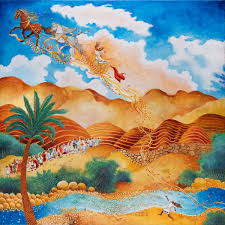
What would I do if the End of Days came, and Elijah literally came storming out of the whirlwind in a chariot made of fire and declared that the Son of David had arrived to cast judgement? And that we were to be judged on how strictly we had separated men and women; how well we had obeyed family purity laws; how stringently we had adhered to traditional authorities?

What would I say to this Messiah?

I have thought about it for a good few years and I think I now have my answer.

I would say: “F@£& off.”

I would tell that messenger: “You are not my Messiah and you’re not my king. Now go back where you came from.”

In this week’s haftarah, we read the prophet Ezekiel’s vision of the valley of the dry bones. For centuries, Orthodox Judaism has based its understanding of Messianism on these verses.

Ezekiel finds himself in a desert surrounded by skeletons. God tells Ezekiel to prophesy to the bones, and he does so, covering them in sinew, breathing life back into their lungs, and reviving their bodies, so that they stand up as a skeleton army.

These, says God, are representative of the people of Israel.

So, Orthodox Jewish tradition teaches, a day will come when the dead are literally physically resurrected. The corpses of pious Jews throughout the ages will be brought back to life; the exiles gathered to Jerusalem; and all judged by a righteous king descended from the biblical King David.

For this reason, many Orthodox Jews eschew cremation, and insist on being buried intact, so that their bodies can be resurrected at the End of Days. They vie for graves on the Mount of Olives, so that they can have front row seats when the Messiah arrives at the walls of Jerusalem and summons up the dead from their tombs.  

In recent decades, religious fanatics have come to espouse an even more intense version of this apocalyptic vision. 

There are Orthodox Jewish extremists, funded by American evangelical Christians, who are trying to destroy the Al Aqsa Mosque on the Temple Mount; build a Third Temple; and restore animal sacrifice and priestly leadership.  They seek to expand Israel’s borders to restore the ancient Kingdom of King David.

This week, Rabbi Charley Baginsky was quoted powerfully in The Times, saying: “We are afraid — not just for Israel’s future, but for Judaism itself. What becomes of our tradition if it is captured by messianic extremism, by racism disguised as religion, by power without principle? If the current trajectory continues, if Jewish supremacy becomes policy, then Judaism itself may become synonymous with oppression.”

In this context, you might be forgiven for thinking that messianism itself is the problem. Surely a religious zeal that drives people to commit such crimes is itself dangerous. For some, witnessing this fervour makes them question the foundations of Judaism itself.

The Israeli religious scholar, Avraham Uriah Kalman, warns against this way of thinking. His article earlier this year, entitled Another Messianism, addresses a tendency in Israeli secular society to dismiss all religion as varying stripes of nationalist fanaticism.

Yet, he claims, precisely because of the strength with which racist extremists have captured Judaism, we must return with equal zeal in our reclamation of Judaism. We, who believe in justice, democracy, and human rights must just as vigorously defend our corner.

If we do not have an equally powerful vision for what society could be, we will always be on the back foot, compromising with monstrous ideologies that want to blow up buildings and raze down villages.

Our ethics are grounded in the Jewish tradition. They are derived from the Jewish texts. They are sourced from the Living God. 

We cannot allow the far right to take exclusive hold over any part of Jewish life, or we surrender it to them. That includes Messianism – the grand utopian visions of ideal societies promoted in every book of the Prophets. 

The Prophets, whose mission of speaking truth to power and uplifting the lowly, are far more in line with our Progressive visions of the world than they are with the soulless dreams of those who want to oppress women and gays as part of their supremacist agenda. 

In the Prophets, we see clear visions of a perfected world. Their writings testify to a world of peace; where all resources are shared; where everyone lives in dignity; and where all are free.

Outside of specific esoteric texts like this week’s mystical imaginings from Ezekiel, it is hard to see any of the far right’s fantasies reflected in our Prophetic texts.

Messianism is really supposed to represent a rupture in the established order, but that is not really what the far right offers. War, racism, and misogyny are already the norm. At core, they don’t really want to change anything except to make existing tendencies more violent and oppressive.

So, says Dr Kalman, progressives must embrace messianism. We must turn to the Prophets as our source of hope, rather than buckling under the weight of despair. From our own utopian visions, we can develop ethics that speak to our daily lives and help us practically realise a better religious vision.

Kalman draws on a whole range of Jewish religious traditions, including Talmud, Kabbalah, Musar, and 17th Century Tzfat mystics. 

Yet, curiously, he seems not to be aware that this project, of developing a Progressive Messianism, has already been deeply thought through. The early Reform movement in Germany, from which Liberal Judaism descends, was animated by looking to the Prophets to rethink Jewish eschatology.

The early Reformers taught that the Messiah would not be a man, but an Age. 

It would not be characterised by Temple and Kingdom revival, but through the realisation of the values of the Prophets. It would be a world of peace and justice, achieved through the moral advancement of all humanity.

Explaining this theology, Rabbi Sybil Sheridan writes: 

“Though the end goal is world peace, the ideal is not pacifism, nor is it the peace of treaties at the end of war that are based on winners and losers. That notion continues the imbalance of power among peoples and nurtures the resentment that leads to dreams of revenge. The peace of the Messianic Age is a peace forged in complete mutuality. No one should be afraid that people may covet their vine or fig tree, no one will fear the loss of land or resources, no one will be humiliated. The world provides enough for everyone and sufficiency will take away the desire for war.”

While we Progressives do not accept the Orthodox doctrine of bodily resurrection and rebuilt Temples, that does not mean we should reject Messianic thinking. Times of despair and horror are when we most need to cling onto our hopes for a better world.

Progressive Messianism takes the task of perfecting the world away from mythical figures like Elijah and King David, and places it directly in our own hands. It says: we will not wait for someone else to bring about redemption; we are going to do it ourselves.

So, if Elijah came down from the Heavens and declared that the Orthodox had been correct all along, I would tell him he was wrong. 

For thousands of years, we have sought to create a better world. We have learnt through struggle about the dignity of women; the importance of justice; and the shame of racism. We now have a much better idea of how the world can be.

We can see a future in which every human being lives in harmony with each other and their planet. We can see a world where all live in freedom and peace. We are sure now that we can live in love and equality. 

We are going to realise our Messianic age.

And nobody- not even a prophet descending from the skies – is going to stand in our way.

israel · sermon · theology · torah

Why does God not just stop the war?

“How many more signs do you need that God is not there?”

This was the question one congregant asked last week when I went round for a cup of tea. In fact, a few of you have asked similar things recently.

None of you was asking out of arrogance or triviality, but expressing a real despair at the state of the world.  The ongoing war, which has claimed far too many lives, is enough to incite a crisis of faith in even the most devout believers.

Why will God not just stop the war? It is a serious question, and one that deserves a serious answer.

How desperate are we all to see a ceasefire, to see Gaza rebuilt, to see the hostages returned home, to know that the Israelis will no longer hide in bomb shelters, to know that no more people will be rushed to hospitals, to see an end to all the violence and bloodshed?

And it goes deeper than that. How much do we all wish that none of this had ever happened; that there was no war for us to wish to end?

In our anguish at the cruelty, we cry out to the Heavens. There is no answer from On High, so we wonder if there is Anyone there listening at all.

I will not be so presumptuous as to imagine I have the answers. I do not know the nature of God and can give no convincing proof of how our Creator lives in this world. In fact, if I found anyone who thought they did, I would consider them a charlatan.

The great 15th Century Sephardi rabbi, Yosef Albo, said: “If I knew God, I would be God.” We are, all of us, animals scrambling in the dark, as we try to make sense of the mystery.

But we come to synagogue so that we can scramble in the dark together, feeling that if we unpick the mystery in community, we will get further, and develop better ideas. Allow me, then, to share some of my own thinking, so that we can be in that conversation together.

How many more signs do you need that God is not there?

In our Torah, there were times when God did indeed show signs of presence. In the early chapters of Genesis, God walks through the Garden of Eden in the cool of day. At the exodus from Egypt, God came with signs and wonders and an outstretched arm. As the Israelites wandered in the desert, God appeared as a pillar of cloud by day and a pillar of fire by night.

This is the kind of sign that we might want from God now, then.

At a hostel in Jerusalem, I met an evangelical Christian who was absolutely convinced that everything happening in the Middle East was already foretold by the Bible and that God was about to rain down hell on the Palestinians and then all the Jews would finally accept Jesus.

Suffice to say I do not think such a God would be worthy of worship.

And I highly doubt this is the kind of divine intervention any of us would embrace.

Is there an alternative way we could wish for a sign?

Some great indication that Someone greater than us is involved in the story and cares about human suffering. Perhaps just a gentle hand to reassure us everything will be OK.

Deep down, most of us know that no such sign will come.

God did, however, send another sign in the Torah. A sign, perhaps, not to look for signs. A sign that God was not going to get involved, no matter how desperate it all seemed.

The rainbow.

At the start of the story of Noah, the world was filled with violence. Everyone had turned to war – nation against nation – all against all. The entire planet was rife with destruction.

God slammed down on the reset button. God sent a flood so catastrophic that it killed everyone bar one family. The flood was like a thorough system cleanse, designed to strip the earth back to its original state and allow Noah to rebuild.

Then, as soon as the rains had stopped and the land had returned, God looked at the devastation, and swore: “never again.”

God promised Noah: “I will maintain My covenant with you: never again shall all flesh be cut off by the waters of a flood, and never again shall there be a flood to destroy the earth.”

God hung a rainbow in the sky, and told Noah it was a symbol that there would be no more divine interventions:

“When I bring clouds over the earth, and the bow appears in the clouds, I will remember My covenant between Me and you and every living creature among all flesh, so that the waters shall never again become a flood to destroy all flesh.”


The rainbow, then, is a sign that God is there, and a sign that God will not get involved. Even if humanity goes back to being as violent as it was in the Generation of the Flood, God is not going to step in and destroy as at the start.

If the rainbow is a sign that God will not come and strike people down when the world is in crisis, it is also a sign of the other half of the covenant. Human beings must now be God’s hands on earth. We have to be the ones to do what we wish God would.

For Jews in the rabbinic period, every rainbow was a reminder to them that God would not act, so they had to take the initiative. They would look up at the sky and say “blessed is God, who remembers the covenant.”

According to the Jerusalem Talmud, no rainbow was seen during the entire lifetime of Rabbi Shimeon bar Yochai. He was so righteous and brought so many others to do good deeds that there was no need to be reminded any more of the covenant. Bar Yochai was one who acted so much like he was God’s actor on earth that even God did not need to send reminders.

The idea that human beings had to be God’s hands became even more important in the post-Holocaust world. Rabbi Eliezer Berkovits escaped from Germany in 1939 and went on to become one of the leading Orthodox rabbis of the 20th Century. For him, a traditional religious Jew, grappling with the enormity of the Shoah, he had to find a way to deal with God’s seeming absence at Auschwitz.

So, Rabbi Berkovits said, the problem lay not with God’s inaction, but with humanity’s. In his book, Faith After the Holocaust, Berkovits wrote:


“Since history is man’s responsibility, one would, in fact, expect [God] to hide, to be silent, while man is going about his God-given task. Responsibility requires freedom, but God’s convincing presence would undermine the freedom of human decision. God hides in human responsibility and human freedom.”

What Berkovits is saying is that it might be in God’s nature to prevent catastrophe, but it would undermine human nature if God did. In order that people can realise our freedom and our full potential, God has to stand back.

It seems that, in almost every generation, Jews are asking why God does not intervene to stop violence.

In each generation, we find an answer: God does not intervene, because that’s our job.

It’s not that any of these classical sources doubt God’s existence or question God’s presence. They just don’t think it is God’s responsibility to act. It is ours.

There is no flood coming to wipe out war or lightning bolt coming from the sky to strike down the wrongdoers.

We began with a question.

How many more signs do you need that God is not there?

Perhaps we can now reframe it positively.

How many more signs do you need that you must act?

God is not going to stop war. So we have to do our bit to bring it to an end.

Even in our small corner of the world, we have to do all we can to push for peace and justice.

So, on the days when you find yourself looking for the sign, you be the sign.

You need to be the sign to somebody else that there is hope in this world.

You need to be the sign that peace is possible.

You need to be the rainbow.

Shabbat shalom.

diary · israel

How many machine guns do you need in a synagogue?

A person shall not go out with a sword, nor a bow, nor a shield, nor a dagger, nor a spear. If one does, they are liable for sin. Rabbi Eliezer says: they are decorations for him. And the sages say: they are simply disgraceful, as the Torah says: “they shall beat their swords into ploughshares and their spears into pruning hooks; nation will not raise up sword against nation, nor will they learn war any more.” –  Shabbat 63a

I wish the sages had the foresight to extend their prohibition to machine guns.

On Friday morning, I sat in a session learning how to lay tefillin with other queers at Kol HaNeshama synagogue in Jerusalem. It was a wonderful expression of LGBT leadership, with meaningful intention-setting and prayer. It felt truly special.

I found it hard to concentrate, and not just because my Hebrew is too poor to keep up. Just a few chairs away from me, a man was holding a gun larger than his torso, pointed towards the floor in front of him. I don’t know what type of gun this was, or what it can do, nor do I want to.

I asked a friend why so many men now carried guns. I had assumed it was a result of Ben Gvir handing out over 100,000 gun licenses since October 7th. In this case, however, the man was a military reservist, and had no choice but to keep his weapon on him at all times.

“We used to have a policy of no weapons at LGBT events, but it’s getting increasingly hard to enforce. There is a place in the city centre where you can leave your gun with the police for an hour, but people don’t do it any more. Once they feel the safety of holding it, they don’t want to let it go.”

When I came here for the first time, 15 years ago, the thing that struck me most was how many people had enormous weapons. Now, there are far more guns, and the people holding them look so much younger.

On the train from Tel Aviv last week, all the boys sitting around me had different types of guns. In the hostel where I am staying, a large family has come for a reunion. In this family, the women wear enormous beautiful headwraps and the men wear rifles like necklaces.

I prayed with Chabad this weekend. In every service and meal, I looked around: guns everywhere. Even these Orthodox, Shabbat-observant Jews were fully-armed.

The civilians have guns. The settlers have guns. The army have guns. It seems only the peace movement does not. There is, however, something powerful about standing with the believers holding nothing but faith.

When the sun went down, I once again joined the protests for a ceasefire and a hostage deal. The police were heavily armed and facing us. I was warned they might get violent. That threat has a very different resonance to in London, where police very rarely carry guns.

I long for the day when this entire region is disarmed and demilitarised. What will it be like when Jews can pray at the Kotel, Christians at the Holy Sepulchre, and Muslims on Al-Aqsa, when nobody has a single gun? How different will the prayers from this city sound when nobody has reason to fear being shot?

Some trust in chariots and some in horses, but we trust in the name of the Eternal One our God. – Psalm 20:7

israel · liturgy · theology

What can we learn from the Holocaust?

Back in January, I attended a civic service for Holocaust Memorial Day. As part of the proceedings, we watched a video, in which a local volunteer interviewed a survivor from the Warsaw Ghetto. The volunteer was kind and gentle. She asked sensitive questions about the survivor’s life.

Then, she asked another question: “what can we learn from the Holocaust?”

The survivor shook her head: “Nothing.”

This answer clearly took the interviewer aback, so she rephrased, and asked again: “What moral lessons do you think people should take away from what the Nazis did?”

Again, the survivor responded. “Nothing. There is nothing to learn. Nobody can take anything from it.”

Her tone was not accusatory or angry. It was matter-of-fact. It seemed so obvious to this survivor that the genocide was not ethically instructive. It seemed just as obvious to the interviewer that there must be some lesson from it.

This reflects something of how the Holocaust is taught today. In British schools, children are educated that the Nazi genocide is an example of man’s inhumanity to man, and that they must learn from it how to act morally.

In the aftermath of the Nazi genocide, the United Nations signed up to the Universal Declaration of Human Rights. When Holocaust Memorial Day was officially adopted by the United Nations in 2005, its then General-Secretary, Ban Ki-Moon said the purpose was to “apply the lessons of the Holocaust to today’s world.”

This was, presumably, the message the interviewer hoped to hear: “You should learn from the Holocaust how to be morally good.”


Why did the survivor refuse to give her that answer? I can only speculate. I think I can see why somebody who had endured such brutality would not want it to have moral meaning.

After all, what would it say about the death she witnessed and the misery she experienced if it was all just there to teach somebody else a lesson?

What is her life, as a victim of Nazi persecution, if she just a stepping stone for Christian Europeans to develop a moral conscience?

If it is all just a lesson in ethics, then the Shoah’s martyrs are just side characters to help the stars – that is, the genocide’s perpetrators – on their journey to self-improvement.

By giving the Holocaust meaning, something is detracted from the meaning of the survivor’s own life.

Tomorrow, Yom HaShoah starts. In Israel, tomorrow evening, the country will enter into 24 hours of solemn contemplation. They will remember all those who died and suffered during the Second World War.

Then, a week later, next Monday evening, the country will erupt into celebrations for Yom HaAtzmaut, Israeli Independence Day. The streets will be draped in blue and white flags as Israel rejoices at turning 76.

The proximity of genocide remembrance to national celebration is not a coincidence. It is part of how the Shoah is taught in Israel.

There, the country has a national liturgical cycle. The full name of this remembrance day is Yom HaZikaron leShoah veLigvurah: A Day for Remembering the Holocaust and Heroism.

Yom HaShoah is timed to coincide with the Warsaw Ghetto Uprising, when a thousand Jewish militants attempted to physically resist the Nazis. The date is chosen to tell a story that Jews were not passive victims, but did all we could to fight against them.

Six days after Yom HaShoah comes Yom HaZikaron, a day for remembering the soldiers who fought in Israel’s wars. This narrative paves a path. First, the deaths of those killed by Nazis; then, the deaths of those killed for the Israeli state; all pointing towards the joyous outcome, when Israel is founded.

That path is clearly outlined the evening after Yom HaZikaron with Yom HaAtzmaut, Israeli Independence Day.

This is the core story that the state of Israel tells through its Holocaust remembrance services. Once we were victims because we had no state. Now we are not victims because we have a state. The Jews as a people began as ghetto resistance fighters, became soldiers in the wars for Israel, and now enjoy security in their own country.

That liturgical cycle continues on to early June, when Israel celebrates Yom Yerushalayim, the anniversary of the conquest of Jerusalem in the 1967 War. Look, says the calendar, we won, we kept on winning, we will expand as far as we need. We are not victims after all, but military heroes.

You can see why people would want to tell this story. So much of the storytelling paints Jews as pathetic.

This version of events, the heroic one, stands in direct contrast to the one where the victims are just moral guides to instruct Europeans. Here, they are masters of history, taking events into their own hands.

Yet this story is deeply worrying, especially now, in a context of an ongoing and aggressive war. The deep wounds of the Nazi genocide, when told as a story of heroism, can become a justification for just about anything. Every conquest, every military victory, every land grab, becomes just another way of enacting vengeance for the Holocaust. In showing that Jews are not victims, this story absolves Jews of turning others into victims.

In different ways, the Shoah remembrance events are troubling. They tell stories, but, when you start to pick those stories apart, they look problematic.

We are trying to make sense of something which, by its very nature, was senseless. There is no reason to racism, and there is no great moral lesson in unimaginable suffering.

Nevertheless, we are forced to make our own meaning. Through liturgy, through rituals, and through storytelling, we have to find a way to explain how the world could be so incredibly cruel. We have to develop our own answers to that everlasting question of suffering.

Emil Fackenheim survived the Shoah. He was imprisoned in a concentration camp before escaping to Britain, then Canada, and becoming a Reform rabbi. He taught that the Holocaust might not have its own meaning, but that we Jews would create one from its ashes.

Rabbi Fackenheim argued that, in the wake of the Nazi genocide, we Jews had to add our own commandment to the prior 613. In addition to the Laws given to Moses, we would add a 614th Commandment: never to give Hitler a posthumous victory.

To Fackenheim, this meant that, despite everything, we would keep on being Jews. We would not abandon our faith. We would not forget those who had perished or the extent of their suffering. We would never give up hope. If we did any of these things, said Fackenheim, we would be letting Hitler win after his death.

So instead of looking for an answer to the Holocaust, where all of that suffering finally makes sense, let us take up Fackenheim’s clarion call and respond with a vow.

We will never allow Hitler to win.

We will survive as Jews, full of the hope and ethical mission and faith that make us Jews.

We will never allow anyone to erase the memory of the Shoah martyrs or deny what happened to them.

We will not allow fascists and genocidal forces to win.

Ever.

Anywhere.

Shabbat shalom.

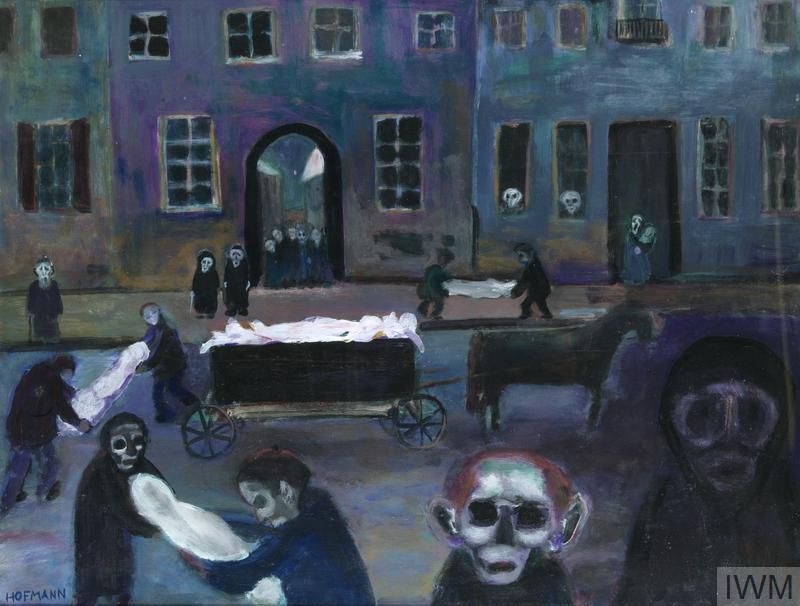
Picture: Edith Birkin, The Death Cart – Lodz Ghetto

Sermon for Birmingham Progressive Synagogue, Parshat Acharei Mot

high holy days · sermon · theology

You are the impossible child God yearned for.

You are the impossible child God yearned for.

You are a miracle. 

You may not hear that often, and you probably think about it even less, but you truly are.

The British-Indian poet Nikita Gill has written about just how unlikely is the fact of your existence:

“The very idea that you exist considering those extremely low odds is a miracle on its own. You see, the exact DNA that comes from your parents to create you could have only happened when your parents met, which is 1 chance in 20,000. That alone should be enough, but when you add up the fact that it has taken 5-10 million years of human evolution for you to exist at this time, in this moment, you begin to recognise just how much of an impossibility you are.”

– Nikita Gill

Add to that, and remember that you are a Jew. Remember that in those 10 million years of evolution, Judaism has existed for only 3,000 of them, and is still one of the world’s oldest continuously existing cultures. You are the product of a long line of ancestors, dating back to desert nomads, who, at one time, heard the voice of an invisible God, and kept that story alive for hundreds of generations. That is a miracle.

In the last century, the ancestors who held onto that story fled from countries all over the world, and migrated to farthest corners of the earth, and faced down war and genocide, and survived extermination. Faced with such experiences, many turned away from their heritage and disappeared from Jewish life.

But you are here, in the 21st Century, alive, and Jewish, and living out that story. You are the product of billions of years of matter interacting and millions of years of human evolution and thousands of years of cultural transmission. You are here. And that is an incredible, awe-inspiring miracle.

One of the prevailing themes of Rosh Hashanah is the miracle of human life. It is everywhere: in our liturgy, in our Torah portions, and in our haftarah. All of them are bound together by a sense of wonder at our existence.

Three weeks ago, we read the prophet Isaiah, who expressed joy at the wonder of childbirth. His great prophecy opens:

“Sing for joy, infertile woman, you who never bore a child! Sing for joy and laugh aloud, you who never felt a stomach cramp. Because the children of the barren are more numerous than those who suckled infants.”

But who is this talking about? Who is the sterile woman giving birth to the miracle child?

In the 9th Century, the great collection of rabbinic stories, Midrash Pesikta Rabbati, offered us three answers: Sarah, Hannah, and Jerusalem. At Rosh Hashanah, we read the stories of all three.

In the Torah portion, we read of Sarah’s miraculous labour. Sarah was elderly and post-menopausal. When three angels told her she would give birth in a year, she laughed. For years, she had yearned for a child, but, in her old age, she had given up. How would her withered husband and her empty womb bear a child? 

A year later, Sarah gave birth. She ate her words and called her baby boy Yitzhak, meaning ‘laughter.’ She said: “God has brought me laughter, and everyone who hears about this will laugh with me.”

A miracle. An impossible birth. So that infertile woman who had never had a child rejoiced, just as Isaiah described.

In our haftarah, we read, too, of Hannah’s wondrous labour. She was infertile. Her husband Elkanah’s other wife, Peninah, had plenty of children. Peninah became her rival, and relentlessly mocked her, saying that God had closed her womb.

In the depths of her despair, Hannah prayed to God. She whispered fervent promises to God that, if she was allowed a baby, he would be dedicated forever to religious service. 

As Hannah prayed, she was so full of silent anguish and tears, that the High Priest Eli thought she was drunk. He heckled her to sober up. But when she explained that her behaviour was the product of deep distress, Eli prayed with her that her wish be granted.

A year later, Hannah gave birth, and called her baby “Shmuel,” meaning “I asked God for this.”

Another miracle. A barren woman who bore no children rejoiced, just as Isaiah described.

Pesikta Rabbati offers a third infertile woman to whom Isaiah’s proclamation might refer: the city of Jerusalem.

At the last major event in the Jewish calendar, Tisha BeAv, we commemorated Jerusalem’s destruction. We fasted, wept and prayed, remembering how the holy city was razed to the ground. Following the destructions by Assyria and Rome, that city was left stripped of its inhabitants. Its most sacred spaces were desecrated and burned. The whole town was abandoned like an empty womb.

And out of that barren place came Judaism. At the time when it most seemed like the Jews had been destroyed, the rabbis came forward and gave them life previously unknown. They developed tefillah, Mishnah, midrash, and Talmud. 

They spread the message of ethical monotheism throughout the entire globe. Judaism, from its point of near-destruction, became one of the world’s most notable religions, and influenced civilisations everywhere.

Jerusalem was an infertile womb, out of which came more children than could ever have been imagined.

Sarah yearned for a child and was blessed. Hannah yearned for a child and was blessed. Jerusalem yearned for children, and now has millions.

But there is another impossible birth that we must celebrate. An unbridled miracle. A human being created by God out of nothing, who had the potential to be the saviour of all humanity.

Whose birth was that? 

Yours.

What, did you think I was going to say somebody else?

For the Christians, that person was Jesus. In their story, their Messiah was born by immaculate conception to a virgin mother. For them, Jesus’ birth fulfilled the prophecy related by Isaiah.

In the 9th Century CE, when this midrash was composed, Christianity had become a full-fledged international religion. It was the official doctrine of the Roman Empire, and was spreading throughout Europe through the Carolingian Empire. Christian polemicists criticised Jews for denying the truth of their Testament, and insisted that their story completed our Torah. 

Part of the motivation for the compiler of Pesikta Rabbati must have been to show that Isaiah could easily be proven from texts within the Jewish canon. But, more than a difference of interpretation, this midrash speaks to a fundamental difference between how Jews and Christians have seen the world. For us, Jesus is not the beloved child of God born by miracle. You are.

As Lily Montagu, the great religious reformer and East End social worker, put it:

“We have the belief that man can directly commune with his God, that he needs no intercessor […] The Christian feels himself brought into contact with God by means of Jesus, his Saviour. Jesus is conceived as, in a special sense, the son of God, and as able to direct all seekers to the divine sanctuary. We Jews hold that every man is the son of God, and that all His children have access to Him when they try to live righteously.”

– Lily Montagu

So, all humanity is God’s miraculous creation. All humanity is in direct relationship with our Divine Creator. And all humanity has the potential to bring this world closer to its salvation.

Rosh Hashanah, as a festival, marks the sixth day of the world’s creation, on which the first ever human being was made. It celebrates the miraculous creation of Adam HaRishon, the original person, sculpted from clay and breathed alive with the sacred air from God’s nostrils.

Consider what a wonder this is. Knowing all that we do about the history of the universe, how many billions of years must God have spent yearning to create the first ever person. 

How impossibly beautiful is it, that, after the creations of thousands of galaxies and multitudes of planets, the Universe somehow put together the exact elements that would support life. And that life became social and conscious and able to reflect on its own existence. And, conscious of its own selfhood, that being was able to reach beyond itself and worship the Eternal Mystery that created it.

Who knows what the chances are? But it is certainly a miracle.

The cosmos was, at one point, an insignificant speck, devoid even of matter, and now it includes human beings. And now it includes you.

You are the impossible child God yearned for. You are a miracle.

However much you wish to connect with your Creator, just think how much your Creator wants to connect with you. Whenever you feel like you can’t quite find God, just take a second to contemplate how many billions of years God spent trying to find you.

Your existence is a miracle, and I am so glad you are here.

Shana tovah.

festivals · theology

We are still leaving Egypt

We are still leaving Egypt.

There was a time when we lived at the whim of tyrants; when we worked without a break and only rested so we could work more; when we owned nothing but debts. 

There was a time when we lived in mitzrayim. Today, we translate that word as ‘Egypt,’ fixing it to a specific time and place. 

Our Torah does not permit us to read the story as if from a history textbook. Which Egypt were we living in? What were its borders? In which century did it take place? Who was the Pharaoh?

In Torah, all Pharaohs are simply called Pharaoh. To the migrant labourers and the chattel slaves of the ancient world, it made no difference whether the emperor was Ramses, Amenhotep or Cleopatra. As far as their lives were concerned, each century was broadly the same.

We want to imagine that this place is miles away from here and centuries apart from now. We want to draw a line to divide ourselves from the past.

The word for Egypt – mitzrayim – means ‘narrow, oppressive straits.’ It means places of anguish and control. That place does not have fixed borders between Sudan and the Mediterranean sea. It is a place we have all inhabited. It is a place we all still inhabit.

At Pesach, we are commanded to tell the story of the Exodus as if we ourselves had lived it. The haggadah instructs us to recall the events as if they are part of our collective experience. 

It is not just so that we can remember the bitterness of slavery in the taste of maror, or the tears of persecution in our salt water. This is far more than bringing a story to life. 

It is so that we will understand that Egypt was not simply one place and time. It is any place and time in which people are not free. And because it is any place and time, it is every place and time.

We must understand that we really were slaves in Egypt. We must believe, deep within the sinews of our bodies, that we are still there.

Because if we can remember how we were oppressed, we will remember that we were able to free ourselves. 

We will feel the strength and joy that comes from rising up and leaving constricting spaces. It is so that we will feel empowered to do it again. We must still leave Egypt.

The seder is a process of embodied retelling to help us understand that message.

Yes, in the first half of the seder, we read that we were slaves in the land of Egypt. But, in the second, we invoke Messianic redemption. 

When our plates are cleared and the afikoman has been retrieved and the dinner is done, we turn back to our haggadahs and complete our seder. 

We pour out a fifth glass of wine, open the door, and implore the prophet Elijah to return and finally bring us to freedom. We acknowledge that the struggle is not yet complete. We still have to leave the Egypts of our era.

As the seder concludes, we lift our glasses and promise: “next year in Jerusalem!”

Please do not mistake this toast for a tourism brochure. We are not praying for cheap easyJet tickets to Tel Aviv. The Jerusalem we hope to reach next year is miles away from the one in Israel today. 

Our fellow Reform Jews in Israel are still very much in exile, and crying out to leave their own narrow straits. If the Jerusalem in the contemporary Levant were the one we were reaching for, Judaism would be over. History would be complete, and so would the sacred purpose of the Jews.

If that were Jerusalem, the ultimate Jerusalem, we would have to say that we are satisfied with segregation, militarism, and fanaticism. 

But we are not. 

We are not in Jerusalem until the whole world knows unending freedom. Until there is no more oppression, we are all in Egypt.

We British Jews are still in Egypt too. We have made many advancements. We are citizens in our country with full civic rights. When this was granted to European Jews, many felt it was so miraculous that they considered the exile to be over.

Moses Mendelssohn, the founder of the Jewish Enlightenment, proposed that the social and moral progress encapsulated by Jewish emancipation would bring about a new society. A utopia of tolerance and conclusion based on the values Judaism had imparted to humanity. What would such a place be called? Jerusalem. 

He titled his book as such, anticipating that, when we reached such an age, Berlin would be Zion.

For all our greatest aspirations, Europe has not become the Promised Land. Not yet. Nor is Israel. Not yet. 

If we limit ourselves to imagining emancipation as a geographical phenomenon, we will keep chasing after new countries, hoping they will be our final destination, only to find that, in every location, we remain in exile.

That is because exile is not simply a place. It is a state of being isolated from the true and complete justice of God. 

That promised land is yet to be found.

As long as there is progress to be made, we will keep journeying.

As long as there are slopes to freedom, we will continue to climb that mountain. 

Until the day when we are all free, every year, we will pray that, next year, we will live in a world redeemed. 

Now, we are still leaving Egypt.

Next year in Jerusalem. 

sermon · social justice

A peasant farmer was my father

A peasant farmer was my father

When my mind wanders, I like to think about where I would go if I could travel in time. Have you ever considered this? When you would want to visit?

Personally, my first thought is Paris in the 1890s. In my higher moments, I project myself into medieval Andalus, the Golden Age of Hebrew poetry in Spain. 

And, of course, I’d love to go back to biblical times. Wouldn’t it be marvellous to see the First Temple in all its glory? What would it be like to inhabit that world of prophets and visionaries?

But this time travel thought experiment always comes with a corollary. I’d have to be a rich man. No matter what spot of history I got dropped in, the only way to enjoy it would be to be part of the elite.

If I were sent back to biblical times without that condition, I’d probably be a peasant farmer. We like to imagine our ancestors as great kings and high priests. In reality, they were less than a small fraction of the ancient Israelite population.

95% of people in the biblical period worked the land. Dropped back to the time of David and Solomon, we probably wouldn’t be in their courts, but in the fields. 

I take a perverse pride in this knowledge.

Think how hard they must have worked to bring that ancient society into being!

As a peasant farmer in the ancient world, you would have about 3 acres, growing different crops, including grains, fruit trees, and olives. You would, almost certainly, have a chicken run and a small herd of goats. 

If you were really fancy, you might also have a cow.

Your home would be a collection of huts and tents, stretching out to include your extended family. Each would be a bustling, cramped place, with pots and pans and a fire stove. Your animals would potter in and out of your sleeping quarters. 

I am not trying to paint a romantic vision of any of this. Your life would be hard. You would pull a plough with your own hands and sow seeds with your back hunched over. You would cultivate and cut and glean your trees in the searing heat. 

You would spin your own wool, stitch your own clothes, bake your own bread, build your own dwellings, subsist on whatever you needed to survive.

Yes, all that is true for women, too, with an additional burden. You would give birth to ten children and breast feed all of them. You would count yourself incredibly lucky if all of them lived past the age of 5. If they did, they would likely be married off in their teens. 

No, there is nothing romantic about the lives of our real ancestors. 

But we should be proud of them. 

Peasants, labourers and serfs might not be the subject of great poetry and sagas, but without their efforts, nothing exists. There could be no food, no shelter, no community, and no culture, without their graft. That gruelling work made civilisation possible.

This week’s parashah tells us something of how they built ancient Israelite society.

If they had just stuck to their own homesteads, they would have had to survive on the paltry gains of subsistence farming. In a bad year – if rains failed to fall or crops failed to grow – they would simply perish.

So, our family, the farmers of the ancient world, signed up to participate in the agrarian state. 

The agrarian state was responsible for distributing food and creating common irrigation and transport systems. In ancient Israel, the centre of that state was the Jerusalem Temple. 

Our parashah explains the criteria for participating in its systems. You must not glean your fields right to their edges, so that you leave enough for travellers and strangers. You must donate a tenth of your grain and livestock to support those in the community who are most vulnerable, like widows and orphans. 

In some ways, this is the foundation of the earliest welfare state. 

But the poor are not the only beneficiaries of this redistribution. 

In fact, they were not even its primary targets. 

Our parashah begins with a ritual that Israelites must undertake each year. At each harvest of the year, you must collect your first and best fruits. You must bring these, the choicest of all the crops you worked so hard to create, and give them to the priests.

You must lift them above your head and say: “A wandering Aramean was my father. He was enslaved in Egypt, but God brought him out into this land of milk and honey. Now, I bring before you, the first fruits of the soil that God has given me.”

The priest will sacrifice it, perform closed rituals, and eat it in front of you.

That priest did not work to produce those fruits. He did not share in the exhausting work of raising children in a hovel, or run ploughs over the land. In fact, he wasn’t responsible for any land.

The priest’s sole job was to be the leader of the ancient cult. He was in charge. He profited from your work. 

That great Temple in Jerusalem, with all its priests and writings and rituals, only existed because the poor majority paid in and made it happen. That entire society functioned on the basis of our ancestors’ labour. How could they have done it without the work of the people who harvested the grain, built the bricks, and cared for the sick? 

I don’t resent the ancient priests. 

That work made possible great cultural developments. At that time, we couldn’t have had literary culture, organised society, music or scientific discovery without a class who had the leisure time to devote to such pursuits.

We then wouldn’t have benefited from the innovations in agriculture, technology, transport and trade that makes our lives today less horrible than they were in ancient times.

But, while resentment for ancient figures might not be productive, we should feel entitled to be critical.

After all, their world is our world. For all the social progress we have made, the divisions that defined civilisations millenia ago are only greater than they were then.

Far fewer people profit far more from the work of the majority than ever did in the biblical period. 

Almost all of us, I know, are worried about how energy price gouging, interest rate rises, and higher costs of living will affect us. Some are already feeling the effects of an economy where wages won’t rise but prices keep going up. 

Meanwhile, the energy companies and their shareholders are making record profits. These last few years, which have been so frightening for most people, have been a period of great abundance for the world’s richest. 

This is not accidental. The rich are not rich in spite of the poor. They are rich because of the poor.

Perhaps those inequalities were essential to create our current world. But how much greater would society be if we decided to eradicate them? Just imagine what we could accomplish if nobody had to worry about heating their home or feeding their family.

We could unleash the great talents of everyone, whether priest or pauper; shareholder or sharecropper; king or taxi driver. We could enjoy this world, with all its bounties, without the constant friction of struggle.

On reflection, if I could travel in time, I don’t think the past would be the place for me. I would prefer, instead, to make my way to the future.

I want to go to the time when technology is harnessed to benefit everyone in the world, regardless of who they are and where they live. An era in which it is not just a small minority that creams off the profits of the many, but when everything is redistributed between everyone. One in which the gains of civilisation are shared with all humanity. 

We can’t change the past. We can’t go back and rescue our ancestors from the harsh realities of peasantry. But we can build a different future for the next generation. We can make it so that the future is not defined by the same problems of the past.

Let us travel to that point in time together. 

Shabbat shalom.

Ki Tavo 5782, South West Essex and Settlement Reform Synagogue

fast · sermon · theology

Tonight, we begin grieving.

Tonight, we begin grieving.

As the sun goes down, I will eat my last meal for 25 hours. I won’t bathe or shave or change. I’ll probably read a book, or some poetry, and contemplate what it means to be destroyed.

Tonight, the fast of Tisha bAv begins. It commemorates every disaster that has befallen the Jewish people. If we were to dwell on every time we had been injured, our year would be non-stop suffering. We would never have time to celebrate. 

So, we compound all our catastrophes onto a single day. Every exile. Every genocide. Every desecration of sacred texts and spaces. Every racist law and every violent uprising. As far as we are concerned, they all happened on this day: on Tisha BAv.

It is a day of immense profundity. The tunes are haunting. The texts are harrowing. It is the hardest fast of the year, taking place in the heat of summer, with long days and disturbing topics. 

For years, I marked this fast alone. Very few Progressive Jews wanted to participate. Many Reform and Liberal synagogues don’t mark it at all. I would turn up to Bevis Marks, the centre of Sephardi Jewish life in the city, where cantors from the Netherlands regaled us with their greatest piyyutim. But this occasion attracted so little interest from the people who shared my religious beliefs: the other Progressives. 

Why would they not want to mark it?

The first reason is emotional. It is difficult to sit in misery for a full day. It paints a tragic picture of our past, compounding every struggle we have faced into a single problem, overwrit by centuries of destruction. 

In fact, I think this objection is what really commends Tish bAv. Grieving what’s gone can teach us important lessons. It can put us in touch with our most challenging emotions, like guilt, misery and despair. 

True, if we went around all the time complaining about how difficult Jewish history had been, we would never move on, and we would be bound by a negative self-image. By placing all of Jewish suffering on a single day, we are able to confront atrocities, and engage with them, then move on.

Progressives have also objected to Tish bAv on theological grounds. As Reform Jews, we have no desire to return to the Temple or its sacrifices. We are the heirs to the rabbinic revolution, which rebuilt our entire religion after Jerusalem was destroyed. 

Because of the early rabbis, we became a Diaspora people; replaced animal slaughter with prayer; and substituted hereditary priests for a system in which all Jews could be equals. 

But those rabbis understood something profound. You have to engage with the past in order to progress from it. We cannot just pretend things never happened. 

Our rabbis pored over their ancient texts, repeated their oral traditions, and grappled with the world that had gone before. They may have moved beyond the time of the Temple, but they always referred back to it. They faced their tragedy, and rebuilt their religion.

Perhaps the biggest reason that Tish bAv is not given the respect it’s due is because it has been replaced. Since the Second World War, many Jews now instead mark Yom HaShoah or Holocaust Memorial Day.

This is understandable. The Holocaust was, of course, unprecedented in the scale of slaughter; the degree to which industrial machinery could be dedicated to human suffering; and the gleeful participation of so much of Europe in Jewish extermination. It is absolutely right to mark it and honour so many outrageous deaths.

But these events have their own theology. They teach that Jewish suffering was a thing of the past, now resolved. In the case of Holocaust Memorial Day, the problem has now been solved by the United Nations in international commitments to human rights. 

Yom HaShoah is part of the secular cycle of the Israeli calendar, a week before Yom HaAtzmaut celebrates Israel’s victory in 1948, and a fortnight before Yom Yerushalayim celebrates Israel’s Conquest of Jerusalem in 1968. Yom HaShoah suggests that the answer to Jewish suffering is the state of Israel’s military might.

These may well be the political views of some congregants, but they are not the religious views of rabbinic Judaism. Judaism shies away from simplistic answers to subjugation and refuses to allow genocides to be resolved by slogans. We actually have to engage with the horrors of the Shoah, and to understand that they cannot be explained away. We have to sit with our grief.

Tisha bAv poses an alternative response to our experiences of evil. It tells us to fast and grieve, but, unlike on any other fast, we are to carry on working. We can still do many of the things we would on a normal day. Our world is upended, but we must keep going. 

The idea of Tish bAv is that we can face destruction and, through faith and community, nevertheless survive. We can still hold onto our God and our values. Even while we are being destroyed, we are able to rebuild.

Consider how Reform Jews of the past responded to the Shoah in the 20th Century. While in the camps, Rabbi Leo Baeck preached Torah beside waste heaps. When he was liberated from Theresienstadt, he immediately published a work of optimistic theology, expressing his hope of Judaism’s continuity. Think of Rabbi Albert Friedlander, who, having escaped the Nazis, spent the post-war years establishing synagogues and saving scrolls so that our religion could be preserved. Their lives are a testament to Jewish hope in the face of despair.

That is the story told by Tisha bAv. That, yes, we have suffered, but we have also survived. We have refused to let Judaism be extinguished. Into every generation, we have passed on our values and our faith. We have always found ways to rebuild. Tish bAv teaches us that we may always suffer, but that we have also always carried on. 

So, tonight, we begin grieving. I hope you will join me at ELELS for our ECAMPS service to mark this important fast. We will read poetry, hear the chanting of the Megillah, and reflect on the tragedies of destroyed cities and vanquished people. And, through this sorrow, we will learn again the strength and creativity of our people. We will remember all those who have kept this Judaism alive.

Tonight, we begin grieving. Tomorrow night, we will begin rebuilding.

Shabbat shalom.