interfaith · sermon · torah

Do not hide the tears of tolerance


As some of you know, my kippah is a permanent fixture on my head, and has been since my early 20s. I often get asked whether I experience any feedback for being so visibly Jewish. My answer is: yes. Occasionally, Christians come up to me and say “shalom.” I say “shalom” back.

Well, this week, I have a more interesting story to tell.

Last Saturday night, Laurence and I were on our way back from a friend’s birthday lip synch. (Yes, in my time off, I do competitively mime to Nicki Minaj wearing a space suit and kitten heels.)

We were heading into Vauxhall Station. A group of men in their early 20s were dancing around, holding hands, and reaching out their hands for others to join them.

It will probably not surprise you to hear that I joined in. The boys cheered.

Within moments of joining them, I realised I might have made a terrible mistake. The man whose hand I was holding was, in fact, wearing a Palestine football shirt. They were all speaking Arabic. A taller man noticed my kippah and said to the others “hu yehudi.” I know what this means in Arabic, because you say it the same way in Hebrew: he’s Jewish.

And I thought, well, it’s basically the same language, I’ll try talking with them in Hebrew. Friends, these gentlemen did not, in fact, speak Hebrew. Their English was pretty stilted too.

Right next to us, a fist fight broke out between two white guys.

We all fumbled awkwardly, and tried to communicate across a language barrier. The tension became palpable. It was just me and Laurence and a whole group of Palestinian men.

I asked: “where are you from?”

“We are from Gaza,” the one who had been holding my hand said. “Do you support the government?”

I said: “of course not.”

The man said: “Really?”

I said: “Yes.”

The men cheered, and resumed dancing. I got on my train back to Ditton.

There was no time to explain that the Israeli government wasn’t actually my government at all, but my answer would have been the same whichever government he was talking about.

I am under no illusion that this story could have ended differently. But, as it is, the story ended with dancing in the streets of London, and everybody walking away with their dignity intact.

Now, I may have been the first visibly Jewish person these men had met who was not wearing a military uniform. And perhaps now, with the freedom of London, they will get the chance to learn more about who Jews are.

And perhaps I will go away and actually do my Arabic homework so that I can have a better quality conversation. At least, in the future, I won’t default to Hebrew as a good enough alternative.

I think we tend to imagine that tolerance is the true harmony of everyone fully understanding each other; living side by side; eating in the same restaurants; celebrating and grieving together.

I still believe that true peace will come, when everyone has full equality, and nobody has any more need for conflict.

But, most of the time, life is not like that.

As long as there is inequality, those with less will want what those with more have; and those who have more power will exert it over those with less. Until we all have everything we need, there will be conflict for the power and possessions we lack.

Tolerance, in our society, is the decision to set grudges aside, to suspend prejudice, and to just let each other go on with life. It is the decision of the stronger to spare the weaker. It is a choice to ignore stock characters and old grievances for the sake of everyone getting on with their day.

It is not easy passivity, but a conscious choice to accept the world as it is. Sometimes, that is painful.

So it is with Joseph and his brothers.

Consider all the array of feelings Joseph must have held when he first saw his brothers. The last time he had encountered them, they had thrown him in a pit, then sold him at a cheap price to travelling merchants.

Do you think he was in the mood for forgiving?

And what about his brothers? They are now in abject poverty. They have travelled miles on foot to escape famine in their homeland. And they have to prostrate themselves and beg before a foreign king in a language they do not understand.

The powerful and the powerless have switched places; the resources are now all in Joseph’s hands.

Joseph doesn’t just shrug his shoulders and get over it. Instead, he decides to test his brothers and bring his entire estranged family to Egypt.

Joseph hides a silver cup in his brother Benjamin’s satchel and uses the supposed theft as a pretext to hold him hostage. Joseph announces to his family that he is going to keep their youngest brother as a slave, making them relive what they did to him.

At the moment when our parashah ends, we don’t actually know how the story is going to pan out. We, who have heard this story many times, are already aware that the brothers will repent and offer their lives for Benjamin’s. We know that Joseph will announce himself and forgive his siblings.

But, for this week, we are suspended in the tests of Joseph and his brothers.

The Joseph narrative is the longest part of the Book of Genesis, not least because of the extensive detail given to Jacob’s sons’ journey back and forth between the two countries, and the lengthy description of how Joseph examines his brothers’ hearts.

This story is, in fact, repeated almost exactly in the Quran. Surah Yusuf is a lengthy narrative in the formative text of Islam. Within the chapter itself, the Quran says that it is repeating the words of previous prophets and is confirming the prior revelation of the Torah.

But there is a key difference between the Torah’s version and the Quran’s. In the Islamic retelling, Benjamin is in on the ruse from the start. Joseph reveals himself to Benjamin before hiding the cup and tells him to go along with the ploy.

Perhaps the goal here is to make Joseph seem more righteous. That is, indeed, what many of our midrash do when they retell Torah narratives. They iron out biblical figures’ imperfections.

But, if you look at the texts of the stories side by side, the parallel verse in the Torah reveals something more interesting. In our recension, rather than revealing himself, Joseph runs off to his room and cries.

The Quran’s version, then, makes the story less painful. It glosses over how heart-wrenching and difficult this process is of forgiving and letting go.

There is a lesson here for us. We all want to jump ahead to the part of the story where everyone is friends again and loves each other. We all want to fast forward to the point in history where there is lasting peace and harmony.

But, the Torah tells us, you have to stay in the feelings. You have to live in the mess for a while.

As Jews in Britain, we are forever doing a delicate dance of interfaith relations, while plagued by trauma. As the whole world seems ever more oriented towards intolerance and tribalism, we still need to show up to shared spaces with our best faces and our best expectations of others. We need to set aside prejudices for the sake of a better society.

And that is hard. So don’t gloss over the tears. Don’t hide the pain away in another room. Let us be honest with ourselves and each other that the task of building a multicultural society is tough.

But, while we hold the challenge, remember that we do still know how this story ends. We know that we are heading towards an ultimate conclusion of liberty and equality. God has a plan for the world. And it will end with true peace.

One day, all people will embrace one another as members of the human family. One day, we will all weep together over the years wasted on war. One day, without fear, we will all dance unabashedly in the streets.

May that time come soon and last forever.

Amen.

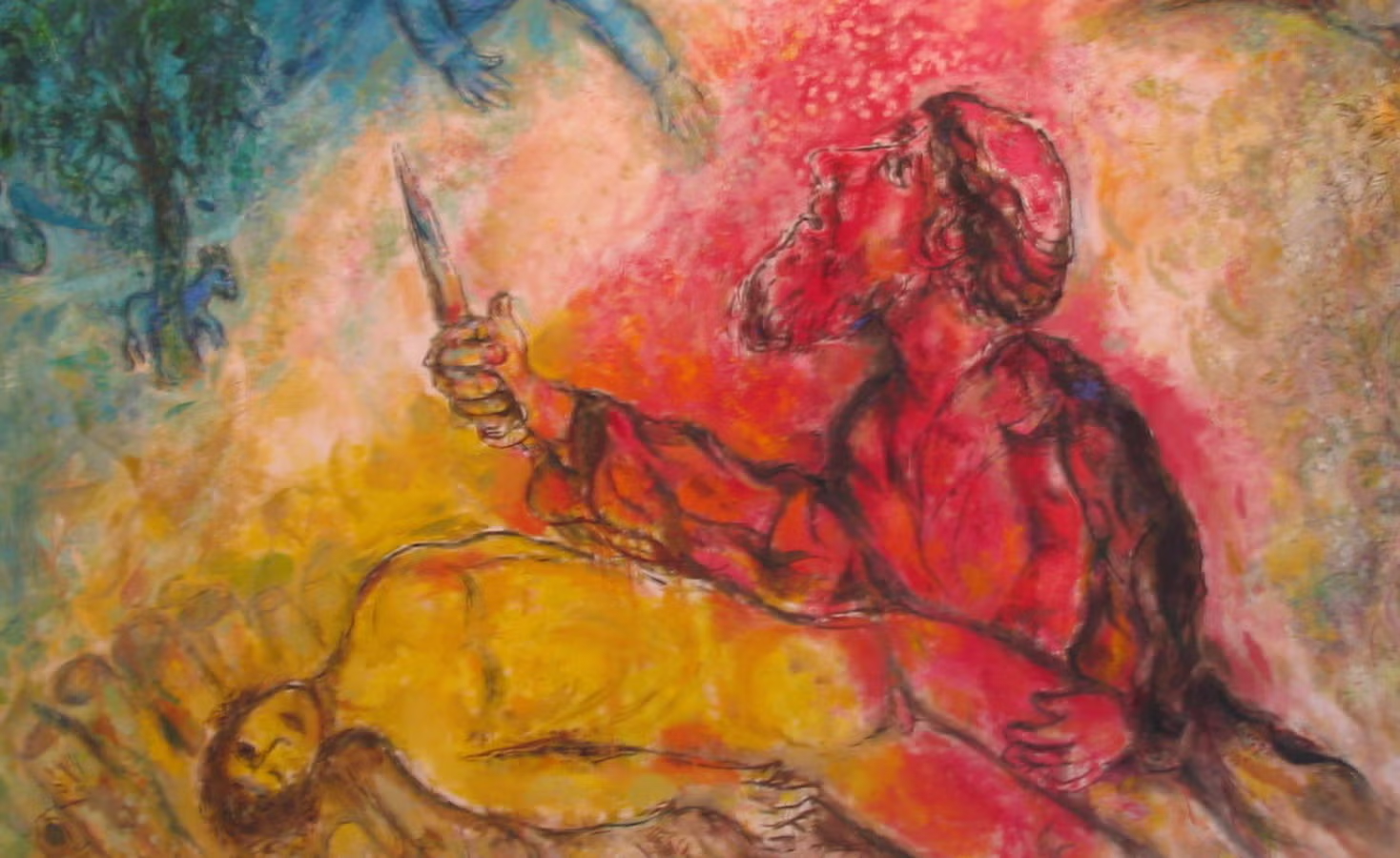
Alexander Ivanov, The Silver Goblet is Found in Benjamin’s Sack

judaism · sermon · theology

God is here, and I did not know it

One of the loveliest parts of synagogue life, which many of you will have experienced here, is getting to teach our religion to visiting schools. It’s such a joy to pull out things we normally leave aside, and point to things we often take for granted.

By teaching others about our ritual objects, things that are familiar become foreign. We have to reconsider what they are, and why we have them.

Take, for example, the tallit. Of course, these prayer shawls have existed in some form since biblical times. But, showing them to non-Jewish children, we need to come up with an explanation for why we continue to use them here and now.

I tell the school kids: these four corners remind me that God is everywhere, and the knots on them tell me all of the good deeds I can do in my life.

I do, indeed, feel that way when I wrap myself in the tzitzit. I feel enveloped by God’s mantle. I see the strings and think of all the mitzvot- not, in the Orthodox sense of listing out food rules, but of all that God has asked me to do in this world.

It’s nice to have a visible reminder of God’s presence.

That’s just what Jacob gets in this week’s Torah portion. Jacob lies down while travelling on a certain mountain and has the profound dream of a ladder ascending to heaven, with angels going up and down.

In his dream, the Eternal One appears to promise Jacob many descendants, spreading out like dust across the desert, and that God will forever accompany Jacob on his travels.

When he awakes, Jacob exclaims: “Wow, God is in this place and I did not know it!”

How could Jacob not realise that God was on that mountain? Surely he already knows that God is everywhere?

Perhaps Jacob did not realise already that God is everywhere. For some commentators, this is the beginning of Jacob’s prophecy. Only now does he really understand who God is and that this God is with him.

There is a deeper meaning in the language, too. Before the revelation, God is called Elohim. For the ancients, Elohim was universal- the God that permeates all places and things.

Then, in the dream, God is announced by the ineffable Name, Hashem, which we often render as Adonai. This name of God, in Torah, is specific. It is the personal God, who communicates directly with human beings.

When Jacob awakes, he says: “Behold, Hashem is in this place, and I did not know it.”

Jacob knew that God in general was there, because God is generally everywhere, but only at this moment does Jacob realise that the personal God who cares about him is also present.

Now we can understand why God says to Jacob: “I will not leave you until I have done with you what I promised.” God is helping Jacob understand that he is never truly alone. Not only is the world full of God, but so is Jacob’s own life.

In fact, in the moment before Jacob falls asleep, a miracle happens that is so subtle it can’t be noticed until after he wakes up.

When Jacob lays down his head, the Torah says there are many stones in the place, and he takes one of them as a pillow. When he wakes up, there is only one under his head.

Our Talmud says that this is a divine act. According to Rabbi Yitzḥak, all the stones on the mountain argued with each other about who would lie under Jacob’s head. Unable to decide, they merged together into a single rock. That rock, in turn, became an altar to God.

This is a wonderful view of the world, where God is not only in all places and with human beings personally, but acts in every part of nature. Even stones are agents of miracles and servants of God.

If we take seriously this idea that God is everywhere and personally connected with all that exists, there are real consequences for our lives. It means that everything is sacred. It suggests that we need to treat this world as an arena for revealing divinity.

For Progressive Jews, this is one way we might think of commandments. Rather than just a list of dos and don’ts, they’re an attitude towards reality. They see everything as an opportunity to do good, and to make the world better. We are blessed with the chance to show how God is everywhere, including in our own actions.

The same section of the Talmud says that this is why God loves humanity so much. Angels can only praise God when they are told to. Rocks can only move by miracle. But we, endowed with freedom and reason, can perform miracles and make things sacred whenever we want.

That’s what I see when I look at the tzitzit of my tallit. That God is in every place and that every moment is a chance to do right.

You don’t need to wear a tallit to do that. This is my suggestion to you for this week. Try and shift, ever so slightly, how you see the world.

Look around, for a moment, and imagine that everything permeates God’s presence. See God in the bricks of your home and the slabs of the street. At some point this week, try to picture the space where you are as a massive canvas that you can paint with good deeds.

Let us all try to be like Jacob and say: “Wow, God was here, and I did not even know it.”

Shabbat shalom.


high holy days · judaism · sermon

If God can change, why can’t you?

Everyone changes. People change all the time.

In our Scriptures, the changes are often dramatic. 

Avram is an idol worshipper who lives in Mesopotamia, then undergoes complete conversion to monotheism and sets out on foot to a new country. With that, he gets a new name: Abraham.

Sarai is barren then, miraculously, in her old age, conceives a son. God gives her a new name: Sarah.

Jacob is a lying trickster who wrestles with an angel in the wilderness. When his heart has truly changed, he gets a new name: Yisrael. 

In fact, in each biblical story, a change of direction, outlook, and often name, are the key points of the narrative.

So, what about our Rosh Hashanah reading? Who is it that changes there?

In the Aqeidah, our Torah reading for the new year, Abraham is called upon to climb a mountain and sacrifice his son.

We know nothing about Sarah, who is largely kept out of the story. We don’t know anything of how Isaac feels about this, since he stops talking once he realises what his dad could do to him. 

Abraham is remarkably unchanged. At the bottom of the mountain, he is willing to do whatever God says. At the top, God says Abraham is no longer required to sacrifice his son, and to sacrifice the ram instead. At the top of the mountain, Abraham still just does whatever God says.

But there is a character who really changes in this story: God. 

God begins the narrative as zealous and demanding of human sacrifice. God ends the story compassionate and eager to enter into meaningful relationships. God begins by effectively threatening to blot out all of Abraham’s children, then ends by promising Abraham as many descendants as stars in the sky.

And, yes, God undergoes a change of name. Through the whole of the story, God is called Elohim, a name associated with strict justice and universal truth. At the very end, God is revealed by a new name – יהוה – Adonai, a name associated with the close personal relationship God has with every human being. 

In this story, the character who undergoes the greatest change is God.

Even God, the Creator of the world, the Almighty and All-Powerful, can transform. The Holy One, who by nature is completely eternal, can shift from being strict and distant to close and loving.

So, if even God can change, why can’t you?

In our Talmud, the rabbis introduce us to the idea that we are supposed to imitate God.

Rabbi Hama baRabbi Hanina teaches: be like God. Just as God clothed Adam, you will care for the poor. Just as God visited Abraham when he was unwell, you will visit the sick in your community. Just as God consoled Isaac over the death of his father Abraham, you will comfort the mourners. Just as God buried Moses, you will inter the dead.

God shows us a model of how we ought to live. Like God, we are supposed to be compassionate, loving, kind, morally clear, and doing justice in the world.

But more than that. Like God, we are supposed to change.

Here, at Rosh Hashanah, we learn: just as God can change, so can we.

We are made in God’s image. At the start of each year, we read a story where our Creator transforms. So we know that we can change too.

We can face our fast-shifting world. We can rise to the challenge of our changing community. We can look inside ourselves and love our own souls a little more.

Blessed are You, Eternal One our God, who gives us the power to change.

judaism · sermon · torah

Who created the Jews?

One day, word came to Joseph, “Your father is failing rapidly.” So Joseph went to visit his father, and he took with him his two sons, Manasseh and Ephraim.

 When Joseph arrived, Jacob was told, “Your son Joseph has come to see you.” So Jacob gathered his strength and sat up in his bed.

Jacob was half blind because of his age and could hardly see. So Joseph brought the boys close to him, and Jacob kissed and embraced them. Then Jacob said to Joseph, “I never thought I would see your face again, but now God has let me see your children, too!”

He drew them close, so close, and kissed their foreheads, then offered his blessing, his last testimony upon his grandchildren. He placed his hands on his grandchildren’s heads and said:

“The  whole world hates us! They’ve always hated us, right from Pharaoh until today. They’ll never accept us, because they’re jealous of us. They can’t stop thinking about us, even though we’re a tiny fraction of the world. Well, good! We’re going to keep being Jewish to spite them. That’s it, boys, be Jewish to wind up the antisemites. As long as they hate us, wear your yarmulkes.”

Of course, this is not what Jacob said to his grandchildren. 

What would have happened to Jews and Judaism if this was all Jacob had to pass on?

Ephraim and Mannasheh would have nothing on which to base their identities but a negative. They would see themselves as Jews only by victim of circumstance. Their choices would be to reluctantly accept their Jewish status as a miserable burden from previous generations; or to concoct a paranoid worldview that lashed out at everyone; or to ditch being Jewish as soon as they got the chance. 

Jacob would just have left the boys a neurotic mess, with no pride in themselves or joy in their lives. 

Jacob would not have said this to his children, but what are we teaching to ours? Are we teaching them to love being Jewish, with all its culture, rituals, festivals, beliefs, and ways of building community? Are we showing them how to love themselves and their heritage so that they can delight in it for many generations?

Or, are we imparting a negative identity based on misery and fear? 

If you open up some of our communal newspapers or listen to some of our representative bodies, it is very much the latter. Maybe it is not as vulgar as the parody I just made up for Jacob, but it comes through in how they talk, and what stories they choose to tell.

It is as if, for them, Jews only exist because of antisemites, and our Jewishness is only exerted when defending ourselves against antisemitism. 

This idea is not new.

In 1944, as the war came to an end, French philosopher Jean-Paul Sartre was trying to understand antisemitism. He wrote “Portrait of an Antisemite,” in which he looked to his contemporary antisemitism in France. Sartre saw antisemitism as a lie to uphold class distinctions. The rich relied on antisemitism because it gave them an excuse to put the blame for inequality and injustice somewhere else. The poor turned to antisemitism because, by creating outsiders, it gave them a feeling of belonging to a nation in which they really had no portion.

Antisemites, he said, were people who couldn’t face their own reality, and absconded from their own freedom, to project their fears onto Jews, both real and imagined. From this, he coined the famous saying that “if Jews didn’t exist, antisemites would invent them.”

This was a useful way to begin to understand antisemitism – as a fear constructed about Jews, but in spite of what any Jews were actually like. 

Sartre then goes on to ask a question: “does the Jew exist?” That is, if antisemites are just angry at imaginary Jews, what does that make of real Jews? Sartre concludes that Jews do exist, because of their shared experience of antisemitism. Jews exist in response to the persecution they face. Quite literally, he says, “the antisemite creates the Jew.”

The Jews themselves, he said, were outside of history, but victims of its oppression. If antisemitism were to disappear, then, so, too, would Jews. If only everyone were to throw off the shackles of class society, the Revolution would resolve the contradictions that antisemitism needed, and Jews would be able to assimilate into a newly-ordered utopia. Then, they could give up being Jews, and finally become citizens of their countries.

What he outlines is really a popular Bolshevik understanding of antisemitism, sprinkled with existentialism. For many opponents of antisemitism, its appeal was that it could suggest a way out of hatred and racism. 

But, for those of who are Jews, that’s not helpful at all. If being liberated as people means being destroyed as Jews, why would we want such a thing?

Sartre had a friend, interlocutor, and fellow intellectual, in Albert Memmi. Like Sartre, he was a French-inflected socialist. But, unlike Sartre, Memmi was a Jew. Born in Tunisia in 1920 to a poor Jewish family, Memmi became a leading thinker, and a revolutionary in Tunisia’s war for independence. Sartre admired Memmi, and brought his anticolonial writings to a European audience.

In response, Memmi wrote “Portrait of a Jew,” and its follow-up, “The Liberation of the Jew.” Memmi was able to describe first-hand experiences of antisemitism on two continents. His personal struggles with prejudice elucidated very clearly why Jews would not want to assimilate into Christian France, even in the classless society Sartre imagined. Centuries of racism and religious discrimination showed him that neither Christianity nor Frenchness offered much hope for Jewish emancipation.

More interestingly, Memmi decided to answer for himself the question, “does the Jew exist?” For Memmi, the answer was a resounding “yes.” Jews exist, and, contra Sartre, have our own history, culture, and civilisation. Yes, that has been created in response to antisemitism, but also in spite of it. Jews were constantly creating our own culture.

Jewishness, said Memmi, was what Jews decided to create in each generation, and could be constantly remade, as part of Jews’ engagement with their own heritage. For Memmi, if antisemitism did not exist, Jews still would. Even if, as many Bolsheviks imagined, the world could be freed of superstitious religion, the Jewish national culture would carry on, and thrive in new ways.

So, antisemitism may create the Jewish condition, but it was the Jews who created Jewishness. We were the authors of our history.

After the service, we will hear from Rachel Shabi, as she talks to us about antisemitism and its challenges. Her thoughts are prescient, and we should pay close attention to them. We need to understand antisemitism, where it comes from, and how to combat it.

Yet we must remember that studying antisemitism can only tell us about antisemites. It cannot teach us about Jews. 

Jews make Jews. We decide who we are. Through our love of our heritage and community, we build up Judaism, and we make it what it should be.

So, when we talk to the younger people in our communities, we cannot let their identities be formed by fear of antisemitism. 

We must tell them why we have chosen to keep on being Jewish, and give them good reasons to keep it up too. Whether raised Jewish, converted, or affirmed, all of us have chosen being Jewish, and for good reasons that are bound up in love, not defined by hate.

Tell them about your favourite recipes and the best of Jewish songs. Show them Jewish art and take them to Jewish plays. Celebrate the festivals with them because you truly want to bring them to life. Mourn and fast with them because it is filled with meaning.

Teach them that God has given us a sacred task on earth; that we exist in this world to perfect it. That everything we do can light up divine sparks. That we are called upon to unify all that exists with its Creator.

Bless them with the words that Jacob actually spoke, and say:

“May the God before whom my grandfather Abraham and my father, Isaac, walked—
the God who has been my shepherd all my life, to this very day, the Angel who has redeemed me from all harm. May the Eternal One bless these children. May they preserve my name and the names of Abraham and Isaac. And may their descendants multiply greatly throughout the earth.”

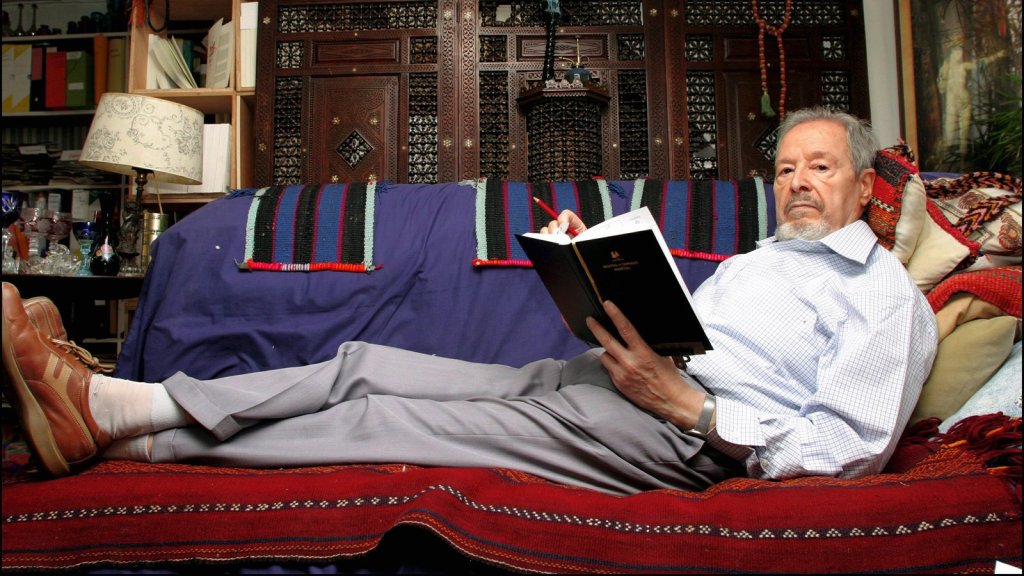
Albert Memmi

sermon · torah

The things you hate in others are the things you hate in you.

The things you hate in others are the things you hate in you.

All too often, we create monsters out of others because we fear there is something monstrous in ourselves. We turn outsiders into figures of hate because there is something we cannot stand inside ourselves.

In the Talmud, Laban is called the trickiest of tricksters. He came from a family of tricksters, in a town of tricksters, and all he ever did was trick.

Now, Laban was indeed a trickster. He was a thief and a manipulator. But was he really the worst of the worst? Most importantly, was he really worse than Jacob?

Laban did wrong, multiple times. He behaved appallingly. 

From the outset, he took Jacob in on false pretences. 

Laban told Jacob that, if he worked for him for seven years, he could marry his younger daughter, Rachel. Jacob adored Rachel, and was willing to do anything for her, so fulfilled his obligations. 

Then, on the day of the wedding, Laban swapped out Rachel for her older sister, Leah. Laban made Jacob work another seven years to marry the woman of his dreams.

Once Jacob had married both daughters, Laban continued to trick and deceive. He kept trying to rob Jacob, arbitrarily changing the terms of the contract. 

Jacob says that Laban had tried to swindle him with new rules ten times. In our midrash, the rabbis say it was in fact a hundred. Laban absolutely stole, and absolutely tricked.

Now, can we compare this to Jacob?

Only last week, we saw how Jacob tricked his father and his brother to steal from them. Jacob dressed up as his brother, pretended to cook like his brother, and stole his brother’s birthright. Jacob took advantage of his elderly father, who was going blind, to swindle him out of a blessing.

Jacob, too, stole and tricked.

To read the rabbinic tradition, however, you would think it only went one way!

The midrash bends over backwards to exonerate Jacob. It says that his father, Isaac, knew what was going on all along, and was only pretending to be deceived. It says that his mother, Rebecca, was given prophecy by God, so she knew what the future of her sons entailed. Throughout rabbinic commentaries, we get apologia for why Jacob was really right to receive the birthright, and why Esau would have been a terrible choice.

None of this is in the text. It is really a PR campaign to protect Jacob’s reputation. 

Laban, by comparison, is subjected to thorough demonisation.

The rabbis say that Laban sought to kill Jacob, despite there being no evidence of it. They go further: Laban wanted to massacre the Israelites entirely so they would have no future. Laban wanted to subjugate the Israelites worse than Pharaoh ever could. The rabbis say Laban lived hundreds of years, and could think of nothing else but swindling Israelites throughout that entire time, motivated only by spite. They call him ugly, and stupid, and say he slept with animals.

Contrary to the plain reading of the text, our tradition turns Laban into a monster, with every flaw exaggerated to absurd degree. They warp him from being a simple trickster into a demonic tyrant.

Our rabbis’ goal is to divide the world into the two camps: the innocent and the evil. On the one side, they have Jacob, who, no matter what he did, can never be held accountable. On the other side, they have Laban, the pinnacle of malice. No matter what may have motivated him, Laban will always be depicted as a corrupt crook, lusting after the death and misery of others.

In fact, the crimes of Jacob and Laban were almost identical. Laban tricked; so did Jacob. Laban stole; so did Jacob. 

There is a good reason why the rabbis would want to defend Jacob and castigate Laban in this way. Jacob is us. He changed his name to Israel and became the founder of the Jewish people. If Jacob is bad, so are we. 

Laban is our enemy. If he can be excused, what does that make us? How can we be the good guy, if he is not the bad one?

Naomi Graetz, a scholar at Ben Gurion University, compiled all these sources and suggests that what is going on here is a classic case of negative projection. 

We know that Jacob did those bad things. But, if we throw them all onto Laban, they no longer stick to us. By constructing Laban as a monster, we can feel assured in the positive self-image we want to hold. 

This, she says, is what groups often do. They create “others” – people that they imagine to be different to them – so that they can throw at them the worst fears of what they themselves might be.

The things we hate in others are often, really, the things we like least about ourselves.

Hating others gives us an easy way to escape our own feelings of discomfort. If we can hate them, we don’t have to look too hard in our own mirror.

In mediaeval Europe, that was a big part of how antisemitism functioned. Jews were the “other” onto which their neighbours projected all their anxieties.

The Jews, according to the antisemitic imagination of the time, were usurers, stealing money from people. In the Middle Ages, most money-lenders were not Jewish. They were Christians. At this time, certain Christians were also becoming very wealthy as landlords and merchants. Rather than deal with it as a social problem shared by everyone, they racialised it. They turned it into a Jewish problem, so that they did not have to face it as their own.

Even the blood libel, a mediaeval conspiracy theory that Jews drank Christian blood, can be understood as projection. As part of regular Catholic services, they drink the blood of Jesus, in the form of wine. Clearly feeling some guilt about their own rituals, they thrust this fear onto the Jews. It is not us who drink blood, it’s them!

It is probably not a coincidence that the modern antisemitic trope of Jews ruling the world came about when the European empires were at their height.

Antisemitism was a way for Europeans to resolve their discomfort about who they were by turning it into hatred of someone else.

Still, if I only talk about how bad and racist others once were, I would be projecting. The point is not that they can do it, but that we can. 

We are very capable of making demons where there are just people. We can just as equally project our own fear by turning it into hatred of others.

We need to remember that the world is not made of heroes and villains. Humanity cannot be divided up so easily. 

If we look at the biblical story, as it appears in the Torah, Laban is not a monster. Nor is Jacob. They are just people. Flawed, messy, human beings, doing wrong, and making mistakes. They both did wrong. But neither of them were evil.

The Torah gives us a whole host of complicated characters. They are not models of perfect behaviour. They are not even moralising cautionary tales. They are just a reflection of reality: which is complex and scary. We learn best from our imperfect prophets. 

Rather than trying to resolve our anxieties with hatred, let us look inside ourselves.

When you see something in someone else that you hate, ask: what is it in me that makes me feel this?

When another group seems like devils, ask yourself: are we really angels?

People will do wrong. All the time. They will mess up and cause pain in all kinds of ways.

Most of the time, we cannot change that.

But we can work on the things we can change in ourselves.

We can forgive the things we cannot change. 

And if you accept that you are capable of harm, without it making you evil, you may be able to have compassion for yourself.

And you may find that you love yourself, after all. 

You may see yourself the way God sees you. As an imperfect human who makes mistakes. Not a monster. Just a mess. A thoroughly lovable mess. 

And if you can love yourself, warts and all, you may find you have less space left to hate others. You may find that you contain more compassion and empathy than you knew. 

The things we hate in others are the things we hate in ourselves.

The things we love in ourselves, we can love in others too.

Shabbat shalom.

judaism · sermon · torah

Hold onto your grudges

Friends, the message of this week’s homily is: hold on to your grudges. 

Throughout your life, people will hurt you. Sometimes intentionally, sometimes unintentionally, and you must hold on tight to that hurt. Make sure you bottle it up and let it fester until you are ready to seek revenge. 

That’s where great drama always comes from. Thanks to grudges, we were treated to eight seasons of Desperate Housewives.

At the end of your life, you may wonder what legacy to pass on to your children. Perhaps you have considered wealth or sentimental items or tidbits of wisdom. Can I suggest that you add to that list: give your children a grudge to bear.

The best kinds of grudges are intergenerational. It’s never enough to be resentful on your own. Share it with your loved ones.

If you can keep a grudge going until nobody remembers what the original broiges was about, you will have really succeeded. Without ancient grudges, we would never have had Romeo & Juliet. And look how well that turned out. 

So remember every way in which you were wronged and make sure to even the score.

That’s what King David did. At the end of his life, reflecting on his mortal life, and preparing for the hereafter, he called his son Solomon near to him. He began by offering up some advice. “Act like a man,” David instructed. 

From personal experience, I can tell you that whenever somebody has told me to man up, what follows is always emotionally healthy. And this occasion is no exception. 

David told Solomon: “Remember what Joab, son of Zeruiah, did to me. Remember how he engaged in bloodthirsty mutiny. Do what you like with him, but do not let his grey head go down to the grave in peace.”

And David wasn’t done. He had other grudges to pass on. “Solomon,” he urged. “Remember Shimei son of Gera, the Benjamite from Bahurim, who called down bitter curses on me the day I went to Mahanaim. I said I wouldn’t kill him. But I didn’t say you wouldn’t kill him. So do what you like with him, but do not let his grey head go down to the grave in peace.”

Like a good Jewish boy, Solomon made sure his reign over Israel began with a killing spree.

Let King David be a role model to you all. If someone has insulted you during the course of your life, make sure you remember their names. If you can’t get retribution yourself, make sure your bitterness lives on beyond the grave.

Now, you might think, “of course, King David has big gripes to pass on. He’s a king, after all. He had real enemies. All of my slights feel petty in comparison.” Don’t worry. If misery is good enough for the elites, it’s good enough for the masses, too. It’s time we took a stand for equal distribution of resentment. Anyone can carry hate.

Just look at Jacob. Jacob was blessed with thirteen children. And couldn’t stand any of them. Throughout their lives, he made sure they all knew who his favourites were. First, Joseph. Then Benjamin. 

At the end of his life, Jacob did what every good Jew ought to do. He settled old scores and told everyone what he really thought of them. He brought his boys round to make sure they could hear his views.

“Gather round, my sons, and listen to your father.”

“Reuben,” he says, “you will never succeed at anything.”

“Simeon and Levi, you are too angry to deal in anything but violence.”

“Issachar, you’re an ass. Dan, you’re a snake. Gad, people will trample all over you.”

Then, just to top it off, he turns to Joseph and says: “Joseph, you are really beautiful. You’ve done great things.”

That’s how you do it. That’s how you end your life, making sure the people close to you knew how little you thought of them.

But, for some reason, Joseph’s brothers did not love their blessings. They had hoped for a slightly more conciliatory deathbed scene.

So, they got together and talked to Joseph. They said: “Um, Joseph, you might not have heard this, but as dad lay dying, he begged you to forgive us. He said, now that you’re in charge of Egypt, you shouldn’t hurt us and you should let us have food here.”

And Joseph said: “Dad didn’t say that, did he?”

“No. Dad didn’t say that.”

If Joseph had learned from history and all the good examples you’ve heard, Joseph would have known that the best thing to do is hold onto his grudges and get revenge on his siblings while they were weakest.

But, in a shocking turn of events, Joseph decides not to. He says: “I’m not in the place of God. I’m not here to keep score and dole out punishment. Whatever has happened, do not be afraid; I will provide for you and your little ones.”

And, with just a few words, Joseph can annul decades of mistrust. He can undo his father’s callous favouritism. He can bind his siblings back together as a family.

And, with those words, Joseph seemingly corrects every sibling rivalry of his family. From Cain and Able to Abraham and Lot to Jacob and Esau. All of a sudden, an intergenerational curse is lifted. They can heal. 

Joseph had every reason to hold onto his grudges. He was sold into slavery. His brothers pretended he was dead. He was wrongly imprisoned. He was betrayed by his friends. Of everyone who had held their grudges, Joseph probably had been through the worst. 

But he decided to forgive. He concluded the origin story of the Jewish people with love and kindness. 

The Baal haTurim, a great Jewish lawmaker of the 14th Century, said that Joseph should stand as an example to us all. Say out loud what is hurting you rather than holding onto your pain. And harbour no desire for revenge.”

So, OK, I lied. The moral of this sermon wasn’t that grudges are good. Sure, they are natural, but they’re not helpful or healthy.

I don’t really think you should pass on your bitterness to your descendants. Tempting, but not constructive.

In fact, for a lot of this, I was being sarcastic. I hope you won’t hold it against me.

Shabbat shalom.

sermon · social justice · torah

After war

There is a particular kind of sadness that comes from remembering war. It is not only the needless loss of life, nor those who come home traumatised. There is something specific in the discomfort that comes after furious build-up, tragic participation, and ultimate reconciliation. 

In this week’s haftarah, Ovadiah promises a glorious war against Edom. The Edomites will be defeated and humiliated. Israel will be victorious and avenged. 

Ovadiah addresses Israel’s neighbouring nation of Edom: “For the violence against your brother Jacob, disgrace will surround you. You will be cut off for all eternity.”

He tells these nations: “The house of Jacob shall be fire, and the house of Esau shall be straw. They will set fire to it and consume it.”

In these bellicose proclamations, we get the feeling of the build-up to war. We realise, too, that Jacob and Esau are not just the names of characters in a story: they are representatives of nations.

Jacob is Israel. Esau is Edom. They are the respective countries on either side of the River Jordan. Their inhabitants imagine themselves as twin brothers, yet constantly in conflict.

This helps us make sense of the story in Torah this week. Jacob heads over to the river to make amends with Esau. He has been wrestling with his conscience and wants to make amends, but fears that if he puts forth an olive branch, Esau may kill him.

Jacob separates his clan into divisions to approach from different sides, like military battalions. He sends forward gifts and apologies with every single one. As he approaches his brother, he prostrated himself many times, bowing down in peaceful submission. Finally, they reach each other, hug, and cry. They are reconciled.

When we understand that these brothers are representatives of neighbouring nations, this is not just a story of family strife, or conflict between competing characters. It is the biblical redactors’ fantasy of what peace could mean. These countries could be united. Their bitter violence could be set aside. After years of fighting, people might once again embrace each other and cry with relief.

The special sadness of remembrance comes with contemplation after the war. What was it for? Whose interests did it serve? And how do we resolve to prevent it happening again?

After World War 1, poppies bloomed in Flanders Field, where some of the worst battles had been fought. Out of the trenches where so many had died, these scarlet flowers sprouted from the ground. They became a symbol. 

“Never again,” they said. 

Around 40 million people had died. Once it was over, many could no longer remember what they had been fighting for. The motivations of Empire and nationalism no longer seemed so compelling in the wreckage of war. Countries pledged to end the impetus to war with diplomacy, increased international cooperation and greater understanding between peoples.

After World War 2, the politicians once again pledged never again. Never again would fascism be able to rear its ugly head. They would combat, too, the root causes that had allowed Hitler to look appealing. No more would they allow such poverty and inequality to persist, giving way to racist scapegoats. 

The countries of Europe built social democracies, with universal healthcare systems and progressive welfare states. They said they would not repeat old mistakes. They formed alliances and international bodies that, they said, would prevent war.

For as long as I have been alive, Britain has been at war. Earlier this year, NATO troops finally withdrew from their twenty-year conflict in Afghanistan. It had begun when I was starting secondary school. Some of my friends enlisted to fight. 

At the time, we were told the war would avenge the World Trade Centre attacks; find Osama bin Laden; and defeat the Taliban. In the end, Osama bin Laden had never been Afghanistan and the Taliban emerged more powerful than ever. I doubt many of the victims of 9/11 feel much joy in seeing the war that has been carried out in their name.

When the war was declared, it was popular. Today, it is hard to find anyone who says they agreed with it.

Politicians declare war full of nationalist fervour and triumphant spirit, only to return defeated and bereft. Even the victors feel no glory once a war is won. They leave too much devastation in their wake.

Families are torn apart. Cities are destroyed. Lived are lost. Entire ways of life are destroyed. And, at the end of it all, the only thing to do is reflect on what went wrong. We promise once more to make peace.

The Torah’s narrative of Jacob and Esau offers us a glimpse of what peace might look like. It encourages us to look beyond the narrow excitement for violence proclaimed by Ovadiah and the promises of national glory. It reminds us to think of how much greater it would be to have peace.

Like the Prophets of old, we pray for the day when nation no longer lifts up sword against nation, and no more no peoples learn war.

May God grant us, and all the world, peace. 

Shabbat shalom.

I gave this sermon for Remembrance Shabbat, Parashat Vayishlach on Saturday 20th November at South West Essex and Settlement Reform Synagogue

interfaith · sermon · torah

Who gets to be Jacob?

I am told that, as a toddler, whenever it came to game-playing, I had to be Postman Pat. No matter what the game was, I insisted on playing that friendly gentleman with a black and white cat. As I grew up, I had to compete with other children for different parts in our roleplay. We couldn’t all be the robbers, somebody would have to be the cops. Not everyone can be the Yellow Power Ranger and we can’t all be Ginger Spice.

Those were, at least, the parts we competed for in the 1990s. It was fairly low stakes, but it seemed quite important at the time.

But it’s nothing compared to the fight for roles that went on in the 5th Century CE. This big broigus was not just between two individuals, but between two whole religious groups: the Jews and the Christians. That battle was played out in two foundational texts of our traditions: a sermon by St Augustine of Hippo on the Christian side and the midrash, Bereishit Rabbah, for the Jews. Both were determined that they were Jacob, and the other side was Esau.

Which one would get to be Jacob?

At stake in this question is an ancient prophecy, told to Rebecca while she was pregnant: “Two nations are in your womb, and two peoples will emerge from your body. One shall be stronger than the other; and the older shall serve the younger.”

When Rebecca gave birth to Jacob and Esau, she was not just birthing twins, but rival nations. A strong one and a weak one. An older one that would serve the younger.

We have Esau: the hairy, ruddy hunter. We have Jacob: the smart, younger upstart.

The contest over Isaac’s blessing and birthright laid out in our parashah was more than a competition between siblings. It was a war between peoples.

So which one is the Jews? And which one is the Christians?

As far as the Jewish texts are considered, Jacob must be the Jewish nation. Meak and smart? That’s us. Gentle but witty? Sounds Jewish. He even changed his name to Israel. Bnei Yisrael, the children of Israel, klal Yisrael, the community of Israel, daat Yisrael, the laws of the Jews. Surely Jacob must be us!

And meanwhile Esau… well, he’s Rome. He changed his name to Edom, which, granted, is on the other side of the River Jordan in Mount Seir, but was the birthplace of Rome’s most wicked emperor and Temple-destroyer, Hadrian. And look at those Romans. They’re the hairy, barbarous, fighting ones. They’ve got their swords and their empires, just as Esau had his bow and his field.

Bereishit Rabbah, our classical midrash on Genesis, spells it out for us.

Two proud nations are in your womb, one is proud of his world and one is proud of his kingdom. Two prides of their nations are in your womb – Hadrian amongst the gentiles and Solomon amongst the Israelites.

We’re Jacob. We’re the one that God has chosen. We are the descendants of Solomon, proud of the world of Torah and obligation. They’re Esau. They’re the other brother. They’re the descendants of Hadrian, proud of their ill-gotten Empire.

Except, of course, for one obvious problem. Jacob is supposed to be the younger brother. Aren’t we, the Jews, clearly the older sibling? Our revelation is much older than the Christian one and the kingdom of David long predates the Caesarian Empire.

This fact was not missed by our Christian interlocutors.

Foremost among these Christians was St Augustine of Hippo. Augustine was a Father of the Christian Church, a theologian living in North Africa. His ideas were definitive in Christianity for many centuries, and people of all religious stripes still reverentially refer back to his writings. As far as Augustine was concerned, Jacob had to be Christendom. Israel, God’s treasured child, was the Church.

True, says Augustine, the Jewish nation sprang from Jacob, but since then, they have gone on to become Esau. They’re the elder people whom God has rejected. Esau was born shaggy and hairy, which means full of sins. Just look at the Jews – that’s clearly them!

Augustine continues: the prophecy promised that the elder would serve the younger, but that never happens in the biblical text. Esau goes on to become very rich and both wind up blessed in their lifetimes. Clearly, this refers to events that had not yet transpired: that the real Jacob would go on to have the upper hand. Now look at the world of Augustine, where the Christian Empire spans the globe and the Jews are a fractured diaspora in their lands. Surely this is the proof that the Jews are now Esau, serving their younger brother, the Christian Jacob.[1]

This battle of biblical exegesis probably sounds quite twee today. After all, why should it matter which of our religions gets to be Jacob? But this battle for religious identity and purpose shaped interfaith relations in medieval Europe.

If the Jews were Esau, then the Christians had replaced them as Jacob. Judaism was superseded, no longer necessary, and its practitioners were hairy remnants of an outdated doctrine. As Esau, the Jews were a savage menace who needed to be tamed by the genteel, pious Christians in their role as Jacob. This Christian doctrine was the theological basis for Jewish subjugation in Europe.

Faced with such hostility and oppression, it was only natural that medieval Jews felt the need to double down and insist that they were still Jacob. They imagined that Christian dominion would only last so long but that the Jews would ultimately triumph. They could still be Israel, despite what was said about them.

The modern era has seen reconciliation between Jews and Christians. Over time, theologians and historians on both sides have come to emphasise their kinship over rivalry. Perhaps, in the conflict over who got to be Jacob, these twin religions forgot that they were, in fact, siblings. Perhaps, still stuck in childhood contests, our communities had ignored the way the story ends.

By the time of the story’s completion, Jacob and Esau are no longer warring for the same birthright. They have both struggled, and lost, and achieved their own blessing. In maturity, Jacob and Esau meet again and wrap their arms around each other. They weep as they realise that God’s blessing is not finite. They never needed to fight over it.

After 2000 years of struggle, perhaps we Jews and Christians can reach the same intellectual adulthood. The campaign for who is the favourite brother can be put aside as we realise that we are on twin paths. We are both children of the same Divine Parent.

Perhaps we cannot all be Postman Pat, or Ginger Spice, or the same Power Ranger. But everyone can be Jacob.

I will give this sermon at Edgware and Hendon Reform Synagogue on Shabbat 21st November 2020 for Parashat Toldot.


[1] ‘Sermon on Jacob and Esau’, Jacob Rader Marcus and Marc Saperstein, The Jews in Christian Europe, pp. 33-34

judaism · sermon · theology

The importance of not respecting different opinions

This is Interfaith Week, and many of my religious buildings across the country are holding similar services to this one. In most places, I suspect people will talk about the importance of respecting differences of opinion. You have your views, I have mine, but we can all get along. All religions have their own truths. It might be customary to say it, but I can’t bring myself to do it. Not all ideas have the same value. Some ideas are wrong. Some ideas are dangerous. Some ideas must be challenged as soon as we encounter them.

This week, we read a passage in the Torah with a violent history. In it, Jacob and Esau fight over who gets their father Isaac’s birth right. Jacob, the younger brother, tricks his dad into giving him his blessing. He dresses in his brother’s clothes, puts hair on his arms so that he’ll feel rougher, and puts flour on his tongue so that his voice will sound deeper. With the help of his mother, Rebekka, he kills an animal, makes some sweet meats and cons his father into giving him a blessing that was meant for his brother. When Esau comes in, Isaac is distraught to realise that he has given the blessing to the wrong son. Esau begs him to bless him, but Isaac insists that he can’t retract his blessing from Jacob. Instead, he gives him a new blessing: “You will live by the sword and you will serve your brother. But when you grow restless, you will throw his yoke from off your neck.”[1]

This story became more than a tale of sibling rivalry. It became the basis of bloodshed lasting centuries. Jacob took another name: Israel. As a person, he stood in for the whole of the Jewish people. Esau had another name: Edom. As a person, he became a symbol of Christianity and Rome. For centuries, that was the optic through which Jewish-Christian relations were viewed: as a struggle between two brothers for a blessing that could only be held by one of them. The Jews, Israel, insisted that they were the sole bearers of the blessing from God. Christians insisted that they had broken off the yoke of Torah when their Messiah came, and that they had replaced Jews as God’s chosen people.

This had real consequences for people’s lives. If Christians had replaced Jews, then Jews were a stubborn remnant of a bygone age; a people destined to be destroyed. St Augustine of Hippo, one of the Founders of the Church, argued that Jews should be allowed to live only as evidence, in their degraded state, of the superiority of Christianity. This story of Esau replacing Jacob was so influential on European thinking that, some argue, it helped to legitimate the Nazi genocide.

This month saw the five hundredth anniversary of the day that Martin Luther nailed his ninety-five these to the church door, demanding reformation of the Catholic Church. His ideas were so important. Luther was somebody who realised that ideas are powerful. He was responding to a time when the established Church used people’s fear of death to pay for a better place in the afterlife. The abuse of religion was creating a deeply hierarchical and unequal society. Luther wanted to challenge that. He realised that not every religious idea had to be respected. Sometimes they need to be resisted.

Luther was also a notorious antisemite. In his later life, he used his power as an academic to incite race riots against Jews. His ideas were adopted for centuries in justifying racist violence. When the movement he founded, Protestantism, gained the upper hand in Western Europe, his ideas were used to attack Catholics. Unfairly caricatured as automatons doing the bidding of the Pope, Catholics were denied access to citizenship, and imprisoned as foreign infiltrators, in many countries. Luther’s great idea – that religion should not be used to wield power – became subverted to serve its opposite purpose: of entrenching power.

Still, his ideas gave birth to our own religious movements. The Unitarians here draw their roots from Protestantism, wanting to take Luther’s best ideas to their radical conclusion of a religion grounded in equality and acceptance. Liberal Judaism, too, was inspired by Protestant reformation. Our forbearers wanted to create a Judaism without sexism or nationalism. Since then, we’ve tried to also create Judaism that embraces LGBT people and champions just causes like the rights of migrants and workers. I know that many of our Christian friends here share that ambition.

This leaves us with a question: how do we know if an idea is any good or not? If we’re not going to automatically respect differences of opinions, what grounds can we have for disagreeing without creating exactly the kind of competition between Jacob and Esau, that caused so many generations of suffering? I’d like to propose a test for conversations in interfaith dialogue: do our ideas support existing power structures, or do they resist them? Do they bolster the powerful or diminish them? There are questions on which we can agree to disagree – none of us knows for certain what God really is, or what the afterlife is like. But we can challenge our ideas about this world: do they make our world more just, more equal, more compassionate, and more peaceful? If not, can we really sanction them?

This, I would hope, could be the basis of a better model of interfaith. Rather than accepting differences, let’s challenge each other to live up to the best of the values we share. In the spirit of the prophetic tradition that has inspired us, let’s push each other to speak truth to power. The reformation brought about the idea that religion should not be wedded to power. Let’s take it to the next stage, and insist that religion be used as a weapon against power. Let’s work together to fulfil a religious mission of eradicating inequality, championing the cause of the oppressed, eliminating hunger and poverty, bringing about a world where all people are treated with the dignity they deserve. That would be a world that truly respects difference.

[1] Gen 27:40

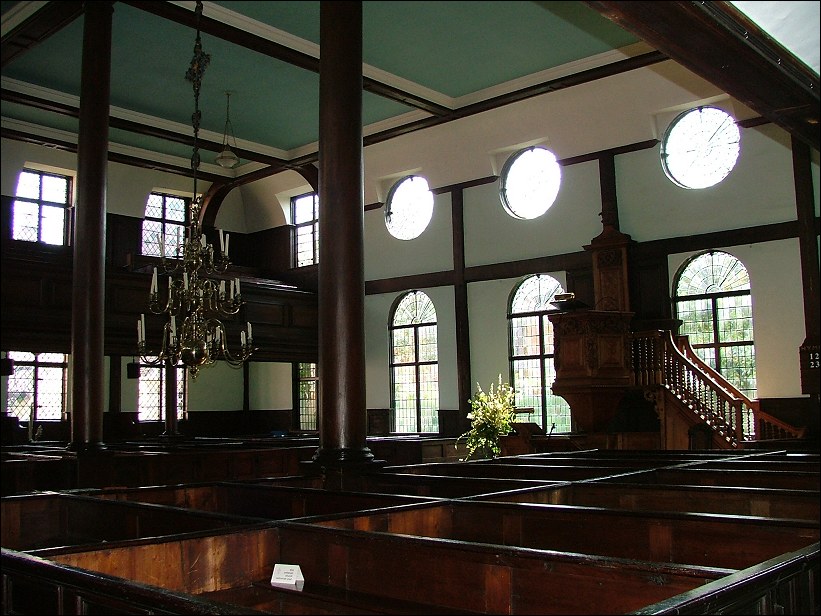
ipswich church
Ipswich Unitarian Meeting House

This sermon was given as part of an interfaith service organised by Suffolk Liberal Jewish Community, and held in the town’s beautiful Unitarian Meeting House. After the service, an Anglican minister pointed out that I had not made clear that current Christian doctrine had tried to rid itself of its supersessionist ideology. I think it is important to note that much of the work challenging offensive ideas in Christianity has been done by Christians themselves, especially by Catholics at Vatican II. I am grateful to him for this constructive feedback.