interfaith · sermon · torah

Do not hide the tears of tolerance


As some of you know, my kippah is a permanent fixture on my head, and has been since my early 20s. I often get asked whether I experience any feedback for being so visibly Jewish. My answer is: yes. Occasionally, Christians come up to me and say “shalom.” I say “shalom” back.

Well, this week, I have a more interesting story to tell.

Last Saturday night, Laurence and I were on our way back from a friend’s birthday lip synch. (Yes, in my time off, I do competitively mime to Nicki Minaj wearing a space suit and kitten heels.)

We were heading into Vauxhall Station. A group of men in their early 20s were dancing around, holding hands, and reaching out their hands for others to join them.

It will probably not surprise you to hear that I joined in. The boys cheered.

Within moments of joining them, I realised I might have made a terrible mistake. The man whose hand I was holding was, in fact, wearing a Palestine football shirt. They were all speaking Arabic. A taller man noticed my kippah and said to the others “hu yehudi.” I know what this means in Arabic, because you say it the same way in Hebrew: he’s Jewish.

And I thought, well, it’s basically the same language, I’ll try talking with them in Hebrew. Friends, these gentlemen did not, in fact, speak Hebrew. Their English was pretty stilted too.

Right next to us, a fist fight broke out between two white guys.

We all fumbled awkwardly, and tried to communicate across a language barrier. The tension became palpable. It was just me and Laurence and a whole group of Palestinian men.

I asked: “where are you from?”

“We are from Gaza,” the one who had been holding my hand said. “Do you support the government?”

I said: “of course not.”

The man said: “Really?”

I said: “Yes.”

The men cheered, and resumed dancing. I got on my train back to Ditton.

There was no time to explain that the Israeli government wasn’t actually my government at all, but my answer would have been the same whichever government he was talking about.

I am under no illusion that this story could have ended differently. But, as it is, the story ended with dancing in the streets of London, and everybody walking away with their dignity intact.

Now, I may have been the first visibly Jewish person these men had met who was not wearing a military uniform. And perhaps now, with the freedom of London, they will get the chance to learn more about who Jews are.

And perhaps I will go away and actually do my Arabic homework so that I can have a better quality conversation. At least, in the future, I won’t default to Hebrew as a good enough alternative.

I think we tend to imagine that tolerance is the true harmony of everyone fully understanding each other; living side by side; eating in the same restaurants; celebrating and grieving together.

I still believe that true peace will come, when everyone has full equality, and nobody has any more need for conflict.

But, most of the time, life is not like that.

As long as there is inequality, those with less will want what those with more have; and those who have more power will exert it over those with less. Until we all have everything we need, there will be conflict for the power and possessions we lack.

Tolerance, in our society, is the decision to set grudges aside, to suspend prejudice, and to just let each other go on with life. It is the decision of the stronger to spare the weaker. It is a choice to ignore stock characters and old grievances for the sake of everyone getting on with their day.

It is not easy passivity, but a conscious choice to accept the world as it is. Sometimes, that is painful.

So it is with Joseph and his brothers.

Consider all the array of feelings Joseph must have held when he first saw his brothers. The last time he had encountered them, they had thrown him in a pit, then sold him at a cheap price to travelling merchants.

Do you think he was in the mood for forgiving?

And what about his brothers? They are now in abject poverty. They have travelled miles on foot to escape famine in their homeland. And they have to prostrate themselves and beg before a foreign king in a language they do not understand.

The powerful and the powerless have switched places; the resources are now all in Joseph’s hands.

Joseph doesn’t just shrug his shoulders and get over it. Instead, he decides to test his brothers and bring his entire estranged family to Egypt.

Joseph hides a silver cup in his brother Benjamin’s satchel and uses the supposed theft as a pretext to hold him hostage. Joseph announces to his family that he is going to keep their youngest brother as a slave, making them relive what they did to him.

At the moment when our parashah ends, we don’t actually know how the story is going to pan out. We, who have heard this story many times, are already aware that the brothers will repent and offer their lives for Benjamin’s. We know that Joseph will announce himself and forgive his siblings.

But, for this week, we are suspended in the tests of Joseph and his brothers.

The Joseph narrative is the longest part of the Book of Genesis, not least because of the extensive detail given to Jacob’s sons’ journey back and forth between the two countries, and the lengthy description of how Joseph examines his brothers’ hearts.

This story is, in fact, repeated almost exactly in the Quran. Surah Yusuf is a lengthy narrative in the formative text of Islam. Within the chapter itself, the Quran says that it is repeating the words of previous prophets and is confirming the prior revelation of the Torah.

But there is a key difference between the Torah’s version and the Quran’s. In the Islamic retelling, Benjamin is in on the ruse from the start. Joseph reveals himself to Benjamin before hiding the cup and tells him to go along with the ploy.

Perhaps the goal here is to make Joseph seem more righteous. That is, indeed, what many of our midrash do when they retell Torah narratives. They iron out biblical figures’ imperfections.

But, if you look at the texts of the stories side by side, the parallel verse in the Torah reveals something more interesting. In our recension, rather than revealing himself, Joseph runs off to his room and cries.

The Quran’s version, then, makes the story less painful. It glosses over how heart-wrenching and difficult this process is of forgiving and letting go.

There is a lesson here for us. We all want to jump ahead to the part of the story where everyone is friends again and loves each other. We all want to fast forward to the point in history where there is lasting peace and harmony.

But, the Torah tells us, you have to stay in the feelings. You have to live in the mess for a while.

As Jews in Britain, we are forever doing a delicate dance of interfaith relations, while plagued by trauma. As the whole world seems ever more oriented towards intolerance and tribalism, we still need to show up to shared spaces with our best faces and our best expectations of others. We need to set aside prejudices for the sake of a better society.

And that is hard. So don’t gloss over the tears. Don’t hide the pain away in another room. Let us be honest with ourselves and each other that the task of building a multicultural society is tough.

But, while we hold the challenge, remember that we do still know how this story ends. We know that we are heading towards an ultimate conclusion of liberty and equality. God has a plan for the world. And it will end with true peace.

One day, all people will embrace one another as members of the human family. One day, we will all weep together over the years wasted on war. One day, without fear, we will all dance unabashedly in the streets.

May that time come soon and last forever.

Amen.

Alexander Ivanov, The Silver Goblet is Found in Benjamin’s Sack

protest · social justice

We must build a wall to protect you from the Moabites.

We must build a wall to protect you from the Moabites.

We must build a wall. You cannot trust the Moabites.

The Moabites are on the other side of the salty Dead Sea and the Jordan River. A river is not big enough to keep the Moabites away from our land. They will take everything we have if they get the chance.

The Moabites are dangerous and brutal. They will destroy you if they get the chance. 

We must destroy the Moabites before they can destroy us. We must kill their kings. Their king Eglon is a murderous tyrant. You will never be safe as long as he reigns. You must kill him.

You must kill every Moabite that stands in your way. You must capture the Moabite city of Heshbon. We need it to keep the Moabites away from us. 

We must build a wall to protect you from the Moabites.

They must never come near you. 

You must never meet them. 

Because, if you met the Moabites, you might see that they are not monsters. You might see that they are like you.

And then you would not be able to kill them.

And then you would ask why we are building walls.

And then you would ask who was building these walls.

So you must always abhor the Moabites. You must fear them and revile them.

We must build a wall to protect you from the Moabites.

It must be high enough to protect you from them. It must be high enough to protect you from yourselves. It must be high enough to protect you from peace.

You may not immediately notice it, but nestled in this week’s Torah portion is an early example of war propaganda. In the vulgar and violent story of Lot is an origin myth for the Israelites’ greatest enemy: the Moabites.

The scene begins as God destroys Sodom and Gamorrah, two cities so wicked and licentious that they have to be wiped out and turned into the Dead Sea.

Only Lot and his daughters escape from that awful place. They retreat into the mountains on the east of the Jordan. There, the two daughters get Lot drunk, seduce him, and use him to sire their children.

The oldest is called Moab. And to really drive the point home, the Torah adds explicitly: the father of the Moabites.

The women in this story are not even given names. They are just grotesque plot devices to tell us how awful the Moabites are. 

Those people, Israel’s nearest neighbours to the east, are so wicked that they came from Sodom. Their ancestors are so twisted that they were born of incest, drunkenness, and assault. It is a story to inspire revulsion in its Israelite listeners.

This is part of a general campaign of literary warfare against the Moabites, continued throughout the Torah. 

Isaiah promises that the Moabites will be trampled like straw in a dung pit. Ezekiel vows endless aggression and possession. Amos says the whole of Moab must be burned down. Zephaniah swears that Moab will end up just like Sodom, a place of weeds and salt pits, a wasteland forever.

The war propaganda reflects real wars. The ancient Israelites did repeatedly wage war, conquer, and capture Moabites. They did kill their kings, and they did turn Moab into a vassal state. 

Based on the Moabites’ texts, we can see that it also went the other way, and that Moab also captured, conquered and slaughtered Israel.

We do not know how many Israelites or Moabites died in these wars. We do not know how many people grieved their families and homes. All that remains is the propaganda of the competing tribes.

Today, it is hard to imagine why anyone would have hated the Moabites so much, or even that we would believe the hyped-up stories of how vulgar they were. With centuries of hindsight, we can see that they were probably very similar to the Israelites, but dragged into wars for the glory and material wealth of their kings.

Of course, there were dissenting voices at the time. The Book of Ruth can be read as a polemic about love between Israelites and Moabites. It is a beautifully humanising story where the central character, Ruth, is portrayed as a Moabite who is kind, loving, devoted to her family, and committed to Israelites.

As long as there has been war propaganda, there has been anti-war propaganda, and our Torah contains it all.

This Shabbat, we honour Remembrance Day. We think of all of those who died in wars past, and those who served their countries in military operations. This feels so close to our hearts, as we reflect on the great toll wars took on military personnel and their families, including many in our communities. 

We remember the pain of those who have lived through and died in the awful wars that have passed.

This solemn day dates back to the armistice of the First World War, on November 11th 1918. The following year, England hosted France for a shared banquet as they recalled the ceasefire. From then on, it became an annual day of reflection on the horrors and sacrifices of war.

During the First World War itself, even as the conflict was ongoing, many challenged the war. The great British-Jewish soldier-poet, Siegfried Sassoon, charged that the war had been whipped up by jingoistic propaganda.

In July 1917, Sassoon published “A Soldier’s Declaration,” which denounced the politicians who were waging and prolonging the war with no regard for its human impact. 

Sassoon lambasted “the callous complacence with which the majority of those at home regard the continuance of agonies which they do not share, and which they have not sufficient imagination to realise.”

It is true that people like me, who enjoy peace, cannot even contemplate the pain that people went through in fighting wars and enduring bombing. 

Today, we honour them.

Honouring them does not mean parroting propaganda and whipping up war. 

Quite on the contrary. It is the duty of every civilian to ensure as few people as possible ever have to fight in wars. It is our responsibility to minimise the number of people who suffer and die in armed conflicts.  It is our task to pursue peace.

We, who will never know the sacrifices of the front line, must heed Sassoon’s call, and resist the drive to war.

So instead:

We must tear down every wall with the Moabites. 

Yes, with the Moabites, and, yes, with the Germans, the Russians, the Chinese, the Koreans and the Iranians.

We must find commonalities and engage in shared struggles.

We must learn to trust our fellow human beings and distrust the propaganda of war.

We must cease all killing. The machinery of war has destroyed too much and taken too many lives. We must endeavour to put an end to violence and destruction.

We must learn to understand the people we are told are our enemies.

We must tear down every wall.

Shabbat shalom.

sermon · torah

Who gets to see the world?

Hello, I am back from my holidays in Spain and France. I brought you all back some lovely little trinkets from The Louvre. Just don’t tell anybody you got them from me. 

I spent my holiday thinking about how easy it is for me to travel, and how impressive my journey would seem to previous generations. I wondered about what it was like in earlier centuries for people travelling the world. 

In 1532, a great king travelled across the Atlantic to meet a previously unencountered tribe. The king was, in some ways, disgusted by the society he encountered, which was rife with inequality, governed by a despotic ruler, near constantly in a state of war, and yet to develop serious hygiene practice.

He was, however, impressed by the luxuries he saw in the local king’s palace, and intrigued by the sophisticated religious culture the people had developed. 

The indigenous people went by many names, but the locals called themselves “the English.”

That’s right, in the early 16th Century, an Aimoré king travelled across the Atlantic from Brazil to the court of King Henry VIII and attended the palace as a distinguished guest.

We are used to thinking of international travel in the Tudor Age as something that voyagers from England, Portugal, Italy and Spain did to the so-called “New World,” but plenty of people also went the other way. 

Recently, the historian Caroline Dodds Pennock released a book called On Savage Shores, which looks at the people who travelled from the Americas to Europe. They gave their own verdicts on European society, often quite damning of its inequality and sanitation.

Dodds Pennock is well aware that, by telling these stories, she is reversing the gaze. To the indigenous travellers, it was the Europeans who were the strange exotic outsiders. 

If this feels surprising to us, it is probably because we are so in the habit of imagining that rich colonising men go out and see the world, but we don’t often think of those same men getting looked at by the world.

There is a reason that Abraham’s story of setting out from Haran was so compelling to its ancient listeners. Most people did not travel more than a mile from their own town. The world beyond was a mysterious and exciting place. They could only hear about the journeys, people, animals, and plants that others saw from testimonies, like those given in the Torah.

Abraham’s trek belongs, then, in a similar category of travel literature to Homer’s Odyssey, which was likely told as an oral story, and then committed to writing at a similar time to Abraham’s journey in the Torah. Odysseus encounters singing sirens, multi-headed monsters, and lotuses that make you forget your home. 

Abraham, on the other hand, goes on a thousand-mile hike with no less than the One True God. Along the way, he marries a foreign princess, meets the king of Egypt, does battle in the Dead Sea with local lords, and meets angelic messengers over a meal.

This story must have remained compelling to many generations of Jews afterwards. Medieval Jews were used to living in one place. They may have been visited by merchants and Crusaders. Some may have gone away on fixed routes as merchants, and there were times when whole communities had to leave in haste. 

But the idea that one of their own – the first ever Jew – went out on such an exciting adventure would have been thrilling to the Torah’s audience. 

We know much of what other people thought of the Jews they met. Medieval accounts describe Jews almost as a people fixed in time; like a noble relic from a simpler age. The European travellers who encounter Jews treat them with a combination of scorn and exotic interest. In that sense, the Jews of Europe had more in common with the colonised people of the Americas, who were similarly treated as foreign oddities. 

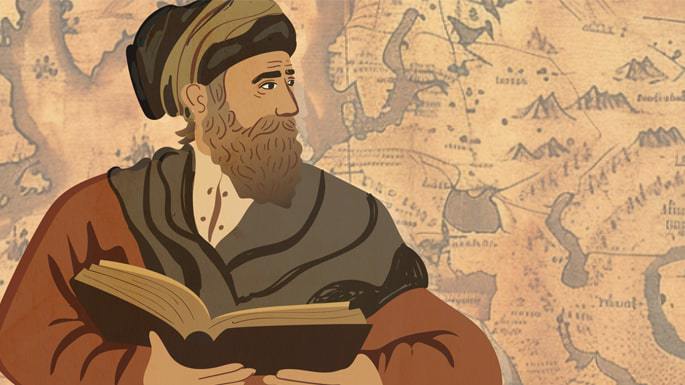
Bucking the trend, however, was a fascinating figure of the 12th Century, called Benjamin of Tudela. Born in the Spanish kingdom of Navarre, Benjamin went out on a journey tracing the Jewish communities of southern Europe, northern Africa, and south west Asia. 

He took a long route on pilgrimage to Jerusalem that brought him through countries we would know today as Italy, Greece, Turkey, Syria, Lebanon, Iraq and Iran. He seems also to have travelled around the Arabian peninsula, looking for the Jews of Africa, but never reaching the Gondar region of Ethiopia, where he might have found them. 

Benjamin recorded all of his encounters in Hebrew, in a book called Sefer HaMasa’ot, the Book of Travels. His chronicles were so fascinating that they were reproduced over many centuries, and translated into Latin and most European languages.

Today, Benjamin’s records have attracted scholarly attention, not least because they subvert our expectations of who goes exploring and who gets explored. Benjamin writes with fascination and joy about the Pope in Rome and the Caliph in Baghdad. 

Most importantly, when Benjamin meets Jews in other countries, he is at once meeting his own people and meeting people entirely different from himself. When he sees how other Jews do things differently, he feels joy in diversity. When he sees Jews doing well, he feels pride; and when he sees other Jews in a persecuted condition, he suffers with them as his own.

This is the great blessing of Benjamin’s travelogue: he can see the world through two sets of eyes – as both an outsider and as an insider. When he travels, he is never quite the colonialist going out to comment on others, but he’s never just looking at his own people. This gives him an impressive position of humble curiosity.

As British Jews, we may learn to do the same thing. 

We have a blessing by dint of our position. That blessing is a special ability to look at the world through multiple sets of eyes.

We can, indeed, look at the world through European eyes. We are Europeans, and we belong here. We can see England as it is imagined by the English, where this island is the centre of the world, its monarchs the most illustrious, its culture the highest human attainment. We should not shy away from seeing the best in Europe: we are part of it, and there is much to love.

We can also, if we choose too, see this continent through outsiders’ eyes. We can see its flaws, its delusions of grandeur, and its odd habits. We can be the best possible internal critics of our country, because we understand what it is to belong, and what it is to feel like we do not.

The danger in either of these sets of eyes is that we turn them into a haughty gaze. Like the early colonialists, we have the capacity to see every other culture as backward and barbaric, or its people and lands as subjects for exploitation. Inverting the gaze, we might come to see the Europeans as horrible invaders, without directing the critical lens on ourselves. 

But if, instead, we can approach the whole world with modesty, we can see every nation and every place with loving curiosity. With humility, we can see ourselves as fellow travellers with everyone else, discovering this wonderful world together.

If we can do this, then, like Abraham, we may truly learn to walk with God.

Benjamin of Tudela

israel · sermon · social justice

We must drag the sun over the horizon


In Judaism, night comes before day. The day begins when the sun sets and the first stars appear in the sky.

This has been the way of the world since its mythic origins.

In the beginning, there was endless darkness. Then God said “let there be light.” And there was light.

And God separated the light from the darkness. The first distinction. And the darkness God called night, and the brightness God called day.

And there was evening, and there was morning. A first day.

Having created nights and days, God populated them with matter. At the end of each period of creation, there was evening, then there was morning. Each day.

During the sixth day, God created human beings and placed them in a garden. Then there was evening.

The first human beings had never seen an evening before. They did not know that the sun could set. They did not know the difference between night and day.

What must it have been like for the first sentient beings to realise who they were and who their Creator was, only to see the sun disappear? How frightened they must have been!

Perhaps they called out to God and asked for guidance. But that evening marked the beginning of the seventh day, and God was resting. God did not answer them.

Our Talmud teaches that when the first human beings saw their first nightfall, they fell into despair. Adam feared that the sun had disappeared as punishment for his sin. He worried that the world would now return to the endless darkness with which it began.

Eve cried. She fasted and prayed. Adam and Eve wrapped their arms around each other and held their bodies close as they prepared for the end.

Then the dawn broke.

And they realised: this is the way of the world.

The world began in autumn, at the festival of Rosh Hashanah.

When the first winter nights crept in, and they saw the length of days decreasing, they panicked once more. Now in exile from Eden, they had no way of knowing what would come next.

Again, they fasted, wept, and prayed.

Then the spring came, and brought with it longer days.

And they realised: this is the way of the world.

We begin with darkness. Light follows.

There is evening. Then the dawn comes.

There is winter. And it always becomes spring.

This is the way of the world.

We can observe this dialectic in almost all matters of life. Our suffering is followed by joy. Our struggles are replaced by triumphs.

Some days feel like endless nights, but the dawn is always waiting for those who are patient for it. So we hold each other close and wait for the sun to rise.

This is the way of the world.

These trends appear, too, in history. There will be periods of decline followed by ages of plenty. There will be economic busts, and there will be booms. There will be war, but peace will come.

This is the way of the world.

But human history is different from all other natural rules. The order of night and day and the structure of the seasons was predetermined before we arrived on this earth.

History, on the other hand, is made by human beings. History is the one area of life where we can, collectively, choose what happens. Our actions determine whether we live in the winter of war or bountiful springtime.

So, it is incumbent upon us not just to hold each other and wait for morning, but to drag the sun over the horizon and demand that day appears.

In 1969, “Shir LaShalom,” became the anthem of the Israeli peace movement. In the final stanza of the song, we sing out: “Do not say the day will come. Bring on the day.”

Just as people make the active decision to go to war, peace is also a choice. Those who want an end to war cannot just wait in the darkness.

We sang Shir LaShalom in this sanctuary on Simchat Torah. I felt, and I think many of you did too, truly jubilant at the news of ceasefire and hostage release. After two years, we could finally see a possible end to the suffering.

My jubilation was tinged with pain as I remembered the last time that Shir LaShalom was chanted throughout synagogues.

That was in 1995. Yitzhak Rabin and Yasser Arafat had shaken hands on the lawn of the White House. They had agreed to the Oslo Accords.

While already imperfect and tentative, the Oslo Accords of three decades ago were the last major effort at a comprehensive peace deal between the Israelis and Palestinians. They paved the way for mutual recognition and the possibility of two states.

High on the dream of peace, Rabin joined Peace Now protesters in Tel Aviv Square and sang along to Shir LaShalom. With the lyrics still in his breast pocket, Rabin headed to the car park. There, a far right fundamentalist waited for the Prime Minister, and shot him dead.

There is still a copy of Shir LaShalom, stained with Rabin’s blood. There are those words, covered in the blood of a man who tried to make peace: do not say the day will come, bring on the day.

Yes, we must indeed bring on the day. But there are some who want to return us to endless night.

An Israeli fanatic shot dead Rabin to stop his day from dawning.

When Hamas saw the prospect of the Oslo Accords creating two states, they launched suicide bombing attacks on public transport. They took control of Gaza and promised endless war.

The Israeli far right wrested control over the offices of government. They promised there would be no Palestinian state and that every effort to achieve one would be swiftly repressed.

It saddens me that, even in the brief interludes since Rabin’s assassination when Netanyahu’s party has not had control over the legislature, few Israeli politicians have attempted to break from their logic of violence and occupation as the only answer to the Palestinian national question. 

Daybreak always comes, but there are those who prolong the darkness, and we have been living through a terribly long night. The call to bring on the day from earlier generations has been eclipsed by militarism and fear.

We have endless war. This is the way of the world.

But this is the way of the world as some have chosen to make it. And we can make the world another way.

On Monday, we saw the first thing in a long while that looked like a sun beam.

We celebrated the hostages coming home and an end to the bombing of Gaza. It was the first reminder we have had in a long time that peace is possible, and war is a choice.

We are able to bring on the day.

Now we must create even more sunshine.

But we have become so accustomed to darkness that the dawn may even be painful.

In daylight, we will have to look hard at the choices that made this war so prolonged and destructive. We will likely see that peace was possible much earlier and that more hostages might have come back alive sooner. We may ask searching questions about the morality of this war.

In the light of day, we will have to look hard at what Israel has become, and what the spiritual state of our Jewish institutions now is.

But we must bring on the day. We cannot return to the long-lasting night of war, murder, zealotry, and extremism. We cannot let anything that happened in the last two years ever happen again.

Throughout this dark night, our Progressive Jewish counterparts in the Israeli Reform Movement have been pushing hard for serious change.

They have been protesting outside Netanyahu’s house every Saturday evening. They have been joining Palestinian olive farmers in the West Bank to protect them from settlers. They have been demanding a real overhaul of the deep, structural causes of this century-long conflict.

My month with Rabbis for Human Rights before I began here helped positively frame my rabbinate. Although the picture on the ground is bleak, it made me realise just how many people are desperately trying to create daylight in the darkest contexts.

I hope that we will not fall into complacency now because the hostages are home. The task of peace building is more pressing than ever.

I want us to draw ever closer to those who are defending human rights and trying to bring about a future based on dignity and equality. I hope that, next year, we can bring a full delegation of Progressive Jews to support the West Bank olive harvest. I hope this can be a moment where we truly embrace the cause of peace.

This is not the seventh evening of creation. It is not the time to rest. We cannot leave our colleagues alone in this struggle now.

This is the first dawn of a new morning.

It is an opportunity for real accountability. It is a chance for meaningful peace building. It is the first crack of sunshine, and we have to drag out every possible ray of light to join it.

We must wrest the light into the darkness.

We cannot say the day will come.

We must bring on the day.

high holy days · sermon

The world is governed by compassion

“Hineni he’ani mi-ma’as – behold, I am poor in deeds and lacking in merit. Nevertheless, I come trembling in the presence of You, O God, to plead on behalf of Your people Israel who sent me, although I am neither fit nor worthy of the task. You who examine hearts, be my guide, and accept my prayer. Treat these words as if they were spoken by one more righteous than me. For you listen to prayers and delight in repentance. Blessed are You, O God, who hears our prayers.”

In the synagogues of medieval Europe, the service leader used to begin with this public prayer of atonement, openly acknowledging their own inadequacy. 

In the Liberal world, we have been shaped by the Victorian attitude that eschewed public vulnerability. So, instead, this prayer is given out to rabbis to read privately to themselves. 

The days when we had to pretend to be perfectly put-together are over. In our age, we recognise that openly sharing our insecurities builds a more emotionally authentic culture, where people are better at handling their feelings.

So, this year, I not only quietly recite this prayer in my office, but share it with you openly.

This year, these words feel more profound than usual. 

This is a sensitive time, and I know how fragile so many hearts are. 

In the build-up to these Days of Repentance, an American Masorti rabbi, Joshua Gruenberg, wrote:

“Rabbis stand before their congregations with trembling hearts. We know that every word matters. We know that words can wound and words can heal. And we know that in a climate like this one, the margin for error feels impossibly thin. […] The only way we will find wholeness is if we grant each other the space to be imperfect, the courage to be vulnerable, and the grace to be human.”

As this year came to an end, I thought back on the conversations I’d had with you over my time here. I thought back over some of the pain and worry you had felt, and realised just how much stress some members of the community were feeling. 

Words can, indeed, hurt and heal. They matter. I want to honour that, by reflecting on the pain some of you have expressed.

We come here because we want to be together, in our fullness, with all our wounds and trauma, so that we can move towards healing. 

To that end, let’s consider how we can approach anxious and hurting people with compassion. That is, after all, what we all need from each other.

The world has changed greatly in the last few years. So much feels more precarious. 

Ten thousand people rallied at Tommy Robinson’s far right march in London to a speech by Elon Musk telling the crowds to get ready for violence against immigrants. The news from Israel and Gaza, and Russia and Ukraine, and Sudan and Ethiopia, keeps rolling in, feeling ever worse. 

For me – and I know for some of you – the horrors of October 7th and the ensuing assault on Gaza marked a major turning point. In many of us, these events have brought up trauma responses we didn’t even know we had.

Since then, so much has unfolded that is out of our hands. This can feel painful when your instinct is to find solutions and assume control.

We have to accept our own limitations. I sometimes recite to myself the Serenity Prayer: “God, grant me the serenity to accept the things I cannot change, the courage to change the things I can, and the wisdom to know the difference.”

Those of us within this room do not have the power to bring about peace between the Israelis and the Palestinians. We cannot get the hostages back or stop the starvation of Gaza.

That feels hard. If it were up to the members of this synagogue I have no doubt that the whole world could live in peace. 

I am certain that we could indeed solve the country’s problems and fix our hurting planet. But nobody seems to be letting us do that, outside of setting the world to rights over kiddush.

But that does not mean we have no power at all. 

The one area where we have real power is in our own homes and our own community. 

And, there, we have the power to decide how much compassion we feel.

Even in the face of our own trauma and fear, we can choose to feel compassion for others.

Perhaps you can relate: in the immediate aftermath of October 7th, I felt intensely isolated. I felt a void where compassion ought to be.

I felt, among Jews, my own people, that I struggled to find many people who felt compassion for the people in Gaza. 

On the left, as much my natural home as the synagogue, I struggled to find many people who felt compassion for Israelis. 

Initially, I narrowed my circle to a small niche of Progressive Jews with left-wing opinions. It was comfortable and reassuring, when what I needed was to feel safe. 

But if I was looking for compassion in the world, I needed to bring it into the world. I needed to model it. 

Not just with the people who I knew felt like I did, but also with those whom I assumed were miles away from me. 

It is easy to love humanity in general, and fine to pity people on TV. It is much harder to love the people nearest you when you feel so distant, or to understand them when it feels like they are living in a different world. 

How could I look for compassion elsewhere if it wasn’t in my own heart? 

How can we look for compassion if we do not feel it?

You can’t expect others to extend compassion to strangers when you can’t even have conversations with the people you already know.

I felt then – I still feel – that, perhaps, if we can feel compassion in our synagogues, and extend it out towards the world, and that others could extend their compassion too, then it might cause something to shift.  

And, ultimately, that shift might make this world, which is harsh and unkind, a little better than it has been.

The message of compassion is already explicit in the liturgy of our Yom Kippur service. 

God’s name is Compassion. 

We read the refrain that repeats throughout the High Holy Days: “Adonai, adonai, el rachum vechanun… a God compassionate and gracious, slow to anger, abounding in compassion and faithfulness…”

It is a beautiful invocation of God’s qualities to help us through Yom Kippur. 

The verses come from Moses’s second acsent of Mount Sinai, when he takes the new set of the Ten Commandments in his hand. As Moses walks down the mountain, God comes with him.

As Moses chants out these declarations of God’s mercy, it is as if Moses has truly understood what kind of God he is dealing with.

He learns how the world really works. He sees that it is governed by compassion.

Just before coming to get the new tablets of the law, Moses had seen the Israelites worshipping a golden calf, and smashed up the first set of the Ten Commandments. 

These are great sins: idol worship and wanton destruction are strictly prohibited. The Israelites have been wayward. Moses has been angry. 

Still, God, abounding in compassion and faithfulness, says: “Try it again. Have another go.”

In the Talmud, Rabbi Yohanan teaches that whenever the Jewish people sin, they should think back to this verse.

In the repetition of “Adonai, Adonai,” the Jews should understand that God is their Loving Creator before a person sins, and God is their Loving Creator after a person sins and performs repentance.

God is always willing to give people another chance.

In the same section of Talmud, we learn that, in the moment when Moses recited those words, God made a covenant based on thirteen attributes of mercy. It was a promise that God would always hear our prayers.

Later, in the Middle Ages, the French commentator Rashi elucidated what these thirteen attributes were.

In each word, says Rashi, is a reflection of the type of compassion God feels. 

God is slow to anger to give you a chance to repent.

God is abundant in mercy, even with those who don’t deserve it.

God remembers good deeds even for a thousand years.

Even when we hear that God holds grudges for three and four generations, Rashi says that this only refers to people who maintain the evil ways of their ancestors. If they repent, all can be forgiven of them too.

This is how one truly maximises compassion.

So, let us be compassionate.

Let us maximise how much compassion we feel.

Our own community and our own homes are small places where we can truly practise compassion in a world where it seems so sorely lacking.

Last week, in her Rosh Hashanah address, Rabbi Angela Buchdahl, of the American Reform movement’s flagship synagogue in New York, reflected on how the division in the world was creating strife even within her synagogue.

She urged her congregation to practise compassion, saying:

“It now seems that any expression of compassion for “the other side” is regarded with suspicion – as disloyal, or even threatening. Is our capacity for empathy so finite? Are our hearts so small, that if we increase our empathy for certain people, that we need to reduce it for others — until one day, we conclude: that ‘other side’ is not deserving of any compassion?”

Here, the “other side” could be so many different groups in this increasingly polarised and hostile world. 

We all want to feel like people understand our own side, but struggle to extend our understanding the other way.

You don’t have to agree with people to love them. You just have to be curious, and try to understand them.

Some days, we may be capable of less compassion than others. On those days, let’s give ourselves grace, take time out, and remember how flawed we all are.

Even on our worst days, we can always try to understand each other. We can hold our own hearts while making them permeable enough to feel others’ pain too.

When people challenge us, let’s look for the best in them. Imagine their best intentions, and try to consider what problems they might be facing.

We are, all of us, flawed and temperamental. We all ask good grace of others, and we can all give it in return.

This year, let’s try to feel compassion for the people in our own families and homes.

Let’s try to find compassion for the people in our neighbourhoods. Perhaps we will shift something in them.

Let’s find compassion for the people in our community, so that we can hold each other, in our diversity, through these trying times. 

And, as much as we can, let’s try to find compassion for everyone. 

It won’t change the news cycle, but it might change you. And you might change others. 

It is a small contribution to this world, but it is a mighty one. 

It is the best that we can do.

Behold, I am poor in deeds and lacking in merit. Nevertheless, I come trembling in the presence of the One who hears the prayers of Israel. O God, You listen to prayers and delight in repentance. Blessed are You, O God, who hears our prayers.

Amen.

Kol Nidrei 5786, Kingston Liberal Synagogue

high holy days · judaism · sermon

If God can change, why can’t you?

Everyone changes. People change all the time.

In our Scriptures, the changes are often dramatic. 

Avram is an idol worshipper who lives in Mesopotamia, then undergoes complete conversion to monotheism and sets out on foot to a new country. With that, he gets a new name: Abraham.

Sarai is barren then, miraculously, in her old age, conceives a son. God gives her a new name: Sarah.

Jacob is a lying trickster who wrestles with an angel in the wilderness. When his heart has truly changed, he gets a new name: Yisrael. 

In fact, in each biblical story, a change of direction, outlook, and often name, are the key points of the narrative.

So, what about our Rosh Hashanah reading? Who is it that changes there?

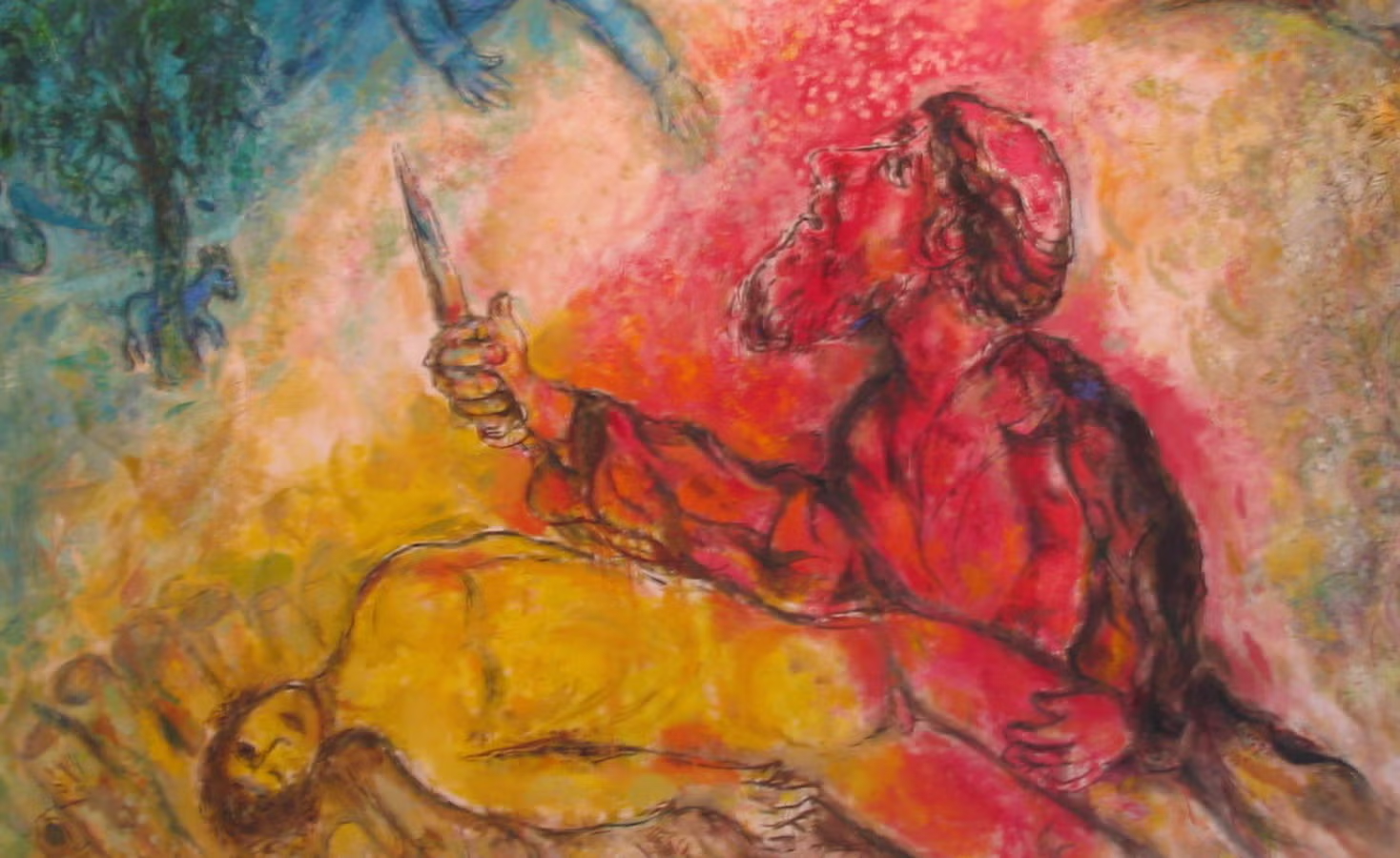
In the Aqeidah, our Torah reading for the new year, Abraham is called upon to climb a mountain and sacrifice his son.

We know nothing about Sarah, who is largely kept out of the story. We don’t know anything of how Isaac feels about this, since he stops talking once he realises what his dad could do to him. 

Abraham is remarkably unchanged. At the bottom of the mountain, he is willing to do whatever God says. At the top, God says Abraham is no longer required to sacrifice his son, and to sacrifice the ram instead. At the top of the mountain, Abraham still just does whatever God says.

But there is a character who really changes in this story: God. 

God begins the narrative as zealous and demanding of human sacrifice. God ends the story compassionate and eager to enter into meaningful relationships. God begins by effectively threatening to blot out all of Abraham’s children, then ends by promising Abraham as many descendants as stars in the sky.

And, yes, God undergoes a change of name. Through the whole of the story, God is called Elohim, a name associated with strict justice and universal truth. At the very end, God is revealed by a new name – יהוה – Adonai, a name associated with the close personal relationship God has with every human being. 

In this story, the character who undergoes the greatest change is God.

Even God, the Creator of the world, the Almighty and All-Powerful, can transform. The Holy One, who by nature is completely eternal, can shift from being strict and distant to close and loving.

So, if even God can change, why can’t you?

In our Talmud, the rabbis introduce us to the idea that we are supposed to imitate God.

Rabbi Hama baRabbi Hanina teaches: be like God. Just as God clothed Adam, you will care for the poor. Just as God visited Abraham when he was unwell, you will visit the sick in your community. Just as God consoled Isaac over the death of his father Abraham, you will comfort the mourners. Just as God buried Moses, you will inter the dead.

God shows us a model of how we ought to live. Like God, we are supposed to be compassionate, loving, kind, morally clear, and doing justice in the world.

But more than that. Like God, we are supposed to change.

Here, at Rosh Hashanah, we learn: just as God can change, so can we.

We are made in God’s image. At the start of each year, we read a story where our Creator transforms. So we know that we can change too.

We can face our fast-shifting world. We can rise to the challenge of our changing community. We can look inside ourselves and love our own souls a little more.

Blessed are You, Eternal One our God, who gives us the power to change.

judaism · theology

A Theological Platform for a Judaism that Does Not Yet Exist

1. We are living in apocalyptic times. War, climate disaster, and neoliberal capitalism are plunging us into ongoing and worsening crisis. Apocalyptic times call for apocalyptic theologies.

2. When we survey how Jewish people rebuilt their communities in the face of devastation, we see that Jews have stubbornly held onto hope. From the destructions of the Temples, through Crusades and Expulsions, to colonialism and genocide, our greatest leaders have never wallowed in despair. They always reaffirmed their faith in God and humanity.

3. The task of building the Messianic age is more pressing than ever. Like our forebears, we affirm that the Messiah will not be a man, but a time, in which all will understand the Oneness that lies beneath all superficial differences. The Messianic Age will be defined by equality between people, peace between nations, and harmony with nature. Our task is to build it.

4. Because of faith in God, we understand that our desire for a transformed world is sacred and just. With an outstretched arm and wondrous deeds, God liberated the slaves from Egypt. God hears the cries of all who suffer and shares their pain. God continues to defend the dignity of all who are subjugated.

5. In every age, our people have sought to understand the will of God. In their hardship, they communed with their Creator. Out of their struggles, they developed theologies. These are our inheritance: Torah; Prophets; Writings; rabbinic literature; Jewish philosophies. We claim them for our own time.

6. Our texts are central to our worldview. They are incomplete and polyvocal. We will never make idols of them by treating them as unquestionable authorities. Rather, they are our dialogue partners to understand our God, our world, and ourselves. We uphold the tradition of questioning, reconsidering, and retelling. Every answer is open to interrogation.

7. We affirm belief in the pure monotheism to which our ancestors aspired. We seek to connect with God, who is singular and infinite; immaterial and transcendent; eminent and imminent. Our God is nevertheless directly part of our lives. As the source of ultimate truth, God seeks to impart to us truth as we can understand it.

8. Life has meaning. Its meaning is intrinsic. Everything that lives on this earth was placed here deliberately by a loving Creator to serve a purpose. All that affirms life affirms God.

9. Jews are called upon specifically and by name. We feel that the task of healing the world has been entrusted to us, personally and collectively. This is what it means to be chosen. The task of Jews is to speak God’s truth and to fulfill God’s dominion on earth. A world ruled by God will be one in which no human being can subjugate another.

10. God created all people, replete with diversity, deliberately. We do not wish to make others like us. We reject any uniformity. We accept that people inhabit multiple, contradictory, and overlapping spiritual realities.

11. We bring our spiritual reality to life through our rituals. Our laws, practices and customs are all articulations of our moral purpose. Even where they carry no obvious moral instruction, they instill within us discipline, wonder at creation, and hold us together in community.

12. Our ancestors call to us from history. As refugees and outcasts, they knew what it was to live on the margins. Their memories demand vindication.

13. We have witnessed the progress of humanity. Scientists have developed incredible medicines. Engineers have shown how to harness natural resources to power the entire planet. Activists have shown how collective strength can transform history. We believe that it is our duty to sustain that progress.

14. In the hands of oppressors, progress is a dangerous force. Warmongers have found ever more efficient ways to kill. Capitalists have found increasingly profitable ways to exploit. We have seen how human ingenuity can be employed for systemic violence. We must wrest the tools of progress from those who worship the false god of wealth.

15. Nationalism is a sickness that is plaguing the world. We repudiate all xenophobia and chauvinism. We will not worship the false idols of states and their symbols. We reject all efforts to politically divide humanity.

16. Until all of humanity is fully redeemed, we remain in exile. Only when everyone has achieved full political, economic and spiritual freedom can we say we have reached our Jerusalem. The earthly Jerusalem is as much a part of exile as any other city, until the day when it becomes the heartland for peace and brings all humanity into unity with God. As such, we align ourselves with all those who seek to bring about an earthly Jerusalem based on the prophets’ visions of dignity, human rights, and liberation.

17. Individualism is killing us. Human beings have survived by being social creatures. The ideas of autonomy and personal choice do not serve us in this age. We need to resist the atomisation of people and create community, which necessitates sharing norms, ideals, and practices.

18. We see the Jewish family as expansive and interconnected. We are all responsible for one another, and want to live as if we are one family. This includes a commitment to loving rebuke where necessary.

19. We return to halachah. We see it not as the binding decisions of previous generations but as the creative forum of the present, in which we find new ways to live by our shared values.

20. We commit to Jewish time, which is shaped like a snail shell: always progressing, and always returning to the same points. We return constantly to our shabbats, our fasts, and our festivals. Every time we return to them, we learn more of what God requires of us, and we urge ourselves on to the next stage of our development.

21. The end of time is coming. It does not have to be disastrous. It could be wondrous. Our telos is a perfected world. We will never reach it. We will always fight for it.

Rabbi Lev Saul

israel · sermon · torah

This is Torah. This is its reward.

Loving others will not make you popular.

Pursuing peace will not make you safe.

Choosing life will not protect you from death.

But, if you do not love others, if you do not seek peace, if you do not choose life, who will you be?

When Moses ascended Sinai, he found God adding flourishes to the Torah’s letters, which only Rabbi Akiva would ever be able to read. Moses asked to see what became of Akiva.

The Holy One showed Moses how the Romans flayed Rabbi Akiva’s skin as they martyred him, then sold his flesh in their marketplace.

Moses threw his hands in the air and demanded: “Is this Torah, and this its reward?”

“Silence,” said God. “Such is My will.”

This is Torah. This is its reward.

Vivian Silver was murdered by Hamas on October 7th.

Vivian Silver founded the Israeli peace organisation, Women Wage Peace. She worked for human rights groups like Btzelem and ALLMEP. She lived on Kibbutz Beeri, near the Gaza border, where she engaged in solidarity work with Bedouins, Gazans, and Palestinian construction workers.

Three days before October 7th, she organised a march of 1500 Israeli and Palestinian women for peace.

On October 7th 2023, terrorists broke into her home and murdered her.

Even as she hid from the militants, she gave an interview to Israeli radio, where she said the very fact that she was under attack showed the need for a peace deal.

A year later, her son, Yonatan Zeigen, eulogised her. He said:

“Being a peace activist is not something to save you from being killed in war. It’s something to prevent a war from happening. And to create a reality where war is not an option.”

Silver’s love of others did not make her popular.

Pursuing peace did not make her safe.

Choosing life did not protect her from death.

But it made her fully human.

This is Torah. This is its reward.

On Monday evening, as my community sat down to listen to poetry in preparation for Tisha B’Av, I received a text to say that a Palestinian peace activist I knew had been murdered.

Awdah Hathaleen was shot in the chest in his home.

Awdah lived in the village of Umm al-Khair in the south Hebron hills. I visited his village twice last year with Rabbis for Human Rights. The second time, I stayed in the bunk beds adjacent to his home. In the morning, he brought breakfast to me and the other solidarity activists.

A delegation of Progressive rabbis met Awdah earlier this year when they went to the West Bank with Yachad.

Awdah was an English teacher. He was born in the south Hebron hills and had known tanks, guns and occupation all his life. He worked with Israelis to protect his home and build a peaceful future.

This did not make him popular. For some Palestinians in neighbouring villages, this meant that he was engaged in normalisation with the Israeli occupier.

Indeed, after the Oscar-winning movie about his village, No Other Land, gained international recognition, the BDS movement called to boycott it, because it showed Israelis and Palestinians working together.

Awdah chose the path of non-violence. Even after his uncle, Haj Suleiman, was crushed by an Israeli police tow truck; yes, even after his elder was cruelly murdered; and yes, even after those who killed his uncle were never brought to justice; after all that, he still chose the peaceful path.

For the settlers who wanted to capture his home and ethnically cleanse his village, his activism made him a target.

He and his family never knew safety.

Awdah wrote for 972 Magazine, a joint Israeli-Palestinian publication, about the struggles of raising his traumatised son in this village under attack. He wrote: “He even knows some of the settlers by name. Sometimes I tell him that they went to jail; I’m lying, but I want to make him feel safe.”

He was lying. Settlers who carry out murders do not go to jail.

The man who murdered Awdah was called Yinon Levi. He was filmed doing it. Still, the only person who has been taken into custody by the Israeli police is Awdah’s cousin, Eid, a fellow non-violent activist.

Yinon Levi was already subject to EU sanctions and recognised internationally as a terrorist. But he is protected by government minister, Ben Gvir, who has dedicated his life to helping settlers get away with murder. Even before the far right coalition took power, plenty of settlers had been able to perpetrate atrocities with impunity.

Loving others did not make Awdah popular.

Pursuing peace did not make him safe.

Choosing life did not protect him from death.

No; you will not be better off if you do the right thing.

But God does not ask us to live lives that are comfortable.

There is no commandment in the Torah that we should be popular.

All of us, regardless of religion, are placed on this earth to be God’s stewards; to uphold God’s most sacred commandments; that we must choose life, pursue peace; seek justice; and love the stranger.

This is Torah. This is its reward.

This sacred work comes with no promises. But who else would you want to be?

It is a charge often laid against woolly moralists like me that we do not really get how militants like Hamas think; that we just cannot understand the mentality of the settlers.

That is true. I do not want to think like them. I do not want to become like them.

Who will we be if we let our hearts become warped and set our minds to cruelty?

Loving others will not make you popular. But it will make you loving. And pursuing peace will make you peaceful. And seeking justice will make you just. And that is what your God asks of you.

We are approaching Tisha B’Av, when we recall every catastrophe that befell our people. If you believe that peace is possible and that these assaults on basic humanity are wrong, you can add another disaster to the roster. On Monday, Awdah was murdered.

Yes, a Muslim murdered by a Jew is a tragedy for us all.

A man who was committed to non-violence was shot in the chest by a settler, leaving behind 3 children. He was 31.

Do not give in to cynicism or try to calculate what you might gain for kindness. This world has no guarantees. And we know nothing about the hereafter.

You do what is right because it is right. Because if you do not, who will you be?

This is Torah. This is its reward.

May God have mercy on us all.

diary · israel

The maddening well of war

There is a story – I cannot remember where I heard it – about a village where the well was cursed by an angry magician. Anyone who drank from its water immediately became mad. They became violent and hostile. They were certain of things that could not possibly be true – but when anyone challenged them on their delusions – they flew into a furious rage.

The royals of this town had their own water source. When they tried to talk to their subjects, they were the ones who were deemed mad. They could not govern, because all the villagers, having drunk from the well, saw their leaders as insane. So, the king and his family went down to the cursed well and drank from it themselves, so that they, too, would be afflicted with insanity, but at least able to retain their power.

In the immediate weeks after October 7th, this story repeated in my mind relentlessly.

When Jews met each other, they immediately scoped each other out. We asked: how are you feeling? Where are you on this?

But the question we were really asking was: have you drunk from the well?

Have you thrown yourself into the grip of the madness that demands war?

At a friend’s house, another Jewish religious leader, having made sure everyone in the room had not swallowed the poisoned water, said: “don’t worry, this happens sometimes. People get angry and frightened and turn to violence, but… it passes. They will calm down.”

So we hunkered down and waited. Waited for the effects of the maddening well of war to wear off.

A ceasefire and a hostage deal. Those were the words coming from everyone who had not drunk from the well.

“One day,” we said, “everyone will say they always opposed this.”

“And, when they do, we will not begrudge them for it. We will just be happy to have the killing over.”

I wondered when the day would come. When people would finally come to their senses and say that enough was enough.

Within days, the death toll in Gaza exceeded any number of any previous war. Then, in weeks, it reached into the thousands. Then tens of thousands. It seemed that the numbers dead only made the mad more ravenous.

And we, who said it should stop, were ever more out of sync with our society; ever more criminally insane.

A ceasefire and a hostage deal. It was a basic humanitarian position that guaranteed everyone got to live. It would bring the captives home and stop the massacre of Gaza.

There were moments, even, when they demonstrated what could be. Temporary ceasefires with limited hostage releases. But, even then, the drive to war was insatiable.

I have asked myself many searching questions over the last eighteen months. Increasingly, the one that pains me is: what happens the day after this all ends, when my people finally awaken from their stupor? What will Jews and Judaism have become when the effects of the well wear off and everyone finally sees what happened?

There have been so many needless deaths. So much unfathomable destruction. So many dreams have been killed.

Now, I think that people are finally shaking the madness. I feel I can talk more openly, and I see others doing the same.

I feel ashamed. I feel like I did not do enough to prevent this. I wish I had been louder and bolder from the start. I wish I had been prepared for this, so I wouldn’t be shocked by it. I regret having turned away from watching at times, unable to bear the pain.

And you? How are you feeling now? Where are you on this?

I have a feeling that, after a year and a half, something is finally changing. Now it seems like the ripple of peace may become an anti-war wave. Maybe now the cleansing waters of truth will finally come and dilute all the curses of the well.

If you are one of the people who feels like your heart is beginning to turn, you are not alone.

I do not begrudge you. Trauma does that. Anger and fear can break you, and you don’t know how and when it will happen.

I am just happy that the killing may finally come to an end.

Now there is even more trauma to heal. Now there is even more peace to pursue.

We have been waiting for you. We are still waiting for you.

But the well is still there.

The war machine is still waiting for you, too.

judaism · sermon

Are Jews a religion or a race?

At present, Reform and Liberal Judaism are deciding whether to become a single movement. You will be able to vote on this, and I encourage you to do so. 

As the procedural questions unfold, it is hard to imagine how strongly felt the ideological divisions were between the two movements, even forty years ago. I believe, however, that those differences are now almost entirely within the movements, rather than between them. 

On some fronts, we will find unity, and on others, differences will remain.

There is one point, however, which, to me, is so intrinsic to Liberal thought that I could not stand it to see it lost. That is: there is no such thing as a Jewish race.

There is no such thing as Jewish blood, as a Jewish womb, as Jewish DNA, or as Jewish features.

It is precisely because our Liberal tradition teaches that there is no Jewish race that we have been able to fully embrace converts and, from the very beginning, accepted patrilineal Jews. 

These ideas were critical stumbling-blocks to merger attempts in previous decades. Reform Judaism would not accept patrilineal Jews, and insisted that converts went and were reborn from the “Jewish womb” of a mikvah.

In the past few years, Reform Judaism has come to accept patrilineal Jews, and Liberal Judaism has come to accept that the mikvah can be a meaningful ritual.

Yet not everyone has come to accept the underlying ideology that made these matters so central to Liberal Judaism. The originators of our movement saw Judaism as a religious community, where Jewishness was communicated socially, not “biologically.”

That is no longer a sectarian issue. There are Reform rabbis who ardently agree on this point; and there are Liberals who, instead of denying any racial Jewishness, focus on being “inclusive” about who belongs.

Rejecting the idea of a Jewish race was absolutely foundational to early Liberal thinkers. Regardless of whatever new ideas emerge as rabbis come together, I intend to hold doggedly to their understanding of Jewishness.

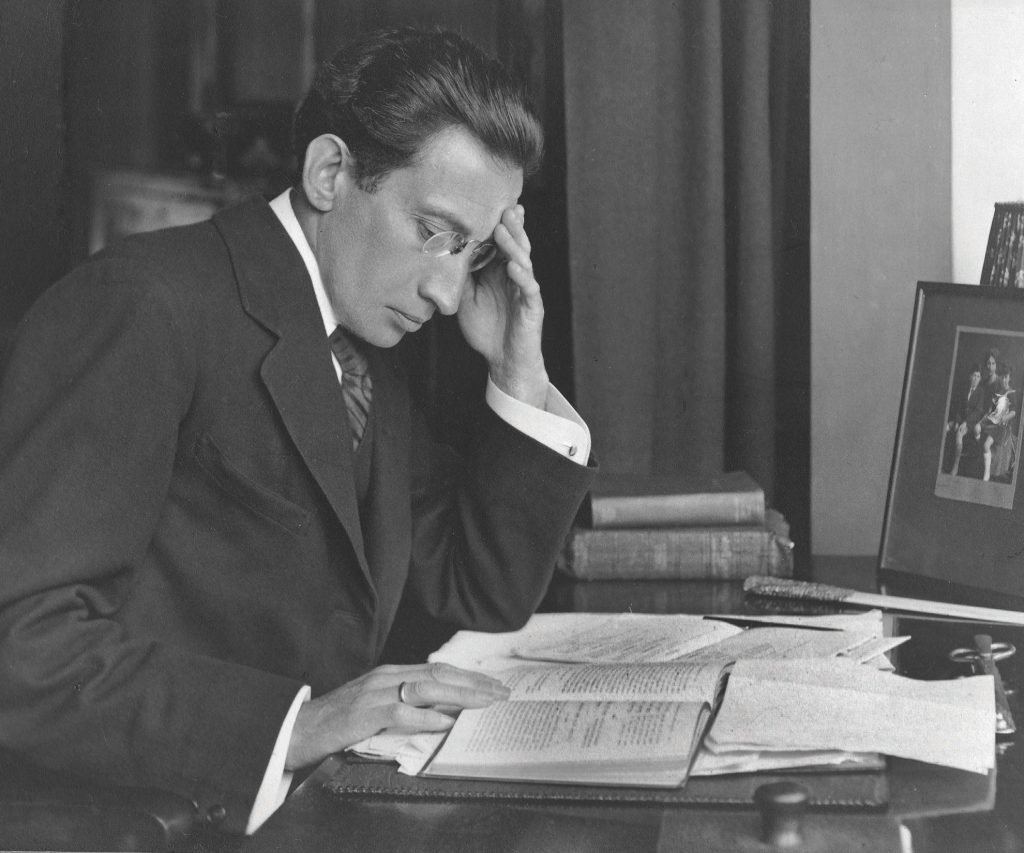
Israel Mattuck was the first Liberal rabbi in the UK. In 1911, he was recruited by Lily Montagu and Claude Montefiore from America to lead the Liberal Jewish Synagogue in St John’s Wood. He was a prolific preacher, ideologue, and scholar.

At the LJS, Dr Mattuck taught a Confirmation class, for 16-year-olds affirming their faith. He later took his notes and turned them into a book, entitled Essentials of Liberal Judaism so that everyone would know what he thought it meant to be a Jew.

Jews, he insisted, were not a race, but spanned the globe. What made people  Jewish was that they held Jewish ideas, followed a Jewish way of life, and kept Jewish observances. 

He wrote: “In spite of all the differences among them, the Jews of the world constitute a people; but they are a people in a different sense from any other people. Their unity is based on religion and history.”

Editing in 1947, Mattuck was eager to avoid any misconceptions. He insisted that this history was not an unbroken tale of misery and persecution, but one of great spiritual achievements. We were, he said, the first witnesses to God’s unity through the revelation at Sinai. Our history was that of the prophets, the priests, the scholars, the mystics, and all those who sought to reach closer to religious truth. 

Mattuck was clear that you could not be Jewish in anything more than name if you rested on race. You want to be a Jew? Walk humbly with God, taught Rabbi Mattuck from the prophet Micah. 

There is no race – only a demand to live right.

Now, you may be thinking, this all sounds a lot like the Critical Race Theory that Mr Trump so zealously warned us about. Indeed it is! And the American President has good reason to fear people taking a critical approach to race.

In the USA, races were invented to divide and rule people so that the wealthy whites could maintain their plantation economy. Poor whites were incentivised to enforce and uphold slavery by being given some privileges on the basis of their skin colour.

As a result, they felt they could identify with the rich whites, even though they had very little in common with them socially or economically. Using racism, they demeaned and humiliated the stolen Africans so that they would not have the confidence to challenge their own condition.

That is why race-critical scholars in America have the slogan: “race exists because of racism, not the other way round.”

In Race: A Theological Account, the African-American scholar of religion J. Kameron Carter shows how racist ideology had earlier roots – in how European Christians treated Jews. 

To create a system where Jews were second-class citizens, they needed an ideology where Jews were defective human beings. So they made up stories about Jewish bodies, Jewish blood, Jewish noses and hair – even Jewish horns – to justify their system of oppression. It was a nasty division for the purposes of exploitation.

This was exactly why Mattuck was so resistant to talk of Jews as a race, and so adamant about our religion.

In 1939, Mattuck wrote his first major work, What are the Jews?, which was a harsh rebuttal, not only to Jewish racial nationalism, but to racial nationalism as such.

We belong everywhere, he asserted. In the Age of Enlightenment, all citizenship should be communicated on civic grounds, never on ethnic or religious ones. 

A Jew, he felt, could be a nationalist, but they must first adhere to the religious calling. That is: they could be Jewish and happen to have nationalist leanings, but it could not define them as Jewish. 

Nevertheless, he thought that, by properly conceiving of ourselves as a religion, we would be more likely drawn to universal ethics. We would measure our Jewishness by our conduct towards others and our connection with our God, rather than by the supposed quality of our genetic make-up. We could pull apart the stories that separated people and build common bonds.

Racial thinking, thought Mattuck, must be resisted.

Race is a horrible and divisive lie. Religion is a beautiful and unifying truth.

I want to be open about why this idea is hard for others to hold.

It is more demanding. It says that nobody can take their Jewishness for granted, and must work for it. It means that you cannot be “born” Jewish, but have to live Jewish. It sets high ethical and practical demands on anyone who claims Jewishness.

When we say that there is no Jewish race, we also mean that somebody with an unbroken chain of matrilineal descent but without any Jewish upbringing or identity must also learn how to be Jewish, in the same way as a patrilineal Jew would. Everyone has to properly engage with the traditions and practices. Contrary to the doctrine of inclusion, this makes us more exclusive than the Orthodox.

Denying the existence of a Jewish race also has profound implications for how we engage with Israel. If we are a religious community, the demand to achieve a Jewish ethnic majority – still less racial supremacy – is not just grotesque. It is absurd. The measure of whether the state was sufficiently Jewish would not be by how many Jews there were, but by how well it upheld Jewish moral values.

Yet it is precisely because of this more demanding approach to Jewishness that I will keep holding onto it. The call that we be moral in our dealings, conscientious in our practices, and connected with our traditions is a far better one than the narrow pull of racial nationalism. 

Through such a religion, we may connect to every other Jew in a spirit of solidarity.

Through religion, we may connect to all of humanity, by recognising our shared Creator.

Through religion, we may draw nearer to the mystery that is our God.

Through religion, we may live out the words of our haftarah: “For you who revere My Name, the sunbeams of righteousness will rise, with healing in their wings. Then you will go forth and skip about like calves from the stall.”

Shabbat shalom.