high holy days · judaism · sermon

Everything hangs in the balance

Everything hangs in the balance.

Rosh Hashanah is a moment when all judgement is suspended. The scales are suspended, and the weights could fall either way.

At this moment, anything can happen. We reflect on how precarious life is, and how delicately all is held together.

In the light of Rosh Hashanah, our own lives come into focus. How fragile is our existence. 

The rest of the year, we take for granted this delicate balance that allows us to go on living. Today, we notice how remarkable our lives are, and assess what we are doing with them.

Have we embraced life’s blessings and sought to make the most of our days? Have we multiplied joy and generosity in others? What were the moments we squandered or took for granted?

At Rosh Hashanah, we acknowledge our vulnerability. We listen for God’s voice within us. We hear the messages this day brings. God, in turn, hears us. 

Then, we find a way to go on. We affirm our lives.

The stories of Rosh Hashanah point us to moments of precarity. We read of times when life almost did not come about, and of moments when life almost came to an end. Through these ancestral tales, we access our own vulnerability. 

Hannah longs for a child to be born to her barren womb. She asks: “why do I exist?” Then, God hears her anguish, and she gives birth to a boy. His name is Samuel, meaning God hears.

Sarah laughs at the thought that she could conceive in old age, then God remembers her, hears her, and she has Isaac.

Isaac is destined to be Abraham’s heir, then Abraham takes him up to Mount Moriah to kill him. 

When we picture the Binding of Isaac, we can clearly see Abraham’s raised hand – slaughtering knife outstretched to the sky – ready to murder his own son. We are struck by the moment when all hangs in the balance. 

Finally, God speaks, and Isaac is to be killed no more.

In all these vignettes, we find ourselves caught in stories of people whose lives are racked with precarity, but who listen out for God’s voice, take away a message, and find a way to go on that affirms life.

Interwoven with this story of the main characters, our ancestors, is another story, of people living more marginal lives. The story of Hagar and Ishmael speaks even more explicitly to life’s precarity.

In Orthodox communities, where they observe the second day of Rosh Hashanah, the story of Hagar and Ishmael is usually read today. Here, in the Liberal lectionary, wherein we follow the Israelis and  hold by one day chag, we are given the option of reading either Isaac’s or Ishmael’s story. 

I have opted to read the story of Ishmael because I believe it speaks most clearly to the festival’s theme of life’s uncertainty. Everything about the lives of Hagar and Ishmael is left to the hands of those more powerful than themselves.

Hagar is called a handmaid – a word that glosses over the gross crime inherent in a purchased human being. 

A handmaid had no property, no income, and no family to come and redeem her. Most handmaidens were separated from their own kin, and stripped of their original language. 

Hagar’s name means “the foreigner.” The Torah calls her “the Egyptian.”

She was beholden to her mistress, Sarah. Hers is the most precarious position one could have in life.

A handmaid cost more than a male servant because the handmaid could produce the most valuable good: more slaves. 

Unlike the other women in our readings, Hagar does not long for a child. She expresses no desire; she offers no consent. She is simply used as a vehicle so that Sarah can have a son. 

Abraham will take her as a concubine. The child will be Sarah’s property and Abraham’s heir.

This is already a dangerous situation. If she does not give birth, Hagar fails to deliver on the terms of her purchase. If she does have a child, she could become a rival to her mistress.

That is precisely what happens. 

Hagar becomes pregnant, and Sarah immediately flies into a jealous rage. Hagar runs away, but has nowhere to go. She can either risk the harsh desert as a single pregnant woman, or she can return to an abusive household. 

For Hagar, everything hangs in the balance. Then, God hears her and intervenes. An angel tells her that God knows her suffering, but promises that her life will get better. 

She will bear a son. He will be a highwayman, attacking everyone, and attacked by everyone. His name will be Ishmael, meaning “God has heard.”

As with all our protagonists in Rosh Hashanah stories, Hagar finds her life in the balance. She realises how precarious her existence is. Then, she listens for God. Hearing God, she finds a way to move forward.

So, Hagar returns. And her life hangs in the balance once more. 

This is where the Rosh Hashanah reading begins.

Here, Sarah sees Ishmael playing and demands of Abraham “cast out that slave and her child, because that son-of-a-slave will not share in the inheritance of my son Isaac.”

Abraham followed Sarah’s words, and sent Hagar out into the desert with nothing more than some bread and a skin of water. 

She wandered about in the wilderness of Beersheva until they had completely exhausted her water.

We are told that Hagar sat an arrow-shot away from Ishmael. 

This language seems to make us consider Hagar’s own thoughts: in this moment, Hagar thinks: “maybe I could put the boy out of his misery.” But she cannot do it. She cries out “I do not want to see the child die” and bursts into tears. 

Then God hears. God hears Ishmael’s voice crying out, and sends forth an angel from Heaven. 

Every bit of hope was lost. Everything hung in the balance. But Hagar listened. And God listened. And they heard each other. And Hagar found a way to go on.

The angel says: “כִּי שָׁמַע אֱלֹהִים אֶל קוֹל הַנַּעַר בַּאֲשֶׁר הוּא שָׁם” – “for God has heard the voice of the boy where he is.”

In the Talmud’s treatise on Rosh Hashanah, this is the hook our rabbis use to tell us about our own place before God. 

The rabbis say this means that God hears Ishmael in the moment when he cries out.

To God, Ishmael’s past and future actions matter not. 

God does not care that Ishmael comes from the lowest and most vulnerable place within Israelite society. God does not care about the prediction that Ishmael will go on to be a highwayman. All that matters is that Ishmael cries out at that moment.

This, says the Talmud, is how we should all see ourselves on Rosh Hashanah. Rabbi Yitzhak declares “every person is only judged according to their deeds at their moment of trial.” 

We are only judged by our hearts in this moment of reflection. 

We are not our past mistakes, nor our future errors. We are the people that God beholds today. We are the people who chose to turn up, on this Rosh Hashanah, who knew we wanted to engage with our own souls. 

That is all that God sees.

This is a part of the Talmud’s more general argument about Rosh Hashanah, that it is a time when everything hangs in the balance. 

Our rabbis teach that we should all imagine that the whole world is finely balanced between good and evil, and that it is our responsibility to tip the scales. 

Moreover, say the rabbis, our own hearts are precariously weighted, with an even chance of falling to the side of good or evil. In this analysis, then, the fate of the whole world can rest on just how we direct our own hearts.

So, we need to take every opportunity to place a greater load on the scale of good.

The Talmud offers things we can do to make such a change: give to charity, call out in prayer, and change our behaviour. Any one of these actions can cause a shift in that delicate balance. 

A small prayer, a slight modification to how we act, a donation to a righteous cause – any of these can transform everything.

We live in a time when all can feel uncertain. Life seems nerve-wracking. At times, it does indeed feel like the balance of all the scales in the world is tilting ever more toward evil. 

The Talmud tells us that we still have some control. We can still be a force for good. We can still nudge the fine weightbridge an inch towards goodness.

The Torah gives us examples of people whose own lives hung in the balance. They listened for God, and God listened for them. And God answered “I have heard you where you are.”

So, if you feel like you are hanging in the balance, hang on in there.

God is hanging in there with you.

Shanah tovah. 

high holy days · sermon

The changing face of the Jewish family

Imagine a Jewish family. Go on, close your eyes and envisage what a Jewish family looks like. 

How many of them are there? Where are they? What do they look like? What are they wearing? 

OK, you can open your eyes again. 

Perhaps you pictured one of the families from Shtisel. You’ve conjured up Haredim in black hats and long coats and white socks. You might be picturing women with covered heads, racing around a dinner table, providing food and clearing away dishes, while a bearded patriarch at the head of the table murmurs prayers from a benscher. Yes, that is a Jewish family. 

Or maybe you imagined the family from Gogglebox. A husband and a wife. Two children, a boy and a girl. They sit on the sofa in front of the TV. They eat their meals on their laps. They light the shabbes candles and sing together the brachah, then go back to watching X Factor.

Yes, that’s a Jewish family too.

Or maybe you’re remembering your own family, from your own childhood, at some festival or simchah, and seeing yourself in your own family make-up. 

You might reminisce on siblings, cousins, single mother, married parents, step-parents, step-siblings, uncles, aunties, grandparents, great-grandparents, step-great-grandparents, neighbours, babies, babysitters, cats, dogs, goldfish. You can scratch out and fill in whatever applies. You’ve got a Jewish family. 

If you’ve got a family and there are Jews in it, that’s a Jewish family.

The truth is there is no one way to have a Jewish family. We come in so many shapes and sizes. We are too diverse even for a single stereotype. 

Still, people often have an idealised vision of what a Jewish family should be and how it should look. Take today’s Torah reading. 

On the second day of Rosh Hashanah, we read of Sarah’s anguish at having one too many children. 

In our parashah, Sarah knows she must provide an heir to Abraham. At first, she offers up her handmaid, Hagar, as a surrogate so that Abraham might sire a child. This is successful, and leads to the birth of Ishmael. Later, God blesses her with her own child, Isaac. 

But this is where things get really complicated. Sarah wanted Hagar to have Ishmael when she thought he’d be the only one. She liked the idea when she was providing her heir for her husband. But now Ishmael looked like a competitor for her son Isaac’s birthright. 

Sarah had an image in her head of what her family was supposed to look like. When her surrogate son plays with the child that she gave birth to, Sarah decides only one of them can last. Sarah instructs Abraham to cast out Hagar and Ishmael into the wilderness. Now, the Jewish family of five gets swiftly reduced down to two. 

Sarah had an image in her head of how her Jewish family was meant to look. But it didn’t match up with reality. Rather than adjust her expectations to her reality, Sarah decided to make reality conform with the fantasy. Even if it meant making people destitute and homeless. Even if it meant cutting up the family she had.

Unfortunately, this desire to force reality to fit the fantasy still permeates Jewish life centuries later. In our communities, people still want to police what a Jewish family should look like. 

The result can only be disappointing for everyone. Families that don’t fit the mould find themselves excluded and cast out from communal life. The people who are “on the inside” get increasingly frustrated that nobody is coming along to synagogue who matches up with their idealised vision of the Jewish family. Eventually, synagogue leaders find themselves exasperated that their membership is dwindling and short on children. 

Rather than fighting reality by clinging onto a fantasy, successful synagogues find ways of embracing change. The best and most active shuls make sure they celebrate diversity, rejoicing in how manifold their membership can be. 

So, let’s take stock of what Jewish families really look like today.

Today, a Jewish family may only have one Jew in it. According to research, a quarter of Jews are in mixed relationships with people from other religions and none. 

In the 90s, moral panic about Jews “marrying out” meant a lot of community resources were spent trying to get Jews into relationships with each other by any means possible. After decades of bemoaning mixed families and complaining that these Jewish groupings don’t look right, there are more mixed families than ever. That number is set to grow.

Contrary to Orthodox and establishment Jewry, Reform Jews made it our mission that we would celebrate families in all their diversity. People could know that, no matter who they loved, the synagogue would be here for them and support them through every step of their life’s journey.

Because the family has changed, conversion has changed too. Decades ago, you could reasonably assume that, if somebody was converting, it was for marriage. That is no longer the case. 

The vast majority of Jewish converts over the last few years have been “spiritual seekers”: people looking for God who have found something meaningful in our traditions. Last year, over 80% of candidates at the Reform Beit Din were lesbian, gay, bi and trans. They are people who looked for a religion of integrity that celebrated them as they are, and found it with us. 

Like the rest of the country, our families reflect the choice that people have over how they want to live. Our families are sometimes one dad with three children and sometimes two mums with a baby; they are cousins and grandparents living under one roof; and they are friends raising children together as neighbours. 

So, imagine your Jewish family again. And again. And again. Keep picturing them until, as in Abraham’s promise, you have as many configurations of families as there are stars in the sky.

Yes, now we know what a Jewish family looks like.

And now we can welcome and encourage them in all their diversity. We can find ways to bring everyone into the synagogue and feel like this is a home where they are loved and encouraged. We can make sure that nobody is turned away.

Imagine the possibilities.

Shana tova. 

I gave this sermon on Second Day Rosh Hashanah at South West Essex and Settlement Reform Synagogue

sermon · social justice

Until she was no longer useful

The Torah doesn’t tell us what happened. It tells us what always happens.

The weekly stories we read are not historical recountings of the lives of ancient people. They are contemporary retellings of the lives of modern people. Genesis is not a book about the past. It is about the present. 

So here is what happened. And here is what always happens.

Hagar had been an Egyptian princess in the court of Pharaoh. Sarah entreated her out to Canaan with promises of work. “You will serve such a holy man,” she promised her. She was given the name, Ha-Gar: the immigrant; the sojourner.

She worked as a maidservant. She, who had been so prestigious in her homeland, cleaned up after Abraham and Sarah in their tents. She washed their clothes and took care of their needs. 

Then Sarah realised that she was barren. She instructed Abraham to sleep with Hagar, and Abraham consented. We do not know how Hagar felt about her surrogacy.

They conceived on the first try. What a successful servant! Then Sarah became jealous. “Isn’t Hagar so haughty? Doesn’t she think she’s so much better than me?”

So she started afflicting Hagar and making her life unbearable. Hagar ran away. And then she came back, because where was she going to go?

Hagar did indeed bear a child, and called him Ishmael, meaning ‘God will hear.’ And then she was no longer useful.

Fertile woman. Hated woman. Did her work well. Did her work too well. Did her work so well she was no longer useful and had to be sent away

Sarah was threatened by her and demanded she leave. She was supposed to be a servant and now she was a competitor, with a rival child, an older boy. If Ishmael is allowed to grow up, he’ll take everything from Isaac. If Hagar is allowed to stay, she might have the upper hand.

And Hagar ran away into the wilderness and was so desperate she almost killed her son. But she found a well of water and they survived. Ishmael grew up to be a bowman.

We don’t know what happened next to Hagar. History does not record.

Now here is what happened. And here is what always happens.

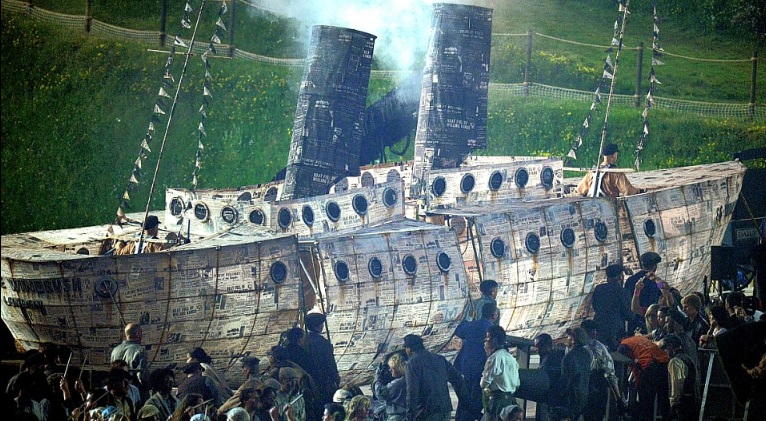
Sentine Bristol was born in Grenada, a British colony in the Caribbean. The Empire lured her over to work in the United Kingdom. She came on a boat called the Windrush. She worked as a nurse in the NHS. A successful immigrant, keeping us alive. Too successful, stealing our jobs.

Aren’t they great, bringing their culture and ingenuity and skills? We will celebrate them in our Olympics opening ceremony. But it wouldn’t kill them to assimilate. Couldn’t someone else have done the work she was brought over here on the Windrush to do?

She brought her son with her. His name was Dexter. He worked as a cleaner until he was in his 50s. 

And then they were no longer useful. Hardworking immigrants. Parasitic immigrants. Did their work well. Did their work too well. Did their work so well they were no longer useful and had to be sent away. 

A new wave of nationalism swept the country. The Home Office destroyed the records of their having arrived in Britain. The government declared a policy of a “hostile environment” for illegal immigrants, which included people who did not have their papers because their papers had been destroyed.

So the state cast them out. Dexter had to prove he wasn’t a foreigner in the only country he’d known since he was 8 years old. And he couldn’t find the documentation. He lost his job and the right to claim benefits. He was threatened with deportation.

And no well appeared in the wilderness. And he didn’t go on to become a bowman or a great nation. He died of a heart attack from the stress of trying to keep his home. Sentine did not receive justice. She disappeared from the headlines two years ago. 

This is what happened. This is what always happens.

One group gains more wealth than another. Maybe by technology, maybe by force, maybe by resources, maybe by luck.  The wealthy people require the labour and expertise of others, so they entice them with promises of jobs and prosperity. People go wherever the wealth is. They become nurses, midwives, bricklayers, servants, dream-interpreters, delivery workers, chefs, surrogates, cleaners, plumbers and bus conductors. 

The migrant people are despised. They have taken our jobs and brought their diseases. Their ways are too different from ours; they refuse to assimilate. Their beliefs are too foreign from ours; they cannot be allowed into our spaces. We do not trust their food or their clothes or their appearance. They will overtake us by sheer force of their numbers or intelligence or might. They must be eradicated.

The migrant people are prized. Look at the wonderful ingenuity and work ethic they have brought to us. How lucky we are to have them in our ranks. Such awards we must give them for their brains, their athleticism, their musical talent. They have transformed our cuisine and our customs. We cannot imagine our culture without them. We must protect them.

And then they are no longer useful. Maybe they are feared or maybe their hosts become jealous. Maybe the wealthy people are no longer so wealthy, or maybe they no longer feel so wealthy. Maybe there is a new government or an old ideology or a charismatic movement promising to restore former greatness. And the migrant people are surplus to requirement, so they have to leave.

They go back where they came from or onwards to somewhere else, not that it makes much difference either way. They get deported or they go voluntarily because they know they’re not wanted any more, not that it makes much difference either way. They depart on foot into the desert unsure if their children will survive. They leave on camels, in caravans, on boats, in cars. They pile into buses and aeroplanes and dinghies, depending on which paperwork they have and how much money they can stump up front. 

And then they are forgotten. And we don’t know what happens to their story after that.

That is what happened. And that is what always happens.

The Torah’s stories tell of the time when humanity transitioned into a new kind of civilisation, one defined by inequality and migration. That is why they are not just about the past, they are about the present.

The Torah recalls what it was like for an Egyptian named Hagar to seek work and be abused among Israelites. It tells the story of an Israelite named Joseph who sought work and was abused among Egyptians.

And because it tells those stories of inequality and migration, it also tells the stories of all the people who moved to Britain over these centuries. Their struggles, our struggles, are reflected here too.

The Torah doesn’t tell us what happened. It tells us what always happens. Unless we do something about it.

I gave this sermon for Glasgow Reform Synagogue on Saturday 7th November 2020, Parashat Vayera.

high holy days · judaism · sermon · story · torah

The binding of Isaac… and Ishmael

Life is sacred. It is not just meaningful, though it is that. Nor is it simply beautiful, although it can be. Life is sacred. Given by God, uniquely to everyone in existence, with a specific purpose. Our lives – the lives of everyone in this room, and everyone we know, and everyone we don’t – are loving gifts from our Creator. With them, we can either repair or destroy the world.

I hope that we’ll be able to come out of this Holy Day season more aware of the sanctity of our own lives and of everyone else’s. spiritual ideals to the fore. But whose lives are sacred? Whose lives do we truly value, and whose lives do we treat as disposable? It can be harder to see the sanctity in some lives than it is in others. It is harder – perhaps hardest – to see sanctity in the lives of people we don’t know. There are people we forget and erase before we’ve even had the chance to see God’s spirit in them.

The Torah portion for this week, the Aqedah, is an example of such a problem. One line sticks out for me in this parashah. In this story of the patriarch Abraham preparing to sacrifice his son on the altar, it is perhaps the most troubling. It seems innocuous at first. But I keep coming back to it, and the more I come back to it, the more it bothers me. The text says:

Take your son, your only one, whom you love, Isaac, and go to the land of Moriah.[1]

Take your son, your only one… The text says that same phrase three times. When the angel intervenes and speaks to Abraham, we hear:

Do not raise your hand against the boy, or do anything to him. For I now know that you fear God, since you have not withheld your son, your only one, from Me.[2]

Your only son…

After Abraham sacrifices a ram in the place of Isaac, the angel speaks again:

Since you have not withheld your son, your only one, from Me, I will bestow My blessing upon you and make your descendants as numerous as the stars of heaven and the sands on the seashore…[3]

Again and again, ‘your only son.’ But that’s impossible! Abraham does not have only one son. Isaac is the younger of two children. Abraham has an older son, Ishmael. In only the immediately preceding parashah, Abraham sent away Ishmael and his mother Hagar. Has he forgotten them already?

This problem has bothered rabbinic commentators too. Rashi, the medieval French commentator, offers up a story:

“But I have two sons,” Abraham said.

“Your only one,” was the reply.

“But each is the only one of his mother!”

“Whom you love,” he was told.

“But I love both!”

“Even Isaac.”[4]

The conversation he puts in Abraham’s mouth is really the conversation of the reader with the text: doesn’t Abraham have another son whom he loves? How can Ishmael be erased so flippantly and insensitively from the text? Rashi suggests a number of solutions:

Perhaps lest Abraham’s mind reeled under the sudden shock. Further, to make his command more precious to him. And finally, that he might receive a reward for every word spoken.[5]

Yes, God is speaking like this to calm Abraham down. If he just blurted out: “Go and kill Isaac!”, Abraham might not have had the strength to do it. So God breaks the commandment down, gently feeding him each bit. But Rashi’s answer doesn’t tell us the most important detail: what on earth has happened to Ishmael?

Some rabbinic commentators have tried other approaches. Some suggest that we could translate יְחִֽידְךָ֤ not as your only one, but as your favourite one.[6] But the root of the word יְחִֽידְךָ֤ is אחד – one, and it doesn’t mean favourite in any other context. We can only really translate it that way if that’s what we want it to mean. And is that what we want it to mean? Do we want to think of Abraham, the father of all nations, as choosing a favourite between the children that will create Judaism and Islam? Does it actually make the text that much better?

Not only is God asking Abraham to kill Isaac, but God has already erased Ishmael. Can that really be true? Is that the God we believe in and worship?

It bothered me so much I went for lunch with a Muslim friend to ask him what he made of it. How did his tradition, that holds Ishmael in such high regard, deal with this troubling passage? I asked: “what does your tradition say about the binding of Isaac?”

“You mean Ishmael?” he said.

“No, no,” I said, “Isaac, who Abraham takes up Mount Moriah to sacrifice.”

“Ishmael,” he countered, “who Abraham takes up Al-Haram…” He grinned at me. “I know your tradition says something different…”

It was so funny. It hadn’t even occurred to me that the Islamic story might be different. We took out a Quran and read the story as it appears:

Abraham said, “Indeed, I will go to where I am ordered by my God; Who will guide me. My God, grant me a child from among the righteous.”

So We gave him good tidings of a forbearing boy. And when he reached the age of exertion, he said, “O my son, indeed I have seen in a dream that I must sacrifice you, so see what you think.” He said, “O my father, do as you are commanded. You will find me, if Allah wills, of the steadfast.”

And when they had both submitted and he put him down upon his forehead, We called to him, “O Abraham, You have fulfilled the vision.” Indeed, We thus reward the doers of good. Indeed, this was the clear trial. And We ransomed him with a great sacrifice, And We left for him favourable mention among later generations: “Peace upon Abraham.”[7]

It’s quite beautiful, isn’t it? But there’s a new problem: this text doesn’t mention Ishmael either. It doesn’t mention Isaac, but it doesn’t mention Ishmael. In fact, it turns out that in the early days of Islamic jurisprudence, the interpreters were undecided. 135 authoritative readings said it was Isaac; 113 said it was Ishmael. But gradually the weight shifted, and by the 10th Century, everyone agreed that it was Ishmael.[8]

So here we have two contradictory traditions: a Jewish tradition that erases Ishmael and an Islamic one that erases Isaac. What do we do with this? How can we reconcile these stories?

I think the Tosefta, that first text of rabbinic commentary, offers a compelling answer. The sages were dealing with a problem of two contradictory schools of thought – the House of Shammai said that a room was unclean and the House of Hillel said a room was clean. The Tosefta reaches this conclusion:

Make yourself a heart of many rooms and bring into it the words of the House of Shammai and the words of the House of Hillel, the words of those who declare unclean and the words of those who declare clean.[9]

David Hartman, a rabbi from the Bronx in New York, suggests this means we need to be able to hold multiple contradictory ideas at once. Whereas Western philosophy tries to drive everyone to one conclusion at the expense of all others, Jewish thought teaches that all words about God are words of God. Judaism teaches us to sustain and embrace contradiction.[10] We learn to build a heart big enough that it can include all voices, especially the voices that we might want to drown out.

So perhaps that’s an answer to my problem. We need to reconcile these two contradictory stories: Isaac was offered up as a sacrifice, and so was Ishmael. Isaac was Abraham’s favourite son, and so was Ishmael. Both a source of blessing, both blessed, both their lives sacred, both our traditions sacred, all stemming from one God.

The Torah says that Isaac was Abraham’s only son because, in a way, there only ever was one son. That one son was both Isaac and Ishmael. Some Christians say that the sacrifice of Isaac prefigured the crucifixion of Jesus, or represented it.[11] Yes, let us include that truth too. Rather than try to erase difference, let’s embrace the tension of contradiction and recognise what is sacred in every story. The message is the same in all of them: a rejection of violence, opposition to the sacrifice of human life, reverence for the God who created us all.

I think this religious analysis has some important political implications. Two years ago, the former Orthodox Chief Rabbi, Lord Sacks, published a book called ‘Not in God’s Name’. The theology of it was subtle and beautiful. He used stories like those of Isaac and Ishmael to suggest that all people were meant for their own blessings. He extrapolated this to thinking about religion: that nobody should make an exclusive claim to truth – that Jews, Muslims and Christians should all be able to respect one another.[12]

But from this solid foundation, Jonathan Sacks went in a troubling direction. He said that people should not try to make exclusive claims to truth, and then focused most of his book on criticising Muslim terrorists for doing that. Of course, I agree with his opposition to such terrorism. But given that his book was inevitably going to be read almost entirely by Jews, shouldn’t he have said more to challenge his own community? In the way he set it out, it felt very much like he was accusing everyone else of carrying out violence, without acknowledging that we, too, are imperfect. Such rhetoric only encourages division and continues the cycle of hate.

It turns out that Jonathan Sacks did not just make a rhetorical error. Earlier in the year, he recorded a film for Mizrachi Olami, a far-right religious nationalist party in Israel, where he encouraged Jews all over the world to join the organisation on a march through Jerusalem.[13] This is an annual march, drawing thousands of people, who run through the Palestinian part of the city in the east, intimidating residents and shouting racist slogans. On this day, shops close and streets clear as people prepare for violence.[14] Under pressure, Jonathan Sacks eventually agreed that he would not actually march with the group, but continued to produce promotional material for them.[15] I have to seriously question what this does to suggest that different religions can be blessed, or that all lives deserve respect.

I think that if we are going to build a heart of many rooms, it must at least be big enough to accommodate the grievances and frustrations of Palestinians. We must be able to see how we can be oppressors, as well as victims. We must confront all the contradictions that living in this modern world involves.

I spent August studying Hebrew in Jerusalem. It is a place that really confronts you to deal with contradictory truths. I spent my days in a university where I learnt so much and met so many exciting people. On my breaks, I’d stare out over the garden. That university overlooks a refugee camp, full of high-rise buildings, crowded with people who have been stateless since the War of 1948, and surrounded by a concrete separation wall.

I found myself feeling safer wearing a kippah than ever before, and at the same time so much more uncomfortable. I quite like wearing the kippah in England, where it feels like a symbol of difference, personal piety and a reminder to live up to the best expectations of others. In Jerusalem, where the religious-right are in power and wield religious symbols to trample on the rights of various people, my clothes took on a new meaning I didn’t like. I know of one rosh yeshiva, a rabbi heading up a study-house in Jerusalem, who wore only half a kippah, to reflect the conflicted place he felt, torn between the religious and secular worlds, externalising his inner turmoil.

I want to be able to live with these tensions, but it is not an easy feeling. Maybe that’s necessary. Dealing with contradictions means being uncomfortable. There is something frightening about truly believing that life is sacred. It means knowing that we are special, unique and placed here by God. But it also means acknowledging that this is true of everyone, including of people whose stories might contradict ours.

This year, may we build hearts large enough to include those stories, and all stories of struggle. May we learn to see the sanctity in all lives and, above all, may we find a way to peace.

Shana tovah.

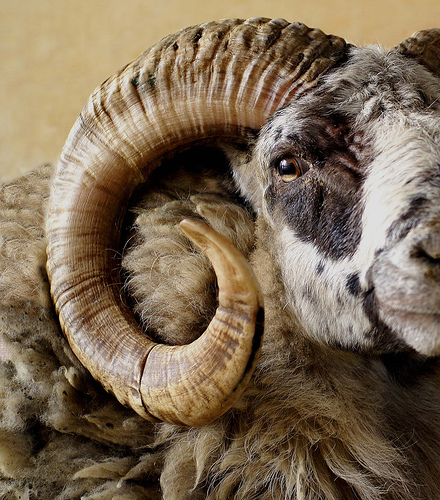
ram

[1] Gen 22:2

[2] Gen 22:12

[3] Gen 22:16-17

[4] Soncino 108

[5] Soncino 108

[6] Sefaria; JPS

[7] Qur’an Surah As-Saffat 37:99-111

[8] Reuven Firestone, ‘Journeys in Holy Lands’, pp. 153-151

[9] Tosefta Sotah 7:7

[10] David Hartman, ‘A Heart of Many Rooms’

[11] e.g. Jung, ‘Answer to Job’

[12] Jonathan Sacks, Not in God’s Name

[13] https://www.youtube.com/watch?v=RZr_lsT6vkE

[14] http://www.haaretz.com/israel-news/.premium-1.791549

[15] http://www.haaretz.com/opinion/1.789728