israel · sermon · social justice

We must drag the sun over the horizon


In Judaism, night comes before day. The day begins when the sun sets and the first stars appear in the sky.

This has been the way of the world since its mythic origins.

In the beginning, there was endless darkness. Then God said “let there be light.” And there was light.

And God separated the light from the darkness. The first distinction. And the darkness God called night, and the brightness God called day.

And there was evening, and there was morning. A first day.

Having created nights and days, God populated them with matter. At the end of each period of creation, there was evening, then there was morning. Each day.

During the sixth day, God created human beings and placed them in a garden. Then there was evening.

The first human beings had never seen an evening before. They did not know that the sun could set. They did not know the difference between night and day.

What must it have been like for the first sentient beings to realise who they were and who their Creator was, only to see the sun disappear? How frightened they must have been!

Perhaps they called out to God and asked for guidance. But that evening marked the beginning of the seventh day, and God was resting. God did not answer them.

Our Talmud teaches that when the first human beings saw their first nightfall, they fell into despair. Adam feared that the sun had disappeared as punishment for his sin. He worried that the world would now return to the endless darkness with which it began.

Eve cried. She fasted and prayed. Adam and Eve wrapped their arms around each other and held their bodies close as they prepared for the end.

Then the dawn broke.

And they realised: this is the way of the world.

The world began in autumn, at the festival of Rosh Hashanah.

When the first winter nights crept in, and they saw the length of days decreasing, they panicked once more. Now in exile from Eden, they had no way of knowing what would come next.

Again, they fasted, wept, and prayed.

Then the spring came, and brought with it longer days.

And they realised: this is the way of the world.

We begin with darkness. Light follows.

There is evening. Then the dawn comes.

There is winter. And it always becomes spring.

This is the way of the world.

We can observe this dialectic in almost all matters of life. Our suffering is followed by joy. Our struggles are replaced by triumphs.

Some days feel like endless nights, but the dawn is always waiting for those who are patient for it. So we hold each other close and wait for the sun to rise.

This is the way of the world.

These trends appear, too, in history. There will be periods of decline followed by ages of plenty. There will be economic busts, and there will be booms. There will be war, but peace will come.

This is the way of the world.

But human history is different from all other natural rules. The order of night and day and the structure of the seasons was predetermined before we arrived on this earth.

History, on the other hand, is made by human beings. History is the one area of life where we can, collectively, choose what happens. Our actions determine whether we live in the winter of war or bountiful springtime.

So, it is incumbent upon us not just to hold each other and wait for morning, but to drag the sun over the horizon and demand that day appears.

In 1969, “Shir LaShalom,” became the anthem of the Israeli peace movement. In the final stanza of the song, we sing out: “Do not say the day will come. Bring on the day.”

Just as people make the active decision to go to war, peace is also a choice. Those who want an end to war cannot just wait in the darkness.

We sang Shir LaShalom in this sanctuary on Simchat Torah. I felt, and I think many of you did too, truly jubilant at the news of ceasefire and hostage release. After two years, we could finally see a possible end to the suffering.

My jubilation was tinged with pain as I remembered the last time that Shir LaShalom was chanted throughout synagogues.

That was in 1995. Yitzhak Rabin and Yasser Arafat had shaken hands on the lawn of the White House. They had agreed to the Oslo Accords.

While already imperfect and tentative, the Oslo Accords of three decades ago were the last major effort at a comprehensive peace deal between the Israelis and Palestinians. They paved the way for mutual recognition and the possibility of two states.

High on the dream of peace, Rabin joined Peace Now protesters in Tel Aviv Square and sang along to Shir LaShalom. With the lyrics still in his breast pocket, Rabin headed to the car park. There, a far right fundamentalist waited for the Prime Minister, and shot him dead.

There is still a copy of Shir LaShalom, stained with Rabin’s blood. There are those words, covered in the blood of a man who tried to make peace: do not say the day will come, bring on the day.

Yes, we must indeed bring on the day. But there are some who want to return us to endless night.

An Israeli fanatic shot dead Rabin to stop his day from dawning.

When Hamas saw the prospect of the Oslo Accords creating two states, they launched suicide bombing attacks on public transport. They took control of Gaza and promised endless war.

The Israeli far right wrested control over the offices of government. They promised there would be no Palestinian state and that every effort to achieve one would be swiftly repressed.

It saddens me that, even in the brief interludes since Rabin’s assassination when Netanyahu’s party has not had control over the legislature, few Israeli politicians have attempted to break from their logic of violence and occupation as the only answer to the Palestinian national question. 

Daybreak always comes, but there are those who prolong the darkness, and we have been living through a terribly long night. The call to bring on the day from earlier generations has been eclipsed by militarism and fear.

We have endless war. This is the way of the world.

But this is the way of the world as some have chosen to make it. And we can make the world another way.

On Monday, we saw the first thing in a long while that looked like a sun beam.

We celebrated the hostages coming home and an end to the bombing of Gaza. It was the first reminder we have had in a long time that peace is possible, and war is a choice.

We are able to bring on the day.

Now we must create even more sunshine.

But we have become so accustomed to darkness that the dawn may even be painful.

In daylight, we will have to look hard at the choices that made this war so prolonged and destructive. We will likely see that peace was possible much earlier and that more hostages might have come back alive sooner. We may ask searching questions about the morality of this war.

In the light of day, we will have to look hard at what Israel has become, and what the spiritual state of our Jewish institutions now is.

But we must bring on the day. We cannot return to the long-lasting night of war, murder, zealotry, and extremism. We cannot let anything that happened in the last two years ever happen again.

Throughout this dark night, our Progressive Jewish counterparts in the Israeli Reform Movement have been pushing hard for serious change.

They have been protesting outside Netanyahu’s house every Saturday evening. They have been joining Palestinian olive farmers in the West Bank to protect them from settlers. They have been demanding a real overhaul of the deep, structural causes of this century-long conflict.

My month with Rabbis for Human Rights before I began here helped positively frame my rabbinate. Although the picture on the ground is bleak, it made me realise just how many people are desperately trying to create daylight in the darkest contexts.

I hope that we will not fall into complacency now because the hostages are home. The task of peace building is more pressing than ever.

I want us to draw ever closer to those who are defending human rights and trying to bring about a future based on dignity and equality. I hope that, next year, we can bring a full delegation of Progressive Jews to support the West Bank olive harvest. I hope this can be a moment where we truly embrace the cause of peace.

This is not the seventh evening of creation. It is not the time to rest. We cannot leave our colleagues alone in this struggle now.

This is the first dawn of a new morning.

It is an opportunity for real accountability. It is a chance for meaningful peace building. It is the first crack of sunshine, and we have to drag out every possible ray of light to join it.

We must wrest the light into the darkness.

We cannot say the day will come.

We must bring on the day.

sermon · social justice

When did Moses stop being Egyptian?

When did Moses stop being an Egyptian?

When Moses was born, he was decidedly Hebrew. This fact was dangerous. The Hebrews were living under oppressive rule, enslaved and oppressed by hard labour. Fearing the Hebrews’ strength in numbers, the Pharaoh had decreed that all first-born Hebrew boys were to be drowned in the Nile. Staying Hebrew would have meant certain death for Moses.

So, he was raised Egyptian. His mother put him in a basket and sent him down the river, where he was picked up by the Pharaoh’s daughter and raised in the central palace. He was given an Egyptian name and raised as if he was a member of the Egyptian aristocracy. 

But, at some point, Moses ceased being an Egyptian. One day, he saw a slavemaster beating a Hebrew. Seeing the Hebrew as his brother, and the Egyptian as his enemy, Moses struck back and beat the slaver. He killed the Egyptian. Moses fled into exile in the Midianite desert. He knew he was no longer Egyptian. 

There are varying accounts of how Moses ceased being Egyptian. In the classic Dreamworks film, Prince of Egypt, Miriam and Aaron bump into him in the street, reveal to Moses his history, and persuade him to join the slaves’ revolt. The film is so ubiquitous that many imagine this is the Torah’s version of events.

This version makes for fantastic cinema, but doesn’t quite fit with the narrative presented in Exodus. In our story, Moses’s mother, Yocheved, and his sister, Miriam, put themselves forward to care for Moses in the Pharaoh’s palace. Surely his own family, having stayed with him since birth, who look more like him than Pharaoh’s daughter, would have raised him to know his history, even if only secretly. 

As Rabbi Dr Jonathan Magonet astutely notes, the text suggests that Moses held onto both identities. In the same verse where Moses rises up against the slavemaster, he calls both the Egyptians and the Israelites his “brothers.” He goes out to join his brothers the Egyptians in surveying the building works, then beats the slaver in solidarity with his brothers the Hebrews.

Moses could have quite easily continued living as an Egyptian while knowing he was a Hebrew. Many people throughout history have held multiple nationalities without contradiction. The useful question is not when Moses became Hebrew, but when he stopped being an Egyptian. 

Perhaps, as some of our commentators have suggested, the key lies a few verses before. There, it says that Moses grew up. Rabbis of the past have wondered what this growing up could mean. Surely it can’t refer to weaning or early childhood, because he has the strength to hit back against a fully grown adult wielding a whip. It must refer to a deeper maturity: Moses reaches the age where he can question the lies of Egyptian society. He reaches the emotional maturity to put his heart with the oppressed and rebel against injustice.

Moses was always a Hebrew, but he stopped being an Egyptian once he refused to identify with their system. As soon as Moses was willing to rebel against Egypt, he not only lost his identification with his enemy, but he lost the protection of being part of the elite family. He had to flee into exile. The only circumstance in which he could return was to lead the mass exodus of his people, the Hebrews.

It may seem surprising that Egypt and brutal slavery were so entwined that Moses could not remain Egyptian while opposing the evils of its system. How can it be that this country was so repressive that the slightest opposition made him stateless? How can it be that even a member of the elite, raised in the palace of the most powerful man in the land, could be rendered an exile just by standing up against the cruelest possible thing one human can do to another?

Of course, today we live in more enlightened times. We now live in a society where citizenship is awarded as a birthright, not as a reward for good behaviour. We have systems of international law that guard against making people stateless. Our government in Britain would never behave as Pharaoh’s did. 

Or would they? Two weeks ago, the government passed a law through the House of Commons called ‘The Nationalities and Borders Bill.’ According to this new law, anyone who is entitled to claim another nationality can be stripped of British citizenship without warning. 

This builds on the hostile environment initiated by Theresa May, which makes it harder for immigrants to reach Britain and easier to deport them. Similar policies have already been used to send away Carribeans who have lived in Britain their whole lives and to make refugees in this country stateless.

This new law expands these powers. And it affects us. 

How many members of the Jewish community have held onto second passports in case antisemitism becomes destructive again? How many Jews do you know who are also dual nationals with Israel, South Africa, Canada, or a European country from which they were once exiled? 

My dad and brother claimed German citizenship as part of post-Holocaust reparations. Now, this very fact makes them vulnerable to have their British citizenship revoked at a moment’s notice, without them even being informed. 

Indeed, every one of us could be subjected to similar treatment. A study for the New Statesman indicates that 6 million Britons – a tenth of us – could now be deported by Priti Patel. 

This law may not have been intended for us, but it could easily be applied against us. There is plenty of historical precedent. When governments want to issue repressive measures, they begin by attacking foreigners. Anne Frank was a German until the Nazis decided she was a Jew. Moses was Egyptian until the slavers decided he was a Hebrew.

Our community should be deeply concerned by these draconian measures. Whether out of solidarity with those who have already been deported from this country, or for fear that we, too, could fall victim to these new powers, we must be willing to speak up against it.

But there is reason to be hopeful. Earlier this year, when a Home Office van came to remove two asylum seekers from their home in Glasgow, their neighbours fought back. Two hundred local people surrounded the van and refused to move until their friends were freed. The immigration authorities were forced to capitulate and let the refugees free.

Our parashah teaches that the Hebrews could not be contained by the Pharaoh’s repressive measures. “The more they oppressed them, the more they rebelled.” Like our ancestors, we must be willing to do the same. 

The more this government treats foreigners as enemies, we must be willing to accept them as friends. The more this government declares that people do not belong here, we must be willing to assert that they do. The more they say that people are illegal, we must be willing to loudly assert: nobody is.

No one is illegal. Everyone who is here belongs here. You cannot deport our neighbours and friends. You cannot take away our passports.

Shabbat shalom.

South West Essex and Settlement Reform Synagogue; Parashat Shmot; Saturday 25th December 2021

sermon · social justice · torah

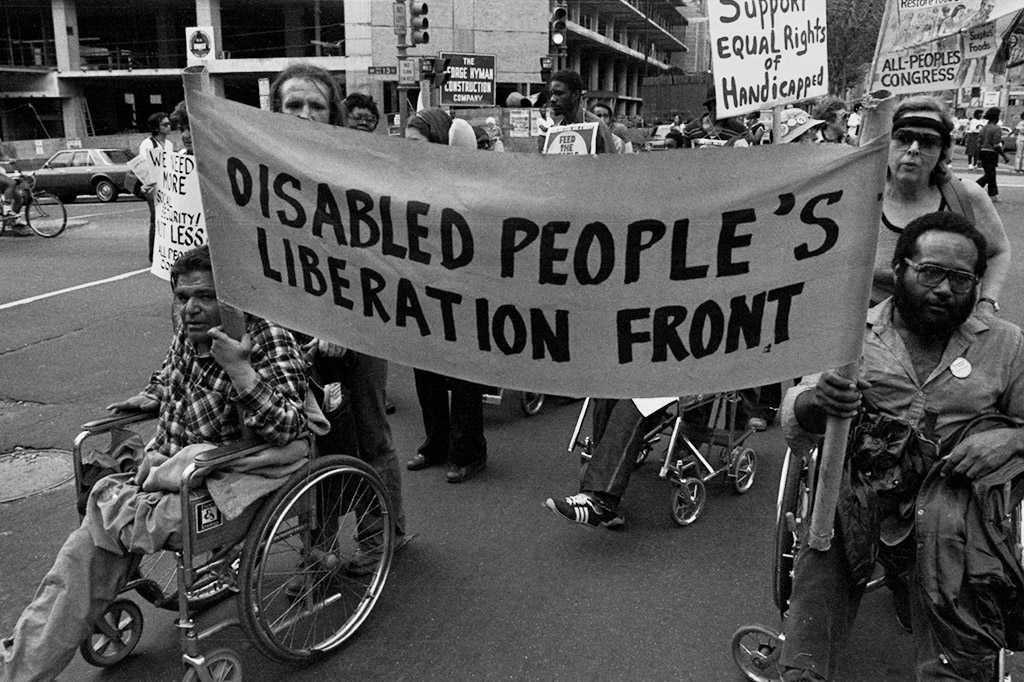
A charter of Disabled people’s rights

Do not curse the deaf. 

Do not put a stumbling block in front of the blind.

Revere your God.

This week’s parashah is Kedoshim, the centre of the whole Torah. It is the centre in two senses: we are slap bang in the middle of our scroll. When the warden performs the hagbahh tomorrow, the Torah will look almost completely even on both sides.

It is also, I feel, the spiritual centre of our Scripture. This is the part of the Torah that tells us what the rest of it was for. All the stories and speeches that surround the rest of the text can be summarised in this portion. 

Many of the verses from elsewhere in Torah are repeated. Some of it might seem superfluous. Kedoshim reads a little bit like the Torah’s greatest hits, reminding us of some its most popular laws and aphorisms.

But the collection is not random. The smattering of commandments I recited at the beginning all have something important in common. They are about what rights and obligations people have in relation to each other.

This year has brought home to many of us that we cannot take our health for granted. Our bodies are fragile and the time on earth we have is precious.

If you were to become blind, or deaf, or sick, or old, what could you expect from society? What are the minimum standards that others owe you? And, if you are blessed with youth and good health, what must you do to honour others?

Do not place a stumbling block before the blind. You might think: of course! Who would do such a thing? Who would want to trip up the disabled? But cities are structured and buildings managed in ways that are full of stumbling blocks. Every staircase to access public transport; every meeting held miles away from places people can reach; every building without a wheelchair ramp; every space without accessible toilets; every show without subtitles; and every badly laid-out street. These are all stumbling blocks.

Do not curse the deaf. And again, you would say: who would do such a thing? Surely nobody would be so cruel as to insult people who cannot hear them! But this happens all the time. Every headline that calls disabled people scroungers; every job that refuses to make adjustments; every effort to make welfare harder to access; every time the price of medication is jacked up; every time a comedian makes fun of a disability… aren’t all these insults to the deaf?

These are all ways that disabled people are kicked while they’re down.

Instead, the Torah tells us we need to lift each other up.

May we be the ones to remove every stumbling block and replace every curse with a blessing.

Shabbat shalom.

This sermon is for Edgware and Hendon Reform Synagogue, Parashat Kedoshim, on 23rd April 2021

story · theology

The morality machine

Once, in a plausible past, a scientist built a machine. It was so powerful it could handle complex reasoning. It could calculate absolutely anything.

The scientist programmed the machine so that it could work out the optimal outcome for any decision. If she asked it whether to eat porridge or cornflakes, this contraption would measure up the nutritional value of each cereal against her personal health, exercise and needs.

It would even factor in how happy each breakfast choice could make her, short term and long-term. This machine would crunch those numbers until it spurted out the best possible result. Porridge this morning. Almond milk. No salt or sugar.

This scientist discovered she could put her instrument to use with every daily task. Before long, she had completely optimised her life. She went to sleep and woke up at exactly the right time. She did the perfect amount of exercise. She worked a job that maximised her fulfilment, income and skill set. 

She used it to work out where to do her charitable giving: finding the cause that would save the most human lives for the least amount of money. The machine told her which purchasing choices would have the least impact on the environment for the fairest price to consumer, labourer and business owner.

Such a fine apparatus! Of course, it was only a matter of time before she realised this could have implications far beyond her own life. She brought her machine to the capital city and presented it before the benevolent president.

“Ma’am,” she intoned as she bowed, “this machine will help you make the perfect decision at all times.”

“Let me try,” said the president. She lifted herself from her seat and walked over to the metal block. “For the longest time, I have wondered if I need more advisers to increase the wisdom in my country. Perhaps this machine can tell me how many more I should hire, and what sort of person I need?” 

The scientist typed in the numbers, and you have already worked out what happened next. The answer was so obvious! The machine told the president that she did not need any advisors, because all her decisions could be rationally calculated by the computer. Immediately the president dismissed all her advisors.

Now the real work could begin. The computer informed the president of all the best crops that could be grown in the best soil for the best results. It told her what land to capture and which pastures to disregard. It explained which industries would be most cost-effective. Within a matter of months, the country was transformed.

Then the computer updated the president with which workers were most efficient, and which ones consumed more than they produced. The machine enumerated which people were most likely to disrupt social order. It showed how the population would be healthier and happier if it were smaller and more homogenous. The president gleefully implemented its dictats.

The machine calculated who to imprison. Who to promote. Who to ignore. Who to starve. Who  to execute. 

Because a machine can count absolutely anything. Except the value of a life.

No. The worth of a human being cannot be accounted for by any mathematical system. Life comes from something that is infinite and belongs to that Infinity. As such, it is indivisible, indefinable, immeasurable. No machine can capture God. No machine can understand those inviolable precepts that  we call ‘human rights’.

The idea that there is such a thing as human rights is, fundamentally, a religious ideal. It can only be understood by reference to something holy. The rights of human beings are inviolable because they are given by God. Philosophy’s great atheists – Bentham, Marx, Singer – also explicitly rejected the discourse of human rights. 

Conversely, Tom Paine grounded his rights of man in the biblical account of God having created us equal in Eden. When Jefferson wrote the American Declaration of Independence, he explained that human beings “are endowed by their Creator with certain unalienable Rights.” When the colonised and enslaved people of the Americas answered back that they, too, had such rights, they appealed to the same Divine Source. When Wollstonecraft vindicated the rights of women, she insisted that “God brought into existence creatures above the brutes so that they would have incalculable gifts.” 

In this week’s haftarah, God tells the prophet Zechariah: “not by might, nor by power, but only by My spirit” can the Jewish people truly live. All the force and wealth in the world cannot compare to the sacred truth of God’s infinity. We are nothing if we abandon God’s message.

More than a religious value, human rights are a Jewish value. Hanukkah is underway. It is a festival that celebrates an oppressed minority’s achievement of religious freedom in the face of colonial oppression. It remembers how the Seleucids once tried to violate Jews’ every right, but were ultimately defeated. Above all, we are told, it was God who safeguarded their rights.

A testimony to the Jewishness of human rights comes from the author of their Declaration. This week is Human Rights Shabbat, commemorating 72 years since the signing of the Universal Declaration of Human Rights. Among its composers was a French-Jewish jurist named Rene Cassin. Cassin was keen to ensure that there was some legal framework for guaranteeing people were protected, no matter where they were from; what minorities they belonged to; or what they believed. 

In particular, in the shadow of a genocide perpetrated against Jews, the Declaration of Human Rights sought to ensure that never again would a group be systematically eradicated. Human rights were supposed to be a counterpoint against genocide.

Genocide, like the choices described in the story of the morality machine, is the result of mechanical thinking. It is something that can only be justified when human beings are reduced to statistics and social consequences only measured in terms of order or prosperity. 

You see, the machine that could calculate anything except the value of a life did not exist only in fiction. It is already a part of our daily reality. 

Before genocide can be carried out in camps, it is developed on spreadsheets and planned on computers. 

Before people can commit atrocities, they have to switch off the part of themselves that connects with their infinite source and plug in only to the finite equations of capitalist mentality. If we are not careful, we can become the machine. We become the automatons that punch out numbers and make calculations and rationally process every evil. 

Our media asks us how many people should be permitted into Britain, and we churn back answers into the polls. We are challenged to decide how many people should die of Coronavirus, and how many should be imprisoned to stop their deaths. We are told to weigh up which tools of warfare our country should have to capture the greatest resources for the least sacrifice. 

We are asked the most unconscionable questions and, barely processing the implications, return answers like amoral computers. If we permit ourselves to think like robots when we weigh up the values of other people’s lives, we truly do destroy the humanity in ourselves. 

We will only break free from such finite thinking when we put it into the perspective of Infinity. It is the infiniteness within someone that makes them holy. It is their Infinite source that makes their purpose sacred.

For the sake of humanity, we embrace human rights.

I wrote this sermon for the Leo Baeck College newsletter and will deliver it to Newcastle Reform Synagogue on Shabbat Vayeshev, 12th December 2020.