festivals · judaism · torah

What happened at Mount Sinai?


We are days away from Shavuot, the Feast of Weeks, when we celebrate having received the Torah. At this festival, we affirm we have received God’s word and that it is unfailing.

This is what we think we know: these words are not only God’s.


They have human origins, and they were written over many centuries. The Torah is not a single, unaltered revelation. It is a book with a history.

What happened at Mount Sinai matters immensely. It is the foundation of our faith. It is the basis not only of Judaism but of every monotheism that followed it.

The story has been told so many times. Hordes of Hebrews fled from Egypt, gathered around the foot of a desert peak, and heard the voice of the One True God.

What they experienced, they told to their children, and they to theirs, until – after generations – the vision was written down into a collection of stories and laws we call the Torah.

We have to know what really happened at Sinai; so much hinges on this indecipherable point of history.

We have to believe in the real world, where history is something made by human beings, who work, and struggle over resources, and build societies.

We have to believe in the God of Judaism, who is revealed through history.

We must synthesise the two. We cannot split the material and the spiritual. We need to know what the material reality was that lay underneath this spiritual truth. We need to know what happened at Sinai.

We cannot truly know, but we have to try and work it out. A group of human beings felt so inspired that they wrote down ten commandments and passed them on for thousands of generations. Why?

A group of human beings, who surely worked and slept and ate and drank and dreamed, proclaimed that they had seen God.

Something marvellous must have happened at that time. Something awe inspiring – to give us this treasury of ancient wisdom. Who committed these words to paper, what happened to them, and what made these commandments feel so important to them?

What really happened at Mount Sinai? The biblical historian pores over our texts, strips them back, digs out inconsistencies, looks for parallels in ancient cultures, and analyses the language in which the stories are told. The biblical historian discards impossibilities, looks for likelihoods, and reconstructs the best possible version of events.

We cannot know for certain, but we can do our best to do the same – to discard, seek and reconstruct. And, when we do, the truth of/ Mount Sinai that we are left with is far more radical than we might imagine.

For the historian, Mount Sinai may not have been Mount Sinai at all. It may be, as the Samaritans claim, Mount Gerizim, near Nablus, since that is also one of the mountains the Torah names as a site of revelation. It may have been Mount Pisgah or Mount Nebo, on the eastern side of the Jordan River, since our Torah names those locations too.

We do not know at which mountain the important revelation happened. But there was a mountain.


This is what we think we know: there was a mountain.

Some people went there. They may not have been Jews, since that word did not exist yet. They may not even have been Israelites, since the story teaches that they only became Israelites through the process of what happened at that mountain.

They were, says the Torah, a mixed multitude. They were drawn from all the nations of the Ancient Near East: from Ethiopia and Yemen; through Egypt and Sudan; to Lebanon and Syria.

They were, by their own self-description, border-crossing nomads. They had no land or title. There are no records to suggest they owned any weapons, let alone that they had military strength.

If we are to trust how they wrote about themselves, they were menial workers. Water drawers; grain carriers; tenant farmers; shepherds. They had been slaves. They were a ragtag of the ancient world’s lowest classes.

We do not know who these people were. But they were poor and transient.

This is what we think we know:
the poorest people of many ethnicities came together at a mountain.


We are not sure when it happened. It may have been any time from the 15th Century BCE. The latest it could have been is the 5th Century BCE, when the Torah was edited into its final form. That is a difference of nearly a thousand years.

We do not know what brought them to that mountain. We cannot prove that the exodus took place exactly as it was described in the Torah.

But we do know that, in the 12th Century BCE, there was a massive societal collapse in all the nations of the Mediterranean basin. In the broad period when our Torah tells us that our ancestors received the Ten Commandments, the Egyptian empire was crumbling.

We also know this. When Egypt was collapsing in the late Bronze Age, a Pharaoh wrote a stele, complaining of slave uprisings by a group of nomads on the fringes of his empire. He calls those people Habiru. The biblical historian notes the linguistic similarity between these people and the Hebrews.


This is what we think we know: the poorest people of many ethnicities rebelled together against a decaying empire some time around the late Bronze Age.
They met at a mountain.

The stories they tell of their experiences at that mountain are fantastical. Fire descended from heaven. Thunder crashed and lightning roared. Thick smoke descended over the peak. The earth trembled violently. The Creator of Heaven and Earth became manifest before them.

How can we know if any of this happened? Nobody else could have testified to what they saw. There are no contemporary meteorological records. There are only two possibilities: either the authors of our Torah really believed that was what they experienced, or they made it up.

If they made it up, so many others were convinced that they had been part of that experience at the mountain, that they faithfully transmitted the story for hundreds of years to their children and grandchildren. Which is more likely: that these people lied, or that they genuinely believed they had a transcendent experience?

This is what we think we know: the poorest people of many ethnicities rebelled together against a decaying empire some time around the late Bronze Age.
At a mountain, they had an experience so profound that they felt as if they saw God manifest, and it changed their lives and the lives of their descendants forever.

The God they thought they heard told them: “Although the whole earth is Mine, you will be for Me a dominion of priests and a holy nation.”

The poorest people in the world affirmed belief in a God who knew no borders and rejected all hierarchies. Every one of these ancient landless waifs would be holy.

According to our Torah, those people entered into a covenant.

Until this point in history, contracts of these kind were predominantly made between empires and vassal states. They took the form: “you will pay me tribute, and I will be your landlord.”

This was a covenant of a new kind. It said:
“you will do justly by one another, and I will be your God.”

They ratified this new agreement and remade what a covenant was. They swore an oath, committing themselves to an entirely new society. They bound themselves to a Law that knew no Sovereign save for a universal God.

They promised that their society would have no more killing; no more trafficking in human beings; no more greed. They declared fealty to each other, to their God; and to their sacred days of rest.

Take our texts. Strip them back. Dig out inconsistencies. Look for parallels in ancient cultures. Pay close attention to language. Discard impossibilities.

From what remains, you can reconstruct the best possible version of events.

This is where we have arrived.
This is what we think we know.

Thousands of years ago, poor people from many ethnicities got together in common rebellion against a decaying empire. They had an experience so profound that they felt as if they saw God manifest.
At a mountain, they made a covenant to create a society based on dignity.

Many hands have since re-written and interpreted that event – but, deep at its core, buried under years of transmission and analysis, was one moment.

This, is what we think we know:

Somewhere in history, there was a slave rebellion by a mountain.

And it was marvellous.

Originally published in Vashti.

israel · sermon

Remember in order not to forget

There are ways of remembering intended to make you forget.

There are ways of forgetting intended to help you remember.

So, says the Torah, remember in order not to forget.

This week is Shabbat Zachor, the Sabbath of remembrance. Just before Purim, we are called to read three additional lines of Scripture. Deuteronomy instructs:

Remember what Amalek did to you on your journey out of Egypt [… ] You shall erase the memory of Amalek from under heaven. Do not forget.

Remember… erase the memory… do not forget.

Is the demand to remember not contradicted by the insistence on erasing the memory?

Is the commandment to remember not exactly the same as the one not to forget?

Perhaps not. There are ways of remembering that encourage forgetting, and ways of forgetting that make you remember.

Alan Bennett’s play, The History Boys, is an exploration of what it means to teach history, and what we can learn from it.

In a powerful scene, the newest teacher, Tom Irwin, takes his sixth-form grammar school students on a tour of a war cemetery.

As they walk, he tells them:

The truth was, in 1914, Germany doesn’t want war. Yeah, there’s an arms race, but it’s Britain who’s leading it. So, why does no one admit this?

That’s why. The dead. The body count. We don’t like to admit the war was even partly our fault cos so many of our people died. And all the mourning’s veiled the truth. It’s not “lest we forget”, it’s “lest we remember”. That’s what all this is about -the memorials, the Cenotaph, the two minutes’ silence-. Because there is no better way of forgetting something than by commemorating it.

The truth to these words is palpable. In every village square throughout Britain there is a stone column, inscribed with names. The Cenotaph is so finite. Its concrete defies questions. You cannot ask it: what did they die for?

As we lay wreaths, the liturgy intones that the war dead “made the ultimate sacrifice.” These words carry such gravity that you forget it was a conscript army. You dare not ponder: who sacrificed them, and for what cause?

Then, there is silence. So much silence that you cannot hear the echo: was it worth it?

Real memories are not fixed. They are fluid and living, constantly opening up new interpretations and interrogations. When you really remember, you pore over the details with others, seeking perspectives you missed, guided by a quest for greater understanding. You always want to know what you can learn from it, since the memory teaches something new to each moment.

But, as Alan Bennett’s character teaches us, that is not what happens with certain war memorials.

They are ways of remembering in order to make you forget.

There are, too, ways of forgetting to make you remember.

In 1988, the Israeli historian and Holocaust survivor, Yehuda Elkana, wrote an article for HaAretz called The Need to Forget. Not long after its publication, this article entered the new Jewish canon as one of the most challenging and profound commentaries on Shoah memorialisation.

In it, he warns against the danger that Holocaust consciousness poses to Israeli society.

He writes:

I see no greater threat to the future of the State of Israel than the fact that the Holocaust has systematically and forcefully penetrated the consciousness of the Israeli public.

Reflecting on the school trips to Yad Vashem, Elkana comments:

What did we want those tender youths to do with the experience? We declaimed, insensitively and harshly, and without explanation: “Remember!” “Zechor!” To what purpose? What is the child supposed to do with these memories? Many of the pictures of those horrors are apt to be interpreted as a call to hate. “Zechor!” can easily be understood as a call for continuing and blind hatred.

So, says Elkana, while the rest of the world may need to remember the Holocaust, the Israelis needed to learn to forget it. They needed to uproot the injunction to remember “to displace the Holocaust from being the central axis of our national experience.”

Elkana’s invocation of forgetting is also an invitation to remember. Forget the past in order to remember that we have a future. Forget the cruelties inflicted on our people in order to remember that we are greater than our misery. Forget the wars in order to remember the possibility of peace.

Elkana is not talking about an alternate reality where everyone wakes up tomorrow with amnesia about the last hundred years of history. He is talking about an active process of forgetting: forgetting by asking new questions and building new memories.

These are ways of forgetting intended to help you remember.

There are ways of remembering intended to make you forget.

But, the Torah tells us: remember in order not to forget.

What type of remembering would this be?

A full remembering, the type repeated twice by our parashah, the kind that forces you not to forget.

This remembering, then, must be one that always asks questions and returns to itself. A history that invites constant revision and ever wants to teach new lessons.

For the last sixteen months, Israel has been gripped by war. It has been unavoidable as its details have filled our news feeds and lives.

I know it is too soon to start the painstaking soul-searching involved in real remembering.

But it is plenty early enough to forget.

Already there are those who would like us to forget, so that they can eschew their own accountability.

How easily we can be made complicit in their acts of wilful forgetting.

So I have been considering how to fulfil the Torah’s commandment to remember.

I want to remember in fullness and complexity, always returning to new questions.

I want to remember all the suffering, for there has been so much suffering.

I want to remember all the dead. Every name. There are so many names.

I want to remember all those responsible. Every name. There are so many names.

I want to remember all the alternatives, because there have always been so many options, and there are still so many other ways.

I want to remember completely who I have been, who we have been, at best and at worst throughout this whole time.

It is too soon to remember.

It is too much to remember.

It is too painful to remember.

But, if we do not remember, we will forget.

festivals · high holy days · sermon

Is time a cycle or a line?

Do you ever feel like we’re going round in circles?

No, really.

We just spent our evening going round and round. We circled the synagogue seven times; we spun around on the spot. We rotated so much we got dizzy.

Then, having spun and circled and danced with the Torah, we read the very last bit of the story, only to begin it again. No sooner had our narrative ended than we immediately restarted it.

Our storytelling does not begin with creation and end with the death of Moses, because the death of Moses is immediately followed by the story of creation. You cannot hear one without hearing the other. We are locked in a cycle.

How fitting that this celebration of circling is the completion of our High Holy Day festivals. They began with Rosh Hashanah, when, our tradition teaches, the world was first created, and they end with Simchat Torah when, we read, the world was first created. Our festivities began with a new beginning and end by redoing the same beginning all over again.

This makes sense in the context of our festival cycle, where one simchah always follows from the last and leads to the next one. Which one is the beginning, and which one is the end? If you tried to place your finger anywhere in the cycle, you would soon find it slipping away from you, as it made way for the next turn on the same wheel.

Our Torah, our festivals, our planet, and our bodies, all turn with anticipated regularity. So we go on in circles.

This view of time is antithetical to the modern mind. Everything in contemporary thought speaks of progress. We came from a finite beginning, and we are heading to a finite end.

The world began at one point, when it was created, and will end at another, when it will be destroyed. Humanity came into existence around 300,000 years ago, and could last another 8 million, but it will at some point cease to be.

In the intervening period while humans exist, we progress from intelligent apes to hunter-gatherers, to shepherds, to subsistence farmers; through the metallic ages to feudalism, to capitalism.

Yet this view of time, as a progression from one clear point to a closing at another, is a distinctly modern one.

For most of Jewish history, time has not been a journey from beginning to end, but a constant cycle.

The great 20th Century literary critic, John Berger, explained this mentality. For those who work the land, life is precisely a cycle. The work of each day is in a routine with every other. Each year follows the same pattern as the one before.

Autumn, spring, summer, winter. We reap, we sow; we plant, we harvest. We mulch the ground and till it with seeds and water it and take in the yield and repeat the same process again.

Every individual is born into a world where that wheel is already in spin and, when they die, the world carries on turning in just the same way.

When peasants imagine time, therefore, they think only of three stages. The first is our present life of survival, confined as it is to that ongoing cycle. At either end is an identical period of perfection. We began in a paradise and we are heading to a paradise. The ideal world existed long ago in the distant past, and we will return there when the world is set right.

If the distant past and the messianic future are the same place, then time is a cycle. We are only ever heading to the place from which we began.

This is precisely the position of traditional Jewish theology. Our souls began in Eden, dwell temporarily in this life to struggle, and will one day return to that same Eden.

It is the traditional Jewish view of time. Humanity was given a perfect world; we live now in a time of violence and injustice; the world will be returned to its sublime state once more.

When we put the Torah back in the ark, we summon this Jewish view of time: חַדֵּשׁ יָמֵינוּ כְּקֶדֶם – renew our days as of old. Make our times new, like they were at the beginning.

Within these times, then, says Berger, our only way forward is to trudge the same path. We walk on the same roads as our ancestors did and beat them down again for the next generation.

In Judaism, we call that path “halachah”: the way, the route. These are the rites and customs of our ancestors. We will repeat them and we will pass them on. The cycle continues.

But there is a problem with this view of time. Berger acknowledges that, if life is seen from this standpoint, the only correct moral viewpoint is conservative. We must repeat what we have done before. We cannot deviate from it whatsoever.

That is, effectively, a parody of Orthodox Judaism’s view of history. The religion is the same as it always was and we must endeavour not to let it change. Our ancestors knew more than we did, and we will be in a constant descent of generations until a long-awaited messianic age.

In such a worldview, there is no room for development, innovation, or change.

There is a reason why “going round in circles” is an insult!

However much progress may conflict with the passing of the seasons, it conforms with what we know of what has happened over the centuries.

We are all here as Reform Jews because we have seen something in the past that we wanted to correct: whether it was inequality between the sexes; an inability to watch TV on a Saturday afternoon; or simply a desire to hear the organ in shul. If everything must remain static, our synagogue could not exist.

Reform Judaism is an effort to reconcile the two views of time. It straddles the traditional cycle and modern progress. It says that we can go round and go forwards at the same time.

How is this possible?

I like the analogy of time as a snail shell. Yes, it goes in cycles, but at the end of each turn, it moves forward, just slightly. We go round and we go out. We go back on ourselves in order to advance.

If it feels like we are going round in circles, that’s because we are, but we are not always coming back to exactly the same place.

When we arrive at this new Simchat Torah, we are reliving the old one, but we are here as transformed people. We are slightly different than when we saw it last, so the festival is too.

We go back on ourselves in order to move forwards.

Chag sameach.

debate · Uncategorized

Can religion play a positive role in progressive politics?

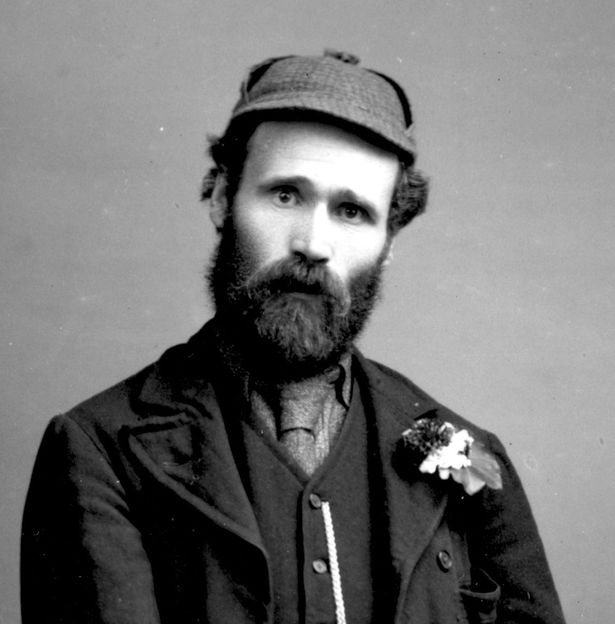
When Keir Hardie set up the Labour Party, he broke with many of the radicals who had preceded him by trying to organise his efforts where working class people really were: in the trade unions and the low church. He reached out to people in both their chapels – the ones where they organised their workplaces, and the ones where they organised their communities.

Since that time, both the trade unions and religious organisations have greatly declined in British public life, and in both cases we’re worse for it. Those traditional ways for people to meet, share culture, build up solidarity and envision a better future have been completely eroded. We’ve been left open to the worst austerity, neoliberal privatisation and attacks on the rights of marginalised people that we’ve ever known. Our lack of organisation and community has meant we’ve been constantly on the back foot, struggling against forces much stronger than us.

On the left, everyone acknowledges the decline in trade unionism for what it has been: a massive setback for working-class organising, an onslaught that has left us weaker, more divided and more isolated. But, to listen to some on the left talk, you’d think that the decline of religion was somehow a victory for our side. Millions of Britons no longer know their neighbours, no longer have any idea about the births, deaths, illnesses, tragedies and joys that are going on in their communities. Young people grow up without any access to traditional songs, stories and culture that was central to previous generations and instead only get the official versions of history. They learn that Churchill and Thatcher were heroes, but they never hear about the religious movements that shaped the country they live in, like the Chartists, Levellers and Quakers. People have completely lost connection to their community, and we’re supposed to somehow celebrate that as an accomplishment.

James-Keir-Hardie
Keir Hardie

Absolutely not. Religion isn’t the dark force that it’s been painted, but has been one of the greatest forces for progress and radical change. Keir Hardie recognised that. Socialists of previous generations were able to see the positive role religion could play because they were able to draw a necessary distinction. I say that Kier Hardie organised in the low church, because that’s where he was. He didn’t go out to the priests and the bishops and the high-ranking officials who’d latched on to state power. He was interested in the lay preachers. And that’s because there is a crucial difference between religion as it is imposed from above and religion created from below.

Like with all forms of culture, religion can go one of two ways: it can be a bourgeois, reactionary force that bolsters the forces of power, or it can be an emancipatory, proletarian force that empowers people to challenge systemic violence. I am not here to defend Iranian morality police, Bush’s crusader Christianity, the violent Islamophobia of India’s BJP, still less Kahanists in Israel. I do not want to defend religion’s connection to that kind of politics in any way.

But we need to be clear: the problem with connecting those politics to religion isn’t with religion itself, but with the politics we connect them to. I don’t want religion to play a role in the state – I want to abolish it. I don’t want religion to play a role in war – I want to abolish war. I don’t want religion to play a role in capital, the police, imperialism or the structures that uphold patriarchy, because in every case I want to abolish them.

The politics I’m interested in is politics from below – the struggles of working-class people, women, LGBT people, colonised, enslaved and massacred people to realise their own destinies and take control over the world. I think religion can play a very positive role there. It has done throughout the ages, and religion can continue to be a source of strength for all oppressed people.

When I talk about this religion for oppressed people, this isn’t an innovation. I’m not taking the message of religion and twisting it to meet my own ends. Quite to the contrary: combating oppression has been built into the meaning of religion since its inception. The earliest written religious texts, the Hindu Vadics, bring together a worldview that opposes all forms of systemic violence, from state warfare to animal consumption. The Torah is the story of rebel slaves turned refugees trying to build a just society. The prophet Amos denounced the ruling class of ancient Judea for stealing the spoils of the poor and hoarding them. The prophet Isaiah tells the rich that their prayers are worthless because they exploit people while they deliver them. Jesus comes to take direct action against money-lenders and the hypocrites that collaborate with a colonising army. The Talmud is a lengthy exegesis in how to bring anti-oppressive practices into every part of a person’s life. The Prophet Muhammad comes to affirm the unity and dignity of all of humanity, and to insist that people are treated as if they all contain the spark of the divine. Sikhism tries to break down all the barriers that differentiate religions, genders and ethnicities into one universalising faith. Religion, at its core, is anti-oppression. Don’t the politicians know that the God they claim to believe in despises them and their prayers?

Holy texts are brimming full of admonishments against the ruling class. Reactionaries leap on passing references to sexuality and gender difference, separate them from all context, and use them as a pretext to persecute people. They take what is a radical idea, focused on bringing about the kind of change socialists want to see, and they manipulate it to suit their own ends. 

But everyone needs to see that the religious tradition of speaking truth to power is much better represented by our heroes than by our enemies. It’s represented by all the religious activists who worked to end slavery, the ones who fought for democracy and debt relief, the anti-colonial fighters and the indigenous revolutionaries. They represent that prophetic tradition.

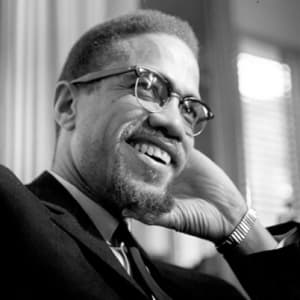
malcolm-x-9396195-1-402
Malcolm X

Two key people from the Black civil rights movement come to mind here: Malcolm X and Martin Luther King. Malcolm X – a Muslim minister in the slums of Chicago and New York, Martin Luther King Jr, a Christian reverend in America’s deep south. Both of them built their organising around their religious institutions and the deep network of Black faith communities across the USA. They based their activism around their religious buildings, religious texts, and religious traditions. Are you going to tell me that they didn’t play a positive role in politics?

It’s not like they could have done what they did without their religions either. Certainly they couldn’t have turned to the unions. At that time, the white-run unions were mostly fighting against black inclusion in workplaces and were trying to uphold segregation in places. They could be racist, reactionary lobbies, and their record of beating up protesters against the Viet Nam war and siding with anti-miscegenation politicians shouldn’t be quickly forgotten. That’s the context in which they were organising, and it was the religions that gave them the strength as a group to fight for their rights.

More than that, the turning point in the struggle for civil rights was when the white religious leaders from across the country came down to join the Black protesters in Selma, Alabama and showed that the weight of public opinion and that the moral voice of the country was firmly on the side of those protesters. The Patriarch of the Orthodox Church was on the frontlines, alongside the head of the Jewish Theological Seminary, Rabbi Abraham Joshua Heschel, who said “when I marched, I felt that my feet were praying.”

When religion is in the hands of the working-class, and when it is used as a fountain for oppressed people to draw strength from, it is a powerful and challenging force. But if you pour scorn on religion, and you say that it’s irredeemable, you hand over religion to the bigots. If you say you don’t want anything to do with it, then you’re leaving that source of power to be controlled by reactionaries. No wonder people wind up believing that God is a homophobic, misogynistic, capitalist demon if you completely disavow religion and leave it in the hands of the right.

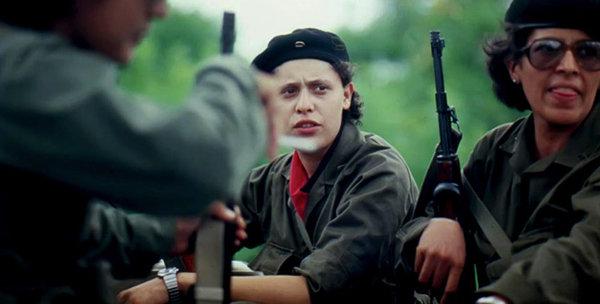
Socialists who have engaged with religions have seen incredible success. When the Latin revolutionaries, the Sandinistas, started out with atheistic, anti-religious Marxist arguments, they remained an isolated minority who had no relationship at all to the people. The ultimate success of the Nicaraguan revolution only came about because of the rise in liberation theology and the willingness of socialists to engage with the church.

sandinistas
Sandinistas

Vatican II of 1959 wanted to see the church more closely aligned with the poor and, as part of implementing this, Catholic activists set up “Christian base communities” rooted in poor favelas. These were the first platform from which poor communities could start organising against the capitalist authoritarian Somoza regime in Nicaragua, and it was not an accident. Church theologians of Latin America wrote explicitly about their need to bring their religious beliefs to a political mission. Liberation theology saw that the things most despised by Christianity: individualism, competition, materialism and greed were, in fact, integral to capitalism.

High-ranking bishops and the papacy were, of course, hostile to the work of these low-level bishops and sided with the regime. The upper echelons of the church had to come into direct conflict with their own members initially, but by 1977, the grassroots Catholic activists had been so successful in transforming the church that when Somoza’s newspaper Novedades asked the church to clarify its position, even the high-ranking officials were forced to side with the bishops against what they called institutionalised violence and inequality.  

These are not just interesting facts from history – they have a strong bearing on the present day. In my own organising in the Jewish community, I’ve seen how religions can play such a powerful role in activism. Synagogues have preserved the memory of what it meant to be refugees, how Jews came to this country hidden in the bowels of boats and rushed out on the last trains from Germany. This memory has been preserved so well in our religious institutions that, when the migrant crisis came to public attention, the Jewish community was at the forefront of offering help and refuge. Every synagogue in the country had collection points for aid to refugees. Key shuls in every area now have drop-in centres that provide free help and legal aid to asylum seekers. Young congregants drove out to deliver these aid packages and came back embolded and enlightened. I attended a service at an Orthodox synagogue where one such member came back, agitating in her community to lobby for rights and safe passage for refugees. South London Synagogue has organised for over 200 child refugees to be brought over from Calais and housed here. The Jewish community is not alone here. Religious institutions have played a powerful role in demanding an end to poverty, quality council housing and opposing racism. This is the reality of what religions in Britain today do.

I’ll say it again because it needs stressing: I’m not here to defend the religion of the ruling class – whatever form it takes. I’m here for radical religion that stays true to the message of fighting for justice. There is no doubt that awful things can be carried out in the name of religion, but just a cursory glance at history tells us that people are perfectly capable of carrying out the same atrocious acts without religion. 

Religion has been associated with violence when it’s been connected to state power and reactionary movements. There’s no doubt about that, but to suggest that it has some kind of connection to religious belief itself is completely ahistorical. Haven’t Stalinist gulags, Maoist terror and the genocides of Cambodia and Nazi Germany shown us that people are perfectly capable of committing the utmost evil without religion? The modern states of France and Turkey are perfect examples of how secularist ideology can be just as violent, colonialist and corrupt as any state that calls itself religious. The problem is capital. The problem is the state. The problem is the military. The problem is certainly not God.

The task of religions is to keep alive that moral, prophetic voice that insists on radical equality and seeks to transform the world. It would be a disaster to throw out all that religion has done to transform the political sphere for the better, solely because fundamentalists and puritans have hijacked it. Religion belongs to all those who practice it – and the faith of left-wing revolutionaries is far more sincere than that which connects itself to state power, capitalism and authoritarianism.

The central message of religion – of all religion – is a radical one that every socialist can support. It is that there is a force much greater than anything we can conceive; that though we are small in the grand scheme of the universe, our lives have meaning. Every one of us is indowed with a spark of the divine. The existence of God makes us all equal – in a profound and spiritual way. Religion challenges us to see that all of humanity is one, everyone deserving of dignity, and to bring that claim to life in the world. It is a call to action – to overthrow the Pharoahs of the world as Moses did; to cast out the demons of legions as Jesus did; to demand rights for widows, orphans and disabled people as Mohammed did; to resist sectarian violence as Guru Nanak did.

Faith can give us the courage to fight for a better world. Thank you.

fists raised

I gave this as a speech at Ideas for Freedom, the annual conference of Alliance for Workers’ Liberty, a Marxist-atheist sect, back in July 2016. There were two other panelists, arguing that religion could not play a positive role in politics. My speech was not well received.

I doubt I could get away with making the same speech today. My teachers would definitely chastise me for over-simplifying matters, making sweeping generalisations, going off on random tangents, and flattening out history. I stand by, however, the central idea, that religion has a radical core, rooted in resistance. I doubt any of my teachers would question that this was a legitimate and necessary expression of religion.

I was moved to upload it by my brother, with whom I spent a long time discussing this topic over the winter holidays. He asked that I write up some of my ideas, and I remembered that I already had. I will speak on a similar theme, albeit to a very different audience, when I preach this coming Shabbat in Newcastle.

sermon · story · theology · torah

How can you condone slavery?

Around this time last year, I overheard a conversation.

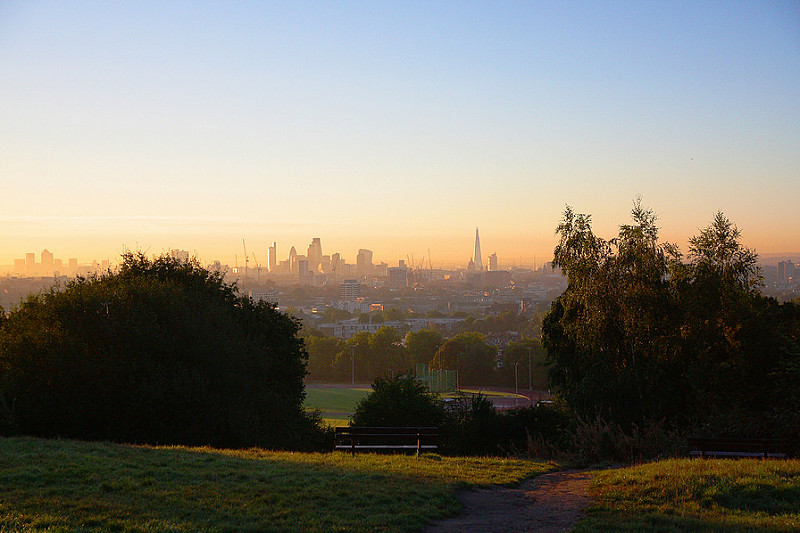
Two women met each other early in the morning on a frosty hill overlooking the city. One had arrived slightly earlier than the other, draped in a long, white scarf. She was old but full of life in a way that made her impossible to place. The other joined her not long after. Her blue velvet dress and jewellery would have looked gaudy on somebody else, but somehow on her they were elegant. They sat down on a bench, facing downhill.

At first, they sat in silence, watching the sun rise higher in the sky. Then the lady in blue velvet turned to her friend and said: “You know, I believe in slavery.”

Her friend let out an exhausted sigh. Even though I couldn’t see her face, I could feel her roll her eyes. “Yes,” she said, “you’ve told me before.”

“Not cruel slavery,” she insisted. “I’d put limits on it. Seven years. Seven years is enough and then the slave goes free. And the masters have to take care of them properly.”

“I wish you wouldn’t say that.”

“I know you do, but I’m old. I’m set in my ways and I can’t change.”

“I’m not asking you to change. I just wish you’d realise that times have moved on. You can’t say things like that anymore.”

“Why not? If I thought it once, why should I be forced to change my mind?”

“Because you’re respected. People care what you have to say. They want you to say loving, hopeful things. If you tell everyone you believe in slavery, people will think that it’s OK.”

“But most of the time I do say nice things. And I’m coming from a good place. I want slaves to be treated well. I want them to have good lives.”

“But you still believe in slavery.”

“Yes, I still believe in slavery.”

“You know,” her friend nudged her, “I want to reinterpret what you’re saying. I want to think you’re speaking in a spiritual sense. I want to hear what you’re saying as that we should all be slaves to God. After all, God is our creator and provides for all our needs, and in turn we do God’s work on earth.”

The old lady laughed. “I like that, I like that a lot,” she chuckled… “But, you know, that’s not what I said.”

“No, it’s not what you said.”

“And you can interpret me any way you like, and I’ll accept what you’ve got to say, but nothing I say can depart from its original meaning.”

“Even now?” Her friend was exasperated. “Centuries after the abolition of slavery? Centuries after my ancestors fled Egypt? Even now, knowing everything you do about human history and human dignity, you can’t change just a bit?”

“Sure, I change, in my own way. But the core of me is still there. Like it or not, you’re stuck with me.”

They sat in silence a while longer. I could feel them both seething. A flock of birds murmured in the winter sky. I felt almost rude for eavesdropping, but couldn’t pull myself away.

This time, it was the woman in velvet’s turn to get frustrated: “You knew I would say this. You knew that if you came here, on this morning, at this time, you would hear me say these words. I believe in slavery. I say them at exactly this time every year. If you don’t want to hear me say it, then why do you even come?”

“Because I love you, Torah!” She threw her arms up in the air.

“I love you too, Kehillah,” Torah whispered back.

At once, I realised that I was not listening to any ordinary conversation between two people but the endless dialogue between the Jews and Torah. Torah, on the one hand, was fixed. She had been inscribed centuries ago and would continue to speak the words she always had. The Jews, on the other hand, had grown with history. Their thoughts had developed as God had revealed to them new insights about how to treat people.

They were locked in dialogue. One would always change and the other would always stay the same. But neither could leave each other. Sure, the Jews could get up and leave Torah at any time. Torah could even abandon the Jews. But if either of them walked away from the relationship, Torah would cease to be Torah and the Jews would cease to be Jews. Through their discussions, they drew out all of God’s contradictions: the contradiction between the past and present, between love and justice, between the world as it is and the world as it ought to be.

I felt myself transfixed by their conversation. I wanted to be part of it. I wanted to insist that, of course, slavery was wrong. I wanted to quote everything else back at Torah that she’d ever said to show how that one section in this week’s parashah was completely at odds with the rest of her message. But I realised that, even if I did, Torah would still say the same thing, and I would still have to wrestle with it. We, the Jewish people, would still have to wrestle with it.

Kehillah got ready to leave. Torah gently held her wrist. “You will come back and visit me, won’t you?” she asked. “I know I’m old and sometimes I say offensive things, but I still want to talk with you. You don’t have to do everything I say. Just sit with me and listen. I’m lonely without you.”

Kehillah sat back down. “Of course I will, Torah, I’ll be here every week. I love you and I need you. I’m lonely without you too. If I don’t come here and have these conversations with you, I’ll forget what my purpose is. I’ll forget that I have work on this earth to do. You ground me.”

“Thank you,” said Torah. “I’ll always be here.”

sunrisehampstead

I wrote this sermon for Parashat Mishpatim for the Leo Baeck College newsletter. I will deliver it on Shabbat for Manchester Liberal Jewish Community.

high holy days · sermon · story · theology · torah

The Torah was given to all of us

The Reform liturgy for Yom Kippur takes on a tour through the progression of Judaism. The reading choices are different to in Orthodoxy. Whereas in Orthodox synagogues, you would hear the story of the High Priest’s atonement rituals with the two goats in the morning and the rules of illicit sexual relations in the afternoon, the editors of the Reform machzor felt these texts did not reflect their values and substituted them. In the morning, in our community, we read Nitzavim, Moses’s final address to the people. For the haftarah, we read Isaiah’s denunciations of exploitation. Then, in the mussaf service, we read the stories of the martyrdoms of our sages with the destruction of the Temple in 70CE. Through this history, we see the values of progressive Judaism elucidated at each stage: freedom, personal responsibility, decentralisation and anti-authoritianism. For my Yom Kippur sermon this year, I retold those stories to show how those values emerged.

“You are all standing here today,” said Moses.

He looked out over the vast plains of Moab. He gazed at his assembled audience, stretching far back into steamed blurry visions in the distant desert. He saw their weariness and felt his own. At 120, his physical strength had not weakened. His eyes still saw clearly and his teeth worked perfectly. Although he carried a stick, he did not depend on it. Physically, he was fine. But, mentally, he was drained.

For forty years, Moses had presided over the people. Gradually, he had tried to cede power. He had appointed judges and officials who would help resolve disputes. He had tried to teach people as far as possible all the laws that he had received from God on that great mountain in the Egyptian desert. More than ever, he felt ready to go. But the question was: were the people ready to be without him? What could he tell them in this last speech to prepare them for a society where they would have to lead themselves?

“You are all standing here today,” Moses repeated. “All of you.”

“But, really, all of you. Women and men. Children and the elderly. All of you are here. All of you were present at Sinai. I need you to know that it wasn’t just me and Aaron who did all this. You emancipated yourselves. Nobody forced you to leave Egypt. You got up and went because you knew you deserved better. You could have turned back to Egypt any time, but you didn’t, because you had faith. Hold on to that feeling now.”

Perhaps, Moses thought, he had not been specific enough. “Yes, the strangers too. All the foreigners who have joined us on the way. And the wood-choppers and the water-drawers. The people who do the most menial work among you. The most neglected among you. I want to mention you especially. I want you to know that you were at Sinai. Nobody can take that away from you. You experienced the full might of God and you choose to be God’s people. Never let any priests or princes tell you this was all their work. It was yours.”

“This,” said Moses. “This covenant that God made stands for all time. It speaks to all future generations to come. The soul of every Jew is here with me. All of you are witnesses. All of you have had the responsibilities of this religion entrusted to you. Even if you are scattered to the ends of the Earth, God will find you there. This religion stands firm in every time and place.”

The Israelites stared back at Moses in a calm silence. Only the sounds of gentle winds and crickets interrupted Moses’s speech. These followers had long known that this speech was coming. They had had plenty of time to prepare for it, and yet felt completely at a loss.

“What I’m saying,” said Moses, “is that the Torah is yours. God didn’t give it to me or to the scholars. God gave it to you, to read it and learn it and interpret it in the way that works for you. These commandments that I put before you today are not too incredible for you, nor are they too far from you. They are not in the heavens, that you should say, ‘Who among us can go up to the Heavens and get it for us and impart it to us, that we may observe it?’ No. It is right with you. It has been with you all along. You are in charge of your lives. You are responsible for your destinies.”

That was the message Moses left with the Israelites and through them with us, the Jewish people. It has a stronger bearing on us now than we may realise. It demands of us way more than we might be prepared to accept. When Moses died, he did not place power in the hands of priests and kings. He handed it over to everybody. There would not be anyone to frighten the masses into following orders or to offer up commands. The rules were all already there. The people had been entrusted to follow them for themselves.

With time, certain leaders did try to control Judaism. With the rise of the Temple, a centralised cult in Jerusalem set out the rules. The priests insisted that penance could only be paid with animal sacrifices and ritual fires. They tithed the people and brought them under authoritarian rule. Outside the centre of the city, the prophets chastised the priests. Among the urban poor and the rural peasants, the prophets cried out that God had given the Torah of justice to everybody, that God abhorred inequality and would never give religious power to the elites.

That is why, today, we read also the haftarah of Isaiah. Isaiah looked upon the centralised cult and was revolted by it. He saw a nation rife with exploitation and hypocrisy. He chastised the wealthy: “On the days when you fast, you exploit the workers! You fast and you strike with a wicked fist.” Such fasts, said Isaiah, meant nothing to the Almighty. God would not listen to the pleas of the wicked. Instead, insisted the prophet, God sought for every oppressed person to be free, for every chain to be broken, for every mouth to be fed and every soul to be remembered. This religion, said Isaiah, was never given to the exploiting class. It is the blessing of the oppressed. It is the hope of freed slaves and menial workers. It is a promise of redemption for people who could never quite believe their lives had meaning. We are the heirs to their Judaism: to the Judaism of the prophets.

When the Temple was destroyed, a group of visionary rabbis realised that the time had finally come to take back control from the priests and hand it over to the people. Chief among them was Rabbi Akiva Rabbi Akiva had been a peasant farmer. He did not even learn to read until he was 40. He came from the poorest class and knew their struggles. He saw the Priesthood trying to control our religion in their own interests and vowed to resist them.

Akiva insisted that the Torah was not a dead letter, but the word of a living God. Everyone could read it and find something in it. Every letter could be analysed. Whole worlds lay hidden in subtle sentences in our holy text. Akiva and his disciples replaced Temple sacrifices with prayers, good deeds and study. These were acts of piety available to everyone, no matter what their wealth our status. He created a Judaism of the people, by the people, for the people.

Our parashah today says “the Torah is your life and the length of your days.” Akiva agreed. He said that Torah was to the Jews what water was to the fish.[1] Akiva truly understood what it meant for everyone to receive the Torah. All of us were there for it. Everyone in this room. So all of us know something unique about the words of the living God. All of us have something important to contribute.

Akiva handed us over freedom. He took Judaism out of the hands of invested leaders and put it into the lives of the Jewish people. Read it, he said. You will find your life’s meaning in it. You will see that these are the words of a loving God. You will realise that you were created in a Divine image and that everyone else was too. You will understand the need to pursue justice.

Moses, Isaiah, Akiva. The progenitors of our Judaism. All of them with a simple message: this is your Judaism. You are free to follow it as you wish. With that freedom, they gave us the greatest gift they could. They gave us responsibility. Pharaohs would not govern our lives. Nor would bearded men in big gowns. We would govern our lives. We would have to choose for ourselves between right and wrong. We would have to live according to the justice demanded on High, with nobody to judge us but the still, small voice of conscience God had planted within us.

Take this day of Yom Kippur and realise that your life is in your own hands. Whether the world is just or unjust is up to you. Whether you are kind or unkind is up to you. Whether the oppressed remain oppressed or go free – that is up to you.

Let us resolve this day to take the true meanings of our religion to heart and to pursue justice in every quarter.

Gmar chatimah tovah.

isaiah chagall

I gave this sermon on Yom Kippur morning at Kehillat Kernow, the Reform Jewish community in Cornwall. If ever you are in the area, I highly recommend going to this warm, welcoming spiritual community.

[1] Berakhot 61b