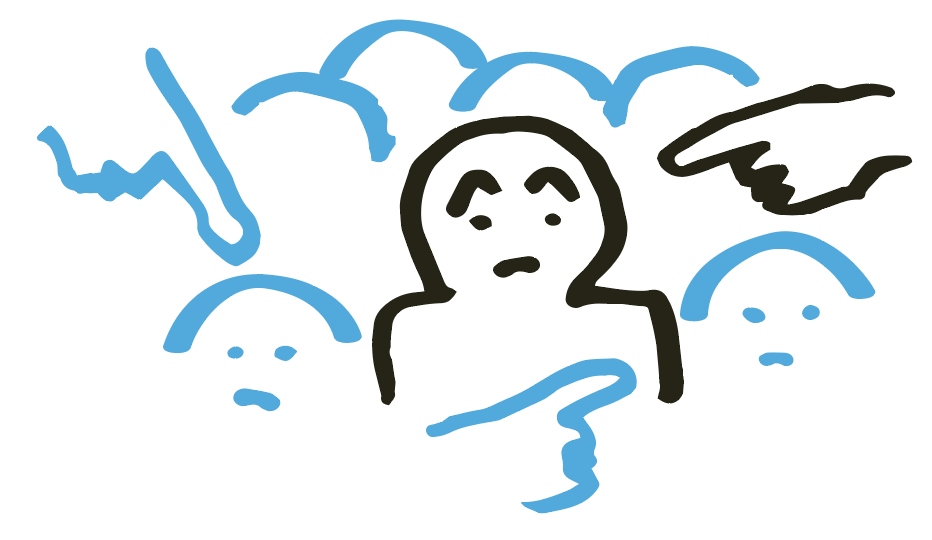
We are, apparently, in the grips of a culture war.
It must be an especially intense one, because the newspapers seem to report on it more than the wars in Syria, the Central African Republic, or Yemen, combined.
According to the Telegraph, this war is our generation’s great fight. It was even the foremost topic in the leadership battle for who would be our next Prime Minister, far above the economy, climate change, or Coronavirus recovery.
Just this last month, its belligerents have included Disney, Buckingham Palace, the British Medical Journal, cyclists in Surrey, alien library mascots, and rural museums.
But which side should I choose? One side is called “the woke mob.” That seems like it should be my team. After all, they are the successor organisation to the Political Correctness Brigade, of which I was a card-carrying member when that was all the rage.
The so-called “woke mob” are drawing attention to many historic and present injustices. From acknowledging that much of Britain was built on the back of the slave trade to criticising comedians who say that Hitler did a good thing by murdering Gypsies, they are shining a light on wrongs in society.
The trouble is, I hate to be on the losing side. For all the noise and bluster, this campaign hasn’t managed to get anyone who deserves it. The most virulent racists, misogynists, abusers, and profiteers remain largely unabated.
Even if they were successful, I find the underlying ideas troubling. It seems to assume that people’s wrong actions put them outside of rehabilitation into decent society. Some people are just too bad.
This strikes as puritanical. While the claims that so-called “cancel culture” is ruining civilisation are wildly overstated, it is right to be concerned by a philosophy that excludes and punishes.
So, will I throw my lot in with the conservatives? Perhaps it’s time I joined this fightback against the woke mob.
On this side, proponents say that they are combatting cancel culture. How are they doing this? By deliberately upsetting people. They actively endeavour to elicit a reaction by saying the most hurtful thing they can.
When, inevitably, these public figures receive the condemnation they deserve, they go on tour to lament how sensitive and censorious their opponents are. As a result, they get book deals, newspaper columns, and increased ticket sales.
Ultimately, this reaction to “cancel culture” is a mirror of what it opposes. It agrees that people cannot heal or do wrong. It celebrates the idea that people are bad, and provides a foil that allows people to prop up their worst selves.
If this is the culture war, I want no part in it. Neither side is interested in the hard work of repentance, apologies, and forgiveness. It offers only two possible cultures: one in which nobody can do right and one in which nobody can do wrong.
This is the antithesis of the Jewish approach to harm.
Our religion has never tried to divide up the world into good and bad people. We have no interest in flaunting our cruelty, nor in banishing people.
Instead, the Jewish approach is to accept that we are all broken people in a broken world. We are all doing wrong. We all hurt others, and have been hurt ourselves. The Jewish approach is to listen to the yetzer hatov within us: that force of conscience, willing us to do better.
The culture we want to create is one of teshuvah: one in which people acknowledge they have done wrong, seek to make amends, apologise, and earn forgiveness.
A few weeks ago, just in time for Yom Kippur, Rabbi Danya Rutenberg released a new book, called Repentance and Repair: Making Amends in an Unapologetic World.
Rabbi Rutenberg argues that Jewish approaches to repentance and repair can help resolve the troubled society we live in.
She locates some of the issues in America’s lack of repentance culture in its history. After the Civil War, preachers and pundits encouraged the people of the now United States of America to forgive, forget and move on. It doesn’t matter now, they said, who owned slaves or campaigned for racism, now they were all Americans.
The Civil War veterans established a social basis in which there was no need for repentance or reparations, but that forgiveness had to be offered unconditionally. Without investing the work in true teshuvah, they created an unapologetic society that refused to acknowledge harm.
We, in Britain, also have an unapologetic and unforgiving culture, but our history is different.
True, we also failed to properly address our history of slavery. When the slave trade was abolished at the start of the 19th Century, former slave traders and slave owners were given substantial compensation. The former slaves themselves were not offered so much as an apology.
But we have not been through a conscious process of nation-building the way the United States has.
In fact, Britain has not really gone through any process of cultural rebuild since the collapse of its Empire. In 1960, the then Prime Minister Harold Macmillan gave his famous speech, in which he acknowledged “the wind of change” driving decolonisation. Whether Brits liked it or not, he said, the national liberation of former colonies was a political fact.
At that time, he warned “what is now on trial is much more than our military strength or our diplomatic and administrative skill. It is our way of life.” Britain would need to work out who it was and what its values were before it could move forward and expect the family of nations to work with it.
More than 60 years later, it seems we still have not done that. As a nation, we are simply not clear on who we are. We do not know what makes us good, where we have gone wrong, or what we could do to be better.
So, we are caught in shame and denial. Shame that, if we admitted to having caused harm, we would have to accept being irredeemably evil. Denial that we could be bad, and so could ever have done wrong.
The two sides of the so-called “cancel culture” debate represent those two responses to our uncertainty. Those who are so ashamed of Britain’s history of racism and sexism that they have no idea how to move forward. And those who are so in denial of history that they refuse to accept it ever happened, or that it really represented the great moral injury that its victims perceived.
This creates a toxic national culture, stultified by its past and incapable of looking toward its future.
So, Rabbi Rutenberg suggests, we need to build an alternative culture, one built on teshuvah. We need a culture where people feel guilty about what they have done wrong and try to repair it. For those who have been hurt, that means centering their needs as victims. For those who have done wrong, that means offering them the love and support to become better people.
Rutenberg draws on the teachings of the Rambam to suggest how that might happen. The Rambam outlined five steps people could take towards atonement, in his major law code, Mishneh Torah.
First, you must admit to having done wrong. Ideally, you should stand up publicly, with witnesses, and declare your errors.
Next, you must try to become a better person.
Then, you must make amends, however possible.
Then, and only then, can you make an apology.
Finally, you will be faced with a similar opportunity to do wrong again. If you have taken the preceding steps seriously, you will not repeat your past mistakes.
For me, the crucial thing about Ruttenberg’s reframing of Rambam, is that it puts apologies nearly last. It centres the more difficult part: becoming the kind of person that does not repeat offences. It asks us to cultivate virtue, looking for what is best in us and trying to improve it.
You must investigate why you did what you did, and understand better the harm you caused. You must read and reflect and listen so that you can empathise with the wronged party. And, through this process, you must cultivate the personality of one who does not hurt again.
That is what Yom Kippur is really about. It is not about beating ourselves up for things we cannot change, nor about stubbornly holding onto our worst habits. It is not about shrugging off past injustices, nor is it about asking others to forget our faults.
It’s about the real effort needed to look at who we are, examine ourselves, and become a better version of that.
If there is a culture war going on, that is the culture I want to see.
I want us to live in a society where people think about their actions and seek to do good. I want us to see a world where nobody is excluded – not because they are wrong or because they have been wronged. One where we are all included, together, in improving ourselves and our cultural life.
To build such a system, we need to start small. We cannot change Britain overnight.
We have to begin with the smallest pieces first. Tonight, we begin doing that work on ourselves.
Gmar chatimah tovah – may you be sealed for good.

 Sim Lev